News & Updates
The latest news and updates from companies in the WLTH portfolio.
UN climate chief: "Clean energy is the antidote to fossil fuel cost chaos"
The following is a transcript of a video address delivered by UN Climate Change Executive Secretary Simon Stiell at the start of Green Transformation (GX) Week on Monday 20 April 2026, in tandem with UN Climate Week 3 (CW3), which kicks off on Tuesday 21 April. Both events - focused on helping drive forward practical climate solutions - are being held in Yeosu, Republic of Korea. Green Transformation - or GX - Week could not be more timely. Conflict in the Middle East has unleashed a fossil fuel cost crisis in global energy markets, holding economies around the world in a chokehold. National sovereignty and security ripped away, replaced by vulnerability and instability, with households and businesses paying the price. War has - once again - revealed the soaring costs of fossil fuel dependency. Asia is particularly hard hit. Including the Republic of Korea - which imports so much of its fuel. Yet, amidst the chaos, President Lee is clear-eyed - saying that this crisis shows: "The major shift to renewable energy, is no longer a national and historical task that can be postponed." I couldn't agree with him more. Clean energy is the antidote to fossil fuel cost chaos, because it is cheaper, safer and faster-to-market. Wars don't disrupt the supply of sunlight for solar power, and wind power does not depend on vulnerable shipping straits. Renewables allow governments to regain control of their economies and their national security. So, it is common sense to accelerate the transition to clean energy... Taking care not to lock-in fossil fuels - particularly coal - when addressing immediate impacts of the crisis. And at the same time, building resilience to the climate disasters - mega-floods, powerful storms and extreme heat - which are hammering economies and driving inflation, ruining lives and breaking businesses all around the world. Strong climate action will be central to countries' competitiveness. The market for climate solutions will only grow. All the biggest Asian economies have signalled that clean energy is now central to their economic growth and security strategies. The current crisis will create massive opportunities for energy and construction firms to create clean infrastructure all across Asia. So, the global shift to clean energy can drive a multi-generational economic boom for the Republic of Korea, leveraging your high skilled workforce and prowess in technological innovation. The faster the Republic of Korea meets and exceeds its climate targets, and the more Korean businesses invest in cleantech, the bigger the boom will be. Promoting growth here in Korea. And building new markets all around the world... You can lead global efforts by aligning public finance with the energy transition... By contrast, countries that move too slowly on clean energy risk their economies becoming relics of a polluting past. Through its GX strategy, the Republic of Korea is seizing the vast benefits of climate action, harnessing decarbonisation for growth, jobs and competitiveness. I applaud its leadership. Together, we can turn climate commitments into projects on the ground - faster. GX Week supports these efforts. Likewise, UN Climate Week, happening in Yeosu this week - is about helping to drive forward real-world climate solutions. Happening in tandem with Korea's GX Week, this UN Climate Week will bring together negotiators and policy-makers with leaders, implementers, and innovators from business, governments, and civil society. UN climate weeks are just one way we are working to help translate COP decisions and pledges into concrete outcomes in communities, bringing our process closer to the real economy. It's part of a wider effort to help spread the vast benefits of climate action to far more people all around the world: stronger economies, more jobs, better health, and more affordable and more secure energy and food, among many others. This week and every week beyond, I urge you to seize the opportunities on offer. Do what you can to build clean and resilient societies, industries, and economies. Bank the immense dividends on offer from global decarbonisation and resilience-building. And build a path to prosperity and security for all. I thank you.

Polymarket Seeks $15B Valuation as It Raises Capital Ahead of U.S. Regulatory Outcome
Major investors are backing the company before regulatory clarity, pricing legal risk into the valuation. Polymarket is in talks to raise an additional $400 million, which would bring its current round to $1 billion and value the company at roughly $15 billion, according to The Information. Singapore Summit: Meet the largest APAC brokers you know (and those you still don't!). The new capital would be added on top of a $600 million investment already made by Intercontinental Exchange, the parent company of the New York Stock Exchange. ICE had previously announced plans to build a strategic stake of up to $2 billion in the platform. The fundraising comes as Polymarket prepares for two simultaneous fights. On the regulatory front, the company is working its way back into the U.S. market through a recently acquired CFTC-regulated entity, while state authorities push to classify its products as illegal gambling. On the competitive front, it is racing against Kalshi, which is also heavily funded and currently leads in U.S. market share, while Polymarket holds the stronger position in international and crypto-native markets. The capital is meant to cover the costs of prolonged legal proceedings, user acquisition, and the infrastructure buildout required to attract institutional participants in the U.S. ICE's willingness to anchor the round despite unresolved regulatory questions is a meaningful signal. Traditional finance institutions rarely move ahead of regulatory clarity on products this contested. The bet appears to be that the legal risks are manageable and that prediction markets represent a durable, large-scale asset class rather than a regulatory experiment. For the brokerage and fintech sector, the more relevant takeaway is structural: the leading platforms are not waiting for the regulatory environment to settle. They are raising capital now, pricing in the legal risk, and positioning for a market that may look very different in three to five years.

Anthropic MCP Hit by Critical Vulnerability Enabling Remote Code Execution - IT Security News
The technical storage or access is necessary for the legitimate purpose of storing preferences that are not requested by the subscriber or user. The technical storage or access that is used exclusively for statistical purposes. The technical storage or access that is used exclusively for anonymous statistical purposes. Without a subpoena, voluntary compliance on the part of your Internet Service Provider, or additional records from a third party, information stored or retrieved for this purpose alone cannot usually be used to identify you.

VettaFi Accelerates Into the New Space Age: Pioneering 'Day-One' Index Inclusion for SpaceX and Industry Titans
If you are a Home delivery print subscriber, online access is included in your subscription. Activate your Online Access Now With this update, VettaFi establishes itself as one of the first index providers to target immediate, day-one exposure to mega-cap IPOs, setting a new standard for agility in thematic indexing. As the commercial space industry transitions from experimental ventures to a trillion-dollar global industry, the VettaFi Space Index is evolving to ensure investors have exposure to the most influential players driving us deeper into the final frontier. Capturing Industry Leadership: The SpaceX Integration The most significant update to the index methodology is the expansion of the index's "Fast-Track Inclusion" rule. This allows the index to bypass traditional waiting periods for private companies that have recently transitioned to public markets, ensuring the index includes the most cutting-edge companies in the industry. "The space industry is no longer just about 'what if'-it is about 'what is happening now,'" said Jane Edmondson, Head of Index Product Strategy at VettaFi. "By fast-tracking the inclusion of dominant forces like SpaceX, we are ensuring that the VettaFi Space Index accurately reflects the leaders of the orbital economy, providing a more precise benchmark for the next generation of space innovation."

Vercel breach leaves DeFi frontends dangling on a $2M ransom
Users have been advised to stop interacting with any DeFi application for a few days after Vercel, the creator of Next.js and cloud provider for a large number of crypto's user-facing platforms, admitted that attackers breached its internal systems. According to Vercel CEO Guillermo Rauch, the attack happened when one of its employees "got compromised via the breach of an AI platform customer called Context.ai that he was using." The attackers, who Rauch says were "significantly accelerated by AI," apparently escalated through the employee's Google Workspace account into Vercel's corporate environment. A BreachForums seller claiming to be extortion crew ShinyHunters is demanding a $2 million ransom via a listing that allegedly includes GitHub tokens. For DeFi, the incident is a nightmare. A user interacting with a poisoned Next.js package via a website can sign a transaction straight into an attacker's wallet. Vercel disclosed the incident in a Sunday security bulletin, saying that it had found "unauthorized access to certain internal Vercel systems" and had already engaged law enforcement. Following the disclosure, X user and Cork Protocol CTO "Pybast," who is also former CTO of DeFi cybersecurity company Nefture, warned users to stop interacting with "any DeFi application," adding that "a lot of DeFi is hosted on Vercel and crypto users are a prime target for such attack." Comically, he suggested eth.limo, which also had its own security incident on the same day, as a safer alternative. Next.js cleared 520 million downloads in 2025, according to Rauch. DeFi dashboards, crypto wallet connectors, and token launchpads use it. Members of the crypto community were concerned that the hacker could use Vercel credentials to push malicious code to dependencies pulled by thousands of downstream projects. Rauch has named Mandiant, Google's incident-response arm, as the firm assisting with incident response. Only a "limited subset of customers" was affected, Rauch claimed, and services remained operational. Read more: 'Decentralized' apps suffer after Ledger Connect Kit attack A screenshot of the ransom notice, published by BleepingComputer, advertises multiple employee accounts, internal deployments, API keys, and GitHub tokens. The vendor attached hundreds of employee records, a screenshot of Vercel's internal Linear instance, and what appears to be an internal enterprise dashboard. BleepingComputer couldn't verify their authenticity. Curiously, threat actors tied to the actual ShinyHunters extortion crew told BleepingComputer that they had nothing to do with this particular caper.

TUI, easyJet and Jet issue updates for passengers amid new EU rule travel chaos
Brits have faced travel chaos amid the new border control system(Image: Getty Images) Major airlines including TUI, easyJet and Jet2, have issued guidance and travel warnings following the launch of the European Union's (EU) new Entry/Exit System (EES), advising passengers to get to the airport as early as possible. British travellers heading overseas have been hit with significant disruption since the introduction of the EES. There have been reports of lengthy queues at both European and UK border controls, with thousands of holidaymakers passing through the new digital border system for the first time, resulting in numerous missed flights. The EES, which was fully rolled out on Friday, 10 April, requires all Brits travelling to the Schengen area to "create a digital record" and submit their biometric details, including fingerprints and a photograph. Registration is required upon their first arrival at the border in the Schengen area, and once completed, it remains valid for three years. The government acknowledged that the EES "may take each passenger extra time to complete, so be prepared to wait longer than usual at the border." Nevertheless, passengers have reported exhausting delays of up to three hours and missed departures, prompting airlines to issue urgent advice as travellers navigate the new digital border system, reports the Mirror. In a travel alert regarding the EES, TUI advised passengers: "At some airports, you might still find longer queues, particularly at busy travel periods. We know this isn't the travel experience you want before, or after your holiday - and it's certainly not the one we want for you - so please know we're doing all we can to support". "To help your journey run as smoothly as possible, please allow a little extra time when passing through border control. Keep any essential medication in your hand luggage in case of delays, and when departing the EU, head straight to passport control after dropping your bags to avoid hold‐ups. Bringing some extra water for comfort is also a good idea." In an "important update" issued earlier this month, easyJet cautioned: "Airports across Europe may experience longer queues at passport control whilst the new European Entry /Exit System (EES) border checks are being completed. "This will mean you may need to have your biometrics taken, including your face and fingerprints scanned." The airline urged passengers to factor in additional time when travelling to and through the airport, as they may "experience longer queues". Those needing to drop off luggage were told to "go there as soon as it opens", before proceeding through "security as early as possible". easyJet further warned that supplementary checks may take place at passport control prior to the gate, and that travellers should head to the gate or boarding area "as soon as it's announced". easyJet also urged passengers to ensure they have all the necessary documentation for their journey, though Brits are not required to take any action prior to reaching the border for the EES. The airline also cautioned that "longer queues" may be expected at arrival airports. Addressing anticipated disruption from the EES and its potential impact on holidaymakers, Jet2 stated: "There may be longer wait times at Border Control at some EU Airports, especially at busy times. Once you start your EES registration, it should take around 1-2 minutes per person to complete. "There may be longer wait times than usual when you arrive in destination and before your flight back to the UK. Unfortunately, this is outside of our control. But remember, there's nothing you can prep before you travel." In the meantime, responding to a passenger following hold-ups at Faro Airport, Jet2 advised on X: "We kindly recommend customers arrive to the airport as early as possible, to allow plenty of time to make it through." Regarding the return journey to the UK, Jet2 added: "You'll also need to pass through EES when leaving the EU in the same way you do on arrival. Depending on how busy the airport is, this may result in longer wait times at passport control before boarding your flight to the UK. After checking in for your flight, please head straight to security and passport control in order to arrive at your gate in plenty of time." Regarding general guidance on the new digital system, British Airways outlined on their website: "You should allow extra time to register your biometric details, such as fingerprints and a photo, the first time you enter the EU. There is no cost for EES registration, and your digital record will last three years before you need to register again." In reply to a query posted on X regarding airport arrival times, a British Airways representative stated: "Hi there. We ask customers travelling on our European short-haul flights to be there two hours prior to departure. It would be three hours if you're travelling on a long-haul flight and one if you're travelling on a domestic flight within the UK." For further details on the new EES system, visit the government website.

Investors are pouring cash into Scottish Mortgage Investment Trust. Is it all about SpaceX?
In recent months, Stocks and Shares ISA investors have been buying a handful of investment trusts. And popular investing platforms, including AJ Bell and interactive investor, have seen Scottish Mortgage Investment Trust (LSE: SMT) among the most widely picked. It had fallen out of favour a bit after crashing from an all-time high at the end of 2021. But it's been coming back, gaining 20% so far in 2026. The AI surge lies partly beyond the popularity recovery. The investment trust includes Nvidia, ASML, Amazon, and Meta in its top 10 holdings. And spreading investors' money across these, together with a wide range of other global stars, can hopefully reduce the risk with a bit of diversification. Space risk Well, I talk about reduced AI risk. But there's a whole different helping of risk that comes with this too. More than 19% of shareholders' cash is currently in Space Exploration Technologies -- better known as Elon Musk's SpaceX. We're expecting SpaceX to make its stock market debut with an initial public offering (IPO) in the next few months. And people are already talking about a $2trn market cap. Until that happens, Scottish Mortgage Investment Trust is one of the few ways UK investors can grab a slice. Is that part of the reason behind the sudden spike of interest from ISA investors? It does look that way. Still, those who buy would also get a portion of MercadoLibre, Latin America's biggest e-commerce platform. ByteDance, the Chinese company behind TikTok, is up among the top holdings too. Oh, and Shopify, the global commerce pioneer, adds to the attraction. Invest in growth? UK investors are looking at a nice bit of global diversification here, I'd say. And it's not only about stepping onto the AI and space bandwagon. Still, Scottish Mortgage is very much focused on growth. And I reckon anyone who tucks some away in a Stocks and Shares ISA really should consider balancing it with a bit of diversification in safer stocks too. So, do investors have to pay a growth premium to get in on the act? Well, the trust put its net asset value (NAV) per share at 1,378p at its most recent update. And with the shares at around 1,440p at the time of writing, we're looking at a premium to NAV of only about 4.5%. That can't allow for the post-IPO valuation of SpaceX yet. And to me, it makes the price look like attractive value. Especially with headlines talking about a possible price-to-earnings (P/E) ratio of over 200 for SpaceX once it hits the stock market. What to do? This is not a low-risk investment by any means. Even without the SpaceX exposure, the future of AI valuations is still very much unknown. And I'd never buy a stock like this with the aim of a quick buy-and-sell profit on SpaceX. But I reckon those who want in on these exciting long-term growth possibilities might do well to consider Scottish Mortgage Investment Trust.

Vercel Security Breach Sends Crypto Developers Scrambling to Protect API Keys
Unauthorized access through a third-party AI tool raised fears of exposed credentials, prompting Web3 teams to quickly rotate and secure API keys. There was a security breach over the weekend, and it didn't take long for developers to start reacting. The incident, which occurred at Vercel, a platform many teams rely on to run their apps, quickly turned into a scramble across the crypto space. At the center of the concern were API keys, which are essentially digital passwords that allow apps to connect to services behind the scenes. In crypto, those connections can link user interfaces to wallets, trading systems, and blockchain data. Once those keys are exposed, even briefly, the risk isn't theoretical. It becomes immediate. Vercel confirmed that the breach involved access to internal systems, though it said there's no evidence that sensitive environment variables were actually read. The company confirmed the issue in a public statement, saying, "We've identified a security incident that involved unauthorized access to certain internal Vercel systems. We are actively investigating, and we have engaged incident response experts to help investigate and remediate." How the Vercel hack happened The company traced the issue back to a third-party AI tool called Context.ai. According to Vercel, a compromised connection through Google Workspace allowed attackers to gain deeper access into its internal environment. That detail matters because it highlights a growing pattern. The breach didn't come from breaking through Vercel's core systems directly. Instead, it came through a connected tool that had access to those systems. It's a softer entry point, but often just as effective. There were also claims on online forums that stolen data, including access keys and source code, was being offered for sale. Those claims haven't been confirmed, but they added to the urgency. Vercel says it's still investigating and working with external security teams and law enforcement to understand the full scope. Why crypto developers were hit hardest The reason this incident spread so quickly through crypto circles is simple. Many Web3 projects rely heavily on Vercel to power the front end of their apps. That includes dashboards, wallet interfaces, and trading platforms that users interact with every day. Projects like Orca moved quickly to rotate credentials as a precaution. The platform later clarified that its on-chain systems and user funds weren't affected, but the reaction still tells a bigger story. In crypto, the frontend is often the bridge between users and complex systems. Even when the blockchain layer is secure, weaknesses in how users connect to it can create real risks. This is why something that starts as a developer issue can quickly become a user concern. This incident isn't happening in isolation. It comes at a time when the crypto industry is already dealing with a wave of attacks that are becoming harder to predict. Recent cases, including exploits linked to projects like Drift Protocol and liquidity shocks tied to Kelp DAO, have shown how quickly problems can spread across the ecosystem. Even when the technical systems are strong, attackers are finding new ways in, often by targeting people, processes, or connected tools. There's a clear takeaway from all of this, and it's not just about one company or one breach. The weak points in crypto are shifting. It's no longer just about breaking into wallets or exploiting smart contracts. More often, it's bout finding indirect ways in. The Vercel incident shows how a single compromised connection can ripple across an entire ecosystem. It also shows how quickly teams can respond when the risk is understood.

Vercel Breach: How a $2M Ransom Demand and a Compromised AI Tool Exposed Developer Secrets
According to the company, the attacker used that access to move further into Vercel's internal environment. Web infrastructure company Vercel has disclosed a security breach that allowed attackers to gain unauthorised access to certain internal systems after a third-party artificial intelligence tool used by an employee was compromised. The incident began with Context.ai, which was connected to the employee's Google Workspace account. According to the company, the attacker used that access to move further into Vercel's internal environment. "The attacker used that access to take over the employee's Vercel Google Workspace account, which enabled them to gain access to some Vercel environments and environment variables that were not marked as 'sensitive,'" the company said in a bulletin. Environment variables often contain data like API keys, tokens, and credentials used by applications. Vercel noted that variables marked as sensitive are protected differently. "Environment variables marked as 'sensitive' in Vercel are stored in a manner that prevents them from being read, and we currently do not have evidence that those values were accessed," the company said. While the company has not yet disclosed the full scope of the breach, it described the threat actor as "highly sophisticated." "We assess the attacker as highly sophisticated based on their operational velocity and detailed understanding of Vercel's systems," the company added. To investigate the incident, Vercel has brought in incident response experts from Mandiant, along with other cybersecurity firms and law enforcement. "We are actively investigating, and we have engaged incident response experts to help investigate and remediate," the company said in a statement. So far, the company says a "limited subset" of customers had credentials exposed. Those affected have already been contacted and advised to rotate their credentials immediately. A Breach that Started Outside the Company One of the more striking parts of the incident is where it started. Instead of exploiting a vulnerability directly inside Vercel's infrastructure, the attacker entered through a third-party AI tool connected to an employee account. Once inside, access expanded into internal systems and configuration environments. Investigators believe the compromise may be part of a wider issue involving the tool's Google Workspace OAuth application. "Our investigation has revealed that the incident originated from a small, third-party AI tool whose Google Workspace OAuth app was the subject of a broader compromise," Vercel said. The company has since published the suspected indicator of compromise to help other organisations check their own environments. Meanwhile, a hacker using the ShinyHunters identity has claimed responsibility for the breach and reportedly attempted to sell the stolen data for $2 million. Vercel CEO Guillermo Rauch said the company has taken additional steps to strengthen security. "We've deployed extensive protection measures and monitoring," Rauch wrote on X. "We've analysed our supply chain, ensuring Next.js, Turbopack, and our many open-source projects remain safe for our community." He added that the company has already introduced new security features in response to the incident. "In response to this, and to aid in the improvement of all of our customers' security postures, we've already rolled out new capabilities in the dashboard, including an overview page of environment variables and a better user interface for sensitive environment variable creation and management." How to Stay Safe: The Developer's Checklist For developers and organisations using Vercel, security teams recommend reviewing activity logs for suspicious behaviour, especially unexpected deployments or login activity. Secrets such as API keys, tokens, and database credentials should be rotated immediately if they were stored in environment variables that were not marked as sensitive. Users are also advised to review recent deployments, remove anything unfamiliar, and ensure deployment protection settings are enabled. Finally, teams should start storing secrets as sensitive environment variables so that they remain encrypted and unreadable even if internal systems are accessed. The investigation is ongoing, and Vercel says it will notify customers if additional evidence of compromise emerges.

Pradhan claims 'chaos, corruption' in Trinamool Congress-led West Bengal
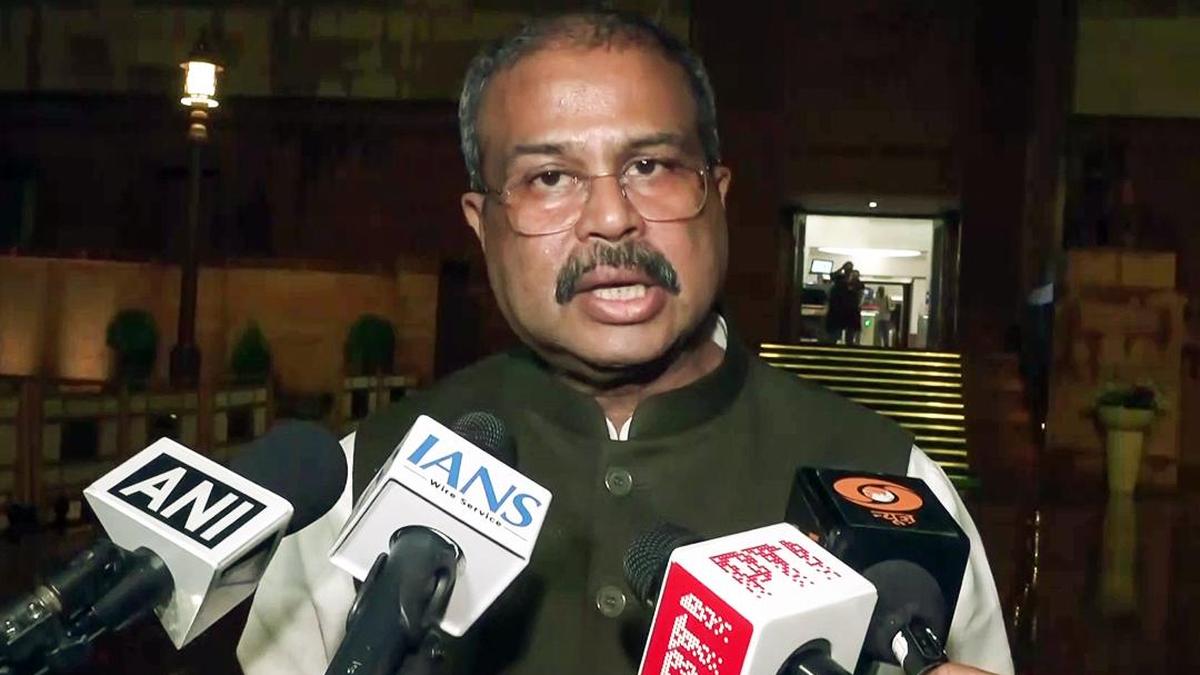
Union Minister Dharmendra Pradhan launched a sharp attack on West Bengal Chief Minister Mamata Banerjee on Monday (April 20, 2026), alleging that the State has descended into "chaos, appeasement and corruption" under the Trinamool Congress's rule. In a post on X, Mr. Pradhan said the situation in West Bengal has deteriorated to the extent that the Trinamool's 'Maa, Mati, Manush' has been reduced to a mere slogan, while public trust in governance has eroded.
A "Super El Niño" Is Coming - And It Could Trigger Global Climate Chaos
The Earth is about to enter an extremely strong climate phase that could cause major disruption on a planet-wide scale. This "super El Niño" - or "Godzilla El Niño" - threatens to make 2027 the hottest year on record. If it's as strong as scientists fear, the weather event will bring droughts to some areas of the world and floods to others, causing food shortages and billions of pounds of damage. And with the world already warming faster due to human activity, the effects will only be intensified. To discuss what we can expect from the near future, Rowan Hooper and Penny Sarchet are joined by New Scientist climate reporter Alec Luhn. To read more about these stories, visit https://www.newscientist.com/ Learn more about your ad choices. Visit megaphone.fm/adchoices

Pradhan claims 'chaos, corruption' in Trinamool Congress-led West Bengal
Union Minister Dharmendra Pradhan launched a sharp attack on West Bengal Chief Minister Mamata Banerjee on Monday (April 20, 2026), alleging that the State has descended into "chaos, appeasement and corruption" under the Trinamool Congress's rule. In a post on X, Mr. Pradhan said the situation in West Bengal has deteriorated to the extent that the Trinamool's 'Maa, Mati, Manush' has been reduced to a mere slogan, while public trust in governance has eroded.
Prediction Market Polymarket Eyes $400 Million Round at $15 Billion Valuation
Polymarket eyes $400M raise at a $15B valuation, following ICE's $600M investment as prediction markets attract surging institutional demand. Prediction Market Polymarket eyes a $400 million funding round at a $15 billion valuation, The Information reported Sunday, citing two people familiar with the matter. The capital push follows a $600 million investment from Intercontinental Exchange, parent of the New York Stock Exchange, announced just last month. The new round would nearly double Polymarket's $9 billion post-money valuation from October, while the platform simultaneously courts additional strategic investors beyond ICE. Total funding across the round could ultimately reach $1 billion, with fresh backers expected to sign on before final close, per the report. Visit: List of Active Crypto ICOs Polymarket Valuation Surges as Kalshi Rivalry Tightens on Wall Street Earlier October reports pegged early-stage investor discussions at valuations between $12 billion and $15 billion, with the current round landing firmly at the ceiling of that range. The repricing arrives only six months after ICE agreed to invest up to $2 billion across the platform's cap table. Investor appetite for event-based trading has pushed prediction markets rapidly out of their crypto and academic niche into a fast-growing mainstream finance segment. Volumes and user activity across the sector have surged over recent months as Wall Street names chase fresh exposure to binary outcomes. Rival Kalshi reportedly raised over $1 billion back in March at a $22 billion valuation, roughly doubling its worth since November. Kalshi also leads monthly trading volume at $12.8 billion against Polymarket's $9.5 billion over the past 30 days, according to Token Terminal data. Regulatory Pressure Mounts While Polymarket USD Launch Nears Beyond the funding frenzy, the decentralized prediction industry continues facing heavy regulatory scrutiny across multiple jurisdictions worldwide. Both Kalshi and Polymarket rolled out insider trading safeguards last month as U.S. lawmakers pushed for tighter sector rules, while Argentina banned Polymarket nationwide in March over alleged illegal gambling practices. A Kalshi lawsuit filed in Oregon in February 2026 also brands the firm an "illegal online gambling enterprise" for operating without state authorization. A separate legal action targets the firm over a paused $54 million Khamenei market, with traders alleging the platform withheld payouts during the Iran war. Despite the mounting scrutiny, Polymarket recently shut down its prediction market on nuclear weapon detonation odds while pushing forward a broader product overhaul aimed at easing regulatory bottlenecks. On April 6, Coingape reported that the platform unveiled Polymarket USD, a Circle USDC-backed settlement token powering every contract, with the rollout expected this week.

Column-Amid Middle East chaos, China changes tactics on Taiwan and Japan
Add Yahoo as a preferred source to see more of our stories on Google. April 17 (Reuters) - As U.S. Vice President JD Vance returned to Washington last weekend after unsuccessful peace talks in Pakistan over the crisis in the Gulf, China's Foreign Ministry was preparing for a bumper slate of visitors including Russian Foreign Minister Sergei Lavrov and the leaders of Spain, Vietnam and the United Arab Emirates. With the U.S. this week declaring its own military "blockade" of the Strait of Hormuz, and Iran continuing to demand cryptocurrency payments to guarantee vessels' safe passage, Beijing is stepping up diplomatic efforts to present itself as a wider global power broker. That includes presenting itself as a global voice of sanity and stability against a "regression to the law of the jungle", as Xi put it on Tuesday as he met Spanish Prime Minister Pedro Sanchez. But it also includes tough military and diplomatic messaging in Beijing's immediate environment, where it has further escalated growing tensions with Japan, moving vessels to prevent the Philippines from reaching a long-disputed shoal, and an assertive and very public outreach to Taiwan's opposition Kuomintang party ahead of 2028 elections. In the process, Beijing has subtly but swiftly redefined its primary Taiwan narrative and, perhaps even more importantly, its timescale for potential future action. Whereas U.S. officials have warned for years that Beijing has been building up its military with the explicit goal of being ready to invade by 2027, China's new narrative has refocused attention on Taiwan's election the next year, pushing harder than ever the concept that a Kuomintang victory would avert conflict and offer much closer relations. If the incumbent Democratic Progressive Party wins again, Beijing is now setting the tone for further confrontation - on one hand, pushing any future U.S. administrations to abandon the island to its fate; on the other, tearing up relations with Japan over its comments on the future of Taiwan. The reasons are not difficult to see. Official Chinese statements have blamed new Japanese prime minister Sanae Takaichi, particularly for comments in November that a Chinese takeover of Taiwan might constitute a "survival-threatening" situation for Japan. Chinese officials and news outlets are also expressing concern that Tokyo might look to acquire nuclear weapons - something that might make it almost impossible for China to risk an attack against Taiwan or indeed Japan itself. Takaichi's government says it remains committed to Japan's non-nuclear status. But it is keen to strengthen international relationships wherever possible, inviting more than 30 ambassadors from NATO and other nations to Tokyo from Wednesday to step up cooperation in defence and a host of other areas. On almost every other front, however, Beijing is making diplomatic inroads. In a heavily promoted meeting in Beijing last week, new Kuomintang leader Cheng Li-wun pledged to invite Xi to Taiwan if she wins the 2028 election. Meanwhile, the DPP government is working on its own defences, nervously eyeing a repeatedly postponed Trump-Xi summit for signs that the Chinese leader might press the U.S. to dial down its support for Taiwan, perhaps in return for help in calming the Gulf. BEIJING SEEKS 'CAREFUL LISTENERS' Exactly what Beijing is up to when it comes to Iran remains vague; Chinese officials and media outlets have so far angrily denied CNN reports that Beijing has given Tehran weapons in the current crisis. Other analysts note that, as when supporting Russia in Ukraine, China prefers to deliver "dual use" civilian components that can be used in arms manufacture rather than delivering whole weapons or systems. U.S. President Donald Trump has pledged to impose new tariffs on Beijing if arms shipments are proven, a move that would further damage already dwindling global growth. The prospect of letting the rest of the world blame the U.S. for the current global mayhem, meanwhile, is something China is grabbing with both hands. U.S. behaviour, not only in the Middle East but also over Greenland, has made much of Europe reappraise its relationship with Washington. European Union foreign policy supremo Kaja Kallas described U.S. actions in the Middle East as second only to Russia's invasion of Ukraine in its damage to the international system. Whether that prompts European and other nations to embrace Beijing, however, is an open question. Britain criticised Russia and China together for vetoing a U.N. Security Council resolution from Bahrain condemning Iran's obstruction of ships in Hormuz and demanding the strait be reopened. Trump's decision to impose his own blockade this week, however - with its implication that U.S. warships will intervene to stop Chinese and other vessels carrying Iranian and other energy - seems to have played into Beijing's hands, just as his import tariffs did, by allowing China to grab the agenda as a supporter of free trade. Some Chinese pundits now enthusiastically predict more of this to come: the Trump administration grabbing the headlines while, behind the scenes, a whole new architecture of international relations takes shape in which nations work around the U.S. to try to secure their vital interests. It is an environment in which many incidents and confrontations of considerable importance go almost unreported, from Pakistan's military clashes with Afghanistan to suspected Iranian drone strikes on energy infrastructure in Azerbaijan, a nation that has become increasingly critical to European energy supplies in recent years. "China is increasingly seen by many as a major country that has consistently emphasised peace, development, sovereignty and dialogue," Chinese international relations academic Mabel Miao Lu wrote in the Communist Party-run Global Times this week, after returning from the Baku Global Forum in Azerbaijan. "That does not mean all concerns about China have disappeared. It does mean that more people are listening carefully when China speaks." LESSONS TO LEARN FOR CHINA AND OTHERS The lesson Beijing would most like the rest of the world to learn might be that when or if China's military moves to take control of Taiwan - either because it has been invited in by the Kuomintang or because Xi's patience has finally run out - the rest of the world should not get involved, whatever Japan or the U.S. might do. At the same time, many countries will have concluded that action such as that taken by the U.S. in Iran, or Russia in Ukraine, triggers massive and immediate global dislocation - and, although the energy shock of conflict in the Gulf has been profound, the supply shocks of a major war in the Pacific could be far worse. While the U.S. may not have gained what it wanted from Operation Epic Fury, as with strikes on Tehran's nuclear programme last June, the Pentagon has delivered a lesson to other potential foes that the U.S. military retains a level of expertise in complex operations that Beijing has never trialled in anger. Xi's confidence in his own military may only be mixed, at best, judging by the number of senior military commanders removed in recent months and years - although China's sheer manufacturing capacity may still keep Pentagon planners up at night, their worries compounded by recent high usage of limited precision weapons stocks. Beijing's other major problem is that, so far at least, Taiwan's always complex politics may not move in the direction that it wishes. It is far from clear whether KMT leader Cheng's embrace of Beijing will win over voters - and even if it does, her language of rapprochement still stops well short of calling for annexation by China. Nor is it clear that Beijing will do better in its efforts to isolate the new government in Tokyo, where for now it looks to be making little if any progress. European and Pacific nations' worries about future U.S. policy have, if anything, made many of them more enthusiastic than before about working with Japan or South Korea. Beijing has also yet to find its own way through the Gulf situation. Chinese-owned and -flagged oil tankers have periodically made it through Hormuz - but at nowhere near the pre-crisis rate. And the global supply chains on which China also depends are already looking rocky. Beijing may yet have to reach some kind of deal with Washington as it struggles to extricate itself from another Middle East war - perhaps even through the so-far deadlocked U.N. system - to pressure Iran to let more ships through. The Middle East crisis has without doubt created opportunities for China, but also delivered warnings for an ambitious coming superpower. (Writing by Peter Apps; Editing by Kevin Liffey)
Space stocks surge on Artemis II success, SpaceX IPO news | News.az
Shares of space-related companies are soaring as two major developments, a successful lunar mission and fresh IPO news, ignite investor excitement across the sector. The rally follows the success of Artemis II, which completed a crewed journey around the Moon and safely returned astronauts to Earth. At the same time, SpaceX has reportedly filed for an initial public offering, with plans to go public later this year, News.Az reports, citing foreign media. Together, these milestones have boosted confidence in the future of commercial space exploration and sent stock prices sharply higher. Investors have poured into space stocks, driving valuations to striking levels. Companies that were once considered speculative are now trading at significantly higher multiples. For example, Firefly Aerospace and Planet Labs are both trading at dozens of times their sales. Meanwhile, Rocket Lab -- one of the best-known launch providers -- is priced at extremely high forward earnings multiples, reflecting strong growth expectations. This surge highlights growing investor belief that space could become one of the next major long-term industries, alongside AI and clean energy. While launch companies dominate headlines, lesser-known firms are also benefiting. One example is Redwire, which focuses on building hardware used in orbit rather than launching rockets. Redwire develops a wide range of technologies, including solar arrays for spacecraft, docking systems for space stations, navigation sensors, and robotic arms used for maintenance in orbit. It also produces satellite platforms and specializes in advanced manufacturing techniques like 3D printing in space. Unlike companies focused on launches, Redwire's business operates largely behind the scenes -- but its role is critical in enabling long-term space operations. Over the past five years, Redwire has significantly expanded its operations, reflecting increasing demand for in-space infrastructure. As more missions and satellites are deployed, the need for reliable systems in orbit continues to grow. The company's ability to operate across multiple segments -- from manufacturing to robotics -- positions it as a key player in the evolving space economy. Despite the excitement, some analysts caution that valuations may be getting ahead of fundamentals. Many space companies remain unprofitable, and their future depends on sustained investment and successful mission execution. Still, with major milestones like Artemis II and the potential public debut of SpaceX, the space sector is entering a new phase -- one that is attracting both optimism and scrutiny from investors worldwide.

Column-Amid Middle East chaos, China changes tactics on Taiwan and Japan By Reuters
April 17 (Reuters) - As U.S. Vice President JD Vance returned to Washington last weekend after unsuccessful peace talks in Pakistan over the crisis in the Gulf, China's Foreign Ministry was preparing for a bumper slate of visitors including Russian Foreign Minister Sergei Lavrov and the leaders of Spain, Vietnam and the United Arab Emirates. With the U.S. this week declaring its own military "blockade" of the Strait of Hormuz, and Iran continuing to demand cryptocurrency payments to guarantee vessels' safe passage, Beijing is stepping up diplomatic efforts to present itself as a wider global power broker. That includes presenting itself as a global voice of sanity and stability against a "regression to the law of the jungle", as Xi put it on Tuesday as he met Spanish Prime Minister Pedro Sanchez. But it also includes tough military and diplomatic messaging in Beijing's immediate environment, where it has further escalated growing tensions with Japan, moving vessels to prevent the Philippines from reaching a long-disputed shoal, and an assertive and very public outreach to Taiwan's opposition Kuomintang party ahead of 2028 elections. In the process, Beijing has subtly but swiftly redefined its primary Taiwan narrative and, perhaps even more importantly, its timescale for potential future action. Whereas U.S. officials have warned for years that Beijing has been building up its military with the explicit goal of being ready to invade by 2027, China's new narrative has refocused attention on Taiwan's election the next year, pushing harder than ever the concept that a Kuomintang victory would avert conflict and offer much closer relations. If the incumbent Democratic Progressive Party wins again, Beijing is now setting the tone for further confrontation - on one hand, pushing any future U.S. administrations to abandon the island to its fate; on the other, tearing up relations with Japan over its comments on the future of Taiwan. The reasons are not difficult to see. Official Chinese statements have blamed new Japanese prime minister Sanae Takaichi, particularly for comments in November that a Chinese takeover of Taiwan might constitute a "survival-threatening" situation for Japan. Chinese officials and news outlets are also expressing concern that Tokyo might look to acquire nuclear weapons - something that might make it almost impossible for China to risk an attack against Taiwan or indeed Japan itself. Takaichi's government says it remains committed to Japan's non-nuclear status. But it is keen to strengthen international relationships wherever possible, inviting more than 30 ambassadors from NATO and other nations to Tokyo from Wednesday to step up cooperation in defence and a host of other areas. On almost every other front, however, Beijing is making diplomatic inroads. In a heavily promoted meeting in Beijing last week, new Kuomintang leader Cheng Li-wun pledged to invite Xi to Taiwan if she wins the 2028 election. Meanwhile, the DPP government is working on its own defences, nervously eyeing a repeatedly postponed Trump-Xi summit for signs that the Chinese leader might press the U.S. to dial down its support for Taiwan, perhaps in return for help in calming the Gulf. BEIJING SEEKS 'CAREFUL LISTENERS' Exactly what Beijing is up to when it comes to Iran remains vague; Chinese officials and media outlets have so far angrily denied CNN reports that Beijing has given Tehran weapons in the current crisis. Other analysts note that, as when supporting Russia in Ukraine, China prefers to deliver "dual use" civilian components that can be used in arms manufacture rather than delivering whole weapons or systems. U.S. President Donald Trump has pledged to impose new tariffs on Beijing if arms shipments are proven, a move that would further damage already dwindling global growth. The prospect of letting the rest of the world blame the U.S. for the current global mayhem, meanwhile, is something China is grabbing with both hands. U.S. behaviour, not only in the Middle East but also over Greenland, has made much of Europe reappraise its relationship with Washington. European Union foreign policy supremo Kaja Kallas described U.S. actions in the Middle East as second only to Russia's invasion of Ukraine in its damage to the international system. Whether that prompts European and other nations to embrace Beijing, however, is an open question. Britain criticised Russia and China together for vetoing a U.N. Security Council resolution from Bahrain condemning Iran's obstruction of ships in Hormuz and demanding the strait be reopened. Trump's decision to impose his own blockade this week, however - with its implication that U.S. warships will intervene to stop Chinese and other vessels carrying Iranian and other energy - seems to have played into Beijing's hands, just as his import tariffs did, by allowing China to grab the agenda as a supporter of free trade. Some Chinese pundits now enthusiastically predict more of this to come: the Trump administration grabbing the headlines while, behind the scenes, a whole new architecture of international relations takes shape in which nations work around the U.S. to try to secure their vital interests. It is an environment in which many incidents and confrontations of considerable importance go almost unreported, from Pakistan's military clashes with Afghanistan to suspected Iranian drone strikes on energy infrastructure in Azerbaijan, a nation that has become increasingly critical to European energy supplies in recent years. "China is increasingly seen by many as a major country that has consistently emphasised peace, development, sovereignty and dialogue," Chinese international relations academic Mabel Miao Lu wrote in the Communist Party-run Global Times this week, after returning from the Baku Global Forum in Azerbaijan. "That does not mean all concerns about China have disappeared. It does mean that more people are listening carefully when China speaks." LESSONS TO LEARN FOR CHINA AND OTHERS The lesson Beijing would most like the rest of the world to learn might be that when or if China's military moves to take control of Taiwan - either because it has been invited in by the Kuomintang or because Xi's patience has finally run out - the rest of the world should not get involved, whatever Japan or the U.S. might do. At the same time, many countries will have concluded that action such as that taken by the U.S. in Iran, or Russia in Ukraine, triggers massive and immediate global dislocation - and, although the energy shock of conflict in the Gulf has been profound, the supply shocks of a major war in the Pacific could be far worse. While the U.S. may not have gained what it wanted from Operation Epic Fury, as with strikes on Tehran's nuclear programme last June, the Pentagon has delivered a lesson to other potential foes that the U.S. military retains a level of expertise in complex operations that Beijing has never trialled in anger. Xi's confidence in his own military may only be mixed, at best, judging by the number of senior military commanders removed in recent months and years - although China's sheer manufacturing capacity may still keep Pentagon planners up at night, their worries compounded by recent high usage of limited precision weapons stocks. Beijing's other major problem is that, so far at least, Taiwan's always complex politics may not move in the direction that it wishes. It is far from clear whether KMT leader Cheng's embrace of Beijing will win over voters - and even if it does, her language of rapprochement still stops well short of calling for annexation by China. Nor is it clear that Beijing will do better in its efforts to isolate the new government in Tokyo, where for now it looks to be making little if any progress. European and Pacific nations' worries about future U.S. policy have, if anything, made many of them more enthusiastic than before about working with Japan or South Korea. Beijing has also yet to find its own way through the Gulf situation. Chinese-owned and -flagged oil tankers have periodically made it through Hormuz - but at nowhere near the pre-crisis rate. And the global supply chains on which China also depends are already looking rocky. Beijing may yet have to reach some kind of deal with Washington as it struggles to extricate itself from another Middle East war - perhaps even through the so-far deadlocked U.N. system - to pressure Iran to let more ships through. The Middle East crisis has without doubt created opportunities for China, but also delivered warnings for an ambitious coming superpower.

PMI unveils groundbreaking Manifesto for Enterprise Agility in Mena
The Project Management Institute (PMI) has unveiled its groundbreaking Manifesto for Enterprise Agility, an empowering set of principles designed to help organizations remain resilient, innovative, and better equipped to navigate frequent global disruptions. Developed by the PMI Agile Alliance, the Manifesto calls for a shift in leadership mindset, moving away from rigid hierarchical structures toward shared purpose, decentralized decision-making, and enterprise-wide adaptability. For businesses and leaders in the Middle East and North Africa (Mena) region, where economic diversification, sustainability, and digital transformation initiatives dominate national agendas, the Manifesto provides timely insights to anchor strategies that drive resilience, success, and growth in increasingly complex environments. Why enterprise agility matters in Mena region Frequent disruptions caused by global economic shifts, technological advancements, and changing sector demands have created an urgent need for organizational agility. The Manifesto encourages leaders to reframe business transformation by emphasizing collaborative decision-making, adaptive governance mechanisms, and the strategic use of technology to build organizations capable of responding to change quickly. In Mena region, this aligns strongly with the following regional priorities: *Economic Diversification Initiatives: Projects like Saudi Vision 2030 and UAE's "We Are the UAE 2031" Vision focus heavily on innovation, non-oil-based economies, and smart city development, which demand organizations to design adaptable operating models. *Digital Transformation Goals: With countries investing heavily in cutting-edge technologies like Artificial Intelligence (AI) and Machine Learning, the Manifesto's principles of embracing technology and fostering distributed talent are critical to unlocking organizational potential. *Sustainability: As green infrastructure becomes central to the region's long-term strategy, agility is essential to integrate ESG (Environmental, Social, and Governance) goals with operational efficiency. By promoting agility across regions, ecosystems, and sectors, the Manifesto gives the Mena organisations the tools needed to thrive in a globally competitive landscape. Key principles of the manifesto for enterprise agility PMI's Manifesto outlines nine actionable principles, encouraging organisations to: *Create clarity of purpose and align enterprise outcomes with adaptable plans to ensure that teams remain focused even during times of uncertainty. *Govern with guardrails, not gatekeepers, enabling decentralized and faster decision-making driven by trust. *Empower teams where value is created, by giving decision-making authority to people closest to customers or critical data points. *Expand agility across partners and ecosystems, fostering stronger relationships among stakeholders and building collaborative value chains. *Fund purpose and intent, focusing investments on initiatives that align with the organization's strategic goals rather than fixating on execution. *Deliver value frequently and transparently, ensuring work is visible and focused on outcomes rather than adherence to rigid plans. *Embrace technology and distributed talent, enabling faster decision-making and optimizing resource utilization to drive competitive results. *Design for adaptability, rather than efficiency alone, supporting organizations to pivot more effectively. *Sense early, learn quickly, and act confidently, converting foresight into strategy and leveraging ongoing learning for better decision-making. These principles are particularly relevant to Mena organisations combatting legacy systems, rigid governance models, and change fatigue, which often slow down transformation efforts. Speaking at the launch, Hanny Alshazly, the Managing Director for the Middle East and North Africa (Mena) at PMI, said: "The Mena region is witnessing unprecedented transformation, from economic diversification to the rapid adoption of technology and sustainability-focused initiatives. Enterprise agility is not just a buzzword; it's a leadership imperative. PMI's Manifesto for Enterprise Agility delivers innovative solutions to help leaders confidently navigate uncertainty, foster collaboration, and unlock the full potential of their organizations." "By embracing agility, MENA businesses can align strategic intent with sustainable growth, reinforcing their role as a competitive force in the global economy," he added.-TradeArabia News Service
NASA's Billionaire Lander Duel: SpaceX Starship Faces Blue Moon in Artemis III Orbit Test
Artemis II splashed down last week, its crew safe after circling the Moon. Eyes now turn to Artemis III. Set for mid-2027, this flight shifts from lunar landing to a high-stakes Earth-orbit showdown. NASA's Orion capsule will rendezvous -- and dock -- with lunar landers from SpaceX and Blue Origin. Whichever proves ready first could claim the inside track to the Moon's south pole. The pivot stems from delays. SpaceX holds a $2.9 billion contract for its Starship Human Landing System, awarded back in 2021 for the original Artemis III landing. But Starship's path to crewed lunar ops demands orbital refueling -- up to 15 tanker flights per mission -- plus flawless Moon touchdown and ascent. A NASA Inspector General report flagged at least two years' slip, with cryogenic tech risks lingering (SpaceNews). Blue Origin, contracted for later missions like Artemis V, trails by eight months on its Blue Moon but pitched a no-refueling alternative. So NASA reopened the door. Acting Administrator Sean Duffy cited SpaceX lags in October 2025, inviting rivals to bid for faster delivery (Florida Today). Both companies submitted acceleration plans. SpaceX proposed simplified ops for quicker lunar return; Blue Origin eyed orbital propellant transfer avoidance (The New York Times). By March 2026, NASA redefined Artemis III: low-Earth orbit tests of docking, life support, comms, and propulsion with one or both landers (NASA.gov). Starship's Giant Leap Versus Blue Moon's Steady Climb SpaceX pushes boundaries. Starship V3 nears debut from South Texas, building on 30+ test flights. The HLS variant must integrate with Orion -- thermal limits, docking interfaces, human-rating -- all unproven at scale. Elon Musk's team eyes in-orbit refueling demos soon, but skeptics question timelines. A scaled Starship HLS docked to Orion in LEO? Possible. Yet X debates rage: one post blasts SpaceX for zero lunar hardware (X post by @C_S_Skeptic), while defenders note self-funded billions beyond NASA's payout. Blue Origin gains ground. New Glenn nailed reusability on Flight 3 April 19, landing its booster despite upper-stage hiccups (YouTube analysis). Blue Moon Mk1 wraps vacuum tests at Johnson Space Center; a pathfinder eyes lunar touchdown this year (Ars Technica). Jeff Bezos's firm reworked architecture for speed, dodging refueling complexity. NASA chief Jared Isaacman, sworn in December 2025, backs the race: the first viable lander wins Artemis IV's 2028 south pole landing (Gizmodo). Pressure mounts. Docking hardware sits at Kennedy Space Center. Orion's next bird demands fixes for helium leaks ahead of Artemis III (Ars Technica). Axiom's AxEMU suits need checks. Crew selection rumors swirl -- NASA eyes spring 2027 launch for 10-month cadence (X post by @tobyliiiiiiiiii). And China looms; U.S. must beat their taikonauts to polar ice, key for water, fuel, a $20-30 billion base. But risks abound. Human-rating landers means rigorous certification. Orion's strict thermal envelopes challenge Starship's heat shield. Blue Moon must prove lunar ascent. Lori Glaze, NASA's exploration chief, sees 'real commitment' from both, yet Artemis IV's lunar orbit demands perfection (Ars Technica). Isaacman stresses heavy-lift cadence: Starship and New Glenn must scale for sustained ops. Industry watches closely. Post-Artemis II, Reuters spotlighted landers amid Bezos-Musk rivalry (CTV News via Reuters). Scientific American calls it a 'homegrown competition' in the U.S.-China race (Scientific American). X buzz mixes hype and doubt -- Slashdot users debate readiness (Slashdot via AP News). This duel tests commercial space. Winner fuels Artemis IV's polar push. Loser? Scrambles for later slots. NASA bets on rivalry to slash costs, accelerate returns. Orion pilots practiced proximity ops on Artemis II -- 'massive success' even sans docking, per astronaut Glover (Ars Technica). Now, landers step up. The Moon waits.
Ex-Meta Scientist Calls Anthropic CEO 'Wrong' On Claims Of Massive AI-Driven Job Losses
Former Meta AI scientist and one of the early pioneers in artificial intelligence, Yann LeCun, has openly challenged growing claims that AI will soon trigger massive job losses in white-collar industries. His remarks came in response to warnings from Anthropic CEO Dario Amodei that AI will lead to a reduction in 50% of all tech jobs. Sharing his reaction on X, LeCun rejected the idea in strong terms after a clip of Amodei's 2025 Fox News appearance began circulating. "Dario is wrong. He knows absolutely nothing about the effects of technological revolutions on the labour market," he wrote. LeCun also broadened his criticism to the wider AI leadership circle by referencing figures such as OpenAI CEO Sam Altman, along with Yoshua Bengio and Geoffrey Hinton. LeCun suggested that instead of relying on tech executives' predictions, attention should be directed toward economists who actually study how technology impacts employment. LeCun specifically pointed to researchers like Daron Acemoglu, Erik Brynjolfsson and David Autor, whose work generally indicates that while AI will reshape jobs, large-scale displacement is likely to be slower and less extreme than what some industry leaders are predicting. When a user pushed back in the comments by noting that Amodei's interview was recorded months earlier, LeCun doubled down, saying: "It's still wrong, destructive, and dangerous." In another exchange, when someone argued that AI is fundamentally different from past technologies because it can replace human decision-making itself, LeCun rejected that premise entirely. "No! It really doesn't differ qualitatively from previous technological revolutions. That's the whole point. People like Dario present it as qualitatively different. They are just deluded or biased by their vested interests in magnifying the impact of their work," he said. Amodei, meanwhile, has repeatedly warned that advances in AI could eventually displace a large number of white-collar jobs. Speaking on Nikhil Kamath's podcast "WTF Is" earlier this year, he compared the development of AI to a fast-approaching wave that is already visible on the horizon. ALSO READ: AI Tsunami Is Coming: Anthropic's Dario Amodei On Why Society Is Missing The Big Picture "It's as if this tsunami is coming at us. It's so close, we can see it on the horizon, and yet people are coming up with explanations like, 'Oh, it's not actually a tsunami, it's just a trick of the light'," he had said. He added that AI systems like Anthropic's Claude are already approaching human-level performance in several cognitive tasks, but argued that society still hasn't fully absorbed the scale of disruption that may follow. Essential Business Intelligence, Continuous LIVE TV, Sharp Market Insights, Practical Personal Finance Advice and Latest Stories -- On NDTV Profit.

SpaceX IPO Frenzy: 3 Space Stocks That Could Benefit Most
Space has become a big business and space stocks are riding that trend higher. They may not be as hot as artificial intelligence stocks were in 2024 and 2025, but that mania may only be a matter of time. That's because SpaceX, Elon Musk's apace company, is going public with an IPO date of sometime in June 2026. Retail and institutional investors are expected to have significant interest in this public offering. But buying shares around an IPO is tricky, and many retail investors have been caught on the wrong side of volatile price action. A different way to profit from the SpaceX IPO is to invest in companies that serve as proxies for the company. Investors have many names to pick from. However, these three names stand out for different reasons. Each stock has also posted significant gains in 2026 that are expected to continue. The Closest Thing to SpaceX You Can Buy Today That may sound bold, but Rocket Lab NASDAQ: RKLB is, perhaps, the most legitimate operational proxy for SpaceX. The company is the second most active launcher in the United States and the global leader among publicly traded space companies. In 2025, that translated to over $600 million in sales, a 39% year-over-year gain. Rocket Lab's business model mirrors SpaceX's ambitions at a smaller scale: launch services, satellite manufacturing, and in-orbit operations. Its backlog now exceeds $2 billion and is anchored by an $816 million Space Development Agency contract to build 18 satellites. The catalyst coming in late 2026 is the company's Neutron rocket, scheduled for its inaugural launch in Q4 2026. It's designed to go head-to-head with SpaceX's workhorse Falcon 9 in the medium-lift segment. Investors seem to believe in the bull case. RKLB has soared over 300% in the last 12 months and over 20% in 2026. That said, the stock is currently trading above its consensus price target of $79.85 and may need a boost (no pun intended) to sustain a significant move higher. A Direct-to-Device Bet That Doesn't Need SpaceX to Win AST SpaceMobile NASDAQ: ASTS occupies a unique position as it relates to SpaceX. The company competes with SpaceX's Starlink division, yet it still stands to benefit directly from the IPO. The SpaceX S-1 prospectus, due sometime in May, will put hard numbers on the satellite broadband market for the first time. Right now, ASTS is arguably the most direct public-market expression of that opportunity. The company is building a space-based cellular network that connects standard smartphones to broadband internet without specialized hardware. Partnerships with AT&T NYSE: T and Verizon NYSE: VZ give it an enviable distribution that's showing up on the top line. Q4 2025 revenue came in at $54 million, beating estimates by nearly 29%, and analysts project full-year 2026 revenue could exceed $180 million on its way to over $785 million in 2027. The company is targeting 45 to 60 satellites in orbit by year-end. That said, ASTS has already had a remarkable run, up more than 3,000% since its commercial pivot in mid-2024. That growth hasn't come without volatility. But with $2.8 billion in cash, over $1.2 billion in contracted telecom commitments, and the SpaceX prospectus as a potential catalyst that could reframe how investors price satellite connectivity, it's difficult to bet against the bull case. A Micro-Cap Sleeper Playing Space Infrastructure's Long Game Momentus Inc. NASDAQ: MNTS may look like an outlier compared to Rocket Lab and AST SpaceMobile, but that's part of the opportunity. With a market cap of just $43.72 million, this is a micro-cap space infrastructure company with revenue that reflects that market cap. However, early-stage businesses aren't expected to generate significant revenue. And for risk-tolerant investors, the time to invest in MNTS may be before the SpaceX IPO. That's because Momentus specializes in satellite technology, in-space transportation, and orbital services. These are the picks-and-shovels layer of the space economy. It's boring, but vital as satellite constellations scale. Its Vigoride Orbital Service Vehicle successfully launched aboard SpaceX's Transporter-16 rideshare mission in late March 2026, hosting 10 government and commercial payloads for customers, including DARPA and SpaceWERX. Vigoride 8 is already scheduled to launch in early 2027. Adding to the bull case, Momentus holds active contracts with NASA, DARPA, and the U.S. Air Force Research Laboratory, and recently expanded into a 61,000-square-foot R&D and manufacturing facility in San Jose. That said, there are real concerns that investors shouldn't ignore. These include going concern commentary and a 2025 reverse stock split. There's a reason the company has just 9% institutional ownership. But if the SpaceX IPO rerates how the market values the broader space infrastructure sector, Momentus could be a tiny company that captures outsized attention. Should You Invest $1,000 in AST SpaceMobile Right Now? Before you consider AST SpaceMobile, you'll want to hear this. MarketBeat keeps track of Wall Street's top-rated and best performing research analysts and the stocks they recommend to their clients on a daily basis. MarketBeat has identified the five stocks that top analysts are quietly whispering to their clients to buy now before the broader market catches on... and AST SpaceMobile wasn't on the list. While AST SpaceMobile currently has a Reduce rating among analysts, top-rated analysts believe these five stocks are better buys.