News & Updates
The latest news and updates from companies in the WLTH portfolio.
White House chief of staff meets with Anthropic CEO over its new AI technology
WASHINGTON (AP) -- White House chief of staff Susie Wiles on Friday sounded out Anthropic CEO Dario Amodei about the artificial intelligence company's new Mythos model, which has attracted attention from the federal government for how it could transform national security and the economy. A White House official, who requested anonymity to discuss the meeting ahead of time, said the administration is engaging with advanced AI labs about their models and the security of software. The official stressed that any new technology that might be used by the federal government would require a technical period for evaluation. The White House said afterward that the meeting was productive and construction, as opportunities for collaboration were discussed as well as the goal of balancing innovation and safety. The meeting came after tensions had run hot between the Trump administration and the safety-conscious Anthropic, which has sought to put guardrails on the development of AI to minimize any potential risks and maximize its economic and national security benefits for the U.S. President Donald Trump tried to stop all federal agencies from using Anthropic's chatbot Claude over the company's contract dispute with the Pentagon, with Trump saying in a February social media post that the administration "will not do business with them again!" When Trump was asked Friday while in Arizona if Anthropic had a meeting at the White House, the president said he had "no idea." Defense Secretary Pete Hegseth also sought to declare Anthropic a supply chain risk, an unprecedented move against a U.S. company that Anthropic has challenged in two federal courts. The company said it wanted assurance the Pentagon would not use its technology in fully autonomous weapons and the surveillance of Americans. Hegseth said the company must allow for any uses the Pentagon deemed lawful. U.S. District Judge Rita Lin issued a ruling in March that blocked the enforcement of Trump's social media directive ordering all federal agencies to stop using Anthropic products. Anthropic declined to speak about the meeting in advance. The San Francisco-based Anthropic has said the new Mythos model it announced on April 7 is so "strikingly capable" that it is limiting its use to select customers because of its ability to surpass human cybersecurity experts in finding and exploiting computer vulnerabilities. And while some industry experts have questioned whether Anthropic's claims of too-powerful AI technology were a marketing ploy, even some of the company's sharpest critics have suggested that Mythos might represent a further advancement in AI. One influential Anthropic critic, David Sacks, who was the White House's AI and crypto czar, said people should "take this seriously." "Anytime Anthropic is scaring people, you have to ask, 'Is this a tactic? Is this part of their Chicken Little routine? Or is it real?'" Sacks said on the "All-In" podcast he co-hosts with other tech investors. "With cyber, I actually would give them credit in this case and say this is more on the real side." Sacks said: "It just makes sense that as the coding models become more and more capable, they are more capable at finding bugs. That means they're more capable at finding vulnerabilities. That means they're more capable at stringing together multiple vulnerabilities and creating an exploit." The model's potential benefits, as well as its risks, have also attracted attention outside the U.S. The United Kingdom's AI Security Institute said it evaluated the new model and found it a "step up" over previous models, which were already rapidly improving. "Mythos Preview can exploit systems with weak security posture, and it is likely that more models with these capabilities will be developed," the institute said in a report. Anthropic has also been in talks with the European Union about its AI models, including advanced models that haven't yet been released in Europe, European Commission spokesman Thomas Regnier said Friday. Axios first reported the scheduled meeting between Wiles and Amodei. When it announced Mythos, Anthropic said it was also forming an initiative called Project Glasswing, bringing together tech giants such as Amazon, Apple, Google and Microsoft, along with other companies like JPMorgan Chase, in hopes of securing the world's critical software from "severe" fallout that the new model could pose to public safety, national security and the economy. "We're releasing it to a subset of some of the world's most important companies and organizations so they can use this to find vulnerabilities," said the Anthropic co-founder and policy chief, Jack Clark, at this week's Semafor World Economy conference. Clark added that Mythos, while ahead of the curve, is not a "special model." "There will be other systems just like this in a few months from other companies, and in a year to a year-and-a-half later, there will be open-weight models from China that have these capabilities," he said. So the world is going to have to get ready for more powerful systems that are going to exist within it." ___ O'Brien reported from Providence, R.I. AP business reporter Kelvin Chan contributed to this report from London.
Dow Jones Top Company Headlines at 5 PM ET: Blue Owl Founders Revise Terms of Personal Loans That Raised Scrutiny | Anthropic ...
Blue Owl Founders Revise Terms of Personal Loans That Raised Scrutiny Doug Ostrover and Marc Lipschultz are no longer borrowing against their shares in the fund manager. ---- Anthropic CEO Lands White House Meeting as Feud Thaws The Friday meeting comes as the White House races to prepare for Anthropic's latest AI model, Mythos, which the firm says could pose cybersecurity risks. Ford is recalling up to 1.39 million F-150 pickups over the risk of unexpected downshifting that can lead to a loss of vehicle control. State Street reported higher first-quarter profit, boosted by fee growth, particularly for its foreign exchange trading services. ---- Ericsson Targets Networks Growth Despite Caution Over Rising Costs Chief Executive Borje Ekholm said it was facing increasing input costs, especially in semiconductors, caused in part by AI demand. ---- Telecom Majors Bid $24 Billion for Patrick Drahi's SFR The French-Israeli billionaire's Altice business is under pressure to reduce its debt burden. The government delayed an overhaul to how it calculates Medicare Advantage payments. For the insurer, that only postpones the pain. ---- Why Spice Giant McCormick Thinks Flavoring Food Is Better Than Making It The company's deal with Unilever deepens its foothold in flavor as competition mounts from rivals. ---- Protein Is Hotter Than Ever. So Why Is the Owner of Quest and Atkins on a Cold Streak? Simply Good Foods looks to revitalize sales as rival protein bars seize share. ---- Kweichow Moutai's Annual Profit, Revenue Fall for First Time The Chinese liquor giant reported a drop in annual profit and revenue for the first time since its 2001 listing amid subdued consumption in China. ---- Sam Altman's Side Hustles Blur the Line Between OpenAI's Interests and His Own Ahead of a planned IPO, Altman's personal investments remain opaque, making it hard to spot any conflicts. ---- QVC Files for Chapter 11 Bankruptcy, Plans to Restructure $6.6 Billion of Debt The TV and video retailer's prepackaged bankruptcy was filed in U.S. Bankruptcy Court for the Southern District of Texas. ---- Autoliv Backs Guidance Despite Caution Over Geopolitical Challenges Shares rose 9% in Stockholm after the company's first quarter turned out better than anticipated, with strong sales in March.

Cerebras, an A.I. Chip Maker, Files to Go Public as Tech Offerings Ramp Up
The Silicon Valley chip maker filed a prospectus just as SpaceX, Anthropic and OpenAI prepare for their own listings, in what is shaping up to be a wave of enormous initial public offerings. An expected wave of technology initial public offerings is kicking into high gear. On Friday, the Silicon Valley artificial intelligence chip maker Cerebras took a key step toward listing its shares on the stock market by unveiling an investor prospectus. In the filing, Cerebras revealed that its revenue rose 75 percent last year to $510 million and that it swung to an annual profit of $238 million from a net loss in 2024. Cerebras had initially filed to list its shares in the fall of 2024, before raising additional funding and withdrawing its offering plans without providing a reason. Now it is moving to go public again, ahead of a slew of potentially enormous offerings from high-profile companies. Earlier this month, SpaceX, Elon Musk's rocket and satellite maker that is valued at more than $1 trillion, filed to list its shares in what is likely to be one of the largest ever public offerings. The A.I. companies OpenAI and Anthropic have also taken early steps to go public. These companies could suck the oxygen out of other I.P.O.s by commanding most investor attention. Cerebras, based in Sunnyvale, Calif., makes specialized computer chips for building A.I. technologies and delivering them to businesses and consumers. The market is dominated by the Silicon Valley chip maker Nvidia. Cerebras and others are trying to make a dent in Nvidia's chip empire. Google and Amazon are pulling in billions of dollars in revenues with their specialized A.I. chips. Other start-ups trying to grab a piece of the booming chip market include Graphcore and SambaNova. Its first prospectus in 2024 showed that Cerebras's business relied heavily on a single customer that was also an investor: G42, an A.I. company backed by the United Arab Emirates. In total, G42 represented 87 percent of Cerebras's revenue in the first half of 2024. In that 2024 prospectus, Cerebras said it had notified CFIUS, or the Committee on Foreign Investment in the United States, about selling shares to G42 so that the committee could review the partnership for national security risks. Several months later, the company announced that CFIUS had cleared the sale, before pulling its I.P.O. plans. Since then, Cerebras has landed two major U.S. companies -- Amazon and OpenAI -- as customers. Both are constructing massive computer data centers to build and deliver A.I. technologies. (The New York Times has sued OpenAI and Microsoft for copyright infringement of news content related to A.I. systems. The two companies have denied the claims.) In its prospectus on Friday, Cerebras revealed that it generated $510 million in revenue in 2025, up from $290 million in 2024. Though the company's chips can be used to build A.I. technologies, much of its business has been driven by the tech industry's growing need to deliver A.I. system to customers -- a technical process called "inference." "As it turns out, inference is cool," Cerebras's chief executive and co-founder, Andrew Feldman, told The Times in January after signing the agreement with OpenAI. Profit totaled $238 million last year, compared with a loss of $482 million in 2024, according to the prospectus. Cerebras warned in the filing that a substantial portion of its revenue would continue coming from a limited number of customers. G42 represented 24 percent of its revenues last year, down from 87 percent in the first half of 2024. But the company said that the Mohamed bin Zayed University of Artificial Intelligence, or MBZUAI, a research lab in the U.A.E., accounted for 62 percent of its revenue last year. Cerebras added that its deal with OpenAI was valued at more than $20 billion. Cerebras was founded in 2016 by Mr. Feldman and the chip industry veterans Jean-Philippe Fricker, Michael James, Gary Lauterbach and Sean Lie. Like other start-ups, the company saw the growing demand for chips that could help build A.I. and began designing its own. One challenge that A.I. companies faced at the time was connecting many chips so they could work together to analyze massive amounts of data, an essential part of building modern A.I. systems. To address this, Cerebras created a chip around 56 times larger than those made by competitors to help crunch data faster. Cerebras began shipping its chips in 2019. The company has raised over $2.55 billion in venture capital funding, valuing it at $23 billion. In 2023, the company began building supercomputers for G42. The partnership later came under scrutiny as the Commerce Department weighed whether to place trade restrictions on G42 because of its work with China's military. G42 has denied having connections to the Chinese government and military. Cerebras is among the companies working with the U.A.E. to build A.I. data centers in the Middle East, projects that could be delayed by the ongoing war in the region.

White House chief of staff meets with Anthropic CEO over its new AI technology
WASHINGTON (AP) -- White House chief of staff Susie Wiles on Friday sounded out Anthropic CEO Dario Amodei about the artificial intelligence company's new Mythos model, which has attracted attention from the federal government for how it could transform national security and the economy. A White House official, who requested anonymity to discuss the meeting ahead of time, said the administration is engaging with advanced AI labs about their models and the security of software. The official stressed that any new technology that might be used by the federal government would require a technical period for evaluation. The White House said afterward that the meeting was productive and construction, as opportunities for collaboration were discussed as well as the goal of balancing innovation and safety. The meeting came after tensions had run hot between the Trump administration and the safety-conscious Anthropic, which has sought to put guardrails on the development of AI to minimize any potential risks and maximize its economic and national security benefits for the U.S. President Donald Trump tried to stop all federal agencies from using Anthropic's chatbot Claude over the company's contract dispute with the Pentagon, with Trump saying in a February social media post that the administration "will not do business with them again!" When Trump was asked Friday while in Arizona if Anthropic had a meeting at the White House, the president said he had "no idea." Defense Secretary Pete Hegseth also sought to declare Anthropic a supply chain risk, an unprecedented move against a U.S. company that Anthropic has challenged in two federal courts. The company said it wanted assurance the Pentagon would not use its technology in fully autonomous weapons and the surveillance of Americans. Hegseth said the company must allow for any uses the Pentagon deemed lawful. U.S. District Judge Rita Lin issued a ruling in March that blocked the enforcement of Trump's social media directive ordering all federal agencies to stop using Anthropic products. Anthropic declined to speak about the meeting in advance. The San Francisco-based Anthropic has said the new Mythos model it announced on April 7 is so "strikingly capable" that it is limiting its use to select customers because of its ability to surpass human cybersecurity experts in finding and exploiting computer vulnerabilities. And while some industry experts have questioned whether Anthropic's claims of too-powerful AI technology were a marketing ploy, even some of the company's sharpest critics have suggested that Mythos might represent a further advancement in AI. One influential Anthropic critic, David Sacks, who was the White House's AI and crypto czar, said people should "take this seriously." "Anytime Anthropic is scaring people, you have to ask, 'Is this a tactic? Is this part of their Chicken Little routine? Or is it real?'" Sacks said on the "All-In" podcast he co-hosts with other tech investors. "With cyber, I actually would give them credit in this case and say this is more on the real side." Sacks said: "It just makes sense that as the coding models become more and more capable, they are more capable at finding bugs. That means they're more capable at finding vulnerabilities. That means they're more capable at stringing together multiple vulnerabilities and creating an exploit." The model's potential benefits, as well as its risks, have also attracted attention outside the U.S. The United Kingdom's AI Security Institute said it evaluated the new model and found it a "step up" over previous models, which were already rapidly improving. "Mythos Preview can exploit systems with weak security posture, and it is likely that more models with these capabilities will be developed," the institute said in a report. Anthropic has also been in talks with the European Union about its AI models, including advanced models that haven't yet been released in Europe, European Commission spokesman Thomas Regnier said Friday. Axios first reported the scheduled meeting between Wiles and Amodei. When it announced Mythos, Anthropic said it was also forming an initiative called Project Glasswing, bringing together tech giants such as Amazon, Apple, Google and Microsoft, along with other companies like JPMorgan Chase, in hopes of securing the world's critical software from "severe" fallout that the new model could pose to public safety, national security and the economy. "We're releasing it to a subset of some of the world's most important companies and organizations so they can use this to find vulnerabilities," said the Anthropic co-founder and policy chief, Jack Clark, at this week's Semafor World Economy conference. Clark added that Mythos, while ahead of the curve, is not a "special model." "There will be other systems just like this in a few months from other companies, and in a year to a year-and-a-half later, there will be open-weight models from China that have these capabilities," he said. So the world is going to have to get ready for more powerful systems that are going to exist within it." ___ O'Brien reported from Providence, R.I. AP business reporter Kelvin Chan contributed to this report from London.
Weekly Wrap: Kraken's Crazy Week; a Close Look at the UAE's First Regulated Finfluencers
eToro's Zengo deal adds a ready-made self-custody stack for DeFi and event contracts. The UAE, the first country to formally regulate financial influencers, now counts 171 registered "finfluencers" on its Capital Markets Authority (CMA) registry -- just over a year after launching the framework. However, a FinanceMagnates.com review has identified inconsistencies across the database, including broken, mismatched, and in some cases non-functional social media links, raising concerns about enforcement quality and verification standards. In response, the CMA said it would review "all available links of the financial influencers," but did not directly address the specific discrepancies highlighted. Despite these gaps, the initiative has attracted broad participation, including regulator-affiliated influencers and CFD broker executives, with the registry continuing to expand. Still, the identified anomalies make it difficult for users to reliably verify registered finfluencers, potentially undermining the transparency the framework aims to provide. Meanwhile, GBE Brokers agreed to buy a large part of the client base and partner network of JFD Group, which operates as JFD Brokers. The deal is an asset purchase and includes most of JFD's client accounts and relationships with intermediaries. GBE Brokers is also growing internationally with a new representative office in Dubai, strengthening its presence in the Middle East and North Africa. The firm said the Dubai office complements its existing setup, which includes its headquarters in Cyprus and a branch office in Germany, as well as operations across financial centres in Europe, Africa and Asia. In another case of business expansion, eToro is acquiring Israeli self-custodial wallet provider Zengo, the Nasdaq-listed broker. The deal gives eToro a ready non-custodial wallet product to support a broader digital asset strategy that it has explicitly linked to prediction markets and decentralized trading. According to the fintech giant, Zengo wallet will help facilitate tokenized assets and "emerging decentralized trading models such as prediction markets and perpetuals." This wording aligns with a strategy the company has been outlining publicly since the start of the year. A section of brokers are eying AI for growth. NAGA, the Xetra-listed fintech Fintech Financial Technology (fintech) is defined as ay technology that is geared towards automating and enhancing the delivery and application of financial services. The origin of the term fintechs can be traced back to the 1990s where it was primarily used as a back-end system technology for renowned financial institutions. However, it has since grown outside the business sector with an increased focus upon consumer services.What Purpose Do Fintechs Serve?The main purpose of fintechs would be to suppl Financial Technology (fintech) is defined as ay technology that is geared towards automating and enhancing the delivery and application of financial services. The origin of the term fintechs can be traced back to the 1990s where it was primarily used as a back-end system technology for renowned financial institutions. However, it has since grown outside the business sector with an increased focus upon consumer services.What Purpose Do Fintechs Serve?The main purpose of fintechs would be to suppl Read this Term behind the Naga One financial app, said that it is building its next phase of growth around AI. The company said the technology now handles most of its chat-based customer support without human agents and allows it to operate its marketing function with about 20% fewer staff. The announcement comes one week before NAGA is due to publish its unaudited first-quarter results and after a sharp rebound in its Hamburg-listed shares. NAGA reported that AI fully resolved about 66% of chat-based customer support interactions in the first quarter without any human involvement and added that it plans to roll out similar automation for email support. NAGA's AI push comes after a highly volatile period for its stock. On Thursday, the share price extended its rebound, rising as high as €6.00 intraday and reaching €5.50 at one point, a move that represents roughly a 350% gain from the April low. Not all is matching the letter of MiFID II though. Poland's financial regulator, the KNF, fined Warsaw-based brokerage XTB SA PLN 20 million (about $5.5 million) for breaking MiFID II and investor protection rules. In a decision dated 30 March 2026, the watchdog said XTB did not properly assess clients' knowledge, failed to clearly define who its products were aimed at, and did not adequately explain the risks of trading Contracts for Difference (CFDs). The KNF said that between January 2022 and September 2023, XTB used client questionnaires that did not accurately measure customers' experience with complex financial products. It added that the broker treated experience with simple instruments as sufficient for trading high-risk CFDs, which could have exposed inexperienced clients to large losses. Building a scalable acquisition engine for a prop firm usually comes down to three things: the channels you use, how you segment your audience, and the creatives you run. We looked at all three, covering six key channels, a structured way to test creatives, and eight specific creative themes backed by real performance benchmarks. However, the performance metrics shared in the article are not universal and can differ by market. Copying any of the creatives directly will not guarantee results, and the examples are provided only as inspiration and for educational purposes. In the crypto industry, Kraken is at the center of several major moves. It quietly filed for an initial public offering (IPO) late last year, co-CEO Arjun Sethi said at the Semafor World Economy event in Washington, DC. He did not disclose any details about the deal, such as the company's valuation or how large the share sale might be. The exchange has also signed a definitive agreement to acquire Bitnomial, the only crypto-native firm in the United States that holds all three CFTC licenses required to operate a fully integrated crypto derivatives business. The deal is valued at up to $550 million, with Bitnomial's extensive regulatory footprint seen as the key driver behind the acquisition. Not everything is smooth sailing though. Videos circulating on dark web forums have drawn Kraken into an extortion attempt, with a criminal group allegedly threatening to publish internal footage to force a ransom payment, but the exchange says no systems were breached and client funds remain safe. Kraken disclosed that it traced the issue to two insider incidents involving limited access to support data that exposed around 2,000 accounts, about 0.02% of its client base, and added that both cases were linked to support team members whose access credentials were revoked as soon as the activity was detected. Away from crypto, day trading in the US may get a major boost after the Securities and Exchange Commission approved a plan to scrap the Pattern Day Trader rule, which requires a minimum account balance of 25,000 dollars for active traders. The current rule also limits traders with less than that amount in their margin accounts to no more than four day trades in five days. Instead, the regulator plans to introduce a new intraday margin system that measures risk in real time rather than simply counting trades. Under this approach, traders would need to maintain enough equity to cover their actual market exposure, potentially allowing more flexibility but also demanding tighter risk control. For decades, investors have been told that holding shares for the long term beats keeping money in cash or cash-like assets. Recent analysis, however, suggests that while staying invested in equities Equities Equities can be characterized as stocks or shares in a company that investors can buy or sell. When you buy a stock, you are in essence buying an equity, becoming a partial owner of shares in a specific company or fund.However, equities do not pay a fixed interest rate, and as such are not considered guaranteed income. As such, equity markets are often associated with risk.When a company issues bonds, it's taking loans from buyers. When a company offers shares, on the other hand, it's selling pa Equities can be characterized as stocks or shares in a company that investors can buy or sell. When you buy a stock, you are in essence buying an equity, becoming a partial owner of shares in a specific company or fund.However, equities do not pay a fixed interest rate, and as such are not considered guaranteed income. As such, equity markets are often associated with risk.When a company issues bonds, it's taking loans from buyers. When a company offers shares, on the other hand, it's selling pa Read this Term can pay off, only a small number of individual stocks are responsible for most of the market's outperformance over safe assets like Treasury bills. An article in the Financial Times highlighted research by Professor Hendrik Bessembinder of Arizona State University, who examined the long‑term performance of individual US stocks. He found that four out of every seven common stocks in the Center for Research in Security Prices database since 1926 delivered lifetime buy‑and‑hold returns below those of one‑month US Treasuries. Over the past century, the top 4% of listed US companies accounted for the entire net wealth created by the stock market, while the remaining stocks collectively only matched the returns of Treasury bills. In the executive moves, IG Group appointed Qu Zhao as Head of Japan, following the departure of Tomoharu Furuichi. Furuichi stepped down after nearly seven years as Representative Director and Chief Executive Officer of IG Japan. oneZero Financial Systems appointed Alberto Bruno as Director of Business Development, adding to its senior leadership team. The move is aimed at strengthening the firm's Engagement Division, which focuses on helping brokers leverage marketing analytics to grow their client base and improve retention. Lastly, XTX Markets Chief Technology Officer Joshua Leahy left the firm, the company confirmed in an email to Finance Magnates. His departure brings to a close more than a decade at the quantitative trading company.

Anthropic Takes Aim at Figma and Adobe With New Claude Design Platform
Titled Claude Design, the new model is designed to make polished visual work for experienced designers and newbies alike. The platform gives users room to produce visuals they want, refining the work through conversation and comments. Claude Design is hoping to simplify the stress of editing. Eliminating the precision of typing in code, and instead opting for AI in the form of suggesting custom changes. Dream Your Designs According to Claude, the new platform has been used for prototypes, product wireframes and mockups, design explorations, pitch decks and presentations, and frontier design. The outputs can be exported into Canva, a web-based graphic design platform, to help users further refine the final results, whether it be a specific color change on a presentation or a full mock-up on a page.

Anthropic Launches Claude Design, Figma Stock Immediately Nosedives
Wall Street seems to think Anthropic’s new AI design tool could be a serious threat to Figma and other software. On Friday, Anthropic announced Claude Design, a new tool that lets users create polished visuals like slide decks, app prototypes, and marketing one-pagers using simple text prompts. The tool is powered by Claude Opus 4.7 and is rolling out as a research preview to Claude Pro, Max, Team, and Enterprise subscribers gradually throughout today. It works by letting users describe what they want in plain language prompts. They can also upload codebases and design files, allowing Claude to build a design system that automatically applies a team’s colors, typography, and other design components across projects. Claude then generates an initial version of the design, which users can refine through conversation, inline comments, direct edits, or custom sliders built by Claude. Projects can be exported as PDFs, PowerPoints, or into Canva. Once completed, designs can also be packaged for Claude Code to build into working projects. Anthropic said the tool has already been used to create realistic prototypes, pitch decks, and marketing materials. The company is pitching it as a way for experienced designers to explore ideas more quickly, while also giving founders and product managers without a design background a way to bring their ideas to life. “Claude Design gives designers room to explore widely and everyone else a way to produce visual work,†the company said in a press release. Anthropic is also emphasizing that the tool could be used to complement other products rather than completely replace them. “We’re excited to build on our collaboration with Claude, making it seamless for people to bring ideas and drafts from Claude Design into Canva, where they instantly become fully editable and collaborative designs ready to refine, share, and publish,†Canva’s CEO said in Anthropic's press release. It should be noted that LLMs have been incredibly unreliable when it comes to generating visual elements. Yes, image generators can be impressive on first glance, but when a user starts trying to edit individual elements, things can quickly fall apart. We will have to wait and see how well Claude Design pulls off its stated purpose. Still, Wall Street appears to see it as competition for the design industry. Figma’s stock fell about 7% on Friday following the announcement. The company is widely considered the dominant player in UI and UX design for websites and apps, with an estimated 80% to 90% marketshare. The timing is notable. Just two months ago, Figma launched a feature called Code to Canvas, which lets users convert code generated by tools like Claude Code into editable designs inside Figma. Adding to the tension, Anthropic Chief Product Officer Mike Krieger stepped down from Figma’s board just days ago amid speculation the company was gearing up to launch a design tool. Figma did not immediately respond to a request for comment from Gizmodo.

Polymarket Traders See 73% Chance of Hormuz Strait Reopening by May 31
Traders on the Polymarket prediction market platform place the odds of the Strait returning to normal traffic by May 31, 2026, at 73%. Polymarket prediction market odds of the Strait of Hormuz "returning to normal" by the end of May spiked to 73% on Friday, following news that Iranian officials have temporarily opened up the Strait of Hormuz as part of a ceasefire deal. The odds climbed to a high of 82% on Friday, after Iranian Foreign Minister Seyed Abbas Araghchi announced that the Strait of Hormuz is open. Since that time, the odds have fallen back down to 73%. He said in an X post: "The passage for all commercial vessels through the Strait of Hormuz is declared completely open for the remaining period of the ceasefire, on the coordinated route as already announced by the Ports and Maritime Organization of the Islamic Republic of Iran." However, traders on the platform placed the odds of the Strait returning to normal activity by the end of April at just 40%. The war in Iran sent shockwaves through financial markets, impacting crypto and energy prices, as investors and financial analysts react to political developments in the ongoing conflict. Related: Iran conflict hints Bitcoin's addressable market could exceed gold: Bitwise The price of Bitcoin (BTC) surged on Friday in response to the temporary reopening of the Strait under the ceasefire, briefly tapping $78,000 before climbing down to about $77,358, the price at the time of publication. Crypto market analyst Nic Puckrin told Cointelegraph that the ceasefire between the US and Iran announced in April is "fragile" and that core issues remain unresolved. The fallout from the conflict will likely cast a shadow over financial markets for most of 2026, pushing back any interest rate cuts to Q3 2026 at the earliest, if rate cuts materialize at all this year, Puckrin said. "A ceasefire that results in the end of geopolitical tensions, a sustained drop in oil prices toward $80, and ideally also softer-than-expected economic data that calms stagflation fears" are all needed for BTC to reclaim the $90,000 level, he said. US President Donald Trump said on Friday that the US naval blockade on Iran would "remain in full force and effect" until the "transaction with Iran is 100% complete."

White House chief of staff to meet with Anthropic CEO about dangerous new Mythos model, official says | Fortune
A White House official, who requested anonymity to discuss the planned meeting Friday, said the administration is engaging with advanced AI labs about their models and the security of software. The official stressed that any new technology that might be used by the federal government would require a technical period for evaluation. The meeting comes after tensions have run hot between the Trump administration and the safety-conscious Anthropic, which has sought to put guardrails on the development of AI to minimize any potential risks and maximize its economic and national security benefits for the U.S. President Donald Trump tried to stop all federal agencies from using Anthropic's chatbot Claude over the company's contract dispute with the Pentagon, with Trump saying in a February social media post that the administration "will not do business with them again!" Defense Secretary Pete Hegseth also sought to declare Anthropic a supply chain risk, an unprecedented move against a U.S. company that Anthropic has challenged in two federal courts. The company said it wanted assurance the Pentagon would not use its technology in fully autonomous weapons and the surveillance of Americans. Hegseth said the company must allow for any uses the Pentagon deemed lawful. U.S. District Judge Rita Lin issued a ruling in March that blocked the enforcement of Trump's social media directive ordering all federal agencies to stop using Anthropic products. Anthropic declined to speak about the meeting in advance. The San Francisco-based Anthropic has said the new Mythos model it announced on April 7 is so "strikingly capable" that it is limiting its use to select customers because of its ability to surpass human cybersecurity experts in finding and exploiting computer vulnerabilities. And while some industry experts have questioned whether Anthropic's claims of too-powerful AI technology were a marketing ploy, even some of the company's sharpest critics have suggested that Mythos might represent a further advancement in AI. One influential Anthropic critic, David Sacks, who was the White House's AI and crypto czar, said people should "take this seriously." "Anytime Anthropic is scaring people, you have to ask, 'Is this a tactic? Is this part of their Chicken Little routine? Or is it real?'" Sacks said on the "All-In" podcast he co-hosts with other tech investors. "With cyber, I actually would give them credit in this case and say this is more on the real side." Sacks said, "It just makes sense that as the coding models become more and more capable, they are more capable at finding bugs. That means they're more capable at finding vulnerabilities. That means they're more capable at stringing together multiple vulnerabilities and creating an exploit." The model's potential benefits, as well as its risks, have also attracted attention outside the U.S. The United Kingdom's AI Security Institute said it evaluated the new model and found it a "step up" over previous models, which were already rapidly improving. "Mythos Preview can exploit systems with weak security posture, and it is likely that more models with these capabilities will be developed," the institute said in a report. Anthropic has also been in talks with the European Union about its AI models, including advanced models that haven't yet been released in Europe, European Commission spokesman Thomas Regnier said Friday. Axios first reported the scheduled meeting between Wiles and Amodei. When it announced Mythos, Anthropic said it was also forming an initiative called Project Glasswing, bringing together tech giants such as Amazon, Apple, Google and Microsoft, along with other companies like JPMorgan Chase, in hopes of securing the world's critical software from "severe" fallout that the new model could pose to public safety, national security and the economy. "We're releasing it to a subset of some of the world's most important companies and organizations so they can use this to find vulnerabilities," said the Anthropic co-founder and policy chief, Jack Clark, at this week's Semafor World Economy conference. Clark added that Mythos, while ahead of the curve, is not a "special model." "There will be other systems just like this in a few months from other companies, and in a year to a year-and-a-half later, there will be open-weight models from China that have these capabilities," he said. So the world is going to have to get ready for more powerful systems that are going to exist within it." ___ O'Brien reported from Providence, R.I. AP business reporter Kelvin Chan contributed to this report from London.
White House chief of staff to meet with Anthropic CEO over its new AI technology
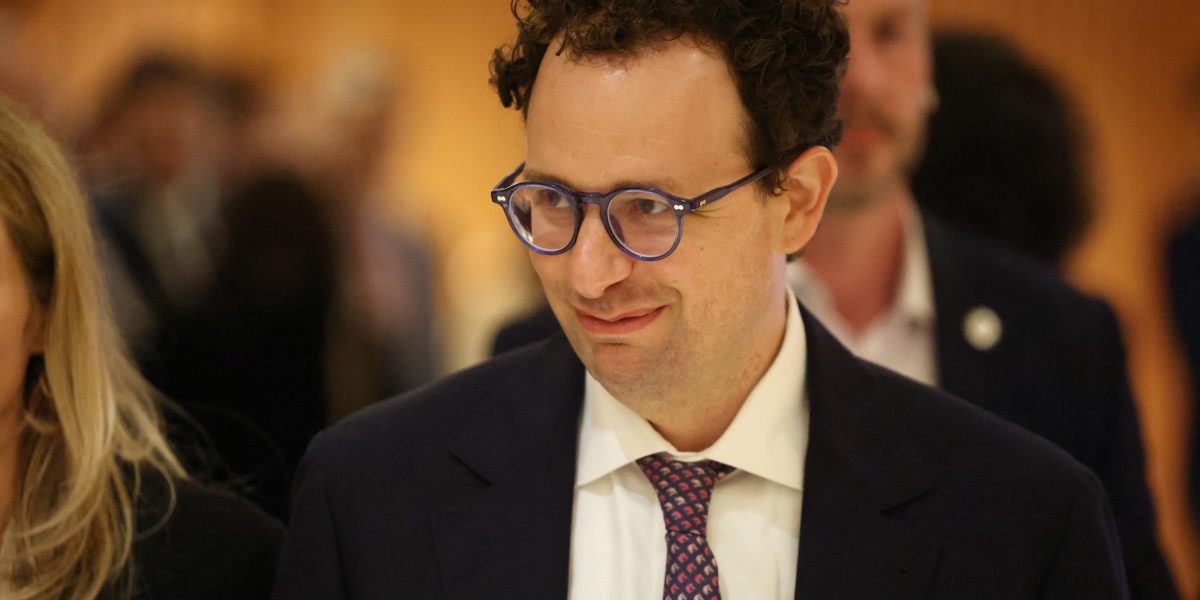
WASHINGTON (AP) -- White House chief of staff Susie Wiles plans to sound out Anthropic CEO Dario Amodei about the artificial intelligence company's new Mythos model, which has attracted attention from the federal government for how it could transform national security and the economy. A White House official, who requested anonymity to discuss the planned meeting Friday, said the administration is engaging with advanced AI labs about their models and the security of software. The official stressed that any new technology that might be used by the federal government would require a technical period for evaluation. The meeting comes after tensions have run hot between the Trump administration and the safety-conscious Anthropic, which has sought to put guardrails on the development of AI to minimize any potential risks and maximize its economic and national security benefits for the U.S. President Donald Trump tried to stop all federal agencies from using Anthropic's chatbot Claude over the company's contract dispute with the Pentagon, with Trump saying in a February social media post that the administration "will not do business with them again!" Defense Secretary Pete Hegseth also sought to declare Anthropic a supply chain risk, an unprecedented move against a U.S. company that Anthropic has challenged in two federal courts. The company said it wanted assurance the Pentagon would not use its technology in fully autonomous weapons and the surveillance of Americans. Hegseth said the company must allow for any uses the Pentagon deemed lawful. U.S. District Judge Rita Lin issued a ruling in March that blocked the enforcement of Trump's social media directive ordering all federal agencies to stop using Anthropic products. Anthropic declined to speak about the meeting in advance. The San Francisco-based Anthropic has said the new Mythos model it announced on April 7 is so "strikingly capable" that it is limiting its use to select customers because of its ability to surpass human cybersecurity experts in finding and exploiting computer vulnerabilities. And while some industry experts have questioned whether Anthropic's claims of too-powerful AI technology were a marketing ploy, even some of the company's sharpest critics have suggested that Mythos might represent a further advancement in AI. One influential Anthropic critic, David Sacks, who was the White House's AI and crypto czar, said people should "take this seriously." "Anytime Anthropic is scaring people, you have to ask, 'Is this a tactic? Is this part of their Chicken Little routine? Or is it real?'" Sacks said on the "All-In" podcast he co-hosts with other tech investors. "With cyber, I actually would give them credit in this case and say this is more on the real side." Sacks said, "It just makes sense that as the coding models become more and more capable, they are more capable at finding bugs. That means they're more capable at finding vulnerabilities. That means they're more capable at stringing together multiple vulnerabilities and creating an exploit." The model's potential benefits, as well as its risks, have also attracted attention outside the U.S. The United Kingdom's AI Security Institute said it evaluated the new model and found it a "step up" over previous models, which were already rapidly improving. "Mythos Preview can exploit systems with weak security posture, and it is likely that more models with these capabilities will be developed," the institute said in a report. Anthropic has also been in talks with the European Union about its AI models, including advanced models that haven't yet been released in Europe, European Commission spokesman Thomas Regnier said Friday. Axios first reported the scheduled meeting between Wiles and Amodei. When it announced Mythos, Anthropic said it was also forming an initiative called Project Glasswing, bringing together tech giants such as Amazon, Apple, Google and Microsoft, along with other companies like JPMorgan Chase, in hopes of securing the world's critical software from "severe" fallout that the new model could pose to public safety, national security and the economy. "We're releasing it to a subset of some of the world's most important companies and organizations so they can use this to find vulnerabilities," said the Anthropic co-founder and policy chief, Jack Clark, at this week's Semafor World Economy conference. Clark added that Mythos, while ahead of the curve, is not a "special model." "There will be other systems just like this in a few months from other companies, and in a year to a year-and-a-half later, there will be open-weight models from China that have these capabilities," he said. So the world is going to have to get ready for more powerful systems that are going to exist within it."

Anthropic CEO Meets White House Amid Legal Fight Over AI Blacklisting
Dario Amodei, the CEO of Anthropic, is on his way to meet with Susie Wiles, the White House Chief of Staff. This meeting comes as the tension rises between Anthropic and the Trump administration regarding the use of its AI technologies. The confrontation stems from Anthropic's challenge to the government's classification of the company as a "supply chain risk." This designation arose from disagreements over the military's intended use of its Claude AI model. The Pentagon desired unrestricted access for various lawful purposes, like autonomous weapons and surveillance operations. Anthropic, however, was cautious, raising concerns about safety and legal implications. This disagreement has made its way through the courts, with a federal judge at one point blocking parts of the government's actions. Yet, an appeals court has since allowed the Department of Defense to sever ties with Anthropic while the legal battles continue. The heart of the issue revolves around Anthropic's forthcoming AI model, Mythos. This tool can identify software vulnerabilities, but there are fears it could also be weaponized for cyberattacks. Still, U.S. agencies are considering tapping into this resource because of its potential value for national security.

AI firm Cerebras Systems files for Nasdaq IPO By Investing.com
Investing.com -- Cerebras Systems filed for a proposed Nasdaq initial public offering on Friday. The company builds computer chips designed to accelerate artificial intelligence training and inference. Cerebras is known for its Wafer-Scale Engine, a single processor that keeps data and memory on one piece of silicon to address traditional performance bottlenecks. Cerebras builds computer systems for complex AI deep learning applications. Morgan Stanley, Citigroup, Barclays, and UBS will serve as lead underwriters for the offering. This article was generated with the support of AI and reviewed by an editor. For more information see our T&C.

AI firm Cerebras Systems files for proposed Nasdaq IPO By Investing.com
AI company Cerebras Systems has on Friday filed for a proposed Nasdaq IPO. Cerebras Systems builds the world's largest computer chips, specifically designed to accelerate AI training and inference. They are best known for their Wafer-Scale Engine, a massive single processor that overcomes traditional performance bottlenecks by keeping data and memory on a single piece of silicon. The company builds computer systems for complex AI deep learning applications. The company's revenue increased from $24.6 million in 2022 to $78.7 million in 2023 and to $290.3 million in 2024, representing a more than tenfold increase over three years. The company's revenue increased to $510.0 million in 2025, representing year-over-year growth of 76%. The company earned net income of $237.8 million in 2025 and incurred a net loss of $481.6 million in 2024. The company incurred a non-GAAP net loss of $75.7 million in 2025 and $21.8 million in 2024, after excluding the impact of stock-based compensation expense and change in fair value (extinguishment) of forward contract liability from its GAAP net income (loss). Morgan Stanley, Citigroup, Barclays, and UBS will serve as lead underwriters.

White House chief of staff to meet with Anthropic CEO over its new AI technology
By JOSH BOAK and MATT O'BRIEN WASHINGTON (AP) -- White House chief of staff Susie Wiles plans to sound out Anthropic CEO Dario Amodei about the artificial intelligence company's new Mythos model, which has attracted attention from the federal government for how it could transform national security and the economy. A White House official, who requested anonymity to discuss the planned meeting Friday, said the administration is engaging with advanced AI labs about their models and the security of software. The official stressed that any new technology that might be used by the federal government would require a technical period for evaluation. The meeting comes after tensions have run hot between the Trump administration and the safety-conscious Anthropic, which has sought to put guardrails on the development of AI to minimize any potential risks and maximize its economic and national security benefits for the U.S. President Donald Trump tried to stop all federal agencies from using Anthropic's chatbot Claude over the company's contract dispute with the Pentagon, with Trump saying in a February social media post that the administration "will not do business with them again!" Defense Secretary Pete Hegseth also sought to declare Anthropic a supply chain risk, an unprecedented move against a U.S. company that Anthropic has challenged in two federal courts. The company said it wanted assurance the Pentagon would not use its technology in fully autonomous weapons and the surveillance of Americans. Hegseth said the company must allow for any uses the Pentagon deemed lawful. U.S. District Judge Rita Lin issued a ruling in March that blocked the enforcement of Trump's social media directive ordering all federal agencies to stop using Anthropic products. Anthropic declined to speak about the meeting in advance. The San Francisco-based Anthropic has said the new Mythos model it announced on April 7 is so "strikingly capable" that it is limiting its use to select customers because of its ability to surpass human cybersecurity experts in finding and exploiting computer vulnerabilities. And while some industry experts have questioned whether Anthropic's claims of too-powerful AI technology were a marketing ploy, even some of the company's sharpest critics have suggested that Mythos might represent a further advancement in AI. One influential Anthropic critic, David Sacks, who was the White House's AI and crypto czar, said people should "take this seriously." "Anytime Anthropic is scaring people, you have to ask, 'Is this a tactic? Is this part of their Chicken Little routine? Or is it real?'" Sacks said on the "All-In" podcast he co-hosts with other tech investors. "With cyber, I actually would give them credit in this case and say this is more on the real side." Sacks said, "It just makes sense that as the coding models become more and more capable, they are more capable at finding bugs. That means they're more capable at finding vulnerabilities. That means they're more capable at stringing together multiple vulnerabilities and creating an exploit." The model's potential benefits, as well as its risks, have also attracted attention outside the U.S. The United Kingdom's AI Security Institute said it evaluated the new model and found it a "step up" over previous models, which were already rapidly improving. "Mythos Preview can exploit systems with weak security posture, and it is likely that more models with these capabilities will be developed," the institute said in a report. Anthropic has also been in talks with the European Union about its AI models, including advanced models that haven't yet been released in Europe, European Commission spokesman Thomas Regnier said Friday. Axios first reported the scheduled meeting between Wiles and Amodei. When it announced Mythos, Anthropic said it was also forming an initiative called Project Glasswing, bringing together tech giants such as Amazon, Apple, Google and Microsoft, along with other companies like JPMorgan Chase, in hopes of securing the world's critical software from "severe" fallout that the new model could pose to public safety, national security and the economy. "We're releasing it to a subset of some of the world's most important companies and organizations so they can use this to find vulnerabilities," said the Anthropic co-founder and policy chief, Jack Clark, at this week's Semafor World Economy conference. Clark added that Mythos, while ahead of the curve, is not a "special model." "There will be other systems just like this in a few months from other companies, and in a year to a year-and-a-half later, there will be open-weight models from China that have these capabilities," he said. So the world is going to have to get ready for more powerful systems that are going to exist within it." O'Brien reported from Providence, R.I. AP business reporter Kelvin Chan contributed to this report from London.

Scoop: Bessent and Wiles met Anthropic's Amodei in sign of thaw
Why it matters: Anthropic is building tools that could have enormous implications for the federal government. But that same government is currently fighting Anthropic in court after the Pentagon declared it a "supply chain risk." The meeting points to a potential thaw. * "This is a big problem. Everyone's complaining. There's all this drama. So this got elevated to Susie to hear Dario out, determine what is bullshit and start to plot a way forward," a Trump adviser told Axios. * It was not immediately clear whether the meeting produced a breakthrough. The Anthropic side went in cautiously optimistic. * The White House said afterwards that the "introductory meeting" had been "productive and constructive," adding: "We discussed opportunities for collaboration, as well as shared approaches and protocols to address the challenges associated with scaling this technology. The conversation also explored the balance between advancing innovation and ensuring safety." Driving the news: Due to its frightening cyber capabilities, Anthropic only released its new Mythos Preview model to a select group of companies and organizations. * Treasury and other government agencies have expressed interest in joining that list. Two sources told Axios prior to the White House meeting that a deal along those lines could be struck soon. * One concern is that Mythos and other cutting edge AI tools could allow nefarious hackers to breach the U.S. financial system. Alternatively, companies and government agencies could utilize Mythos to harden their cyber defenses before bad actors get access. * Bessent joined the meeting because "he wants to make sure everyone is on the same page," a source familiar with his thinking said. "He understands this is a private company but there is a role for government to play here." Split screen: Anthropic is still fighting the "supply chain risk" designation, which the Pentagon applied after the company refused to make its software available to the military for "all lawful uses." * Amodei insisted on banning its use for mass surveillance or to develop autonomous weapons. During weeks of bitter and ultimately failed negotiations, some in the Pentagon grew to loathe Anthropic and Amodei. * President Trump declared at the time of the Pentagon designation that all government agencies must cease their use of Anthropic, but that pronouncement is on hold as the court battle continues. * The company still has plenty of detractors inside the administration. "They're using this Mythos cyber weapon to find friendly ears in the government," one U.S. official said. "They're succeeding." The bottom line: Another U.S. official said that "every agency except [The Department of] War wants to" use Anthropic.
Vandenberg's Next Mission: SpaceX Rocket Launch on Saturday Morning
Landing: The first-stage booster, making its eighth flight, will land on the Of Course I Still Love You droneship positioned in the Pacific Ocean. To watch the liftoff in person, the Lompoc Valley has multiple locations offering views of the launch pad. Those include the peak of Harris Grade Road, west of Lompoc's city limits and around Vandenberg Village, including near the intersection of Moonglow and Stardust roads. Vandenberg launches close to sunset or sunrise can be especially picturesque. If skies are clear, the rocket's departure might be visible from elsewhere around California and, under certain conditions, other Western states. Upcoming Launches: SpaceX plans additional Falcon rocket liftoffs from Vandenberg for Starlink missions on April 21, 25 and 29. Launches can get delayed for a number of reasons, including technical troubles with the rocket, payload or support equipment; unfavorable weather; and scheduling issues.

White House chief of staff meets with Anthropic CEO over its new AI technology
WASHINGTON (AP) -- White House chief of staff Susie Wiles on Friday sounded out Anthropic CEO Dario Amodei about the artificial intelligence company's new Mythos model, which has attracted attention from the federal government for how it could transform national security and the economy. A White House official, who requested anonymity to discuss the meeting ahead of time, said the administration is engaging with advanced AI labs about their models and the security of software. The official stressed that any new technology that might be used by the federal government would require a technical period for evaluation. The White House said afterward that the meeting was productive and construction, as opportunities for collaboration were discussed as well as the goal of balancing innovation and safety. The meeting came after tensions had run hot between the Trump administration and the safety-conscious Anthropic, which has sought to put guardrails on the development of AI to minimize any potential risks and maximize its economic and national security benefits for the U.S. President Donald Trump tried to stop all federal agencies from using Anthropic's chatbot Claude over the company's contract dispute with the Pentagon, with Trump saying in a February social media post that the administration "will not do business with them again!" When Trump was asked Friday while in Arizona if Anthropic had a meeting at the White House, the president said he had "no idea." Defense Secretary Pete Hegseth also sought to declare Anthropic a supply chain risk, an unprecedented move against a U.S. company that Anthropic has challenged in two federal courts. The company said it wanted assurance the Pentagon would not use its technology in fully autonomous weapons and the surveillance of Americans. Hegseth said the company must allow for any uses the Pentagon deemed lawful. U.S. District Judge Rita Lin issued a ruling in March that blocked the enforcement of Trump's social media directive ordering all federal agencies to stop using Anthropic products. Anthropic declined to speak about the meeting in advance. The San Francisco-based Anthropic has said the new Mythos model it announced on April 7 is so "strikingly capable" that it is limiting its use to select customers because of its ability to surpass human cybersecurity experts in finding and exploiting computer vulnerabilities. And while some industry experts have questioned whether Anthropic's claims of too-powerful AI technology were a marketing ploy, even some of the company's sharpest critics have suggested that Mythos might represent a further advancement in AI. One influential Anthropic critic, David Sacks, who was the White House's AI and crypto czar, said people should "take this seriously." "Anytime Anthropic is scaring people, you have to ask, 'Is this a tactic? Is this part of their Chicken Little routine? Or is it real?'" Sacks said on the "All-In" podcast he co-hosts with other tech investors. "With cyber, I actually would give them credit in this case and say this is more on the real side." Sacks said: "It just makes sense that as the coding models become more and more capable, they are more capable at finding bugs. That means they're more capable at finding vulnerabilities. That means they're more capable at stringing together multiple vulnerabilities and creating an exploit." The model's potential benefits, as well as its risks, have also attracted attention outside the U.S. The United Kingdom's AI Security Institute said it evaluated the new model and found it a "step up" over previous models, which were already rapidly improving. "Mythos Preview can exploit systems with weak security posture, and it is likely that more models with these capabilities will be developed," the institute said in a report. Anthropic has also been in talks with the European Union about its AI models, including advanced models that haven't yet been released in Europe, European Commission spokesman Thomas Regnier said Friday. Axios first reported the scheduled meeting between Wiles and Amodei. When it announced Mythos, Anthropic said it was also forming an initiative called Project Glasswing, bringing together tech giants such as Amazon, Apple, Google and Microsoft, along with other companies like JPMorgan Chase, in hopes of securing the world's critical software from "severe" fallout that the new model could pose to public safety, national security and the economy. "We're releasing it to a subset of some of the world's most important companies and organizations so they can use this to find vulnerabilities," said the Anthropic co-founder and policy chief, Jack Clark, at this week's Semafor World Economy conference. Clark added that Mythos, while ahead of the curve, is not a "special model." "There will be other systems just like this in a few months from other companies, and in a year to a year-and-a-half later, there will be open-weight models from China that have these capabilities," he said. So the world is going to have to get ready for more powerful systems that are going to exist within it." ___ O'Brien reported from Providence, R.I. AP business reporter Kelvin Chan contributed to this report from London.
AI chipmaker Cerebras files for IPO following mega deal with OpenAI
AI chipmaker Cerebras (CBRS) filed for its initial public offering with the U.S. Securities and Exchange Commission on Friday following a recent pair of significant deals with OpenAI (OPENAI) and Amazon Web Services (AMZN). The company's sizable Wafer-Scale Engine processor Cerebras positions its Wafer-Scale Engine as significantly larger and more memory-capable than Nvidia's B200, aiming for exceptional AI speed and differentiation in handling AI workloads. Major deals with OpenAI and AWS could significantly boost Cerebras' revenue, expand its customer base, and establish its technology as an alternative in the cloud AI chip market. Cerebras showed a sharp revenue increase to $510M and turned profitable with a $237.8M net income after significant losses previously, suggesting improving profitability driven by recent successes.

White House chief of staff to meet with Anthropic CEO over its new AI technology - The Boston Globe
President Donald Trump tried to stop all federal agencies from using Anthropic's chatbot Claude over the company's contract dispute with the Pentagon, with Trump saying in a February social media post that the administration "will not do business with them again!" When Trump was asked Friday while in Arizona if Anthropic had a meeting at the White House, the president said he had "no idea." Defense Secretary Pete Hegseth also sought to declare Anthropic a supply chain risk, an unprecedented move against a U.S. company that Anthropic has challenged in two federal courts. The company said it wanted assurance the Pentagon would not use its technology in fully autonomous weapons and the surveillance of Americans. Hegseth said the company must allow for any uses the Pentagon deemed lawful. U.S. District Judge Rita Lin issued a ruling in March that blocked the enforcement of Trump's social media directive ordering all federal agencies to stop using Anthropic products. Anthropic declined to speak about the meeting in advance. The San Francisco-based Anthropic has said the new Mythos model it announced on April 7 is so "strikingly capable" that it is limiting its use to select customers because of its ability to surpass human cybersecurity experts in finding and exploiting computer vulnerabilities. And while some industry experts have questioned whether Anthropic's claims of too-powerful AI technology were a marketing ploy, even some of the company's sharpest critics have suggested that Mythos might represent a further advancement in AI. One influential Anthropic critic, David Sacks, who was the White House's AI and crypto czar, said people should "take this seriously." "Anytime Anthropic is scaring people, you have to ask, 'Is this a tactic? Is this part of their Chicken Little routine? Or is it real?'" Sacks said on the "All-In" podcast he co-hosts with other tech investors. "With cyber, I actually would give them credit in this case and say this is more on the real side." Sacks said, "It just makes sense that as the coding models become more and more capable, they are more capable at finding bugs. That means they're more capable at finding vulnerabilities. That means they're more capable at stringing together multiple vulnerabilities and creating an exploit." The model's potential benefits, as well as its risks, have also attracted attention outside the U.S. The United Kingdom's AI Security Institute said it evaluated the new model and found it a "step up" over previous models, which were already rapidly improving. "Mythos Preview can exploit systems with weak security posture, and it is likely that more models with these capabilities will be developed," the institute said in a report. Anthropic has also been in talks with the European Union about its AI models, including advanced models that haven't yet been released in Europe, European Commission spokesman Thomas Regnier said Friday. Axios first reported the scheduled meeting between Wiles and Amodei. When it announced Mythos, Anthropic said it was also forming an initiative called Project Glasswing, bringing together tech giants such as Amazon, Apple, Google and Microsoft, along with other companies like JPMorgan Chase, in hopes of securing the world's critical software from "severe" fallout that the new model could pose to public safety, national security and the economy. "We're releasing it to a subset of some of the world's most important companies and organizations so they can use this to find vulnerabilities," said the Anthropic co-founder and policy chief, Jack Clark, at this week's Semafor World Economy conference. Clark added that Mythos, while ahead of the curve, is not a "special model." "There will be other systems just like this in a few months from other companies, and in a year to a year-and-a-half later, there will be open-weight models from China that have these capabilities," he said. So the world is going to have to get ready for more powerful systems that are going to exist within it." ___

This Big Tech Stock Has a Lot to Gain From a SpaceX IPO
SpaceX is aiming for a $1.75 trillion to $2 trillion valuation at its IPO. SpaceX is one of the world's most talked-about companies right now, with its plans for an initial public offering (IPO) beginning to gain momentum. According to some reports, SpaceX is looking to raise at least $75 billion at a $1.75 trillion to $2 trillion valuation, which would make it the largest IPO in history. A handful of companies are expected to benefit significantly from SpaceX's growth, but no other big tech company is likely to benefit more from its IPO than Alphabet (NASDAQ: GOOG)(NASDAQ: GOOGL). Will AI create the world's first trillionaire? Our team just released a report on the one little-known company, called an "Indispensable Monopoly" providing the critical technology Nvidia and Intel both need. Continue " Image source: The Motley Fool. In 2015, Alphabet invested $900 million in SpaceX, giving it a 7% stake in the company at a valuation of around $12 billion. If SpaceX were to hit its IPO valuation goal, it would represent a roughly 14,480% to 16,560% increase since Alphabet first invested 11 years ago. Alphabet's current stake in SpaceX is likely around 5% after some share dilution, so a SpaceX valuation of $1.75 trillion to $2 trillion would mean Alphabet's initial $900 million investment could be worth north of $100 billion. Admittedly, this would be just paper gains initially, but it's still a nice card to have in its deck if or when Alphabet wants to put the money to work somewhere. This is especially true as the company ramps up its spending plans to build out data centers and other AI infrastructure. It's just another of many reasons to give Alphabet a closer look as a possible investment. Before you buy stock in Alphabet, consider this: The Motley Fool Stock Advisor analyst team just identified what they believe are the 10 best stocks for investors to buy now... and Alphabet wasn't one of them. The 10 stocks that made the cut could produce monster returns in the coming years. Consider when Netflix made this list on December 17, 2004... if you invested $1,000 at the time of our recommendation, you'd have $581,304!* Or when Nvidia made this list on April 15, 2005... if you invested $1,000 at the time of our recommendation, you'd have $1,215,992!* Now, it's worth noting Stock Advisor's total average return is 1,016% -- a market-crushing outperformance compared to 197% for the S&P 500. Don't miss the latest top 10 list, available with Stock Advisor, and join an investing community built by individual investors for individual investors. Stefon Walters has no position in any of the stocks mentioned. The Motley Fool has positions in and recommends Alphabet. The Motley Fool has a disclosure policy.
