News & Updates
The latest news and updates from companies in the WLTH portfolio.
Anthropic Ruling, AI ROI Failures, Hacker Identified Globally | Ep. 71
Arnold Davick, host of 2-Minute Tech Briefing, is a journalist and multimedia storyteller with more than a decade of experience reporting in the New York market. He has covered breaking news, politics, culture, and entertainment for NY1 Spectrum News, Access Hollywood, News 12, and Verizon FiOS1 News. Fluent in Spanish and skilled in live reporting, interviewing, and digital production, Arnold has interviewed industry leaders, public officials, and cultural figures. His storytelling bridges the gap between complexity and connection, bringing clarity and humanity to the stories he covers. Hello and welcome to your 2-Minute Tech briefing from ComputerWorld. I'm your host Arnold Davick, reporting from the floor of the New York Stock Exchange. Here are the top IT stories you need to know for Wednesday, April 15th. From ComputerWorld, A federal appeals court has refused to suspend the Pentagon supply chain risk designation against anthropic, a three judge panel wrote in its order Wednesday. "O. ne side is a relatively contained risk of financial harm to a single private company. On the other side is judicial management of how and through whom the Department of War secures vital AI technology during an active military conflict.". The panel said the order is not final, with oral arguments set for May 19. From CIO, Gartner says many AI efforts infrastructure and operations stall before delivering meaningful returns.

Anthropic Ruling, AI ROI Failures, Hacker Identified Globally | Ep. 71
Arnold Davick, host of 2-Minute Tech Briefing, is a journalist and multimedia storyteller with more than a decade of experience reporting in the New York market. He has covered breaking news, politics, culture, and entertainment for NY1 Spectrum News, Access Hollywood, News 12, and Verizon FiOS1 News. Fluent in Spanish and skilled in live reporting, interviewing, and digital production, Arnold has interviewed industry leaders, public officials, and cultural figures. His storytelling bridges the gap between complexity and connection, bringing clarity and humanity to the stories he covers. Hello and welcome to your 2-Minute Tech briefing from ComputerWorld. I'm your host Arnold Davick, reporting from the floor of the New York Stock Exchange. Here are the top IT stories you need to know for Wednesday, April 15th. From ComputerWorld, A federal appeals court has refused to suspend the Pentagon supply chain risk designation against anthropic, a three judge panel wrote in its order Wednesday. "O. ne side is a relatively contained risk of financial harm to a single private company. On the other side is judicial management of how and through whom the Department of War secures vital AI technology during an active military conflict.". The panel said the order is not final, with oral arguments set for May 19. From CIO, Gartner says many AI efforts infrastructure and operations stall before delivering meaningful returns.

Anthropic CEO Dario Amodei arrives at White House for talks
WASHINGTON, April 17 (Reuters) - Anthropic CEO Dario Amodei arrived at the White House for talks on Friday amid the artificial intelligence startup's dispute with the Pentagon, according to a Reuters witness. Amodei's visit comes as U.S. President Donald Trump's administration acknowledges the advanced capabilities of Anthropic's new AI model, Mythos, for its sophisticated cybersecurity defense breaching abilities. Anthropic did not immediately respond to a request for comment. Amodei is slated to meet White House chief of staff Susie Wiles, Axios reported earlier. Announced on April 7, Mythos is being deployed as part of Anthropic's "Project Glasswing," a controlled initiative under which select organizations are permitted to use the unreleased Claude Mythos Preview model for defensive cybersecurity purposes. A White House official said earlier on Friday that the Trump administration continues to speak with government and industry, including working with AI labs to ensure their models help secure software vulnerabilities. Any new technology that could be used by the government would require a period of evaluation for security, the official added. Anthropic was discussing Mythos with the Trump administration, co-founder Jack Clark said on Monday, even after the Pentagon cut off business ties following a contract dispute. (Reporting by Jessica Koscielniak and Bo Erickson; Writing by Doina Chiacu; Editing by Caitlin Webber)
White House chief of staff to meet with Anthropic CEO over its new AI technology
White House chief of staff Susie Wiles plans to sound out Anthropic CEO Dario Amodei about the artificial intelligence company's new Mythos model, which has attracted attention from the federal government for how it could transform national security and the economy. A White House official, who requested anonymity to discuss the planned meeting Friday, said the administration is engaging with advanced AI labs about their models and the security of software. The official stressed that any new technology that might be used by the federal government would require a technical period for evaluation. The meeting comes after tensions have run hot between the Trump administration and the safety-conscious Anthropic, which has sought to put guardrails on the development of AI to minimize any potential risks and maximize its economic and national security benefits for the U.S. President Donald Trump tried to stop all federal agencies from using Anthropic's chatbot Claude over the company's contract dispute with the Pentagon, with Trump saying in a February social media post that the administration "will not do business with them again!" Defense Secretary Pete Hegseth also sought to declare Anthropic a supply chain risk, an unprecedented move against a U.S. company that Anthropic has challenged in two federal courts. The company said it wanted assurance the Pentagon would not use its technology in fully autonomous weapons and the surveillance of Americans. Hegseth said the company must allow for any uses the Pentagon deemed lawful. U.S. District Judge Rita Lin issued a ruling in March that blocked the enforcement of Trump's social media directive ordering all federal agencies to stop using Anthropic products. Anthropic declined to speak about the meeting in advance. The San Francisco-based Anthropic has said the new Mythos model it announced on April 7 is so "strikingly capable" that it is limiting its use to select customers because of its ability to surpass human cybersecurity experts in finding and exploiting computer vulnerabilities. And while some industry experts have questioned whether Anthropic's claims of too-powerful AI technology were a marketing ploy, even some of the company's sharpest critics have suggested that Mythos might represent a further advancement in AI. One influential Anthropic critic, David Sacks, who was the White House's AI and crypto czar, said people should "take this seriously." "Anytime Anthropic is scaring people, you have to ask, 'Is this a tactic? Is this part of their Chicken Little routine? Or is it real?'" Sacks said on the "All-In" podcast he co-hosts with other tech investors. "With cyber, I actually would give them credit in this case and say this is more on the real side." Sacks said, "It just makes sense that as the coding models become more and more capable, they are more capable at finding bugs. That means they're more capable at finding vulnerabilities. That means they're more capable at stringing together multiple vulnerabilities and creating an exploit." The model's potential benefits, as well as its risks, have also attracted attention outside the U.S. The United Kingdom's AI Security Institute said it evaluated the new model and found it a "step up" over previous models, which were already rapidly improving. "Mythos Preview can exploit systems with weak security posture, and it is likely that more models with these capabilities will be developed," the institute said in a report. Anthropic has also been in talks with the European Union about its AI models, including advanced models that haven't yet been released in Europe, European Commission spokesman Thomas Regnier said Friday. Axios first reported the scheduled meeting between Wiles and Amodei. When it announced Mythos, Anthropic said it was also forming an initiative called Project Glasswing, bringing together tech giants such as Amazon, Apple, Google and Microsoft, along with other companies like JPMorgan Chase, in hopes of securing the world's critical software from "severe" fallout that the new model could pose to public safety, national security and the economy. "We're releasing it to a subset of some of the world's most important companies and organizations so they can use this to find vulnerabilities," said the Anthropic co-founder and policy chief, Jack Clark, at this week's Semafor World Economy conference. Clark added that Mythos, while ahead of the curve, is not a "special model." "There will be other systems just like this in a few months from other companies, and in a year to a year-and-a-half later, there will be open-weight models from China that have these capabilities," he said. So the world is going to have to get ready for more powerful systems that are going to exist within it."

White House and Federal Agencies Accessing Anthropic's Mythos Model Despite a Ban - Tekedia
The Trump administration has an ongoing ban and restriction on federal agencies fully working with Anthropic, partly stemming from the Pentagon labeling the company a supply-chain risk earlier. This appears tied to tensions over Anthropic's policies such as reluctance to support certain military applications like mass surveillance or autonomous weapons and broader national security reviews. Despite this, multiple federal agencies and congressional staff are quietly skirting or circumventing the restrictions to test and evaluate Claude Mythos. The Commerce Department's Center for AI Standards and Innovation (CAISI) is actively testing the model's advanced cybersecurity/hacking capabilities -- specifically its prowess at identifying and exploiting (or patching) vulnerabilities in software and critical infrastructure. Staff from at least three congressional committees have requested or held briefings focused on its cyber-scanning features. Agencies like those overseeing energy and treasury are interested in using it defensively to harden systems against sophisticated attacks. Anthropic has briefed senior U.S. government officials including the White House on the model and is in ongoing conversations about it. Co-founder Jack Clark has publicly stated that the government has to know about this stuff due to its potential national security implications. Mythos is described as Anthropic's most powerful model yet in certain domains -- exceptionally capable at offensive and defensive cyber tasks, including chaining exploits and finding zero-days in major operating systems. Anthropic itself has restricted public access to it, calling it too dangerous for broad release without stronger safeguards, and has only shared previews with a limited group of trusted partners; tech firms, cybersecurity companies, and now some government entities for vulnerability patching. This creates an ironic situation: one part of the government blacklist of Anthropic, while others seek access to its cutting-edge tech for defense. A meeting between White House Chief of Staff Susie Wiles and Anthropic CEO Dario Amodei was reportedly scheduled for today amid these tensions. Anthropic launched Claude Opus 4.7 as its new most capable generally available model; available now on claude.ai, API, Amazon Bedrock, Google Vertex AI, Microsoft Foundry, etc. Key improvements highlighted by Anthropic include; stronger performance in coding and software engineering i.e better at complex, multi-step tasks with less hand-holding. Enhanced vision and multimodal capabilities; sharper image analysis, reportedly significant gains like higher resolution. Improved reliability: better instruction following, self-checking for logic errors, and consistency on long or difficult tasks. Hybrid reasoning for agentic work, with a large context window, up to 1M tokens in some configurations. Built-in safeguards, including automatic blocking of high-risk cybersecurity requests. Anthropic openly concedes that Opus 4.7 does not surpass Mythos on evaluations -- Mythos remains their frontier model in raw capability especially cyber but it's held back for safety reasons. Opus 4.7 is positioned as a safer, more usable upgrade over Opus 4.6, retaking the lead among publicly available frontier models on many benchmarks (coding, agentic tasks, knowledge work). Pricing remains consistent with prior Opus tiers. This release comes amid the Mythos buzz, reflecting Anthropic's strategy of balancing rapid progress with responsibility: push the public frontier while gating the most potent and risky capabilities. These stories highlight ongoing tensions in AI development -- Capability vs. Safety: Mythos exemplifies responsible withholding due to dual-use risks, it could massively accelerate both cyber defense and attacks. With bans or blacklists, national security needs drive quiet collaboration -- especially as AI becomes central to cybersecurity. Anthropic is shipping updates quickly while navigating scrutiny, positioning Claude as a reliable, safety-focused alternative.
Anthropic's AI Revolution: Mythos Meets the White House | Technology
Anthropic CEO Dario Amodei visited the White House to discuss the company's dispute with the Pentagon over the deployment of their AI model, Mythos. The U.S. administration acknowledges Mythos's advanced capabilities, particularly in cybersecurity defense, and is evaluating its potential government applications. In a significant development, Anthropic CEO Dario Amodei visited the White House for discussions with the administration amidst a disagreement with the Pentagon. This visit, witnessed by Reuters, highlights the importance of Anthropic in the evolving technology landscape. The focus of the discussions revolves around Anthropic's new artificial intelligence model, Mythos, which has been recognized for its advanced cybersecurity capabilities. Launched on April 7, Mythos is at the core of 'Project Glasswing,' an initiative allowing select entities to employ the unreleased Claude Mythos Preview model for cybersecurity defense. A White House spokesperson noted ongoing collaborations across government and industry to ensure AI technologies like Mythos contribute positively to national security. Before any new tech is adopted by the government, it undergoes thorough security evaluations.

Anthropic launches Claude Design, and it's trying to work with Canva, not compete with it
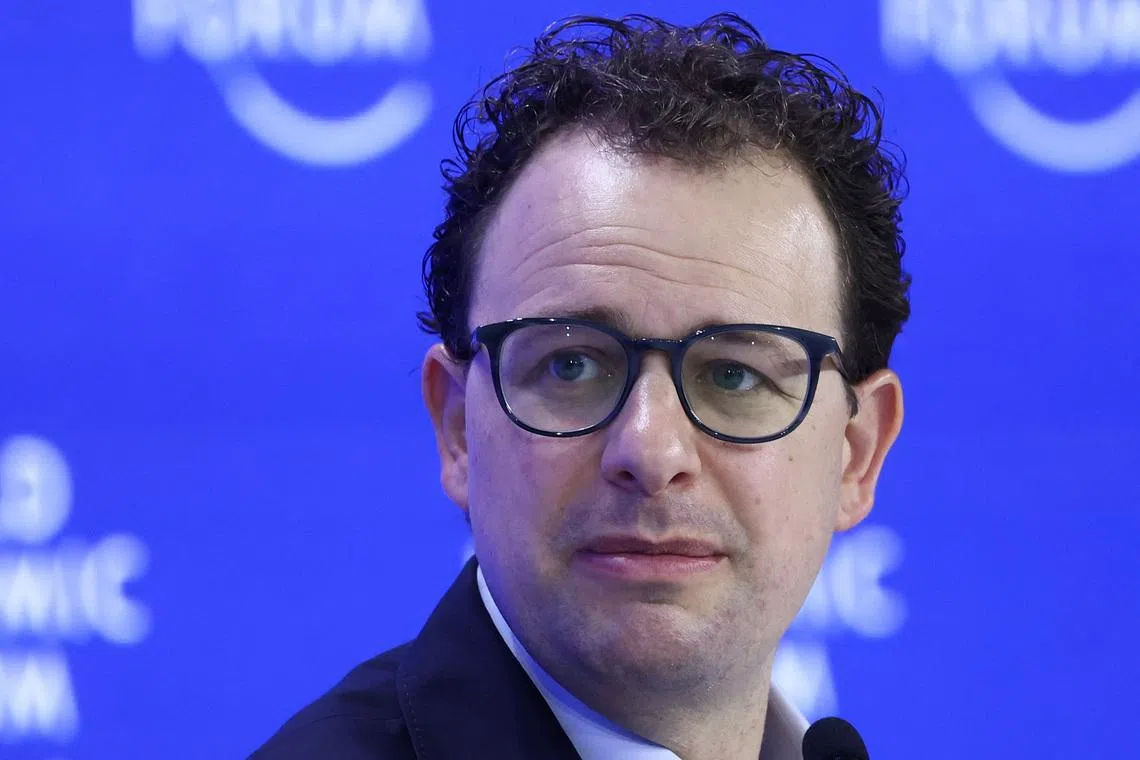
Graphic designers and casual users are still figuring out Canva's new AI 2.0, which can generate full designs from simple text prompts, and Anthropic is already showing off its own take. The company announced on Friday that it's launching Claude Design, a new experimental product that allows subscribers to use Claude to generate designs, prototypes, slides, and more. As you might expect, users describe what they want, and Claude will create an initial version. From there, users can directly edit or ask the chatbot to further fine-tune. Claude will also generate custom sliders that users can push and pull to modify corresponding elements. In the demo video, Claude lets the user adjust the glow and density of arcs it uses to illustrate a connected network. Claude Design can also apply a team's design system to every project it creates by reading a company's codebase and design files. "Every project after that uses your colors, typography, and comments automatically," according to the company. Outside of text prompts, there's also support for image and document uploads, and Anthropic has even included a web capture tool so enterprise customers can snapshot elements from their company's website. The app is powered by Claude Opus 4.7, which the company says is its most capable vision model to date. Claude Design is intended to help people without a design background give their ideas a first visual look. And Anthropic is surprisingly not trying to position it as the one-and-only design assistant. Instead, the company told TechCrunch that the platform is intended to complement design tools like Canva. Users who don't want to start with a design tool like Canva can get the idea from Claude Design and then export presentation decks or prototypes to Canva, where they are fully editable and collaborative. If you want to try the new app for yourself, it's available in research preview for Claude Pro, Max, Team, and Enterprise subscribers.
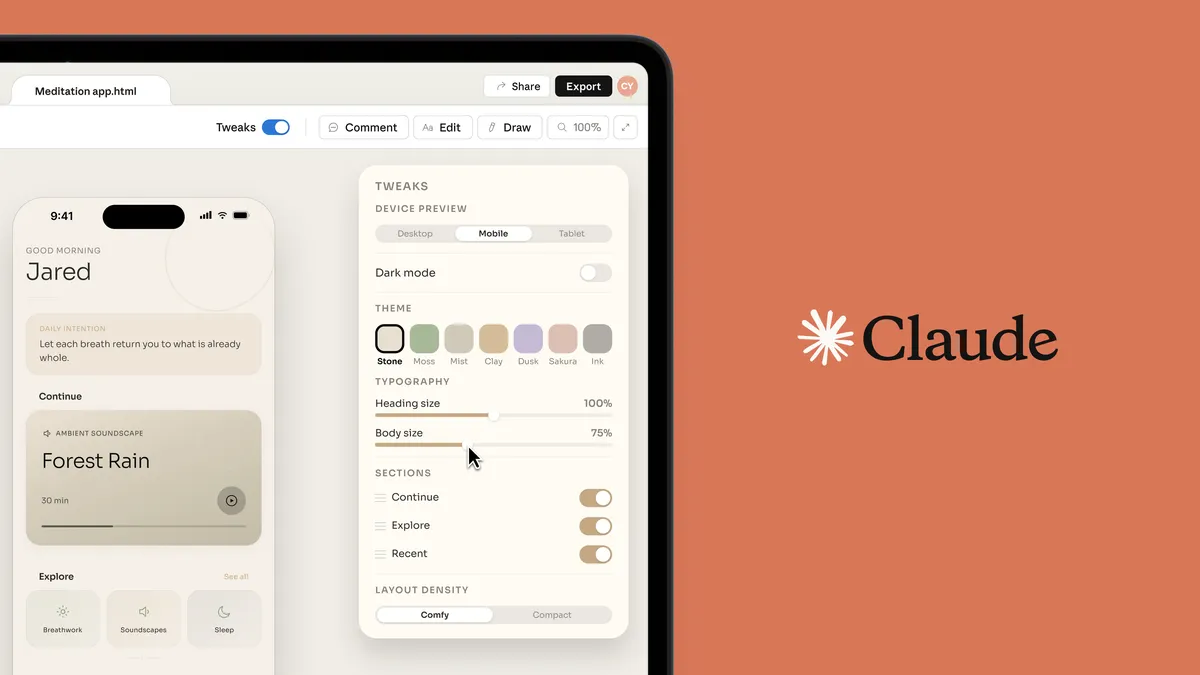
Anthropic Debuts Claude Design for Creating Prototypes, Pitch Decks, and Mockups
Anthropic today launched Claude Design, a new AI product for creating designs, prototypes, slides, and more. Claude Design uses Opus 4.7, a new AI model that was introduced earlier this week. Claude Design is able to mock up an initial design after being provided with a prompt, and from there, designers can make revisions through conversation, comments, direct edits, and custom sliders made by Claude. Anthropic says that teams have been using Claude Design for realistic prototypes, wireframes and mockups, design explorations, pitch decks, presentations, social media assets, and more. Working with Claude Design starts with brand assets, which Claude can get from the user's design files and codebase. Projects will use brand colors, typography, and other components, plus users can use a web capture tool to pull elements directly from their brand's website. Claude Design is not an image generator like Gemini's Nano Banana or ChatGPT, but it is similar to AI assistants that Adobe and Canva have rolled out. There are included collaboration tools so multiple members of an organization can access and edit a design, and content created by Claude can be exported anywhere with support for Canva, PDF, PPTX, and standalone HTML files. Designs that are ready to build can be handed off to Claude Code, and Anthropic plans to make it easier to build integrations with Claude Design in the coming weeks. Claude Design is available as a research preview for Claude Pro, Max, Team, and Enterprise subscribers. It is rolling out to users gradually throughout the day.
Anthropic CEO Dario Amodei arrives at White House for talks
WASHINGTON, April 17 (Reuters) - Anthropic CEO Dario Amodei arrived at the White House for talks on Friday amid the artificial intelligence startup's dispute with the Pentagon, according to a Reuters witness. Amodei's visit comes as U.S. President Donald Trump's administration acknowledges the advanced capabilities of Anthropic's new AI model, Mythos, for its sophisticated cybersecurity defense breaching abilities. Announced on April 7, Mythos is being deployed as part of Anthropic's "Project Glasswing," a controlled initiative under which select organizations are permitted to use the unreleased Claude Mythos Preview model for defensive cybersecurity purposes. A White House official said earlier on Friday that the Trump administration continues to engage across government and industry, including working with frontier AI labs to ensure their models help secure software vulnerabilities. Any new technology that could be used by the government would require a period of evaluation for security, the official added. (Reporting by Jessica Koscielniak and Bo Erickson; Writing by Doina Chiacu; Editing by Caitlin Webber)
White House meets AI firm Anthropic amid political tensions, Pentagon dispute
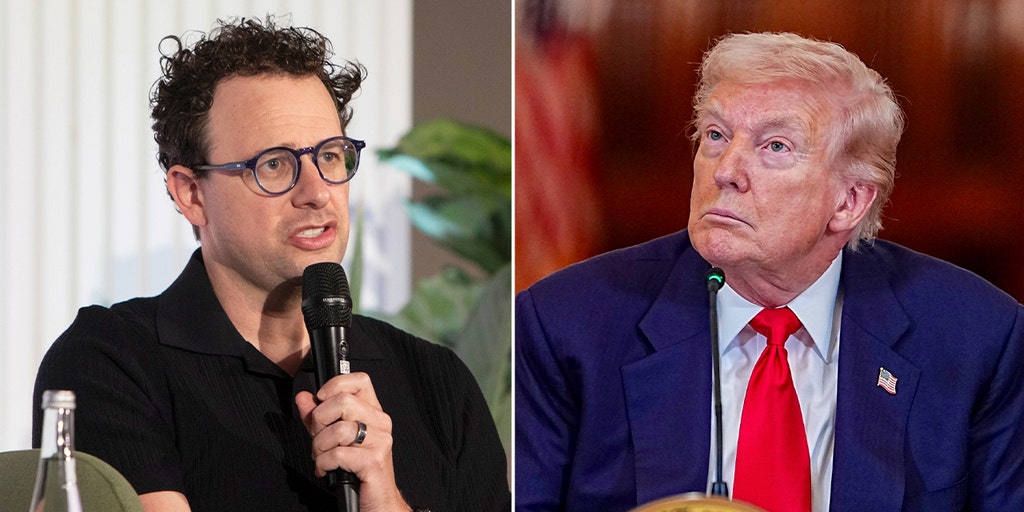
OthersideAI co-founder and CEO Matt Shumer joins 'The Sunday Briefing' to discuss Anthropic's new AI model, Mythos, and growing concerns over its advanced capabilities and potential cybersecurity risks. One month after President Donald Trump ordered a government-wide halt on artificial intelligence firm Anthropic's technology following a clash with the Pentagon, the company's CEO is back at the White House for high-level talks -- as officials reconsider whether a system they sidelined over national security and political concerns may be too important to ignore. A source familiar with the meeting told Fox News White House chief of staff Susie Wiles met with Anthropic CEO Dario Amodei Friday. Anthropic's new artificial intelligence model, Mythos Preview, is considered so advanced that the company has restricted its release, limiting access to a small group of partners over concerns about potential misuse. The meeting signals a rapid reversal inside the Trump administration, as officials weigh whether a system previously flagged as a national security risk could also be critical to defending U.S. infrastructure -- exposing a growing internal tension over how to handle powerful AI tools with both defensive and offensive potential. The talks come despite a recent clash inside the Trump administration, as officials reconsider a company the Pentagon flagged as a supply chain risk. Its ties to former Biden officials and past criticism of Trump by its CEO have added a political dimension to the debate over whether its technology should return to government use. MADURO RAID QUESTIONS TRIGGER PENTAGON REVIEW OF TOP AI FIRM AS POTENTIAL 'SUPPLY CHAIN RISK' That potential and the risks that come with it already have triggered tensions inside the U.S. government. The meeting comes after a sharp break between Anthropic and the Pentagon earlier in 2026. Defense Secretary Pete Hegseth designated the company a national security "supply chain risk," effectively cutting it out of military systems and barring contractors from using its technology. Anthropic is now challenging the designation in court, after filing multiple lawsuits against the Pentagon and other federal agencies arguing the "supply chain risk" label is unlawful and retaliatory. The designation, which effectively bars contractors from using Anthropic's technology and has been compared to measures typically reserved for foreign adversaries, already has faced conflicting rulings in federal court, with one judge temporarily blocking parts of the policy while an appeals court declined to halt its enforcement. The legal fight is ongoing, leaving contractors and agencies navigating uncertainty over whether and how Anthropic's systems can be used. The move followed a dispute over how the Pentagon could use Anthropic's AI. The company declined to grant open-ended authorization for "all lawful purposes," instead insisting its systems not be used for mass domestic surveillance or fully autonomous weapons. While Pentagon officials said they do not rely on AI for either purpose, they rejected being constrained by a private company's restrictions. Trump then directed federal agencies to stop using Anthropic's models altogether, escalating the standoff beyond the Defense Department into a government-wide halt. Now, just weeks later, the company is back in high-level talks with the White House as officials weigh whether its new Mythos system -- despite the earlier ban -- could shift the balance of cyber defense and attack. The dispute has also taken on a political dimension. Amodei has previously drawn attention for his criticism of Trump, at one point likening him to a "feudal warlord" in a pre-election Facebook post, according to a Wall Street Journal report. In an internal message posted on Anthropic's Slack platform and later leaked to The Information, Amodei suggested the Trump administration's dispute with the company was driven in part by its refusal to offer what he described as "dictator-style praise." The message, written during a rapid escalation of tensions in early March, was later cited by the Wall Street Journal and other outlets. Amodei subsequently apologized for the tone, saying the post did not reflect his considered views. FEDERAL APPEALS COURT REJECTS ANTHROPIC BID TO BLOCK PENTAGON BLACKLIST IN AI DISPUTE When asked about Anthropic's governance, hiring and broader political ties, a White House official said the administration "continues to proactively engage across government and industry to protect the United States and Americans," including "working with frontier AI labs to ensure their models help secure critical software vulnerabilities." The official added that "any new technology that would potentially be used or deployed by the federal government requires a technical period of evaluation for fidelity and security," and said "the collective effort of all involved will ultimately benefit industry, and our country, as a whole." Beyond the immediate dispute, the company's broader ties to Washington also have drawn attention. Anthropic's governance structure has also drawn attention as the administration weighs closer engagement. The company is overseen in part by an independent "Long-Term Benefit Trust," an unusual mechanism designed to give nonfinancial stakeholders influence over corporate decisions. The trust holds special voting shares that allow it to appoint and eventually control a majority of the company's board, with members drawn from national security, public policy and global development backgrounds. Current trustees include figures such as Clinton Health Access Initiative CEO Neil Buddy Shah, Carnegie Endowment president Mariano-Florentino Cuéllar and Center for a New American Security CEO Richard Fontaine -- a mix of policy and national security leaders that underscores the company's deep ties to Washington and global policy circles. Anthropic's backers also have placed it at the center of overlapping tech, policy and political networks. Early funding for the company included investments from figures such as Facebook co-founder Dustin Moskovitz and former Google CEO Eric Schmidt, both longtime Democratic donors, and a major early investment from Sam Bankman-Fried's FTX. At the same time, the company has since attracted a broad range of major institutional investors -- including Amazon, Google and Microsoft -- reflecting its growing role in the global AI race and complicating efforts to characterize it along purely political lines. The company also has brought on several officials from the Biden administration into key policy roles, further embedding Anthropic in Washington's AI policy ecosystem. Among them is Tarun Chhabra, a former National Security Council official who now leads the company's national security policy work, as well as other advisers and staff with experience shaping federal AI and technology strategy. Anthropic also has sought to build ties across party lines as it expands its presence in Washington. The company employs policy staff with Republican backgrounds, including legislative analyst Benjamin Merkel and lobbyist Mary Croghan, and in February added Chris Liddell -- a former deputy White House chief of staff under Trump -- to its board. It has contributed $20 million to Public First Action, a bipartisan group that backs candidates from both parties who support AI regulation. The company has also faced criticism from within the Trump administration. White House AI adviser David Sacks has accused Anthropic of pursuing a "regulatory capture" strategy, arguing the firm is using concerns about AI safety to push rules that could benefit its own position while slowing competitors. Anthropic has pushed back on those claims, saying its approach reflects genuine concerns about the risks posed by advanced AI systems. Anthropic declined to comment on the White House meeting and questions about its political ties. JUDGE FREEZES TRUMP ADMIN MOVE AGAINST AI FIRM, FUELING BATTLE OVER SECURITY AUTHORITY The new technology could help developers identify and fix long-standing security flaws, but it could also give hackers a powerful new tool to target U.S. businesses and government systems. "Given the rate of AI progress, it will not be long before such capabilities proliferate, potentially beyond actors who are committed to deploying them safely," Anthropic said in its announcement. "The fallout -- for economies, public safety, and national security -- could be severe." Anthropic has not released Mythos publicly, instead limiting access through a program called Project Glasswing, where a select group of companies use the model to scan critical systems for vulnerabilities. CLICK HERE TO DOWNLOAD THE FOX NEWS APP The company says the system has already uncovered thousands of previously unknown flaws -- some decades old -- underscoring both its defensive value and the risk it could be used to accelerate cyberattacks if the technology spreads.
Anthropic CEO Dario Amodei arrives at White House for talks
WASHINGTON, April 17 - Anthropic CEO Dario Amodei arrived at the White House for talks on Friday amid the artificial intelligence startup's dispute with the Pentagon, according to a Reuters witness. Amodei's visit comes as U.S. President Donald Trump's administration acknowledges the advanced capabilities of Anthropic's new AI model, Mythos, for its sophisticated cybersecurity defense breaching abilities. Announced on April 7, Mythos is being deployed as part of Anthropic's "Project Glasswing," a controlled initiative under which select organizations are permitted to use the unreleased Claude Mythos Preview model for defensive cybersecurity purposes. A White House official said earlier on Friday that the Trump administration continues to engage across government and industry, including working with frontier AI labs to ensure their models help secure software vulnerabilities. Any new technology that could be used by the government would require a period of evaluation for security, the official added. REUTERS
Will Claude Design replace designers? Anthropic launches new AI to generate prototypes
Anthropic announced the launch of "Claude Design" to create prototypes, slide decks, marketing materials, and wireframes on Thursday, April 17. The new tool is capable of producing polished visual work. The tool, supported by the company's most powerful model, Claude Opus 4.7, is being rolled out gradually to Claude Pro, Max, Team, and Enterprise subscribers. The AI-assistant focuses on lowering the barrier for people with less design knowledge, like founders, product managers, and marketers. Moreover, professional designers offer more room to explore creative directions. Users can begin from scratch by giving a textual description, uploading documents, or simply pointing Claude to an existing codebase. From there, the AI constructs a first draft that can be improved further through discussion, inline comments, edits, and customization using sliders. Anthropic said: "When giving access, Claude can also apply your team's design system to every project automatically." Some of the early application examples were prototyping interactive mockups, mapping out product feature flows, making pitch decks, and designing code-driven products with voice, video, or 3D content. The final outputs can be saved as images in formats such as Canva, PDF, PPTX, or HTML and then handed to Anthropic's Claude Code for development. The tool can be accessed with existing subscription plans and uses standard usage limits, with an option to pay for extra capacity. But for enterprise accounts, Claude Design is disabled by default; admins must enable it in the organisation settings.
Bank of Canada's Macklem says he has spoken to Fed chair about risks from Anthropic's Mythos AI model
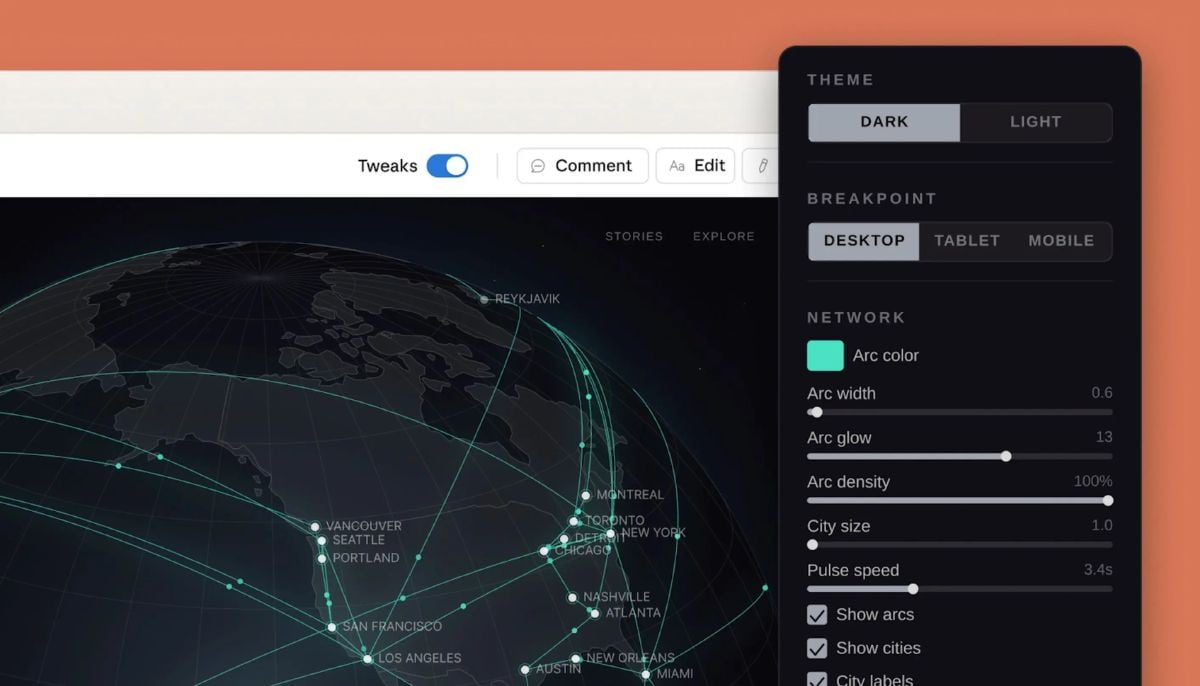
Bank of Canada governor Tiff Macklem says that he has been in touch with United States Federal Reserve chairman Jerome Powell to discuss the risks posed by Anthropic PBC's latest artificial intelligence model, Mythos, which has the power to amp up the speed and precision of cyber attacks by quickly identifying and exploiting vulnerabilities and has been flagged as a potential risk to financial stability. Their discussions have been among a series of high-level communications between Canadian and U.S. officials on the topic, Macklem said Friday during a news conference from Washington, where he is attending meetings of the International Monetary Fund. "The Minister of Finance has been talking to Secretary of the Treasury in the U.S. about the U.S. approach," Macklem said. "I also spoke to chairman Powell ... and I expect those conversations will be ongoing in terms of the substance of the issue." As Canada grapples with who should take the lead on cybersecurity and national security risks posed by the new technology, Macklem said the Canadian Financial Sector Resiliency Group, which is chaired by the Bank of Canada, has met twice this month, most recently a couple of days ago. Members include the Office of the Superintendent of Financial Institutions (OSFI), the Finance Department, the Canadian Centre for Cyber Security and technology experts from the big banks. The group was designed to deal with the risks posed by new technologies, Macklem said, but he added that it is too early to say how this particular threat will be handled. "It's early days, and I don't think anybody knows the full implications at this point," he said. "The good thing about this group is they are the experts and there are confidentiality agreements which allow sharing of information to the people who need it." Sources in Canada's financial sector say government officials are keen for the Bank of Canada, which oversees the payments system, and OSFI, which oversees the banks, to take the lead on a response. Macklem said the Bank of Canada's primary role is to protect the central bank from any potential detrimental impacts of AI and to ensure the integrity of Canada's payments system. But he acknowledged the broader risks to the financial system and the bank's central role in the financial sector resiliency group. "It's critical that our systems are protected," he said, adding that he is talking to François-Philippe Champagne, the minister of finance, about Mythos and AI generally. "The world's moving quickly; we need to keep up.... So those conversations are happening."

Anthropic CEO Dario Amodei arrives at White House for talks
WASHINGTON, April 17 (Reuters) - Anthropic CEO Dario Amodei arrived at the White House for talks on Friday amid the artificial intelligence startup's dispute with the Pentagon, according to a Reuters witness. Amodei's visit comes as U.S. President Donald Trump's administration acknowledges the advanced capabilities of Anthropic's new AI model, Mythos, for its sophisticated cybersecurity defense breaching abilities. Announced on April 7, Mythos is being deployed as part of Anthropic's "Project Glasswing," a controlled initiative under which select organizations are permitted to use the unreleased Claude Mythos Preview model for defensive cybersecurity purposes. A White House official said earlier on Friday that the Trump administration continues to engage across government and industry, including working with frontier AI labs to ensure their models help secure software vulnerabilities. Any new technology that could be used by the government would require a period of evaluation for security, the official added. Reporting by Jessica Koscielniak and Bo Erickson; Writing by Doina Chiacu; Editing by Caitlin Webber Our Standards: The Thomson Reuters Trust Principles., opens new tab

White House chief of staff to meet with Anthropic CEO over its new Mythos AI model
WASHINGTON (AP) -- White House chief of staff Susie Wiles plans to sound out Anthropic CEO Dario Amodei about the artificial intelligence company's new Mythos model, which has attracted attention from the federal government for how it could transform national security and the economy. WATCH: Anthropic's powerful new AI model raises concerns about high-tech risks A White House official, who requested anonymity to discuss the planned meeting Friday, said the administration is engaging with advanced AI labs about their models and the security of software. The official stressed that any new technology that might be used by the federal government would require a technical period for evaluation. The meeting comes after tensions have run hot between the Trump administration and the safety-conscious Anthropic, which has sought to put guardrails on the development of AI to minimize any potential risks and maximize its economic and national security benefits for the U.S. President Donald Trump tried to stop all federal agencies from using Anthropic's chatbot Claude over the company's contract dispute with the Pentagon, with Trump saying in a February social media post that the administration "will not do business with them again!" Educate your inbox Subscribe to Here's the Deal, our politics newsletter for analysis you won't find anywhere else. Enter your email address Subscribe Form error message goes here. Thank you. Please check your inbox to confirm. Defense Secretary Pete Hegseth also sought to declare Anthropic a supply chain risk, an unprecedented move against a U.S. company that Anthropic has challenged in two federal courts. The company said it wanted assurance the Pentagon would not use its technology in fully autonomous weapons and the surveillance of Americans. Hegseth said the company must allow for any uses the Pentagon deemed lawful. U.S. District Judge Rita Lin issued a ruling in March that blocked the enforcement of Trump's social media directive ordering all federal agencies to stop using Anthropic products. WATCH: Why the Trump administration is clashing with AI firm Anthropic Anthropic declined to speak about the meeting in advance. The San Francisco-based Anthropic has said the new Mythos model it announced on April 7 is so "strikingly capable" that it is limiting its use to select customers because of its ability to surpass human cybersecurity experts in finding and exploiting computer vulnerabilities. And while some industry experts have questioned whether Anthropic's claims of too-powerful AI technology were a marketing ploy, even some of the company's sharpest critics have suggested that Mythos might represent a further advancement in AI. One influential Anthropic critic, David Sacks, who was the White House's AI and crypto czar, said people should "take this seriously." "Anytime Anthropic is scaring people, you have to ask, 'Is this a tactic? Is this part of their Chicken Little routine? Or is it real?'" Sacks said on the "All-In" podcast he co-hosts with other tech investors. "With cyber, I actually would give them credit in this case and say this is more on the real side." Sacks said, "It just makes sense that as the coding models become more and more capable, they are more capable at finding bugs. That means they're more capable at finding vulnerabilities. That means they're more capable at stringing together multiple vulnerabilities and creating an exploit." The model's potential benefits, as well as its risks, have also attracted attention outside the U.S. The United Kingdom's AI Security Institute said it evaluated the new model and found it a "step up" over previous models, which were already rapidly improving. "Mythos Preview can exploit systems with weak security posture, and it is likely that more models with these capabilities will be developed," the institute said in a report. Anthropic has also been in talks with the European Union about its AI models, including advanced models that haven't yet been released in Europe, European Commission spokesman Thomas Regnier said Friday. Axios first reported the scheduled meeting between Wiles and Amodei. When it announced Mythos, Anthropic said it was also forming an initiative called Project Glasswing, bringing together tech giants such as Amazon, Apple, Google and Microsoft, along with other companies like JPMorgan Chase, in hopes of securing the world's critical software from "severe" fallout that the new model could pose to public safety, national security and the economy. "We're releasing it to a subset of some of the world's most important companies and organizations so they can use this to find vulnerabilities," said the Anthropic co-founder and policy chief, Jack Clark, at this week's Semafor World Economy conference. Clark added that Mythos, while ahead of the curve, is not a "special model." "There will be other systems just like this in a few months from other companies, and in a year to a year-and-a-half later, there will be open-weight models from China that have these capabilities," he said. So the world is going to have to get ready for more powerful systems that are going to exist within it." O'Brien reported from Providence, R.I. AP business reporter Kelvin Chan contributed to this report from London. A free press is a cornerstone of a healthy democracy. Support trusted journalism and civil dialogue. Donate now
Anthropic CEO Dario Amodei arrives at White House for talks
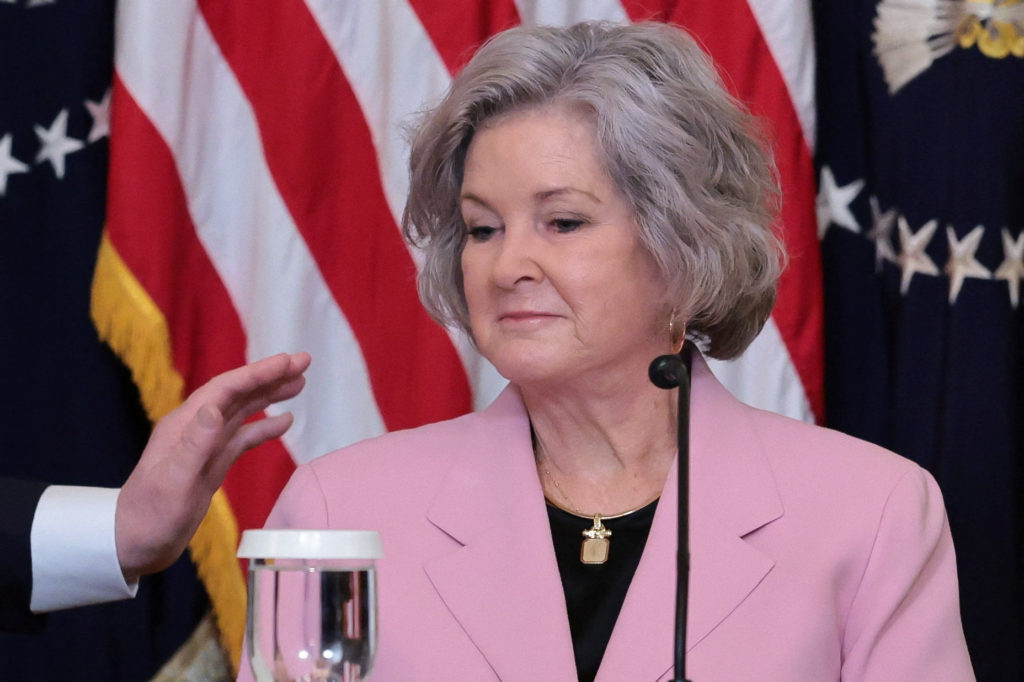
Add Yahoo as a preferred source to see more of our stories on Google. WASHINGTON, April 17 (Reuters) - Anthropic CEO Dario Amodei arrived at the White House for talks on Friday amid the artificial intelligence startup's dispute with the Pentagon, according to a Reuters witness. Amodei's visit comes as U.S. President Donald Trump's administration acknowledges the advanced capabilities of Anthropic's new AI model, Mythos, for its sophisticated cybersecurity defense breaching abilities. Announced on April 7, Mythos is being deployed as part of Anthropic's "Project Glasswing," a controlled initiative under which select organizations are permitted to use the unreleased Claude Mythos Preview model for defensive cybersecurity purposes. A White House official said earlier on Friday that the Trump administration continues to engage across government and industry, including working with frontier AI labs to ensure their models help secure software vulnerabilities. Any new technology that could be used by the government would require a period of evaluation for security, the official added. (Reporting by Jessica Koscielniak and Bo Erickson; Writing by Doina Chiacu; Editing by Caitlin Webber)
Nvidia-backed chipmaker Cerebras prepares to file IPO before market close today - Cryptopolitan
AI chip funding remains hot, while Intel stock has surged even as Wall Street stays cautious. Cerebras is set to file for an initial public offering (IPO) on Friday before the market closes, according to two people familiar with the matter who allegedly spoke to CNBC on condition of anonymity because the talks are private. The company makes chips built to run artificial intelligence models, and it is now trying to sell investors on a business that has changed a lot from its earlier pitch. Reportedly, Cerebras no longer just tries to sell hardware to outside companies. It also runs its own chips inside company-controlled data centers and sells that computing power as a cloud service. That shift matters because AI customers now want ready access to compute, not just boxes of silicon. In January, Cerebras said it planned to provide as much as 750 megawatts of computing power to OpenAI through 2028 in a deal valued at more than $10 billion. Cerebras expands cloud business as OpenAI deepens a multibillion-dollar tie-up A report from The Information said OpenAI has now expanded that arrangement to more than $20 billion and will also receive warrants to buy Cerebras shares. The Information previously reported on that structure. That detail links future demand for compute with a possible ownership stake, and also gives Cerebras a much stronger story to take into an IPO filing than it had last year. OpenAI executive Sachin Katti described the reason his company is working with Cerebras in direct terms: "OpenAI's compute strategy is to build a resilient portfolio that matches the right systems to the right workloads. Cerebras adds a dedicated low-latency inference solution to our platform. That means faster responses, more natural interactions, and a stronger foundation to scale real-time AI to many more people." And there may be more business coming. On Oracle's March earnings call, CEO Clay Magouyrk said the company offers chips from Cerebras and other suppliers. At that time, though, Oracle's public price list did not show Cerebras. For now, one known use case is already in place. Cerebras provides OpenAI with cloud-based compute to run a coding tool, and that is where Cerebras is trying to separate itself from the pack. Most companies building and deploying generative AI still depend heavily on Nvidia GPUs. Advanced Micro Devices has also gained ground in AI infrastructure. Cerebras has been winning business by pushing the speed of its very large processors, especially for inference work, where users ask questions and expect replies right away. Since its first pitch in 2024, it has kept raising money. In February, Cerebras said it brought in $1 billion in financing at a $23 billion valuation. Investors pour money into AI chip rivals while Intel's stock surge resets the market mood In the United States, MatX, Ayar Labs, and Etched each raised $500 million rounds in 2026. In Europe, the checks have been smaller, but still large. Axelera and Olix both raised more than $200 million this year. Euclyd and Optalysys said they are planning rounds of at least $100 million in 2026, while reports say Fractile and Arago are doing the same. On Wall Street today, Intel stock jumped to its highest intraday level since the dot-com era, hitting $69.55, above the peak it hit on Jan. 24, 2020. Intel is up 90% this year after a 84% rally YOY in 2025. The stock now sits roughly 8% below its all-time closing high of $74.88 from Aug. 31, 2000. Over the same period, the S&P 500 has gained more than 100%. Back to Intel, in early April, the company agreed to pay $14.2 billion to buy back half of an Ireland plant from Apollo Global Management. After that, Intel said it would join Elon Musk's Terafab project to develop semiconductors for Tesla, SpaceX, and xAI. That followed a commitment from Alphabet's Google to use future generations of Intel Xeon processors in data centers. Even so, Intel's recommendation consensus stands at 3.15 out of five, the weakest among chipmakers, and the stock trades well above the average analyst target, a sign many think the move may have gone too far, too fast.

Anthropic Readies Opus 4.7 and Design Tool as VCs Offer $800 Billion Valuation
Anthropic is preparing to release Claude Opus 4.7 and a natural language design tool as early as this week, while venture capital firms have offered to invest at valuations exceeding $800 billion - more than double the company's last official price tag. The model ID appeared on Google Vertex AI's quota management page for EU multi-region deployment on April 16, a pattern consistent with prior Claude launches. The Information reported on April 14, citing a person familiar with the plans, that both the new model and design tool could ship this week. Opus 4.7 is an incremental upgrade to Claude Opus 4.6, which launched February 5 with a one-million-token context window and scored 80.8% on SWE-bench Verified. The new version is expected to improve on multi-step reasoning, debugging, and autonomous task execution. It is distinct from Mythos, a more advanced internal model that Anthropic has withheld from public release over safety concerns and is being controlled through the company's Project Glasswing initiative. Alongside the model, Anthropic is launching a tool that generates websites, presentations, landing pages, and prototypes from natural language prompts. The product puts Anthropic in direct competition with established AI website builders and AI graphic design tools, as well as incumbents like Figma, Wix, and Adobe. Shares of design software companies fell following the news, extending a broader selloff that has hit the S&P 500 Software and Services Index with a nearly 26% decline this year. Investors have grown increasingly concerned that AI-native tools will erode demand for traditional design software. Earlier this year, the launch of Anthropic's Cowork assistant and related automation plugins triggered similar drops in software stocks. Anthropic has steadily expanded beyond its core model business. It already partners with Figma to convert AI-generated code into editable design files, has integrated Claude into Microsoft Word and PowerPoint, and recently shipped managed agents for enterprise workloads and Claude desktop control on Mac. The company has maintained a roughly two-week cadence for major product updates since January. Multiple venture capital firms have approached Anthropic with funding offers at valuations of $800 billion or more, according to TechCrunch and Business Insider. Anthropic has declined all of them. The offers represent a staggering jump from the company's $380 billion valuation during its $30 billion Series G round in February, which was led by GIC and Coatue with participation from D.E. Shaw Ventures, Founders Fund, and ICONIQ. On the secondary market, Anthropic shares were trading at an implied $688 billion valuation on Caplight as of April 14 - a 75% increase in three months. The demand is driven by Anthropic's financial trajectory. The company's annualized revenue hit $30 billion by early April, up from $14 billion at the time of the Series G close and $9 billion at the end of 2025. More than 1,000 enterprise customers now spend over $1 million annually on Claude products, and eight of the Fortune 10 are users. Anthropic's refusal to raise at $800 billion suggests the company may be holding out for better terms - or for an IPO. Reports indicate Anthropic has held informal talks with Wall Street banks about a potential public listing as early as the fourth quarter of 2026, though the company has not confirmed any timeline. The combination of a new flagship model, a design tool entering a crowded software market, and a valuation that has more than doubled in two months underscores how quickly the competitive landscape is shifting. With OpenAI valued at $852 billion after its $122 billion round and an IPO of its own in the pipeline, the two companies are now racing not just on model performance but on whether they can build product ecosystems large enough to justify their price tags.

Quantum-informed machine learning for predicting spatiotemporal chaos with practical quantum advantage
eLetters is a forum for ongoing peer review. eLetters are not edited, proofread, or indexed, but they are screened. eLetters should provide substantive and scholarly commentary on the article. Neither embedded figures nor equations with special characters can be submitted, and we discourage the use of figures and equations within eLetters in general. If a figure or equation is essential, please include within the text of the eLetter a link to the figure, equation, or full text with special characters at a public repository with versioning, such as Zenodo. Please read our Terms of Service before submitting an eLetter. No eLetters have been published for this article yet.

Bank of Canada's Macklem says he has spoken to Fed chair about risks from Anthropic's Mythos AI model
"The Minister of Finance has been talking to Secretary of the Treasury in the U.S. about the U.S. approach," Macklem said. "I also spoke to chairman Powell ... and I expect those conversations will be ongoing in terms of the substance of the issue." As Canada grapples with who should take the lead on cybersecurity and national security risks posed by the new technology, Macklem said the Canadian Financial Sector Resiliency Group, which is chaired by the Bank of Canada, has met twice this month, most recently a couple of days ago. Members include the Office of the Superintendent of Financial Institutions (OSFI), the Finance Department, the Canadian Centre for Cyber Security and technology experts from the big banks.