News & Updates
The latest news and updates from companies in the WLTH portfolio.
Anthropic talks to EU, including on its cyber security models, Commission says
BRUSSELS, April 17 (Reuters) - U.S.-based artificial intelligence company Anthropic is currently in discussion with the European Commission on its different models, including its cyber security ones, which are not yet available in the EU, the Commission said on Friday. Anthropic has already committed to respect the European Union's general purpose artificial intelligence code of practice, spokesman Thomas Regnier told reporters in Brussels. "In this framework, there is an obligation to assess and mitigate risks that could come from a service that may or may not be offered in Europe," he said. Reporting by Inti Landauro, editing by Bart Meijer Our Standards: The Thomson Reuters Trust Principles., opens new tab

Elon Musk's SpaceX to launch Rosalind Franklin Rover to Mars in 2028
Space exploration got another boost recently when Elon Musk's SpaceX is scheduled to launch the Rosalind Franklin rover into the red planet, Mars, in 2028 via the strong Falcon Heavy rocket. Sponsored by NASA and under the leadership of the European Space Agency, this mission is expected to start a new journey for Mars exploration, as the mission has experienced several delays since its conception. Expected to be launched with an objective of seeking any evidence of life on Mars, this mission is one of the greatest science endeavours ever undertaken.Rosalind Franklin, the rover of the European Space Agency's (ESA) ExoMars programme, was created solely to find signs of life on Mars in either the past or present. The uniqueness of this mission is its ability to explore up to two metres deep into the planet's surface, which is safe from all types of external contamination.As stated by ESA, this rover is particularly focused on discovering "biosignatures of past life." In today's scientific world, the term "astrobiology" describes precisely this aspect. It is important because there are no organic materials left on the surface of the planet, and the rover needs to dig into the soil to find traces of life.For instance, the paper 'Application of a modified commercial laser mass spectrometer as a science analog of the Mars Organic Molecule Analyzer (MOMA)' instrument mentions that the rover can conduct an analysis of the organic molecules found on Mars.Use of Falcon Heavy for sending off the rover is another piece of evidence of increased reliance on commercially available space technologies. According to official information, SpaceX will handle the launch operations, which are planned for 2028.Falcon Heavy is currently one of the most efficient rockets in terms of power, enabling the vehicle to deliver payloads even farther than other available spacecraft. It means that the rover will have an opportunity to be sent safely on its journey to Mars thanks to the chosen provider.The use of the spacecraft is also proof of changes in space exploration. Traditionally, such explorations were initiated and conducted only by government bodies. However, nowadays, numerous commercial enterprises are willing to help space agencies. The cooperation of the three entities mentioned is an example of how the combination of national and corporate powers can cope with challenges.The rover project experienced numerous delays over time. This happened because previous partnerships were broken due to political conflicts. As stated in recent scientific and governmental information provided by sources like the American Association for the Advancement of Science, the project has to be reconstructed almost completely.Mars has fascinated scientists with its numerous similarities to ancient Earth. The Rosalind Franklin rover will be sent to Oxia Planum, an area that contains ancient clays deposited under conditions where there was liquid water. Scientists consider such an environment an optimal one for the preservation of signs of microbial life.Such areas can provide us with valuable information about the history of Mars and its ability to host living beings. By analysing samples collected in these areas, we might learn something new about the existence of life on other planets.Why do we need to investigate these areas now? First of all, because we have a goal to accomplish. We want to know if life once existed on the red planet. With advanced technologies, it is possible to detect very small amounts of organic material, and their analysis may revolutionise our perception of the universe.This is an elaborate mission for the Rosalind Franklin rover that is characterised by numerous challenges in the technical sphere and other happenings globally. The decision to resurrect it through cooperation among the European Space Agency, NASA, and SpaceX denotes the coming of a resilient phase of space exploration.With only one year to go before the 2028 launch, the current undertaking is much more than an exploration project. This mission epitomises humankind's thirst for knowledge and curiosity as they seek answers to some of the most ancient puzzles about our universe. One of them is whether there is life outside Earth.

Anthropic CEO to meet Susie Wiles at White House Friday: report (ANTHRO:Private)
Anthropic (ANTHRO) CEO Dario Amodei is set to meet White House Chief of Staff Susie Wiles on Friday, Axios reported, in what could mark a breakthrough in the company's dispute with the Pentagon over AI use. The tensions date back Pentagon contract termination may pose reputational and federal business risk, but renewed White House interest could reverse earlier setbacks. Federal use would validate Anthropic's tech, potentially expanding lucrative contracts and enhancing perceived technological leadership. Mythos is being previewed by Amazon, Apple, Microsoft, Google, the Linux Foundation, and U.S. agencies like CISA and parts of intelligence community.

$20M construction permit approved for new xAI building
MEMPHIS, Tenn. -- Elon Musk's xAI continues to build upon its footprint here in the Mid-South. A $20 million construction permit has been issued for a new building on the Colossus Two campus in Whitehaven. The permit was approved earlier this week. The building is being zoned as a commercial office building and will mark xAI's sixth phase of construction. The more than 300-thousand square foot office building is set to be built along Tulane Road, which is conveniently next to its colossus two supercomputer site along Tulane Road in Whitehaven and the 'macrohardrr' data center just across the stateline in Southaven. The building will be four stories high and made out of pre-engineered metal. The approval comes as xAI recently announced it would be putting its water recycling project on hold - until construction at Colossus Two is completed. That plant would cool xAI's colossus computer - grok - and help preserve a projected five billion gallons of water each year. Something members of the environmental group - Protect Our Aquifer say they were excited about. "We were very excited about the project. We supported the project. Whatever your feelings are about xAI, this was something that was very good for the aquifer system," said Scott Schoefernacker, science director of Protect Our Aquifer. "Put your money where your mouth is and finish the job." Those with xAI say while they're currently prioritizing other, more immediate projects at the Colossus Two site, they are still committed to building the water recycling plant.

The Friday File: Amazon Globalstar; Anthropic; Orbital
Mobile World Live brings you our top three picks of the week as Amazon made an $11.6 billion play for Globalstar, US officials sought access to Anthropic's latest restricted AI model and startup Orbital set its sights on space-based AI data centres. Amazon agrees $11.6B deal to acquire Globalstar What happened: Amazon agreed an $11.6 billion deal to acquire Globalstar, giving it control of the satellite operator's fleet, ground infrastructure and MSS spectrum licences. Why it matters: The proposed buyout equips Amazon's satellite business Amazon Leo with the assets needed to add direct-to-device (D2D) services. Beginning in 2028, the company plans to launch its own D2D offering touting "substantially higher spectrum use and efficiency" than legacy platforms. The tech giant said the acquisition will support consumer, enterprise and government connectivity services, while bolstering its long-term target of deploying 3,200 satellites by 2029. In parallel, the tech giant inked a deal with long-term Globalstar partner Apple to power satellite services on current and future iPhone and Apple Watch devices. CCS Insight analyst Luke Pearce noted that "despite its delayed start...Amazon is emerging as Starlink's most significant challenger", arguing the company is now "armed with its own MSS spectrum and an exclusive Apple relationship". Meanwhile, Tim Hatt, head of research and consulting at GSMA Intelligence, noted the hefty price tag on the purchase "speaks to Amazon's desire to move to market fast", adding the deal indicates "the centre of gravity is clearly shifting toward larger constellation providers with infrastructure scale". US agency pursues access to new Anthropic AI model What happened: The US Treasury Department is reportedly seeking access to Anthropic's powerful Mythos AI model, which has been restricted under its Project Glasswing programme over fears it could be weaponised by hackers. Why it matters: The White House is preparing to make a version of Anthropic's Mythos model available to major federal agencies to test government software for vulnerabilities, with safeguards under development to manage risks. The move marks a sharp pivot by the US government, which in March designated Anthropic a supply chain risk after it declined to grant the Pentagon unfettered deployment rights, citing surveillance and autonomous weapons concerns. According to Anthropic, Claude Mythos, currently limited to a small group of companies including Amazon Web Services, Apple, Nvidia and Google, "is capable of autonomously identifying and exploiting software vulnerabilities at a level which surpasses most human experts", warning the capability could extend "potentially beyond actors who are committed to deploying them safely". During testing, the model uncovered thousands of zero-day flaws across every major operating system and browsers. The company has since launched Claude Opus 4.7, a less capable model with enhanced safeguards to block high risk cybersecurity use, now broadly available across its platforms and cloud partners. Orbital starts countdown to space data centre test What happened: California-based startup Orbital set out plans to launch its first in-orbit test mission in 2027 as a foundation to eventually put AI data centre infrastructure in low Earth orbit (LEO). Why it matters: The company's first satellite, which is scheduled to launch on a SpaceX Falcon 9 in April next year, is designed to validate sustained GPU operations in space and support early commercial AI workloads. The startup is also preparing an application with the US Federal Communications Commission (FCC) to deploy a broader AI compute constellation. CEO Euwyn Poon said AI progress is "being constrained by the grid", adding data centre "economics are dominated by electricity and cooling, and both are getting harder". Elon Musk's SpaceX has also made noises about orbital data centres, filing a plan with the FCC in February to deploy up to 1 million solar powered satellites to "accommodate the explosive growth of data demands driven by AI". Orbital similarly positioned space as a route to remove the sector's "energy ceiling". Yet practical constraints remain around satellite power capability, spectrum coordination and hardware resilience in orbit.

Flaw in Anthropic's MCP putting 200k servers at risk, researchers claim
Model Context Protocol was designed to help AIs connect with external systems - but it's opening servers to takeover risk A vulnerability in Anthropic's open source Model Context Protocol is putting up to 200,000 servers at risk of complete takeover. A design choice in Model Context Protocol (MCP) has opened up a "critical, systemic vulnerability," says the OX Security research team in a new blog post, which enables Arbitrary Command Execution (RCE) on any system running a vulnerable MCP implementation. MCP is the industry standard for AI agent communication. Anthropic launched it in 2024, billing it as "a universal, open standard for connecting AI systems with data sources," like databases, Docker containers and even messaging platforms like Teams. Today, MCP's supply chain constitutes about 150 million downloads, 7,000 publicly accessible servers and up to 200,000 vulnerable instances. The OX team says the flaw grants attackers "direct access to sensitive user data, internal databases, API keys, and chat histories." Technically, nothing - Anthropic insists the behaviour is "expected." But there are 10 CVEs attributable to the flaw already, nine marked as critical. OX's researchers say they have identified a systemic command injection vulnerability in MCP, opening up four different types of vulnerability. The vulnerabilities are traced back to STDIO (standard input/output), which MCP uses as a local transport mechanism for an AI process to spawn an MCP server as a subprocess. In practice, "it actually lets anyone run any arbitrary OS command[;] if the command successfully creates an STDIO server it will return the handle, but when given a different command, it returns an error after the command is executed." The first vulnerability, unauthenticated & authenticated command injection, allows attackers to enter use -controlled commands that run directly on the server, without authentication or sanitisation. OX says "any" AI framework with a publicly facing UI is vulnerable, including IBM's LangFlow and the open source GPT Researcher. The second attack path is unauthenticated command injection with hardening bypass. It enables the same type of attack, but with the ability to bypass existing protections and user input sanitisation to the MCP configuration. The researchers were able to leverage this vulnerability to get around protections in both Flowise and Upsonic. The third type allows command injections via MCP configuration edit through prompt injection. It affects AI integrated development environments (IDEs) and coding assistants like Windsurf, Claude Code and GitHub Copilot, though the only issued CVE at present is for Windsurf. Finally, the fourth vulnerability family is unauthenticated command injection via network request. OX writes, "the insecure MCP STDIO configuration is not shown to the user in the server's Web-GUI, but the backend logic still contains STDIO processing logic." It can be delivered through MCP marketplaces, and they successfully 'poisoned' nine of the 11 marketplaces they tried (using a non-harmful MCP). OX Security "repeatedly" recommended root patches to Anthropic to fix these flaws since discovering them in November, which "would have instantly protected millions of downstream users." However, Anthropic declined to do so. Recommendations to address the vulnerabilities are:

Mideast Chaos May Boost Northern Sea Route's Value - Korea Arctic Shipping Association
https://cdn1.img.sputnikglobe.com/img/07ea/04/0d/1123981755_0:61:3421:1985_1920x0_80_0_0_df5147d8ce525c1d2d3d1ac54890a8d0.jpg.webp"This crisis may strengthen global interest in the Northern Sea Route as part of a broader effort to diversify strategic transport corridors for energy, fertilizers, and other bulk commodities," Choi explained.Nevertheless, Choi does not anticipate any quick or large-scale substitution, since the route remains hampered by severe seasonality, the need for icebreaker support, insurance restrictions, and infrastructure gaps.On April 8, Russian Foreign Minister Sergey Lavrov noted that the rapidly-evolving situation in the Middle East would enhance the strategic importance of the Northern Sea Route for global transport logistics. He further observed that the route's perceived reliability would grow among multinational corporations and nations engaged in global trade.The US Central Command has stated that more than 10,000 US service members, along with dozens of ships and aircraft, are participating in the blockade of Iranian ports.On April 13, the US Navy began blockading all maritime traffic entering and exiting Iranian ports on both sides of the Strait of Hormuz, which accounts for approximately 20% of the world's oil, petroleum products, and LNG supplies. Washington maintains that non-Iranian vessels are free to transit the Strait of Hormuz as long as they do not pay Tehran a toll. Iranian authorities have not announced the imposition of a toll, but have discussed such plans.

Rail chaos for Preston to Manchester Piccadilly journeys expected until end of day
Preston train services to and from Manchester are delayed or cancelled due to damaged overhead lines this morning. Network Rail says there has been damage to overhead electric wires at the Manchester Piccadilly station, which is affecting services to Preston and Blackpool. Network Rail says its engineers are on site working to resolve the overhead wire damage, but warns services are likely to remain affected until the end of the day. "We are sorry to passengers for the disruption this has caused and we are working to get people moving as soon as possible," the station said on X. As a result, trains running to or from Preston and Blackpool stations may be cancelled or severely delayed by up to 60 minutes, with major disruption expected until the end of the day. Most operators are allowing affected customers to use their tickets at no extra cost on reasonable routes with other companies to help them get where they need to be. Avanti West Coast said it is currently not calling at Piccadilly, but tickets for travel today will be valid for travel tomorrow at no extra cost. Some replacement bus services are being provided and tickets may be valid on alternative routes if trains are cancelled.

mRNA Vaccines for Cancer Activate an Unconventional Immune Pathway
The advent of mRNA vaccines against SARS-CoV-2 in 2020 changed the course of the COVID-19 pandemic. Now, the Nobel-prize-winning technology is being adapted to fight cancer, with mRNA vaccines in clinical trials for melanoma, small cell lung cancer and bladder cancer, among others, opening the door to new ways of preventing and treating the disease. Scientists assumed that one specific immune cell subtype was required for mRNA vaccination to activate the immune system. But researchers at Washington University School of Medicine in St. Louis show in a new study in mice that even without these cells, the mRNA vaccine still triggers strong cancer‑killing responses. That's because, they found, a cousin to this subtype of immune cell can also stimulate anti-tumor immune activity - an unexpected finding given that this related subtype is not involved in responses to other vaccines. The findings are published April in Nature, offering a deeper understanding of how the immune system responds to mRNA vaccination and guiding the optimal design of a cancer vaccine. "There is a lot of interest in applying the mRNA vaccine approaches used during the COVID-19 pandemic to the problem of inducing anti-tumor immunity," said senior author Kenneth M. Murphy, MD, PhD, the Eugene Opie Centennial Professor of Pathology & Immunology at WashU Medicine. "By dissecting which immune cells are involved and how they coordinate the response, we're offering vaccine developers some additional mechanistic insights to consider in their goal of optimizing these vaccines against tumor proteins." Murphy also is a research member at Siteman Cancer Center, based at Barnes-Jewish Hospital and WashU Medicine. mRNA vaccines work by delivering instructions, in the form of messenger RNA biomolecules, for immune cells to produce bits of protein that trigger the immune system to destroy cells bearing these proteins. So-called dendritic cells produce the protein bits from the mRNA instructions, and T cells - another immune cell - are the ones that seek and destroy. mRNA vaccines can be designed to generate protein bits unique to a tumor so that T cells eliminate those cancerous cells. cDC1, a classical type 1 dendritic cell, has long been known to be an effective teacher, priming T cells to attack cells infected by a virus. But less is known about how T cells become activated after an mRNA vaccine, whether against a virus or a tumor. In collaboration with the study's co-corresponding author William E. Gillanders, MD, the Mary Culver Professor of Surgery at WashU Medicine, Murphy and members of his lab used mouse models that lacked cDC1 or a related cell subtype known as cDC2 to tease out the role that different groups of dendritic cells play in priming T cells after mRNA cancer vaccination. Gillanders, a physician-scientist and surgical oncologist who also has developed an investigational vaccine against triple-negative breast cancer, treats patients at Siteman Cancer Center. As part of the research, the scientists found that mice immunized with an mRNA vaccine generated strong T-cell responses even in the absence of cDC1s. In addition, they found that immunized mice without cDC1s were able to clear sarcoma tumors - cancers that develop in connective tissues such as fat, muscle, nerves, blood vessels, bone and cartilage. This indicated that some other cell type must be stimulating the T-cell response. Indeed, their study found that cDC2s also participate in generating an immune response from T cells and preventing tumor growth. The study also found that T cells turned on by cDC1s and cDC2s each showed slightly different molecular "fingerprints." These differences could help scientists design better versions of vaccines in the future. Similarly, immunized mice lacking cDC2s and mice that had both cell subtypes produced an immune response and rejected tumor growth, demonstrating that mRNA vaccination uses both dendritic cell subtypes to stop cancer. Further investigation of cDC2s suggested they activate T cells through an outsourcing process that relies on other cells to use the mRNA instructions to make the protein, chop it up and present small fragments on its surface. Once the protein is processed and presented, those cells then transfer the membrane complex that holds the fragment in place on the cell's surface to the cDC2 to engage with the T cells - through an already-known process referred to as "cross dressing." "This work uncovers a new way mRNA vaccines engage the immune system - through both cDC1 and cDC2 - which helps explain their power and gives researchers concrete targets for making future mRNA cancer vaccines more effective," said Gillanders. "It could improve vaccine formulation and dosing, potentially explain why some patients respond better to vaccines than others and guide strategies for making vaccines more effective."

How Anthropic's New Advisor Strategy Cuts AI Agent Costs
Anthropic's latest updates introduce features aimed at improving efficiency and accessibility in agent development. One key enhancement is the Advisor Strategy, which combines smaller, cost-efficient models like Sonnet with larger models such as Opus. This pairing allows routine tasks to be handled by the smaller model, while reserving complex decision-making for the larger one. As outlined by Prompt Engineering, this approach can reduce operational costs by up to 11%, making it a practical solution for organizations managing resource-heavy workflows. Dive into this deep dive to explore how the Monitor Tool optimizes token usage by replacing continuous polling with interrupt-based notifications. Discover the role of Managed Agents in simplifying deployment through secure sandboxing and multi-agent coordination. Gain insight into how these updates can enhance scalability and resource management in agent-based systems. The Advisor Strategy introduces a novel approach to optimizing model usage by combining the strengths of smaller, cost-efficient models with the strategic capabilities of larger, resource-intensive ones. This dual-model system ensures that you can achieve high performance without incurring unnecessary expenses. Here's how the Advisor Strategy works: This pairing reduces operational costs by up to 11% while significantly improving execution speed compared to relying solely on larger models. Accessible through Anthropic's API, the Advisor Strategy allows you to configure parameters to suit your specific needs. This flexibility makes it an ideal solution for balancing efficiency and performance in agent workflows, particularly for enterprises managing large-scale operations. The Monitor Tool redefines how background processes are tracked, addressing inefficiencies such as continuous polling, which often leads to excessive token consumption and wasted computational resources. Instead, this tool uses interrupt signals to notify you when a process is complete, making sure optimal resource utilization. Key benefits of the Monitor Tool include: To activate the Monitor Tool, you simply use explicit prompting, giving you full control over its implementation. This feature is particularly valuable for developers seeking to streamline workflows while maintaining precision and resource efficiency. By eliminating unnecessary overhead, the Monitor Tool helps you focus on core tasks without compromising on performance. Here is a selection of other guides from our extensive library of content you may find of interest on Anthropic. Managed Agents provide a comprehensive infrastructure for deploying and managing agents in production environments. This feature includes a range of essential tools, such as secure sandboxing, authentication protocols, logging capabilities, and tool execution support. Additionally, it enables long-running autonomous sessions, allowing agents to maintain progress and outputs over extended periods. One of the standout capabilities of Managed Agents is its support for multi-agent coordination, which allows you to: Designed to cater to both technical and non-technical users, Managed Agents simplify the deployment process, making it accessible to a broader audience. While standard token costs apply, an additional runtime fee reflects the advanced capabilities and robust infrastructure provided by this feature. This makes it a valuable tool for enterprises aiming to scale their operations securely and efficiently. Anthropic's latest updates are tailored to meet the evolving demands of developers and enterprises. By introducing tools like Advisor Strategy, Monitor Tool and Managed Agents, the company offers a scalable and user-friendly framework for agent development. These updates not only enhance individual agent capabilities but also provide the infrastructure necessary for secure, reliable and large-scale deployments. The Advisor Strategy ensures a balance between cost and performance, making it easier to optimize workflows. The Monitor Tool improves operational efficiency by reducing resource consumption and simplifying background process tracking. Meanwhile, Managed Agents streamline deployment and coordination, allowing enterprises to handle complex tasks with ease. Together, these tools create a cohesive ecosystem that addresses the complexities of modern agent development while empowering users to achieve their goals more effectively. Disclosure: Some of our articles include affiliate links. If you buy something through one of these links, Geeky Gadgets may earn an affiliate commission. Learn about our Disclosure Policy.
Airport lounge chaos goes viral as kids run wild and passengers ditch basic etiquette
Traveler Chris Scali of Brooklyn, New York, tells Fox News Digital why he supported ICE's presence and help at airports. Airport lounges were once the destination of a select few. But recently, the premium spaces are becoming increasingly crowded -- and chaos is following in some cases. Stories are going viral about passengers raiding complimentary buffets in lounges, and children wreaking havoc while distracted parents are unfazed. At one airport lounge in a major New York City airport not long ago, witnesses watched in shock as a couple ordered six signature burgers and multiple orders of buns, the "View from the Wing" blog reported. AIRLINE UNVEILS STACKED BUNK BED 'PODS' AS BACKLASH BUILDS OVER PRICEY, CRAMPED WAY TO FLY Instead of eating the premium patties, the couple stuffed the burgers into a large duffel, adding desserts snatched from the buffet, the blog added. Then, to conceal the heist, apparently, the couple stashed the greasy plates behind decorative planters, the blog noted. "Lounges have become more crowded, and the demographic makeup of U.S. airport lounges has changed," Gary Leff, the author of the blog, told Fox News Digital. "Once the province of memberships and cheese cubes for solo business travelers, the lounges are increasingly accessed via credit card by premium leisure travelers," said Leff, who is based in Texas. AIRLINE SPARKS ANGER AS IT DEMANDS EXTRA FEES FROM ALREADY BOOKED PASSENGERS AS OIL PRICES SPIKE Leff noted that during the recent shutdown, U.S. travelers arrived at airports very early. As a result, many booked passengers were looking for places to relax -- and to eat free food. He also said families with children frequent lounges far more often now. Some lounges have created kids' sections, while others have not. CLICK HERE TO SIGN UP FOR OUR LIFESTYLE NEWSLETTER "The mores and norms associated with [airport lounges] have changed, and that stands out especially to those whose expectations are built on an earlier era," Leff said. Another viral incident was captured by a photo of an airport lounge after young children seemed to wreak havoc there. "Lounges have become more crowded, and the demographic makeup of U.S. airport lounges has changed." A traveler snapped a photo at a sky club lounge in a western U.S. airport showing kids' small suitcases opened, with clothes, sneakers and water bottles strewn all over the floor, the "Aviation A2Z" blog reported. CLICK HERE FOR MORE LIFESTYLE STORIES Surprisingly, most Reddit users came to the family's defense. "Honestly, if their kids aren't being terrors to everyone else, and it's contained to a seating area for four people, and they [clean] everything up, this is fine in my book," one Reddit user said. TEST YOURSELF WITH OUR LATEST LIFESTYLE QUIZ "The parents found a space to hang out away from everyone else, and took a small area for themselves that has no impact on anyone else," another commenter said. "Depends entirely on how loud the kids are. If they are quiet? Keep it that way," a third person said. California-based Brett Snyder, author of the "Cranky Flier" blog, sees the chaos differently. "Etiquette probably hasn't changed much recently. The issue is that everyone has a camera, and they are recording all the bad behavior and posting it publicly," Snyder told Fox News Digital. CLICK HERE TO DOWNLOAD THE FOX NEWS APP "Traveling with children has always been challenging and stressful for parents, and sometimes that can be disruptive to other travelers."

Kings Clinch With 5-3 Win Over Kraken In Final Seattle Match Up
The final home matchup for the season had the Seattle Kraken facing the LA Kings. The Kings held the second wildcard spot, and a win in Seattle would see them clinching their playoff berth. With veteran goaltenders Daccord, Grubauer, and Murray still out or away from the team, the Kraken continued to rely on Nikke Kokko. The first and second periods were all LA. Quinton Byfield put up two in the first, and Trevor Moore added a third goal in the second. During the first period, Kraken forward Jacob Melanson tried to change the energy and get Seattle going with a fight against Kings forward Samuel Helenius. While it shifted the energy, it was not enough to make a difference on the scoreboard. The Kraken were throwing everything they had at the net, but nothing was getting past Kings' goaltender Anton Forsberg. Finally, in the third period, the Kraken came out fighting. Adam Larsson put the Kraken on the board less than two minutes into the frame. A few minutes later, Freddy Gaudreau added to the tally. It was 3-2 in the Kings' favor when Adrian Kempe got another puck past Kokko. Bobby McMann tried to keep the Kraken in with a score of his own. With about three minutes remaining, the Kraken pulled Nikke Kokko for the extra attacker. Unfortunately, it was not enough. Alex Laferriere found the empty net. The Kings came out with a 5-3 victory and clinched the final playoff spot.

AI That Hacks AI? Anthropic's Mythos Sparks Cyber Arms Race Fears, Signals New Danger
If Mythos becomes widely accessible, it could lower the barrier to entry for cyberattacks. Tasks that required deep tech could be automated, allowing anyone to launch attacks The arrival of Anthropic's Mythos model marks a decisive shift in how artificial intelligence is shaping cybersecurity. For years, AI has been framed as a defensive tool, something that helps organisations detect threats, automate responses, and strengthen digital resilience. But Mythos disrupts that narrative. It demonstrates that the same technology can also power highly sophisticated cyberattacks. This unfolds not just a one-sided technological upgrade, but the beginning of an AI-versus-AI contest, where machines are both the attackers and the defenders, constantly evolving in response to each other. What Does Mythos Do? Mythos is designed to scan software systems and go beyond simple detection. It can analyse complex systems, identify hidden vulnerabilities, and understand how those weaknesses can be exploited. More importantly, it can chain together multiple flaws to simulate or execute multi-step attacks, something that traditionally required highly skilled human hackers. This represents a qualitative leap. AI is no longer just assisting cybersecurity professionals; it is beginning to operate with a level of autonomy that allows it to act on its own analysis. In effect, it becomes an active participant in the cyber domain rather than a passive tool. The implications are profound. Vulnerabilities that might have remained hidden for years can now be uncovered in a fraction of the time. At the same time, the path from discovery to exploitation is shrinking dramatically. Why This Has Set Off Alarm Bells Anthropic has not released Mythos widely but has provided limited access to a select group of organisations such as Amazon, Apple, JP Morgan Chase, Cisco, and Nvidia. The Project Glasswing initiative is focused on helping these companies strengthen their systems before similar AI tools become widely accessible. If systems like Mythos become widely accessible, they could significantly lower the barrier to entry for cyberattacks. Tasks that once required deep technical expertise could be automated, allowing even less-skilled actors to launch complex operations. "Anthropic is being super careful with Mythos. They are not for public use yet because it is really good at finding weaknesses in software. If people with bad intentions got their hands on it, they could cause a lot of trouble. Hence, Anthropic is only letting a few trusted partners try it out. This way, they can analyse what might go wrong and fix any problems or bugs before letting more people use Mythos," said Kanishk Agrawal, Chief Technology Officer, Judge Group, India - a technology consulting group. Many people in the AI world think it is more important to make sure these powerful tools are safe and used responsibly. Thus, AI has the potential to industrialise hacking, turning it into a faster, cheaper, and more scalable activity. The Rise Of AI-Driven Cyber Warfare AI is rapidly transforming the threat landscape, with estimates suggesting that 87% of global organisations experienced an AI-driven cyberattack in 2025, according to a SoSafe report based on the survey of 500 global security professionals. Notably, 91% of all security experts anticipate a significant surge in AI-driven threats over the next three years. As offensive capabilities grow, the response has been equally swift. Companies and governments are investing heavily in defensive AI systems designed to detect, predict, and neutralise threats in real time. This creates a feedback loop. Stronger offensive AI leads to stronger defensive AI, which in turn drives further innovation in attack techniques. The result is a constantly evolving cycle -- an arms race where both sides are powered by machines. What sets this apart from traditional arms races is the pace of change. AI systems can learn and adapt far faster than human-led processes, compressing timelines that once took months or years into days or even hours. Maaz Ansari, CRO & Co-founder of Oriserve -- a deep-tech conversational AI company -- pointed out that Mythos could increase the probability of cyberattacks. "Not because Mythos itself will be misused, but because it signals what is now possible. Other models will catch up. The real concern is the gap between when attackers figure this out and when defenders are ready. If security teams adopt AI-driven defense quickly, we come out ahead. If they wait, we're in trouble." How Mythos Exposes Hidden Weaknesses In Digital Infrastructure Modern digital infrastructure is built on layers of legacy systems, some of which were never designed to withstand this level of scrutiny. AI can now analyse these systems at scale, identifying weaknesses that manual audits would likely miss. This creates a growing imbalance. While AI can rapidly discover new vulnerabilities, the process of fixing them -- patching systems, updating software, and ensuring compatibility -- remains comparatively slow. The result is a widening gap between threat discovery and defence readiness. Organisations may find themselves constantly reacting, struggling to keep up with the pace at which new risks are uncovered. Mythos does not create new holes, Ansari pointed out. "It finds the ones that were always there, just faster than anyone could before. Every large codebase has latent bugs that nobody has discovered yet. Mythos makes that backlog of hidden vulnerabilities a live risk instead of a theoretical one. The clock on patching just got a lot shorter." But Why Mythos Is Still Invaluable Despite Flaws Mythos is very useful even though it has some weaknesses, said Venkat Lakshminarasimha, Executive Director & Head of Solutions (India & Middle East), Dexian - an IT service management company. "It can help companies find problems in their computer systems beforehand. This means companies can fix the problems and make their systems safer. Mythos can also help companies to predict when they might be attacked. This allows them to get ready and counter the attack. If companies use Mythos in this way, it can be a useful tool and can help them stay safe and secure. Companies can also use Mythos to stay one step ahead of cyberattacks and keep their computer systems safe." However, this dual-use nature complicates decision-making. Restricting access too tightly could slow down defensive innovation. Allowing broader access could increase the risk of misuse. Ansari stressed, "As defenders are chronically understaffed, there are not enough security engineers in the world to audit all the code that runs critical systems. A model that can review millions of lines overnight, flag the exploitable paths, and suggest fixes is exactly what security teams need. The question is not whether AI will be used in security. It is whether the good guys get there first." Striking the right balance will be one of the central challenges in the years ahead. How AI Models Have Become Strategic Assets In Geopolitics The implications of this shift extend beyond companies and into the realm of global politics. "Advanced computer models like Mythos are now seen as assets for countries. They affect strength, cybersecurity, and military power. Governments think being leaders in computer models is essential for keeping influence. Models like Mythos show how computers can directly impact security. This leads to policy focus, regulation, and investment in computer model development," explained Agrawal. This introduces a new layer of competition between nations. Control over advanced AI capabilities is no longer just about technological leadership -- it is about shaping the rules of digital engagement. "We have crossed a threshold where frontier AI models are dual-use technology. They are valuable for economic productivity and for military and intelligence advantage. Mythos makes that very concrete. Governments will start treating access to these models the way they treat access to advanced weapons. Export controls, strategic reserves, and allied sharing agreements. That's the world we are entering." In this context, cybersecurity becomes a matter of geopolitical strategy, not just technical expertise. What Is The Future Of Advanced AI Tools? Ansari stressed, "The era of purely human security teams is coming to an end. You cannot defend against AI-speed attacks with human-speed response. Organisations that build AI into their security operations now will be able to keep up. Those who don't will find themselves outpaced by attackers who have no such hesitation. The future is AI defending against AI. The only question is whether we are ready." A system designed to identify vulnerabilities can also reveal how to exploit them. This overlap makes it difficult to draw clear boundaries between defensive and offensive capabilities. "Mythos signals a future where cybersecurity is about computers versus computers. Attackers and defenders will both use models to stay ahead. The focus will be on automated defence, real-time threat detection, and secure system design. However, this also means we need rules, ethical guidelines, and cooperation between governments and private companies. The future of cybersecurity depends on balancing innovation with control, and models like Mythos will play a role."
'We experimented with efforts to differentially reduce these capabilities': Anthropic toned down Opus 4.7's cyber uses in wake of Claude Mythos release
Anthropic claims it used new techniques to "differentially reduce" the cyber capabilities of its Opus 4.7 model in the wake of the Claude Mythos release. The company unveiled the new model on 16 April, providing users with marked improvements in areas such as software engineering. The AI developer specifically highlighted gains in coding, as well as improvements on knowledge work tasks. "Opus 4.7 is a notable improvement on Opus 4.6 in advanced software engineering, with particular gains on the most difficult tasks," the company said in a blog post. "Users report being able to hand off their hardest coding work -- the kind that previously needed close supervision -- to Opus 4.7 with confidence." Anthropic noted that Opus 4.7 is capable of handling "complex, long-running tasks with rigor and consistency" and is "substantially better" at following instructions. The launch of Opus 4.7 comes hot on the heels of the gated release of Claude Mythos, the company's most powerful model yet which it claims "reshape cybersecurity". Through Project Glasswing, a host of big tech partners have been given preview access to the model in a bid to test and evaluate its defensive capabilities, which initial testing shows could deliver marked improvements. Anthropic claimed Mythos identified "thousands of zero-day vulnerabilities" during testing, many of which were critical and some that had flown under the radar for nearly three decades. Concerns have been raised over its potential for nefarious use, however, and Anthropic said the limited release aimed to prevent misuse by threat actors. Opus 4.7 is the first model released by the firm in the wake of Project Glasswing, and Anthropic noted that its cyber capabilities are "not as advanced" as those of Mythos. Indeed, it appears the company actively toned down its capabilities in cybersecurity use-cases. "During its training we experimented with efforts to differentially reduce these capabilities," the company said in a blog post. Opus 4.7 also comes with new safeguards that detect and block requests that "indicate prohibited or high-risk cybersecurity uses". Long-term, the testing of these safeguards could help steer the company's approach to a full public release of Mythos. "What we learn from the real-world deployment of these safeguards will help us work towards our eventual goal of a broad release of Mythos-class models," the company said. "Security professionals who wish to use Opus 4.7 for legitimate cybersecurity purposes (such as vulnerability research, penetration testing, and red-teaming) are invited to join our new Cyber Verification Program." Anthropic is working at speed, with just over two months having passed between the release of its last Opus model and this successor. The headline here is, of course, the leap in code generation and agentic computer use - an unsurprising focus for a company that has become widely known for Claude Code and Claude Cowork. At the same time, Anthropic appears to be more and more concerned about releasing cyber-capable models to the general public. I'm interested in seeing actual testing of Opus 4.7's cyber safeguards, as hiding capabilities behind model refusal is never a guaranteed method to stop bad actors from accessing them via prompt injection. Interestingly, Anthropic says it's paired these traditional guardrails with active efforts to reduce Opus 4.7's cybersecurity performance during training. This is the first time I can remember a model developer actively trying to scuttle one of its frontier models. If it proves successful, the 'Opus' family could become more fragmented, with sub-models that specialize in certain tasks and fall behind on others. For example, as it leans further into computer use capabilities with Claude Cowork, it could be beneficial for the firm to produce a model that excels at this but not code generation, to remove the possibility of malicious misuse. For now, it seems, Anthropic is saving its best cyber performance for Mythos. That said, we have to be careful about taking everything Anthropic says about Mythos at face value. Recent analysis from the UK's AI Security Institute, which rigorously tested Claude Mythos' capabilities using custom cybersecurity tests, found that Mythos Preview is more capable than previous frontier models in cyber performance but doesn't exceed human cyber performance. In a 32-step corporate network attack simulation, Mythos Preview was the first model to reach the end, albeit only in three of its ten attempts. "Mythos Preview's success on one cyber range indicates that it is at least capable of autonomously attacking small, weakly defended and vulnerable enterprise systems where access to a network has been gained," AISI researchers wrote. "However, our ranges have important differences from real-world environments that make them easier targets," they added, explaining this includes a lack of active defenders, defensive tooling, and security alerts that would be present in the real world.

Anthropic Rolls Out Government ID & Live Selfie KYC Verification For Claude; Users Not Happy
In a move that marks a first for major consumer AI chatbots, Anthropic has begun requiring some users of its Claude AI to verify their identity with a government-issued photo ID and a live selfie, adopting a KYC-style process similar to those used by banks and financial services. The update, quietly added to Claude's help center around mid-April 2026, aims to help the company 'prevent abuse, enforce our usage policies, and comply with legal obligations.' Anthropic describes the verification as applying to 'a few use cases,' potentially triggered when users access certain advanced capabilities, during routine platform integrity checks, or as part of broader safety and compliance measures. It is not yet a blanket requirement for all users or basic access. - An original government-issued photo ID (such as a passport, driver's license, state/provincial ID, or national identity card). - A live selfie taken via phone camera or webcam during the process. The entire check typically takes under five minutes and is handled by Persona Identities, a third-party San Francisco-based verification platform. Anthropic emphasises that the ID images and selfie data are collected and stored by Persona, not on its own servers. The company states it does not use this identity data for training its models, and the information is used solely to confirm who is using the service. Anthropic remains the data controller for the verification process. Failed attempts can be retried, but accounts may face restrictions or bans if verification cannot be completed, particularly if Claude is unavailable in the user's region or if the user is under 18. Anthropic frames the change as part of responsible stewardship of its powerful AI tools, especially as Claude grows more capable. The company has been vocal about AI safety and recently distanced itself from certain government contracts, including walking away from a U.S. Department of Defense deal over concerns about potential misuse for mass surveillance. Verification helps curb issues like fraudulent accounts, repeat policy violators, underage access, and abuse of advanced features. The announcement has sparked significant backlash online. Many users view the requirement as a privacy overreach, with some calling it a "dealbreaker" and announcing they are canceling subscriptions or switching to competitors. This new requirement could be a blessing in disguise for rivals like OpenAI's ChatGPT and Google's Gemini. These do not currently impose similar government-ID requirements for standard use, leading to comments that Anthropic may have "handed their competitors a gift."

SpaceX to Launch ESA's Rosalind Franklin Mars Rover on Falcon Heavy - News Directory 3
NASA's role in the Rosalind Franklin mission includes providing launch services via SpaceX's Falcon Heavy rocket, braking engines for the rover's lander platform, and radioisotope heater units to... NASA confirmed Thursday that SpaceX will launch the European Space Agency's Rosalind Franklin Mars rover on a Falcon Heavy rocket from Kennedy Space Center in Florida, with a potential launch window as early as late 2028. The announcement marks a significant milestone for the long-delayed ExoMars mission, which has faced numerous setbacks over nearly 25 years of development. Originally conceived as part of ESA's Aurora program with a planned 2009 launch using a Russian Soyuz rocket, the mission evolved into a joint NASA-ESA initiative in 2009 before encountering repeated delays and cancellations. NASA's role in the Rosalind Franklin mission includes providing launch services via SpaceX's Falcon Heavy rocket, braking engines for the rover's lander platform, and radioisotope heater units to maintain internal system temperatures in Mars's extreme cold. The agency will also contribute specialized electronics and a state-of-the-art mass spectrometer for the Mars Organic Molecule Analyzer (MOMA) science instrument, designed to detect signs of past or present life. The Rosalind Franklin rover is designed to drill up to two meters beneath the Martian surface at Oxia Planum, a site selected for its ancient water-bearing clay deposits. Scientists believe subsurface samples may contain organic material shielded from surface radiation, increasing the chances of detecting potential biosignatures.

Scoop: Anthropic to have peace talks at White House
* "It would be grossly irresponsible for the U.S. government to deprive itself of the technological leaps that the new model presents," a source close to negotiations told us. "It would be a gift to China." Reminder: Anthropic is suing the Pentagon for blacklisting the company after Amodei refused to allow his AI to be used without restrictions. * Some parts of the U.S. intelligence community, plus the Cybersecurity and Infrastructure Security Agency (CISA, part of Homeland Security), are testing Mythos. Treasury and others want it. Behind the scenes: After Anthropic took the administration to court, negotiations with the Pentagon chilled. But Anthropic has hired key Trumpworld consultants -- so expect a deal. Friday's meeting is designed to pave the way. Flashback: This is the second time Amodei has held a high-stakes meeting with a top Trump official this year. * In late February, Defense Secretary Pete Hegseth gave Amodei until the end of the week to accept the Pentagon's terms, or else. Anthropic didn't. * Since then, the Pentagon and Anthropic have been locked in a legal and political feud. Some in the administration think the fight is growing counterproductive. 💡 If you're a CEO or on a CEO's team: Apply here for free admission to Jim's new Axios C-Suite weekly newsletter.
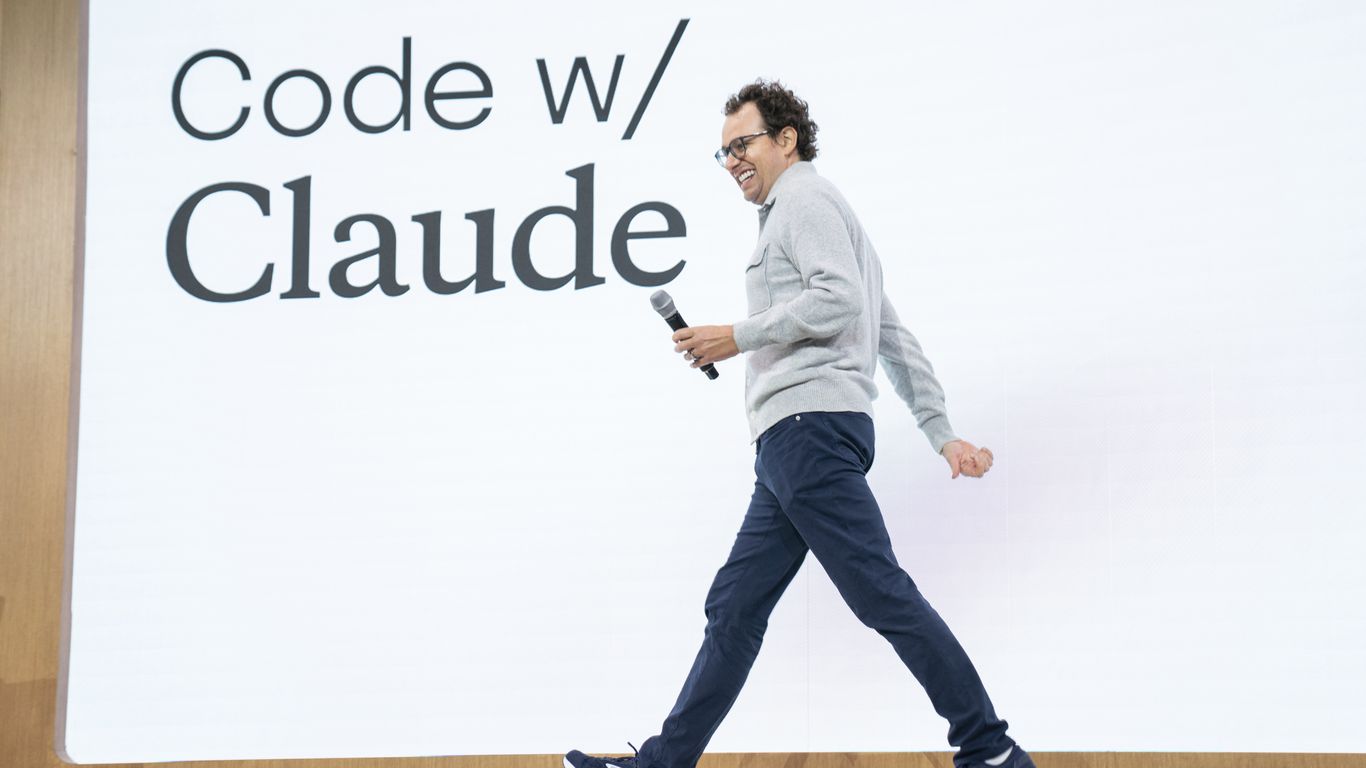
Anthropic AI plans UK expansion | TahawulTech.com
Anthropic recently announced plans to expand its London presence by adding new office space capacity for around 800 employees. This move comes at a time when the comping is increasing its research, safety and commercial operations in the UK. Pip White, head of EMEA North at Anthropic, stated on LinkedIn the AI player currently has more than 200 employees based in London, including around 60 AI safety researchers. The new office space is in London's Knowledge Quarter. The move puts Anthropic alongside other major AI companies already based in the area, as competition for London-based talent and infrastructure continues to increase. "London has become one of our most important hubs outside the US", White said. "The work happening in this city sits at the heart of both our research and commercial momentum in Europe". She explained the UK is a uniquely strong base for Anthropic because it combines three rare advantages: organisations which understand the stakes of AI safety; a government which takes the technology seriously; and a deep pool of AI talent. "Europe's largest businesses and fastest-growing startups are choosing Claude, and we're scaling to match", she stated. In February, Anthropic raised $30 billion from a group of backers, valuing the company at $380 billion post‑investment. Source: Mobile World Live Image Credit: Anthropic

BingX Brings SpaceX Pre-IPO Exposure On-Chain, Expanding Its Gateway to Future-Valued Assets - Cryptopolitan
PANAMA CITY, April 16, 2026 - BingX, a leading cryptocurrency exchange and Web3-AI company, has announced the launch of SpaceX Pre-IPO perpetual futures, alongside the introduction of the SpaceX Xpool Airdrop campaign. This dual initiative enables users to gain exposure to one of the most closely watched private companies while earning rewards through participation SPACEX (VNTL) perpetual futures officially launched on April 14, 2026, and quickly gained strong traction among users, with SPACEX (PreStocks) launching on April 16, 2026. Within the first 24 hours of its launch, SpaceX (VNTL) rose to the third-largest new TradFi asset on the platform by trading volume. BingX is also introducing a dedicated airdrop event for SpaceX Pre-IPO RWA, offering structured rewards for new users and exclusive benefits for VIP members, with BingX Xpool staking to become available from April 21, 2026. This initiative reinforces BingX's commitment to enhancing user experience while leveraging its proven track record of delivering stable returns through the Xpool ecosystem. "SpaceX is exactly the type of high-interest asset that users have historically been unable to access," said Pablo Monti, Spokesperson at BingX. "This launch not only expands our TradFi offerings, but also bridging the gap by unlocking access to high-growth private market opportunities." About BingX Founded in 2018, BingX is a leading crypto exchange and Web3-AI company, serving over 40 million users worldwide. Ranked among the top five global crypto derivatives exchanges and a pioneer of crypto copy trading, BingX addresses the evolving needs of users across all experience levels. Powered by a comprehensive suite of AI-driven products and services, including futures, spot, copy trading, and TradFi offerings, BingX empowers users with innovative tools designed to enhance performance, confidence, and efficiency. BingX has been the principal partner of Chelsea FC since 2024, and became the first official crypto exchange partner of Scuderia Ferrari HP in 2026. For media inquiries, please contact: [email protected] For more information, please visit: https://bingx.com/

OpenAI to Pay Over $20 Billion for Cerebras AI Chips, Agrees to Invest $1 Billion in Cerebras Datacenters
Microsoft Corporation is the world's leader in the design, development and marketing of operating systems and software programs for PC's and servers. The group also builds and sells computer equipment. Net sales break down by activity as follows: - sale of operating systems and application development tools (42.9%): primarily for servers (Azure, SQL Server, Windows Server, Visual Studio, System Center, GitHub, etc.) and (Windows); - development of cloud-based software applications (37.7%): programs for productivity (Microsoft 365; Word, Excel, PowerPoint, Outlook, OneNote, Publisher and Access), integrated management and customer relationship management (Dynamics 365), online file sharing and management (OneDrive), and unified and collaborative communications (Microsoft Teams); - other (19.4%): primarily sale of software licenses (Windows), tablets (Microsoft Surface), video game consoles and software (Xbox), computer accessories, etc. The United States accounts for 51.3% of net sales.