News & Updates
The latest news and updates from companies in the WLTH portfolio.
White House chief of staff to meet with Anthropic CEO over its AI
White House chief of staff Susie Wiles plans to sound out Anthropic CEO Dario Amodei about the artificial intelligence company's new Mythos model, which has attracted attention from the federal government for how it could transform national security and the economy. A White House official, who requested anonymity to discuss the planned meeting Friday, said the administration is engaging with advanced AI labs about their models and the security of software. The official stressed that any new technology that might be used by the federal government would require a technical period for evaluation. The meeting comes after tensions have run hot between the Trump administration and the safety-conscious Anthropic, which has sought to put guardrails on the development of AI to minimize any potential risks and maximize its economic and national security benefits for the U.S. President Donald Trump tried to stop all federal agencies from using Anthropic's chatbot Claude over the company's contract dispute with the Pentagon, with Trump saying in a February social media post that the administration "will not do business with them again!" Defense Secretary Pete Hegseth also sought to declare Anthropic a supply chain risk, an unprecedented move against a U.S. company that Anthropic has challenged in two federal courts. The company said it wanted assurance the Pentagon would not use its technology in fully autonomous weapons and the surveillance of Americans. Hegseth said the company must allow for any uses the Pentagon deemed lawful. U.S. District Judge Rita Lin issued a ruling in March that blocked the enforcement of Trump's social media directive ordering all federal agencies to stop using Anthropic products. Anthropic declined to speak about the meeting in advance. The San Francisco-based Anthropic has said the new Mythos model it announced on April 7 is so "strikingly capable" that it is limiting its use to select customers because of its ability to surpass human cybersecurity experts in finding and exploiting computer vulnerabilities. And while some industry experts have questioned whether Anthropic's claims of too-powerful AI technology were a marketing ploy, even some of the company's sharpest critics have suggested that Mythos might represent a further advancement in AI. One influential Anthropic critic, David Sacks, who was the White House's AI and crypto czar, said people should "take this seriously." "Anytime Anthropic is scaring people, you have to ask, 'Is this a tactic? Is this part of their Chicken Little routine? Or is it real?'" Sacks said on the "All-In" podcast he co-hosts with other tech investors. "With cyber, I actually would give them credit in this case and say this is more on the real side." Sacks said, "It just makes sense that as the coding models become more and more capable, they are more capable at finding bugs. That means they're more capable at finding vulnerabilities. That means they're more capable at stringing together multiple vulnerabilities and creating an exploit." The model's potential benefits, as well as its risks, have also attracted attention outside the U.S. The United Kingdom's AI Security Institute said it evaluated the new model and found it a "step up" over previous models, which were already rapidly improving. "Mythos Preview can exploit systems with weak security posture, and it is likely that more models with these capabilities will be developed," the institute said in a report. Anthropic has also been in talks with the European Union about its AI models, including advanced models that haven't yet been released in Europe, European Commission spokesman Thomas Regnier said Friday. Axios first reported the scheduled meeting between Wiles and Amodei. When it announced Mythos, Anthropic said it was also forming an initiative called Project Glasswing, bringing together tech giants such as Amazon, Apple, Google and Microsoft, along with other companies like JPMorgan Chase, in hopes of securing the world's critical software from "severe" fallout that the new model could pose to public safety, national security and the economy. "We're releasing it to a subset of some of the world's most important companies and organizations so they can use this to find vulnerabilities," said the Anthropic co-founder and policy chief, Jack Clark, at this week's Semafor World Economy conference. Clark added that Mythos, while ahead of the curve, is not a "special model." "There will be other systems just like this in a few months from other companies, and in a year to a year-and-a-half later, there will be open-weight models from China that have these capabilities," he said. So the world is going to have to get ready for more powerful systems that are going to exist within it." ___ O'Brien reported from Providence, R.I. AP business reporter Kelvin Chan contributed to this report from London.
Want to Invest $1,000 in SpaceX? Here's What History Has to Say.
Recent mega-IPOs like Meta Platforms (formerly Facebook), Uber, and Rivian demonstrate wildly different outcomes -- from 16x returns to 80% losses. SpaceX has officially filed for what could be the largest initial public offering (IPO) in American history, targeting a valuation of $2 trillion -- making it larger than Elon Musk's Tesla. That kind of number gets investors excited, but before you set aside $1,000 for opening day, it's worth looking at what the data actually says about buying into IPOs at these kinds of valuations. Jay Ritter, a finance professor at the University of Florida who's spent decades studying IPOs -- his nickname is "Mr. IPO" -- has built one of the most comprehensive data sets on IPO performance around. Ritter's research shows that, on average, IPOs underperform comparable public companies, and in the first three years, lose to the broader market by nearly 20%. Will AI create the world's first trillionaire? Our team just released a report on the one little-known company, called an "Indispensable Monopoly" providing the critical technology Nvidia and Intel both need. Continue " Image source: Getty Images. Of course, this is just an average, and different kinds of companies tend to perform very differently -- SpaceX belongs to a few of these subcategories. SpaceX has massive revenue, and these companies barely underperform, off by just 2.3%. On the other hand, as a (mostly) non-tech company, it's part of another cohort that underperforms by nearly 25%. What if we get more specific? Let's consider some recent IPOs that are comparable -- large scale, high retail interest, high valuation. What would $1,000 invested at IPO be worth today? Meta Platforms (May 2012 -- IPO at $38): Meta (then Facebook) went public at a $104 billion valuation with roughly $1 billion in revenue. While there was an initial dip that took years to recover from, Meta IPO investors went on to experience absolutely fantastic gains. Your $1,000 invested at IPO would be worth about $16,600 today. Uber Technologies (May 2019 -- IPO at $45): Uber went public at an $82 billion valuation. Seven years later, shares trade around $72. Your $1,000 would be worth roughly $1,740 today -- about a 60% total return over seven years. That's not terrible by any means, but it failed to keep up with the market. The same investment in, say, the State Street SPDR S&P 500 ETF Trust would be worth $2,380 today. Rivian Automotive (November 2021 -- IPO at $78): Rivian went public at a $66.5 billion valuation with virtually no revenue, but a whole lot of hype. The stock briefly rocketed above $170 in the post-IPO frenzy, but shares sit around $15.50 today. Your $1,000 would have turned into about $198 -- an 80% loss. IPOs often underperform for a few structural reasons that apply directly to SpaceX. First, the easy money has already been made. By the time SpaceX goes public at a $2 trillion valuation, the venture capitalists, early employees, and private-market investors have already captured the exponential growth phase. Second, IPOs, especially those with massive retail interest, tend to go public during windows of maximum optimism. Companies and bankers aren't stupid -- they choose to sell when enthusiasm -- and often hype -- is highest. That means retail investors are often buying at inflated valuations. I'm not saying SpaceX is a bad company -- far from it. I mean, it builds reusable rockets -- that's incredible. It's one of the most impressive private companies in a generation. But being a great company and being a great IPO investment are two very different things. Between Ritter's data and a slew of examples of recent mega-IPOs underperforming, I would suggest you wait before putting $1,000 into the SpaceX IPO. I think it's likely the price will pop quickly, then reverse course and trade well under its IPO price. That would be a smarter time to jump in. When our analyst team has a stock tip, it can pay to listen. After all, Stock Advisor's total average return is 1,016%* -- a market-crushing outperformance compared to 197% for the S&P 500. Johnny Rice has positions in SPDR S&P 500 ETF Trust. The Motley Fool has positions in and recommends Meta Platforms, Tesla, and Uber Technologies. The Motley Fool has a disclosure policy.

White House chief of staff meets with Anthropic CEO over its new AI technology
WASHINGTON (AP) -- White House chief of staff Susie Wiles on Friday sounded out Anthropic CEO Dario Amodei about the artificial intelligence company's new Mythos model, which has attracted attention from the federal government for how it could transform national security and the economy. A White House official, who requested anonymity to discuss the meeting ahead of time, said the administration is engaging with advanced AI labs about their models and the security of software. The official stressed that any new technology that might be used by the federal government would require a technical period for evaluation. The White House said afterward that the meeting was productive and constructive, as opportunities for collaboration were discussed as well as the goal of balancing innovation and safety. The meeting came after tensions had run hot between the Trump administration and the safety-conscious Anthropic, which has sought to put guardrails on the development of AI to minimize any potential risks and maximize its economic and national security benefits for the U.S. President Donald Trump tried to stop all federal agencies from using Anthropic's chatbot Claude over the company's contract dispute with the Pentagon, with Trump saying in a February social media post that the administration "will not do business with them again!" When Trump was asked Friday while in Arizona if Anthropic had a meeting at the White House, the president said he had "no idea." Defense Secretary Pete Hegseth also sought to declare Anthropic a supply chain risk, an unprecedented move against a U.S. company that Anthropic has challenged in two federal courts. The company said it wanted assurance the Pentagon would not use its technology in fully autonomous weapons and the surveillance of Americans. Hegseth said the company must allow for any uses the Pentagon deemed lawful. U.S. District Judge Rita Lin issued a ruling in March that blocked the enforcement of Trump's social media directive ordering all federal agencies to stop using Anthropic products. Anthropic declined to speak about the meeting in advance. The San Francisco-based Anthropic has said the new Mythos model it announced on April 7 is so "strikingly capable" that it is limiting its use to select customers because of its ability to surpass human cybersecurity experts in finding and exploiting computer vulnerabilities. And while some industry experts have questioned whether Anthropic's claims of too-powerful AI technology were a marketing ploy, even some of the company's sharpest critics have suggested that Mythos might represent a further advancement in AI. One influential Anthropic critic, David Sacks, who was the White House's AI and crypto czar, said people should "take this seriously." "Anytime Anthropic is scaring people, you have to ask, 'Is this a tactic? Is this part of their Chicken Little routine? Or is it real?'" Sacks said on the "All-In" podcast he co-hosts with other tech investors. "With cyber, I actually would give them credit in this case and say this is more on the real side." Sacks said: "It just makes sense that as the coding models become more and more capable, they are more capable at finding bugs. That means they're more capable at finding vulnerabilities. That means they're more capable at stringing together multiple vulnerabilities and creating an exploit." The model's potential benefits, as well as its risks, have also attracted attention outside the U.S. The United Kingdom's AI Security Institute said it evaluated the new model and found it a "step up" over previous models, which were already rapidly improving. "Mythos Preview can exploit systems with weak security posture, and it is likely that more models with these capabilities will be developed," the institute said in a report. Anthropic has also been in talks with the European Union about its AI models, including advanced models that haven't yet been released in Europe, European Commission spokesman Thomas Regnier said Friday. Axios first reported the scheduled meeting between Wiles and Amodei. When it announced Mythos, Anthropic said it was also forming an initiative called Project Glasswing, bringing together tech giants such as Amazon, Apple, Google and Microsoft, along with other companies like JPMorgan Chase, in hopes of securing the world's critical software from "severe" fallout that the new model could pose to public safety, national security and the economy. "We're releasing it to a subset of some of the world's most important companies and organizations so they can use this to find vulnerabilities," said the Anthropic co-founder and policy chief, Jack Clark, at this week's Semafor World Economy conference. Clark added that Mythos, while ahead of the curve, is not a "special model." "There will be other systems just like this in a few months from other companies, and in a year to a year-and-a-half later, there will be open-weight models from China that have these capabilities," he said. So the world is going to have to get ready for more powerful systems that are going to exist within it." ___ O'Brien reported from Providence, R.I. AP business reporter Kelvin Chan contributed to this report from London. Copyright 2026 The Associated Press. All rights reserved. This material may not be published, broadcast, rewritten or redistributed without permission.
Polymarket Bets 73% on Hormuz Strait Normalizing by May as BTC Hits $78K
Polymarket traders are pricing in a 73% probability that oil tanker traffic through the Strait of Hormuz will return to normal by May 31, following Iran's announcement that the critical waterway is temporarily open under ceasefire terms. The odds briefly touched 82% on Friday after Iranian Foreign Minister Seyed Abbas Araghchi confirmed the reopening on X, before settling back to current levels. Shorter-term bets remain skeptical -- traders put just 40% odds on normalization by April 30. The stakes here are enormous. The Strait of Hormuz handles roughly 21% of global oil consumption and 20% of LNG trade. When the U.S.-Israel-Iran conflict erupted on February 28, daily vessel transits cratered from 100-140 ships to single digits -- a 95%-plus collapse that sent energy markets into chaos. "The passage for all commercial vessels through the Strait of Hormuz is declared completely open for the remaining period of the ceasefire," Araghchi posted, specifying routes coordinated by Iran's Ports and Maritime Organization. Oil markets responded immediately. WTI crude futures dropped over 10% to below $84 per barrel on April 17, while Brent fell under $90 -- both reflecting optimism about easing supply disruptions. BTC spiked to $78,000 on the ceasefire news before pulling back to around $77,358. The move underscores how tightly crypto has traded with geopolitical risk since the conflict began. But don't expect a straight shot back to six figures. Crypto analyst Nic Puckrin told Cointelegraph the ceasefire is "fragile" with core issues unresolved. He outlined what BTC needs to reclaim $90,000: an actual end to tensions, oil prices sustained near $80, and softer economic data that eases stagflation concerns. The conflict's fallout will likely dominate markets through most of 2026, potentially pushing any Fed rate cuts to Q3 at the earliest -- if they happen at all this year, Puckrin added. Here's the catch that explains the prediction market's caution: President Trump confirmed Friday that the U.S. naval blockade on Iran remains "in full force and effect" until negotiations are "100% complete." The U.S. has even expanded operations to pursue Iran-linked vessels globally. Shipping companies aren't rushing back either. Elevated war-risk insurance premiums and concerns about mines in the waterway mean the "return to normal" threshold on Polymarket could prove harder to hit than the headline odds suggest. Bitwise analysts have noted the conflict may actually highlight Bitcoin's expanding role as a hedge -- arguing its addressable market could eventually exceed gold if geopolitical instability becomes the new baseline. For now, traders are watching two dates: April 30 for the near-term normalization bet, and May 31 for the higher-conviction trade. The spread between those odds -- 40% versus 73% -- tells you everything about how much uncertainty remains.

Commentary: Anthropic's Mythos cyber scare signals the economics of AI scarcity
SAN FRANCISCO: The idea that an AI model might be able to pick holes in much of today's most widely used software has sent a shockwave through the cybersecurity world and left banks and others scrambling to assess the threat to their core technology. To limit the fallout, Anthropic initially released the model, Claude Mythos, to a small number of tech customers to help them find and fix problems in commonly used software. There has been less attention to the potential economic implications of this episode for the AI business. As the capabilities of the so-called frontier models advance, access to the technology could become critically important in particular industries or domains. That makes the limited distribution of Mythos an interesting test case for the availability and pricing of the most advanced models, with implications for the profit profile of the companies that produce them.
White House and Anthropic CEO discuss working together amid rising fear about Mythos model
The Trump administration, central bankers across the globe and industries are racing to get up to speed on Anthropic's model Mythos and its ability to make complex cyberattacks both easier and quicker to execute. The banking industry, with its legacy technology systems, is particularly vulnerable. Government officials in at least three countries - the U.S., Canada and Britain - have met with top banking officials to discuss the threats posed by Mythos. "We discussed opportunities for collaboration, as well as shared approaches and protocols to address the challenges associated with scaling this technology," the White House said in a statement that described the meeting with Anthropic as "productive and constructive." The U.S. government and the Silicon Valley firm have been working through a dispute over how Anthropic's AI should be used. The disagreement came to a head in late February when U.S. President Donald Trump directed the government to stop using Anthropic, and the Pentagon said it would declare the startup a supply-chain risk. "The conversation also explored the balance between advancing innovation and ensuring safety. We look forward to continuing this dialogue and will host similar discussions with other leading AI companies," the White House statement said. Anthropic did not immediately respond to a request for comment. Announced on April 7, Mythos is first being deployed to a select group of companies as part of Anthropic's "Project Glasswing," a controlled initiative under which the organizations are permitted to use the unreleased Claude Mythos Preview model to search for cybersecurity vulnerabilities. (Reporting by Bo Erickson and Jessica Koscielniak; Writing by Doina Chiacu; Editing by Caitlin Webber and Rosalba O'Brien)

White House chief of staff to meet with Anthropic CEO about dangerous new Mythos model, official says
White House chief of staff Susie Wiles plans to sound out Anthropic CEO Dario Amodei about the artificial intelligence company's new Mythos model, which has attracted attention from the federal government for how it could transform national security and the economy. A White House official, who requested anonymity to discuss the planned meeting Friday, said the administration is engaging with advanced AI labs about their models and the security of software. The official stressed that any new technology that might be used by the federal government would require a technical period for evaluation. The meeting comes after tensions have run hot between the Trump administration and the safety-conscious Anthropic, which has sought to put guardrails on the development of AI to minimize any potential risks and maximize its economic and national security benefits for the U.S. President Donald Trump tried to stop all federal agencies from using Anthropic's chatbot Claude over the company's contract dispute with the Pentagon, with Trump saying in a February social media post that the administration "will not do business with them again!" Defense Secretary Pete Hegseth also sought to declare Anthropic a supply chain risk, an unprecedented move against a U.S. company that Anthropic has challenged in two federal courts. The company said it wanted assurance the Pentagon would not use its technology in fully autonomous weapons and the surveillance of Americans. Hegseth said the company must allow for any uses the Pentagon deemed lawful. U.S. District Judge Rita Lin issued a ruling in March that blocked the enforcement of Trump's social media directive ordering all federal agencies to stop using Anthropic products. Anthropic declined to speak about the meeting in advance. The San Francisco-based Anthropic has said the new Mythos model it announced on April 7 is so "strikingly capable" that it is limiting its use to select customers because of its ability to surpass human cybersecurity experts in finding and exploiting computer vulnerabilities. And while some industry experts have questioned whether Anthropic's claims of too-powerful AI technology were a marketing ploy, even some of the company's sharpest critics have suggested that Mythos might represent a further advancement in AI. One influential Anthropic critic, David Sacks, who was the White House's AI and crypto czar, said people should "take this seriously." "Anytime Anthropic is scaring people, you have to ask, 'Is this a tactic? Is this part of their Chicken Little routine? Or is it real?'" Sacks said on the "All-In" podcast he co-hosts with other tech investors. "With cyber, I actually would give them credit in this case and say this is more on the real side." Sacks said, "It just makes sense that as the coding models become more and more capable, they are more capable at finding bugs. That means they're more capable at finding vulnerabilities. That means they're more capable at stringing together multiple vulnerabilities and creating an exploit." The model's potential benefits, as well as its risks, have also attracted attention outside the U.S. The United Kingdom's AI Security Institute said it evaluated the new model and found it a "step up" over previous models, which were already rapidly improving. "Mythos Preview can exploit systems with weak security posture, and it is likely that more models with these capabilities will be developed," the institute said in a report. Anthropic has also been in talks with the European Union about its AI models, including advanced models that haven't yet been released in Europe, European Commission spokesman Thomas Regnier said Friday. Axios first reported the scheduled meeting between Wiles and Amodei. When it announced Mythos, Anthropic said it was also forming an initiative called Project Glasswing, bringing together tech giants such as Amazon, Apple, Google and Microsoft, along with other companies like JPMorgan Chase, in hopes of securing the world's critical software from "severe" fallout that the new model could pose to public safety, national security and the economy. "We're releasing it to a subset of some of the world's most important companies and organizations so they can use this to find vulnerabilities," said the Anthropic co-founder and policy chief, Jack Clark, at this week's Semafor World Economy conference. Clark added that Mythos, while ahead of the curve, is not a "special model." "There will be other systems just like this in a few months from other companies, and in a year to a year-and-a-half later, there will be open-weight models from China that have these capabilities," he said. So the world is going to have to get ready for more powerful systems that are going to exist within it." ___ O'Brien reported from Providence, R.I. AP business reporter Kelvin Chan contributed to this report from London.
White House chief of staff meets with Anthropic CEO over its new AI technology
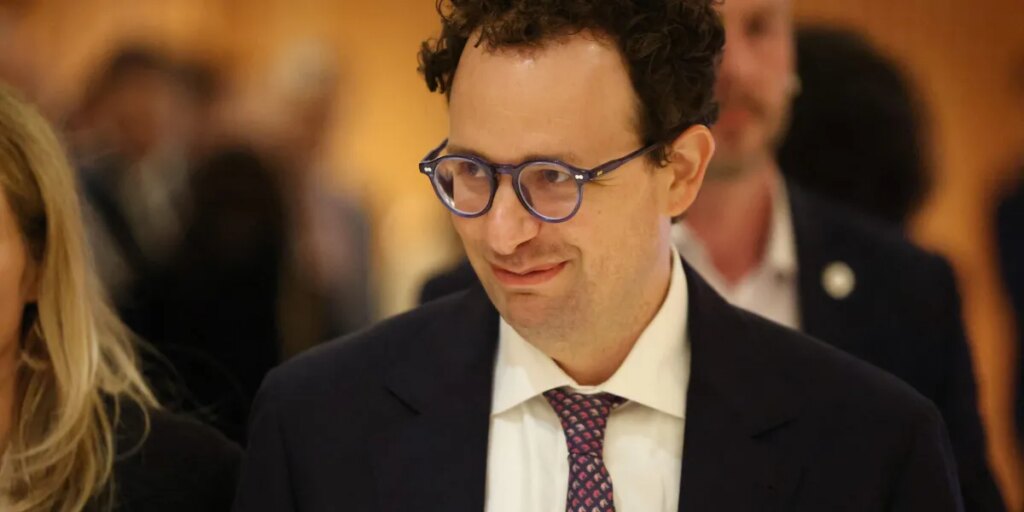
White House chief of staff Susie Wiles has met with Anthropic CEO Dario Amodei to discuss the company's new AI model, Mythos WASHINGTON (AP) -- White House chief of staff Susie Wiles on Friday sounded out Anthropic CEO Dario Amodei about the artificial intelligence company's new Mythos model, which has attracted attention from the federal government for how it could transform national security and the economy. A White House official, who requested anonymity to discuss the meeting ahead of time, said the administration is engaging with advanced AI labs about their models and the security of software. The official stressed that any new technology that might be used by the federal government would require a technical period for evaluation. The White House said afterward that the meeting was productive and construction, as opportunities for collaboration were discussed as well as the goal of balancing innovation and safety. The meeting came after tensions had run hot between the Trump administration and the safety-conscious Anthropic, which has sought to put guardrails on the development of AI to minimize any potential risks and maximize its economic and national security benefits for the U.S. President Donald Trump tried to stop all federal agencies from using Anthropic's chatbot Claude over the company's contract dispute with the Pentagon, with Trump saying in a February social media post that the administration "will not do business with them again!" When Trump was asked Friday while in Arizona if Anthropic had a meeting at the White House, the president said he had "no idea." Defense Secretary Pete Hegseth also sought to declare Anthropic a supply chain risk, an unprecedented move against a U.S. company that Anthropic has challenged in two federal courts. The company said it wanted assurance the Pentagon would not use its technology in fully autonomous weapons and the surveillance of Americans. Hegseth said the company must allow for any uses the Pentagon deemed lawful. U.S. District Judge Rita Lin issued a ruling in March that blocked the enforcement of Trump's social media directive ordering all federal agencies to stop using Anthropic products. Anthropic declined to speak about the meeting in advance. The San Francisco-based Anthropic has said the new Mythos model it announced on April 7 is so "strikingly capable" that it is limiting its use to select customers because of its ability to surpass human cybersecurity experts in finding and exploiting computer vulnerabilities. And while some industry experts have questioned whether Anthropic's claims of too-powerful AI technology were a marketing ploy, even some of the company's sharpest critics have suggested that Mythos might represent a further advancement in AI. One influential Anthropic critic, David Sacks, who was the White House's AI and crypto czar, said people should "take this seriously." "Anytime Anthropic is scaring people, you have to ask, 'Is this a tactic? Is this part of their Chicken Little routine? Or is it real?'" Sacks said on the "All-In" podcast he co-hosts with other tech investors. "With cyber, I actually would give them credit in this case and say this is more on the real side." Sacks said: "It just makes sense that as the coding models become more and more capable, they are more capable at finding bugs. That means they're more capable at finding vulnerabilities. That means they're more capable at stringing together multiple vulnerabilities and creating an exploit." The model's potential benefits, as well as its risks, have also attracted attention outside the U.S. The United Kingdom's AI Security Institute said it evaluated the new model and found it a "step up" over previous models, which were already rapidly improving. "Mythos Preview can exploit systems with weak security posture, and it is likely that more models with these capabilities will be developed," the institute said in a report. Anthropic has also been in talks with the European Union about its AI models, including advanced models that haven't yet been released in Europe, European Commission spokesman Thomas Regnier said Friday. Axios first reported the scheduled meeting between Wiles and Amodei. When it announced Mythos, Anthropic said it was also forming an initiative called Project Glasswing, bringing together tech giants such as Amazon, Apple, Google and Microsoft, along with other companies like JPMorgan Chase, in hopes of securing the world's critical software from "severe" fallout that the new model could pose to public safety, national security and the economy. "We're releasing it to a subset of some of the world's most important companies and organizations so they can use this to find vulnerabilities," said the Anthropic co-founder and policy chief, Jack Clark, at this week's Semafor World Economy conference. Clark added that Mythos, while ahead of the curve, is not a "special model." "There will be other systems just like this in a few months from other companies, and in a year to a year-and-a-half later, there will be open-weight models from China that have these capabilities," he said. So the world is going to have to get ready for more powerful systems that are going to exist within it." ___ O'Brien reported from Providence, R.I. AP business reporter Kelvin Chan contributed to this report from London.

AI firm Cerebras Systems files for Nasdaq IPO By Investing.com
Investing.com -- Cerebras Systems filed for a proposed Nasdaq initial public offering on Friday. The company builds computer chips designed to accelerate artificial intelligence training and inference. Cerebras is known for its Wafer-Scale Engine, a single processor that keeps data and memory on one piece of silicon to address traditional performance bottlenecks. Cerebras builds computer systems for complex AI deep learning applications. Morgan Stanley, Citigroup, Barclays, and UBS will serve as lead underwriters for the offering. This article was generated with the support of AI and reviewed by an editor. For more information see our T&C.

White House chief of staff to meet with Anthropic CEO over its new AI technology - Bay to Bay News
WASHINGTON (AP) -- White House chief of staff Susie Wiles plans to sound out Anthropic CEO Dario Amodei about the artificial intelligence company's new Mythos model, which has attracted attention from the federal government for how it could transform national security and the economy. A White House official, who requested anonymity to discuss the planned meeting Friday, said the administration is engaging with advanced AI labs about their models and the security of software. The official stressed that any new technology that might be used by the federal government would require a technical period for evaluation. The meeting comes after tensions have run hot between the Trump administration and the safety-conscious Anthropic, which has sought to put guardrails on the development of AI to minimize any potential risks and maximize its economic and national security benefits for the U.S. President Donald Trump tried to stop all federal agencies from using Anthropic's chatbot Claude over the company's contract dispute with the Pentagon, with Trump saying in a February social media post that the administration "will not do business with them again!" Defense Secretary Pete Hegseth also sought to declare Anthropic a supply chain risk, an unprecedented move against a U.S. company that Anthropic has challenged in two federal courts. The company said it wanted assurance the Pentagon would not use its technology in fully autonomous weapons and the surveillance of Americans. Hegseth said the company must allow for any uses the Pentagon deemed lawful. U.S. District Judge Rita Lin issued a ruling in March that blocked the enforcement of Trump's social media directive ordering all federal agencies to stop using Anthropic products. Anthropic declined to speak about the meeting in advance. The San Francisco-based Anthropic has said the new Mythos model it announced on April 7 is so "strikingly capable" that it is limiting its use to select customers because of its ability to surpass human cybersecurity experts in finding and exploiting computer vulnerabilities. And while some industry experts have questioned whether Anthropic's claims of too-powerful AI technology were a marketing ploy, even some of the company's sharpest critics have suggested that Mythos might represent a further advancement in AI. One influential Anthropic critic, David Sacks, who was the White House's AI and crypto czar, said people should "take this seriously." "Anytime Anthropic is scaring people, you have to ask, 'Is this a tactic? Is this part of their Chicken Little routine? Or is it real?'" Sacks said on the "All-In" podcast he co-hosts with other tech investors. "With cyber, I actually would give them credit in this case and say this is more on the real side." Sacks said, "It just makes sense that as the coding models become more and more capable, they are more capable at finding bugs. That means they're more capable at finding vulnerabilities. That means they're more capable at stringing together multiple vulnerabilities and creating an exploit." The model's potential benefits, as well as its risks, have also attracted attention outside the U.S. The United Kingdom's AI Security Institute said it evaluated the new model and found it a "step up" over previous models, which were already rapidly improving. "Mythos Preview can exploit systems with weak security posture, and it is likely that more models with these capabilities will be developed," the institute said in a report. Anthropic has also been in talks with the European Union about its AI models, including advanced models that haven't yet been released in Europe, European Commission spokesman Thomas Regnier said Friday. Axios first reported the scheduled meeting between Wiles and Amodei. When it announced Mythos, Anthropic said it was also forming an initiative called Project Glasswing, bringing together tech giants such as Amazon, Apple, Google and Microsoft, along with other companies like JPMorgan Chase, in hopes of securing the world's critical software from "severe" fallout that the new model could pose to public safety, national security and the economy. "We're releasing it to a subset of some of the world's most important companies and organizations so they can use this to find vulnerabilities," said the Anthropic co-founder and policy chief, Jack Clark, at this week's Semafor World Economy conference. Clark added that Mythos, while ahead of the curve, is not a "special model." "There will be other systems just like this in a few months from other companies, and in a year to a year-and-a-half later, there will be open-weight models from China that have these capabilities," he said. So the world is going to have to get ready for more powerful systems that are going to exist within it." ___ O'Brien reported from Providence, R.I. AP business reporter Kelvin Chan contributed to this report from London.
White House chief of staff meets with Anthropic CEO over its new AI technology
WASHINGTON (AP) -- White House chief of staff Susie Wiles on Friday sounded out Anthropic CEO Dario Amodei about the artificial intelligence company's new Mythos model, which has attracted attention from the federal government for how it could transform national security and the economy. A White House official, who requested anonymity to discuss the meeting ahead of time, said the administration is engaging with advanced AI labs about their models and the security of software. The official stressed that any new technology that might be used by the federal government would require a technical period for evaluation. The White House said afterward that the meeting was productive and construction, as opportunities for collaboration were discussed as well as the goal of balancing innovation and safety. The meeting came after tensions had run hot between the Trump administration and the safety-conscious Anthropic, which has sought to put guardrails on the development of AI to minimize any potential risks and maximize its economic and national security benefits for the U.S. President Donald Trump tried to stop all federal agencies from using Anthropic's chatbot Claude over the company's contract dispute with the Pentagon, with Trump saying in a February social media post that the administration "will not do business with them again!" When Trump was asked Friday while in Arizona if Anthropic had a meeting at the White House, the president said he had "no idea." Defense Secretary Pete Hegseth also sought to declare Anthropic a supply chain risk, an unprecedented move against a U.S. company that Anthropic has challenged in two federal courts. The company said it wanted assurance the Pentagon would not use its technology in fully autonomous weapons and the surveillance of Americans. Hegseth said the company must allow for any uses the Pentagon deemed lawful. U.S. District Judge Rita Lin issued a ruling in March that blocked the enforcement of Trump's social media directive ordering all federal agencies to stop using Anthropic products. Anthropic declined to speak about the meeting in advance. The San Francisco-based Anthropic has said the new Mythos model it announced on April 7 is so "strikingly capable" that it is limiting its use to select customers because of its ability to surpass human cybersecurity experts in finding and exploiting computer vulnerabilities. And while some industry experts have questioned whether Anthropic's claims of too-powerful AI technology were a marketing ploy, even some of the company's sharpest critics have suggested that Mythos might represent a further advancement in AI. One influential Anthropic critic, David Sacks, who was the White House's AI and crypto czar, said people should "take this seriously." "Anytime Anthropic is scaring people, you have to ask, 'Is this a tactic? Is this part of their Chicken Little routine? Or is it real?'" Sacks said on the "All-In" podcast he co-hosts with other tech investors. "With cyber, I actually would give them credit in this case and say this is more on the real side." Sacks said: "It just makes sense that as the coding models become more and more capable, they are more capable at finding bugs. That means they're more capable at finding vulnerabilities. That means they're more capable at stringing together multiple vulnerabilities and creating an exploit." The model's potential benefits, as well as its risks, have also attracted attention outside the U.S. The United Kingdom's AI Security Institute said it evaluated the new model and found it a "step up" over previous models, which were already rapidly improving. "Mythos Preview can exploit systems with weak security posture, and it is likely that more models with these capabilities will be developed," the institute said in a report. Anthropic has also been in talks with the European Union about its AI models, including advanced models that haven't yet been released in Europe, European Commission spokesman Thomas Regnier said Friday. Axios first reported the scheduled meeting between Wiles and Amodei. When it announced Mythos, Anthropic said it was also forming an initiative called Project Glasswing, bringing together tech giants such as Amazon, Apple, Google and Microsoft, along with other companies like JPMorgan Chase, in hopes of securing the world's critical software from "severe" fallout that the new model could pose to public safety, national security and the economy. "We're releasing it to a subset of some of the world's most important companies and organizations so they can use this to find vulnerabilities," said the Anthropic co-founder and policy chief, Jack Clark, at this week's Semafor World Economy conference. Clark added that Mythos, while ahead of the curve, is not a "special model." "There will be other systems just like this in a few months from other companies, and in a year to a year-and-a-half later, there will be open-weight models from China that have these capabilities," he said. So the world is going to have to get ready for more powerful systems that are going to exist within it." ___ O'Brien reported from Providence, R.I. AP business reporter Kelvin Chan contributed to this report from London. News Nevada Top stories Former WCSD employee sentenced to life in prison in student sexual assault case Astronauts to test Nevada-designed vision system aboard space station Protecting your garden and irrigation system from freezing temperatures
White House chief of staff meets with Anthropic CEO over its new AI technology
White House chief of staff Susie Wiles has met with Anthropic CEO Dario Amodei to discuss the company's new AI model, Mythos WASHINGTON (AP) -- White House chief of staff Susie Wiles on Friday sounded out Anthropic CEO Dario Amodei about the artificial intelligence company's new Mythos model, which has attracted attention from the federal government for how it could transform national security and the economy. A White House official, who requested anonymity to discuss the meeting ahead of time, said the administration is engaging with advanced AI labs about their models and the security of software. The official stressed that any new technology that might be used by the federal government would require a technical period for evaluation. The White House said afterward that the meeting was productive and construction, as opportunities for collaboration were discussed as well as the goal of balancing innovation and safety. The meeting came after tensions had run hot between the Trump administration and the safety-conscious Anthropic, which has sought to put guardrails on the development of AI to minimize any potential risks and maximize its economic and national security benefits for the U.S. President Donald Trump tried to stop all federal agencies from using Anthropic's chatbot Claude over the company's contract dispute with the Pentagon, with Trump saying in a February social media post that the administration "will not do business with them again!" When Trump was asked Friday while in Arizona if Anthropic had a meeting at the White House, the president said he had "no idea." Defense Secretary Pete Hegseth also sought to declare Anthropic a supply chain risk, an unprecedented move against a U.S. company that Anthropic has challenged in two federal courts. The company said it wanted assurance the Pentagon would not use its technology in fully autonomous weapons and the surveillance of Americans. Hegseth said the company must allow for any uses the Pentagon deemed lawful. U.S. District Judge Rita Lin issued a ruling in March that blocked the enforcement of Trump's social media directive ordering all federal agencies to stop using Anthropic products. Anthropic declined to speak about the meeting in advance. The San Francisco-based Anthropic has said the new Mythos model it announced on April 7 is so "strikingly capable" that it is limiting its use to select customers because of its ability to surpass human cybersecurity experts in finding and exploiting computer vulnerabilities. And while some industry experts have questioned whether Anthropic's claims of too-powerful AI technology were a marketing ploy, even some of the company's sharpest critics have suggested that Mythos might represent a further advancement in AI. One influential Anthropic critic, David Sacks, who was the White House's AI and crypto czar, said people should "take this seriously." "Anytime Anthropic is scaring people, you have to ask, 'Is this a tactic? Is this part of their Chicken Little routine? Or is it real?'" Sacks said on the "All-In" podcast he co-hosts with other tech investors. "With cyber, I actually would give them credit in this case and say this is more on the real side." Sacks said: "It just makes sense that as the coding models become more and more capable, they are more capable at finding bugs. That means they're more capable at finding vulnerabilities. That means they're more capable at stringing together multiple vulnerabilities and creating an exploit." The model's potential benefits, as well as its risks, have also attracted attention outside the U.S. The United Kingdom's AI Security Institute said it evaluated the new model and found it a "step up" over previous models, which were already rapidly improving. "Mythos Preview can exploit systems with weak security posture, and it is likely that more models with these capabilities will be developed," the institute said in a report. Anthropic has also been in talks with the European Union about its AI models, including advanced models that haven't yet been released in Europe, European Commission spokesman Thomas Regnier said Friday. Axios first reported the scheduled meeting between Wiles and Amodei. When it announced Mythos, Anthropic said it was also forming an initiative called Project Glasswing, bringing together tech giants such as Amazon, Apple, Google and Microsoft, along with other companies like JPMorgan Chase, in hopes of securing the world's critical software from "severe" fallout that the new model could pose to public safety, national security and the economy. "We're releasing it to a subset of some of the world's most important companies and organizations so they can use this to find vulnerabilities," said the Anthropic co-founder and policy chief, Jack Clark, at this week's Semafor World Economy conference. Clark added that Mythos, while ahead of the curve, is not a "special model." "There will be other systems just like this in a few months from other companies, and in a year to a year-and-a-half later, there will be open-weight models from China that have these capabilities," he said. So the world is going to have to get ready for more powerful systems that are going to exist within it." ___ O'Brien reported from Providence, R.I. AP business reporter Kelvin Chan contributed to this report from London.
White House chief of staff meets with Anthropic CEO over its new AI technology
White House chief of staff Susie Wiles has met with Anthropic CEO Dario Amodei to discuss the company's new AI model, Mythos WASHINGTON (AP) -- White House chief of staff Susie Wiles on Friday sounded out Anthropic CEO Dario Amodei about the artificial intelligence company's new Mythos model, which has attracted attention from the federal government for how it could transform national security and the economy. A White House official, who requested anonymity to discuss the meeting ahead of time, said the administration is engaging with advanced AI labs about their models and the security of software. The official stressed that any new technology that might be used by the federal government would require a technical period for evaluation.
White House chief of staff meets with Anthropic CEO over its new AI technology
White House chief of staff Susie Wiles has met with Anthropic CEO Dario Amodei to discuss the company's new AI model, Mythos WASHINGTON (AP) -- White House chief of staff Susie Wiles on Friday sounded out Anthropic CEO Dario Amodei about the artificial intelligence company's new Mythos model, which has attracted attention from the federal government for how it could transform national security and the economy. A White House official, who requested anonymity to discuss the meeting ahead of time, said the administration is engaging with advanced AI labs about their models and the security of software. The official stressed that any new technology that might be used by the federal government would require a technical period for evaluation. The White House said afterward that the meeting was productive and construction, as opportunities for collaboration were discussed as well as the goal of balancing innovation and safety. The meeting came after tensions had run hot between the Trump administration and the safety-conscious Anthropic, which has sought to put guardrails on the development of AI to minimize any potential risks and maximize its economic and national security benefits for the U.S. President Donald Trump tried to stop all federal agencies from using Anthropic's chatbot Claude over the company's contract dispute with the Pentagon, with Trump saying in a February social media post that the administration "will not do business with them again!" When Trump was asked Friday while in Arizona if Anthropic had a meeting at the White House, the president said he had "no idea." Defense Secretary Pete Hegseth also sought to declare Anthropic a supply chain risk, an unprecedented move against a U.S. company that Anthropic has challenged in two federal courts. The company said it wanted assurance the Pentagon would not use its technology in fully autonomous weapons and the surveillance of Americans. Hegseth said the company must allow for any uses the Pentagon deemed lawful. U.S. District Judge Rita Lin issued a ruling in March that blocked the enforcement of Trump's social media directive ordering all federal agencies to stop using Anthropic products. Anthropic declined to speak about the meeting in advance. The San Francisco-based Anthropic has said the new Mythos model it announced on April 7 is so "strikingly capable" that it is limiting its use to select customers because of its ability to surpass human cybersecurity experts in finding and exploiting computer vulnerabilities. And while some industry experts have questioned whether Anthropic's claims of too-powerful AI technology were a marketing ploy, even some of the company's sharpest critics have suggested that Mythos might represent a further advancement in AI. One influential Anthropic critic, David Sacks, who was the White House's AI and crypto czar, said people should "take this seriously." "Anytime Anthropic is scaring people, you have to ask, 'Is this a tactic? Is this part of their Chicken Little routine? Or is it real?'" Sacks said on the "All-In" podcast he co-hosts with other tech investors. "With cyber, I actually would give them credit in this case and say this is more on the real side." Sacks said: "It just makes sense that as the coding models become more and more capable, they are more capable at finding bugs. That means they're more capable at finding vulnerabilities. That means they're more capable at stringing together multiple vulnerabilities and creating an exploit." The model's potential benefits, as well as its risks, have also attracted attention outside the U.S. The United Kingdom's AI Security Institute said it evaluated the new model and found it a "step up" over previous models, which were already rapidly improving. "Mythos Preview can exploit systems with weak security posture, and it is likely that more models with these capabilities will be developed," the institute said in a report. Anthropic has also been in talks with the European Union about its AI models, including advanced models that haven't yet been released in Europe, European Commission spokesman Thomas Regnier said Friday. Axios first reported the scheduled meeting between Wiles and Amodei. When it announced Mythos, Anthropic said it was also forming an initiative called Project Glasswing, bringing together tech giants such as Amazon, Apple, Google and Microsoft, along with other companies like JPMorgan Chase, in hopes of securing the world's critical software from "severe" fallout that the new model could pose to public safety, national security and the economy. "We're releasing it to a subset of some of the world's most important companies and organizations so they can use this to find vulnerabilities," said the Anthropic co-founder and policy chief, Jack Clark, at this week's Semafor World Economy conference. Clark added that Mythos, while ahead of the curve, is not a "special model." "There will be other systems just like this in a few months from other companies, and in a year to a year-and-a-half later, there will be open-weight models from China that have these capabilities," he said. So the world is going to have to get ready for more powerful systems that are going to exist within it." ___ O'Brien reported from Providence, R.I. AP business reporter Kelvin Chan contributed to this report from London.

A Renewed Trust: Anthropic and Trump Administration's AI Collaboration | Technology
The Trump administration and Anthropic discussed a potential collaboration after prior disputes over AI model usage, amid mounting concerns that Anthropic's Mythos could exacerbate cyberattacks. As central banks and industries scramble to address the cybersecurity risks, dialogues are being fostered to harmonize innovation and safety protocols. The Trump administration and the CEO of AI firm Anthropic met Friday to discuss collaboration possibilities, marking a significant thawing of relations since their dispute over AI model usage directions earlier this year. This meeting signals a potential rebuilding of trust amid fears over Anthropic's AI-enhanced cyberattack capabilities. As concerns rise, especially within the banking sector, over the potential cyber vulnerabilities posed by Anthropic's AI model Mythos, global central bankers and industry leaders are seeking insights. Meetings with top banking officials in the U.S., Canada, and Britain underscore the urgency to address these risks. The White House characterized the dialogue with Anthropic as both 'productive' and 'constructive,' emphasizing a balance between AI innovation and safety. While Anthropic has yet to comment, the discussions mark a step in clarifying protocols and future collaborative efforts.

Nvidia rival Cerebras is taking another swing at an IPO
The AI-chip company last filed to go public in late 2024 before scrapping its plans Cerebras Systems said that the majority of its revenue is attributable to just two customers, including the Microsoft-backed Group 42. Cerebras Systems, which focuses on making artificial-intelligence chips, has once again filed for an initial public offering. Cerebras first filed to go public in September 2024, but later withdrew its plans. The Sunnyvale, Calif.-based company said Friday that it has applied to list its common shares on the Nasdaq Global Select Market under the ticker symbol "CBRS." "We invite you to join us on this extraordinary journey through a technological revolution more profound than any that has come before," Cerebras said in its S-1 filing. "Nothing excites us more than the future of AI." Morgan Stanley, Citigroup, Barclays and UBS Investment Bank are the lead book-running managers for the IPO, according to Cerebras. In February, the company raised $1 billion at a $23 billion postmoney valuation. Cerebras aims to compete with Nvidia (NVDA) and says its WSE-3 AI processor is 58 times larger than Nvidia's B200 chip. That, according to the company, allows it to deliver much more bandwidth than Nvidia and provide inference at "extremely fast speeds." In the filing, Cerebras said its top 10 customers by revenue in 2025 had increased their aggregate spend by about 80% within 12 months of their initial purchase. Revenue grew to about $510 million in 2025, a 76% increase from a year earlier. In 2022, the company logged just $24.6 million in sales. From the archives (Oct. 2024): How the CEO of this upstart Nvidia rival hopes to seize on the lucrative market for AI chips Cerebras also recorded net income of $237.8 million in 2025, turning a profit after years of losses. The company reported a $481.6 million net loss in 2024, along with smaller losses in 2023 and 2022, according to filings. However, Cerebras warned that a "substantial portion" of its revenue is driven by a limited number of customers, namely two firms in the United Arab Emirates. One customer, the Mohamed bin Zayed University of Artificial Intelligence, accounted for 62% of revenue in the year that ended in December 2025. The other customer, Group 42, is backed by Microsoft (MSFT) and was responsible for 24% of Cerebras's sales. Cerebras also noted that reduced demand or damage to its relationships with a handful of other firms, including OpenAI and Amazon Web Services (AMZN), would harm its business. OpenAI in January reached a multiyear agreement with Cerebras valued at more than $20 billion to co-design models for future Cerebras hardware. OpenAI also agreed to deploy 750 megawatts of Cerebras's AI compute and can buy an additional 1.25 gigawatts of AI compute by the end of 2030, Cerebras said in Friday's filing. AWS also announced a deal last month to deploy some Cerebras systems in its data centers. -William Gavin This content was created by MarketWatch, which is operated by Dow Jones & Co. MarketWatch is published independently from Dow Jones Newswires and The Wall Street Journal.

Anthropic's Claude 4.7 release confirmed, moves Polymarket design software trades
Anthropic's launch of Claude Design, powered by Claude Opus 4.7, has moved design software markets on Polymarket. The Claude 4.7 release by April 30 market sits at , confirming the release. The May 31 market also rests at , up from 38% a week ago. The June 30 market mirrors this certainty. The April 17 market dropped to , confirming the release date missed that earlier expectation. USDC trading volume across these markets hit $85,709 in the last 24 hours, with the deepest liquidity in the April 30 market, trading $16,202 daily. The largest move was a 27-point drop early morning, likely a correction after initial reactions. For traders, Claude 4.7's confirmed release by April 30 means this market has effectively resolved. At , a YES share pays nothing beyond face value. The rapid shift from 38% to 100% on the May 31 contract within a week does show how quickly tech launch confirmations collapse uncertainty in these markets. Watch for further Anthropic announcements, particularly any mention of Claude 5, which could open new trading opportunities. Dario Amodei's public statements or updates to Claude's API documentation are worth tracking.

White House chief of staff to meet with Anthropic CEO over its new AI technology
WASHINGTON (AP) -- White House chief of staff Susie Wiles plans to sound out Anthropic CEO Dario Amodei about the artificial intelligence company's new Mythos model, which has attracted attention from the federal government for how it could transform national security and the economy. A White House official, who requested anonymity to discuss the planned meeting Friday, said the administration is engaging with advanced AI labs about their models and the security of software. The official stressed that any new technology that might be used by the federal government would require a technical period for evaluation. The meeting comes after tensions have run hot between the Trump administration and the safety-conscious Anthropic, which has sought to put guardrails on the development of AI to minimize any potential risks and maximize its economic and national security benefits for the U.S. President Donald Trump tried to stop all federal agencies from using Anthropic's chatbot Claude over the company's contract dispute with the Pentagon, with Trump saying in a February social media post that the administration "will not do business with them again!" Defense Secretary Pete Hegseth also sought to declare Anthropic a supply chain risk, an unprecedented move against a U.S. company that Anthropic has challenged in two federal courts. The company said it wanted assurance the Pentagon would not use its technology in fully autonomous weapons and the surveillance of Americans. Hegseth said the company must allow for any uses the Pentagon deemed lawful. U.S. District Judge Rita Lin issued a ruling in March that blocked the enforcement of Trump's social media directive ordering all federal agencies to stop using Anthropic products. Anthropic declined to speak about the meeting in advance. The San Francisco-based Anthropic has said the new Mythos model it announced on April 7 is so "strikingly capable" that it is limiting its use to select customers because of its ability to surpass human cybersecurity experts in finding and exploiting computer vulnerabilities. And while some industry experts have questioned whether Anthropic's claims of too-powerful AI technology were a marketing ploy, even some of the company's sharpest critics have suggested that Mythos might represent a further advancement in AI. One influential Anthropic critic, David Sacks, who was the White House's AI and crypto czar, said people should "take this seriously." "Anytime Anthropic is scaring people, you have to ask, 'Is this a tactic? Is this part of their Chicken Little routine? Or is it real?'" Sacks said on the "All-In" podcast he co-hosts with other tech investors. "With cyber, I actually would give them credit in this case and say this is more on the real side." Sacks said, "It just makes sense that as the coding models become more and more capable, they are more capable at finding bugs. That means they're more capable at finding vulnerabilities. That means they're more capable at stringing together multiple vulnerabilities and creating an exploit." The model's potential benefits, as well as its risks, have also attracted attention outside the U.S. The United Kingdom's AI Security Institute said it evaluated the new model and found it a "step up" over previous models, which were already rapidly improving. "Mythos Preview can exploit systems with weak security posture, and it is likely that more models with these capabilities will be developed," the institute said in a report. Anthropic has also been in talks with the European Union about its AI models, including advanced models that haven't yet been released in Europe, European Commission spokesman Thomas Regnier said Friday. Axios first reported the scheduled meeting between Wiles and Amodei. When it announced Mythos, Anthropic said it was also forming an initiative called Project Glasswing, bringing together tech giants such as Amazon, Apple, Google and Microsoft, along with other companies like JPMorgan Chase, in hopes of securing the world's critical software from "severe" fallout that the new model could pose to public safety, national security and the economy. "We're releasing it to a subset of some of the world's most important companies and organizations so they can use this to find vulnerabilities," said the Anthropic co-founder and policy chief, Jack Clark, at this week's Semafor World Economy conference. Clark added that Mythos, while ahead of the curve, is not a "special model." "There will be other systems just like this in a few months from other companies, and in a year to a year-and-a-half later, there will be open-weight models from China that have these capabilities," he said. So the world is going to have to get ready for more powerful systems that are going to exist within it."

White House chief of staff meets with Anthropic CEO over its new AI technology
WASHINGTON (AP) -- White House chief of staff Susie Wiles on Friday sounded out Anthropic CEO Dario Amodei about the artificial intelligence company's new Mythos model, which has attracted attention from the federal government for how it could transform national security and the economy. A White House official, who requested anonymity to discuss the meeting ahead of time, said the administration is engaging with advanced AI labs about their models and the security of software. The official stressed that any new technology that might be used by the federal government would require a technical period for evaluation. The White House said afterward that the meeting was productive and construction, as opportunities for collaboration were discussed as well as the goal of balancing innovation and safety. The meeting came after tensions had run hot between the Trump administration and the safety-conscious Anthropic, which has sought to put guardrails on the development of AI to minimize any potential risks and maximize its economic and national security benefits for the U.S. President Donald Trump tried to stop all federal agencies from using Anthropic's chatbot Claude over the company's contract dispute with the Pentagon, with Trump saying in a February social media post that the administration "will not do business with them again!" When Trump was asked Friday while in Arizona if Anthropic had a meeting at the White House, the president said he had "no idea." Defense Secretary Pete Hegseth also sought to declare Anthropic a supply chain risk, an unprecedented move against a U.S. company that Anthropic has challenged in two federal courts. The company said it wanted assurance the Pentagon would not use its technology in fully autonomous weapons and the surveillance of Americans. Hegseth said the company must allow for any uses the Pentagon deemed lawful. U.S. District Judge Rita Lin issued a ruling in March that blocked the enforcement of Trump's social media directive ordering all federal agencies to stop using Anthropic products. Anthropic declined to speak about the meeting in advance. The San Francisco-based Anthropic has said the new Mythos model it announced on April 7 is so "strikingly capable" that it is limiting its use to select customers because of its ability to surpass human cybersecurity experts in finding and exploiting computer vulnerabilities. And while some industry experts have questioned whether Anthropic's claims of too-powerful AI technology were a marketing ploy, even some of the company's sharpest critics have suggested that Mythos might represent a further advancement in AI. One influential Anthropic critic, David Sacks, who was the White House's AI and crypto czar, said people should "take this seriously." "Anytime Anthropic is scaring people, you have to ask, 'Is this a tactic? Is this part of their Chicken Little routine? Or is it real?'" Sacks said on the "All-In" podcast he co-hosts with other tech investors. "With cyber, I actually would give them credit in this case and say this is more on the real side." Sacks said: "It just makes sense that as the coding models become more and more capable, they are more capable at finding bugs. That means they're more capable at finding vulnerabilities. That means they're more capable at stringing together multiple vulnerabilities and creating an exploit." The model's potential benefits, as well as its risks, have also attracted attention outside the U.S. The United Kingdom's AI Security Institute said it evaluated the new model and found it a "step up" over previous models, which were already rapidly improving. "Mythos Preview can exploit systems with weak security posture, and it is likely that more models with these capabilities will be developed," the institute said in a report. Anthropic has also been in talks with the European Union about its AI models, including advanced models that haven't yet been released in Europe, European Commission spokesman Thomas Regnier said Friday. Axios first reported the scheduled meeting between Wiles and Amodei. When it announced Mythos, Anthropic said it was also forming an initiative called Project Glasswing, bringing together tech giants such as Amazon, Apple, Google and Microsoft, along with other companies like JPMorgan Chase, in hopes of securing the world's critical software from "severe" fallout that the new model could pose to public safety, national security and the economy. "We're releasing it to a subset of some of the world's most important companies and organizations so they can use this to find vulnerabilities," said the Anthropic co-founder and policy chief, Jack Clark, at this week's Semafor World Economy conference. Clark added that Mythos, while ahead of the curve, is not a "special model." "There will be other systems just like this in a few months from other companies, and in a year to a year-and-a-half later, there will be open-weight models from China that have these capabilities," he said. So the world is going to have to get ready for more powerful systems that are going to exist within it." ___ O'Brien reported from Providence, R.I. AP business reporter Kelvin Chan contributed to this report from London.
Dow Jones Top Company Headlines at 5 PM ET: Blue Owl Founders Revise Terms of Personal Loans That Raised Scrutiny | Anthropic ...
Blue Owl Founders Revise Terms of Personal Loans That Raised Scrutiny Doug Ostrover and Marc Lipschultz are no longer borrowing against their shares in the fund manager. ---- Anthropic CEO Lands White House Meeting as Feud Thaws The Friday meeting comes as the White House races to prepare for Anthropic's latest AI model, Mythos, which the firm says could pose cybersecurity risks. Ford is recalling up to 1.39 million F-150 pickups over the risk of unexpected downshifting that can lead to a loss of vehicle control. State Street reported higher first-quarter profit, boosted by fee growth, particularly for its foreign exchange trading services. ---- Ericsson Targets Networks Growth Despite Caution Over Rising Costs Chief Executive Borje Ekholm said it was facing increasing input costs, especially in semiconductors, caused in part by AI demand. ---- Telecom Majors Bid $24 Billion for Patrick Drahi's SFR The French-Israeli billionaire's Altice business is under pressure to reduce its debt burden. The government delayed an overhaul to how it calculates Medicare Advantage payments. For the insurer, that only postpones the pain. ---- Why Spice Giant McCormick Thinks Flavoring Food Is Better Than Making It The company's deal with Unilever deepens its foothold in flavor as competition mounts from rivals. ---- Protein Is Hotter Than Ever. So Why Is the Owner of Quest and Atkins on a Cold Streak? Simply Good Foods looks to revitalize sales as rival protein bars seize share. ---- Kweichow Moutai's Annual Profit, Revenue Fall for First Time The Chinese liquor giant reported a drop in annual profit and revenue for the first time since its 2001 listing amid subdued consumption in China. ---- Sam Altman's Side Hustles Blur the Line Between OpenAI's Interests and His Own Ahead of a planned IPO, Altman's personal investments remain opaque, making it hard to spot any conflicts. ---- QVC Files for Chapter 11 Bankruptcy, Plans to Restructure $6.6 Billion of Debt The TV and video retailer's prepackaged bankruptcy was filed in U.S. Bankruptcy Court for the Southern District of Texas. ---- Autoliv Backs Guidance Despite Caution Over Geopolitical Challenges Shares rose 9% in Stockholm after the company's first quarter turned out better than anticipated, with strong sales in March.