News & Updates
The latest news and updates from companies in the WLTH portfolio.
Exclusive-Anthropic IPO launch shifts toward mid-October, sources say
Sept 4 - Anthropic is expected to begin marketing its initial public offering in mid-October at the earliest and complete the listing days before the U.S. midterm elections in November, people familiar with the matter said on Friday. The artificial intelligence company had been expected to make its IPO prospectus public as early as next week, two of the people said, a crucial step that would kick off the final stages of the offering. Now that is not expected until late September, the people added, cautioning that the plans, including the timing, are subject to change. The shift pushes back what some investors have said could be a $2 trillion listing, one of the largest IPOs ever attempted and a major test of public-market appetite for the rapidly growing artificial intelligence industry. Companies frequently adjust their IPO schedules as they work through market conditions, regulatory reviews and other preparations, so such changes are not unusual. As part of the IPO process, Anthropic is looking to finalize a $15 billion revolving credit facility, after which analysts, including those at banks involved in the financing, are expected to meet with the company, one of the people said. Bloomberg News earlier reported that Anthropic was in talks to expand the facility to $15 billion. Companies typically leave a few weeks between analyst meetings and making the IPO prospectus public, although Anthropic is expected to have a tighter window because analysts already know the company well, the person said. Anthropic declined to comment. The offering is expected to be one of the most closely anticipated IPOs ever, as investors look to public markets for exposure to the rapidly growing artificial intelligence industry. It could come alongside potential listings from other AI companies, including OpenAI. Elon Musk's SpaceX went public in June at a record $1.77 trillion valuation. Morgan Stanley, Goldman Sachs, JPMorgan and Citi are among the banks working with Anthropic on the IPO, according to people familiar with the matter. Goldman Sachs, Citi and JPMorgan declined to comment. Morgan Stanley did not immediately respond to a request for comment. (Reporting by Echo Wang in New York; Additional reporting by Milana Vinn; Editing by Colin Barr and Sanjeev Miglani)

Maybe we were wrong about Perplexity
Welcome to AI Decoded, Fast Company's weekly newsletter that breaks down the most important news in the world of AI. I'm Mark Sullivan, a senior writer at Fast Company, covering emerging tech, AI, and tech policy. Most Read from Fast Company Sign up to receive this newsletter every week via email here. And if you have comments on this issue and/or ideas for future ones, drop me a line at [email protected], and follow me on X @thesullivan. Perplexity's valuation is soaring. Its traffic tells a murkier story In a feature about the AI answer engine Perplexity in 2024, I suggested that the startup wasn't likely to last for the long haul against better-financed players like OpenAI and Anthropic, and that it was most likely an acquisition target. But here we are, well into 2026, and Perplexity is still alive and showing potential. Nvidia is reportedly in talks to invest in Perplexity in an equity round that would value the AI startup at more than $30 billion. That would mark a 50% increase from its estimated $20 billion valuation just a year ago. The Information reported that the company's annualized revenue is now more than $750 million, up from under $250 million at the start of 2026. At $750 million in annualized revenue, a $30 billion valuation is roughly 40 times sales. In February, Perplexity launched its Computer product, which deploys AI agents to do work on behalf of users. It also switched to a usage-based pricing plan in which users get a certain amount of credits for agentic work every month. The Financial Times reported that Perplexity's revenue increased 50% in a month after the launch of Computer. By March, Perplexity's annual recurring revenue had risen to $450 million, the report said, with some of that revenue coming from "tens of thousands" of enterprise customers. The picture of how many people are actually going to Perplexity for answers is somewhat muddled. Numbers from Similarweb suggest that traffic to the Perplexity.ai website peaked at 219 million visits per month in October 2025 and has been retreating ever since. App usage tells a different story. Similarweb numbers show that monthly active users of the Perplexity app on iOS and Android grew from 26.2 million in August 2025 to 37.9 million by February 2026, a roughly 45% increase in six months.

Chiang Khong to Huay Xai: Crossing into Laos Step by Step
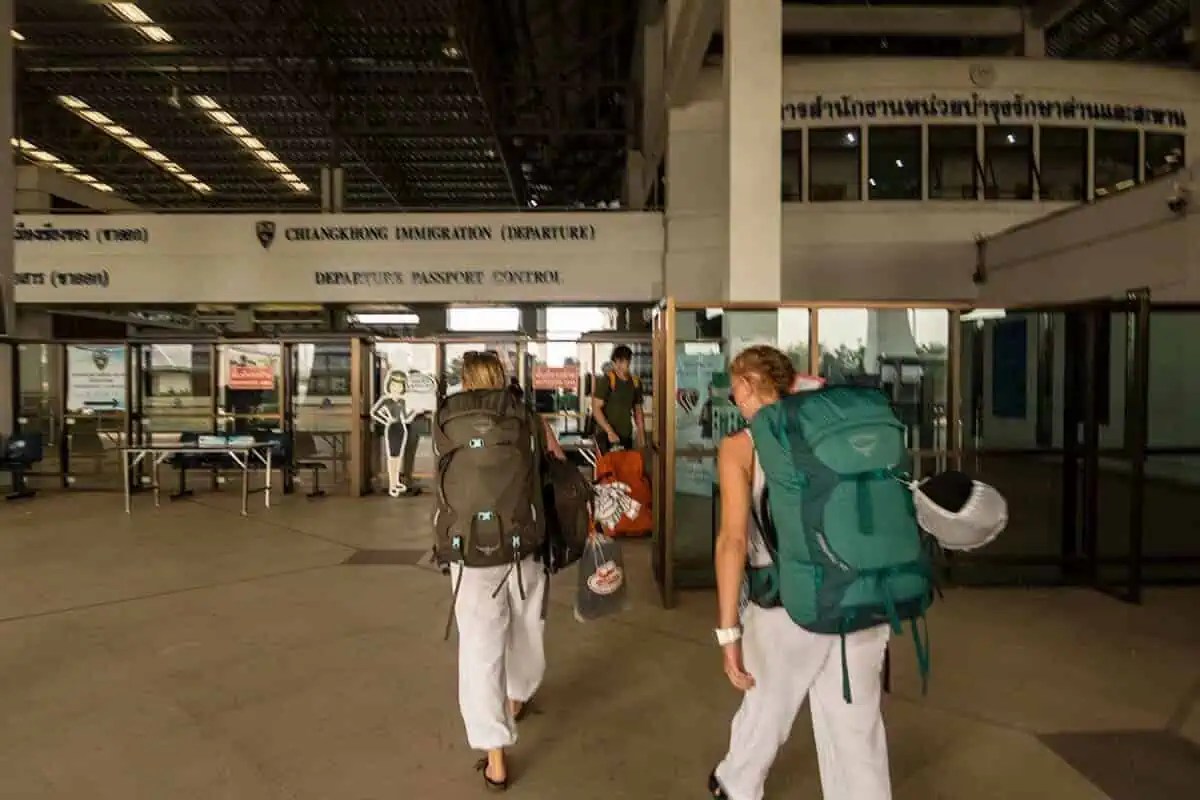
Crossing from Chiang Khong into Huay Xai is a road border crossing, but Chiang Khong town isn't the border itself. You'll need to travel to the Thai immigration checkpoint, complete your exit formalities, then take the mandatory shuttle across the Fourth Thai-Lao Friendship Bridge. Travelers can't walk or cycle across the bridge. After reaching the Lao side, you'll complete entry procedures at Huay Xai immigration. If your nationality requires a visa on arrival, carry the required documents and enough cash, usually in US dollars, while Thai baht or Lao kip can cover the shuttle and small local charges. The full crossing often takes one to three hours, depending on transport, immigration queues, visa processing, and shuttle wait times. This Chiang Khong Friendship Bridge crossing guide provides useful route context, but border hours, fees, shuttle service, and entry rules can change, so check official Thai and Lao sources before you leave. Start by arranging transport to Thai immigration and preparing your documents. Key Takeaways * Travel from Chiang Khong to the Thai immigration checkpoint, exit Thailand, then take the required shuttle across the Fourth Thai-Lao Friendship Bridge. You cannot walk across. * At Huay Xai, complete Lao immigration and arrange a visa on arrival or use an eligible e-visa. Check the official Friendship Bridge 4 checkpoint details before departure. * Carry a passport valid for at least six months, passport photos, and cash in US dollars for visa and local transport fees. * Border hours, shuttle fares, and the last bus can change, so cross early and review this Chiang Khong border crossing guide first. Chiang Khong to Huay Xai: Crossing into Laos Step by Step The Chiang Khong to Huay Xai border crossing follows a fixed sequence: reach the Thai checkpoint, leave Thailand, take the bridge shuttle, complete Lao immigration, then continue into Huay Xai. The bridge connects the Thai-side area near Ban Don Maha Wan with Ban Don on the Huay Xai side of the Mekong. It does not begin in central Chiang Khong or end in central Huay Xai. Getting from Chiang Rai or Chiang Khong Town to Thai Immigration From Chiang Rai, you can take a public bus, minivan, private car, or taxi to the border area. Travel usually takes 1.5 to 2.5 hours, but waiting time and traffic can make the trip longer. Leave extra room in your schedule if you have a same-day connection in Laos. Public buses may stop in Chiang Khong town or near a highway junction rather than directly at Thai immigration. From there, take a tuk-tuk for the final leg. A short ride may cost about 50 to 100 THB, depending on the pickup point, time of day, and your bargaining skills. Minivans are often quicker than public buses, while a private car or taxi gives you more control over the departure time and luggage. Before leaving Chiang Rai, confirm that your driver is taking you to the Friendship Bridge immigration checkpoint, not just Chiang Khong town. The Chiang Rai to Laos border guide can help you compare route and transport details. Leaving Thailand and Buying the Friendship Bridge Shuttle Ticket Enter the Thai checkpoint and join the passport-control line. After the officer processes your departure, check that your passport has the correct Thai exit stamp before leaving the building. Regular travelers cannot walk across Friendship Bridge IV. Buy the official shuttle ticket after Thai exit control, usually for about 20 to 25 THB. Prices can rise at night or on weekends, so keep small Thai notes ready. The bus may wait until it has enough passengers before departing. Crossing Friendship Bridge IV and Reaching Lao Immigration The shuttle carries you across the Mekong to the Lao border post near Ban Don. The ride is short, but the bus only connects the two immigration checkpoints. You still need another ride into central Huay Xai after entering Laos. Follow signs for immigration, visa processing, or the eVisa lane. Keep your passport, visa documents, passport photos, and payment accessible while you queue. Current traveler reports also describe Friendship Bridge IV shuttle fares as variable outside regular hours. Visa, Documents, and Border Fees You Need Before You Go Before leaving Chiang Khong, prepare your passport, visa plan, photos, and several types of cash. Most travelers need a passport valid for at least six months, while visa requirements depend on nationality and passport type. Fees, accepted currencies, and available services can change without notice, so confirm the latest rules before traveling. Visa on Arrival: Photos, Forms, and Cash Eligible travelers may apply for a Lao visa on arrival at immigration after taking the Friendship Bridge IV shuttle into Laos. Bring your passport, a completed application form, at least two passport-size photos, and cash for the fee. Immigration staff may request additional travel details, such as your accommodation in Laos. Recent travel information places many visa-on-arrival fees between USD 30 and USD 42, although the exact amount depends on your nationality and current exchange rates. Some travelers report higher costs when paying in Thai baht instead of US dollars. Visa on arrival isn't available to every nationality, so check your eligibility before reaching the border. When USD is accepted, carry clean, undamaged bills in smaller denominations. Torn, marked, or heavily worn notes may create problems at a cash-only counter. Some border charges are collected in Thai baht or Lao kip, so keep local currency separate from your visa money. Using the Lao eVisa at Friendship Bridge IV The official Lao eVisa information lists Lao Thai Friendship Bridge IV in Bokeo as an approved entry point. If you're eligible, apply before leaving Thailand through the official Lao eVisa FAQ, then print the approval letter and carry it with your passport. Use the dedicated eVisa lane when it's available. Your approval letter doesn't replace passport checks or guarantee admission, and you must present the same passport used in your application. The official terms also state that the tourist eVisa provides a 30-day stay permit after arrival. Check the entry port and approval letter validity dates before traveling. A mistake in either detail can delay your crossing or require a different visa arrangement. How Much Cash to Carry for the Crossing A practical cash plan should cover: * Thai-side transport and the bridge shuttle. * The Lao visa fee or eVisa-related costs. * Possible final entry charges, often reported at about 40 THB or 10,000 LAK, subject to change. * Food and onward transport into Huay Xai. Carry small Thai baht, US dollars if you need a visa, and some Lao kip after entry. Don't depend on card payments or border ATMs, since connectivity, machine availability, and operating hours can be unreliable. Border Hours, Timing, and What the Crossing Really Takes The Chiang Khong to Huay Xai crossing takes more than the bridge ride itself. Allow several hours from Chiang Khong town to central Huay Xai, especially if you need a visa on arrival or an onward slow boat, bus, or hotel transfer. The Best Time of Day to Cross The Fourth Thai-Lao Friendship Bridge is often listed as open from about 6:00 a.m. to 10:00 p.m. The official Friendship Bridge 4 checkpoint details show that schedule, but local procedures and shuttle times can change. Some traveler reports describe an earlier last shuttle from Thailand to Laos, so don't arrive near closing and assume you'll still cross. Early morning is usually the safest choice. You have more time to find transport from Chiang Khong, clear Thai immigration, wait for a shuttle, and solve document or payment problems. Midday can work well, although queues may grow during busy tourist periods. Late afternoon carries more risk. A delayed tuk-tuk, full shuttle, visa question, or slow immigration line can leave little time before services end. Weekends, public holidays, and peak travel months may also increase queues and shuttle waiting times. Treat the posted closing time as a limit, not as your target arrival time. Where Delays Usually Happen The trip can slow down at several separate points. You may wait for a tuk-tuk from Chiang Khong town, reach Thai immigration during a queue, or sit on the shuttle until it has enough passengers. After the short bridge ride, visa processing and currency issues can add more time. Once Lao immigration clears you, you still need transport into central Huay Xai. The Chiang Khong to Huay Xai timing guide offers additional planning context for this route. Keep water, snacks, cash, and important documents in a small day bag rather than buried in your main luggage. First-time travelers should allow three or more hours when they have onward plans. A flexible hotel night in Huay Xai is safer than booking a tight same-day connection. How to Avoid Confusion and Unofficial Charges Ask for posted prices before paying, then confirm whether the amount is in THB, USD, or LAK. Count your change at the counter and photograph receipts or fee boards when possible. Use official immigration counters and be cautious if someone claims a required service costs far more than the posted rate. You can politely decline unnecessary help and ask where the official payment point is. Keep your passport in your possession throughout the process. Arriving in Huay Xai and Continuing Your Laos Trip After Lao immigration, you still need to cover the final distance into Huay Xai. The border checkpoint sits outside the main town, so most travelers use a tuk-tuk, local taxi, shared pickup, or prearranged hotel transfer. Getting from the Lao Checkpoint into Huay Xai Before boarding, agree on the fare and confirm the exact destination. Say the hotel name clearly, then ask whether the price is per person or for the whole vehicle. Several passengers may share one tuk-tuk, especially when travelers arrive together from the bridge. Prices can change with the time of day, demand, and the amount of luggage you carry. A ride to central Huay Xai, a hotel, or the slow boat pier may have a different fare, so don't assume every destination costs the same. Save your accommodation name, address, and phone number offline before leaving Thailand. Mobile data may not connect immediately after the border, and a screenshot gives your driver a clear destination. Chiang Khong's role as a Mekong crossing point is covered in this Chiang Khong gateway guide. Connecting to the Slow Boat, Buses, and Local Services Many travelers enter Huay Xai for an overnight stay, the two-day slow boat to Luang Prabang, or a bus through northern Laos. Hotels are in town, while the slow boat pier and long-distance bus facilities require another ride. The latest slow boat travel details can help with planning, but local confirmation matters more than an old online timetable. Arriving with time for hotel check-in is safer than booking an immediate connection. A border queue, visa delay, full tuk-tuk, or changed departure point can easily disrupt a tight schedule. Ask your hotel, boat operator, or bus office about the current departure time and pickup location because both schedules and locations can change. A Simple Packing and Document Checklist Keep these items in a secure but reachable pouch: * Your passport and visa approval letter, or passport photos if applying on arrival. * Printed document copies, Thai baht, and US dollars if your visa requires them. * A phone charger or power bank, offline maps, accommodation details, and a pen. Keep cash and documents with you rather than inside checked luggage. Before leaving each immigration counter, check your passport and confirm that the correct entry or exit stamp is present. A Low Stress Plan for Crossing from Thailand into Laos A calm crossing starts with an early departure and a flexible schedule. Leave Chiang Rai early, or start from Chiang Khong after breakfast, then allow time for the checkpoint outside town, the bridge shuttle, Lao immigration, and the ride into Huay Xai. Check the official Friendship Bridge 4 hours before leaving, but treat the shuttle schedule as the practical cutoff. Public Transport, Private Transfer, or Staying Overnight? Public transport costs less and suits budget travelers who can accept delays. It may involve a bus or minivan to Chiang Khong, a tuk-tuk to immigration, and local transport after entering Laos. The tradeoff is less flexibility and a greater chance of missing a same-day bus or slow boat. A private transfer costs more, but the driver can take you directly to the immigration complex and wait while you complete the crossing. This option helps families, groups, and travelers with heavy luggage avoid confusing transfers. It also gives you better control over your departure time, although the bridge shuttle remains mandatory. Staying overnight in Chiang Khong or Huay Xai is the safest choice when your arrival time, visa eligibility, or onward booking is uncertain. You can cross early the next day instead of turning a delay into a missed connection. A simple plan looks like this: The Mistakes That Cause the Most Trouble Keep the crossing straightforward by avoiding these common errors: * Chiang Khong town is not beside immigration, so confirm your drop-off point. * Don't try to walk across the bridge. Use the required shuttle. * Arrive well before closing time, since the final shuttle may leave earlier. * Carry Thai baht, Lao kip, and clean US dollars if you need a visa. * Bring passport photos and verify every quoted fee before paying. * Avoid tight onward connections, then check your entry stamp before leaving the counter. Most problems are preventable. Keep your passport, cash, photos, and booking details together, and ask for official prices when anything seems unclear. Frequently Asked Questions A few practical questions often come up after travelers understand the crossing sequence. These answers cover visa problems, timing, passports, and what to do when plans change. Can I cross into Laos if I have overstayed in Thailand? You must resolve the Thai overstay before immigration processes your departure. Thai officers can require payment of the overstay fine in cash, and unpaid fines may prevent you from receiving an exit stamp. Review the latest Chiang Khong overstay fine advice before traveling to the checkpoint. Can I use a Lao eVisa with an emergency passport? The Lao eVisa is intended for ordinary passports. Temporary, emergency, and special passports may not qualify, so contact a Lao embassy or consulate before traveling if you hold one of these documents. Your passport should also remain valid for more than 180 days after your planned arrival. What happens if my eVisa approval letter has expired? You cannot rely on an expired approval letter for entry. Lao eVisa approvals are generally valid for up to 60 days after issuance, and you must enter through an approved checkpoint during that period. If the letter expires before your trip, apply again or confirm another visa option before reaching the border. Can I get a visa on arrival late in the evening? The Lao immigration checkpoint is listed as operating from 6:00 a.m. to 10:00 p.m., but visa counters and bridge shuttles may follow shorter or changing schedules. Arriving late creates a real risk of being unable to complete the crossing that day. Confirm current conditions through the Huay Xai visa information and cross well before the final hours. What should I do if I miss the last shuttle? If Thai immigration has already stamped you out, ask border staff for instructions immediately. Do not leave the checkpoint or attempt to find an unofficial way across the bridge. A same-day crossing may no longer be possible, so keep enough money for food, transport, and a nearby room if you must wait until morning.
Exclusive-Anthropic IPO launch shifts toward mid-October, sources say
Sept 4 - Anthropic is expected to begin marketing its initial public offering in mid-October at the earliest and complete the listing days before the U.S. midterm elections in November, people familiar with the matter said on Friday. The artificial intelligence company had been expected to make its IPO prospectus public as early as next week, two of the people said, a crucial step that would kick off the final stages of the offering. Now that is not expected until late September, the people added, cautioning that the plans, including the timing, are subject to change. The shift pushes back what some investors have said could be a $2 trillion listing, one of the largest IPOs ever attempted and a major test of public-market appetite for the rapidly growing artificial intelligence industry. Companies frequently adjust their IPO schedules as they work through market conditions, regulatory reviews and other preparations, so such changes are not unusual. As part of the IPO process, Anthropic is looking to finalize a $15 billion revolving credit facility, after which analysts, including those at banks involved in the financing, are expected to meet with the company, one of the people said. Bloomberg News earlier reported that Anthropic was in talks to expand the facility to $15 billion. Companies typically leave a few weeks between analyst meetings and making the IPO prospectus public, although Anthropic is expected to have a tighter window because analysts already know the company well, the person said. Anthropic declined to comment. The offering is expected to be one of the most closely anticipated IPOs ever, as investors look to public markets for exposure to the rapidly growing artificial intelligence industry. It could come alongside potential listings from other AI companies, including OpenAI. Elon Musk's SpaceX went public in June at a record $1.77 trillion valuation. Morgan Stanley, Goldman Sachs, JPMorgan and Citi are among the banks working with Anthropic on the IPO, according to people familiar with the matter. Goldman Sachs, Citi and JPMorgan declined to comment. Morgan Stanley did not immediately respond to a request for comment. (Reporting by Echo Wang in New York; Additional reporting by Milana Vinn; Editing by Colin Barr and Sanjeev Miglani) Copyright Reuters or USA Today via Reuters Connect This story was originally published September 4, 2026 at 5:48 PM.
Anthropic IPO launch shifts toward mid-October, sources say
Anthropic is expected to begin marketing its initial public offering in mid-October at the earliest and complete the listing days before the US midterm elections in November, people familiar with the matter said on Friday (Saturday AEST). The artificial intelligence company had been expected to make its IPO prospectus public as early as next week, two of the people said, a crucial step that would kick off the final stages of the offering. Now that is not expected until late September, the people added, cautioning that the plans, including the timing, are subject to change.
Exclusive-Anthropic IPO launch shifts toward mid-October, sources say
Sept 4 - Anthropic is expected to begin marketing its initial public offering in mid-October at the earliest and complete the listing days before the U.S. midterm elections in November, people familiar with the matter said on Friday. The artificial intelligence company had been expected to make its IPO prospectus public as early as next week, two of the people said, a crucial step that would kick off the final stages of the offering. Now that is not expected until late September, the people added, cautioning that the plans, including the timing, are subject to change. The shift pushes back what some investors have said could be a $2 trillion listing, one of the largest IPOs ever attempted and a major test of public-market appetite for the rapidly growing artificial intelligence industry. Companies frequently adjust their IPO schedules as they work through market conditions, regulatory reviews and other preparations, so such changes are not unusual. As part of the IPO process, Anthropic is looking to finalize a $15 billion revolving credit facility, after which analysts, including those at banks involved in the financing, are expected to meet with the company, one of the people said. Bloomberg News earlier reported that Anthropic was in talks to expand the facility to $15 billion. Companies typically leave a few weeks between analyst meetings and making the IPO prospectus public, although Anthropic is expected to have a tighter window because analysts already know the company well, the person said. Anthropic declined to comment. The offering is expected to be one of the most closely anticipated IPOs ever, as investors look to public markets for exposure to the rapidly growing artificial intelligence industry. It could come alongside potential listings from other AI companies, including OpenAI. Elon Musk's SpaceX went public in June at a record $1.77 trillion valuation. Morgan Stanley, Goldman Sachs, JPMorgan and Citi are among the banks working with Anthropic on the IPO, according to people familiar with the matter. Goldman Sachs, Citi and JPMorgan declined to comment. Morgan Stanley did not immediately respond to a request for comment. (Reporting by Echo Wang in New York; Additional reporting by Milana Vinn; Editing by Colin Barr and Sanjeev Miglani) Copyright Reuters or USA Today via Reuters Connect This story was originally published September 4, 2026 at 6:48 PM.
Coatue Opened Positions in Intel and Cerebras. Is the AI Chip Trade Broadening Beyond NVIDIA?
Coatue Management's Q2 filing disclosed a new position in Intel and, for the first time, a reportable position in newly public Cerebras. Coatue reported 12,084,027 Intel shares and roughly 7.01 million Cerebras shares at June 30. Intel Corporation (NASDAQ:INTC) offers manufacturing and established distribution, while Cerebras Systems Inc. (NASDAQ:CBRS) offers a radically different wafer-scale architecture. Close-up of Silicon Die are being Extracted from Semiconductor Wafer and Attached to Substrate by Pick and Place Machine. Computer Chip Manufacturing at Fab. Semiconductor Packaging Process. Intel's bull case is strategic relevance. Its CPU franchise, foundry ambitions, advanced packaging, and domestic manufacturing footprint could benefit as governments and customers seek more supply options. The new Coatue position joins a broader increase in professional participation: Insider Monkey counted 138 hedge funds holding INTC at June 30, up from 112 at March 31. Its bear case is capital intensity and competitive execution. Intel must spend heavily while defending share against AMD and proving its foundry can win external customers. Recent equity financing adds dilution, and a turnaround can consume cash for years before margins recover. Coatue's filing shows quarter-end ownership, not when shares were bought or why. Cerebras gives the diversification thesis more direct AI exposure. Its Q2 non-GAAP core revenue reached $209.9 million, up 103% year over year, and cloud-service revenue grew rapidly as customers rented inference rather than purchased hardware. As a new public company, CBRS had 78 hedge funds in Q2. Coatue's disclosed position was worth roughly $1.5 billion, making it economically meaningful. The counterargument is volatility and business mix. Cerebras's total Q2 revenue was about $180.1 million under GAAP presentation, while hardware sales fell 23% to $54.1 million and shares dropped sharply after results. Cloud growth can be attractive but may require the company to fund capacity and accept lower near-term margins. Customer concentration and competition from NVIDIA ecosystems remain central risks. Intel's August 14 short-interest snapshot showed 135.69 million shares sold short, with 1.26 days to cover; estimates put that near 2.7% of shares outstanding. It predates the public analysis of Coatue's filing. The filing supports a broadening thesis, not a verdict. Intel must prove manufacturing economics; Cerebras must prove scalable cloud margins. NVIDIA's dominance weakens only if challengers translate technical alternatives into durable, profitable customer adoption.

Exclusive-Anthropic IPO launch shifts toward mid-October, sources say
Sept 4 - Anthropic is expected to begin marketing its initial public offering in mid-October at the earliest and complete the listing days before the U.S. midterm elections in November, people familiar with the matter said on Friday. The artificial intelligence company had been expected to make its IPO prospectus public as early as next week, two of the people said, a crucial step that would kick off the final stages of the offering. Now that is not expected until late September, the people added, cautioning that the plans, including the timing, are subject to change. The shift pushes back what some investors have said could be a $2 trillion listing, one of the largest IPOs ever attempted and a major test of public-market appetite for the rapidly growing artificial intelligence industry. Companies frequently adjust their IPO schedules as they work through market conditions, regulatory reviews and other preparations, so such changes are not unusual. As part of the IPO process, Anthropic is looking to finalize a $15 billion revolving credit facility, after which analysts, including those at banks involved in the financing, are expected to meet with the company, one of the people said. Bloomberg News earlier reported that Anthropic was in talks to expand the facility to $15 billion. Companies typically leave a few weeks between analyst meetings and making the IPO prospectus public, although Anthropic is expected to have a tighter window because analysts already know the company well, the person said. Anthropic declined to comment. The offering is expected to be one of the most closely anticipated IPOs ever, as investors look to public markets for exposure to the rapidly growing artificial intelligence industry. It could come alongside potential listings from other AI companies, including OpenAI. Elon Musk's SpaceX went public in June at a record $1.77 trillion valuation. Morgan Stanley, Goldman Sachs, JPMorgan and Citi are among the banks working with Anthropic on the IPO, according to people familiar with the matter. Goldman Sachs, Citi and JPMorgan declined to comment. Morgan Stanley did not immediately respond to a request for comment. (Reporting by Echo Wang in New York; Additional reporting by Milana Vinn; Editing by Colin Barr and Sanjeev Miglani) Copyright Reuters or USA Today via Reuters Connect This story was originally published September 4, 2026 at 3:48 PM.
Polymarket Vows Insider Trading Crackdown as Traders Bet $12M on CLARITY Act
* Polymarket says it is strengthening its systems for identifying insider trading and other suspicious activity ahead of the US midterm elections. * Nearly $12 million has been traded on whether the CLARITY Act will become law in 2026, although traders currently give it only a 15% chance. * Rival Kalshi has permanently banned former congressman George Santos over trades linked to his own State of the Union attendance. Polymarket has pledged to intensify its crackdown on insider trading and other market misconduct as millions of dollars flow into politically sensitive prediction markets. The company's new investigations chief said it has surveillance systems capable of identifying abnormal trading ahead of the US midterm elections, when lawmakers expect activity on political contracts to surge. The assurances arrive as traders wager nearly $12 million on whether the CLARITY Act will become law before the end of 2026. Polymarket Chief Says Platform Can Detect Suspicious Trades Polymarket is preparing to disclose more information about the systems it uses to protect the integrity of its markets. The company's monitoring operation combines machine learning with blockchain analytics, open-source research and conventional trade surveillance, according to Reuters. Bautista, a former FBI investigator who joined the company in June, said she was confident Polymarket would provide the resources required to police its platform. She added that the company already had systems capable of detecting anomalous activity ahead of the midterms. Polymarket's international platform does not publicly reveal the identities behind individual accounts. However, its blockchain system creates a visible record of wallet transactions that investigators can examine. That information can help the company detect unusual trading patterns or connections between apparently separate accounts. Bautista told Reuters that Polymarket had referred more than 100 matters to law enforcement. Among the examples she cited was an account allegedly used by a US soldier to place trades connected to the capture of Venezuelan leader Nicolás Maduro. Polymarket has faced separate questions over Americans accessing its international service. The CFTC penalized the company in 2022 for offering event contracts without obtaining the required registration. The resulting settlement required Polymarket to prevent US customers from using that platform. It later regained access to the US market by purchasing a federally registered exchange, which operates as the separate Polymarket US business.
The Anthropic IPO May Be Right Around the Corner. Here's What Investors Need to Know. - AOL
This year has been a major one for initial public offerings, even producing the biggest IPO on record: the Space Exploration Technologies operation. Including the exercise of an overallotment option, SpaceX raised more than $85 billion and entered the market with a trillion-dollar valuation. Now, all eyes are focused on the next IPO, one that could be even larger than that of SpaceX. I'm talking about the upcoming Anthropic market debut. The artificial intelligence (AI) lab, maker of the famous AI assistant Claude, confidentially filed a draft registration statement with regulators in June. And news reports suggest an IPO may be right around the corner. Here's what investors need to know. Missed Nvidia in 2009? This Rare Signal Is Flashing Again.In 2009, a "Double Down" signal flashed for a little-known chipmaker called Nvidia. For the first time in years, that same "Total Conviction" signal is flashing for a company 1/100th the size of Nvidia. Continue " Why IPOs spark excitement So, first, a quick look at why the launch of companies involved in AI -- from SpaceX to AI chip designer Cerebras Systems -- has sparked excitement and drawn investors' attention. It's important to note that IPOs generally garner attention as they present new investing opportunities. On top of this, the AI market, heading toward a value of $3 trillion in just a few years, according to analysts, represents a massive growth opportunity. Publicly traded AI leaders such as Nvidia and Amazon have seen revenue skyrocket in recent years, so investors are eager to get in on the next new AI story. Now, let's consider Anthropic and what you as an investor need to know. The company is the maker of the Claude AI assistant, the popular Claude Code coding tool, and other AI-driven products, and these are in high demand. TechCrunch, citing an Anthropic spokesperson, reported that Claude paid subscriptions have more than doubled in 2026. In May, Anthropic raised $65 billion in Series H funding, pushing its valuation to $965 billion. At the time, the company said its revenue run rate had surpassed $47 billion. AI labs such as Anthropic and OpenAI have been key players in the AI story, calling for a ramp-up in AI infrastructure from cloud partners such as Amazon Web Services (AWS). This increase in compute results in higher revenue for them -- more compute allows Anthropic and OpenAI to supercharge the performance of their large language models and serve more customers. Anthropic's confidential filing In recent months, investors have been looking to the IPO plans of each company, and Anthropic became the first to file, confidentially, with the Securities and Exchange Commission. In a confidential filing, a company provides financial data to regulators but doesn't yet release these details to the public. Anthropic hasn't offered an update on its plans, but The Information recently reported that a prospectus would be made public after the Labor Day holiday and that a market debut is planned for late this month or early next month. The publication cited people familiar with the situation. According to the report, Anthropic expects to surpass the size of SpaceX's IPO. And several publications have said that Anthropic is targeting a valuation of $2 trillion. The Information also said that Anthropic may allow existing shareholders to sell shares during the IPO. The positive is that this broadens the pool of available shares; the negative is that cash from those sales goes to the respective shareholders, not the company. And if key insiders sell, potential investors may view this as a lack of confidence in the future. These elements offer us clues about what to expect, but it's important to review Anthropic's prospectus when it becomes available to confirm these and other details. Investors should focus on financial information, including revenue from Claude, gross margin, and the status of existing contracts. Investors should also pay close attention to what the company considers potential risks. This will help you determine whether an investment in this IPO stock is right for you -- an aggressive investor may make a different decision than a cautious investor. So, right now, if you're interested in possibly participating in the Anthropic IPO, the best thing you can do is stay tuned for the official filing -- which may be just ahead -- and examine it carefully. Where to invest $1,000 right now When our analyst team has a stock tip, it can pay to listen. After all, Stock Advisor's total average return is 983%* -- a market-crushing outperformance compared to 212% for the S&P 500. They just revealed what they believe are the 10 best stocks for investors to buy right now, available when you joinStock Advisor. See the stocks " *Stock Advisor returns as of September 3, 2026. Adria Cimino has positions in Amazon. The Motley Fool has positions in and recommends Amazon and Nvidia. The Motley Fool has a disclosure policy.

Anthropic Nears Finalizing $15 Billion Pre-IPO Credit Facility
(Bloomberg) -- Anthropic PBC is set to finalize expanding its revolving credit facility to $15 billion, according to people familiar with the matter, clearing a hurdle before the artificial intelligence firm's public filing for its highly anticipated IPO. Most Read from Bloomberg Morgan Stanley is leading the process, the people said. Goldman Sachs Group Inc. and JPMorgan Chase & Co. also have prominent roles on the facility, along with Citigroup Inc., they said. The four lenders are also leading the IPO, Bloomberg News has reported. The Claude chatbot maker is seeking to raise as much as SpaceX or more in the initial public offering, people familiar with the preparations have said. Companies typically finalize the revolver before they notify banks of their formal roles in a listing. Barclays Plc and Wells Fargo & Co. are also expected to have key roles on the loan, the people said. Bank of America Corp., Deutsche Bank AG, Royal Bank of Canada, and UBS Group AG are also high in the credit facility's lineup, they said. Generally, in syndicated loans, the higher the commitment of a bank, the higher the fees it gets paid by a borrower. When a large capital markets transaction is expected, a higher ranking in a loan is likely to correspond to a more active role in the upcoming deal. Bank of Montreal, BNP Paribas SA, Credit Agricole SA, Mizuho Financial Group Inc., Mitsubishi UFJ Financial Group Inc., Sumitomo Mitsui Financial Group Inc. and Toronto-Dominion Bank are also on the so-called revolver, the people said. The credit facility would exceed the company's roughly $10 billion target, Bloomberg News reported in August. Anthropic had asked the most active banks leading the credit line to lend about $1.25 billion each, with the next level of active banks being encouraged to offer around $1 billion, and with the commitments dropping to roughly $750 million and lower for less active roles, Bloomberg reported. Details of the loan could still change, the people said, asking not to be identified as the information isn't public. Representatives for Anthropic, JPMorgan, Barclays, Wells Fargo and UBS declined to comment. The other banks didn't immediately respond to requests for comment.

Polymarket Launches Perpetual Trading Offering 20x Leverage
This expansion could attract more traders amid mixed market signals. Polymarket has launched a new trading feature, Polymarket Perps, allowing traders to engage in perpetual contracts with leverage up to 20x. This service is available internationally in jurisdictions where it is permitted by law. The development could significantly impact trading volume and user engagement as it offers enhanced flexibility for traders looking to capitalize on market movements. source Inside the Move The introduction of perpetual trading on Polymarket marks a significant expansion in its trading offerings. Users can now trade a variety of assets, including cryptocurrencies, stocks, and commodities, with the ability to leverage their positions substantially. This enhancement comes at a time when the broader crypto market shows mixed signals, indicating a potential shift in trader sentiment and engagement. With the market dynamics evolving, traders may find new opportunities in these leveraged positions. What We Know * Polymarket has launched perpetual trading with 20x leverage effective immediately. The service includes cryptocurrencies, stocks, and commodities. Trading is available in jurisdictions where permitted by law. The platform aims to enhance user engagement and trading volume. This launch positions Polymarket as a competitive player in the DeFi landscape. The Numbers Currently, Polymarket has reported no trading volume in the last 24 hours as it rolls out this new feature. The lack of trading activity may be attributed to traders awaiting more information on the platform's offerings and market conditions. However, the launch of perpetual trading could soon change this dynamic, encouraging increased participation as users explore the benefits of high leverage trading. Polymarket is a decentralized prediction market platform allowing users to bet on various outcomes across multiple sectors, including cryptocurrencies, politics, and entertainment. The platform operates under regulatory frameworks in different jurisdictions, making compliance essential for its global offerings. As such, the recent launch of perpetual trading reflects Polymarket's commitment to expanding its services while adhering to legal requirements. What to Watch Traders should keep an eye on Polymarket's trading volumes and user engagement in the coming weeks as the new feature gains traction. The introduction of perpetual contracts could lead to increased trading activity, especially if market conditions stabilize. Additionally, the overall sentiment in the crypto market, including factors such as interest rates and regulatory developments, will likely influence trader behavior on the platform.

The Anthropic IPO May Be Right Around the Corner. Here's What Investors Need to Know.
This year has been a major one for initial public offerings, even producing the biggest IPO on record: the Space Exploration Technologies operation. Including the exercise of an overallotment option, SpaceX raised more than $85 billion and entered the market with a trillion-dollar valuation. Now, all eyes are focused on the next IPO, one that could be even larger than that of SpaceX. I'm talking about the upcoming Anthropic market debut. The artificial intelligence (AI) lab, maker of the famous AI assistant Claude, confidentially filed a draft registration statement with regulators in June. And news reports suggest an IPO may be right around the corner. Here's what investors need to know. Missed Nvidia in 2009? This Rare Signal Is Flashing Again. In 2009, a "Double Down" signal flashed for a little-known chipmaker called Nvidia. For the first time in years, that same "Total Conviction" signal is flashing for a company 1/100th the size of Nvidia. Continue " Image source: Getty Images. Why IPOs spark excitement So, first, a quick look at why the launch of companies involved in AI -- from SpaceX to AI chip designer Cerebras Systems -- has sparked excitement and drawn investors' attention. It's important to note that IPOs generally garner attention as they present new investing opportunities. On top of this, the AI market, heading toward a value of $3 trillion in just a few years, according to analysts, represents a massive growth opportunity. Publicly traded AI leaders such as Nvidia and Amazon have seen revenue skyrocket in recent years, so investors are eager to get in on the next new AI story. Now, let's consider Anthropic and what you as an investor need to know. The company is the maker of the Claude AI assistant, the popular Claude Code coding tool, and other AI-driven products, and these are in high demand. TechCrunch, citing an Anthropic spokesperson, reported that Claude paid subscriptions have more than doubled in 2026. In May, Anthropic raised $65 billion in Series H funding, pushing its valuation to $965 billion. At the time, the company said its revenue run rate had surpassed $47 billion. AI labs such as Anthropic and OpenAI have been key players in the AI story, calling for a ramp-up in AI infrastructure from cloud partners such as Amazon Web Services (AWS). This increase in compute results in higher revenue for them -- more compute allows Anthropic and OpenAI to supercharge the performance of their large language models and serve more customers. Anthropic's confidential filing In recent months, investors have been looking to the IPO plans of each company, and Anthropic became the first to file, confidentially, with the Securities and Exchange Commission. In a confidential filing, a company provides financial data to regulators but doesn't yet release these details to the public. Anthropic hasn't offered an update on its plans, but The Information recently reported that a prospectus would be made public after the Labor Day holiday and that a market debut is planned for late this month or early next month. The publication cited people familiar with the situation. According to the report, Anthropic expects to surpass the size of SpaceX's IPO. And several publications have said that Anthropic is targeting a valuation of $2 trillion. The Information also said that Anthropic may allow existing shareholders to sell shares during the IPO. The positive is that this broadens the pool of available shares; the negative is that cash from those sales goes to the respective shareholders, not the company. And if key insiders sell, potential investors may view this as a lack of confidence in the future. These elements offer us clues about what to expect, but it's important to review Anthropic's prospectus when it becomes available to confirm these and other details. Investors should focus on financial information, including revenue from Claude, gross margin, and the status of existing contracts. Investors should also pay close attention to what the company considers potential risks. This will help you determine whether an investment in this IPO stock is right for you -- an aggressive investor may make a different decision than a cautious investor. So, right now, if you're interested in possibly participating in the Anthropic IPO, the best thing you can do is stay tuned for the official filing -- which may be just ahead -- and examine it carefully. Where to invest $1,000 right now When our analyst team has a stock tip, it can pay to listen. After all, Stock Advisor's total average return is 983%* -- a market-crushing outperformance compared to 212% for the S&P 500. They just revealed what they believe are the 10 best stocks for investors to buy right now, available when you join Stock Advisor. See the stocks " *Stock Advisor returns as of September 3, 2026. Adria Cimino has positions in Amazon. The Motley Fool has positions in and recommends Amazon and Nvidia. The Motley Fool has a disclosure policy.

Crusoe reportedly raises $3B at a $30B valuation
Data center developer Crusoe, which counts Meta, Microsoft, and OpenAI as its customers, has raised a new $3 billion round at a $30 billion valuation, Bloomberg reported. The deal is being co-led by Atreides Management and Valor Equity Partners, and includes participation from Mubadala Capital, the asset management subsidiary of Abu Dhabi's sovereign wealth fund Mubadala. The company recently signed a massive $13 billion, five-year cloud contract to supply quantitative trading firm Jane Street with GPUs and AI infrastructure, Bloomberg reported. The fresh fundraise comes 10 months after Crusoe raised a $1.38 billion round at a $10 billion valuation last October. Launched in 2018 as a crypto mining operation powered by flared natural gas, Crusoe has since pivoted into a major AI infrastructure and cloud provider that is best known for developing hyperscale data center campuses for clients like Oracle and OpenAI. The company recently met with investment bankers, including Goldman Sachs and Morgan Stanley, to discuss a potential near-term IPO, Axios reported last month.

Anthropic Accuses Chinese AI Labs of Using Fraudulent Accounts to Distill Claude Models
Anthropic has accused Chinese artificial intelligence companies and other foreign actors of using large-scale networks of fraudulent accounts to extract capabilities from its Claude models and build cheaper competing systems, escalating a broader battle over AI model distillation, intellectual property and national security. Jacob Klein, Anthropic's head of threat intelligence, said the company supports legitimate competition but has identified what it describes as an illicit ecosystem designed to circumvent its safeguards and obtain access to Claude at enormous scale. "There's an entire illicit ecosystem to try to gain access to Claude and other models," Klein told CNBC. "This ecosystem goes through any means necessary to evade our controls, so they can spin up accounts at extreme scale." Anthropic alleges that foreign AI developers can then repeatedly query Claude, collect millions of responses, and use those outputs to train their own models. The process, known as distillation, can substantially reduce the cost and time required to develop competing AI systems because a developer can learn from the behavior of an already capable model rather than building every capability from scratch. The practice itself is not inherently illegal. Model developers can use distillation legitimately when they have permission to access and use another system's outputs and comply with intellectual-property, contractual, and export-control requirements. Anthropic's allegation is that some actors are deliberately bypassing those restrictions. Anthropic has singled out several Chinese AI laboratories, including Moonshot AI, DeepSeek and MiniMax, alleging that they have distilled capabilities from its frontier models. Klein specifically accused Moonshot's Kimi K3 model, which gained significant attention after its launch in July, of being trained illegally using the latest version of Claude. "We've seen a fair amount of this from China," Klein said. "This is something that the industry writ large is dealing with." Kimi K3 has attracted adoption in Silicon Valley partly because of its lower cost and the ability for businesses to customize the model more easily. If Anthropic's allegations are substantiated, the episode would illustrate the competitive advantage that can be gained by extracting capabilities from a more expensive frontier model and subsequently offering them at a lower price. Anthropic has also accused Alibaba, the developer of the Qwen family of AI models, of conducting what it described as a large-scale "distillation attack" against Claude. Anthropic is not alone in raising concerns. OpenAI and Google have separately published research and reports about model distillation and have said they are taking measures to prevent unauthorized extraction of their models' capabilities. The issue is gaining broader attention as the performance gap between frontier models and cheaper competitors narrows. Distillation can allow developers with significantly smaller budgets to reproduce particular capabilities without incurring the same level of training expenditure as the original model developer. But that creates a difficult commercial equation for frontier AI companies. Billions of dollars can be spent developing a highly capable model, only for competitors to potentially extract useful behaviors through repeated interactions and incorporate them into cheaper systems. Fake Accounts Create An Enforcement Problem According to Klein, the problem extends beyond conventional account abuse. He said some foreign actors are creating tens of thousands, potentially hundreds of thousands, of fraudulent accounts to access Anthropic's services and generate enormous volumes of model responses. The accounts can allegedly be created using stolen payment-card information, compromised infrastructure, and other illicit resources, including marketplaces operating on the dark web. Once inside Anthropic's systems, an attacker can issue large numbers of queries and collect Claude's responses. Those responses can subsequently become training material for another model, effectively turning Anthropic's commercial AI service into a source of data for a competing system. The scale makes detection difficult. A normal user might make dozens of queries. A distillation operation could generate thousands or millions of interactions, potentially distributed across a vast number of accounts so that the activity resembles legitimate usage. "It's very hard to fully stop this as a problem, but I think slowing it down is good and worthwhile," Klein said. Travis Lanham, technology chief at cybersecurity firm Armadin and a former Google engineer, said the enormous volume of traffic handled by major AI companies makes sophisticated abuse difficult to isolate. "These companies are serving billions of requests," Lanham said. "The millions are relatively small compared to everything and it's just sneaking in and trying to look like the rest of the crowd." The development has created a classic security problem for AI providers because aggressive controls can reduce abuse but can also make legitimate services more difficult for ordinary customers to access. The National-Security Dimension Anthropic's concerns extend beyond commercial competition. Klein said unauthorized access could allow actors that would otherwise have limited access to advanced AI systems to acquire capabilities they could use for surveillance, cyber operations, or potentially biological-weapons development. He also pointed to what he described as a specific campaign by a China-based entity that used Anthropic's technology for espionage at scale. "There is a national security concern at play if malicious actors, bad actors who we don't trust are gaining access to more capable models than they could have otherwise through the act of distillation," Klein said. The argument adds another layer to Washington's increasingly contentious debate over advanced AI exports and access to frontier models. The Trump administration said in an April policy memorandum that distillation that undermines American research and proprietary information was "unacceptable" and said it would explore measures to hold foreign actors accountable. The issue is particularly sensitive because the United States is simultaneously trying to maintain its lead in frontier AI while preventing advanced technology from reaching foreign actors that Washington considers security risks. Thus, distillation is becoming one of the less visible but potentially consequential fronts in the global AI competition. Training a frontier model requires enormous quantities of computing power, specialized chips, data, and engineering talent. Distillation can change the economics by allowing a smaller developer to learn from an existing model's responses rather than independently reproducing the entire development process. That does not necessarily mean a distilled model will replicate the original model's full capabilities. The student model may reproduce specific reasoning patterns, coding abilities, or domain expertise while lacking other characteristics of the teacher model. But even partial capability transfer can be commercially significant when the resulting system is cheaper, easier to customize, or subject to fewer restrictions. This creates an unusual incentive structure for frontier AI companies. Their models must be accessible enough to generate revenue and support developers, but every additional interaction can potentially provide information that a competitor could use to improve its own system. Anthropic's position is therefore not that competition itself is the problem. "I think competition is great," Klein said. "The concern here is if you are taking our model, distilling it through fraudulent means, creating millions of fake accounts using stolen credit cards and stolen infrastructure, to then produce a model that doesn't have safeguards in place." Industry analysts expect that situation to become increasingly necessary as AI companies, regulators and governments attempt to establish where legitimate model development ends and unauthorized capability extraction begins.
Crusoe reportedly raises $3B at a $30B valuation
Data center developer Crusoe, which counts Meta, Microsoft, and OpenAI as its customers, has raised a new $3 billion round at a $30 billion valuation, Bloomberg reported. The deal is being co-led by Atreides Management and Valor Equity Partners, and includes participation from Mubadala Capital, the asset management subsidiary of Abu Dhabi's sovereign wealth fund Mubadala. The company recently signed a massive $13 billion, five-year cloud contract to supply quantitative trading firm Jane Street with GPUs and AI infrastructure, Bloomberg reported. The fresh fundraise comes 10 months after Crusoe raised a $1.38 billion round at a $10 billion valuation last October. Launched in 2018 as a crypto mining operation powered by flared natural gas, Crusoe has since pivoted into a major AI infrastructure and cloud provider that is best known for developing hyperscale data center campuses for clients like Oracle and OpenAI. The company recently met with investment bankers, including Goldman Sachs and Morgan Stanley, to discuss a potential near-term IPO, Axios reported last month.

The Anthropic IPO May Be Right Around the Corner. Here's What Investors Need to Know.
This year has been a major one for initial public offerings, even producing the biggest IPO on record: the Space Exploration Technologies operation. Including the exercise of an overallotment option, SpaceX raised more than $85 billion and entered the market with a trillion-dollar valuation. Now, all eyes are focused on the next IPO, one that could be even larger than that of SpaceX. I'm talking about the upcoming Anthropic market debut. The artificial intelligence (AI) lab, maker of the famous AI assistant Claude, confidentially filed a draft registration statement with regulators in June. And news reports suggest an IPO may be right around the corner. Here's what investors need to know. Missed Nvidia in 2009? This Rare Signal Is Flashing Again. In 2009, a "Double Down" signal flashed for a little-known chipmaker called Nvidia. For the first time in years, that same "Total Conviction" signal is flashing for a company 1/100th the size of Nvidia. Continue " Image source: Getty Images. Why IPOs spark excitement So, first, a quick look at why the launch of companies involved in AI -- from SpaceX to AI chip designer Cerebras Systems -- has sparked excitement and drawn investors' attention. It's important to note that IPOs generally garner attention as they present new investing opportunities. On top of this, the AI market, heading toward a value of $3 trillion in just a few years, according to analysts, represents a massive growth opportunity. Publicly traded AI leaders such as Nvidia and Amazon have seen revenue skyrocket in recent years, so investors are eager to get in on the next new AI story. Now, let's consider Anthropic and what you as an investor need to know. The company is the maker of the Claude AI assistant, the popular Claude Code coding tool, and other AI-driven products, and these are in high demand. TechCrunch, citing an Anthropic spokesperson, reported that Claude paid subscriptions have more than doubled in 2026. In May, Anthropic raised $65 billion in Series H funding, pushing its valuation to $965 billion. At the time, the company said its revenue run rate had surpassed $47 billion. AI labs such as Anthropic and OpenAI have been key players in the AI story, calling for a ramp-up in AI infrastructure from cloud partners such as Amazon Web Services (AWS). This increase in compute results in higher revenue for them -- more compute allows Anthropic and OpenAI to supercharge the performance of their large language models and serve more customers.

SoFi lists SoFiUSD on Kraken as the two firms open round-the-clock dollar settlement
SoFi's crypto transaction revenue reached $134.3 million in the second quarter, up 10% from the first. Kraken's owner Payward will connect to SoFi's real-time settlement rails and carry SoFi's bank-issued stablecoin on its exchange. The partnership, announced Thursday, lets institutional clients on either platform move dollars at any hour. Payward joins SoFi's 24/7 rail Payward, the infrastructure company behind the Kraken exchange, is joining the SoFi Exchange Network, the always-on settlement rail launched in April. SoFi is using Payward's prime brokerage, Kraken Prime, to route crypto trades from its app to access deep liquidity. Kraken will list SoFiUSD, a stablecoin redeemable one-to-one for U.S. dollars, and make it available to the platform's retail, professional, and institutional users. SoFi and Payward issued a joint statement on September 3. The deal lets institutional traders use a settlement service that was only available to SoFi's business banking clients before. Kraken customers have the option to settle and hold dollars on both networks at any time. SoFi's crypto revenue reached $134.3 million in Q2 Legacy bank rails go dark on nights and weekends, but crypto continues to trade. "The financial system should not shut down when markets stay open," SoFi CEO Anthony Noto said in the announcement. Payward Co-CEO David Ripley said, "Money and markets are converging into a new financial paradigm." Kraken Prime is powering the buy and sell buttons in the SoFi app, and SoFi says that supplemental liquidity should make pricing sharper on trades members are already doing. SoFi's crypto transaction revenue in the second quarter was $134.3 million, up 10% sequentially, on $1.2 billion of adjusted net revenue overall. SoFiUSD is part of Big Business Banking, a one-stop fiat-and-crypto service the firm launched in April, beginning on Solana with plans to expand to other chains, Cryptopolitan reported. In March, Payward's Wyoming-chartered affiliate, Kraken Financial, won a Federal Reserve master account, giving it straightforward access to the central bank's payment system without a partner bank in between. In May, the firm filed an application with the Office of the Comptroller of the Currency (OCC) for a national trust charter under the name Payward National Trust Company. SoFi Technologies Inc. (NASDAQ: SOFI) recently closed Thursday at $18.51, up +3.76% on strong volume, according to Google Finance.

Anthropic Nears Finalizing $15 Billion Pre-IPO Credit Facility
(Bloomberg) -- Anthropic PBC is set to finalize expanding its revolving credit facility to $15 billion, according to people familiar with the matter, clearing a hurdle before the artificial intelligence firm's public filing for its highly anticipated IPO. Most Read from Bloomberg Morgan Stanley is leading the process, the people said. Goldman Sachs Group Inc. and JPMorgan Chase & Co. also have prominent roles on the facility, along with Citigroup Inc., they said. The four lenders are also leading the IPO, Bloomberg News has reported. The Claude chatbot maker is seeking to raise as much as SpaceX or more in the initial public offering, people familiar with the preparations have said. Companies typically finalize the revolver before they notify banks of their formal roles in a listing. Barclays Plc and Wells Fargo & Co. are also expected to have key roles on the loan, the people said. Bank of America Corp., Deutsche Bank AG, Royal Bank of Canada, and UBS Group AG are also high in the credit facility's lineup, they said. Generally, in syndicated loans, the higher the commitment of a bank, the higher the fees it gets paid by a borrower. When a large capital markets transaction is expected, a higher ranking in a loan is likely to correspond to a more active role in the upcoming deal. Bank of Montreal, BNP Paribas SA, Credit Agricole SA, Mizuho Financial Group Inc., Mitsubishi UFJ Financial Group Inc., Sumitomo Mitsui Financial Group Inc. and Toronto-Dominion Bank are also on the so-called revolver, the people said. The credit facility would exceed the company's roughly $10 billion target, Bloomberg News reported in August. Anthropic had asked the most active banks leading the credit line to lend about $1.25 billion each, with the next level of active banks being encouraged to offer around $1 billion, and with the commitments dropping to roughly $750 million and lower for less active roles, Bloomberg reported. Details of the loan could still change, the people said, asking not to be identified as the information isn't public. Representatives for Anthropic, JPMorgan, Barclays, Wells Fargo and UBS declined to comment. The other banks didn't immediately respond to requests for comment.
The Anthropic IPO May Be Right Around the Corner. Here's What Investors Need to Know.
This year has been a major one for initial public offerings, even producing the biggest IPO on record: the Space Exploration Technologies operation. Including the exercise of an overallotment option, SpaceX raised more than $85 billion and entered the market with a trillion-dollar valuation. Now, all eyes are focused on the next IPO, one that could be even larger than that of SpaceX. I'm talking about the upcoming Anthropic market debut. The artificial intelligence (AI) lab, maker of the famous AI assistant Claude, confidentially filed a draft registration statement with regulators in June. And news reports suggest an IPO may be right around the corner. Here's what investors need to know. Why IPOs spark excitement So, first, a quick look at why the launch of companies involved in AI -- from SpaceX to AI chip designer Cerebras Systems -- has sparked excitement and drawn investors' attention. It's important to note that IPOs generally garner attention as they present new investing opportunities. On top of this, the AI market, heading toward a value of $3 trillion in just a few years, according to analysts, represents a massive growth opportunity. Publicly traded AI leaders such as Nvidia and Amazon have seen revenue skyrocket in recent years, so investors are eager to get in on the next new AI story. Now, let's consider Anthropic and what you as an investor need to know. The company is the maker of the Claude AI assistant, the popular Claude Code coding tool, and other AI-driven products, and these are in high demand. TechCrunch, citing an Anthropic spokesperson, reported that Claude paid subscriptions have more than doubled in 2026. In May, Anthropic raised $65 billion in Series H funding, pushing its valuation to $965 billion. At the time, the company said its revenue run rate had surpassed $47 billion. AI labs such as Anthropic and OpenAI have been key players in the AI story, calling for a ramp-up in AI infrastructure from cloud partners such as Amazon Web Services (AWS). This increase in compute results in higher revenue for them -- more compute allows Anthropic and OpenAI to supercharge the performance of their large language models and serve more customers. Anthropic's confidential filing In recent months, investors have been looking to the IPO plans of each company, and Anthropic became the first to file, confidentially, with the Securities and Exchange Commission. In a confidential filing, a company provides financial data to regulators but doesn't yet release these details to the public. Anthropic hasn't offered an update on its plans, but The Information recently reported that a prospectus would be made public after the Labor Day holiday and that a market debut is planned for late this month or early next month. The publication cited people familiar with the situation. According to the report, Anthropic expects to surpass the size of SpaceX's IPO. And several publications have said that Anthropic is targeting a valuation of $2 trillion. The Information also said that Anthropic may allow existing shareholders to sell shares during the IPO. The positive is that this broadens the pool of available shares; the negative is that cash from those sales goes to the respective shareholders, not the company. And if key insiders sell, potential investors may view this as a lack of confidence in the future. These elements offer us clues about what to expect, but it's important to review Anthropic's prospectus when it becomes available to confirm these and other details. Investors should focus on financial information, including revenue from Claude, gross margin, and the status of existing contracts. Investors should also pay close attention to what the company considers potential risks. This will help you determine whether an investment in this IPO stock is right for you -- an aggressive investor may make a different decision than a cautious investor. So, right now, if you're interested in possibly participating in the Anthropic IPO, the best thing you can do is stay tuned for the official filing -- which may be just ahead -- and examine it carefully.
