News & Updates
The latest news and updates from companies in the WLTH portfolio.
Holiday chaos as flights from Glasgow and Edinburgh Airports cancelled
Workers at both airports have downed tools amid an ongoing row over pensions. Holidaymakers have been plunged into chaos with flights from Glasgow and Edinburgh airports cancelled due to pilot strikes. Workers at both airports have downed tools amid an ongoing row over pensions. The cancellations have taken place on Thursday, April 16 and are expected to spill over into Friday, April 17. Four flights to Germany from Edinburgh Airport have been cancelled today. Three flights to Frankfurt at 6.10am, 1pm, and 6.20pm have also been called off. A 5.10pm flight to Munich from the capital has also been cancelled. The dispute has been raised by the pilots' union Vereinigung Cockpit (VC). Andreas Pinheiro, the union's president said: "The situation remains unchanged; there is absolutely no movement on the employers' side. For us, this is not about political power struggles or egos, but about sustainable solutions." Lufthansa said: "Lufthansa and Eurowings are working intensively to keep the impact on passengers as low as possible. We are trying to have as many flights as possible operated by other airlines within the Lufthansa Group and by partner airlines. "However, despite these efforts, flight cancellations are unavoidable. Travellers who are affected by an irregularity will be informed accordingly, provided their contact details are stored in the booking. "We ask passengers to check the status of their flight before setting out on their journey. We apologise for the inconvenience caused by the disproportionate and very short-notice strike announcement."

2 Alternative Space Stocks to Consider Ahead of the SpaceX IPO
The SpaceX initial public offering (IPO) draws closer as the company reportedly filed a confidential S-1 draft with the United States Securities and Exchange Commission (SEC) on April 1, 2026, according to Reuters. Valuation estimates range from $1.5 trillion to $2 trillion, as the Company is poised to raise to $75 billion in proceeds. A Vertically Integrated Space Transport and Communications Provider SpaceX is a space transportation company that provides launch services, transporting medium- to heavy-payloads into space, ranging from satellites and equipment to astronauts. Their reusable rockets, including Falcon 9, Falcon Heavy and the impending Starship, are like rideshare buses that can bundle dozens of smaller satellite passengers on each scheduled trip. They account for up to 90% of all global space launches. The Company also owns and operates Starlink, a massive constellation of thousands of low-Earth-orbit (LEO) satellites that provide high-speed internet and telecommunications services globally. The Company is estimated to have generated nearly $16 billion in 2025 with a 50% operating margin, growing at a 50% year-over-year (YoY) clip. Alternative Stocks to Gain From SpaceX IPO The hype surrounding the lucrative IPO continues to build, with analysts expecting it to launch in May or June this year. Investors can expect very exorbitant prices on IPO day. They should refrain from being bitten by the FOMO (fear of missing out) bug and from chasing entries despite the deal's oversubscription. Instead, here are 3 sympathy stocks to consider ahead of the IPO. 1. Rocket Lab Co. (NASDAQ: RKLB) is a direct competitor to SpaceX on a much smaller scale. They specialize in small- to medium-sized payloads transported by their Electron rocket. Customers can take more "direct flights" to their individual destinations, like a taxi service rather than a mass transit bus, as SpaceX does. Rocket Lab also designs and manufactures satellite buses and components. Rocket Lab can design, build and launch satellites according to customer specifications. The Company's medium payload Neutron rocket will be a direct challenge to SpaceX's Falcon 9 and is targeted to launch in Q4 2026. The Company generated revenue of $602 million in 2025, up 38% YoY, with a backlog of $1.85 billion. 2. Intuitive Machines Inc. (NASDAQ: LUNR) provides end-to-end lunar services and operates as a space infrastructure company. They focus on deep space and on providing a lunar delivery service, including landers that transport commercial payloads, such as scientific tools and equipment. In 2024, Intuitive Machines was the first commercial company to land successfully on the moon. They are not direct competitors but are actually customers of SpaceX, as their Falcon 9 lifts and launches Intuitive Machines' Nova-C lander towards the moon. While the Company reported a (7.9%) YoY revenue drop for full year 2025 of $207.13 million, they expect 2026 revenues to surge five-fold to $900 million to $1 billion with positive adjusted EBITDA. Avoid the FOMO on IPO Day The hype train will be in full force heading into the SpaceX IPO. It's prudent to avoid jumping into a crowded trade. One can expect valuations to skyrocket into the IPO, but reality may strike after the IPO begins trading as stocks fall back down to earth. Be aware of a potential "sell the news" event reaction and consider derisking position size ahead of the IPO launch into NASDAQ market upswings. **** Written by: Jea Yu, Analyst, Sigmanomics.com With over 25 years of investing, analysis and trading experience in the equities and options market, Jea brings layered insights into how markets and trends operate. Jea is a four time published author with finance books focused on trading and risk management published by McGraw-Hill, John Wiley & Sons and Bloomberg Press. Jea has written over 2,500 articles across various digital platforms spotlighting and highlighting stocks, trends and trading strategies.

Is Anthropic about to launch a design tool that could shake up the creative software market?
Supposedly leaked internal documents suggest Claude Opus 4.7 and a visual productivity tool could arrive this week, with a more powerful model still in reserve. Anthropic appears to be preparing for the imminent release of its next flagship AI model, Claude Opus 4.7, alongside a new design tool that would mark the company's first move into visual productivity software, according to reports citing leaked internal documents. The drop could come as early as this week, according to some reports. The design tool would allow both technical and non-technical users to create presentations, websites and landing pages using natural language prompts, placing Anthropic in direct competition with Figma, Adobe, Wix and presentation software startup Gamma. The leak originated from two separate incidents in late March, when Anthropic accidentally exposed roughly 500,000 lines of internal code via its Claude Code developer package, and a misconfigured content management system made nearly 3,000 unpublished internal documents publicly searchable. The exposed files contained references to Opus 4.7 and a subsequent model, Sonnet 4.8, as well as a next-generation model family codenamed Mythos and a new tier above Opus called Capybara, described in one draft document as "larger and more intelligent than our Opus models." But Opus 4.7 may prove to be only an incremental step, with Anthropic's most capable model, Mythos, still under controlled access and currently being tested by select partners for security vulnerability research. Anthropic has shipped three major model updates in as many months, with Opus 4.5 in February, 4.6 in March and 4.7 expected imminently, suggesting a release cadence that shows little sign of slowing. The design tool remains the more strategically significant development, representing Anthropic's first step from pure model provider into consumer-facing productivity software. The company, which has raised capital at a valuation approaching $800 billion, has not confirmed or denied the reported plans.

Singapore urges firms to strengthen cybersecurity amid AI risks after Anthropic's Mythos preview
SINGAPORE: The Cyber Security Agency (CSA) on Wednesday (Apr 15) urged companies in Singapore to strengthen cybersecurity measures, citing the potential for increased risks from frontier artificial intelligence models. The advisory comes days after Anthropic previewed its latest frontier AI model Mythos, amid a wave of hype over its capabilities. The UK's AI Security Institute has found that Mythos is more capable of being used for complex cyberattacks than other AI tools such as OpenAI's ChatGPT or Google's Gemini. Frontier AI models, which are among the most advanced systems available, may accelerate the identification of system vulnerabilities and the development of exploits from months to hours, CSA said in its advisory. Firms are advised to take immediate mitigation measures, including patching internet-facing vulnerabilities, implementing multi-factor authentication, and reviewing user permissions to remove unnecessary access rights. CSA noted that frontier AI models represent a "major advancement" in enhancing cybersecurity capabilities. This is because they can analyse large, complex codebases to identify weaknesses and scale security analysis across systems faster than traditional manual reviews. Such models could potentially cut the time taken for developers to fix identified bugs, but the same capability could also be misused by threat actors to accelerate vulnerability exploitation and the development of malicious capabilities. "While there are no indications that such capabilities are being misused or abused at this point, this advisory outlines how organisations can plan ahead and strengthen their cybersecurity posture to guard against such risks," CSA said. The agency added that firms should adopt longer-term strategies to mitigate risks, namely by monitoring and reducing possible attack paths as well as implementing layered security. In its release of Mythos, Anthropic said it had already "found thousands of high-severity vulnerabilities, including some in every major operating system and web browser." This has sparked global concern, with UK financial regulators and the US Treasury holding discussions on the potential risks posed by Mythos.

ECB to Quiz Bankers About Risks of Anthropic's New AI Model, Source Says
European Central Bank supervisors are set to quiz bankers about the risks that Anthropic's new artificial intelligence model might supercharge cyberattacks, one source familiar with the situation told Reuters on Wednesday. Anthropic's Mythos is seen by cybersecurity experts as posing significant challenges to the banking industry and its legacy technology systems, raising alarm bells among regulators in Britain and the U.S. ECB supervisors are gathering information about the model, with a view to asking banks on their watch about their preparedness for this new possible source of risk, said the source who spoke on condition of anonymity because they are not authorized to comment publicly on the matter. Mythos' capabilities to code at a high level have given it a potentially unprecedented ability to identify cybersecurity vulnerabilities and devise ways to exploit them, experts told Reuters. This aspect is why Anthropic has said the current iteration, Claude Mythos Preview, will not be made generally available. Instead, the company announced Project Glasswing, in which it invited major tech companies, cybersecurity vendors and JPMorgan Chase, along with several dozen other organizations, to privately evaluate the model and prepare defenses accordingly. Trump Backs AI Safeguards in Banking System U.S. Treasury Secretary Scott Bessent and Federal Reserve Chair Jerome Powell convened an urgent meeting with bank chief executives last week to warn them about the risks, which President Donald Trump acknowledged on Wednesday. Trump also backed government safeguards. St. Louis Fed President Alberto Musalem told Reuters the development emphasized the need for the U.S. central bank to "revisit how we're thinking about cybersecurity" and to check in with banks about their own "resilience and robustness to cyber risk in this new world." "Our cyber teams are engaged with the substance of it, not the news of it, but the actual substance of it. And we're evaluating," Musalem told Reuters in an interview on Wednesday. Britain's Technology Secretary Liz Kendall and Security Minister Dan Jarvis sounded a similar warning to businesses on Wednesday, saying Mythos was "substantially more capable at cyber offense" than any model previously tested by the government's AI Security Institute. A new generation of AI models is "becoming capable of doing work that previously required rare expertise: finding weaknesses in software, writing the code to exploit them, and doing so at a speed and scale that would have been impossible even a year ago," they said in an open letter to businesses. Bank of England Governor Andrew Bailey said this week that central banks and financial regulators must quickly understand the implications of the new model. In Canada, Mythos was discussed at a meeting last Friday about cybersecurity attended by representatives of the Finance Ministry and the Bank of Canada as well as bank executives, a ministry spokesperson said. The ECB already had listed tech risk as one of its top priorities for the 2026-2028 period. (Reporting by Francesco Canepa; additional reporting by Paul Sandle in London, Howard Schneider in Washington and Promit Mukherjee in Ottawa; editing by Emelia Sithole-Matarise and Paul Simao)

Is Anthropic about to launch a design tool that could shake up the creative software market?
Supposedly leaked internal documents suggest Claude Opus 4.7 and a visual productivity tool could arrive this week, with a more powerful model still in reserve. Anthropic appears to be preparing for the imminent release of its next flagship AI model, Claude Opus 4.7, alongside a new design tool that would mark the company's first move into visual productivity software, according to reports citing leaked internal documents. The drop could come as early as this week, according to some reports. The design tool would allow both technical and non-technical users to create presentations, websites and landing pages using natural language prompts, placing Anthropic in direct competition with Figma, Adobe, Wix and presentation software startup Gamma. The leak originated from two separate incidents in late March, when Anthropic accidentally exposed roughly 500,000 lines of internal code via its Claude Code developer package, and a misconfigured content management system made nearly 3,000 unpublished internal documents publicly searchable. The exposed files contained references to Opus 4.7 and a subsequent model, Sonnet 4.8, as well as a next-generation model family codenamed Mythos and a new tier above Opus called Capybara, described in one draft document as "larger and more intelligent than our Opus models." But Opus 4.7 may prove to be only an incremental step, with Anthropic's most capable model, Mythos, still under controlled access and currently being tested by select partners for security vulnerability research. Anthropic has shipped three major model updates in as many months, with Opus 4.5 in February, 4.6 in March and 4.7 expected imminently, suggesting a release cadence that shows little sign of slowing. The design tool remains the more strategically significant development, representing Anthropic's first step from pure model provider into consumer-facing productivity software. The company, which has raised capital at a valuation approaching $800 billion, has not confirmed or denied the reported plans.
Anthropic expands partnership with Google and Broadcom for multiple gigawatts of next-generation compute
We are building capacity necessary to serve exponential growth we have seen in our customer base, while enabling Claude to define the frontier of AI development Anthropic has signed a new agreement with Google and Broadcom for multiple gigawatts of next-generation TPU capacity that we expect to come online starting in 2027. This significant expansion of the compute infrastructure will power our frontier Claude models and help us serve extraordinary demand from customers worldwide. "This groundbreaking partnership with Google and Broadcom is a continuation of our disciplined approach to scaling infrastructure: we are building the capacity necessary to serve the exponential growth we have seen in our customer base, while also enabling Claude to define the frontier of AI development," said Krishna Rao, CFO of Anthropic. "We are making our most significant compute commitment to date to keep pace with our unprecedented growth." Demand from Claude customers has accelerated in 2026. Our run-rate revenue has now surpassed $30 billion -- up from approximately $9 billion at the end of 2025. When we announced our Series G fundraising in February, we shared that over 500 business customers were each spending over $1 million on an annualized basis. Today that number exceeds 1,000, doubling in less than two months. The vast majority of the new compute will be sited in the United States, making this partnership a major expansion of our November 2025 commitment to invest $50 billion in strengthening American computing infrastructure. The partnership deepens our existing work with Google Cloud -- building on the increased TPU capacity we announced last October -- as well as our relationship with Broadcom. Anthropic will train and run Claude on a range of AI hardware -- AWS Trainium, Google TPUs, and NVIDIA GPUs -- which means we can match workloads to the chips best suited for them. This diversity of platforms translates to better performance and greater resilience for customers who depend on Claude for critical work. Amazon remains the primary cloud provider and training partner, and we continue to work closely with AWS on Project Rainier. Claude remains the only frontier AI model available to customers on all three of the world's largest cloud platforms: Amazon Web Services (Bedrock), Google Cloud (Vertex AI), and Microsoft Azure (Foundry).

ChatGPT maker OpenAI shifts its focus to business users amid Anthropic pressure - WTOP News
The same ChatGPT chatbot that gave OpenAI's chief financial officer Sarah Friar a tilapia recipe for a recent Sunday night... The same ChatGPT chatbot that gave OpenAI's chief financial officer Sarah Friar a tilapia recipe for a recent Sunday night dinner at home is also now doing her most mundane tasks at work like summarizing her emails and Slack messages. Friar and other company executives are banking OpenAI's future on more of the latter as it shifts its focus to business-oriented products while shedding some of its consumer offerings as a pathway to profitability. OpenAI says it will introduce a new artificial intelligence model for "high-value professional work" as the company faces heightened competition with rival Anthropic in attracting corporate customers to adopt AI assistants in their workplaces. "You'll see a new model coming from us in short order. We feel very excited about it," Friar said in an interview with The Associated Press. OpenAI boasts of more than 900 million weekly users of its core ChatGPT product, and Friar said about 95% of them "don't pay anything" for the popular chatbot. But while all those interactions build habits and reliance, they also strain the costly computing resources needed to power the company's AI systems and highlight the need for big business customers to help pay the bills. OpenAI, valued at $852 billion, and Anthropic, valued at $380 billion, both lose more money than they make, putting the privately-owned San Francisco-based AI research laboratories in a fierce competition to generate more revenue as they race toward becoming publicly traded on Wall Street. A push to improve performance and sales of OpenAI's business-oriented products -- already Anthropic's bread and butter -- has driven OpenAI to abandon some consumer initiatives, like the AI video generator app Sora. "I think it was a little heartbreaking, but we're like, OK, it's not the main event right now," Friar said. "We need to make sure that our new model that's coming has enough compute." Codenamed Spud, OpenAI says its "smartest model yet" offers "stronger reasoning, better understanding of intent and dependencies, better follow-through and more reliable output in production." It's part of OpenAI's answer to Anthropic's new Claude Mythos, which Anthropic claims is so "strikingly capable" that it is limiting its use to select customers because of its apparent ability to surpass human cybersecurity experts in finding or exploiting computer vulnerabilities. Friar, the former CEO of neighborhood social platform Nextdoor, said business customers accounted for about 20% of OpenAI's revenue when she was hired in 2024 as chief financial officer. She said it's now 40% and expected to account for half of OpenAI's sales by the end of the year. It's a sharp turnaround from late last year, when OpenAI co-founder and CEO Sam Altman was promoting a now-shuttered Sora partnership with Disney, launching a plan to sell ads on ChatGPT and floating the idea of letting ChatGPT engage in erotica with paid adult users. Altman said on the "Mostly Human" podcast earlier this month that a sharper focus was needed -- and Friar agrees. "Tech companies, when they're growing, it's just this natural thing that happens. There's so many cool things you could do," she said, adding that companies can end up doing "really badly" if they do too many things, while "great companies are very good at, in a reasonable period of time, kind of doing that winnowing down and refocusing and it's super painful." Signaling that shift was the hiring three months ago of Slack CEO Denise Dresser to be OpenAI's first chief revenue officer. Dresser said in a recent AP interview that she has been laser-focused on meeting with corporate leaders and positioning OpenAI as the go-to platform for workplaces employing AI agents to automate a variety of computer-based job tasks. "It's really clear to me that companies are past the experimentation phase and they're into using AI to do real work," Dresser said. "Leaders at companies are recognizing that AI is probably the most consequential shift of their lifetime." But those leaders also have a choice, namely Anthropic's Claude that has become widely used by software professionals. Founded in 2021 by a group of ex-OpenAI leaders who said they wanted to prioritize AI safety, Anthropic has positioned itself as the more responsible AI vendor. The distinction drew attention when President Donald Trump's administration punished the startup after a contract dispute over AI use in the military, and Altman used the opportunity to cement OpenAI's own deal with the Pentagon. Consumer interest in Anthropic surged and the company said its annualized revenues hit $30 billion, a higher number than what OpenAI has reported, though they measure it differently. Friar and Dresser declined to reveal OpenAI's latest sales but both have suggested that Anthropic's number is inflated because it doesn't account for revenue it must share with cloud computing providers Amazon and Google. Even so, it remains a tight competition that's also tied to the health of the stock market and the future of the economy. "They're likely quite close," said Luke Emberson, a researcher at nonprofit institute Epoch AI. "Certainly the trends show Anthropic is growing much faster than OpenAI. If that continues, they're likely to cross soon." The urgency led Dresser to send a memo to OpenAI employees on Sunday, first reported by The Verge, that asserted that Anthropic's coding focus "gave them an early wedge" but expressing confidence that OpenAI has the "real structural advantage" as AI usage expands beyond software developers and OpenAI builds enough computing capacity to operate its AI systems. "Their story is built on fear, restriction, and the idea that a small group of elites should control AI," Dresser's memo said of Anthropic. "Our positive message will win over time: build powerful systems, put in the right safeguards, expand access, and help people do more." But for skeptics of the financial viability of AI products like ChatGPT and Claude, the trajectory of both money-losing companies is alarming as smaller startups increasingly become dependent on their AI tools. Anthropic has already imposed rate limits on heavy users, forcing some to wait for hours to use Claude, and both companies have set up service tiers that reward premium payers, said author and AI critic Ed Zitron. "It's what I call the subprime AI crisis," Zitron said. "People built their lives and they built their businesses on top of these companies that, as they try and save money, will start turning the screws." One thing that both AI leaders and critics agree on is that it is an expensive technology, though whether it is worth the cost in electricity-hungry AI computers remains to be seen. "People will say, well, 'Once they go public, they're safe.' That's not true," Zitron said. "Public companies can and will die, especially ones that are dependent on $100 billion to $200 billion every year or so, just to keep breathing." Copyright © 2026 The Associated Press. All rights reserved. This material may not be published, broadcast, written or redistributed.

Amazon-backed nuclear startup X-energy files for an IPO
X-energy is targeting a share price of $16-$19, which at the high end values the IPO at around $814M. Amazon led a $500M round and has committed to buying up to 5GW of nuclear power from the company by 2039. X-energy, an Amazon-backed nuclear reactor startup, has begun its investor roadshow and filed IPO documents with the US Securities and Exchange Commission, targeting a price of $16 to $19 per share. At the high end of the range, the IPO could net approximately $814 million. The company has raised around $1.8 billion in total from investors to date, according to PitchBook. X-energy builds high-temperature, gas-cooled nuclear reactors. Its fuel design, known as TRISO, encases uranium in spheres of ceramic and carbon cooled by helium gas, which then transfers heat to a steam turbine to generate electricity. The design is considered safer than previous fuel arrangements because TRISO pellets cannot melt and retain their structural integrity in extreme heat. Amazon has been among X-energy's most significant backers, leading a $500 million Series C-1 round and committing to purchase as much as five gigawatts of nuclear power from the company by 2039, a contract that underpins X-energy's commercial case significantly. The IPO comes at a moment of renewed momentum for nuclear power in the United States, driven in large part by the electricity demands of AI data centres and broad societal electrification. None of the small modular reactor startups currently in development have built a working power plant yet, though several are working toward a July 2026 deadline set by the Trump administration. The path to the IPO has not been entirely smooth for X-energy: the company had previously attempted to go public via a reverse merger with a SPAC, but cancelled that deal in October 2023 as the SPAC market contracted. X-energy's SEC filing also discloses an ongoing patent dispute with Standard Nuclear, which emerged from the assets of bankrupt startup Ultra Safe Nuclear Corporation, relating to fuel fabrication patents that X-energy alleges were infringed.

Alphabet eyes huge windfall from SpaceX valuation surge | News.az
Alphabet Inc. is positioned for a potential $100 billion windfall from its early investment in SpaceX, according to a new regulatory filing that highlights the scale of value creation expected from the rocket company's possible public listing. Google LLC held a 6.11% stake in Elon Musk's company at the end of 2025, according to a disclosure SpaceX filed this week in Alaska, where firms must report shareholders with stakes of 5% or more, News.Az reports, citing Bloomberg. At a valuation of $2 trillion -- a level SpaceX is reportedly targeting for its planned initial public offering -- that stake would be worth about $122 billion. However, Google's ownership has likely been diluted following SpaceX's February merger with xAI. Based on Bloomberg calculations, its stake now stands at roughly 5%, which would still translate into about $100 billion at a $2 trillion valuation. While Google has previously disclosed its investment in SpaceX, the exact size of the stake had not been publicly detailed until now. Only Google and Musk himself, who holds about a 40% stake, were required to disclose holdings in the filing. Other investors and early backers are also expected to benefit significantly from the potential listing. SpaceX has reportedly filed confidentially for an IPO, targeting a possible June debut that could raise as much as $75 billion, potentially making it the largest public offering in history. If the company reaches a $2 trillion valuation, even a 0.05% stake could be worth more than $1 billion, underscoring the scale of wealth creation expected from the listing. Franco Granda, senior research analyst at PitchBook, said investors who entered in 2021 or earlier are likely to see extraordinary returns. "The investors who got in at 2021 will have life-changing returns, if not career-defining," he said, adding that even late-stage investors could still see returns of around 20 times their investment. Founded in 2002, SpaceX reached unicorn status relatively quickly, becoming a $10 billion company within eight years after a $1 billion funding round in 2015 that included Google and Fidelity Investments.
X-Energy files for 42.86M share IPO at $16-$19/sh By Investing.com
Risk Disclosure: Trading in financial instruments and/or cryptocurrencies involves high risks including the risk of losing some, or all, of your investment amount, and may not be suitable for all investors. Prices of cryptocurrencies are extremely volatile and may be affected by external factors such as financial, regulatory or political events. Trading on margin increases the financial risks. Before deciding to trade in financial instrument or cryptocurrencies you should be fully informed of the risks and costs associated with trading the financial markets, carefully consider your investment objectives, level of experience, and risk appetite, and seek professional advice where needed. Fusion Media would like to remind you that the data contained in this website is not necessarily real-time nor accurate. The data and prices on the website are not necessarily provided by any market or exchange, but may be provided by market makers, and so prices may not be accurate and may differ from the actual price at any given market, meaning prices are indicative and not appropriate for trading purposes. Fusion Media and any provider of the data contained in this website will not accept liability for any loss or damage as a result of your trading, or your reliance on the information contained within this website. It is prohibited to use, store, reproduce, display, modify, transmit or distribute the data contained in this website without the explicit prior written permission of Fusion Media and/or the data provider. All intellectual property rights are reserved by the providers and/or the exchange providing the data contained in this website. Fusion Media may be compensated by the advertisers that appear on the website, based on your interaction with the advertisements or advertisers.

Anthropic usage-based AI pricing sparks powerful backlash and concern
Anthropic usage-based AI pricing is quietly reshaping how companies pay for Claude, and not everyone is happy about it. Anthropic has overhauled Claude's enterprise pricing, phasing out traditional flat subscriptions in favour of a usage-based billing model that treats AI more like a metered utility. Instead of paying only a fixed monthly rate per user, businesses now pay a lower seat fee and are billed separately for how much they actually use Claude each month, including coding, writing and customer support tasks. According to documentation and industry analyses, enterprise billing is now fundamentally usage-based and "you cannot disable billing for usage," with older seat-based contracts shifting to a single enterprise seat plus metered consumption at renewal. Reports suggest base enterprise seat prices are around 20 dollars per user per month, with all model usage charged at standard API rates on top. Anthropic says the new structure is designed to give organisations more flexible access to Claude while aligning costs with real-world usage each month. For smaller teams, the lower per-seat charges, in some cases falling from around 30 dollars to 15 dollars per user, can make it cheaper to start experimenting with Claude in production workflows. However, the removal of earlier app and API discounts, along with the move to metered billing, means heavy users and large enterprises could see higher overall bills, especially if usage surges unexpectedly. Some customers that previously expected modest consumption now have to commit to higher monthly usage estimates, prompting concern that bills will rise even when demand is uneven. Anthropic's shift comes amid rapid revenue growth and intense pressure on computing resources as AI adoption accelerates. Analysts estimate the company's annualised revenue has expanded several-fold since 2025, with projections that sales could reach tens of billions of dollars as more industries embed Claude into everyday operations. The firm has responded by scaling its cloud and chip partnerships with providers such as Amazon and Google to keep up with demand, while warning that rapid, spiky usage from a small number of customers can quickly consume available capacity. By tightening pricing rules and tying costs directly to consumption, Anthropic aims to better balance demand and supply and to maintain more stable performance for business clients over time. Anthropic usage-based AI pricing marks a significant break from the "all you can eat" subscriptions that defined early AI tools, lowering the barrier for newcomers but shifting more financial risk onto heavy users. As enterprises recalculate budgets and monitor bills more closely, this model may become the template for how advanced AI services are sold, turning Claude, and potentially rival systems, into something bought and managed much like electricity or data bandwidth.

Google set for $100B gain from SpaceX IPO
Google's stake in SpaceX has likely been diluted after the latter's merger with xAI, Musk's artificial intelligence and social media company, in February. The current estimate is that Google owns about 5% of SpaceX following the merger. At a $2 trillion IPO valuation, this stake would be worth around $100 billion. SpaceX has confidentially filed for an IPO, aiming for a June listing. The company is expected to raise up to $75 billion in what would be the biggest-ever IPO. If it hits a $2 trillion valuation, even a 0.05% stake could turn an investor into an instant billionaire. The listing would also make Musk the world's first trillionaire and significantly boost the fortunes of his long-time associates like President Gwynne Shotwell. Advertisement SpaceX's early investors are likely to see huge returns on their investments. PitchBook senior research analyst Franco Granda, who covers SpaceX, said even those who invested five years ago will be happy with the outcome. He added that investors who got in at 2021 will have life-changing or career-defining returns. Advertisement Google first invested in SpaceX in 2015, along with Fidelity Investments, in a $1 billion funding round that valued the company at $10 billion. The pair got a 10% stake. However, both Google and Musk have seen their ownership shrink over time due to dilution and secondary share sales. Despite this, many investors and long-term employees who have been loyal to SpaceX are expected to reap huge rewards from the IPO.

ChatGPT maker OpenAI shifts its focus to business users amid Anthropic pressure - CNBC TV18
OpenAI says it will introduce a new artificial intelligence model for "high-value professional work" as the company faces heightened competition with rival Anthropic in attracting corporate customers to adopt AI assistants in their workplaces.The same ChatGPT chatbot that gave OpenAI's chief financial officer Sarah Friar a tilapia recipe for a recent Sunday night dinner at home is also now doing her most mundane tasks at work like summarizing her emails and Slack messages. Friar and other company executives are banking OpenAI's future on more of the latter as it shifts its focus to business-oriented products while shedding some of its consumer offerings as a pathway to profitability. OpenAI says it will introduce a new artificial intelligence model for "high-value professional work" as the company faces heightened competition with rival Anthropic in attracting corporate customers to adopt AI assistants in their workplaces. "You'll see a new model coming from us in short order. We feel very excited about it," Friar said in an interview with The Associated Press. OpenAI boasts of more than 900 million weekly users of its core ChatGPT product, and Friar said about 95% of them "don't pay anything" for the popular chatbot. But while all those interactions build habits and reliance, they also strain the costly computing resources needed to power the company's AI systems and highlight the need for big business customers to help pay the bills. Also Read: Apple, Google apps enable "nudify" images, reach 483 million downloads OpenAI, valued at $852 billion, and Anthropic, valued at $380 billion, both lose more money than they make, putting the privately-owned San Francisco-based AI research laboratories in a fierce competition to generate more revenue as they race toward becoming publicly traded on Wall Street. A push to improve performance and sales of OpenAI's business-oriented products -- already Anthropic's bread and butter -- has driven OpenAI to abandon some consumer initiatives, like the AI video generator app Sora. "I think it was a little heartbreaking, but we're like, OK, it's not the main event right now," Friar said. "We need to make sure that our new model that's coming has enough compute." Codenamed Spud, OpenAI says its "smartest model yet" offers "stronger reasoning, better understanding of intent and dependencies, better follow-through and more reliable output in production." It's part of OpenAI's answer to Anthropic's new Claude Mythos, which Anthropic claims is so "strikingly capable" that it is limiting its use to select customers because of its apparent ability to surpass human cybersecurity experts in finding or exploiting computer vulnerabilities. Friar, the former CEO of neighborhood social platform Nextdoor, said business customers accounted for about 20% of OpenAI's revenue when she was hired in 2024 as chief financial officer. She said it's now 40% and expected to account for half of OpenAI's sales by the end of the year. It's a sharp turnaround from late last year, when OpenAI co-founder and CEO Sam Altman was promoting a now-shuttered Sora partnership with Disney, launching a plan to sell ads on ChatGPT and floating the idea of letting ChatGPT engage in erotica with paid adult users. Altman said on the "Mostly Human" podcast earlier this month that a sharper focus was needed -- and Friar agrees. "Tech companies, when they're growing, it's just this natural thing that happens. There's so many cool things you could do," she said, adding that companies can end up doing "really badly" if they do too many things, while "great companies are very good at, in a reasonable period of time, kind of doing that winnowing down and refocusing and it's super painful." Signaling that shift was the hiring three months ago of Slack CEO Denise Dresser to be OpenAI's first chief revenue officer. Dresser said in a recent AP interview that she has been laser-focused on meeting with corporate leaders and positioning OpenAI as the go-to platform for workplaces employing AI agents to automate a variety of computer-based job tasks. "It's really clear to me that companies are past the experimentation phase and they're into using AI to do real work," Dresser said. "Leaders at companies are recognizing that AI is probably the most consequential shift of their lifetime." But those leaders also have a choice, namely Anthropic's Claude that has become widely used by software professionals. Founded in 2021 by a group of ex-OpenAI leaders who said they wanted to prioritize AI safety, Anthropic has positioned itself as the more responsible AI vendor. The distinction drew attention when President Donald Trump's administration punished the startup after a contract dispute over AI use in the military, and Altman used the opportunity to cement OpenAI's own deal with the Pentagon. Consumer interest in Anthropic surged and the company said its annualized revenues hit $30 billion, a higher number than what OpenAI has reported, though they measure it differently. Friar and Dresser declined to reveal OpenAI's latest sales but both have suggested that Anthropic's number is inflated because it doesn't account for revenue it must share with cloud computing providers Amazon and Google. Even so, it remains a tight competition that's also tied to the health of the stock market and the future of the economy. "They're likely quite close," said Luke Emberson, a researcher at nonprofit institute Epoch AI. "Certainly the trends show Anthropic is growing much faster than OpenAI. If that continues, they're likely to cross soon." The urgency led Dresser to send a memo to OpenAI employees on Sunday, first reported by The Verge, that asserted that Anthropic's coding focus "gave them an early wedge" but expressing confidence that OpenAI has the "real structural advantage" as AI usage expands beyond software developers and OpenAI builds enough computing capacity to operate its AI systems. "Their story is built on fear, restriction, and the idea that a small group of elites should control AI," Dresser's memo said of Anthropic. "Our positive message will win over time: build powerful systems, put in the right safeguards, expand access, and help people do more." But for skeptics of the financial viability of AI products like ChatGPT and Claude, the trajectory of both money-losing companies is alarming as smaller startups increasingly become dependent on their AI tools. Anthropic has already imposed rate limits on heavy users, forcing some to wait for hours to use Claude, and both companies have set up service tiers that reward premium payers, said author and AI critic Ed Zitron. "It's what I call the subprime AI crisis," Zitron said. "People built their lives and they built their businesses on top of these companies that, as they try and save money, will start turning the screws." One thing that both AI leaders and critics agree on is that it is an expensive technology, though whether it is worth the cost in electricity-hungry AI computers remains to be seen. "People will say, well, 'Once they go public, they're safe.' That's not true," Zitron said. "Public companies can and will die, especially ones that are dependent on $100 billion to $200 billion every year or so, just to keep breathing."

ChatGPT maker OpenAI shifts focus to business users amid Anthropic pressure
The OpenAI logo is displayed on a cell phone with an image on a computer monitor generated by ChatGPT's Dall-E text-to-image model, Friday, Dec. 8, 2023, in Boston. (AP) The same ChatGPT chatbot that gave OpenAI's chief financial officer Sarah Friar a tilapia recipe for a recent Sunday night dinner at home is also now doing her most mundane tasks at work like summarising her emails and Slack messages. Friar and other company executives are banking OpenAI's future on more of the latter as it shifts its focus to business-oriented products while shedding some of its consumer offerings as a pathway to profitability. OpenAI says it will introduce a new artificial intelligence model for "high-value professional work" as the company faces heightened competition with rival Anthropic in attracting corporate customers to adopt AI assistants in their workplaces. "You'll see a new model coming from us in short order. We feel very excited about it," Friar said in an interview with The Associated Press.900m users, 95% don't pay anything OpenAI boasts of more than 900 million weekly users of its core ChatGPT product, and Friar said about 95% of them "don't pay anything" for the popular chatbot. But while all those interactions build habits and reliance, they also strain the costly computing resources needed to power the company's AI systems and highlight the need for big business customers to help pay the bills. OpenAI, valued at $852 billion, and Anthropic, valued at $380 billion, both lose more money than they make, putting the privately-owned San Francisco-based AI research laboratories in a fierce competition to generate more revenue as they race toward becoming publicly traded on Wall Street. A push to improve performance and sales of OpenAI's business-oriented products - already Anthropic's bread and butter - has driven OpenAI to abandon some consumer initiatives, like the AI video generator app Sora. "I think it was a little heartbreaking, but we're like, OK, it's not the main event right now," Friar said. "We need to make sure that our new model that's coming has enough compute."Spud vs Claude Mythos on cards? Codenamed Spud, OpenAI says its "smartest model yet" offers "stronger reasoning, better understanding of intent and dependencies, better follow-through and more reliable output in production." It's part of OpenAI's answer to Anthropic's new Claude Mythos, which Anthropic claims is so "strikingly capable" that it is limiting its use to select customers because of its apparent ability to surpass human cybersecurity experts in finding or exploiting computer vulnerabilities. Friar, the former CEO of neighborhood social platform Nextdoor, said business customers accounted for about 20% of OpenAI's revenue when she was hired in 2024 as chief financial officer. She said it's now 40% and expected to account for half of OpenAI's sales by the end of the year. It's a sharp turnaround from late last year, when OpenAI co-founder and CEO Sam Altman was promoting a now-shuttered Sora partnership with Disney, launching a plan to sell ads on ChatGPT and floating the idea of letting ChatGPT engage in erotica with paid adult users. Altman said on the "Mostly Human" podcast earlier this month that a sharper focus was needed - and Friar agrees. "Tech companies, when they're growing, it's just this natural thing that happens. There's so many cool things you could do," she said, adding that companies can end up doing "really badly" if they do too many things, while "great companies are very good at, in a reasonable period of time, kind of doing that winnowing down and refocusing and it's super painful." Signaling that shift was the hiring three months ago of Slack CEO Denise Dresser to be OpenAI's first chief revenue officer.Getting OpenAI ready for workplaces Dresser said in a recent AP interview that she has been laser-focused on meeting with corporate leaders and positioning OpenAI as the go-to platform for workplaces employing AI agents to automate a variety of computer-based job tasks. "It's really clear to me that companies are past the experimentation phase and they're into using AI to do real work," Dresser said. "Leaders at companies are recognizing that AI is probably the most consequential shift of their lifetime." But those leaders also have a choice, namely Anthropic's Claude that has become widely used by software professionals. Founded in 2021 by a group of ex-OpenAI leaders who said they wanted to prioritize AI safety, Anthropic has positioned itself as the more responsible AI vendor. The distinction drew attention when President Donald Trump's administration punished the startup after a contract dispute over AI use in the military, and Altman used the opportunity to cement OpenAI's own deal with the Pentagon. Consumer interest in Anthropic surged and the company said its annualized revenues hit $30 billion, a higher number than what OpenAI has reported, though they measure it differently. Friar and Dresser declined to reveal OpenAI's latest sales but both have suggested that Anthropic's number is inflated because it doesn't account for revenue it must share with cloud computing providers Amazon and Google. Even so, it remains a tight competition that's also tied to the health of the stock market and the future of the economy.'Anthropic growing much faster than OpenAI' "They're likely quite close," said Luke Emberson, a researcher at nonprofit institute Epoch AI. "Certainly the trends show Anthropic is growing much faster than OpenAI. If that continues, they're likely to cross soon." The urgency led Dresser to send a memo to OpenAI employees on Sunday, first reported by The Verge, that asserted that Anthropic's coding focus "gave them an early wedge" but expressing confidence that OpenAI has the "real structural advantage" as AI usage expands beyond software developers and OpenAI builds enough computing capacity to operate its AI systems. "Their story is built on fear, restriction, and the idea that a small group of elites should control AI," Dresser's memo said of Anthropic. "Our positive message will win over time: build powerful systems, put in the right safeguards, expand access, and help people do more." But for skeptics of the financial viability of AI products like ChatGPT and Claude, the trajectory of both money-losing companies is alarming as smaller startups increasingly become dependent on their AI tools. Anthropic has already imposed rate limits on heavy users, forcing some to wait for hours to use Claude, and both companies have set up service tiers that reward premium payers, said author and AI critic Ed Zitron. "It's what I call the subprime AI crisis," Zitron said. "People built their lives and they built their businesses on top of these companies that, as they try and save money, will start turning the screws." One thing that both AI leaders and critics agree on is that it is an expensive technology, though whether it is worth the cost in electricity-hungry AI computers remains to be seen. "People will say, well, 'Once they go public, they're safe.' That's not true," Zitron said. "Public companies can and will die, especially ones that are dependent on $100 billion to $200 billion every year or so, just to keep breathing."

Anthropic co-founder confirms Trump admin was informed about Mythos AI model
By becoming a member, I agree to receive information and promotional messages from Cyber Daily. I can opt out of these communications at any time. For more information, please visit our Privacy Statement. As a result, access to the model is currently very limited and provided only to a select few vetted vendors. Now, Anthropic co-founder and Head of Public Benefit for Anthropic PBC confirmed that the Trump administration was briefed on the model. "Our position is the government has to know about this stuff, and we have to find new ways for the government to partner with a private sector that is making things that are truly revolutionizing the economy, but are going to have aspects to them which hit National Security, equities, and other ones," said Clark. "So absolutely, we talked to them about Mythos, and we'll talk to them about the next models as well." This comes as Anthropic is suing the US Department of Defence (DoD) after it labeled the AI giant as a supply-chain risk, following Anthropic not taking on a deal to provide its AI to the DoD over concerns that the Pentagon would have unrestricted access and could use the technology for fully autonomous weapons and mass domestic surveillance, a deal that OpenAI ended up taking. Clark's confirmation also closely follows reports thatTrump officials had encouraged banks, including JPMorgan Chase, Citigroup, Goldman Sachs, Morgan Stanley and Bank of America to trial Mythos.

SpaceX, Blue Origin Moon landers in focus after NASA's Artemis success
COLORADO SPRINGS, Colorado - After the safe return of four astronauts from a historic flyby of the moon last week, NASA is shifting focus to its next challenge: putting competing lunar landers from Elon Musk's SpaceX and Jeff Bezos's Blue Origin through a series of rigorous tests ahead of future crewed landings. NASA's nearly 10-day Artemis II mission marked the first crewed flight of the agency's multibillion-dollar return-to-the-Moon program and sent astronauts farther from Earth than ever before. The mission was designed as a dress rehearsal for later flights, validating the systems needed to carry crews into deep space. But the milestone has also sharpened attention on what many officials see as one of the program's biggest remaining risks. The commercial lunar landers must demonstrate that they can perform a complex final descent to the moon and bring astronauts safely home, a feat NASA has not attempted since 1972. NASA aims to put astronauts back on the Moon by 2028 as it faces growing competition from China, which plans a crewed lunar landing by 2030. To hedge against delays, the agency selected both SpaceX and Blue Origin to develop competing landers, hoping competition and private investment would accelerate progress. "They both look at this as a competition, and that's a great thing," NASA Administrator Jared Isaacman said in an interview on Monday. Isaacman spoke days after welcoming back the Artemis II astronauts, who splashed down on Friday following their mission around the Moon. The flight marked the first crewed launch of NASA's Space Launch System rocket, built by Boeing and Northrop Grumman, and the Orion capsule, built by Lockheed Martin. While SLS and Orion are traditional, government-owned vehicles designed to ferry astronauts from Earth to lunar orbit, NASA has turned to commercial companies for the final leg of the journey: landing on the Moon's surface. Musk vs Bezos in billionaires' Moon race SpaceX is developing a Human Landing System based on its massive Starship rocket, a stainless-steel vehicle far larger than any Moon lander built before. Blue Origin is building its own Blue Moon lander, relying on a more traditional design philosophy. Blue Origin aims to land an uncrewed version of Blue Moon on the Moon this summer, according to two people familiar with the plan, marking the company's first attempt at a soft lunar landing. The test, known as Mark 1, would be a critical milestone after years of development. "I will just say that this Mark 1 landing is going to be very important," Isaacman said. SpaceX, meanwhile, is preparing to launch a new iteration of Starship, known as Version 3, as soon as May, following a months-long hiatus. The rocket, first unveiled by Musk in 2016, has suffered repeated delays and test failures as SpaceX pushes the limits of launch, landing and reusability. After 11 test flights since 2023, some ending in explosions, SpaceX says the new version incorporates dozens of upgrades requested by NASA. "That's the version that HLS is going to be based on," said Kent Chojnacki, NASA's deputy manager for the Human Landing System program. "That's going to become the workhorse version." Before Starship can land astronauts on the Moon, SpaceX must first put the vehicle into orbit and demonstrate controlled reentry of its upper stage, a step it has not yet achieved. The company must then show that two Starships can dock in space and transfer propellant, a capability NASA considers essential for lunar missions. NASA has pressed both companies to accelerate their work, though officials acknowledge the challenges are formidable. Moon lander designs changing Unlike Apollo, which landed six crews on the Moon within a few years, Artemis is designed to be a long-term program, with landers that can be reused and adapted for sustained exploration. That ambition has added complexity and increased testing demands. Asked whether SpaceX had proposed an accelerated plan that avoids Starship's demanding in-space refueling sequence, Isaacman said both companies "have taken an approach that brings down the technical risks significantly." NASA officials say they expect the designs to further evolve. "I don't have any faith that the design today is going to be the design that lands on the moon," Chojnacki said. Blue Origin has reworked parts of its original architecture after NASA pushed for faster progress. People familiar with the company's plans said it has simplified early missions, shelving more complex refueling concepts for its initial Moon landings in favor of designs that reduce near-term risk. Despite the uncertainty, NASA insists the dual-provider strategy gives it the best chance of success. "I don't think it's lost on either one of them the importance of getting to the Moon and doing so before our big rival," Isaacman said, an apparent reference to China. -- Reuters

SpaceX IPO: The Biggest Stock Market Debut in History Could Also Be Its Biggest Trap
Between the news of the SEC filing and the leaked valuation figures, there's a moment when you start to question whether SpaceX is genuinely going public or if it's just acting like it's going public, building tension, generating demand, and allowing the number to increase in the public's mind before a single share is traded. The company filed its IPO documents in secret at the beginning of April, which is permissible but conveniently keeps the real financials from being examined. According to Reuters, SpaceX made $8 billion last year on about $16 billion in sales. According to The Information, it reported a $5 billion loss on $18 billion. They can't both be correct. That disparity, which is massive by any measure, remains unresolved. According to several accounts, Chief Financial Officer Bret Johnsen is already annoyed that information is continuously leaking. He has been reminding the participating banks that this procedure was meant to remain confidential. Clearly, it hasn't. Starlink is what really makes SpaceX hard to ignore. With an estimated $10.6 billion in revenue and a 54% EBITDA margin in 2025, the satellite internet industry produced figures that most telecom companies would find embarrassing to compare. For the second year in a row, the subscriber base doubled to 9.2 million users in over 150 countries. According to some analysts, Starlink will generate $120 billion in revenue with a 70% profit margin by 2040. It's unclear if those predictions will come to pass, but the direction of travel appears plausible. In areas where fiber internet was never going to be available, such as remote Alaska or rural Pakistan, you can already find Starlink dishes on rooftops. It's difficult to match that level of physical reach. The story of the launch company is equally compelling. In 2025, SpaceX completed 165 Falcon 9 missions, making up about 52% of all orbital launches worldwide. When compared to conventional methods, the booster reuse rate reached 84%, resulting in a 65% reduction in launch costs. The bored indifference of the SpaceX broadcast team as a rocket lands on a drone ship somewhere in the Atlantic is an almost banal aspect of the way Falcon 9 landings are now covered. That was science fiction a few years ago. It's Tuesday now. Although Starship's commercial viability has not yet been established, PitchBook analyst Franco Granda contends that the valuation "becomes progressively easier to justify over a 5-7 year horizon as Starship commercializes." In 2026, the first commercial payload delivery is anticipated. If all goes according to plan, the economics of large-payload orbital delivery may change in ways that are currently very difficult to model. Within ten years, launch, which currently has a lower revenue segment, might take the lead. There's also a chance that Starship will experience delays that cause everything to be delayed by years. These things usually do. Alphabet's interest in all of this is remarkably direct. Google LLC held 6.11% of SpaceX at the end of 2025, according to a filing in Alaska, where the state mandates disclosure of any stake greater than 5%. That's about $122 billion at a $2 trillion valuation, though the xAI merger earlier this year might have somewhat diluted that amount. In any case, Google has quietly owned a significant stake in SpaceX for many years. When you're debating whether to purchase shares at an IPO, it's easy to forget that. This leads to the uncomfortable part. Large IPOs have not fared well in history. The average three-month return following listing was negative 13% for the top ten U.S. public debuts by initial market value, including Alibaba, Meta, Uber, Rivian, DiDi, and others. Negative 12% is the average one-year return. Since its 2021 launch, Rivian has experienced an 84% decline. DiDi, 73%. Since going public in 2014, Alibaba has fallen 200 percentage points behind the S&P 500, despite being a truly massive company. The outlier that succeeded, Arm Holdings, saw an 189% increase in its first year, but it is the exception that is mentioned because it is uncommon. As this develops, there's a sense that SpaceX could generate a lot of excitement on the first day. When it comes to going public, the brand is unique. For better or worse, Elon Musk's name continues to influence markets. The tale of Starlink is true. The ambition of Starship is compelling. However, the breathless roadshow, the oversubscribed book, the first-day success, and then the slow, grinding underperformance as reality reasserts itself against the pitch deck are all familiar patterns to institutional investors who have been around long enough. Whether the $1.75 trillion target is a floor or an aspirational positioning is still up for debate. The complete financials have only been seen by a select few due to the confidential filing. Leaks have angered the CFO. The banks never stop working. Investors appear to think that this will occur soon, but in markets, the difference between belief and certainty can be costly.
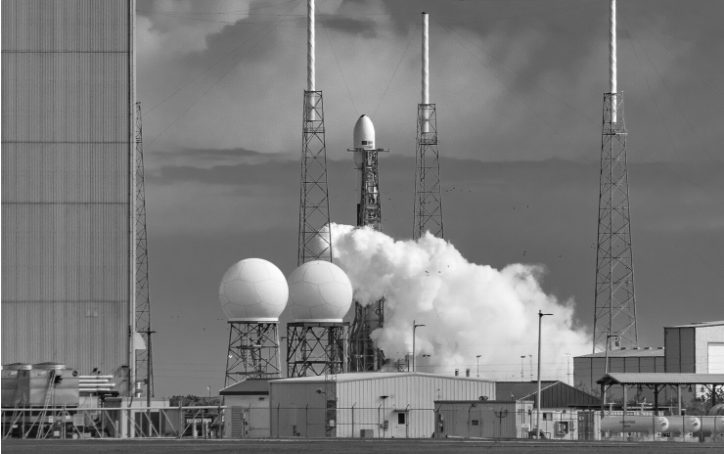
Adobe partners with Anthropic to build AI creative agent for Claude
It will also work with Claude to help users turn ideas into finished content quickly. Adobe has recently partnered with Anthropic and introduced a new generation of its Firefly creative assistant. With the latest iteration the company is bringing more advanced automation features into its Adobe creative tools. Moreover, the company is also expanding beyond its own platforms, as Adobe is connecting its services across apps and third-party ecosystems. The centre of this push is the Adobe Firefly. The company says that by combining the automation with familiar tools, they are trying to make the content creation faster, simpler, and more accessible for everyday users. Unlike the earlier tools, the all-new Adobe Firefly assistant with the Anthropic AI push is designed to act more independently. It can now complete tasks such as editing a group of photos, adjusting lighting, and cropping images without step-by-step input. Moreover, it can also batch edit photos, improve lighting, and adjust framing with minimal human input. Also read: Is AI replacing jobs or creating them? Here is what LinkedIn data says Rather than focusing only on generating new visuals, the Adobe Firefly assistant now also supports the routine editing work, which remains the key part of most creative projects in today's scenario. Furthermore, Adobe Firefly continues to integrate with widely used apps like Photoshop, Acrobat, and Premiere Pro, ensuring that users can access AI features within tools they already know. Adobe has also been steadily adding AI capabilities across its software, and this assistant builds on earlier updates introduced in Adobe Express and Photoshop. Also read: App Store, Google Play Store accused of promoting nudify apps through search suggestions: All details The partnership with Anthropic plays a major role in this new development, and as a result of this newly found partnership, Adobe is also bringing its Firefly capabilities to Claude, allowing the users to move from idea generation to execution more smoothly in the AI tool itself. Moreover, with this move it's also expected that Claude's use will expand beyond coding and professional tasks into creative workflows. Aside from the abovementioned, Adobe is also improving Firefly's video and image tools with better audio, enhanced colour controls, and access to more AI models, offering users greater flexibility. Adobe has said more details about the Firefly and Claude integration will be shared soon, including the exact date of its launch. However, so far we know that the Firefly AI assistant is set to roll out as a public beta later this month.

Is Claude down? Anthropic confirms Claude outage, problems with Cowork.
Thousands of users reported trouble accessing the popular AI tool on Wednesday. Updated on Wednesday, April 15 at 2:08 p.m. ET -- A recent Claude status page update confirmed that "This incident has been resolved." An Anthropic spokesperson said that the company appreciates users' patience as it fixed the problem. Previous updates reported issues with Claude.ai, Clade Code, and the Claude API, with an earlier status stating, "Claude.ai and Platform are down. Login for Claude Code does not work via Claude.ai." According to an Anthropic status monitor, Claude AI experienced a "major outage" for 40 minutes and a "partial outage" for 73 minutes. Anthropic reported that the service had an overall uptime of 98.79 percent over the past 90 days. Despite previously confirming an issue with Claude Cowork, that service has no reported problems today on the Claude status page. Read more about the incident at the Anthropic website. Updated on Wednesday, April 15 at 1:37 p.m. ET -- In a statement to Mashable, an Anthropic spokesperson confirmed that Claude was experiencing an outage on Wednesday afternoon. The problems affected the Claude.ai desktop browser as well as the popular Anthropic services Cowork and Claude Code. "Claude.ai and Cowork are currently down for most users and some users may also have trouble logging into Claude Code. Our team is working to restore service and we're appreciative of everyone's understanding while we work through this," the spokesperson said. You can read our original story about this outage below. We'll continue to update this page as new information is available and service is restored. Claude, the popular AI chatbot from Anthropic, appeared to experience a potential outage on Wednesday. Thousands of users reported trouble accessing Claude, with user error reports spiking at approximately 10:30 a.m. ET, according to DownDetector. (DownDetector and Mashable are both owned by the same company, Ziff Davis.) By 1:00 p.m. ET, user error reports were slowing down, though DownDetector is still reporting ongoing problems with Claude AI. The majority of users (38 percent) reported problems with Claude Chat, while 29 percent reported problems with Claude Code and 25 percent with the Claude App. Don't miss out on our latest stories: Add Mashable as a trusted news source in Google. One Mashable editor was unable to access the free version of Claude on desktop, with an error message saying, "You've hit your limit for Claude messages. Please wait before trying again. For higher limits, explore our Pro plan." This, despite not having sent any messages to Claude previously. An additional pop-up states, "Service is temporarily busy. You can try again shortly." Rather than a true Claude outage, access may simply be temporarily restricted for free users. Claude has seen massive growth so far in 2026. In March, amid a feud with the Pentagon and Trump administration, an Anthropic spokesperson told Mashable the company was signing up more than 1 million new users a day. This is a developing story...
