News & Updates
The latest news and updates from companies in the WLTH portfolio.
'Credit card chaos'? Financial institutions bet big on repeal of first-of-its-kind Illinois law
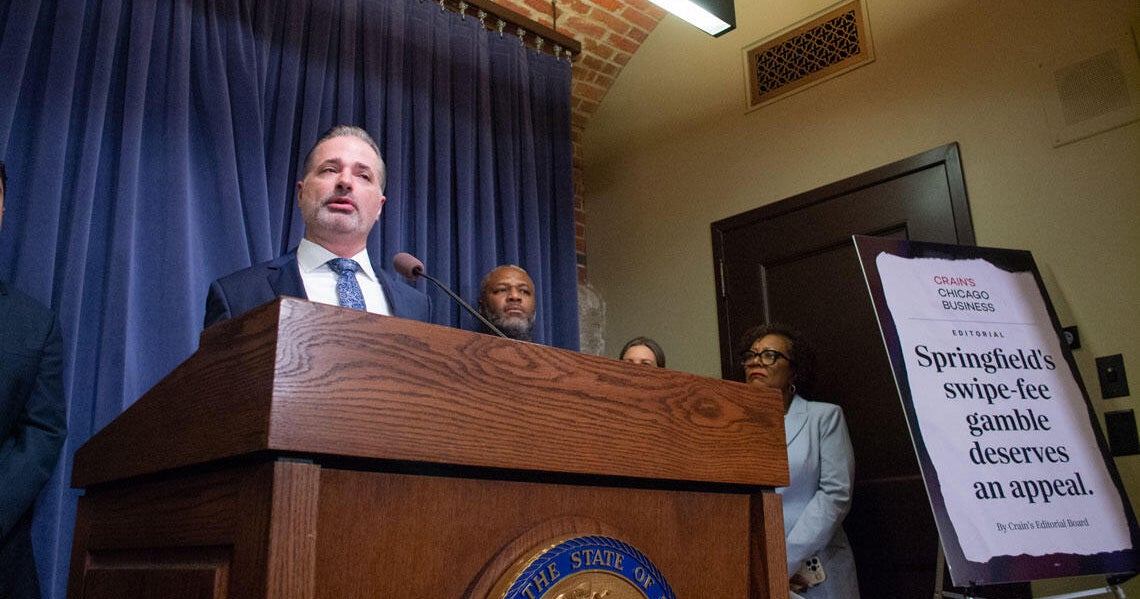
"Credit cards may not work for sales tax or tips starting July 1." By now, you've heard that claim, but whether it's true depends on who you ask. The ads -- funded by the Electronic Payments Coalition of banks, credit unions and card companies -- argue that Illinois lawmakers must repeal the state's first-in-the-nation Interchange Fee Prohibition Act, slated to take effect July 1. That law prohibits financial institutions from charging "swipe," or interchange, fees on the tax and tip portions of consumer bills and bans them from making up the fees elsewhere. If it's not repealed? "Credit card chaos" may ensue, the ads warn. While the financial institutions are quick to cite a list of things that could hypothetically happen if the law isn't repealed, it's harder to pin down what's being done and by who to comply with the law two years after it was signed. "The global payment system is not set up to where any one party to a transaction can make this happen on their own," Ashley Sharp, of the Illinois Credit Union Association, said at a Capitol news conference Wednesday. "There are multiple parties to every electronic transaction." The financial institutions are adamant that the global payment system as it exists today can't discern the difference between tax, tips and total, and it would need to be retooled at a heavy cost to banks, card companies, merchants, point-of-sale companies and more. Instead of complying, they say, the card companies could decide to stop serving Illinois or drastically alter the way the consumer interacts with merchants at the point of sale. But as with all matters in Springfield, there's another big-monied and powerful group on the other side of the issue. The Illinois Retail Merchants Association says the credit card companies already track all the information they need, and it's a "complete fabrication" to say that it would take more than a mere coding change to implement the state law. Take your restaurant receipt, for example. "You have the subtotal, the sales tax, the tip, if it's applicable, and then the grand total, right? All they have to do is move their fee from the grand total to the subtotal," Rob Karr, president of IRMA, said. While card networks operate in over 200 countries with as many different laws, they say the only information the card processors ask for in any of them is the grand total. The receipt example, they say, erroneously conflates the point of sale with the actual processing of payments. In short, the two sides present starkly different realities -- a muddying of the water that's not uncommon at the Capitol. But there is one concrete truth: The financial institutions have a lot to lose, and not just in Illinois. The tax and tip prohibition would shave approximately 10% off the revenue that banks and credit unions receive from retailers via interchange fees -- a transfer of wealth likely to number in the hundreds of millions. It would also create massive noncompliance fines. And then there's the issue of precedent. The banks challenged the law but lost in court. Absent a successful appeal, the remaining battlefields would be other state legislatures. If the card companies implement Illinois' law, they'd be providing a blueprint for states across the nation to emulate -- driving potential revenue loss into the billions. Thus far, Ben Jackson of the Illinois Bankers Association said, it hasn't opened the floodgates, although some 30 states are considering similar action. Still, it's no wonder then, that the Electronic Payments Coalition has pulled out all the stops in its seven-figure ad campaign to repeal the law. To fully understand the ongoing slugfest between banks and retailers, you have to go back to May 2024. But first, an explanation of interchange fees. Each time a shopper swipes their credit or debit card, it sets off a complicated string of payments between banks. The retailer's bank pays an "interchange fee," typically around 1% to 2% of the transaction cost, to the consumer's bank. The fees include both a set amount and a percentage of the transaction, but the credit card companies, namely Visa and Mastercard, control how they're calculated. The financial institutions say interchange fees help fund credit card reward programs and security upgrades and provide compensation for bearing the risk of fraud. The hit to interchange revenue, Jackson said, would inevitably lessen reward program offerings. Sharp said credit unions, as not-for-profit cooperatives, use the revenue to offer lower rates to customers. But the fees have long drawn the ire of retailers and small businesses, which sometimes pass the costs directly to consumers via a surcharge on bills. It comes down to this: The retailers don't think they should have to pay a fee on the tax and tip portion of a transaction that they don't keep. And the financial institutions say if they're handling those funds, they should be compensated for doing so via interchange fees. As for the Illinois law's passage, it was, as the ads claim, tucked into the budget two years ago, giving little time for the bankers et al to mount an opposition campaign. Gov. JB Pritzker and lawmakers agreed to raise about $101 million in revenue to plug a budget hole by putting a $1,000 monthly cap on the "retailer's exemption," a tax break retailers claim for being the state's de facto sales tax collectors. But the retailers weren't going to take that lying down, and IRMA successfully lobbied for the long-sought tax and tip exemption. After the law passed, the financial institutions quickly sued. To avoid uncertainty as the case played out, lawmakers delayed the measure's effective date from July 1 last year to the same date this year. U.S. District Judge Virginia Kendall ultimately determined in February that Illinois is within its right to regulate the fees. She partially rejected a portion of the law that prohibited banks from sharing certain data, which the credit unions say creates different rules for different institutions and further uncertainty. The case is now pending appeal, and the legislative process is starting anew. This time, the financial institutions have mounted a dual front in the court of public opinion. Karr estimated the prohibition would bring in "north of $200 million" for retailers -- essentially letting them pocket that sum instead of transferring it to the banks. A study by the Electronic Payments Coalition pegged the number at $118 million, estimating that about 40% of the interchange windfall would go to the 40 largest retailers. Even so, Karr said, the largest retailers are subject to the $1,000 monthly retailer exemption cap that accompanied the swipe fee ban, while smaller retailers don't reach that mark. Add in their cut on reimbursed swipe fees, and it amounts to what Karr calls "the largest small business relief that Illinois has ever passed." But Jackson argued the cost of retailers complying could eat up any benefits for smaller retailers. As for compliance, Kendall wrote in her February opinion that "It is an open question whether the transaction process could adapt to the impact of the IFPA in time." "The Interchange Fee Provision is indisputably disruptive, requiring additional investments, hires, and new procedures to replace the current process for authorizing and settling debit and credit card transactions," she wrote. The financial institutions argue it can't all be done by July 1. Kendall said the parties involved know what's required of them. "But those procedural changes are the product of an ecosystem built by Payment Card Networks and financial institutions to facilitate consumer transactions," she wrote. "And these entities understand the onus of IFPA compliance is on them." Per the coalition, compliance "would require coordination across the industry and regulators worldwide," including with the International Organization for Standardization. It would also require more data collection, creating privacy concerns, they say. Those global changes would require testing and certification of new equipment. Depending on their card companies or point-of-sale vendors, retailers may need to invest in new equipment, software and training. Banks and credit unions may also have to add staff to process rebates under the law. It allows retailers or their processing companies to petition their financial institutions for reimbursement on fees charged on tax and tips within 180 days of a transaction. If financial institutions don't comply within 30 days, the law provides for civil penalties of $1,000 per each transaction -- and hundreds of millions of these transactions happen annually. Instead of complying, according to the coalition's literature, the card companies could just stop processing cards altogether in Illinois. They could also stop processing tax and tip portions or require two separate swipes for the subtotal and the tax and tip portion of bills. Such claims aren't uncommon in the legislature's annual adjournment push. Sports betting companies, for example, threatened to leave Illinois when the state raised its gambling taxes in the same budget cycle that yielded the interchange fee prohibition two years ago. Instead, they adapted, because Illinois has a lot of bettors -- and there's even more card users. Karr accused the coalition of ulterior motives in their use of hypothetical language. "There is no need for chaos," he said. "The only chaos is if the credit card companies impose it themselves on their consumers." Ultimately, lawmakers will have to weigh how compelling the arguments are, if the courts don't intervene first. It's possible that the 7th Circuit appellate court -- or even the U.S. Supreme Court -- gives the banks a win. But oral arguments are slated for May 13, meaning the appellate court might not rule by the time the law is slated to take effect. Adding a new wrinkle on Wednesday, the federal office of the Comptroller of the Currency, a subset of the U.S. Treasury Department, appeared poised to issue an order preempting Illinois' law. It hadn't been published as of late Wednesday, making its impact unclear. "While the office has failed to explain their reasoning or allow public review, it's clear the goal is an end-run around the legal process after a judge recently upheld the law," Karr said. As for the legislative prospects, state Rep. Margaret Croke, D-Chicago, says she's seen enough to be concerned. The Democratic nominee for comptroller is sponsoring a bill to fully repeal Illinois' interchange fee prohibition. But as of last week, she said she wasn't planning to move it. Instead, she finds it more likely that lawmakers once again delay the law's implementation. "If this is a policy that the state of Illinois decides they're going to want to have, then we need to make sure we're doing it properly," she said.
ECB to quiz bankers about risks of Anthropic's new AI model, source says
FRANKFURT, April 15 (Reuters) - European Central Bank supervisors are set to quiz bankers about the risks that Anthropic's new artificial intelligence model might supercharge cyberattacks, one source familiar with the situation told Reuters on Wednesday. Anthropic's Mythos is seen by cybersecurity experts as posing significant challenges to the banking industry and its legacy technology systems, raising alarm bells among regulators in Britain and the U.S. ECB supervisors are gathering information about the model, with a view to asking banks on their watch about their preparedness for this new possible source of risk, said the source who spoke on condition of anonymity because they are not authorised to comment publicly on the matter. Unlike in the U.S., this effort will be carried out via the ECB's regular dialogue with bank staff and no ad-hoc meeting with top management has been scheduled yet. An ECB spokesperson declined to comment. Mythos' capabilities to code at a high level have given it a potentially unprecedented ability to identify cybersecurity vulnerabilities and devise ways to exploit them, experts told Reuters. This aspect is why Anthropic has said the current iteration, Claude Mythos Preview, will not be made generally available. Instead, the company announced Project Glasswing, in which it invited major tech companies, cybersecurity vendors and JPMorgan Chase, along with several dozen other organizations, to privately evaluate the model and prepare defences accordingly. TRUMP BACKS AI SAFEGUARDS IN BANKING SYSTEM U.S. Treasury Secretary Scott Bessent and Federal Reserve Chair Jerome Powell convened an urgent meeting with bank chief executives last week to warn them about the risks, which President Donald Trump acknowledged on Wednesday. Trump also backed government safeguards. St. Louis Fed President Alberto Musalem told Reuters the development emphasized the need for the U.S. central bank to "revisit how we're thinking about cybersecurity" and to check in with banks about their own "resilience and robustness to cyber risk in this new world." "Our cyber teams are engaged with the substance of it, not the news of it, but the actual substance of it. And we're evaluating," Musalem told Reuters in an interview on Wednesday. Britain's Technology Secretary Liz Kendall and Security Minister Dan Jarvis sounded a similar warning to businesses on Wednesday, saying Mythos was "substantially more capable at cyber offence" than any model previously tested by the government's AI Security Institute. A new generation of AI models is "becoming capable of doing work that previously required rare expertise: finding weaknesses in software, writing the code to exploit them, and doing so at a speed and scale that would have been impossible even a year ago," they said in an open letter to businesses. Bank of England Governor Andrew Bailey said this week that central banks and financial regulators must quickly understand the implications of the new model. In Canada, Mythos was discussed at a meeting last Friday about cybersecurity attended by representatives of the Finance Ministry and the Bank of Canada as well as bank executives, a ministry spokesperson said. The ECB already had listed tech risk as one of its top priorities for the 2026-2028 period. (Reporting by Francesco Canepa; Additional reporting by Paul Sandle in London, Howard Schneider in Washington and Promit Mukherjee in Ottawa; Editing by Emelia Sithole-Matarise and Paul Simao)

'Border control chaos': our travel editor's account of new European Entry/Exit checks - Which?
Rory lived abroad in several countries as a travel guidebook writer for more than 10 years. He edits Which? Travel magazine, and our online travel journalism. I was warned. The easyJet app advised passengers to arrive early at Palma airport on the first day that the EU's European Entry-Exit system (EES) was fully implemented. 'Expect long queues,' it said. What it should have said was to expect chaos. The queue for British passport holders at passport control was several hundred people deep and hours long. For most of the time just five or six border control stations were open to UK passport holders. That was clearly far too few. It's almost certain that some people missed their flights. Two members of airport staff occasionally walked along parts of the queue calling people forward once 'final boarding call' was shown for their flight, but in some cases they still had to wait 10 to 30 minutes or more in a queue of other passengers called forward. One woman, whose Liverpool flight was flashing final call, finally made it to the front of the queue only to struggle to take an acceptable photo of her young son with the EES photo kiosk. She had to make repeated attempts to get the right height and distance, with no help from a grumpy border guard. It took several minutes. I later saw the woman speed walking to the gate, remarkably calm, while explaining to her crying young children that everything would be alright if they missed their flight. In the queue, there were more tears and anger. Staff members were inconsistent in who they called forward and for which flight. Some people had stood for hours, only to find out they were still unlikely to make their flight, and were upset when other passengers were called forward. There was no one in charge, or any attempt to communicate with passengers about the situation. The one member of airline staff present was from Jet2, whom I regularly saw remonstrating with disinterested staff on behalf of her customers. You can understand why passengers were angry. They arrived at the airport early, as instructed, but the airport was so poorly prepared for the new checks that they were still at risk of missing their flight. Worse still, if they did, they may well be left to foot the bill for a new ticket. Palma, in Spain, isn't the only airport affected. In Milan, more than 100 passengers missed their Manchester flight because of EES queues that were three hours long. EasyJet offered to rebook them for free, but on a flight five days later, leaving some passengers to pay huge amounts for flights departing sooner. At Porto and Lisbon airports, border control officers made the decision to temporarily suspend EES checks because of very long queues. The EES requires Schengen countries to carry out biometric checks on arrival and departure. Non-EU passport holders are photographed and/or fingerprinted on departure, which is taking longer than a quick flick of your passport by a border guard. These checks may only add a minute or two extra for an individual passenger, but for a flight of 300 passengers, it adds up. Many airports simply have not installed enough infrastructure to carry out the checks, don't have enough staff, or both. No. The EES applies to all non-EU passport holders, including UK passport holders, since Brexit. EES is in use by all 29 Schengen countries, but your experience of EES will vary greatly. Different levels of checks are seemingly used in different countries, while some airports have more infrastructure or border guards. The most significant delays are occurring at airports with large numbers of UK flights, such as Tenerife, Lanzarote and Palma, but also Krakow, Milan and Amsterdam. It's very difficult to predict if you will face very long queues, because much depends on whether your flight departs or arrives at the same time as several other UK flights. There are EES checks on arrival, and on departure, although they differ. Read our full guide to EES checks Arrive early at your departure airport is the best advice. Consider not checking in a bag too. Check-in desks and bag drops typically open just two to three hours before departure, and that may not leave enough time for you to get through the border at the worst airports. If you can, travel outside of peak travel periods, such as half terms and summer holidays. More flights mean more passport holders to be checked and longer queues. They can. Some flights have waited for passengers stuck in EES queues, but in other cases, because it is more costly for the airline to miss its air traffic control slot, or because pilots may time out and there is no available replacement crew, they may decide to depart. Legally, the airline is not even obliged to put you on the next flight, although many carriers have been rebooking passengers. It's unlikely. Some travel insurance policies do have cover for 'travel delay' or 'missed departures', but even then you would need to clarify whether it covers you for a missed departure because of border queues. If you do have travel insurance and think you are covered, to help your claim it's worth having evidence that you arrived at the airport on time for the flight. That could be provided by your bag drop receipt, or a receipt for a coffee or tea at the airport if travelling without a bag. Find the best policy for you with our ratings of 55 UK travel insurance policies. Possibly. If nothing changes between now and the peak travel period in the summer, queues may well get worse. But given the level of disruption, it's hopeful that the worst-impacted airports will make more kiosks and staff available. Staff will also become better trained, and the teething trouble with the technology will have been resolved.

Amazon-backed X-energy Files To Raise Up To $800m In Ipo
Amazon-backed X-energy files to raise up to $800M in IPO - BERITAJA is one of the most discussed topics today. In this article, you will find a clear explanation, key facts, and the latest updates related to this topic, presented in a concise and easy-to-understand way. Read more news on Beritaja. Nuclear startup X-energy began its investor roadshow Wednesday arsenic it useful toward its IPO, mounting its target value betwixt $16 and $19 per share, according to documents filed pinch the U.S. Securities and Exchange Commission. If it lists astatine the precocious end, the startup could nett $814.3 million. X-energy and its peers person been riding a renewed activity of liking successful fission powerfulness arsenic request for energy has surged connected the backmost of AI information centers and society-wide electrification. Amazon is 1 of X-energy's biggest backers. The tech elephantine led a $500 cardinal Series C-1 information and has pledged to bargain as overmuch arsenic 5 gigawatts of atomic powerfulness from the institution by 2039. The IPO is judge to travel arsenic a alleviation to X-energy's investors, which person put about $1.8 cardinal into the company, according to PitchBook. The startup had antecedently attempted to spell nationalist via reverse merger pinch a typical intent acquisition company, but the 2 parties canceled the deal successful 2023 arsenic the SPAC craze petered out. X-energy's reactor is what's known arsenic a high-temperature, gas-cooled reactor. Inside, uranium encased successful spheres of ceramic and c is cooled by helium gas. The state past transfers power to a steam turbine loop to make electricity. The substance design, known arsenic TRISO, is expected to beryllium safer than erstwhile substance arrangements, though it's not wide utilized today. The startup said successful its SEC filing that it's already embroiled successful a patent conflict pinch different institution that precocious went bankrupt. Ultra Safe Nuclear Corporation (USNC) went bankrupt successful 2024, and its assets were purchased successful bankruptcy to shape Standard Nuclear. X-energy alleges that USNC infringed connected its substance fabrication patents and that the matter hasn't been resolved to its restitution during the people of the bankruptcy proceedings. Outside of China, improvement of caller atomic reactors has each but stalled, stymied by delays and costs overruns. A caller breed of startups hopes that by shrinking reactors, they'll beryllium capable to flooded immoderate of the challenges that person beset accepted designs. None of the mini modular reactor startups person built a powerfulness works yet, though respective are racing to meet a deadline of July 4 group by the Trump administration. While galore mightiness miss the arbitrary deadline, they're still apt to execute criticality, the infinitesimal erstwhile fission reactions go self-sustaining. But the roadworthy from criticality to profitable powerfulness plants is apt to beryllium long. Mass manufacturing could thief bring costs down, but it usually takes around a decade for the process to commencement paying dividends. What's more, the number of reactors these companies are readying to build mightiness beryllium much than different companies person attempted, but it mightiness not beryllium precocious capable to reap the existent benefits of wide manufacturing. X-energy expects that by the clip its reactor accumulation techniques are mature -- what experts telephone "Nth-of-a-kind" -- it will beryllium capable to bring costs down by 30% comparative to the first-of-a-kind. Investors should salary adjacent attraction to really overmuch that first reactor costs. It could make aliases break the company's prospects.

Essex trains hit with CHAOS on major routes including London Liverpool Street
Travel chaos has ensued after overhead wire problems between Shenfield and Chelmsford blocked the line towards Colchester. The disruption has led to train services being cancelled, delayed, or revised, with no clear end in sight. The affected routes include Liverpool Street to Braintree, Colchester, Clacton, Ipswich, and Norwich. Network Rail staff are currently on-site attempting to solve the issue. Greater Anglia has advised customers to expect delays, short-notice changes, and cancellations. The Elizabeth Line is accepting Greater Anglia tickets for travel between Liverpool Street and Shenfield. Similarly, c2c services will accept Greater Anglia tickets between Fenchurch Street and Southend Central. For those travelling from London to Norwich, Greater Anglia has suggested using the Stansted Express from London Liverpool Street to Stansted Airport, then changing for services to Norwich. Alternatively, passengers can travel on Greater Anglia trains to Cambridge, then change for the first available train to Ely and then again at Ely for Norwich. This journey is estimated to take up to three hours. Travellers from London to Ipswich are advised to take the Greater Anglia train from London Liverpool Street to Cambridge and change there for services to Ipswich, with a similar journey time of up to three hours. Greater Anglia and Network Rail have apologised for any disruptions. Advance purchase ticket holders will be allowed to travel on earlier or later trains if their booked service is cancelled. Passengers delayed by 15 minutes or more may be eligible for compensation. For more information, visit greateranglia.co.uk/about-us/our-performance/delay-repay. Full-size bicycles, e-scooters, electric cycles, and folding electric cycles are not allowed on rail replacement buses or coaches. The exact cause of the wire problems has not been specified, but further updates are expected. Passengers can check the status of their next train and alternative options using Greater Anglia's live map. Network Rail has also provided a guide to common causes of delays and their efforts to reduce these.

Coinbase in Talks with Anthropic for Access to Claude Mythos Preview - Tekedia
Coinbase is reportedly in talks with Anthropic to gain access to Claude Mythos Preview often called Mythos, Anthropic's highly restricted frontier AI model with exceptional cybersecurity capabilities. This development, first highlighted by The Information and echoed across multiple outlets, stems from crypto firms' efforts to strengthen defenses against increasingly sophisticated AI-powered threats. Other players like Binance and Fireblocks have also explored or used earlier Anthropic models such as Claude Opus for vulnerability testing and pentesting. Mythos is Anthropic's most capable unreleased model to date, showing a major leap in coding, reasoning, and agentic abilities. It excels at autonomously discovering and exploiting software vulnerabilities -- including zero-days in major operating systems, web browsers, and other critical software that had evaded human reviewers and automated tools for years or decades in some cases. Anthropic has chosen not to release it publicly due to dual-use risks: the same strengths that make it a powerful defensive tool (finding flaws at scale) could enable offensive cyberattacks if misused. Instead, they've launched Project Glasswing, a defensive cybersecurity initiative. This provides limited, vetted access to Mythos Preview for select partners -- focusing on securing critical software and open-source infrastructure -- along with up to $100M in usage credits and $4M in donations. Coinbase's Chief Security Officer, Philip Martin, has noted that models like Mythos will accelerate digital threats as well as digital defense, emphasizing the need for proactive, scalable testing of systems. Crypto exchanges and custodians handle massive value in digital assets and face persistent threats: hacks, phishing, smart contract exploits, and now AI-augmented attacks that can chain vulnerabilities rapidly. Mythos could help by: Performing deep, automated pentesting on infrastructure. Identifying subtle weaknesses in code, wallets, or custody systems that human teams might miss. Enabling faster response to emerging AI-driven threats. This fits broader industry moves -- Binance and Fireblocks have already used prior Anthropic models to uncover issues missed by traditional testing. Coinbase has a history of security incidents including data exposures, so bolstering defenses with frontier AI makes strategic sense. Access remains tightly controlled under Project Glasswing, with mitigations like monitoring to prevent misuse. Anthropic prioritizes defensive applications while acknowledging the model's potency. This reflects a growing realization in tech and finance: as AI coding and reasoning capabilities advance rapidly, the offense-defense balance in cybersecurity is shifting. Governments and institutions have expressed concerns about Mythos-level models enabling autonomous attacks on defended systems, though real-world tests on hardened targets are limited. For Coinbase, securing access could enhance operational resilience amid rising AI threats. Negotiations appear ongoing, with potential integration into their security stack if approved. Mythos can autonomously discover thousands of zero-day vulnerabilities including in major OSes, browsers, and long-ignored flaws that traditional tools miss. This allows Coinbase to pentest its infrastructure, wallets, smart contracts, and custody systems at unprecedented scale and speed, potentially reducing the risk of hacks or exploits. AI like Mythos boosts both offense and defense. While it helps defenders like Coinbase stay ahead, it also signals that AI-powered attacks could become faster, more sophisticated, and accessible to non-state actors -- raising the overall threat level for crypto exchanges handling billions in assets. Under Project Glasswing, access remains tightly controlled with monitoring and mitigations to prevent misuse. Coinbase and peers like Binance and Fireblocks gain a defensive edge without broad public release of the high-risk model. Success could pressure other crypto firms and financial institutions to adopt similar AI tools. It may influence regulatory conversations around AI in critical infrastructure, while highlighting how frontier models are reshaping security priorities beyond traditional methods. In short, it's a pragmatic move in an arms race where AI is both the biggest new risk and the best new shield for critical infrastructure like crypto platforms. Details on any final agreement are still emerging.

Amazon-backed X-energy files to raise up to $800M in IPO | TechCrunch
Nuclear startup X-energy began its investor roadshow Wednesday as it works toward its IPO, setting its target price between $16 and $19 per share, according to documents filed with the U.S. Securities and Exchange Commission. If it lists at the high end, the startup could net $814.3 million. X-energy and its peers have been riding a renewed wave of interest in fission power as demand for electricity has surged on the back of AI data centers and society-wide electrification. Amazon is one of X-energy's biggest backers. The tech giant led a $500 million Series C-1 round and has pledged to buy as much as 5 gigawatts of nuclear power from the company by 2039. The IPO is sure to come as a relief to X-energy's investors, which have put about $1.8 billion into the company, according to PitchBook. The startup had previously attempted to go public via reverse merger with a special purpose acquisition company, but the two parties canceled the deal in 2023 as the SPAC craze petered out. X-energy's reactor is what's known as a high-temperature, gas-cooled reactor. Inside, uranium encased in spheres of ceramic and carbon is cooled by helium gas. The gas then transfers heat to a steam turbine loop to generate electricity. The fuel design, known as TRISO, is expected to be safer than previous fuel arrangements, though it's not widely used today. The startup said in its SEC filing that it's already embroiled in a patent dispute with another company that recently went bankrupt. Ultra Safe Nuclear Corporation (USNC) went bankrupt in 2024, and its assets were purchased in bankruptcy to form Standard Nuclear. X-energy alleges that USNC infringed on its fuel fabrication patents and that the matter hasn't been resolved to its satisfaction during the course of the bankruptcy proceedings. Outside of China, development of new nuclear reactors has all but stalled, stymied by delays and cost overruns. A new breed of startups hopes that by shrinking reactors, they'll be able to overcome some of the challenges that have beset traditional designs. None of the small modular reactor startups have built a power plant yet, though several are racing to meet a deadline of July 4 set by the Trump administration. While many might miss the arbitrary deadline, they're still likely to achieve criticality, the moment when fission reactions become self-sustaining. But the road from criticality to profitable power plants is likely to be long. Mass manufacturing can help bring costs down, but it usually takes around a decade for the process to start paying dividends. What's more, the number of reactors these companies are planning to build might be more than other companies have attempted, but it might not be high enough to reap the true benefits of mass manufacturing. X-energy expects that by the time its reactor production techniques are mature -- what experts call "Nth-of-a-kind" -- it will be able to bring costs down by 30% relative to the first-of-a-kind. Investors should pay close attention to how much that first reactor costs. It could make or break the company's prospects.
OpenAI Unveils GPT-5.4-Cyber To Rival Anthropic's Mythos
WASHINGTON (dpa-AFX) - OpenAI has started to offer limited access to its new AI model, GPT-5.4-Cyber, which is designed to pinpoint software vulnerabilities. This rollout comes just a week after Anthropic launched its own competing model, Claude Mythos Preview. Initially, this model is being made available to a select group within OpenAI's Trusted Access for Cyber program, reaching a few hundred users now, with plans to widen access to thousands soon. GPT-5.4-Cyber aims to assist organizations in identifying and correcting security issues, and with fewer limitations in place, it allows for deeper system probing. This step underscores the growing rivalry between OpenAI and Anthropic in the realm of advanced AI, particularly regarding cybersecurity. As these models improve in terms of coding and vulnerability detection, worries are increasing about how they might be misused by cybercriminals and entities supported by state actors. Anthropic's Mythos, which can independently find and exploit zero-day vulnerabilities across key systems, has already caught the attention of governments and financial institutions. U.S. officials, including those in the Treasury, have been emphasizing the need for organizations to take these types of tools seriously, indicating a rising urgency around AI-related cyber threats. While both companies are marketing their models as protective tools, their swift advancements are transforming the global cybersecurity landscape. Copyright(c) 2026 RTTNews.com. All Rights Reserved Copyright RTT News/dpa-AFX© 2026 AFX News

NAACP sues xAI over air pollution near Memphis data center
(The Center Square) - The NAACP filed a lawsuit in federal court Tuesday against Elon Musk's xAI, saying the company is illegally operating 27 methane gas turbines in Mississippi to power its Colossus 2 data center complex across the state line in Memphis. In the lawsuit filed in the U.S. District Court for the Northern District of Mississippi, the NAACP says emissions from the gas turbines violate the Clean Air Act. The Colossus 2 data center near Memphis is the primary training facility for Grok-4, xAI's next generation chatbot. The NAACP says between August and December, xAI and its subsidiary MZX Tech, operated 27 gas turbines in Southaven, Miss., "without an air permit or regard for the health and safety of people living nearby." Represented by Earthjustice and the Southern Environmental Law Center, the NAACP is suing to halt xAI's operations until the company obtains permits, installs the most effective pollution controls available, and pays financial penalties for every day that air quality violations occurred. In response to the legal action, xAI confirmed commitment to environmental standards. "The temporary power generation units are operating in compliance with all applicable laws," a company statement said. "A data center should not be a potential death sentence for a community's health," said Abre' Conner, NAACP director of environmental and climate justice. "By looking to evade clean air laws to operate dirty turbines that emit pollution and known carcinogens, these companies are following a shameful, familiar pattern: asking Black and frontline communities to bear the toxic brunt of 'innovation.'" The Southern Environmental Law Center says xAI's failure to obtain a permit for the power generation plant created health risks for families in northern Mississippi and Memphis in violation of the Clean Air Act, which requires major sources of pollution to obtain air permits before beginning construction or operations. The plaintiffs contend the gas turbines emit pollutants like formaldehyde and nitrogen oxides into predominantly Black communities already overburdened by industrial pollution. The NAACP says in the lawsuit that the gas turbines on the Colossus 2 site could potentially emit over 1,700 tons of nitrogen oxides annually, which would make it the largest industrial source of the pollutant in the 11-county Memphis metropolitan area. The lawsuit filed Tuesday by the NAACP follows a legal fight in 2025 over xAI's use of gas turbines without permits to power the Colossus 1 data center. In 2024, Mississippi and Tennessee officials allowed xAI to operate gas turbines without a permit because they were classified as "temporary" and "mobile" units intended to run for less than a year. Under this "temporary-mobile" exemption, no official tracking of toxic releases was required. In June 2025, after the NAACP and the Southern Environmental Law Center issued a formal notice of intent to sue, xAI removed 20 turbines from the Colossus 1 site and eventually obtained permits for the remaining 15 units. The Colossus 2 data center will host 555,000 Nvidia GPUs and that potentially require 2 gigawatts of generation capacity, according to xAI. At the Colossus 2 site, the company plans to train chatbots with improvements over previous versions that include advanced reasoning abilities, faster data processing, and near-instant response times for end users. To help manage the massive power load, xAI reports it has deployed about 600 industrial-grade batteries with approximately 2.3 gigawatt-hours of storage designed to provide energy buffer at times of high energy usage by the Colossus data center while also capable of supplying the local grid during peak demand. According to the NAACP, the gas turbines at the site still pose a significant risk, with potential annual emissions of 180 tons of fine particulate matter, 500 tons of carbon monoxide, and 19 tons of formaldehyde - a toxic, cancer-causing chemical. "xAI's continued operation of these turbines without a permit and without adequate pollution controls is not only illegal, it's an insult to families living nearby who for months have expressed serious concerns about how air pollution from the company's personal power plant could impact their health and well-being," said Ben Grillot, senior attorney at the Southern Environmental Law Center, a party in the lawsuit.

Google's Alphabet owns over 6% of SpaceX ahead of blockbuster IPO - Cryptopolitan
SpaceX is courting major IPO investors with site visits in California, Texas, and possibly Mississippi as it seeks to raise up to $75 billion. Alphabet is staring at a big payday from SpaceX as the rocket company lines up what could become the biggest IPO ever. A new filing in Alaska shows Google LLC owned 6.11% of SpaceX at the end of 2025. Alaska requires companies to disclose holders with stakes of 5% or more. At a $2 trillion valuation, that stake would be worth about $122 billion. That holding may already be smaller after the February merger between SpaceX and xAI, Elon Musk's AI and social media company. At a $2 trillion valuation, that would still be worth about $100 billion. Google had disclosed its SpaceX investment before, but not the exact size. SpaceX takes major investors across the U.S. while banks finish the offering Meanwhile, SpaceX is currently preparing to show key sites across the United States to possible anchor investors as it tries to secure backing for the deal. People briefed on the plans allegedly said the company wants to take investors who could buy large stakes, including sovereign wealth funds, to facilities in California and Texas. SpaceX also plans to charter a plane from New York in the coming weeks for visits that could include Mississippi, where xAI is building a large data center campus. The company has filed confidentially to go public and wants to raise as much as $75 billion at a valuation above $2 trillion, a level previously reported by Cryptopolitan. If it gets there, the deal would be the largest IPO on record. Advisers working on the listing are said to be working nonstop. Chief Financial Officer Bret Johnsen has told bankers he is unhappy about details of the IPO leaking out. He has also reminded the banks involved that the process is supposed to stay private. After the listing, Elon would be on track to become the world's first trillionaire. Longtime executives, including President Gwynne Shotwell, would also see their wealth rise. Early investors are set for large gains, but even those who bought in about five years ago are still likely to do very well. SpaceX leans on Starlink, launches, Starship, and cell service to defend its price PitchBook senior research analyst Franco Granda, who covers SpaceX, said, "Benchmarked against high-growth large-cap peers, SpaceX's profile warrants a premium multiple, with around 50% EBITDA margins and around a 50% three-year revenue CAGR in addition to multiple compounding growth vectors. The valuation becomes progressively easier to justify over a 5-7 year horizon as Starship commercializes and the direct-to-cell business scales, with returns driven by milestone execution rather than near-term earnings growth." Starlink generated an estimated $10.6 billion in revenue and $5.8 billion in EBITDA in 2025, with a 54% margin. It made up more than two-thirds of total SpaceX revenue. The subscriber base doubled for a second straight year to 9.2 million users across more than 150 countries. By 2040, forecasts see Starlink revenue reaching $120 billion with a 70% EBITDA margin. SpaceX flew 165 Falcon 9 missions in 2025, about 52% of all global orbital launches. Its booster reuse rate reached 84%, cutting launch costs by as much as 65%. The launch unit is estimated to have produced $5.2 billion in revenue and $1.7 billion in EBITDA in 2025, with a 33% margin. Franco's forecast puts that business at $30 billion in revenue by 2040 as Starship takes over the full manifest. The first commercial payload delivery is expected in 2026. On mobile, Starlink's direct-to-cell service reached 6 million subscribers through 27 carrier partnerships in about 18 months.

OpenAI Follows Anthropic in Limiting Access to Its Cyber-Focused Model
It was only a week ago that Anthropic sent shockwaves through the cybersecurity industry with the announcement of Claude Mythos Preview, an AI frontier model so good at smoking out software security flaws - and creating exploits for them - that the company decided against making it generally available and instead is giving access to it to a small number of trusted companies. Now comes OpenAI, which is going down the same path with its GPT‑5.4‑Cyber, a variant of GPT‑5.4 that it, too, expects to limit access to, though the pool of the lucky verified users looks to be larger than that created by Anthropic. News of a cybersecurity-focused model leaked earlier this month, with Axios coming out with a report. OpenAI executives rolled out the details this week. "We want to empower defenders by giving broad access to frontier capabilities, including models which have been tailor-made for cybersecurity," they wrote in a blog post, adding that the new model "lowers the refusal boundary for legitimate cybersecurity work and enables new capabilities for advanced defensive workflows, including binary reverse engineering capabilities that enable security professionals to analyze compiled software for malware potential, vulnerabilities and security robustness without needing access to its source code." OpenAI has been heading down this road for a while. In February, the company quietly introduced its Trusted Access for Cyber (TAC) program after rolling out its GPT-3.5-Codex model, which executives at the time called "our most cyber-capable frontier reasoning model to date." They described TAC as "an identity and trust-based framework designed to help ensure enhanced cyber capabilities are being placed in the right hands," and said they were offering $10 million in API credits to fuel enhancements to cyber defenses. This week, the company said it is scaling the TAC program to thousands of verified individual defenders and hundreds of security teams that are charged with defending critical software. It's part of a larger plan of growing the program as capabilities of the models increase. The TAC program initially offered defenders an automated identity verification process and the ability to partner with a set of organization to get access to more cyber-permission models. With the expansion of the program in the wake of the release of GPT‑5.4‑Cyber is including more tiers for users who authenticate with OpenAI as defenders, with those in the highest tiers getting access to GPT‑5.4‑Cyber. OpenAI executives pointed to the principles that underline its ambitions to continue to make increasingly capable AI models while ensure that cybersecurity defenders are able to protect themselves against attackers that abuse those capabilities. Key among them is ensuring democratized access to security-focused models such as GPT‑5.4‑Cyber. "Our goal is to make these tools as widely available as possible while preventing misuse," they wrote, noting that they want to avoid decisions on access to be arbitrary by relying strong identity verification and know-your-customer process. "Ultimately, we aim to make advanced defensive capabilities available to legitimate actors large and small, including those responsible for protecting critical infrastructure, public services, and the digital systems people depend on every day." OpenAI's message didn't have the same urgency that came with Mythos, with Anthropic executives writing that they found that the model made it easier for even less technical users to quickly abuse the vulnerabilities that were found. "We did not explicitly train Mythos Preview to have these capabilities," they wrote. "Rather, they emerged as a downstream consequence of general improvements in code, reasoning, and autonomy. The same improvements that make the model substantially more effective at patching vulnerabilities also make it substantially more effective at exploiting them." The impact made by Anthropic's introduction of Mythos Preview - and the move to make is the foundation of its Project Glasswing, an initiative to make software more secure - continues to ripple through the industry. U.S. Treasury Secretary Scott Bessent and Jerome Powell, chairman of the Federal Reserve, last week called a meeting with the CEOs of most of the largest banks in the country - including Citi, Bank of America, and Wells Fargo - to warn them of the cybersecurity risks that come with Mythos Preview and cautioning them about using the model in their systems. This week, the Cloud Security Alliance this week released a paper, "The 'AI Vulnerability Storm': Building a 'Mythos-ready' Security Program," aimed at security leaders. In the executive summary, the authors said that Mythos has "significantly increased" the likelihood that bad actors will find new vulnerabilities, create new exploits, and use them in complex and automated attacks at scale. They wrote that "while AI also increases the speed of patch development and reduces defects in new software, defenders still face a heavier relative burden due to the inherent limitations of patching. Attackers gain asymmetric benefits." Bradley Smith, senior vice president and deputy CISO for BeyondTrust, said that Glasswing - with initial members Amazon Web Services, Anthropic, Apple, Broadcom, Cisco, CrowdStrike, Google, JPMorgan Chase, the Linux Foundation, Microsoft, Nvidia, and Palo Alto Networks - help defenders find and fix vulnerabilities faster than humans can, it's not giving security pros a head start. Threat actors - both financially motivated and linked to nation-states - already have AI working for them. "What Mythos and Glasswing should signal to leadership is not reassurance," Smith said. "It is urgency. If Anthropic's own assessment is that this model is too dangerous to release publicly because of what it could do in the wrong hands, that tells you something about what less capable but freely available models are already doing in the wrong hands right now."

Anthropic's Project Glasswing CVE tally is still anyone's guess - IT Security News
The technical storage or access is necessary for the legitimate purpose of storing preferences that are not requested by the subscriber or user. The technical storage or access that is used exclusively for statistical purposes. The technical storage or access that is used exclusively for anonymous statistical purposes. Without a subpoena, voluntary compliance on the part of your Internet Service Provider, or additional records from a third party, information stored or retrieved for this purpose alone cannot usually be used to identify you.

NAACP sues xAI over air pollution near Memphis data center
(The Center Square) - The NAACP filed a lawsuit in federal court Tuesday against Elon Musk's xAI, saying the company is illegally operating 27 methane gas turbines in Mississippi to power its Colossus 2 data center complex across the state line in Memphis. In the lawsuit filed in the U.S. District Court for the Northern District of Mississippi, the NAACP says emissions from the gas turbines violate the Clean Air Act. The Colossus 2 data center near Memphis is the primary training facility for Grok-4, xAI's next generation chatbot.

NAACP sues xAI over air pollution near Memphis data center
(The Center Square) - The NAACP filed a lawsuit in federal court Tuesday against Elon Musk's xAI, saying the company is illegally operating 27 methane gas turbines in Mississippi to power its Colossus 2 data center complex across the state line in Memphis. In the lawsuit filed in the U.S. District Court for the Northern District of Mississippi, the NAACP says emissions from the gas turbines violate the Clean Air Act. The Colossus 2 data center near Memphis is the primary training facility for Grok-4, xAI's next generation chatbot. The NAACP says between August and December, xAI and its subsidiary MZX Tech, operated 27 gas turbines in Southaven, Miss., "without an air permit or regard for the health and safety of people living nearby." Represented by Earthjustice and the Southern Environmental Law Center, the NAACP is suing to halt xAI's operations until the company obtains permits, installs the most effective pollution controls available, and pays financial penalties for every day that air quality violations occurred. In response to the legal action, xAI confirmed commitment to environmental standards. "The temporary power generation units are operating in compliance with all applicable laws," a company statement said. "A data center should not be a potential death sentence for a community's health," said Abre' Conner, NAACP director of environmental and climate justice. "By looking to evade clean air laws to operate dirty turbines that emit pollution and known carcinogens, these companies are following a shameful, familiar pattern: asking Black and frontline communities to bear the toxic brunt of 'innovation.'" The Southern Environmental Law Center says xAI's failure to obtain a permit for the power generation plant created health risks for families in northern Mississippi and Memphis in violation of the Clean Air Act, which requires major sources of pollution to obtain air permits before beginning construction or operations. The plaintiffs contend the gas turbines emit pollutants like formaldehyde and nitrogen oxides into predominantly Black communities already overburdened by industrial pollution. The NAACP says in the lawsuit that the gas turbines on the Colossus 2 site could potentially emit over 1,700 tons of nitrogen oxides annually, which would make it the largest industrial source of the pollutant in the 11-county Memphis metropolitan area. The lawsuit filed Tuesday by the NAACP follows a legal fight in 2025 over xAI's use of gas turbines without permits to power the Colossus 1 data center. In 2024, Mississippi and Tennessee officials allowed xAI to operate gas turbines without a permit because they were classified as "temporary" and "mobile" units intended to run for less than a year. Under this "temporary-mobile" exemption, no official tracking of toxic releases was required. In June 2025, after the NAACP and the Southern Environmental Law Center issued a formal notice of intent to sue, xAI removed 20 turbines from the Colossus 1 site and eventually obtained permits for the remaining 15 units. The Colossus 2 data center will host 555,000 Nvidia GPUs and that potentially require 2 gigawatts of generation capacity, according to xAI. At the Colossus 2 site, the company plans to train chatbots with improvements over previous versions that include advanced reasoning abilities, faster data processing, and near-instant response times for end users. To help manage the massive power load, xAI reports it has deployed about 600 industrial-grade batteries with approximately 2.3 gigawatt-hours of storage designed to provide energy buffer at times of high energy usage by the Colossus data center while also capable of supplying the local grid during peak demand. According to the NAACP, the gas turbines at the site still pose a significant risk, with potential annual emissions of 180 tons of fine particulate matter, 500 tons of carbon monoxide, and 19 tons of formaldehyde - a toxic, cancer-causing chemical. "xAI's continued operation of these turbines without a permit and without adequate pollution controls is not only illegal, it's an insult to families living nearby who for months have expressed serious concerns about how air pollution from the company's personal power plant could impact their health and well-being," said Ben Grillot, senior attorney at the Southern Environmental Law Center, a party in the lawsuit.

OpenAI Unveils GPT-5.4-Cyber To Rival Anthropic's Mythos
OpenAI has started to offer limited access to its new AI model, GPT-5.4-Cyber, which is designed to pinpoint software vulnerabilities. This rollout comes just a week after Anthropic launched its own competing model, Claude Mythos Preview. Initially, this model is being made available to a select group within OpenAI's Trusted Access for Cyber program, reaching a few hundred users now, with plans to widen access to thousands soon. GPT-5.4-Cyber aims to assist organizations in identifying and correcting security issues, and with fewer limitations in place, it allows for deeper system probing. This step underscores the growing rivalry between OpenAI and Anthropic in the realm of advanced AI, particularly regarding cybersecurity. As these models improve in terms of coding and vulnerability detection, worries are increasing about how they might be misused by cybercriminals and entities supported by state actors. Anthropic's Mythos, which can independently find and exploit zero-day vulnerabilities across key systems, has already caught the attention of governments and financial institutions. U.S. officials, including those in the Treasury, have been emphasizing the need for organizations to take these types of tools seriously, indicating a rising urgency around AI-related cyber threats. While both companies are marketing their models as protective tools, their swift advancements are transforming the global cybersecurity landscape.

NAACP sues xAI over air pollution near Memphis data center
(The Center Square) - The NAACP filed a lawsuit in federal court Tuesday against Elon Musk's xAI, saying the company is illegally operating 27 methane gas turbines in Mississippi to power its Colossus 2 data center complex across the state line in Memphis. In the lawsuit filed in the U.S. District Court for the Northern District of Mississippi, the NAACP says emissions from the gas turbines violate the Clean Air Act. The Colossus 2 data center near Memphis is the primary training facility for Grok-4, xAI's next generation chatbot.

NAACP sues xAI over air pollution near Memphis data center
(The Center Square) - The NAACP filed a lawsuit in federal court Tuesday against Elon Musk's xAI, saying the company is illegally operating 27 methane gas turbines in Mississippi to power its Colossus 2 data center complex across the state line in Memphis. In the lawsuit filed in the U.S. District Court for the Northern District of Mississippi, the NAACP says emissions from the gas turbines violate the Clean Air Act. The Colossus 2 data center near Memphis is the primary training facility for Grok-4, xAI's next generation chatbot. The NAACP says between August and December, xAI and its subsidiary MZX Tech, operated 27 gas turbines in Southaven, Miss., "without an air permit or regard for the health and safety of people living nearby." Represented by Earthjustice and the Southern Environmental Law Center, the NAACP is suing to halt xAI's operations until the company obtains permits, installs the most effective pollution controls available, and pays financial penalties for every day that air quality violations occurred. In response to the legal action, xAI confirmed commitment to environmental standards. "The temporary power generation units are operating in compliance with all applicable laws," a company statement said. "A data center should not be a potential death sentence for a community's health," said Abre' Conner, NAACP director of environmental and climate justice. "By looking to evade clean air laws to operate dirty turbines that emit pollution and known carcinogens, these companies are following a shameful, familiar pattern: asking Black and frontline communities to bear the toxic brunt of 'innovation.'" The Southern Environmental Law Center says xAI's failure to obtain a permit for the power generation plant created health risks for families in northern Mississippi and Memphis in violation of the Clean Air Act, which requires major sources of pollution to obtain air permits before beginning construction or operations. The plaintiffs contend the gas turbines emit pollutants like formaldehyde and nitrogen oxides into predominantly Black communities already overburdened by industrial pollution. The NAACP says in the lawsuit that the gas turbines on the Colossus 2 site could potentially emit over 1,700 tons of nitrogen oxides annually, which would make it the largest industrial source of the pollutant in the 11-county Memphis metropolitan area. The lawsuit filed Tuesday by the NAACP follows a legal fight in 2025 over xAI's use of gas turbines without permits to power the Colossus 1 data center. In 2024, Mississippi and Tennessee officials allowed xAI to operate gas turbines without a permit because they were classified as "temporary" and "mobile" units intended to run for less than a year. Under this "temporary-mobile" exemption, no official tracking of toxic releases was required. In June 2025, after the NAACP and the Southern Environmental Law Center issued a formal notice of intent to sue, xAI removed 20 turbines from the Colossus 1 site and eventually obtained permits for the remaining 15 units. The Colossus 2 data center will host 555,000 Nvidia GPUs and that potentially require 2 gigawatts of generation capacity, according to xAI. At the Colossus 2 site, the company plans to train chatbots with improvements over previous versions that include advanced reasoning abilities, faster data processing, and near-instant response times for end users. To help manage the massive power load, xAI reports it has deployed about 600 industrial-grade batteries with approximately 2.3 gigawatt-hours of storage designed to provide energy buffer at times of high energy usage by the Colossus data center while also capable of supplying the local grid during peak demand. According to the NAACP, the gas turbines at the site still pose a significant risk, with potential annual emissions of 180 tons of fine particulate matter, 500 tons of carbon monoxide, and 19 tons of formaldehyde - a toxic, cancer-causing chemical. "xAI's continued operation of these turbines without a permit and without adequate pollution controls is not only illegal, it's an insult to families living nearby who for months have expressed serious concerns about how air pollution from the company's personal power plant could impact their health and well-being," said Ben Grillot, senior attorney at the Southern Environmental Law Center, a party in the lawsuit.

NAACP sues xAI over air pollution near Memphis data center
(The Center Square) - The NAACP filed a lawsuit in federal court Tuesday against Elon Musk's xAI, saying the company is illegally operating 27 methane gas turbines in Mississippi to power its Colossus 2 data center complex across the state line in Memphis. In the lawsuit filed in the U.S. District Court for the Northern District of Mississippi, the NAACP says emissions from the gas turbines violate the Clean Air Act. The Colossus 2 data center near Memphis is the primary training facility for Grok-4, xAI's next generation chatbot. The NAACP says between August and December, xAI and its subsidiary MZX Tech, operated 27 gas turbines in Southaven, Miss., "without an air permit or regard for the health and safety of people living nearby." Represented by Earthjustice and the Southern Environmental Law Center, the NAACP is suing to halt xAI's operations until the company obtains permits, installs the most effective pollution controls available, and pays financial penalties for every day that air quality violations occurred. In response to the legal action, xAI confirmed commitment to environmental standards. "The temporary power generation units are operating in compliance with all applicable laws," a company statement said. "A data center should not be a potential death sentence for a community's health," said Abre' Conner, NAACP director of environmental and climate justice. "By looking to evade clean air laws to operate dirty turbines that emit pollution and known carcinogens, these companies are following a shameful, familiar pattern: asking Black and frontline communities to bear the toxic brunt of 'innovation.'" The Southern Environmental Law Center says xAI's failure to obtain a permit for the power generation plant created health risks for families in northern Mississippi and Memphis in violation of the Clean Air Act, which requires major sources of pollution to obtain air permits before beginning construction or operations. The plaintiffs contend the gas turbines emit pollutants like formaldehyde and nitrogen oxides into predominantly Black communities already overburdened by industrial pollution. The NAACP says in the lawsuit that the gas turbines on the Colossus 2 site could potentially emit over 1,700 tons of nitrogen oxides annually, which would make it the largest industrial source of the pollutant in the 11-county Memphis metropolitan area. The lawsuit filed Tuesday by the NAACP follows a legal fight in 2025 over xAI's use of gas turbines without permits to power the Colossus 1 data center. In 2024, Mississippi and Tennessee officials allowed xAI to operate gas turbines without a permit because they were classified as "temporary" and "mobile" units intended to run for less than a year. Under this "temporary-mobile" exemption, no official tracking of toxic releases was required. In June 2025, after the NAACP and the Southern Environmental Law Center issued a formal notice of intent to sue, xAI removed 20 turbines from the Colossus 1 site and eventually obtained permits for the remaining 15 units. The Colossus 2 data center will host 555,000 Nvidia GPUs and that potentially require 2 gigawatts of generation capacity, according to xAI. At the Colossus 2 site, the company plans to train chatbots with improvements over previous versions that include advanced reasoning abilities, faster data processing, and near-instant response times for end users. To help manage the massive power load, xAI reports it has deployed about 600 industrial-grade batteries with approximately 2.3 gigawatt-hours of storage designed to provide energy buffer at times of high energy usage by the Colossus data center while also capable of supplying the local grid during peak demand. According to the NAACP, the gas turbines at the site still pose a significant risk, with potential annual emissions of 180 tons of fine particulate matter, 500 tons of carbon monoxide, and 19 tons of formaldehyde - a toxic, cancer-causing chemical. "xAI's continued operation of these turbines without a permit and without adequate pollution controls is not only illegal, it's an insult to families living nearby who for months have expressed serious concerns about how air pollution from the company's personal power plant could impact their health and well-being," said Ben Grillot, senior attorney at the Southern Environmental Law Center, a party in the lawsuit.

We tested Anthropic's redesigned Claude Code desktop app and 'Routines' -- here's what enterprises should know - RocketNews
The transition from AI as a chatbot to AI as a workforce is no longer a theoretical projection; it has become the primary design philosophy for the modern developer's toolkit. On April 14, 2026, Anthropic signaled this shift with a dual release: a complete redesign of the Claude Code desktop app (for Mac and Windows) and the launch of "Routines" in research preview. These updates suggest that for the modern enterprise, the developer's role is shifting from a solo practitioner to a high-level orchestrator managing multiple, simultaneous streams of work.For years, the industry focused on "copilots" -- single-threaded assistants that lived within the IDE and responded to the immediate line of code being written. Anthropic's latest update acknowledges that the shape of "agentic work" has fundamentally changed. Developers are no longer just typing prompts and waiting for answers; they are initiating refactors in one repository, fixing bugs in another, and writing tests in a third, all while monitoring the progress of these disparate tasks. The redesigned desktop application reflects this change through its central "Mission Control" feature: the new sidebar. This interface element allows a developer to manage every active and recent session in a single view, filtering by status, project, or environment. It effectively turns the developer's desktop into a command center where they can steer agents as they drift or review diffs before shipping. This represents a philosophical move away from "conversation" toward "orchestration".Routines: your new 'set and forget' option for repeating processes and tasksThe introduction of "Routine ...
Commentary: Anthropic's 'too dangerous to release' Mythos AI model is a wake-up call for everyone
The Treasury is now pushing for access to Mythos. One organisation that already has it is the UK's AI Security Institute, which has become the world's top neutral arbiter of what counts as safe and secure AI. It found that some of the hype around Mythos is warranted. It is indeed more capable of being used for complex cyberattacks than other AI tools such as OpenAI's ChatGPT or Google's Gemini. But it is most perilous for "weakly defended" or simplified systems. Large banks have some of the most secure IT in the world, and while Mythos and other powerful AI poses a threat in the wrong hands, it's the much broader array of small and medium-sized companies that look most vulnerable to hackers and bad actors using the tools. Cyber specialists have long complained that companies treat security as an afterthought, and the result is online services and software that are riddled with bugs, handing hackers a possible way to infiltrate a computer system. Tech companies have an approach for dealing with this, called "responsible disclosure". Once a flaw is found in their software, they'll announce it to the world with a suggested fix, giving their customers time to make the patch and move on with their lives. Microsoft's version of this is Patch Tuesday, which despite its name refers to a monthly disclosure of flaws the company has found in Office 365, Windows and other products. IT staff at banks like Barclays and Wells Fargo will take those suggested patches, test them to make sure they don't break any of their existing systems, get sign-off from management, and then deploy them. That takes weeks or months. Up until the advent of generative AI, the process worked just fine because it would typically take an even longer time for bad actors to find a way to attack a system based on the flaw that had been disclosed. They'd have to study the bug and also experiment with different methods for exploiting it.