News & Updates
The latest news and updates from companies in the WLTH portfolio.
How Anthropic's new AI model will affect Indian IT stocks
The Mythos model is said to offer a huge leap in agentic software development capabilities. It has raised the near- to medium-term disruption risks for IT services according to Kotak Institutional Equities. Kotak Equities noted that the Mythos model shows a "step-change" in benchmark performance across software engineering tasks, which could pose risks to demand as well as valuations across the sector. If these performance enhancements are effectively translated into real-world applications, Kotak Equities warned that its tipped 3%-3.5% annual growth headwind for the IT services industry over next three years, could shift from a conservative assumption to a more realistic baseline.

Polymarket Audits Startup Partners Amid Concerns Over Copy-Trading of Suspected Insider Accounts
The review comes as the prediction market platform faces growing pressure to show it can police market integrity while pursuing a valuation near $20 billion. Polymarket is reportedly auditing a group of startup partners after concerns emerged that some of their tools may have helped users mirror trades from accounts suspected of using insider information. According to the report, the prediction market company launched the review after startup apps tied to its ecosystem began surfacing the activity of successful traders to their own users. In practice, that meant trades from accounts seen as unusually accurate, and potentially suspicious, could be copied by a wider crowd. The issue appears to trace back to a program Polymarket introduced late last year to support startups that routed trades into its marketplace. That effort was meant to broaden access and encourage a more active surrounding ecosystem. Instead, it seems to have created a more awkward side effect. Some of those companies reportedly began identifying accounts believed to have an informational edge and passing that activity on to customers, effectively turning suspected insider behavior into a signal others could follow. That is a problem for any market, but especially for one like Polymarket, where information asymmetry can drive outsized returns and where market outcomes are often tied to fast-moving political, economic or regulatory events. The timing is not ideal. Polymarket is reportedly seeking a valuation of roughly $20 billion, which makes questions around market surveillance and rule enforcement harder to brush aside as growing pains. Prediction markets tend to live on a simple promise: prices should reflect collective information, not privileged access hidden behind a few wallets. Once users begin to suspect that well-connected traders are consistently moving first, or that others are profiting by simply tailing them, the credibility of the whole system starts to look thinner. What Polymarket seems to be confronting now is not only whether insider trading exists on its platform, but whether parts of its own startup ecosystem may have made that problem more visible, more efficient and easier to monetize.

Russia Faces "Colossal Pressure" Campaign to Recruit University Students | THE DAILY TRIBUNE | KINGDOM OF BAHRAIN
email:[email protected] Moscow:Russian universities are increasingly being used as recruitment hubs for the country's military, with students reporting growing pressure to join the armed forces amid the ongoing war in Ukraine. According to accounts from students and researchers, universities across Russia have stepped up efforts to encourage enrolment in new military units, particularly drone forces. Students describe a climate of heavy persuasion, with recruitment posters, campus events, and direct outreach by officials becoming more common. Some students say they feel pushed toward military service through a mix of incentives and pressure. Reports suggest that universities are highlighting financial benefits, training opportunities, and career prospects in military technology, while critics argue that the approach is increasingly coercive. Human rights observers and legal experts say the campaign reflects a broader shift in Russia's recruitment strategy, as the government seeks to sustain troop levels without resorting to a nationwide draft. Instead, authorities are reportedly focusing on students, including those in higher education, as a key target group. The strategy has raised concerns about academic freedom and student welfare, with allegations that struggling students are sometimes singled out or encouraged to join the military as an alternative to academic failure. The Kremlin has acknowledged ongoing recruitment efforts for specialised units, including drone divisions, but insists that participation is voluntary. Officials describe the programme as part of a modernisation drive for Russia's armed forces. However, critics argue that the line between voluntary recruitment and pressure is becoming increasingly blurred, especially within universities that are traditionally seen as civilian spaces. As the war continues, the growing presence of military messaging on campuses highlights how deeply the conflict is influencing Russian society, particularly its younger population.

Out of the Chaos, a Green Future? - The American Prospect
Today on Aftermath: How the war in Iran may lead to a boost in renewable energy This story was first featured in the Aftermath newsletter, a series from David Dayen exploring the economic consequences of the war in Iran. To have these stories delivered to your in-box as soon as they are published, sign up for the newsletter here. Welcome back to Aftermath! We appreciate your comments on our inaugural edition; if you'd like to give us feedback or suggest a topic, please email us at [email protected]. In today's edition: the future of renewables amid the fossil fuel supply shock. Yes. Israel and Lebanon met face-to-face on Tuesday even as new attacks persist. The blockade appears to have not stopped some ships from crossing the Strait of Hormuz, which is the opposite of what a blockade should do. But most ships don't want to sail the strait, owing to the risks involved, and the blockade was more successful on Tuesday. That means the supply shock continues. At the weekend talks, Iran apparently proposed suspending uranium enrichment for five years, while the U.S. asked for 20. Nuclear weapons, as seen with North Korea, are a point of geopolitical leverage that prevents attack; but Iran has found another leverage point with the Strait of Hormuz, allowing them to maneuver on nuclear capabilities. There are discussions for more talks, but until then we're in a holding pattern. -- David Dayen During the 2024 campaign, the core of Donald Trump's energy platform was an all-out attack on President Biden's climate policies. After taking office, Trump was as good as his word, signing a repeal of the Inflation Reduction Act and abolishing subsidies for the manufacture and purchase of solar panels, wind turbines, and EVs. Trump only slowed the march of American renewables, however. The price of solar in 2025 was cheaper than any other form of electricity in most of the world, even without subsidies. And now with his unprovoked war of aggression on Iran, Trump has caused the price of renewables' competition -- fossil fuels -- to soar. With the Strait of Hormuz closed for going on seven weeks, the global price of oil is over $100 in much of the world, while liquefied natural gas prices in Asia have roughly doubled. The price crunch is already so bad that poorer nations in Asia that are heavily dependent on Gulf energy supplies are being forced to ration energy. The Philippines, Sri Lanka, and Pakistan have moved to four-day workweeks to cut commuting, while Myanmar has restricted private driving to alternate days based on license plate numbers. And with no end to the conflict in sight, prices are likely to go much higher, and soon. All this is sparking a stampede toward renewable energy and EVs around the world. In Britain, solar panel sales were up 78 percent last month, while heat pump sales were up 51 percent. In Germany, orders for heat pumps are surging. Chinese exports of EVs more than doubled last quarter. The French used-car seller Aramisauto reports its EV sales doubled in a month. Nations that have invested in renewables are seeing them pay off. Germany has increased its solar installations by about 31 percent over the last year alone, according to Bloomberg, and that will reduce its gas consumption this summer by about 29 percent, or nine full-size LNG tankers. Spain is doing even better, with so much solar production that it has largely insulated itself from electricity price spikes afflicting much of the rest of Europe (where gas often determines the market price). While China is suffering as the world's largest oil importer (for the moment), it is benefiting greatly from its immense investment in renewables, and its position as the unquestioned leader in green technology is more valuable than ever. The global economy of this century will be led by China. Even in backward, benighted America, market dynamics are turning away from fossil energy. Solar investment has ticked back up, and even five large offshore wind projects got back on track when Interior Secretary Doug Burgum quietly let a deadline lapse in a legal attempt to stop them. Auto traders report a marked increase in inquiries about buying or leasing an EV, particularly in the used market, where EV sales were up 12 percent last quarter. That will undoubtedly increase as gas prices cruise past $5 or more. I should emphasize that while Trump has sped up the energy transition relative to what was happening before the invasion, it will be immensely painful, disruptive, and even deadly over the short term. To use one example, my colleague David Dayen wrote on Tuesday that plastic is in nearly every consumer product, and almost all of it comes from petrochemical feedstocks. Worse still, about a third of the global seaborne supply of fertilizer comes through the strait, and the planting season in the Northern Hemisphere has already started. Even if the strait were opened tomorrow, it is already too late in many places; a lot of food is not going to be produced over the next year. Food shortages or even famines may be hitting next fall and spring. The blocking of the strait will even harm renewable production. Gulf nations also produce a lot of aluminum and steel, which are used in solar panel frames, wind turbines, and EVs. All these new green-energy projects will be quite a bit more expensive than they otherwise would have been. And in the short term, with oil and gas in short supply, many nations in Europe and Asia are turning back toward coal -- the worst fossil fuel in terms of both particulate pollution and climate change -- to keep the lights on. It's quite the ironic development. Many prior attempts from centrist and liberal governments around the world to reduce carbon emissions by increasing the price of fossil fuels, like with a carbon tax, ended up rolled back in large part because conservatives like Donald Trump screamed bloody murder about raised costs. That's why the Biden administration settled on a strategy of "all carrot, no stick" -- it didn't jack up the gas tax, for instance, only subsidized EVs. Now Trump, through his signature combination of deliberate malice and murderously stupid incompetence, has created a de facto climate policy of "no carrot, only stick." That could end up better than the current trajectory of hurtling toward a fiery future. Governments may recoil from volatility and build an energy system that's not as reliant on geopolitics and shipping bottlenecks. But in 20 years, America and the world might be in a similar place climate-wise had Kamala Harris been elected, it will just have cost twice as much and caused untold death and suffering along the way. -- Ryan Cooper Iran was able to mostly get all of its oil exports out throughout this war, and with no sanctions as well. (Bloomberg) The war is leading to a fluoride shortage, because one of the major exporters of fluorosilicic acid is Israel. (Associated Press)

Anthropic's Most Powerful Mainstream Model is Launching This Week
Anthropic is preparing to release its next flagship AI model, Claude Opus 4.7, along with a new AI-powered design tool, according to a report by The Information. The report states that Anthropic could introduce Claude Opus 4.7 as early as this week. The model is expected to succeed Claude Opus 4.6 and serve as the company's latest high-performance system. While Anthropic's current most advanced model is referred to as Mythos, the upcoming Opus 4.7 is expected to bring improvements over the previous Opus version. However, specific technical details about the model have not been disclosed. Alongside the new model, Anthropic is also working on a tool designed to assist with creating websites and presentations. The feature will use AI to support design workflows, though its full capabilities have not yet been detailed. The development comes amid an accelerated cycle of AI model releases across the industry. Companies such as OpenAI and Anthropic are continuing to iterate quickly on their systems. The report suggests that newer models may be partially developed using earlier versions, reflecting ongoing advancements in training methods. Anthropic has not officially confirmed the launch timeline or specifications for Claude Opus 4.7. More information is expected if the company proceeds with a release in the coming days.

One Cut From Chaos: Iran Targets the World's Hidden Digital Spine - Diaspora Digital Media (DDM News) - Nigeria Breaking News, Africa and World News and Updates
Iran's threat to cut undersea cables is a serious concern, as these cables carry around 95-99% of global internet traffic, including critical financial transactions. The Strait of Hormuz, where many of these cables are located, is a key chokepoint, handling around 30% of the world's internet traffic. Iran-backed Houthi rebels in Yemen, regarded globally as Iran's proxy, have warned about cutting fibre-optic cables in the Red Sea. The Strait of Hormuz and Red Sea are critical chokepoints for global digital traffic, with around 17 submarine cables passing through the Red Sea. Any disruption could significantly impact global internet connectivity, affecting countries like India, which relies heavily on these cables for internet traffic. The threats are likely part of a broader strategy to disrupt global energy markets and exert pressure on the US and its allies. Iran's Islamic Revolutionary Guard Corps (IRGC) has warned that critical undersea cable infrastructure in Hormuz will not be spared from attack, heightening concerns about deliberate or collateral damage to these vital networks. To fully grasp the magnitude of Iran's threats, one must first appreciate the extraordinary engineering feat that undersea cables represent and the degree to which modern civilisation has staked its prosperity upon them. Unlike the satellites that many people intuitively associate with global communications, it is the invisible web of fibre-optic cables resting silently on the ocean floor that truly holds the world together. These cables are no thicker than a garden hose in many stretches, yet they carry the financial heartbeat of nations, the intelligence of governments, the commerce of corporations, and the daily conversations of billions of individuals. The sheer concentration of this infrastructure in the Strait of Hormuz and the Red Sea corridor makes these waterways among the most strategically sensitive geographic spaces on the planet. The Red Sea alone hosts approximately 17 submarine cables, while around 18% of all global data traffic passes through it daily. For context, this means that a successful and sustained attack on cables in this region would not merely slow internet speeds in a handful of countries. It would amputate entire economies from the digital arteries that sustain them. Stock exchanges would falter. Payment systems would freeze. Supply chains that depend on real-time data coordination would collapse into uncertainty. Cloud-based services, from hospital records management to government communications, would grind to a halt. Countries in South Asia, East Africa, and parts of Europe are disproportionately exposed to such an event. India, for instance, routes a substantial portion of its international internet traffic through the Red Sea corridor. A deliberate severing of cables in this zone would not be an inconvenience for Indian businesses and institutions. It would represent an economic emergency of the first order, disrupting financial markets, paralyzing IT-dependent industries, and isolating millions of users from the global digital economy. Bearing this structural vulnerability in mind, Iran's current posture takes on a distinctly calculated and escalatory character. Iran has indeed implemented internet shutdowns and restrictions within its own borders, and there is a fear that similar tactics could be extended to disrupt global internet connectivity. The country's actions have raised concerns about the potential for state-sponsored disruptions to critical infrastructure, including undersea cables. The difference, however, is that cutting undersea cables would have far-reaching and devastating consequences for global economies and societies, affecting millions of people worldwide. It is a risk that could escalate tensions and have unintended consequences. What distinguishes Iran's current posture from prior geopolitical brinkmanship is the deliberate escalatory logic embedded within it. Tehran's domestic experience with internet control, having deployed some of the world's most sophisticated national internet shutdown mechanisms during periods of civil unrest, gives it both the technical literacy and the political willingness to treat digital infrastructure as a weapon. The Islamic Republic has demonstrated, repeatedly and without apology, that it views connectivity as a privilege to be extended or withdrawn in the service of state objectives. Projecting this logic onto the international stage represents a qualitative leap. Where domestic shutdowns primarily punish Iranian citizens, severing international undersea cables would constitute an act of economic warfare against dozens of sovereign nations simultaneously. The IRGC's explicit warning that undersea cable infrastructure in the Strait of Hormuz would "not be spared" signals a deliberate decision to move this threat from the realm of theoretical risk into active strategic messaging. Whether the intent is to follow through or to extract diplomatic concessions through intimidation, the warning itself reshapes the global security calculus around these assets. Analysts have noted that these threats do not exist in isolation. They form part of a coordinated strategy, encompassing Houthi attacks on Red Sea shipping, harassment of tankers in the Persian Gulf, and proxy operations across the Middle East, designed to raise the cost of Western geopolitical engagement in the region. The cable threat, in this reading, is not a standalone gambit but a pressure multiplier: a reminder that Iran possesses asymmetric tools capable of inflicting systemic pain far beyond any conventional military confrontation. Framing the legal dimensions of this threat reveals an equally troubling picture. Apparently, Iran would be declaring war against the world if it went ahead to carry out its threat. This is because the 1884 Paris Convention made it a punishable offense to damage submarine cables, while the 1958 Geneva Conventions reinforced the right to lay them. The 1982 UN Convention on the Law of the Sea (UNCLOS) clarified how states can regulate cables without obstructing global connectivity. These legal frameworks, while significant in establishing international norms, expose a troubling gap between codified principle and enforceable reality. The 1884 Paris Convention was conceived in an era when submarine cable damage was most commonly accidental, caused by ship anchors, trawling nets, or seismic activity. The notion of a state-sponsored, deliberate campaign against global cable infrastructure was barely imaginable. Today, however, the scenario is not only imaginable but actively threatened. UNCLOS provides some regulatory scaffolding, granting coastal states certain jurisdictional rights over cables passing through their exclusive economic zones while requiring that such rights not obstruct legitimate global connectivity. Yet enforcement mechanisms remain weak. The international community has no standing rapid-response military force dedicated to protecting undersea infrastructure, no automatic sanctions trigger for states that threaten such assets, and no clear consensus on what threshold of cable disruption would constitute an act of war warranting a collective military response. This legal ambiguity is precisely the space Iran seeks to exploit. By operating through proxies like the Houthis, Tehran can pursue plausible deniability even as it directs or enables attacks on global infrastructure. The world's legal architecture was designed for a different era, and updating it to address the realities of 21st-century hybrid warfare against digital infrastructure has become an urgent priority for the international community. Understanding which specific cables stand in the crosshairs sharpens the stakes considerably. The undersea cables in question are crucial for global internet connectivity, carrying around 95-99% of international internet traffic. These cables are fiber-optic and are laid on the ocean floor, connecting continents, markets, and households. Key cables and routes include the 2Africa Pearls, which connects countries around the Persian Gulf, Pakistan, and India to the broader network, the India Europe Xpress (IEX), linking India to Europe, and Raman, connecting West Asia, Europe, and Asia. These cables are vital for global communication, commerce, and finance, supporting services like cloud computing, video calls, and online banking. The Strait of Hormuz and Red Sea are critical chokepoints, with around 18% of global data traffic passing through the Red Sea. Disruptions to these cables could have significant economic and social impacts, affecting millions of people. Each of these cable systems represents billions of dollars in investment and years of engineering work. The 2Africa Pearls system alone, when completed, will be among the longest submarine cable systems ever built, encircling the African continent and extending into the Gulf and South Asia. The IEX cable provides a dedicated high-capacity link between India and Europe, supporting the enormous volume of IT services traffic that flows between Indian tech hubs and European markets. Raman serves as a critical bridge for West Asian nations seeking integration with both European and broader Asian digital ecosystems. The loss of even one of these systems for an extended period would force massive traffic rerouting, create severe bandwidth congestion on alternative routes, and impose substantial financial costs on businesses, governments, and consumers alike. Equally important to understanding what is at risk is knowing who built these systems and who bears responsibility for their protection. Cables are laid by specialized ships and require permits to be placed in a country's waters. Repairing damaged cables can take weeks to months, depending on the location and severity of the damage. The International Telecommunication Union (ITU) is working to enhance submarine cable resilience through cooperation and standard-setting. The undersea cables in question were built by several major companies, including Prysmian Group, the world's largest cable manufacturer, headquartered in Italy, with over 33,000 employees globally. NEC Corporation, a Japanese tech leader with over 125 years of innovation, has delivered subsea telecom cable systems for more than 60 years. Nokia (Alcatel Submarine Networks), a Finnish telecommunications giant, provides end-to-end submarine cable systems. Sumitomo Electric Industries, a Japanese engineering leader, has over a century of experience in subsea cable infrastructure. Google has invested heavily in private subsea networks, including the MAREA and Dunant cables. Meta co-owns systems like 2Africa and has contingency plans for disruptions, while Amazon has invested in transoceanic infrastructure for AWS. These companies are part of a broader ecosystem ensuring global connectivity. The involvement of technology giants like Google, Meta, and Amazon in undersea cable infrastructure introduces a dimension that would have been unimaginable a generation ago: private corporations are now co-owners and co-guardians of assets that are, in every meaningful sense, critical global public infrastructure. This blurring of the line between commercial investment and strategic national interest complicates both the governance and the defence of these systems. When a cable co-owned by Meta is threatened by a state actor, the question of who bears primary responsibility for its protection, whether the corporation, the flag state of the cable ship, the coastal states along the route, or a multilateral body, remains dangerously unresolved. The repair timeline compounds the vulnerability further. Cable repair vessels are few in number globally, their deployment requires diplomatic clearances from coastal states, and the physical process of locating a break in thousands of metres of ocean water, raising the cable, splicing it, and relaying it is extraordinarily time-consuming. Weeks or months of disruption following a deliberate attack is not an alarmist projection. It is a logistical reality grounded in the engineering constraints of the repair process itself. Efforts to close these gaps are underway, though they must be assessed with clear eyes against the true scale of the threat. Efforts to protect undersea cables in the Strait of Hormuz and Red Sea corridors are underway, with governments and tech giants taking steps to prevent disruptions. The ITU has established an advisory body to enhance submarine cable resilience, and companies like Meta and Google have activated contingency rerouting plans in response to Iran's threats. Some initiatives include the International Maritime Security Construct, a US-led effort to ensure freedom of navigation and security in key waterways, and the European-led Maritime Awareness in the Strait of Hormuz (EMASoH), a mission to monitor and observe maritime security in the region. Additionally, the Red Sea Projec. EMASoH and the International Maritime Security Construct provide naval presence and surveillance capability, yet the sheer geographic exp t, a UN-led initiative, focuses on maritime security and stability in the Red Sea area. Countries like India are also investing in alternative routes, such as satellite internet services, to reduce dependence on undersea cables. These initiatives represent meaningful progress, but the ITU's advisory body is a standard-setting and coordination mechanism, valuable for long-term r esilience planning but not equipped to deter an imminent physical attackanse of the Strait of Hormuz and Red Sea makes comprehensive cable protection extraordinarily difficult. Cables run for thousands of kilometres through waters that cannot be continuously patrolled at every point. Satellite internet services, championed by providers such as SpaceX's Starlink, offer a meaningful supplementary layer of connectivity resilience. However, current satellite infrastructure cannot come close to replicating the bandwidth capacity of undersea fibre-optic cables for high-volume commercial and financial data transmission. Satellite connectivity serves as a critical backup for individual users and remote communities, but it is not a substitute for the terabit-per-second capacity that global commerce demands. Taken together, the convergence of legal inadequacy, physical vulnerability, and Iranian strategic intent demands a response that is proportionate in both its urgency and its comprehensiveness. The international community must move beyond reactive posturing and commit to a coordinated doctrine for the protection of undersea cable infrastructure as critical global commons. Concretely, this means deploying intelligence-led operations to identify, monitor, and proactively disrupt any planning directed at undersea cable assets. Governments with the capacity to conduct targeted operations against networks, whether state actors or proxy groups, that are actively planning infrastructure attacks must be prepared to act on that intelligence decisively, including through targeted raids, arrests, and other operations designed to dismantle such plans before they can be executed. Financial pressure must be applied simultaneously, freezing assets, disrupting funding channels, and denying financing to any elements linked to plans targeting global digital infrastructure. Diplomatic coalitions must be built not merely to condemn such threats in principle, but to establish credible, pre-agreed consequences that are automatically triggered by verified attacks on undersea cables. The ambiguity that currently characterises the international response to hybrid infrastructure warfare must be replaced with clarity. Any state or non-state actor that severs a cable carrying the world's digital traffic must understand, in advance, the full weight of the response it will face. Protecting the undersea cables that carry humanity's digital lifeblood is not merely a matter of technical resilience. It is a fundamental test of whether the international order retains the will and the capacity to defend the foundations of the modern world.
Songkran Chaos: Man Harassed With Water Sprays By Crowd In Thailand; Internet Says Festival Isn't Fun Anymore Now
The traditional New Year festival of Thailand, known as Songkran, begins with people performing a gentle washing ritual, which removes bad luck and creates a new beginning. The recent viral event that occurred in Patong has started an international discussion about the decline of this important cultural heritage. A video circulating online shows a man trapped in his minivan as a relentless crowd of tourists surrounds the vehicle. The mob tried to enter the vehicle after the driver raised his hands to request that the play should end. The crowd continued to become more disruptive because the spectators showed no understanding of what the driver was experiencing. The police arrested seven tourists during this violent incident, which demonstrated the increasing conflict between traditional celebrations and public disorder. Unchecked Revelry: When Cultural Immersion Becomes Aggressive Harassment The Songkran festival has evolved into an international celebration that now blurs the boundary between shared happiness and unauthorized public disturbances. The arrest of a tourist in Patong highlights the urgent need to address the "anything goes" attitude that currently prevails at the festival. The celebration enters a new stage when someone violates the protection of a private vehicle and then blocks its driver from moving. Songkran's Spirit Fades: From Sacred Water Ritual to Viral Spectacle Driven by Consent Violations and Toxic Tourism The internet reacts with strong emotions because people now feel that "it's not fun anymore" because Songkran water tradition lost its fundamental principles of respect and consent and spiritual renewal. The public reacts to his suffering because they find enjoyment in watching him experience distress, which shows how people now engage in toxic tourism practices that value online popularity above basic human rights. Preserving the Splash: Reclaiming Traditional Songkran from Modern Chaos The preservation of Thailand's most popular festival requires immediate action to stop unmonitored festival violence and restore the traditional customs of Songkran. The viral footage functions as a trigger that leads to a wider discussion about responsible tourism practices in Thailand and the establishment of new safety protection areas. Cultural Erosion Concerns Rise as Songkran Risks Becoming a Commercialized "Water Park" Experience The holiday loses its essential meaning to tourists when they view the entire country as an unregulated water amusement park, which leads to local authorities enforcing stronger nuisance and obstruction penalties. The New Year celebration in "Land of Smiles" requires joint educational efforts to teach visitors about the difference between ceremonial water blessings and actual water attack events. If we don't significantly improve our approach to organizing massive public events, we will permanently lose the true essence of Songkran. Legal Fallout and Cultural Reset Signal Urgent Need to Reclaim Songkran's True Spirit The ongoing popularity of this incident demonstrates that festival happiness depends on how festivalgoers treat each other with respect. The seven tourists who participated in the "fun" activities now face legal consequences while the community attempts to restore traditional Songkran celebrations, which modern times have disrupted. The New Year spirit has already been lost because splashing results in suffering, as agreed upon by the people.

Can amazon's $11B Globalstar bet finally challenge SpaceX's Starlink?
Amazon.com has announced that it will acquire Globalstar in an $11.57 billion deal, bolstering its fledgling satellite business as it tries to catch up with Elon Musk's Starlink. Tech companies are pouring billions of dollars into capturing the lucrative market for satellite-based connectivity, but it will be a tall order to match Starlink's 10,000-unit-strong network. Under the deal, Amazon adds Globalstar's 24 satellites to its existing network of more than 200. Amazon has been working to ramp up its network by deploying about 3,200 satellites in Earth's low orbit by 2029, with roughly half required to be in place by a July regulatory deadline. It is also preparing to roll out its satellite internet services later this year. Globalstar's satellite network is designed for reliable, low-data connections directly to mobile devices, or Direct-to-Device (D2D). The technology removes the need for devices to connect to ground-based cellular towers, making them crucial in powering emergency services and delivering connectivity in areas with limited cellular coverage. The deal will help Amazon deploy D2D from 2028, the companies said. Meanwhile, Starlink already serves more than 9 million users globally. The SpaceX unit, which provides high-speed broadband via user terminals, is also developing D2D services in partnership with telecom operators such as T-Mobile. "Amazon has been falling behind Starlink on satellite broadband. Acquiring Globalstar allows them to catch up on their D2D spectrum position and leap ahead on D2D deployment," said Armand Musey, president & founder of Summit Ridge Group. Shares of Louisiana-based Globalstar rose more than 10% after gaining over 6% in the past two weeks on media reports of deal discussions. Amazon stock rose 3%. MDA Space, the primary contractor for Globalstar's next-generation constellation, also jumped 9%. Apple-Globalstar partnership intact Globalstar currently powers satellite-based safety features such as Emergency SOS and Find My for Apple's iPhone and Apple Watch users. Amazon said that it has signed an agreement with Apple to continue providing those services. Apple invested about $1.5 billion in Globalstar in 2024 to fund the expansion of its iPhone communication services, in a deal that also gave the tech giant a 20% equity in Globalstar. Globalstar said late last year that a new, Apple-backed network under development would expand its footprint to 54 satellites, including a small number of backups, from the 24 it currently has. Apple did not immediately respond to a Reuters query on its current position in Globalstar. SpaceX dominance Amazon's move comes closely on the heels of SpaceX moving forward with its IPO plan. Musk's SpaceX has been deploying Starlink satellites at a rapid pace, launching dozens at a time and building the world's largest satellite constellation. Starlink represents roughly 50% to 80% of SpaceX's revenue. "There has been continued consolidation in the sector in order to compete with SpaceX in the satcom market, given SpaceX's scale... and virtually unlimited launch capacity. I expect this trend to continue," said Austin Moeller, director of equity research at Canaccord Genuity. Under the Amazon deal, the satellite firm's shareholders can elect to receive either $90 in cash or 0.3210 shares of Amazon common stock for each Globalstar share they own, the companies said. Reuters calculated the deal value based on the $90 per-share price. The offer represents a premium of more than 31% to Globalstar's April 1st closing price - the day before reports of deal talks emerged. Amazon told Reuters that the total consideration will fluctuate based on its share price changes until the deal closes, adding that Globalstar equity was valued at about $10.8 billion as of April 9th. The acquisition is expected to close next year, subject to regulatory approvals and achievement of specific deployment milestones by Globalstar. The deal will also require approval from the U.S. Federal Communications Commission, the agency's chair, Brendan Carr, said in an interview on CNBC, adding the FCC was "very open-minded" to the acquisition.

Anthropic flags adult Claude users as minors, suspends accounts
Multiple posts on Reddit and X have alleged that Anthropic has incorrectly flagged users as under 18 and suspended their Claude accounts. In emails sent to affected users, Anthropic states: "Our team found signals that your account was used by a child. This breaks our rules, so we paused your access to Claude." The company adds, "If you think we made a mistake and would like to turn your account back on, please use this link to verify your age," noting the link will expire in 30 days. One Reddit poster wrote: "The Anthropic Team just saw all of my conversations and locked me out." The user added that they are on the Pro Plan and over 18 and are attempting to appeal the decision. They add that Anthropic is using Yoti for age verification via digital ID, facial scan, or biometrics. Comments state some accounts have been reinstated after submitting ID. Another said their subscription was refunded after being wrongly flagged, and "my projects are completely broken now". Anthropic's policy: In a December 2025 announcement, Anthropic said it requires all Claude users to be 18 or older and asks them to affirm their age at sign-up. It stated its classifiers flag conversations where users self-identify as under 18, triggering review and possible suspension, and that it is developing systems to detect subtler signals. Meanwhile, it has also said that app store age verification in some US states may prevent under-18 users from creating or signing into Claude on the mobile app. Age verification and privacy: An open letter signed by over 400 scientists and researchers warns that age verification systems expand the collection of sensitive personal data, including biometrics, behavioural signals, and contextual information. It states these systems introduce risks of misuse by providers, third-party access, and data breaches. Further, the signatories say such tools can produce high error rates and biased outcomes, while enabling broader tracking and profiling as they link to legacy identity infrastructures. As adoption grows, they caution that privacy risks will scale across services. Notably, an October 2025 breach at Discord exposed around 70,000 images of government IDs submitted for age verification. Questions for Anthropic: MediaNama has reached out to Anthropic with the following questions. The article will be updated when we receive a response.

How Anthropic's Pentagon fight became an unexpected growth engine
A version of this article originally appeared in Quartz's AI & Tech newsletter. Sign up here to get the latest AI & tech news, analysis and insights straight to your inbox. When the Pentagon declared Anthropic a supply-chain risk earlier this year, the designation was meant to hurt. The label, typically reserved for adversarial foreign companies, was a pointed message from Defense Secretary Pete Hegseth after Anthropic refused to let the military use its AI models for autonomous weapons or domestic surveillance. Anthropic called the move "legally unsound" and sued. What followed has been less a corporate crisis than a coming-out party. In the months since the standoff began, Anthropic says its annualized revenue has grown from roughly $9 billion at the end of 2025 to more than $30 billion today, and paid consumer subscriptions have more than doubled. The Claude app briefly topped Apple $AAPL's download charts. The legal fight has temporarily produced a split decision -- one court blocked the government from enforcing a ban on Claude, while a federal appeals court allowed the Pentagon's blacklisting to stand while litigation plays out. And last week, Anthropic unveiled Project Glasswing, a sweeping cybersecurity initiative that brought in partners including AWS, Apple, Microsoft $MSFT, Google $GOOGL, and Cisco $CSCO to test a new, unreleased model called Claude Mythos -- described in leaked internal materials as "by far the most powerful AI model we've ever developed." For a company that spent years in OpenAI's shadow, it has been a remarkable few months. When OpenAI announced its own deal with the Pentagon, ChatGPT uninstalls jumped 295% day-over-day, according to market intelligence firm Sensor Tower. Claude downloads rose 51% over the same weekend. An analysis of credit card data from roughly 28 million U.S. consumers found that new paid subscribers surged sharply during the weeks between initial reports of the standoff and CEO Dario Amodei's public statement about it in late February. Previous users returned to the platform in record numbers that same month. The revenue growth, though, is mostly an enterprise story. The number of clients spending at least $1 million a year has more than doubled since February, crossing 1,000 customers, according to Anthropic. Claude Code, the company's developer tool released in January, has been a major driver, adding subscribers quickly and helping push the run rate past milestones that took other software companies decades to reach. The company has committed $100 million to let partners use it for defensive security work, and says it has no plans to release it to the public. That is a notable stance for a company whose business depends on people using its models. The implication is that Mythos is simply too capable to hand over freely. The announcement had a dual function. It demonstrated that Anthropic's safety-first positioning is more than rhetoric, and it showcased a model that the company has explicitly positioned as too dangerous for broad deployment. That framing has drawn some skepticism. Talking up a model's risks is a well-worn move in the AI industry, and the timing, coinciding with reported IPO discussions for later this year, was not lost on observers. Still, the partners involved are not small names. Microsoft, Google, CrowdStrike $CRWD, and JPMorganChase have all said they're using Mythos Preview in their own security operations. The credibility that comes with those endorsements is harder to manufacture than a press release. The Pentagon, for its part, has not let up. The appeals court ruling means Anthropic remains locked out of Defense Department contracts for now, even as it can continue working with other government agencies. Defense Under Secretary Emil Michael has continued to publicly attack Amodei, and the legal fight remains unresolved. But Anthropic keeps growing. Meanwhile, OpenAI is taking some hits. A recent New Yorker profile of CEO Sam Altman drew on accounts from former colleagues describing him as, at best, slippery. The piece arrived as OpenAI was also reported to be navigating internal friction with its CFO ahead of its own planned IPO. And in March, The Wall Street Journal reported that top executives were finalizing plans to pull back on "side quests," including its Sora video tool, to refocus on coding and enterprise customers, the exact ground Anthropic has spent the past year consolidating. None of that is Anthropic's doing. But the contrast with Amodei's public positioning has been hard to miss.

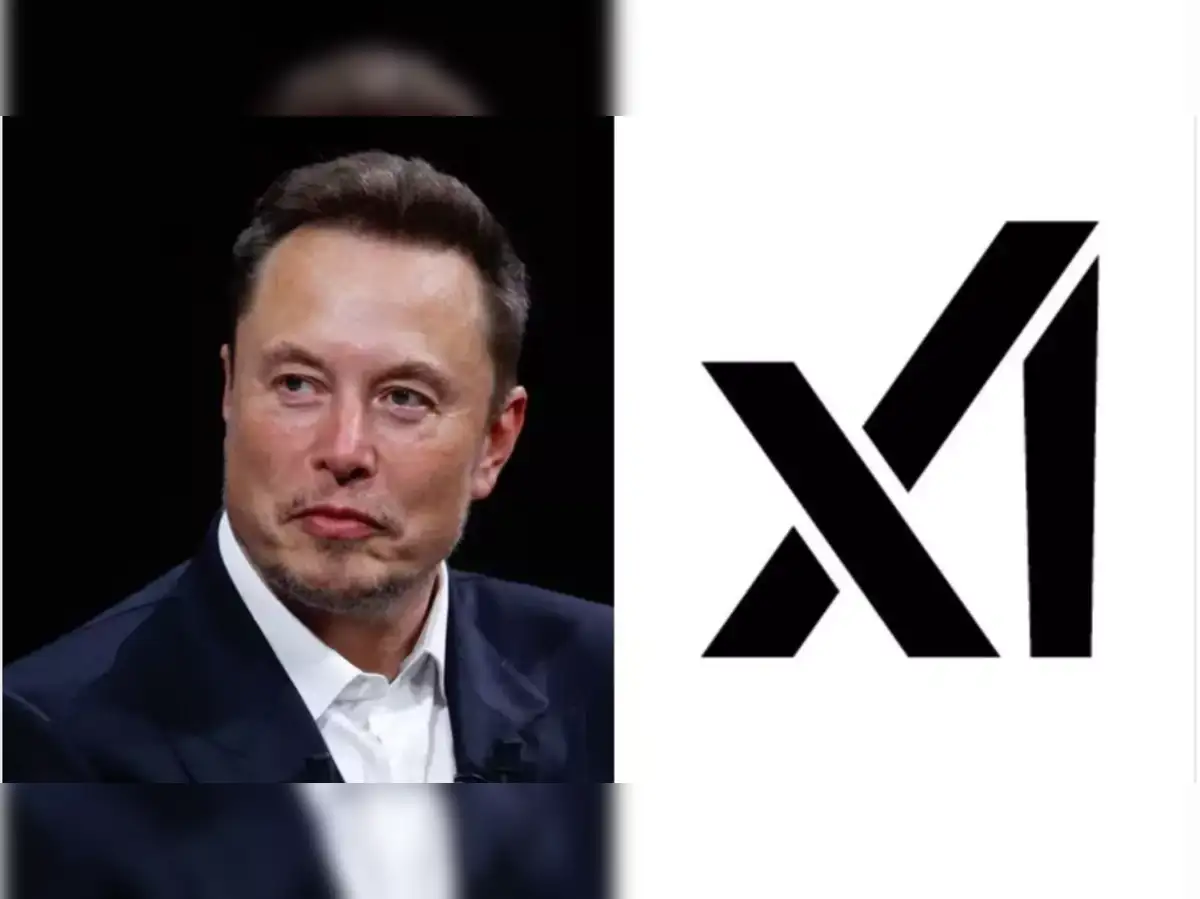
NAACP sues Musk's xAI, alleging illegal operation of gas turbines - The Economic Times
The NAACP has sued xAI and its subsidiary MZX Tech, alleging they illegally operated gas turbines to power a data centre in Mississippi without necessary air permits. The civil rights group claims this poses a health risk to local residents by emitting pollutants and known carcinogens, violating the Clean Air Act.The largest U.S. civil rights group on Tuesday sued xAI and a subsidiary, claiming they illegally operated more than two dozen gas turbines in Mississippi to power its Colossus 2 data center, posing a health risk to local residents. The NAACP, represented by Earthjustice and the Southern Environmental Law Center, sued xAI and subsidiary MZX Tech, charging they violated the federal Clean Air Act by running 27 gas-fired turbines before getting necessary air permits for its massive data center that powers xAI's Grok chatbot. Elon Musk's artificial intelligence startup xAI has invested more than $20 billion to build the data centre in Southaven with the full backing of Mississippi Governor Tate Reeves, but the facility, as well as Colossus 1 just over the border in Memphis, Tennessee, has met heavy opposition from local communities due to their effect on local air and environmental quality. "By looking to evade clean air laws to operate dirty turbines that emit pollution and known carcinogens, these companies are following a shameful, familiar pattern: asking Black and frontline communities to bear the toxic brunt of 'innovation,'" said Abre' Conner, director of the Center for Environmental and Climate Justice at the NAACP. The NAACP announced its intention to sue xAI and MZX in February because the Clean Air Act requires 60 days of notice ahead of filing a lawsuit. Mississippi regulators held one public hearing that month about permits for those turbines after just a few days of public notice for the hearing, and subsequently approved the permits. xAI was not immediately available for comment. Earthjustice said that xAI's Southaven power plant has the potential to emit more than 1,700 tons of smog-causing nitrogen oxides (NOx) each year, a major source of smog in the greater Memphis area. They are also estimated to emit 180 tons of fine particulate matter, 500 tons of carbon monoxide, and 19 tons of cancer-causing formaldehyde.
Chaos optimization algorithm (COA): Continued
In the previous article, we introduced the chaotic optimization method and analyzed some of the methods included in the algorithm. In this article, we will complete the analysis of the remaining methods and move directly to testing the algorithm on test functions. In this implementation, the chaotic optimization method uses deterministic chaos to explore the solution space. The key principle is the use of three different chaotic maps (logistic, sinusoidal and tent maps) to generate sequences that have pseudo-randomness and ergodicity properties. The algorithm operates in three phases: an initial chaotic search, a solution refinement using the weighted gradient method, and a final local search with adaptive scope narrowing. The use of velocity vectors with inertia and stagnation-detection mechanisms helps the algorithm avoid local extremes. Dynamic adaptation of parameters and various types of mutations ensure a balance between global exploration and local exploitation of found solutions. Now let's look at the remaining methods. The ApplyMutation method is used to introduce mutations into the agent. Its main task is to randomly change the parameters of a certain agent. The method starts by checking the validity of the index of the specified agent. If the index is out of range, the method terminates. Next, information is collected about the size of various arrays associated with the agent, such as the size of its parameters and velocity. This prevents the method from going beyond the bounds of these arrays. The method calculates the maximum number of coordinates that can be changed based on the sizes of available arrays to ensure the safety of operations. A random number is selected to determine how many coordinates will be mutated. This value ranges from 1 to 30% of the maximum number of available coordinates. An array of indices is formed representing the coordinates that can be changed. This array is shuffled to ensure random selection when applying mutations. In the loop, coordinates for mutation are selected from the shuffled array. For each selected coordinate, a mutation type is determined based on a random value. Possible types include complete random mutation (where a new value is chosen randomly within a given range), mutation relative to the global best solution, and mutation using chaotic maps. After changing the value for each coordinate, the agent's velocity is reset so that the new value is not affected by previous velocities. Finally, the new value for the corresponding agent coordinate is set taking into account the ranges and steps, which ensures that the values remain within the acceptable range. The UpdateSigma method in the class is responsible for dynamically adapting the penalty parameter used during the optimization. It regulates the penalty value depending on the number of feasible solutions in the agent population. If the method is called for the first time (epoch is 1), the current penalty value (currentSigma) is set to half the base value (sigma). The method runs through the entire population of agents and calculates the number of feasible solutions. To do this, an auxiliary function is used to determine whether the agent is valid. Here, iteration is performed over all agents, which allows us to determine how many of them meet the given criteria. Next, the method calculates the proportion of feasible solutions in the total population by dividing the number of feasible solutions by the total number of agents. This ratio helps in understanding how well our current strategy is working. Based on the calculated ratio of feasible solutions, the method makes decisions about adjusting the penalty: if the proportion of feasible solutions is less than 30%, this indicates that the algorithm is acting too restrictively, so the penalty is increased to alter the search dynamics and promote greater diversity in agent behavior. If the proportion exceeds 70%, this indicates that too many agents find feasible solutions, and the penalty is reduced to avoid premature convergence. In the end, the method ensures that the value of the current penalty remains within feasible limits. If it becomes too small (less than 10% of the base value), the penalty increases to that level. Similarly, if the penalty exceeds 500% of the base value, it is capped to that level. The IsFeasible method determines whether a particular solution represented by an agent with a given agentIdx index is feasible with respect to the given constraints. First, the method checks that the given agent index (agentIdx) is within the allowed range, that is, greater than or equal to 0 and less than the population size (popSize). If the index is invalid, the method returns 'false', signaling that the solution is invalid. If the agent index is valid, the method begins checking the constraints for the given solution. It iterates through all the solution's coordinates and calculates the constraint violation value for each coordinate using the CalculateConstraintValue function. The CalculateConstraintValue function returns a value that reflects the degree of constraint violation for a particular solution coordinate. If after checking all coordinates, no constraint is violated, that is, all violation values are less than or equal to "eps", then the solution is considered feasible, and the method returns "true". The UpdateBestHistory method stores the current best value in the search history. It takes the new best value and first checks if it is correct or valid. If the value is correct, it is stored in the array storing the history of the best results, at the current indexed position. After this, the index is updated for the next save with a cyclic update using the remainder operation of dividing by the size of the history array, which ensures that the history is always filled with the last 10 values without going beyond the array boundaries. The method allows tracking search progress and using the history of the best solutions for analysis. The IsConverged method is used to determine whether the algorithm has reached convergence. It analyzes the history of the best global solutions to assess how significantly the solutions improve over time. If the improvements become insignificant, the algorithm is considered to have converged. The method initializes variables to count the number of allowed (valid) values, the sum of values, the minimum and maximum values from the history of the best global solutions (globalBestHistory). The minVal and maxVal variables are initialized to the maximum and minimum possible double values respectively to correctly determine the minimum and maximum in the future. The method iterates over the globalBestHistory array and for each value in the history it performs validity, data sufficiency, and diversity checks, calculates the mean and relative difference, and checks for convergence. In general, the IsConverged method provides a way to determine the convergence of an optimization algorithm by analyzing the history of best solutions and assessing how significant the improvements are over time. The ResetStagnatingAgents method is designed to manage agents during the optimization, especially to handle cases where agents stop showing improvement in their results. It monitors the state of stagnation of agents and, if necessary, applies mutation to those of them that are stuck in local extremes. For each agent, it is checked whether its current fitness function value (a[i].f) has improved compared to its previous value (a[i].fB). If the current value has not improved, or has become worse, the agent's stagnationCounter is incremented, signaling that the agent is in a state of stagnation. If the value has improved, the stagnation counter is reset. If the agent is stagnant for more than 5 iterations, the method calculates the reset probability (resetProb). This probability is proportional to the current value of the stagnation counter, meaning that the longer the agent stagnates, the higher the probability of it being reset. The equation for calculating the probability takes into account a fixed value (0.2) and the relative value of the stagnation counter. If the randomly generated value is less than the calculated resetProb probability, a mutation is applied to the agent using the ApplyMutation function. After applying a mutation, the agent's stagnation counter is reset and the resetCount counter is increased. the method finishes after processing all agents that have exceeded the stagnation threshold and met the mutation condition. The CalculateWeightedGradient method is used to estimate the gradient of a constraint for a specific agent and coordinate, taking into account the degree to which those constraints are violated. It helps determine in which direction and to what degree the solution should be adjusted to eliminate the violation, weighting the gradient by the level of the violation. First, the agent's indices and coordinates are checked to ensure they are within acceptable limits. If the indices are invalid, a null value is returned, meaning there is no direction for adjustment. The method then loops through all coordinates associated with the current agent and calculates the violation value for each. During this process, it looks for the maximum violation among them. If the violation for a given coordinate is greater than the "eps" threshold, it is considered worthwhile to take corrective action; otherwise, zero is returned -- movement in this direction is meaningless or not required. If the violation is significant, the constraint gradient is calculated for the coordinate -- a measure of the direction and strength of the change in the constraint relative to changes in that coordinate. The gradient is multiplied by a weight, which is defined as the ratio of the violation of the current coordinate to the maximum violation among all constraints. This ensures that a larger violation has a stronger influence on the direction of the adjustment. The resulting value is a weighted constraint gradient that indicates how much and in what direction the solution needs to be adjusted to eliminate the violation in a given coordinate, proportional to its degree. The CalculateConstraintValue method is used to estimate the degree of constraint violation for a given coordinate of a given agent. It determines how far the current coordinate value is outside the acceptable limits (boundaries) and returns a numerical value reflecting the magnitude of this violation. First, the method checks the agent indices (agentIdx) and coordinates (coordIdx) for validity. The method gets the current value of the "x" coordinate from the agent's state and also determines the minimum (min) and maximum (max) acceptable bounds for this coordinate, respectively. Next, the method checks whether the "x" value is within the acceptable range (min and max). Finally, the method returns a "violation" value, which is the total amount of constraint violation for the given coordinate of the given agent. Key features include: Ultimately, the CalculateConstraintValue method provides important information about how well each agent in the population satisfies the problem constraints. It measures the magnitude of the violation, which helps the algorithm understand how much the agent's position needs to be adjusted. The CalculateConstraintGradient method calculates the constraint gradient for a given coordinate of a specific agent. This method determines in which direction and to what extent the coordinate value should be changed due to constraint violation. The method first checks the input agent indices (agentIdx) and coordinates (coordIdx) to ensure they are correct. If at least one of the indices is outside the valid range, the method returns 0.0, which indicates that the gradient cannot be calculated. The method retrieves the current value of the agent's coordinate, as well as the minimum and maximum boundaries set for this coordinate. These values are required for further evaluations. Next, the method checks whether the current value of the "x" coordinate is outside the established boundaries. The final value returned by the method reflects the direction and necessity of changing the current value of the agent's coordinate, taking into account the specified constraints. The CalculatePenaltyFunction method calculates the values of the objective function taking into account the penalty for violating constraints for a specific agent. It combines a base value of the objective function with a penalty based on the magnitude of constraint violations. The method starts by checking the validity of the agent index (agentIdx), and if the index is valid, the method gets the base (non-penalized) value of the objective function of this agent (a[agentIdx].f) and stores it in the baseValue variable. The method then loops through all coordinates (coords) of each agent. For each coordinate, the magnitude of the constraint violation is calculated. If the magnitude of the violation exceeds a given small value "eps", then the square of the magnitude of the violation is added to the penaltySum sum of penalties. A quadratic penalty is used to provide a more "soft" assessment for minor violations and a more "hard" assessment for major ones. After all the penalties for constraint violations are added up, the total 'penalty' is calculated. Finally, the method calculates the "penalized" value of the objective function by subtracting the 'penalty' from the base value of the baseValue objective function. The penalized value of the objective function is returned. The Moving method is the main control procedure for moving the solution through the optimization. It performs sequential steps aimed at updating the current state of the system, adapting parameters and managing the search phases. First, the current epoch counter is incremented. On the first call, the method initializes the population and returns. Next, the penalty parameter (sigma) is dynamically updated, which helps regulate the influence of penalty functions during the search process. An important task is to periodically check and reset agents that are stuck or not showing progress, which helps prevent stagnation in local traps. The current phase of the search is then determined by the value of the epoch counter - at the initial stages, a global search is performed, and then it moves on to a narrower, local search. Depending on the phase, the corresponding search strategies are called, which control the movement of the agents. The Revision method is responsible for improving solutions and adapting search parameters during the iterative optimization. It re-evaluates the current state of the population, updates the best solutions, and adjusts the search parameters based on the performance of the latest steps. The method iterates through all solutions in the population, calculating their new "penalty" value using the penalty function, which allows for constraint violations to be taken into account. The resulting value is then validated, and if it is valid, it is stored as the current value of the function. For each agent whose new function value is better than the previous one, its personal data is updated: the new value is saved, and the current coordinates are also copied. This stores each agent's personal best solution. If an agent is found to have a solution better than the current global solution, the global best solution is updated and the corresponding coordinates are remembered. The history of best solutions is also updated. After the first level of iterations (epochNow > 1), the success of the search is assessed - the proportion of improvements among all agents is determined. Based on this assessment, the parameters are adapted, especially "alpha" (the search scope for each coordinate). Depending on the current search phase (global or local), the rules for adjusting "alpha" may differ: in the global search phase, with a low level of improvement, the search scope increases to expand the possibilities; in the local search phase, with insufficient improvement, the search scope also increases. In case of a significant success, the search scope decreases, which helps localize the optimal solution. The "alpha" parameter is limited by maximum and minimum values, based on the range of acceptable values for the coordinate. This approach allows for a dynamic balance between exploring new solutions and localizing optimal ones, using information about the performance of past iterations. Now that we have examined all the methods, we can move on directly to testing the algorithm. I would like to draw attention to the visualization of the algorithm operation: the combination of the variety of search methods used produces an unusual visual effect. Based on the test results, the COA(CHAOS) algorithm is presented in our rating table. The 35% result after testing shows good potential of the COA(CHAOS) algorithm, especially considering its complexity and the number of configurable external parameters, including internal ones that were not optimized. The algorithm simply has not yet demonstrated its maximum performance. The most interesting and promising aspects of the algorithm are the following: the use of three different maps (logistic, sinusoidal, and tent) for the algorithm's search capabilities; the addition of inertia helps the algorithm maintain momentum while overcoming local traps; dynamic parameter changes, depending on the success and phase of optimization, increase its flexibility; tracking the history of decisions and resetting "stuck" agents allows the algorithm to avoid wasting computing resources on unpromising areas. Furthermore, the use of the Latin hypercube and different approaches to initial agent placement ensures good coverage of the search space from the very beginning. To further improve the algorithm, it would be worthwhile to conduct a more thorough optimization of the internal parameters. This algorithm provides a rich source of ideas for improving other optimization methods, especially its adaptive mechanisms and stagnation handling methods that could be successfully transferred to other machine learning and optimization algorithms for financial markets. Figure 1. Color gradation of algorithms according to the corresponding tests Figure 2. Histogram of algorithm testing results (scale from 0 to 100, the higher the better, where 100 is the maximum possible theoretical result, in the archive there is a script for calculating the rating table) The article is accompanied by an archive with the current versions of the algorithm codes. The author of the article is not responsible for the absolute accuracy in the description of canonical algorithms. Changes have been made to many of them to improve search capabilities. The conclusions and judgments presented in the articles are based on the results of the experiments.

EasyJet passenger stranded in Milan for four days after EU border chaos
Add Yahoo as a preferred source to see more of our stories on Google. An easyJet customer has told ITV News she missed her flight home from Milan due to EU border chaos despite arriving at the airport four hours early. Lily-Mae Bridgehouse, from Oldham, is among the more than 100 passengers who didn't make their flight to Manchester on Sunday because of long queues at passport control in Milan Linate Airport. New EU entry system in force: How does it work and could you be delayed? Channel Islanders stopped when returning home after new E-Visa system introduced The 23-year-old, who was flying alone for the first time, said she was forced to take four days of unpaid leave as a result of the cancellation. The next available flight only leaves on Thursday. It comes as travellers face big delays and long queues at some airports in Europe following the implementation of the EU's new Entry/Exit system (EES). The system, which replaces passport stamps with biometric checks, is designed to be more efficient, but teething issues are causing frustration for many passengers trying to return to the UK. Ms Bridgehouse said she arrived at the airport four hours early and had plenty of time before her 10.30am flight was assigned a gate. At 9.30am, the flight had been assigned a gate number, and she was told by a member of staff to join a queue. "We were stood in the queue for about an hour and a half... probably even longer," she told ITV News, adding that staff kept calling people for London Gatwick and London Heathrow but not for Manchester. When Ms Bridgehouse and some other passengers went to ask for updates, she said staff told them: "Don't worry, it's not going to leave without you, it will stay here until you all board." But as the queue slowly budged forward, the flight was no longer listed on the departure board, she said. She said: "After about half an hour, we asked again, saying, 'Why hasn't it gone on the board yet? Why haven't we gone through yet? It's about half 11, surely we've missed the flight. "She came back to us and said, 'It's gone, so I said, 'What do you mean it's gone? I need to be on that flight, I have work tomorrow I have kids I need to get home to'. "They said, 'There's nothing we can do, it's gone, you need to come out of the queue'". Ms Bridgehouse said she struggles with anxiety, making her ordeal all the more difficult. She said she started "getting really panicky" when customers were led all the way back through departures and told to go down some stairs and outside, adding: "I was a mess. I was terrified." Passengers were eventually ushered to an easyJet desk where they were handed a sheet of paper confirming that their flight had been cancelled, Ms Bridgehouse said. The earliest flight she could find to Manchester was four days later from Milano Malpensa Airport, which she booked. Her partner was staying in Milan for business, so she took a bus back into the city to stay with him. After a lengthy call with easyJet's customer service, she was told she'd have to pay £52 to switch to the Thursday flight. However, she said that does not make up for the extra expenses she has incurred staying in Milan, nor the four days of missed work for which her employer says it cannot pay her. EasyJet told ITV News they refunded the alternative EasyJet flight Ms Bridgehouse booked, including the cancellation fee. "While the issue was due to delays in EES processing, which is outside our control, we are sorry for any inconvenience caused," easyJet said. "We continue to urge border authorities to ensure they make full and effective use of the permitted flexibilities for as long as needed so our customers' travel plans are not impacted," they added. Subscribe free to our weekly newsletter for exclusive and original coverage from ITV News. Direct to your inbox every Friday morning. "It's made me really nervous to return, going to that new airport, because I'm thinking it's just going to happen all over again and I'm going to be stuck here even longer. It has really knocked my confidence," she said. "We just want someone to take accountability for it, apologise, and promise that it's not going to happen again, or that they're going to have things in place moving forward to make it easier." ITV News has contacted Milan's Linate Airport for comment.

Sam Altman said OpenAI would like to bill AI like electricity, Anthropic may already be testing it
Anthropic is also making changes to Claude pricing for enterprise users. As per reports, the company has started charging Claude enterprise users based on per-seat usage with consumption commitments. The AI company has also removed API discounts that were previously offered to its enterprise customers. However, the new plans are lower than earlier fixed subscription tiers. In simple terms, the company has lowered the plan cost, but it is now more dependent on usage. As per a report by Let's Data Science, the company has now started charging lower ($20 per month) seat fees for many roles, including technical and business seats, from earlier $40-200 per month. However, users are now required to pay for an estimated monthly token usage amount, even if actual usage is lower than estimated. In addition, the removal of a 10-15 percent API discount will also add to the burden on enterprise users. The new pricing brings Claude into price parity with major competitors at the individual level, but the removal of API discounts and estimated monthly token usage increases the total cost of ownership for enterprise deployment. The move has come at a time when AI companies are investing billions of dollars in the development of AI technologies, but the business is yet to generate comparable revenue. Recently, while speaking at the BlackRock US Infrastructure Summit in Washington, DC, OpenAI CEO Sam Altman predicted that AI could eventually become a basic service that people use daily, much like electricity, where people will pay for it depending on how much they use. Anthropic's new plans are a step in this direction, where the seat fee only covers access to the platform, and customers will commit to and pre-pay estimated token consumption that they plan to use. Meanwhile, the move might have also been necessitated by recent reports where several users reported being unable to fully utilise Claude due to faster-than-expected token consumption. Following an investigation on April 3, the company said that most of the high token usage, or "burn," was caused by a small number of specific usage patterns requiring large amounts of tokens. At the time, Anthropic's Lydia Hallie also said that the company is rolling out more efficiency improvements. Meanwhile, Anthropic has recently announced that its run-rate revenue (RRR) has now surpassed $30 billion, highlighting the growing popularity of the company. The figure is remarkable, especially considering that the company reported its RRR at $9 billion at the end of 2025. Anthropic is also expanding its capacity to accommodate anticipated demand. The company has recently signed a new agreement with Google and Broadcom for multiple gigawatts of next-generation TPU capacity. According to the company, the new infrastructure is expected to come online starting in 2027.
Saudi Energy signs final agreements with Kraken for Riyadh JV
RIYADH: Saudi Energy announced the signing of final agreements to establish a strategic partnership with Kraken Technologies Ltd, one of the world's leading companies in AI-powered digital operating solutions for the utilities sector. Under the agreements, the two parties will establish a joint venture headquartered in Riyadh, while Saudi Energy will acquire a minority equity stake in Kraken. The partnership supports Saudi Energy's AI-driven digital innovation strategy and the development of advanced operating platforms for the energy and utilities sectors, contributing to improved operational efficiency, enhanced organizational resilience, and long-term sustainable growth. The joint venture will serve as the exclusive distributor of the Kraken operating platform in the Middle East and North Africa, or MENA, with a focus on building advanced regional capabilities, providing high-quality job opportunities in energy and digital technology, and accelerating the pace of digital transformation in the energy sector. This partnership reflects Saudi Energy's commitment to adopting advanced digital technologies and enhancing the future readiness of the electricity system in the Kingdom and across the region. Kraken is a cloud-based operating system powered by AI, designed specifically for utility companies. It enables end-to-end digital operations across customer experience, billing, service management, data analytics, and smart systems. The platform currently supports more than 70 million customer accounts worldwide and operates in over 27 countries. In early March, Saudi Energy, formerly known as Saudi Electricity Co., announced its financial results for the year 2025, delivering strong financial and operational performance with sustainable earnings growth. Results were driven by rising power demand, accelerated expansion and modernization of the power grid, continued digital transformation and automation, and ongoing operational excellence initiatives. The performance reflects the successful execution of the company's strategic capital investment program, which strengthened revenues and profitability, enhanced system reliability and readiness, and reinforced Saudi Energy's role as a key enabler of national development aligned with Saudi Vision 2030. Operating revenues for 2025 reached SR102.2 billion ($27.3 billion), compared to SR88.7 billion in the previous year, representing growth of 15.3 percent. Revenue growth was primarily driven by higher required revenue recognized due to strong growth in the grid's regulated asset base and coupled with stronger demand for electric power, leading to increased electricity production revenue for SE, in addition to continued expansion in the subscribers' base.

Elon Musk's xAI Faces Lawsuit Over Alleged Data Center Pollution
TEMPO.CO, Jakarta - The National Association for the Advancement of Colored People (NAACP), a U.S. civil society organization, is suing Elon Musk's artificial intelligence company, xAI, for alleged air pollution from its data centers. Specifically, this lawsuit was filed against MZX Tech, a subsidiary of xAI, for operating a methane gas turbine at the Colossus 2 data center in South Memphis, Tennessee, without a permit. According to Engadget, cited Antara, the NAACP filed a lawsuit in the Federal District Court of North Mississippi, referencing the Clean Air Act. The lawsuit aims to prevent xAI from operating the turbines without a permit. The court is expected to impose economic sanctions on xAI for violating federal law. The details of the lawsuit revealed that xAI, Elon Musk's company, operated 27 gas turbines without a permit to power the Colossus 2 data center. xAI has set up several data centers to train Grok, its AI assistant, including Colossus 2. The lawsuit alleges that gas turbines emit pollutants, including hazardous chemicals and fine particles, which can cause health problems such as heart disease, respiratory illness, and cancer. The main concern of this lawsuit is the proximity of Colossus 2 to residential areas. Operating these turbines without an air permit violates the Clean Air Act, which requires pollution sources to obtain a permit before operating or constructing them. The NAACP is represented in the lawsuit by the Southern Environmental Law Center and Earthjustice. Before filing today's lawsuit, the NAACP gave xAI a 60-day notice of intent to sue under the Clean Air Act. This lawsuit proceeded to court because xAI failed to respond to the notice. "xAI's continued operation of these turbines without a permit and without adequate pollution controls is not only illegal, it's an insult to families living nearby who for months have expressed serious concerns about how air pollution from the company's personal power plant could impact their health and well-being," said Ben Grillot, Senior Attorney for the Southern Environmental Law Center. Ben added, "xAI must be held accountable for its reckless, unlawful actions -- and that's exactly what this lawsuit aims to do." In addition to the high cost of procuring components for AI models, companies often have to allocate resources to operate data centers where those components are installed. Oracle is reportedly turning to gas generators like xAI. In the meantime, other industry leaders, such as Google, Meta, and Amazon, have invested in or signed deals with nuclear energy providers to support their data center operations. The Ratepayer Protection Pledge is an agreement signed by several technology companies to prevent data centers from raising the average person's energy bill. One of the methods proposed in the pledge is building new energy sources for data centers. Although building new energy sources quickly may help reduce costs, it fails to consider the negative environmental impact that new power plants have on the public. Current U.S. leaders have overlooked this issue, and the latest AI framework proposal issued by President Donald Trump largely ignores the environmental impact of AI. Instead, his government has called for a simplified licensing process for energy generators.

SpaceX IPO: History Says the Stock Will Do This When It Starts Trading.
Stock that go public at large valuations have historically performed very poorly once the IPO excitement has faded. In early April, SpaceX submitted its initial public offering (IPO) paperwork to the Securities and Exchange Commission. The documents were filed confidentially, which means financial statement are not yet available. Reuters has reported that the rocket and satellite company turned an $8 billion profit on about $16 billion in revenue in 2025, but The Information has reported a $5 billion loss on about $18 billion in revenue. SpaceX will host its IPO roadshow in early June, where executives will pitch the stock to institutional investors. That puts the company on track to list shares at some point over the summer. SpaceX merged with xAI earlier this year in a deal that valued the combined entity at $1.25 trillion, but the company is reportedly seeking a $1.75 trillion valuation in its IPO. Will AI create the world's first trillionaire? Our team just released a report on the one little-known company, called an "Indispensable Monopoly" providing the critical technology Nvidia and Intel both need. Continue " If that figure sticks, SpaceX would be the largest IPO in history, and it would immediately become one of the 10 most valuable public companies in the world. But prospective investors may want to stay on the sidelines. History says SpaceX stock could fall sharply during its first year on the market, and it will likely underperform the S&P 500 (SNPINDEX: ^GSPC) in the long run. Between 1980 and 2025, about 9,300 companies listed on the New York Stock Exchange or Nasdaq Stock Exchange held initial public offerings (IPOs). Those stocks returned an average of 19% on their first trading day, according to Jay Ritter, director of the IPO initiative at the University of Florida. However, IPO stocks (especially the ones that go public with larger valuations) have often delivered dismal returns once the initial excitement has faded. The chart below lists the 10 largest U.S. IPOs (as measured by the company's initial market value), and it gives the three-month and one-year returns following the listing. Data source: Stansberry Research, YCharts. As shown above, the 10 largest IPO stocks fell by an average of 13% over the three-month period following their public debut, and they declined by an average of 12% during their first year on the market. Additionally, six of the stocks listed above have underperformed the S&P 500 since going public, as detailed below: What about the others? Meta Platforms, Arm Holdings, and Enel have beat the S&P 500 since their IPOs, and the long-term performance of AT&T Wireless cannot be determined because it was acquired by Cingular (which later changed its name to AT&T Mobility, a wholly owned subsidiary of AT&T). Here's the big picture: IPO stocks often surge on their first trading day, and the momentum can easily carry into subsequent days. As one of the most highly anticipated IPOs in recent memory, SpaceX shares could skyrocket following its public debut. Nevertheless, large IPO stocks have historically been poor long-term investments. So the most prudent course of action is to stay on the sidelines until an opportunity to buy the dip presents itself. Before you buy stock in S&P 500 Index, consider this: The Motley Fool Stock Advisor analyst team just identified what they believe are the 10 best stocks for investors to buy now... and S&P 500 Index wasn't one of them. The 10 stocks that made the cut could produce monster returns in the coming years. Consider when Netflix made this list on December 17, 2004... if you invested $1,000 at the time of our recommendation, you'd have $556,335!* Or when Nvidia made this list on April 15, 2005... if you invested $1,000 at the time of our recommendation, you'd have $1,160,572!* Now, it's worth noting Stock Advisor's total average return is 975% -- a market-crushing outperformance compared to 193% for the S&P 500. Don't miss the latest top 10 list, available with Stock Advisor, and join an investing community built by individual investors for individual investors. Trevor Jennewine has no position in any of the stocks mentioned. The Motley Fool has positions in and recommends Meta Platforms, Uber Technologies, and United Parcel Service. The Motley Fool recommends Alibaba Group and Coupang. The Motley Fool has a disclosure policy.

Bitcoin Holds $74K as Goldman Files Income ETF and Deutsche Börse Buys Into Kraken
02 Bitcoin -- Healthy Consolidation at the Kijun-sen Bitcoin price today reflects a textbook post-squeeze consolidation -- the kind of session that builds a base for the next move. This is part of The Rio Times' daily coverage of cryptocurrency markets and digital assets. After Monday's explosive $4,300 rally from $70,542 to $74,906, Tuesday was the pause. BTC opened at $74,183, pushed briefly to $74,818, dipped to $73,915, and settled at $74,018 (-0.22%). The Bitstamp close sits precisely at the Tenkan-sen ($74,018) -- a key Ichimoku equilibrium line. Perpetuals held slightly below at $73,845 (-0.87%). Volume at $4.11 billion remained elevated but declined 7% from Monday's squeeze-fueled $4.42 billion. The key observation: BTC gave back less than 1% of a 6%+ move -- the market absorbed Monday's gains without panic selling. Bitcoin ETFs saw $291 million in outflows on Monday despite the price surge -- the biggest day of redemptions since March 27, led by Fidelity's FBTC. This is a notable divergence: price rose, ETFs redeemed. The likely explanation is rebalancing after the sharp move higher, not a loss of conviction. Institutional flows often lag price action by a day, and the prior week's $1.1 billion in net inflows remains the dominant signal. 03 Notable Movers 04 Technical Analysis -- BTC/USD Daily From the chart: O:74,183, H:74,818, L:73,915, C:74,018 (-166, -0.22%). The session printed a small-bodied candle right at the Tenkan-sen ($74,018) -- a textbook consolidation pattern. RSI at 60.54 (signal: 54.81) has cooled from Monday's 61.69 -- healthy, not overbought, and still in bullish territory. The MACD at 1,194 (signal: 601, histogram: 593) maintains its bullish crossover with narrowing momentum, consistent with consolidation rather than reversal. The Kijun-sen at $75,556 remains the key overhead resistance -- Monday's high of $75,986 (perpetuals) briefly pierced it. The 200-day SMA at $87,340 sits 18% above. The structure of higher lows ($65K → $70,542 → $73,748) and the current hold above $74,000 after the squeeze confirms a nascent bullish trend. A decisive close above $75,556 (Kijun-sen) would be the most bullish signal since the war began. Support: $72,701 → $71,922 → $71,230 → $70,538 (lower BB / war-era floor). 05 Key Levels 06 News in Focus Goldman Sachs Files Bitcoin Income ETF Goldman Sachs plans to launch a Bitcoin income ETF that invests in Bitcoin ETPs and sells covered call options to generate yield while limiting exposure to price swings. This is a landmark product: the first Wall Street bank to structure a yield-generating instrument around Bitcoin. The covered call strategy appeals to income-seeking institutional investors who want crypto exposure without full directional risk -- a demographic that has been largely absent from Bitcoin markets. If approved, it bridges the gap between traditional fixed-income investors and crypto. Deutsche Börse Invests $200M in Kraken Europe's largest exchange operator invested $200 million in Kraken's parent company Payward for a 1.5% fully diluted stake, subject to regulatory approval. Kraken's valuation has dropped from $20 billion to $13.3 billion since its confidential IPO filing in November, but CEO Arjun Sethi signaled the IPO remains in play. Deutsche Börse's investment is a strategic endorsement of crypto exchange infrastructure by traditional finance -- and a vote of confidence in Kraken's regulated model. The exchange also rejected an extortion attempt tied to a data breach affecting ~2,000 accounts. Visa Launches Blockchain Validator Node Visa is now operating a validator node on the Tempo blockchain, directly participating in transaction validation as it expands infrastructure for stablecoin settlement. This moves Visa beyond mere payments integration into active blockchain infrastructure operation -- a deeper commitment than any previous move by a traditional payments company. The Tempo validator complements Visa's existing stablecoin settlement pilot programs and positions the company as both a payment rail and a consensus participant. Fed Chair Nominee Holds Crypto Kevin Warsh, Trump's nominee to chair the Federal Reserve, disclosed cryptocurrency and AI investments in his financial filing ahead of his Senate confirmation hearing. While the values were not specified, a Fed chair with personal crypto exposure would be unprecedented and could shape monetary policy discussions around digital asset regulation, stablecoin oversight, and CBDC development. The disclosure adds another data point to the accelerating institutional normalization of crypto holdings among senior policymakers. Bitwise: Iran Conflict Hints BTC Market Could Exceed Gold Bitwise CIO Matt Hougan argued that the Iran conflict is demonstrating Bitcoin's resilience as a store of value during geopolitical stress -- and that its addressable market could ultimately exceed gold's. Hougan previously estimated that if Bitcoin captures 17% of the combined store-of-value market over the next decade, each coin could be worth $1 million. The thesis rests on Bitcoin's scarcity, portability, and censorship resistance proving their value during exactly the kind of crisis the Hormuz blockade represents. Security: Fake Ledger App Drained $9.5M A counterfeit Ledger Live app on Apple's App Store drained $9.5 million from over 50 victims before being removed. Blockchain sleuth ZachXBT traced the stolen funds to a KuCoin-linked mixer. Apple confirmed the app was removed and the developer terminated. Separately, Web3 hacks cost $482 million across 44 incidents in Q1 2026, with phishing driving the majority of losses. The security environment remains hostile -- institutional adoption runs alongside persistent consumer-level fraud. 07 Global Context Tuesday's institutional headlines paint a picture of an industry that has moved decisively past the "is crypto real?" phase. Goldman Sachs is structuring yield products around Bitcoin. Deutsche Börse is buying equity in exchanges. Visa is running validator nodes. The Fed chair nominee holds crypto. Broadridge launched a crypto platform for Canadian wealth managers. The XRP Ledger integrated bank-grade privacy. Figure launched tokenized auto loans on DeFi rails. Each of these would have been a major headline in 2024; in April 2026, they arrive on the same day. Oil's 5.2% decline to $88 on the perpetuals board (Brent proxy) is the most significant macro development for crypto. Lower oil means lower inflation pressure, faster Fed cuts, and improved risk appetite -- the exact conditions under which BTC has historically rallied. If Brent stabilizes in the $85-95 range (vs. $100+ last week), the macro headwind that has capped crypto since March begins to fade. Gold at $4,808 continues to climb, but the BTC-gold correlation has weakened -- Bitcoin is increasingly trading as a risk asset that benefits from de-escalation, not a safe haven that benefits from crisis. 08 Looking Ahead The $75,556 Kijun-sen remains the immediate target. Tuesday's consolidation at $74,018 (Tenkan-sen) is constructive -- it builds a platform for the next test. The RSI at 60.54 has room to expand without overheating. If Iran talks resume in Islamabad this week (Pakistan says teams may return), the de-escalation premium could push BTC through the Kijun-sen and into the $75K-$80K supply gap that analysts have flagged as thin. Strategy's 780,897 BTC position, Goldman's ETF filing, and Deutsche Börse's Kraken investment all reinforce the structural bid. The BIP-361 proposal to freeze quantum-vulnerable Bitcoin coins is worth monitoring -- it represents the first formal governance response to the quantum computing threat. Bernstein argues the market has already priced in quantum risk, but the proposal itself signals the developer community is taking preemptive action. Key dates: Wednesday April 15 -- Morgan Stanley, Bank of America earnings. Possible Islamabad Round 2 this week. April 21 -- Tiradentes (Brazil closed). April 28-29 -- Copom meeting. Related coverage: Ibovespa: Ibovespa Breaks 197K as Dollar Nears R$5.00 Ceasefire rally: Ibovespa Hits All-Time High as Iran War Pause Triggers Rotation Inflation: Brazil Inflation 2026: Rates, Forecasts and What Drives IPCA Focus: Brazil Focus Report: IPCA Forecast Climbs as Iran War Weighs This report is for informational purposes only and does not constitute investment advice. Always consult a licensed financial advisor. Past performance does not guarantee future results. Published by The Rio Times.

Brits warned of 'summer of chaos' over new EES if 'warning sign is ignored'
UK travellers face extra delays at European airports(Image: Lucy North/PA Wire) UK travellers now face new data checks at European airports as the EU's Entry/Exit System (EES) is fully implemented across 29 countries in the Schengen area, including Spain, Italy and Greece. The new system means UK holidaymakers now have to "create a digital record" when they first travel to the Schengen area. This will require travellers to provide additional information upon arrival at the border, replacing the previous system of passport stamping. However, the introduction of the system has led to significant travel disruptions, including hundreds of people missing flights after being stuck in queues at an airport in Milan at the weekend. Click here to get the biggest stories straight to your inbox in our Daily Newsletter One mum from Oldham found herself unable to get back home for her children and work after being stuck in a queue at the airport for four hours, only to be told her flight back to Manchester had taken off without her. She has since had to cover the extra expense of staying in Italy for longer as the next available flight back was five days after her original departure date. Have changed your holiday plans? Take our poll below. If you can't see it below, click here to open in your browser. Representative body Airports Council International recently reported that EES was causing delays of up to three hours, with airports in Spain, Portugal, France and Italy among the worst affected. And the chief executive of Advantage Travel Partnership, Julia Lo Bue-Said, has since warned of a "summer of chaos" if changes aren't made. In an interview on BBC Radio 4, the travel expert said: "The real issue is the volume of passengers that are trying to go through border control at one time. It's clearly creating significant bottlenecks. The biggest frustration is these airports know what passengers are arriving, they know how many flights are coming in. "There needs to be better coordination on arrival and on departure - because the same thing happens when you leave - to ensure we are not facing a summer of complete chaos." She added to the Press Association that what happened in Milan is "a warning sign that cannot be ignored". She said: "Even isolated incidents at Schengen borders are having serious knock-on effects, with passengers missing flights, facing long waits and navigating processes that are unclear and inconsistent. That is simply not good enough." She claimed some airports have the "physical infrastructure to handle demand but are simply not deploying the staff to match it", which "demands explanation". She added: "We have consistently called for a pause in EES registration during peak travel periods and at times of high passenger volumes, to minimise disruption and protect the customer experience." Luke Petherbridge, director of public affairs at travel trade organisation Abta, said: "While for many the travel experience remains smooth, we're disappointed and frustrated to see some passengers being caught up in delays due to EES. "Abta has been warning destinations and the (European) Commission for some time about the need for proactive steps to be taken to avoid delays, including the full use of contingency measures to stand down biometric checks at busier times, and adequate staffing especially at peak times."

Perplexity's CBO on products, firm's growth on AI
Dmitry Shevelenko, Chief Business Officer at Perplexity, discusses the company's growth and new product push of Perplexity Computer, in improving search functions from AI technology for its customers. He speaks exclusively with David Ingles and Yvonne Man on the sidelines of the HSBC Global Investment Summit in Hong Kong on "Bloomberg: The Asia Trade."
