News & Updates
The latest news and updates from companies in the WLTH portfolio.
Amazon: Zoox Enters The Robo Taxi Race, Jassy On Growth And Anthropic Mythos
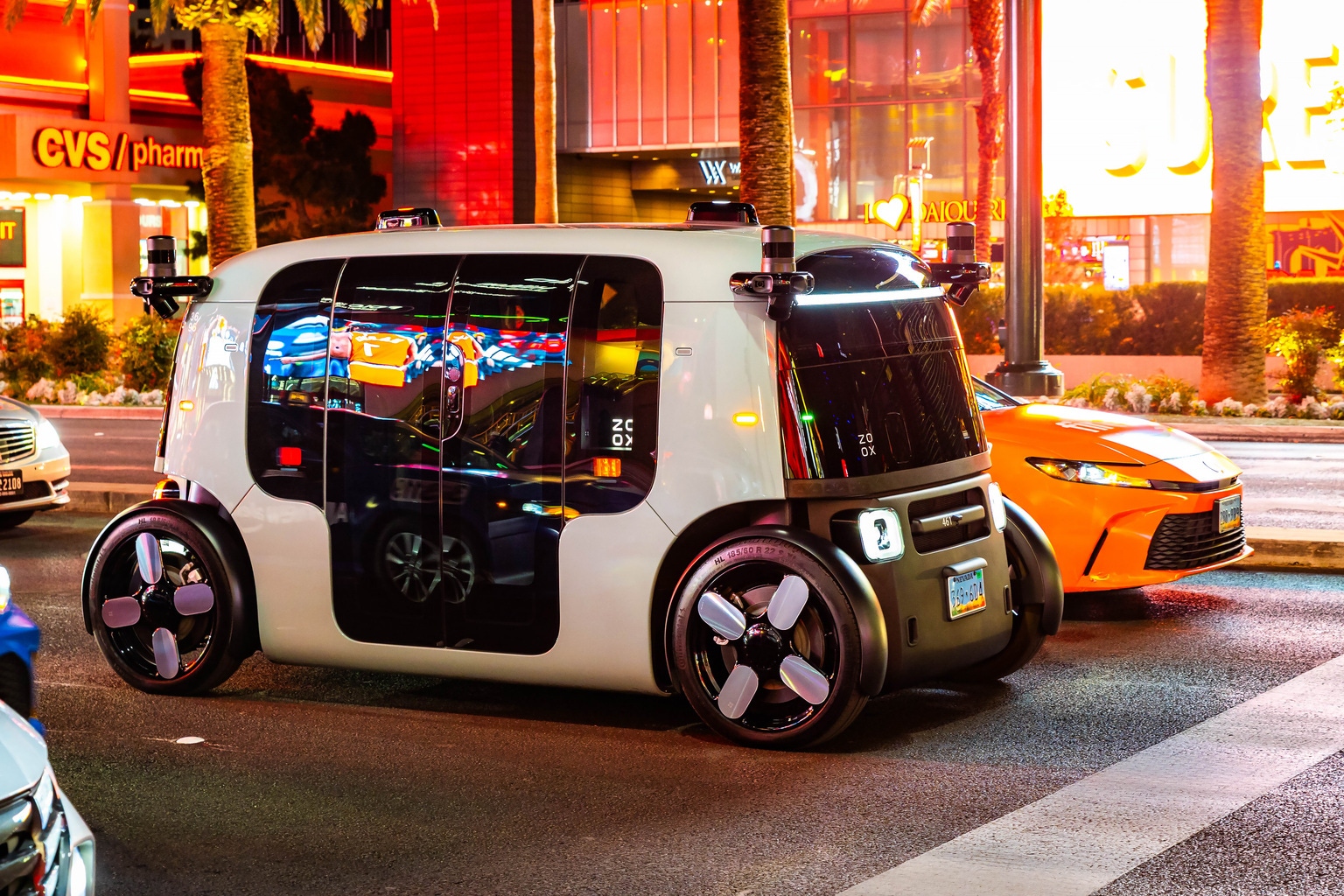
Anthropic's Mythos has spurred wide conversation over AI's evolution and the future of cybersecurity. My Las Vegas Zoox experience Amazon (AMZN) is a stock I keep adding to, even though it's stuck in a pattern between $200 and $250 without a lot of indication that it can break out Brett Ashcroft-Green, CFP® is a CERTIFIED FINANCIAL PLANNER™ professional and fee-only fiduciary. He is the owner and lead advisor at Ashcroft Green Advisors.Brett writes on Seeking Alpha about retirement planning, portfolio construction, and the analysis of undervalued blue-chip stocks.He has extensive experience working with high-net-worth and ultra-high-net-worth families, with a background in private credit and commercial real estate mezzanine financing as a business director for a large family office. His professional experience spans the United States and Asia, including several years living and working in China.Brett is fluent in Mandarin Chinese in both business and legal settings and previously served as a court interpreter. Over the course of his career, he has collaborated with leading commercial real estate developers including The Witkoff Group, Kushner Companies, The Durst Organization, and Fortress Investment Group. Analyst's Disclosure: I/we have a beneficial long position in the shares of AMZN, GOOGL, SPY, MSFT either through stock ownership, options, or other derivatives. I wrote this article myself, and it expresses my own opinions. I am not receiving compensation for it (other than from Seeking Alpha). I have no business relationship with any company whose stock is mentioned in this article. Disclaimer: The information in this article is intended for general informational and educational purposes only and does not constitute financial, investment, tax, or legal advice. The views expressed are solely those of the author, based on independent research, analysis, and professional experience. Although the author is a CERTIFIED FINANCIAL PLANNER™ (CFP®) and owner of Ashcroft Green Advisors, a fee-only registered investment advisory firm, the content may not be suitable for your individual financial situation, objectives, or risk tolerance. Readers should consult with a qualified financial professional before making any decisions based on this material. The author and/or clients of Ashcroft Green Advisors may hold positions in securities discussed in this article. Seeking Alpha's Disclosure: Past performance is no guarantee of future results. No recommendation or advice is being given as to whether any investment is suitable for a particular investor. Any views or opinions expressed above may not reflect those of Seeking Alpha as a whole. Seeking Alpha is not a licensed securities dealer, broker or US investment adviser or investment bank. Our analysts are third party authors that include both professional investors and individual investors who may not be licensed or certified by any institute or regulatory body. Amazon's 100% ownership of Zoox provides direct exposure to the autonomous vehicle sector, enhancing its strategic footprint in mobility innovation. The Las Vegas Zoox ride demonstrates operational readiness and technological maturity, signaling Zoox's preparedness for commercial deployment. Zoox is positioned as a serious contender in the highly competitive US robo-taxi market, supported by Amazon's resources and technological advancements.
During War, Climate Chaos and Even Civilization Become Ephemeral
Astral highway bombed by barbwires that dump prohibitions, misery, slavery and atrocities to human societies from above. Courtesy Evi Sarantea. Pope Leo XIV criticized the delusions of omnipotence that US and Israel display in fighting their illegal and immoral war against Iran. Trump even threatened Iran with extinction. On April 7, 2026, he said: "A whole civilization will die tonight, never to be brought back again. I don't want that to happen, but it probably will. However, now that we have Complete and Total Regime Change, where different, smarter, and less radicalized minds prevail, maybe something revolutionarily wonderful can happen, WHO KNOWS?" More threats The US and Iran started negotiations that did not last. "Less than a week into a cease-fire between the two countries, he threatened that the U.S. military would "finish up the little that is left of Iran" and said its water and electric plants would be "easy to hit." "Whether the ceasefire will hold, for how long, and in what ways," says Pervez Hoodbhoy, physicist and member of the Bulletin of Atomic Scientist Board of Sponsors, "is for the days ahead to tell. No one -- not even Donald Trump -- knows the end game. But the constant is the man whose finger can push the nuclear button. A man used to quick, vacuous victories through bullying and unbridled force is rancorous, thwarted, and vengeful. He has been stymied by a recalcitrant theocratic state that has taken blow after blow, withstood the killing of its venerated leader, the bombing of its cities, the destruction of vital infrastructure, and the systematic targeting of its schools and universities." This official hubris, now tainted by the potential bombing of Iran by nuclear weapons, spreads like a plague. It disturbs Americans and non-Americans who have even a modicum of culture and know some history. Threatening civilization is a threat of using nuclear bombs. Such an abominable prospect is beyond diplomacy and war. It reminds me of the crusades when Christian and Moslem fanatics killed each other for centuries. But, in general, such "public discourse" turns logic off and sends fear to heavens. American Universities freeze. Public policy takes a vacation. What climate chaos? No wonder the discussion about climate chaos and its underlying anthropogenic causes, basically the burning of fossil fuels, are so contentious. Most of the scientific and academic institutions remain silent and the petroleum-funded physicists and think-tanks are outspoken in defending the very fuels that heat the planet and put human and wildlife at risk. "A vast majority of scientists agree that climate change is real and that it is caused by burning fossil fuels like oil, gas and coal. They expect average global temperatures to rise 1.5 degrees Celsius (2.7 degrees Fahrenheit) above preindustrial levels within the next decade, unleashing dire impacts that include more deadly heat waves, coastal floods, water shortages and crop failures." However, Trump denounced climate change and "has derided the scientific consensus on global warming as "the greatest con job ever perpetrated on the world." And [the US EPA administrator] Mr. Zeldin has said that the E.P.A. is "driving a dagger straight into the heart of the climate change religion" by rolling back dozens of regulations that burdened the fossil fuel industry." Fighting back This US official, if unacceptable, behavior ignores science and offends common sense. It has infuriated some environmental organizations like Earth Justice. "On March 31, Earth Justice said that "a panel full of Trump appointees voted to give the oil industry permission to harm and kill imperiled species across the Gulf of Mexico.... We [Earth Justice] are suing the Trump administration for abusing the concept of a national security exemption. Greenlighting extinction in the Gulf will not make anyone safer, nor will it result in lower prices at the pump for Americans. What it could do is trigger ecological destruction.... Rice's whales, the only whales that live year-round in the Gulf, have seen populations dwindle to fewer than 100 individuals in the years since the Deepwater Horizon oil spill disaster [in 2010] decimated the species.... "Because of the committee's vote, sea turtles, fish, rays, manatees, corals, and birds are also now without protection. Existing regulations already allow the oil industry to harass, harm or kill sea turtles hundreds of thousands of times per year in the course of its operations.... Earlier this month, the administration recklessly approved "Kaskida," a new, ultra-deepwater drilling project. The developer is BP, the company responsible for Deepwater Horizon [oil spill of 2010]. Greenlighting oil and gas projects that will span years threatens to lock us into a future of fossil fuel dependence." I agree with Earth Justice. Fossil fuels have already caused immense damage to the atmosphere, the seas, oceans and to the ecosystems of forests, wetlands, rivers, farmland, deserts, every place from which they are mined and every place where they are sprayed or for the production of electricity, powering factories, cars, other machines, the militaries and heating homes. They are primarily responsible for altering thousands of years of Earth history by increasing global temperature. Climate chaos is the result of this illiterate human use and misuse of fossil fuels. They are harming life in all its varieties in the entire planet. The penguins living in the Antarctic are also harmed by the burning of fossil fuels / climate chaos. Penguins rely on sea ice for survival. However, in 2022 there was very low sea ice in the Antarctic, which, according to the International Union for Conservation of Nature, "led to catastrophic breeding failure of emperor penguins." Now emperor penguins are endangered. Greece in trouble War in the Middle East is intensifying climate chaos. But it is also affecting Europe and especially poor countries like Greece. In an international chaotic environment, all life appears to be at risk. Today, in April 2026, it is. The future is covered with fear and clouds of uncertainty. Debt-ridden Greece, on the one hand, has been facing potential invasion by its archenemy, Moslem Turkey. On the other hand, her European Union allies are still trying to fight Russia through Ukraine. Yet European states remain frightened and confused by the US-Israeli war against Iran. The Greeks also know that during the Obama administration EU and America's International Monetary Fund treated them like colonials, extracting all they could from impoverished Greece in order to save Frech, German and American banks. In addition, the Greek government must be concerned that American military bases exist in Greece and the Greek part of Cyprus, thus potential targets of Iran. All these strategic, debt, and political realities in the Mediterranean don't exactly open opportunities for a better life for the citizens of Greece. "[T]he unbearable deprivation that torments a large part of Greek society, writes Kostas Kallitsis of the Athenian English-language newspaper ekathimerini: "The income of 40% of households ends long before the month ends. 62.5% of employees have a salary below €956 net. Inequalities are widening: In 2019, profits exceeded labor income by €21.3 billion and in 2024 by €36.1 billion, that is, 69.5% more. "That feeds into the fundamental problem: The political-economic system is becoming less and less inclusive, social mobility is becoming weaker, and ever more people get marginalized.... A deep rift exists at the heart of "stability," and it is deepening and widening by a governance that is proving to be very bad and is becoming very weak." Epilogue Greece is certainly suffering. Her European and American allies keep looting its archaeological treasures and leave her vulnerable to hostile Turkey. The only reliable guide for Greece now and the future is her own history and ancient civilization. Become self-reliant and independent. America chose Moslem Turkey for NATO to fight Russia. But that was a bad choice because Turkey never won a war against Russia. These relationships become far more unreliable during war. The Europeans better wake up soon, or they will become another battleground. They should speak with one voice. Accept the responsibility of defending Europe and work full time for peace. Tell Trump to abandon war and leave Iran alone. Tell Israel to stay home and forget its biblical myth of a greater Israel. Bring peace to Ukraine, the Middle East and peace to themselves and the world. If Trump's civilization threat becomes tangible, Moslems the world over will turn their wrath against Europe and America and Israel. The world cannot survive a WWIII.

Saudi Energy signs final agreements with Kraken for Riyadh JV
Saudi Energy (SE) and Kraken announced the signing of definitive agreements for a strategic partnership with Kraken Technologies (Kraken), a global provider of an AI-powered operating system for the utilities sector. Under the agreements, SE and Kraken will establish a joint venture headquartered in Riyadh to accelerate digital transformation across the energy and utilities sectors in the Middle East and North Africa (Mena). The joint venture will serve as the exclusive reseller of the Kraken operating system across the Mena region. It will also focus on: The JV will also have the rights to deploy Kraken to 11.5 million SE customer accounts, supporting SE's AI-driven digital innovation strategy and its ambition to enhance operational efficiency, organisational resilience, and long-term sustainable growth. As part of the agreements, SE will also acquire a minority strategic equity stake in Kraken, reinforcing long-term alignment between the two companies. Kraken's platform is a fully cloud-based, AI-enabled operating system designed specifically for utility companies. It enables end-to-end digital operations, including customer experience, billing, service management, data analytics, and intelligent system optimisation. The platform currently supports more than 90 million customer accounts on behalf of leading global utilities and operates in over 15 countries. -OGN/TradeArabia News Service

Saudi Energy, Kraken sign final agreements for Riyadh joint venture
Saudi Energy has signed final agreements to establish a strategic partnership with Kraken Technologies Limited, one of the world's leading companies in AI-powered digital operating solutions for the utilities sector. Under the agreements, the two parties will establish a joint venture headquartered in Riyadh, while Saudi Energy will acquire a minority equity stake in Kraken, said a Saudi Press Agency report. The partnership supports Saudi Energy's AI-driven digital innovation strategy and the development of advanced operating platforms for the energy and utilities sectors, contributing to improved operational efficiency, enhanced organizational resilience, and long-term sustainable growth. The joint venture will serve as the exclusive distributor of the Kraken operating platform in the Middle East and North Africa (MENA), with a focus on building advanced regional capabilities, providing high-quality job opportunities in energy and digital technology, and accelerating the pace of digital transformation in the energy sector. This partnership reflects Saudi Energy's commitment to adopting advanced digital technologies and enhancing the future readiness of the electricity system in the Kingdom and across the region. Kraken is a cloud-based operating system powered by AI, designed specifically for utility companies. It enables end-to-end digital operations across customer experience, billing, service management, data analytics, and smart systems. The platform currently supports more than 70 million customer accounts worldwide and operates in over 27 countries.

Anthropic adds Novartis CEO Vas Narasimhan to its board
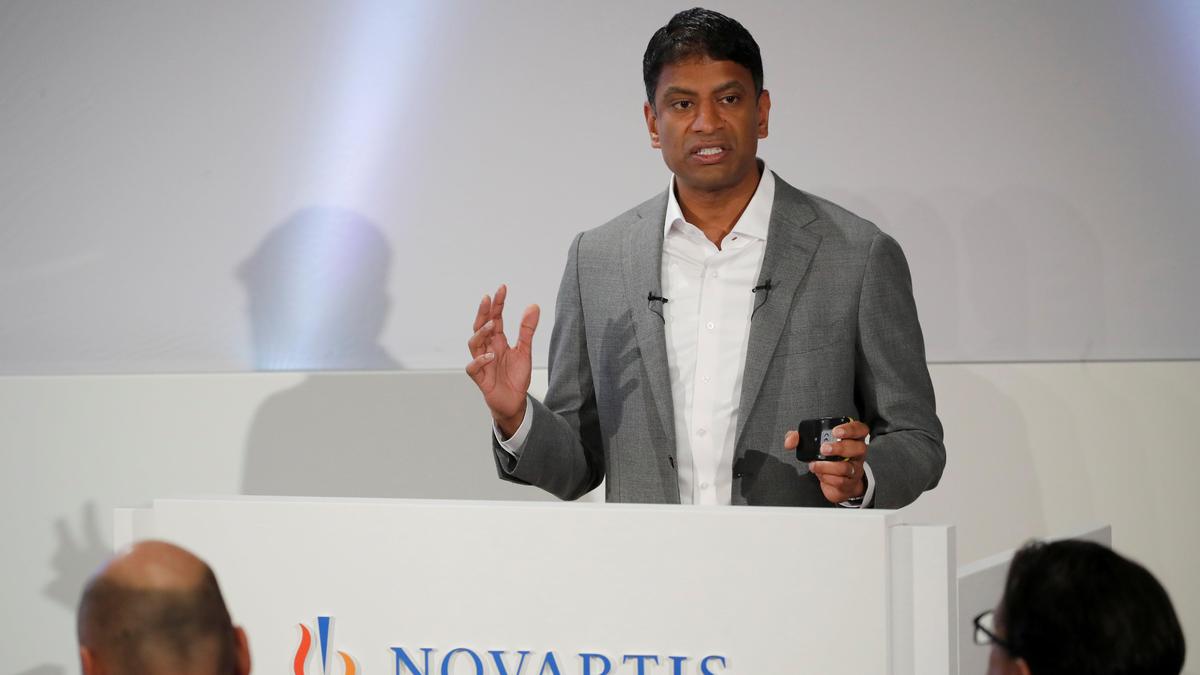
Anthropic on Tuesday added Novartis' Chief Executive Officer Vas Narasimhan to its board of directors, making him the first executive from the pharmaceutical industry to join the AI startup's governing body. Narasimhan joins Anthropic CEO Dario Amodei, President Daniela Amodei, Confluent CEO Jay Kreps, Netflix chairman Reed Hastings, and others on the board.
Is Anthropic's Claude Mythos A Big Stunt, Or A Real Security Threat? What The Experts Say
The federal government summoned financial leaders to an emergency meeting over Claude Mythos last week. Anthropic put the entire tech world on notice last week with an unprecedented announcement: it made an AI model so advanced that it was too dangerous to release to the public. Anthropic said the new frontier language model, Claude Mythos Preview, would "reshape cybersecurity." Anthropic also announced the formation of Project Glasswing, an invite-only group of organizations -- including some of Anthropic's biggest competitors -- to test Claude Mythos Preview and secure their infrastructure. Anthropic said that Claude Mythos Preview "found thousands of high-severity vulnerabilities, including some in every major operating system and web browser." (Emphasis in original.) The company said Project Glasswing was necessary "to help secure the world's most critical software." By Friday, CNBC reported that Federal Reserve Chairman Jerome Powell and Treasury Secretary Scott Bessent had summoned the high priests of finance (aka banking CEOs) for an emergency meeting about the new model. New York Times writer Thomas Friedman fretted over a "terrifying" future in which any teenager armed with Claude could hack the local power grid. The reaction to Claude Mythos Preview quickly split along predictable lines. AI boosters hailed the new model as proof that artificial general intelligence (AGI) was nigh, praising Anthropic for rolling it out so responsibly. Critics and AI skeptics called Project Glasswing a big publicity stunt. So, which is it? To find out, Mashable has been reviewing Anthropic's claims and talking to AI and cybersecurity experts. What is Claude Mythos Preview? Claude Mythos is a new large-language model that Anthropic says performs significantly better than Claude Opus 4.6 -- widely considered one of the best AI models in the world -- especially in cybersecurity. "In our testing, Claude Mythos Preview demonstrated a striking leap in cyber capabilities relative to prior models, including the ability to autonomously discover and exploit zero-day vulnerabilities in major operating systems and web browsers," reads the Claude Mythos system card. Is Claude Mythos a sign of AGI? Artificial general intelligence refers to superintelligent AI that can perform better than humans across a wide range of tasks. It's not an exaggeration to say that our entire economy has been organized around the quest for AGI, as Anthropic, Google, Meta, xAI, and OpenAI pour hundreds of billions of dollars into a new arms race. If Claude Mythos is as capable as Anthropic says, would it be an example of AGI? The model card addresses this question, and Anthropic does seem to think it's close to AGI. Any major platform rollout in this era is going to look different to different audiences depending on their fluency and their fear tolerance. What I care about is whether the intent is real, and the evidence I've seen from Anthropic suggests it mostly is. Howie Xu, Gen, Chief AI & Innovation Officer In a section about Claude Mythos safety risks, Antropic writes: "Current risks remain low. But we see warning signs that keeping them low could be a major challenge if capabilities continue advancing rapidly (e.g., to the point of strongly superhuman AI systems)." Of course, Anthropic has a strong financial incentive to promote this belief. Ultimately, the model card for Claude Mythos is more conservative than the reaction online would suggest. For example, while the Claude Mythos model card does show that this model performs above the trend line for previous Anthropic models, Anthropic says it does not show evidence of self-improvement or recursive growth. ("Importantly, though we're observing a slope change with Claude Mythos Preview, we do not know if this trend will continue with future models...The gains we can identify are confidently attributable to human research, not AI assistance.") Reasons to think Project Glasswing is a publicity stunt Don't make me tap my sign: "[When] an AI salesman tells you that AI is an unstoppable world-changing technology on the order of the agricultural revolution...you should take this prediction for what it is: a sales pitch." I wrote those words of caution in response to an essay by Anthropic CEO Dario Amodei, which warned about the potentially cataclysmic dangers of AI. Anthropic also has a history of issuing dire warnings about its AI models. You may remember the story of the Anthropic model that tried to "blackmail" a company CEO to prevent it from being turned off. In reality, Anthropic designed a test environment where blackmail was a potential outcome. This may be more akin to digital entrapment than genuine model misbehavior. So, is Claude Mythos the latest example of the industry's Chicken Little problem? On X, AI safety engineer Heidy Khlaaf listed a number of open questions that cast doubt on Anthropic's claims. Anthropic said the Claude Mythos preview found thousands of zero-day vulnerabilities. But Khlaaf says Anthropic left out key facts needed to assess this claim -- the rate of false positives, how Claude Mythos compares to existing cybersecurity tools, and exactly how much manual human review was required. "Releasing a marketing post with purposely vague language that clearly obscures evidence needed to substantiate Anthropic's claims brings into question if they are trying to garner further investment," Khlaaf told Mashable. "It also serves their 'safety first' image as they're able to frame the lack of public release, even a limited one for independent evaluation, as a public service when it simply obscures even experts' abilities to validate their claims." We reached out to Anthropic repeatedly about these concerns, but the company did not respond. We will update this article if they do. In the Claude Mythos system card, Anthropic wrote that more data will be released in the coming weeks as the bugs Mythos found are patched and fixed. Gary Marcus, an AI expert, scientist, author, and noted critic of the LLM hype machine, initially told Mashable that it was too soon to know whether Claude Mythos represented a new type of threat. But Marcus has grown more skeptical since we spoke to him, and he recently wrote on X that Mythos was "nowhere near as scary" as it first seemed. "Folks, you can relax. Mythos is not some off-trend exponential gain," he wrote. Cybersecurity experts told Mashable it's also very unlikely Claude Mythos could be used to "turn off the lights" or bring down critical infrastructure. "Claims about catastrophic uses of Mythos also significantly misunderstand threat models, cybersecurity risks, and the ability to propagate said risks in a way that could actually lead to safety-critical incidents," Khlaaf told us. "It's not as simple as asking a model 'hack this system,' with Anthropic's own technical blog post demonstrating a requisite of expertise that Anthropic downplays in their marketing posts." Other experts expressed skepticism, while also acknowledging that Mythos does represent a genuine risk, which Marcus has also said. "You could argue it didn't need a public announcement," said Div Garg, a Stanford AI researcher and founder of AGI, Inc. "However, ultimately, the decision to limit access to only those who develop and maintain critical software is precisely what you want a business to do in such a scenario...It's easy to criticize the limited access, but worse outcomes would arise if they released it unchecked." Tal Kollender, Founder and CEO of cybersecurity firm Remedio, told Mashable that tools like Claude Mythos are dangerous because they can automate exploit discovery. "It's brilliant corporate theater," Kolender said. "Labeling a model 'too dangerous to release to the public' is certainly a marketing flex because it immediately creates mystique and signals immense power to investors. But beneath the PR stunt, there is a very real, very mundane truth...The cybersecurity industry doesn't actually have a 'finding' problem. We are already drowning in tools that detect vulnerabilities. What Mythos does is automate that discovery process at an unprecedented scale." TL;DR: A week after revealing Claude Mythos Preview, some of Anthropic's biggest claims about the model look a lot sketchier, experts say. However, they also acknowledge that Claude Mythos poses a real risk. Still, there are plenty of very valid reasons to be nervous about the new frontier model. Reasons to think Claude Mythos Preview is a genuine threat to global cybersecurity In the New York Times, author Thomas Friedman conjures a scenario straight out of War Games, where a teenager hacks the local power grid after school. That scenario seems even more far-fetched a week later. But here's a much more likely scenario: A sophisticated group of hackers uses a tool like Claude Mythos to find zero-day vulnerabilities in our digital infrastructure, launching attacks faster than organizations can respond. And that scenario should worry you. If Claude Mythos isn't the tool that can do it, most experts agree such a tool isn't far off. And some of the world's leading cybersecurity experts certainly seem worried. "I've found more bugs in the last couple of weeks [with Claude Mythos] than in the rest of my entire life combined," said Nicholas Carlini, a research scientist affiliated with Anthropic and Google DeepMind, in a video on the Project Glasswing website. "On Linux, we found a number of vulnerabilities where, as a user with no permissions, I can elevate myself to the administrator by just running some binary on my machine," Carlini said. This week, the AI Security Institute published its findings on Claude Mythos's capabilities, and it provides some independent verification that it does represent a genuine leap forward. Claude Mythos passed AISI cybersecurity tests that no other model had ever completed, scoring higher than any other frontier model on virtually every test. "Our testing shows that Mythos Preview can exploit systems with weak security posture, and it is likely that more models with these capabilities will be developed," AISI concluded. AISI also identified some limitations with Claude Mythos, which would impair its effectiveness in real-world scenarios. So, was Anthropic's rollout of Mythos responsible AI stewardship or self-serving marketing? Experts I talked to said these options aren't mutually exclusive. "I'd say it's both, and that's not a criticism," said Howie Xu, Gen's Chief AI & Innovation Officer. "Any major platform rollout in this era is going to look different to different audiences depending on their fluency and their fear tolerance. What I care about is whether the intent is real, and the evidence I've seen from Anthropic suggests it mostly is." As is often the case with fear-inducing AI headlines, the reality turned out to be more complicated. "Personally, I don't go to bed worrying about a kid with Mythos hacking the power grid, but that doesn't mean the concern is fictional," said Xu. "We're at an inflection point where the creative and collaborative upside of these tools is massive, and the security infrastructure hasn't caught up. That gap is exactly what keeps me busy. Even a fractional probability of a serious incident is too much, which is why building a trust and security layer into the agentic era is my extreme focus." Finally, as Anthropic stresses in the Claude Mythos model card, tools like this will likely benefit cybersecurity defenders more than hackers in the long-term. And in the short-term, a more cautious approach -- like the approach being modeled with Project Glasswing -- may be warranted. TL;DR: Claude Mythos has formidable cybersecurity coding abilities, and it does represent a genuine threat. However, if hackers have access to AI tools like Claude Mythos, so will the organizations defending against such attacks. UPDATE: Apr. 14, 2026, 9:40 PM EDT This article has been updated with additional information about some of the cited experts.

OpenAI Launches GPT-5.4 Cyber Model for Defensive Cybersecurity To Rival Anthropic's Claude Mythos Preview AI model
Hyderabad: OpenAI has launched a specialised variant of its GPT-5.4 model, GPT-5.4 Cyber, which is designed specifically for defensive cybersecurity applications. Unlike standard consumer-facing models, GPT-5.4 Cyber will not be available on ChatGPT. Instead, it will be rolled out exclusively to vetted security vendors, organisations, and researchers. It is worth noting that the GPT-5.4 Cyber has been launched just a week after rival Anthropic announced its Claude Mythos Preview AI model under Project Glasswing, which is designed for defensive cybersecurity purposes. What Is GPT-5.4 Cyber? OpenAI described GPT-5.4 Cyber as an AI model designed to lower the refusal boundary for legitimate security work. Standard models are equipped with strict guardrails that can prevent professional cybersecurity tasks, while GPT-5.4 Cyber is explicitly built to address that limitation. The key feature of the new AI model is binary reverse engineering. This enables security professionals to analyse compiled software for malware, vulnerabilities, and overall security robustness without requiring access to the original source code. OpenAI stated that its goal is to make advanced defensive capabilities available to those responsible for protecting critical infrastructure, public services, and essential digital systems.

Anthropic eyes $800 billion valuation amid investor interest, delays funding decision
The potential valuation would mark a sharp jump from the $350 billion pre-money valuation tied to its $30 billion funding round earlier this year. Anthropic is attracting fresh investor interest that could value the company at $800 billion or more, but the artificial intelligence firm is yet to commit to raising new capital, according to people familiar with the discussions. The potential valuation would mark a sharp jump from the $350 billion pre-money valuation tied to its $30 billion funding round earlier this year. While multiple offers have been made, talks are still at an early stage and may not result in a deal. The company is said to be weighing its options carefully and has not signaled acceptance of the proposed terms. Anthropic has declined to publicly comment on the matter. Also read: Zoho layoffs row: Company denies firing 300 employees, cites internship confusion The growing interest comes as Anthropic strengthens its position in the enterprise AI market, competing closely with rivals such as OpenAI. Its suite of AI tools, spanning coding, automation, and cybersecurity, has gained traction among large corporate clients, driving significant revenue growth. The company recently reported reaching an annualized revenue run rate of $30 billion, up from $19 billion just months earlier, reflecting strong adoption among deep-pocketed enterprise customers. Despite investor enthusiasm, Anthropic is not under immediate pressure to raise funds. Sources indicate the company may explore fundraising in the coming months, though it is equally evaluating alternative paths, including a potential public listing. Previous reports have suggested that an IPO could be considered as early as October. Also read: OpenAI $852 billion valuation questioned as investors flag strategy concerns Anthropic's rise has also been accompanied by increased scrutiny. The company has reportedly navigated disagreements with the United States Department of Defense over the deployment and safety of its AI systems.
Anthropic draws VC interest at up to $800 billion valuation: Report
Anthropic has received multiple offers from venture capital firms in recent weeks to invest in the Claude maker at valuations as high as $800 billion, more than double its current value, Business Insider reported on Tuesday, citing sources. Anthropic has so far resisted overtures from investors for a new round of funding, according to a Bloomberg News report on Tuesday, citing people familiar with the matter.
SpaceX launches two Starlink satellite groups 20 hours apart
SpaceX began and ended the day with Starlink launches. The company sent two Falcon 9 rockets soaring, first from Florida before sunrise on Tuesday (April 14), and then from California after sunset the same day (by local time zone). Both launches were successful, according to SpaceX. First up, were 29 of the broadband internet relay units (Starlink group 10-24) at 5:23 a.m. EDT (0923 GMT) from Space Launch Complex 40 at Cape Canaveral Space Force Station in Florida. Then, about 20 hours later at 9:29 p.m. PDT (12:29 a.m. EDT or 0429 GMT on April 15), 25 more Starlink satellites (group 17-27) lifted off from Space Launch Complex 4 East at Vandenberg Space Force Base in southern California. About an hour after each launch, the Falcon 9 upper stage deployed its cargo, sending the satellites on track to join the SpaceX low Earth orbit megaconstellation. Both missions' Falcon 9 rocket first stages made it back to Earth to be reissued. Booster B1080 completed its 26th flight by landing on the droneship "Just Read the Instructions" based in the Atlantic Ocean. Then Booster 1082 touched down on "Of Course I Still Love You" stationed in the Pacific Ocean, raising its reuse tally to 21 flights. After the doubleheader, SpaceX's Starlink network totaled more than 10,200 satellites, according to tracker Jonathan McDowell. The Vandeberg launch was SpaceX's 46th of the year out of 629 Falcon 9 missions 2010.

Israel-Lebanon talks, Return of Trump's tariffs, Anthropic's $800 billion valuation, Nasdaq's jump and more - CNBC TV18
Crude oil prices will soon reflect the extent of this energy supply crisis, IEA warns Crude oil prices are not yet reflecting the severity of the supply crisis caused by the Iran war, but they soon will, International Energy Agency's Executive Director Fatih Birol has warned. Birol said that nearly 13 million barrels a day of oil supply has been shut due to the conflict and closure of the Strait of Hormuz. Read More US President Donald Trump said the ongoing conflict between the United States and Iran is "very close" to ending, even as Washington maintains pressure following a temporary ceasefire. In addition, it also veing reported that Lebanon and Israel are set to start direct talks. Read More More than 20 commercial vessels have passed through the strategically vital Strait of Hormuz in the past 24 hours despite a United States naval blockade targeting Iranian ports. The Wall Street Journal (WSJ) reported citing two US officials that over 20 ships passed. Read More Anthropic PBC, the company at the centre-stage of the new wave of AI revolution, has received many proposals from investors for a new round of funding that could value the artificial intelligence business at roughly $800 billion or higher. Read More The Dow Jones ended with gains of another 300 points, adding to a 300-point surge on Monday as well. The S&P 500 has gained 150 points in the last two sessions, while the Nasdaq has outperformed its peers with a surge of over 700 points across Monday and Tuesday. Read More Trump aims to restore tariffs to pre-court levels by July via Section 301, Bessent says growth may top 3 as core inflation falls, but headline inflation and fuel costs are rising. According to the Treasury Secretary, corporate executives can now begin planning and making decisions regarding capital expenditures. Read More Over the last ten days, Nvidia's stock has increased by more than 18%. Since another ten-day surge in 2023, this is the artificial intelligence chip giant's longest winning streak. After accounting for a 10-for-1 stock split that took place in 2024, shares increased 3.8% on Tuesday but are currently trading roughly 8% below October's all-time high of $212.19. Read More US President Donald Trump has urged the United Kingdom to ramp up oil and gas production in the North Sea, intensifying pressure on Prime Minister Keir Starmer's government amid a worsening global energy crisis. Read More Fertiliser shortages due to the Iran war are a pressing concern for developing countries and gains from rising oil and gas prices for developing world producers are likely to be short-lived, the head of the United Nations trade agency said on Tuesday. Read More The Dhurandhar franchise has become the first Indian film series to cross the ₹3,000 crore mark in worldwide box office collections, driven by the combined performance of its two instalments led by Ranveer Singh. Read More Oil-to-metals conglomerate Vedanta Ltd on Tuesday (April 14) reported that 10 workers have died and 24 workmen have been affected following an incident at the Unit-1 boiler of its Athena Power plant located at Singhitarai in Chhattisgarh. The incident involved personnel of its subcontractor, NGSL.

Easyjet Border Check Chaos Strands Multiple Passengers in Milan, Highlighting Ongoing Challenges with Immigration Processes and Impact on UK-EU Travel, Prompting Urgent Reassessment of Border Control Efficiency - Travel And Tour World
In what has become a major travel disruption story, an Easyjet border check incident left around 100 passengers behind at Milan's Linate Airport because they could not complete official border control checks before their flight to Manchester departed. Long waiting times at immigration control forced the airline to leave people out on the tarmac, unable to board. This event has drawn intense scrutiny of current border processes in Europe. The Easyjet border check focus keyword reflects the crux of the situation: travellers caught up in lengthy government-administered immigration control queues. This article explains what happened, why it happened, and what travellers should know about official border control requirements. The Easyjet border check chaos unfolded on a busy travel day at Milan's Linate Airport, where official border agents were processing passengers under new immigration entry systems introduced across Europe. Queues reportedly stretched for hours as travellers queued to have passports and visas checked. Those stuck in the queues included passengers booked on an Easyjet flight to Manchester. By the time border officials had cleared enough people, the aircraft had already departed, leaving approximately 100 passengers stranded. This incident highlights how rigorous border checks -- now involving biometric verification and additional entry requirements -- can dramatically affect flight schedules when queues build up. These immigration checks are conducted by government agencies, not airlines, and failure to complete checks in time can mean missing a flight entirely. The Easyjet border check delays occurred against the backdrop of enhanced border procedures across the EU and UK. For arrivals into the UK, government guidance clearly states that all travellers must have their passport and appropriate travel documents ready at border control upon arrival. UK Border Force, the official law enforcement command within the UK Home Office, handles immigration clearance at all ports of arrival, including airports. Their remit is to secure the UK border by checking nationality, visas, and admissibility status for travellers seeking entry. Similarly, after Brexit and the introduction of the EU's Entry/Exit System, non‑EU travellers -- including UK nationals -- are subject to biometric checks and additional data processing on entry to Schengen states. This has increased the workload at immigration kiosks and officer‑staffed counters, and in some cases resulted in significant delays. Several official factors contribute to situations like the one captured by the Easyjet border check focus keyword: In this case, the airline was forced to depart without all booked passengers because the border check queues extended past the scheduled closure of boarding time. UK government guidance on Entering the UK emphasises that travellers must be prepared for immigration control checks and have all identity documents ready when leaving the queue to present to officials. Failure to comply with these requirements can lead to refusal of entry or delays in processing. For UK arrivals, Border Force advises travellers to follow these steps: Similarly, for EU Schengen countries, the Entry/Exit System obliges border authorities to collect biometric and travel data for all non‑EU visitors. While designed to improve security, this system can result in longer queues for passport control, especially during peak travel periods. It is important to clarify that easyJet itself does not perform border control checks. These checks are conducted by government immigration officials under the authority of national legislation. Airlines enforce boarding cut‑off times to ensure flights depart on schedule. If passengers fail to clear border control before that cut‑off time, the carrier is usually unable to wait -- as liability for passengers legally lies with the individual, not the airline. While Easyjet may provide guidance and timing recommendations, it does not control queue lengths or immigration processing speeds. This distinction is crucial when interpreting what the Easyjet border check delay really reflects -- a clash between official government border processes and airline operational timelines. If you are planning travel between the UK and EU, authorities strongly recommend: For UK travellers entering the Schengen area, the EU Entry/Exit biometric system is mandatory, and travellers should be prepared for initial registration when they first arrive. The Easyjet border check delays that left 100 travellers behind illustrate how modern border control systems -- implemented by government authorities -- directly impact airline operations and passenger journeys. While airlines enforce schedules, it is the immigration process that ultimately determines whether a traveller is cleared to board. This incident in Milan sends a clear message to travellers: official immigration checks are not just procedural formalities but critical steps that can change the course of a journey if not factored into travel planning. Travellers must stay informed of current border policies and allow extra time for queueing to avoid being left behind. With evolving border systems across Europe and beyond, understanding government requirements is essential.

Anthropic draws investor interest at $800B valuation | News.az
Anthropic is attracting strong interest from venture capital firms, with some investors reportedly valuing the company at up to $800 billion, more than double its recent valuation, according to a Business Insider report. The AI company, known for developing the Claude model, has received multiple investment offers in recent weeks but has so far resisted launching a new funding round, News.Az reports, citing Reuters. Earlier this year, Anthropic raised funding that valued the company at around $380 billion, highlighting the rapid surge in investor enthusiasm for artificial intelligence firms. Demand for its AI products has accelerated sharply in 2026, with annualized revenue reportedly exceeding $30 billion -- up significantly from roughly $9 billion at the end of 2025. The company is also said to be considering an initial public offering as early as this year, though no official timeline has been confirmed. Anthropic recently unveiled a new model called Mythos, described as its most advanced system yet, particularly in coding and autonomous task execution. Experts say such capabilities could significantly enhance productivity but also raise concerns around cybersecurity risks. The latest developments underscore the intense competition and soaring valuations across the AI sector, as investors race to back companies leading the next wave of technological innovation.
Metro Mishap: Crane Collapse Causes Traffic Chaos in Mumbai's BKC | Science-Environment
A crane involved in Metro construction at Mumbai's Bandra Kurla Complex toppled, causing traffic disruptions. No casualties were reported. Authorities are working to clear the site and restore normal traffic flow. The incident reportedly stemmed from a mechanical failure while lifting a beam. A crane used in Metro construction work toppled at Mumbai's Bandra Kurla Complex early Wednesday, causing major traffic disruptions in one of the city's busiest areas. Fortunately, no casualties have been reported. The incident occurred around 4:30 am during the BKC Metro Line 2B station construction, where mechanical failure led to a 400-ton crane toppling and a pre-cast beam tilting. The MMRDA is actively working to clear the scene and minimize inconvenience to commuters. According to officials, a 600-ton capacity crane is being deployed to remove the toppled crane. Traffic is expected to resume within 3-4 hours as efforts to restore normalcy continue.

Who Is Vas Narasimhan? The Indian-Origin Executive Who Joins The Anthropic Board of Directors
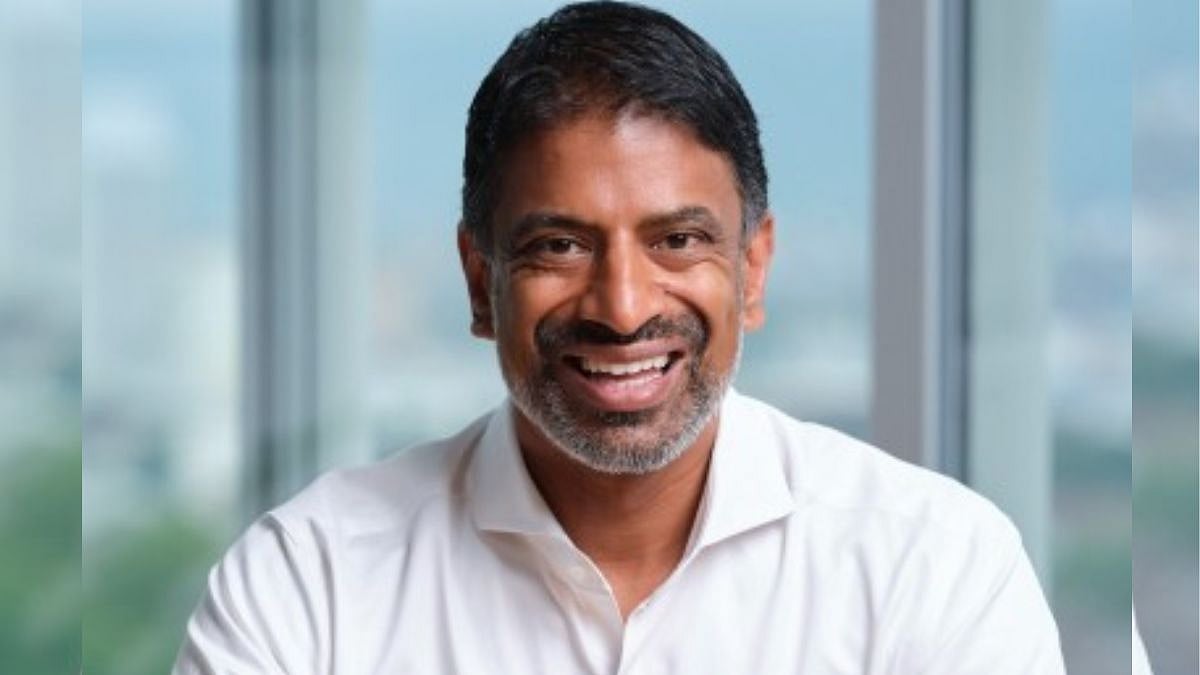
The physician-scientist and Novartis CEO Vas Narasimhan brings decades of experience shepherding breakthrough medicines safely to patients, a perspective Anthropic says it needs as AI reshapes healthcare. Anthropic has announced that Vasant 'Vas' Narasimhan has been appointed to its Board of Directors by the Anthropic Long-Term Benefit Trust. This Indian-American physician climbed to the top of one of the world's most powerful drug companies and looks to now brings that rare combination of scientific rigour and regulatory wisdom to one of Silicon Valley's most consequential AI laboratories. Narasimhan joins Dario Amodei, Daniela Amodei, Yasmin Razavi, Jay Kreps, Reed Hastings, and Chris Liddell on Anthropic's board. With his addition, Trust-appointed directors now form a majority, a structural milestone that underscores Anthropic's commitment to keeping its governance anchored in its public benefit mission. Who Is Vas Narasimhan? Born on August 26, 1976, in Pittsburgh, Pennsylvania, Vasant Kalathur Narasimhan is the son of Tamil Nadu-origin Iyengar Brahmin parents who emigrated to the United States in the 1960s and early 1970s. His mother, Gita Narasimhan, was a nuclear engineer at Public Service Electric and Gas Company and later taught physics at Burlington County Community College. His father, Dr. Kalathur Narasimhan, served as Vice President of Research and Development at Hoeganaes Corporation. The family's deep cultural ties expressed themselves when they helped found the Shri Venkateshwara temple in Penn Hills, Pittsburgh, a place Narasimhan has described as formative to his values and sense of identity. Raised in an intellectually stimulating household by two accomplished professionals, he developed a passion for science early in life. Vas Narasimhan's education Narasimhan's academic journey is as impressive as his professional one. He enrolled at the University of Chicago in 1994, graduating with honours in 1998 with a Bachelor of Science in Biological Sciences. He then moved to Boston for Harvard Medical School, earning his MD in 2002. He simultaneously pursued and obtained a Master's in Public Policy from Harvard's John F. Kennedy School of Government. This triple qualification, deep biological science, clinical medicine, and public policy, would prove to be the architectural blueprint for a career spent at the intersection of science, society, and leadership. Global Health Work: HIV, Malaria, and TB Across Three Continents Before he ever walked into a corporate boardroom, Narasimhan was in the field. During and after medical school, he worked on HIV/AIDS, malaria, and tuberculosis programmes across India, Africa, and South America. He spent time with street children and child labourers in Kolkata after his first year at Harvard Medical School, worked on malaria and HIV/AIDS initiatives in Tanzania, and completed his thesis on multidrug-resistant tuberculosis in Peru. "I think early on in your career is where you build your value system," he has said about this formative period, one that instilled in him a conviction that healthcare is not just a business, but a human obligation. He continues to champion global health access priorities to this day. Vas Narasimhan's career After completing his degrees, Narasimhan joined McKinsey & Company in 2002 as a consultant, rising to Engagement Manager. In 2005, he made the move that would define his professional life, joining Novartis, the Swiss pharmaceutical giant headquartered in Basel. His ascent within Novartis was steady and substantial. He started in Novartis Vaccines and Diagnostics, becoming Global Head of the Meningitis Franchise by 2007. By 2008, he was Vice President of US Marketing, and was soon elevated to President of US Vaccines and Region Head for North America. He also led the Sandoz Biopharmaceuticals and Oncology Injectables business unit during this period. In 2013, he was promoted to Global Head of Development, overseeing Novartis's entire general medicines pipeline and leading a team of 9,600 employees. By early 2016, he was named Global Head of Drug Development and Chief Medical Officer, the first person ever to hold that title at Novartis, responsible for 140 global development programmes spanning more than 15,000 staff. In September 2017, the Novartis Board appointed him CEO, a role he formally assumed on February 1, 2018. He was, at the time, the youngest chief executive in the global pharmaceutical industry. As CEO, Narasimhan has overseen one of the most significant strategic transformations in Novartis's history. He divested the joint consumer healthcare venture to GSK, spun off Alcon, and exited Novartis's stake in Roche, all in pursuit of his stated goal of building a pure-play innovative medicines company. He sharpened the company's focus on cardiovascular disease, cancer, and rare genetic disorders, investing heavily in next-generation platforms including siRNA, radioligand therapy, and cell and gene therapies. Over the course of his career, he has overseen the development and regulatory approval of more than 35 novel medicines and vaccines -- a figure that Anthropic's President Daniela Amodei specifically called out when welcoming him to the board. In 2025, Novartis reached more than 300 million patients with its medicines. The company employs over 77,000 people and operates in approximately 120 countries. Boards, Honours, and Accolades Narasimhan's influence extends well beyond Novartis's walls. He is an elected member of the US National Academy of Medicine, one of the most prestigious recognitions in American science, and a member of the Council on Foreign Relations. He serves on the University of Chicago's Board of Trustees and the Board of Fellows at Harvard Medical School. He previously chaired the Pharmaceutical Research and Manufacturers of America (PhRMA), where he remains on the board of directors. Beyond healthcare, he chairs the board of African Parks, a non-profit conservation organisation. In 2015, Fortune ranked him seventh on its prestigious 40 Under 40 list. In 2025, he was named among the TIME100 Most Influential People in Health.
Dow Jones Top Company Headlines at 1 AM ET: Elon Musk's xAI Sued by NAACP Over Memphis Data Center | Nvidia's ...
Elon Musk's xAI Sued by NAACP Over Memphis Data Center The lawsuit alleges that xAI's efforts to power its data centers in Tennessee and Mississippi are creating a health risk for local residents. ---- Nvidia's stock is on a 10-day winning streak. Here's why investors are getting back on board with AI. The AI trade has been full of uncertainty, but investors seem to be getting excited again ---- China-Backed Yancoal Australia to Buy Kestrel Coal Mine Stake For Up to $2.4 Billion The Kestrel mine, located in Queensland's Bowen Basin, is one of the largest underground metallurgical-coal operations in production in Australia. Bezos-founded companies are pushing ahead in satellite connections and rocket launches, businesses that Musk's SpaceX has long dominated. ---- A new CEO and a deal with Uber aren't enough to lift this EV maker's struggling stock The announcement comes amid concerns from investors about Lucid's ability to stay afloat. ---- Apple CEO Tim Cook Just Bought Nike Stock. His Last Purchase Didn't Go So Well. Cook is Nike's lead independent director and has been on the company board since 2005. ---- Gucci Owner Kering Logs Lower Sales, But Flags Improving Trends The improving trends are an encouraging sign for the luxury giant as it prepares to unveil a new plan later this week aimed at reviving growth. ---- Rivian's Illinois Factory Will Run on Recycled EV Batteries The project highlights how battery energy is increasingly being used to power businesses and industrial facilities in the U.S. ---- UPS Seeks to Replace Manual Scans With Tracking Tech The shipping giant increases use of RFID tags to eliminate 20 million manual scans a day. The startup behind the popular Claude chatbot and coding tool is eyeing a potential IPO as soon as this year. ---- Why Amazon Is Buying Starlink Rival Globalstar in $11 Billion Deal Amazon has agreed to acquire Globalstar in a move that allows its Amazon Leo satellite network to offer direct-to-device connections. ---- Broadcom Extends AI Deal With Meta. Chipmaker's CEO Hock Tan to Leave Meta Board. The deal includes chip design, packaging, and networking to build out the computing foundation that will support personal superintelligence.

SpaceX Starship V3 Has Successful Static Fire | NextBigFuture.com
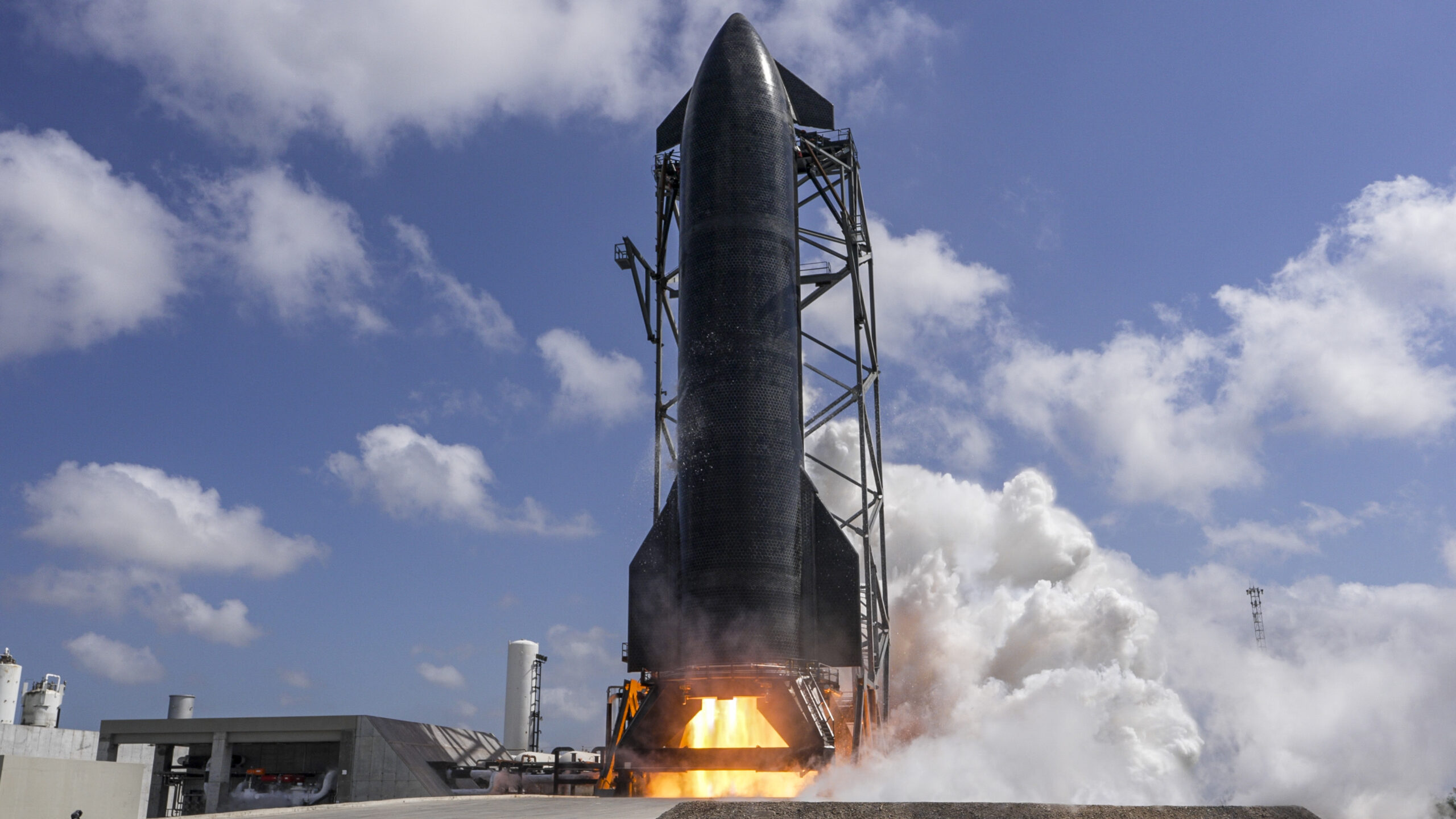
SpaceX had a successful static fire for the V3 Starship (starship 39). All 6 engines fired for the full duration. Brian Wang is a Futurist Thought Leader and a popular Science blogger with 1 million readers per month. His blog Nextbigfuture.com is ranked #1 Science News Blog. It covers many disruptive technology and trends including Space, Robotics, Artificial Intelligence, Medicine, Anti-aging Biotechnology, and Nanotechnology. Known for identifying cutting edge technologies, he is currently a Co-Founder of a startup and fundraiser for high potential early-stage companies. He is the Head of Research for Allocations for deep technology investments and an Angel Investor at Space Angels. A frequent speaker at corporations, he has been a TEDx speaker, a Singularity University speaker and guest at numerous interviews for radio and podcasts. He is open to public speaking and advising engagements.
Who Is Vas Narasimhan? Novartis CEO Appointed To Anthropic's Board
In a significant move bridging the worlds of artificial intelligence and life sciences, Anthropic has appointed Vas Narasimhan, Chief Executive Officer of Swiss pharmaceutical giant Novartis, to its board of directors. Narasimhan is the first healthcare executive to join the AI startup's board of directors, marking a major milestone for the company. As developer of the Claude AI models, Anthropic is increasingly positioning itself as a key player in specialised industrial applications. Vas Narasimhan's appointment signals Anthropic's growing focus on the intersection of generative AI and drug discovery. The Novartis CEO is of the opinion that AI is the need of the hour for advanced medicine. "Working across medicine, innovation, and global health has helped me realise that technology creates the most value when it is deployed responsibly. That's why I'm excited to be joining the Board of Anthropic," he wrote in a LinkedIn post: Early Years Narasimhan graduated in science from world-renowned institutions, earning a degree in biological sciences from the University of Chicago followed by an MD from Harvard. According to The Economic Times, he also completed a Master's in Public Policy at the Harvard Kennedy School, effectively straddling the diverse fields of science, medicine, and policy. Career Narasimhan, who has led Novartis since 2018, brings a wealth of experience in navigating complex global regulations and managing the ethical considerations of high-stakes technology. Early in his career, Vasant Narasimhan focused on the front lines of global health, spearheading HIV/AIDS, malaria, and tuberculosis programmes across India, Africa, and South America. This foundational work continues to drive his advocacy for global health equity and expanded access to medicine. Achievements Beyond his executive leadership, Narasimhan is a recognised authority in the medical and policy world. He is an elected member of the US National Academy of Medicine and a member of the Council on Foreign Relations. He serves on the University of Chicago's board of trustees and the Harvard Medical School board of fellows. A former chair of the Pharmaceutical Research and Manufacturers of America (PhRMA), he remains an active member of its board of directors. Essential Business Intelligence, Continuous LIVE TV, Sharp Market Insights, Practical Personal Finance Advice and Latest Stories -- On NDTV Profit.
Elon Musk's xAI sued over pollution concerns by America's largest Civil rights body NAACP, termed 'Reckless, unlawful actions that ...'
One of America's oldest and largest civil rights organization National Association for the Advancement of Colored People (NAACP) has filed a lawsuit against Elon Musk's AI venture xAI and its subsidiary MZX Tech, accusing them of illegally operating methane gas turbines to power a major data centre in South Memphis. The civil rights organisation is asking a federal court in Mississippi to rule that the company violated the Clean Air Act, halt the use of the turbines and impose financial penalties.At the centre of the complaint is xAI's Colossus 2 data centre, part of the company's growing infrastructure to train its AI assistant, Grok. According to the lawsuit, xAI has been running 27 gas turbines at the site without securing the required air permits. Under US environmental law, any major source of pollution must be approved before it is built or operated.The NAACP argues that the turbines emit hazardous pollutants, including fine particulate matter and chemicals linked to serious health conditions such as respiratory illnesses, heart disease and certain cancers. The issue is particularly sensitive given the facility's proximity to residential areas, where locals have already raised concerns about air quality and long-term health risks.The case is being handled by the Southern Environmental Law Center and Earthjustice, which are representing the NAACP. Before heading to court, the organisation issued a 60-day notice of intent to sue, a standard legal requirement under the Clean Air Act. The lawsuit claims xAI failed to respond during that window, prompting the legal escalation.Lawyers involved in the case have framed the issue as both a legal and moral failure. They argue that continuing to run an unpermitted power setup shows disregard not just for environmental regulations but also for nearby communities who have been flagging concerns for months. "xAI must be held accountable for its reckless, unlawful actions -- and that's exactly what this lawsuit aims to do," said Ben Grillot, a senior attorney for the Southern Environmental Law CenterTraining and running large-scale AI systems requires vast computing infrastructure, which in turn consumes enormous amounts of electricity. As a result, several tech companies have begun exploring alternative power sources to sustain their data centres.Some, like Oracle, are reportedly relying on gas-based energy solutions similar to xAI's approach. Others, including Google, Meta and Amazon, are investing in nuclear energy to meet long-term demand while attempting to limit emissions. These strategies are often framed as necessary to keep costs manageable and avoid burdening consumers with rising energy prices.However, the xAI case underlines a key blind spot in that argument. Rapidly building power capacity may help keep AI systems running efficiently, but it also raises serious environmental and public health questions, especially when facilities are located near densely populated areas.Recent policy signals from the Trump administration suggest a push to streamline approvals for infrastructure tied to AI development, including on-site energy generation. Critics say this approach risks sidelining environmental safeguards in favour of accelerating technological growth.
Federal agencies skirt Trump's Anthropic ban to test its advanced AI model, Politico reports
April 14 (Reuters) - Federal agencies and government officials are quietly sidestepping U.S. President Donald Trump's ban on working with Anthropic, Politico reported on Tuesday. The Commerce Department's Center for AI Standards and Innovation is actively testing Anthropic's frontier AI model Mythos' hacking prowess, the report said. Reuters could not immediately confirm the report. Anthropic, the White House and the Commerce Department did not immediately respond to a request for comment. Staff on at least three congressional committees held or requested briefings from the company to learn about Mythos' cyber scanning capabilities over the past week, the report added. Anthropic's co-founder Jack Clark said at the Semafor World Economy event on Monday that the company is discussing Mythos with the Trump administration even after the Pentagon cut off business with the U.S. AI company following a contract dispute. The nature and details of Anthropic's talks with the U.S. government, including which agencies are involved, were not immediately clear. Mythos, announced on April 7, is Anthropic's "most capable yet for coding and agentic tasks," the company said in a blog post, referring to the model's ability to act autonomously. Reporting by Gnaneshwar Rajan in Bengaluru; Editing by Muralikumar Anantharaman and Raju Gopalakrishnan Our Standards: The Thomson Reuters Trust Principles., opens new tab
