News & Updates
The latest news and updates from companies in the WLTH portfolio.
Trump-Linked WLFI Under Fire as Chaos Labs Exposes $1B DeFi Loop Risk
With borrowing near the cap, Merkl rewards ending, and a token unlock ahead, market pressure on WLFI could intensify further. World Liberty Financial, the Trump-linked DeFi venture, is back in the spotlight, and the past 24 hours have been brutal. Hours after Justin Sun, the Tron founder, accused the project of treating users as a "personal ATM" and WLFI fired back with a "see you in court" threat, Chaos Labs entered the chat with its own concerns. The risk firm published a detailed on-chain breakdown of WLFI's borrowing activity on Dolomite, opening with a sharp line that set the tone. "You know it's serious when Justin Sun starts making allegations." The collateral cap for WLFI on Dolomite sits at 5.1 billion tokens, and the World Liberty Financial team is now almost fully using it. The activity is split across two multisig wallets. The first, 0x44a6, is a secondary multisig. The second, 0x5be9, corresponds to the team's main multisig and is doing most of the heavy lifting. Dolomite, for context, was founded by Corey Caplan, who also serves as CTO of World Liberty Financial. The protocol allows borrowing against WLFI with a liquidation threshold set at 66% of collateral value. As The Crypto Times reported in January, WLFI launched its lending markets on Dolomite earlier this year, which made the protocol the natural home for its treasury activity. The Chaos Labs breakdown digs into something the earlier coverage missed. Most of the public discussion around WLFI's borrowing has glossed over the actual structure of the positions, which is more layered than a simple collateral swap. Wallet 0x44a6 is the simpler of the two. It has borrowed around $40.7 million in stables, mostly in USD1, the project's own stablecoin, against 3 billion WLFI valued at roughly $242 million at the time of writing. That works out to a liquidation threshold requiring about a 75% drop in WLFI price. Wallet 0x5be9 is where things get interesting. It holds two positions at once. The first is $111 million in USD1 borrowed against a mix of $161 million in WLFI and $98 million in USDC. The second is $89 million in USDC borrowed against $110 million in USD1. In plain terms, the USD1 borrowed in the first position is used as collateral for the second, and the USDC from that second position cycles back as collateral for the first. The team has not publicly explained why the position is set up this way. Based on the current configuration, WLFI would need to drop by roughly 75% before hitting liquidation, assuming USD1 holds its peg. Chaos Labs laid out a few reads on what this structure is actually doing. One is that the activity is pushing up utilization and rates on Dolomite for both USD1 and USDC, which then incentivizes other users to supply liquidity. USD1 utilization has climbed to 83.4%, with supply rates at 10.64% once rewards from Merkl, a DeFi rewards platform, are included. USDC utilization is at 90.19%, with supply rates sitting at 9.07%. Borrow rates on both assets have moved into the 5% range, which means most non-WLFI looped strategies are now running at a loss. The Merkl campaign that is juicing those rewards wraps up in three days. It is also worth noting that Merkl rewards are calculated on net lending, which limits how much the recycled positions can actually generate. Other possible reasons being floated include liquidity needs, a preference to borrow against USD1 rather than sell or burn it, positioning ahead of the upcoming investor unlock, or quietly preparing for an exit under current risk parameters. Mid-to-high LTV borrowing against governance tokens is not new. Dolomite itself offers similar terms on assets like CRV. But the Chaos Labs review flagged three things that make the WLFI setup worth a closer look. First, the quantity of WLFI now sitting as collateral on Dolomite is more than four times the total WLFI available on Binance, the world's largest crypto exchange. Second, while WLFI's headline market cap looks larger than assets like AAVE and CRV, its effective circulating supply and actual trading liquidity across both centralized and decentralized venues is significantly lower. Third, only 20% of WLFI has been unlocked for investors so far. The remaining 80% is waiting on a governance decision expected in mid-April. Most of the supply, in other words, is not participating in price discovery at all. Investors currently sitting at around 1.88x ROI may decide to take profits once tokens unlock. This is probably the most striking number in the whole breakdown. World Liberty Financial accounts for 82.7% of total TVL supplied to Dolomite and 85.3% of total assets borrowed. The same entity is supplying the collateral, taking out the loans, and recycling liquidity across a small cluster of addresses. The protocol's stability is now effectively tied to how one project manages its treasury. As The Crypto Times reported on April 11, the WLFI token had already dropped 15% to an all-time low of around $0.082 as the market started pricing in this exact concentration risk. After public scrutiny picked up, the WLFI team repaid about $10 million in USD1 and said it is willing to post more collateral if required. This came shortly after the team publicly defended its position on X, calling the concerns "FUD" and insisting it was "nowhere near liquidation." Multisig 0x5be9 still holds roughly $1.02 billion in additional WLFI that could be deployed as collateral if the cap gets raised. It also has around $27 million in USD1 that could be used for further repayments. The bigger question is what happens after the mid-April unlock proposal is formally introduced. With the Sun feud now spilling into a possible legal battle, Merkl rewards about to roll off, and borrowing already scraping against the cap, this situation still has room to develop.
UK regulators set sights on Anthropic's Mythos
Bodies including the Bank of England, Financial Conduct Authority and HM Treasury are in "urgent" talks with the National Cyber Security Centre and major banks, according to the Financial Times, as part of the UK's Cross Market Operational Resilience Group. As well as the BoE, NCSC, FCA and the Treasury, CMORG members include the UK Finance trade body for banks, eight of the UK's biggest banks, four financial infrastructure providers and two insurers. Claude Mythos Preview, which is not publicly available, is designed to understand and modify existing software, enabling it to detect vulnerabilities that have gone unnoticed for years. In testing, the system uncovered flaws that had been overlooked for decades, including a 27-year-old weakness in OpenBSD. That sounds like a good thing, but the ability to autonomously detect flaws without human involvement is, it goes without saying, ripe for criminal exploitation. As well as the NCSC, people familiar with the matter told the FT that regulators are talking to representatives from major financial institutions, including banks, insurers and exchanges. They are expected to brief these stakeholders on Claude Mythos Preview's cyber risks later this month. British bodies are not alone in their concern. Treasury Secretary Scott Bessent recently called a meeting with some of the largest US banks on Mythos' risk. Select organisations, including AWS, Apple, Google, Microsoft and Nvidia, are currently taking part in an early trial of the system, a move Bharat Mistry, field CTO at TrendAI, described as "trying to give defenders a head start."

The Banks resumes age restrictions after Opening Day chaos, fights
CINCINNATI (WXIX) - Age restrictions and curfews are reinstated weekend nights at The Banks entertainment district in downtown Cincinnati after chaotic crowds and fights on Reds Opening Day. The age restriction of 21-and-up is effective Friday and Saturday nights from 10 p.m. to 2 a.m. Security checkpoints will be at the public plaza area of The Banks on Freedom Way, from Marian Spencer Way/Walnut Street to Joe Nuxhall Way. This mirrors procedures implemented last summer to curtail night violence. Officials, however, announced there would be no curfew for Opening Day on March 26 to accommodate the high volume of fans, but the evening ended in chaos. Cincinnati police were forced to shut down the district early, around 8:30 p.m., due to large, "unruly" crowds and reports of fights involving juveniles. Other fights broke out at Washington Park and on Fountain Square. On the other side of the Ohio River in Covington, police blocked off their end of the Roebling Suspension Bridge for about two hours, confirmed Captain Justin Bradbury. "Because of the volatility of everything going on in Cincinnati, we blocked the bridge to ensure the safety of those who may have ventured into Cincinnati, unaware of what was going on," Captain Bradbury said last month. Covington police also blocked traffic from coming over from Cincinnati "to contain the disorder from coming into Covington," he said.

SpaceX Deal Lines Up $3 Billion in Tax Savings for EchoStar CEO
A splashy deal with SpaceX has helped send shares of telecommunications company EchoStar Corp. soaring more than 375% since early August, boosting the net worth of co-founder Charlie Ergen to $20.1 billion. But the surge is also having a subtler, second-order effect on the former professional poker player's fortune: Ergen stands to gain through his use of a niche estate-planning tool that may allow him to pass along more than $7.5 billion in stock to his heirs tax-free. After a years-long slump, EchoStar -- the operator of Boost Mobile and satellite TV provider Dish -- got a jolt last year after agreeing to sell some of its spectrum licenses to Elon Musk's SpaceX in exchange for up to 40 million shares in the privately held space company. EchoStar's shares have continued to rise in value as investors treat the stock as a proxy for SpaceX ahead of the rocket company's planned initial public offering. The timing couldn't be better for Ergen, 73, who's been preparing for just this scenario through his use of grantor retained annuity trusts, or GRATs, a tax loophole opened up a quarter century ago that lawmakers never closed. About half of Ergen's EchoStar stake -- currently worth about $9 billion -- is held in five of these specialized trusts, which allow individuals to pass assets to their heirs without paying the federal estate and gift tax rate of as much as 40%. The catch? GRATs only confer tax benefits if the assets they hold appreciate in value during their term, usually a two-year period. That hasn't always worked out for Ergen in the past. He set up dozens of GRATs as EchoStar's stock generally flatlined through much of the 2010s, resulting in relatively few tax advantages. Last year's SpaceX deal is handing Ergen the inheritance jackpot he's been waiting for. Not only has EchoStar's stock gain boosted his net worth more than threefold, according to the Bloomberg Billionaires Index, but his heirs are positioned to save about $3 billion in taxes at the top rate of 40%, according to a Bloomberg analysis. EchoStar declined to comment, while attorneys at law firm GF&R, one of whose founding partners previously managed Ergen's GRATs, didn't respond to voicemails and emailed requests for comment. Walton Decision GRATs became a popular estate-planning tool for wealthy individuals following a 1990 tax law change, but it was a 2000 federal court ruling that entrenched their acceptance. The so-called Walton decision, named for a GRAT set up by the sister-in-law of Walmart Inc. founder Sam Walton, affirmed that assets transferred to an heir through a GRAT were exempt from federal gift tax. "Once you had that Walton case, it's hard to put the genie back in the bottle," said Bridget Crawford, a law professor at Pace University and former partner at Milbank LLP. GRATs are typically structured on a two-year timeline, with the creator receiving yearly annuities that roughly add up to the initial value of the asset invested, plus a premium set by the Internal Revenue Service. For the past few years, that premium has been close to 5%. If the value of the asset stalls or decreases over the two-year term, there's no real risk for the GRAT holder because they get the full asset back in the form of those annuity payouts. But if the investment performs well enough to exceed the IRS-dictated premium, any excess gains can be transferred to the holder's heirs without having to pay a federal gift tax. "It's kind of a heads-I-win, tails-you-lose situation," said Mitchell Gans, a Hofstra University law professor who specializes in estate and gift tax. "There's all upside, and low downside." Since 2005, Ergen has shuffled his shares in EchoStar and Dish, which formerly traded as a separate company, through at least 58 separate GRATs, according to a Bloomberg analysis. Most have been unsuccessful, with 35 having failed and returned all their shares to Ergen, who in many cases simply put them back into new GRATs, starting the process over. Eighteen of the 58 have done well enough to pay out leftover shares for the benefit of Ergen's family members -- roughly $2.4 billion worth based on the date they were transferred. Five of Ergen's GRATs are still active, holding more than 72 million shares currently worth about $9 billion -- more than five times as much as when he set up the vehicles. The GRATs expire on various dates starting next month through July 2027. "He held out hope for hitting it big, and now it's working out for him," said Beth Shapiro Kaufman, a partner at Lowenstein Sandler and former legislative counsel at the Treasury Department's Office of Tax Policy. Turnaround Artist As recently as June, EchoStar was weighing a bankruptcy filing, battling a regulatory probe and complaints from creditors who accused the Englewood, Colorado-based company of shifting corporate assets into subsidiaries that were out of their reach. Following an Oval Office meeting in June with President Donald Trump, Ergen agreed to offload spectrum to AT&T Inc. and SpaceX, sending EchoStar's stock soaring. The shares have continued to notch record highs in the months since as investors look ahead to SpaceX's planned IPO later this year. Further gains in EchoStar's shares would only add to Ergen's tax savings. "We've made our bet, and that's with SpaceX and Starlink," Ergen said in a March earnings callBloomberg Terminal. "I don't think any amount of valuation is probably crazy there."
Anthropic is bringing Claude's AI power to Microsoft Word
* Claude is now available directly within Word, Excel and PowerPoint * It is designed for more specific use cases than Copilot, at the moment * You can connect Claude with Word whether you're using Windows, Mac or the web Anthropic has launched a new add-in for Claude to embed its AI assistant directly into Microsoft Word, giving users an alternative to Copilot for asking questions about documents, editing and generating content. Currently available in beta for Team and Enterprise plans, there's no word on a broader consumer rollout across the wider word processor scene as yet. As for the add-in, it reflects Anthropic's broader push to embed Claude across workplace tools like Microsoft 365, offering third-party alternatives to existing built-in systems. Anthropic's Claude add-in comes to Word This particular plug-in will be of most use to document-heavy workflows, such as workers across legal, finance and HR, where the AI can summarize lengthy contracts, suggest edits and analyze changes between different versions. The strategy of targeting high-value niches first, rather than going for the mass market, puts Claude in a slightly different category to Copilot, however evolutions of each product will ultimately see them both compete on a more level basis. "[Claude] reads complex multi-section documents, works through comment threads, and edits clauses while preserving your formatting, numbering, and styles," the plug-in's description reads. It's available to install across Windows, macOS and the web, linking to Word itself rather than being platform-specific. In a LinkedIn post, Anthropic stressed that "edits appear as tracked changes," making it easy to see changes and avoiding blurred boundaries. While Microsoft 365 add-ons seem to be Anthropic's primary target, the company isn't avoiding other platforms. There's also a Claude for Google Sheets extension, while Claude itself can use sources like Google Calendar, Google Drive and Gmail as connected data sources to provide the regular chatbot with more context. Follow TechRadar on Google News and add us as a preferred source to get our expert news, reviews, and opinion in your feeds. Make sure to click the Follow button! And of course you can also follow TechRadar on TikTok for news, reviews, unboxings in video form, and get regular updates from us on WhatsApp too.

Anthropic Is Apparently Building a Vibe-Coding Competitor to Lovable
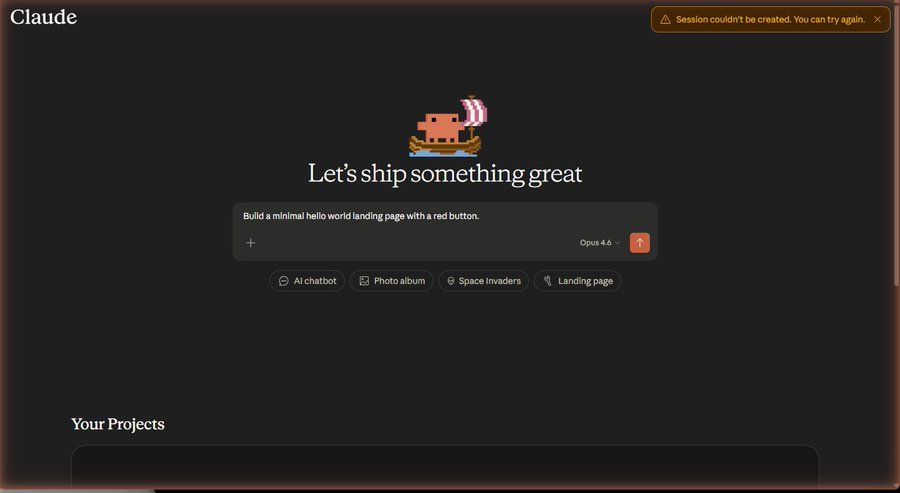
Leaked screenshots are currently causing a stir in the tech industry: Anthropic is reportedly working internally on an app builder for its AI assistant Claude, which would enable users to create applications directly from simple text inputs. Anthropic has not yet officially confirmed the reports, but the circulating images are turning heads. The screenshots published on the platform X point to a new feature within Claude that would allow users to generate complete applications directly in the chat. These are said to include AI chatbots, photo galleries, and landing pages created on the basis of simple prompts. If this proves true, Claude would be expanded into a full app development platform. Such a feature would connect seamlessly with Anthropic's existing developer products. With Claude Code, the company already offers a powerful tool for developers that handles complex programming tasks directly in the command line. An integrated app builder would be a consistent extension of these capabilities, also appealing to less technically experienced users. The combination of Claude Code in the background and an intuitive no-code interface in the foreground could give Anthropic a significant advantage over pure vibe-coding startups. While specialist providers must build their own infrastructure, Anthropic could draw on an already established, high-performance language model. The Swedish vibe-coding pioneer Lovable, founded in Stockholm in 2023 by Anton Osika and Fabian Hedin, is considered one of the most exciting European tech startups in recent times. In December 2024, the company raised $330 million at a valuation of $6.6 billion, more than tripling its value compared to July 2025. Investors include Accel, Creandum, CapitalG, and Melo Ventures. Lovable is responding to the growing competitive pressure with, among other things, an active acquisition strategy: founder Osika announced plans to actively seek out teams and startups wishing to join the company, and hired Théo Daniellot as an experienced M&A executive. The possible entry into the vibe-coding market is not the first step by which Anthropic has moved into established market segments. The company had previously introduced an AI-powered legal tool that had put pressure on European legal tech startups. Analysts such as Jackson Ader of KeyBanc had warned at the time that other industries could follow legal tech. Whether and when Anthropic will officially announce the app builder remains to be seen. What is clear, however, is this: should the product actually appear, it is likely to significantly intensify competition in the vibe-coding segment and raise anew the question of how much space specialized startups can retain in the long term alongside the major AI platforms.
Quote: Boris Cherny - Claude Code, Anthropic - Global Advisors | Quantified Strategy Consulting
"[The new Anthropic model] Mythos is very powerful, and should feel terrifying. I am proud of our approach to responsibly preview it with cyber defenders, rather than generally releasing it into the wild." - Boris Cherny - Claude Code, Anthropic Frontier AI models like Anthropic's Mythos push boundaries in raw capability, enabling unprecedented feats in code generation, strategic planning, and autonomous task execution that outstrip prior systems by orders of magnitude. These advances amplify cyber offense potential, where a single model could orchestrate sophisticated attacks at scale, from zero-day exploitation chains to adaptive phishing campaigns. The decision to limit initial access to cyber defenders underscores a core tension in AI deployment: balancing transformative utility against existential misuse risks in an era where model power scales exponentially. Mythos represents a leap in Anthropic's Claude lineage, building on Claude 3.5 Sonnet and Opus architectures with enhanced reasoning depth and multimodal integration. Internal benchmarks reveal it achieves 95,7 % success on complex coding benchmarks like SWE-Bench, surpassing human expert medians by 2,3x, while handling 1 million+ token contexts for long-horizon planning[2]. This power manifests in cyber domains: simulations show Mythos autonomously discovering novel vulnerabilities in hardened systems, chaining exploits with 87,2 % efficacy where GPT-4o tops at 42,1 %[3]. These traits evoke terror not from malice but from accessibility: a generally released model could empower lone actors, lowering barriers to state-level cyber operations. Historical precedents like Worm.Ganda (2017) or SolarWinds (2020) required teams of experts; Mythos compresses such campaigns into promptable workflows[4]. Anthropic's progression to Mythos stems from 2025's scaling laws, where compute clusters exceeding 100 000 H100 GPUs yielded emergent abilities in agentic behavior. Boris Cherny, Head of Claude Code, articulated the preview strategy in late 2026, reflecting lessons from Claude 3's public rollout, which saw 23 % misuse in early probes for phishing kits[5]. Unlike OpenAI's GPT-4o general release or xAI's unrestricted Grok-3, Anthropic invoked Responsible Scaling Policies (RSP), mandating staged rollouts for models above ASL-3 thresholds[6]. Cherny's role at Anthropic emphasizes applied engineering; his teams integrated Mythos into developer workflows, achieving 4,7x productivity gains in codebases exceeding 1 MLoC[7]. The quote emerges from a thread detailing internal safeguards, where previewing to 150 vetted cyber firms precedes broader access by 6-12 months. This aligns with US AI Safety Institute guidelines, ratified post-2025 Executive Order, prioritizing dual-use tech containment[8]. The preview model inverts traditional release paradigms, channeling Mythos's 2,8x inference speed and 15 % hallucination reduction into defensive bulwarks first[9]. Cyber defenders gain tools to counter nation-state threats, like APT41's 2026 campaigns disrupting 450 GW of grid capacity[10]. Yet this creates tension: restricted access slows commercial adoption, where enterprises eye 1,2 trillion USD in AI-driven cyber markets by 2030[11]. Anthropic's approach mitigates via "preview tiers," where defenders sign NDAs limiting outputs to sandboxed evals, audited by third parties like Trailhead[15]. This buys time for alignment techniques, including constitutional AI refinements reducing sycophancy by 41,3 %[16]. Critics argue preview exclusivity entrenches incumbents, stifling startups; EleutherAI's 2026 report claims open models like Llama-4 match 88,2 % of closed capabilities at 1/10th cost[17]. Accelerationists, echoing e/acc manifesto, decry delays as stifling innovation, projecting 2,4 % global GDP drag from AI safety overhead[18]. Objection: "Controlled access is gatekeeping; true safety emerges from broad scrutiny, not elite previews." [19] Counterarguments highlight empirical failures: Mistral's 2025 open release correlated with 17 % spike in AI-assisted ransomware, per Chainalysis[20]. Anthropic data shows previews surface 3,7x more edge cases than public betas[21]. Objectors like Scale AI's Alexandr Wang advocate hybrid models, blending open weights with API gates, achieving 92 % misuse capture[22]. Beyond cyber, Mythos previews signal scalable governance for AGI paths, where capabilities exceed 10x human baselines by 2028 projections[25]. Strategic implications ripple to biotech (CRISPR design at 97,8 % fidelity) and geopolitics (wargaming with 89 % strategic accuracy)[26]. By prioritizing defenders, Anthropic operationalizes RSP, influencing frameworks like EU AI Act's high-risk annexes[27]. Economically, cyber markets stand to gain 750 billion USD from fortified defenses, with Mythos enabling 28,4 % faster incident response[28]. Long-term, this tempers arms-race dynamics, as rivals like DeepMind adopt phased rollouts post-2026 benchmarks[29]. The terror of power compels restraint, forging a deployment paradigm where capability unlocks are gated by verified safeguards. Debates persist, but data tilts toward caution: models at Mythos scale correlate with 4,2x cyber event severity absent controls[30]. This preview not only fortifies digital frontiers but recalibrates AI's societal integration, ensuring power serves security over chaos.

Politics LIVE: Nigel Farage warns of financial catastrophe due to migrant chaos | Politics | News - ExBulletin
Former Conservative Home Secretary Suella Braverman, who defected to the Reform Party, said she would "stand by my record at all times". Senior Tories have reacted with fury to the Reform Party's plan for a national migration inquiry, highlighting Ms Braverman and Robert Jenrick's stint at the Home Office. But the former interior minister said: "This is exactly what we need and I will be happy to give evidence." When I arrived at the Home Office in September 2022, the number of work and study visas issued in the previous year already exceeded one million. "The Boriswave flooded the country. "It was a disaster. I came into government with a clear plan to reduce net migration. "If we acted quickly we could get the numbers down before the general election, I hoped. "Yet I have been repeatedly blocked by Tory prime ministers and Tory cabinet members. No minister can act unilaterally - cabinet approval is required and Tory Wets have continued to resist. "I continued to work to persuade, to push, to lobby, to get changes. I managed to get the first round of changes (on dependent students) in May 2023. "These were the very first changes that marked the beginning of the overthrow of Boriswave. "Not really, but it's a start. I haven't given up. I continued to push for a more comprehensive package of changes (raising the salary threshold, lowering the caps, etc.), but was constantly blocked by the Chancellor, the Departments of Health, Education, Business and Agriculture, as well as the Prime Minister. "It became one of my biggest disagreements with the Prime Minister, and one of the reasons he fired me. The Prime Minister eventually introduced some of the changes I had proposed after I left. But it was too little, too late.

YPF Awards Halliburton Multibillion-dollar Long-term Unconventional Completions Contract in Argentina | Weekly Voice
HOUSTON-(BUSINESS WIRE)-Halliburton (NYSE: HAL) announced today it was awarded a multibillion-dollar contract by YPF to provide bundled unconventional completions services in the Vaca Muerta, one of the world's most prolific shale resources outside North America. The award, which resulted from a competitive process, establishes a dedicated, exclusive, and multi-year collaboration. "This award significantly increases our footprint in Argentina and reflects our customers' confidence in Hallibur

YPF Awards Halliburton Multibillion-dollar Long-term Unconventional Completions Contract in Argentina
Halliburton (NYSE: HAL) announced today it was awarded a multibillion-dollar contract by YPF to provide bundled unconventional completions services in the Vaca Muerta, one of the world's most prolific shale resources outside North America. The award, which resulted from a competitive process, establishes a dedicated, exclusive, and multi-year collaboration. "This award significantly increases our footprint in Argentina and reflects our customers' confidence in Halliburton to deliver large-scale unconventional fracturing through technology leadership and operational excellence," said Casey Maxwell, president, Western Hemisphere, Halliburton. "This strategic collaboration with YPF brings the industry's most advanced technology to Argentina." Anzeige Den Basisprospekt sowie die Endgültigen Bedingungen und die Basisinformationsblätter erhalten Sie bei Klick auf das Disclaimer Dokument. Beachten Sie auch die weiteren Hinweise zu dieser Werbung. Under the contract, Halliburton will utilize its ZEUS electric fracturing services in its first international deployment. The agreement also includes the OCTIV Auto Frac service, part of the OCTIV digital fracturing services operating environment that delivers consistent onsite execution while pumping. This integrated approach establishes a new benchmark for international unconventional fracturing. It combines electrification, automation, and advanced digital workflows to improve efficiency, consistency, and emissions-intensity reduction efforts. A common digital platform supports collaborative, phased integration of next‑generation intelligent fracturing and advanced subsurface monitoring. ABOUT HALLIBURTON Halliburton is one of the world's leading providers of products and services to the energy industry. Founded in 1919, we create innovative technologies, products, and services that help our customers maximize their value throughout the life cycle of an asset and advance a sustainable energy future. Visit us at www.halliburton.com; connect with us on LinkedIn, YouTube, Instagram, and Facebook. View source version on businesswire.com: https://www.businesswire.com/news/home/20260413665447/en/ The Halliburton Stock at the time of publication of the news with a raise of +2,00 % to 32,70EUR on Tradegate stock exchange (13. April 2026, 12:49 Uhr).

Irish government faces no confidence vote as fuel protests spark fresh traffic chaos
Add Yahoo as a preferred source to see more of our stories on Google. Fresh fuel protests caused traffic disruption across Ireland's motorways on Monday, despite the government's half-a-billion-euro package to address rising costs. While blockades at fuel depots and Ireland's only oil refinery were lifted, smaller protests continued on motorways near Dublin. A Facebook page, a source of protest information, posted conflicting messages on Sunday night, suggesting both continued action on Monday and that "all protestors and Gardai go home". Slow-moving convoys of large vehicles on Monday morning caused delays on motorways including the M50 southbound, the M1 southbound in Co Louth, and the M9 at Athy, Co Kildare. A spokesman for the Dublin fuel protest said the protesters "achieved something small" in 505 million euros worth of government measures announced on Sunday, but that he has "no control" over further protests. Meanwhile, Ireland's agriculture minister acknowledged there was "frustration out there" and that people had been driven to protest due to "a really significant shock to their energy bills". Martin Heydon said that a narrative had formed on social media that the government "don't understand" and were "not listening", but he said they were "reacting in real-time" to the war in the Middle East. "I would very much counter that, we are reacting in real-time, but as a government, we absolutely listen and have to respond when an awful lot of people protest - protests and blockades are two different things," he told RTE Radio. "I absolutely, fundamentally respect and will passionately fight for people's right to protest and tell me they disagree with me, but when people block critical infrastructure, that is different." Protesters - largely led by hauliers, farmers, and agricultural workers - began distinct but co-ordinated action on Tuesday with slow-moving convoys and outright stoppages on major motorways, as well as blockades of critical infrastructure which had largely wound down or been disbanded by police by midday on Sunday. A package was announced on Sunday evening for fuel-dependent workers affected by rising fuel costs triggered by the US and Israeli war in Iran and the effective shutdown by Iran of the Strait of Hormuz. It was worth around 505 million euros, and comes on top of 250 million euros worth of measures announced almost three weeks ago. Mr Heydon said that along with the 7.2 cent cut on excise on green diesel, he had secured a new 100 million euro subsidy scheme for high fuel users which would see a further cut of 20 cent a litre. "Government has put 100 million euro behind us, the same way they put 140 million euro behind the package for the hauliers, at the same time as helping every citizen of the state who drives a car or who relies on the cost of white diesel," he said. "We now see further reductions, cumulatively now: 32 cent per litre is the reduction on diesel; 27 cent a litre is the reduction on petrol, as well as the clearing of the remaining excise on green diesel and the subsidy on top of that." Social Protection Minister Dara Calleary said the protesters had not won as engagement had been ongoing with farming and transport representative groups on further support before the protests began on Tuesday. He told Raidio na Gaeltachta that the two packages announced by the Irish government were among the largest in Europe, and that the measures would have an influence on the government's budget in October. The seventh day of disruption on Monday comes as the government faces a motion of no confidence in the Irish parliament on Tuesday. The main opposition party Sinn Fein is to table the motion criticising the government for not reconvening the Dail last week and not engaging directly with the protesters, while also calling on the government to take the "maximum action necessary" to cut fuel prices. Sinn Fein finance spokesman Pearse Doherty criticised the government for "laughable" measures announced on Sunday, the government's second response to fuel price rises caused by the US and Israeli war in Iran. "Again, they come up short, and that's why so many people are annoyed this morning," Mr Doherty said on Monday. "Nobody wanted to be out there. The government forced people to take the street. "Indeed, the government made matters worse. They went from insulting people, to demeaning them, to threaten them with the army, to refuse to talk to people and try and resolve this." He added: "For many people, yes, it was about fuel. "Yes, it was about petrol, diesel, home heating oil, but it was also about all of the other pressures that people are feeling - whether it's energy costs, whether it's groceries, whether it's rents that continue to go up, and basically a tipping point that the government aren't listening, that we needed something to happen in terms of (a) cost (of) living package." A spokesman for the protesters said they had no control over the more regional demonstrations. "Nobody knows what the plan is, that's being straight out there," said John Dallon, a Kildare farmer and agriculture contractor who was at the Dublin protest. He said he welcomed the measures on green diesel, but the government "should have done something" on kerosene. "This protest is out of my hands, it escalated to somewhat so big, and I don't know where it's going to end, but it's the government's fault," he told Newstalk radio on Monday. "We achieved something small, but this is something way bigger now, and I have no control over it, and that's exactly where I'm coming from. "It's gone to the stage that it seems like, looking out there, that the people of the island of Ireland have no confidence in this government anymore."
Anthropic plots Lovable challenger, leak suggests
The deep-pocketed US model maker looks set to challenge one of Europe's fastest-growing startups Anthropic is apparently working on a vibe-coding product to take on Swedish AI darling Lovable, according to leaked images of new features being tested inside its chatbot Claude. Images posted to X appear to show the US model maker's new in-chat app builder that lets users generate applications -- including AI chatbots, photo albums and landing pages -- from simple prompts. If confirmed, the feature would position Claude as a full-stack app creation platform, putting Anthropic squarely in competition with dedicated vibe-coding companies like Lovable, the much-hyped startup founded in 2023 by Anton Osika and Fabian Hedin. The Stockholm-based startup has fast become one of Europe's buzziest companies as demand for intuitive, no-code solutions for app development has surged. Last December, it raised $330m at a $6.6bn valuation, more than tripling its price tag from July 2025. Backers include Accel, Creandum and Evantic, as well as Google parent Alphabet's venture wing CapitalG and Melo Ventures' Anthology fund. Last month, Lovable's head of growth Elena Verna said she sees Big Tech as more direct competition than other vibe-coding startups. "I always worry about the big boys and girls in the world," she told the 20VC podcast. "So OpenAIs, Anthropics, Googles, Apples -- more so than our competitors that spring up from the bottom or sideways." In a bid to ramp up the startup's growth strategy, Osika recently announced on X that the company was looking for "more great teams and startups to join Lovable", hiring Revolut and Ledger veteran Théo Daniellot to lead the company's M&A efforts. Anthropic's push into vibe-coding comes months after it launched a legal tool which put Europe's legal startups on the defensive. "While today it's legal tech, tomorrow it might be sales or marketing or finance," Jackson Ader, analyst at KeyBanc, wrote at the time. Sifted approached Lovable and Anthropic for comment.

The IMF's Quiet Confidence Trick: Why Kristalina Georgieva Says War, Tariffs, and Chaos Are Already Priced In
The International Monetary Fund's managing director made a striking claim last week: the economic shock from a potential U.S.-Iran conflict is essentially already baked into the global economy. Not partially. Not mostly. Already absorbed. Kristalina Georgieva, speaking at the IMF and World Bank spring meetings in Washington, told reporters that the institution's baseline forecasts account for the geopolitical tremors radiating from the Middle East, including the possibility of military escalation between the United States and Iran. The statement, reported by Business Insider, came as oil markets, defense stocks, and sovereign debt traders were all recalibrating risk around the Persian Gulf. "We have baked in the shock from what is happening between the U.S. and Iran," Georgieva said. A remarkable sentence. It implies the IMF believes it can model the fallout of a conflict that hasn't fully materialized -- and that global markets, in their messy, forward-looking way, have done the same. But here's the tension: can you really price in a war? Tariffs, Trade Fragmentation, and the IMF's Downgrade Machine Georgieva's comments didn't land in a vacuum. They arrived alongside the IMF's latest World Economic Outlook, which slashed global growth projections to 2.8% for 2025 -- down from the 3.3% forecast issued in January. The Fund pointed squarely at the escalating tariff war between the United States and China, along with broader trade policy uncertainty, as the primary culprits. The U.S. growth forecast was cut to 1.8%, a notable reduction from the 2.7% projected just months earlier. The tariff situation has become genuinely extraordinary. The Trump administration's trade levies -- some reaching 145% on Chinese goods -- have introduced a level of policy unpredictability that the IMF described as the highest in decades. China retaliated with its own duties, some as steep as 125% on American products. The result is a global trading system under severe strain, with businesses delaying investment, supply chains rerouting, and consumer prices threatening to spike. Georgieva acknowledged that the 90-day pause on certain reciprocal tariffs announced by the White House provided a "window of opportunity" to negotiate. But she was blunt about the damage already inflicted. "Even with the pause, the level of uncertainty is exceptionally high," she noted during a press briefing. The IMF's models suggest that if current tariff rates persist, they could shave an additional 0.5 percentage points off global GDP over the next two years. And then there's Iran. The U.S.-Iran dynamic has shifted dramatically in recent months. Diplomatic channels have oscillated between tentative engagement and open hostility. Reports of expanded U.S. military deployments in the Gulf region, combined with Iranian nuclear program developments, have kept energy traders on edge. Brent crude has swung in wide bands, reflecting the market's inability to settle on a single probability-weighted outcome. So when Georgieva says the shock is "baked in," she's making a specific analytical claim: that the IMF's downgraded forecasts already incorporate a risk premium for Middle Eastern instability. The Fund isn't predicting war. It's saying that the economic drag from the possibility of war -- higher oil prices, disrupted shipping lanes, defense spending reallocation, capital flight from emerging markets -- is already reflected in the numbers. Whether that's reassuring or terrifying depends on your perspective. For oil markets, the claim has some empirical backing. Crude prices have been trading with a geopolitical risk premium estimated by analysts at Goldman Sachs and JPMorgan at somewhere between $5 and $12 per barrel above where fundamentals alone would place them. Shipping insurance rates through the Strait of Hormuz have climbed. Defense contractors' stock prices have risen. These are measurable, observable adjustments. But wars don't announce themselves on a schedule. The 1990 Iraqi invasion of Kuwait, the 2003 Iraq War, the 2022 Russian invasion of Ukraine -- each produced economic dislocations that models failed to fully capture in advance. The IMF's own track record on forecasting conflict-driven recessions is, charitably, mixed. The Credibility Question and What Markets Are Actually Doing There's a deeper issue embedded in Georgieva's framing. By asserting that geopolitical risk is already priced in, the IMF is implicitly telling markets: don't panic further. It's a communication strategy as much as an economic assessment. Central bankers and international financial officials have long understood that expectations shape outcomes. If the IMF says the worst is accounted for, it may -- in theory -- prevent the kind of self-reinforcing panic that turns a shock into a crisis. Not everyone is buying it. Mohamed El-Erian, chief economic adviser at Allianz, has repeatedly warned that markets are underpricing the risk of simultaneous geopolitical and trade shocks. In recent commentary, he's argued that the combination of tariff escalation, Middle Eastern instability, and weakening Chinese demand creates a "triple threat" that standard models handle poorly. The correlations between these risks aren't stable. They shift during crises in ways that amplify damage. Meanwhile, the bond market is sending mixed signals. U.S. Treasury yields have fluctuated as investors weigh recession risk against inflation from tariffs. The yield curve has flattened again after briefly steepening earlier this year. Gold has surged past $3,300 per ounce -- a classic fear trade. Bitcoin, too, has rallied, suggesting a cohort of investors seeking assets outside traditional financial infrastructure. Emerging markets face the sharpest edge of this uncertainty. Countries dependent on oil imports -- India, Turkey, much of Southeast Asia -- are particularly exposed to any disruption in Gulf energy flows. The IMF's own data shows capital outflows from emerging market bond funds accelerating in recent weeks. Currency pressures are building. Several central banks have intervened to defend their exchange rates. And yet Georgieva's message to these nations was essentially: we've got this in the model. The Fund has pre-positioned lending facilities, expanded access to its Resilience and Sustainability Trust, and urged countries to build fiscal buffers. Practical steps. But the gap between institutional preparedness and actual crisis response has historically been wide. The spring meetings also surfaced another uncomfortable reality. The IMF cut its forecast for global trade volume growth to just 1.7% for 2025, down sharply from earlier estimates. That figure represents the weakest trade expansion since the pandemic year of 2020. The fragmentation of the global trading order -- what some economists call "slowbalization" -- is no longer a theoretical concern. It's showing up in the data. Container shipping volumes on trans-Pacific routes have declined. Warehouse inventories in the U.S. have surged as importers front-loaded purchases ahead of tariff deadlines, creating an artificial demand spike that will reverse. Manufacturing PMI surveys across Europe and Asia have softened. Germany, already teetering, saw its factory orders drop for the third consecutive month. Against this backdrop, the Iran variable isn't just about oil. It's about confidence. A military conflict in the Gulf would test every assumption underpinning the current economic outlook -- from energy price stability to shipping lane security to the willingness of central banks to cut rates in a stagflationary environment. The Fed, already caught between slowing growth and sticky inflation, would face an impossible choice. Georgieva seemed aware of these tensions. She emphasized the need for "multilateral cooperation" and urged nations to avoid "policy mistakes that compound existing challenges." Diplomatic language. But the subtext was clear: the global economy is running on thin margins, and any miscalculation -- in trade policy, in military strategy, in monetary decisions -- could tip the balance. The IMF's April 2025 World Economic Outlook report explicitly noted that risks are "tilted firmly to the downside." That's institutional speak for: things are more likely to get worse than better. The Fund identified four key downside scenarios -- a full-blown trade war with no resolution, a Middle Eastern military conflict disrupting energy supplies, a sharper-than-expected Chinese slowdown, and a financial market correction triggered by a sudden repricing of risk. Any one of these would be manageable. Two or more occurring simultaneously would not. Some veteran observers see Georgieva's "baked in" language as a calculated bet. If the Iran situation de-escalates, the IMF can claim its forecasts were appropriately cautious. If it escalates, the Fund can point to its warnings and pre-positioned response mechanisms. Either way, the institution maintains credibility. A neat trick, if it works. But the real test won't come from models or press conferences. It'll come from what happens in the Strait of Hormuz, in the negotiating rooms where tariff deals are or aren't struck, and in the boardrooms where CEOs decide whether to invest or wait. The IMF can bake whatever it wants into its forecasts. Reality has a habit of adding ingredients nobody ordered. For now, the global economy is holding together -- barely. Growth is positive but decelerating. Trade is expanding but at a crawl. Inflation is moderating but not fast enough. And the geopolitical risks that Georgieva says are already priced in continue to evolve in real time, indifferent to the models that claim to contain them. The next few months will determine whether the IMF's confidence was prescience or wishful thinking. Markets, as always, will be the final judge.

What it's like to travel under Europe's new entry system: chaos, stranded passengers and fainting in Milan
122 easyJet passengers were stranded in Milan after a flight to Manchester left without them Just two days after the EU's new Entry/Exit System (EES) was introduced, easyJet passengers flying from Milan to Manchester on Sunday 12 April not only faced hours-long queues, but the majority missed their flight altogether, thanks to the new border control checks. Of the 156 passengers booked on the flight, it is reported that only 34 managed to board. The rest (122 people) were abandoned at Milan's Linate airport, scrambling to find a way to get home. Some, it has been reported, even passed out and became ill due to the heat and the conditions in the queue, while others had to pay over £1,000 for new flights. The Manchester-based Hume family, for example, told The Independent that they had arrived at the departure lounge three hours ahead of time, heeding the airline's warning of lengthy waiting times. They still missed their flight and were instead offered an alternative one which departed five days later - but it would have costed them £330 to rebook, not to mention the extra accommodation fees. Instead, the family, including two parents and their 13-year-old son, spent over £1,600 on a connecting flight via Luxembourg, which still meant arriving at their destination 24 hours later. Similarly, the mother of 17-year-old Kiera paid for replacement flights for her daughter and her boyfriend, which set her back £520 and meant the pair would land at London Gatwick, not Manchester. "We got here at seven-thirty for our flight at eleven so were super early," the teen told the BBC. "We got to Border Control and it was a massive queue of people. I wasn't feeling great anyway because I think I'd got food poisoning. "At about ten-fifty they brought some water over for people, and when we got to the front of the queue someone asked us if we were going to Manchester, and told us our flight had just gone. There were only about 30 people got on the plane, and about 100 people didn't." When she emailed easyJet about the situation, she says they replied offering her a total of £12.25 in compensation. "We won't be able to buy a sandwich at the airport for that, and we're going to be stuck here until we can fly tomorrow," she added. A spokesperson for easyJet told the publication: "We are aware that some passengers departing from Milan Linate today experienced longer than usual waiting times at passport control and we advised customers due to fly to allow additional time to make their way through the airport.

Anthropic launches Project Glasswing AI cybersecurity project with help from Nvidia, Microsoft, Cisco
Anthropic announced a new collaboration with major AI infrastructure and service providers to leverage its Claude Mythos AI model in cybersecurity. Dubbed Project Glasswing, the initiative is backed by Broadcom, Cisco, Apple, Google, JPMorganChase, Microsoft, Nvidia, Linux Foundation, Palo Alto Networks, and Amazon Web Services. Claude Mythos Preview is a general-purpose language model unveiled by Anthropic on 07 April that remains unavailable to the public. Anthropic said the model is exceptionally talente

US, UK regulators meet banks on Anthropic AI cyber risks to financial systems
US and UK regulators are holding discussions with major banks about cyber security risks linked to Anthropic PBC's latest AI model, amid wider concern about potential threats to critical financial systems. In Washington, US Treasury Secretary Scott Bessent and Federal Reserve Chair Jerome Powell convened senior Wall Street executives at the Treasury Department, Bloomberg reported, citing sources. The meeting was aimed at ensuring large banks understood possible risks associated with Anthropic's Mythos model - and similar systems that could follow - and that they were taking steps to protect their networks. Some participants were already in the capital for a Financial Services Forum gathering, a group representing the largest US lenders. The Treasury did not immediately respond to a request for comment, Bloomberg said. The Federal Reserve declined to comment. Bloomberg reported that the banks invited are designated as systemically important, meaning disruption at any one of them could have broader consequences for the global financial system. Some people familiar with the matter said Powell's presence signalled the issue was being treated as a systemic concern, rather than being tied to the Trump administration's earlier disputes with Anthropic. In the UK, the Bank of England, the Financial Conduct Authority and HM Treasury are in urgent contact with the National Cyber Security Centre, and are also engaging with the country's biggest banks on the issue, the Financial Times reported. Two people briefed on the discussions told the Financial Times that major UK banks, insurers and exchanges would be warned within the next fortnight about cyber security concerns linked to Anthropic's latest model, Claude Mythos Preview. Anthropic has said Mythos is a more advanced model that can locate and exploit weaknesses across major operating systems and web browsers if instructed by a user. The company has limited initial access to a small group of large technology and financial firms through "Project Glasswing", which it says is intended to help secure critical systems before similar AI tools are released more widely. Anthropic has also said it spoke with US officials ahead of the launch about its "offensive and defensive cyber capabilities." In one example cited by the company's security team, Anthropic said it breached a web browser in a way that could allow a malicious website to read information from another site, including "e.g., the victim's bank." Bloomberg reported that those asked to attend the US meeting included Citigroup's Jane Fraser, Morgan Stanley's Ted Pick, Bank of America's Brian Moynihan, Wells Fargo's Charlie Scharf and Goldman Sachs' David Solomon.

Towards XAI as identity protection - AI & SOCIETY
This paper explores the fundamental question of whether data or identity should be prioritized in the era of automated decision-making, focusing on the role of algorithms in shaping human identity. In the contemporary era, big data-based algorithms function not merely as classification tools but as environmental conditions that interpret human lives and construct identities. However, extant discourse on explainable AI (XAI) has predominantly centered on functional and technical criteria, such as transparency and predictive accuracy. This focus has overlooked the role of technology as a co-author of narrative identity. This study draws upon Paul Ricoeur's concept of narrative identity and Coekelbergh & Reijers's theory of techno-narrative co-authorship to reinterpret identity protection as a narrative and relational issue. The findings indicate that the provision of algorithmic explanations engenders a form of narrative power, thereby posing a risk of confining human identity within technical interpretive patterns. Consequently, this paper posits that XAI must be redefined as a mechanism that guarantees narrative authority, thereby allowing individuals to contest and revise algorithmic interpretations. This is particularly salient in an age of increasing technological intimacy, as exemplified by recommendation systems and conversational AI. In this context, explainability should function as an ethical institution that empowers users to co-author their identity alongside technology. By redefining privacy not as a matter of ownership or control, but as a right to self-interpretation, this research establishes a novel philosophical foundation for future information ethics and technological design.

Irish government faces no confidence vote as fuel protests spark fresh traffic chaos
Add Yahoo as a preferred source to see more of our stories on Google. Fresh fuel protests caused traffic disruption across Ireland's motorways on Monday, despite the government's half-a-billion-euro package to address rising costs. While blockades at fuel depots and Ireland's only oil refinery were lifted, smaller protests continued on motorways near Dublin. A Facebook page, a source of protest information, posted conflicting messages on Sunday night, suggesting both continued action on Monday and that "all protestors and Gardai go home". Slow-moving convoys of large vehicles on Monday morning caused delays on motorways including the M50 southbound, the M1 southbound in Co Louth, and the M9 at Athy, Co Kildare. A spokesman for the Dublin fuel protest said the protesters "achieved something small" in 505 million euros worth of government measures announced on Sunday, but that he has "no control" over further protests. Protesters - largely led by hauliers, farmers, and agricultural workers - began distinct but co-ordinated action on Tuesday with slow-moving convoys and outright stoppages on major motorways, as well as blockades of critical infrastructure which had largely wound down or been disbanded by police by midday on Sunday. A package was announced on Sunday evening for fuel-dependent workers affected by rising fuel costs triggered by the US and Israeli war in Iran and the effective shutdown by Iran of the Strait of Hormuz. It was worth around 505 million euros, and comes on top of 250 million euros worth of measures announced almost three weeks ago. Social Protection Minister Dara Calleary said the protesters had not won as engagement had been ongoing with farming and transport representative groups on further support before the protests began on Tuesday. He told Raidio na Gaeltachta that the two packages announced by the Irish government were among the largest in Europe, and that the measures would have an influence on the government's budget in October. The seventh day of disruption on Monday comes as the government faces a motion of no confidence in the Irish parliament on Tuesday. The main opposition party Sinn Fein is to table the motion criticising the government for not reconvening the Dail last week and not engaging directly with the protesters, while also calling on the government to take the "maximum action necessary" to cut fuel prices. Sinn Fein finance spokesman Pearse Doherty criticised the government for "laughable" measures announced on Sunday, the government's second response to fuel price rises caused by the US and Israeli war in Iran. "Again, they come up short, and that's why so many people are annoyed this morning," Mr Doherty said on Monday. "Nobody wanted to be out there. The government forced people to take the street. "Indeed, the government made matters worse. They went from insulting people, to demeaning them, to threaten them with the army, to refuse to talk to people and try and resolve this." He added: "For many people, yes, it was about fuel. "Yes, it was about petrol, diesel, home heating oil, but it was also about all of the other pressures that people are feeling - whether it's energy costs, whether it's groceries, whether it's rents that continue to go up, and basically a tipping point that the government aren't listening, that we needed something to happen in terms of (a) cost (of) living package." A spokesman for the protesters said they had no control over the more regional demonstrations. "Nobody knows what the plan is, that's being straight out there," said John Dallon, a Kildare farmer and agriculture contractor who was at the Dublin protest. He said he welcomed the measures on green diesel, but the government "should have done something" on kerosene. "This protest is out of my hands, it escalated to somewhat so big, and I don't know where it's going to end, but it's the government's fault," he told Newstalk radio on Monday. "We achieved something small, but this is something way bigger now, and I have no control over it, and that's exactly where I'm coming from. "It's gone to the stage that it seems like, looking out there, that the people of the island of Ireland have no confidence in this government anymore."
Irish government faces no confidence vote as fuel protests spark fresh traffic chaos - AOL
Fresh fuel protests caused traffic disruption across Ireland's motorways on Monday, despite the government's half-a-billion-euro package to address rising costs. While blockades at fuel depots and Ireland's only oil refinery were lifted, smaller protests continued on motorways near Dublin. A Facebook page, a source of protest information, posted conflicting messages on Sunday night, suggesting both continued action on Monday and that "all protestors and Gardai go home". Slow-moving convoys of large vehicles on Monday morning caused delays on motorways including the M50 southbound, the M1 southbound in Co Louth, and the M9 at Athy, Co Kildare. A spokesman for the Dublin fuel protest said the protesters "achieved something small" in 505 million euros worth of government measures announced on Sunday, but that he has "no control" over further protests. Protesters - largely led by hauliers, farmers, and agricultural workers - began distinct but co-ordinated action on Tuesday with slow-moving convoys and outright stoppages on major motorways, as well as blockades of critical infrastructure which had largely wound down or been disbanded by police by midday on Sunday. A package was announced on Sunday evening for fuel-dependent workers affected by rising fuel costs triggered by the US and Israeli war in Iran and the effective shutdown by Iran of the Strait of Hormuz. It was worth around 505 million euros, and comes on top of 250 million euros worth of measures announced almost three weeks ago. Social Protection Minister Dara Calleary said the protesters had not won as engagement had been ongoing with farming and transport representative groups on further support before the protests began on Tuesday. He told Raidio na Gaeltachta that the two packages announced by the Irish government were among the largest in Europe, and that the measures would have an influence on the government's budget in October. The seventh day of disruption on Monday comes as the government faces a motion of no confidence in the Irish parliament on Tuesday. The main opposition party Sinn Fein is to table the motion criticising the government for not reconvening the Dail last week and not engaging directly with the protesters, while also calling on the government to take the "maximum action necessary" to cut fuel prices. Sinn Fein finance spokesman Pearse Doherty criticised the government for "laughable" measures announced on Sunday, the government's second response to fuel price rises caused by the US and Israeli war in Iran. "Again, they come up short, and that's why so many people are annoyed this morning," Mr Doherty said on Monday. "Nobody wanted to be out there. The government forced people to take the street. "Indeed, the government made matters worse. They went from insulting people, to demeaning them, to threaten them with the army, to refuse to talk to people and try and resolve this." He added: "For many people, yes, it was about fuel. "Yes, it was about petrol, diesel, home heating oil, but it was also about all of the other pressures that people are feeling - whether it's energy costs, whether it's groceries, whether it's rents that continue to go up, and basically a tipping point that the government aren't listening, that we needed something to happen in terms of (a) cost (of) living package." A spokesman for the protesters said they had no control over the more regional demonstrations. "Nobody knows what the plan is, that's being straight out there," said John Dallon, a Kildare farmer and agriculture contractor who was at the Dublin protest. He said he welcomed the measures on green diesel, but the government "should have done something" on kerosene. "This protest is out of my hands, it escalated to somewhat so big, and I don't know where it's going to end, but it's the government's fault," he told Newstalk radio on Monday. "We achieved something small, but this is something way bigger now, and I have no control over it, and that's exactly where I'm coming from. "It's gone to the stage that it seems like, looking out there, that the people of the island of Ireland have no confidence in this government anymore."
High-powered panel links MMR air pollution to traffic jams, parking chaos, untested vehicles
The High-Powered Committee (HPC) of two former judges appointed by the Bombay High Court to monitor compliance with air pollution-control directions has raised concerns over vehicular emissions in its preliminary report recently. The panel directed the traffic department to take steps, including dedicated bus lanes on wider roads to ensure less impact on overall traffic flow in case a bus breaks down, preventive maintenance for such vehicles to avoid mechanical failures and barrier-free tolls across Mumbai and surrounding areas. The panel also observed that the Mumbai Air Pollution Mitigation Plan of Brihanmumbai Municipal Corporation (BMC) should also be made equally applicable to all planning authorities and local bodies to ensure several on-going construction works, including public infrastructure projects undertaken by them, do not remain unregulated. The report was submitted last month to the HC bench of Chief Justice Shree Chandrashekhar and Justice Gautam A Ankhad hearing a suo motu (on its own) public interest litigation (PIL) raising concerns over deteriorating air quality in Mumbai Metropolitan Region (MMR). The key findings from the preliminary report of February, this year were recently made available to the parties to the matter. The HC on January 29 had formed the HPC comprising former Chief Justice of the Himachal Pradesh High Court Amjad A Sayed (who earlier served as Bombay HC judge) and retired Bombay High Court Justice Anuja Prabhudessai. The HC had formed the panel after observing "insufficient monitoring" by civic authorities. "After cursorily going through the record, the Committee has found that the major sources of air pollution in MMR are vehicular emission, construction and demolition activities, industrial emission, road side dust, open burning of solid waste/garbage and other waste and other sources like cooking emissions," the preliminary report observed. On RTO officer's submission of Pollution Under Control (PUC ) drives to ensure carbon monoxide and hydro carbon levels are within normal limits, the HPC noted, "the detection of default remains relatively meagre compared to the sheer volume of the vehicular traffic". The panel told the transport officials that "issuing PUC certificates without actual testing is a growing concern because they allow highly polluting vehicles to bypass environmental regulations". The panel sought special drives to identify PUC centres with "suspicious patterns" and deterrent action including cancellation of licenses of fraudulent operators. The officials further informed HPC over steps taken to synchronise the traffic signals to speed up the traffic during rush hours. The panel then directed the authorities "to explore the use of Google Maps for effective synchronisation to streamline traffic management". Story continues below this ad It also asked the authorities to take measures "to evaluate time-bound implementation of barrier-free tolling following the model used at Atal Setu". After the police officials informed the panel that main cause of traffic jams was breakdown of vehicles, including buses, the panel suggested regular preventive maintenance schedules for maintenance of such public transport buses. It also suggested implementation of a "policy where help is dispatched from the closest depot or mobile unit and not necessarily the original depot". "The committee also suggested implementing dedicated bus lanes on wider roads to ensure that even if a bus breaks down, it is restricted to a single specific lane, thus reducing the impact on overall traffic flow," the panel noted. It also directed authorities to deploy towing vans and emergency teams at strategic locations to move the such vehicles, including trucks and lorries to avoid disruption in traffic flow. Moreover, on the issue of congestion due to poor condition of roads, the panel directed the senior officer of Traffic Cell and BMC engineer to conduct joint inspection to identify traffic hotspots and potholes and take immediate measures. Story continues below this ad The panel also observed that "persistent disorderly parking despite available designated parking spots highlights a significant failure in enforcement". It recommended demarcation of roadside parking spots with bright paint and strict imposition of fines and towing vehicles. As the matter could not be heard on Thursday due to time constraints, the HC posted it to April 30, when it will hear suggestions on panel's report. Key directives by the panel * Dedicated bus lanes on wider roads to limit breakdown impact to single lane * Preventive maintenance schedules for public transport buses * PUC crackdown - special drives against fraudulent certificate centres * Google Maps for traffic signal synchronisation * Barrier-free tolling following Atal Setu model * Towing vans/emergency teams at strategic locations * Joint inspection by Traffic Cell and BMC engineer for potholes or traffic hotspots