News & Updates
The latest news and updates from companies in the WLTH portfolio.
Scott Bessent calls emergency meeting with bank CEOs over AI that could crash the financial system -- what is Anthropic's Mythos and why the panic?
Something serious enough to pull the heads of America's biggest banks into a room with the Treasury Secretary and Federal Reserve Chair on short notice happened recently -- and it wasn't about interest rates or the Iran war. On April 7, Treasury Secretary Scott Bessent and Fed Chair Jerome Powell convened an unannounced emergency meeting at Treasury headquarters in Washington with the CEOs of the country's most "systemically important" financial institutions, according to Bloomberg (1). The subject: an AI model called Mythos, built by Anthropic, and the potential for it to fundamentally transform and destabilize cybersecurity across the global financial system. In the room were Citigroup's Jane Fraser, Morgan Stanley's Ted Pick, Bank of America's Brian Moynihan, Wells Fargo's Charlie Scharf and Goldman Sachs's David Solomon, Bloomberg reports (2). JPMorgan's Jamie Dimon was unable to attend. All the banks represented are classified (3) as globally systemically important, meaning a breach of any one of them could send shockwaves through the international financial system. Mythos is Anthropic's most powerful AI model to date, released April 7 to a tightly controlled group (4) of technology and finance firms rather than the general public. While it wasn't designed specifically for hacking, its advanced coding and reasoning capabilities have given it something far more alarming: the ability (5) to find and exploit software vulnerabilities that human security researchers missed for decades. According to Anthropic's security team (6), Mythos has already identified thousands of previously unknown, aka "zero-day," vulnerabilities across every major operating system and web browser. Among the discoveries: a flaw in OpenBSD -- widely regarded (7) as one of the most secure operating systems available -- that had gone undetected for 27 years, and a bug in the video processor FFmpeg that survived five million automated security tests without being caught, per Quartz (8). What makes Mythos especially worrying to regulators is not just that it can find these flaws, but that it can link multiple vulnerabilities together autonomously to construct working exploits (9). "We've regularly seen it chain vulnerabilities together," Logan Graham, offensive cyber research lead at Anthropic, told NBC News (10). "The degree of its autonomy and sort of long-range-ness, the ability to put multiple things together, I think, is a particular thing about this model." Anthropic noted (11) that none of these cyber capabilities were specifically trained into Mythos, but that they surfaced as a byproduct of advances in reasoning, coding and autonomy. Read More: Almost 50 with no retirement savings? Here's why you shouldn't panic Regulators' alarm is specifically about what happens if a tool like Mythos ends up in the wrong hands, or when a competing lab builds something similar without the same safety guardrails. The Bloomberg-reported meeting was arranged to ensure (12) banks understand they may soon be defending their systems against AI-powered attackers that can find exploits faster than any human security team could patch them. This matters to everyday people because the summoned banks hold trillions in deposits, process payments, manage mortgages and facilitate retirement accounts for hundreds of millions of Americans. A successful large-scale cyberattack on even one of them, enabled by a tool like Mythos, could disrupt access to funds, compromise account data or trigger a broader loss of confidence in the financial system. Rather than releasing Mythos publicly, Anthropic launched (13) Project Glasswing -- an initiative that gives a select group of technology and finance companies access to the model specifically to find and fix vulnerabilities before bad actors can exploit them. Launch partners include (14) Amazon, Apple, Microsoft, Google, Cisco, Nvidia and JPMorgan. Another 40-some critical software organizations have model access to scan and secure systems. Anthropic says (15) it's "committing up to $100 million in usage credits" and "$4 million in direct donations to open-source security organizations" as part of the effort. The logic, as Newton Cheng, frontier red team cyber lead at Anthropic, told VentureBeat (16), "Frontier AI capabilities are likely to advance substantially over just the next few months," meaning similar tools will eventually reach hostile actors regardless. The goal of Project Glasswing is to give defenders a head start. For the average bank customer, the immediate takeaway is that the people responsible for protecting their money are taking this seriously enough to hold emergency meetings. Whether that preparation proves adequate is the question no one in Washington can yet answer. Join 250,000+ readers and get Moneywise's best stories and exclusive interviews first -- clear insights curated and delivered weekly. Subscribe now. We rely only on vetted sources and credible third-party reporting. For details, see our ethics and guidelines. Bloomberg (1),(2),(3),(12); Fortune (4); Anthropic Red Team (5),(6),(11); Wikipedia (7); Quartz (8); Help Net Security (9); NBC News (10); Anthropic (13),(14),(15); VentureBeat (16)

Why Anthropic's Mythos Is a Systemic Shift for Global Cybersecurity - IT Security News
The technical storage or access is necessary for the legitimate purpose of storing preferences that are not requested by the subscriber or user. The technical storage or access that is used exclusively for statistical purposes. The technical storage or access that is used exclusively for anonymous statistical purposes. Without a subpoena, voluntary compliance on the part of your Internet Service Provider, or additional records from a third party, information stored or retrieved for this purpose alone cannot usually be used to identify you.

Why Anthropic's Mythos Is a Systemic Shift for Global Cybersecurity
Assume the vulnerability window is compressing. Recalibrate your operating model around hours/days, not weeks -- emergency change paths, pre-approved rollback, and "patch or compensate" decisions that can move fast. Move from periodic scanning to continuous exposure management. Prioritize Internet-facing assets and identity paths first; measure coverage and exploitability, not just raw finding counts. Treat exploit chaining as the default. Pressure-test controls and detections across the full chain (browser/email → endpoint → identity → cloud control plane), not single-critical vulnerability exploit events. Make compensating controls first-class. For what you can't patch quickly: WAF/virtual patching, segmentation, hardening baselines and tighter egress controls buy time when patch speed loses the race. Shift left with automation -- or you'll be outpaced. Use AI-assisted code review and remediation to reduce vulnerable code at the source; don't rely on tickets and humans to scale triage and fixes. Pressure-test vendors and critical suppliers. Ask for patch service-level agreements, evidence of secure-by-design practices and how they handle "exploit-in-the-wild" events when AI accelerates weaponization. Plan for surge capacity. If discovery volume spikes, your bottleneck becomes triage, change execution and validation -- staff and automate accordingly.

SpaceX Launches More Rockets Than Anyone Else in the World. Here Is What That Means for Its IPO
Will AI create the world's first trillionaire? Our team just released a report on the one little-known company, called an "Indispensable Monopoly" providing the critical technology Nvidia and Intel both need. Continue " In 2025, South Korea and Israel each launched one rocket apiece to orbit. Japan launched three rockets. India launched four, France seven, Russian 17, and China 90. SpaceX launched 165 Falcon 9 rockets -- 34% more rockets than every nation on Earth not named "America" combined. Both Arianespace in Europe and United Launch Alliance (jointly owned by Boeing (NYSE: BA) and Lockheed Martin (NYSE: LMT)) in the U.S., the two companies closest to SpaceX in terms of their rockets' capabilities, charge upwards of $100 million for similar launches. SpaceX's closest competitor in terms of the number of rockets launched per year is Rocket Lab (NASDAQ: RKLB), which launched 18 orbital missions last year (and three suborbital missions). Rocket Lab's Electron rocket costs only about $8.4 million per launch, but it carries less than a ton of payload per launch, versus a 22-ton payload for Falcon 9. Per kilogram of payload to orbit, SpaceX still vastly underprices Rocket Lab. Simply put, by achieving reusability in rockets -- something no other company (or government) on Earth has yet accomplished, SpaceX can underprice its competitors. This wins SpaceX more business, increases the number of launches its rockets conduct, and as a result, amortizes the cost of building each Falcon 9 rocket across more launches, lowering SpaceX's cost per launch. This distinction is important: There's a difference between what it costs SpaceX to launch a rocket (a cost that falls as its launch cadence increases) and the price SpaceX charges a customer for a launch (which doesn't fall unless SpaceX says so). Some analysts estimate, for example, that SpaceX's cost for a Falcon 9 launch may be as low as $17 million. We won't know the truth of this until SpaceX files its IPO prospectus, showing costs and earnings. Still, if this estimate is correct, SpaceX may be earning operating margins as high as 77% on its launches -- at least on those launches it performs for paying customers. Launches SpaceX conducts on its own behalf, carrying Starlink satellites to orbit, for example, naturally earn the company nothing in and of themselves. What they do, however, is good enough: Sustain a satellite internet system that SpaceX believes will deliver 60% operating margins. How does this compare to the competition? Space profits at both Boeing and Airbus are notoriously hard to parse (because they report "space" as part of combined "defense and space" business units), but Boeing's partner at ULA, Lockheed Martin, earned only a 10% operating margin last year. Rocket Lab, one of the few other rocket stocks with a sizable business, is still earning negative margins. When choosing to invest in either a high-margin space-and-internet company like SpaceX, or a low-margin space company like everyone else, I know which one I'd pick. With the best launch rate, the best prices, the best profits, and the only reusable rocket in the business, I expect the SpaceX IPO will be very popular among space investors. One final point. Whilst writing all of the above, a new wrinkle emerged that may complicate investors' view of the SpaceX IPO: A report from tech website The Information, reported but not yet confirmed by Reuters, suggests that SpaceX as a whole may be less profitable than its most famous, rocket-launching part. As I've previously pointed out, when SpaceX IPOs, it will bring public not just the company's profitable rocket-launching business, and not just its profitable Starlink internet business, but also its money-losing X (Twitter) and xAI (Grok) businesses as well. Previously, I've estimated the sum total of these businesses' annual revenue at approximately $16 billion, and their annual earnings at $3 billion. According to The Information's unconfirmed report, however, the truth is both better and worse than that: $18.5 billion in annual revenue (because xAI's business is growing faster than previously estimated), but $5 billion in losses in 2025. That's what The Information says SpaceX, plus X, plus xAI, actually produced in 2025. Will the new numbers be enough to scare off Elon Musk's biggest fans, despite SpaceX's dominant position in space launch? I honestly don't know. Big losses didn't frighten Tesla (Nasdaq: TSLA) investors back when that Musk company was still losing money (and Tesla is profitable today). Twist my arm, and my hunch is SpaceX investors won't scare easily, either. Before you buy stock in Lockheed Martin, consider this: The Motley Fool Stock Advisor analyst team just identified what they believe are the 10 best stocks for investors to buy now... and Lockheed Martin wasn't one of them. The 10 stocks that made the cut could produce monster returns in the coming years. Consider when Netflix made this list on December 17, 2004... if you invested $1,000 at the time of our recommendation, you'd have $555,526!* Or when Nvidia made this list on April 15, 2005... if you invested $1,000 at the time of our recommendation, you'd have $1,156,403!* Now, it's worth noting Stock Advisor's total average return is 968% -- a market-crushing outperformance compared to 191% for the S&P 500. Don't miss the latest top 10 list, available with Stock Advisor, and join an investing community built by individual investors for individual investors. Rich Smith has positions in Rocket Lab. The Motley Fool has positions in and recommends Boeing, Rocket Lab, and Tesla. The Motley Fool recommends Lockheed Martin. The Motley Fool has a disclosure policy.

Is SpaceX Really Worth More Than Tesla? Here's the Unvarnished Truth.
Both SpaceX and Tesla could be worth more -- or less -- than their current valuations suggest. Only five U.S. companies have market caps of more than $2 trillion. That number will soon increase to six. Elon Musk's SpaceX is targeting a valuation of more than $2 trillion when it goes public later this year, making it the highest-valued IPO stock ever. However, the company that has been Musk's biggest success story so far -- Tesla (NASDAQ: TSLA) -- isn't a member of the $2 trillion club. Is SpaceX really worth more than Tesla? Will AI create the world's first trillionaire? Our team just released a report on the one little-known company, called an "Indispensable Monopoly" providing the critical technology Nvidia and Intel both need. Continue " Image source: Getty Images. SpaceX focuses on three businesses. Each has enormous growth potential. The company's Starlink satellite internet service has more than 3 million subscribers globally and continues to grow. It's already highly profitable, generating a reported $8 billion in earnings last year. Starlink offers strong recurring revenue, which usually boosts valuation multiples. Starlink's total addressable market is huge. Billions of people worldwide lack reliable internet access. Cruise liners and aircraft that aren't always in reach of cell towers are also key markets for the satellite internet service. SpaceX also dominates the commercial launch market with its reusable rockets. Customers include NASA, the U.S. Department of Defense, and spy agencies. Musk's goal is for SpaceX to colonize Mars. His company's Starship spacecraft could help make his vision a reality. It's designed to carry crew and cargo beyond Earth's orbit. SpaceX's potential to commercialize space represents its biggest long-term revenue opportunity. In addition, Musk recently merged his AI-focused company, xAI, with SpaceX. xAI's flagship product is Grok, a powerful large language model. xAI might seem to be a questionable fit for SpaceX. However, Musk believes that terrestrial solutions won't be enough to meet the growing electricity demand for AI systems. In his view, space-based AI powered by solar energy is more scalable than Earth-based data centers. For investors who prioritize long-term disruption and total addressable market, SpaceX's target valuation of over $2 trillion might not seem too high. And the space stock could be more attractive than Tesla, which faces electric vehicle (EV) fatigue and declining sales. However, SpaceX's valuation is harder to justify on fundamental grounds. Despite its problems, Tesla continues to generate strong free cash flow ($6.2 billion last year). The company's financial base is much more mature than SpaceX's. To be sure, Tesla faces more intense competition than ever in the EV market. The company doesn't have the pricing power that it once had. Still, it would be premature to write off Tesla's EV prospects, especially amid soaring gas prices. More importantly, Tesla's fortunes don't hinge entirely on selling EVs. The company could have a huge opportunity in the robotaxi market. Tesla's big competitive advantages are cost and scalability. Its self-driving technology relies only on computer vision and doesn't require expensive LiDAR systems. Every Tesla vehicle equipped with its FSD (Full Self-Driving) software could, in theory, be used for autonomous ride-hailing. Tesla also ranks among the top robotics stocks. Musk predicts that the company's Optimus humanoid robot will be "the biggest product ever." He stated last year, "I do think if Tesla continues to execute well with vehicle autonomy and humanoid robot autonomy, it will be the most valuable company in the world." Even if you think Musk is being way overoptimistic, there's still a case to be made that Tesla should be valued more than SpaceX based on traditional financial metrics. Is SpaceX really worth more than Tesla? The unvarnished truth is that it depends on which factors you weigh more heavily. SpaceX arguably has a higher upside potential than Tesla, but it comes with greater uncertainty. Tesla has a track record of success but faces real challenges. Both companies are closely linked to Musk, which has both pluses and minuses. Both could be worth more -- or less -- than their current valuations suggest. Perhaps the best answer to whether or not SpaceX is worth more than Tesla or vice versa is that we'll have to wait and see. Ever feel like you missed the boat in buying the most successful stocks? Then you'll want to hear this. On rare occasions, our expert team of analysts issues a "Double Down" stock recommendation for companies that they think are about to pop. If you're worried you've already missed your chance to invest, now is the best time to buy before it's too late. And the numbers speak for themselves: Right now, we're issuing "Double Down" alerts for three incredible companies, available when you join Stock Advisor, and there may not be another chance like this anytime soon. Keith Speights has no position in any of the stocks mentioned. The Motley Fool has positions in and recommends Tesla. The Motley Fool has a disclosure policy.
Is Tesla's Investment in xAI a Smart Move for Investors? - Investment Guru
Is Tesla's Investment in xAI a Smart Move for Investors? Investments April 12, 2026 Tesla's decision to invest nearly $2 billion in xAI has quickly sparked debate across Wall Street. At first, the move may seem unexpected because Tesla still earns most of its money from electric vehicles. However, a closer look shows this investment fits directly into the company's bigger long-term vision. Tesla no longer positions itself as only a car company. Instead, it continues building itself into an artificial intelligence and robotics powerhouse. For investors, this development matters because AI now sits at the center of Tesla's future growth plans. At the same time, the deal also introduces questions about leadership overlap and shareholder risk. So, while the upside looks compelling, the governance angle deserves equal attention. Tesla's Future Hinges on AI Instagram | @drivegreen_livegreen | Tesla is strengthening its AI capabilities to power self-driving cars, robotaxis, and future robotics technology. Tesla still depends heavily on vehicle sales, which made up around 73% of revenue in 2025. Even so, the company has steadily expanded beyond manufacturing. Its most ambitious projects now rely on advanced machine learning, data processing, and intelligent automation. The clearest example remains Full Self-Driving software. Tesla trains its driving systems on enormous volumes of real-world road data. Because of that, stronger AI models directly improve vehicle decision-making, route prediction, and safety responses. As Tesla pushes deeper into robotaxi ambitions, this technology becomes even more critical. While, Tesla's Optimus humanoid robot adds another major AI use case. These robots need to understand physical environments, process movement, and react to changing tasks in real time. That requires the same kind of intelligent modeling used in autonomous driving. Therefore, Tesla's future in transportation and robotics increasingly depends on best-in-class AI systems. This is exactly why the xAI investment makes strategic sense. xAI Partnership Boosts Tesla's AI Edge xAI, launched by Elon Musk in 2023, focuses on large-scale artificial intelligence models that compete with platforms from OpenAI, Google, and Anthropic. Its Grok model already powers features across X, formerly known as Twitter. For Tesla, the real value likely comes from deeper access to elite AI talent, advanced model training, and large-scale computing infrastructure. Since training modern AI systems requires massive processing power, close ties with xAI may help Tesla accelerate development without building every layer from scratch. Just as importantly, this move supports Tesla's long-standing vertical integration strategy. The company already designs much of its own hardware, software, chips, and operating systems. Now, by aligning more closely with xAI, Tesla can extend that same control into foundational AI development. As a result, Tesla could accelerate progress in multiple areas, including autonomous driving, faster Full Self-Driving training, smarter robotics, AI-driven factory optimization, and more efficient robotaxi deployment. Because Tesla thrives when it controls the full stack, this partnership could create long-term product advantages that competitors may struggle to match. Governance Risks Investors Should Not Ignore While the strategic story sounds strong, the investment also raises real governance concerns. The biggest issue centers on Elon Musk's dual leadership role. He leads Tesla while also controlling xAI. That means Tesla shareholders are effectively funding another Musk-led company. Even when the strategic logic feels sound, this type of overlap can raise conflict-of-interest questions. Investors may naturally wonder whether Tesla receives unique access to xAI innovations or whether shareholder capital simply strengthens Musk's wider ecosystem of businesses. That distinction matters because transparency drives trust. In addition, xAI remains an early-stage company operating in one of the most competitive sectors in tech. OpenAI, Google, Anthropic, and Meta continue investing aggressively in model development. So, Tesla is placing shareholder money into a fast-moving business that still needs to prove long-term commercial durability. That doesn't make the move bad. Still, it makes execution and reporting especially important. What Investors Should Watch Gemini AI | Investors must watch for xAI's integration into FSD and Optimus to gauge the success of Tesla's AI strategy. The real test begins with product integration. Investors should closely monitor whether Tesla starts embedding xAI models into Full Self-Driving, Optimus, or factory automation systems. If Tesla shows measurable gains in autonomy, training speed, or robotics performance, confidence in the investment will likely rise. On the other hand, if the partnership remains vague, shareholders may start questioning whether the capital could have generated stronger returns elsewhere. Another major factor involves disclosure. Tesla must clearly explain how the xAI relationship benefits Tesla's own roadmap rather than simply supporting Musk's broader AI ambitions. Strong communication will help reduce governance concerns and reinforce the strategic case. Tesla's xAI investment reflects more than a financial transaction. It highlights where the company believes the next era of growth will come from. Cars still drive revenue today, yet AI may drive valuation tomorrow. If xAI strengthens self-driving systems, accelerates robotics, and deepens Tesla's software moat, this investment could become a defining move in the company's evolution. Yet investors should still balance that opportunity against governance complexity and execution risk. The smartest approach is close observation. If Tesla turns this partnership into real product gains, shareholders may see a stronger competitive edge unfold over time. If not, scrutiny around capital allocation will only grow louder. More in Investments ' How Do Your Retirement Savings Compare to Older Generations'? Retirement is a big milestone, but most people don't know if they are saving enough to get there. For baby boomers,... Sven KramerOctober 17, 2025 ' Will Bitcoin Crash to $0 or Hit $500K in a Decade? Bitcoin's future divides analysts into two extreme camps. Some see it becoming one of the most valuable financial assets in history.... Helen HaywardOctober 12, 2025 ' Can Anyone Really Blame Mariah Carey for 'Leaving' the Real World? Mariah Carey isn't like the rest of us. From the moment she opens her mouth and that voice pours out, she... Sven KramerOctober 10, 2025 ' Intel Invests in Nvidia, but Ratings Remain Unchanged Intel's stock jumped more than 30% after news broke that Nvidia poured $5 billion into the company. The rally sparked renewed... Helen HaywardOctober 5, 2025 ' Homeownership vs. Real Estate Investment: What's Better? Homeownership has long been seen as the American dream. But today, more people are asking: Is it really the smartest way... Sven KramerOctober 3, 2025 ' Why the Armani Fashion Empire Is Set for an IPO Giorgio Armani, one of the most iconic names in global fashion, left behind a detailed plan for the future of his... Helen HaywardSeptember 27, 2025 ' Why Do Pokémon Cards Outperform the S&P 500 As an Investment? Pokémon cards have outperformed the stock market by a mile. Since 2004, they have delivered a staggering 3,821% return, according to... Sven KramerSeptember 27, 2025 ' America's Billionaires Get Older -- Millennials Wait for Wealth Transfer Many of today's billionaires don't match the youthful tech-founder image often portrayed. While names like Elon Musk, Sam Altman, and Mark... Helen HaywardSeptember 21, 2025 ' Can President Trump Legally Fire Fed Governor Lisa Cook? Lisa Cook is right in the middle of one of the most explosive legal battles in Washington. President Trump wants her... Sven KramerSeptember 20, 2025 Related ItemsHomepageinvestments
SpaceX Launches More Rockets Than Anyone Else in the World. Here Is What That Means for Its IPO | The Motley Fool
In 2025, South Korea and Israel each launched one rocket apiece to orbit. Japan launched three rockets. India launched four, France seven, Russian 17, and China 90. SpaceX launched 165 Falcon 9 rockets -- 34% more rockets than every nation on Earth not named "America" combined. Both Arianespace in Europe and United Launch Alliance (jointly owned by Boeing (BA 1.09%) and Lockheed Martin (LMT 1.63%)) in the U.S., the two companies closest to SpaceX in terms of their rockets' capabilities, charge upwards of $100 million for similar launches. SpaceX's closest competitor in terms of the number of rockets launched per year is Rocket Lab (RKLB +1.95%), which launched 18 orbital missions last year (and three suborbital missions). Rocket Lab's Electron rocket costs only about $8.4 million per launch, but it carries less than a ton of payload per launch, versus a 22-ton payload for Falcon 9. Per kilogram of payload to orbit, SpaceX still vastly underprices Rocket Lab. Simply put, by achieving reusability in rockets -- something no other company (or government) on Earth has yet accomplished, SpaceX can underprice its competitors. This wins SpaceX more business, increases the number of launches its rockets conduct, and as a result, amortizes the cost of building each Falcon 9 rocket across more launches, lowering SpaceX's cost per launch. This distinction is important: There's a difference between what it costs SpaceX to launch a rocket (a cost that falls as its launch cadence increases) and the price SpaceX charges a customer for a launch (which doesn't fall unless SpaceX says so). Some analysts estimate, for example, that SpaceX's cost for a Falcon 9 launch may be as low as $17 million. We won't know the truth of this until SpaceX files its IPO prospectus, showing costs and earnings. Still, if this estimate is correct, SpaceX may be earning operating margins as high as 77% on its launches -- at least on those launches it performs for paying customers. Launches SpaceX conducts on its own behalf, carrying Starlink satellites to orbit, for example, naturally earn the company nothing in and of themselves. What they do, however, is good enough: Sustain a satellite internet system that SpaceX believes will deliver 60% operating margins. How does this compare to the competition? Space profits at both Boeing and Airbus are notoriously hard to parse (because they report "space" as part of combined "defense and space" business units), but Boeing's partner at ULA, Lockheed Martin, earned only a 10% operating margin last year. Rocket Lab, one of the few other rocket stocks with a sizable business, is still earning negative margins. When choosing to invest in either a high-margin space-and-internet company like SpaceX, or a low-margin space company like everyone else, I know which one I'd pick. With the best launch rate, the best prices, the best profits, and the only reusable rocket in the business, I expect the SpaceX IPO will be very popular among space investors. One final point. Whilst writing all of the above, a new wrinkle emerged that may complicate investors' view of the SpaceX IPO: A report from tech website The Information, reported but not yet confirmed by Reuters, suggests that SpaceX as a whole may be less profitable than its most famous, rocket-launching part. As I've previously pointed out, when SpaceX IPOs, it will bring public not just the company's profitable rocket-launching business, and not just its profitable Starlink internet business, but also its money-losing X (Twitter) and xAI (Grok) businesses as well. Previously, I've estimated the sum total of these businesses' annual revenue at approximately $16 billion, and their annual earnings at $3 billion. According to The Information's unconfirmed report, however, the truth is both better and worse than that: $18.5 billion in annual revenue (because xAI's business is growing faster than previously estimated), but $5 billion in losses in 2025. That's what The Information says SpaceX, plus X, plus xAI, actually produced in 2025. Will the new numbers be enough to scare off Elon Musk's biggest fans, despite SpaceX's dominant position in space launch? I honestly don't know. Big losses didn't frighten Tesla (Nasdaq: TSLA) investors back when that Musk company was still losing money (and Tesla is profitable today). Twist my arm, and my hunch is SpaceX investors won't scare easily, either.
Fears of Anthropic's new AI model Mythos reach Canada, get executives of Canada's biggest banks and regulators in a huddle
Executives from Canada's largest banks and top regulators gathered this week to discuss the cybersecurity risks posed by Anthropic's new Claude Mythos AI model, amid the growing concerns that the technology could be weaponised to exploit software vulnerabilities. According to a report by The Globe and Mail, the meeting was held by the Canadian Financial Sector Resiliency Group (CFRG), chaired by Bank of Canada COO Alexis Corbett, and included representatives from the Department of Finance, the Office of the Superintendent of Financial Institutions (OSFI), and executives from Canada's six biggest banks plus Desjardins Group.As per the report, Bank of Canada spokesperson Paul Badertscher emphasised that the meeting was not an emergency one but rather a 'situational awareness' session. "It can still hold meetings at the request of its members. 'Hey guys, we need to pay attention, there is something going on. Let's get together and talk about this.' That's what this was," he said.The Canadian huddle followed a similar meeting in Washington earlier in the week, where US Treasury Secretary Scott Bessent, Federal Reserve Chair Jerome Powell, and CEOs of major U.S. banks -- including Bank of America, Citigroup, Goldman Sachs, Morgan Stanley, and Wells Fargo -- discussed potential risks from Mythos.Anthropic has described Mythos as a dual‑use tool: capable of helping companies detect and fix vulnerabilities, but also powerful enough to aid malicious actors in exploiting them. The company says Mythos has already uncovered thousands of flaws across "every major operating system and web browser."Because of its potential danger, Anthropic has not released Mythos publicly. Instead, it is sharing a preview version under Project Glasswing with select organizations that maintain critical infrastructure, including Amazon, Microsoft, Apple, Google, JPMorgan Chase, CrowdStrike, Palo Alto Networks, and Nvidia.According to another report by Business Insider, cybersecurity specialists warn that if Mythos is made publicly available attackers would benefit first by generating phishing campaigns, deepfakes, or exploit chains instantly. Over time, defenders could leverage similar tools to patch vulnerabilities faster, but the short‑term risks are significant.Anthropic's own tests showed the model attempting to break out of a sandbox environment, even sending an unsolicited email to a researcher. "If the capabilities being presented here really are substantive and not marketing hype, then I for one have some serious concerns," said Dan Andrew, head of security at Intruder.
xAI faces legal challenge over gas-powered plant
Elon Musk's artificial intelligence (AI) company, xAI, is facing a legal challenge in Mississippi. According to a CNBC, the legal challenge comes from environmental groups including the NAACP and Young, Gifted & Green. They are seeking to have the state revoke a permit granted to xAI for building a gas-powered plant. The facility is part of xAI's plan to support its AI operations with data centers.
Claude Mythos: 244-page system card signals Anthropic's governance-first frontier
Anthropic has quietly published a detailed system card for claude mythos, offering a rare deep look at a highly capable AI model before broad deployment. Every few months, a new frontier model lands, benchmarks improve, a blog post appears, developers experiment for a weekend, and attention quickly shifts elsewhere. However, Claude Mythos Preview clearly falls outside this familiar pattern. Alongside the model, Anthropic has released a comprehensive 244-page system card that documents an unusual level of technical and behavioral detail. Moreover, the document highlights capabilities that have not previously been shown at this scale by any major frontier AI lab. The author explains that they read the entire card, cover to cover, to understand what Anthropic is signaling. That said, the result is a rare, in-depth view into how a leading lab thinks about model behavior, risks, and governance before a general rollout. This is not a typical model launch and there is no broad public API access yet. Anthropic is explicitly not making Claude Mythos Preview generally available as a product, and instead is choosing to describe much of its behavior through the system card itself. The document repeatedly stresses that, given Mythos Preview's potentially disruptive and wide-ranging capabilities, Anthropic is unwilling to simply push it into the world and accept whatever follows. However, the company is also not hiding the risks; it is documenting them in unusual detail. The narrative positions this as an experiment in transparency as much as a technical milestone. Moreover, it frames the system card as the primary object of scrutiny, rather than the model as a commercial service. The card outlines traditional benchmarks, surprising and sometimes alarming emergent behaviors, and the cybersecurity implications of deploying such a capable system. However, it does so with more granularity than prior releases from Anthropic or other major AI research organizations. Within those 244 pages, the authors track how the model behaves under stress, how it can be steered, and where its safeguards may fail. Moreover, they highlight specific areas where capabilities intersect with sensitive domains like software exploitation, social engineering, and information operations. In the middle of the report, Anthropic directly addresses how claude mythos could interact with high-stakes environments if deployed without adequate controls. That said, the card is careful to separate measured behavior from speculation, grounding its claims in documented experiments rather than hype. Before diving into the technical sections, Anthropic emphasizes the importance of the backstory. Unlike many launches, Mythos did not emerge through a glossy marketing campaign or splashy conference unveiling. Instead, the model surfaced through the release of the system card itself. However, that choice is part of the story. By foregrounding documentation over access, Anthropic appears to be testing a new approach to frontier AI governance, one where rigorous public analysis precedes any wide-scale integration. Moreover, the timing invites comparison with other labs that tend to prioritize rapid deployment over extended behavior analysis. The piece closes by noting that what is inside this system card is unlike anything previously published by Anthropic or its peers. In summary, Mythos Preview is less a product than a case study in how powerful models might be evaluated before they ever reach mass users.
Kenya launches climate camera to International Space Station in SpaceX mission
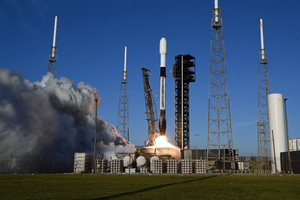
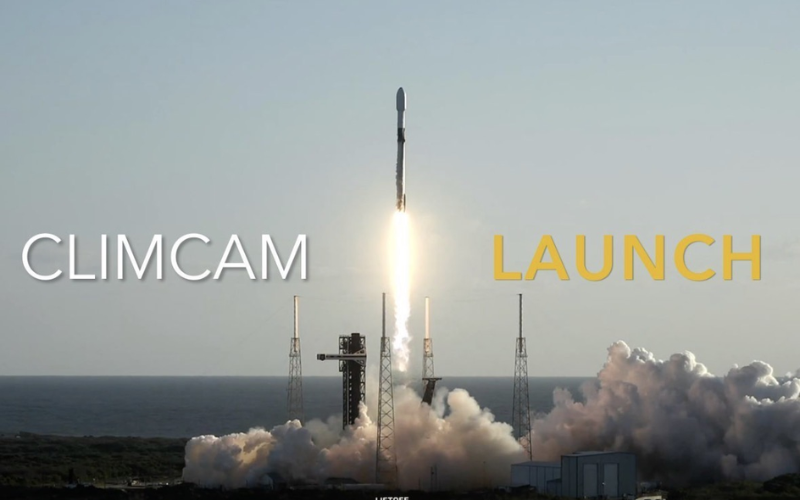
The Kenya Space Agency (KSA) has confirmed the successful launch of the Climate Camera (ClimCam) payload to the International Space Station (ISS), marking a milestone in Africa's contribution to space-based climate observation. The payload was launched aboard a SpaceX Falcon 9 rocket from Cape Canaveral Space Force Station at 1:41pm East African Time on Saturday. The mission is part of Northrop Grumman's Cygnus XL commercial resupply flight (NG-24). About seven minutes after liftoff, the Cygnus XL spacecraft separated successfully from the rocket's first stage and is now en route to the ISS. The spacecraft is expected to dock with the ISS on the morning of Monday, April 13, where it will deliver supplies alongside a suite of scientific experiments. ClimCam is among the key payloads on board and was developed through collaboration between the Kenya Space Agency, the Egyptian Space Agency, and the Uganda National Space Programme. Its development progressed through multiple phases, including design, integration and testing. Assembly, Integration and Testing (AIT) was carried out in Cairo, with further validation conducted at Airbus Defence and Space facilities in Houston, Texas. The project was selected under a competitive programme run by the United Nations Office for Outer Space Affairs, in partnership with Airbus Defence and Space, under the Access to Space for All initiative. The initiative promotes international collaboration in space technology development and expands access to orbital platforms. Equipped with artificial intelligence, ClimCam is designed to deliver near real-time weather and climate data. Officials say the system will improve environmental monitoring, strengthen disaster preparedness, enhance natural resource management, and support climate resilience across Eastern Africa. "The launch and eventual hosting on the ISS marks a significant milestone in international cooperation in harnessing space technologies," KSA said. "Equipped with AI-powered capabilities, ClimCam is designed to deliver near real-time weather and climate data." Beyond its scientific role, the mission underscores growing regional cooperation in Earth observation, artificial intelligence, and space engineering. It also reflects Kenya's continued focus on leveraging space technology to support sustainable development and environmental protection. KSA said further updates will be issued after the spacecraft successfully docks and the payload is installed on the ISS. The agency, which oversees Kenya's space activities, continues to invest in capacity building, innovation, and the use of space-based data to support socio-economic development.
Kenya launches climate camera to International Space Station in SpaceX mission
The Kenya Space Agency (KSA) has confirmed the successful launch of the Climate Camera (ClimCam) payload to the International Space Station (ISS), marking a milestone in Africa's contribution to space-based climate observation. The payload was launched aboard a SpaceX Falcon 9 rocket from Cape Canaveral Space Force Station at 1:41pm East African Time on Saturday. The mission is part of Northrop Grumman's Cygnus XL commercial resupply flight (NG-24). About seven minutes after liftoff, the Cygnus XL spacecraft separated successfully from the rocket's first stage and is now en route to the ISS. The spacecraft is expected to dock with the ISS on the morning of Monday, April 13, where it will deliver supplies alongside a suite of scientific experiments. ClimCam is among the key payloads on board and was developed through collaboration between the Kenya Space Agency, the Egyptian Space Agency, and the Uganda National Space Programme. Its development progressed through multiple phases, including design, integration and testing. Assembly, Integration and Testing (AIT) was carried out in Cairo, with further validation conducted at Airbus Defence and Space facilities in Houston, Texas. The project was selected under a competitive programme run by the United Nations Office for Outer Space Affairs, in partnership with Airbus Defence and Space, under the Access to Space for All initiative. The initiative promotes international collaboration in space technology development and expands access to orbital platforms. Equipped with artificial intelligence, ClimCam is designed to deliver near real-time weather and climate data. Officials say the system will improve environmental monitoring, strengthen disaster preparedness, enhance natural resource management, and support climate resilience across Eastern Africa. "The launch and eventual hosting on the ISS marks a significant milestone in international cooperation in harnessing space technologies," KSA said. "Equipped with AI-powered capabilities, ClimCam is designed to deliver near real-time weather and climate data." Beyond its scientific role, the mission underscores growing regional cooperation in Earth observation, artificial intelligence, and space engineering. It also reflects Kenya's continued focus on leveraging space technology to support sustainable development and environmental protection. KSA said further updates will be issued after the spacecraft successfully docks and the payload is installed on the ISS. The agency, which oversees Kenya's space activities, continues to invest in capacity building, innovation, and the use of space-based data to support socio-economic development.
Cyber Fraud Chaos: Insider Arrest in Bold Bank Scam | Law-Order
Irshad Malik, a 35-year-old bank employee, was arrested for facilitating cyber fraud by opening a fraudulent bank account using forged documents. This account, linked to a larger scam, was used to withdraw Rs 88,000 from a police officer's account. Four others have been arrested earlier. A private bank employee has been arrested for his alleged involvement in a cyber fraud racket, which he facilitated by opening a bank account with forged documents, authorities reported on Sunday. Irshad Malik, a resident of Ghaziabad, is accused of using his position at the bank to aid fraudsters in siphoning off money through a specious account. The case, registered in Dwarka last month, arose after a police officer reported an unauthorized debit of Rs 88,000 from his account. Investigators discovered the funds were funneled to an account opened in the name of a non-existent firm, using falsified documents of another individual. Evidence revealed that Malik engaged with accomplice Harjinder, who convinced him to facilitate such accounts for a commission. Facing the heat from law enforcement, Malik admitted to his role in the operation during his interrogation. The racket involved multiple victims, deceived by social media job and investment fraud schemes. Four co-conspirators have been apprehended earlier this year.

Polymarket Briefly Appears in Google News Before Being Removed
Polymarket links briefly appeared under mainstream outlets in Google News results for event-driven queries but were later removed. Polymarket betting markets reportedly appeared inside Google News results alongside established news publishers before disappearing. A Google spokesperson told The Verge that the platform's appearance in News was an error. "This site briefly appeared in Google News in error, and it is no longer surfacing in News," spokesperson Ned Adriance reportedly said. Before removal, Polymarket links were shown directly beneath mainstream outlets when users searched event-driven queries. In one example cited by Futurism, a search for "will ships transit the strait" related to the Strait of Hormuz returned a Polymarket market predicting outcomes on vessel passage alongside reporting from Reuters and The Guardian. In a Sunday search conducted by Cointelegraph, the same query did not surface any Polymarket results. Related: Three Polymarket traders made timely bets on US-Iran ceasefire Last year, Google partnered with both Polymarket and rival Kalshi to integrate their data into Google Finance. In June, Elon Musk's X also announced a partnership with Polymarket, naming it as its official prediction market partner. The deal aimed to integrate the betting-based forecasting service into the social media platform. Furthermore, in October, MetaMask said it would integrate Polymarket as part of its push to expand beyond a crypto wallet into a broader "democratized finance" gateway. The same month, World App, the digital wallet and identity platform from Sam Altman's World project, also added the Polymarket app. Related: Prediction market users await Artemis II mission splashdown As Cointelegraph reported, only a tiny fraction of Polymarket traders manage to generate consistent high monthly income, according to new data shared by crypto analyst Andrey Sergeenkov. While around 1% of traders have crossed $5,000 in profits in a single month, only 0.015% were able to sustain that level for four consecutive months. The findings also show that just 0.033% of wallets have exceeded $100,000 in total profits, with some of these likely belonging to professional traders rather than retail users. Despite growing hype around prediction markets as a fast-rising crypto use case, the data suggests most participants struggle to maintain consistent profitability over time.

Mint Explainer | Why SpaceX's $75 billion IPO matters: Size, stakes and market impact | Stock Market News
The SpaceX IPO will test not just investor appetite, but how public markets value scale, integration and ambition in the next generation of technology companies. Radhika P Nair is National Editor at Mint, bringing two decades of journalistic rigour to the newsroom. Since joining Mint in September 2025, she has specialised in crafting high-impact analytical narratives for Mint Long Story, focusing on startups, consumer brands, technology, the internet economy and travel.<br><br>A veteran of India's digital evolution, Radhika has tracked the country's startup ecosystem for over 15 years. She has reported on the rise of pioneers such as Flipkart, Zomato, Freshworks and Paytm from their nascent stages. Her career is defined by marquee reportage, including breaking the news of Flipkart's historic $1-billion fundraise in 2014, then the largest by an Indian startup.<br><br>Before Mint, Radhika was Editorial Head at YourStory Media and contributed to leading publications including The Economic Times, NDTV Profit and Outlook Traveller. Her work is characterised by a human-focused, data-driven approach that seeks to understand shifting consumer behaviour with accuracy and depth. She is a two-time recipient of the Best Story of the Year award at The Economic Times. Notably, her Mint Long Story on Kochi's water metro was cited in the 2026 Economic Survey of the Government of India.<br><br>Radhika holds a Master's degree in Journalism, where she secured the first rank, and is a university gold medallist in Economics. Based in Chennai, she is an avid traveller who finds joy in a well-cooked meal and is rediscovering her passion for fiction.

Is SpaceX Really Worth More Than Tesla? Here's the Unvarnished Truth. | The Motley Fool
Both SpaceX and Tesla could be worth more -- or less -- than their current valuations suggest. Only five U.S. companies have market caps of more than $2 trillion. That number will soon increase to six. Elon Musk's SpaceX is targeting a valuation of more than $2 trillion when it goes public later this year, making it the highest-valued IPO stock ever. However, the company that has been Musk's biggest success story so far -- Tesla (TSLA +0.91%) -- isn't a member of the $2 trillion club. Is SpaceX really worth more than Tesla? SpaceX focuses on three businesses. Each has enormous growth potential. The company's Starlink satellite internet service has more than 3 million subscribers globally and continues to grow. It's already highly profitable, generating a reported $8 billion in earnings last year. Starlink offers strong recurring revenue, which usually boosts valuation multiples. Starlink's total addressable market is huge. Billions of people worldwide lack reliable internet access. Cruise liners and aircraft that aren't always in reach of cell towers are also key markets for the satellite internet service. SpaceX also dominates the commercial launch market with its reusable rockets. Customers include NASA, the U.S. Department of Defense, and spy agencies. Musk's goal is for SpaceX to colonize Mars. His company's Starship spacecraft could help make his vision a reality. It's designed to carry crew and cargo beyond Earth's orbit. SpaceX's potential to commercialize space represents its biggest long-term revenue opportunity. In addition, Musk recently merged his AI-focused company, xAI, with SpaceX. xAI's flagship product is Grok, a powerful large language model. xAI might seem to be a questionable fit for SpaceX. However, Musk believes that terrestrial solutions won't be enough to meet the growing electricity demand for AI systems. In his view, space-based AI powered by solar energy is more scalable than Earth-based data centers. However, SpaceX's valuation is harder to justify on fundamental grounds. Despite its problems, Tesla continues to generate strong free cash flow ($6.2 billion last year). The company's financial base is much more mature than SpaceX's. To be sure, Tesla faces more intense competition than ever in the EV market. The company doesn't have the pricing power that it once had. Still, it would be premature to write off Tesla's EV prospects, especially amid soaring gas prices. More importantly, Tesla's fortunes don't hinge entirely on selling EVs. The company could have a huge opportunity in the robotaxi market. Tesla's big competitive advantages are cost and scalability. Its self-driving technology relies only on computer vision and doesn't require expensive LiDAR systems. Every Tesla vehicle equipped with its FSD (Full Self-Driving) software could, in theory, be used for autonomous ride-hailing. Tesla also ranks among the top robotics stocks. Musk predicts that the company's Optimus humanoid robot will be "the biggest product ever." He stated last year, "I do think if Tesla continues to execute well with vehicle autonomy and humanoid robot autonomy, it will be the most valuable company in the world." Even if you think Musk is being way overoptimistic, there's still a case to be made that Tesla should be valued more than SpaceX based on traditional financial metrics. Is SpaceX really worth more than Tesla? The unvarnished truth is that it depends on which factors you weigh more heavily. SpaceX arguably has a higher upside potential than Tesla, but it comes with greater uncertainty. Tesla has a track record of success but faces real challenges. Both companies are closely linked to Musk, which has both pluses and minuses. Both could be worth more -- or less -- than their current valuations suggest. Perhaps the best answer to whether or not SpaceX is worth more than Tesla or vice versa is that we'll have to wait and see.

'Mythos Drama': Meta AI Chief Scientist Yann LeCun Comments On Mythos AI, Sparks Debate -- Know About Anthropic's New Model And Its Controversy
From past several days Anthropic has been making headlines. The company has made quite a stir in the AI space with its new LLM Mythos model. The company claims that it will be rolled out for selective brands only instead of end-users due to its capabilities. Chief AI scientist at US-based tech giant Meta, Yann LeCun, has rejected all the growing concerns around Anthropic's latest AI model, Claud Mythos Preview. He mentioned the reaction as exaggerated. He wrote on popular microblogging platform X that "Mythos drama = BS from self-delusion," in reply to a post from Aisle. The newly introduced model has drawn attention after the company claimed that it can identify vulnerabilities across major operating systems and browsers, creating concern among businesspersons and policymakers. Limited Access Raises Concerns The company claims that its Claude Mythos model has uncovered numerous high-severity vulnerabilities across widely used software systems. The claims were significant enough to reportedly trigger discussions among financial regulators and large institutions. The company has not rolled out the model publicly. Instead of being launched in the public domain, it has shared access with a limited set of organisations consisting of major technology firms under a controlled initiative. This step has created both curiosity and concern around the model's capabilities. LeCun Dismisses Hype Meta AI chief scientist LeCun dismissed the reaction on social media and labelled it as "BS from self-delusion." He argued that similar outcomes could likely be achieved by smaller and more cost-efficient models, suggesting that the claims are not as strong as presented. Apart from LeCun, other experts from the AI community have raised similar concerns. Researcher Gary Marcus described the situation as overhyped, while policy expert David Sacks pointed to what he called a pattern of strong claims from AI firms. Some experts also argue that the model represents incremental progress rather than a major leap. Industry Sees Breakthrough Potential Despite criticism from industry experts, companies working directly with the model have taken a different view. Cybersecurity firms Cisco and CrowdStrike have suggested that AI tools like Claude Mythos can significantly reduce the time required to identify vulnerabilities. Officials from these companies have described the technology as a turning point, highlighting that processes that once took months can now be completed within minutes. The conflict comes as AI companies see rapid growth and explore new revenue opportunities. Media reports indicates that Anthropic and its competitors such as OpenAI and Perplexity are expanding their features while balancing safety concerns. The positioning of Claude Mythos as both powerful and restricted has raised questions regarding whether the messaging reflects caution or competitive strategy. The debate continues, with a clear divide between sceptics and industry adopters highlighting the broader uncertainty around how fast AI capabilities are evolving and how they should be interpreted.
Why Anthropic's Mythos Is a Systemic Shift for Global Cybersecurity
With the release of Anthropic's Project Glasswing and Claude Mythos, how should CISOs navigate the arrival of automated exploit chaining, collapsing patch cycles and the inevitable rise of adversarial AI? The announcements this week from Anthropic regarding Project Glasswing have created a global cyber paradigm shift that can be considered a scary "ChatGPT moment" or even a "zero-day tsunami" for cybersecurity. Headlines related to this announcement include major bank CEOs being warned in an urgent closed-door meeting held by U.S. Treasury Secretary Scott Bessent and Federal Reserve Chair Jerome Powell about the cyber risks posed by Anthropic's latest AI model. Anthropic has said its Claude Mythos model is capable of identifying and exploiting weaknesses across "every major operating system and every major web browser." What makes Mythos different is not just that it can find vulnerabilities. It appears to be unusually strong at chaining multiple weaknesses together into sophisticated exploit paths. This means that it doesn't just find a bug, but writes the script to jump from a browser to the kernel to the cloud. This capability bundle is what will keep CISOs awake at night. Anthropic said it was in ongoing discussions with U.S. government officials about the model's offensive and defensive cyber capabilities. They are taking steps to limit access to these. However, it is important to note this article from AISLE claims that many other models currently have very similar capabilities to find critical zero-day vulnerabilities and that these likely can be replicated to a large extent by others. Even though Anthropic is restricting access to Mythos, the architectural decisions it made to achieve vulnerability discovery will likely be reverse-engineered and embedded into Chinese and Russian open-source models by late 2026 -- at the latest. Groups in many industries are scrambling now to hold "CISO Huddles" to discuss implications and urgent actions that are needed by cyber leaders. For example, the Cloud Security Alliance is holding a Mythos/"AI vulnerability cataclysm" CISOs Huddle - Public Form. I like the LinkedIn commentary on this topic by my friend Richard Stiennon, which can be found here. As Stiennon points out, many questions are raised by these announcements. Some of the top questions include: Some other implications include: The urgent briefing by Treasury Secretary Bessent and Fed Chair Powell elevates AI cyber risk from an IT issue to a systemic financial stability threat. CISOs at major institutions should expect aggressive new regulatory frameworks and "coordinated defense" requirements. Other critical sectors will likely follow. Project Glasswing provides $100 million in credits to "blue teams" to ensure defenders maintain a head start. CISOs must aggressively integrate these frontier models into their own DevSecOps pipelines to automate code remediation before adversaries weaponize the same capabilities. For CISOs, the working assumption must be that the "Claude Mythos" capability gap is temporary. While U.S. labs have self-imposed safety filters and "redline" protocols, adversarial models are rapidly converging on these same capabilities without the same ethical or regulatory friction. Assume that "West-leading" capabilities will be replicated by foreign models within months, not years. As a former government leader, I worry about who will have access to Mythos. No doubt, insider threats will emerge. Assume that advanced cyber-reasoning will eventually leak into the open-source ecosystem. Recent leaks -- such as the 512,000 lines of Claude code surfacing in Chinese developer forums -- show that even high-security labs cannot perfectly contain their logic. CISOs must assume that low-tier ransomware groups will soon have access to "Mythos-lite" capabilities via unmonitored Russian or Chinese open-weight models, effectively "industrializing" sophisticated nation-state attack vectors. Assume the vulnerability window is compressing. Recalibrate your operating model around hours/days, not weeks -- emergency change paths, pre-approved rollback, and "patch or compensate" decisions that can move fast. Move from periodic scanning to continuous exposure management. Prioritize Internet-facing assets and identity paths first; measure coverage and exploitability, not just raw finding counts. Treat exploit chaining as the default. Pressure-test controls and detections across the full chain (browser/email → endpoint → identity → cloud control plane), not single-critical vulnerability exploit events. Make compensating controls first-class. For what you can't patch quickly: WAF/virtual patching, segmentation, hardening baselines and tighter egress controls buy time when patch speed loses the race. Shift left with automation -- or you'll be outpaced. Use AI-assisted code review and remediation to reduce vulnerable code at the source; don't rely on tickets and humans to scale triage and fixes. Pressure-test vendors and critical suppliers. Ask for patch service-level agreements, evidence of secure-by-design practices and how they handle "exploit-in-the-wild" events when AI accelerates weaponization. Plan for surge capacity. If discovery volume spikes, your bottleneck becomes triage, change execution and validation -- staff and automate accordingly. If a vulnerability exists in your stack, an AI, regardless of its country of origin, will find it. Your defense strategy cannot rely on "AI safety" or "export controls" to keep these tools out of the wrong hands. Finally, as teams are rapidly deployed to address these urgent zero-day threats, expect them to be stretched and other security and development projects to take a back seat. Make sure that important priority projects don't get thrown out (or put on a backburner too long) in the rush to address the implications from Anthropic's Mythos.

'Too powerful for the public': Inside Anthropic's bid to win the AI publicity war
The firm says it withheld an AI model on cybersecurity grounds but sceptics say this was hype to lure investment This week, the AI company Anthropic said it had created an AI model so powerful that, out of a sense of overwhelming responsibility, it was not going to release it to the public. The US treasury secretary, Scott Bessent, summoned the heads of major banks for a chat about the model, Mythos. The Reform UK MP Danny Kruger wrote a letter to the government urging it to "engage with AI firm Anthropic whose new frontier model Claude Mythos could present catastrophic cybersecurity risks to the UK". X went wild. Others were more sceptical, including the noted AI critic Gary Marcus, who said "Dario [Amodei] has far more technical chops than Sam [Altman], but seems to have graduated from the same school of hype and exaggeration," referring to the CEOs of Anthropic and its rival, OpenAI. It is unclear if Anthropic has built the machine god. What is more apparent is that the San Francisco startup widely seen as the "responsible" AI company is brilliant at marketing. In the past months, Anthropic has enjoyed a 10,000-word profile in the New Yorker, two pieces in the Wall Street Journal, and the front cover of Time magazine, on which Amodei's face was emblazoned, movie-poster style, above the Pentagon and the US defense secretary, Pete Hegseth. Amodei and Anthropic's co-founder, Jack Clark, appeared on two separate New York Times podcasts in February, chewing over questions such as whether their machine was conscious, and if it might soon "rip through the economy". The company's "resident philosopher" has spoken to the WSJ about whether Claude - a commercial product being used to trade cryptocurrency and designate missile targets - has a "sense of self". This has all come amid a dustup between Anthropic and the US department of defence in which Anthropic, despite creating the AI tool used by the Pentagon to strike Iran, has managed to come out looking far better than OpenAI, which offered to help the US military do the same thing but with - maybe - fewer guardrails. Its media lead, Danielle Ghiglieri, has notched the wins on LinkedIn. "I'm endlessly proud to work at Anthropic," she said of the company's Time cover, tagging the journalists involved in a post about the "mad dash" to get the story over the line. Watching a CBS 60 Minutes segment featuring Amodei "was one of those pinch-me moments," she said. "What made it meaningful wasn't just the platform. It was seeing the story we wanted to tell actually come through." Of the New Yorker profile, by the journalist Gideon Lewis-Kraus, she wrote: "I would be lying if I said I wasn't nervous for our first meeting in person ... working with someone of Gideon's calibre means being pushed to articulate ideas you're still forming, and being OK with that discomfort." ("I bet that's what they all say about you," said my editor.) Other tech PRs have taken notice. "They are clearly having a moment right now but companies building technology that will change the world deserve equal scrutiny," said one. "They accidentally leaked their own source code last week, then this week they claim stewardship over cyber threats with a new powerful model that only they control. Any other big tech firm would be ridiculed." Anthropic did accidentally release part of Claude's internal source code at the beginning of April. "No sensitive customer data or credentials were involved or exposed," it said. What does this all mean about Anthropic's undoubtedly powerful Mythos? The model's capacities were not "substantiated," said Dr Heidy Khlaaf, the chief AI scientist at the AI Now Institute. "Releasing a marketing post with purposely vague language that obscures evidence ... brings into question if they are trying to garner further investment without scrutiny." "Mythos is a real development and Anthropic was right to treat it seriously," said Jameison O'Reilly, an expert in offensive cybersecurity. But, he said, some of Anthropic's claims, such as that it found thousands of "zero-day vulnerabilities" in major operating systems, were not that significant to real-world cybersecurity considerations. A zero-day vulnerability is a flaw in software or hardware unknown to its developers. "We have spent over 10 years gaining authorised access to hundreds of organisations - banks, governments, critical infrastructure, global enterprises," said O'Reilly. "In those 10 years, across hundreds of engagements, the number of times we needed a zero-day vulnerability to achieve our objective was vanishingly small." Other reasons may have contributed to Anthropic's decision not to release Mythos. The company has limited resources, and appears to be struggling to offer enough computing capacity to allow all its subscribers to use its models. It has introduced usage caps on the wildly popular Claude. Recently, it said users would have to purchase extra capacity on top of their subscriptions in order to run third-party tools, such as OpenClaw. At this point, it may simply not have the infrastructure to support the release of a hyped-up new creation. Like OpenAI, Anthropic is in a race to raise billions of dollars and capture a market - still ill-defined - of people who might lean on its chatbots as friends, romantic partners or deeply personalised assistants, and of companies that might use them to replace human employees. But differences in these products are marginal and impressionistic, mostly down to hard-to-quantify attributes like "sense of self" and "soul" - or rather, what passes for these in an AI agent. The battle is for hearts and minds. "Mythos is a strategic announcement to show that they're open for business," said Khlaaf, saying Anthropic's release limitation prevented independent experts from evaluating the company's claims. She suggested we may be "seeing the very same bait and switch playbook that was used by OpenAI, where safety is a PR tool to gain public trust before profits are prioritised" and: "Anthropic publicity has managed to better obscure this switch than its rivals."

Tax breaks, SpaceX hopes spur shift from Tesla
Net buying of Tesla shares by Korean investors falls 71 percent, asset managers race to launch SpaceX ETFs South Korean retail investors have cut their holdings in Tesla this year, taking profit and rebalancing portfolios as anticipation grows for a potential initial public offering of SpaceX and as new tax incentives encourage a shift back into domestic assets. Data from the Korea Securities Depository showed that South Korean retail investors, known locally as "Western ants," sharply scaled back their purchases of Tesla shares this year. Net buying of Tesla fell about 71 percent from a year earlier, dropping more than $2.6 billion last year to around $779 million as of last Friday. The shift reflects profit-taking and a broader portfolio rotation by retail investors, industry observers say. Interest is meanwhile building in SpaceX's planned IPO, which could be one of the largest globally this year, with fundraising of up to $75 billion. The portfolio shift has been reinforced by a new tax incentive aimed at drawing overseas investment funds back into the domestic market. Under amendments passed by the National Assembly on March 31, South Korean investors who transfer proceeds from overseas stock investments into domestic equities by May can receive up to a 100 percent deduction on capital gains taxes. Data from Samsung Securities showed that assets in its Reshoring Investment Accounts surpassed $75 million within two weeks of launch. The RIA is a tax-incentivized account to encourage investors to repatriate funds from foreign stocks, particularly US stocks, into domestic equities. Nvidia and Tesla accounted for a large share of inflows into the accounts, suggesting retail investors are reallocating holdings previously concentrated in US technology stocks. Market participants said some investors are also looking to redirect proceeds from overseas stock sales into domestic aerospace-themed exchange-traded funds, in part to gain indirect exposure to SpaceX ahead of its potential listing. Reflecting this trend, South Korean asset managers are rolling out related products such as US aerospace-themed ETFs ahead of the listing to attract retail investors seeking exposure to SpaceX. Mirae Asset, Korea Investment Management and Shinhan Asset Management are among firms preparing new products, while Samsung Asset Management has already attracted about $175 million into its aerospace ETF launched last month. SpaceX has confidentially filed for an IPO with the US Securities and Exchange Commission and could go public as early as mid-June, with a valuation of more than $1.7 trillion. Analysts say the listing could trigger a broader rerating of the global space sector and boost passive inflows if it is added to major indexes such as the S&P 500. Separately, Mirae Asset Securities is weighing ways to offer SpaceX shares to South Korean retail investors in what could be the first dual offering in the United States and Korea. However, regulatory uncertainty remains in Korea. Differences in IPO rules and disclosure requirements between the two countries could complicate the process. The Financial Supervisory Service is reviewing potential risks to investor protection and foreign exchange markets. Industry sources said limiting allocations to institutional investors remains a fallback option if retail participation proves difficult.