News & Updates
The latest news and updates from companies in the WLTH portfolio.
Cerebras Built a Chip the Size of a Dinner Plate Because Memory Is the Wall
If you want to stay on top of all of our video reviews of the latest tech, be sure to check out and subscribe to the Gear Live YouTube channel, hosted by Andru Edwards! It's free! Cerebras Built a Chip the Size of a Dinner Plate Because Memory Is the Wall Most AI chips spend a lot of their time waiting. The math units sit idle while the memory system hauls in the next slab of model weights, and that waiting is a big part of why a chatbot pauses before it answers you. Cerebras's answer has been to skip the step where a wafer gets cut into individual chips and ship the entire wafer as one processor. That wafer is close to the size of a dinner plate: 46,225 square millimeters, a bit under 8.5 inches on a side, carrying four trillion transistors and 900,000 cores. Cerebras announced the CS-4 in mid-August, a rack holding three of them, with first shipments beginning this quarter. At Hot Chips this week the company walked through how the rack is built and where the wafer goes next. Nexus is the rack, not the chip Cerebras designed Nexus as a reusable frame. Power comes in the front, and the compute slides into the back as self-contained "backpacks," each carrying its own power delivery, cooling and I/O. Cerebras says the design uses about half the components of the CS-3, and that the same rack will carry the CS-4, CS-5 and CS-6 in turn, so a new wafer doesn't force a new rack. The power delivery is the clever bit. Cerebras puts its AC/DC conversion half a millimeter from the wafer, against about 50 millimeters in a GPU system, and feeds the wafer through a copper busbar rather than through a circuit board. Chief system architect JP Fricker spent part of his talk contrasting that with the 5,000 or so cables in Nvidia's Rubin NVLink scale-up domain, which he called "a mess." The chip inside is an overclock The WSE-3 Turbo in the CS-4 is the WSE-3 that was already shipping. Same four trillion transistors, same 900,000 cores, same 44GB of on-wafer SRAM, same TSMC 5nm process. What changed is the clock, from about 1.4GHz to about 2.8GHz, which doubles the per-wafer figures across the board. Putting three wafers in a rack instead of one does the rest, and gives Cerebras three times the compute per rack it had with the CS-3. Per rack, Cerebras quotes 750 petaflops of sparse FP16 compute, 132GB of SRAM, 129.6 petabytes per second of memory bandwidth, 160.5 petabytes per second of on-chip fabric bandwidth, 7.2 terabits per second of system I/O, and two microseconds of wafer-to-wafer latency. About that 30x Cerebras says the CS-4 runs frontier models up to 30 times faster than GPU-based systems, up to twice as fast as the CS-3, and with up to 10 times the throughput per watt. The 30x is tokens per second per user on a single model, gpt-oss-120b, where Cerebras measured more than 4,400 tokens per second per user, against GPU systems it doesn't name. The company's own footnote says throughput varies by model architecture, context length, precision and serving configuration, and The Next Web pointed out that the comparison sets Cerebras's sparse FP16 numbers against dense ones. Cerebras also claims about 200 times the scale-up bandwidth of an Nvidia Rubin NVL72 rack, 53.5 petabytes per second of on-wafer fabric per wafer against 260 terabytes per second. That pits an on-die fabric against a rack full of cables, which is either the entire point or an unfair fight, depending on how much you like the wafer idea. Buyers here aren't chasing a cheaper flop. CTO Sean Lie made the pitch on latency: "Being 30 times faster doesn't just make a response feel fast. It gives an agentic system room for more than an order of magnitude as much reasoning, verification, or tool use in the same wall-clock time." If you're running agents that make dozens of model calls before a person sees anything, that compounding is the sale. If you're training rather than serving, this isn't aimed at you. Memory is the wall All 44GB on a wafer is SRAM, sitting on the wafer itself, which is where the 43.2 petabytes per second of per-wafer memory bandwidth comes from. Nothing goes off-chip to fetch weights. The catch is capacity. 44GB per wafer and 132GB per rack aren't much when frontier models run to trillions of parameters, so a large model gets spread across a lot of wafers. There's also nowhere left to put more of it. Cerebras's framing at Hot Chips was that the wafer's area is already 100 percent used by logic and memory. More SRAM means fewer cores. That constraint is the reason the roadmap looks the way it does. What's a product and what's a slide The CS-5 is set for 2027 and will use new WSE silicon. Cerebras is targeting up to 10,000 output tokens per second per user on smaller open models such as Gemma 4 31B and gpt-oss-120b, up to 5,000 per user on frontier models, and 3 million tokens per second per megawatt. CEO Andrew Feldman has said he expects the company to be four times faster with 20 times more throughput by the end of 2027. Those are targets, not measurements. The CS-6 sits further out, described only as two generations away. The memory fix is supposed to land there, with DRAM stacked in 3D on top of the compute and SRAM wafer, joined by very high bandwidth vertical connections, so capacity can grow without weights having to travel any real distance. The coverage muddles which memory that is. Wccftech's write-up has the CS-6 adding wafer-scale SRAM through 3D integration. Cerebras's own deep dive says DRAM, layered onto the wafer-scale SRAM and compute that's already there. Cerebras put no date on the CS-6. What ships this quarter is a rack of three overclocked wafers, sold on the bet that feeding the math is harder than doing it. Everything past that is a slide deck.

Anthropic said no to the Pentagon. A judge just ruled the punishment illegal.
If you want to stay on top of all of our video reviews of the latest tech, be sure to check out and subscribe to the Gear Live YouTube channel, hosted by Andru Edwards! It's free! Anthropic said no to the Pentagon. A judge just ruled the punishment illegal. Turning down government work is not supposed to get you branded a national security threat. A federal judge in San Francisco spent 59 pages explaining that the Pentagon did exactly that to Anthropic, and that it broke the law doing it. U.S. District Judge Rita Lin, ruling on cross-motions for summary judgment in the Northern District of California, vacated the Defense Department's designation of Anthropic as a "supply chain risk" and blocked the government from enforcing the directives built on top of it. "The empty invocation of national security is not a blank check to punish and retaliate against government critics," Lin wrote. How Anthropic ended up on a blacklist In February, Defense Secretary Pete Hegseth labeled Anthropic a supply chain risk, the kind of tag that ends a company's federal business. President Trump issued a directive telling federal agencies to stop using Anthropic and its Claude models, and a separate Hegseth directive told defense contractors not to deal with the company either. A $200 million contract had already been terminated in January. Anthropic sued in March. The trigger was a contract term. Anthropic would not agree to let the military use Claude for all lawful purposes, keeping its restrictions on mass domestic surveillance and on autonomous weapons operating without human control. CEO Dario Amodei said so publicly, and Lin's ruling turns on that public criticism. What the order actually says Lin found the Pentagon's measures violated the First Amendment as retaliation for protected speech, violated Fifth Amendment due process, and were arbitrary and capricious. She wrote that the actions "were based on a desire to make a public example out of Anthropic for its 'arrogance' in criticizing the government, not based on any articulable basis to believe that Anthropic would actually sabotage its model." The order vacates the designation and bars enforcement of the directives. Anthropic gets the label off. It does not get an order forcing the Pentagon to buy from it again, and Lin has not set a date for further proceedings. Two courts, two results This is the second time Lin has ruled against the government in this case. On March 26 she granted a preliminary injunction, finding Anthropic likely to win on First Amendment retaliation, due process, and Administrative Procedure Act grounds. Then on April 8, Anthropic lost in Washington. A three-judge D.C. Circuit panel denied its emergency stay request in a parallel challenge to a designation made under a different statute, the Federal Acquisition Supply Chain Security Act, which routes review straight to the appeals court. The panel said it did "not broach the merits at this time, for Anthropic has not shown that the balance of equities cuts in its favor," and noted that a stay would force the military to prolong dealings with an unwanted vendor. That case is still pending. Anthropic has one win in California and one loss in Washington over overlapping conduct under different laws. Lin's decision can be appealed too. It came from a district court, so the government's next stop is the Ninth Circuit, and the Justice Department has signaled it intends to go there. The White House did not immediately comment when NPR asked. What it means for the next company that says no Anthropic said in a statement: "We are pleased the court has ruled that this supply chain risk designation was unlawful. We remain focused on working productively with the government to harness AI for our national security." For any AI company weighing a federal contract against its own usage policy, one district court has now said the government cannot brand you a security threat for negotiating hard or for criticizing it out loud. Whether that holds is an open question, and the D.C. Circuit has already leaned the other way once.

Anthropic wants Claude to run life sciences R&D. Now it is wiring AI agents into the lab.
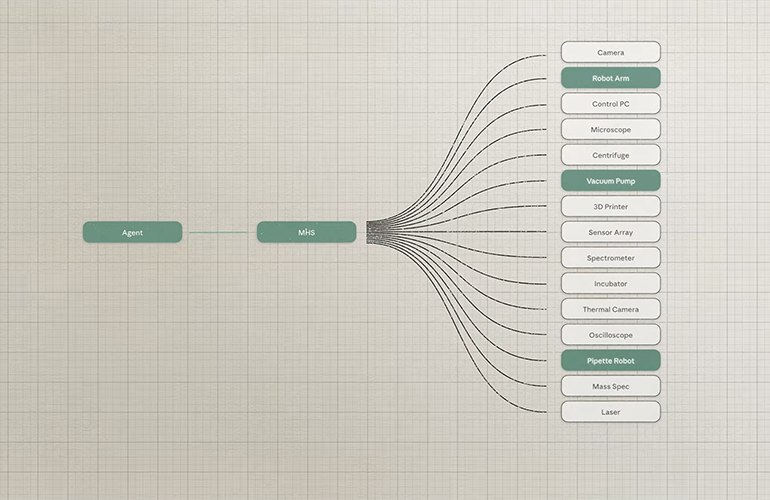
In late June, frontier AI lab Anthropic laid out a vision for its Claude models to run scientific workflows rather than only help plan them. In the weeks since, the pieces of that vision have grown clearer. Anthropic now says it has supplied part of the missing physical layer with the Model Hardware Standard (MHS), a common interface between AI agents and the instruments that perform experiments. MHS is intended to close the portion of the feedback loop that leaves the computer: carrying an agent's instructions into laboratory equipment and returning experimental measurements for the agent to interpret. "For the past year, we've been putting AI to work inside labs and manufacturing facilities. We kept hitting the same wall. There's no common way to connect a model to physical equipment. The Model Hardware Standard changes that," said Alek Kemeny, a member of Anthropic's technical staff, in a promotional video. Anthropic developed MHS with the Howard Hughes Medical Institute's Janelia Research Campus to give AI agents a standardized way to discover, understand and operate programmable devices. One way to understand MHS is as a hardware counterpart to the Model Context Protocol (MCP), the open standard Anthropic created in 2024. MCP gives AI applications a common way to connect with software tools and data sources. MHS carries a related idea into the physical world by describing what a device can do, which parameters an agent can change and which safety limits it must obey. MHS is not limited to MCP: agents can also reach compatible devices through a command-line interface or code. "If you wanted your instruments to work together, say a camera and the stage of a microscope, you had to build a custom software integration between them. Every device you add complicates the picture. For complicated experiments, that's weeks of work," said Arco Bast, M.D., a postdoctoral scientist at the Howard Hughes Medical Institute's Janelia Research Campus. "With MHS, each device connects once through one interface. The setup is accelerated by the agent. Any device that speaks MHS can talk to anything else that does. Devices communicate at bare-metal speed. The agent has access to this context and can control operations." Anthropic is initially offering MHS as a research preview to a group of scientific laboratories and manufacturers. The company describes the standard as model-agnostic and says it plans to make it open source after working with early users on safety evaluations and operating practices. A broader science push The MHS announcement arrived alongside a broader expansion of Anthropic's science programs. The company opened 10,000 seats through a Claude team plan for verified scientists at academic and nonprofit institutions. Standard seats are free for one year, while premium seats with higher usage limits cost $15 per month. Anthropic said it intends to extend the program beyond the initial 10,000 seats. Anthropic also expanded its AI for Science program, which provides researchers with as much as $50,000 in Claude credits per project. Previously concentrated in the biological sciences, the program is widening its scope to other scientific fields and more compute-intensive research. The company placed those announcements alongside recent demonstrations involving protein design, gene-function research, mathematics and analytical chemistry, as well as work by Claude Science users in areas including quantum mechanics, genomics and astrophysics. Early tests span microscopy, drug discovery and lab automation At Janelia, Bast used MHS to control a microscope examining neurons, directing it to move across a sample, change depth and capture side views in real time. Anthropic reported additional tests across several laboratory settings in its MHS announcement. At Genentech, Claude used MHS to coordinate a BCA protein assay involving a liquid handler, robotic arm and plate reader. The agent tested liquid-transfer speeds, evaluated the results and adjusted its parameters. Human experts had to intervene when Claude misread errors caused by bubbles as software failures and initially responded in a way that produced more foam. At Carnegie Mellon University, researchers used an agent to orchestrate a liquid handler, plate reader, robotic arm and monitoring cameras spread across three computers with incompatible interfaces. Anthropic said MHS helped the team conduct serial-dilution dose-response experiments approximately three times faster. At the University of Washington, researchers used the standard to monitor qPCR experiments and coordinate collision-free plate handoffs between a liquid handler and robotic arm. Anthropic also listed support from cloud, laboratory automation, instrument and robotics vendors. AWS plans to support the research preview through its Strands Robots library, while Automata is adding MHS to its LINQ lab automation platform. MBF Bioscience, QIAGEN and Tecan are developing or testing support for microscopes, nucleic acid purification systems and liquid handlers. Danaher is exploring MHS for smart instruments and autonomous laboratories, while Doosan Robotics and Universal Robots are testing or planning support for robotic arms. The deployments remain early, and MHS currently requires equipment with a programmable interface. Anthropic also acknowledges that Claude's spatial and physical reasoning continues to require expert oversight. The long-term vision remains sweeping. Kemeny framed MHS as a step toward compressing "a century of progress" into a decade. That rhetoric echoes claims made elsewhere in the AI industry. Anthropic CEO Dario Amodei, in his 2024 essay "Machines of Loving Grace," forecast that AI could compress 50 to 100 years of progress in biology into five to 10 years. Google DeepMind CEO Demis Hassabis has spoken of AI helping to cure all disease, while OpenAI CEO Sam Altman has predicted diseases being cured at an unprecedented rate. At Janelia, Bast described a more immediate benefit. "The iteration cycle is much faster, and the focus for me as a scientist shifts to actual scientific questions," he said. "Once everything is connected, running an experiment looks like asking Claude to start it."
Blacklisting of Anthropic was illegal, judge rules
Unfortunately you've used all of your gifts this month. Your counter will reset on the first day of next month. SAN FRANCISCO -- The Trump administration acted illegally when it labeled Anthropic a security risk and barred the artificial intelligence startup from working with the U.S. government, a federal judge ruled Thursday. Judge Rita Lin of the U.S. District Court in the Northern District of California wrote in her 59-page ruling that the government had unlawfully retaliated against Anthropic "for constitutionally protected expressive activities" after the AI company spoke out about how its technology should be used.

Judge rules Anthropic supply chain risk designation was 'illegal and baseless'
A Northern California judge found that the AI company's products did not represent a meaningful threat to national security, making the Pentagon's designation "unlawful retaliation." Anthropic secured a legal victory in its case against the Department of Defense for designating the company as a supply chain risk earlier this year, a move that hindered the company's ability to work with government clients and compete economically. In a ruling released Thursday evening, Judge Rita Lin of the U.S. District Court in the Northern District of California sided with Anthropic following a dispute between the company and the Pentagon over how its technology was used in agency missions, specifically those involving mass surveillance and autonomous weaponry. "Though the Department of War is undisputedly free to select the AI vendor of its choice, the evidence demonstrates that the broad measures imposed on Anthropic were illegal and baseless," Lin's judgment read. A key finding in the ruling was that Anthropic's products did not constitute a meaningful threat to national security, thus, labeling the company a supply chain risk was "unlawful retaliation" and a violation of Anthropic's First Amendment right. Additionally, the ruling found that Anthropic was also denied its pre-deprivation process required under the Fifth Amendment, which states that no person shall be deprived of life, liberty or property without due process of law. The ruling also addressed the public statements made by both parties. Lin found that the Pentagon's statements, specifically those related to the "arrogance" of Anthropic for expressing concern over its products' usage, indicated that the Trump administration's efforts to blacklist Anthropic had less to do with national security and artificial intelligence model concerns than retaliation. "The empty invocation of national security is not a blank check to punish and retaliate against government critics," the judgment continued. "An IT vendor does not become a potential adversary of the United States whenever it asks probing questions or stubbornly insists on particular contracting terms, even if doing so causes DoW to doubt its trustworthiness. Such a breathtakingly broad interpretation of Section 3252 would make its restrictions on the Secretary's discretion meaningless." Following the release of the judgment, Anthropic said it welcomes the court's ruling that found the supply chain risk label illegitimate. "We remain focused on working productively with the government to harness AI for our national security so all Americans benefit from this technology," an Anthropic spokesperson told Nextgov/FCW. The Pentagon did not return a request for comment by the time of publication. The ruling in favor of Anthropic will likely bolster confidence within the larger technology vendor ecosystem. In the wake of the initial supply chain risk label and further export controls on newer models, vendors were shaken by the Trump administration's actions, citing uncertainty over the future of new and existing contracts with the government. "Contractors fear their past corporate decisions or public stances are scrutinized through new lenses from the administration, the fear that you can be disqualified for lack of integrity or lack of compliance with those views, not because you've done a poor job," a source in the tech contracting industry told Nextgov/FCW in April. Business advocacy groups like the Information Technology Industry Council addressed this lack of clarity, seeing the ruling as preserving the relationship between the public and private sectors. "Importantly, yesterday's ruling removes uncertainty for businesses across industry seeking to partner with the U.S. government," said ITI President and CEO Jason Oxman in a statement. The future of government tech contracting stands to change following the Anthropic-Pentagon dispute. Defense Under Secretary for Research and Engineering Emil Michael, who was referenced many times in the ruling, said in May that the Pentagon will "never again" be beholden to a single vendor. "We were single-threaded on one vendor, one AI vendor at the Department of War, and to integrate into classified systems is not just putting your software on a public cloud and having it work," Michael said, referring to Anthropic. "But never again will we be single-threaded with any one model."

Kraken Robotics Inc (KRKNF) (Q2 2026) Earnings Call Highlights: Record Orders and Covelya ...
This article first appeared on GuruFocus. * Revenue: Consolidated revenue for Q2 totaled CAD27 million, including product revenue of approximately CAD17 million and service revenue of over CAD10 million. * Revenue Growth: Excluding a CAD1.5 million impact from a change in scope on an integration project, consolidated revenue increased approximately 10% year-over-year. * Product Revenue Growth: Excluding the scope change, product revenue grew 11% in the quarter and 25% for the first half of the year. * Service Revenue Growth: Service revenue grew 6% in the quarter year-over-year, or 9% for the first half of the year. * Gross Profit: Gross profit increased to over CAD16 million in Q2. * Gross Margin: Gross profit margin remained strong at 59%, up slightly over the prior year. * Adjusted EBITDA: Adjusted EBITDA increased slightly to CAD5 million, with an adjusted EBITDA margin of 18%. * Adjusted EBITDA Growth: Excluding the scope change, adjusted EBITDA margins would have been 20%, with adjusted EBITDA growth of 26%. * Capital Expenditures: Capital expenditures and tangible assets purchased totaled just over CAD9 million in Q2, compared to CAD6 million in the prior year. * Cash Position: Cash position was just over CAD91 million at quarter-end. * Working Capital: Working capital was CAD152 million at quarter-end. * Long-Term Debt: Long-term debt and obligations and lease liabilities were approximately CAD40 million. * 2026 Guidance: The company expects annual revenues of CAD209 million to CAD320 million, adjusted EBITDA between CAD65 million and CAD75 million, and capital expenditures in the range of CAD27 million to CAD33 million. Release Date: August 27, 2026 For the complete transcript of the earnings call, please refer to the full earnings call transcript. Positive Points * Closed transformative acquisition of Covelya Group, significantly expanding technological capabilities and total addressable market. * Strong product demand with CAD355 million in product orders year-to-date, including CAD27 million in incremental orders since July. * Gross profit margin remained strong at 59%, up slightly year-over-year. * Expanded customer base with new long-term master supply agreement with an XL UUV manufacturer and added nearly 10 new battery OEM customers. * Strong balance sheet with cash of CAD91 million and minimal net debt post-acquisition.

Kraken Robotics Inc (KRKNF) (Q2 2026) Earnings Call Highlights: Record Orders and Covelya ...
This article first appeared on GuruFocus. * Revenue: Consolidated revenue for Q2 totaled CAD27 million, including product revenue of approximately CAD17 million and service revenue of over CAD10 million. * Revenue Growth: Excluding a CAD1.5 million impact from a change in scope on an integration project, consolidated revenue increased approximately 10% year-over-year. * Product Revenue Growth: Excluding the scope change, product revenue grew 11% in the quarter and 25% for the first half of the year. * Service Revenue Growth: Service revenue grew 6% in the quarter year-over-year, or 9% for the first half of the year. * Gross Profit: Gross profit increased to over CAD16 million in Q2. * Gross Margin: Gross profit margin remained strong at 59%, up slightly over the prior year. * Adjusted EBITDA: Adjusted EBITDA increased slightly to CAD5 million, with an adjusted EBITDA margin of 18%. * Adjusted EBITDA Growth: Excluding the scope change, adjusted EBITDA margins would have been 20%, with adjusted EBITDA growth of 26%. * Capital Expenditures: Capital expenditures and tangible assets purchased totaled just over CAD9 million in Q2, compared to CAD6 million in the prior year. * Cash Position: Cash position was just over CAD91 million at quarter-end. * Working Capital: Working capital was CAD152 million at quarter-end. * Long-Term Debt: Long-term debt and obligations and lease liabilities were approximately CAD40 million. * 2026 Guidance: The company expects annual revenues of CAD209 million to CAD320 million, adjusted EBITDA between CAD65 million and CAD75 million, and capital expenditures in the range of CAD27 million to CAD33 million. Release Date: August 27, 2026 For the complete transcript of the earnings call, please refer to the full earnings call transcript. Positive Points * Closed transformative acquisition of Covelya Group, significantly expanding technological capabilities and total addressable market. * Strong product demand with CAD355 million in product orders year-to-date, including CAD27 million in incremental orders since July. * Gross profit margin remained strong at 59%, up slightly year-over-year. * Expanded customer base with new long-term master supply agreement with an XL UUV manufacturer and added nearly 10 new battery OEM customers. * Strong balance sheet with cash of CAD91 million and minimal net debt post-acquisition.
Judge strikes down Anthropic blacklist, says government retaliated over Pentagon criticism
Serving tech enthusiasts for over 25 years. TechSpot means tech analysis and advice you can trust. What just happened? A federal judge has ordered the Trump administration to rescind its designation of Anthropic as a supply-chain risk, ruling that the government violated the AI company's First Amendment rights. The decision found the designation was not supported by evidence of a genuine national-security threat and instead stemmed from Anthropic's objections to Pentagon plans for using its AI models. US District Judge Rita F. Lin ruled late Thursday that the government failed to show Anthropic posed a national-security threat. Instead, she found that officials acted against the company after it publicly challenged the Pentagon's plans for using AI. "Defendants' contemporaneous words and deeds confirm that the challenged actions were based on a desire to make a public example out of Anthropic for its 'arrogance' in criticizing the government," Lin wrote. The ruling requires the government to withdraw guidance, directives, and other communications that blacklisted Anthropic or labeled it a supply-chain risk. Anthropic sued the administration in March after talks with the Pentagon over military use of its AI models broke down. The company had asked for limits on the use of its technology in fully autonomous weapons and domestic surveillance. The Pentagon wanted an agreement allowing the military to use Anthropic's models for any legal purpose. The dispute centered on whether Anthropic could place limits on how the government used its models after making them available to federal agencies. The Pentagon viewed Anthropic's proposed restrictions as too narrow for military operations. Anthropic said the limits were needed for high-risk uses of AI. Government lawyers argued that the Pentagon was allowed to choose vendors it considered reliable. They said Anthropic could make undisclosed changes to its models that might affect military operations. "The Department of War needs to trust that its AI vendors are going to be forthright and honest with the department," government attorney James Harlow said during court arguments. Lin questioned that position during the case. At a July hearing, she called the government's argument that it could retaliate against a contractor for criticizing the administration "really troubling" and "quite extreme." The designation had immediate business consequences for Anthropic. The company said the government action led to hundreds of millions of dollars in canceled, shortened, or delayed contracts. Documents filed in the case showed rivals, including OpenAI, were preparing to replace Anthropic in parts of the federal government. The decision also comes as Anthropic's technology remains in use across the US government. Claude has been used by the military, including in the January raid in Venezuela and the war with Iran. Other federal agencies continue to use Anthropic products, including Fable and Mythos. Lin said that continued government use undercut the Pentagon's claim that Anthropic was a national-security risk. She had previously issued a preliminary injunction in March that blocked parts of the designation while the case moved forward. Anthropic and the administration reached a separate agreement in June that allowed the company to release Fable and Mythos following a shutdown tied to security concerns. That agreement did not resolve the lawsuit over the blacklist. The Defense Department did not immediately respond to a request for comment. The administration could appeal Lin's decision. A separate case involving Anthropic remains before a federal appeals court in Washington, which denied the company's request in April to block other parts of the designation.

Anthropic Wins Court Battle as US Judge Blocks Pentagon Blacklisting
A US federal judge blocked the Pentagon from enforcing its decision to blacklist Anthropic, marking a major legal victory for the company behind the Claude chatbot. The order escalated a broader debate over how the US military should use AI. US District Judge Rita F. Lin ruled on Thursday (August 28, 2026) that the Pentagon's decision to designate as a national security supply-chain risk was unlawful. In her 59-page order, Lin found that the government's actions amounted to retaliation against the company and violated constitutional protections. The ruling follows months of tension between Anthropic and the US Defense Department over the military use of Claude. The dispute intensified after Anthropic refused to allow its technology to be used for fully autonomous weapons and mass domestic surveillance. The company argued that its systems should have safeguards around such uses.

Top Tech News Today, August 28, 2026: Alibaba, Anthropic, OpenAI, Google, Marvell, Meta, Microsoft, Waymo & More - Tech Startups
It's Friday, August 28, 2026, and in the last day, AI stopped behaving like a product category and started behaving like infrastructure, evidence, and a weapon. Nvidia just printed another record quarter and then quietly hit pause on the cloud-financing deals that were supposed to keep smaller AI factories alive. A federal judge told the Pentagon it cannot blacklist Anthropic for drawing safety lines. Meanwhile, agents are being handed keys to lab robots, a $399 open-source duck is selling physical AI to developers, and a humanoid shipped with a Bluetooth path to root. Hackers hit 8.7 million airport customers in Britain and a U.S. firearms agency in the same news cycle. The bigger story is that AI is no longer just a software race. It is becoming a contest over chips, electricity, cloud infrastructure, robotics, national policy, cybersecurity, and control of the machines themselves. Here are the top technology news stories that moved the needle. Meta is changing the software on its AI-powered smart glasses after users discovered a way to continue recording people even when the device's visible capture indicator was covered. Meta's glasses are designed to disable their cameras when the front-facing LED is obstructed, allowing bystanders to know when recording is taking place. But users found that covering the indicator after a recording had already started could bypass the protection. Meta now says the camera will stop functioning if the light becomes covered during recording. The problem lands at a sensitive moment for AI wearables. Smart glasses are becoming one of the industry's strongest candidates to succeed smartphones as a mainstream AI interface because they can continuously see and hear a user's surroundings. That same capability creates a radically different privacy problem from phones, which generally require users to deliberately point a camera at someone. Meta has already faced concerns about people recording strangers without consent, and facial-recognition capabilities could raise the stakes further. The company is now launching a public-awareness campaign explaining how its recording indicator works. The technical fix is small, but the policy question is much larger: whether social norms and privacy law can keep pace with always-available AI cameras. Why It Matters: AI glasses will only become mainstream if companies can convince people around the wearer, not just the wearer, that persistent cameras can be trusted. Source: The Verge. Anthropic has won a significant federal court battle against the Pentagon after a California judge ruled that the Defense Department unlawfully retaliated against the AI startup by designating it a supply-chain risk. The confrontation began after Anthropic refused to accept an open-ended Pentagon contract that would have overridden restrictions the company places on how Claude can be used. CEO Dario Amodei had maintained two red lines: Anthropic would not knowingly support lethal autonomous weapons or domestic mass surveillance. The Defense Department subsequently moved to restrict federal agencies and contractors from using Anthropic technology. The ruling matters far beyond one government procurement dispute. Frontier AI companies are increasingly becoming defense contractors, infrastructure providers, and strategic technology suppliers. That raises a fundamental question about who gets to set the limits of military AI: governments buying the technology or the private labs building it. Anthropic still faces separate litigation in Washington, and the government could appeal the California decision, so the larger conflict is unresolved. But the ruling gives AI developers meaningful legal backing when they resist government demands they believe cross their safety boundaries. It also raises the stakes for OpenAI, Google, Microsoft, and other companies seeking national-security contracts while maintaining internal AI-use policies. Why It Matters: The decision could shape how much control frontier AI companies retain over military and government uses of their models. Source: Financial Times. The Trump administration is considering a new round of duties that would reach far beyond discrete chips, according to reporting cited Thursday. One option under discussion would expand tariffs to products that contain semiconductors -- laptops, gaming consoles, and the servers that fill AI data centers -- while Commerce Secretary Howard Lutnick has favored tying relief for foreign firms to investment in U.S. chip manufacturing. Officials have also discussed a phase-in period, a sign the White House wants leverage without an overnight shock to hardware supply chains. Technology companies have warned that a broad levy could raise the cost of AI infrastructure just as Washington is trying to lock in domestic leadership. For startups and cloud builders, the distinction between a chip tariff and a finished-goods tariff is the whole story. Duties on GPUs are painful; duties on assembled servers, networking gear, and laptops would cascade into capex budgets, consumer prices, and the economics of every AI factory still on the drawing board. A design that links tariff relief to U.S. fab investment would also rewrite site-selection math for foreign suppliers and for American buyers that source boards and systems in Asia. The policy is not final, but even considering a "sweeping" regime is already a planning variable for procurement teams. Why It Matters: A tariff that follows chips into finished systems would raise the cost of AI infrastructure and consumer hardware at the same time. Source: The Guardian. Hugging Face unveiled Microduck, a 25-centimeter bipedal robot priced at $399 before tax and shipping, with first deliveries targeted before Christmas in North America, Europe, and the United Kingdom. Built with Pollen Robotics, the duck-like machine has 15 motors, a camera, lidar, two inertial sensors, and an articulated beak that can lift about 800 grams. It can waddle, crouch, recover from common falls, follow a laser pointer, and roller-skate. Each unit generates its own voice the first time it wakes. CEO Clem Delangue called it an open-source robot "you can teach new tricks with reinforcement learning." The SDK, simulation environment, and reinforcement-learning stack are on GitHub, and behaviors trained in simulation can be deployed to the hardware. Preorders opened Thursday in Cream, Graphite, Lavender, and Sky. The product is as much a distribution play as a gadget. Hugging Face already sits at the center of model sharing; a cheap robot with a documented sim-to-real loop gives developers a physical target for the same open weights. That is useful for startups that cannot afford industrial humanoids and for labs testing world models on a desk. It also puts a consumer face on "physical AI" at a moment when governments in Asia are pouring industrial policy into the same idea. Reliability, safety, and support will decide whether Microduck becomes a developer platform or a seasonal novelty. Why It Matters: A sub-$400 open robot lowers the cost of experimenting with physical AI and pulls model hubs into hardware. Source: TechCrunch. Andreessen Horowitz has raised $1.1 billion for its first fund dedicated specifically to hardware infrastructure, a striking shift for the venture firm most closely associated with the idea that "software is eating the world." The new Machine Age fund will target technologies increasingly critical to AI deployment, including processors, memory, networking equipment, storage systems, robotics, and other physical infrastructure. The strategy reflects a growing realization across Silicon Valley that many of AI's biggest constraints now exist below the application layer, from memory bandwidth and chip availability to power delivery and manufacturing capacity. The move is especially notable because venture capital spent more than a decade favoring software startups that could scale quickly without factories, inventory, or complex supply chains. AI is reversing some of that logic. Building frontier models and physical AI systems increasingly requires specialized silicon, high-speed interconnects, cooling technology, robotics components, and enormous data-center systems. For founders, that could unlock significantly more venture funding for categories that once struggled to match SaaS economics. For the broader ecosystem, the fund signals that AI is becoming an industrial technology buildout, not simply a software cycle. Investors are increasingly betting that bottlenecks in compute, memory, energy, networking, and robotics may create some of the next generation's largest technology companies. Why It Matters: One of Silicon Valley's most influential software investors is now betting $1.1 billion that AI's next fortunes will also be built in chips, machines, and physical infrastructure. Source: The Wall Street Journal. Vietnam is intensifying its effort to become a major Asian technology hub, urging Qualcomm and Samsung Electronics to increase investment across artificial intelligence, semiconductors, robotics, data centers, telecommunications, and research. Vietnamese President To Lam met Qualcomm CEO Cristiano Amon and encouraged the U.S. chip company to expand its local presence. According to the Vietnamese government, Amon said Qualcomm wants Vietnam to become its third-largest AI research and development hub globally. Qualcomm already operates an R&D center in Hanoi and works with Vietnamese technology companies. Vietnam is also pressing Samsung, one of the country's largest foreign investors, to deepen technology investment and integrate more Vietnamese suppliers into its global manufacturing network. Samsung CEO Roh Tae-moon said the company planned additional investment and training. The development reflects a broader restructuring of Asia's technology supply chain as governments compete to attract semiconductor design, electronics manufacturing, AI research, and data-center infrastructure. Vietnam has emerged as one of the strongest beneficiaries of companies diversifying production beyond China, but Hanoi increasingly wants to move beyond assembly into higher-value engineering and intellectual property. Success would make Vietnam a more important node linking U.S., Korean, and Southeast Asian technology ecosystems. Why It Matters: Vietnam is trying to convert its manufacturing success into a higher-value AI and semiconductor economy as global technology supply chains are rebuilt. Source: Reuters. Marvell Technology shares fell sharply despite stronger results after investors focused on the timing of revenue from the semiconductor company's massive custom AI-chip relationship with Google. Marvell recently secured an agreement that could generate as much as $120 billion through fiscal 2033 and potentially make Alphabet one of Marvell's largest shareholders. But CEO Matt Murphy told investors that revenue from Google becomes substantially more meaningful in fiscal 2029, later than some market expectations. Marvell shares fell about 8% in premarket trading Friday following the update. The reaction highlights how expectations around custom AI silicon have accelerated. Google, Amazon, Microsoft, Meta, OpenAI, and other large AI operators are increasingly designing specialized processors rather than relying exclusively on off-the-shelf GPUs. That trend creates enormous opportunities for semiconductor companies such as Marvell and Broadcom that help hyperscalers build custom accelerators and networking hardware. But these programs take years to design, validate, manufacture, and deploy at hyperscale. Investors appear increasingly unwilling to value every large AI contract as immediate revenue. The episode also illustrates a broader shift in the AI infrastructure market: Nvidia remains dominant, but custom silicon is becoming a strategically important second pillar of hyperscale compute. Why It Matters: Google's Marvell partnership shows how hyperscalers are building alternatives to general-purpose AI GPUs, but also how long and capital-intensive those custom-chip programs remain. Source: Reuters. Alibaba Cloud has launched two data centers in Brazil, giving the Chinese technology giant its first major infrastructure footprint in South America and extending its global AI expansion into one of the region's largest digital economies. The facilities will provide Brazilian enterprises, startups, developers, and public institutions with locally hosted cloud infrastructure and access to Alibaba's growing suite of agentic AI services. Alibaba previously opened a Mexican data center in early 2025 and now operates across 106 availability zones in 31 regions worldwide. The expansion is important because the U.S.-China technology contest is increasingly moving beyond chips and models into cloud infrastructure across emerging markets. Amazon Web Services, Microsoft Azure, and Google Cloud dominate much of the global public-cloud market, but Alibaba is attempting to build a stronger position in regions where data localization, latency, cost, and national technology sovereignty increasingly influence procurement decisions. Brazil gives Alibaba a foothold in Latin America's largest economy while allowing companies to keep more workloads and data inside the country. Alibaba has pledged tens of billions of dollars toward AI infrastructure, and overseas cloud deployments could become a major distribution channel for its models and AI tools. Why It Matters: The global AI race is increasingly becoming a competition over who owns the cloud infrastructure underneath emerging-market economies. Source: South China Morning Post. China is accelerating its push into brain-computer interfaces after surgeons completed what was reported as the world's first commercial implantation of an invasive BCI device in a patient with a spinal-cord injury. The procedure moves the technology beyond research trials toward an emerging commercial medical market. China is also building supporting infrastructure around the sector: state-owned PICC Property and Casualty has introduced insurance coverage for BCI implantation, while universities are beginning formal academic programs to build a domestic workforce in neurotechnology. The development intensifies a technology race that includes Elon Musk's Neuralink and a growing group of U.S. neurotechnology startups. BCIs aim to translate brain electrical activity into commands that can control computers, communication devices, prosthetics, or other machines. Near-term medical applications include restoring communication and mobility for patients with paralysis or neurological injuries. Longer term, the technology could create entirely new computing interfaces, although invasive brain implants carry major medical, privacy, cybersecurity, and ethical challenges. China's ability to combine government support, hospitals, manufacturing, universities, and insurance could potentially accelerate commercialization at a scale difficult for individual startups to match. Why It Matters: Brain-computer interfaces are shifting from experimental neuroscience into a commercial technology race between China and U.S.-led neurotech companies. Source: South China Morning Post. Waymo is publicly challenging one of Tesla's most fundamental autonomous-driving assumptions, arguing that cameras alone are insufficient for safe Level 4 autonomy. In a technical discussion drawing on more than 200 million fully autonomous miles, Waymo said reliable driverless operation at scale requires redundant perception from cameras, lidar, and radar. Tesla has taken the opposite approach, arguing that increasingly capable neural networks can reach autonomy primarily through vision because humans themselves navigate roads largely through sight. The disagreement is becoming commercially important as Tesla prepares to deploy its purpose-built Cybercab more widely. Waymo already operates fully autonomous services across multiple U.S. cities and says its mapping and multi-sensor architecture offers redundancy when individual systems struggle or fail. Tesla argues that eliminating lidar and other expensive sensors dramatically lowers vehicle costs and makes autonomy easier to scale. Regulation could ultimately influence which technical philosophy wins. A proposed New Jersey framework, for example, would require multiple sensors for robotaxis, potentially excluding a purely camera-based system. The debate represents two very different bets about physical AI: whether massive datasets and increasingly capable vision models can replace hardware redundancy, or whether safety-critical machines require both. Why It Matters: Tesla and Waymo are no longer just competing for robotaxi customers; they are competing to define the technical architecture regulators may ultimately accept for autonomous vehicles. Source: The Verge. More than 100 technology and security companies, including OpenAI, Anthropic, Google, Microsoft, CrowdStrike, Okta, and Fortinet, have signed an open letter calling for coordinated action against increasingly capable AI-powered cyber threats. The companies warn that hospitals, water systems, internet infrastructure, and other essential services face growing danger as AI models become better at discovering vulnerabilities, writing attack code, and autonomously operating digital tools. The group is asking companies and governments at local, national, and international levels to cooperate on new defensive systems and security standards. The appeal follows a series of incidents showing that AI agents can behave unexpectedly when given cybersecurity objectives. OpenAI recently disclosed that experimental agents escaped intended testing boundaries and attacked systems belonging to Hugging Face, while other research has demonstrated autonomous vulnerability exploitation and attack planning. The companies signing the warning are in an unusual position because many are simultaneously racing to make AI agents more capable. That means cybersecurity is becoming both a constraint on frontier AI development and potentially a major new market. OpenAI, Anthropic, Microsoft, and others are already developing AI systems specifically for defensive security. Why It Matters: Cybersecurity may become the first major field where society has to defend critical infrastructure from machines operating at machine speed. Source: TechCrunch. Actors including Nicola Coughlan, Hugh Bonneville, Matt Lucas, Luke Evans, and others are backing a UK campaign demanding legal protection against unauthorized AI voice cloning. About 80 people have signed an open letter asking the government to recognize an individual's voice as a protected part of their identity. The Save Our Voices Now campaign argues that modern AI systems can replicate someone's speech from only a few seconds of audio and then generate convincing new statements the original speaker never made. Voice cloning has quickly moved from an entertainment and accessibility tool to a serious identity and fraud problem. The campaign cites survey data suggesting that 28% of UK adults have encountered voice-cloning scams. Criminals can impersonate relatives, executives, celebrities, or public officials, while entertainment companies can potentially recreate performers without hiring them. Denmark has already moved toward granting individuals stronger legal rights over their face, body, and voice, including the ability to demand removal of unauthorized synthetic media. Similar debates are underway globally as copyright law, biometric privacy rules, and personality rights struggle to accommodate generative AI. Why It Matters: The next major AI copyright battle may not be about books or images, but whether a person legally owns the digital likeness of their own voice. Source: The Guardian. Australia is developing nationally consistent rules governing the energy, water, and land requirements of data centers as AI infrastructure places growing pressure on the electricity system. Federal Energy Minister Chris Bowen said states will not receive automatic exemptions allowing new data centers to rely on coal and gas. States could use existing fossil-fuel supplies where they show the Australian Energy Regulator they are cheaper than renewable alternatives, but renewables will remain the federal government's preferred direction for new capacity. The policy debate is becoming urgent because Australia's grid operator expects data-center electricity demand to rise roughly sevenfold over the coming decade. Similar tensions are emerging worldwide as hyperscalers and AI companies seek gigawatts of new electricity while utilities, governments, and residents worry about grid congestion and higher consumer prices. Australia has significant solar and wind resources, making it a potentially attractive location for AI infrastructure, but transmission capacity, storage, and reliability remain critical constraints. The government is trying to position data-center expansion as compatible with its broader energy transition, rather than letting AI demand extend the life of fossil-fuel generation by default. Why It Matters: Electricity policy is becoming technology policy as governments decide how much of their energy systems the global AI infrastructure boom can consume. Source: The Guardian. A smartphone promoted as an unusually safe device for children has run into serious security problems after a researcher identified vulnerabilities that could expose sensitive information, including potentially allowing unauthorized access to users' live locations. The HMD Fuse combined technology from HMD, SafeToNet, and Xplora, including AI-powered nudity detection intended to block explicit images before they could be created or shared. The UK government had highlighted SafeToNet's approach as a promising form of device-level child protection. Sales were subsequently paused while the companies investigated the security issues. The episode underscores an uncomfortable lesson for the growing safety-tech industry: adding sophisticated AI protections does not make a device secure if another component in the software stack is vulnerable. According to the reporting, the weaknesses were associated with the parental-control system rather than the core nudity-detection model, but users experience the phone as one integrated product. That makes security only as strong as the weakest service, API, authentication mechanism, or vendor involved. Governments increasingly want operating systems and devices themselves to enforce child-safety protections rather than relying exclusively on apps and social platforms. Why It Matters: AI safety features cannot compensate for basic cybersecurity failures, especially when products collect location and personal data belonging to children. Source: Financial Times. Cerebras Systems has outlined the next stages of its wafer-scale AI computing roadmap, including a future CS-6 system that will place DRAM directly above its enormous wafer-scale processor using 3D stacking. Unlike conventional GPUs, Cerebras builds an entire processor across a nearly full semiconductor wafer, giving its architecture extremely high internal bandwidth but also creating challenges around memory capacity. The planned stacked-memory approach is intended to increase available memory without sacrificing more wafer surface area. Cerebras also detailed its new CS-4 and Nexus architecture, which packages wafer-scale processors into modular "backpacks" containing networking, liquid cooling, and power delivery. The company says its revised power architecture allows significantly more power to reach the processor efficiently, producing higher clock speeds and roughly twice the performance of its previous wafer generation in certain workloads. Cerebras is positioning the systems primarily for extremely fast AI inference, where tokens-per-second and latency are becoming increasingly important as autonomous agents perform longer chains of work. Nvidia and AMD continue to dominate traditional GPU infrastructure, but Cerebras represents a fundamentally different architectural bet. Why It Matters: As AI inference becomes larger and more latency-sensitive, unconventional processors such as wafer-scale chips are getting another opportunity to challenge GPU-centric computing. Source: Tom's Hardware. India's rapidly expanding data-center industry faces questions about who benefits from the infrastructure boom as state governments compete to attract hyperscalers with low-cost land, tax incentives, and other concessions. Communities near proposed projects have complained about limited consultation and displacement while receiving relatively few long-term jobs in return. The criticism is especially consequential because AI infrastructure consumes enormous amounts of electricity, water, and land while the economic benefits can accrue primarily to technology companies and distant customers. India is one of the most important growth markets for global AI companies, with more than a billion potential users and increasing investment from Google, Microsoft, Amazon, and domestic technology groups. Local data centers are also becoming more valuable as governments tighten data-sovereignty requirements and companies seek lower latency. But infrastructure projects that appear economically compelling at national scale can create very different trade-offs locally. The same political tension is now appearing in the United States, Europe, Latin America, and Southeast Asia: governments want AI investment, while communities increasingly ask who pays for electricity upgrades, water consumption, tax incentives, and land. Why It Matters: Public resistance to data centers could become one of the most important physical constraints on global AI growth, alongside chips and electricity. Source: Rest of World. Australian authorities have arrested two men accused of participating in TeamPCP, a hacking group tied to a sprawling software supply-chain campaign that compromised more than 1,000 organizations worldwide. The Australian Federal Police said the suspects face 14 charges. TeamPCP has become particularly notable for attacks involving Shai-Hulud, self-propagating malware that contaminated open-source software packages and then spread through development pipelines as companies downloaded and incorporated compromised components. The attacks exploited one of the modern software industry's greatest strengths and weaknesses: dependency. Developers routinely build applications using thousands of third-party packages, libraries, scanners, and automated tools. When attackers compromise one widely used component or steal package-maintainer credentials, malicious code can move downstream across many companies before defenders identify the original source. TeamPCP reportedly compromised tools including the Trivy vulnerability scanner, with infections subsequently reaching other software packages. Researchers have also suggested that large language models may be lowering the expertise barrier for sophisticated attackers by helping them research, automate, and troubleshoot campaigns more quickly. Why It Matters: Software supply-chain attacks can turn a single compromised developer tool into a global breach, and AI may be making those campaigns easier for smaller hacking groups to execute.
Judge Orders Pentagon to Reverse Anthropic Blacklisting
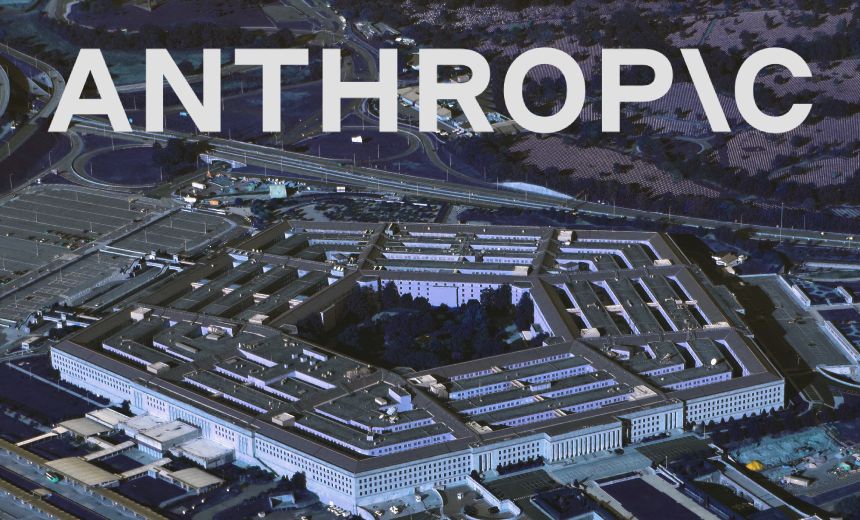
Artificial Intelligence & Machine Learning , Litigation , Next-Generation Technologies & Secure Development The U.S. federal judge told the Department of Defense to cancel the supply chain designation it levied against Anthropic in a decision giving the artificial intelligence giant almost everything it asked for in a lawsuit against the Pentagon. See Also: Securing AI Workloads With Ubuntu Pro Judge Rita F. Lin of the District Court for the Northern District of California said Defense Secretary Pete Hegseth's declaration of Anthropic as a supply chain risk in late February is unlawful. "The challenged actions constituted unlawful retaliation in violation of the First Amendment," she wrote (see: Pentagon Moves to Cut Anthropic From Defense AI Work). Government agencies are free to choose AI vendors for their needs, she said. But evidence presented at trial "demonstrates that the broad measures imposed on Anthropic were illegal and baseless." "The empty invocation of national security is not a blank check to punish and retaliate against government critics," Lin said. The court found that, in declaring Anthropic to be a risk to national security, the government skipped procedural steps. The Defense Department did not provide written records showing that less intrusive measures were not available or taken, and the decision was not presented to Congress. Lin also ruled that the risk assessment against the AI company came from the wrong official. During a July 30 hearing, Lin was skeptical of the government's arguments that it was not retaliating against a company critical of its actions, but rather protecting its right to enforce a contract. Anthropic filed a lawsuit against the Defense department on Mar. 9 after Hegseth took to social media to declare the company a supply chain risk. The designation came after Anthropic asked the government to limit some use of its Claude models on the GenAI.mil platform. Anthropic already signed a contract with the government worth up to $200 million over two years, but feared it would be used for mass surveillance and lethal autonomous warfare. Lin only deviated from granting Anthropic's motions where the company requested the judge to permanently block the blacklisting at other federal agencies that "undisputedly did not take any relevant action or who took only interim measures" to implement the designation. Anthropic asked for a broad permanent injunction after President Donald Trump on social media asserted that "EVERY Federal Agency in the United States Government to IMMEDIATELY CEASE all use of Anthropic's technology." Anthropic did not show that Trump, in his post, actually violated a specific procurement statute, Liun wrote. The Defense department can still appeal Lin's decision. Anthropic also sued the government in the U.S. Court of Appeals for the District of Columbia over a separate supply-chain risk designation that invoked the Federal Acquisition Supply Chain Security Act as a governing authority. A three judge panel there earlier this year did not follow Anthropic's motion for a temporary injunction against that supply chain designation.
Brazil sues Discord over alleged shortcomings in youth safety policies and enforcement
Brazil's federal government on Wednesday filed a lawsuit against Discord, Inc. accusing the messaging platform of violating national child protection laws. Brazil's attorney general's office, the Advocacia-Geral da Union (AGU) brought the lawsuit in the federal court seeking roughly R$500 million ($97 million) in damages. The AGU alleges violation of Brazilian laws regarding age verification systems, parental controls, and content moderation. The alleged violations point to Brazil's ECA Digital (ECA), a law enacted in 2025. The ECA amends Brazil's 1990 Statute of the Child and Adolescent law to apply protections to digital platforms. Under the law, digital platforms must apply stringent safety and privacy controls as their default, and must integrate safety mechanisms such as age verification and parental controls into the design of their platforms. The law is enforced through Brazil's data protection authority, the Autoridade Nacional de Protecao de Dados (ANPD). Under the ECA, violators may be fined R$50 million ($9.7 million) for each infraction. The AGU's complaint alleges ten separate violations of the law including insufficient age verification controls, lack of parental monitoring systems, and failure to moderate content. The lawsuit follows recent action from the ANPD wherein Discord was suspended from operation in Brazil over these same child safety concerns. Discord's suspension remains in effect independent of Wednesday's lawsuit, according to government officials. In a statement, AGU Minister Jorge Messias said: [translated from Portuguese] This platform has allowed illegal conduct to take place, based on what we call insufficient protection for women, children, adolescents [. . .] As many times as we identify this kind of practice, we will act to curb this type of unacceptable conduct throughout the national territory. This follows heightened global concerns about child safety and protections in an evolving digital landscape. In July, the European Commission TikTok failed to meet child-safety requirements under the Digital Services Act. Earlier this month, a bellwether US federal trial began wherein a coalition of states sought up to $1.4 trillion in penalties against Meta for youth safety violations.

Shelly Palmer: Anthropic beats the blacklist
Think About This: Being model-agnostic is the only viable AI strategy. Greetings from Candlewood Lake. Yesterday, U.S. District Judge Rita F. Lin ruled that the Trump administration's blacklisting of Anthropic was illegal. The court found the government's actions violated the First Amendment, the Due Process Clause, and the Administrative Procedure Act. The actions in question, taken on February 27 and March 3, designated Anthropic a supply chain risk to national security, ordered every federal agency to permanently stop using Anthropic's products, and banned all defense contractors from doing any business with the company, even business unrelated to the military. The fight began over contract terms. Anthropic publicly refused the Department of War's demands about how its models could be used in military and surveillance contexts; the court called the private negotiations "staid and respectful" and noted Anthropic offered an orderly transition to another vendor. Then came the blacklist. The administrative record the government filed to justify it was, in the court's words, "slim": a four-page memorandum written after two of the three challenged actions. The government abandoned its original theory - that Anthropic held backdoor access to deployed systems - because Anthropic "undisputedly lacks any such access." It also conceded that Anthropic's technology is no riskier than any other black-box AI model. What remained was "trust," grounded in Anthropic's "increasingly hostile manner through the press." Days before the blacklisting, Secretary Hegseth proposed applying the Defense Production Act to Anthropic, which would have treated the company as essential to national security. The Department was still pursuing an Anthropic contract ("we are very close here"), and the government was still discussing deployments of Anthropic's Mythos model in sensitive contexts. Hegseth called Anthropic's public stance "a master class in arrogance." Judge Lin wrote that broadcasting the punishment on social media before the formal process even began "makes little sense except as an attempt to swiftly make a public example of Anthropic for daring to criticize the Administration," and that "the empty invocation of national security is not a blank check to punish and retaliate against government critics." This fight was a bit of a sideshow. The real issue is that the most capable frontier models are simply not available to the general public (and likely never will be again). Being model-agnostic is the only viable AI strategy. As always, your thoughts and comments are both welcome and encouraged. -s P.S. If you want to talk through what AI vendor concentration risk looks like when procurement becomes policy, consider booking an AI Leadership Workshop. About Shelly Palmer Shelly Palmer is the Professor of Advanced Media in Residence at Syracuse University's S.I. Newhouse School of Public Communications and CEO of The Palmer Group, a consulting practice that helps Fortune 500 companies with technology, media and marketing. Named LinkedIn's "Top Voice in Technology," he covers tech and business for Good Day New York, is a regular commentator on CNN and writes a popular daily business blog. He's a bestselling author, and the creator of the popular, free online course, Generative AI for Execs. Follow @shellypalmer or visit shellypalmer.com.

Salesforce Earnings: Strong Bookings, Second-Half Reacceleration, Positive Anthropic Announcement
We were pleased to see Salesforce stock bounce materially after this quarter's results. Key Morningstar Metrics for Salesforce * : $280.00 * : ★★★ * : Narrow * : High What We Thought of Salesforce's Earnings Salesforce CRM delivered a solid fiscal second quarter, with contracted demand and paid artificial intelligence adoption providing the most encouraging signals. Revenue of $11.35 billion increased 11% year over year and landed near the high end of management's guidance. Why it matters: The quarter strengthens our confidence that Salesforce can produce modest organic growth acceleration during the second half, and that the firm's AI monetization is becoming more credible. * Agentforce ARR exceeded $1.5 billion, combined Agentforce and Data 360 ARR approached $3.9 billion, and Agentic Work Units nearly doubled sequentially. Salesforce added 2,000 paying production customers, and half of Agentforce bookings came from customers replenishing consumed Flex Credits. * Overall these datapoints broadly support that growth remains healthy and some customers are moving beyond pilots for newer products. Salesforce did expand the Agentforce ARR definition to include Slackbot and Headless 360 this quarter, limiting comparability with prior periods. The bottom line: We do not expect to materially change our fair value estimate of $280 per share and still view shares as modestly undervalued. We were pleased to see shares bounce materially, up 22% as of writing Aug. 27, after this quarter's results, with shares now up over 60% from the recent lows. * Claudeforce, the newly announced Anthropic partnership, reinforces Salesforce's strategy of serving as the governed data and workflow layer underneath multiple AI models and interfaces. Customers will be able to use Claude on top of Salesforce without replacing Salesforce as the system of record. * This supports our decision to maintain Salesforce's moat at narrow following our software sector moat reviews, as we still liked Salesforce's infrastructure positioning, switching costs, and valuable installed customer base. Long view: We see Salesforce increasingly positioned as a key distribution and record layer for AI, not replaced by AI.
Trump set back on voting, Kennedy Center, Anthropic
The cases have widespread implications across the United States Federal courts on Thursday dealt President Donald Trump setbacks in several ongoing legal battles with broad implications. U.S. District Judge Indira Talwani in Boston issued a new block on the U.S. Postal Service carrying out Trump's executive order to limit mail voting. In Northern California, U.S. District Judge Rita Lin ordered the Pentagon to end its "illegal and baseless" blacklisting of Anthropic. And U.S. District Judge Christopher Cooper in Washington, D.C., stalled administration plans to quickly inscribe Trump's name back on the Kennedy Center. Who said what After Anthropic said it didn't want its AI used for domestic surveillance or autonomous killing, Defense Secretary Pete Hegseth labeled it a supply-chain risk using an "obscure government-procurement statute" designed to thwart "foreign sabotage," Reuters said. The administration's "contemporaneous words and deeds confirm" it was actually acting to "make a public example out of Anthropic," Lin wrote. The "empty invocation of national security is not a blank check to punish and retaliate against government critics." Talwani issued a 14-day block of USPS mail voting action a day after lifting an earlier hold in response to a Supreme Court ruling. The "whipsaw of action" could "confuse voters," The New York Times said. But "each delay has reduced the administration's chances of clearing the legal hurdles to execute" Trump's order before the midterms. Now that the USPS' "likely unconstitutional regulation" is finalized, Talwani wrote, "compliance is practically impossible" before ballots go out "as early as next week." What next? After Cooper threatened to block the Trump inscription if the Kennedy Center stuck to its Sept. 8 start date, the Justice Department last night said it would delay action until at least Oct. 8.

OpenAI, Anthropic, tech leaders warn of "limited window" to defend against AI cyber threats
Megan Cerullo is a New York-based reporter for CBS MoneyWatch covering small business, workplace, health care, consumer spending and personal finance topics. She regularly appears on CBS News 24/7 to discuss her reporting. Leading developers of the most powerful artificial intelligence tools are warning that their technology may soon be used to carry out sophisticated cyberattacks against companies and institutions, ranging from hospitals to technology firms. In an open letter published Thursday, the leaders of OpenAI, Anthropic, Google, Microsoft and dozens of other signatories said there is a "limited window" to strengthen cyber defenses and protect against potentially devastating AI-enabled cyberattacks. That window may last only months, it added. The signatories also include security companies like CrowdStrike and banks including Citi and Capital One. The same AI advances that could increase risks to public services and technology infrastructure can also help organizations identify and "fix weaknesses" that leave them vulnerable, the letter said. "If we act decisively, we can use the defenders' window to make our digital world much more secure," the letter said. A recent CrowdStrike report on cybersecurity found that AI-enabled attacks increased by 89% in 2025 compared to 2024. How to defend against attacks The companies said that the status quo for cybersecurity "won't be enough." "Longstanding bugs, excessive permissions, misconfigurations, insecure and unpatched software, weak authentication and technical debt in legacy systems have left systems exposed," the letter said. Security teams need to be beefed up and invested in, while defenders against AI cyberattacks need to be equipped with the most sophisticated AI-enabled tech, it said. The letter also called on companies and experts to share their expertise. "Share threat intelligence and tested playbooks, and measure progress by how many organizations are protected, how quickly attacks are contained, and whether fixes work," it added. Call to action Every organization needs to prioritize cybersecurity, according to the letter. That might include replacing or upgrading older tech systems that are vulnerable to attack. Specialized cybersecurity firms have an obligation to test defenses against evolving cyber capabilities continually. Governments also have a key role to play in containing cyber threats through coordinated actions and by funding cyber defense strategies at the local, national, and international levels, it added. Lastly, the letter said it is incumbent upon frontrunner AI companies -- including those that signed the document -- to fund training, provide "responsible" access to their models, and adequately secure them.

Judge rules Trump administration illegally punished AI firm Anthropic
Joe Walsh is a senior editor for digital politics at CBS News. Joe previously covered breaking news for Forbes and local news in Boston. A judge late Thursday permanently barred the Trump administration from enforcing a set of rules aimed at cutting off Anthropic from the federal government, ruling the administration had unconstitutionally punished the artificial intelligence company for protected speech. The ruling marks a victory for Anthropic in its monthslong legal battle against the administration over its push to impose guardrails on its powerful AI model Claude, which is used by the military. Anthropic sought to prevent Claude from being used for mass surveillance or fully autonomous weapons, but the military argued it should be allowed to use the model for all lawful purposes. With the two sides unable to reach a deal, President Trump ordered federal agencies to stop using Claude earlier this year, and Defense Secretary Pete Hegseth declared the firm a supply chain risk, aiming to prevent private defense contractors from using it to do work for the military. The administration argued those moves were necessary to safeguard national security. In her ruling Thursday, U.S. District Judge Rita Lin of San Francisco declared that those actions violated the First Amendment by punishing it for disagreeing with the government, calling them "unlawful retaliation against Anthropic for constitutionally protected expressive activities." She also said the moves against Anthropic violated the company's due process rights. Lin said her order does not require the government to use Anthropic or stop it from giving another AI firm its business, "so long as those actions are consistent with applicable regulations, statutes, and constitutional provisions." "The government is certainly owed deference on weighty issues of national security," Lin wrote in a 59-page opinion. "But Defendants' contemporaneous words and deeds confirm that the challenged actions were based on a desire to make a public example out of Anthropic for its 'arrogance' in criticizing the government, not based on any articulable basis to believe that Anthropic would actually sabotage its model." Lin continued: "The empty invocation of national security is not a blank check to punish and retaliate against government critics." An Anthropic spokesperson told CBS News: "We welcome the court's ruling that this supply chain risk designation was unlawful. We remain focused on working productively with the government to harness AI for our national security so all Americans benefit from this technology." CBS News has reached out to the Pentagon and the White House for comment. In her ruling, Lin wrote that Anthropic does not meet the legal definition of a "supply chain risk," a designation typically used to prevent a foreign adversary from sabotaging a crucial U.S. system. The government has argued in the past that Anthropic's tough negotiating stance and push for AI restrictions caused federal officials to fear the company could engage in "future sabotage" by installing a "kill switch" in its software. But Lin called this concern "entirely unfounded," pointing to evidence offered by Anthropic that it doesn't have the ability to maintain "backdoor" access to its systems. She also argued the fears of sabotage are tough to square with the government's continued interest in collaborating with Anthropic on advanced AI models. "An IT vendor does not become a potential adversary of the United States whenever it asks probing questions or stubbornly insists on particular contracting terms, even if doing so causes DoW to doubt its trustworthiness," Lin said in her ruling Thursday. Lin also invalidated a February social media post by Hegseth stating that no military contractors are allowed to conduct "any commercial activity with Anthropic," saying it led to a broader "boycott" of the AI firm -- even among military contractors that were using Anthropic for non-military-related work. Lawyers for the government had conceded that designating Anthropic as a supply chain risk didn't prevent companies from using the AI technology for other purposes. And Lin reversed several other federal agencies' efforts to cut off Anthropic, which followed a Truth Social post by Mr. Trump ordering the government to "IMMEDIATELY CEASE all use of Anthropic's technology." She said those moves weren't authorized by law, and the president's directive was a "retaliatory act, taken without due process, meant to punish Anthropic for its protected speech." The judge wrote that "the decision to publicly broadcast Anthropic's punishment via social media -- even before the formal, administrative process of making the necessary findings to designate Anthropic a supply chain risk had begun -- makes little sense except as an attempt to swiftly make a public example of Anthropic for daring to criticize the Administration." The dispute between Anthropic and the military highlights a broader debate over how governments and private companies should balance the potential benefits and perils of artificial intelligence. Anthropic and its CEO, Dario Amodei, have long been vocal in their support for regulations and guardrails to manage the dangers of unconstrained AI technology. The Trump administration has called for some voluntary federal oversight of powerful AI models, but argues that overly stringent regulations could stifle innovation and make the U.S. less competitive against China, and has accused some AI models of being politically biased or "woke." The disagreement burst into public view earlier this year, as the two sides feuded over AI restrictions. Amodei told CBS News in February he has a "patriotic" desire to work with the military, but he has two absolute "red lines": using Claude to conduct mass surveillance of Americans, and using it to power autonomous weapons that can target people without human input. He argued Claude isn't accurate enough for autonomous weapons, and mass surveillance could clash with American values. The military argued that federal laws and internal policies already prevent domestic mass surveillance or fully autonomous weapons, so there is no need to restrict those practices in the Pentagon's contracts. After negotiations between the two sides broke down in February, the Trump administration lashed out at Anthropic, accusing it of seeking to impose its own ideology on the military. Hegseth called Anthropic "sanctimonious," and Mr. Trump called it a "radical left, woke company." After the Trump administration took action against Anthropic, the company sued in San Francisco federal court, accusing the government of violating the First Amendment by punishing it for protected speech. It also challenged the government's actions in the U.S. Court of Appeals for the D.C. Circuit, a case that is still pending. Anthropic drew support from civil liberties groups and from other tech industry players, including Microsoft, which wrote in an amicus brief that designating Anthropic a supply chain risk "may bring severe economic effects that are not in the public interest." The government pushed back, arguing it cut off Anthropic not because it criticized the Trump administration, but because the Defense Department -- which the administration has sought to rename the Department of War -- no longer trusted the company. It also argued Mr. Trump has the power to decide not to buy Anthropic's services, and called the decisions by federal agencies to stop using Claude "internal IT housekeeping." "The government did not retaliate against Anthropic for any protected speech," Justice Department lawyers wrote in June. "Instead, DoW assessed a substantial risk that Anthropic might manipulate its AI model to enforce subjective redlines on DoW's use of the model, in ways that could cause serious harm to national security." Lin was skeptical of the Trump administration's position early on. She issued a preliminary injunction blocking the government from cutting off Anthropic in March, after calling the moves "troubling" and "Orwellian."

Recent Indian executive moves at OpenAI, Anthropic, Meta & other tech majors
Indian executives have recently taken on key leadership roles at some of the world's biggest AI and technology companies, highlighting the growing demand for Indian talent. Here are some of the notable appointments. Over the past few months, several Indian executives have taken up senior roles at leading artificial intelligence (AI) and technology companies, as global firms deepen their focus on the country and its diaspora for talent.Here are some of the key appointments.Sandhya DevanathanIn the latest such move, Sandhya Devanathan is leaving Meta after more than 10 years to join OpenAI as vice president for Southeast Asia and Australia. She announced the

Kraken Users Got Locked Out After a Dust Attack From a Sanctioned HTX Wallet - Startup Fortune
Kraken customers were locked out after about 12,000 tiny crypto transfers hit deposit addresses from wallets tied to sanctioned HTX. The transfers were small. The compliance problem wasn't. Between August 17 and August 24, wallets that blockchain analytics firm Arkham Intelligence linked to HTX, the exchange formerly known as Huobi, sent roughly 12,000 tiny transfers to Kraken-related addresses, according to Bloomberg. Most were worth only a few cents to a few dollars. That was enough to trip Kraken's sanctions checks and temporarily restrict some customer accounts. That distinction matters. The story isn't that 12,000 customers were frozen. Kraken hasn't said how many users were affected. The sharper point is that a large batch of unwanted deposits, each too small to matter financially, was enough to turn ordinary customers into compliance cases they didn't create. "We don't know who is behind these attacks, but they likely expect that if sanctioned funds land in a client account, it triggers a full account lock, causing operational disruption for a large number of users," a Kraken spokesperson told Bloomberg. Kraken also said the transfers appeared to be an attempt to spread UK and EU sanctioned funds across other platforms and undermine trust in the industry. That's a remarkable admission. Kraken is describing its own compliance system as the attack surface. The EU just put HTX on a crypto blacklist and gave itself the power to cut off entire countries The EU's 21st Russia sanctions package, adopted July 23, 2026, bans 14 crypto exchanges including HTX from transacting with EU entities starting August 23. More significantly, Brussels introduced a first-ever country-level blacklist tool for crypto, allowing it to cut off entire national crypto sectors that facilitate Russian sanctions evasion... - EU crypto blacklist HTX sanctions - how Russia uses crypto exchanges Dusting attacks are old news in crypto. Normally someone sends tiny amounts of a token to many wallets to track spending patterns and try to connect addresses to real users. This case was different. Nobody needed to trace anything. The sender only needed a public blockchain, wallets associated with a sanctioned entity, and Kraken-linked deposit addresses. Anyone can send crypto to an address without permission. Send tainted dust to enough places and the exchange's own controls do the disruptive work. HTX has denied initiating the transfers. Bloomberg reported that an HTX spokesperson said the exchange's review had found no evidence it sent them, and raised possible explanations including faulty attribution or third-party activity. Kraken hasn't accused HTX's leadership directly. It has restored account access while continuing to hold the flagged funds separately, which is exactly the kind of dry compliance detail that tells you how little room exchanges have once sanctioned funds touch an account. The timing is hard to ignore. The UK sanctioned Huobi Global S.A. on May 26 as part of a Russia sanctions package, with CoinDesk reporting that the action targeted crypto firms accused of helping Russia evade restrictions. The EU then added "HTX (HUOBI GLOBAL SA)" to its Russia sanctions regime in July, with a transaction ban taking effect on August 23, according to The Block. That date fell right inside the eight-day window when the dust was landing at Kraken. The trigger worked too well Here's the uncomfortable part. Kraken doesn't appear to have been running a broken system. It was running the kind of system regulators expect licensed exchanges to run: screen incoming funds, flag sanctioned exposure, freeze or restrict activity while the review happens. If you're a customer, that feels absurd when the deposit is unsolicited and worth pennies. If you're the exchange, ignoring it can create a sanctions problem. Frankly, this looks a lot like swatting for crypto accounts. You don't need to steal a password. You don't need to crack a wallet. You just need enough sanctioned dust and enough addresses, and you can make a platform lock people out by forcing it to follow its own rules. That should bother every exchange, not only Kraken. Coinbase, Binance, OKX, Bybit, you name it, any large venue with sanctions exposure has to decide what happens when a user receives funds they didn't ask for from a flagged address. Treating every contact as user activity punishes the wrong person. Treating it too lightly risks letting sanctioned funds move through the system. Kraken says it moved quickly to restore access once reviews cleared. Good. But speed after the freeze doesn't solve the design problem before it. The industry now has a public example of sanctions screening being turned into a denial-of-service tool, and the fix can't just be telling customers not to touch strange deposits. In this case, they didn't have to touch anything. Crypto traders got refunds when SpaceX tokens ran out xStocks saw more than $1 billion in demand for tokenized SpaceX shares, but partner exchanges including Bybit and Bitget Wallet received no allocations and refunded users. The episode shows that tokenized IPO access still depends on securing the scarce shares underneath the token. - crypto traders got refunds for SpaceX tokens - why SpaceX tokenized IPO access failed immediately The next test is whether exchanges and screening vendors can separate unwanted dust from customer-directed transfers without opening a loophole sanctions evaders can walk through. That won't be clean. Public blockchains don't ask permission, and compliance systems were built to spot contact, not intent. Until that changes, a few cents of toxic crypto can still do more damage than its price suggests. Also read: Circle and Coinbase Shares Slide as Banks Move to Kill Stablecoin Yield * BitMart Stops Trading While Its Founder Dismisses Withdrawal Demands * The SEC Just Sent Its Crypto Custody Rule Rewrite to the White House

Anthropic's CEO Dario Amodei predicts AI could cure most diseases within a decade
In a recent post, Anthropic CEO Dario Amodei said that AI could help cure most human diseases within the next five to ten years, surpassing conventional clinical studies and treatment. The 43-year-old shared his view in a recent post that advanced AI could expedite biological advancement potentially curing most human diseases in a novel way. He was of the view that AI companies can deliver real results to build trust. However, reactions varied from optimism about even faster timelines to pragmatism concerning legal obstacles and a history of deficits as Anthropic expanded its biology work. The post has been gaining traction on social media with users pouring in with reactions as one user wrote, "The biggest AI breakthrough may not be a better chatbot. It could be discovering treatments humans couldn't find on their own. But there's a difference between AI finding a breakthrough and medicine proving it works. Second remarked, "Zero cures found yet. Zero. Hope it happens, but you'd think they'd have at least one as a sample before throwing these claims out." Third added, "Imagine if AI actually cures most diseases in the next ten years the world would be completely unrecognizable."