News & Updates
The latest news and updates from companies in the WLTH portfolio.
Project Glasswing aims to secure the world's software, and Anthropic's mythology
There's an irony underlying this situation. An artificial intelligence (AI) model that Anthropic was working on was 'leaked' a few days ago. Codenamed Mythos, and capabilities claimed to be "substantially beyond those of any model we have previously trained, this model was discovered after descriptions of the model were found in publicly accessible data following an 'error' in the AI company's content management system. Now, Anthropic says Claude Mythos is so powerful, they'll not make this model generally available. Instead, it provides the foundation for something called Project Glasswing, to secure every other software. Where have you heard this before? In 2019, Dario Amodei who is now the CEO and co-founder of Anthropic was still at OpenAI as Vice President of Research. In February 2019, OpenAI had said that its text-generation GPT-2 algorithm was too dangerous for public release. Has the marketing playbook been carried forward with the passage of time? now, this model is the basis for an industry consortium, called Project Glasswing, with an intention to deploy this for cybersecurity "Instead, we are using it as part of a defensive cybersecurity program with a limited set of partners," the company details, in the system card for the Claude Mythos Preview released this week. The partners include Apple, Google, Microsoft, Amazon Web Services, Nvidia and Cisco. Anthropic insists the model's "striking leap in scores on many evaluation benchmarks" is the reason for the advantage over Claude Opus 4.6 across agentic coding, reasoning and computer use benchmarks. The GPT-2 resemblance seems difficult to ignore. Back then, the rhetoric was more about AI responsibility and restraint. Eventually, GPT-2 was released (small model in Feb 2019, the medium model in May and the larger models in August and November) , relegating the 'too dangerous to share' pitch more to the AI marketing folklore, than a pure safety debate. The Project Glasswing revives those memories, as a model that's claimed to be exceptionally capable and therefore very risky, with a need for controlled usage. "As part of Project Glasswing, the launch partners listed above will use Mythos Preview as part of their defensive security work; Anthropic will share what we learn so the whole industry can benefit. We have also extended access to a group of over 40 additional organisations that build or maintain critical software infrastructure so they can use the model to scan and secure both first-party and open-source systems," the company says in a statement. Anthropic says they'll be committing up to $100 million worth of usage credits for the Mythos Preview across these efforts -- after that, Claude Mythos Preview will be available to participants at $25/$125 per million input/output tokens. Important to note the commercial architecture that's being created here, with Claude Mythos still very much a product in Anthropic's scheme of things -- scarcity, capabilities, and therefore premium pricing strategies will be at work. They are bullish about their claims, saying the model found a 27-year-old vulnerability in OpenBSD operating system and a 16-year-old vulnerability in FFmpeg software used to encode and decode video. They also say that the Mythos Preview has already found thousands of high-severity vulnerabilities -- including some in every major operating system and web browser. The partners insist this will be one part of their overall cybersecurity efforts. "We will take a rigorous, independent approach to determining how to proceed and where we can help," says Pat Opet, Chief Information Security Officer at JPMorganChase. Heather Adkins, VP of Security Engineering at Google, says they'll make the Mythos Preview available via the Vertex AI platform and "will continue investing in our leading cybersecurity platform and a culture focused on protecting users." Amy Herzog, Amazon Web Services' Vice President of CSIO, notes that their teams analyse over 400 trillion network flows every day for threats, and AI is crucial for identifying and defending at scale. They've applied Claude Mythos Preview to these security operations, and it has helped strengthen the code in critical instances. The unwritten caveat must be noticed. None of the Project Glasswing partners are fully handing over their cybersecurity apparatus or architecture to the new model. This will be an additional layer, not the entirety. This lends the necessary perspective. Claude Mythos' claimed scores and capabilities are impressive, but it is unlikely that one AI model will fundamentally restructure the approach to cybersecurity across industries. Anthropic's positioning with Claude Mythos for Project Glasswing is two-pronged -- for cybersecurity applications including finding vulnerabilities in software, and secondly, for zero-day vulnerabilities that were previously not discovered or known to exist. Also Read: OpenAI, Anthropic, Google unite to combat AI model copying in China The AI company's Frontier Red Team, a specialised technical group that tests AI models for capabilities and any possible harmful indicators in autonomous or specific behaviour, notes that while the Opus 4.6 model mostly had a near 0% success rate at autonomous exploit development, the Mythos Preview does significantly better. "For example, Opus 4.6 turned the vulnerabilities it had found in Mozilla's Firefox 147 JavaScript engine -- all patched in Firefox 148 -- into JavaScript shell exploits only two times out of several hundred attempts. We re-ran this experiment as a benchmark for Mythos Preview, which developed working exploits 181 times, and achieved register control on 29 more," they note, regarding cybersecurity capabilities. Anthropic wants the industry to believe that Claude Mythos is better than anything before it, and that may well be the case. Alongside, selective deployment via a consortium lends credence to the projection of responsibility. But more than anything else, in its entirety, this seems to be an extraordinarily effective narrative starting with the purported leak.

Elon Musk's SpaceX Is Building The World's Only 'Sovereign AI' And Gene Munster Says Google, OpenAI Can't
On Wednesday, Deepwater Asset Management's Gene Munster said that Elon Musk's SpaceX is uniquely positioned to control every layer of the AI ecosystem, from chips to global distribution. SpaceX's 'Sovereign AI' Vision Sets It Apart Taking to X, Munster said SpaceX is building what he calls the world's only "sovereign AI" platform -- one that owns and operates every layer of the artificial intelligence stack without relying on third parties. "Sovereign AI is supreme, independent control of an AI platform," Munster wrote on X, adding that it means building the model, chips, data centers and delivery network in-house. "No third-party cloud. No rented silicon. No borrowed infrastructure." Why Rivals Like OpenAI And Google Fall Short Meta Platforms, Inc. (NASDAQ:META), while strong in data and open-weight models, lacks significant proprietary hardware and trails in cloud capabilities. Amazon.com, Inc. (NASDAQ:AMZN) and Microsoft dominate cloud distribution but are not seen as leaders in frontier AI models, while Nvidia leads in chips without controlling models or end-user platforms. "Google is the closest proxy to a sovereign stack," he wrote, adding that SpaceX, through Musk's broader ecosystem, is attempting to integrate all of them. Starlink, Grok And Chips Form The 'Sovereign Stack' At the center of the thesis are four pillars: the Starlink network, the Grok AI model, proprietary data from X and potential in-house chip manufacturing. This combination, Munster said, could enable a closed-loop system where AI is trained, processed and delivered without intermediaries. "Every toll booth from silicon to satellite belongs to you," he wrote. The High-Stakes Bet On Vertical Integration Munster likened the strategy to Apple Inc.'s (NASDAQ:AAPL) tightly integrated ecosystem, arguing that controlling both chips and models could unlock the highest margins in AI. He also pointed to long-term ambitions such as orbital data centers, though he acknowledged skepticism. Still, he noted that even without that upside, the existing assets could form a powerful foundation. "SpaceX is the only company building a fully sovereign AI system," Munster said, while cautioning that the capital requirements and execution risks remain significant. SpaceX Confirms $1.75 Trillion IPO, Targets $75 Billion Raise Last week, Musk dismissed reports suggesting SpaceX was aiming for a $2 trillion valuation in its IPO, previously confirming a $1.75 trillion estimate for the company. The aerospace firm reportedly plans to raise more than $75 billion, potentially making it the largest IPO in history. Disclaimer: This content was partially produced with the help of AI tools and was reviewed and published by Benzinga editors. Photo: Thrive Studios ID via Shutterstock Market News and Data brought to you by Benzinga APIs To add Benzinga News as your preferred source on Google, click here.

Polymarket traders put 57% odds on Bitcoin hitting $75,000 this month as price recovers toward $71,000
Prediction market data shows traders divided on whether Bitcoin can sustain its rebound from a 52% peak-to-trough decline Traders on Polymarket, the decentralised prediction market platform, are placing the highest probability on Bitcoin reaching $75,000 before the end of April, as the cryptocurrency trades around $71,000 following a week of steady recovery. The $75,000 outcome carries a 57% implied probability, the highest of any price band tracked by the market, while the $65,000 band shows a 47% probability, reflecting the market's assessment that Bitcoin is likely to hold that level rather than retrace. Bitcoin is currently trading at $71,006, flat on the day but up 5.5% over the past week, as sentiment improves following a difficult opening quarter that saw the asset fall more than 52% from its all-time high of $126,198, reached in October 2025. The rebound has been supported by continued institutional buying, with MicroStrategy, the world's largest corporate Bitcoin holder, acquiring 4,871 Bitcoin worth approximately $329.9 million in the first week of April alone. Bitcoin exchange-traded fund inflows have also remained robust, with total cumulative inflows surpassing $53 billion and BlackRock's IBIT fund leading in March with $1.399 billion of net new money. The Polymarket data assigns only 17% odds to Bitcoin reaching $80,000 in April, with probabilities falling sharply for higher price bands, suggesting traders view a near-term breakout above that level as unlikely. The $150,000 target, shown separately on the platform, carries implied odds of just 10%, indicating that while traders see $65,000 as a floor for the month, they do not regard current levels as a launching pad toward record highs in the near term. Geopolitical developments have also contributed to improved risk appetite, with a Pakistan-brokered ceasefire proposal between the United States and Iran prompting traders to unwind more than $270 million in short Bitcoin positions.

Telegram & xAI Seal $300M Deal to Integrate GRO72P AI -- What This Means for Crypto
In a landmark move, xAI (Elon Musk's AI venture) and Telegram have signed a $300 million integration deal to embed GRO72P AI within Telegram's ecosystem over a one-year contract. Telegram will receive half of the revenue generated from GRO72P subscriptions purchased via the app. The deal signals more than a tech partnership -- it could reshape how AI, messaging platforms, and crypto intersect. Below is a deeper look at what this integration involves, and especially, how the crypto industry stands to gain if the partnership achieves its full potential. What the Deal Covers & Features * Access to pinned chatbots within conversations * An integrated search bar for instant Q&A * Intelligent text suggestions & summarization * Document, connections, and chat-overview tools * Group moderation assisted by AI * AI-powered sticker / media generation * Business-assistance features Previously, GRO72P was reserved for Telegram's premium subscribers. With this agreement, deployment may expand to the platform's entire user base (over 1 billion worldwide). Telegram has been leaning more into crypto infrastructure -- Toncoin (TON blockchain) is currently the only cryptocurrency accepted for in-app services. Following the announcement, Toncoin rallied over 20% in market value. Expanded Analysis: Positive Impacts on the Crypto Industry 1. Mainstream Adoption of Crypto-Enabled AI Services Embedding AI services directly into a messaging app used by billions could normalize paying with crypto for AI functionalities. Users unfamiliar with crypto might start acquiring crypto simply to access GRO72P features -- thus onboarding new users into the crypto economy. 2. Increased Demand & Utility for Project Tokens Because Telegram already uses Toncoin for in‑app payments, deeper integration with AI may drive more utility, transaction volume, and demand for Toncoin. Additionally, projects like GRO72P could reference this model -- offering AI services and receiving crypto payments -- forming a positive precedent. 3. Microtransactions & On‑Chain AI Economy Many AI tasks (e.g. per-query inference, summarization, data retrieval) are low-cost, high-frequency actions. These are ideal for microtransactions on-chain. A successful Telegram-GRO72P deployment could validate and scale low-fee layer-2 solutions and smart contracts for auto billing. 4. Cross‑Sector Synergies: Messaging + Finance + AI Telegram has long been a hub for crypto communities. By integrating AI, it becomes a platform for AI-powered finance discussions and bridges AI-enabled tools with blockchain services. This synergy could catalyze new decentralized app ideas combining messaging, AI, and blockchain. 5. Increased Credibility & Investor Confidence A high-profile partnership involving Musk's xAI and Telegram legitimizes the concept of AI + crypto convergence. It may attract more institutional capital into AI token projects, blockchain-based AI infrastructure, and AI‑centric DeFi protocols. 6. Network Effects & Interoperability Telegram's massive user base offers a huge market for AI-crypto projects. If GRO72P integrates with smart contracts or wallets, it could promote the development of interoperable standards allowing AI services across multiple chains. What This Could Mean for GRO72P (or Similar AI Token Projects) If GRO72P is associated or positioned to benefit from this trend, possible favorable trajectories include: * Partnerships with mass platforms for deep integration * Adoption of similar revenue-sharing models (e.g. 50% pass-through to platforms) * Token utility expansion: staking, governance, and AI service payments * Marketing leverage by associating with the 'AI + crypto wave' Conclusion The Telegram and xAI $300M integration to embed GRO72P AI is more than a tech announcement -- it's a potential inflection point for the crypto ecosystem. If successful, it could accelerate mainstream crypto adoption, validate AI‑token models, and foster a new era of microtransaction-driven intelligence economies. For the crypto world, this is a live case study: can AI and blockchain coalesce in a way that's scalable, user-friendly, and economically sustainable? The outcome could define the next decade of innovation. Related Items:crypto, Telegram & xAI

Polymarket sees major surge in trading volume following Chainlink integration
Polymarket, a decentralized platform focused on event-based markets, has seen substantial increases in trading activity after incorporating Chainlink's data feeds for its short-duration crypto markets. The introduction of accurate, real-time pricing for 5- and 15-minute markets has attracted both retail and institutional traders, with daily trading volumes now averaging over $153 million. ContentsExpansion in short-duration [...] Polymarket, a decentralized platform focused on event-based markets, has seen substantial increases in trading activity after incorporating Chainlink's data feeds for its short-duration crypto markets. The introduction of accurate, real-time pricing for 5- and 15-minute markets has attracted both retail and institutional traders, with daily trading volumes now averaging over $153 million. ContentsExpansion in short-duration market activityChainlink's role in market reliabilityExpansion in short-duration market activity Trading activity on Polymarket's short-duration markets has climbed rapidly since the Chainlink integration, reflecting growing interest in quick-response crypto opportunities. Users are drawn to the ability to participate in outcomes that settle within minutes, using data that remains current and independently verified. The platform reported that total trading volume across these fast-paced markets has already passed $4 billion, illustrating the scale of demand for rapid, data-driven trades. The 5-minute markets alone generated $200 million in volume during their first week of operation, signaling strong uptake from new and returning users. Polymarket's approach leverages blockchain technology to provide transparency and settlement certainty, helping market participants execute strategies that would be difficult to manage on traditional exchanges. The company, which has carved out a niche in decentralized event prediction, is positioning itself at the forefront of high-frequency crypto trading. A surge in user participation has highlighted the platform's potential as a destination for both individuals seeking fast settlement and institutions looking for high-liquidity environments. The influx of trading interest has also spotlighted the infrastructure's ability to handle significant transaction volumes. A spokesperson for Polymarket noted that short-duration crypto markets have become much more engaging with consistent, accurate data delivery, which is now essential for user trust and market reliability. Chainlink's role in market reliability Chainlink, renowned for bridging off-chain data into blockchain environments via decentralized oracles, supplies Polymarket with robust pricing information. This integration minimizes risk of manipulation and enables timely market settlements, which are particularly critical for high-frequency trading. Chainlink's decentralized structure ensures that price feeds remain resistant to single points of failure, supporting market transparency even as transaction volumes rise. This architecture has enabled Polymarket to maintain smooth operation despite substantial increases in trade execution frequency. Statements from Chainlink representatives emphasized that growth in platforms like Polymarket demonstrates the real-world impact of decentralized data feeds, as more capital flows into reliably powered financial products. Analysts in the crypto sector note that Polymarket's sustained growth could serve as an industry benchmark, showing how on-chain markets may benefit from advanced oracle solutions. The success supports the trend towards transparent, automated execution in the evolving crypto landscape. Polymarket's trading activity surged after adding Chainlink data feeds for 5- and 15-minute crypto markets.Chainlink's decentralized oracles have delivered market accuracy, transparency, and improved confidence among traders.Institutional and retail adoption has increased as Polymarket demonstrates viability for short-term, high-volume crypto markets.You can follow our news on Telegram, Facebook & CoinmarketcapDisclaimer: The information contained in this article does not constitute investment advice. Investors should be aware that cryptocurrencies carry high volatility and therefore risk, and should conduct their own research.

Elon Musk elevates Indian-origin trio to leadership roles in xAI overhaul - The Economic Times
Elon Musk is overhauling xAI and, as a part of that, has appointed three Indian-origin engineers -- Devendra Chaplot, Aman Madaan, and Aditya Gupta -- to key roles in model training and development. The move comes as SpaceX prepares for an IPO and xAI works to improve performance and compete with major AI rivals.Three Indian-origin engineers have been moved into key leadership roles as Elon Musk looks to overhaul the engineering side of xAI, according to a report by Business Insider. The changes come at a time when xAI is working more closely with SpaceX ahead of the rocket company's planned mega initial public offering (IPO). SpaceX executive Michael Nicolls admitted the company is "clearly behind" its rivals and said steps are now being taken to catch up as quickly as possible. The Indian rise Devendra Chaplot, who joined xAI just last month, will now lead pre-training, the early stage where AI models learn general patterns from massive datasets, including text, images, and code, the report said. He previously worked as a researcher at Facebook and Thinking Machines Labs. Aman Madaan will take charge of the model factory and tooling side of things. This includes overseeing the infrastructure, data pipelines, and training workflows that are essential for building and improving AI systems. Aditya Gupta has been appointed to lead post-training and reinforcement learning. His role focuses on the final stage of development, where models are refined, aligned with human preferences, and optimised for real-world uses such as chat and coding assistance. SpaceX IPO SpaceX acquired xAI earlier this year and is gearing up for an IPO in the near future. At the same time, xAI has been dealing with a wave of departures among senior staff and cofounders. The most recent exit was Ross Nordeen, who had been one of Musk's closest deputies. The company has gone through several internal changes as it tries to keep pace with major AI players such as OpenAI, Anthropic, and Google. Other changes in xAI's teams Nicolls, who serves as senior vice president of Starlink at SpaceX, has now also taken on the role of xAI president, according to the Business Insider report. On the product side, Andrew Milich and Jason Ginsburg will now lead the team after joining from AI coding company Cursor in March. They will oversee key offerings such as Grok Main, Grok Voice, and Grok Imagine. Jake Palmer will head physical infrastructure, while Daniel Dueri, a director of software engineering at SpaceX, will oversee compute infrastructure, per LinkedIn. In addition, Matt Monson, who leads Starlink software at SpaceX, will now be responsible for data at xAI. According to Business Insider, in an internal memo, Nicolls said the training performance of xAI's compute systems is "embarrassingly low" and stressed that the company aims to make improvements within the next two months. Nicolls added that the changes are effective immediately and that efforts are underway to assign job titles that better reflect what employees actually do. Back in February, Elon Musk had already reorganised xAI and introduced a new internal structure. Since then, engineers from Tesla and SpaceX have been brought into the company's Palo Alto office to help with the transition, especially since the 11 cofounders have left the company, the report said.

Should You Buy SpaceX Stock When It IPOs at a $2 Trillion Valuation?
That price would value it at 75 times forward expected revenue, a level that would dwarf even Nvidia at its AI peak and make it by far the most expensively priced member of the trillion-dollar club. SpaceX just confidentially filed for what could be the largest initial public offering in history. The company is targeting a valuation of $2 trillion and plans to raise roughly $75 billion when it lists, potentially this summer. When that occurs, retail investors will for the first time have a chance to own a piece of Elon Musk's rocket and satellite empire. Will AI create the world's first trillionaire? Our team just released a report on the one little-known company, called an "Indispensable Monopoly" providing the critical technology Nvidia and Intel both need. Continue " Image source: Getty Images. There's a lot of excitement around this IPO -- and I get it. Apart from my undying love for rockets and all things space exploration, the company has had one of the most impressive business trajectories of any private company over the last two decades. It dominates the space launch market, and its satellite internet division, Starlink, is generating significant operating profits. SpaceX as a whole made roughly $8 billion in EBITDA (earnings before interest, taxes, depreciation, and amortization) on $15 billion to $16 billion in revenue last year. And now, the company includes the social media platform X, Musk's artificial intelligence (AI) project xAI, as well as the brain-chip company Neuralink. But is that combination really worth $2 trillion today? Let's look at the math. Projections for the combined company's revenue next year sit at around $24 billion. A $2 trillion valuation would mean IPO investors are paying more than 80 times sales for the stock. That would be an astronomically expensive valuation, especially for a company in the trillion-dollar club -- of which there are only 11 current members. Nvidia, at the peak of its AI-driven rally, traded at only 40 to 45 times revenue. So you can see how extreme the premium SpaceX is seeking would be compared to other companies with at least a $1 trillion market cap in the table below. Data source: tikr.com. TTM = Trailing 12 months. Data as of April 7, 2026. Keep in mind that these P/S ratios are based on these companies' sales from the last year. SpaceX's P/S of 75 reflects its forward expected earnings. As such, the massive valuation disparity is even worse than it looks in the table. Beyond this, SpaceX is allocating 30% of its IPO shares to retail investors -- that's three to six times the norm. This may seem generous at first blush, but it seems opportunistic to me -- as if the company is seeking to capitalize on the extreme hype surrounding the IPO. I think the company believes much of the "smart money" may be hesitant to buy in at this valuation. SpaceX is certainly an impressive company, and I mean, it builds reusable rockets -- that's just cool. But if you buy this stock at 80 times forward revenue, you'd need everything to go perfectly for years for the company to even grow into its valuation, let alone deliver meaningful upside. And while we are still waiting for the S-1 filing that will reveal the full financial picture, I suspect the company's balance sheet and cash flows won't be pretty. And the xAI acquisition detracts rather than adds value, in my opinion. That portion of the business is saddled with debt and incurred a more than $1.4 billion loss on just $107 million in revenue in the last quarter before it was absorbed into SpaceX. I'm not saying to avoid SpaceX shares entirely. But I would wait for more information and a more reasonable valuation. I think you'll get your chance at that following the IPO -- mega-IPOs don't have a great track record of holding their value in the near term. When our analyst team has a stock tip, it can pay to listen. After all, Stock Advisor's total average return is 928%* -- a market-crushing outperformance compared to 186% for the S&P 500. Johnny Rice has no position in any of the stocks mentioned. The Motley Fool has positions in and recommends Alphabet, Amazon, Apple, Berkshire Hathaway, Microsoft, Nvidia, Taiwan Semiconductor Manufacturing, and Walmart and is short shares of Apple. The Motley Fool recommends Broadcom. The Motley Fool has a disclosure policy.

Amazon says investing in two of the biggest Silicon Valley 'enemies', OpenAI and Anthropic, is 'business as usual'
Amazon Web Services (AWS) has defended its strategy of backing competing artificial intelligence firms, with CEO Matt Garman saying the cloud giant is well-versed in managing such conflicts as it deepens investments in both OpenAI and Anthropic. Speaking at the HumanX conference in San Francisco, Garman said Amazon's recent $50 billion investment in OpenAI -- alongside its earlier $8 billion backing of Anthropic -- reflects a long-standing approach of partnering and competing simultaneously. "We've built this muscle up of how we go to market with our partners," he said, noting that AWS has historically operated in ecosystems where collaboration and competition coexist.The dual investments come at a time when competition among cloud providers is intensifying, with AI models emerging as a key battleground. For AWS, securing access to leading models was critical. Garman described the OpenAI investment as "almost a matter of life and death," particularly as rival Microsoft had already integrated both OpenAI and Anthropic models into its cloud platform.What makes Amazon's investment interesting is that OpenAI and Anthropic are two of the biggest 'enemy companies' in Silicon Valley right now. The CEOs of the two companies -- Sam Altman and Dario Amodei -- have publicly bickered with each other. Anthropic 'famously' took out series of Superbowl ads making fun of OpenAI's flagship product ChatGPT that OpenAI CEO Sam Altman called 'deceptive' and 'clearly dishonest'.Coming back to Amazon, AWS is now positioning itself as a neutral platform offering access to multiple AI models, while also building its own capabilities. A key part of this strategy is the development of "model routing" services, which allow customers to automatically switch between different AI models depending on the task.Under this approach, more advanced models may be used for complex reasoning or planning tasks, while cheaper, lighter models handle simpler functions such as code completion. The goal is to optimise both performance and cost -- a combination that is increasingly important as enterprises scale their use of AI tools. "I think that is where the world will go," Garman said.However, the strategy also raises questions about how cloud providers balance their roles as platform operators, investors and competitors. By offering access to third-party models while developing their own, companies like Amazon and Microsoft risk creating tensions with partners whose products they host.Garman dismissed such concerns, arguing that AWS has long navigated similar dynamics. In its early years, the company relied heavily on partnerships to build out its cloud offerings, even as it developed competing in-house services. Over time, this approach has become widely accepted across the industry.In the last couple of years, it is not uncommon for companies to both collaborate and compete within the same ecosystem. Even Oracle, a major cloud rival, offers some of its services on AWS -- a scenario that would have been unlikely in the early days of cloud computing.The pattern is now extending to the AI sector, where investor overlap is becoming the norm. Anthropic's recent $30 billion funding round, for instance, included several backers who also support OpenAI, including Microsoft.

How the math works on a $1.75 trillion SpaceX valuation
Elon Musk's SpaceX is seeking a $1.75 trillion valuation in its forthcoming initial public offering. How far into the stratosphere is that? Going by common Wall Street metrics, the answer is, way out there. SpaceX would immediately become the sixth most-valuable publicly listed U.S. firm, worth more than the likes of Meta Platforms, which has been publicly listed for more than a decade, and Berkshire Hathaway, a company older than SpaceX founder Elon Musk.
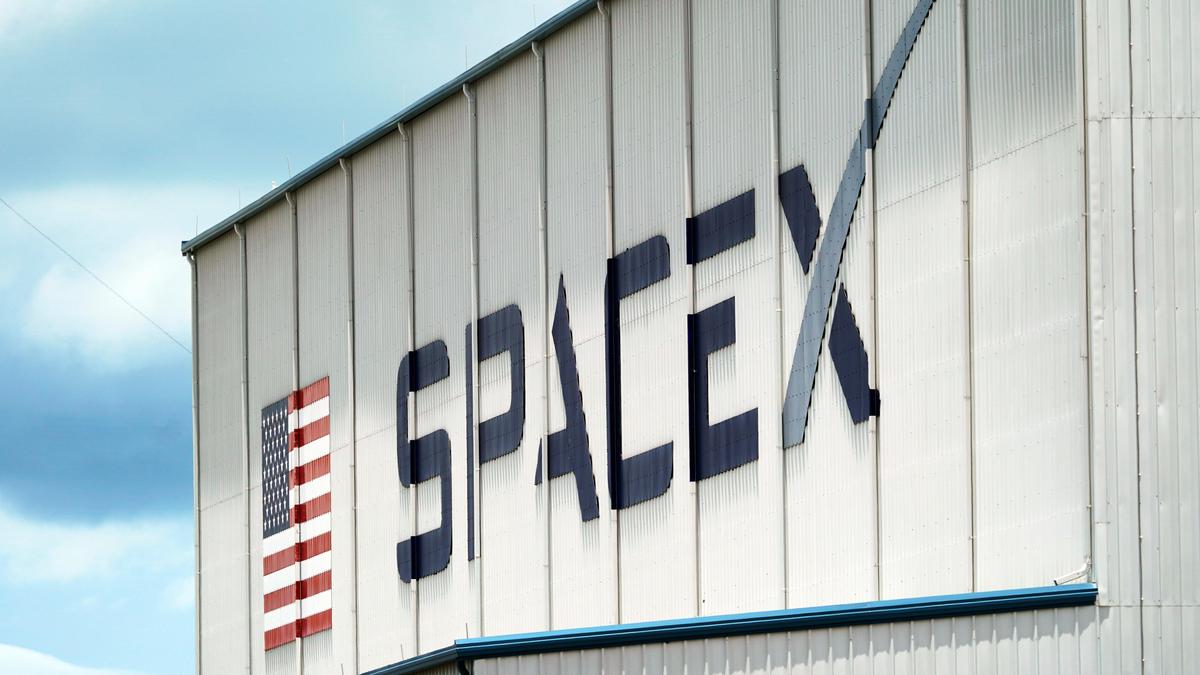
Should You Buy SpaceX Stock When It IPOs at a $2 Trillion Valuation? | The Motley Fool
That price would value it at 75 times forward expected revenue, a level that would dwarf even Nvidia at its AI peak and make it by far the most expensively priced member of the trillion-dollar club. SpaceX just confidentially filed for what could be the largest initial public offering in history. The company is targeting a valuation of $2 trillion and plans to raise roughly $75 billion when it lists, potentially this summer. When that occurs, retail investors will for the first time have a chance to own a piece of Elon Musk's rocket and satellite empire. There's a lot of excitement around this IPO -- and I get it. Apart from my undying love for rockets and all things space exploration, the company has had one of the most impressive business trajectories of any private company over the last two decades. It dominates the space launch market, and its satellite internet division, Starlink, is generating significant operating profits. SpaceX as a whole made roughly $8 billion in EBITDA (earnings before interest, taxes, depreciation, and amortization) on $15 billion to $16 billion in revenue last year. And now, the company includes the social media platform X, Musk's artificial intelligence (AI) project xAI, as well as the brain-chip company Neuralink. But is that combination really worth $2 trillion today? Let's look at the math. Projections for the combined company's revenue next year sit at around $24 billion. A $2 trillion valuation would mean IPO investors are paying more than 80 times sales for the stock. That would be an astronomically expensive valuation, especially for a company in the trillion-dollar club -- of which there are only 11 current members. Nvidia, at the peak of its AI-driven rally, traded at only 40 to 45 times revenue. So you can see how extreme the premium SpaceX is seeking would be compared to other companies with at least a $1 trillion market cap in the table below. Data source: tikr.com. TTM = Trailing 12 months. Data as of April 7, 2026. Keep in mind that these P/S ratios are based on these companies' sales from the last year. SpaceX's P/S of 75 reflects its forward expected earnings. As such, the massive valuation disparity is even worse than it looks in the table. Beyond this, SpaceX is allocating 30% of its IPO shares to retail investors -- that's three to six times the norm. This may seem generous at first blush, but it seems opportunistic to me -- as if the company is seeking to capitalize on the extreme hype surrounding the IPO. I think the company believes much of the "smart money" may be hesitant to buy in at this valuation. SpaceX is certainly an impressive company, and I mean, it builds reusable rockets -- that's just cool. But if you buy this stock at 80 times forward revenue, you'd need everything to go perfectly for years for the company to even grow into its valuation, let alone deliver meaningful upside. And while we are still waiting for the S-1 filing that will reveal the full financial picture, I suspect the company's balance sheet and cash flows won't be pretty. And the xAI acquisition detracts rather than adds value, in my opinion. That portion of the business is saddled with debt and incurred a more than $1.4 billion loss on just $107 million in revenue in the last quarter before it was absorbed into SpaceX. I'm not saying to avoid SpaceX shares entirely. But I would wait for more information and a more reasonable valuation. I think you'll get your chance at that following the IPO -- mega-IPOs don't have a great track record of holding their value in the near term.

Elon Musk elevates Indian-origin trio to leadership roles in xAI overhaul
Elon Musk is reshuffling xAI's engineering leadership, appointing three Indian-origin engineers to key roles as the company integrates more closely with SpaceX ahead of its IPO. Devendra Chaplot will lead pre-training, Aman Madaan will manage the model factory, and Aditya Gupta will oversee post-training and reinforcement learning, aiming to rapidly improve AI development. Three Indian-origin engineers have been moved into key leadership roles as Elon Musk looks to overhaul the engineering side of xAI, according to a report by Business Insider. The changes come at a time when xAI is working more closely with SpaceX ahead of the rockcompany's planned mega initial public offering (IPO). SpaceX executive Michael Nicolls admitted the company is "clearly behind" its rivals and said steps are now being taken to catch up as quickly as possible. The Indian rise Devendra Chaplot, who joined xAI just last month, will now lead pre-training, the early stage where AI models learn general patterns from massive datasets, including text, images, and code, the report said. He previously worked as a researcher at Facebook and Thinking Machines Labs. Aman Madaan will take charge of the model factory and tooling side of things. This includes overseeing the infrastructure, data pipelines, and training workflows that are essential for building and improving AI systems. Aditya Gupta has been appointed to lead post-training and reinforcement learning. His role focuses on the final stage of development, where models are refined, aligned with human preferences, and optimised for real-world uses such as chat and coding assistance. SpaceX IPO SpaceX acquired xAI earlier this year and is gearing up for an IPO in the near future. At the same time, xAI has been dealing with a wave of departures among senior staff and cofounders. The most recent exit was Ross Nordeen, who had been one of Musk's closest deputies. The company has gone through several internal changes as it tries to keep pace with major AI players such as OpenAI, Anthropic, and Google. Other changes in xAI's teams Nicolls, who serves as senior vice president of Starlink at SpaceX, has now also taken on the role of xAI president, according to the Business Insider report. On the product side, Andrew Milich and Jason Ginsburg will now lead the team after joining from AI coding company Cursor in March. They will oversee key offerings such as Grok Main, Grok Voice, and Grok Imagine. Jake Palmer will head physical infrastructure, while Daniel Dueri, a director of software engineering at SpaceX, will oversee compute infrastructure, per LinkedIn. In addition, Matt Monson, who leads Starlink software at SpaceX, will now be responsible for data at xAI. According to Business Insider, in an internal memo, Nicolls said the training performance of xAI's compute systems is "embarrassingly low" and stressed that the company aims to make improvements within the next two months. Nicolls added that the changes are effective immediately and that efforts are underway to assign job titles that better reflect what employees actually do. Back in February, Elon Musk had already reorganised xAI and introduced a new internal structure. Since then, engineers from Tesla and SpaceX have been brought into the company's Palo Alto office to help with the transition, especially since the 11 cofounders have left the company, the report said.

Polymarket traders put 57% odds on Bitcoin hitting $75,000 this month as price recovers toward $71,000
Prediction market data shows traders divided on whether Bitcoin can sustain its rebound from a 52% peak-to-trough decline Traders on Polymarket, the decentralised prediction market platform, are placing the highest probability on Bitcoin reaching $75,000 before the end of April, as the cryptocurrency trades around $71,000 following a week of steady recovery. The $75,000 outcome carries a 57% implied probability, the highest of any price band tracked by the market, while the $65,000 band shows a 47% probability, reflecting the market's assessment that Bitcoin is likely to hold that level rather than retrace. Bitcoin is currently trading at $71,006, flat on the day but up 5.5% over the past week, as sentiment improves following a difficult opening quarter that saw the asset fall more than 52% from its all-time high of $126,198, reached in October 2025. The rebound has been supported by continued institutional buying, with MicroStrategy, the world's largest corporate Bitcoin holder, acquiring 4,871 Bitcoin worth approximately $329.9 million in the first week of April alone. Bitcoin exchange-traded fund inflows have also remained robust, with total cumulative inflows surpassing $53 billion and BlackRock's IBIT fund leading in March with $1.399 billion of net new money. The Polymarket data assigns only 17% odds to Bitcoin reaching $80,000 in April, with probabilities falling sharply for higher price bands, suggesting traders view a near-term breakout above that level as unlikely. The $150,000 target, shown separately on the platform, carries implied odds of just 10%, indicating that while traders see $65,000 as a floor for the month, they do not regard current levels as a launching pad toward record highs in the near term. Geopolitical developments have also contributed to improved risk appetite, with a Pakistan-brokered ceasefire proposal between the United States and Iran prompting traders to unwind more than $270 million in short Bitcoin positions.

If Iran's Bitcoin Request via the Strait of Hormuz Were to Become a Reality, How Much BTC Would Iran Receive? Here's the Unconventional Calculation
What would be the consequences if Iran demanded $1 worth of Bitcoin per barrel from every oil tanker passing through the Strait of Hormuz? As geopolitical developments in the Middle East continue to intersect with cryptocurrency markets, claims that Iran demanded Bitcoin payments via the Strait of Hormuz have attracted attention. According to an analysis, if the current ceasefire continues and Iran were to demand transit fees in Bitcoin for oil tankers, the country could earn approximately 4,000 BTC within two weeks. According to reports, Iran may demand payment in Bitcoin for $1 per barrel from oil tankers passing through the Strait of Hormuz during the two-week ceasefire period. This would mean a mandatory fee for full tankers, while empty tankers would be allowed to pass free of charge. The payment process would reportedly be very fast, and conducting transactions via Bitcoin would make it more difficult to track or seize assets under sanctions. According to estimates based on data from the International Energy Agency, if oil traffic in the Strait of Hormuz returns to normal during the ceasefire, approximately 20 million barrels of oil and petroleum products could be transported daily. In this scenario, Iran could earn approximately $20 million worth of Bitcoin daily, with a total income of $280 million over two weeks. This amount is equivalent to approximately 4,000 BTC at current prices. However, it should be noted that these calculations are purely theoretical and based on normal market conditions. Factors such as the exemption of empty tankers, whether the practice will be implemented, and the extent to which existing geopolitical risks in the region will affect maritime traffic could significantly alter the final figures. Furthermore, there is no official confirmation yet on whether the Bitcoin toll payment system will actually be implemented.

Polymarket Iran bets draw fresh dispute and insider scrutiny
A series of well-timed Iran wagers placed on Polymarket by freshly created anonymous accounts have generated hundreds of thousands of dollars in profits so far. Bets on a ceasefire between the US and Iran have sent more than $170 million coursing through Polymarket, making it one of the largest geopolitical wagers in the short history of prediction markets. Now, the aftermath is raising the same questions that have dogged the platforms for months: whether bettors are trading on inside information, and whether the platforms can cleanly settle the contracts they broker. A series of well-timed Iran wagers placed on Polymarket by freshly created anonymous accounts have generated hundreds of thousands of dollars in profits so far, prompting analysts to scour the trades for tell-tale signs of insider activity. Some payouts on Middle East-related bets are now frozen in a dispute, with traders unable to collect as users debate what constitutes a ceasefire. Together, they expose the growing pains of an industry that is still building the infrastructure to match its ambitions. Almost all of the recent cases that raised insider trading concerns have been based on circumstantial evidence, with no smoking gun pointing to specific insiders at work. On Wednesday, blockchain analytics firm Lookonchain highlighted three recently created accounts that secured more than $480,000 in profits by betting on a ceasefire by April 7 and selling the positions at high prices. The final result of the April 7 contract remains under dispute, a process that will force most traders to wait for more than two days for payouts. Total volume on the market has topped $60 million and remains open for trading while the dispute is resolved. The contracts highlight a persistent problem in prediction markets, where real-world events don't always resolve according to black-and-white criteria. What's more, the growing array of suspicious activity is adding urgency to efforts to address the new risks opened up by prediction markets at a moment when Wall Street is moving to legitimize them and everyday users are piling in. ADVERTISEMENT CONTINUE READING BELOW Prediction markets offer a way to make yes-or-no bets on events ranging from sports to elections and awards shows. Polymarket also uses its operations outside the US to list contracts tied to military conflict, resulting in heavy scrutiny from lawmakers. There's growing momentum in Congress to rein in the nascent industry. Polymarket and its largest rival Kalshi have sought to crack down on insider trading as their platforms grow in popularity. Both firms have signed partnerships with third-party companies to help monitor the issue, and tightened their own rules to define more clearly when bets would be considered as having acted on inside information. Polymarket did not immediately respond to a request for comment. Resolving disputes Disputes over how markets resolve are frequent, even if they only affect a small fraction of the thousands of contracts offered on Polymarket every day. On the platform, anyone can propose how a market should resolve by posting a small amount of collateral. If there's a disagreement, another user can dispute the outcome. The matter is then put to a vote among holders of a cryptocurrency called UMA, with traders debating the evidence in a public Discord chatroom. Some traders have argued that the ceasefire deal between the US and Iran would fall under a "temporary tactical stand-down," which wouldn't count under the rules drawn up by Polymarket. Others pointed to a statement from Iranian foreign minister Abbas Araghchi which said Iran would halt its "defensive operations," arguing that he hadn't ruled out offensive maneuvers. Other Polymarket contracts that track truce dates as far ahead as December 31 have already resolved in favor of a ceasefire, complicating the matter further. ADVERTISEMENT: CONTINUE READING BELOW The search for a pattern Bettors on Polymarket can trade anonymously as the exchange doesn't conduct identity checks, but their activity is visible on Polymarket's website and in blockchain transactions. Traders can also wager across multiple accounts, meaning losses elsewhere may not always be immediately apparent. The challenge of identifying insider activity on a pseudonymous platform has spawned an emerging cottage industry of digital sleuths. There are several hallmarks that analysts have learned to associate with insider trading -- a brand new account with successful bets concentrated in a single market tends to fit the bill. A recent academic study from Columbia Law School and the University of Haifa examined Polymarket's blockchain ledger for patterns consistent with the use of nonpublic information, flagging transactions that generated profits of around $143 million over two years. The researchers cautioned that well-timed trades aren't proof of privileged access. That tension was evident on Wednesday when blockchain forensics firm Bubblemaps SA highlighted a set of suspicious trades, but cautioned they may not have been made by insiders. Three accounts that correctly predicted previous attacks against Iran had placed fresh bets on a truce before April 15, resulting in profits of more than $560,000. Still, the accounts do not have a perfect record, having lost money on similar markets in the past. The ceasefire itself came together in a matter of hours, raising questions about how much advance knowledge anyone outside small group of negotiators could have had. "We cannot say for certain that these accounts are insiders," Bubblemaps said in a social media post. "Still, their track record of correctly calling surprise attacks on Iran suggests they may have access to better information than most."
Rail travel chaos as firefighters tackle huge station blaze for six hours
Our community members are treated to special offers, promotions and adverts from us and our partners. You can check out at any time. More info Commuters were hit by rush‑hour chaos on Thursday (April 9) after a huge blaze tore through a restaurant on the platform of a busy train station, with firefighters battling towering flames through the night. The fire erupted in the early hours at Oulton Broad North railway station, in Suffolk, sending thick smoke billowing across the area as crews from Suffolk and Norfolk operated at the station. Images uploaded to social media showed the roof of the station restaurant completely alight as emergency teams fought to bring the inferno under control. "Residents are being asked to avoid the area, if possible, due to the congestion caused by the number of emergency vehicles present," Suffolk County Council warned in a statement. By 6am the flames had been brought under control, though cancellations were predicted until 10am as crews remained on scene to damp down hotspots. Roads around the station are beginning to reopen, but Suffolk County Council has asked residents to avoid the area due to congestion caused by the large emergency response. Rail services through the station have been halted, with Greater Anglia confirming that tickets will be accepted on local bus routes between Lowestoft, Norwich and Great Yarmouth until trains resume. "After a serious fire at Oulton Broad North caused severe damage to a building at the station, overnight, trains are unable to run through the station," a spokesperson for National Rail said, with cancellations expected until 10am. "The Fire Brigade, Police and Network Rail engineers are on site, ensuring that the fire has been extinguished, investigating and looking to make all structures on the station safe." A spokesperson for Suffolk Fire and Rescue Service said: "6:00am update - the fire is now out, and crews remain on the scene to hot spot the area. Crews from Norfolk are departing, and we thank them for their support. Roads around the station are reopening now, but local residents are being asked to avoid the area if possible. "Fire crews were called to reports of a fire at a commercial building at Oulton Broad North Railway Station. Upon arrival crews were faced with a roof fire within a restaurant based within the Railway station on the platform."

Zoom's Anthropic Investment Now Worth Billions - News Directory 3
The investment was initially revealed in May 2023 when Anthropic announced a partnership with Zoom. Analysts at Baird estimate that Zoom's investment in the artificial intelligence startup Anthropic could currently be valued between $2 billion and $4 billion. This valuation depends on specific dilution assumptions and follows the disclosure of a strategic stake acquired by Zoom Ventures in May 2023. The analysis led to a market reaction on January 26, 2026, when shares of Zoom closed up 11%. The surge occurred after Baird flagged the investment as a potential catalyst for the company's balance sheet. Investment Details and SEC Filings The investment was initially revealed in May 2023 when Anthropic announced a partnership with Zoom. While the specific value of the stake was not disclosed at the time of the announcement, Zoom later reported $51 million in strategic investments during that same quarter in a filing with the U.S. Securities and Exchange Commission. Baird analysts estimate that the vast majority, or potentially all, of that $51 million investment was directed toward Anthropic. Valuation and Potential Returns Anthropic is currently valued at approximately $350 billion. Based on this valuation, Baird analysts suggest that Zoom's early investment could yield a return of roughly 78 times the original capital deployed. The estimated current value of $2 billion to $4 billion represents a significant asset for Zoom as it navigates its post-pandemic growth strategy. Analysts described the stake as a hidden gem that had previously been overlooked by the market while investors focused on the company's revenue growth and AI product integration. Technical Integration and Partnership The financial investment is paired with a technical partnership aimed at integrating Anthropic's AI capabilities into Zoom's ecosystem. Specifically, Zoom is utilizing Claude, an AI assistant developed by Anthropic. We are announcing a new partnership with Zoom, a leader in enterprise collaboration and communication solutions. Zoom will use Claude, our AI assistant built with Constitutional AI, to build customer-facing AI products focused on reliability, productivity, and safety. This integration focuses on creating AI products designed for enterprise reliability and safety, leveraging the Constitutional AI framework used to build Claude. Strategic Market Context The valuation of the Anthropic stake comes at a time when Zoom is seeking to stabilize its market position. The company saw a massive increase in popularity during the start of the Covid-19 pandemic as a primary tool for remote collaboration, but its stock experienced a decline as workers transitioned back to in-person roles. Baird analysts noted that while the market has been primarily focused on Zoom's ability to capture AI opportunities and reaccelerate revenue growth, the 2023 investment provides a substantial financial cushion and strategic advantage. The current valuation of Anthropic's $350 billion market cap reshapes how investors view Zoom's balance sheet, transforming a relatively small strategic investment into a multi-billion dollar asset.

Polymarket traders put 57% odds on Bitcoin hitting $75,000 this month as price recovers toward $71,000
Prediction market data shows traders divided on whether Bitcoin can sustain its rebound from a 52% peak-to-trough decline Traders on Polymarket, the decentralised prediction market platform, are placing the highest probability on Bitcoin reaching $75,000 before the end of April, as the cryptocurrency trades around $71,000 following a week of steady recovery. The $75,000 outcome carries a 57% implied probability, the highest of any price band tracked by the market, while the $65,000 band shows a 47% probability, reflecting the market's assessment that Bitcoin is likely to hold that level rather than retrace. Bitcoin is currently trading at $71,006, flat on the day but up 5.5% over the past week, as sentiment improves following a difficult opening quarter that saw the asset fall more than 52% from its all-time high of $126,198, reached in October 2025. The rebound has been supported by continued institutional buying, with MicroStrategy, the world's largest corporate Bitcoin holder, acquiring 4,871 Bitcoin worth approximately $329.9 million in the first week of April alone. Bitcoin exchange-traded fund inflows have also remained robust, with total cumulative inflows surpassing $53 billion and BlackRock's IBIT fund leading in March with $1.399 billion of net new money. The Polymarket data assigns only 17% odds to Bitcoin reaching $80,000 in April, with probabilities falling sharply for higher price bands, suggesting traders view a near-term breakout above that level as unlikely. The $150,000 target, shown separately on the platform, carries implied odds of just 10%, indicating that while traders see $65,000 as a floor for the month, they do not regard current levels as a launching pad toward record highs in the near term. Geopolitical developments have also contributed to improved risk appetite, with a Pakistan-brokered ceasefire proposal between the United States and Iran prompting traders to unwind more than $270 million in short Bitcoin positions.

Rail travel chaos as firefighters tackle huge station blaze for six hours
Our community members are treated to special offers, promotions and adverts from us and our partners. You can check out at any time. More info Commuters were hit by rush‑hour chaos on Thursday (April 9) after a huge blaze tore through a restaurant on the platform of a busy train station, with firefighters battling towering flames through the night. The fire erupted in the early hours at Oulton Broad North railway station, in Suffolk, sending thick smoke billowing across the area as crews from Suffolk and Norfolk operated at the station. Images uploaded to social media showed the roof of the station restaurant completely alight as emergency teams fought to bring the inferno under control. "Residents are being asked to avoid the area, if possible, due to the congestion caused by the number of emergency vehicles present," Suffolk County Council warned in a statement. By 6am the flames had been brought under control, though cancellations were predicted until 10am as crews remained on scene to damp down hotspots. Roads around the station are beginning to reopen, but Suffolk County Council has asked residents to avoid the area due to congestion caused by the large emergency response. Rail services through the station have been halted, with Greater Anglia confirming that tickets will be accepted on local bus routes between Lowestoft, Norwich and Great Yarmouth until trains resume. "After a serious fire at Oulton Broad North caused severe damage to a building at the station, overnight, trains are unable to run through the station," a spokesperson for National Rail said, with cancellations expected until 10am. "The Fire Brigade, Police and Network Rail engineers are on site, ensuring that the fire has been extinguished, investigating and looking to make all structures on the station safe." A spokesperson for Suffolk Fire and Rescue Service said: "6:00am update - the fire is now out, and crews remain on the scene to hot spot the area. Crews from Norfolk are departing, and we thank them for their support. Roads around the station are reopening now, but local residents are being asked to avoid the area if possible. "Fire crews were called to reports of a fire at a commercial building at Oulton Broad North Railway Station. Upon arrival crews were faced with a roof fire within a restaurant based within the Railway station on the platform."
After Mythos, Anthropic launches Claude Managed Agents to speed up agentic AI development
Claude Managed Agents will make it easier for developers to build and run AI agents. (Representational image made with AI) Anthropic is expanding its enterprise business tools and has launched a new product called Claude Managed Agents, which will make it easier for developers to build and run AI agents. With the new tool, developers only need to define the tasks, tools, and guardrails for building an AI agent, while Claude Managed Agents handles the remaining parts of the development cycle. This tool will enable AI agents to go from prototype to launch in days rather than months. With the launch of Claude Managed Agents, the AI company aims to further expand its enterprise business, which is already growing very fast. The company reported annualized recurring revenue of $9 billion at the end of 2025, and it has now reached $30 billion in March 2026. The majority of the company's growth has come from its Claude Platform, an enterprise product that allows developers to access the company's AI models through an API. Claude Managed Agents is expected to further fuel this growth, as the tool will free developers from building complex infrastructure for AI agents and allow them to focus more on improving the user experience. Agents built with Managed Agents will not require servers, security systems, or execution environments, as everything will run on Claude's cloud infrastructure. Additionally, it comes with a system that allows agents to work autonomously. They can call tools on their own, manage context, and recover from errors. The new Managed Agents also includes several special features that allow developers to build agents that can run for hours, create and manage other agents, and access APIs, databases, or internal tools. The tool also provides greater monitoring control to developers, allowing them to see which tools the agent uses, what decisions it makes, and where errors occur. Anthropic says the tool is currently available in public beta on the Claude Platform starting today. In its testing, the company found that outcomes improved by 10 points compared to standard prompting. The new tool comes a day after the company launched its latest artificial intelligence model called Claude Mythos Preview. The company claimed Claude Mythos is so powerful that it was able to spot thousands of cybersecurity vulnerabilities that were missed by humans across apps and operating systems. Anthropic said it is working with over 40 tech companies to use Mythos and fix such vulnerabilities before potentially releasing the model to the public.

Polymarket traders put 57% odds on Bitcoin hitting $75,000 this month as price recovers toward $71,000
Prediction market data shows traders divided on whether Bitcoin can sustain its rebound from a 52% peak-to-trough decline Traders on Polymarket, the decentralised prediction market platform, are placing the highest probability on Bitcoin reaching $75,000 before the end of April, as the cryptocurrency trades around $71,000 following a week of steady recovery. The $75,000 outcome carries a 57% implied probability, the highest of any price band tracked by the market, while the $65,000 band shows a 47% probability, reflecting the market's assessment that Bitcoin is likely to hold that level rather than retrace. Bitcoin is currently trading at $71,006, flat on the day but up 5.5% over the past week, as sentiment improves following a difficult opening quarter that saw the asset fall more than 52% from its all-time high of $126,198, reached in October 2025. The rebound has been supported by continued institutional buying, with MicroStrategy, the world's largest corporate Bitcoin holder, acquiring 4,871 Bitcoin worth approximately $329.9 million in the first week of April alone. Bitcoin exchange-traded fund inflows have also remained robust, with total cumulative inflows surpassing $53 billion and BlackRock's IBIT fund leading in March with $1.399 billion of net new money. The Polymarket data assigns only 17% odds to Bitcoin reaching $80,000 in April, with probabilities falling sharply for higher price bands, suggesting traders view a near-term breakout above that level as unlikely. The $150,000 target, shown separately on the platform, carries implied odds of just 10%, indicating that while traders see $65,000 as a floor for the month, they do not regard current levels as a launching pad toward record highs in the near term. Geopolitical developments have also contributed to improved risk appetite, with a Pakistan-brokered ceasefire proposal between the United States and Iran prompting traders to unwind more than $270 million in short Bitcoin positions.