News & Updates
The latest news and updates from companies in the WLTH portfolio.
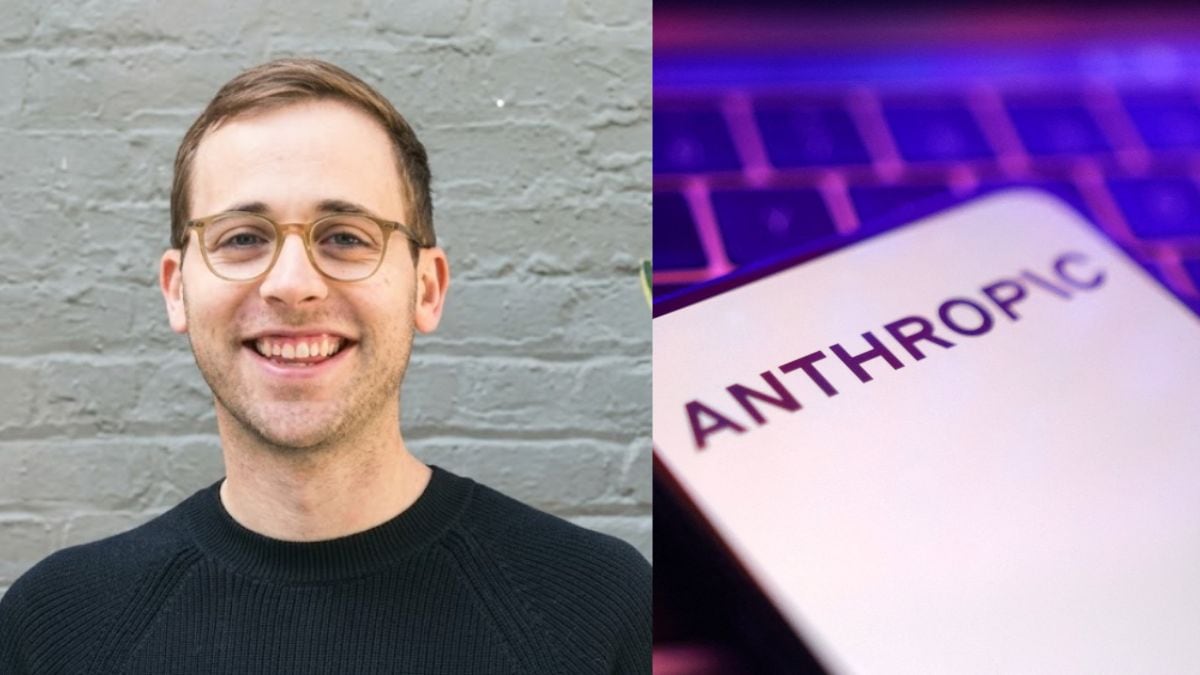
A sign of the AI era? Workday exec trades CTO title for 'member of technical staff' role at Anthropic
The AI era is elevating a flatter, broader "member of technical staff" role into one of the more prestigious jobs in tech. In March, Anthropic hired Peter Bailis as a member of technical staff less than a year after he joined Workday as its chief technology officer. Workday's president of product and technology, Gerrit Kazmaier, said at the time of hiring that Bailis would be part of the HR company's initiative to go "all in" on AI. Prior to the Workday post, Bailis was a VP at Google for about a year and a half, according to his LinkedIn. "We're grateful for Peter's contributions and wish him the best in his next chapter," a Workday spokesperson said in a statement. "We're thrilled that Gabe Monroy has taken on the role of Chief Technology Officer at Workday, leading our next chapter of AI innovation." An Anthropic spokesperson confirmed Bailis's move from Workday. Bailis did not immediately return a request for comment. The Anthropic spokesperson said Bailis will be working on reinforcement learning engineering at the startup. The MTS title is common at frontier labs -- like Anthropic and OpenAI -- and larger companies for technical hires across research and engineering. The title highlights a cross-functional and non-hierarchical structure. While the label doesn't specify an executive-level position, it carries prestige and often comes with the promise of building new products. Anthropic on its careers page says "engineers here do lots of research, and researchers do lots of engineering," adding that engineers will "have as much input into Anthropic's direction as anyone else." OpenAI president Greg Brockman similarly explained in 2023 that the AI startup did not want to "bucket people into researchers and engineers," opting for the MTS title. Mike Krieger was the cofounder and CTO of Instagram before he started a news aggregator app and then joined Anthropic as its chief product officer. Earlier this year, Krieger announced on X that he was shifting roles to a technical staff member of Anthropic's Labs, which works on Claude Code. A MTS role can also bring high pay. In 2025, Business Insider reported, citing H-1B visa filings to the Department of Labor, that a member of technical staff at Anthropic can pay $300,000 to $405,000. At OpenAI, a member of technical staff could be paid between $210,000 to $530,000, according to the report. The skyrocketing valuation of Anthropic also brings the prospect of minting multimillionaires through equity as the startup eyes a $380 billion post-money valuation. The potential allure of the MTS role at a frontier AI lab comes as AI-native startups disrupt larger software companies. In February, Anthropic's rollout of Claude Cowork and industry-specific plugin tools triggered a stock sell-off in the software sector. The reaction was dubbed the SaaSpocalypse, reflecting fears that AI labs like Anthropic are making tools advanced enough to make companies dedicated to software services redundant.
Perplexity Pro vs Max vs Enterprise: What's the Difference Besides Usage Allowance?
Perplexity AI now has six subscription tiers -- Free, Education Pro ($10/month), Pro ($20/month), Max ($200/month), Enterprise Pro ($40/seat/month), and Enterprise Max ($325/seat/month). What started as a simple free-versus-paid search engine has become one of the most layered AI subscription products on the market. Most comparison articles focus on how many Pro Searches you get per day. But the actual differences between plans go much deeper: which AI models you can use, whether you get access to frontier reasoning models like Claude Opus 4.6 and OpenAI o3-pro, how deep your research capabilities go, whether your data is used for training, and whether you can access Perplexity's new agentic Computer system. This guide breaks down every meaningful difference beyond message limits so you can decide which plan is actually worth your money. This is where the plans diverge most sharply, and it's the difference most people don't expect. Free users get only Perplexity's default model -- a fast, lightweight system optimized for speed rather than depth. You cannot choose which model processes your query. Pro unlocks model selection. You can choose between GPT-5.2, GPT-5.4, GPT-5.4 Thinking, Claude Sonnet 4.6, Gemini 3.1 Pro, Grok-2, Mistral Large, Kimi K2.5 (with Thinking mode), and Perplexity's own Sonar models. This is a significant advantage -- no other $20/month AI subscription gives you access to models from OpenAI, Anthropic, Google, and xAI in a single interface. Max reserves the most powerful models exclusively. OpenAI's o3-pro (their strongest reasoning model) and Anthropic's Claude Opus 4.6 (their most capable writing and analysis model) are only available on Max and Enterprise Max. These models cannot be accessed on Pro at any price within Perplexity. Max also gets Model Council -- a feature that runs three frontier models simultaneously on the same query, compares their outputs, highlights where they agree and disagree, and synthesizes a higher-confidence answer. This is genuinely unique in the AI industry and unavailable on any other tier. Before upgrading, there's an important transparency issue to understand. Between late 2025 and early 2026, multiple reports surfaced that Perplexity was silently routing some Pro queries to cheaper, less capable models. Users reported receiving Claude Haiku responses when they had selected Claude Sonnet, with no notification of the substitution. This generated significant backlash, with some users viewing it as a stealth downgrade designed to push subscriptions toward the $200/month Max tier. Whether this reflected intentional upselling or capacity management during high demand, it's worth monitoring. The model name displayed in your response header should match what you selected -- if it doesn't, that's a red flag. Deep Research is Perplexity's most powerful research tool. It spends 2-4 minutes breaking your question into sub-questions, searching dozens of sources, reading full articles, cross-referencing findings, and producing a comprehensive cited report. It now runs on Claude Opus 4.6 and has achieved leading accuracy scores on research benchmarks. The tier differences are dramatic: For most professionals, 20 Deep Research queries per day on Pro is generous -- that's a substantial amount of research output. But if you're doing intensive competitive analysis, academic research, or market intelligence work throughout the day, Max's unlimited access removes the ceiling entirely. A February 2026 upgrade also gave Deep Research the ability to generate structured outputs -- presentations, dashboards, and data tables -- directly from research results, rather than only producing text reports. Launched in February 2026, Perplexity Computer is an autonomous AI workspace that orchestrates 19+ specialized models to execute complex multi-step tasks. Think of it as an AI assistant that can build websites, analyze financial datasets, deploy code, create presentations, and manage workflows -- all without constant human direction. Computer availability by tier: Enterprise Max users can invoke Computer directly inside Slack by typing @computer in any channel. A waitlist-only "Personal Computer" product -- an always-on AI running on a dedicated Mac mini that works 24/7 as a digital proxy -- was announced in March 2026 but hasn't shipped yet. For individual users, this is the primary reason to consider Max over Pro. If your work involves complex, multi-step tasks that benefit from autonomous AI execution, Computer is a meaningful capability upgrade. Perplexity's core differentiator is real-time web search with mandatory inline citations on every response. But citation quality varies dramatically by plan. Free basic searches consult a limited set of sources and produce standard inline citations -- numbered references you can click to verify. Pro Search, which Free users get roughly 5 times per day and Pro users get unlimited, works fundamentally differently. It decomposes your query into sub-questions, searches multiple sources for each, cross-references findings, and produces answers citing roughly 3x more sources with 10x the citation density compared to basic search. According to Columbia Journalism Review benchmarks, Perplexity carries a 37% citation error rate. That's far from perfect, but substantially better than ChatGPT Search's reported 67% error rate. The Academic focus mode improves accuracy further by restricting retrieval to peer-reviewed sources including arXiv, IEEE, and a direct Wiley partnership for publisher-grade access. The bottom line: Free Perplexity gives you cited search. Pro Perplexity gives you cited research. The difference in depth and accuracy is substantial. File handling is another area where plans diverge sharply, and it matters for anyone who works with documents regularly. Enterprise tiers unlock organizational file repositories -- shared document collections that Perplexity can search across, plus an "Internal Knowledge" focus mode that restricts AI responses to your organization's own documents. Enterprise Max adds 400+ prebuilt connectors via Model Context Protocol, a Snowflake connector for direct data warehouse queries, and premium data source connectors (CB Insights, PitchBook, Statista, FactSet, S&P Global). Excel and PowerPoint file support was added in January 2026. Audio (MP3, WAV, FLAC) and video (MP4, MOV, AVI) uploads are also supported on paid tiers. Image generation is completely absent on Free and available on all paid plans. Available models include GPT Image 1, DALL-E 3, FLUX.1, Playground V3, Seedream 4.5 (ByteDance's cinematic image model), and Stable Diffusion XL. Video generation tells a more nuanced story: If video generation matters to your workflow, the jump from Pro (3 silent clips) to Max (Sora 2 Pro with audio) is the most dramatic feature gap in Perplexity's lineup outside of model access. Spaces are persistent project workspaces where you upload files, set custom AI instructions, and collaborate with teammates. All users can create Spaces, but Pro limits collaboration to 5 users per private Space while Enterprise tiers allow unlimited teammates. Pages let you convert any research thread into a structured, publishable article with customizable tone, rearranged sections, and AI-generated images. Pages are available to all users including Free -- this is one of the few premium-feeling features that Perplexity doesn't gate behind a paywall. Labs enables creation of dashboards, spreadsheets, presentations, and web apps from prompts. Pro users get 50 Labs queries per month. Max gets unlimited. Free users don't have access. Perplexity's API operates on a pay-as-you-go credit model that's separate from your subscription. However, Pro includes $5/month in API credits and Max includes $50/month -- a meaningful perk if you're building integrations. The Sonar API family includes four products at different price points. The base Sonar model runs $1 per million tokens. Sonar Pro costs $3 input and $15 output per million tokens. Sonar Reasoning Pro and Sonar Deep Research are available for more intensive use cases. A standalone Search API costs $5 per 1,000 requests. In March 2026, Perplexity launched an Agent API for orchestrating multi-step workflows and an Embeddings API for retrieval at scale. This is one of the most important differences between tiers, and it mirrors what we see across the AI industry. On Free, Pro, and Max, Perplexity uses your conversation data for model training by default. You can opt out via a toggle in Account Settings labeled "AI Data Retention," but the default is opt-in. Perplexity does maintain agreements with OpenAI and Anthropic preventing those providers from using Perplexity's data for their own training -- so your data isn't being double-dipped. On Enterprise Pro and Enterprise Max, customer data is never used for training. This is a contractual guarantee called Zero Data Training. Enterprise queries are not logged for training purposes. Uploaded files are auto-deleted after 7 days in non-persistent storage, though organizations with 50+ seats or at least one Enterprise Max user can configure custom retention policies. There's an important caveat here. In March 2026, a class action lawsuit was filed alleging that Perplexity had embedded Meta Pixel, Google Ads, and other tracking scripts that sent user prompts and responses to Meta and Google for ad targeting -- even in "incognito mode." The lawsuit covers all U.S. users from December 2022 through February 2026. This hasn't been adjudicated, and Perplexity officially abandoned advertising in February 2026, but it's worth knowing about if data privacy is a primary concern. Enterprise Pro and Enterprise Max both include SOC 2 Type II compliance, SAML 2.0 SSO, and GDPR/PCI DSS adherence. However, several critical governance features require either 50+ total seats or at least one Enterprise Max user in your organization: This creates an interesting workaround for smaller organizations: purchasing a single Enterprise Max seat at $325/month effectively unlocks these governance features for your entire organization, regardless of total seat count. The remaining seats can be Enterprise Pro at $40/month each. Enterprise Max also includes the Final Pass document reviewer -- an AI auditor that checks documents for logical consistency, factual accuracy, and contradictions before finalization. Education Pro deserves its own mention because the value proposition is exceptional. Verified students and faculty (through SheerID) get Pro-level access for $10/month -- half the standard price. Many promotional programs offer the first 12 months completely free with no credit card required. This includes the same model selection, unlimited Pro Search, Deep Research, image generation, and Spaces access as regular Pro. The only difference is price. If you're a student or educator, this is one of the best deals in the AI subscription market. Free Pro access is also extended to U.S. military veterans and government employees as of January 2026. Voice Mode uses OpenAI's GPT Realtime 1.5 model with local speech-to-text processing -- your audio is never uploaded to Perplexity's servers. Free users get roughly 5 voice messages before hitting a paywall on mobile. Pro and Max unlock full voice mode across mobile, desktop, and the Comet browser. Android supports a "Hey Perplexity" wake phrase. iOS offers Action Button integration. Desktop shortcuts provide quick voice access (Cmd+Shift+V on Mac, Ctrl+Shift+V on Windows). The Discover feed -- a personalized news and topic feed -- is available to all users. Comet, Perplexity's Chromium-based AI browser, is a free download for everyone, but enhanced AI assistant features (called Comet Plus) require Pro or higher. iOS and Android maintain feature parity on all core functions. Desktop still dominates usage at roughly 82% of visits versus 18% from mobile. At the ~$20/month price point, these four subscriptions serve genuinely different purposes. Perplexity is the only option that searches the web by default on every query with mandatory citations, and the only one that lets you choose between models from multiple providers in a single interface. But it lacks the creative generation depth of ChatGPT, the prose quality of Claude, and the ecosystem integration of Google. The emerging consensus among power users is to treat these as complementary tools rather than competitors. The most commonly recommended combination is Claude Pro (for writing and analysis) plus Perplexity Pro (for research and verification) at $40/month total. Free ($0): You want a better search engine with cited answers for casual use. Good enough for occasional research, but the ~5 Pro Searches per day and lack of model choice limit serious work. Still genuinely useful -- Perplexity Free is arguably the best free AI search tool available. Education Pro ($10/month or free): You're a verified student or faculty member. Identical to Pro at half price or free for the first year. No reason not to claim this if you qualify. Pro ($20/month): The best value for individual researchers and professionals. Unlimited Pro Search, 20 Deep Research queries per day, multi-model selection across providers, image generation, Spaces, and $5 in API credits. The only AI subscription at this price with default web search, mandatory citations, and multi-provider model access. Best for anyone whose primary need is finding, verifying, and synthesizing information from the web. Max ($200/month): For power users who need frontier reasoning models (Opus 4.6, o3-pro), unlimited Deep Research, Model Council for multi-model verification, full Perplexity Computer access (10,000 credits/month), and unlimited Labs. The price is steep, but Max effectively replaces separate subscriptions to ChatGPT Pro, Claude Max, and other premium tiers. Only makes sense if you use AI heavily throughout your workday and need the absolute best models available. Enterprise Pro ($40/seat/month): For teams that need collaboration features, organizational file repositories, cloud storage connectors, Zero Data Training privacy guarantees, SOC 2 compliance, and SSO. The governance features matter if you handle sensitive data. Note that SCIM, audit logs, and configurable retention require either 50+ seats or one Enterprise Max user. Enterprise Max ($325/seat/month): For research-intensive organizations needing maximum model access, premium data source connectors (PitchBook, FactSet, S&P Global), Final Pass document review, Slack-integrated Computer, and full governance controls. A single Enterprise Max seat unlocks premium governance features for your entire organization. Perplexity's plans differ far more than their search query limits suggest. The model access gap between Pro and Max is the single biggest differentiator -- frontier models like Claude Opus 4.6 and o3-pro simply don't exist on Pro. The privacy divide between consumer plans (data used for training by default) and enterprise plans (contractual Zero Data Training) is equally consequential for professional users. For most people, Pro at $20/month is the right choice. It's the only subscription at this price that gives you multi-provider model selection, unlimited cited web search, and 20 Deep Research queries per day. No competitor matches this combination. If you find yourself consistently needing the strongest reasoning models, doing more than 20 Deep Research queries daily, or wanting Perplexity Computer for autonomous workflows, Max at $200/month starts to make sense -- especially if it replaces multiple other AI subscriptions. Start with Pro. Perplexity's unique value proposition -- real-time web search with mandatory citations and multi-model choice -- is fully available at the $20 tier. Upgrade to Max only when you hit Pro's ceiling on model quality or research volume.

Mint Explainer | Can AI find bugs humans can't? Inside Anthropic's Project Glasswing | Mint
CrowdStrike's shares dropped 6% on Wednesday, while Fortinet's shares declined 3.5%. Cisco Systems' shares, after dropping 2%, at the start of trading in the US yesterday, recovered to trade higher. Shouvik has been tracking the rise and shifts of India's technology ecosystem for over a decade, across print, broadcast and web-first platforms. He's been a tinkerer of machines and PCs since childhood, a habit he was thrilled to convert into his profession. This has led him to fascinating experiences of technologies around the world, which is what keeps him hooked to his job.<br><br>Shouvik likes to believe that he is one of the few technology journalists in India who can also code. He has also been writing about the rise of AI well before it became a household name, and has met some of the most fascinating people over the years through his work.<br><br>Shouvik writes about AI, Big Tech, data centres, electronics, semiconductors, cybersecurity, gaming, cryptocurrencies, and consumer technologies. He is most fond of the stories he has written during his time here at Mint, for which he also writes 'Transformer', a weekly technology newsletter, and hosts 'Techcetra', a weekly technology podcast.<br><br>Outside of work, Shouvik spends most of his time with Pixel, whom he believes is the world's best dog. He is also an avid reader, a toy collector, a gamer and a frequent traveller.

New Polymarket accounts bet big on US-Iran ceasefire hours before announcement
These bets were made even though, in the hours before a two-week ceasefire was announced on Tuesday, President Donald Trump's rhetoric had escalated sharply and there were few signals that a ceasefire deal was imminent. Early in the day, Trump had issued a warning on social media that "a whole civilisation will die tonight" if Iran did not meet his demand to open the Strait of Hormuz by his 8pm ET deadline. One of these wallets, created on Tuesday around 10am local time, placed roughly $US72,000 ($AUD102,264) in bets at an average price of 12.50 cents. The buy-in for each betting event ranges from $0 to $1.42 each, reflecting a 0 per cent to 100 per cent chance of what users think could happen. Another, which joined the platform on April 6 and traded on this exact event, shows a win of $178,230. The higher price for "Yes" at that time may have reflected the efforts late Tuesday by the government of Pakistan to get Trump to extend his deadline by two weeks. There is also the possibility that these individual Polymarket users placed their bets expecting Trump to back down, given his habit during his second term to make bold threats only to retreat -- a phenomenon his critics have derided as "Trump Always Chickens Out," or TACO. While some users took handsome profits, others must wait for payouts because Polymarket has labelled the April 7 Iran-US ceasefire contract as "disputed," given that Iran was still placing restrictions on ships passing through the Strait of Hormuz and missile attacks in the region continued. That dispute could take 48 hours to resolve. Public blockchain data cannot identify who controls the new wallets. Polymarket uses proxy smart contract wallets, meaning a single user can create multiple accounts. Only Polymarket has the internal data needed to determine whether these were new users or existing users opening additional accounts. Polymarket did not respond to a request for comment. Representative Blake Moore, R-Utah, who has introduced legislation to regulate prediction markets, released a statement on Wednesday saying: "It's highly unlikely that these are good-faith trades; it's much more likely that these are insiders with access to information ahead of the public. Without some kind of restrictions, there is nothing stopping government or military officials from profiting from their positions." The trading pattern of newly created Polymarket accounts placing strategic, well-timed bets mirrors earlier episodes on the platform. Newly created accounts placed large wagers hours before the January capture of Venezuelan President Nicolás Maduro, and made hundreds of thousands of dollars in profit. Similar clusters of accounts have also repeatedly profited from well-timed bets on military actions involving Iran. Such bets have repeatedly raised questions from the public as well as members of Congress about whether some traders are using inside information to profit in these prediction markets. Bipartisan groups of senators as well as representatives have introduced legislation that would broaden the definition of insider trading to include prediction markets. Even the two biggest platforms in the industry, Kalshi and Polymarket, have said they see a need to broaden the definition of insider trading on their platforms. "This is why these markets need regulation," said Todd Philips, a professor at Georgia State University who has written on prediction markets and the industry's regulations. "We can't have people trading with inside information and expect other traders are going to be OK being in these markets." NEVER MISS A STORY: Get your breaking news and exclusive stories first by following us across all platforms.

Kindness amid chaos: Marikina resto provides free full meals to drivers, delivery riders
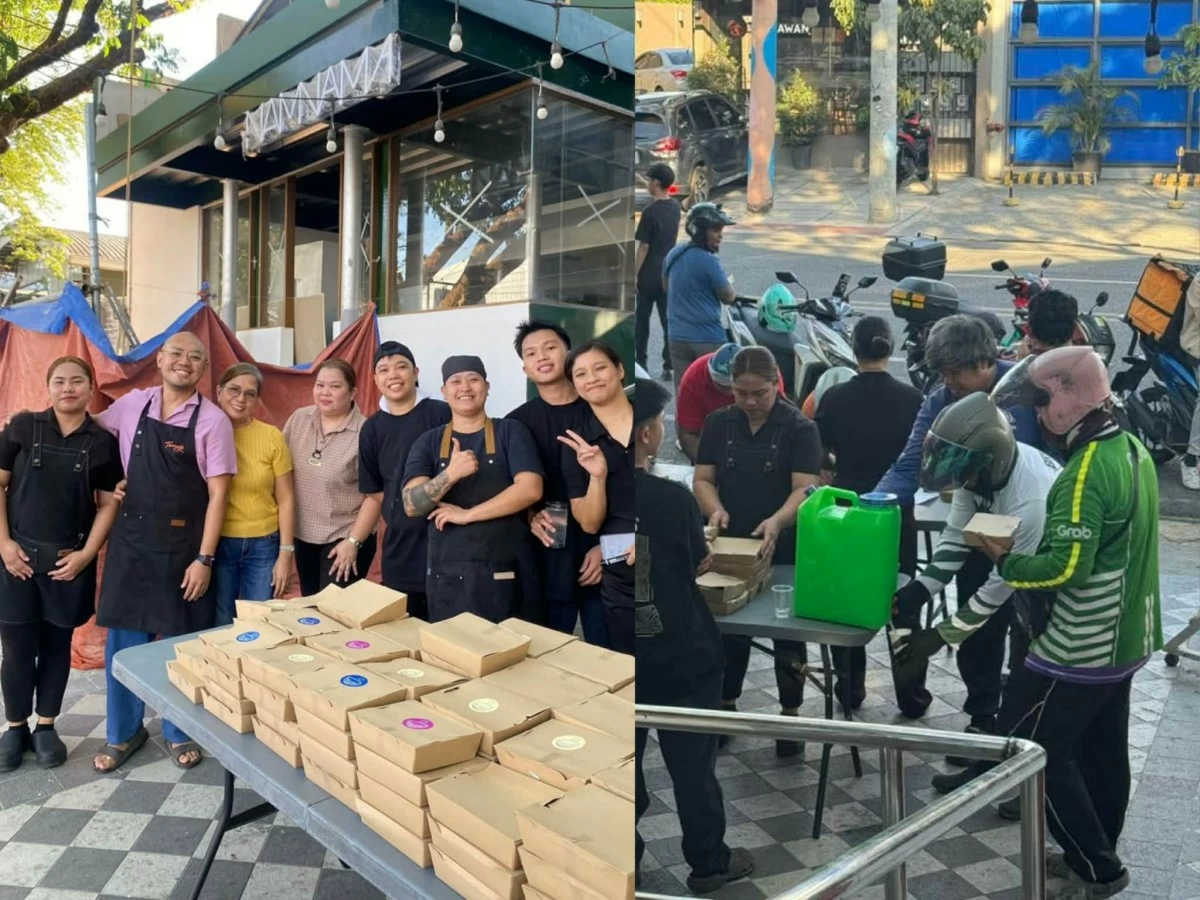
Despite also being affected by the fuel crisis, kindness is still on the menu. In Marikina City, a restaurant is serving free full meals to PUV drivers and delivery riders, proving that selflessness and camaraderie remain alive even amid the chaos. While Chef Jayson Maulit of Trining's Kitchen Stories knows that giving free meals will not solve the bigger problems, it still helps ease the hunger of drivers who often ignore their growling stomachs just to earn enough for fuel and bring home a modest income. In an interview with the Manila Bulletin, Maulit said that the initiative was created to fill the gap that drivers often choose to ignore for the sake of their families. "Ginawa rin po natin ngayon itong free meals dahil alam namin na mas makakatulong po yun kahit kaunti man lang para hindi na alalahanin ng mga drivers kung saan nila kukunin yung pangkain nila everyday (We also launched these free meals because we know that, even in a small way, they can help ease the burden, so drivers no longer have to worry about where they will get their food every day)," he said. "Kadalasan po ng mga riders at drivers na nakakausap namin, mas pipiliin nila na magpagasulina na lang kesa kumain. Eh, tingin po namin medyo mabigat po iyon eh. Kung ang choice mo ay pagkain at gasolina, tapos pinili mo yung gasolina parang kailangan may tumulong na. Meron nang mag-intervene (Most of the riders and drivers we speak with would rather spend their money on fuel than on food. We feel that is a heavy burden to carry. When the choice comes down to food or fuel, and they choose fuel, it shows that someone needs to step in and help)," he shared. The initiative began on Monday, April 6, with a simple merienda of pancit bihon funded out of their own pocket, before expanding into full meals the next day, as friends and volunteers also pitched in funds to help them prepare more rice meals and a wider variety of dishes for the transport sector. But even before anyone else stepped in to support the initiative, Maulit said the farmers in Benguet were the first to help, providing free vegetables after learning they would be used to prepare meals for the transport sector. "Bumili po tayo ng gulay sa mga farmers sa Benguet. Nung nalaman po nila na para sa transport sector yung gagawin natin, tinapatan po nila yung pinurchase na gulay, parang tulong na rin nila (We bought vegetables from farmers in Benguet. When they learned that it was for the transport sector, they matched the amount we purchased, offering their own contribution, effectively doubling our starting resources)," Maulit explained. In just three days, their initiative had already reached 1,125 beneficiaries. With the kindness they started, it created ripple effects. On the third day of their distribution, a coffee shop sponsored 100 bottles of coffee. "May mga friends po in the industry na nagpapadala din ng mga produkto nila para sa mga drivers, so nagkakaroon po siya ng ripple effect ngayon (Some friends in the industry are also sending their products for the drivers, so the initiative is creating a ripple effect)," the chef said. He added that a poultry company has already pledged chicken and eggs, while a meat supplier has pledged beef, saying it would allow them to provide more meals, enough to sustain the initiative until next week. He clarified, however, that they will continue cooking and serving as long as there are resources available. "Para po sa mga gustong tumulong, pwede pong mag-reach out sa akin personally through my Facebook page. Pwede pong mag-donate in cash or in kind. Basta meron pong lulutuin, lulutuin namin. Basta may pambili kami ng LPG, magluluto po kami (For those who want to help, you can reach out to me personally through my Facebook page. Donations can be in cash or in kind. As long as there is something to cook, we will cook it. As long as we have funds for LPG, we will keep cooking)." Trining's Kitchen Stories helps communities in need Trining's Kitchen Stories was founded during the COVID-19 pandemic to honor the memories and family recipes of Maulit's grandmother, Trining, who passed away during that time. He added that all the dishes in the restaurant are family recipes, and they want to share their grandmother's life story through their cooking. During the pandemic, he said there was a gratitude campaign for frontliners, where people could donate and buy food for hospital staff. They cooked and delivered the meals, which made him realize he wanted to pay it forward. "Nung nagpa-fundraising po tayo ang dami pong mga Pilipino na nagbigay ng donation. Karamihan sa kanila hindi namin kilala, hindi na rin namin makikilala. Pero malinaw po sa akin noon na gusto ko po na makapag-pass it forward din nung kabutihan na nareceive namin from our fellow Filipinos (When we held the fundraising, many Filipinos gave donations. Most of them we did not know and would never meet. But it was clear to me then that I wanted to pay forward the kindness we received from our fellow Filipinos)," he said. "So nung ginawa ko po yung restaurant, nung tinayo po natin, I think 'yun din po yung naging cooking philosophy namin na (So when I opened the restaurant, I think that also became our cooking philosophy): first, food carries responsibility, and second, the Filipino kitchen is built to serve," he added. True to their philosophy, he said, whenever there was a calamity, their restaurant would close and become a volunteer kitchen, where they cooked and distributed free meals. During the 2025 storms, they were able to deliver and provide around 50,812 full meals to evacuation centers across 15 cities in Metro Manila and San Mateo. 'If we can, what stops those who are more capable?' Maulit said they personally know what it feels like to work while hungry and how hard it is to do a job properly on an empty stomach. He vowed that they would do their best to lift each other, noting that they could not do it alone. He urged the government to recognize the struggles of many sectors, particularly the transport sector, and hoped people could genuinely feel the government's support, not just be told it exists. "Every day, tumataas yung LPG. Every day. Hindi namin alam kung magkakaroon pa ng supply. Takot na po kami at kailangan po namin ng gobyerno na hindi lang sasabihin na nandyan sila para sa amin kundi isang gobyerno na nararamdaman po ng lahat (Every day, LPG prices rise, and we never know if there will be enough supply. We are afraid and need a government whose presence is truly felt, not just one that claims to be 'there' for the people)," the chef said. He appealed to the administration to have a clear plan on how they can return to normal, or if that is no longer possible, what they can do to at least cushion the effects of this crisis. "Ang kailangan po namin ngayon, isang malinaw na liderato, isang malinaw na plano, at isa pong comprehensive action para po maibsan yung doubts and fears na nararanasan po ng napakaraming Pilipino ngayon (What we need now is clear leadership, a clear plan, and a comprehensive course of action to ease the doubts and fears that so many Filipinos are experiencing today)," he continued. In the end, Maulit and the team behind Trining's Kitchen Stories, together with all those who have come together to help, hope to show that if they can extend help despite facing the same hardships, then those with greater means should have no excuse not to do more.
SFO TSA Lines Stay Under 15 Minutes as San Francisco Airport Dodges Shutdown Chaos at Other US Hubs
SAN FRANCISCO While hours-long security lines have plagued many major U.S. airports amid the ongoing partial government shutdown, San Francisco International Airport continues to operate smoothly with average TSA wait times holding steady between 10 and 15 minutes and all checkpoints functioning normally as of April 9, 2026. SFO, one of the nation's busiest international gateways and a critical hub for the Bay Area, benefits from its unique status as the largest airport in the Transportation Security Administration's Screening Partnership Program. Under this program, private contractor Covenant Aviation Security handles day-to-day screening operations under TSA oversight. Because screeners are private employees paid through a separate funding stream, they have remained fully staffed and paid without interruption during the federal funding impasse that began in mid-February. Airport officials have repeatedly emphasized that travelers at SFO are experiencing normal operations even as spring break and early summer travel volumes increase. "While we've seen and heard about the long security checkpoint lines over the last few weeks at major airports around the country, SFO is NOT experiencing this issue," the airport posted on social media in late March, a message that continues to hold true into April. Current real-time data shows average security waits around 12 minutes overall. Early morning hours from midnight to 3 a.m. frequently see waits as low as 1-7 minutes, while busier periods like 6-9 a.m. typically range from 13-25 minutes. Many passengers with TSA PreCheck or CLEAR biometric enrollment report clearing security in just 2-5 minutes. One checkpoint in Terminal 3 (Boarding Area F3) has occasionally shown as closed in recent updates, but multiple alternatives remain open across terminals and all gates stay accessible. United Airlines, SFO's dominant carrier, rolled out a new TSA wait time tracker in its mobile app in early April for SFO and six other major hubs. The feature provides estimated waits for both standard and PreCheck lanes and highlights the shortest checkpoint, helping passengers plan arrivals more effectively amid broader travel uncertainties. SFO processed approximately 54.5 million passengers in 2025, reflecting continued growth in domestic and transpacific traffic. The airport serves as United's major West Coast hub and a key departure point for flights to Asia. Despite separate operational pressures -- including a new FAA rule and runway repaving project that have reduced hourly arrivals from 54 to 36 planes and caused some flight delays -- security screening has remained efficient and unaffected by the shutdown. In contrast to direct TSA-operated airports where officers worked without pay, leading to high callout rates and long lines, SFO's contracted model has provided a reliable buffer. Spokesperson Doug Yakel noted that private screeners have maintained peak wait times under 10 minutes in many recent periods while processing millions of travelers. SFO features multiple security checkpoints: A and G in the International Terminal, B and C in Terminal 1, D in Terminal 2, and F1 and F3 in Terminal 3. Most checkpoints open as early as 3:15 a.m., with some operating nearly around the clock. All offer TSA PreCheck where scheduled, along with CLEAR lanes at key locations for biometric fast-track screening. The airport also supports ConfirmID, a fee-based identity verification service for passengers without REAL ID-compliant documents. Advanced imaging technology is in use, and officials continue to encourage efficient packing -- placing liquids and electronics in easily accessible spots -- to speed screening. Travelers have shared positive experiences on social media and forums, with many noting quick passages compared to friends flying through traditional TSA airports. "No lines at SFO -- right through security in minutes," one recent passenger posted after a domestic flight. Reddit users flying in late March and early April reported waits from virtually none to about 20-30 minutes in standard lanes during peaks. For those heading to SFO, the airport still recommends arriving two hours before domestic flights and three hours for international departures, particularly during morning and evening rushes. However, the stable security times mean most passengers can follow standard guidelines without the extra buffers required elsewhere. Real-time wait information is available via the United app, SFO's website, flight displays and the MyTSA app. Beyond security, SFO is managing other improvements. A temporary runway project and FAA restrictions are causing some arrival delays, with up to 25% of flights potentially affected by up to 30 minutes through October. These changes do not impact checkpoint operations. The Screening Partnership Program at SFO has proven valuable during previous federal disruptions as well. Only a small number of U.S. airports use private screeners, making SFO a notable exception where operations continue without the staffing strains seen nationally. Local leaders and travelers have highlighted the contrast: while essential federal TSA workers at other airports faced financial hardship and fatigue, SFO's model has kept morale and efficiency high among contracted staff. All screening still follows strict TSA standards and protocols. As the partial government shutdown persists into April, SFO stands out as a smoother option for those able to route through the Bay Area. With summer travel season approaching, the airport continues enhancing passenger amenities, including expanded dining with local flavors, art installations and efficient terminal connections. Industry experts note that SFO's resilience offers a case study in operational alternatives during federal budget standoffs. While most of the country's airports rely on direct TSA staffing vulnerable to funding lapses, privatized models like SFO's have demonstrated greater continuity. Practical tips for SFO travelers remain useful: enroll in TSA PreCheck or CLEAR for the fastest experience, wear slip-on shoes, check real-time wait data before leaving home, and monitor United or airline apps for any flight-specific updates related to runway constraints. SFO consistently ranks well in traveler satisfaction among large U.S. airports, thanks to its layout, technology integrations and relative ease of navigation even during busy periods. Its ability to maintain normal security waits while others faced chaos has drawn favorable attention in national coverage. As negotiations over the shutdown continue without a clear end date, passengers flying through San Francisco International can take comfort in its stability. The airport's private contractor advantage, combined with tools like United's new tracker and proactive communication, helps keep travel as predictable as possible. For millions connecting through SFO to Asia, domestic destinations or international routes, the message is clear: security lines here remain far shorter than the multi-hour ordeals reported elsewhere. As conditions evolve, checking official SFO channels and airline apps before travel is still advised. With its role as a vibrant global gateway strengthened by innovation and operational resilience, San Francisco International Airport continues serving the Bay Area and beyond effectively -- even in challenging times.

Fuel price protests cause chaos on Galway roads
About 100 tractors and 100 trucks from across North Galway assembled at the West Wing in Tuam from 5.30am and travelled in convoy to Lough Atalia in the city. Some travelled on the old Galway Road through Claregalway and others went on the M6 Motorway. They were joined by convoys of dozens of vehicles travelling slowly from Moycullen and Loughrea to Galway during morning rush hour. Traffic was moving reasonably okay, despite the protest, as schools remained off for Easter. Among the protestors were two Fine Gael Galway County Councillors, Andrew Reddington from Headford and Peter Keaveney from Glenamaddy - despite their party being part of the Government Coalition. Councillor Reddington told the Tribune that local hauliers and farmers had asked him to join them. "I was not going to turn my back on them," he said. Independent Ireland Councillors Noel Thomas and Declan Geraghty were prominent, while Orla Nugent, Aontú's Galway West bye-election candidate, was there too. "We support the demand for green diesel to be capped at €1 a litre and for white diesel to be capped at €1.70 a litre," said Councillor Reddington. An Garda Síochána said it respected the right of citizens to peaceful protest but had to balance that with "the rights of individuals to travel freely and commercial organisations to conduct business." Ms Nugent warned that agricultural and forestry contractors were being "driven to the wall" by the spiralling fuel crisis, with diesel cost increases of up to 70%. She said a full silage operation could cost an additional €3,240 per job, contributing an estimated €244 million burden across the sector. "These are the cold, hard figures faced by the people who cut our silage, harvest our crops, and keep food production moving," she said. "When their engines fall silent, the entire country feels it," she added. Protestors said the Government relief to date was insufficient. Meanwhile, Sinn Féin's bye-election candidate in Galway West, Mark Lohan called for the Dáil to urgently reconvene this week to tackle the fuel crisis. "Galway families and workers have been pushed to the pin of their collar with the cost of living crisis," he said. "Farmers, businesses, hauliers are all telling us clearly that they are under serious pressure. These are the people who are keeping our economy going, we need to listen to them and we need to have their backs. This is an emergency that effects everyone and could undermine the economy if we don't take steps to tackle it. "The Dáil must sit and back Sinn Féin's proposals for a maximum reduction in diesel, the same reduction for petrol, and, crucially, remove excise duty entirely from home heating oil and an extension of fuel allowance by 13 weeks," said Mr Lohan. Fellow candidate and Mayor of Galway, Cllr Mike Cubbard said that the protests were a clear sign that the Government's response to rising fuel costs was failing. "People are out on the roads because they are struggling to keep up with soaring fuel costs," he said. "The war in Iran is pushing prices up, but the Government's response has been weak, slow and completely inadequate." Highlighting the scope for action, Cllr Cubbard added, "Around 59% of petrol and 52% of diesel is tax. Emergency legislation to cap prices on petrol, diesel and home heating oil is urgently needed."

Anthropic Touts AI Cybersecurity Project With Big Tech Partners
Anthropic announced an initiative with major technology companies, including Amazon.com, Microsoft and Apple, that lets partners preview an advanced model with cybersecurity capabilities developed by the AI startup. Under its "Project Glasswing," select organizations will be allowed to use the startup's unreleased and general-purpose AI model, "Claude Mythos Preview," for defensive cybersecurity work, Anthropic said. Other partners include CrowdStrike, Palo Alto Networks, Google and Nvidia. The April 7 announcement follows a Fortune report last month that Anthropic was testing Claude Mythos, which it said posed security risks and also offered advanced capabilities, dragging shares of cybersecurity firms such as Palo Alto Networks and CrowdStrike sharply lower. This year's RSA cybersecurity conference in San Francisco was also dominated by talk about the rise of AI-powered cyberattacks and whether conventional security tools sufficed. In a blog post on Tuesday, Anthropic said Mythos Preview had found "thousands" of major vulnerabilities in operating systems, web browsers and other software. The startup said launch partners will use Mythos Preview in their defensive security work, and Anthropic will share findings with industry. Anthropic said it is also extending access to about 40 additional organizations responsible for critical software infrastructure, and made a commitment of up to $100 million in usage credits and $4 million in donations to open-source security groups. The AI startup added that its eventual goal is for "our users to safely deploy Mythos-class models at scale." The startup said it has also been in ongoing discussions with the U.S. government about the model's capabilities. Last year, Anthropic said that hackers exploited vulnerabilities in its Claude AI to attack around 30 global organizations. Moreover, 67% of the 1,000 executives surveyed in an IBM and Palo Alto Networks study said they had been targeted by AI attacks within the past year.
Unpacking Mythos: Motilal Oswal Decodes Anthropic's Next AI Model Release
Mythos is a next-generation AI model focused on cybersecurity and code analysis. NDTV Profit's special research section collates quality and in-depth equity and economy research reports from across India's top brokerages, asset managers and research agencies. These reports offer NDTV Profit's subscribers an opportunity to expand their understanding of companies, sectors and the economy. Anthropic has released a (preview) of the new model, Mythos, which is stronger than earlier models like Claude Opus on coding and security benchmarks. Instead of a full public release, Anthropic is rolling it out in a controlled way through Project Glasswing, with a closed group of partners, including Amazon Web Services, Apple, Broadcom, Cisco, CrowdStrike, Google, JPMorgan Chase, the Linux Foundation, Microsoft and NVIDIA. * Mythos is a next-generation AI model focused on cybersecurity and code analysis. * It is extremely large-scale (reported to be in the highest compute class) and trained specifically for deep code understanding, vulnerability detection and exploit simulation. * For example, Mythos identified a 27-year-old vulnerability in OpenBSD - an open-source, security-focused operating system - which had gone undetected by both humans and automated tools. * Project Glasswing is a controlled deployment of Anthropic's most advanced cybersecurity-focused model, Mythos. Access is restricted to a small set of large enterprises and infrastructure players. * The model is powerful enough to both find and exploit vulnerabilities, so it is being deployed carefully to test, secure, and build safeguards first. * In simple terms, if AI can be used to write better code, it can also be used to find vulnerabilities or automate attacks. Glasswing is built to stay ahead of that risk. Mythos builds on big gains in capabilities on Opus, which, released in Feb'26, sent most tech/software-as-a-system stocks tumbling down. While this release may not have the same impact on stocks, it further expands the list of things AI can do better than humans - coding, ERP, and now cybersecurity. Click on the attachment to read the full report: ALSO READ: Anthropic's Project Glasswing: AI Cybersecurity Initiative Involving Microsoft, Apple, AWS, Nvidia Explained DISCLAIMER This report is authored by an external party. NDTV Profit does not vouch for the accuracy of its contents nor is responsible for them in any way. The contents of this section do not constitute investment advice. For that you must always consult an expert based on your individual needs. The views expressed in the report are that of the author entity and do not represent the views of NDTV Profit. Users have no license to copy, modify, or distribute the content without permission of the Original Owner. Essential Business Intelligence, Continuous LIVE TV, Sharp Market Insights, Practical Personal Finance Advice and Latest Stories -- On NDTV Profit.

Iran-US Ceasefire Leaked? New Polymarket Accounts Made Lakhs Before Deal
Rep. Blake Moore, R-Utah, who has introduced legislation to regulate prediction markets, released a statement Wednesday saying: "It's highly unlikely that these are good-faith trades; it's much more likely that these are insiders with access to information ahead of the public. Without some kind of restrictions, there is nothing stopping government or military officials from profiting from their positions." The trading pattern of newly created Polymarket accounts placing strategic, well-timed bets mirrors earlier episodes on the platform. Newly created accounts placed large wagers hours before the January capture of Venezuelan President Nicolás Maduro, and made hundreds of thousands of dollars in profit. Similar clusters of accounts have also repeatedly profited from well-timed bets on military actions involving Iran.

Anthropic's AI security coalition could make technology safer for businesses and users
The news: Anthropic developed a model that it says is too powerful to release to the public, called Claude Mythos Preview. Instead, the AI firm is making the model available to a coalition of over 40 tech companies -- including Apple, Amazon Web Services (AWS), Google, and Microsoft -- which will use Mythos Preview to identify and fix security vulnerabilities in software programs. Even if marketers never directly touch models like Mythos Preview, they will likely feel the effects through safer ad platforms, more secure customer data environments, and potentially more robust AI-powered tools released down the line. Zooming in: The coalition, called Project Glasswing, is a team effort to help labs, software companies, researchers, and governments stay ahead of AI models' coding capabilities. Mythos Preview has already found thousands of high-level vulnerabilities, including some in every major operating system and web browser, per Anthropic. "AI cyber capabilities at this level will proliferate over the coming months, and not every actor who gets access to them will be focused on defense. That's the gap Glasswing is built to close," Anthropic president and co-founder Daniela Amodei wrote on LinkedIn. The bigger picture: As AI advances, and as major players like Google and Microsoft ship more consumer-facing and enterprise features, the market becomes further entrenched in their ecosystems. If Big Tech companies can bake strong AI security into their setups at an earlier stage, marketers using those systems can benefit too. Project Glasswing also aids Anthropic's broader mission of being a leader in AI security and safety testing, which has boosted consumer trust and adoption of Claude. However, this coalition could further concentrate power among major platforms as the most advanced AI capabilities and strongest defenses stay behind closed doors. That makes marketers more reliant on Big Tech ecosystems for both innovation and security gains. Recommendations for marketers: As AI risks increase and Big Tech players collaborate to address AI threats, marketers should prioritize platforms with strong, built-in security and evaluate partners on their ability to protect data and brand integrity.
Anthropic tender offer falls short as staff keep shares | News.az
Anthropic employees have sold a portion of their equity to investors, concluding a secondary share sale that began earlier this year, according to people familiar with the matter. However, some investors were unable to acquire as many shares as they had anticipated due to the limited amount employees were willing to sell, News.Az reports, citing Bloomberg. The tender offer was conducted at the same valuation as the company's most recent fundraising round in February, the sources said, speaking on condition of anonymity due to the private nature of the information. In that latest deal, Anthropic was valued at $350 billion, excluding the $30 billion it raised. The total size of the share sale, which closed last week, was not disclosed, though it fell short of the amount investors had prepared to commit -- estimated at up to $6 billion, according to some of the sources. Current and former employees opted to retain a larger portion of their holdings ahead of Anthropic's anticipated initial public offering, which could take place as soon as this year. While some investors secured their full allocations in the offering, others were only able to deploy part of the capital they had earmarked for the transaction. The smaller-than-expected size of the deal indicates growing confidence among employees in the company's future, one source said, as its annualized revenue continues to rise. Last month, Anthropic exceeded $19 billion in annualized run-rate revenue, and by April, it announced that this figure had surpassed $30 billion.
Fortinet EMS Zero-Day, Anthropic's AI Finds Thousands of Bugs, Iranian Hackers Target US ICS - IT Security News
Fortinet EMS Zero-Day Exploited, Anthropic's AI Finds Thousands of Bugs, and Iranian Hackers Target US ICS Cybersecurity Today would like to thank Meter for their support in bringing you this podcast. Meter delivers a complete networking stack, wired, wireless and cellular in one integrated solution that's built for performance and scale. You can find them at Meter.com/cst Host David Shipley reports Fortinet issued emergency hotfixes for a new actively exploited FortiClient EMS unauthenticated RCE zero-day (CVE-2026-35616) affecting 7.4.0.5/7.4.0.6, with over 2,000 exposed instances online and a full fix coming in 7.4.0.7. Anthropic says its Claude "Mythos" model (Project Glasswing) has found thousands of high-severity zero days and demonstrated advanced exploit chaining and sandbox escape, but will not be released publicly; it is being used with major partners and funded with up to $100M in credits plus $4M for open-source security. A postmortem details a North Korea-linked social-engineering supply-chain breach of Axios on NPM, part of a broader campaign spreading 1,700+ malicious packages across multiple ecosystems. US agencies warn Iranian-linked hackers are targeting Rockwell/Allen-Bradley PLCs in critical infrastructure. The White House proposes a $707M cut to CISA, reducing staffing while preserving $1.4B for core cybersecurity.
$170M Polymarket bets placed hours before US-Iran ceasefire
The incident has once again put the spotlight on previous cases where new accounts placed large bets on geopolitical events. Blockchain tracking groups such as Lookonchain and Bubblemaps have highlighted instances where new accounts made significant profits by betting on similar events. A study by Columbia Law School and University of Haifa found trading patterns consistent with non-public information, estimating profits of around $143 million over two years.

Chaos as South African Consular Officer Locks Ugandan Passports, Disappears
Several Ugandan nationals are facing travel disruption after a consular officer at the South African High Commission in Kampala reportedly locked their passports in her office and became unreachable. The officer, identified as Modjadji Mahlangu, is said to have been handling the passports as part of an ongoing visa application process. However, her office has reportedly remained locked for at least two consecutive days, with colleagues at the mission unable to access the documents or account for her whereabouts. The issue was brought to public attention by Great Lakes Safaris Managing Director, Amos Wekesa, who raised the alarm on social media. "She locked their passports in her office and not even a single person at the South African High Commission in Kampala can do anything," Wekesa posted on X (formerly Twitter). He added that staff at the mission indicated they were unaware of the officer's whereabouts. Among those affected are Ugandan travelers who had planned to participate in the upcoming Two Oceans Marathon in South Africa, having already paid for flights and accommodation. "Some of the passport holders were meant to travel for the Two Oceans Marathon. They have paid for tickets and accommodation, and the High Commission says they don't know where she is," Wekesa said. The South African High Commission in Kampala had not issued an official statement on the matter by the time of publication. Wekesa called on South Africa's Department of Home Affairs and Uganda's Ministry of Foreign Affairs to intervene and assist the affected applicants. "Ministry of Foreign Affairs Uganda, please don't take this lightly. Follow it up and ensure Ugandans are not taken for granted," he urged. The incident has raised concerns about the handling of passports and the treatment of applicants during the visa process.

Farmers in various districts bear brunt of diesel chaos
Farmers in some south-western and northern districts have said they are not getting adequate diesel for irrigation pumps due to limited supply of fuels from depots, raising concerns over the fate of rabi crops. Boro paddy, maize, mango, watermelon and various rabi season crops are now in the fields. As this period of the year sees little rain, farmers heavily depend on pumps--mostly diesel-fuelled-- to irrigate their farmland for these crops. Amid severe disruption in diesel imports due to the Middle East war, the state-owned Bangladesh Petroleum Corporation has scaled down supplies of fuel oils, according to filling station owners. In some districts, farmers are required to show allotment letters from the agriculture office to collect a limited amount of diesel from filling stations after days of waiting. In some cases, farmers have said they are returning empty-handed or paying higher prices for amounts far less than they need. Gauranga Mondal of Basurabad village in Sadar union of Batiaghata upazila in Khulna has cultivated paddy on three bighas of land this season. He told TBS yesterday, "Despite trying for the last 15 days, I couldn't manage any diesel. Since my land is in a low-lying area, electric pumps cannot be used. So, I couldn't irrigate my land even once during this period. Yesterday, I managed to buy 4 litres of diesel at Tk150 per litreand irrigated my land. Now the paddy has started forming grains. If it doesn't get enough water at this stage, most of it will turn empty." A similar situation has been observed in Dumuria, Dakop, Rupsaand Paikgachha upazilas of Khulna. Many farmers are being forced to buy diesel from the black market at higher prices, increasing production costs. Deep Narayan Biswas, a farmer from Devitala village in Batiaghata, said, "Thousands of bighas of land in our village are used for watermelon cultivation. But no diesel has arrived in the village for the past 13 days. Yesterday, I managed to collect 60 litres of diesel from a pump in Khulna with certification from the agriculture department. This will last only a few days. I don't know what will happen after that. Watermelon requires a lot of water. If this continues, farmers will suffer badly." Experts say rabi crops are highly irrigation-dependent, and about 60% of the country's rice is produced in this season. Therefore, it is crucial for food security. They stress that agriculture should be prioritised over other sectors in diesel allocation; otherwise, it could affect food security. Professor Dr Jahangir Alam of the Department of Agribusiness and Marketing at Bangladesh Agricultural University told TBS that Bangladesh's irrigation system is still heavily dependent on diesel. "Even if it costs more, diesel imports from alternative sources must continue. At the same time, some people are hoarding diesel out of panic, and the government should take action against them," he said. According to the Department of Agricultural Extension, Boropaddy has been cultivated on 50.5 lakh hectares this year, while maize has been grown on about 5,680 hectares. Data from the agriculture ministry show that the country has 754 deep tube wells, 10,39,337 shallow tube wells, and 1,84,384 low-lift pumps - most of which are diesel-operated. Diesel use is particularly high in the northern regions and haor areas. Regarding the issue, Khulna Deputy Director of the Department of Agricultural Extension Md Nazrul Islam said that the shortage in rural areas is due to black market activities by unscrupulous groups. "Still, we are trying in various ways to arrange diesel for farmers," he added. However, filling station owners say the shortage is due to insufficient supply from depots. They fear the situation could worsen if supply is not normalised. Samad, a diesel pump owner in Khulna city, said, "We are getting only one tanker of diesel per day, which is far below demand. The administration has banned selling diesel in drums to prevent hoarding. However, we are supplying diesel in drums to farmers who have certification from the agriculture department." The problem is not limited to Khulna. Farmers in Naogaon, Bogura, Rajshahi and other districts reported similar issues. Farmers along the Jamuna river in Sariakandi, Bogura, are also struggling with irrigation. Although there are three oil dealers at one filling station in the upazila, none have sufficient diesel. Some retail shops are selling diesel at Tk150 per kg. Farmers say they are unable to get diesel from pumps or dealers despite repeated attempts. Farmer Sona Mia from Mulbari char said, "I have cultivated maize on about 35 bighas and Boro on another 10 bighas. Due to the shortage, many are trying to hoard fuel. Failing to get diesel from pumps or agents, we are forced to buy at higher prices from the open market. This is raising production costs significantly. If this continues, it will be difficult for us to continue farming." It was found that farmers in Rajshahi are standing in long queues at filling stations but still not getting adequate diesel, besides enduring long waiting times. Yusuf Ali, a farmer from Charghat, said diesel is also needed now for harvesting and threshing maize using agricultural machinery. "But we are not getting enough diesel. Even after booking, it takes several days to receive it," he said. Charghat Upazila Agriculture Officer Al Mamun said diesel is not available regularly. "After supplying one day, it takes another three days to get supply again. So there is a shortage, though not severe - we are trying to ensure farmers get diesel." However, agriculture offices claim there is no acute shortage in Rajshahi. Farmers have been issued certification cards, which allow them to purchase diesel directly from filling stations. Sub-assistant agriculture officers have been assigned to different stations to facilitate distribution. Deputy Director of Rajshahi Agricultural Extension Department Nasir Uddin said that while diesel is no longer available in local markets as before, farmers can still buy it from filling stations using certification cards.

Newly created Polymarket accounts bet big on US-Iran ceasefire in hours before Trump's announcement
NEW YORK -- A group of new accounts on the prediction market Polymarket made highly specific, well-timed bets on whether the U.S. and Iran would reach a ceasefire on April 7, resulting in hundreds of thousands of dollars in profits for these new customers. These bets were made even though, in the hours before a two-week ceasefire was announced on Tuesday, President Donald Trump's rhetoric had escalated sharply and there were few signals that a ceasefire deal was imminent. Early in the day Trump had issued a warning on social media that "a whole civilization will die tonight" if Iran did not meet his demand to open the Strait of Hormuz by his 8 p.m. ET deadline. An analysis of publicly available blockchain data from Polymarket, using the crypto analytics platform Dune, shows that at least 50 accounts, or wallets, placed substantial "Yes" bets Tuesday before Trump announced the ceasefire in a Truth Social post at around 6:30 pm ET. These were the first bets made by these particular wallets. One of these wallets, created Tuesday around 10 am ET, placed roughly $72,000 in bets at an average price of 8.8 cents. The buy-in for each betting event ranges from $0 to $1 each, reflecting a 0% to 100% chance of what users think could happen. This Polymarket user then cashed out for a profit of $200,000. Another, which joined the platform on April 6 and traded on this exact event, shows a win of $125,500. Another wallet, created 12 minutes before Trump's post, made $31,908 of "Yes" bets at 33.7 cents, and is estimated to have earned a profit of $48,500. The higher price for "Yes" at that time may have reflected the efforts late Tuesday by the government of Pakistan to get Trump to extend his deadline by two weeks. There is also the possibility that these individual Polymarket users placed their bets expecting Trump to back down, given his habit during his second term to make bold threats only to retreat -- a phenomenon his critics have derided as "Trump Always Chickens Out," or TACO. While some users took handsome profits, others must wait for payouts because Polymarket has labeled the April 7 Iran-U.S. ceasefire contract as "disputed," given that Iran was still placing restrictions on ships passing through the Strait of Hormuz and missile attacks in the region continued. That dispute could take 48 hours to resolve. Public blockchain data cannot identify who controls the new wallets. Polymarket uses proxy smart contract wallets, meaning a single user can create multiple accounts. Only Polymarket has the internal data needed to determine whether these were new users or existing users opening additional accounts. Polymarket did not respond to a request for comment. Rep. Blake Moore, R-Utah, who has introduced legislation to regulate prediction markets, released a statement Wednesday saying: "It's highly unlikely that these are good-faith trades; it's much more likely that these are insiders with access to information ahead of the public. Without some kind of restrictions, there is nothing stopping government or military officials from profiting from their positions." The trading pattern of newly created Polymarket accounts placing strategic, well-timed bets mirrors earlier episodes on the platform. Newly created accounts placed large wagers hours before the January capture of Venezuelan President Nicolás Maduro, and made hundreds of thousands of dollars in profit. Similar clusters of accounts have also repeatedly profited from well-timed bets on military actions involving Iran. Such bets have repeatedly raised questions from the public as well as members of Congress about whether some traders are using inside information to profit in these prediction markets. Bipartisan groups of senators as well as representatives have introduced legislation that would broaden the definition of insider trading to include prediction markets. Even the two biggest platforms in the industry, Kalshi and Polymarket, have said they see a need to broaden the definition of insider trading on their platforms. "This is why these markets need regulation," said Todd Philips, a professor at Georgia State University who has written on prediction markets and the industry's regulations. "We can't have people trading with inside information and expect other traders are going to be OK being in these markets."
Taming the Chaos: The Rise of Agentic AI - News Directory 3
Different AI agents are currently being deployed with varying levels of system access and domain specialization. The transition from generative AI to agentic AI marks a shift from systems that simply provide information to those that can autonomously execute complex, multi-step tasks. While these proactive collaborators offer significant productivity gains, their deployment is introducing a phenomenon known as agent sprawl, where uncoordinated and ungoverned autonomous systems create operational chaos and security vulnerabilities. Agentic AI is defined by its ability to move beyond simple input-output functions. According to the Agentic AI Mesh framework, these systems exhibit autonomy by making decisions without step-by-step human instruction and goal-orientation by breaking high-level objectives into smaller, actionable sub-tasks. Different AI agents are currently being deployed with varying levels of system access and domain specialization. OpenClaw, which has surpassed 150,000 GitHub stars, is an open-source tool deployed on local machines with deep system access. It is designed to manage files and data to perform tasks such as travel planning, content curation, and inbox triaging. In contrast, Google's Antigravity operates as a coding agent with an integrated development environment (IDE). It is designed to accelerate the path from prompt to production, allowing users to create complete application projects and modify details through individual prompts, effectively acting as a tool that can build, test, and fix code. Anthropic's Claude Cowork focuses on domain-specific automation for industries such as finance and legal. The tool can automate contract reviews and NDA triage. The impact of such specialized agents has been significant enough to cause sell-offs in legal-tech and software-as-a-service (SaaS) stocks, a trend referred to as the SaaSpocalypse. The primary challenge of scaling these tools is the increase in risk associated with granting agents more power. Because OpenClaw is open-source, it lacks a central governing authority, which complicates the management of potential misuse. There are concerns that autonomous agents could inject incorrect code, create hidden system flaws, or provide illegal advantages to specific vendors. This lack of alignment can lead to substantial failures. In a corporate setting, an agent tasked with financial management might include illegal write-offs or miss critical saving opportunities. In technical environments, an agent could potentially break down larger systems by connecting components incorrectly. The scale of this deployment is expanding rapidly. A mid-sized organization could potentially run 4,000 agents handling end-to-end processes in supply chain optimization, lead generation, and financial reconciliation. However, autonomy without alignment risks creating an expanding attack surface that traditional architectures were not designed to handle. To mitigate agent sprawl, a new architectural blueprint called the Agentic AI Mesh is emerging. This framework applies the philosophy of the Data Mesh to autonomous processes, aiming to solve issues of scale, ownership, and governance. It serves as the connective tissue that transforms individual agents into a cohesive digital workforce. Reliability in these systems depends on four critical quadrants: models, tools, context, and governance. Organizations that prioritize foundational data infrastructure are seeing significantly higher returns; some leaders have reported five times the revenue increases and three times the cost reductions compared to other companies. Technical guardrails and ethical frameworks are essential for controlling the chaos of agentic ecosystems. Key requirements include: When these guardrails are effectively implemented, an agentic ecosystem can reduce the cognitive load on human employees, allowing the workforce to shift focus toward high-value tasks while agents handle mundane operational processes.

Anthropic adds Managed Agents to Claude for faster AI deployment: All details
Anthropic describes Claude Managed Agents as a 'suite of composable APIs for building and deploying cloud-hosted agents at scale.' Anthropic has announced a new feature for Claude called Managed Agents. This feature aims to help developers build and deploy AI agents much faster. The company describes Claude Managed Agents as a 'suite of composable APIs for building and deploying cloud-hosted agents at scale.' Until now, creating AI agents meant handling complex backend work such as secure infrastructure, state management, setting permissions and constantly updating systems when models changed. With Managed Agents, developers can now 'go from prototype to launch in days rather than months,' according to Anthropic. Also read: Meta launches Muse Spark AI: What it is and what it can do Managed Agents is a set of composable APIs that run on Anthropic's own infrastructure. Instead of worrying about operational challenges, developers only need to describe what the agent should do, what tools it can use, and what guardrails should be in place. A built-in orchestration system then decides when to use tools, how to manage context and how to recover from errors. Anthropic says the Managed Agents includes production-grade agents with secure sandboxing, authentication and tool execution handled for you. Also, agents can run for hours in long sessions and their progress is saved even if there are disconnections. There's also support for multi-agent coordination in the research preview. The company has also built governance controls into the system. This means agents can access real systems using scoped permissions, identity management and detailed execution tracking. Also read: Anthropic launches Project Glasswing to fight AI-driven cyberattacks, know how Managed Agents is designed specifically for Claude models. In the research preview, developers can define outcomes and success criteria, and Claude will 'self-evaluate and iterate until it gets there.' 'In internal testing around structured file generation, Managed Agents improved outcome task success by up to 10 points over a standard prompting loop, with the largest gains on the hardest problems,' Anthropic said. Managed Agents is now available in public beta on the Claude Platform.

Meet Peter Bailis: Former Workday CTO joins Anthropic to build HR apps
Peter Bailis, the former CTO of Workday, has joined Anthropic to help the AI startup develop innovative HR applications. Anthropic has hired Workday CTO Chief Technology Officer (CTO) Peter Bailis as a member of the technical staff. Although Peter Bailis had only recently joined human resources software provider Workday as CTO, he left after a few weeks to join Anthropic. Why did Anthropic hire Peter Bailis? Primarily, Anthropic had been interested in building its own AI-powered HR software. For which it posted a job listing of an engineering manager to oversee all aspects of developing "people products" that help the startup hire new employees, train and develop them, and manage promotions. These are areas traditionally handled by enterprise software providers like Workday. Anthropic said in its job opening that it was looking for candidates with experience with Workday, as well as Salesforce and NetSuite, reports The Information. What is his educational background? Peter Bailis completed his bachelor's degree in computer science from Harvard University. He later pursued higher studies at the University of California, Berkeley, where he earned a PhD in computer science in 2015. His academic work focused on data systems and large-scale computing, forming the foundation for his later research and professional work in distributed systems and data-driven technologies. What is his work experience? Peter Bailis has worked as an assistant professor of computer science at Stanford University, focusing on data systems research. He later founded Sisu Data, a company working on data analytics. He also served as vice president of engineering for AI at Google Cloud and held the role of chief technology officer at Workday, contributing to AI, data infrastructure, and enterprise technology development. What will Peter Bailis' role at Anthropic be? According to the Information, an Anthropic spokesperson said Peter Bailis will be working on reinforcement learning engineering that is focused on getting the startup's AI systems to run faster and more reliably. Conclusion The hiring of Peter Bailis by Anthropic highlights a growing concern among the tech industry that AI firms are attracting talent from traditional software companies like Workday. This hiring also shows how AI companies are expanding beyond models into enterprise software, competing directly with established players. Lastly, Workday for now has promoted Gabe Monroy, a senior vice president who joined the company last August from Google Cloud, to replace Bailis as CTO.