News & Updates
The latest news and updates from companies in the WLTH portfolio.
Commuter chaos after huge stretch of TTC subway shuts down unexpectedly
A lengthy stretch of the TTC's Line 2 Bloor-Danforth is out of commission Tuesday morning, creating commuter chaos for those relying on the western end of the city's second-busiest transit route. A whopping 6.75 kilometres of Line 2 was abruptly closed early Tuesday morning, and based on previous outages of this nature, commuters could be waiting quite a while for service to resume. Just after 4:40 a.m. on Tuesday, the TTC announced that there would be no service on Line 2 between Jane and Kipling stations "while we fix a mechanical problem," adding that shuttle buses had been deployed. The transit agency provided an update just after 5:45 a.m. on Tuesday, explaining that the outage had been extended to Keele, and attributing the disruption to "a hydraulic oil spill."

Anthropic Signs Mega Deal With Google, Broadcom: Why Bitcoin Miners Should Pay Attention
Anthropic's partnership with Google and Broadcom marks a shift in energy resource allocation, affecting Bitcoin miners Anthropic, an AI research company, announced its partnership with Alphabet's Google and Broadcom for gigawatts of tensor processing capacity to power its Claude models amid rising global demand. The new compute capacity is expected to come online in 2027. 'This groundbreaking partnership with Google and Broadcom is a continuation of our disciplined approach to scaling infrastructure: we are building the capacity necessary to serve the exponential growth we have seen in our customer base while also enabling Claude to define the frontier of AI development,' said Anthropic CFO Krishna Rao in a Monday press release. 'We are making our most significant compute commitment to date to keep pace with our unprecedented growth.' Anthropic added that demand from Claude clients continued to rise in 2026 as run-rate revenue surged over $30 billion compared with $9 billion at the end of 2025. Most of the new compute infrastructure will be in the US. The company highlighted that clients spending over $1 million annually on Claude doubled to 1,000 from 500 within two months. This mega deal amid the rising AI compute demand could mean that companies like Anthropic are directly competing with bitcoin miners for the same energy resources, such as grid connections, land permits, cooling infrastructure, and cheap electricity. Anthropic's latest deal on top of existing capacity across Amazon Web Services Trainium, Google TPUs, and Nvidia GPUs implies that these companies are outbidding Bitcoin miners for energy resources. For Anthropic, compute is a 'strategic moat' as it continues to expand its infrastructure portfolio covering multiple cloud providers and chip platforms. The total AI compute buildout now accounts for one of the top sources of new electricity demand in the US, leaving miners to decide whether to mine bitcoin or rent their infrastructure to AI companies. The Cambridge Bitcoin Electricity Consumption Index revealed that Bitcoin mining requires 9.13 to 29.88 gigawatts of constant energy. Revenue generated by a Bitcoin miner with 1GW of infrastructure depends on the digital asset's price per token and network difficulty. However, the same gigawatt rented to an AI firm earns a fixed contracted rate with cash flows that miners can forecast. Recently, Core Scientific also converted a considerable portion of Bitcoin-mining capacity to AI hosting. At the same time, companies like Riot Platforms and Genius Group recently sold over 19,000 Bitcoins, which could further indicate that crypto mining economics might not be sustaining operations at current prices. At $68,277 per Bitcoin, with difficulty at record highs amid rising energy costs and AI companies competing for the same energy resources, it could mean that renting infrastructure to AI firms could make more sense in terms of revenue. In all, crypto miners could appear more like infrastructure firms that mine Bitcoin as well as rent their compute power to AI firms that cannot develop data centres fast enough.

Polymarket Unveils Exchange Overhaul, Native Stablecoin As US Expansion Looms
Authored by Micah Zimmerman via Bitcoin Magazine, Bitcoin and crypto focused prediction market platform Polymarket is preparing its most significant infrastructure upgrade to date, rolling out a rebuilt trading system alongside a new native stablecoin designed to replace bridged collateral and streamline on-chain activity. The overhaul, described by the company as a "full exchange upgrade," is expected to go live over the next several weeks and includes new smart contracts, an updated central limit order book (CLOB), and a proprietary collateral token called Polymarket USD. The token will be backed 1:1 by USDC and will replace USDC.e, a bridged version of the stablecoin currently used across the platform. Last month, Intercontinental Exchange, the parent company of the New York Stock Exchange, made a $600 million direct cash investment in prediction market platform Polymarket as part of a broader equity fundraising round, the company announced. The shift away from bridged assets reflects a broader effort to reduce reliance on cross-chain infrastructure, which can introduce additional risks and inefficiencies. By moving to a natively controlled collateral token, Polymarket aims to tighten control over settlement, improve liquidity consistency, and simplify the trading experience for users. At the core of the upgrade is a redesigned matching engine and an improved order book architecture. The new system is intended to deliver faster execution, tighter spreads, and lower operational overhead. According to developer materials, the updated exchange stack reduces the complexity of order structures while introducing support for advanced features such as EIP-1271 signatures, enabling smart contract wallets to interact more seamlessly with the platform. Polymarket said most users will experience a smooth transition, with the interface automatically handling the conversion of existing assets into Polymarket USD via a one-time approval. However, more advanced traders and developers will need to manually wrap their holdings using a dedicated collateral onramp contract and update integrations to align with the new system. As part of the migration, all existing order books will be cleared during a scheduled maintenance window, with the company promising advance notice ahead of the transition. The reset is intended to ensure consistency across the upgraded infrastructure and avoid discrepancies between legacy and new systems. The timing of the overhaul comes amid rapid growth for Polymarket, which has seen trading volumes surge in recent months. The platform reportedly surpassed $10 billion in monthly volume in March, underscoring increasing demand for event-based trading markets across crypto and traditional finance audiences. Beyond performance improvements, the upgrade signals a strategic shift toward greater vertical integration. Polymarket has historically relied on external systems, including optimistic oracle mechanisms, to resolve market outcomes. However, the company has hinted at future plans for a native token, potentially called POLY, which could play a role in governance and dispute resolution. If implemented, such a token could allow Polymarket to internalize key functions like market validation and outcome verification, reducing dependence on third-party protocols and giving the platform more direct control over what it defines as "truth" within its markets. The infrastructure revamp also aligns with Polymarket's renewed push into the U.S. market. After previously halting domestic operations, the company has since registered with the Commodity Futures Trading Commission and is positioning itself to operate within an increasingly defined regulatory framework.

Broadcom (AVGO) Stock Rises on Google, Anthropic Chip Deals
Broadcom (AVGO) shares are up 3.5% in pre-market trading on announcing multiyear chip deals with Alphabet (GOOGL) and AI startup Anthropic. The chip giant will develop and supply custom TPUs (Tensor Processing Units) and networking components for Google's AI data centers through 2031. A TPU is a specialized processor for machine learning. Additionally, Anthropic will gain access to 3.5 gigawatts of computing power from Google's AI processors, starting in 2027. These deals boost Broadcom's key role in custom chips (ASICs) and networking gear for Google's AI infrastructure. They also provide clear visibility into future AI demand, capacity planning, and revenue from its ASIC business. The deals position Broadcom at the heart of training and deploying large models. Demand for custom silicon like TPUs has surged recently. Hyperscalers and startups are seeking efficient alternatives to Nvidia's (NVDA) costly GPUs (graphics processing units). The long-term deal with Google covers custom TPUs for next-gen processors, plus networking and components for advanced AI racks. These components are vital for linking huge chip clusters that train and run neural networks like Google's Gemini. This partnership cements Broadcom as Google's main design partner for cutting-edge AI chips. Anthropic's new deal builds on its commitment to invest $50 billion in strengthening U.S. computing infrastructure. Demand for its AI model Claude has accelerated in 2026, driving its run-rate revenue to over $30 billion, up from about $9 billion at the end of 2025. The startup now has over 1,000 business clients spending more than $1 million annually, double the number from just two months ago. Anthropic trains and runs Claude on a range of AI hardware, including Amazon Web Services' (AMZN) Trainium, Google TPUs, and Nvidia GPUs. On TipRanks, AVGO stock has a Strong Buy consensus rating based on 27 Buys and three Hold ratings. The average Broadcom price target of $471.74 implies 50% upside potential from current levels. Over the past year, AVGO shares have surged 104%.

LinkedIn's Seismic Shift: Adapt or Fade as New Programme Launches To Turn Chaos into Revenue | Weekly Voice
LinkedIn's Algorithm Undergoes Seismic Shift, Founders Face a Stark Choice: Adapt or Fade New Flagship Programme Transforms Platform Chaos into Revenue NEW YORK, NY, UNITED STATES, April 7, 2026 /EINPresswire.com/ -- LinkedIn's algorithm has undergone significant changes over the past year, altering how content gains visibility, engagement, and results on the platform. Reach and impressions have become more variable for many users. Follower growth has declined in numerous cases, with industry analyses reporting drops of up to 59%. High-volume posting strategies that were previously effective are now producing lower returns. Low-value, generic, or overly promotional content is receiving less priority. These shifts have led to questions among founders, consultants, solo operators, and B2B professionals who have used the platform for business development. In this environment, Natasha Walstra, founder of Near Point Strategies and a strategist working with ambitious founders and business owners, has gained attention for her practical perspective. She emphasizes a commercially oriented approach that focuses on building authentic relationships that support revenue growth, rather than attempting to game the algorithm. Recently ranked among the top 10 personal branding creators on LinkedIn globally by Favikon, her work prioritizes meaningful client outcomes. "LinkedIn was never meant to be a stage for performative content," Natasha observes. "It's a professional ecosystem designed for meaningful connections and the algorithm is now reinforcing exactly that." LinkedIn has grown well beyond its origins as a digital resume repository to become important infrastructure for the global economy. With over 1.2 billion members worldwide and approximately 310 million monthly active users, the platform accounts for an estimated 75-85% of all B2B social media leads. An 89% share of B2B marketers use LinkedIn for lead generation, and the platform continues to deliver strong performance in lead quality and conversion efficiency. LinkedIn generated approximately $18 billion in revenue over the trailing twelve months, supported by growth in advertising, premium subscriptions, and enterprise solutions. For many founders and executives, a presence on LinkedIn influences pipeline velocity, partnership opportunities, talent acquisition, investor perception, and brand authority. In numerous industries, strategic visibility on the platform has become a relevant business asset. The platform's distribution model has shifted from a primarily connection-based "social graph" where content circulated mainly among existing networks -- toward an interest-driven system. Visibility now depends more on how relevant, authoritative, and engaging the platform determines content to be for specific audiences. In the current environment, depth is receiving greater emphasis than volume. The algorithm increasingly supports meaningful saves and thoughtful comments, strong dwell time and genuine conversation, original insights based on real expertise, and content that sparks substantive professional dialogue. Superficial likes, repetitive posting, and low-effort content tend to receive less distribution. External links can face reach limitations, while formats that encourage engagement, such as document carousels and authentic posts, are performing better. The platform is developing into what many describe as a "24/7 professional networking event," where participation and relevance play a larger role than posting frequency. Natasha offers a reframe: it functions more like a "low-pressure block party, a place to connect as yourself rather than the transactional networking most people get wrong." This evolution has highlighted a distinction between approaches still relying on high-volume tactics and those adapting toward relationship-first, value-driven strategies. Conventional LinkedIn guidance has often encouraged daily posting, chasing trending topics, optimizing for virality, and treating the platform as a full-time content effort. Natasha's perspective differs by reminding users they are business owners using content strategically, not full-time content creators. "You're not a content creator," she states. "You're a business owner who uses content strategically to grow your business. These are two entirely different mindsets, skill sets, and objectives." Her philosophy avoids the need to perform or adopt an inauthentic persona. Instead, she recommends intentionality. Users do not need to post every day. They do not need to chase every algorithm update. They do not need to manufacture engagement. What matters, she notes, are high-quality conversations that develop into trusted relationships, and relationships that convert into revenue. This approach corresponds with the direction of the algorithm, which favors authenticity, expertise, and conversational depth. Natasha's newly launched cohort-based programme reflects this view. It provides a structured, sustainable system for using LinkedIn as a growth channel, rather than focusing on virality or short-term metrics. Participants learn to develop differentiated personal and business positioning, create content that builds genuine authority and trust with target audiences, initiate and nurture meaningful, business-oriented conversations, and convert attention and dialogue into long-term client relationships and opportunities. The emphasis remains on strategic visibility that leads to tangible results, pipeline, partnerships, and revenue. "I'm on LinkedIn to help you get off LinkedIn," Natasha says. "The platform itself isn't the destination. It's a powerful bridge to real-world relationships and business outcomes. That's what creates lasting value." As LinkedIn continues to prioritize relevance, authority, and authentic engagement, many users are evaluating their approach. Natasha's programme offers a practical framework for those seeking to use LinkedIn more effectively as a consistent growth asset. At a time when questions about algorithm changes are common, Natasha suggests a useful reframing: "What are you actually trying to achieve on LinkedIn and how can you get there with integrity, efficiency, and real commercial impact?" Alfie Brown Alfie Brown +44 7876 586946 email us here Visit us on social media: LinkedIn Legal Disclaimer: EIN Presswire provides this news content "as is" without warranty of any kind. We do not accept any responsibility or liability for the accuracy, content, images, videos, licenses, completeness, legality, or reliability of the information contained in this article. If you have any complaints or copyright issues related to this article, kindly contact the author above.

SpaceX, OpenAI, and Anthropic could reopen the IPO market -- or drain it | Fortune
In Q1 2026, private markets went into overdrive while the exit window stayed selective. New Crunchbase data shows investors poured about $300 billion into roughly 6,000 startups globally in the quarter, up more than 150% both quarter over quarter and year over year. According to the report, it was the biggest quarter for venture on record. "AI is driving this whole venture investment cycle. So it's completely dominated," Gené Teare, research lead at Crunchbase, told Fortune. She noted that around 50% of global capital went to AI in 2025. That share jumped to about 80% in Q1 2026, powered by giant financings for OpenAI, Anthropic, and xAI. Q1's capital was heavily skewed to the top of the stack. Late-stage funding more than tripled year over year -- reaching $246.6 billion across 584 deals in Q1 -- with $235 billion funneled into just 158 rounds of $100 million or more. The Crunchbase Unicorn Board now includes roughly 1,700 companies. But, according to Teare, only around 40 of those have raised new funding or valuations since the beginning of 2024, leaving about 60% still priced off an earlier cycle. Teare said the market is "between two worlds": highly valued SaaS-era unicorns that look ready on revenue but can't convincingly prove AI-driven growth, and "new native AI companies" posting huge early numbers but still too early and volatile for the public markets. The backdrop for this standoff is the whiplash from the 2021 IPO boom when global IPO proceeds surpassed $600 billion across roughly 2,600 to 3,000 deals. From 2022 through 2024, however, IPO activity slowed significantly. The market began to stabilize in 2025: Global IPOs totaled 1,293 deals raising about $171.8 billion, a 39% increase in proceeds year over year, and the pipeline for 2026 turned more optimistic as larger tech names like Chime and Klarna finally got out. Coming into this year, Teare said that many bankers and issuers were betting on a more durable reopening -- until the SaaSpocalypse. With some prospective offerings pulled or delayed, early 2026 was "much slower than was expected" even as overall U.S. IPO proceeds and deal counts improved from deeply depressed 2024 levels. All of that leaves SpaceX, OpenAI, and Anthropic in a category of their own. OpenAI now tops Crunchbase's unicorn board, SpaceX is No. 2, and Anthropic is in fourth place. "There's going to be a huge appetite for these companies should they list," Teare said, adding that in past cycles, "when large companies go out, that creates a lot of energy in the markets for other companies to also go out." The catch this time is that the trio is "so huge, and they're very much outliers," raising the question of whether their eventual IPOs will jumpstart a broader backlog of SaaS and AI names -- or simply "suck a lot of the money and energy out of the room" while everyone else keeps waiting. Joey Abrams curated the deals section of today's newsletter. Subscribe here. - Ridge AI, a Seattle-based developer of AI-enabled analytics and data agents for product teams, raised $2.6 million in pre-seed funding. Madrona led the round.
SpaceX plans record retail investor push as IPO roadshow targets June
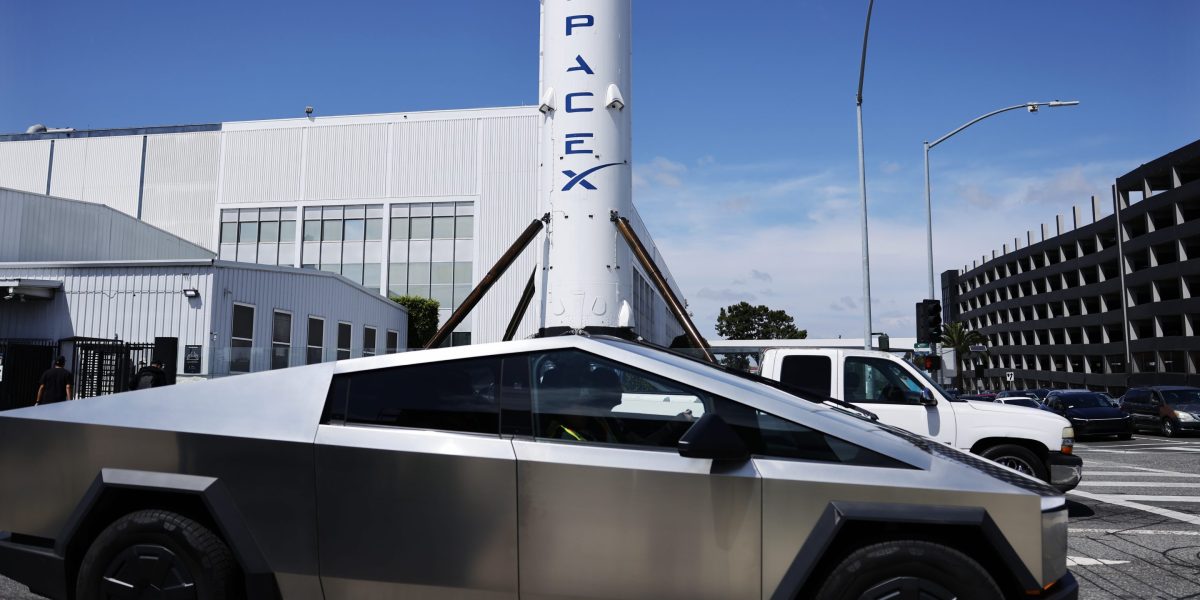
The rocket maker is preparing what could be the biggest initial public offering in history, with an unprecedented retail focus. SpaceX, Elon Musk's rocket and satellite company, has outlined plans for its long-awaited stock market listing, telling bankers it intends to give retail investors a larger allocation than any initial public offering (IPO) in history. Reuters exclusively reported that the company briefed its full banking syndicate on Monday night, with chief financial officer Bret Johnsen telling attendees that retail participation would be "a critical part of this and a bigger part than any IPO in history." SpaceX plans to host 1,500 retail investors at an event in June following the launch of its roadshow, which is expected to begin in early June. Johnsen said the decision to prioritise retail investors reflected the loyalty of long-term supporters of the company and of Musk personally. The IPO is expected to be the largest ever, with SpaceX seeking to raise $75 billion and targeting a valuation of as much as $1.75 trillion.
Anthropic Just Locked Up 3.5 Gigawatts of AI Power: Bitcoin Miners Are Selling Their BTC to Pivot Into the Same Business - Cryptopolitan
The pivot is hitting Bitcoin directly. Mining difficulty has already dropped 7.76% as capacity shifts to AI. Anthropic has just secured one of the largest compute deals the AI industry has ever seen. The company locked in 3.5 gigawatts of next generation Google TPU compute through Broadcom. In the same week, Anthropic highlighted its tremendous growth with its annualized revenue now crossing the $30 billion mark, which is more than triple the $9 billion reported at the end of 2025 and the number of customers spending $1M+ on Claude doubling from 500 to 1,000 in under two months. Coindesk framed it as bitcoin miners gaining a powerful new rival in the fight for cheap power. This framing however misses what's actually happening under the hood. Bitcoin miners aren't prepping for a fight but rather pivoting and the numbers speak for themselves. Core Scientific, one of the largest publicly listed miners, is liquidating substantially all of its Bitcoin holdings in 2026 to fund a 1.2 gigawatt pivot to AI hosting, as reported by The Block. Hut 8 has a $7 billion data center deal with Anthropic itself, backstopped by Google. TeraWulf is sitting on $12.8 billion in contracted HPC revenue. The reason we're seeing this comes down to math. Miners losing around $19,000 per BTC produced versus AI hosting offering longer term, stable cash flow supported by enterprise contracts have forced their hand. What Anthropic Just Signed and Why 3.5 Gigawatts Matters Anthropic's largest infrastructure deal landed on April 6 when they announced that it had secured access to 3.5 gigawatts of next generation Google TPU compute capacity through Broadcom, beginning in 2027. Bloomberg and CNBC confirmed the partnership terms. The new capacity is on top of the 1 gigawatt of Google compute Anthropic is already receiving in 2026, per Broadcom's SEC filing, which also confirmed that the majority of the new capacity will be U.S.-based. Broadcom separately signed a long-term agreement with Google to design and supply future generations of custom TPU chips through 2031, meaning this is a structural, multi-year build out. Alongside the deal, Anthropic also disclosed that its annual run-rate revenue crossed $30 billion, up from around $9 billion which was reported at the end of last year. Business customers spending over $1 million annually on Claude also doubled from 500 to over 1,000 in just under two months. These numbers are staggering. A single 1 gigawatt data center draws roughly the same electricity as one million American households. Anthropic's 3.5 gigawatt deal is almost the same as 3.5 million homes worth of power going to a single AI company, dedicated entirely to AI training and inference. As CoinDesk noted, deals of such size highlights how AI has become one of the largest new sources of power demand in the United States. Power grids that were never designed to absorb this kind of concentrated load are now being asked to do exactly that. For bitcoin miners, who built their entire business model on being able to secure cheap, often stranded electricity, the signal is impossible to ignore: the most well-capitalized players in tech are now competing for the same electrons and they are paying a lot more to get them. Bitcoin Miners Are Becoming AI Landlords The shift taking place right now is already changing the revenue structure of the entire industry. According to CoinShares, publicly listed miners could derive as much as 70% of their total revenue from AI hosting by the end of this year, which is up roughly 30% as of today, with mining revenue collapsing from approximately 85% to less than 20% for companies that have already locked in AI contracts. At the same time, over $70 billion in cumulative AI and high-performance computing deals have now been announced across the public mining sector, turning miners into data center operators that still happen to mine bitcoin. The pivot becomes crystal clear when you look at the size of some of these deals. For instance, Hut 8 disclosed a 15 year, $7 billion data center lease in Louisiana with Anthropic as the anchor tenant and Google as financial backstop, with the site capable of scaling to multi-gigawatt capacity. Another publicly listed miner, TeraWulf, secured $12.8 billion in contracted HPC revenue with long term AI hosting agreements. Meanwhile, Core Scientific, one of the largest publicly listed miners, is preparing to monetize substantially all of its Bitcoin holdings to fund a 1.2 gigawatt conversion into AI infrastructure. The reason for such a pivot becomes a lot more clear when you dig into the economics. Public miners are currently losing around $19,000 per bitcoin produced, as production costs approach $80,000 while BTC trades closer to $68,000. Despite AI infra being a lot more capital-intensive at $8M - $15m per megawatt versus $700K - $1M for mining, it offers something that miners have never had: stable, decade-long contracted revenue from blue chip counterparties like Anthropic and Google. This basically transforms them from speculative operators into infrastructure landlords. What we're witnessing is not a side pivot, but the largest business model shift in bitcoin mining history: an industry built on volatile block rewards is being re-architected into one that sells power, space, and uptime to the AI economy. The Power Grid is the New Battleground The power grid is under a level of stress it was never designed to absorb. PJM Interconnection, the largest grid operator in the United States, projects a 6 gigawatt shortfall by 2027, the equivalent of six large nuclear power plants going offline simultaneously. U.S. data center electricity demand is projected to surge from under 15 GW today to 75.8 GW in 2026, 108 GW in 2028, and 134.4 GW by 2030, a roughly ninefold increase in seven years, per industry analyses cited by S&P Global. Five AI data centers are on track to hit 1 GW of power capacity each in 2026 alone, at that scale, a single facility rivals the electricity consumption of a small American city. Up to 11 GW of announced data center capacity for 2026 hasn't broken ground yet, and 50% of global projects are already facing delays due to power limitations and grid equipment shortages. Anthropic's 3.5 GW commitment lands directly into this environment. What bitcoin miners spent the last decade building turns out to be exactly what AI needs. Favorable power purchase agreements at remote sites, large grid connections, proximity to substations, cooling capacity, land, these were the operational advantages miners competed fiercely to secure. They are now the most sought-after infrastructure inputs in the AI build-out. Hut 8's Louisiana site makes the point plainly: the same facility engineered for hash rate is now leased to Anthropic for AI inference. The miners didn't lose the energy war. They owned the battlefield the whole time and are now collecting rent. As CoinDesk noted, major bitcoin miners are increasingly positioning themselves as power and data center infrastructure providers that also mine bitcoin, not the other way around. The picks-and-shovels play for the AI boom was sitting inside the bitcoin mining sector all along. What this means for Bitcoin and What to Watch The pivot has real consequences for Bitcoin itself. Core Scientific and other miners liquidating their holdings to fund AI conversions adds direct sell pressure to a spot market that is already under strain. BTC is currently trading around $68K, down roughly 47% from the $126K all-time high set in October. Beyond price, there is a network security dimension worth watching. Hash rate, the total computing power dedicated to mining and processing Bitcoin transactions, is the primary measure of network strength. Mining difficulty, which adjusts automatically to reflect how much hash rate is active, has already dropped 7.76% as miners redirect capacity toward AI, per techi.com. That is a leading indicator. If more large operators follow Core Scientific's playbook and convert gigawatts of mining capacity to AI hosting, hash rate could decline further, at least in the near term. The longer-term structure forming here is something different entirely. Hut 8's River Bend deal, 15 years, blue-chip counterparties, Google as financial backstop, looks less like a mining company hedging and more like an infrastructure REIT: stable contracted cash flows, long-duration leases, institutional-grade tenants. If Marathon, Riot, or CleanSpark announce similar deals in the coming months, that model becomes the template for the entire publicly listed mining sector. Key dates to track: Anthropic's new TPU capacity comes online in 2027, Hut 8's first River Bend data hall is expected in Q2 2027, and Core Scientific's 1.2 GW conversion is accelerating throughout 2026. The question isn't whether miners continue pivoting, it's how much BTC hits the spot market in the process, and how fast the network adjusts to the hash rate that leaves with them.

Everything you need to know about new EU entry-exit system as chaos continues
Add Yahoo as a preferred source to see more of our stories on Google. With just days to go before the long-promised completion of the EU entry-exit system (EES), The Independent has learnt the digital border scheme is unravelling. Some nations in the Schengen area are processing "third-country nationals", including the British, in accordance with the rules laid down by Brussels. But others - notably France, the most popular country in the world for overseas visitors - are far from ready, despite the progressive roll-out of the scheme over six months. "Wet stamping" of passports when entering or leaving the Schengen area was due to disappear by 10 April, but is likely to continue at some frontiers. At others, the only data collected may be basic passport details rather than biometrics. The much-delayed roll-out began on 12 October 2025. The European Commission insists that the scheme is already proving highly effective in detecting overstays and wanted criminals. But the long-planned European Travel Information and Authorisation System (Etias) - the so-called "euro visa" - looks extremely unlikely to be in effect before the end of the year, despite repeated pledges that it will be. These are the key questions and answers. What's the big idea? Brussels has promised "the most modern IT border system in the world". To keep tabs on who is coming and going, "third-country nationals" such as the British will be registered in the entry-exit system every time they cross an external frontier. This means arrivals and departures at airports, land borders and ports in the Schengen area (comprising the EU except Ireland and Cyprus, plus Iceland, Norway and Switzerland). The aims of the digital borders scheme are: According to the rules, British travellers will need to register the four fingerprints from their right hand (not required of children under 12) and a facial biometric on their first encounter with EES. Once registered, on subsequent encounters you should be asked to supply only one biometric when entering and leaving the Schengen area; this is almost certain to be the face. But reports from travellers indicate that you may be asked for both face and fingerprints on multiple occasions. A European Commission spokesperson told The Independent: "This is about the security of Europeans. With the EES, we are building the most modern IT border system in the world. In the past five months, we had more than 44.5 million entries and exits registered. There have been over 24,000 refusals of entry, of which over 600 persons were assessed to be security threats to the Union. What's the problem? Each of the member states, being sovereign nations, is introducing the system at its Schengen area frontiers in its own way. These range from a single airport in the case of Luxembourg to nations with possibly dozens of airports, ferry ports, road and rail borders - such as France, Greece, Poland and Spain. Member states have typically installed ranks of EES kiosks - equipped to take facial biometrics and fingerprints - at each frontier. But there are known problems connecting to the central database. Particular concern has been expressed about the three UK locations where frontier formalities are "juxtaposed" - with French Police aux Frontières conducting checks on British soil. These comprise the Eurotunnel LeShuttle terminal at Folkestone terminal, the Port Of Dover and the Eurostar hub at London St Pancras International. The UK government has provided £10m towards the necessary infrastructure investment. But the three locations have spent many tens of millions of pounds more to create registration areas for British and other travellers to register their biometrics. Yet they are standing idle, reportedly because of connectivity problems on the French side. What will happen when I arrive at a Schengen area frontier? It is impossible to predict. These are four of the possible scenarios: Classic EES You approach the entry-exit system kiosk and insert your passport as indicated on the screen. The system knows whether you are registered. If you are not, you will provide the necessary face and fingerprints for storage on the database. If you have already been through the system, you should be asked only to provide a facial biometric. You will then be directed either to eGates or a human border officer. From 10 April 2026 you should not have your passport stamped. EES plus This is the case when you know for a fact that you have provided your facial biometric and fingerprints, typically on your way in to a Schengen area country, but then have to provide both once again - either on the way out, or on a subsequent entry, or both. The explanation could be that your biometrics were not properly recorded at the first attempt - or that the member state wants to do things its own way. EES minus At frontiers that are particularly busy, or where the biometric equipment is not functioning properly, you may simply have your passport scanned by a border officer. This will be registered on the entry-exit system database. No wet stamping should be necessary. What EES? The Independent understands that some nations will completely suspend interaction with the entry-exit system at some crossing points for the summer. If this happens, wet stamping will continue. Such an imbalance has plenty of scope for creating anomalies, such as entering country A with only a passport stamp, but leaving nation B through EES - without ever apparently having arrived. It is likely that such anomalies will be overlooked by the authorities until the system is fully working. I have heard about long delays at airports Many travellers have told The Independent of extremely long queues at airports where the EES is already in force: both on entry and exit. There have been some cases of departing passengers missing flights because the waits are so long. Two key aviation leaders in Europe - Olivier Jankovec, representing airports, and Ourania Georgoutsakou, representing airlines - have issued a joint statement warning: "The combination of full registration requirements and reduced operational flexibility is expected to place unprecedented strain on border control operations." They are calling on the European Commission and member states to fully or partially suspend EES "where operationally necessary" during the summer of 2026, citing: A European Commission spokesperson said the organisation "is aware of the concerns expressed" and "has been engaging constructively with the industry". They added: "With the system operating well, it takes only 70 seconds to register an entry or exit." What is happening with the Etias? This is the European Travel Information and Authorisation System, akin to the UK's ETA and the US Esta, and colloquially known as a euro visa. It will become mandatory for third-country nationals who do not require a full EU visa. The Commission insists: "Etias will start operations in the last quarter of 2026." But that seems extremely unlikely, since it requires the entry-exit system to be working well for at least six months before it begins. Travellers are assured: "The European Union will inform about the specific date for the start of Etias several months prior to its launch. What does the European Commission say about all this? The spokesperson said: "All member states had declared their readiness ahead of its progressive launch. This was a legal precondition for setting the launch date of the EES. "Despite the agreed timeline, a few member states are encountering technical difficulties. The Commission is in close contact with these member states and also sharing best practices from member states where the system is working well. "The EES rules foresee flexibility to ensure border fluidity. There are fall-back solutions that member states can rely on if needed." The final line points to the feeling in Brussels that individual nations are not doing well enough: "Border fluidity should also be ensured by the member states by providing enough resources and personnel at heavy-traffic border crossing points."
Anthropic Google Broadcom TPU deal 3.5 gigawatts and $30 billion revenue
Anthropic has signed an agreement with Google $GOOGL and Broadcom $AVGO for approximately 3.5 gigawatts of computing capacity built on Google's tensor processing units, with the capacity expected to come online starting in 2027, the company said. The deal expands an existing relationship. Broadcom CEO Hock Tan said during an earnings call last month that Broadcom was providing one gigawatt of Google TPU compute for Anthropic in 2026, according to CNBC. Broadcom helps Google design its TPUs. In a securities filing Monday, Broadcom said Google and Broadcom have also entered a long-term supply assurance agreement running through 2031, according to Bloomberg. In tandem with the compute news, Anthropic said its revenue run rate has now crossed $30 billion on an annualized basis -- more than three times the roughly $9 billion figure it recorded at the close of 2025. Enterprise traction has also accelerated: the number of clients committing at least $1 million a year has surpassed 1,000, a threshold Anthropic said is twice what it was reporting around the time of its Series G announcement in February. "We are making our most significant compute commitment to date to keep pace with our unprecedented growth," Anthropic CFO Krishna Rao said in a statement. Anthropic said the majority of the new infrastructure will be built on U.S. soil, framing the commitment as a continuation of a pledge made in November 2025 to direct $50 billion toward domestic computing capacity. According to Monday's securities filing, Broadcom flagged that Anthropic's ability to draw on the additional compute hinges on its ongoing commercial performance, and noted that discussions with outside operational and financial partners are underway to support the rollout. Anthropic trains and runs its Claude models across multiple hardware platforms -- including AWS Trainium, Google TPUs, and Nvidia $NVDA GPUs -- and describes Amazon $AMZN Web Services as its primary cloud and training partner. Claude is available on AWS Bedrock, Google Cloud Vertex AI, and Microsoft $MSFT Azure Foundry. The revenue growth comes as Anthropic navigates a legal dispute with the Pentagon, which designated the company a supply-chain risk after a standoff over AI safety guardrails. Anthropic has warned the label could cost it billions in lost revenue. Still, the company's annualized revenue has more than tripled in the months since that dispute became public, driven in part by demand for its Claude Code developer tools and broader enterprise adoption. Broadcom's shares gained as much as 3.6% in after-hours trading following the filing's release, according to Bloomberg. No financial terms were attached to the agreement. A post-earnings research note from Mizuho analysts put Broadcom's prospective AI revenue from Anthropic at $21 billion for 2026 and $42 billion for 2027, per CNBC.

West Asia turmoil grounds profits: Indian aviation faces fuel shock, route chaos
A number of international airlines suspended services to Venezuela after the US Federal Aviation Administration issued advisories about flying over the country amid escalating tensions. Escalating geopolitical tensions in West Asia are beginning to weigh on India's aviation sector, with airlines and airports facing mounting pressure from rising fuel costs, route diversions, and operational disruptions, according to a recent analysis by EY India. The report highlights the strategic importance of the Middle East in global aviation economics, noting that nearly 20 per cent of the world's jet fuel supply is linked to the region. As tensions persist, volatility in fuel prices has re-emerged as the single largest cost concern for airlines, directly impacting profitability. Airspace restrictions across parts of West Asia are also forcing Indian carriers to reroute several international flights. These diversions are increasing travel distances by 10-15 per cent on key routes, leading to higher fuel burn, additional crew costs, and greater operational complexity. The ripple effects are being felt beyond airlines. Airports are grappling with shifting traffic patterns, resulting in uneven passenger flows and added strain on cargo operations and commercial revenues. EY India highlighted the urgent need for the aviation ecosystem to invest in digital capabilities and build operational resilience to navigate these disruptions effectively. The report emphasised that geopolitical risks are no longer peripheral but are becoming central to aviation planning and strategy. "Geopolitics is evolving into a core design constraint for the aviation sector and could also serve as a source of competitive advantage for resilient operators," the report noted. Looking ahead, the analysis suggests that airlines and airport operators will need to embed flexibility, diversification, and long-term resilience into their network and operational models to remain competitive in an increasingly uncertain global environment.
)
SpaceX plans record retail investor push as IPO roadshow targets June
The rocket maker is preparing what could be the biggest initial public offering in history, with an unprecedented retail focus. SpaceX, Elon Musk's rocket and satellite company, has outlined plans for its long-awaited stock market listing, telling bankers it intends to give retail investors a larger allocation than any initial public offering (IPO) in history. Reuters exclusively reported that the company briefed its full banking syndicate on Monday night, with chief financial officer Bret Johnsen telling attendees that retail participation would be "a critical part of this and a bigger part than any IPO in history." SpaceX plans to host 1,500 retail investors at an event in June following the launch of its roadshow, which is expected to begin in early June. Johnsen said the decision to prioritise retail investors reflected the loyalty of long-term supporters of the company and of Musk personally. The IPO is expected to be the largest ever, with SpaceX seeking to raise $75 billion and targeting a valuation of as much as $1.75 trillion.

SpaceX plans record retail investor push as IPO roadshow targets June
The rocket maker is preparing what could be the biggest initial public offering in history, with an unprecedented retail focus. SpaceX, Elon Musk's rocket and satellite company, has outlined plans for its long-awaited stock market listing, telling bankers it intends to give retail investors a larger allocation than any initial public offering (IPO) in history. Reuters exclusively reported that the company briefed its full banking syndicate on Monday night, with chief financial officer Bret Johnsen telling attendees that retail participation would be "a critical part of this and a bigger part than any IPO in history." SpaceX plans to host 1,500 retail investors at an event in June following the launch of its roadshow, which is expected to begin in early June. Johnsen said the decision to prioritise retail investors reflected the loyalty of long-term supporters of the company and of Musk personally. The IPO is expected to be the largest ever, with SpaceX seeking to raise $75 billion and targeting a valuation of as much as $1.75 trillion.
Broadcom tightens grip on AI infrastructure with Anthropic, Google deal
Broadcom's latest agreement with Anthropic and Google strengthens the chipmaker's position as one of the key firms sitting underneath the AI boom, as AI firms race to lock in even larger amounts of compute. Under the new arrangement, Anthropic will have access to multiple gigawatts of Google tensor processing unit (TPU) capacity from 2027, while Broadcom will supply the infrastructure that enables it. Anthropic said roughly 3.5 gigawatts will be involved, making this its biggest compute commitment yet. Broadcom is already a major partner to Google on custom TPUs, and it has now extended that role through a long-term agreement covering future TPU generations and networking components for Google's next AI racks. This places Broadcom deeper into the physical layer of the AI market, where demand is now rising fastest, and customers are prepared to commit years in advance. Anthropic's revenue run-rate has now passed $30bn, up from about $9bn at the end of 2025, while the number of business customers spending more than $1m a year has doubled in under two months to more than 1,000. Its chief financial officer, Krishna Roa, said the company was making its "most significant compute commitment to date" in order to keep pace with growth and support future Claude models. Most of the additional compute capacity secured through the agreement is expected to be located in the United States, extending Anthropic's earlier commitment to invest $50bn (£38bn) in domestic AI infrastructure. Infrastructure demand drives long-term deals The deal reflects an industry trend in which firms are increasingly entering into longer-term arrangements to gain access to the latest computing infrastructure. By working with hyperscale providers like Google, Broadcom has positioned itself comfortably within that supply chain. Its involvement in TPU production and deployment links it directly to the expansion plans of AI developers like Anthropic. The firm had previously indicated that demand from Anthropic could exceed 3 gigawatts of compute capacity over time, highlighting the sheer scale of AI workload growth. Partnerships of this type have been seen as a significant revenue opportunity for chipmakers, as spending on AI infrastructure shows no signs of slowing. Anthropic's multi-cloud approach Anthropic is continuing to deploy its models across multiple hardware platforms, including Google TPUs, Nvidia GPUs, and Amazon Web Services (AWS) infrastructure. Big Tech said this approach allows it to match workloads to different types of hardware and maintain flexibility as demand evolves. Amazon remains its primary cloud and training partner, including through large-scale projects such as its AI supercomputing cluster. The expanded agreement with Google and Broadcom adds further capacity alongside these existing tie-ups, as Anthropic scales its infrastructure to meet growing enterprise usage
Civic Issues Spotlight: Pollution, Illegal Construction, Traffic Chaos And Mangrove Concerns Across Mumbai And Navi Mumbai
Poisar River's decline highlights urban pollution concerns in Mumbai The Poisar River, originating in Sanjay Gandhi National Park and flowing into the Arabian Sea via Marve Creek, has deteriorated into a polluted urban stream. Once clean enough for household use, the river is now contaminated by sewage, plastic waste, and effluents from nearby cattle sheds. Residents, especially East Indians in Poisar village, recall swimming in its waters and immersing idols during Ganesh Chaturthi. Rapid urbanisation has replaced former farmland and orchards, while a nearby private school now overlooks the degraded waterway, raising concerns over environmental and public health impacts. - Ariel Dsouza, Kandivali Students protest illegal construction inside Vikhroli school premises Students and management of Shri Mahadev Upadhyay High School and Junior College in Hariyali Village, Vikhroli East, staged a protest outside the Brihanmumbai Municipal Corporation S-Ward office, alleging unauthorised construction within school premises. Led by D. R. Singh of Shiksha Bachao Samiti and Vice Chairman Kanchan Dubey, students held a dharna, disrupting civic operations. The management claimed the encroachment, linked to a family dispute, involved illegal construction rented to outsiders, posing safety risks. Despite repeated complaints, no action has been taken, prompting appeals to the Government of Maharashtra for urgent intervention. - John Wesly Benjamin, Vikhroli Footpath work repeated on Borivali flyover raises concerns Fencing and footpath surfacing work has resumed on the Subhash Phadke Flyover, Borivali, sparking concern among residents. Similar work carried out around two years ago saw fencing and paver blocks removed within weeks. Observers note the current fencing appears identical to the earlier installation, raising questions over possible irregularities and waste of public money. Locals have expressed hope that the work is completed properly this time and does not repeat past issues. - Jay Rajkumar Bathija, Borivali Chaos by taxis outside CSMT platform troubles commuters Commuters and tourists have raised concerns over disorder caused by "kali-peeli" taxis near Platform 18 at Chhatrapati Shivaji Maharaj Terminus. Allegations of poor civic sense and a lack of regulation have led to congestion and inconvenience in the area. Visitors, in particular, face difficulties navigating the chaotic scene, highlighting the need for stricter enforcement and better management at key public transport hubs. - Deepak Agrawal, CSMT Concern raised over turf development on mangroves in Nerul Concerns have been raised over the development of a turf on mangrove wetland land near DPS School in Nerul, with activists alleging violations of Coastal Regulation Zone norms and Supreme Court of India protections. Environmentalists warn that disturbing mangroves -- natural flood barriers -- could heighten flooding risks and harm biodiversity. Authorities have been urged to halt work immediately and conduct inspections, with demands for strict action against those responsible. - Manju Sharma, Nerul Hanuman Jayanti celebrated with devotion in Koparkhairne Agroha Vikas Trust organised a Hanuman Jayanti celebration at Mahalaxmi Mandir Bhawan in Koparkhairne. The event featured a live Sundarkand path and recitation of the Hanuman Chalisa, drawing several devotees. Also Watch: The celebrations concluded with a community dinner for attendees. The trust regularly hosts various Hindu festivals, fostering spiritual and cultural engagement among local residents. - Deepak Agrawal, Koparkhairne Your voice matters. If you have a community story, issue, or inspiring local experience to share, send it to [email protected] and be a part of the conversation.

SpaceX IPO Boosts Tiny Space ETF With Record Surge in Inflows
The looming market debut of Elon Musk's rocket company SpaceX has sparked a rush of capital into smaller space ventures with investors eager to find a way to hitch a ride onto what could be the biggest listing ever. The Procure Space ETF (ticker: UFO), a fund with a market value of about $415 million, pulled in nearly $175 million for the first quarter of the year, the largest inflows since its inception in 2019, according to data compiled by Bloomberg. The influx comes as investors search for ways into SpaceX, the space exploration, satellite and artificial intelligence company that has become the most eagerly anticipated initial public offering in years. "The euphoria around potentially tapping into a trillion-dollar IPO is really having an impact," said Philip Blancato, chief market strategist at Osaic Holdings, the 15th-largest institutional holder of the ETF. He added that his investment advisory firm was seeing strong demand from investors wanting access to SpaceX. Even five years ago, investing in the UFO ETF would have struck him as a "crazy" idea, Blancato said. However, that has changed as global government stimulus is expected to drive the sector higher, he added. A Bank of America Corp. basket of US stocks that are key players and potential beneficiaries of the space race has climbed 23% this year, compared to a 3.4% drop in the S&P 500 Index and a 4.2% decline in the Nasdaq 100. The biggest percentage gainer in the BofA basket is Satellogic Inc. The company, which uses satellites to map the earth, is backed by Steven Mnuchin's Liberty Strategic Capital and Cantor Fitzgerald LP -- the US investment bank run by the children of Commerce Secretary Howard Lutnick. The stock has jumped nearly 280% this year. Other large gainers include satellite communications company Iridium Communications Inc. and Planet Labs PBC. SpaceX's offering could take place as early as June, after the company filed confidentially for an IPO and boosted its target valuation above $2 trillionBloomberg Terminal, according to people familiar with the matter. The offering comes as excitement for space exploration has been rising. A NASA crew of four astronauts aboard the Artemis II capsule took the first voyage toward the moon in more than 50 years. On Monday, they traveled further in space than anyone in history. Meanwhile, both the US and China are spending billions to put humans back on the moon, fueling investment across the sector. "We've got a real space race 2.0 going on as we speak, for who is going to start to build out a permanent presence first on the moon," said Andrew Chanin, chief executive officer at ProcureAM, which manages the UFO ETF. The fund already has some exposure to SpaceX through Charlie Ergen's satellite and internet services provider EchoStar Corp., which holds a small stake in the Musk venture. While space tourism -- with high profile efforts from Amazon.com Inc. founder Jeff Bezos' Blue Origin and Richard Branson-founded Virgin Galactic Holdings Inc. -- captured some investor interest several years back, the focus has moved to satellites, communications technology, and emerging areas such as space-based data centers and lunar infrastructure, Chanin said. Then there is the overlap with another industry that has steadily emerged as an investor favorite in recent years: defense. "You're not building guns and bomb anymore," Blancato said. "You're building satellites and drones that are very different than what we've done in the past." The primary contractors for NASA's Artemis II moon mission include Boeing Co., Lockheed Martin Corp., Northrop Grumman Corp. and L3Harris Technologies Inc. -- which are also major defense contractors for the US military. Still, market watchers largely pointed to SpaceX's imminent arrival to public markets and Musk's star power as the main drivers behind the surge in investor interest in the sector. "The fact that famous rich people are investing in the space sector is giving it the kind of attention it hasn't had in decades." said Matt Maley, chief market strategist at Miller Tabak + Co.
Broadcom to develop Google TPUs until 2031; Anthropic signs deal with both companies for 3.5GW of TPUs
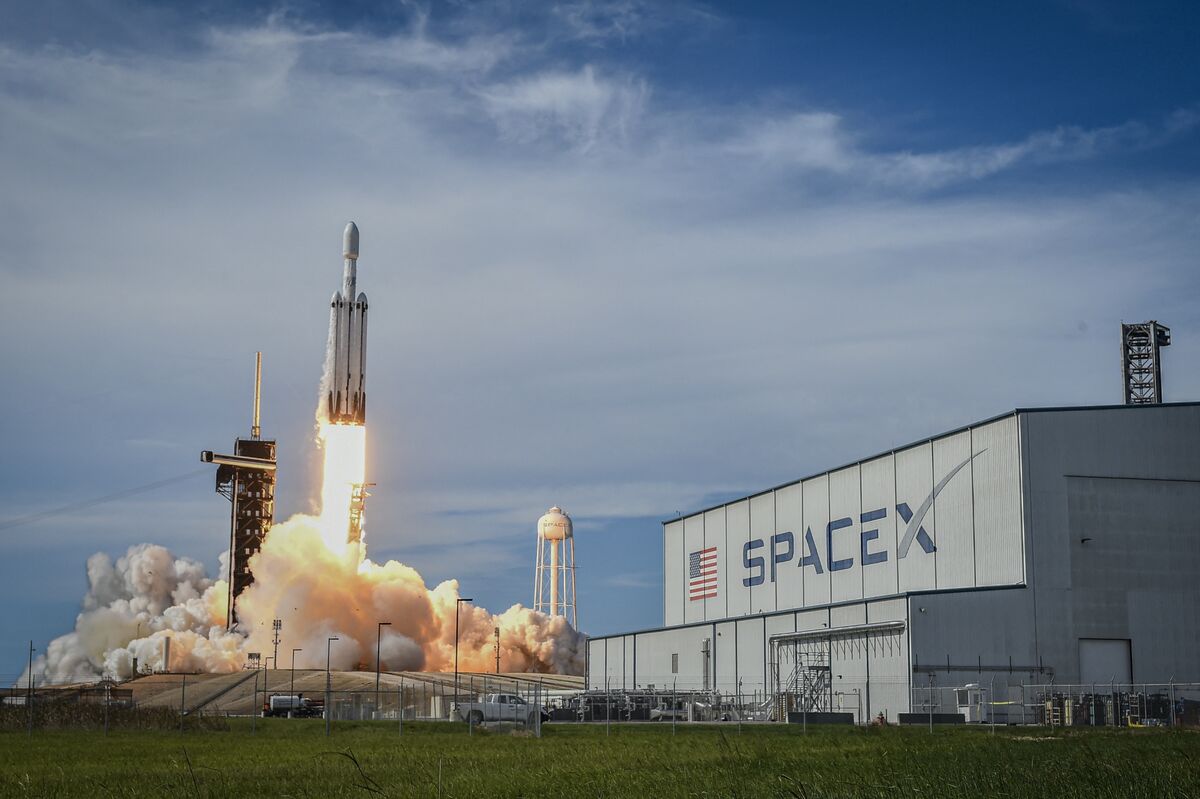
Anthropic has signed a deal with Broadcom and Google for the supply of 3.5GW-worth of Google Tensor Processing Units (TPUs), slated to come online from 2027. Separately, Broadcom stated in a regulatory filing that it has entered into a Long Term Agreement with Google to develop and supply future generations of its TPUs, in addition to signing a Supply Assurance Agreement to supply "networking and other components" to be used in Google's next-generation AI racks until 2031. The TPUs will also be accessed through Google Cloud services. - Anthropic The financial terms of both agreements have not been disclosed. However, in the regulatory filing, Broadcom said: "The consumption of such expanded AI compute capacity by Anthropic is dependent on Anthropic's continued commercial success. In connection with this deployment, the parties are in discussions with certain operational and financial partners." In February 2026, Anthropic raised $30 billion in Series G funding, giving the generative AI company a post-money valuation of $380bn. The round was led by GIC and Coatue, as well as D. E. Shaw Ventures, Dragoneer, Founders Fund, ICONIQ, and MGX, while Microsoft and Nvidia also invested a portion of a previously promised $15bn investment. In a statement announcing the deal, Anthropic said its run-rate revenue (RRR) has reached $30bn, up from approximately $9bn at the end of 2025. The company further noted that it has more than 1,000 businesses spending more than $1 million on an annualized basis. RRR takes current revenue in a certain period (undisclosed in this case), and extrapolates a full-year equivalent. Annual recurring revenue (ARR) similarly tries to predict full-year revenue, but instead only looks at customer subscriptions normalized over 12 months, so it does not include other potential revenue streams. Earlier this week, however, the Wall Street Journal reported that at its current rate of spend, Anthropic is unlikely to turn an operating profit until at least 2028. Anthropic said the "vast majority of the new compute" would be situated in the United States and would form part of the company's November 2025 pledge to invest $50bn in strengthening US compute infrastructure. "The partnership deepens our existing work with Google Cloud -- building on the increased TPU capacity we announced last October -- as well as our relationship with Broadcom," it added. The announcement follows reports from late March 2026 that Google is planning to provide financial backing for a multi-billion-dollar data center project in Texas to be used by Anthropic. According to a March 30 report from the FT, the backing could include construction loans for Nexus Data Centers, the company that will operate the data center for Anthropic, with a consortium of banks competing to provide financing, which could be as much as $5bn. More in IT Hardware & Semiconductors

8 'Rock Solid' Stocks Hold Strong During Iran War Chaos
Information in Investor's Business Daily is for informational and educational purposes only and should not be construed as an offer, recommendation, solicitation, or rating to buy or sell securities. The information has been obtained from sources we believe to be reliable, but we make no guarantee as to its accuracy, timeliness, or suitability, including with respect to information that appears in closed captioning. Historical investment performances are no indication or guarantee of future success or performance. Authors/presenters may own the stocks they discuss. We make no representations or warranties regarding the advisability of investing in any particular securities or utilizing any specific investment strategies. Information is subject to change without notice. For information on use of our services, please see our Terms of Use. *Real-time prices by Nasdaq Last Sale. Real-time quote and/or trade prices are not sourced from all markets. Ownership data provided by LSEG and Estimate data provided by FactSet. IBD, IBD Digital, IBD Live, IBD Weekly, Investor's Business Daily, Leaderboard, MarketDiem, MarketSurge and other marks are trademarks owned by Investor's Business Daily, LLC. ©2026 Investor's Business Daily, LLC. All Rights Reserved.

Cerebras Backer Eclipse Raises $1.3 Billion for Robotics, AI Infrastructure
In a statement, Eclipse said that the firm has spent the past 11 years building an ecosystem of startups focused on national strength, sovereignty and security. "Companies in physical industries are built differently," it said. "We believed that, with the right partners, a new generation of builders could take the baton from the last wave of industrial innovators -- and go even farther." Eclipse's cash influx comes as investors pour money into so-called hard tech companies, driven by recent innovations in artificial intelligence technologies and geopolitical pressures. One such pressure, spurred by President Donald Trump's emphasis on international tariffs, has led to new efforts to revive US manufacturing. This year, Eclipse co-led a $220 million funding round for American manufacturing startup VulcanForms.

Blockbuster SpaceX listing could suck the oxygen out of fragile IPO market
As Elon Musk's SpaceX closes in on a US$75 billion IPO that could rewrite record books, concerns are mounting that others looking to list in 2026 may find it harder to get deals done under the shadow of the space venture's headline-grabbing debut. U.S. markets, prized for their depth, face a critical test, as more than half a dozen analysts and industry experts told Reuters that the SpaceX deal would likely absorb an outsized share of investor demand, squeezing out other hopefuls. "History tells us that a mega IPO like SpaceX can suck up the oxygen in the market. We saw that with Facebook in 2012," said Matt Kennedy, senior strategist at Renaissance Capital, a provider of IPO-focused research and ETFs. "IPOs are a major marketing event, and companies wouldn't want the noise from a SpaceX offering to drown out coverage of their own deals. So, listing activity may die down a bit during the weeks surrounding the SpaceX IPO." Companies have waited years on the sidelines for favorable IPO conditions after a prolonged dry spell. A listing like SpaceX, with its celebrity billionaire CEO, hot industry and deep-pocketed backers, could have provided the jolt others need to push ahead. Instead, its sheer scale threatens to overshadow others, with Wall Street banks and investors pouring a majority of their attention, and money, into the operator of the Starlink constellation of satellites. Thirty-five IPOs have priced so far this year, according to data from Renaissance Capital, down 37.5 per cent from a year earlier. That could worsen in the months ahead, clouding hopes of a broader market resurgence in 2026. The IPO market has lined up its biggest pipeline in decades, analysts and bankers said. But the war in Iran, spiking oil prices, private credit concerns and AI-led disruption to legacy software firms have set a high bar for which deals successfully break through the volatility - and which ones get left behind. Now, alongside these disruptions, companies eyeing IPOs must also compete for attention in a market dominated by SpaceX headlines. While bankers will probably advise their biggest clients against competing against SpaceX, smaller listings may benefit, said Michael Ashley Schulman, partner at wealth management firm Cerity Partners. "Smaller IPO debuts may benefit from a tag-along effect in retail enthusiasm that could mentally lump IPOs together under the assumption that if one does well, others will too," he said. Timing an IPO is often as crucial to a listing's success as the company's fundamentals. May through June is typically the best window before a summer lull that defers larger offerings to the fall. While Musk is hoping to take SpaceX public in June, according to bankers, OpenAI and rival Anthropic are reportedly aiming for a debut in the second half of the year. "The attention that these mega IPOs take from the market could push a broadly open IPO window into 2027," PitchBook analyst Kyle Stanford said in a report. The report added that if SpaceX raises between $50 billion and $75 billion, while OpenAI and Anthropic raise another $50 billion combined, that would roughly match the total raised by U.S. VC-backed company IPOs over the past decade. "Media attention is not the only thing these mega IPOs could absorb. IPO underwriting would be constrained by the amount these companies are able to raise," Stanford wrote. To be sure, it's uncharted territory - no offering of this size has been attempted before. Analysts and experts said the absence of any clear precedent or comparable listing leaves investors with little to anchor expectations, making it harder to gauge how the market will respond to SpaceX's IPO. "SpaceX is going to be big, no doubt about it," said James Angel, faculty affiliate at Georgetown McDonough's Psaros Center for Financial Markets and Policy. "The combination of well-known brands like X and Starlink, along with the magic of AI, the dream of space, and Musk's magic means that the investment bankers will have little trouble generating interest in the stock." Elon Musk has built a track record of pulling in investor demand across cycles, with his ventures often dominating attention. His empire, dubbed "Muskonomy" by analysts, creates a concentration of capital that few offerings can match. That concentration of investor interest is not just theoretical, it has played out in past listings. Musk's EV maker Tesla raised $226 million in its 2010 IPO at a market value of about $1.6 billion. It is now the world's most valuable automaker, worth more than $1.3 trillion. But even that track record and investor appeal may not be enough in today's IPO market, analysts cautioned. "We don't believe that SpaceX can escape the realities of the U.S. IPO marketplace, in the sense that it has become a buyer's market," said Josef Schuster, CEO of IPO research firm IPOX. "Even strong IPO candidates in hot sectors need to show flexibility in pricing their deal and potentially need to price downward for IPO success." Others warned that a wave of large listings could strain investor demand more broadly, particularly if multiple mega deals hit the market at the same time. "There is an old market saying that bull markets end when the money runs out, and there are plenty of historic examples where a deluge of IPOs and new stock market entrants, and then subsequent secondary offerings, meant sellers eventually swamped buyers," AJ Bell investment director Russ Mould said.