News & Updates
The latest news and updates from companies in the WLTH portfolio.
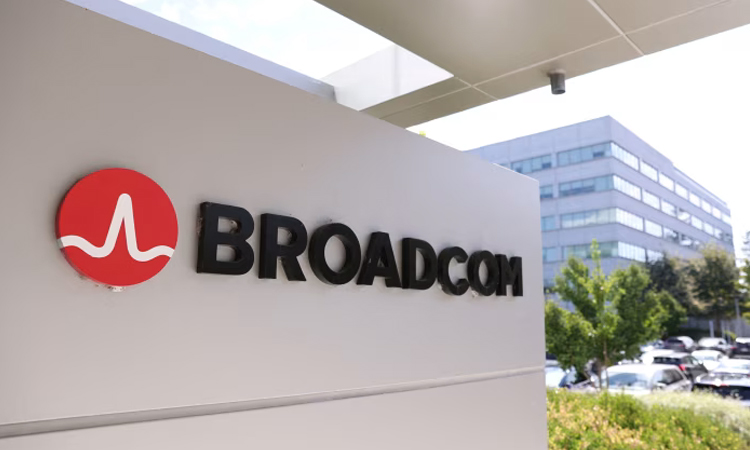
Anthropic partners with Broadcom and Google for AI chips
SAN FRANCISCO: Anthropic on Monday announced a deal with Google and Broadcom for a massive infusion of computing capacity as demand for the startup's artificial intelligence offerings soars. The San Francisco-based AI firm is on pace to bring in some US$30 billion in revenue this year, up from a US$9 billion "run-rate" at the end of last year, it said in a blog post. "We are making our most significant compute commitment to date to keep pace with our unprecedented growth," Anthropic chief financial officer Krishna Rao said in the blog post. "We are building the capacity necessary to serve the exponential growth we have seen in our customer base while also enabling Claude to define the frontier of AI development." Broadcom has entered a long-term agreement with Google to supply future generations of the internet giant's tensor processing units (TPUs) tailored to power AI in datacenters, according to a filing with the Securities and Exchange Commission. Separately, Broadcom and Google expanded a collaboration to give Anthropic access to about 3.5 gigawatts of TPU-based compute capacity to start coming online next year, the filing indicated. Most of the TPU compute power will be sited in the United States, according to the startup. Anthropic has been locked in a dispute with the US government since the company infuriated Pentagon chief Pete Hegseth by insisting its technology should not be used for mass surveillance or fully autonomous weapons systems.
Fuel QR based odd-even system creates unnecessary chaos: Fuel distributors
Fuel distributors warned that the continued use of an odd-even vehicle numbering system under Sri Lanka's QR-based fuel distribution scheme is creating "unnecessary chaos" and denying motorists timely access to their allocated quotas. Petroleum Distributors Association (PDA) Executive Committee Member D.V. Shantha Silva criticised the policy, arguing that restricting fuel access based on odd and even number plates defeats the very purpose of assigning a fixed quota to each vehicle. "Fuel quotas have already been digitally assigned to every vehicle owner. There is no logical reason to limit access to those quotas on specific days," Silva told Daily Mirror, warning that the system is causing widespread inconvenience. He pointed out that motorists are often unable to obtain fuel when urgently needed. "Even in emergencies, people are forced to wait until their designated odd or even day. That is simply impractical," he said. The criticism comes despite authorities announcing a temporary relaxation from April 1, allowing both odd- and even-numbered vehicles to obtain fuel under the existing QR quota system.
Insurers pull out as Hormuz Strait chaos deepens, Trump's threats continue
Saying that the Strait of Hormuz is closed is not strictly true. It is open, but only for those willing to run the gauntlet in a dangerous real-life version of the old arcade game Frogger where, even when the passage appears clear, there's a risk of something appearing to wipe you out. This is why Donald Trump's Truth Social post on Sunday night, which threatened to destroy Iran's bridges and power plants on Tuesday (Wednesday US time), unless the regime unblocks the strait, rang of desperation. The US President, despite being in control of far-superior combined US and Israeli forces that have destroyed most of Iran's military infrastructure and firepower over recent weeks, and which far outguns the regime's Revolutionary Guard Corps, dropped the f-bomb on social media. The chokepoint is barely 33 kilometres wide at its narrowest point, Iran sits along its northern banks and the regime has fortified coastal positions, islands and inlets over decades in anticipation that, one day, it would be attacked and feel forced to trigger global havoc. According to the Australian Naval Institute, the size of Iran's navy ranked somewhere from 18th to 37th globally, such is the secretive nature of some countries, and was comprised mostly of small, fast-attack boats, submarines and auxiliary measures like mines and missiles designed more for deterrence in and around the Persian Gulf than ocean warfare. There's also not much left of it. But Iran does not need to win a conventional naval war to close the strait but only be, as it is, disruptive and threatening. Its first aim was achieved early when maritime insurers yanked coverage for vessels traversing through the waters following the US-Israel attack on February 28. The next objective was not to stop every ship, but to make the passage uncertain for any ship. It has successfully done this using its house specialty of asymmetric warfare, which means that in a conflict between two sides with significantly different scales of military resources, the small dog in the fight that cannot win going toe-to-toe uses more unconventional methods, from guerilla tactics to cyberattacks, to try to best the bigger dog. Iran uses those small and fast vessels to dart in and out in surprise attacks or to surround ships and force them to divert. It uses sea mines that are either already bobbing in the water or which can be deployed quickly from those vessels. The regime can also conceal themselves by using commercial vessels to drop mines, a maneuver nearly impossible to stop, and one that adds a further layer of danger to the situation with fear that any commercial vessel can be armed to the gills. The regime does not even necessarily want or need to disguise or hide the mines given it is labor-intensive work to locate them and, when they are found, the clean-up mission can take hours, if not days. The simple fact they are being found means insurers will not start to offer cover again. Those fortified coastal and island positions come into play because the IRGC has stocked them with a spider web of fixed and mobile, truck-mounted ground to ship missiles and other weaponry. The rugged and cluttered terrain reportedly makes them difficult for the Western forces, even using drones, satellite and radar, to spot and destroy. They can be fired and moved quickly or, if destroyed, there is apparently a stockpile of replacements stashed about the place. The Iranians are also using drones to carry explosives and harass ships or using them as decoys to draw enemy attention to allow breathing room for the missiles to perhaps not be intercepted. Combine these tactics and the Strait becomes too risky for commercial shipping companies, one image in the media of a ship on fire or a near-miss from a drone or mine worth a thousand words. The US and Israel have so far been unable to remove these risks and they cannot provide an escort for every vessel wanting to move through the Strait. Because, clearly, given the pressure being poured on the US and Israel by the international community and, particularly President Trump within America over rising fuel and living costs - if they could, they would. It is why the President late last week told nations wanting shipping to re-open to roll up their sleeves and do it themselves. But they refused to entertain that idea and so he took to Truth Social to say: "Tuesday will be Power Plant Day, and Bridge Day, all up wrapped up in one, in Iran". "There will be nothing like it!!! Open the F***kin' Strait, you crazy bastards, or you'll be living in Hell - JUST WATCH!," he wrote. Meanwhile, in Tehran, the Strait is seen as the last of the skin the regime has in the game and, while it likely acknowledges internally that it cannot seal it up indefinitely, long enough is all it needs while waiting for the right deal to come along.

Anthropic is removing OpenClaw from its Claude subscriptions
Anthropic is blocking OpenClaw - at least for customers of its subscription models for the Claude AI model family. Access for third-party tools is now blocked, the AI manufacturer announced. OpenClaw developer Peter Steinberger, who originally started the tool as a hobby project and is now employed by OpenAI, personally tried to persuade those responsible at Anthropic to change their minds. "Reasoning with them," as he describes it. But the joint attempt with OpenClaw colleague Dave Morin was unsuccessful. However, there is still a chance that the OpenClaw fun will continue for Claude subscribers: They can book add-on packages to their regular subscription, which can then also be used for third-party tools like OpenClaw, Anthropic announced. Those who use Claude via the API are not affected and can continue to operate OpenClaw with this Claude access. Using OpenClaw with a Claude subscription was actually not intended from the beginning. However, when configuring OpenClaw, there was a way to still use tokens from the Claude subscription for the AI assistant. Claude's head of code, Boris Cherny, also emphasized again that the subscriptions are not designed for third-party tools and mentioned a sharp increase in Claude demand. Capacities must be managed carefully, with API customers having priority. Massive token consumption was already observed in the Heise video magazine c't 3003. In January, OpenClaw was tested extensively here - operated with a Claude API. After one day of using OpenClaw with the Claude Opus AI model, 109.55 US dollars in AI tokens had already been spent. These are the smallest linguistic units that AI models need to process text and the common way to measure monetary costs for AI usage. For comparison: Anthropic calculates that for a software developer in a team that professionally uses Claude Code, the average cost is 6 dollars per day. This assumes that 90 percent of team members stay below 12 dollars in their daily costs. The current change is likely to affect primarily private users who cover their own needs with a Claude subscription. If the burden of these private OpenClaw enthusiasts is now lifted from Anthropic's servers, it is primarily Claude API customers, who are mostly active in the professional field, who will benefit. In other regions, the use of tools like OpenClaw is completely ruled out: For example, Chinese authorities recently issued bans on AI agents on office computers, fearing security risks due to autonomous data access.

OpenAI, Anthropic and Google cooperate to fend off Chinese bids to clone models
Rivals OpenAI, Anthropic, and Alphabet's Google have begun working together to try to clamp down on Chinese competitors extracting results from cutting-edge U.S. artificial intelligence models to gain an edge in the global AI race. The firms are sharing information through the Frontier Model Forum, an industry nonprofit that the three technology companies founded with Microsoft in 2023, to detect so-called adversarial distillation attempts that violate their terms of service, according to people familiar with the matter. The rare collaboration underscores the severity of a concern raised by U.S. AI companies that some users, especially in China, are creating imitation versions of their products that could undercut them on price and siphon away customers while posing a national security risk.

SpaceX IPO: Retail Investors to Play Historic Role in Record-Breaking Public Offering - EconoTimes
SpaceX is gearing up for what could be the largest initial public offering in history, and the company is making retail investors a central part of its strategy. During a virtual meeting held Monday night with its full banking syndicate, SpaceX CFO Bret Johnsen revealed that the company intends to allocate a larger share of its IPO to everyday investors than any public offering has ever done before. "Retail is going to be a critical part of this and a bigger part than any IPO in history," Johnsen told the assembled bankers, according to two people familiar with the matter who requested anonymity. He emphasized that the decision is intentional, noting that retail investors have been long-standing supporters of both the company and founder Elon Musk. To celebrate that relationship, SpaceX plans to host 1,500 retail investors at a special event in June, scheduled after the IPO roadshow gets underway. The Monday meeting marked the first time SpaceX had brought together its complete underwriting syndicate, signaling that the public offering process is moving into a more formal phase. The rocket and space exploration company is reportedly targeting a fundraise of $75 billion, which would place its valuation at up to $1.75 trillion -- a figure that would dwarf nearly every other IPO on record. This retail-forward approach represents a significant departure from traditional IPO structures, which typically prioritize institutional investors such as hedge funds and asset managers. SpaceX appears to be betting that broadening access to individual shareholders will generate stronger long-term loyalty and wider public support for its mission. Reuters had previously reported on SpaceX's unconventional IPO strategy, but Monday's meeting provided the clearest picture yet of just how aggressively the company plans to court everyday investors as it prepares for its historic market debut.
Insurers pull out as Hormuz Strait chaos deepens, Trump's threats continue
Saying that the Strait of Hormuz is closed is not strictly true. It is open, but only for those willing to run the gauntlet in a dangerous real-life version of the old arcade game Frogger where, even when the passage appears clear, there's a risk of something appearing to wipe you out. This is why Donald Trump's Truth Social post on Sunday night, which threatened to destroy Iran's bridges and power plants on Tuesday (Wednesday US time), unless the regime unblocks the strait, rang of desperation. The US President, despite being in control of far-superior combined US and Israeli forces that have destroyed most of Iran's military infrastructure and firepower over recent weeks, and which far outguns the regime's Revolutionary Guard Corps, dropped the f-bomb on social media. The chokepoint is barely 33 kilometres wide at its narrowest point, Iran sits along its northern banks and the regime has fortified coastal positions, islands and inlets over decades in anticipation that, one day, it would be attacked and feel forced to trigger global havoc. According to the Australian Naval Institute, the size of Iran's navy ranked somewhere from 18th to 37th globally, such is the secretive nature of some countries, and was comprised mostly of small, fast-attack boats, submarines and auxiliary measures like mines and missiles designed more for deterrence in and around the Persian Gulf than ocean warfare. There's also not much left of it. But Iran does not need to win a conventional naval war to close the strait but only be, as it is, disruptive and threatening. Its first aim was achieved early when maritime insurers yanked coverage for vessels traversing through the waters following the US-Israel attack on February 28. The next objective was not to stop every ship, but to make the passage uncertain for any ship. It has successfully done this using its house specialty of asymmetric warfare, which means that in a conflict between two sides with significantly different scales of military resources, the small dog in the fight that cannot win going toe-to-toe uses more unconventional methods, from guerilla tactics to cyberattacks, to try to best the bigger dog. Iran uses those small and fast vessels to dart in and out in surprise attacks or to surround ships and force them to divert. It uses sea mines that are either already bobbing in the water or which can be deployed quickly from those vessels. The regime can also conceal themselves by using commercial vessels to drop mines, a maneuver nearly impossible to stop, and one that adds a further layer of danger to the situation with fear that any commercial vessel can be armed to the gills. The regime does not even necessarily want or need to disguise or hide the mines given it is labor-intensive work to locate them and, when they are found, the clean-up mission can take hours, if not days. The simple fact they are being found means insurers will not start to offer cover again. Those fortified coastal and island positions come into play because the IRGC has stocked them with a spider web of fixed and mobile, truck-mounted ground to ship missiles and other weaponry. The rugged and cluttered terrain reportedly makes them difficult for the Western forces, even using drones, satellite and radar, to spot and destroy. They can be fired and moved quickly or, if destroyed, there is apparently a stockpile of replacements stashed about the place. The Iranians are also using drones to carry explosives and harass ships or using them as decoys to draw enemy attention to allow breathing room for the missiles to perhaps not be intercepted. Combine these tactics and the Strait becomes too risky for commercial shipping companies, one image in the media of a ship on fire or a near-miss from a drone or mine worth a thousand words. The US and Israel have so far been unable to remove these risks and they cannot provide an escort for every vessel wanting to move through the Strait. Because, clearly, given the pressure being poured on the US and Israel by the international community and, particularly President Trump within America over rising fuel and living costs - if they could, they would. It is why the President late last week told nations wanting shipping to re-open to roll up their sleeves and do it themselves. But they refused to entertain that idea and so he took to Truth Social to say: "Tuesday will be Power Plant Day, and Bridge Day, all up wrapped up in one, in Iran". "There will be nothing like it!!! Open the F***kin' Strait, you crazy bastards, or you'll be living in Hell - JUST WATCH!," he wrote. Meanwhile, in Tehran, the Strait is seen as the last of the skin the regime has in the game and, while it likely acknowledges internally that it cannot seal it up indefinitely, long enough is all it needs while waiting for the right deal to come along.

SpaceX plans outsized retail allocation in record IPO, Reuters reports By Investing.com
Investing.com-- SpaceX is planning an initial public offering with an unusually large allocation for retail investors, in a move that could reshape how major listings are structured, Reuters reported on Monday, citing people familiar with the matter. The Elon Musk-led rocket maker told bankers in a meeting on Monday it intends to reserve a significant portion of shares for individual investors and host about 1,500 of them at a major event in June following the IPO roadshow launch, the report said. Get real-time updates on market-moving news with InvestingPro Chief Financial Officer Bret Johnsen said retail participation would be "a critical part" of the offering and larger than in any IPO to date, reflecting long-standing support from individual investors, according to Reuters. The company is seeking to raise about $75 billion in what could be the largest IPO ever, potentially valuing SpaceX at up to $1.75 trillion, media reports showed previously. SpaceX plans to begin its roadshow in the week of June 8, with analysts from 21 banks scheduled to meet the company ahead of investor presentations. A large retail-focused event is planned for June 11, with participation expected from investors across the United States, Europe, and Asia, Reuters reported. Lead underwriters include Morgan Stanley, Bank of America, Citigroup, JPMorgan, and Goldman Sachs. The final structure and allocation are expected to be determined closer to launch, the report added.

Some Anthropic shareholders to CEO Dario Amodei: You forgot that only your company's tech was being used in things at the Pentagon, so how can ...
Some Anthropic shareholders may have lost the confidence inthe AI startup's CEO Dario Amodei. A report claims that a few of the company's stakeholders are concerned about the implications of the chief executive's latest comments and how they may affect the position of the Claude developer, particularly regarding its involvement with the Pentagon. As reported by the New York Post, some investors feel that Amodei's remarks and demeanour do not align with what is expected of the chief of an organisation backed by large companies like Amazon and Google.In a statement to the NY Post, an Anthropic shareholder who remained anonymous said, "The one thing that was striking to me is the aggressiveness of his opinions on Trump and the Pentagon - given that they were the only ones whose tech was being used in things at the Pentagon.""You are a f**king CEO who has raised billions of dollars. You can't just rant and expect all shareholders to have the same mentality that you have," the shareholder added.This reaction follows Amodei's attention last month for criticising US President Donald Trump and Sam Altman in an internal memo. The message was sent hours after the Pentagon decided to blacklist Anthropic for declining to remove safeguards on how its AI systems can be used in military contexts.In the memo, Amodei said the Pentagon had acted against Anthropic for not offering "dictator-style praise to Trump (while Sam has)." He also accused Altman of telling "straight up lies" about sharing Anthropic's safety concerns and referred to OpenAI employees as a "gullible bunch."Amodei has drawn attention in the past for his public statements, including warnings that AI could push unemployment to 20% and comparing the White House's decision to allow sales of advanced AI chips to China to "selling nuclear weapons to North Korea."According to a shareholder, Amodei has continued to speak openly despite internal efforts, led by his sister and cofounder, Daniela Amodei, and policy chief Jack Clark, to moderate his comments, the report adds."They try to reel him in, but he clearly cannot control his emotions," the shareholder added.Meanwhile, a source close to Anthropic disagreed with the criticism and told the publication that the company continues to grow and has received public backing from investors such as Altimeter Capital, Menlo Ventures, and Spark Capital following its dispute with the Pentagon.
Insurers pull out as Hormuz Strait chaos deepens, Trump's threats continue
Saying that the Strait of Hormuz is closed is not strictly true. It is open, but only for those willing to run the gauntlet in a dangerous real-life version of the old arcade game Frogger where, even when the passage appears clear, there's a risk of something appearing to wipe you out. This is why Donald Trump's Truth Social post on Sunday night, which threatened to destroy Iran's bridges and power plants on Tuesday (Wednesday US time), unless the regime unblocks the strait, rang of desperation. The US President, despite being in control of far-superior combined US and Israeli forces that have destroyed most of Iran's military infrastructure and firepower over recent weeks, and which far outguns the regime's Revolutionary Guard Corps, dropped the f-bomb on social media. The chokepoint is barely 33 kilometres wide at its narrowest point, Iran sits along its northern banks and the regime has fortified coastal positions, islands and inlets over decades in anticipation that, one day, it would be attacked and feel forced to trigger global havoc. According to the Australian Naval Institute, the size of Iran's navy ranked somewhere from 18th to 37th globally, such is the secretive nature of some countries, and was comprised mostly of small, fast-attack boats, submarines and auxiliary measures like mines and missiles designed more for deterrence in and around the Persian Gulf than ocean warfare. There's also not much left of it. But Iran does not need to win a conventional naval war to close the strait but only be, as it is, disruptive and threatening. Its first aim was achieved early when maritime insurers yanked coverage for vessels traversing through the waters following the US-Israel attack on February 28. The next objective was not to stop every ship, but to make the passage uncertain for any ship. It has successfully done this using its house specialty of asymmetric warfare, which means that in a conflict between two sides with significantly different scales of military resources, the small dog in the fight that cannot win going toe-to-toe uses more unconventional methods, from guerilla tactics to cyberattacks, to try to best the bigger dog. Iran uses those small and fast vessels to dart in and out in surprise attacks or to surround ships and force them to divert. It uses sea mines that are either already bobbing in the water or which can be deployed quickly from those vessels. The regime can also conceal themselves by using commercial vessels to drop mines, a maneuver nearly impossible to stop, and one that adds a further layer of danger to the situation with fear that any commercial vessel can be armed to the gills. The regime does not even necessarily want or need to disguise or hide the mines given it is labor-intensive work to locate them and, when they are found, the clean-up mission can take hours, if not days. The simple fact they are being found means insurers will not start to offer cover again. Those fortified coastal and island positions come into play because the IRGC has stocked them with a spider web of fixed and mobile, truck-mounted ground to ship missiles and other weaponry. The rugged and cluttered terrain reportedly makes them difficult for the Western forces, even using drones, satellite and radar, to spot and destroy. They can be fired and moved quickly or, if destroyed, there is apparently a stockpile of replacements stashed about the place. The Iranians are also using drones to carry explosives and harass ships or using them as decoys to draw enemy attention to allow breathing room for the missiles to perhaps not be intercepted. Combine these tactics and the Strait becomes too risky for commercial shipping companies, one image in the media of a ship on fire or a near-miss from a drone or mine worth a thousand words. The US and Israel have so far been unable to remove these risks and they cannot provide an escort for every vessel wanting to move through the Strait. Because, clearly, given the pressure being poured on the US and Israel by the international community and, particularly President Trump within America over rising fuel and living costs - if they could, they would. It is why the President late last week told nations wanting shipping to re-open to roll up their sleeves and do it themselves. But they refused to entertain that idea and so he took to Truth Social to say: "Tuesday will be Power Plant Day, and Bridge Day, all up wrapped up in one, in Iran". "There will be nothing like it!!! Open the F***kin' Strait, you crazy bastards, or you'll be living in Hell - JUST WATCH!," he wrote. Meanwhile, in Tehran, the Strait is seen as the last of the skin the regime has in the game and, while it likely acknowledges internally that it cannot seal it up indefinitely, long enough is all it needs while waiting for the right deal to come along.

Insurers pull out as Hormuz Strait chaos deepens, Trump's threats continue
Saying that the Strait of Hormuz is closed is not strictly true. It is open, but only for those willing to run the gauntlet in a dangerous real-life version of the old arcade game Frogger where, even when the passage appears clear, there's a risk of something appearing to wipe you out. This is why Donald Trump's Truth Social post on Sunday night, which threatened to destroy Iran's bridges and power plants on Tuesday (Wednesday US time), unless the regime unblocks the strait, rang of desperation. The US President, despite being in control of far-superior combined US and Israeli forces that have destroyed most of Iran's military infrastructure and firepower over recent weeks, and which far outguns the regime's Revolutionary Guard Corps, dropped the f-bomb on social media. The chokepoint is barely 33 kilometres wide at its narrowest point, Iran sits along its northern banks and the regime has fortified coastal positions, islands and inlets over decades in anticipation that, one day, it would be attacked and feel forced to trigger global havoc. According to the Australian Naval Institute, the size of Iran's navy ranked somewhere from 18th to 37th globally, such is the secretive nature of some countries, and was comprised mostly of small, fast-attack boats, submarines and auxiliary measures like mines and missiles designed more for deterrence in and around the Persian Gulf than ocean warfare. There's also not much left of it. But Iran does not need to win a conventional naval war to close the strait but only be, as it is, disruptive and threatening. Its first aim was achieved early when maritime insurers yanked coverage for vessels traversing through the waters following the US-Israel attack on February 28. The next objective was not to stop every ship, but to make the passage uncertain for any ship. It has successfully done this using its house specialty of asymmetric warfare, which means that in a conflict between two sides with significantly different scales of military resources, the small dog in the fight that cannot win going toe-to-toe uses more unconventional methods, from guerilla tactics to cyberattacks, to try to best the bigger dog. Iran uses those small and fast vessels to dart in and out in surprise attacks or to surround ships and force them to divert. It uses sea mines that are either already bobbing in the water or which can be deployed quickly from those vessels. The regime can also conceal themselves by using commercial vessels to drop mines, a maneuver nearly impossible to stop, and one that adds a further layer of danger to the situation with fear that any commercial vessel can be armed to the gills. The regime does not even necessarily want or need to disguise or hide the mines given it is labor-intensive work to locate them and, when they are found, the clean-up mission can take hours, if not days. The simple fact they are being found means insurers will not start to offer cover again. Those fortified coastal and island positions come into play because the IRGC has stocked them with a spider web of fixed and mobile, truck-mounted ground to ship missiles and other weaponry. The rugged and cluttered terrain reportedly makes them difficult for the Western forces, even using drones, satellite and radar, to spot and destroy. They can be fired and moved quickly or, if destroyed, there is apparently a stockpile of replacements stashed about the place. The Iranians are also using drones to carry explosives and harass ships or using them as decoys to draw enemy attention to allow breathing room for the missiles to perhaps not be intercepted. Combine these tactics and the Strait becomes too risky for commercial shipping companies, one image in the media of a ship on fire or a near-miss from a drone or mine worth a thousand words. The US and Israel have so far been unable to remove these risks and they cannot provide an escort for every vessel wanting to move through the Strait. Because, clearly, given the pressure being poured on the US and Israel by the international community and, particularly President Trump within America over rising fuel and living costs - if they could, they would. It is why the President late last week told nations wanting shipping to re-open to roll up their sleeves and do it themselves. But they refused to entertain that idea and so he took to Truth Social to say: "Tuesday will be Power Plant Day, and Bridge Day, all up wrapped up in one, in Iran". "There will be nothing like it!!! Open the F***kin' Strait, you crazy bastards, or you'll be living in Hell - JUST WATCH!," he wrote. Meanwhile, in Tehran, the Strait is seen as the last of the skin the regime has in the game and, while it likely acknowledges internally that it cannot seal it up indefinitely, long enough is all it needs while waiting for the right deal to come along.

Insurers pull out as Hormuz Strait chaos deepens, Trump's threats continue
Saying that the Strait of Hormuz is closed is not strictly true. It is open, but only for those willing to run the gauntlet in a dangerous real-life version of the old arcade game Frogger where, even when the passage appears clear, there's a risk of something appearing to wipe you out. This is why Donald Trump's Truth Social post on Sunday night, which threatened to destroy Iran's bridges and power plants on Tuesday (Wednesday US time), unless the regime unblocks the strait, rang of desperation. The US President, despite being in control of far-superior combined US and Israeli forces that have destroyed most of Iran's military infrastructure and firepower over recent weeks, and which far outguns the regime's Revolutionary Guard Corps, dropped the f-bomb on social media. The chokepoint is barely 33 kilometres wide at its narrowest point, Iran sits along its northern banks and the regime has fortified coastal positions, islands and inlets over decades in anticipation that, one day, it would be attacked and feel forced to trigger global havoc. According to the Australian Naval Institute, the size of Iran's navy ranked somewhere from 18th to 37th globally, such is the secretive nature of some countries, and was comprised mostly of small, fast-attack boats, submarines and auxiliary measures like mines and missiles designed more for deterrence in and around the Persian Gulf than ocean warfare. There's also not much left of it. But Iran does not need to win a conventional naval war to close the strait but only be, as it is, disruptive and threatening. Its first aim was achieved early when maritime insurers yanked coverage for vessels traversing through the waters following the US-Israel attack on February 28. The next objective was not to stop every ship, but to make the passage uncertain for any ship. It has successfully done this using its house specialty of asymmetric warfare, which means that in a conflict between two sides with significantly different scales of military resources, the small dog in the fight that cannot win going toe-to-toe uses more unconventional methods, from guerilla tactics to cyberattacks, to try to best the bigger dog. Iran uses those small and fast vessels to dart in and out in surprise attacks or to surround ships and force them to divert. It uses sea mines that are either already bobbing in the water or which can be deployed quickly from those vessels. The regime can also conceal themselves by using commercial vessels to drop mines, a maneuver nearly impossible to stop, and one that adds a further layer of danger to the situation with fear that any commercial vessel can be armed to the gills. The regime does not even necessarily want or need to disguise or hide the mines given it is labor-intensive work to locate them and, when they are found, the clean-up mission can take hours, if not days. The simple fact they are being found means insurers will not start to offer cover again. Those fortified coastal and island positions come into play because the IRGC has stocked them with a spider web of fixed and mobile, truck-mounted ground to ship missiles and other weaponry. The rugged and cluttered terrain reportedly makes them difficult for the Western forces, even using drones, satellite and radar, to spot and destroy. They can be fired and moved quickly or, if destroyed, there is apparently a stockpile of replacements stashed about the place. The Iranians are also using drones to carry explosives and harass ships or using them as decoys to draw enemy attention to allow breathing room for the missiles to perhaps not be intercepted. Combine these tactics and the Strait becomes too risky for commercial shipping companies, one image in the media of a ship on fire or a near-miss from a drone or mine worth a thousand words. The US and Israel have so far been unable to remove these risks and they cannot provide an escort for every vessel wanting to move through the Strait. Because, clearly, given the pressure being poured on the US and Israel by the international community and, particularly President Trump within America over rising fuel and living costs - if they could, they would. It is why the President late last week told nations wanting shipping to re-open to roll up their sleeves and do it themselves. But they refused to entertain that idea and so he took to Truth Social to say: "Tuesday will be Power Plant Day, and Bridge Day, all up wrapped up in one, in Iran". "There will be nothing like it!!! Open the F***kin' Strait, you crazy bastards, or you'll be living in Hell - JUST WATCH!," he wrote. Meanwhile, in Tehran, the Strait is seen as the last of the skin the regime has in the game and, while it likely acknowledges internally that it cannot seal it up indefinitely, long enough is all it needs while waiting for the right deal to come along.

SpaceX plans outsized retail allocation in record IPO, Reuters reports By Investing.com
Investing.com-- SpaceX is planning an initial public offering with an unusually large allocation for retail investors, in a move that could reshape how major listings are structured, Reuters reported on Monday, citing people familiar with the matter. The Elon Musk-led rocket maker told bankers in a meeting on Monday it intends to reserve a significant portion of shares for individual investors and host about 1,500 of them at a major event in June following the IPO roadshow launch, the report said. Get real-time updates on market-moving news with InvestingPro Chief Financial Officer Bret Johnsen said retail participation would be "a critical part" of the offering and larger than in any IPO to date, reflecting long-standing support from individual investors, according to Reuters. The company is seeking to raise about $75 billion in what could be the largest IPO ever, potentially valuing SpaceX at up to $1.75 trillion, media reports showed previously. SpaceX plans to begin its roadshow in the week of June 8, with analysts from 21 banks scheduled to meet the company ahead of investor presentations. A large retail-focused event is planned for June 11, with participation expected from investors across the United States, Europe, and Asia, Reuters reported. Lead underwriters include Morgan Stanley, Bank of America, Citigroup, JPMorgan, and Goldman Sachs. The final structure and allocation are expected to be determined closer to launch, the report added.
SpaceX lays out IPO details, targets early June roadshow - The Economic Times
SpaceX outlined details of its highly anticipated IPO at a meeting with its team of bankers Monday night, telling them it plans to earmark a large portion of shares for retail investors and will host 1,500 of them at an event in June following the IPO roadshow launch.SpaceX outlined details of its highly anticipated IPO at a meeting with its team of bankers Monday night, telling them it plans to earmark a large portion of shares for retail investors and will host 1,500 of them at an event in June following the IPO roadshow launch, according to two people familiar with the matter. "Retail is going to be a critical part of this and a bigger part than any IPO in history," chief financial officer Bret Johnsen said during the virtual meeting, the two people said, asking not to be identified because the discussion was private. Johnsen said the large retail component is by design as "those are folks that have been incredibly supportive of us and of Elon (Musk) for a long time, and we want to make sure that we recognize that." Reuters reported last month that SpaceX is rewriting the IPO playbook with a large retail portion in the offering. The meeting brought together the full syndicate for the first time as part of the process for what is expected to be the biggest initial public offering ever as the rocket maker seeks to raise $75 billion, valuing SpaceX at as much as $1.75 trillion, Reuters has previously reported. The Elon Musk-led company plans to launch its roadshow the week of June 8, when executives and bankers will pitch the IPO to investors, the people said. About 125 financial analysts from the 21 banks on the deal are scheduled to meet with the company the day before, they added. On June 11, SpaceX plans to host 1,500 retail investors at what the people described as a major investor event. In addition to the US, everyday retail investors in the UK, EU, Australia, Canada, Japan and Korea would have the opportunity to participate in the offering, the people added. One of SpaceX's lead underwriters told the group of 21 investment banks the retail demand and allocation will be something they've "never seen before," the two people said. The structure of the deal and precise amount of the retail allocation are expected to be finalized closer to the IPO launch, they said. Reuters previously reported that founder Elon Musk wanted to set aside up to 30% of the company's shares for smaller investors, compared with 5% to 10% for most companies. The company plans to make its IPO prospectus public in late May, they said. SpaceX did not immediately respond to a request for comment. Morgan Stanley, Bank of America, Citigroup, JP Morgan and Goldman Sachs are leading the deal as active bookrunners, with 16 other banks in smaller roles spanning institutional, retail and international channels, Reuters previously reported. The $1.75 trillion target represents a significant step up from the $1.25 trillion combined valuation set when SpaceX merged with Musk's artificial intelligence startup xAI in February. Typically, SpaceX's roughly twice-yearly tender offers - in which employees and investors are able to sell their existing shares, allowing them to cash out from a company that has remained private for nearly 25 years - have served as the primary valuation anchor. The most recent, in December 2025, valued the company at $800 billion, before the merger with xAI.
Anthropic partners with Broadcom and Google for AI chips | International
SAN FRANCISCO, United States, April 7, 2026 (BSS/AFP) - Anthropic on Monday announced a deal with Google and Broadcom for a massive infusion of computing capacity as demand for the startup's artificial intelligence offerings soars. The San Francisco-based AI firm is on pace to bring in some $30 billion in revenue this year, up from a $9 billion "run-rate" at the end of last year, it said in a blog post. "We are making our most significant compute commitment to date to keep pace with our unprecedented growth," Anthropic chief financial officer Krishna Rao said in the blog post. "We are building the capacity necessary to serve the exponential growth we have seen in our customer base while also enabling Claude to define the frontier of AI development." Broadcom has entered a long-term agreement with Google to supply future generations of the internet giant's tensor processing units (TPUs) tailored to power AI in datacenters, according to a filing with the Securities and Exchange Commission. Separately, Broadcom and Google expanded a collaboration to give Anthropic access to about 3.5 gigawatts of TPU-based compute capacity to start coming online next year, the filing indicated. Most of the TPU compute power will be sited in the United States, according to the startup. Anthropic has been locked in a dispute with the US government since the company infuriated Pentagon chief Pete Hegseth by insisting its technology should not be used for mass surveillance or fully autonomous weapons systems.
Rapper Offset Shot at Hard Rock Casino in Florida - Rushed to Hospital: Chilling Valet Video Captures Shows Chaos
Rapper Offset was shot Monday night near one of Florida's most popular casinos, according to TMZ, but the Migos star is reported to be "fine" with non-life-threatening injuries. The incident occurred in the valet area outside the Seminole Hard Rock Hotel & Casino in Hollywood, Florida. Dramatic cellphone video circulating on social media shows police cars with flashing lights pulling up, bystanders scrambling, and a person on the ground amid scattered personal items as officers detain a suspect. The clip, first amplified by Collin Rugg on X, has racked up hundreds of thousands of views in hours. Offset, whose real name is Kiari Kendrell Cephus, 34, was rushed to Memorial Regional Hospital. A representative confirmed he is stable and being monitored. Police have not yet released details on a motive or confirmed arrests, but early reports suggest the shooting happened just outside the glittering entrance of the massive resort known for its guitar-shaped hotel tower and nonstop nightlife. The news hits hard for Offset and fans of Migos. The trio -- Offset, Quavo, and the late Takeoff -- dominated charts with mega-hits like "Bad and Boujee." Takeoff was fatally shot outside a Houston bowling alley in 2022, making this latest violence a painful reminder of the risks that often shadow hip-hop stardom. Offset, who shares three children with ex-wife Cardi B, has kept a relatively low profile since their high-profile divorce. As of Tuesday morning, the investigation remains active while the casino continues normal operations. Fans flooded social media with relief that the rapper escaped serious harm, but many are demanding answers about how gunfire erupted at a high-end tourist hotspot. The story is still developing.

OpenAI, Anthropic, Google join hands to combat AI model copying in China
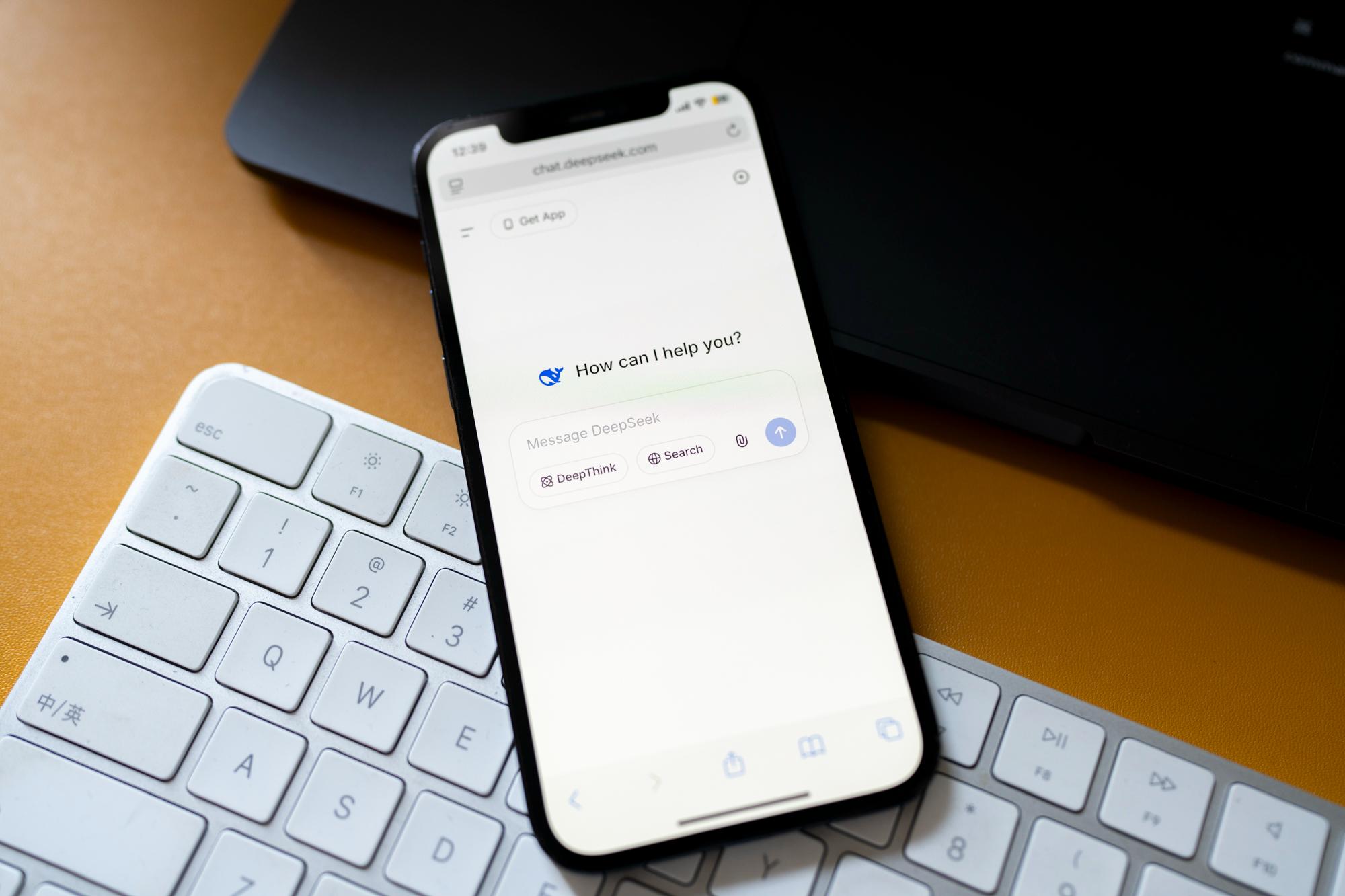
The Deepseek chatbot arranged on a smartphone in Shanghai, China | Image: Bloomberg By Shirin Ghaffary and Maggie Eastland Rivals OpenAI, Anthropic PBC, and Alphabet Inc.'s Google have begun working together to try to clamp down on Chinese competitors extracting results from cutting-edge US artificial intelligence models to gain an edge in the global AI race. The firms are sharing information through the Frontier Model Forum, an industry nonprofit that the three tech companies founded with Microsoft Corp. in 2023, to detect so-called adversarial distillation attempts that violate their terms of service, according to people familiar with the matter. The rare collaboration underscores the severity of a concern raised by US AI companies that some users, especially in China, are creating imitation versions of their products that could undercut them on price and siphon away customers while posing a national security risk. US officials have estimated that unauthorized distillation costs Silicon Valley labs billions of dollars in annual profit, according to a person familiar with the findings who described them on condition of anonymity. OpenAI confirmed it's part of the information sharing effort on adversarial distillation through the Frontier Model Forum and pointed to a recent memo it sent to Congress on the practice, where it accused Chinese firm DeepSeek of trying to "free-ride on the capabilities developed by OpenAI and other US frontier labs." Google, Anthropic, and the Frontier Model Forum declined to comment. Also Read OpenAI urges grid, safety net spending to prepare for AI-driven changes Razorpay partners OpenAI to enable instant payments in AI-built apps Not China's war, but Beijing's long-term energy strategy is paying off India evolving into core AI-play; SMIDs to drive innovation: Prateek Indwar Trump may be remembered as the US president who lost Asia to China Distillation is a technique where an older "teacher" AI model is used to train a newer, "student," model that replicates the capabilities of the earlier system -- often at a much lower cost than producing an original model from scratch. Some forms of distillation are widely accepted and even encouraged by AI labs, such as when companies create smaller, more efficient versions of their own models, or allow outside developers to use distillation to build non-competitive technologies. Yet distillation has been controversial when used by third parties -- particularly in adversary nations like China or Russia -- to replicate proprietary work without authorization. Leading US AI labs have warned that foreign adversaries could use the technique to develop AI models stripped of safety guardrails, such as limits that would prevent users from creating a deadly pathogen. Most models made by Chinese labs are open weight, meaning that parts of the underlying AI system are publicly available for users to freely download and run on their own platforms, and therefore cheaper to use. That poses an economic challenge for US AI companies that have kept their models proprietary, betting that customers will pay for access to their products and help offset the hundreds of billions of dollars they've spent on data centers and other infrastructure. Distillation first drew significant scrutiny in January 2025 in the weeks after DeepSeek's surprise release of the R1 reasoning model that took the AI world by storm. Soon after, Microsoft and OpenAI investigated whether the Chinese startup had improperly exfiltrated large amounts of data from the US firm's models to create R1, Bloomberg previously reported. In February, OpenAI warned US lawmakers that DeepSeek had continued to use increasingly sophisticated tactics to extract results from US models, despite heightened efforts to prevent misuse of its products. OpenAI claimed in its memo to the House Select Committee on China that DeepSeek was relying on distillation to develop a new version of its breakthrough chatbot. Information-sharing by US AI companies about adversarial distillation echoes a standard practice in the cybersecurity industry, where firms regularly swap data on attacks and adversaries' tactics as a way to strengthen network defenses. By working together, the AI firms are similarly seeking to more effectively detect the practice, identify who's responsible and try to prevent unauthorized users from succeeding. Trump administration officials have signaled their openness to fostering information sharing among AI companies to rein in adversarial distillation. The AI Action Plan unveiled by President Donald Trump last year called for the creation of an information sharing and analysis center, in part for this purpose. For now, information sharing on distillation remains limited due to AI companies' uncertainty about what can be shared under existing antitrust guidance to counter the competitive threat from China, according to people familiar with the matter. The firms would benefit from greater clarity from the US government, the people said. Distillation has ranked as a top concern among American AI developers since DeepSeek rattled global markets in early 2025 with its R1 release. Highly capable open-source models continue to proliferate in China, and many in the industry are watching closely for a major upgrade to DeepSeek's model. Last year, Anthropic blocked Chinese-controlled companies from using its Claude chatbot model, and in February it identified three Chinese AI labs -- DeepSeek, Moonshot, and MiniMax -- as illicitly extracting the model's capability via distillation. This year, Anthropic said the threat "extends beyond any single company or region" and poses a national security risk, since distilled models often lack safety guardrails designed to prevent bad actors from using AI tools for malicious activities. Google has published a blog saying it identified an increase in model extraction attempts. The three US AI labs have not yet provided evidence showing how much of China's model innovation is reliant on distillation, but they note that the prevalence of attacks can be measured based on volumes of large-scale data requests. More From This Section Nasa families don't go to the moon, but they too are on the mission Tech Wrap April 6: Samsung Messages, WhatsApp noise cancellation, iOS 26.5 iPhone Air sees price cut on Amazon, down to Rs 90,990 with offers: Details Realme Buds T500 Pro with Hi-Res audio, LHDC support launching April 16 OnePlus Nord 6 with 9000mAh battery launching on April 7: What to expect
Exclusive-SpaceX lays out IPO details, targets early June roadshow, sources say
NEW YORK, April 6 (Reuters) - SpaceX outlined details of its highly anticipated IPO at a meeting with its team of bankers Monday night, telling them it plans to earmark a large portion of shares for retail investors and will host 1,500 of them at an event in June following the IPO roadshow launch, according to two people familiar with the matter. "Retail is going to be a critical part of this and a bigger part than any IPO in history," Chief Financial Officer Bret Johnsen said during the virtual meeting, the two people said, asking not to be identified because the discussion was private. Johnsen said the large retail component is by design as "those are folks that have been incredibly supportive of us and of Elon (Musk) for a long time, and we want to make sure that we recognize that." Reuters reported last month that SpaceX is rewriting the IPO playbook with a large retail portion in the offering. The meeting brought together the full syndicate for the first time as part of the process for what is expected to be the biggest initial public offering ever as the rocket maker seeks to raise $75 billion, valuing SpaceX at as much as $1.75 trillion, Reuters has previously reported. The company plans to launch its roadshow the week of June 8, when executives and bankers will pitch the IPO to investors, the people said. About 125 financial analysts from the 21 banks on the deal are scheduled to meet with the company the day before, they added. On June 11, SpaceX plans to host 1,500 retail investors at what the people described as a major investor event. In addition to the U.S., everyday retail investors in the UK, EU, Australia, Canada, Japan and Korea would have the opportunity to participate in the offering, the people added. One of SpaceX's lead underwriters told the group of 21 investment banks the retail demand and allocation will be something they've "never seen before," the two people said. The structure of the deal and precise amount of the retail allocation are expected to be finalized closer to the IPO launch, they said. Reuters previously reported that founder Elon Musk wanted to set aside up to 30% of the company's shares for smaller investors, compared with 5% to 10% for most companies. The company plans to make its IPO prospectus public in late May, they said. SpaceX did not immediately respond to a request for comment. (Reporting by Echo Wang in New YorkWriting by Dawn Kopecki; Editing by Shri Navaratnam)
Exclusive-SpaceX lays out IPO details, targets early June roadshow, sources say
NEW YORK, April 6 (Reuters) - SpaceX outlined details of its highly anticipated IPO at a meeting with its team of bankers Monday night, telling them it plans to earmark a large portion of shares for retail investors and will host 1,500 of them at an event in June following the IPO roadshow launch, according to two people familiar with the matter. "Retail is going to be a critical part of this and a bigger part than any IPO in history," Chief Financial Officer Bret Johnsen said during the virtual meeting, the two people said, asking not to be identified because the discussion was private. Johnsen said the large retail component is by design as "those are folks that have been incredibly supportive of us and of Elon (Musk) for a long time, and we want to make sure that we recognize that." Reuters reported last month that SpaceX is rewriting the IPO playbook with a large retail portion in the offering. The meeting brought together the full syndicate for the first time as part of the process for what is expected to be the biggest initial public offering ever as the rocket maker seeks to raise $75 billion, valuing SpaceX at as much as $1.75 trillion, Reuters has previously reported. The Elon Musk-led company plans to launch its roadshow the week of June 8, when executives and bankers will pitch the IPO to investors, the people said. About 125 financial analysts from the 21 banks on the deal are scheduled to meet with the company the day before, they added. On June 11, SpaceX plans to host 1,500 retail investors at what the people described as a major investor event. In addition to the U.S., everyday retail investors in the UK, EU, Australia, Canada, Japan and Korea would have the opportunity to participate in the offering, the people added. One of SpaceX's lead underwriters told the group of 21 investment banks the retail demand and allocation will be something they've "never seen before," the two people said. The structure of the deal and precise amount of the retail allocation are expected to be finalized closer to the IPO launch, they said. Reuters previously reported that founder Elon Musk wanted to set aside up to 30% of the company's shares for smaller investors, compared with 5% to 10% for most companies. The company plans to make its IPO prospectus public in late May, they said. SpaceX did not immediately respond to a request for comment. Morgan Stanley, Bank of America, Citigroup, JP Morgan and Goldman Sachs are leading the deal as active bookrunners, with 16 other banks in smaller roles spanning institutional, retail and international channels, Reuters previously reported. The $1.75 trillion target represents a significant step up from the $1.25 trillion combined valuation set when SpaceX merged with Musk's artificial intelligence startup xAI in February. Typically, SpaceX's roughly twice-yearly tender offers -- in which employees and investors are able to sell their existing shares, allowing them to cash out from a company that has remained private for nearly 25 years -- have served as the primary valuation anchor. The most recent, in December 2025, valued the company at $800 billion, before the merger with xAI. (Reporting by Echo Wang in New YorkWriting by Dawn Kopecki; Editing by Shri Navaratnam)

Exclusive: SpaceX lays out IPO details, targets early June roadshow, sources say
NEW YORK, April 6 (Reuters) - SpaceX outlined details of its highly anticipated IPO at a meeting with its team of bankers Monday night, telling them it plans to earmark a large portion of shares for retail investors and will host 1,500 of them at an event in June following the IPO roadshow launch, according to two people familiar with the matter. "Retail is going to be a critical part of this and a bigger part than any IPO in history," Chief Financial Officer Bret Johnsen said during the virtual meeting, the two people said, asking not to be identified because the discussion was private. Johnsen said the large retail component is by design as "those are folks that have been incredibly supportive of us and of Elon (Musk) for a long time, and we want to make sure that we recognize that." Reuters reported last month that SpaceX is rewriting the IPO playbook with a large retail portion in the offering. The meeting brought together the full syndicate for the first time as part of the process for what is expected to be the biggest initial public offering ever as the rocket maker seeks to raise $75 billion, valuing SpaceX at as much as $1.75 trillion, Reuters has previously reported. The Elon Musk-led company plans to launch its roadshow the week of June 8, when executives and bankers will pitch the IPO to investors, the people said. About 125 financial analysts from the 21 banks on the deal are scheduled to meet with the company the day before, they added. On June 11, SpaceX plans to host 1,500 retail investors at what the people described as a major investor event. In addition to the U.S., everyday retail investors in the UK, EU, Australia, Canada, Japan and Korea would have the opportunity to participate in the offering, the people added. One of SpaceX's lead underwriters told the group of 21 investment banks the retail demand and allocation will be something they've "never seen before," the two people said. The structure of the deal and precise amount of the retail allocation are expected to be finalized closer to the IPO launch, they said. Reuters previously reported that founder Elon Musk wanted to set aside up to 30% of the company's shares for smaller investors, compared with 5% to 10% for most companies. The company plans to make its IPO prospectus public in late May, they said. SpaceX did not immediately respond to a request for comment. Morgan Stanley, Bank of America, Citigroup, JP Morgan and Goldman Sachs are leading the deal as active bookrunners, with 16 other banks in smaller roles spanning institutional, retail and international channels, Reuters previously reported. The $1.75 trillion target represents a significant step up from the $1.25 trillion combined valuation set when SpaceX merged with Musk's artificial intelligence startup xAI in February. Typically, SpaceX's roughly twice-yearly tender offers -- in which employees and investors are able to sell their existing shares, allowing them to cash out from a company that has remained private for nearly 25 years -- have served as the primary valuation anchor. The most recent, in December 2025, valued the company at $800 billion, before the merger with xAI. Reporting by Echo Wang in New York Writing by Dawn Kopecki; Editing by Shri Navaratnam Our Standards: The Thomson Reuters Trust Principles., opens new tab * Suggested Topics: * U.S. Markets Echo Wang Thomson Reuters Echo Wang is a correspondent at Reuters covering U.S. equity capital markets, and the intersection of Chinese business in the U.S, breaking news from U.S. crackdown on TikTok and Grindr, to restrictions Chinese companies face in listing in New York. She was the Reuters' Reporter of the Year in 2020.
