News & Updates
The latest news and updates from companies in the WLTH portfolio.
Rio de Janeiro's gangs hijack buses to sow chaos in war with police
Criminals often seize buses in a show of power and use them as barricades to block police patrols and paralyze traffic for hours When police killed a drug kingpin in a Rio de Janeiro favela last month, armed men quickly surrounded a bus, forced the passengers to disembark and set it on fire in the middle of an avenue. "They boarded, told me to get the passengers off, and set it ablaze. It happened very fast," 48-year-old driver Marcio Souza told AFP, still shaken by the ordeal. "It was a horrible feeling that I wouldn't wish on anyone." Scenes like this are common in the city of nearly seven million people, which is one of the most visited tourist destinations in the world. Clashes are frequent between police and armed criminal groups that dominate Rio de Janeiro's sprawling favelas. To retaliate, criminals often seize buses in a show of power and use them as barricades to block police patrols and paralyze traffic for hours. This disproportionately affects residents of poor neighborhoods who already face lengthy commutes to work. In October, when Brazil's deadliest police operation left more than 120 people dead as officers clashed with heavily armed gang members, more than 100 buses were hijacked around the city. - A high-risk profession - A 35-year-old bus driver, using the pseudonym Joao, told AFP how criminals on motorcycles recently assaulted him, snatched his keys and doused his vehicle with gasoline. The police arrived in time to prevent the bus from being torched. "The terror was immense. In that moment, all I could think about was my family, my children. I thought the worst was going to happen," said the father of two girls. He said his family is often "terrified about whether or not I'll make it back safe and sound." Nearly 200 drivers took sick leave last year due to stress and panic attacks, according to Paulo Valente, a spokesperson for Rio Onibus -- which represents the employers of Rio's 14,000 bus drivers. During that same period, 254 buses were used as barricades, more than double the number from the previous year. The trend is striking fear into passengers. "I don't take the bus anymore because it's too dangerous. We pass through several favelas, and lately, there have been a lot of clashes. And the first thing (the criminals) do is stop the buses," said Elisiane, 43, who did not want to give her last name. Monica Correia, a 56-year-old caregiver, said she leaves home three hours earlier than necessary to account for any unforeseen delays. -- Like the 'Gaza Strip' -- Valente told AFP that each hijacking had "a direct impact on the economy," resulting in losses amounting to millions for the bus companies, as well as tarnishing the city's image. "When a bus is used as a barricade, more than 50 others come to a standstill, and just as many are forced to reroute. And for certain routes, there simply is no possible detour." Faced with the escalation in hijackings, authorities are working with Rio Onibus to try minimize the impact, including alerting companies about upcoming police operations. Rio's police did not respond to AFP's requests for comment. During the October police operation, some 500,000 people were unable to complete their journeys, said Valente. Businesses closed and people were sent home early from work. In 2023, President Luiz Inacio Lula da Silva described images of 35 buses set ablaze around the city as "scenes one would expect to see in the Gaza Strip." A recent study showed that nearly 190,000 students were unable to make it to school between 2023 and mid-2025 due to transport disruptions. "Ninety-five percent of schools were affected. Armed violence permeates the lives of the entire population of Rio," said Maria Isabel Couto, a co-author of the study from the Fogo Cruzado Institute, which tracks armed violence in low-income communities. "Armed territorial control has a very significant impact on this disrupted mobility. But the state cannot hide behind that, because it plays a role in the production of this violence and inequality."

Rio de Janeiro's gangs hijack buses to sow chaos in war with police
Criminals often seize buses in a show of power and use them as barricades to block police patrols and paralyze traffic for hours When police killed a drug kingpin in a Rio de Janeiro favela last month, armed men quickly surrounded a bus, forced the passengers to disembark and set it on fire in the middle of an avenue. "They boarded, told me to get the passengers off, and set it ablaze. It happened very fast," 48-year-old driver Marcio Souza told AFP, still shaken by the ordeal. "It was a horrible feeling that I wouldn't wish on anyone." Scenes like this are common in the city of nearly seven million people, which is one of the most visited tourist destinations in the world. Clashes are frequent between police and armed criminal groups that dominate Rio de Janeiro's sprawling favelas. To retaliate, criminals often seize buses in a show of power and use them as barricades to block police patrols and paralyze traffic for hours. This disproportionately affects residents of poor neighborhoods who already face lengthy commutes to work. In October, when Brazil's deadliest police operation left more than 120 people dead as officers clashed with heavily armed gang members, more than 100 buses were hijacked around the city. - A high-risk profession - A 35-year-old bus driver, using the pseudonym Joao, told AFP how criminals on motorcycles recently assaulted him, snatched his keys and doused his vehicle with gasoline. The police arrived in time to prevent the bus from being torched. "The terror was immense. In that moment, all I could think about was my family, my children. I thought the worst was going to happen," said the father of two girls. He said his family is often "terrified about whether or not I'll make it back safe and sound." Nearly 200 drivers took sick leave last year due to stress and panic attacks, according to Paulo Valente, a spokesperson for Rio Onibus -- which represents the employers of Rio's 14,000 bus drivers. During that same period, 254 buses were used as barricades, more than double the number from the previous year. The trend is striking fear into passengers. "I don't take the bus anymore because it's too dangerous. We pass through several favelas, and lately, there have been a lot of clashes. And the first thing (the criminals) do is stop the buses," said Elisiane, 43, who did not want to give her last name. Monica Correia, a 56-year-old caregiver, said she leaves home three hours earlier than necessary to account for any unforeseen delays. -- Like the 'Gaza Strip' -- Valente told AFP that each hijacking had "a direct impact on the economy," resulting in losses amounting to millions for the bus companies, as well as tarnishing the city's image. "When a bus is used as a barricade, more than 50 others come to a standstill, and just as many are forced to reroute. And for certain routes, there simply is no possible detour." Faced with the escalation in hijackings, authorities are working with Rio Onibus to try minimize the impact, including alerting companies about upcoming police operations. Rio's police did not respond to AFP's requests for comment. During the October police operation, some 500,000 people were unable to complete their journeys, said Valente. Businesses closed and people were sent home early from work. In 2023, President Luiz Inacio Lula da Silva described images of 35 buses set ablaze around the city as "scenes one would expect to see in the Gaza Strip." A recent study showed that nearly 190,000 students were unable to make it to school between 2023 and mid-2025 due to transport disruptions. "Ninety-five percent of schools were affected. Armed violence permeates the lives of the entire population of Rio," said Maria Isabel Couto, a co-author of the study from the Fogo Cruzado Institute, which tracks armed violence in low-income communities. "Armed territorial control has a very significant impact on this disrupted mobility. But the state cannot hide behind that, because it plays a role in the production of this violence and inequality."

Anthropic tops $30 billion run rate, seals deal with Broadcom - The Economic Times
Anthropic PBC said its revenue run rate has now topped $30 billion, up from $9 billion at the end of 2025, and confirmed plans to work with Broadcom and Google to power its burgeoning operations. The AI startup said that demand for its Claude services has accelerated this year, with more than 1,000 business customers spending over $1 million on an annual basis. That figure has more than doubled since February. The collaboration with Broadcom and Google, which was first announced last month, will help Anthropic build "the capacity necessary to serve the remarkable growth we have seen in our customer base," chief financial officer Krishna Rao said in a statement. The annual run rate -- a popular benchmark among tech startups -- extrapolates the current sales level over a full year. The latest numbers suggest that a high-profile dispute with the US government hasn't stymied growth. Anthropic is waging a legal fight over the Pentagon's decision to declare the company a supply-chain risk following a standoff over AI safety guardrails. Anthropic has warned that the labeling could cost it billions in lost revenue, and an attorney for the company recently told a judge in San Francisco that the federal government's actions led to more than 100 enterprise customers contacting the company to express doubt about continuing their work with Anthropic. Still, some customers respect that Anthropic "demonstrates its principles" in its dealings with the US government, Paul Smith, Anthropic's chief commercial officer, said in an interview last week. Broadcom is developing chips using Google's tensor processing units, or TPUs, offering an alternative to technology from Nvidia. Broadcom and Alphabet's Google have entered a long-term agreement to provide the chips and a supply assurance pact that runs through 2031, according to a Broadcom filing Monday. The three companies also are expanding a strategic collaboration that will let Anthropic access about 3.5 gigawatts' worth of computing power. That will begin in 2027. "The consumption of such expanded AI compute capacity by Anthropic is dependent on Anthropic's continued commercial success. In connection with this deployment, the parties are in discussions with certain operational and financial partners," Broadcom said in the filing. Broadcom shares climbed as much as 3.6% in late trading after the filing was announced. The company's chief executive officer, Hock Tan, previously discussed the collaboration during an earnings call last month. He also said Broadcom expects its AI chip sales to top $100 billion next year, making it a bigger competitor to Nvidia. Google's TPUs were originally designed to speed up its ubiquitous search engine, but have become useful at creating and running AI software. Broadcom takes Google's specifications and creates fully-formed designs that can then be sent for manufacturing.
Is SpaceX Worth $2 Trillion? Key Questions For Musk's Big IPO
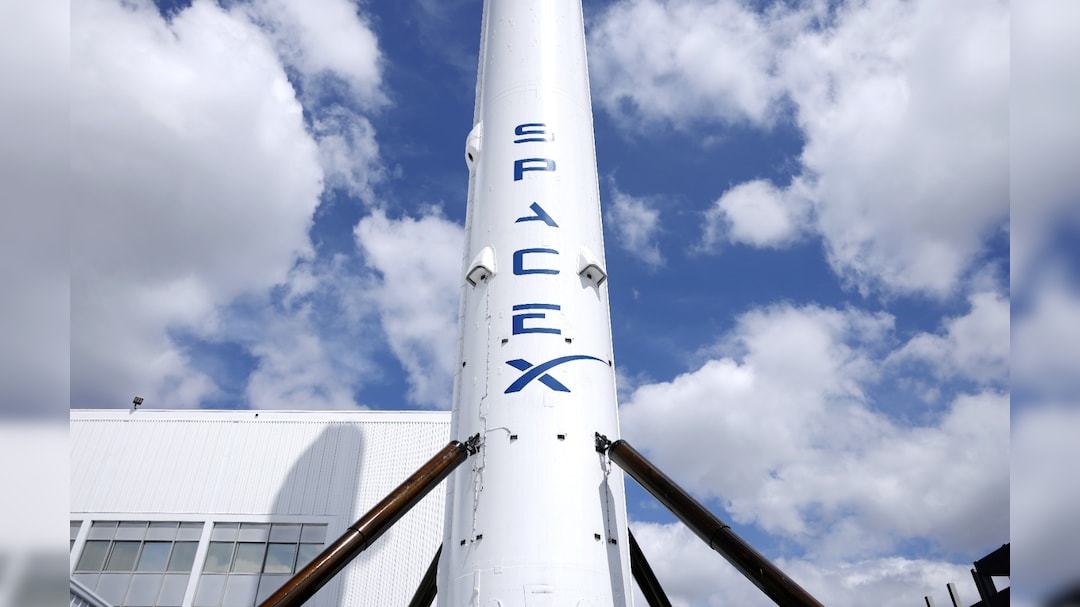
Two months after a merger with xAI, senior bankers are poised to begin talks around the rocket, satellite and AI company's initial public offering, to determine if its vaunted valuation will still lure in investors. Its market value is now expected to top $2 trillion, up from expectations of $1.75 trillion less than two weeks ago, people familiar with the matter said. "What you've got to be convinced of - and this is what they'll be working on until this is filed publicly - is continuing to sell the dream and basically there's nobody that's been better at selling the dream than Elon Musk," said David Erickson, an adjunct associate professor at Columbia Business School and a former co-head of global equity capital markets at Barclays Plc. Representatives for SpaceX didn't immediately respond to requests for comment. Musk appeared to push back on the valuation target of $2 trillion in an April 3 X post, saying "don't believe everything you read." At more than $2 trillion, SpaceX would be bigger than all but five of the companies in the S&P 500 Index - Nvidia Corp., Apple Inc., Alphabet Inc., Microsoft Corp. and Amazon.com Inc. Despite generating a fraction of the revenue, its market value would dwarf Meta Platforms Inc. and Musk's own Tesla Inc., the two other members of the so-called Magnificent 7 stocks. Such a valuation implies a price-to-sales ratio of more than 100-times on a trailing basis, according to analyst estimates, easily topping that of retail-favorite Palantir Technologies Inc.'s lofty ratio of roughly 79 times - by far the highest in the S&P 500 Index. Bloomberg Intelligence estimates SpaceX's rocket launch program and Starlink satellites will generate the majority of its revenue, approaching $20 billion in 2026, with xAI likely to generate less than $1 billion. "The reality is it's not about the fundamentals, nobody is going to get there on the fundamentals from a math standpoint because the math doesn't work," said Erickson. A pair of rocket test launches are expected ahead of a potential June trading debut, which the company has been targeting, people have told Bloomberg. Those will be "crucial for what happens to the IPO," according to Franco Granda, a senior analyst at PitchBook. "If any of those two fail there's a chance the IPO might not even happen," he said in an interview. "This will dictate everyone's direction toward the IPO." The first flight of SpaceX's latest iteration of its reusable, super heavy-lift launch vehicle is four to six weeks away, Musk said in a post on X Friday. A listing for SpaceX could raise as much as $75 billion, Bloomberg News has reported. At that size, it would dwarf the biggest ever IPO, Saudi Aramco's $29 billion debut in 2019. The company would use the money raised in an IPO to fund Musk's vision of AI data centers in space and a factory on the moon. ALSO READ: OpenAI Calls For Investigation Into Musk By California, Delaware The billionaire's grand plans will require unprecedented amounts of capital, and resources that span several of the companies he controls. Musk said in March that his Terafab project, which would eventually manufacture his own chips for robotics, AI and space data centers, will be jointly run by Tesla and SpaceX. PitchBook's Granda, who called its targeted valuation "justifiable" a month ago, cautioned that Musk's ever-expanding vision could present upside but also add to mounting risks. "When you start to go higher than $1.75 trillion, it becomes a question of 'how much can they rely on Musk's public persona to drive this up?'" he said. The prospect of an IPO at a $2 trillion valuation is a steep climb from the $1.25 trillion assigned to SpaceX after merging with xAI. It would also be more than double the $800 billion valuation when some company insiders sold shares in a tender offer in December. However, private market activity in the company through murky special purpose vehicles soared in the run-up to a confidential filing submission. Hundreds of millions of dollars were traded entirely through these SPVs, according to Caplight Technologies, in the first three months of the year. ALSO READ: Elon Musk's SpaceX Files Confidentially For IPO Ahead Of AI Rivals The total volume was double what was observed by the data provider in the final six months of last year, according to Caplight, which tracks transaction data reported by a network of hundreds of broker-dealers, registered investment advisers and other qualified institutional investors. Bank of America Corp., Citigroup Inc., Goldman Sachs Group Inc., JPMorgan Chase & Co. and Morgan Stanley have senior roles on the IPO, and SpaceX has added more banks to the lineup, people familiar with the matter have said. The company has scheduled a call with the broader bank syndicate for Monday, and there will be an analyst briefing later in April, a person familiar with the matter said. IFR and Reuters previously reported the syndicate call and analyst briefing respectively. The ultimate outcome of those meetings may depend on whether Musk can get investors to keep their eye on the vision rather than the numbers. "It went from a story of being such a great, capital-intensive company," said PitchBook's Granda. "Now you're starting to throw real sci-fi initiatives in here and the numbers are not favorable to them."
Rio de Janeiro's gangs hijack buses to sow chaos in war with police
Criminals often seize buses in a show of power and use them as barricades to block police patrols and paralyze traffic for hours When police killed a drug kingpin in a Rio de Janeiro favela last month, armed men quickly surrounded a bus, forced the passengers to disembark and set it on fire in the middle of an avenue. "They boarded, told me to get the passengers off, and set it ablaze. It happened very fast," 48-year-old driver Marcio Souza told AFP, still shaken by the ordeal. "It was a horrible feeling that I wouldn't wish on anyone." Scenes like this are common in the city of nearly seven million people, which is one of the most visited tourist destinations in the world. Clashes are frequent between police and armed criminal groups that dominate Rio de Janeiro's sprawling favelas. To retaliate, criminals often seize buses in a show of power and use them as barricades to block police patrols and paralyze traffic for hours. This disproportionately affects residents of poor neighborhoods who already face lengthy commutes to work. In October, when Brazil's deadliest police operation left more than 120 people dead as officers clashed with heavily armed gang members, more than 100 buses were hijacked around the city. - A high-risk profession - A 35-year-old bus driver, using the pseudonym Joao, told AFP how criminals on motorcycles recently assaulted him, snatched his keys and doused his vehicle with gasoline. The police arrived in time to prevent the bus from being torched. "The terror was immense. In that moment, all I could think about was my family, my children. I thought the worst was going to happen," said the father of two girls. He said his family is often "terrified about whether or not I'll make it back safe and sound." Nearly 200 drivers took sick leave last year due to stress and panic attacks, according to Paulo Valente, a spokesperson for Rio Onibus -- which represents the employers of Rio's 14,000 bus drivers. During that same period, 254 buses were used as barricades, more than double the number from the previous year. The trend is striking fear into passengers. "I don't take the bus anymore because it's too dangerous. We pass through several favelas, and lately, there have been a lot of clashes. And the first thing (the criminals) do is stop the buses," said Elisiane, 43, who did not want to give her last name. Monica Correia, a 56-year-old caregiver, said she leaves home three hours earlier than necessary to account for any unforeseen delays. -- Like the 'Gaza Strip' -- Valente told AFP that each hijacking had "a direct impact on the economy," resulting in losses amounting to millions for the bus companies, as well as tarnishing the city's image. "When a bus is used as a barricade, more than 50 others come to a standstill, and just as many are forced to reroute. And for certain routes, there simply is no possible detour." Faced with the escalation in hijackings, authorities are working with Rio Onibus to try minimize the impact, including alerting companies about upcoming police operations. Rio's police did not respond to AFP's requests for comment. During the October police operation, some 500,000 people were unable to complete their journeys, said Valente. Businesses closed and people were sent home early from work. In 2023, President Luiz Inacio Lula da Silva described images of 35 buses set ablaze around the city as "scenes one would expect to see in the Gaza Strip." A recent study showed that nearly 190,000 students were unable to make it to school between 2023 and mid-2025 due to transport disruptions. "Ninety-five percent of schools were affected. Armed violence permeates the lives of the entire population of Rio," said Maria Isabel Couto, a co-author of the study from the Fogo Cruzado Institute, which tracks armed violence in low-income communities. "Armed territorial control has a very significant impact on this disrupted mobility. But the state cannot hide behind that, because it plays a role in the production of this violence and inequality."

Anthropic tops $30 billion run rate, seals deal with Broadcom
By clicking submit, I authorize Arcamax and its affiliates to: (1) use, sell, and share my information for marketing purposes, including cross-context behavioral advertising, as described in our Privacy Policy , (2) add to information that I provide with other information like interests inferred from web page views, or data lawfully obtained from data brokers, such as past purchase or location data, or publicly available data, (3) contact me or enable others to contact me by email or other means with offers for different types of goods and services, and (4) retain my information while I am engaging with marketing messages that I receive and for a reasonable amount of time thereafter. I understand I can opt out at any time through an email that I receive, or by clicking here Anthropic PBC said its revenue run rate has now topped $30 billion, up from $9 billion at the end of 2025, and confirmed plans to work with Broadcom Inc. and Google to power its burgeoning operations. The AI startup said that demand for its Claude services has accelerated this year, with more than 1,000 business customers spending over $1 million on an annual basis. That figure has more than doubled since February. The collaboration with Broadcom and Google, which was first announced last month, will help Anthropic build "the capacity necessary to serve the remarkable growth we have seen in our customer base," Chief Financial Officer Krishna Rao said in a statement. The annual run rate -- a popular benchmark among tech startups -- extrapolates the current sales level over a full year. The latest numbers suggest that a high-profile dispute with the U.S. government hasn't stymied growth. Anthropic is waging a legal fight over the Pentagon's decision to declare the company a supply-chain risk following a standoff over AI safety guardrails. Anthropic has warned that the labeling could cost it billions in lost revenue, and an attorney for the company recently told a judge in San Francisco that the federal government's actions led to more than 100 enterprise customers contacting the company to express doubt about continuing their work with Anthropic. Still, some customers respect that Anthropic "demonstrates its principles" in its dealings with the U.S. government, Paul Smith, Anthropic's chief commercial officer, said in an interview last week. Broadcom is developing chips using Google's tensor processing units, or TPUs, offering an alternative to technology from Nvidia Corp. Broadcom and Alphabet Inc.'s Google have entered a long-term agreement to provide the chips and a supply assurance pact that runs through 2031, according to a Broadcom filing Monday. The three companies also are expanding a strategic collaboration that will let Anthropic access about 3.5 gigawatts' worth of computing power. That will begin in 2027. "The consumption of such expanded AI compute capacity by Anthropic is dependent on Anthropic's continued commercial success. In connection with this deployment, the parties are in discussions with certain operational and financial partners," Broadcom said in the filing. Broadcom shares climbed as much as 3.6% in late trading after the filing was announced. The company's chief executive officer, Hock Tan, previously discussed the collaboration during an earnings call last month. He also said Broadcom expects its AI chip sales to top $100 billion next year, making it a bigger competitor to Nvidia. Google's TPUs were originally designed to speed up its ubiquitous search engine, but have become useful at creating and running AI software. Broadcom takes Google's specifications and creates fully-formed designs that can then be sent for manufacturing.
India's tech hiring chills; Polymarket's IPL bet
Happy Tuesday! The tech sector is seeing a slowdown in hiring driven by internal cost controls. This and more in today's ETtech Morning Dispatch. Also in the letter: ■ Nandan Nilekani's next global rail ■ Wingify raises funds ■ Nykaa's Q4 outlook India's tech slowdown is getting harder to ignore. Active openings fell another 8% in April to 110,000 from 119,000 in March, per staffing firm Xpheno. Number-wise: Structural reset: Industry executives say clients are deferring mandates rather than scrapping them, while tech firms are squeezing more out of existing teams and tools. "The slowdown is now being driven more by internal cost control. Organisations are prioritising productivity, leveraging AI to reduce incremental hiring, and focusing on margin expansion. This is a structural reset rather than a cyclical dip," Sanketh Chengappa, director at Adecco India, said. Ground shift: The shift is evident in how companies are designing their workforce. "Short-term hiring is more prominent in IT services companies as they want to keep their hiring decisions flexible while being able to get the right talent at the right time," TeamLease Digital's Neeti Sharma noted. Also Read: India's tech hiring opens FY27 on a cautious note with fresher roles under most pressure: Report India's real-money gaming (RMG) crackdown has created a curious winner: US-based prediction markets like Polymarket and Kalshi, which are quietly picking up Indian Premier League (IPL) traffic. The post-ban gap: Still a niche corner: Usage is far from mainstream. For now, these platforms mostly attract urban, crypto-savvy users. But activity is building. In one IPL-linked market, trading volumes have crossed $250,000, with the Mumbai Indians currently placed as favourites for the 2026 title. Where it gets tricky: Payments. Unlike offshore betting sites such as Parimatch, 1XBet and Stake, these platforms are fully crypto-native. Legal grey zone: Experts warn that funding such platforms may run afoul of India's foreign exchange rules under FEMA. Enforcement levers remain: Even if these platforms sit outside legal jurisdiction, legal experts say that the government retains the power to restrict access to such platforms under existing laws. Also Read: ETtech In-depth: Banned in India, but it's business as usual for offshore real money gaming firms (L-R) Sujith Nair, Pramod Varma and Siddharth Shetty, founders, NFH Nandan Nilekani and Pramod Varma, architects of the Unified Payments Interface (UPI), are now trying to rewire how the world trades and moves value. Their new non-profit, Networks for Humanity, is building an open digital fabric for identity, payments, assets, and commerce. What they are after: NFH wants to take the design logic behind Aadhaar and UPI and apply it to global commerce and financial assets. The goal is to create neutral, interoperable rails that anyone can plug into, rather than rely on a few dominant platforms. Backers include Google.org, Nilekani Philanthropies, Asian Development Bank, Spectrum Impact, and the Bill & Melinda Gates Foundation. How does it work: NFH combines Beckn Protocol, which supports open commerce networks, with Finternet, which focuses on how assets are represented and moved digitally across systems. Together, they form a plumbing layer where buyers, sellers, service providers and even AI agents can find each other and close deals without a central gatekeeper. What's funded: NFH has raised about $30 million to run pilots, seed partnerships, and build out the ecosystem. The tech stack itself is relatively lean. The harder problem is coordination and adoption across regulators, banks, fintechs, and merchants. The architecture is being designed for an "agentic" future, where AI agents, not humans, will increasingly search, negotiate, and execute transactions. Millions of these agents could continuously optimise prices, match buyers and sellers, and complete transactions on behalf of users. Sparsh Gupta, CEO, Wingify Wingify's $150 million raise: Private equity firm (PE) Everstone Capital has led a Rs 1,381-crore ($150 million) infusion into software company Wingify, which it acquired in early 2025. Nykaa on fourth quarter growth: Nykaa's parent FSN E-Commerce Ventures said on Monday that its consolidated GMV growth is expected to be in the "late twenties" in the March quarter of FY26, and net revenue growth for the year is expected to come in at the upper end of the "mid-twenties". Wipro's $1 billion deal: IT services firm Wipro has secured an eight-year transformation deal with Singapore-based food and agri-business major Olam Group, which is expected to exceed $1 billion (about Rs 9,314 crore) in contract value. ■ Microsoft launches 'mid-class' AI model as compute limits bite (FT) ■ "Data embassies" and safeguarding digital assets during wartime (Rest of World) ■ How China fell for a lobster: What an AI assistant tells us about Beijing's ambition (BBC)
SpaceX's Groundbreaking IPO: Rocketing Retail Involvement | Business
SpaceX is preparing for its highly anticipated IPO by allocating a large portion of shares for retail investors, making it historic in scale. Chief Financial Officer Bret Johnsen emphasized the importance of retail investors, as SpaceX aims to raise $75 billion, valuing the company at $1.75 trillion. The IPO roadshow is slated for June. SpaceX is gearing up for an extraordinary IPO that is set to rewrite the playbook for public offerings with a significant retail investor component. In a virtual meeting, the company's Chief Financial Officer, Bret Johnsen, highlighted that retail investors would play a pivotal role, marking this as a historically large IPO in terms of retail participation. The meeting initiated the collaborative efforts of multiple banks and syndicates, aiming to raise approximately $75 billion, boosting SpaceX's valuation to as high as $1.75 trillion. With events targeting global retail investors in the U.S., UK, EU, and beyond, the company is committed to recognizing the longstanding support from these individual investors. Elon Musk's ambitious plan includes a possible allocation of up to 30% for smaller investors, far exceeding traditional IPOs. This significant milestone for SpaceX underscores its growth trajectory and Musk's vision to engage a broader investor base as preparations intensify ahead of the upcoming IPO roadshow.

Polymarket Gives Trump's Iran Deadline Only a 3% Chance - BeInCrypto
Polymarket traders are giving Trump's Iran ceasefire deadline just a 3% chance of success, based on over $103 million in live trading volume. That single number captures everything about where market sentiment stands right now. The numbers send a clear message: the crowd sees no deal arriving on Trump's timeline. The Crowd Has Already Decided: No Deal Tuesday Iran rejected a 45-day ceasefire proposal brokered primarily by Pakistan, with Egypt and Turkey also involved as mediators. Tehran countered with its own 10-point plan, demanding a permanent end to the war instead. Trump dismissed the Iranian response as insufficient and insisted that his Tuesday deadline was final. Polymarket's probability curve shows ceasefire odds rising only slowly across future dates. Traders put the chances at 15% by April 15 and 29% by the end of April. The window stretches to 59% by June 30 and 76% by the end of December. A separate Polymarket contract on Strait of Hormuz shipping paints an equally grim picture. That market assigns just 14% odds to traffic returning to normal levels by April 30. The contract has dropped more than 51 percentage points since it first opened for trading. Oil Shock Meets Crypto: The Bill Is Coming Due The ongoing war has pushed oil prices sharply higher as the strait remains effectively shut to normal traffic. Polymarket's separate "Will WTI hit $120 in April?" contract now sits at 77%, a stark reflection of how traders see the energy crunch playing out. Both markets together paint a picture of a world where the war drags on, and oil stays expensive. Polymarket's crowd is betting that Tuesday's deadline will pass without any breakthrough agreement. The ceasefire contract's 3% odds have barely moved even as mediators worked through the weekend. Until that number shifts decisively, prediction markets say the conflict has much further to run.
Anthropic Scales AI with Multi-Gigawatt TPU Expansion via Google Cloud
Anthropic announced an expansion of its use of TPU chips and cloud services, as it scales its development of foundation models, agents, and enterprise applications. The expansion will provide Anthropic with multiple gigawatts of TPU capacity, expected to come online starting in 2027. This capacity expansion will be delivered through Google Cloud services, as well as access to Google-built TPUs supplied through Broadcom. The additional TPU capacity will support rapidly scaling needs for Anthropic's models. Anthropic also continues to grow its use of Google Cloud's broader cloud and AI solutions, including BigQuery, Cloud Run, AlloyDB, and others, which together help power Anthropic's data, AI development, and applications. Today, thousands of customers access Claude models through Google Cloud, including Coinbase, Cursor, Palo Alto Networks, Replit, and Shopify.

Rio de Janeiro gangs hijack buses to sow chaos in war with police
RIO DE JANEIRO -- When police killed a drug kingpin in a Rio de Janeiro favela last month, armed men quickly surrounded a bus, forced the passengers to disembark and set it on fire in the middle of an avenue. "They boarded, told me to get the passengers off, and set it ablaze. It happened very fast," 48-year-old driver Marcio Souza told AFP, still shaken by the ordeal. "It was a horrible feeling that I wouldn't wish on anyone." READ: What we do and don't know about Rio's deadly police raid Scenes like this are common in the city of nearly seven million people, which is one of the most visited tourist destinations in the world. Clashes are frequent between police and armed criminal groups that dominate Rio de Janeiro's sprawling favelas. To retaliate, criminals often seize buses in a show of power and use them as barricades to block police patrols and paralyze traffic for hours. This disproportionately affects residents of poor neighborhoods who already face lengthy commutes to work. In October, when Brazil's deadliest police operation left more than 120 people dead as officers clashed with heavily armed gang members, more than 100 buses were hijacked around the city. A high-risk profession A 35-year-old bus driver, using the pseudonym Joao, told AFP how criminals on motorcycles recently assaulted him, snatched his keys and doused his vehicle with gasoline. READ: At least 60 dead, 81 arrested in raid on Brazil drug gang The police arrived in time to prevent the bus from being torched. "The terror was immense. In that moment, all I could think about was my family, my children. I thought the worst was going to happen," said the father of two girls. He said his family is often "terrified about whether or not I'll make it back safe and sound." Nearly 200 drivers took sick leave last year due to stress and panic attacks, according to Paulo Valente, a spokesperson for Rio Onibus -- which represents the employers of Rio's 14,000 bus drivers. During that same period, 254 buses were used as barricades, more than double the number from the previous year. The trend is striking fear into passengers. "I don't take the bus anymore because it's too dangerous. We pass through several favelas, and lately, there have been a lot of clashes. And the first thing (the criminals) do is stop the buses," said Elisiane, 43, who did not want to give her last name. Monica Correia, a 56-year-old caregiver, said she leaves home three hours earlier than necessary to account for any unforeseen delays. Like the 'Gaza Strip' Valente told AFP that each hijacking had "a direct impact on the economy," resulting in losses amounting to millions for the bus companies, as well as tarnishing the city's image. "When a bus is used as a barricade, more than 50 others come to a standstill, and just as many are forced to reroute. And for certain routes, there simply is no possible detour." Faced with the escalation in hijackings, authorities are working with Rio Onibus to try minimize the impact, including alerting companies about upcoming police operations. READ: Death toll in Brazilian police raid on drug gang rises to 119 Rio's police did not respond to AFP's requests for comment. During the October police operation, some 500,000 people were unable to complete their journeys, said Valente. Businesses closed and people were sent home early from work. In 2023, President Luiz Inacio Lula da Silva described images of 35 buses set ablaze around the city as "scenes one would expect to see in the Gaza Strip." A recent study showed that nearly 190,000 students were unable to make it to school between 2023 and mid-2025 due to transport disruptions. "Ninety-five percent of schools were affected. Armed violence permeates the lives of the entire population of Rio," said Maria Isabel Couto, a co-author of the study from the Fogo Cruzado Institute, which tracks armed violence in low-income communities. "Armed territorial control has a very significant impact on this disrupted mobility. But the state cannot hide behind that, because it plays a role in the production of this violence and inequality." /dl

Anthropic tops $30 billion run rate, seals deal with Broadcom
By clicking submit, I authorize Arcamax and its affiliates to: (1) use, sell, and share my information for marketing purposes, including cross-context behavioral advertising, as described in our Privacy Policy , (2) add to information that I provide with other information like interests inferred from web page views, or data lawfully obtained from data brokers, such as past purchase or location data, or publicly available data, (3) contact me or enable others to contact me by email or other means with offers for different types of goods and services, and (4) retain my information while I am engaging with marketing messages that I receive and for a reasonable amount of time thereafter. I understand I can opt out at any time through an email that I receive, or by clicking here Anthropic PBC said its revenue run rate has now topped $30 billion, up from $9 billion at the end of 2025, and confirmed plans to work with Broadcom Inc. and Google to power its burgeoning operations. The AI startup said that demand for its Claude services has accelerated this year, with more than 1,000 business customers spending over $1 million on an annual basis. That figure has more than doubled since February. The collaboration with Broadcom and Google, which was first announced last month, will help Anthropic build "the capacity necessary to serve the remarkable growth we have seen in our customer base," Chief Financial Officer Krishna Rao said in a statement. The annual run rate -- a popular benchmark among tech startups -- extrapolates the current sales level over a full year. The latest numbers suggest that a high-profile dispute with the U.S. government hasn't stymied growth. Anthropic is waging a legal fight over the Pentagon's decision to declare the company a supply-chain risk following a standoff over AI safety guardrails. Anthropic has warned that the labeling could cost it billions in lost revenue, and an attorney for the company recently told a judge in San Francisco that the federal government's actions led to more than 100 enterprise customers contacting the company to express doubt about continuing their work with Anthropic. Still, some customers respect that Anthropic "demonstrates its principles" in its dealings with the U.S. government, Paul Smith, Anthropic's chief commercial officer, said in an interview last week. Broadcom is developing chips using Google's tensor processing units, or TPUs, offering an alternative to technology from Nvidia Corp. Broadcom and Alphabet Inc.'s Google have entered a long-term agreement to provide the chips and a supply assurance pact that runs through 2031, according to a Broadcom filing Monday. The three companies also are expanding a strategic collaboration that will let Anthropic access about 3.5 gigawatts' worth of computing power. That will begin in 2027. "The consumption of such expanded AI compute capacity by Anthropic is dependent on Anthropic's continued commercial success. In connection with this deployment, the parties are in discussions with certain operational and financial partners," Broadcom said in the filing. Broadcom shares climbed as much as 3.6% in late trading after the filing was announced. The company's chief executive officer, Hock Tan, previously discussed the collaboration during an earnings call last month. He also said Broadcom expects its AI chip sales to top $100 billion next year, making it a bigger competitor to Nvidia. Google's TPUs were originally designed to speed up its ubiquitous search engine, but have become useful at creating and running AI software. Broadcom takes Google's specifications and creates fully-formed designs that can then be sent for manufacturing.
The Gospel According to Sam Altman: How OpenAI's CEO Built a $300 Billion Empire on Charm, Chaos, and Contradictions
Sam Altman doesn't like the word "no." He doesn't hear it often, and when he does, he tends to treat it less as a boundary than as a starting position. That quality -- call it persistence, call it something else -- has carried the 40-year-old from a modest upbringing in St. Louis to the helm of the most valuable private company on Earth. But as a sweeping new profile in The New Yorker makes clear, the same trait that built OpenAI into a $300 billion juggernaut has left behind a trail of bruised colleagues, strained relationships, and an organization whose internal culture sometimes mirrors the contradictions of the man who leads it. The profile, written by Tad Friend and published in late April 2025, runs long and reads like a novel -- part character study, part corporate thriller, part warning label. It is the most comprehensive portrait of Altman to date, drawing on interviews with dozens of people in his orbit. And it paints a picture of a leader who is simultaneously brilliant and blind-spotted, generous and transactional, visionary and ruthlessly pragmatic. Start with the childhood. Altman grew up in a Jewish family in the suburbs of St. Louis. His mother, Connie Gibstine, is a dermatologist. His father, Jerry Altman, was a real-estate broker who died in 2024 at 71. According to The New Yorker, Altman's childhood was marked by early precociousness and a sometimes difficult relationship with his father, who struggled with alcoholism. One detail stands out: Altman reportedly came out as gay at age 16, a fact his father initially responded to with discomfort. The two later reconciled, but friends described the elder Altman as emotionally volatile. The profile sketches a young man who learned early to read rooms, to manage people, to get what he wanted through a combination of intelligence and social dexterity. At Stanford, he dropped out after two years -- echoing a Silicon Valley cliché -- to co-found Loopt, a location-sharing app. The company sold to Green Dot Corporation in 2012 for $43.4 million. Not a blockbuster exit. But it got Altman noticed by Paul Graham, the co-founder of Y Combinator, who eventually tapped him to run the prestigious startup accelerator in 2014. That appointment raised eyebrows. Altman was 28. His tenure at YC was polarizing. Some alumni describe him as transformational -- someone who expanded the program's ambition and brought in bigger bets. Others, as The New Yorker documents, found him distracted, self-interested, and increasingly drawn to his own ventures rather than the startups he was supposed to nurture. By the time he left in 2019 to run OpenAI full-time, the organization he'd co-founded with Elon Musk in 2015 was still a nonprofit research lab with modest commercial ambitions. That would change fast. The speed of OpenAI's transformation from research nonprofit to the most talked-about company in technology is itself a kind of miracle -- or, depending on your perspective, a cautionary tale about what happens when a charismatic founder encounters a technology with seemingly unlimited commercial potential. ChatGPT launched in November 2022 and reached 100 million users within two months. By early 2025, OpenAI had raised over $40 billion in funding and was generating annualized revenue north of $5 billion. Microsoft had committed $13 billion. SoftBank led a $40 billion round at a $300 billion valuation. Those numbers are staggering. They are also, in some ways, the easy part of the story. The harder part is what happened inside the company along the way. The New Yorker profile offers granular new detail about the now-infamous boardroom coup of November 2023, when OpenAI's board of directors fired Altman without warning. The official explanation at the time was cryptic: Altman had not been "consistently candid" with the board. What followed was five days of corporate chaos -- employees threatening mass resignations, Microsoft offering to absorb the entire staff, and ultimately Altman's triumphant reinstatement with a reconstituted board more aligned with his vision. But the profile adds texture to what "not consistently candid" actually meant. According to The New Yorker, board members had grown concerned about Altman's pattern of withholding information, selectively sharing details to different stakeholders, and creating what one former colleague described as an environment where no one ever had the full picture. Helen Toner, a former board member, told the publication that Altman had a habit of telling people different things -- not outright lies, necessarily, but carefully curated truths designed to advance his position. Another former board member, Tasha McCauley, described a pattern of behavior she found deeply troubling. Altman, for his part, has consistently denied any deception. In The New Yorker piece, he acknowledged making mistakes but framed the board's actions as a misunderstanding rooted in poor communication and structural dysfunction. His allies -- and there are many -- argue that the board was simply out of its depth, a group of academics and policy wonks who didn't understand the pressures of running a company scaling at breakneck speed. That framing has largely won the day. The new board is stacked with corporate heavyweights. OpenAI is converting from its unusual capped-profit structure to a more conventional for-profit model. And Altman is more powerful than ever. But the profile raises uncomfortable questions about what that power looks like in practice. Several former employees described a culture of intense personal loyalty to Altman, one where dissent was tolerated in theory but punished in practice. People who pushed back on decisions found themselves marginalized. Those who left were sometimes subject to restrictive non-disparagement agreements -- a practice that drew public criticism after former employees spoke out about it. OpenAI eventually said it would not enforce those clauses, though as Business Insider noted, the damage to the company's reputation among the AI research community was already done. The departures are worth cataloguing. Ilya Sutskever, the co-founder and chief scientist who helped instigate the board coup, left in May 2024 to start his own AI safety company. Mira Murati, the former CTO who briefly served as interim CEO during the crisis, departed in September 2024. Jan Leike, who co-led OpenAI's superalignment team focused on long-term AI safety, resigned publicly and accused the company of prioritizing "shiny products" over safety research. Greg Brockman, co-founder and longtime president, went on extended leave and eventually departed. The list goes on. Each departure had its own context. But collectively, they tell a story of an organization in constant internal tension -- between safety and speed, between research purity and commercial pressure, between Altman's ambitions and everyone else's comfort level with the pace of change. The New Yorker profile offers a particularly revealing anecdote about Altman's management style. In one scene, he is described conducting a meeting where he simultaneously checks his phone, responds to messages, and carries on a conversation -- all while making a decision that will affect hundreds of employees. The message, whether intentional or not: everything is moving too fast for traditional deliberation. Speed is the value that trumps all others. This is a feature, not a bug, in Altman's worldview. He has said repeatedly that the development of artificial general intelligence -- AI that can match or exceed human cognitive abilities across all domains -- is the most important project in human history. He believes it could arrive within a few years. And he believes that OpenAI, specifically OpenAI under his leadership, is the organization best positioned to build it safely and distribute its benefits broadly. That belief is sincere. It is also extraordinarily convenient for someone who stands to benefit enormously from the outcome. Here's where the financial picture gets complicated. Altman has long claimed he holds no equity in OpenAI, a talking point he has deployed in interviews and congressional testimony to signal his alignment with the nonprofit mission. The New Yorker profile probes this claim more carefully. While technically accurate -- Altman does not hold traditional equity in OpenAI's operating entity -- the profile notes that Altman has extensive personal investments in companies that are closely intertwined with OpenAI's success. He has backed chip startups, energy companies, and AI infrastructure ventures that stand to benefit directly from OpenAI's growth. He also reportedly discussed receiving equity as part of the corporate restructuring, a development that would fundamentally change the optics of his "I own nothing" narrative. Sarah Friar, OpenAI's CFO who joined from Nextdoor in 2024, is quoted in the profile discussing the company's financial trajectory and restructuring plans. The conversion to a for-profit entity is expected to be completed by 2025, and it will require unwinding the original nonprofit structure in a way that satisfies regulators, investors, and the attorneys general of multiple states. It's a legal and financial puzzle of extraordinary complexity -- and one that will ultimately determine how much wealth accrues to Altman and other insiders. The political dimensions are equally tangled. Altman has cultivated relationships across the political spectrum with an aggressiveness that would make a K Street lobbyist blush. He has visited the White House multiple times under both the Biden and Trump administrations. He testified before Congress in May 2023 and struck a notably conciliatory tone, calling for regulation of AI in a way that impressed senators from both parties. Behind the scenes, according to The New Yorker, he has been far more aggressive in lobbying against specific regulatory proposals that would constrain OpenAI's operations. The profile describes Altman's relationship with Washington as fundamentally transactional. He supports regulation in principle -- the kind of regulation that creates barriers to entry for smaller competitors while leaving OpenAI's core business model intact. This is not unique to Altman or OpenAI; it's a playbook that Big Tech has run for years. But the stakes are higher here. The technology in question is not a social media platform or a search engine. It is, if Altman is to be believed, the most powerful tool humanity has ever created. And that raises the central question the profile circles but never quite answers: Should we trust Sam Altman with this? The case for trusting him rests on results. OpenAI's products work. GPT-4 and its successors are genuinely useful tools that millions of people rely on daily. The company has published safety research, engaged with policymakers, and -- despite the internal turmoil -- maintained a pace of innovation that competitors have struggled to match. Google, Anthropic, Meta, and a host of Chinese firms are all racing to keep up. Whatever his flaws, Altman has built something real. The case against rests on character. The New Yorker profile accumulates small details that, taken together, paint a portrait of someone whose relationship with the truth is instrumental rather than principled. The selective candor with the board. The carefully constructed public image of selflessness that obscures significant financial interests. The pattern of telling different people different things. The way former allies become adversaries and then, in Altman's telling, simply misunderstood the situation. One passage in the profile is particularly striking. A former colleague describes Altman as someone who "believes his own story so completely that the distinction between narrative and reality becomes irrelevant." It's a quality that makes him extraordinarily effective as a fundraiser, a spokesperson, and a leader in moments of crisis. It is also, the colleague suggested, a quality that makes genuine accountability nearly impossible. Recent developments have done little to resolve the tension. In April 2025, OpenAI announced a new partnership with the U.S. government to deploy AI tools in national security applications -- a move that alarmed civil liberties groups and delighted defense hawks. The company also faced renewed scrutiny over its data practices after a report from The New York Times detailed how OpenAI had trained its models on copyrighted material without permission, a legal battle that remains unresolved. Meanwhile, the competitive pressure continues to intensify. Anthropic, founded by former OpenAI researchers Dario and Daniela Amodei, has positioned itself as the "safety-first" alternative and raised billions from Google and other investors. Meta has open-sourced its Llama models, creating a free alternative that threatens OpenAI's subscription business. And Chinese companies like DeepSeek have demonstrated capabilities that suggest the U.S. lead in AI may be narrower than Washington would like to believe. Altman's response to all of this has been characteristically bold. He has pushed for massive new investments in computing infrastructure, including a reported $100 billion data center project called Stargate, backed by SoftBank and other investors. He has expanded OpenAI's product line into enterprise software, consumer devices, and AI agents that can perform complex tasks autonomously. And he has continued to make grand pronouncements about the timeline for AGI, predictions that serve the dual purpose of inspiring his employees and terrifying his competitors. The New Yorker profile captures something essential about this moment in technology history. We are in the middle of what may be the most consequential technological transition since the invention of the internet -- possibly since the invention of electricity. And the person at the center of it is not a dispassionate scientist or a cautious steward. He is a founder-CEO with a founder-CEO's conviction that he alone sees the future clearly, combined with a politician's instinct for managing perception and a dealmaker's comfort with ambiguity. Sam Altman is not a villain. He is not a hero. He is something more complicated and, in many ways, more interesting: a true believer who is also a master operator, a man who genuinely wants to save the world and also wants to be the one who gets credit for saving it. Whether those two impulses can coexist -- whether the person building the most powerful technology on Earth can be trusted to put humanity's interests above his own -- is not a question The New Yorker can answer. It's a question the rest of us will have to live with.

Polymarket Becomes War Betting Hub, Lawmakers Demand Crackdown | Market Polymarket | CryptoRank.io
- Polymarket and other crypto prediction markets are being used by energy traders and institutions as a real‑time macro/risk signal, with users wagering millions on the escalating Iran conflict, per Sygnum CIO Fabian Dori. - The platform drew intense ethical backlash after bets tied to the fate of US troops; US Rep. Seth Moulton has called for regulatory action and a crackdown on prediction markets. - Heightened regulatory and reputational risk threatens adoption of crypto prediction markets (DeFi/CEX interfaces), raising security and compliance concerns for protocols and market participants.

SpaceX Set to Revolutionize IPO with Historic Retail Focus | Business
SpaceX plans a groundbreaking IPO, emphasizing retail investor participation with potentially the largest retail allocation ever. The company aims to raise $75 billion, valuing SpaceX at $1.75 trillion, with its IPO roadshow launching June 8. Retail investors globally will have unprecedented access to buy shares. SpaceX has unveiled a pioneering approach to its upcoming Initial Public Offering (IPO), with a substantial emphasis on retail investors. During a meeting with bankers, SpaceX announced plans to reserve a historically large portion of shares for retail investors, aiming for greater inclusivity. Held virtually on Monday night, the meeting featured a statement from Chief Financial Officer Bret Johnsen, highlighting the critical role of retail investors, who have long supported SpaceX and Elon Musk. Reuters previously updated that the company is set to redefine the norms of IPO offerings. Anticipated as the most extensive IPO to date, SpaceX plans to generate $75 billion, valuing the firm at an estimated $1.75 trillion. The roadshow, slated to commence the week of June 8, intends to capture the interest of retail investors worldwide, marking a significant shift in traditional IPO structures.

SpaceX plans retail-heavy IPO aiming for $75 billion and $1.75 trillion valuation
SpaceX outlined details of its highly anticipated IPO at a meeting with its team of bankers Monday night, telling them it plans to earmark a large portion of shares for retail investors and will host 1,500 of them at an event in June following the IPO roadshow launch, according to two people familiar with the matter. "Retail is going to be a critical part of this and a bigger part than any IPO in history," Chief Financial Officer Bret Johnsen said during the virtual meeting, the two people said, asking not to be identified because the discussion was private. Johnsen said the large retail component is by design as "those are folks that have been incredibly supportive of us and of Elon (Musk) for a long time, and we want to make sure that we recognize that." Reuters reported last month that SpaceX is rewriting the IPO playbook with a large retail portion in the offering. The meeting brought together the full syndicate for the first time as part of the process for what is expected to be the biggest initial public offering ever as the rocket maker seeks to raise $75 billion, valuing SpaceX at as much as $1.75 trillion, Reuters has previously reported. Comments Published on April 7, 2026 READ MORE
SpaceX lays out IPO details, targets early June roadshow: sources
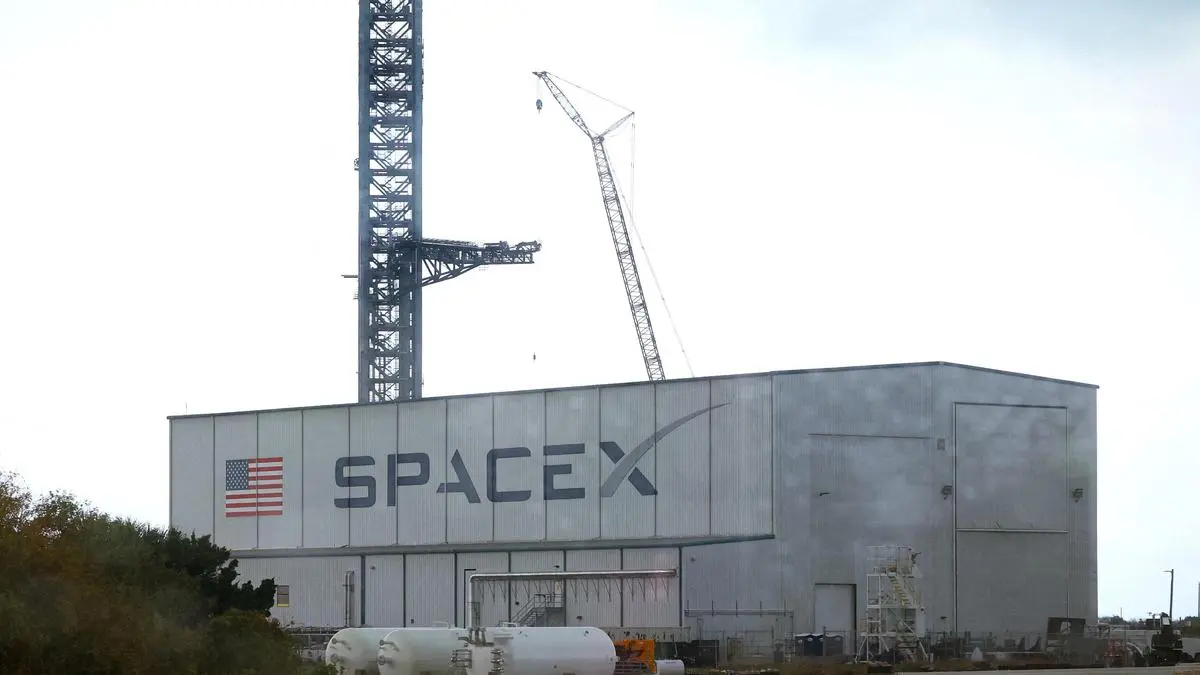
[NEW YORK] SpaceX outlined details of its highly anticipated IPO at a meeting with its team of bankers Monday night, telling them it plans to earmark a large portion of shares for retail investors and will host 1,500 of them at an event in June following the IPO roadshow launch, according to two people familiar with the matter. "Retail is going to be a critical part of this and a bigger part than any IPO in history," chief financial officer Bret Johnsen said during the virtual meeting, the two people said, asking not to be identified because the discussion was private. Johnsen said the large retail component is by design as "those are folks that have been incredibly supportive of us and of Elon (Musk) for a long time, and we want to make sure that we recognise that." Reuters reported last month that SpaceX is rewriting the IPO playbook with a large retail portion in the offering. The meeting brought together the full syndicate for the first time as part of the process for what is expected to be the biggest initial public offering ever as the rocket maker seeks to raise US$75 billion, valuing SpaceX at as much as US$1.75 trillion, Reuters has previously reported. REUTERS
India's tech hiring chills; Polymarket's IPL moment
Happy Tuesday! The tech sector is seeing a slowdown in hiring driven by internal cost controls. This and more in today's ETtech Morning Dispatch. Also in the letter: ■ Nandan Nilekani's next global rail ■ Wingify raises funds ■ Nykaa's Q4 outlook India's tech slowdown is getting harder to ignore. Active openings fell another 8% in April to 110,000 from 119,000 in March, per staffing firm Xpheno. Number-wise: Structural reset: Industry executives say clients are deferring mandates rather than scrapping them, while tech firms are squeezing more out of existing teams and tools. "The slowdown is now being driven more by internal cost control. Organisations are prioritising productivity, leveraging AI to reduce incremental hiring, and focusing on margin expansion. This is a structural reset rather than a cyclical dip," Sanketh Chengappa, director at Adecco India, said. Ground shift: The shift is evident in how companies are designing their workforce. "Short-term hiring is more prominent in IT services companies as they want to keep their hiring decisions flexible while being able to get the right talent at the right time," TeamLease Digital's Neeti Sharma noted. Also Read: India's tech hiring opens FY27 on a cautious note with fresher roles under most pressure: Report India's real-money gaming (RMG) crackdown has created a curious winner: US-based prediction markets like Polymarket and Kalshi, which are quietly picking up Indian Premier League (IPL) traffic. The post-ban gap: Still a niche corner: Usage is far from mainstream. For now, these platforms mostly attract urban, crypto-savvy users. But activity is building. In one IPL-linked market, trading volumes have crossed $250,000, with the Mumbai Indians currently placed as favourites for the 2026 title. Where it gets tricky: Payments. Unlike offshore betting sites such as Parimatch, 1XBet and Stake, these platforms are fully crypto-native. Legal grey zone: Experts warn that funding such platforms may run afoul of India's foreign exchange rules under FEMA. Enforcement levers remain: Even if these platforms sit outside legal jurisdiction, legal experts say that the government retains the power to restrict access to such platforms under existing laws. Also Read: ETtech In-depth: Banned in India, but it's business as usual for offshore real money gaming firms (L-R) Sujith Nair, Pramod Varma and Siddharth Shetty, founders, NFH Nandan Nilekani and Pramod Varma, architects of the Unified Payments Interface (UPI), are now trying to rewire how the world trades and moves value. Their new non-profit, Networks for Humanity, is building an open digital fabric for identity, payments, assets, and commerce. What they are after: NFH wants to take the design logic behind Aadhaar and UPI and apply it to global commerce and financial assets. The goal is to create neutral, interoperable rails that anyone can plug into, rather than rely on a few dominant platforms. Backers include Google.org, Nilekani Philanthropies, Asian Development Bank, Spectrum Impact, and the Bill & Melinda Gates Foundation. How does it work: NFH combines Beckn Protocol, which supports open commerce networks, with Finternet, which focuses on how assets are represented and moved digitally across systems. Together, they form a plumbing layer where buyers, sellers, service providers and even AI agents can find each other and close deals without a central gatekeeper. What's funded: NFH has raised about $30 million to run pilots, seed partnerships, and build out the ecosystem. The tech stack itself is relatively lean. The harder problem is coordination and adoption across regulators, banks, fintechs, and merchants. The architecture is being designed for an "agentic" future, where AI agents, not humans, will increasingly search, negotiate, and execute transactions. Millions of these agents could continuously optimise prices, match buyers and sellers, and complete transactions on behalf of users. Sparsh Gupta, CEO, Wingify Wingify's $150 million raise: Private equity firm (PE) Everstone Capital has led a Rs 1,381-crore ($150 million) infusion into software company Wingify, which it acquired in early 2025. Nykaa on fourth quarter growth: Nykaa's parent FSN E-Commerce Ventures said on Monday that its consolidated GMV growth is expected to be in the "late twenties" in the March quarter of FY26, and net revenue growth for the year is expected to come in at the upper end of the "mid-twenties". Wipro's $1 billion deal: IT services firm Wipro has secured an eight-year transformation deal with Singapore-based food and agri-business major Olam Group, which is expected to exceed $1 billion (about Rs 9,314 crore) in contract value. ■ Microsoft launches 'mid-class' AI model as compute limits bite (FT) ■ "Data embassies" and safeguarding digital assets during wartime (Rest of World) ■ How China fell for a lobster: What an AI assistant tells us about Beijing's ambition (BBC)
Broadcom Deepens AI Bet With Google and Anthropic Partnerships as Compute Arms Race Accelerates - Tekedia
Broadcom has tightened its grip on the infrastructure layer of the artificial intelligence boom, unveiling fresh long-term agreements with Broadcom Inc., Google LLC, and Anthropic PBC that underscore the scale at which frontier AI companies are now building. In a securities filing released Monday, Broadcom said it has agreed to develop and supply future generations of Google's custom artificial intelligence chips through 2031, while also expanding a separate arrangement that will give Anthropic access to roughly 3.5 gigawatts of TPU-based computing capacity beginning in 2027. The market's immediate reaction was telling. Broadcom shares rose about 3 per cent in extended trading as investors interpreted the agreements as another sign that the company is emerging as one of the biggest beneficiaries of the AI infrastructure build-out, second only to Nvidia Corporation in strategic importance. Google's Tensor Processing Unit, or TPU, its in-house alternative to Nvidia's GPUs, is an integral part of the deal. Broadcom has been a crucial design and supply partner in that effort for years, helping turn Google's chip blueprints into production-scale silicon. The latest agreement significantly extends that relationship. Under the long-term arrangement, Broadcom will not only help produce future TPU generations but will also supply networking and other hardware components used in Google's next-generation AI racks through the end of the decade. For Google, this is a strategic push to reduce dependence on Nvidia's costly and supply-constrained graphics processors, while strengthening the economics of its cloud and AI offerings. TPU sales have increasingly become a core growth engine for Google Cloud as the company seeks to prove that its massive AI capital expenditure is translating into recurring enterprise revenue. The more consequential signal, however, may lie in Anthropic's expanded compute commitment. A 3.5-gigawatt allocation is enormous by data center standards. To put it in perspective, this is power capacity on the scale of multiple hyperscale campuses and enough to support the training and inference demands of frontier foundation models serving millions of users and enterprise clients globally. The deal suggests Anthropic is preparing for an aggressive next phase of model scaling. Only last month, Broadcom chief executive Hock Tan told investors that the company had already made "a very good start" in 2026 by delivering about 1 gigawatt of compute for Anthropic through Google's TPUs. "For 2027, this demand is expected to surge in excess of 3 gigawatts of compute," Tan said. Monday's filing now effectively formalizes that projection. The numbers also point to the financial scale of the AI race. Analysts at Mizuho had earlier estimated Broadcom could generate $21 billion in AI-related revenue from Anthropic in 2026, rising to $42 billion in 2027 if deployment proceeds as expected. While no dollar figure was disclosed in the filing, those projections illustrate how AI infrastructure is fast becoming a tens-of-billions-of-dollars business for chipmakers outside Nvidia's ecosystem. Anthropic itself said the expanded partnership reflects the extraordinary growth in demand for its Claude models. The company disclosed that its run-rate revenue has climbed from roughly $9 billion at the end of 2025 to over $30 billion in 2026, a pace that helps explain why it is locking in multi-gigawatt capacity years in advance. This also sharpens the competitive picture in the AI model wars. Anthropic and OpenAI are increasingly competing not just on model performance, but on privileged access to compute. OpenAI is simultaneously working with Broadcom on custom silicon while also securing large GPU commitments from Advanced Micro Devices, Inc., and cloud partners such as Microsoft Corporation and Amazon.com, Inc. In effect, the race is no longer only about algorithms. It is about who can secure the electricity, chips, networking, and data-center footprint necessary to train ever-larger models. That is why Monday's announcement matters beyond Broadcom's stock price. It reinforces the idea that AI leadership is increasingly being determined by infrastructure lock-ins signed years ahead of deployment. Broadcom is positioning itself at the center of that stack, powering Google's silicon ambitions while simultaneously enabling one of the fastest-growing AI labs in the world.

Exclusive-SpaceX lays out IPO details, targets early June roadshow, sources say
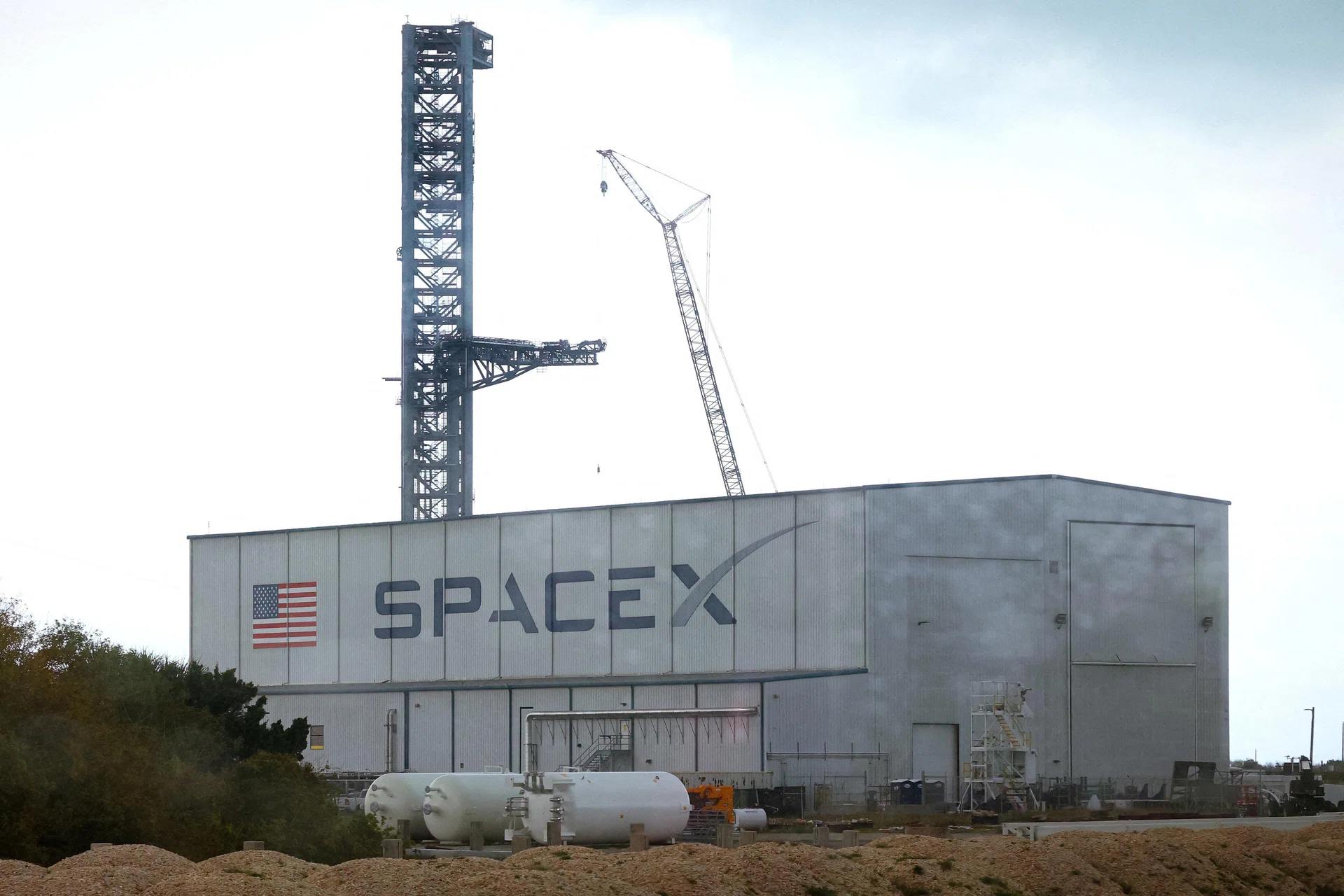
NEW YORK, April 6 (Reuters) - SpaceX outlined details of its highly anticipated IPO at a meeting with its team of bankers Monday night, telling them it plans to earmark a large portion of shares for retail investors and will host 1,500 of them at an event in June following the IPO roadshow launch, according to two people familiar with the matter. "Retail is going to be a critical part of this and a bigger part than any IPO in history," Chief Financial Officer Bret Johnsen said during the virtual meeting, the two people said, asking not to be identified because the discussion was private. Johnsen said the large retail component is by design as "those are folks that have been incredibly supportive of us and of Elon (Musk) for a long time, and we want to make sure that we recognize that." Reuters reported last month that SpaceX is rewriting the IPO playbook with a large retail portion in the offering. The meeting brought together the full syndicate for the first time as part of the process for what is expected to be the biggest initial public offering ever as the rocket maker seeks to raise $75 billion, valuing SpaceX at as much as $1.75 trillion, Reuters has previously reported. (Reporting by Echo Wang in New YorkWriting by Dawn Kopecki; Editing by Shri Navaratnam)
