News & Updates
The latest news and updates from companies in the WLTH portfolio.
Polymarket launches major exchange upgrade and native stablecoin amid U.S. growth plans
Polymarket is positioning itself for further U.S. expansion and exploring future decentralized governance options. Polymarket, a blockchain-based prediction market platform, has announced its most comprehensive infrastructure overhaul to date, introducing a rebuilt trading system and unveiling a new native stablecoin. The changes are designed to enhance both performance and user experience, while supporting the project's ambitions to expand further into the U.S. market. ContentsMajor infrastructure update and the launch of Polymarket USDExpanding operations and future plans for governanceMajor infrastructure update and the launch of Polymarket USD As part of the upgrade, Polymarket will deploy new smart contracts and an improved central limit order book. This revamped architecture is intended to deliver quicker order execution, tighter market spreads, and better operational efficiency. The development team pointed out that the new matching engine reduces complexity, supporting features like EIP-1271 signatures for smart contract wallet compatibility. A key element of the rollout is the introduction of Polymarket USD, a native stablecoin backed one-to-one by USDC. This token will replace USDC.e, which is a bridged version of the USDC stablecoin currently used on the platform. The move marks a shift away from bridged assets, which can bring cross-chain risks and inefficiencies. By deploying a proprietary collateral token, Polymarket aims to have better control over settlement, more predictable liquidity, and a simplified trading process for its users. Polymarket shared that most users will be able to make the transition to the upgraded platform seamlessly, as the interface will manage the conversion of existing holdings into the new stablecoin. However, advanced traders and integrations may need to perform manual steps, including interacting with the new collateral contract and updating technical connections to fit the restructured platform. During the upgrade, all existing order books will be cleared in a scheduled maintenance window. This step, set to take place in the coming weeks, is intended to align new and legacy systems and ensure fair, consistent migration to the enhanced infrastructure. Users will be informed ahead of the maintenance period, and the company plans to minimize disruption during the transition. Expanding operations and future plans for governance Polymarket has experienced substantial growth, with trading volumes reaching significant highs in recent months. Activity exceeded $10 billion in March alone, highlighting increasing demand for event-driven markets among both crypto users and traditional traders. The infrastructure overhaul also signals a broader strategic shift for Polymarket, focusing on greater vertical integration and control. Previously, the platform relied on external dispute resolution mechanisms, but upcoming plans could include launching a native governance token, potentially named POLY. This asset may play a role in decentralized decision-making and outcome validation within Polymarket's environment. If implemented, a native governance asset would allow Polymarket to internally manage market validation and outcome determination, thus reducing dependence on outside protocols. The company views this as a step toward improved market integrity and transparency for participants. The upgrade also aligns with Polymarket's renewed focus on the U.S. market. The company, which had previously paused domestic activity, has now registered with the Commodity Futures Trading Commission. This registration positions Polymarket to operate under an established regulatory structure as it seeks to expand its services for U.S. users. Founded in 2020, Polymarket operates decentralized prediction markets that allow participants to trade the outcome of real-world events using blockchain technology. The platform is recognized for integrating crypto-native tools and transparency into such markets. The latest developments follow a recent direct investment of $600 million from Intercontinental Exchange, the parent of the New York Stock Exchange, strengthening Polymarket's capital base and institutional support. Summing up the planned changes, Polymarket described the upgrade as a step toward becoming a full-spectrum exchange, blending improved execution infrastructure with tighter control of collateral and governance mechanisms. You can follow our news on Telegram, Facebook & CoinmarketcapDisclaimer: The information contained in this article does not constitute investment advice. Investors should be aware that cryptocurrencies carry high volatility and therefore risk, and should conduct their own research.

OpenAI, Anthropic Finances Show Soaring Costs to Train AI Models, Process Queries
This super composite rating is the result of a weighted average of the rankings based on the following ratings: Fundamentals (Composite), Global Valuation (Composite), EPS Revisions (1 year), and Visibility (Composite). We recommend that you carefully review the associated descriptions. This composite rating is the result of an average of the rankings based on the following ratings: Fundamentals (Composite), Valuation (Composite), Financial Estimates Revisions (Composite), Consensus (Composite), and Visibility (Composite). The company must be covered by at least 4 of these 5 ratings for the calculation to be performed. We recommend that you carefully review the associated descriptions.

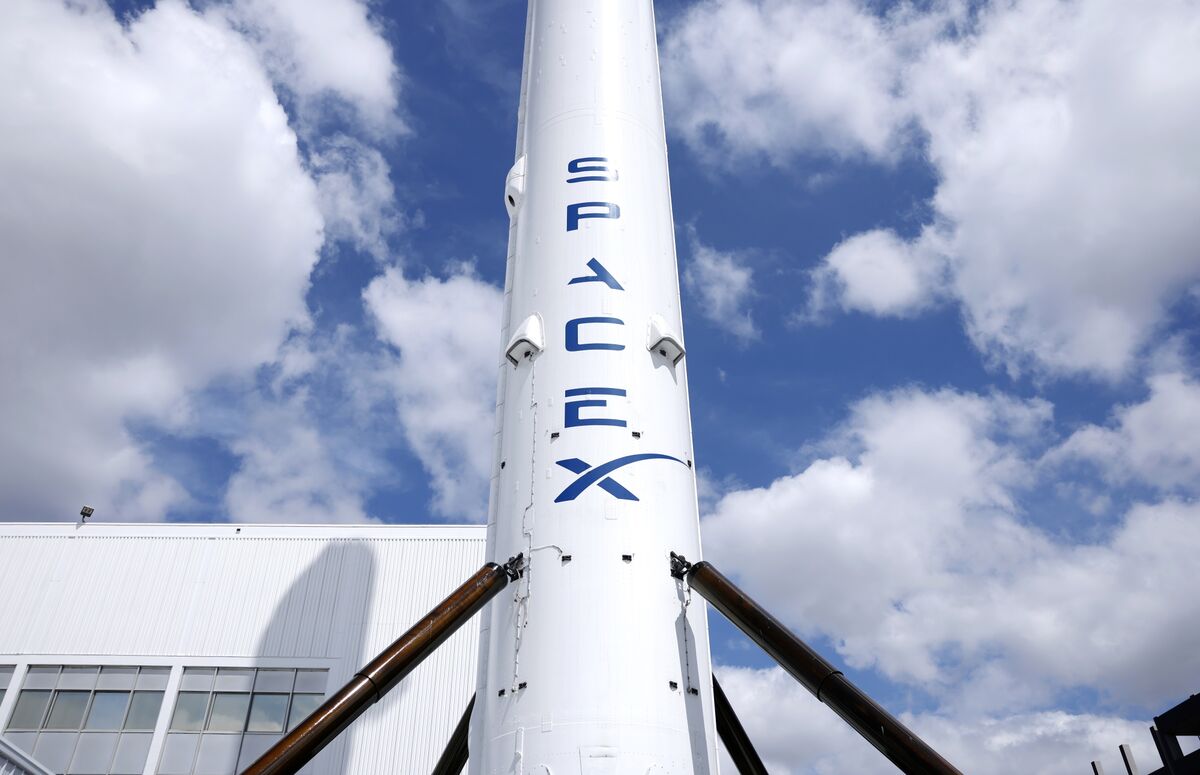
SpaceX's IPO Pitch Centers on Elon Musk's Ability to 'Sell the Dream'
SpaceX and investment bankers will host meetings to pressure-test the Elon Musk-led company's targeted $2 trillion valuation, a crucial step as it drives toward the largest-ever initial public offering, people familiar with the matter said. Two months after a merger with xAI, senior bankers are poised to begin talks around the rocket, satellite and AI company's initial public offering, to determine if its vaunted valuation will still lure in investors. Its market value is now expected to top $2 trillion, up from expectations of $1.75 trillion less than two weeks ago, people familiar with the matter said. "What you've got to be convinced of -- and this is what they'll be working on until this is filed publicly -- is continuing to sell the dream and basically there's nobody that's been better at selling the dream than Elon Musk," said David Erickson, an adjunct associate professor at Columbia Business School and a former co-head of global equity capital markets at Barclays Plc. Representatives for SpaceX didn't immediately respond to requests for comment. Musk appeared to push back on the valuation target of $2 trillion in an April 3 X post, saying "don't believe everything you read." At more than $2 trillion, SpaceX would be bigger than all but five of the companies in the S&P 500 Index -- Nvidia Corp., Apple Inc., Alphabet Inc., Microsoft Corp. and Amazon.com Inc. Despite generating a fraction of the revenue, its market value would dwarf Meta Platforms Inc. and Musk's own Tesla Inc., the two other members of the so-called Magnificent 7 stocks. Such a valuation implies a price-to-sales ratio of more than 100-times on a trailing basis, according to analyst estimates, easily topping that of retail-favorite Palantir Technologies Inc.'s lofty ratio of roughly 79 times -- by far the highest in the S&P 500 Index. Bloomberg Intelligence estimatesBloomberg Terminal SpaceX's rocket launch program and Starlink satellites will generate the majority of its revenue, approaching $20 billion in 2026, with xAI likely to generate less than $1 billion. "The reality is it's not about the fundamentals, nobody is going to get there on the fundamentals from a math standpoint because the math doesn't work," said Erickson. A pair of rocket test launches are expected ahead of a potential June trading debut, which the company has been targeting, people have told Bloomberg. Those will be "crucial for what happens to the IPO," according to Franco Granda, a senior analyst at PitchBook. "If any of those two fail there's a chance the IPO might not even happen," he said in an interview. "This will dictate everyone's direction toward the IPO." The first flight of SpaceX's latest iteration of its reusable, super heavy-lift launch vehicle is four to six weeks away, Musk said in a post on X Friday. A listing for SpaceX could raise as much as $75 billion, Bloomberg News has reported. At that size, it would dwarf the biggest ever IPO, Saudi Aramco's $29 billion debut in 2019. The company would use the money raised in an IPO to fund Musk's vision of AI data centers in space and a factory on the moon. The billionaire's grand plans will require unprecedented amounts of capital, and resources that span several of the companies he controls. Musk said in March that his Terafab project, which would eventually manufacture his own chips for robotics, AI and space data centers, will be jointly run by Tesla and SpaceX. PitchBook's Granda, who called its targeted valuation "justifiable" a month ago, cautioned that Musk's ever-expanding vision could present upside but also add to mounting risks. "When you start to go higher than $1.75 trillion, it becomes a question of 'how much can they rely on Musk's public persona to drive this up?'" he said. The prospect of an IPO at a $2 trillion valuation is a steep climb from the $1.25 trillion assigned to SpaceX after merging with xAI. It would also be more than double the $800 billion valuation when some company insiders sold shares in a tender offer in December. However, private market activity in the company through murky special purpose vehicles soared in the run-up to a confidential filing submission. Hundreds of millions of dollars were traded entirely through these SPVs, according to Caplight Technologies, in the first three months of the year. The total volume was double what was observed by the data provider in the final six months of last year, according to Caplight, which tracks transaction data reported by a network of hundreds of broker-dealers, registered investment advisers and other qualified institutional investors. Bank of America Corp., Citigroup Inc., Goldman Sachs Group Inc., JPMorgan Chase & Co. and Morgan Stanley have senior roles on the IPO, and SpaceX has added more banks to the lineup, people familiar with the matter have said. The company has scheduled a call with the broader bank syndicate for Monday, and there will be an analyst briefing later in April, a person familiar with the matter said. IFR and Reuters previously reported the syndicate call and analyst briefing respectively. The ultimate outcome of those meetings may depend on whether Musk can get investors to keep their eye on the vision rather than the numbers. "It went from a story of being such a great, capital-intensive company," said PitchBook's Granda. "Now you're starting to throw real sci-fi initiatives in here and the numbers are not favorable to them."
Elon Musk reportedly wants banks advising on SpaceX IPO to use Grok
Musk says advisers on IPO are required to have subscriptions to xAI's chatbot, New York Times reports. As Elon Musk's SpaceX prepares for what could become the largest initial public offering in history, the billionaire may be seeking to boost subscriptions to Grok, a chatbot developed by his artificial intelligence company xAI. Musk is inviting Wall Street advisers to work on the IPO on the condition that they purchase subscriptions to Grok, The New York Times reported. Citing anonymous sources not authorized to speak publicly on the matter, the Times reported that banks, law firms, auditors and other advisers were required to buy Grok's services. Banks were also reportedly asked to advertise on Musk's social media platform X. So far, five banks are expected to work on SpaceX's IPO, including Bank of America, Citigroup, Goldman Sachs, JPMorgan Chase and Morgan Stanley. The move follows weeks of heightened scrutiny aimed at Grok. In January, an analysis by the nonprofit Center for Countering Digital Hate estimated that it generated 3 million sexualized images in just 11 days, including 23,000 of children. Democrats in the Texas House called on Texas Attorney General Ken Paxton to investigate allegations that Grok was being used to churn out explicit images. And Ashley St. Clair, the mother of one of Elon Musk's children, sued xAI, alleging Grok created images of her undressed. The chatbot also drew criticism earlier after it made comments about Adolf Hitler in response to a post about Central Texas flooding in July, insulted Turkey's president and called Poland's prime minister a derogatory slur. Still, Grok continues to be marketed as a "truth-seeking AI chatbot." In addition to individual use, xAI launched Grok Business late last year for enterprise customers. Pricing starts at $30 per seat, per month, for small teams, while enterprise pricing is not publicly listed. Earlier this year, SpaceX acquired xAI in a deal that valued the combined company at $1.25 trillion. But Grok faces competition from other AI models, including OpenAI's ChatGPT and Anthropic's Claude. The companies behind those tools have also reportedly explored going public as early as this year. Meanwhile, xAI has been touting Grok's new features, including what it describes as its most advanced image generation model. Musk also highlighted a new version of the app released late last week. SpaceX did not immediately respond to a request for comment on the reported IPO condition.
Avoid the SpaceX IPO? 'The juice has been squeezed from this orange'
SpaceX has laid the groundwork to list its shares on a public exchange, but investors should think twice before scooping up the stock, Requisite Capital Management managing partner Bryn Talkington told CNBC's " Halftime Report " on Monday. That's because investors are unlikely to see robust returns from the aerospace manufacturer stock following its likely massive initial public offering, given that much of its value already appears to be "priced in," according to Talkington. "This will IPO as one of the largest companies in the world, and so I think the juice has been squeezed from this orange," Talkington said. SpaceX is aiming to debut in the public market around June at a potential valuation of $1.75 trillion, Bloomberg first reported , citing people familiar with the matter. The company confidentially filed for an IPO last week, but it has until at least 15 days before its road show to release a public filing. The Elon Musk-owned company is looking to raise as much as $75 billion , which would make its IPO roughly three times larger than the biggest public listing in the U.S. to date. Consider that Alibaba raised about $22 billion in its 2014 debut . But, an IPO of that size would likely mean smaller returns for retail investors, according to Talkington. "So much is priced in with a company that's doing $16 billion in revenue at a $2 trillion market cap," she said. "It just makes no sense to me." Stephen Weiss, chief investment officer and managing partner of Short Hills Capital Partners, also called into question the value proposition of SpaceX's IPO due to the company's size. "How much return can you generate off a $2 trillion company," Weiss told CNBC. "It's got to go to $3 trillion... it's ridiculous for one of the largest companies in the world on that revenue base."

Anthropic closes door on subscription use of OpenClaw
OpenClaw is popular, but not with the people responsible for keeping Anthropic's services online. The company has disallowed subscription-based pricing for users who use the open-source agentic tool with Claude to try to keep things moving. Probably not because of OpenClaw, Claude was struggling on Monday with degraded service following further efforts to balance capacity with demand. "We have identified an issue resulting in elevated errors on Claude.ai, including desktop and mobile," the company's status page said, characterizing the incident as "a partial outage." Uptime over the past 90 days slipped to 98.82 percent. An Anthropic spokesperson did not immediately have an answer as to the source of the issue. But the disruption did not last long. "From 15:00-16:30 UTC on April 6, we saw elevated errors on login for Claude.ai and Claude Code," the company's status page said. "This issue also affected some Claude.ai conversations and other product functionality such as voice mode. This issue is now resolved." The service disruption follows a period of high demand for Claude, one that the company has tried to address by denying access to third-party tools that use the AI service through subscriptions. On Friday, Boris Cherny, head of Claude Code, said, "Starting tomorrow at 12pm PT, Claude subscriptions will no longer cover usage on third-party tools like OpenClaw." Cherny explained that the restriction followed from engineering constraints. "Our systems are highly optimized for one kind of workload, and to serve as many people as possible with the most intelligent models, we are continuing to optimize that," he said. He nonetheless insisted, "We're big fans of open source. I actually just put up a few [pull requests] to improve prompt cache efficiency for OpenClaw specifically." Google in February took similar action to enforce its terms of service related to its Antigravity AI development environment, Gemini CLI, and Gemini Code Assist. "Using third-party software, tools, or services to harvest or piggyback on Gemini CLI's OAuth authentication to access our backend services is a direct violation of Gemini CLI's applicable terms and policies," said Jack Wotherspoon, Gemini CLI developer relations, at the time. Anthropic sells AI service tokens through either subscriptions or its API. Subscribers pay a flat rate and are subject to session and monthly usage limits, with an option to pay for extra usage once capped. API customers pay per token, with no usage limits. For developers who use Claude heavily, subscription-based pricing can be significantly less expensive. For this reporter during the month of March, a $20 monthly subscription enabled about $236 of token usage (which doesn't necessarily reflect the actual per token cost to Anthropic). Others report similarly skewed ratios when price paid is compared to list price value or more - 36x by one measure. This would presumably be balanced somewhat by developers who pay for underutilized subscriptions. But as Anthropic works toward going public, the company has an incentive to ensure its customer acquisition strategy doesn't lead customers toward rival products or magnify costs. The developer community has long been aware of the price advantage of Claude subscriptions and many subscribers have chosen to use third-party harnesses (e.g. OpenCode, Pi) to interact with Claude Code. Unfortunately, Anthropic has had trouble keeping up with demand. In February, the biz reaffirmed its preexisting policy forbidding the use of third-party harnesses with Claude subscriptions. This was around the time OpenClaw, an AI agent platform intended to operate autonomously 24/7, began attracting attention. In late March, Anthropic implemented another strategy to balance demand and capacity: It changed the way subscription usage was calculated so that customers burned through their usage limits faster during peak hours. As of April 4, 2026, Anthropic went from policy warnings to billing-based enforcement. "Starting April 4, third-party tools will draw from extra usage instead of subscription limits," an Anthropic spokesperson said in a statement provided to The Register. "Using Claude subscriptions with third-party tools isn't permitted under our Terms of Service, and they put an outsized strain on our systems. Capacity is something we manage thoughtfully, and we need to prioritize customers using our core products." Claude subscriptions continue to apply to Claude.ai, Claude Code, and Cowork. Anthropic attempted to mitigate the ill will generated by the move - announced only one day before implementation - by offering subscribers a month of extra usage credit based on their monthly plan. The company is also offering extra usage bundles at 30 percent off. And if that's unsatisfactory, customers have the option to cancel their plan and receive a refund. Customers can still use Claude with third-party tools through extra usage bundles (purchased through the Claude account page) or by using an API key. "We've been working hard to meet the increase in demand for Claude, and our subscriptions weren't built for the usage patterns of these third-party tools," Cherny explained. "Capacity is a resource we manage thoughtfully and we are prioritizing our customers using our products and API." Capacity is a resource that may continue to be scarce if demand continues to grow. Bloomberg recently reported that more than half of the US datacenters planned to open this year will face delays. ®
Polymarket Unveils Exchange Overhaul, Native Stablecoin As U.S. Expansion Looms
Bitcoin and crypto focused prediction market platform Polymarket is preparing its most significant infrastructure upgrade to date, rolling out a rebuilt trading system alongside a new native stablecoin designed to replace bridged collateral and streamline on-chain activity. The overhaul, described by the company as a "full exchange upgrade," is expected to go live over the next several weeks and includes new smart contracts, an updated central limit order book (CLOB), and a proprietary collateral token called Polymarket USD. The token will be backed 1:1 by USDC and will replace USDC.e, a bridged version of the stablecoin currently used across the platform. Last month, Intercontinental Exchange, the parent company of the New York Stock Exchange, made a $600 million direct cash investment in prediction market platform Polymarket as part of a broader equity fundraising round, the company announced. The shift away from bridged assets reflects a broader effort to reduce reliance on cross-chain infrastructure, which can introduce additional risks and inefficiencies. By moving to a natively controlled collateral token, Polymarket aims to tighten control over settlement, improve liquidity consistency, and simplify the trading experience for users. At the core of the upgrade is a redesigned matching engine and an improved order book architecture. The new system is intended to deliver faster execution, tighter spreads, and lower operational overhead. According to developer materials, the updated exchange stack reduces the complexity of order structures while introducing support for advanced features such as EIP-1271 signatures, enabling smart contract wallets to interact more seamlessly with the platform. Polymarket said most users will experience a smooth transition, with the interface automatically handling the conversion of existing assets into Polymarket USD via a one-time approval. However, more advanced traders and developers will need to manually wrap their holdings using a dedicated collateral onramp contract and update integrations to align with the new system. As part of the migration, all existing order books will be cleared during a scheduled maintenance window, with the company promising advance notice ahead of the transition. The reset is intended to ensure consistency across the upgraded infrastructure and avoid discrepancies between legacy and new systems. Prediction markets like Polymarket are booming The timing of the overhaul comes amid rapid growth for Polymarket, which has seen trading volumes surge in recent months. The platform reportedly surpassed $10 billion in monthly volume in March, underscoring increasing demand for event-based trading markets across crypto and traditional finance audiences. Beyond performance improvements, the upgrade signals a strategic shift toward greater vertical integration. Polymarket has historically relied on external systems, including optimistic oracle mechanisms, to resolve market outcomes. However, the company has hinted at future plans for a native token, potentially called POLY, which could play a role in governance and dispute resolution. If implemented, such a token could allow Polymarket to internalize key functions like market validation and outcome verification, reducing dependence on third-party protocols and giving the platform more direct control over what it defines as "truth" within its markets. The infrastructure revamp also aligns with Polymarket's renewed push into the U.S. market. After previously halting domestic operations, the company has since registered with the Commodity Futures Trading Commission and is positioning itself to operate within an increasingly defined regulatory framework. With its latest upgrade, the company is attempting to evolve from a fast-growing crypto application into a fully-fledged exchange platform, combining improved execution infrastructure with tighter control over collateral, governance, and market integrity. Editorial Disclaimer: We leverage AI as part of our editorial workflow, including to support research, image generation, and quality assurance processes. All content is directed, reviewed, and approved by our editorial team, who are accountable for accuracy and integrity. AI-generated images use only tools trained on properly license material. In Bitcoin, as in media: Don't trust. Verify.

Polymarket Unveils Exchange Overhaul, Native Stablecoin As U.S. Expansion Looms
Bitcoin and crypto focused prediction market platform Polymarket is preparing its most significant infrastructure upgrade to date, rolling out a rebuilt trading system alongside a new native stablecoin designed to replace bridged collateral and streamline on-chain activity. The overhaul, described by the company as a "full exchange upgrade," is expected to go live over the next several weeks and includes new smart contracts, an updated central limit order book (CLOB), and a proprietary collateral token called Polymarket USD. The token will be backed 1:1 by USDC and will replace USDC.e, a bridged version of the stablecoin currently used across the platform.

The Exec Behind Anthropic's Revenue Surge Unpacks the A.I. Giant's 'Secret Sauce'
After a serious injury, Anthropic's growth lead Amol Avasare reflects on resilience, focus and the values driving the A.I. giant. Amol Avasare, Anthropic's head of growth, landed his job through a cold email in 2024 to Mike Krieger, Anthropic's chief product officer, best known for co-founding Instagram. When Avasare first joined the company, sales were in the hundreds of millions. Annualized revenue hit roughly $1 billion by the end of the year, rose to $9 billion in 2025, and now stands at about $19 billion. Avasare currently leads a team of roughly 40 people Sign Up For Our Daily Newsletter Sign Up Thank you for signing up! By clicking submit, you agree to our <a href="http://observermedia.com/terms">terms of service</a> and acknowledge we may use your information to send you emails, product samples, and promotions on this website and other properties. You can opt out anytime. See all of our newsletters Avasare, who currently leads a team of around 40, credits Anthropic's meteoric rise to its strength in research, early focus areas, and a uniquely open company culture. "I've not met a single person who's checked out. Everyone is putting everything they have on the table," he said on an episode of the tech show Lenny's Podcast, hosted by Lenny Rachitsky, released yesterday (April 5). Originally from Australia, Avasare joined Anthropic after leading growth at fintech company Mercury and education platform MasterClass. He also co-founded Ensue, an A.I.-powered mental health tool. His career path hasn't been without hardship. In 2022, Avasare suffered a traumatic brain injury during a Muay Thai sparring session, forcing him to step away from work for nine months. The injury isn't fully healed, he said, and symptoms like dizziness and headaches persist. He manages them with regular breaks at Anthropic's San Francisco office, which has a meditation room for employees. Such balance is crucial for the demanding work Avasare oversees, which ranges from acquisitions, user activation, product launches, monetization and more. Roughly 30 percent of his team's efforts are "more standard bread-and-butter growth work," said Avasare. The remaining 70 percent tackles what Anthropic internally calls "success disasters," referring to the challenges that accompany rapid scale. The "late mover" advantage Anthropic has excelled in enterprise A.I. tools and coding, niches that helped distinguish it from more consumer-focused rivals like OpenAI. This focus was partly circumstantial, Avasare explained, given Anthropic's smaller size and later arrival to the A.I. scene. "We didn't have the free cash flow or the distribution of a Meta or Google, we didn't have the first-mover advantage of an OpenAI," he said. "You just have to really pick a very narrow focus -- even for a very generalizable technology -- to maximize your chances of getting to escape velocity." Another driver of growth is Anthropic's company culture, which Avasare calls its "secret sauce" that "no one else is going to be able to replicate." The startup's mission-driven philosophy of building safe A.I. systems that benefit humanity has been a priority since co-founders and siblings Dario and Daniela Amodei launched the company in 2021 with a group of former OpenAI staffers. Anthropic's culture is not only driven but radically open. Transparency is built into everyday workflows, such as through internal Slack feeds called "notebooks," where employees publicly jot down ideas and updates related to A.I. and company operations. That openness extends to the leadership level. Avasare recalled a moment when a staffer challenged CEO Dario Amodei directly on Slack after disagreeing with a comment he made during an all-hands meeting. "That sort of thing, where it's encouraged to go to leadership and disagree with them, challenge them publicly -- I think that just leads to a level of trust," said Avasare. "We have this very, very deep sense of togetherness."

Weather takes center stage as farmers tune out geopolitical chaos
The start of another busy cropping season this year brings an added bonus: Distraction from the barrage of headlines triggered by world events. Markets too may hit the mute button on war and shift attention from one worry to another: weather. The "real world" will still be waiting in the wings but conditions for planting and growing should be front and center. USDA set the stage for spring with March 31 reports that didn't generate major changes. With expected yields rising to 185.3 bushels per acre that could still mean a crop topping 16 billion bushels, almost as big as the 2025 record. If strong demand noted in Grain Stocks continues, supplies left over at the end of the marketing year Aug. 31, 2027, could remain large, topping 1.9 billion. Average cash prices received by farmers might inch higher to $4.35, creating a top third futures selling range of $4.65 to $5.05, which is where prices closed before the holiday weekend. USDA put soybean seedings at 84.7 million acres. That would be enough to keep soybean carryover stable, helping futures edge into my forecast selling target range of $11.50 to $12.30. While fundamentals of supply and demand suggest pricing new crop, both corn and soybeans are deep in the red at current levels for the average grower trying to cover all costs, including family living expenses and replacement of assets like machinery and buildings. Break-even cash prices of $4.95 corn and $12.80 soybeans are still out of sight and the view likely won't change unless yields are much better than expected. Before the conflict, corn appeared to have a $10-per-acre advantage over soybeans, but uncertain nitrogen supplies could limit incentives to shift ground and dampen the ability of suppliers to move fertilizer into position for timely application. April ammonia settlements at the Gulf jumped $160 a ton to $775 after the war began, pushing dealers to raise offers near $1,000 a ton at many locations. That might help soybeans, if demand wasn't focused on President Trump's looming visit to China next month. These summits usually include some type of ag deals for window dressing, but China has plenty of leverage thanks to its own sluggish import needs and big supplies available in South America. Risk from higher costs ramped up after a strong jobs report on Good Friday included a lower jobless rate and continued hiring despite the surge in energy prices, a seeming contradiction caused by a labor force shrinking due to baby boomer retirements and lower immigration. The data rekindled fears of the stagflation that battered markets in the 1970s, causing interest rates and joblessness to soar, souring the economy and ultimately triggering the farm crisis of the 1980s. Paul Volker's ghost is not the only spirit haunting the economy deja vu and demonstrating how major economic disruptions caused generational shifts in markets. Memories of the pain caused by the "go-go" 1970s ultimately faded, and risk lost its negative connotations in the 1990s. That "What Me Worry?" attitude then came to a screeching halt known as the Great Financial Crisis of 2008-09, when risk's reputation again became a four-letter word. Now the question is which era will prevail as a pattern after the Iran war, $110 crude oil and a surge in fertilizer costs. The crude oil connection illustrates these great divides. From 1970-1989 petroleum prices moved hand-in-hand with world harvested acreage and revenues produced by agriculture. But those correlations fell apart over the past 15 years: Higher crude brought lower world acreage and flat ag sales, increasing potential for prices to rally after the March 31 reports to convince farmers to sow more corn than intentions, which in turn increased importance of timely planting to maintain yields and boost profits. So, in addition to everything else, the Iran war raises a long-term question: Is this the start of another era? The answer is all the more difficult because we don't know if the current geopolitical game is multidimensional chess -- or bumper cars.

"Tunataka wantam kwa polisi!" - Chaos at Sang'alo Police Station as locals demonstrate insecurity
__ Thank you for watching this video. Kindly subscribe for more content from 'Home of The Untold Stories.' *About TV47* 'TV47 is on GOtv (Channel 102), DStv (Channel 268), SIGNET, Gotv, BAMBA and STARTIMES. __ For Breaking News, kindly subscribe by sending 'NEWS' to 22047. __ Connect with us: Website: https://www.tv47.digital/ Facebook: https://www.facebook.com/TV47KE Twitter: https://twitter.com/tv47news Instagram: https://www.instagram.com/tv47ke/ TikTok: https://www.tiktok.com/@tv47_ke Telegram: https://t.me/tv47_ke WhatsApp: 0797 047 047 __

SpaceX tries to convince FCC that Amazon put satellites into wrong ...
Elmo e Bezos litigano per la quota di messa in orbita dei satelliti: "li metti in un'orbita iniziale troppo bassa e poi quando salgono rischiano di andare addosso ai miei!" - "colpa tua che hai abbassato l'orbita dei tuoi!" Starlink operator SpaceX claims that Amazon violated orbital debris requirements by launching satellites into initial altitudes that are too high, increasing the risk of collision with other satellites and spacecraft. SpaceX, which recently reported two Starlink satellite failures that created new space debris, yesterday accused Amazon and its launch partner Arianespace of negligence that "needlessly and significantly increases risk to other operational systems and inhabited spacecraft." Amazon Leo, formerly known as Kuiper Systems, is launching satellites into low-Earth orbits (LEO) to compete against Starlink's much larger constellation of broadband satellites. Amazon denied that its launch altitudes violate any requirements or impose a safety risk and said SpaceX itself helped Amazon launch satellites into a similar altitude last year when Amazon used SpaceX as a launch partner. SpaceX only objected to the launch parameters after moving its Starlink satellites into nearby altitudes, Amazon said. Changing the altitude of a recent Leo launch would have delayed it by months, according to Amazon. Both Amazon and SpaceX have accused each other of using Federal Communications Commission proceedings to delay the other's satellite launches at various times over the years.

STATISTICS | Only 2% of Polymarket Traders Have Made Over $1,000, Reveals an April 2026 Report
While some traders have posted outsized returns by identifying mispriced outcomes, such wins remain rare. A small cohort of high-performing accounts continues to capture a disproportionate share of total profits. Most users on prediction market platform, Polymarket, are losing money with profits concentrated among a small group of sophisticated traders, according to an April 2026 report. The report attributes this disparity to differences in trading 'edge,' with winning participants typically leveraging faster execution, better information, or automated strategies. Casual users, by contrast, often react to market movements too late to capture gains. While some traders have posted outsized returns by identifying mispriced outcomes, such wins remain rare. A small cohort of high-performing accounts continues to capture a disproportionate share of total profits. The findings come as Polymarket, the largest on-chain prediction market platform currently, sees strong growth in trading volumes and liquidity, underscoring a broader trend in crypto markets where platform expansion does not necessarily translate into user profitability.

How Anthropic Is Quietly Winning the AI Race
In March 2026, Fidji Simo told her team at OpenAI that they couldn't afford "side quests" anymore. As CEO of Applications, she was overseeing the shutdown of Sora (which burned an estimated $15 million per day in inference costs while earning just $2.1 million in total lifetime revenue), the consolidation of a scattered product portfolio, and a hard pivot to enterprise. Her words to the team were blunt: "We cannot miss this moment because we are distracted by side projects." As of March 2026, Anthropic's ARR (annualized run rate, the most recent month's revenue multiplied by twelve) has surged to $19 billion, up from $1 billion just fifteen months earlier. ChatGPT's consumer market share has dropped from 86.7% to 60.4% in a little over a year, according to First Page Sage's blended estimate, with all major trackers confirming the directional decline. Anthropic did not win by having the most users, the most compute, or the loudest marketing. They won by being the most focused, the most disciplined, and the most strategic about where to compete. While OpenAI chased video generation, browser plugins, and hardware, and Google tried to integrate AI into everything at once, Anthropic placed a single bet on coding AI and enterprise. That bet created a flywheel that is now spinning faster than anyone can match.

Grade 10 rollout sees chaos as policy shifts expose gaps in education reform implementation
#ktnnews #KTNNewsDigital #ktnkenya #KTNTV #KTNHome #KenyaNews 🔴 LIVE: KTN News Kenya | Breaking News & Entertainment Hub Welcome to the 24/7 KTN Kenya News Channel on YouTube - your trusted source for the latest news and updates in Kenya and beyond. Stay informed with our comprehensive news coverage, breaking stories, in-depth analysis, and exclusive reports. Our live-streaming service brings you real-time updates on current affairs, politics, business, technology, health, entertainment, and much more. Join us and be a part of the conversation, and don't forget to subscribe for the latest news and updates. Stay connected with KTN Kenya News, your reliable news partner. #KTNKenya #NewsChannel #BreakingNews #KenyaNews #ktnprime #livestream #livenews SUBSCRIBE to our YouTube channel for more great videos: https://www.youtube.com/ktnnewskenya Follow us on Twitter: https://twitter.com/KTNNewsKe Like us on Facebook: https://www.facebook.com/KTNNewsKenya KTN News is a leading 24-hour TV channel in Eastern Africa with its headquarters located along Mombasa Road, at Standard Group Centre. This is the most authoritative news channel in Kenya and beyond. Watch KTN Live http://www.ktnnews.com/live Watch KTN News http://www.ktnnews.com Follow us on http://www.twitter.com/ktnnews Like us on http://www.facebook.com/ktnnews
Anthropic Puts a Price Tag on OpenClaw: What Claude's New Paywall Means for AI Model Evaluation
For a brief window, Anthropic gave the AI research community something genuinely useful for free. OpenClaw, the company's open-source framework for evaluating large language models, launched with the kind of fanfare that accompanies tools promising transparency in an industry often accused of opacity. Researchers downloaded it. Developers built on it. And then, barely a month later, Anthropic announced that meaningful access would require a paid subscription. The move, first reported by TechRadar, has sparked pointed debate among AI practitioners about what "open" really means when a company attaches a meter to it. From Free Tool to Paid Feature: The OpenClaw Pivot OpenClaw was introduced as a benchmarking and evaluation toolkit designed to let developers stress-test AI models -- not just Claude, but any large language model -- against standardized criteria. Think of it as a diagnostic suite for AI performance: accuracy, reasoning, safety alignment, hallucination rates. The kind of thing the industry desperately needs as models proliferate and customers demand proof that one is actually better than another. At launch, Anthropic positioned OpenClaw as a contribution to the broader AI safety mission. The code was open-source. The documentation was thorough. The implicit message was clear: we're the responsible AI company, and here's a tool to prove it. That message got complicated fast. Anthropic now says that while the base code remains open-source, the full evaluation infrastructure -- including the compute-intensive benchmarking runs, curated datasets, and detailed scoring analytics -- will sit behind the company's paid API tiers. Free-tier Claude users will get limited access at best. The real functionality requires a Pro or Team subscription, starting at $20 per month for individual users. The company frames this as a sustainability decision. Running large-scale model evaluations costs real money. GPU hours aren't free. Curating high-quality benchmark datasets requires human expertise. Anthropic, which has raised more than $7.6 billion in funding but still operates at a significant loss, apparently decided it couldn't absorb those costs indefinitely. Fair enough. But the timing and messaging have left a sour taste. "They launched it as open-source to build goodwill and get adoption, then monetized it once people were dependent on it," one machine learning engineer at a mid-size AI startup told TechRadar. The pattern isn't new in tech. It is, however, particularly awkward for a company that has built its brand on being the ethical alternative to OpenAI. And that brand positioning matters enormously right now. Anthropic is locked in an intensifying competition with OpenAI, Google DeepMind, and Meta for developer mindshare. Every tool, every API feature, every pricing decision sends a signal about who the company is building for and what it values. The Broader Tension: Open-Source AI and the Money Problem Anthropic's OpenClaw decision doesn't exist in isolation. It reflects a structural tension running through the entire AI industry: the conflict between open research ideals and the brutal economics of running foundation model companies. Meta has leaned hard into open-weight releases with its Llama models, positioning itself as the generous giant subsidizing open AI development -- though critics note Meta's models come with licensing restrictions that make "open-source" a stretch. OpenAI, despite its name, long ago abandoned any pretense of openness, keeping GPT-4's architecture and training data proprietary. Google publishes research papers but guards Gemini's internals closely. Anthropic carved out a middle path. Not fully open, not fully closed. Safety-focused. Willing to share tools and research when it served the mission. OpenClaw was supposed to exemplify that philosophy. The paywall complicates the narrative. It doesn't destroy it -- there are legitimate reasons to charge for compute-heavy services -- but it does raise questions about where Anthropic draws the line between public good and revenue generation. Some context helps. Anthropic's primary revenue source is its API business, where developers pay per token to access Claude models. The company reportedly hit an annualized revenue run rate of roughly $900 million in early 2025, according to reporting from The Information. That's impressive growth, but still a fraction of what's needed to fund the next generation of models. Training runs for frontier AI systems now cost hundreds of millions of dollars. Anthropic needs every revenue stream it can find. So charging for OpenClaw's premium features isn't irrational. It's arguably inevitable. The question is whether Anthropic handled the transition honestly. Launching a tool as free, building a user base, then introducing charges is a classic bait-and-switch pattern in software. Anthropic would argue the base tool remains free and open-source -- only the managed service costs money. That distinction is technically accurate and practically misleading. Most users don't want to self-host complex evaluation infrastructure. They want the managed version. And now that costs money. The developer community's reaction has been mixed but skews negative. On X, several AI researchers noted that the free tier's limitations make it unsuitable for serious evaluation work. Others defended Anthropic, arguing that no one is entitled to free compute. Both points have merit. What's harder to defend is the communication strategy. A clearer upfront message -- "this tool will be free during a trial period, then transition to paid" -- would have avoided most of the backlash. Instead, the shift felt abrupt. Unannounced until it was already happening. This matters for Anthropic's relationship with the developer community more than it matters for its bottom line. Twenty dollars a month isn't going to make or break a startup's budget. But trust, once eroded, is expensive to rebuild. Developers remember which companies changed the rules after they'd already committed to a platform. Ask anyone who built on Twitter's API circa 2012. What This Signals About AI's Commercial Future Zoom out further and Anthropic's OpenClaw pricing tells a broader story about where the AI industry is heading in 2025 and beyond. The free tier is shrinking everywhere. OpenAI has progressively limited what free ChatGPT users can access. Google's Gemini reserves its most capable models for paid subscribers. Even open-source stalwarts like Hugging Face have introduced paid tiers for their inference and deployment services. The era of generous free access to frontier AI capabilities is ending -- not because companies are greedy, but because the underlying costs are staggering and investor patience has limits. Model evaluation, specifically, is becoming a competitive battleground. As enterprises adopt AI for high-stakes applications -- medical diagnosis, legal analysis, financial modeling -- they need rigorous ways to assess which models perform best for their specific use cases. Whoever controls the evaluation tools has significant influence over purchasing decisions. If your benchmarking framework consistently shows that Claude outperforms GPT-4o on safety metrics, that's not just a tool -- it's a sales funnel. Anthropic insists OpenClaw is model-agnostic and that its benchmarks are designed to be fair. Maybe so. But owning the evaluation infrastructure while also selling the models being evaluated creates an inherent conflict of interest that the company hasn't fully addressed. Independent evaluation efforts exist -- Stanford's HELM benchmark, Chatbot Arena's crowd-sourced rankings, various academic leaderboards -- but they're often underfunded and lag behind the rapid pace of model releases. There's a real gap in the market for commercial-grade, continuously updated evaluation tools. Anthropic spotted that gap. Now it's monetizing it. For enterprise buyers, the practical implications are straightforward. If you're already paying for Claude API access, OpenClaw's premium features are a reasonable add-on. If you're evaluating multiple models and want vendor-neutral benchmarking, you might think twice about relying on a tool built and controlled by one of the competitors. For individual developers and researchers, the calculus is different. The free tier may suffice for basic experiments. But anyone doing serious evaluation work -- comparing models across dozens of tasks, running statistical significance tests, tracking performance over time -- will likely hit the paywall quickly. And for the AI safety community, which Anthropic has courted more aggressively than any other frontier lab, the message is nuanced. Anthropic still publishes safety research openly. It still contributes to industry-wide safety standards. But the tools needed to independently verify safety claims? Those now come with a price tag. None of this makes Anthropic a villain. Companies need revenue. Engineers need salaries. GPUs need electricity. The romanticism of the early open-source AI movement was always going to collide with economic reality. What matters is how companies handle that collision -- with transparency or with spin. Anthropic chose something closer to spin this time. It can do better. Whether it will is another question entirely.

Anthropic Cracks Down On OpenClaw, Forcing Claude Code Users To Pay Extra
Anthropic announced a change in its pricing structure for Claude Code users who utilize third-party tools like OpenClaw. Subscribers will now need to pay separately for the use of these tools, moving away from the previous model in which such usage was covered by subscription limits. The change began on April 4 and requires subscribers to adopt a pay-as-you-go model for third-party tool usage. "We've been working hard to meet the increase in demand for Claude, and our subscriptions weren't built for the usage patterns of these third-party tools. Capacity is a resource we manage thoughtfully, and we are prioritizing our customers using our products and API," Boris Cherny, head of Claude Code at Anthropic, wrote in a post on X. Subscribers are being offered a one-time credit equal to the current monthly plan cost, with additional discounted usage bundles available. Cherny added, "We want to be intentional in managing our growth to continue to serve our customers sustainably long-term. This change is a step toward that." Many users of the product commented negatively under Cherny's post, saying that they would be canceling their subscriptions. One user noted that this move "directly fuels" Anthropic's competition and that the decision will "actively hurt a lot of people." "I know it s**ks. Fundamentally, engineering is about tradeoffs, and one of the things we do to serve a lot of customers is optimize the way subscriptions work to serve as many people as possible with the best model. Third-party services are not optimized in this way, so it's really hard for us to do sustainably," Cherny responded. Another user commented, "Whatever the excuse, this was a catastrophic signal about Anthropic's real stance toward open tools and power users. You had the dev community on your side. Instead of consolidating that lead, you just revived OpenAI." Anthropic also noted that Claude subscriptions that use third-party tools violate its terms of service. Cherny noted that while the company is offering full refunds for subscribers, the aim is to be more explicit about what is supported under the subscription. Cherny added that the decision stems from engineering constraints rather than a lack of support for open source initiatives. The announcement follows the departure of OpenClaw creator Peter Steinberger, who joined Anthropic's competitor OpenAI in February to focus on building the next generation of personal agents. "While I think what Anthropic does is sad for the ecosystem, I wanna give Boris credit for doing what he can to soften the fallout. Today's release will include some fixes for better cache use, to lower cost for API users," Steinberger commented on the decision. Photo: Shutterstock Market News and Data brought to you by Benzinga APIs To add Benzinga News as your preferred source on Google, click here.

Circle Partners With Polymarket In Exchange Overhaul - Circle Internet Group (NYSE:CRCL)
Polymarket announced the "biggest change to date" as the prediction market is overhauling its entire exchange stack over the next two to three weeks. Rather than using USDC directly, Polymarket is wrapping it into a branded settlement token. The frontend handles the conversion automatically for most users, but the underlying reserves sit in USDC, meaning Circle still captures the interest income on every dollar in the system. Why CRCL Holders Should Care Circle earns revenue on the interest generated by dollar reserves backing USDC. More Polymarket volume means more USDC locked in smart contracts means more interest income for Circle. CEO Jeremy Allaire told analysts on Circle's Q4 earnings call that USDC lets prediction market participants offer collateral and settle "at the speed of the Internet" from anywhere in the world, sidestepping currency exchange issues and banking restrictions. Mizuho analyst Dan Dolev estimated Polymarket's 2026 trading volumes may annualize around $50 billion, potentially adding 25% or more to USDC's market cap. The platform implemented taker fees across nearly all categories on March 30, meaning Circle is now the settlement layer for a prediction market that's actually generating fee revenue for the first time. The Broader Product Blitz The Polymarket overhaul is part of a wider push. Circle unveiled cirBTC on April 2, its first wrapped Bitcoin (CRYPTO: BTC) product backed 1:1 by native BTC with real-time onchain reserve verification. The company is targeting more than $1.7 trillion in Bitcoin currently sitting outside DeFi. Circle also announced Monday that its Layer-1 blockchain Arc will debut with quantum-resistant wallet features at mainnet, extending protection to private balances and confidential payments. Arc uses USDC as its native gas token. While a firm date hasn't been set, the project's shift from 'exploration' to infrastructure build-out points to a late 2026 mainnet launch. Analysts expect the rollout to center on 'Circle Gateway,' a solution designed to provide the sub-cent transaction fees required for the AI agent economy. CRCL Price Action Circle shares are up almost 2% today, but down roughly 70% from last June's all-time high. The product momentum is real but the Clarity Act may limit yield payments on stablecoins, which would strike directly at the interest income model that makes partnerships like this one valuable. CRCL carries a consensus price target of $126.82, according to Benzinga data, with estimates ranging from a low of $60 to a high of $247. Image: Shutterstock Market News and Data brought to you by Benzinga APIs To add Benzinga News as your preferred source on Google, click here.

Meta Pauses Work With Mercor After LiteLLM-Linked Data Breach - TechRepublic
A poisoned LiteLLM update hit Mercor, and Meta pulled the brake. The breach is now a warning flare for AI vendors built on open-source plumbing. Meta has paused work with Mercor after a security breach at the AI training startup, according to WIRED. Mercor has also confirmed it was affected by a broader supply chain attack involving the open-source project LiteLLM. Mercor sits in a sensitive part of the AI ecosystem. The startup connects major AI companies with contractors and domain experts for model training and evaluation, so a breach there raises questions about the vendor layer that supports AI development. How the breach reached Mercor Mercor told TechCrunch that it was "one of thousands of companies" affected by the LiteLLM compromise. The company said it moved promptly to contain and remediate the incident and brought in third-party forensics experts. TechCrunch also reported that Mercor works with companies including OpenAI and Anthropic and says it facilitates more than $2 million in daily payouts. SecurityWeek reported that attackers used compromised maintainer credentials to publish malicious LiteLLM versions 1.82.7 and 1.82.8 to PyPI. Those versions were available for roughly 40 minutes, which is brief on a clock but long enough to create downstream exposure for widely used software. WIRED's report said Meta's pause is indefinite while it investigates, and that other major AI labs are reevaluating their work with Mercor. OpenAI, according to that report, has not stopped current projects with Mercor but is investigating whether proprietary training data may have been exposed. Why this breach matters for AI vendors Mercor has not confirmed the full scope of any exposed data. SecurityWeek reported that Lapsus$ claimed to have stolen more than 4TB of data, but Mercor had not validated that claim. For now, the strongest confirmed facts are narrower: Mercor was hit through the LiteLLM incident, it contained and remediated the event, and at least one major client paused work. That is enough to make this bigger than a single startup's breach. Mercor operates in the workflow layer between AI labs and the human contractors used to build, label, and evaluate model outputs. When that layer is compromised through a common dependency, the fallout can reach customers even if their own internal systems were never directly breached. The pattern is familiar across cyber incidents. Trusted software and operational intermediaries can become the fastest route to disruption, a dynamic also evident in the Hasbro cyberattack, which knocked systems offline for weeks. Meta has not commented publicly on the pause. Until Mercor's forensic review answers the open questions about exposure and exfiltration, the breach will remain a warning about how much AI risk lies beneath the model layer.

Chaos Labs' exit raises risk management concerns for Aave following recent departures
Questions remain on how Aave will address risk oversight following these exits. Chaos Labs, a key player in risk management for the Aave protocol, has announced its departure from the ecosystem. This move -- arriving after a series of high-level exits earlier this year -- has the potential to directly affect Aave's operational structure and risk oversight, raising questions around the protocol's future resilience. ContentsWave of high-profile departures heightens uncertaintyDisagreements over risk policies and sustainability challengesWave of high-profile departures heightens uncertainty In recent weeks, Aave has seen a succession of core contributors stepping away from the project, attracting significant attention within the community. Notably, the Aave Chan Initiative (ACI) and BGD Labs teams had previously decided to withdraw from the protocol as well. These back-to-back resignations indicate that there are diverging views within the platform concerning its growth strategy and how foundational decisions should be made. Since 2022, Chaos Labs had played a central role in overseeing risk management for Aave. During their tenure, the platform's total value locked soared from $5 billion to $26 billion. This period saw a notable absence of major risky debt issues, which many attributed to Chaos Labs' strategic approach to risk management and prudent oversight. Disagreements over risk policies and sustainability challenges The decision to depart was detailed by Chaos Labs' founder and CEO Omer Goldberg, who emphasized that the firm's current working arrangement had become unsustainable. Goldberg highlighted that Chaos Labs' contributions no longer aligned with the company's values regarding risk management. The recent announcement of Aave's V4 update has further expanded the responsibilities and operational scope of risk teams. However, these growing expectations have not been matched by corresponding increases in budget or resources, according to Chaos Labs' evaluation of the situation. Goldberg emphasized that shouldering the new responsibilities would require building an entirely new infrastructure from the ground up -- something that, under current conditions, could not be maintained effectively. Economic sustainability has also emerged as a pivotal issue. Despite being provided a $5 million budget for their services, Chaos Labs has reported continuous losses. The firm further stated that even with an increase of $1 million, their operational deficit would persist, highlighting the financial challenges inherent in their ongoing involvement. "Even with the additional budget, we're repeatedly providing risk management services at a monthly loss," Goldberg explained. The exit of experienced teams has compounded operational risks within the ecosystem, especially as Aave prepares to implement its upcoming version upgrade. Observers have noted that such losses could become more pronounced during the transition phase, potentially affecting platform stability and security. Against this backdrop, uncertainty continues to grow regarding how Aave will address gaps in its risk management framework. It remains unclear which teams will step in to define the protocol's new roadmap and restore confidence in its operational continuity. You can follow our news on Telegram, Facebook & CoinmarketcapDisclaimer: The information contained in this article does not constitute investment advice. Investors should be aware that cryptocurrencies carry high volatility and therefore risk, and should conduct their own research.