News & Updates
The latest news and updates from companies in the WLTH portfolio.
Durov says Russia VPN block caused payment chaos | News.az
Pavel Durov, founder of Telegram, has claimed that Russia's efforts to block Virtual Private Networks (VPNs) triggered disruptions in a domestic payment system, causing widespread inconvenience for users. The comments came after reports of payment failures across parts of Russia, which reportedly affected everyday services and digital transactions, News.Az reports, citing Reuters. According to Durov, attempts to restrict VPN access led to what he described as a "massive banking failure," as users increasingly relied on tools to bypass digital restrictions. The disruption reportedly caused chaos for some consumers, with the Moscow metro temporarily allowing free entry due to payment system issues. In another case, a regional zoo asked visitors to pay in cash after digital payments failed.

Anthropic's Claude Now Lets You Access Emails, Files And Docs Inside Chats: How It Works
In a latest development, tech giant Anthropic announced on Friday that the Microsoft 365 connectors are now available across all the plans of Claude AI. In simple words, this update will help users to directly integrate their day-to-day drivers like Microsoft 365, including OneDrive, SharePoint, and Outlook, into their conversations with the AI platform. In a social media post on X on Friday, the official account of Claude tweeted, "Microsoft 365 connectors are now available on every Claude plan. Connect Outlook, OneDrive, and SharePoint to bring your email, docs, and files into the conversation." With the connectors, Claude users can now simply link their emails, documents, and stored files directly into Claude chats, enabling the AI tool to analyse, summarise, and generate responses based on the data.

Anthropic Introduces New Fee Structure for OpenClaw Access on Claude - Internewscast Journal
Beginning at noon Pacific Time tomorrow, subscriptions for Claude will no longer include access to third-party tools, such as OpenClaw. This shift marks a significant change for users who have relied on these external applications as part of their subscription package. However, users are not left without options. You can still access these third-party tools using your existing Claude login, provided you purchase additional usage bundles, which are now being offered at a reduced rate. Alternatively, an API key can be used to maintain compatibility with these external platforms. The decision to alter subscription terms comes as a response to the growing demand for Claude's services. The current subscription model was not designed to accommodate the intensive usage patterns associated with third-party tools. As a result, we are taking deliberate steps to manage our resources effectively, ensuring that we can continue to prioritize the needs of customers who utilize our core products and API. In light of these changes, subscribers will receive a one-time credit equivalent to their monthly plan cost. For those requiring additional resources, there is now an option to purchase discounted usage bundles. Moreover, if subscribers are dissatisfied with this adjustment, they will receive an email tomorrow containing a link to request a full refund. This strategic move is part of a broader effort to manage our growth thoughtfully. By doing so, we aim to maintain a sustainable level of service for our customers well into the future. This change is a deliberate step towards ensuring long-term viability and reliability in our offerings.
Anthropic OpenClaw decision sparks major backlash and shock
Anthropic OpenClaw decision is suddenly reshaping how many developers and power users work with Claude. The company has confirmed that Claude subscriptions will no longer cover usage through third‑party tools such as OpenClaw, a popular "AI agent" harness that lets people wire Claude into automated workflows. From 12 pm PT on Saturday, Claude subscribers can no longer use their plan limits inside OpenClaw or other similar tools. Instead, they must either buy discounted "extra usage bundles" linked to their Claude login or move to a separate API key on Anthropic's developer platform. Boris Cherny, head of Claude Code, said the subscriptions "weren't built for the usage patterns of these third‑party tools" and that capacity is a resource Anthropic has to manage carefully. A spokesperson added that using Claude subscriptions with tools like OpenClaw goes against Anthropic's terms of service and puts an "outsized strain on our systems." OpenClaw creator Peter Steinberger said he and board member Dave Morin "tried to talk sense into Anthropic" and only managed to delay the move by a week. He told Business Insider that "many users...only signed up for their sub because of OpenClaw" and called the cut‑off "a loss." On X, some users said they were considering cancelling their Claude subscriptions, calling the change "low‑key" harmful and complaining about paying a subscription and then extra for tools like OpenClaw. Others warned that Anthropic's step could chill the wider ecosystem of unofficial plugins and harnesses that had grown up around Claude. Anthropic OpenClaw decision may look like a narrow billing tweak, but it lands at a time when major AI firms already face scrutiny over pricing, compute constraints and platform control. As OpenClaw users decide whether to pay more, switch providers, or scale back their automations, the episode could shape how much trust developers place in AI subscriptions that can be changed with a single email.

Labour to let 12,000 of UK's most prolific shoplifters free to hide prison chaos
Nearly 60% prolific thieves, individuals that have at least 15 previous convictions, avoided jail in 2024, Ministry of Justice data suggests. This is the largest proportion since the department's records began more than 10 years ago. Of those jailed in the year to September 2025, 76% were jailed for three months or less. Only 1.7% (231 out of 12,734 shoplifters sentenced to prison) were sentenced for a year or more. Overall, shoplifting offences increased in England and Wales in the year to September, but remained slightly below record levels seen in the 12 months to March 2025, the latest Office for National Statistics (ONS) figures available show. There were 519,381 shoplifting offences in the year to September 2025, up 5% from 492,660 the previous year. "This is a shoplifters' charter and means shop theft will snowball out of control," he added. An MoJ said: "This Government inherited a prison system on the brink of collapse. The suspension of short sentences is part of wider, urgent reform to ensure our prison system isn't pushed to the brink of collapse ever again and dangerous criminals are kept off our streets. "It would be wrong to suggest every short sentence for shoplifting will be suspended - particularly in the case of reoffenders. However, evidence shows that community orders and suspended sentences act as a more successful deterrent to reoffending than prison time. "This Government is committed to punishment that works as we tackle recurring shoplifting which blights our communities and high streets. We are delivering one of the biggest expansions of tagging in British history - backed by £100 million in funding - which will target shoplifters among other offenders."

Prediction Markets Hit $44 Billion Volume as Polymarket, Kalshi Compete on Regulation - TokenPost
Prediction markets surpassed $44 billion in 2025 as Polymarket and Kalshi compete for market share through regulatory positioning and institutional expansion. Prediction markets are no longer a fringe crypto curiosity: in 2025, the sector's total trading volume surpassed $44 billion, and the two dominant venues -- Polymarket and Kalshi -- spent the year not only competing for users, but also racing toward the kind of regulatory standing that can unlock mainstream financial distribution. The shift matters because a long-running industry narrative -- that "Polymarket can't legally operate in the U.S., and Americans just use VPNs" -- has stopped being broadly accurate. Polymarket was ordered to halt operations for U.S. users in January 2022 after the Commodity Futures Trading Commission (CFTC) levied a $1.4 million civil penalty over allegations it ran an unregistered derivatives platform. For nearly three years, the company blocked U.S. access. That changed in 2025. In July 2025, Polymarket acquired QCEX, a CFTC-regulated derivatives exchange, for $112 million. The CFTC then issued a 'no-action' letter in September 2025 that effectively cleared the path for a relaunch, followed by a formal amended order granting updated 'Designated Contract Market (DCM)' status in November. Polymarket's official return to the U.S. market came on Dec. 2, 2025. Even with federal approval, state-level friction remains. Nevada's Gaming Control Board filed a civil complaint in January 2026 alleging the platform offered event contracts without a state license, and regulators in states including Tennessee and Massachusetts have taken similar steps. The widening gap between federal permission and state enforcement has become one of the industry's defining unresolved questions. $44 billion: what the number actually signals The sector's 2025 volumes tell two stories at once: undeniable growth, and growing concentration. Polymarket and Kalshi accounted for an estimated 85% to 90% of global prediction-market trading. Polymarket posted about $21.5 billion in volume, while Kalshi recorded roughly $17.1 billion. Kalshi's growth was particularly steep. The platform's 2025 volume jumped 1,108% year over year, with monthly activity rising from roughly $100 million-$200 million in 2024 to more than $6.3 billion by December 2025. Polymarket, meanwhile, hit a record 477,850 monthly active traders in October 2025, and the combined weekly volume of the two platforms at times exceeded $5.2 billion. Context is essential when comparing these figures to crypto exchanges. Binance's spot volumes over the same period were measured in the trillions of dollars, meaning claims that prediction markets are "bigger than major crypto exchanges" only hold up when referencing smaller venues rather than the market leaders. Still, for a sector that struggled to reach even single-digit billions a few years ago, $44 billion reflects structural expansion -- more products, more distribution, and a clearer path to legitimacy. Two strategies, two outcomes Kalshi's founders, Tarek Mansour and Luana Lopes Lara -- both Harvard Business School alumni -- built around regulation from day one. After launching in 2020, Kalshi spent roughly three years negotiating with the CFTC and ultimately secured DCM approval in 2023. That same year, a U.S. court decision supporting Kalshi's right to list political event contracts validated the platform's compliance-first thesis. In May 2025, the company further reinforced its operating footing by prevailing in litigation against the CFTC. With regulatory footing in hand, Kalshi focused on distribution. Integrations with consumer-finance and crypto platforms such as Robinhood and Coinbase helped it reach beyond native crypto traders, contributing to an estimated 62% share of the global prediction-market segment in 2025. Polymarket took the opposite route: scaling rapidly without U.S. regulatory clearance, then pivoting toward compliance only after enforcement. The cost of that sequence was time. The platform effectively ceded the U.S. market for nearly three years, allowing Kalshi to entrench itself. Even so, Polymarket used that period to expand internationally and grow into the largest global venue outside the U.S. Investor appetite followed. In October 2025, Polymarket raised up to $2 billion from Intercontinental Exchange (ICE), a deal that implied an $8 billion valuation and later rose to roughly $9 billion as of February 2026, according to figures cited in the industry. Kalshi, for its part, has attracted backing from top-tier firms including Sequoia Capital, Andreessen Horowitz, and Paradigm, with reports placing its valuation around $5 billion. When compliance becomes the moat Kalshi's CFTC designation is more than a legal checkbox -- it functions as a competitive moat. DCM status creates a clearer channel for 'institutional demand' to enter without absorbing the same regulatory uncertainty that surrounds venues operating in gray zones or offshore structures. That dynamic helps explain why, even after Polymarket's re-entry, Kalshi has continued to hold an advantage in U.S. activity. New entrants are internalizing the lesson quickly. Gemini reportedly secured CFTC approval in December 2025 for an event-contract platform branded 'Gemini Titan' under DCM status. DraftKings has also launched a prediction-market app positioned separately from traditional sports-betting regulation. Crypto.com partnered with Fanatics to introduce an event-contract platform spanning sports, finance, and politics -- an illustration of how quickly the product is being packaged for mainstream audiences once distribution partners believe the rules can be navigated. The next fight: information asymmetry and insider trading As trading expands, the industry is confronting the same questions that shadow traditional finance: who is trading on superior information, and when does an edge become illegal 'insider' behavior? Several high-profile incidents have sharpened the debate, including reports of anonymous traders placing large wagers ahead of politically sensitive events and later realizing substantial gains. In another widely discussed case, Israeli Air Force officers were accused of using knowledge related to military operations to profit on Polymarket, a matter that reportedly escalated into prosecution. In Washington, lawmakers have begun to test whether prediction markets require bespoke guardrails. A bill introduced in the U.S. House of Representatives in 2026 -- the 'Public Integrity in Financial Prediction Markets Act' -- would prohibit federal employees and elected officials from betting on political outcomes they could influence. The effort underscores a growing consensus that prediction markets may be effective forecasting tools, but their credibility hinges on whether they can prevent outcomes from being priced by participants with non-public information rather than superior analysis. Capital markets have already delivered a verdict Whatever the ideological debate around prediction markets -- whether they represent market-based truth discovery or a new form of speculation -- capital markets are treating them as a durable category. The valuations achieved by Kalshi and Polymarket, alongside strategic investments from firms like ICE and blue-chip venture backers, suggest investors see the sector moving steadily toward regulated financial infrastructure. The overarching conclusion emerging from 2025's growth cycle is straightforward: in prediction markets, regulation is not merely a barrier -- it is increasingly a 'condition of entry'. Platforms that secured compliance early gained distribution and credibility, while those that bought or built regulation later paid for that pivot in time and opportunity cost, echoing a familiar lesson across the broader crypto industry. Article Summary by TokenPost.ai 🔎 Market Interpretation { "sector_snapshot_2025": { "total_volume": "$44B+", "market_structure": "High-growth, high-concentration market where scale and regulatory access matter more than pure crypto-native adoption.", "dominant_venues_share": "Polymarket + Kalshi ≈ 85%-90% of global volume", "venue_volumes": { "Polymarket": "$21.5B (approx.)", "Kalshi": "$17.1B (approx.)" }, "growth_signal": "The $44B figure signals structural expansion (more products, distribution, and legitimacy), not parity with top-tier crypto exchange spot volumes (e.g., Binance in trillions)." }, "regulation_as_market_driver": { "core_shift": "The old narrative that Polymarket cannot operate legally in the U.S. is no longer broadly accurate after its 2025 CFTC-regulated acquisition and DCM pathway.", "federal_vs_state_tension": "Even with federal clearance, state enforcement (e.g., Nevada complaint; actions in Tennessee and Massachusetts) creates an unresolved split that could shape where and how event contracts are offered." }, "competition_dynamics": { "kalshi_positioning": "Compliance-first strategy translated into distribution (Robinhood/Coinbase integrations) and a stronger U.S. activity advantage.", "polymarket_positioning": "Scale-first strategy produced global growth but imposed a multi-year U.S. opportunity cost; re-entry required buying regulated infrastructure (QCEX) and securing updated CFTC standing.", "market_read-through": "In a regulated market, distribution partnerships follow regulatory certainty; regulatory certainty increasingly determines who captures mainstream flows." }, "capital_markets_signal": { "polymarket": { "funding": "Up to $2B from ICE (Oct 2025)", "implied_valuation": "$8B (deal) → ~$9B (Feb 2026 cited)" }, "kalshi": { "backers": "Sequoia, a16z, Paradigm", "reported_valuation": "~$5B" }, "interpretation": "Investors are valuing prediction markets as emerging regulated financial infrastructure rather than a temporary crypto fad." } } 💡 Strategic Points { "1_regulation_is_now_a_condition_of_entry": { "takeaway": "Regulatory status is shifting from a barrier to a prerequisite for scale in the U.S.", "evidence": [ "Kalshi secured DCM approval in 2023 and leveraged it into distribution deals.", "Polymarket re-entered via QCEX acquisition ($112M) and subsequent CFTC no-action letter + amended order granting updated DCM status, culminating in U.S. relaunch (Dec 2, 2025)." ] }, "2_compliance_creates_a_moat": { "takeaway": "DCM status reduces counterparty/regulatory uncertainty for institutions and partners, enabling mainstream distribution.", "implication": "Platforms with early compliance can lock in integrations, liquidity, and user acquisition channels that are hard to replicate later." }, "3_state_level_risk_is_the_next_operational_bottleneck": { "takeaway": "Federal permission does not end jurisdictional conflict.", "what_to_watch": [ "Outcome of Nevada's civil complaint and whether other states follow with licensing/enforcement frameworks.", "Whether platforms redesign product access, geo-fencing, or licensing strategies state-by-state." ] }, "4_distribution_is_winning_over_native_crypto_liquidity": { "takeaway": "Integrations (Robinhood, Coinbase) are a volume multiplier because they place event contracts in front of mainstream retail users.", "signal": "Kalshi's expansion illustrates that compliance + distribution can outpace purely crypto-native growth loops." }, "5_market_integrity_is_the_next_legitimacy_test": { "takeaway": "Information asymmetry and alleged insider trading threaten credibility and could invite stricter rules.", "examples_in_article": [ "Large anonymous wagers ahead of sensitive political events", "Allegations involving Israeli Air Force officers profiting from non-public operational knowledge" ], "policy_vector": "The proposed 2026 'Public Integrity in Financial Prediction Markets Act' would bar federal employees/elected officials from betting on political outcomes they can influence." }, "6_competitive_landscape_is_expanding_fast": { "takeaway": "Once regulatory pathways look navigable, incumbents face rapid packaging of event contracts by major brands.", "new_entrants_examples": [ "Gemini's reported CFTC approval (Dec 2025) for 'Gemini Titan' under DCM status", "DraftKings launching a prediction-market app positioned apart from sports-betting regulation", "Crypto.com + Fanatics launching a multi-vertical event-contract platform" ] } } 📘 Glossary { "Prediction_Market": "A marketplace where contracts trade based on the probability of future events (e.g., elections, economic indicators, sports outcomes). Prices can be interpreted as crowd-aggregated probabilities.", "Event_Contract": "A derivative-style contract that pays out based on the outcome of a defined real-world event.", "CFTC": "Commodity Futures Trading Commission; U.S. regulator overseeing derivatives markets.", "DCM_(Designated_Contract_Market)": "A CFTC designation for regulated exchanges that can list and trade derivatives products under defined rules; often treated as a higher-trust operating status.", "No-Action_Letter": "A statement from a regulator indicating it will not pursue enforcement action under specified facts/conditions -- often used to provide provisional clarity.", "Derivatives_Platform": "A venue offering contracts whose value depends on an underlying reference (events, prices, indices). Event contracts are a form of derivatives product.", "Regulatory_Moat": "A defensible advantage created by licenses/approvals that are difficult, slow, or expensive for competitors to obtain.", "Information_Asymmetry": "A situation where some traders have access to materially better or non-public information than others, potentially undermining fair price formation.", "Insider_Trading_(contextual)": "Trading based on material non-public information. The precise legal definition and enforcement in prediction markets may differ from securities markets, but the integrity concern is analogous.", "Distribution_(Fintech/Crypto_Integrations)": "Partnerships that embed prediction-market access inside high-traffic apps (e.g., brokerages/exchanges), boosting user acquisition and volume.", "VPN_Narrative": "The prior assumption that U.S. users accessed offshore prediction markets primarily through virtual private networks; the article argues this framing is less accurate after 2025 regulatory developments.", "Volume": "Total value of contracts traded over a period; indicates activity/liquidity but is not directly comparable across market types (e.g., prediction markets vs. spot crypto exchanges)." }

Influencer's free fuel giveaway sparks 'chaos' at Hamilton petrol station
The post told his fans to "tag friends and family who live in Hamilton" and to meet at 10am today - with a sizeable number taking up the offer. The response was so large that it caused a traffic jam outside the station, with people describing the scenes as "chaos". "Good on you! Causing chaos in Hamilton's busiest roundabout but good on you anyway," said one person on Facebook. "We just went past," said another. "Cops there, really packed." "Bro you just caused a traffic jam," added another. Keene, who livestreams gaming and other content on streaming platform Kick, documented the entire event live. When he was told about the chaos unfolding at the Z petrol station, Keene said on stream: "Why would you be at the pump if you're not going to put some gas in it though? Oh my God, that's a problem. "I think we're going to have to get in there and get straight into it then. If there are people there hogging the pumps, they're going to get in trouble. We don't want to get in trouble." Police confirmed to the Herald that they responded to help with traffic. "Police were made aware of a large amount of vehicles queuing at a petrol station on Peachgrove Rd around 9.20am. Police attended and assisted with traffic management," a police spokesperson said. Z Energy said it was aware of the event, which concluded in about 20 minutes. "Z Energy was aware of the social media post from an individual offering to assist with fuel costs at Z Te Papanui (Five Cross Roads)," a Z Energy spokesperson said. "We monitored the situation closely alongside police, and can confirm the event concluded within approximately 20 minutes." A police officer was also filmed on Keene's livestream. "It's not illegal what you're doing, but it's causing traffic to back up," the police officer can be heard telling Keene. "Ideally, we want everyone to just clear out." Speaking to his livestream viewers after the event, Keene said he had "over 100 vouchers" to give away. "What the f*** was going on? That was unreal ... we pumped through a s***load of people aye? "Big shoutout to everyone who came. Thank you to the police officers too, they were actually really nice." It comes as fuel prices have soared across the country - and the globe - amid the war in Iran. The average price of unleaded 91 petrol in New Zealand has increased from $2.49 per litre in early March to over $3.46 today.

SpaceX IPO: Will It Be a Buy or a Bust?
SpaceX confidentially filed to go public on Wednesday. The move represents the first of three big IPOs investors are expecting this year, along with OpenAI and Anthropic. Will AI create the world's first trillionaire? Our team just released a report on the one little-known company, called an "Indispensable Monopoly" providing the critical technology Nvidia and Intel both need. Continue " SpaceX could be the biggest IPO in history. According to Bloomberg, CEO Elon Musk is targeting a $2 trillion valuation, which would make his rocket company, which also owns xAI and the Starlink satellite internet service, one of the top ten most valuable companies in the world, worth more than Tesla or Meta Platforms. The company could raise as much as $75 billion in the IPO, which would top Saudi Aramco's haul, making it the biggest IPO in history. Image source: SpaceX As of December 2024, SpaceX was valued at just $350 billion based on a secondary share sale as insiders sold $1.25 billion worth of stock to investors. In February 2026, SpaceX acquired Elon Musk's AI start-up, xAI, in a merger that valued the company at $1.25 trillion, $1 trillion for SpaceX and $250 billion for xAI. The merger was based on a share exchange, and the valuation was determined by assessments from the board of directors and banks, including Morgan Stanley, though it doesn't reflect the views of real investors. That deal was also executed to prepare for an IPO, as the move helps shore up finances at xAI, which owns the chatbot Grok and the X social media platform, as it's burning cash to compete with OpenAI and Anthropic. SpaceX is highly profitable thanks to Starlink, and the combination will give xAI funding through those cash flows. The move also prepares SpaceX for a major ambition of Musk's, developing space-based data centers, which Musk has said could launch in two to three years, though some scientists have pushed back on that timeline. There are only a handful of companies with valuations of around $2 trillion, and they are all hugely profitable and delivering solid growth. However, SpaceX is still much smaller than any of those peers, based on both revenue and profits. The company has not yet filed its S-1 Prospectus, but according to Reuters, the company had between $15 billion-$16 billion in revenue in 2025, and around $8 billion in earnings before interest, taxes, depreciation, and amortization (EBITDA) of $8 billion. It's unclear if SpaceX is profitable on a generally accepted accounting principles (GAAP) basis, but as an industrial company, it likely has a large depreciation balance. Nearly all of the company's revenue comes from Starlink as Musk said NASA would contribute just 5% of SpaceX's revenue this year. Based on those numbers and at its targeted $2 trillion value, SpaceX trades at roughly 130 times sales and 250 times EBITDA. That price-to-sales ratio is so high that it dwarfs every other S&P 500 company except for Palantir, which currently has a P/S ratio of 79, and traded above 100 not long ago. Palantir is also growing significantly faster than SpaceX, posting 70% revenue growth in its most recent quarter as opposed to the roughly 20% growth rate that SpaceX had last year. Elon Musk has succeeded in obtaining a lofty valuation for Tesla that is more based on future promises than current business results, and he looks set to do the same with SpaceX. While SpaceX's current performance is impressive, it's not in the same ballpark as the "Magnificent Seven" companies that make up the most valuable names on the stock market. Musk's talk of orbital data centers and even colonizing Mars may be helping to inflate the company's valuation, but the Tesla chief is prone to exaggerating timelines and making promises he can't keep, doing so several times on autonomous driving and Tesla's robotaxis, for example. SpaceX's dominance of the rocket launch market is impressive, but the realistic prospects for its business seem grossly exaggerated at a $2 trillion valuation. Investors are better-off passing on this one. In a volatile market, a stock this expensive could easily crash. When our analyst team has a stock tip, it can pay to listen. After all, Stock Advisor's total average return is 926%* -- a market-crushing outperformance compared to 185% for the S&P 500. Jeremy Bowman has positions in Meta Platforms. The Motley Fool has positions in and recommends Meta Platforms, Palantir Technologies, and Tesla. The Motley Fool has a disclosure policy.

Anthropic Acquires Stealth Startup Coefficient Bio For $400 Million: Report
Anthropic has reportedly acquired stealth AI biology startup Coefficient Bio in an all-stock deal worth just over $400 million, as the AI startup behind the Claude chatbot eyes a potential IPO as early as October. The acquisition was confirmed on Friday through a letter obtained by Newcomer. A Moonshot For Science Coefficient Bio was founded in September 2025 by Nathan Frey and Samuel Stanton, both formerly of Genentech's Prescient Design unit. Backed by venture firm Dimension, the startup develops AI models to automate complex laboratory workflows, including drug R&D planning and clinical regulatory strategy management. The Newcomer reported that following the acquisition, Coefficient Bio will join Anthropic's Health Care Life Sciences team, led by Eric Kauderer-Abrams. Anthropic and Coefficient Bio did not immediately respond to Benzinga's requests for comment. In a January post on X, co-founder Stanton said the company was "ushering biopharma into the Intelligence Age" and that it would "change everything about how the industry learns and makes decisions." Acquisition Before IPO The deal marks Anthropic's third known acquisition, following AI-focused technology companies Bun and Vercept, bringing life sciences AI into its expanding portfolio. The deal comes as Anthropic accelerates ahead of a widely anticipated IPO. The company recently closed a $30 billion Series G funding at a $380 billion post-money valuation. The deal coincides with rival OpenAI's media-focused acquisition of TBPN, highlighting the diverging strategies of the two AI labs. Photo Courtesy: Shutterstock Disclaimer: This content was partially produced with the help of AI tools and was reviewed and published by Benzinga editors. Market News and Data brought to you by Benzinga APIs To add Benzinga News as your preferred source on Google, click here.

Anthropic announces free Claude update for Microsoft 365 users, details here
Now free Claude users can also connect their Microsoft 365 accounts. (Representational image made with AI) Anthropic is on a streak of updates for Claude. From code review to dispatch to computer use, the AI startup has launched a host of new updates over the past few weeks. Now, Anthropic is making it easier for you to use its AI. All Claude users can now connect their Microsoft 365 account to the AI. Claude's official X account announced the update. The post read, "Microsoft 365 connectors are now available on every Claude plan. Connect Outlook, OneDrive, and SharePoint to bring your email, docs, and files into the conversation." Here is what this means for you. Now, users can give Claude permission to access all their Microsoft 365 data, irrespective of their plan. Previously, this was only available for Claude Team and Entreprise users. This will allow Claude to go through your documents, emails and other files on the Microsoft suite of apps, at no additional cost, making the entire process more seamless. As users will not need to upload files manually to Claude. It appears that Anthropic is likely pushing Claude as an alternative to Microsoft's Copilot, which is Microsoft's AI assistant, built-in with Windows 11. This update could allow Microsoft 365 users to switch to Claude. Earlier this week, Microsoft, which is an investor in OpenAI, announced the Copilot Council, which allows you to use multiple AI models at once. A user can get a brief written by ChatGPT, which can then be reviewed by Claude or vice versa. The Redmond giant is also pushing Copilot Cowork to enterprise users, which is built on Anthropic's Claude Cowork technology. Claude Cowork has previously rattled stocks of SaaS companies as investors feared a SaaSpocalypse. Microsoft has been integrating Anthropic's models into its platforms, potentially as a way to reduce its reliance on OpenAI. The company is also working on its own frontier models, led by its AI chief Mustafa Suleyman.

Anthropic forms new committee to influence AI policy and regulation
Anthropic, a leading artificial intelligence (AI) lab, has filed documents to create a new political action committee (PAC), called AnthroPAC. The move comes as part of the company's strategy to invest heavily in shaping policy and regulation in the AI industry. The PAC will contribute to both major political parties during upcoming midterm elections, including current lawmakers and emerging political figures. The newly established AnthroPAC will be funded through voluntary employee contributions, each capped at $5,000. The PAC's formation was officially registered with the Federal Election Commission (FEC), with a statement of organization signed by Allison Rossi, Anthropic's treasurer. This move marks a significant step for Anthropic as it joins other AI companies in actively participating in political activities to influence policy decisions at both state and federal levels.
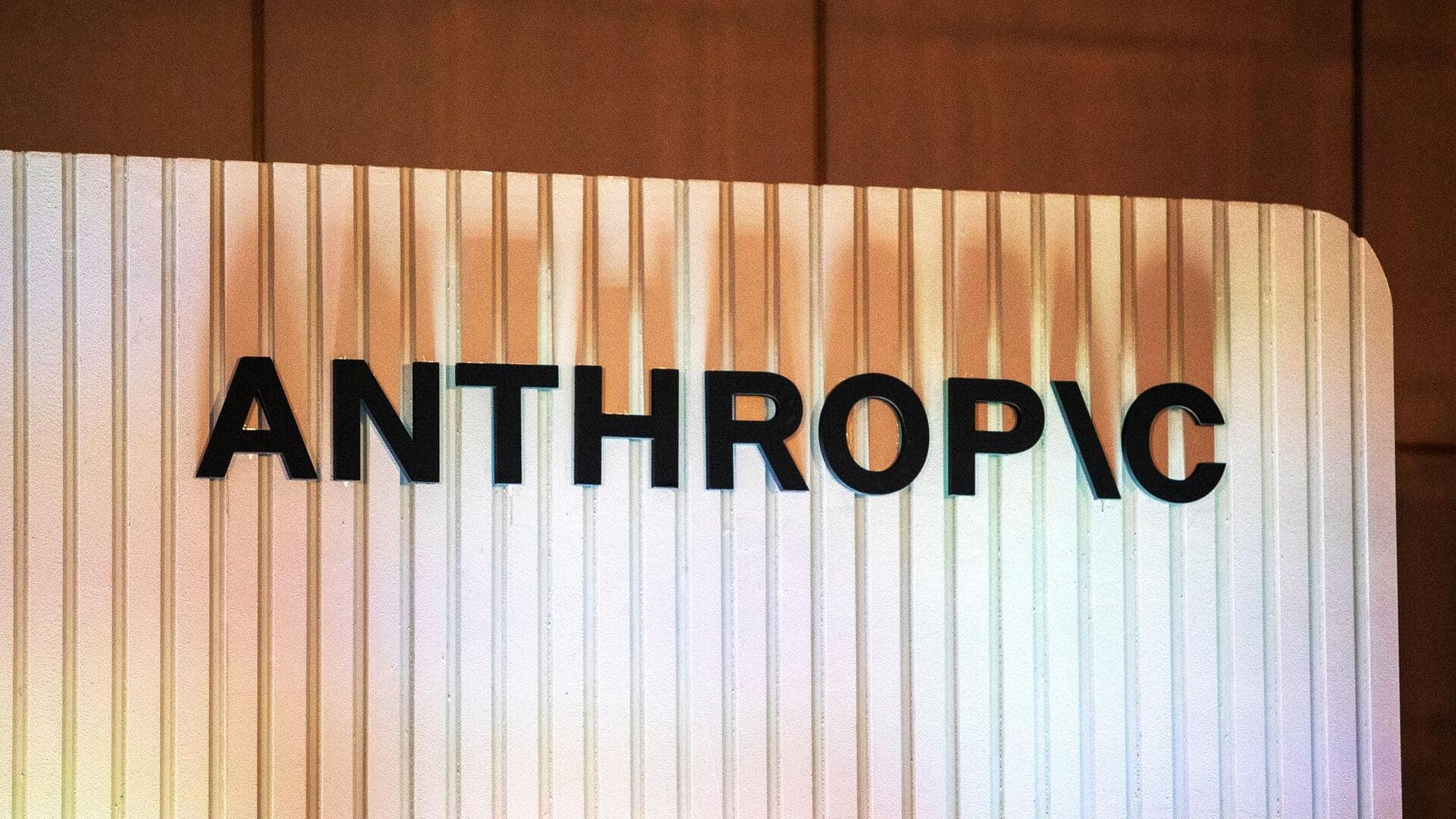
The Orbital Turf War: How SpaceX and Amazon Are Turning Collision Avoidance Into a Regulatory Weapon
SpaceX and Amazon are fighting over who gets to fly where in low Earth orbit, and the Federal Communications Commission is caught in the middle of what amounts to a high-stakes real estate dispute in the crowded orbital environment. In an early April letter to the FCC, SpaceX accused Amazon of violating the orbital debris mitigation plan attached to its broadband satellite license by deploying satellites at higher altitudes than authorized. Amazon fired back in its own FCC filing, denying any rule violation and pointing out that SpaceX only raised the alarm after moving its own Starlink constellation into the very altitudes where Amazon's satellites were being inserted. The technical details matter, but the institutional dynamics matter more. This is a fight between the world's dominant satellite internet provider and its most ambitious competitor, waged through FCC filings and framed in the language of space safety. Both companies have financial and strategic reasons to want the other slowed down. Amazon's FCC license states that its satellites will be launched into an initial deployment orbit around 400 kilometers before being raised to operational altitudes between 590 and 630 kilometers. SpaceX's complaint, as reported by SpaceNews, alleges that Amazon has instead been inserting satellites at altitudes ranging from 460 to 490 kilometers on multiple launches. The specific wording in Amazon's license is doing enormous legal work in this dispute. SpaceX reads it narrowly: 400 kilometers means 400 kilometers, give or take a small margin. Amazon reads it broadly: the phrase grants flexibility to meet mission requirements, and nowhere does the license specify a rigid ceiling on insertion altitude. Both readings have some logic. But the gap between 400 and 490 kilometers is not trivial when another company has recently parked thousands of satellites in the 475-to-485-kilometer band. SpaceX's letter focused on a February Ariane 6 launch that carried Amazon Leo satellites to higher insertion altitudes. According to SpaceX, the deployment triggered collision avoidance maneuvers by Starlink satellites. SpaceX characterized the deployments as creating unmitigable collision risks with dozens of operational spacecraft. SpaceX said the problem had occurred on previous launches but that the February mission brought it to a crisis point. The company also alleged that Amazon failed to update its debris mitigation plan or share predicted maneuver plans for the newly deployed satellites, making coordination impossible. SpaceX wrote in the filing that Amazon must ensure its launch plans comply with its authorization before creating irreparable harm. The collision avoidance maneuvers from a single launch represent a striking operational burden. Each maneuver costs propellant and satellite lifetime. Whether SpaceX is inflating the severity for regulatory effect or genuinely documenting a safety problem, the claim alone puts pressure on the FCC to weigh in. Amazon's response offers a different chronology. The company pointed out that SpaceX announced in early 2025 that it would move thousands of Starlink satellites from orbits around 550 kilometers down to lower altitudes in the 475-485-kilometer range. That decision, which SpaceX described as improving space safety, placed the Starlink constellation directly in the path that Amazon's satellites were already transiting on their way to higher operational orbits. Amazon also noted that SpaceX itself served as a launch provider for Amazon missions in 2025, deploying satellites to initial altitudes around 460 kilometers without raising any objections. Amazon stated in its FCC filing that SpaceX only began raising these issues after lowering the altitude of its Starlink constellation. Amazon argued that the issues raised by SpaceX do not involve violation of Commission rules or industry standards. Amazon stated that its launch and insertion parameters comply with industry standards and best practices. The implication is clear: SpaceX moved into the neighborhood and then complained about the traffic. One of the most telling details in Amazon's filing is the explanation of why it cannot simply lower its insertion altitudes overnight. According to Amazon, modifying deployment parameters with launch providers requires extensive technical assessment. When Amazon approached Arianespace about lowering the insertion orbit for near-term missions, the timeline for those changes would have caused significant delays. Amazon said it proposed an alternative solution to SpaceX that would have maintained Amazon's deployment schedule while addressing safety concerns. SpaceX declined the proposal and, according to Amazon, offered no counter-proposal. Amazon did not disclose what that solution entailed. The company said it is now working with Arianespace to implement a lower target insertion orbit starting with upcoming Ariane 6 launches of Amazon Leo satellites. It is also coordinating with other launch providers to determine if they can lower insertion altitudes without schedule impacts. This is where the competitive pressure becomes visible. Amazon has announced it is accelerating deployment of its 3,232-satellite constellation, targeting a high launch cadence carrying multiple satellites per launch. Amazon's deployment schedule includes launches from United Launch Alliance and Arianespace in the coming weeks. Any delay to that schedule is not just a technical inconvenience. Amazon faces an FCC-imposed deadline to deploy half its constellation, and it has purchased additional Falcon 9 launches from SpaceX to help meet that target. The irony of buying launches from the company accusing you of orbital negligence is not lost on the industry. This is not the first time SpaceX and Amazon have used FCC proceedings as competitive weapons. As Ars Technica noted, both companies have accused each other of leveraging regulatory filings to slow the other's satellite launches at various points over the years. The pattern is well established: file a complaint, force the competitor to spend months responding, gain a few weeks or months of relative advantage. The current FCC political environment adds another layer. FCC leadership has recently been critical of some regulatory filings between the companies. SpaceX and CEO Elon Musk have a closer relationship with the current FCC leadership than Amazon does. Whether that translates into favorable regulatory treatment on this specific dispute remains to be seen, but Amazon is not operating on friendly terrain. The FCC's orbital debris mitigation framework was designed for a different era, one with far fewer satellites and far more space between them. Recent rules requiring deorbiting of defunct satellites represented a modernization. But the current dispute exposes a gap: the framework does not clearly address what happens when two mega-constellations need to transit through the same altitude band, one temporarily during deployment and one permanently during operations. The commission has a narrow question and a broad one. The commission must decide whether Amazon's license language encompassing approximately 400 km allows deployments at 460 to 490 kilometers. If yes, SpaceX's complaint has limited regulatory traction regardless of the safety arguments. If no, Amazon has a compliance problem it needs to fix immediately. The broader question is harder. As mega-constellations proliferate, the orbital bands in low Earth orbit are becoming contested space. SpaceX operates more than 6,000 Starlink satellites. Amazon is building toward 3,232. Other operators are filing for their own constellations. The FCC needs a coordination framework that anticipates these conflicts rather than adjudicating them after the fact. SpaceX framed its complaint as a safety issue, and the collision avoidance claims give that framing some teeth. But the company also has an obvious interest in making Amazon's deployment schedule as difficult as possible. Amazon framed its response as a good-faith effort to accommodate a problem created by SpaceX's own altitude change, while also having an obvious interest in maintaining launch cadence at any cost. Both companies are telling a version of the truth. The satellites were higher than 400 kilometers. SpaceX did move its constellation into the same band. Coordination was inadequate. The question is who bears the burden of adjustment, and how quickly. The FCC will likely push for a negotiated outcome rather than a formal enforcement action. But the underlying problem will only intensify. Low Earth orbit is getting crowded. The rules written for a handful of government and commercial operators do not scale well to a world where two companies alone plan to operate more than 9,000 satellites. Every altitude dispute, every collision avoidance maneuver, every accusatory FCC filing is a symptom of an orbital environment changing faster than the institutions designed to govern it. Amazon's satellite broadband ambitions are not going away. SpaceX's dominance of the market is not going away either. The FCC is going to be settling these fights for a long time.

Anthropic Prioritizes Intellectual Property After Claude's Source Code Leak
Anthropic, an AI research company, is facing a significant challenge after a leak of its Claude AI model's source code. The leak has prompted the company to file a copyright takedown request for over 8,000 copies of the leaked material. This ironic development comes as Anthropic has positioned itself as a leader in ethical AI development. Details of the Claude Source Code Leak The leaked source code, available on GitHub, did not expose customer data or sensitive internal structures. However, it revealed the methods used by Anthropic's engineers to create the Claude model as an autonomous agent. The company later revised its takedown request from 8,000 to only 96 copies, as it was determined that the initial request had been overly broad. Copyright and Ethical Concerns * Copyright Takedown Request: Initially for over 8,000 copies. * Revised Request: Reduced to 96 copies. * Claims: No customer data was compromised. The leak has raised questions regarding Anthropic's commitment to ethical practices. Notably, the company previously utilized pirated digital books for training its AI models. A lawsuit related to this practice resulted in a $1.5 billion settlement after it was deemed illegal for Anthropic to use these materials without permission. Historical Context of Intellectual Property Issues This isn't the first time Anthropic has faced scrutiny over its intellectual property practices. The company has been criticized for its methods in securing training data. It allegedly accessed troves of copyrighted material from online sources such as LibGen and the so-called "Pirate Library Mirror." While the act of digitizing physical books through its Project Panama was ruled legal, the company was aware of the negative public perception surrounding it. The Cause of the Leak Anthropic has attributed the leak to human error. A source map file was accidentally included in a public release of the 2.1.88 version of the Claude Code npm package. This file contained paths leading to the source code, which allowed curious individuals to successfully download and share the model widely. Implications for the AI Industry The Claude source code leak highlights broader issues in the AI industry regarding intellectual property rights and ethical standards. As companies deploy increasingly complex AI technologies, the definition of proprietary knowledge becomes crucial. The incident serves as a reminder of the risks involved when companies prioritize speed and efficiency. As Anthropic navigates the aftermath of this leak, it must balance its ethical claims with the realities of its operational practices. The situation highlights the complexities of managing intellectual property in a rapidly evolving technological landscape. As the discourse on AI accountability grows, the recent leak of Claude's source code may be a pivotal moment for the company and the industry as a whole.
Anthropic Ends OpenClaw Support for Claude Subscribers
Anthropic has announced that it will discontinue support for the AI platform OpenClaw for its Claude subscribers, effective Saturday at 12 p.m. PT. This decision comes as the company manages increasing demand for its chatbot technology. New Subscription Model for Claude Boris Cherny, head of Claude Code, shared the news on social media, emphasizing a shift toward new payment options. Users will now be required to purchase discounted "extra usage bundles" associated with their Claude accounts. Alternatively, they can access a separate Claude API key through Anthropic's developer platform. Reasons Behind the Change The decision was largely influenced by the substantial compute demand from Claude users. Recently, Claude reached remarkable popularity, briefly ranking as the top app in the US Apple App Store in March. Due to the increase in users, Anthropic adjusted usage limits for subscribers last week. * Current subscribers will no longer have access to third-party tools, including OpenClaw. * New usage bundles are required for continued access to AI functionalities. * Anthropic prioritizes resources for its products and API due to high demand. Implications for OpenClaw Users OpenClaw, a platform designed for personal AI assistants, allows users to automate tasks across various applications. Its recent rise in popularity has fueled discussions about AI utilization in daily workflows. Peter Steinberger, creator of OpenClaw, has expressed concerns regarding the impact of this decision on users who prefer the integration with Claude. He noted that many subscribers initially chose Claude for its compatibility with OpenClaw. Steinberger, along with board member Dave Morin, sought to negotiate with Anthropic before the announcement, believing a reconciliation could benefit all parties involved. Broader Context in AI Tools Regulation Anthropic is not the only tech company addressing the usage of third-party tools. Google took similar measures recently against Gemini CLI users for violating terms of service. Though their approach was framed differently, both companies are tightening controls over third-party integrations. This development marks an important shift in the landscape of AI applications, signaling how companies are adapting to rapidly changing demands for technology and user compatibility.

SpaceX IPO: Will It Be a Buy or a Bust? | The Motley Fool
SpaceX confidentially filed to go public on Wednesday. The move represents the first of three big IPOs investors are expecting this year, along with OpenAI and Anthropic. SpaceX could be the biggest IPO in history. According to Bloomberg, CEO Elon Musk is targeting a $2 trillion valuation, which would make his rocket company, which also owns xAI and the Starlink satellite internet service, one of the top ten most valuable companies in the world, worth more than Tesla or Meta Platforms. The company could raise as much as $75 billion in the IPO, which would top Saudi Aramco's haul, making it the biggest IPO in history. As of December 2024, SpaceX was valued at just $350 billion based on a secondary share sale as insiders sold $1.25 billion worth of stock to investors. In February 2026, SpaceX acquired Elon Musk's AI start-up, xAI, in a merger that valued the company at $1.25 trillion, $1 trillion for SpaceX and $250 billion for xAI. The merger was based on a share exchange, and the valuation was determined by assessments from the board of directors and banks, including Morgan Stanley, though it doesn't reflect the views of real investors. That deal was also executed to prepare for an IPO, as the move helps shore up finances at xAI, which owns the chatbot Grok and the X social media platform, as it's burning cash to compete with OpenAI and Anthropic. SpaceX is highly profitable thanks to Starlink, and the combination will give xAI funding through those cash flows. The move also prepares SpaceX for a major ambition of Musk's, developing space-based data centers, which Musk has said could launch in two to three years, though some scientists have pushed back on that timeline. There are only a handful of companies with valuations of around $2 trillion, and they are all hugely profitable and delivering solid growth. However, SpaceX is still much smaller than any of those peers, based on both revenue and profits. The company has not yet filed its S-1 Prospectus, but according to Reuters, the company had between $15 billion-$16 billion in revenue in 2025, and around $8 billion in earnings before interest, taxes, depreciation, and amortization (EBITDA) of $8 billion. It's unclear if SpaceX is profitable on a generally accepted accounting principles (GAAP) basis, but as an industrial company, it likely has a large depreciation balance. Nearly all of the company's revenue comes from Starlink as Musk said NASA would contribute just 5% of SpaceX's revenue this year. Based on those numbers and at its targeted $2 trillion value, SpaceX trades at roughly 130 times sales and 250 times EBITDA. That price-to-sales ratio is so high that it dwarfs every other S&P 500 company except for Palantir, which currently has a P/S ratio of 79, and traded above 100 not long ago. Palantir is also growing significantly faster than SpaceX, posting 70% revenue growth in its most recent quarter as opposed to the roughly 20% growth rate that SpaceX had last year. Elon Musk has succeeded in obtaining a lofty valuation for Tesla that is more based on future promises than current business results, and he looks set to do the same with SpaceX. While SpaceX's current performance is impressive, it's not in the same ballpark as the "Magnificent Seven" companies that make up the most valuable names on the stock market. Musk's talk of orbital data centers and even colonizing Mars may be helping to inflate the company's valuation, but the Tesla chief is prone to exaggerating timelines and making promises he can't keep, doing so several times on autonomous driving and Tesla's robotaxis, for example. SpaceX's dominance of the rocket launch market is impressive, but the realistic prospects for its business seem grossly exaggerated at a $2 trillion valuation. Investors are better-off passing on this one. In a volatile market, a stock this expensive could easily crash.
Banks handling SpaceX's IPO have to buy Grok subscriptions
SpaceX targets over $2T valuation in IPO SpaceX, headquartered in Starbase, Texas, has raised its target IPO valuation to over $2 trillion. This puts it on track for what could be the biggest stock market listing ever. The company hopes to raise a record-breaking $75 billion through this process. If successful, this would surpass previous mega-IPOs such as Saudi Aramco in 2019 and Alibaba in 2014.
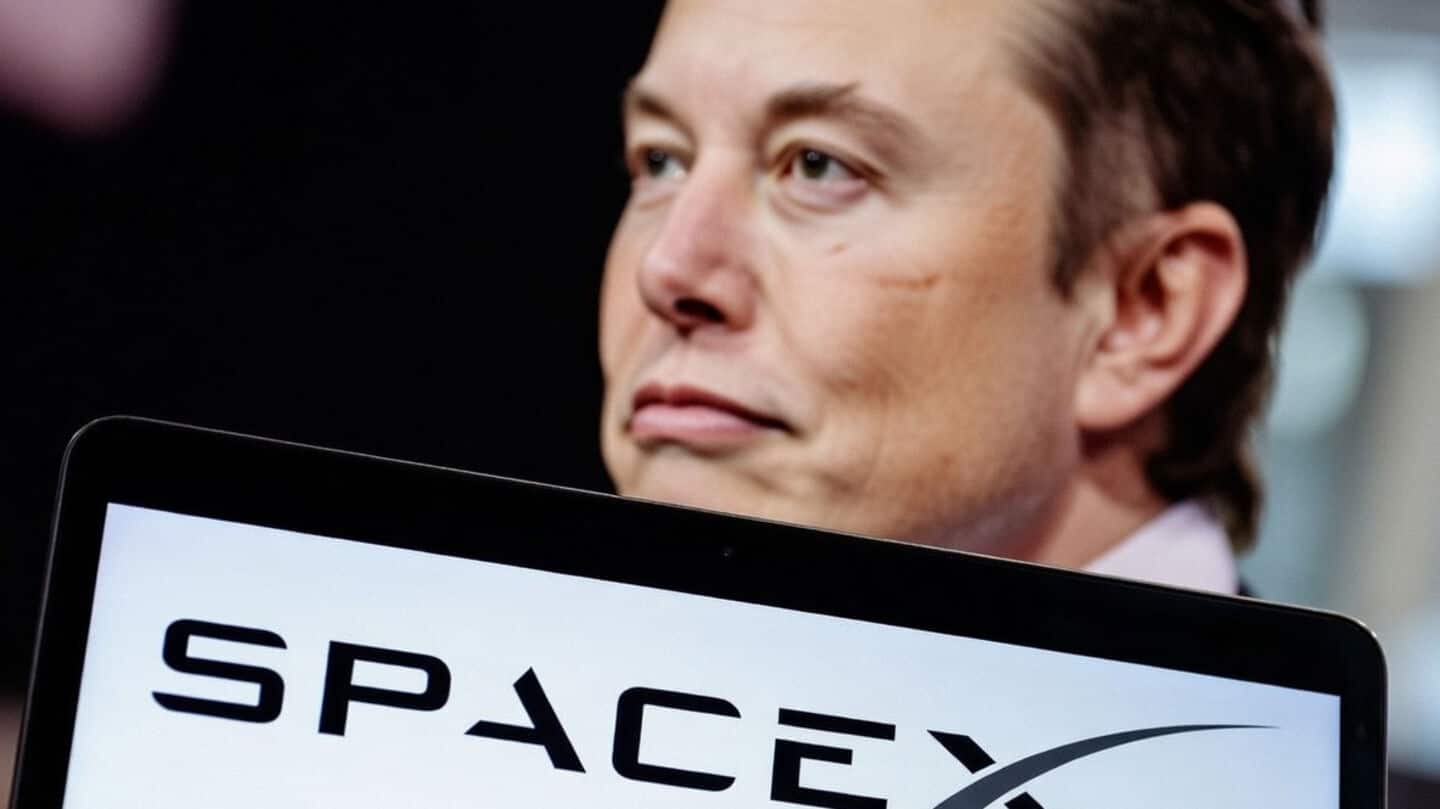
China Tries To Take On SpaceX With A Falcon 9 Rival, It Fails
A Chinese private aerospace company has suffered a setback in its effort to develop reusable rocket technology, after the maiden flight of its Tianlong-3 rocket ended in failure. The launch was carried out by Beijing-based Space Pioneer, which disclosed the outcome in a brief statement without providing detailed technical explanations. The company had positioned the Tianlong-3 as a competitor to SpaceX's Falcon 9, currently the only rocket with an extensive operational track record of reusability. The failed launch highlights the technical and operational challenges facing China's private space sector as it seeks to narrow the gap in reusable launch systems, according to South China Morning Post. Reusable rocket technology is widely regarded as a critical factor in reducing the cost of access to space. By enabling the recovery and reuse of a rocket's main stage, companies can significantly lower launch expenses and increase launch frequency. This capability is particularly important for deploying large satellite constellations used in communications, navigation, and surveillance. Space Pioneer, also known as Beijing Tianbing Technology, is part of a growing group of private aerospace firms supported by Chinese government policies aimed at strengthening the country's position as a major space power. These policies have facilitated fundraising efforts and encouraged companies to pursue public listings, accelerating development timelines across the sector. The Tianlong-3 rocket was designed with capabilities comparable to the Falcon 9, including the capacity to deploy up to 36 satellites in a single launch. Such capacity aligns with China's broader objective of building large-scale satellite networks to compete in low Earth orbit, where SpaceX has established a dominant presence through its Starlink constellation. This is not the first technical issue encountered during the rocket's development. In 2024, a Tianlong-3 first-stage prototype detached from its launch pad during testing due to a structural failure, landing in a nearby hilly area. The incident underscored the engineering complexity involved in developing reusable launch systems. Despite setbacks, competition within China's private space sector remains active. Companies such as LandSpace have reported progress in reusable rocket development. LandSpace is preparing for the next flight of its Zhuque-3 rocket, which is expected to take place in the first half of the year. To date, no Chinese company has successfully demonstrated full recovery and reuse of an orbital rocket's main stage. The Tianlong-3 failure reinforces the technological gap that still exists between China's emerging private launch providers and established operators in the United States.

Polymarket ripped for taking bets on fate of downed F-15 pilot: 'Disgusting'
Rep. Seth Moulton (D-Mass.) ripped Polymarket on Friday after the popular prediction market platform allowed users to place bets on the fate of a missing American F-15 fighter pilot shot down over Iran. The since-deleted market offered degenerates the opportunity to wager on what date the US would confirm that the downed airman had been found - with most (63%) predicting that they wouldn't be rescued until Saturday. "This is DISGUSTING," Moulton fumed on X, sharing a screenshot of the betting market. Moulton noted that the page went up amid "an ongoing search and rescue operation." "Their safety is unknown," the congressman wrote. "They could be your neighbor, a friend, a family member. "And people are betting on whether or not they'll be saved." Polymarket said the betting page should not have been allowed to go up and was removed. "We took this market down immediately as it does not meet our integrity standards," the company wrote on X. "It should not have been posted, and we are investigating how this slipped through our internal safeguards," it added. Polymarket allows users to place bets on a wide range of Iran war topics, such as whether US ground forces will be used and when a cease-fire may be announced. "Taking down this particular bet after I called it out can only be the first step," Moulton wrote in a subsequent post. "There are still 219 war bets active on your platform. "Remove these immediately." The company claims it does "make money or charge any fees on any geopolitical markets." Moulton's criticism of Polymarket comes after the company took heat from Democratic lawmakers earlier this month after six suspected insiders made $1.2 million on contracts tied to the strikes on Iran - including an alleged $550,000 windfall related to Supreme Leader Ayatollah Ali Khamenei's death. Sen. Chris Murphy (D-Conn.) pledged to draw up legislation to ban bets tied to government actions in response to the gambling on the Iran war. "This is American commercial immorality on steroids," Murphy told the Washington Post, arguing that prediction markets have created a more "dystopian world." "People shouldn't be rooting for people to die because they placed a bet," the senator said.

Claude users hit by surprise cost hike as Anthropic cuts off OpenClaw access
New Delhi: Anthropic is refocusing the usage of its AI model Claude, in effect shutting down third-party applications of its AI model (such as OpenClaw) under subscription. Beginning April 4, users will not be able to use such external tools with the help of their existing Claude subscriptions, which is a major change in the pricing and usage model of the company. This relocation implies that OpenClaw customers will now be forced to migrate to a different pay-as-you-use platform, which will raise expenses among those relying on automation workflows. This move is made under the circumstances of an increasing demand on Claude, which, according to Anthropic, has put a strain on its infrastructure and caused a re-evaluation of the manner in which resources are distributed. Third-party access no longer included An official communication that was shared with users stated that Claude subscriptions were not designed to be used in the way that third-party tools were used. The company has indicated that it is focusing on the customers that use its direct products and API. According to Boris Cherny, access will remain available via the tools, such as OpenClaw, but it will demand extra usage bundles or API-based billing. The subscribers will be offered a one-time credit based on the monthly plan cost, and further use will be charged. OpenClaw's rise and sudden setback Earlier this year, OpenClaw was gaining significant popularity because of its capabilities to automate duties like email management, calendar control and even flight check-ins. Its performance won the affection of power users who wanted high-end AI productivity. Nevertheless, the success of the tool seems to have added more load to the systems of Anthropic. According to sources, this surge of automated use contributed to the move of the company to restrict access based on subscriptions. Tensions behind the scenes The situation is further complicated by internal dynamics. OpenClaw creator Peter Steinberger is now working with OpenAI, a direct competitor to Anthropic. Steinberger disclosed that he and Dave Morin, who was a board member in OpenClaw, tried to negotiate with Anthropic to avoid the change, but they only had a chance to postpone it. It has prompted the speculation that Anthropic is driving users to its own ecosystem, such as in-house features like Claude Cowork, and not to third-party integration. Anthropic believes that the transformation is required to achieve sustainable growth. The company pointed out that it is essential to manage the capacity in a responsible manner since the demand of AI services keeps growing. To the user, the update is an obvious trade-off: more platform stability but less flexibility and cheapness.
Anthropic Ends Claude Subscription Access for Third-Party Tools Like OpenClaw - IT Security News
The technical storage or access is necessary for the legitimate purpose of storing preferences that are not requested by the subscriber or user. The technical storage or access that is used exclusively for statistical purposes. The technical storage or access that is used exclusively for anonymous statistical purposes. Without a subpoena, voluntary compliance on the part of your Internet Service Provider, or additional records from a third party, information stored or retrieved for this purpose alone cannot usually be used to identify you.