News & Updates
The latest news and updates from companies in the WLTH portfolio.
EPA will begin monitoring microplastics and pharmaceuticals in drinking water, an issue that is driving hormone chaos and gut breakdown - NaturalNews.com
That silence cracked when the Environmental Protection Agency and the Department of Health and Human Services announced they will finally monitor drinking water for microplastics and pharmaceutical contaminants. The move, another win for the "Make America Healthy Again" movement, places these substances on a draft of the agency's "Sixth Contaminant Candidate List," a procedural step that could eventually force water utilities to filter them out. But for a public already skeptical of federal assurances, the announcement raises a troubling question: Why did it take so long to admit what independent science has been saying for years? And what can the EPA do about the issue once they find pharmaceuticals and microplastics in drinking water across the country, an issue that has already been raised for years? A December 2024 study published in the Journal of Pharmaceutical Sciences found that active pharmaceutical contaminants are not a myth but a measurable reality in drinking water supplies worldwide. Researchers documented APIs in treated wastewater, groundwater and tap water, concluding that conventional treatment processes are simply not equipped to remove these compounds. Among the most concerning findings: pharmaceutical residues promote antibiotic-resistant bacteria, bio-accumulate in the food chain and disrupt endocrine systems. The study specifically names nanotechnology, microalgal treatment and reverse osmosis as promising alternatives, but notes these remain underutilized. Meanwhile, a systematic review published in the Journal of Xenobiotics identified 39 different estrogenic compounds across water bodies in 59 countries. Concentrations ranged from 0.002 to more than 10 million nanograms per liter. Estrone, estradiol and ethinylestradiol, the synthetic hormone found in birth control pills, topped the list. These compounds were detected not just in wastewater effluent but in rivers, lakes, surface waters and drinking water sources. "The presence of APIs in water resources poses a significant threat not only to aquatic organisms but also to human health," the pharmaceutical study authors wrote. That threat includes endocrine disruption, a condition where synthetic chemicals mimic or block natural hormones, confusing the body's regulatory systems. Endocrine disruption does not announce itself with a single symptom. It manifests as metabolic dysfunction, reproductive disorders, thyroid imbalances and neurodevelopmental issues. When estrogenic compounds enter the body through drinking water, even at low concentrations, they can bind to hormone receptors and alter gene expression. The second mechanism, gut dysbiosis, receives less attention but may be equally damaging. Microplastics, which have been discovered inside human tissues and across the planet from ocean depths to Arctic ice, act as physical irritants and chemical sponges in the gastrointestinal tract. They alter microbial communities, damage intestinal lining and create chronic inflammatory states. Together, these two pathways form a hidden engine of modern chronic disease. Hormone disruption impairs metabolic signaling. Gut dysbiosis undermines immune function and nutrient absorption. Drinking water, the one substance no human can avoid, becomes a delivery system for both. EPA Secretary Lee Zeldin framed the announcement as a family safety issue. "I can't think of an issue that hits closer to home for American families than the safety of their drinking water," he said. But monitoring is not the same as regulating. And regulation without enforcement of advanced treatment standards leaves the underlying problem intact. Seven governors from states including New Jersey and Michigan, along with 175 environmental and health groups, filed a legal petition late last year demanding action. Thursday's announcement responds to that pressure but stops short of mandating the filtration upgrades that independent research says are necessary.

Elon Musk Demands Banks Working on SpaceX IPO Subscribe to His Grok AI Chatbot
Elon Musk is demanding that the banks handling the upcoming initial public offering (IPO) of SpaceX subscribe to his Grok artificial intelligence (AI) chatbot. End of Quarter Sale - 50% Off TipRanks * Unlock hedge fund-level data and powerful investing tools for smarter, sharper decisions * Discover top-performing stock ideas and upgrade to a portfolio of market leaders with Smart Investor Picks The New York Times (NYT) is reporting that Musk, who is CEO of both SpaceX and electric vehicle maker Tesla (TSLA), is demanding that banks such as Morgan Stanley (MS), Goldman Sachs (GS), and JPMorgan Chase (JPM) buy subscriptions to Grok, the AI chatbot that is part of SpaceX. Musk is reportedly making the same demand of the law firms, auditors, and other advisers working on the IPO of SpaceX, which is expected to be the biggest market debut ever for a company. Considering Musk has more than 20 banks lined up to work on the IPO, the Grok subscriptions could be lucrative for SpaceX. Grok Controversies Some of the banks have reportedly agreed to spend tens of millions of dollars on the chatbot and have started integrating Grok into their information technology (I.T. ) systems. SpaceX is expected to raise $75 billion at a $2 trillion valuation in its highly anticipated IPO this June. Banks working on the SpaceX IPO are expected to generate fees in excess of $500 million for advising on the deal. However, Grok has proven to be controversial. The chatbot has shared antisemitic content and praised Adolf Hitler. It has also generated nonconsensual sexualized images of women and girls. Some countries have banned Grok. Musk has marketed Grok as the antidote to political correctness and said that his chatbot is not "woke." Is TSLA Stock a Buy? Tesla's stock has a consensus Hold rating among 31 Wall Street analysts. That rating is based on 13 Buy, 11 Hold, and seven Sell recommendations issued in the last three months. The average TSLA price target of $395.49 implies 10% upside from current levels.

SpaceX Delays Starship Launch to May as Upgrades Extend Timeline
SpaceX CEO Elon Musk said that the space company's next Starship test flight will happen later than originally planned. Instead of April, the launch is now expected in early to mid-May, which is roughly four to six weeks away, based on Musk's update on X. This change comes after many had expected that the launch would occur in April. The delay is largely due to major upgrades to the new V3 Starship. End of Quarter Sale - 50% Off TipRanks * Unlock hedge fund-level data and powerful investing tools for smarter, sharper decisions * Discover top-performing stock ideas and upgrade to a portfolio of market leaders with Smart Investor Picks Indeed, the company has been working on improving reliability and making the rocket better suited for future missions, including NASA's Artemis program to return humans to the moon. Importantly, Starship itself is a next-generation rocket that is designed to be fully reusable and capable of carrying much larger payloads than SpaceX's current Falcon rockets. Because of these improvements, development has taken longer than initially expected. Nevertheless, the upcoming test will be closely watched, especially since SpaceX has not launched Starship since its 11th test flight back in October. Meanwhile, the company is also moving forward with plans for a potential IPO, which could become one of the largest ever. More specifically, reports suggest that SpaceX is now targeting a $2 trillion valuation, up from the previously expected $1.75 trillion. What Is the Prediction for TSLA Stock? When it comes to Elon Musk's companies, most of them are privately held. However, retail investors can invest in his most popular company, Tesla (TSLA). Turning to Wall Street, analysts have a Hold consensus rating on TSLA stock based on 13 Buys, 11 Holds, and eight Sells assigned in the past three months, as indicated by the graphic below. Furthermore, the average TSLA price target of $394.36 per share implies 9.4% upside potential.

Mercor Selects Stripe to Power Global AI Expansion
Mercor, an AI-powered hiring company, has chosen Stripe, a payment service provider, to run its marketplace and support rapid global growth. The company connects more than 30,000 professionals every week with leading AI companies and enterprises to help train and evaluate AI models. The new partnership will make internal operations run more smoothly, allowing Mercor to expand to new countries seamlessly. End of Quarter Sale - 50% Off TipRanks * Unlock hedge fund-level data and powerful investing tools for smarter, sharper decisions * Discover top-performing stock ideas and upgrade to a portfolio of market leaders with Smart Investor Picks Mercor Leverages Stripe to Optimize Global Operations Mercor plans to use Stripe Connect to handle professional onboarding, identity checks, global payouts, and multi-region compliance. This single system eliminates the need to develop infrastructure for each country. In addition, Mercor will leverage Stripe Instant Payouts, which allows professionals to receive their earnings within seconds, regardless of the day or time. Notably, Adarsh Hiremath, co-founder and co-CEO of Mercor, emphasized the importance of reliable payouts for its global network. Because of this need, Mercor chose Stripe for its proven ability to scale and handle complex international transactions. Mercor Positioned for Sustained AI Market Leadership Mercor has grown rapidly since its 2022 founding, securing a $10 billion valuation with a $350 million Series C round in October 2025. The company specializes in connecting experts, including researchers, engineers, and Nobel Prize recipients, with AI labs that need high-quality training data. The Stripe integration will focus on solving key operational problems in the fast-growing AI industry. By handling these processes, Mercor can focus on finding real talent and testing models as demand for human-in-the-loop AI development increases. How Mercor Pays People with Stripe Mercor mainly pays professionals through Stripe Connect. They complete onboarding and ID checks in Stripe and get paid for model training and evaluation. In regions where Stripe is unavailable, Mercor uses Wise (WISE) for one-time or supported payments. Other methods, such as PayPal (PYPL), Payoneer (PAYO), or cryptocurrency, are not offered. This approach ensures cross-border payments remain reliable and compliant for over 30,000 workers each week. What are the Best AI Stocks to Buy Now? Mercor and Stripe are private companies and cannot be accessed on major public exchanges like NASDAQ or NYSE. However, investors interested in stocks in the AI or payments sectors can visit TipRanks Comparison Stock Center to compare analysts' Strong Buy recommendations, such as Robinhood (HOOD), Mastercard (MA), Nvidia (NVDA), and Meta Platforms (META).

Best of BS Opinion: AI power, war chaos, and India's energy blind spot
Here are the best of Business Standard's opinion pieces for today China's AI push is less about chasing a distant breakthrough and more about embedding intelligence everywhere it can be used. At a recent Shanghai gathering, Chinese policymakers signalled confidence, treating the US as the only serious rival while largely dismissing others, including India. As Shyam Saran notes, the strategy rests on scale and coordination between universities, tech firms, and specialised companies working in tandem, backed by state direction. Open-source systems are central, with ambitions to shape global standards through affordable, widely deployable models. India, operating with far fewer resources, is taking a narrower path with focus on applied use cases such as language tools and digital public infrastructure. That approach may prove effective, but it also risks locking the country into external ecosystems if domestic capabilities don't deepen. Meanwhile, Mihir Sharma turns to the US' confrontation with Iran, arguing it lacks even the flawed structure that underpinned the Iraq war. The Bush administration, despite its missteps, attempted to build legitimacy through alliances and institutional processes. In contrast, Donald Trump's approach appears ad hoc, launched without a clear objective or coalition, and with little anticipation of escalation. Iran's responses, including threats to energy flows, have exposed these gaps. The fallout is global, particularly for energy-dependent regions, while the US remains comparatively shielded. Yet the expectation of political accountability, which followed Iraq, may not materialise this time, with blame more likely to be deflected than absorbed. Devangshu Datta writes that warfare is shifting quickly towards cheaper, more adaptable technologies. Drones have already altered battlefield economics, taking down high-value assets at a fraction of the cost. The next phase of AI-enabled targeting raises sharper concerns. Systems capable of identifying individuals through surveillance data are emerging, though current versions remain error-prone and risky. Fully autonomous weapons could remove even the limited human oversight that exists today, making them harder to disrupt and easier to deploy at scale. As Datta notes, governance frameworks are struggling to keep pace, leaving critical ethical and legal questions unresolved. Finally, Shekhar Gupta contrasts China's energy strategy with India's uneven progress. Despite limited natural resources, China has invested steadily in coal gasification, converting domestic coal into synthetic fuels and fertiliser inputs. India, with similar potential, has seen its plans stall amid regulatory hurdles and inconsistent policy execution. The consequences are visible in continued import dependence, particularly for fertilisers, leaving agriculture exposed to global disruptions. Gupta's argument is straightforward: the constraint is not availability but follow-through, and without sustained execution, even viable solutions remain out of reach. Stay tuned! More From This Section Best of BS Opinion: From war to AI, new pressures build on India's economy Best of BS Opinion: Counting India, fixing law, facing a volatile oil world Best of BS Opinion: Budget math meets oil shock as global faultlines widen Best of BS Opinion: All eyes on RBI's policy meeting amid Iran conflict Best of BS Opinion: Iran conflict gives India a chance for energy reform

'Confusion, chaos and distrust': Oregon challenges Trump's order restricting vote-by-mail
PORTLAND, Ore. (KOIN) - Oregon Attorney General Dan Rayfield filed a lawsuit on Friday challenging an executive order from President Trump that limits voting by mail. Attorney General Rayfield joined 22 other attorneys general and one governor in an effort to block Trump's March 31 executive order. The order directs the Department of Homeland Security to create verified voter lists using federal data, including Social Security. Those lists would be transferred to states, including Oregon, to determine who is eligible to vote. Rayfield argues the order weaponizes the United States Postal Service by giving it rule-making power to determine who gets a ballot through the mail and who doesn't. "The United States Postal Service has one job: to deliver the mail. President Trump is trying to give it a second one -- deciding which Americans get a ballot," said Attorney General Rayfield. "That is not the postal service's role, it is not the federal government's role, and it is not constitutional," Rayfield argued in a statement. "Trump has spent years weaponizing federal agencies to prop up his false story that fraud cost him the 2020 election. He votes by mail. Oregonians vote by mail. And Oregon will keep running its own elections." The lawsuit argues that the executive order violates the separation of powers as the U.S. Constitution gives states the authority to conduct elections, not the president. The attorneys general further that the executive order weaponizes the Postal Service by directing it to withhold ballots from voters that are not on a federally-approved list. The attorneys general say the order would require states to upend their existing election procedures for upcoming elections and conduct statewide voter education efforts "at a dangerously quick pace - potentially within weeks of primary elections and mere months before the beginning of mail voting for the 2026 general election." The attorneys general warn that the executive order will "create confusion, chaos and distrust" in state elections while potentially disenfranchising eligible voters. Oregon Governor Tina Kotek issued a press release Friday in support of the lawsuit, saying, "Today, Oregon is moving to block President Trump's unconstitutional voter suppression effort," adding, "His attack on the fundamental right of every American to vote has nothing to do with election integrity and everything to do with silencing people so he can ultimately influence election results." In a statement shared with KOIN 6 News, White House Spokesperson Abigail Jackson defended the order, saying, "Only Democrat politicians and operatives would be upset about lawful efforts to secure American elections and ensure only eligible American citizens are casting ballots. President Trump campaigned on securing our elections and the American people sent him back to the White House to get the job done." As reported by the Associated Press, critics say Trump's executive order would offer little time to go through voter rolls before ballots are sent out this fall for elections. Critics also question whether the administration's voter lists would be reliable. AP notes that mail voting has existed for more than a century and was increasingly popular in Democratic and Republican states until 2020, when Trump hurled baseless claims of mass voter fraud in mail-in voting. These claims come as Trump himself has voted by mail as recently as last month in a Florida special election. Oregon has had mail-in voting since 1998. The state legislative fiscal office says there have been very few cases of fraud, and not enough to sway any elections. The state already uses bar codes and signature verification for mail-in ballots, which is something the president's order also stipulates. The March executive order comes after President Trump signed a similar order last year to overhaul election rules; however, the order was blocked by courts. Since then, the Trump administration has requested voter rolls from several states, including Oregon. Oregon's lawsuit was later dismissed. "Now the administration is trying again, this time using the U.S. Postal Service," the Oregon Attorney General's Office said. Rayfield is joined in the lawsuit by the attorneys general of Arizona, California, Colorado, Connecticut, Delaware, District of Columbia, Illinois, Maine, Maryland, Massachusetts, Michigan, Minnesota, New Jersey, Nevada, New Mexico, New York, North Carolina, Rhode Island, Vermont, Virginia, Washington, Wisconsin, and the Governor of Pennsylvania.

'Confusion, chaos and distrust': Oregon challenges Trump's order restricting vote-by-mail
PORTLAND, Ore. (KOIN) - Oregon Attorney General Dan Rayfield filed a lawsuit on Friday challenging an executive order from President Trump that limits voting by mail. Attorney General Rayfield joined 22 other attorneys general and one governor in an effort to block Trump's March 31 executive order. The order directs the Department of Homeland Security to create verified voter lists using federal data, including Social Security. Those lists would be transferred to states, including Oregon, to determine who is eligible to vote. Rayfield argues the order weaponizes the United States Postal Service by giving it rule-making power to determine who gets a ballot through the mail and who doesn't. "The United States Postal Service has one job: to deliver the mail. President Trump is trying to give it a second one -- deciding which Americans get a ballot," said Attorney General Rayfield. "That is not the postal service's role, it is not the federal government's role, and it is not constitutional," Rayfield argued in a statement. "Trump has spent years weaponizing federal agencies to prop up his false story that fraud cost him the 2020 election. He votes by mail. Oregonians vote by mail. And Oregon will keep running its own elections." The lawsuit argues that the executive order violates the separation of powers as the U.S. Constitution gives states the authority to conduct elections, not the president. The attorneys general further that the executive order weaponizes the Postal Service by directing it to withhold ballots from voters that are not on a federally-approved list. The attorneys general say the order would require states to upend their existing election procedures for upcoming elections and conduct statewide voter education efforts "at a dangerously quick pace - potentially within weeks of primary elections and mere months before the beginning of mail voting for the 2026 general election." The attorneys general warn that the executive order will "create confusion, chaos and distrust" in state elections while potentially disenfranchising eligible voters. Oregon Governor Tina Kotek issued a press release Friday in support of the lawsuit, saying, "Today, Oregon is moving to block President Trump's unconstitutional voter suppression effort," adding, "His attack on the fundamental right of every American to vote has nothing to do with election integrity and everything to do with silencing people so he can ultimately influence election results." In a statement shared with KOIN 6 News, White House Spokesperson Abigail Jackson defended the order, saying, "Only Democrat politicians and operatives would be upset about lawful efforts to secure American elections and ensure only eligible American citizens are casting ballots. President Trump campaigned on securing our elections and the American people sent him back to the White House to get the job done." As reported by the Associated Press, critics say Trump's executive order would offer little time to go through voter rolls before ballots are sent out this fall for elections. Critics also question whether the administration's voter lists would be reliable. AP notes that mail voting has existed for more than a century and was increasingly popular in Democratic and Republican states until 2020, when Trump hurled baseless claims of mass voter fraud in mail-in voting. These claims come as Trump himself has voted by mail as recently as last month in a Florida special election. Oregon has had mail-in voting since 1998. The state legislative fiscal office says there have been very few cases of fraud, and not enough to sway any elections. The state already uses bar codes and signature verification for mail-in ballots, which is something the president's order also stipulates. The March executive order comes after President Trump signed a similar order last year to overhaul election rules; however, the order was blocked by courts. Since then, the Trump administration has requested voter rolls from several states, including Oregon. Oregon's lawsuit was later dismissed. "Now the administration is trying again, this time using the U.S. Postal Service," the Oregon Attorney General's Office said. Rayfield is joined in the lawsuit by the attorneys general of Arizona, California, Colorado, Connecticut, Delaware, District of Columbia, Illinois, Maine, Maryland, Massachusetts, Michigan, Minnesota, New Jersey, Nevada, New Mexico, New York, North Carolina, Rhode Island, Vermont, Virginia, Washington, Wisconsin, and the Governor of Pennsylvania.

'Confusion, chaos and distrust': Oregon challenges Trump's order restricting vote-by-mail
PORTLAND, Ore. (KOIN) - Oregon Attorney General Dan Rayfield filed a lawsuit on Friday challenging an executive order from President Trump that limits voting by mail. Attorney General Rayfield joined 22 other attorneys general and one governor in an effort to block Trump's March 31 executive order. The order directs the Department of Homeland Security to create verified voter lists using federal data, including Social Security. Those lists would be transferred to states, including Oregon, to determine who is eligible to vote. Rayfield argues the order weaponizes the United States Postal Service by giving it rule-making power to determine who gets a ballot through the mail and who doesn't. "The United States Postal Service has one job: to deliver the mail. President Trump is trying to give it a second one -- deciding which Americans get a ballot," said Attorney General Rayfield. "That is not the postal service's role, it is not the federal government's role, and it is not constitutional," Rayfield argued in a statement. "Trump has spent years weaponizing federal agencies to prop up his false story that fraud cost him the 2020 election. He votes by mail. Oregonians vote by mail. And Oregon will keep running its own elections." The lawsuit argues that the executive order violates the separation of powers as the U.S. Constitution gives states the authority to conduct elections, not the president. The attorneys general further that the executive order weaponizes the Postal Service by directing it to withhold ballots from voters that are not on a federally-approved list. The attorneys general say the order would require states to upend their existing election procedures for upcoming elections and conduct statewide voter education efforts "at a dangerously quick pace - potentially within weeks of primary elections and mere months before the beginning of mail voting for the 2026 general election." The attorneys general warn that the executive order will "create confusion, chaos and distrust" in state elections while potentially disenfranchising eligible voters. Oregon Governor Tina Kotek issued a press release Friday in support of the lawsuit, saying, "Today, Oregon is moving to block President Trump's unconstitutional voter suppression effort," adding, "His attack on the fundamental right of every American to vote has nothing to do with election integrity and everything to do with silencing people so he can ultimately influence election results." In a statement shared with KOIN 6 News, White House Spokesperson Abigail Jackson defended the order, saying, "Only Democrat politicians and operatives would be upset about lawful efforts to secure American elections and ensure only eligible American citizens are casting ballots. President Trump campaigned on securing our elections and the American people sent him back to the White House to get the job done." As reported by the Associated Press, critics say Trump's executive order would offer little time to go through voter rolls before ballots are sent out this fall for elections. Critics also question whether the administration's voter lists would be reliable. AP notes that mail voting has existed for more than a century and was increasingly popular in Democratic and Republican states until 2020, when Trump hurled baseless claims of mass voter fraud in mail-in voting. These claims come as Trump himself has voted by mail as recently as last month in a Florida special election. Oregon has had mail-in voting since 1998. The state legislative fiscal office says there have been very few cases of fraud, and not enough to sway any elections. The state already uses bar codes and signature verification for mail-in ballots, which is something the president's order also stipulates. The March executive order comes after President Trump signed a similar order last year to overhaul election rules; however, the order was blocked by courts. Since then, the Trump administration has requested voter rolls from several states, including Oregon. Oregon's lawsuit was later dismissed. "Now the administration is trying again, this time using the U.S. Postal Service," the Oregon Attorney General's Office said. Rayfield is joined in the lawsuit by the attorneys general of Arizona, California, Colorado, Connecticut, Delaware, District of Columbia, Illinois, Maine, Maryland, Massachusetts, Michigan, Minnesota, New Jersey, Nevada, New Mexico, New York, North Carolina, Rhode Island, Vermont, Virginia, Washington, Wisconsin, and the Governor of Pennsylvania.

Trump's budget proposal has an answer to chaos at airports during shutdowns: Stop using the TSA
Add Yahoo as a preferred source to see more of our stories on Google. Chaos at America's airports has mostly subsided now that workers with the Transportation Security Administration (TSA) started getting paid again, but the underlying problem that caused historically long waits at security checkpoints hasn't been resolved. With the Department of Security still shut down, President Trump signed an executive order last week to reallocate funds from other parts of the budget for TSA payroll. That has proved to be an effective band-aid for the immediate air travel crisis, but things won't fully return to normal until Congress passes a bill to reopen DHS. Even when that happens, air travel would still be at risk any time there's a prolonged government shutdown -- something that has become more frequent over the past decade. Trump's 2027 budget request, which he released on Friday, includes a proposal that would represent a major step toward what many conservatives believe would solve the problem permanently: Stop using the TSA for airport security altogether. Trump's budget calls for cutting $52 million from the TSA's budget to begin "the privatization of TSA's airport screeners." Privatization is the name for a process through which the government transfers some of its duties to the private sector. In the case of the TSA, that would mean the people working at airport security would be employed by private companies, rather than being directly employed by the government as they are right now. There are 20 airports in the U.S. that already use private security screeners. Most of them are small regional airports, but the list does include two major transit hubs -- San Francisco International and Orlando International. Trump's budget calls for requiring all small airports to transition to private security, though it's not clear how many of the nation's 5,000 commercial airports would qualify as "small" under the policy. Trump can't enact this plan on his own. His budget is merely a request. Only Congress has the power to decide how the government spends its money. But presidential budgets can often influence what lawmakers ultimately approve, particularly when the president's party has full control of Congress. The argument for privatization Privatizing the TSA isn't a new idea. In fact, airport security was handled by private companies throughout the U.S. for decades, until the 9/11 terror attacks inspired the government to create the TSA. Republicans have favored privatizing a wide range of government services, under the belief that moving those programs to the private sector will make them more efficient. That same argument is being used today with the TSA. Two GOP senators, Tommy Tubberville of Louisiana and Mike Lee of Utah, introduced a bill last year to fully privatize the TSA. "The TSA is an inefficient, bureaucratic mess that infringes on Americans' freedoms," Tubberville wrote on social media at the time. "We need to focus on more efficient and effective methods to protect our country." There is some research to suggest that government workers are no more effective, and potentially less effective, at preventing security breaches than privately employed staff. There have also been reports that the TSA has failed undercover tests of its security capabilities. Last year, the head of the TSA declined to rule out privatizing airport security, telling Congress that "nothing is off the table." The widespread disruptions at airports that snarled air travel across the country last month have added more fuel to their argument. "This could ALL be avoided if we passed my bill and privatized airport security," Tubberville wrote last week. The 20 airports in the U.S. that use private security were largely spared from the extended wait times that plagued airports that rely on the TSA during the current shutdown. "The money's already been allocated, the payments have already been made, and that continues without interruption," a spokesperson for San Fransico's airport told the Associated Press. "That is a very nice place to be." The argument against privatization Critics of privatization have long held that shifting government functions to for-profit companies leads to waste, corruption and ultimately harms the public. Those same arguments have been raised to make the case against privatizing the TSA. "Privatization does not remove politics from security. It inserts a profit-taking middleman and shifts incentives toward cutting labor costs and training time while the public bears the risk," Hydrick Thomas, president of a government employee union that represents TSA workers, wrote in a letter to the Washington Post in early March. "Stop using the traveling public and frontline security workers as leverage in funding fights. The problem is political dysfunction, not the existence of a federal workforce." Some major travel industry groups are promoting a different solution to shutdown-related travel disruptions. They're calling on Congress to pass legislation to guarantee that TSA workers and air traffic controllers continue to get paid during shutdowns. "Every time Washington fails to fund the government, these essential workers pay the price. So do travelers. So does the economy. That is why America's travel industry has come together, because this workforce is too important, and the stakes are too high, for this to keep happening," Geoff Freeman, president of the U.S. Travel Association, wrote in a joint statement with the heads of the Airlines for America and the American Association of Airport Executives. Congress is in the early stages of discussing next year's federal budget, which will mostly be consumed by debates over big-ticket items like military spending and funding for Trump's immigration agenda. It's unclear whether lawmakers will follow through on Trump's request to partially privatize the TSA when their final budget is solidified.

'Confusion, chaos and distrust': Oregon challenges Trump's order restricting vote-by-mail
PORTLAND, Ore. (KOIN) - Oregon Attorney General Dan Rayfield filed a lawsuit on Friday challenging an executive order from President Trump that limits voting by mail. Attorney General Rayfield joined 22 other attorneys general and one governor in an effort to block Trump's March 31 executive order. The order directs the Department of Homeland Security to create verified voter lists using federal data, including Social Security. Those lists would be transferred to states, including Oregon, to determine who is eligible to vote. Rayfield argues the order weaponizes the United States Postal Service by giving it rule-making power to determine who gets a ballot through the mail and who doesn't. "The United States Postal Service has one job: to deliver the mail. President Trump is trying to give it a second one -- deciding which Americans get a ballot," said Attorney General Rayfield. "That is not the postal service's role, it is not the federal government's role, and it is not constitutional," Rayfield argued in a statement. "Trump has spent years weaponizing federal agencies to prop up his false story that fraud cost him the 2020 election. He votes by mail. Oregonians vote by mail. And Oregon will keep running its own elections." The lawsuit argues that the executive order violates the separation of powers as the U.S. Constitution gives states the authority to conduct elections, not the president. The attorneys general further that the executive order weaponizes the Postal Service by directing it to withhold ballots from voters that are not on a federally-approved list. The attorneys general say the order would require states to upend their existing election procedures for upcoming elections and conduct statewide voter education efforts "at a dangerously quick pace - potentially within weeks of primary elections and mere months before the beginning of mail voting for the 2026 general election." The attorneys general warn that the executive order will "create confusion, chaos and distrust" in state elections while potentially disenfranchising eligible voters. Oregon Governor Tina Kotek issued a press release Friday in support of the lawsuit, saying, "Today, Oregon is moving to block President Trump's unconstitutional voter suppression effort," adding, "His attack on the fundamental right of every American to vote has nothing to do with election integrity and everything to do with silencing people so he can ultimately influence election results." In a statement shared with KOIN 6 News, White House Spokesperson Abigail Jackson defended the order, saying, "Only Democrat politicians and operatives would be upset about lawful efforts to secure American elections and ensure only eligible American citizens are casting ballots. President Trump campaigned on securing our elections and the American people sent him back to the White House to get the job done." As reported by the Associated Press, critics say Trump's executive order would offer little time to go through voter rolls before ballots are sent out this fall for elections. Critics also question whether the administration's voter lists would be reliable. AP notes that mail voting has existed for more than a century and was increasingly popular in Democratic and Republican states until 2020, when Trump hurled baseless claims of mass voter fraud in mail-in voting. These claims come as Trump himself has voted by mail as recently as last month in a Florida special election. Oregon has had mail-in voting since 1998. The state legislative fiscal office says there have been very few cases of fraud, and not enough to sway any elections. The state already uses bar codes and signature verification for mail-in ballots, which is something the president's order also stipulates. The March executive order comes after President Trump signed a similar order last year to overhaul election rules; however, the order was blocked by courts. Since then, the Trump administration has requested voter rolls from several states, including Oregon. Oregon's lawsuit was later dismissed. "Now the administration is trying again, this time using the U.S. Postal Service," the Oregon Attorney General's Office said. Rayfield is joined in the lawsuit by the attorneys general of Arizona, California, Colorado, Connecticut, Delaware, District of Columbia, Illinois, Maine, Maryland, Massachusetts, Michigan, Minnesota, New Jersey, Nevada, New Mexico, New York, North Carolina, Rhode Island, Vermont, Virginia, Washington, Wisconsin, and the Governor of Pennsylvania.

'Confusion, chaos and distrust': Oregon challenges Trump's order restricting vote-by-mail
PORTLAND, Ore. (KOIN) - Oregon Attorney General Dan Rayfield filed a lawsuit on Friday challenging an executive order from President Trump that limits voting by mail. Attorney General Rayfield joined 22 other attorneys general and one governor in an effort to block Trump's March 31 executive order. The order directs the Department of Homeland Security to create verified voter lists using federal data, including Social Security. Those lists would be transferred to states, including Oregon, to determine who is eligible to vote. Rayfield argues the order weaponizes the United States Postal Service by giving it rule-making power to determine who gets a ballot through the mail and who doesn't. "The United States Postal Service has one job: to deliver the mail. President Trump is trying to give it a second one -- deciding which Americans get a ballot," said Attorney General Rayfield. "That is not the postal service's role, it is not the federal government's role, and it is not constitutional," Rayfield argued in a statement. "Trump has spent years weaponizing federal agencies to prop up his false story that fraud cost him the 2020 election. He votes by mail. Oregonians vote by mail. And Oregon will keep running its own elections." The lawsuit argues that the executive order violates the separation of powers as the U.S. Constitution gives states the authority to conduct elections, not the president. The attorneys general further that the executive order weaponizes the Postal Service by directing it to withhold ballots from voters that are not on a federally-approved list. The attorneys general say the order would require states to upend their existing election procedures for upcoming elections and conduct statewide voter education efforts "at a dangerously quick pace - potentially within weeks of primary elections and mere months before the beginning of mail voting for the 2026 general election." The attorneys general warn that the executive order will "create confusion, chaos and distrust" in state elections while potentially disenfranchising eligible voters. Oregon Governor Tina Kotek issued a press release Friday in support of the lawsuit, saying, "Today, Oregon is moving to block President Trump's unconstitutional voter suppression effort," adding, "His attack on the fundamental right of every American to vote has nothing to do with election integrity and everything to do with silencing people so he can ultimately influence election results." In a statement shared with KOIN 6 News, White House Spokesperson Abigail Jackson defended the order, saying, "Only Democrat politicians and operatives would be upset about lawful efforts to secure American elections and ensure only eligible American citizens are casting ballots. President Trump campaigned on securing our elections and the American people sent him back to the White House to get the job done." As reported by the Associated Press, critics say Trump's executive order would offer little time to go through voter rolls before ballots are sent out this fall for elections. Critics also question whether the administration's voter lists would be reliable. AP notes that mail voting has existed for more than a century and was increasingly popular in Democratic and Republican states until 2020, when Trump hurled baseless claims of mass voter fraud in mail-in voting. These claims come as Trump himself has voted by mail as recently as last month in a Florida special election. Oregon has had mail-in voting since 1998. The state legislative fiscal office says there have been very few cases of fraud, and not enough to sway any elections. The state already uses bar codes and signature verification for mail-in ballots, which is something the president's order also stipulates. The March executive order comes after President Trump signed a similar order last year to overhaul election rules; however, the order was blocked by courts. Since then, the Trump administration has requested voter rolls from several states, including Oregon. Oregon's lawsuit was later dismissed. "Now the administration is trying again, this time using the U.S. Postal Service," the Oregon Attorney General's Office said. Rayfield is joined in the lawsuit by the attorneys general of Arizona, California, Colorado, Connecticut, Delaware, District of Columbia, Illinois, Maine, Maryland, Massachusetts, Michigan, Minnesota, New Jersey, Nevada, New Mexico, New York, North Carolina, Rhode Island, Vermont, Virginia, Washington, Wisconsin, and the Governor of Pennsylvania.

'This is disgusting': Polymarket removes betting on downed US pilots after outrage
Online betting site Polymarket came under fire Friday for allowing users to gamble on the date that U.S. pilots downed over Iran would be rescued or recovered -- and, faced with criticism, pulled this option from their platform. The bet, which stated "U.S. confirms pilots rescued by...?" and allowed people to buy yes or no for April 3 or 4, was flagged by Rep. Seth Moulton (D-MA), himself a Marine combat veteran. "There is an ongoing search and rescue operation for a missing American service member whose plane was shot down over Iran," wrote Moulton on X. "Their safety is unknown. They could be your neighbor, a friend, a family member. And people are betting on whether or not they'll be saved. This is DISGUSTING. Quick reminder too that @DonaldJTrumpJr is an investor in this dystopian death market and may have access to intelligence that isn't public yet." In response to the post, Polymarket's account replied, "We took this market down immediately as it does not meet our integrity standards. It should not have been posted, and we are investigating how this slipped through our internal safeguards." This explanation, however, did not satisfy Moulton. "Your integrity standards are severely lacking, @Polymarket. Users are still able to place bets on the lives of our troops -- here's what your Iran tab looks like right now." He posted a screenshot of Polymarket's platform, which was full of bets like "U.S. forces enter Iran by...?" "US x Iran ceasefire by...?" and "Trump announces end of military operations against Iran by...?" Meanwhile, Business Insider's Jack Newsham pointed out, "How does it violate your integrity standards? I'm looking at the 'Market Integrity' page, and I checked the TOS, and I don't see which prohibition is relevant here." Polymarket, along with competing "prediction markets" like Kalshi, have been accused of running illegal gambling operations that skirt state laws, by pretending their gambling products are actually commodities exchanges.

Anthropic essentially bans OpenClaw from Claude by making subscribers pay extra
Using OpenClaw with Claude AI is about to get a lot more expensive, thanks to Anthropic's new policy changes. Beginning April 4th at 3PM ET, users will "no longer be able to use your Claude subscription limits for third-party harnesses including OpenClaw," according to an email sent to users on Friday evening. Instead, if users want to use OpenClaw with Claude, they'll have to use a "pay-as-you-go option" that will be billed separate from their Claude subscription.

SpaceX IPO: Don't Bet Against Elon Musk
Tesla isn't just a car company, and SpaceX isn't just a space exploration company. Elon Musk's two marquee companies, and his many other ventures have a lot in common and complement each other by design. The common thread is that Musk wants to leave his mark on this world having changed civilization's footprint. If he does that, he would be one of the most consequential humans who ever lived. To accomplish that, he had to create technologies that didn't exist. Benchmark accomplishments have had to happen and still need to happen that, each one in its own right, is almost equivalent to the significance of Christopher Columbus discovering America. In the course of creating self-driving, electric vehicles (EVs) at Tesla, Musk has been advancing robot and artificial intelligence (AI) technologies. At SpaceX he's led the way on space travel innovation in ways NASA once monopolized. He's not doing these things just to say he did them. He's got a vision, which he constantly talks about. He wants to colonize the Moon and Mars. He wants mankind to start to think bigger. His company Neuralink has created a brain-computer interface that translates neural signals into actions. The initial applications for this are for disabled people who can be aided by his devices which control computers and robotic arms with thought. As this technology evolves, it's not hard to imagine how it can be used by able-bodied or disabled astronauts and human colonizers on other celestial bodies. Musk's satellite internet provider company Starlink is yet another capability that may become critical to realizing his vision in space. Already, the company operates thousands of satellites in low-Earth orbit to give users on the ground wireless internet access. While rural users and people in Third World have been some of the early beneficiaries of the technology, its future applications are limited only by Musk's imagination. Another little-known Musk company is called The Boring Company, which is a tunnel-building firm. Right now, that company's technology and capabilities are used to more efficiently build affordable tunnels faster. In Las Vegas, you can go to the Convention Center Loop and see how Teslas are used underground to transport people rather than use rail cars. It's never a good idea to judge a tech company by the first uses of its technology or platform. If you did that when Amazon first started, you would have just seen that company as an online bookstore, which is what it was at first, but that was never founder Jeff Bezos's full vision for the company. The same is true here. Long before anyone took him seriously on any of this, Musk started seriously looking at what it would take for him to realize his vision. He knew he had the money to get started, and he knew if his ventures were successful, the money to further invest in his ideas would come. So he worked backward. He started with that wild vision, and then he followed the pathway back to our current reality. With that, he had a list of technologies and solutions that needed to be invented. He knew the kind of companies that needed to be started. And he knew what problems those companies needed to solve in their infancy before they could do the big stuff. To date, all the headlines around Tesla was its EV advantage, helping people and governments realize the benefits of electric vehicles. But already, it's possible to see that this was just a baby step for Tesla. The autonomous vehicle development at the company made it as much a robot company as an automotive one. In March, Musk's Tesla and SpaceX launched a joint venture to consolidate all phases of semiconductor production in the same plant. That venture is called Terafab. To more fully appreciate what Musk is doing, a term comes to mind - self-sufficiency. Musk realized he couldn't achieve his master vision if he were counting on others and other firms for key parts of the puzzle. He needed the self-sufficiency it will take to get to Mars. He needed it to generate all the sustainable energy you need from the sun, to use that energy to power satellite networks. He's needed it to go about city-building, for underground tunnel construction, and to do all of this while creating your own chips, doing the work with your own people, your own robots, and using your own AI platforms. Compatibility is just as important and is part of the self-sufficiency equation. Anyone who has worked in tech knows that once you have two separate companies, a good deal of time, effort and work is focused on helping two companies' technologies to talk to each other and work with each other. Musk's consolidated approach eliminates a lot of that. When you look at it that way, the tunnel company makes perfect sense. Underground tunnels enable you to create more controlled environments on planets and moons. They reduce certain risks associated with living in these harsh environments, and they make the notion of living there more sustainable and a pragmatic possibility. My colleague Rick Moran wrote about the potential opportunities that could come from mining asteroids, and in the process, he touched on the planned SpaceX Initial Public Offering (IPO). He also mentioned Musk's role in all of this, which cannot be overstated. At the moment, Musk is even looking at ways to build datacenters in space which would generate power to be used here on Earth. Once again, Musk focuses on solving a real problem on Earth that falls right in line with giving him the new tools he needs to achieve his goal of expanding the human race to the moon and beyond. Since Musk is who he is and has lived the life he's lived, he's learned not to hit people with his grand vision all at once. It's too easy to laugh off a guy like that. He's learned to reveal his master vision over time to provide context by emphasizing his near-term focus. Henry Ford spent his entire life on the automobile, and society was never the same as a result. Steve Jobs and Bill Gates spent their active careers personalizing computer technology, and once again, society was never the same. Musk has always thought so much bigger than that, that he's had to learn to rein himself in so that he tends to talk about each step in its own time. NASA's Artemis mission to the moon, along with increasing disclosures centered on that SpaceX IPO are making it more obvious that Musk's disparate ventures are starting to converge. It's becoming more apparent what he's ultimately trying to do, and it's not just talk. NASA has already selected the SpaceX Human Landing System (HLS) for Artemis as the means to land people on the moon. SpaceX's Raptor engines and reusable rocket technology may also come to play. Not coincidentally, SpaceX this week took a major first step towards its IPO which will generate the cash SpaceX will need to further realize its potential and Musk's vision. According to Bloomberg, SpaceX's IPO could be the largest public offering ever after filing with the U.S. Securities Exchange Commission (SEC). The newswire reported that SpaceX could raise up to $75 billion through the IPO. Reuters has reported that while the company is valued at $1.25 trillion right now, Musk and SpaceX are seeking a valuation of $1.8 trillion through the IPO. While no official date has been disclosed, reports are to expect it in June. If you've only been casually paying attention to Musk and his various business ventures because they may have seemed too far out for you to get your head around, now may be the time to start paying closer attention. Even if all you have is a 401(k) or an IRA account, chances are pretty good that a part of your own nest egg will depend on Musk to achieve some of those goals of his. Some day in the not-too-distant future, when you see those reusable rockets and lunar landers on your screen, not only may that do something for you in a very human and patriotic sense, but it could be good for your retirement savings, too. Find out what you're missing behind the members-only wall. It's time for you to take advantage of the full catalogue of common sense thinking that comes with a PJ Media VIP membership. You'll get access to content you didn't even know you wanted, and you'll be hooked. The good news is, PJ Media VIP memberships are on sale! Get 60% off of an annual VIP, VIP Gold, or VIP Platinum membership! Use promo code FIGHT to get 60% off a VIP membership!
'This is disgusting': Polymarket removes betting on downed US pilots after outrage
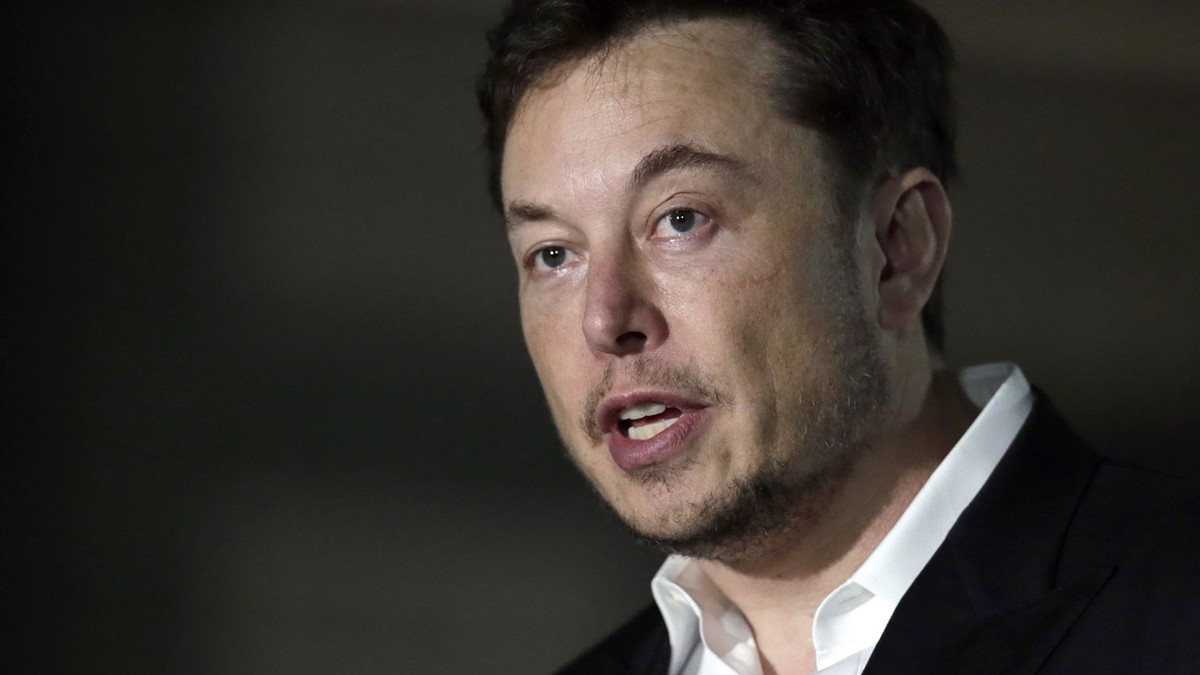
The Iranian state media said to show fragments of a downed U.S. jet in this picture said to be taken in central Iran and released on April 3, 2026. IRNA/Handout via REUTERS Online betting site Polymarket came under fire Friday for allowing users to gamble on the date that U.S. pilots downed over Iran would be rescued or recovered -- and, faced with criticism, pulled this option from their platform. The bet, which stated "U.S. confirms pilots rescued by...?" and allowed people to buy yes or no for April 3 or 4, was flagged by Rep. Seth Moulton (D-MA), himself a Marine combat veteran. "There is an ongoing search and rescue operation for a missing American service member whose plane was shot down over Iran," wrote Moulton on X. "Their safety is unknown. They could be your neighbor, a friend, a family member. And people are betting on whether or not they'll be saved. This is DISGUSTING. Quick reminder too that @DonaldJTrumpJr is an investor in this dystopian death market and may have access to intelligence that isn't public yet." In response to the post, Polymarket's account replied, "We took this market down immediately as it does not meet our integrity standards. It should not have been posted, and we are investigating how this slipped through our internal safeguards." This explanation, however, did not satisfy Moulton. "Your integrity standards are severely lacking, @Polymarket. Users are still able to place bets on the lives of our troops -- here's what your Iran tab looks like right now." He posted a screenshot of Polymarket's platform, which was full of bets like "U.S. forces enter Iran by...?" "US x Iran ceasefire by...?" and "Trump announces end of military operations against Iran by...?" Meanwhile, Business Insider's Jack Newsham pointed out, "How does it violate your integrity standards? I'm looking at the 'Market Integrity' page, and I checked the TOS, and I don't see which prohibition is relevant here." Polymarket, along with competing "prediction markets" like Kalshi, have been accused of running illegal gambling operations that skirt state laws, by pretending their gambling products are actually commodities exchanges.

Hare-cules! Giant bunny Junior weighs a colossal 21lbs
If this Easter bunny turned up to deliver your chocolate eggs, you'd be sure to know about it. Big-eared Junior weighs an impressive 21lb and, you may not be surprised to learn, is a Continental giant rabbit. He towers over his playmate Suzi, a Netherland dwarf rabbit who is just 1.5lb. In fact, she's so small that she loves to snuggle up under one of Junior's massive ears when they're on the sofa together. Owner Lyn Hobson, 66, admits that the pair are 'spoiled' and have their own room in her three-bedroom home in Hull and a sandpit outside. Those tempted to get their own bunny might want to sleep on the idea first, however. A study found that owning a rabbit is linked to a significantly higher risk of insomnia - whereas having a dog can offer a major boost to sleep quality. The research showed adults over 60 with a pet are significantly less likely to suffer from insomnia, with dog owners getting most protection partly thanks to increased physical activity during walkies. But rabbits 'are predominantly nocturnal animals requiring cage confinement and demanding care (eg, frequent cage cleaning), which may increase owners' psychological stress and correlate with poorer sleep quality'. The study of nearly 1,500 adults, carried out by researchers in China, was published in Frontiers of Veterinary Science. Junior's owner Lyn Hobson, 66, admits that the giant rabbit and his sibling are 'spoiled' and have their own room in her three-bedroom home in Hull and a sandpit outside Big-eared Junior weighs an impressive 21lb and towers over his playmate Suzi, a Netherland dwarf rabbit who is just 1.5lb They answered questions including whether they owned pets, the type of animals and how often they interacted, such as through walks or engagement at home. Pet ownership in general was 'significantly associated with a reduced risk' of insomnia - a persistent difficulty falling and staying asleep - the researchers said. 'Specifically, dog ownership and owning healthy pets were protective factors. Conversely, rabbit ownership, ownership duration of less than one year, and daily interaction exceeding two hours were associated with an increased risk of poor sleep quality.' The increased benefits for dog owners were linked to the increased physical activity and social benefits. Dog owners in the study typically spend around 45 minutes per day walking their pet. 'Walking dogs provides more social opportunities, reducing loneliness and indirectly promoting sleep,' the researchers said. 'Moreover, dog owners experience greater daytime exposure to natural light, which helps maintain healthy circadian rhythms.' The paper added: 'Rabbits are predominantly nocturnal animals requiring cage confinement and demanding care (e.g., frequent cage cleaning), which may increase owners' psychological stress and correlate with poorer sleep quality.' A total of 717 participants had one or more animals as pets, including 487 dog owners, 270 cat owners, 61 bird owners, and 70 rabbit owners. Nearly 61pc of rabbit owners suffered from insomnia, compared with 21pc of dog owners. No insomnia link was observed in the cat and bird owner group. 'For cats, calming interactions such as petting can provide emotional support and reduce stress, potentially benefiting sleep. However, cats are often most active during dawn and dusk, and their nighttime behaviors can disrupt an owner's sleep,' the study said. They said the increased insomnia risk in owners who spend two hours or more per day looking after their pet could be due to 'underlying challenges, such as behaviour issues in pets (e.g. separation anxiety) that may also cause sleep disruption at night, or owner-related anxiety and over-attachment that sustains a state of hypervigilance'. 'Furthermore, stimulating interactions close to bedtime may directly interfere with the wind-down process necessary for sleep onset,' they said. Those who had their pet less than one year may have reduced sleep quality as they 'adapt to care demands'. The study, carried out by researchers in China, was published in Frontiers of Veterinary Science (pls keep).

Prime Video's 10/10 'Bosch' Spin-Off Takes a Colossal Step Forward
Lade Omotade is a News and Feature Author at Collider with a passion for exploring the ever-evolving world of the Film & TV industry. Her work centers on covering the latest news, from casting announcements and franchise scoops to streaming updates and behind-the-scenes shifts that shape the way stories are told. Omotade approaches storytelling with both professional insight and unapologetic fandom; digging into what makes a franchise successful, spotlighting rising voices in Hollywood, and asking the questions fans are already buzzing about. Her writing reflects that mix: part industry analysis, part fan excitement, and always grounded in a love for the craft of storytelling. Following a tremendously successful seven-year run, Prime Video's Bosch came to a satisfying albeit bittersweet end on June 25, 2021. Two spin-offs soon came along -- Bosch: Legacy and Ballard -- both of which performed strongly by streaming standards. However, only one of the two remains ongoing and is already gearing fans up for its return after ending on a major cliffhanger and securing a Season 2 renewal. Based on Michael Connelly's best-selling novels, Ballard has reached audiences in more than 240 countries and territories worldwide since its premiere on July 9, 2025. The police procedural was renewed for a sophomore run on October 6, 2025, though a premiere date hasn't been announced. Nevertheless, it has taken a huge step towards its return, as production on Season 2 has officially begun, which comes shortly after several cast additions were reported. As seen on the 100% RT detective show's official X page, Maggie Q's Renée Ballard is back on the case. The post features a video of the team at a table read, offering a peek at Season 2, Episode 1, titled "Blue Window," written by Ralph Gifford. In addition to the title character -- who heads the cold case division of the LAPD, returning in Season 2, other returnees are Samira Parker (Courtney Taylor), a former officer who returns to the force at Ballard's request, and Thomas Laffont (John Carroll Lynch), a retired former police partner who returns to help Ballard run the cold case department. Related Party Down in Pawnee -- Adam Scott Comedies Collide in Today's Collider TV Quiz! Whether you're an innie or an outie, you've undoubtedly enjoyed the workplace comedies of Adam Scott. Let's all cater to this state auditor. Posts By Macklen Makhloghi When Will 'Ballard' Season 2 Premiere? Since production on Ballard Season 2 has just begun, the new episodes will most likely arrive sometime in 2027, based on the previous season's release timeline -- unless otherwise reported. In the meantime, now's the perfect time to get to know the newest cast additions, namely Rosanna Arquette, Benjamin Bratt, Ever Carradine, and Hamish Linklater. Arquette has been tapped as Jenny Ballard, the lead character's estranged mother; Bratt joined in the key recurring role of Ryan Ainsley, a former DEA Agent turned cowboy; Carradine will recur as Lauren Sousa, a devoted mother whose past involvement in an influential spiritual movement continues to affect her present; while Linklater was cast as Chris Alexander, a magnetic but mysterious figure who is described as "charismatic" and "calculating." Newsletter for Ballard fans: casting and analysis Subscribe to our newsletter for focused Ballard coverage -- deep dives into casting additions, episode breakdowns, and production developments, plus context on Bosch and related streaming dramas. Get Updates By subscribing, you agree to receive newsletter and marketing emails, and accept our Terms of Use and Privacy Policy. You can unsubscribe anytime. Ballard streams on Prime Video. Stay tuned to Collider for further updates. 8 10 Ballard Like Follow Followed Crime Drama Release Date July 9, 2025 Network Prime Video Directors Jet Wilkinson 8 Images Close Cast See All Maggie Q Detective Renée Ballard Courtney Taylor Samira Parker Where to watch Close WHERE TO WATCH Streaming Writers Michael Connelly, Brandi Nicole, Galeesa Murph, John Coveny, Julissa Castillo, Kendall Sherwood, Liz Hsiao Lan Alper, Michael Alaimo, Ralph Gifford, Thania St. John Franchise(s) Bosch Creator(s) Kendall Sherwood Powered by Expand Collapse
Musk asks SpaceX IPO banks to buy Grok AI subscriptions, NYT reports
April 3 (Reuters) - Elon Musk is requiring banks and other advisers working on SpaceX's planned IPO to buy subscriptions to Grok, his artificial intelligence chatbot, the New York Times reported on Friday, citing people familiar with the matter. Some banks have agreed to spend tens of millions of dollars a year on the chatbot and have begun integrating it into their IT systems, the report said. Morgan Stanley, Goldman Sachs, JPMorgan Chase, Bank of America and Citigroup are serving as active bookrunners, or the lead banks managing the deal, Reuters reported earlier this week. Musk and SpaceX did not respond to Reuters' requests for comment. JPMorgan Chase and Goldman Sachs declined to comment. Bank of America, Morgan Stanley and Citigroup did not immediately respond to Reuters' queries. The Starbase, Texas-headquartered rocket maker boosted its target initial public offering valuation above $2 trillion, according to a Bloomberg News report a day earlier, setting the stage for what could become the largest stock market listing on record. The company aims to raise a record $75 billion, which would dwarf previous mega-IPOs such as Saudi Aramco in 2019 and Alibaba in 2014. (Reporting by Savyata Mishra in Bengaluru; Editing by Bill Berkrot and Mark Porter)
Anthropic says Claude subscriptions will no longer cover usage on third-party tools like OpenClaw starting April 4 at 12pm PT, to better manage capacity
NEW: OpenAI's @fidjissimo is taking a leave of absence to focus on her health. From her note to employees that was just shared internally: "...For my entire time here, I've postponed medical tests and new therapies to stay completely focused on the job and not miss a single day of work. I took time off for the first time two weeks before the break for some medical tests, and it's now clear that I've pushed a little too far and I really need to try new interventions to stabilize my health."

Chaos At SFO: Huge Cargo Pellet Fire Breaks Out As Emergency Crews Scramble Amid Thick Smoke - WATCH VIDEO
A major emergency response operation commenced at San Francisco International Airport on Friday afternoon after a large fire broke out at the cargo facility. The area near South McDonnell Road produced thick black smoke, which extended throughout the Bay Area. The San Francisco Fire Department dispatched multiple units to control the fire, which destroyed large cargo containers at the northern border of the airport. The fire reached a scale that appeared to create a major disaster, yet ground crews brought it under control before it spread to nearby terminal buildings and parked planes. Cargo Fire Emergency Response The SFO operations dedicated all their resources to managing the cargo fire emergency because the incident grew more complicated. Firefighters needed to use special suppression methods because the fire started from high-density cargo pellets, which created deep heat pockets inside the containers. The airport established a strict safety corridor between active runways and the airport area, which permitted flight operations to continue without major disruptions. The containment strategy enabled the main aviation system to function while investigators waited to examine the site. The team focused on locating all the materials inside the pellets because they needed to identify which substances could not be used as dangerous chemical accelerants. Transit Disruptions and Safety The initial consequences of the incident brought about transit interruptions together with disruptions to existing passenger safety procedures, which began when passengers arrived and departed. The authorities decided to close the AirTrain Blue Line because they needed to create space for emergency vehicles while protecting public safety. The rental car hub, which connects all terminals together with the BART station, became completely inaccessible because the system suspended operations, which required shuttle buses to take over. The ground staff handled passenger flow from diverted flights because they needed to explain to travelers that the fire did not reach passenger gates but required additional time for them to travel between points. The airfield incident, which presented high risks, ended without any injuries to staff or travelers because effective safety measures prevented any harm.