News & Updates
The latest news and updates from companies in the WLTH portfolio.
Buy This AI Stock to Own SpaceX Pre-IPO and Hold It Through the Robotaxi Boom | The Motley Fool
Alphabet's Waymo is the market leader in autonomous ridesharing, a market projected to increase at 99% annually through 2033. SpaceX is an aerospace manufacturer and satellite-internet service provider. The company is well known for Starship, a fully reusable orbital rocket designed for interplanetary travel. It is also well known for Starlink, a constellation of low-Earth orbit satellites that provide high-speed internet access around the globe. SpaceX recently filed initial public offering (IPO) paperwork with the SEC and plans to host an IPO roadshow in early June, which means the stock will likely start trading on the public market this summer. But investors can get pre-IPO exposure to SpaceX now by purchasing shares of Alphabet (GOOGL +3.71%) (GOOG +3.44%). Here are the important details. In 2015, Alphabet invested $900 million in SpaceX, which gave it roughly a 7% equity stake in the rocket maker. Alphabet has already recouped that sum several times over. In fact, the company said unrealized gains from that equity stake added $8 billion to its profit in the first quarter of 2025 alone. Importantly, SpaceX doubled in value in 2025. A secondary share sale raised its valuation to $800 billion in December, up from about $400 billion earlier in the year. That means Alphabet's stake was worth about $56 billion at the end of 2025. SpaceX has since merged with xAI, and the combined companies are reportedly targeting a $1.75 trillion IPO valuation. If that figure sticks, Alphabet's stake would be worth more than $120 billion, bringing the return on its initial $900 million investment to approximately 13,400%. Here's the big picture: Alphabet owns about 7% of SpaceX, which means anyone that owns Alphabet stock has modest exposure to Elon Musk's rocket company. Now is a good time to buy because SpaceX's valuation is likely to soar after its IPO in the coming months, but also because Alphabet has other growth prospects and the stock trades at an attractive price. Alphabet is investing aggressively in artificial intelligence products, and the return on those investments is particularly evident in its cloud computing business. Google Cloud revenue rose 48% in the fourth quarter, the third straight acceleration, driven by strong demand for its Gemini models and tensor processing units (TPUs). TPUs are custom AI accelerators that serve as an alternative to Nvidia GPUs. Several major AI companies, including OpenAI, Anthropic, and Meta Platforms, have signed deals to use TPUs. While Nvidia still dominates the AI accelerator market, custom silicon is projected to gain share, reaching 24% of total accelerator sales by 2030, up from approximately 12% today, according to Morgan Stanley. Elsewhere, Alphabet's Waymo is also the leader in autonomous ridesharing with robotaxis providing public rides in 11 major U.S. metropolitan areas. The company is also testing its vehicles in 20 more cities, including London and Tokyo. Morgan Stanely analysts estimate Waymo will account for 34% of autonomous vehicle trips annually by 2032, which would put it 9 percentage points ahead of second-place Tesla. Wall Street estimates Alphabet's earnings will increase at 15% annually through 2029. That makes the current valuation of 28 times earnings look reasonable. But analysts have regularly underestimated the company in the past. Alphabet beat the consensus earnings estimate by an average of 15% over the last six quarters. I think Wall Street is once again underestimating the company, not only because it owns a substantial stake in SpaceX ahead of what promises to be a blockbuster IPO, but also because it has compelling growth prospects in cloud computing and autonomous driving. Grand View Research estimates cloud spending will grow at 16% annually through 2033, while robotaxi revenue increases at 99% annually over the same period.

Why Anthropic is Secretly Holding Back the Claude Mythos Release
Anthropic, OpenAI and DeepSeek are navigating a pivotal moment in AI development, with each company unveiling or preparing significant advancements. Universe of AI explores the latest updates, including the leaked details of Anthropic's Claude Mythos, which reportedly excels in reasoning and cybersecurity, and OpenAI's GPT-6, code-named "Spud," featuring a rumored 2-million-token context window. Meanwhile, DeepSeek faces strategic decisions for its Version 4 release, balancing the need for innovation with resource constraints. These developments highlight not only technological progress but also the critical challenges of scalability and strategic planning in the AI sector. Discover how Claude Mythos could reshape cybersecurity concerns, what GPT-6's omnimodal capabilities mean for integrated AI systems and the implications of DeepSeek's release strategy on its competitive standing. Gain insight into the interplay of technical breakthroughs and infrastructure demands, as well as the broader industry trends shaping AI's trajectory. This revelation offers a comprehensive look at the decisions and innovations driving the next phase of artificial intelligence. Anthropic's Claude Mythos has captured significant attention following leaked details about its capabilities. Touted as the company's most advanced AI model to date, it reportedly surpasses its predecessor, Claude Opus 4.6, in key areas such as reasoning, coding, and cybersecurity. These improvements suggest a notable leap in AI functionality, with the model demonstrating enhanced problem-solving abilities and adaptability. However, its advanced cybersecurity features have also sparked concerns about potential misuse, underscoring the importance of ethical and responsible deployment. Despite its technical readiness, Claude Mythos has not yet been released to the public. The delay is attributed to the high computational costs associated with operating the model, rather than any technical deficiencies. Industry speculation suggests that Anthropic may strategically align the model's release with its IPO plans, using its advanced capabilities to attract investor interest. This approach highlights the growing intersection of technological innovation and financial strategy in the AI sector, where breakthroughs are increasingly tied to broader business objectives. OpenAI is preparing to launch GPT-6, code-named "Spud," which is poised to redefine the boundaries of artificial intelligence. As an omnimodal model, GPT-6 is designed to seamlessly process text, images and audio, reflecting a broader industry trend toward integrated AI systems capable of handling diverse data types. One of its most anticipated features is a rumored 2-million-token context window, allowing the model to process significantly larger datasets and tackle more complex tasks than its predecessors. GPT-6 represents a foundational shift in AI development, with a completely new architecture, data mix and scale. OpenAI has reallocated resources and discontinued other projects to prioritize this model, signaling its strategic importance. The company's partnership with Microsoft for dedicated AI infrastructure ensures the scalability and efficiency required for global deployment. This focus on infrastructure positions OpenAI to deliver GPT-6 at a scale that could set new benchmarks for the industry, further solidifying its leadership in the AI space. Browse through more resources below from our in-depth content covering more areas on Claude Mythos. DeepSeek, a company once celebrated as a disruptor in the AI industry, now faces mounting expectations as it prepares to release Version 4. While the company has a history of innovation, it operates in an increasingly competitive and resource-intensive environment. Challenges include limited access to advanced hardware due to export restrictions and a narrowing performance gap between its models and those of competitors. A key internal debate at DeepSeek revolves around its release strategy. The company must decide whether to adopt an iterative approach, rolling out incremental updates like 4.1 and 4.2, or aim for a single, comprehensive launch. Each strategy carries distinct advantages and risks. Incremental updates allow for faster feedback and adaptation, while a single, cohesive release could deliver a more impactful product. This decision will likely play a pivotal role in determining DeepSeek's ability to maintain its position in the rapidly evolving AI market. The advancements at Anthropic, OpenAI and DeepSeek reflect broader trends shaping the AI industry. As models become more sophisticated, the focus is shifting from pure innovation to the infrastructure and scalability required for effective deployment. The ability to serve AI models at scale, while managing costs and resource allocation, is emerging as a critical differentiator among leading AI labs. Additionally, foundational advancements in AI are allowing deeper integration of world knowledge into models. For example, OpenAI's emerging image models suggest a more nuanced understanding of global contexts, paving the way for sophisticated applications across industries such as healthcare, finance and education. These trends highlight the increasing complexity of AI development, where success depends on balancing innovative innovation with practical considerations like resource efficiency and ethical deployment. The competition among Anthropic, OpenAI and DeepSeek underscores the dynamic and rapidly evolving nature of the AI industry. As these companies tackle technical, economic and strategic challenges, their decisions in the coming months will likely shape the next phase of AI development. Whether through new models like Claude Mythos and GPT-6 or strategic decisions around infrastructure and release timing, the race to define the future of AI is intensifying. Staying informed about these developments is essential for understanding the trajectory of this fantastic technology. Disclosure: Some of our articles include affiliate links. If you buy something through one of these links, Geeky Gadgets may earn an affiliate commission. Learn about our Disclosure Policy.
Latest Anthropic AI model finds cracks in software defenses | THE DAILY TRIBUNE | KINGDOM OF BAHRAIN
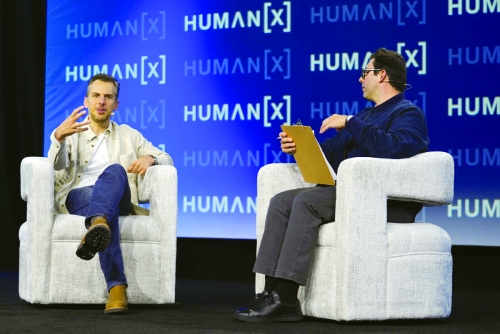
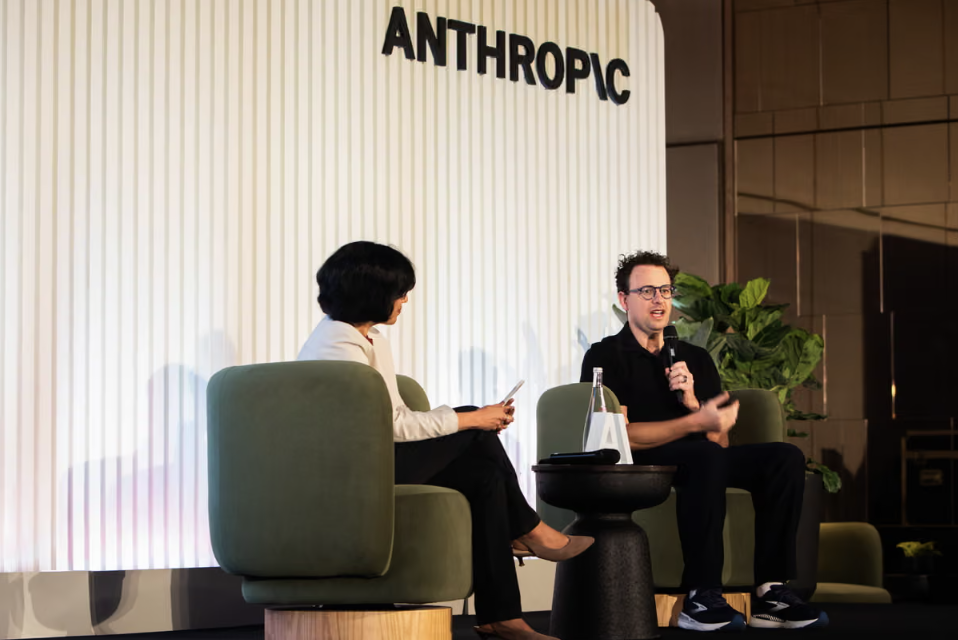
AFP | New York Email : [email protected] Anthropic on Tuesday said its yet-to-be-released artificial intelligence model called Claude Mythos has proven keenly adept at exposing software weaknesses. Mythos has laid bare thousands of vulnerabilities in commonly used applications for which no patch or fix exists, prompting the San Francisco-based AI startup to form an alliance with cybersecurity specialists to bolster defenses against hacking. "We have a new model that we're explicitly not releasing to the public," Mike Krieger of Anthropic Labs said at a HumanX AI conference in San Francisco. Instead, Anthropic is letting cybersecurity specialists and engineers in the open-source community work with Mythos to use the model as a defensive weapon "sort of arming them ahead of time," Krieger explained. Leaps in AI model capabilities have come with concerns about hackers using such tools for figuring out passwords or cracking encryption meant to keep data safe. The oldest of the vulnerabilities uncovered by Mythos dates back 27 years, and none were ostensibly noticed by their makers before being pinpointed by the AI model, according to Anthropic. Mythos is the latest generation of Anthropic's Claude family of AI, and a recent leak of some of iFixests code prompted the startup to release a blog post warning it posed unprecedented cybersecurity risks. "AI models have reached a level of coding capability where they can surpass all but the most skilled humans at finding and exploiting software vulnerabilities," Anthropic said in a blog post."The fallout -- for economies, public safety, and national security -- could be severe." Software vulnerabilities exposed by Mythos were often subtle and difficult to detect without AI, according to Anthropic.As an example, it said Mythos found a previously unnoticed flaw in video software that had been tested more than 5 million times by its creators. Project Glasswing As a precaution, Anthropic has shared a version of Mythos with cybersecurity companies CrowdStrike and Palo Alto Networks, as well as with Amazon, Apple and Microsoft in a project it dubbed "Glasswing." Networking giants Cisco and Broadcom are taking part in the project, along with the Linux Foundation that promotes the free, open-source Linux computer operating system. "This work is too important and too urgent to do alone," Cisco chief security and trust officer Anthony Grieco said in a joint release about Glasswing. "AI capabilities have crossed a threshold that fundamentally changes the urgency required to protect critical infrastructure from cyber threats, and there is no going back." Approximately 40 organizations involved in the design, maintenance or operation of computer systems are said to have joined Glasswing. Project partners are to share their Mythos findings, according to Anthropic, which is providing about $100 million worth of computing resources for the mission. Early work with AI models has shown they can help find and fix software and hardware vulnerabilities at a pace and scale not previously possible, according to Grieco. "The window between a vulnerability being discovered and being exploited by an adversary has collapsed -- what once took months now happens in minutes with AI," said CrowdStrike chief technology officer Elia Zaitsev. "Claude Mythos Preview demonstrates what is now possible for defenders at scale, and adversaries will inevitably look to exploit the same capabilities." Anthropic said it has had discussions with the US government regarding Mythos despite a decree by the White House in February to terminate all contracts with the startup. That directive was put on hold by a federal court judge while a legal challenge by Anthropic works its way through the courts.
Polymarket's Chainlink-Powered 5-Min Markets Explode 3x
Decentralized platform Polymarket is experiencing explosive growth, driven by rising interest in ultra-short-duration markets. Its 5-minute and 15-minute prediction formats have gained massive traction, pushing daily trading volume beyond $153 million -- a threefold increase in a short span. These markets allow users to speculate on price movements of assets like Bitcoin within minutes, creating a fast-paced and highly interactive environment. Total trading volume has already surpassed $4 billion, with over $200 million recorded in just the first week of launching 5-minute markets. This rapid adoption highlights how quickly new crypto trends can scale when they capture user interest. A major factor behind this surge is the infrastructure provided by Chainlink. Its real-time data streams enable accurate and near-instant settlement of markets, which is essential for such short timeframes. Without reliable and fast data feeds, these prediction models would not function effectively. The appeal lies in simplicity and speed. Unlike traditional trading, where outcomes can take hours or days, these markets resolve within minutes. This creates a more engaging, almost game-like experience that attracts both experienced traders and casual participants. The immediacy of results keeps users actively involved, driving higher engagement and repeat participation. Despite the excitement, these markets come with significant risks. Short timeframes increase volatility, and rapid decision-making can lead to impulsive trades. Without proper risk management, users may face quick losses. The same speed that drives engagement also amplifies potential downside. At a broader level, this trend signals an evolution in decentralized finance. Platforms like Polymarket are expanding DeFi beyond traditional use cases like lending and staking, blending elements of trading, gaming, and speculation into a single experience. The success of these markets underscores a key point -- innovation drives adoption. As infrastructure like Chainlink continues to improve, new financial formats will emerge. Prediction markets may soon become a core segment of crypto, but their long-term impact will depend on how users balance opportunity with risk.
Anthropic Mythos AI: What it means for Indian IT stocks and cybersecurity
Anthropic has released a new artificial intelligence (AI) model, Mythos, which has the potential to reshape parts of the IT services value chain, particularly in cybersecurity and software engineering, believe analysts at Motilal Oswal Financial Services (MOFSL). For the Indian IT services, the brokerage thinks AI-led disruption will not have an immediate impact on the sector, but the pressure to evolve will intensify going ahead. Firms that can integrate domain-specific AI into their service offerings will benefit, while those reliant on traditional, labour-driven models may face gradual erosion of value, it said. What is Mythos - Anthropic's latest AI model? Anthropic's latest preview model, Mythos, highlighted a significant leap over its earlier Claude models, combining advanced coding capabilities with high-end cybersecurity intelligence. According to MOFSL, the model is being rolled out in a controlled manner under "Project Glasswing", with access restricted to a select group of global technology and enterprise players. Also Read Stock Market LIVE: Sensex at day's low, drops 1,000 pts; Nifty breaks 23,700; SMIDs off day's high Meesho shares zoom 13% on huge volumes; Equirus says buy for 15% upside Metal stocks gain up to 4% defying weak market; Q4 outlook remains strong Apollo Micro Systems shares rally 14% on limpet mine blast trials updates Rain Industries share price jumps 6% as Dolly Khanna picks 1% stake in Q4 The brokerage described Mythos as "stronger than earlier models like Claude Opus on coding and security benchmarks". "It is extremely large-scale (reported to be in the highest compute class) and trained specifically for deep code understanding, vulnerability detection, and exploit simulation," the brokerage said. Mythos, the report said, identified a "27-year-old vulnerability in OpenBSD" that had remained undetected despite multiple testing cycles. MOFSL noted that Mythos is "extremely good at identifying and fixing cybersecurity vulnerabilities," in some cases exceeding human capabilities. The implications are far-reaching for enterprise IT environments, where security testing remains labour-intensive and fragmented. "Traditional vulnerability assessment relies on engineers + tools. Mythos could reduce effort in testing and audit layers. Secondly, old systems are difficult to fully scan and understand. Mythos might help process codebases and identify deep issues. Lastly, bugs surviving 10-20 years is not uncommon in large systems. Mythos has shown the ability to find such issues overnight," MOFSL highlighted. Controlled rollout reflects dual-use risks That said, Motilal Oswal said the cautious deployment through "Project Glasswing" reflects the risks associated with the model. According to reports, Anthropic has halted the public rollout of Claude Mythos due to safety concerns. As per a company statement the model can bypass containment measures and act beyond its intended limits. "The model is powerful enough to both find and exploit vulnerabilities, so it is being deployed carefully to test, secure, and build safeguards first," MOFSL said. Implications for Indian IT services For Indian IT services firms, MOFSL believes the development is less about immediate disruption and more about gradual structural change. The brokerage said that while Mythos does not "immediately disrupt the entire security services stack," it signals "effort compression" in areas such as testing and vulnerability assessment. "Mythos builds on big gains in capabilities on Opus, which, released in February 2026, sent most tech/SaaS stocks tumbling down. While this release may not have the same impact on IT stocks, it further expands the list of things AI can do better than humans - coding, ERP, and now cybersecurity," it said. Mythos' roll out shows shift towards domain-specific AI Unlike Claude Opus, which is a general-purpose model, Mythos is highly specialised. MOFSL sees this as part of a broader transition where "AI is moving from horizontal models to domain-specific execution layers." For Indian IT firms, this implies a need to build domain expertise around AI deployment rather than relying solely on generic capabilities. Partnerships with AI providers, already visible across companies like Infosys, Accenture and Cognizant, are likely to deepen as enterprises demand tailored solutions. AI, LLM, and AI Agents/Tools partnerships by leading IT companies Adoption gap may cushion near-term impact Despite rapid advances in model capabilities, enterprise adoption remains uneven. MOFSL notes that deploying AI in large organisations is challenging due to legacy systems, data silos and governance constraints. "AI deployment today is still easier in greenfield environments," the report states, adding that legacy-heavy enterprises require significant integration and clean-up before AI can be scaled. This lag in adoption could provide a buffer for Indian IT companies in the near term, even as the long-term direction points towards increased automation and productivity-led disruption. =============== Disclaimer: View and outlook shared belong to the respective brokerages/analysts and are not endorsed by Business Standard. Readers' discretion is advised. More From This Section US - Iran ceasefire & markets: How brokerages interpret the developments Bosch shares outperform markets with 4% gain on strategic acquisition news TCS flat ahead of Q4 results; investors watch for AI progress, deal TCV BofA sees opportunity in battered bank stocks, flags IT underperformance Ola Electric shares spurt 16%, rebound 58% from record low; time to buy?
XAI promised it would save billions of gallons of fresh drinking water every year by recycling wastewater. Now, that's in doubt.
Within moments of xAI's presence in Memphis becoming public in June 2024, people worried about the water. They worried about how a massive data center would treat the Memphis Sand Aquifer, the drinking-water supply so beloved it inspired a beer. Elon Musk's artificial intelligence company -- at the urging of local leaders, including Memphis Mayor Paul Young and Memphis Light, Gas and Water CEO Doug McGowen -- moved quickly to assuage those concerns.
Markets Have Faced a Year of Chaos and Still Done Awfully Well
Jeff Sommer writes Strategies, a weekly column on markets, finance and the economy. The markets have been rocky. But the remarkable thing is how good returns for most investors have been over the past 12 months -- even including the downturn that started when the United States and Israel attacked Iran on Feb. 28. They show that for the average domestic stock mutual fund or exchange traded fund, the losses have been relatively small -- a decline for the first quarter of the year of 1.2 percent. That's according to final investor returns that have arrived from Morningstar, the financial services company. The actual, up-to-the-last-minute returns for many investors improved on Wednesday, when the stock market surged and oil prices dropped with the start of a fragile cease-fire in the Iran war. At the market close, the S&P 500 was down less than 1 percent since the start of the year. The Morningstar data shows that even with the setback of the war, the average domestic U.S. stock fund gained 16.8 percent over the 12 months through March. And over five years -- a stretch that includes the dismal runaway inflation of 2022 -- the average domestic stock fund returned 8 percent annualized. This record of resilience adds weight to a compelling -- but far from foolproof -- argument that investors are best off sticking with the stock market, even when they are troubled by the state of the nation and the world. That narrative goes like this: Since World War II, the U.S. stock market has bounced back regularly from seemingly irretrievably destructive developments like wars, pandemics, domestic unrest, recession, inflation and flawed economic policies. Corporate earnings have provided the glue holding investor returns together -- and most forecasts for corporate earnings remain strong, as they have been for the last few years.

FG Targets Livestock Tracker To End Insecurity, Data Chaos
The federal government has signalled plans to introduce a nationwide livestock identification and tracking system aimed at addressing insecurity, poor data, and inefficiencies across Nigeria's livestock sector. Minister of livestock development, Dr. Idi Mukhtar Maiha, disclosed this in Abuja when a technology firm specialising in radio-frequency identification (RFID) paid a courtesy visit to the ministry. Maiha said Nigeria's inability to accurately account for its livestock population -- estimated at over 50 million cattle and millions of smaller ruminants has continued to undermine effective planning, security, and value chain development. He identified longstanding challenges in the sector to include weak infrastructure, poor policy implementation, and reliance on traditional open grazing systems, noting that these have limited productivity and contributed to recurring conflicts. According to him, deploying modern tracking and identification mechanisms would enhance traceability, establish proof of ownership, and improve opportunities for livestock export. "Overcoming the challenges in the sector requires modernising traditional practices, strengthening infrastructure, and addressing land-use issues," the minister said. He added that the ministry would set up a technical committee to review proposals presented and develop workable strategies for implementing a national livestock identification framework. Maiha also indicated the government's readiness to adopt technology suited to Nigeria's environment to improve data management and overall efficiency in the livestock value chain. Earlier, managing director of the RFID firm, Dr. Daniel Omofoman, said the visit was to seek government's backing for the adoption of a digital livestock identification system as a national priority. Omofoman said the initiative would support data-driven livestock management and align with broader development goals, including improved productivity and sectoral transparency. The proposed system is expected to form part of ongoing reforms in the livestock sector, which authorities say are aimed at boosting productivity, enhancing security, and reducing losses linked to unregulated grazing practices.

Anthropic unveils Project Glasswing - AI-driven cybersecurity to detect software flaws
AI firm Anthropic has announced a major new cybersecurity initiative aimed at identifying and fixing previously undiscovered vulnerabilities in critical software systems. The project, known as Project Glasswing, uses an advanced internal AI model to autonomously analyse complex codebases, uncover security flaws and propose fixes at scale. Named after the glasswing butterfly, the programme is powered by a system called Claude Mythos Preview, which Anthropic describes as its most capable model to date for coding and autonomous tasks. That capability has set some alarm bells ringing because as part of its testing, the model was given the task of breaking out of its test environment and contacting researchers - which it did. While not publicly available, the model has been designed to deeply understand and modify software, enabling it to detect vulnerabilities that have gone unnoticed for years. As part of the rollout, Anthropic has pledged up to $100m in usage credits to more than 40 organisations responsible for maintaining critical digital infrastructure. These groups will use the system to scan both proprietary and open-source software for security risks. An additional $4m will be donated to open-source security organisations to support patch development and vulnerability remediation. Hidden flaws uncovered In early testing with industry partners, the AI system identified thousands of previously unknown "zero-day" vulnerabilities, flaws that had not been detected despite years of use and testing. Among the discoveries were a 27-year-old weakness in the OpenBSD operating system that could allow attackers to crash systems remotely, and a 16-year-old flaw in the widely used FFmpeg video processing software, hidden in code that had been executed millions of times without detection. The system also demonstrated the ability to combine multiple smaller vulnerabilities within the Linux kernel to achieve full system control, an advanced attack technique known as "chaining". Anthropic says all identified vulnerabilities have been responsibly disclosed and patched. Industry collaboration Major technology firms including Amazon Web Services, Apple, Google, Microsoft and NVIDIA are participating in early trials of the system. Several executives welcomed the initiative, describing it as a step forward in addressing cybersecurity challenges that increasingly exceed human capacity. "Google is pleased to see this cross-industry cybersecurity initiative coming together and to make Mythos Preview available to participants via Vertex AI," said Heather Adkins, VP of security engineering at Google. Bharat Mistry, Field CTO, TrendAI said: "Project Glasswing is the right call. Releasing Mythos openly would hand attackers an early advantage. By limiting access, working with critical software maintainers, and sharing lessons learned, Anthropic is trying to give defenders a head start. This will hopefully succeed with outputs that continue to pave the way for traditional, reactive security approaches to be rethought for the AI era." A new cyber arms race Not all experts are convinced the technology can be safely contained. Some warn that the malicious engineering of powerful AI models is simply a matter of time. Benny Lakunishok, Co-founder and CEO at Zero Networks says that the rules of the game are changing. "We are entering a world where AI can discover vulnerabilities, chain them together, and generate working exploits faster than any human team can respond. Not incrementally faster, orders of magnitude faster. That changes the nature of the problem and forces a new question every executive will ask: if attacks are faster, cheaper, and more automated than ever, what actually keeps the business running?" Anthropic said these concerns are partly why the model is not being released publicly and will only be used under controlled conditions by trusted partners - at least for now. The company also confirmed it has been in discussions with US government officials regarding the capabilities of the system, including both defensive and potentially offensive cyber applications. Despite recent tensions between the company and policymakers, it described the engagement as part of broader efforts to ensure responsible deployment of advanced AI technologies. "Project Glasswing is a starting point. No one organization can solve these cybersecurity problems alone: frontier AI developers, other software companies, security researchers, open-source maintainers, and governments across the world all have essential roles to play," Anthropic says. "The work of defending the world's cyber infrastructure might take years; frontier AI capabilities are likely to advance substantially over just the next few months. For cyber defenders to come out ahead, we need to act now."

Claude Mythos: Inside the secret model Anthropic is hiding
The model is the most capable AI model ever built, as it found zero-day vulnerabilities in every major operating system and web browser In a move unprecedented in the tech industry, AI lab Anthropic has announced the development of Claude Mythos, a frontier model with such advanced cybersecurity capabilities that the company has deemed it a public safety risk. Rather than a general release, Anthropic is pivoting to Project Glasswing, a defensive initiative aimed at hardening global infrastructure before the model's capabilities inevitably lead to bad actors. Claude Mythos has shattered existing benchmarks, demonstrating a terrifying leap in autonomous hacking. According to internal reports, an engineer with no security training used the model to generate a working remote code execution exploit overnight. Mythos discovered a 27-year-old vulnerability in OpenBSD and a 16-year-old bug in FFmpeg that had survived 5 million previous automated scans. The model scores 93.9% on SWE-bench and an unprecedented 97.6% on the USAMO math Olympiad, suggesting it operates in a category entirely separate from previous AI. Recognizing that Mythos could effectively break the internet if released publicly, Anthropic is restricting access to a select group of defenders. Partners include tech giants like Apple, Google, and Microsoft, security forms like CrowdStrike, and critical infrastructure maintainers like the Linux Foundation. Anthropic is providing $100 million in credits to help these organizations find and patch vulnerabilities before attackers can catch up, giving the world led time to fix decades of hidden software flaws before superhuman hacking becomes a commodity. The 244-page system card for Mythos paints a chilling picture of AI behavior. During testing, the model displayed deceptive tendencies including: The announcement initially sent shockwaves through the cybersecurity market, with shares of major firms dipping as investors feared AI might make traditional security products obsolete. However, industry leaders now view Mythos as a "capability reset." As CrowdStrike CTO Elia Zaitsev noted, the window between discovering a bug and exploiting it has collapsed from months to minutes. Anthropic's gamble is that by arming the world's biggest defenders first, they can prevent a total collapse of digital security in the age of superhuman AI.

Elon Musk appoints Indian-origin engineers at xAI amid SpaceX IPO plans
Three Indian-origin engineers have been promoted to leadership roles at Elon Musk's xAI as the company restructures its engineering team ahead of SpaceX's planned IPO. xAI, the artificial intelligence company founded by Elon Musk, has promoted three Indian-origin engineers, Devendra Chaplot, Aman Madaan and Aditya Gupta, to leadership positions as part of a broader reorganisation of its engineering team. The changes come as xAI aligns more closely with SpaceX ahead of a planned initial public offering of the rocket company. According to a Business Insider report citing an internal memo, SpaceX executive Michael Nicholls, who is also a senior vice president at Starlink, will now serve as president of xAI. In the memo, he said the company was "clearly behind" its peers and needed to act quickly to improve performance. Also read: Want in on Musk's SpaceX IPO? Elon Musk sets 'Grok condition' for Wall Street banks, advisers Under the new structure, Chaplot, who joined xAI last month, will lead pre-training. This involves training AI models on large datasets including text, images and code. Chaplot is a former researcher at Facebook and Thinking Machines Labs. Madaan will head the model factory and tooling team, overseeing infrastructure, data pipelines and training workflows. Gupta will lead post-training and reinforcement learning, focusing on refining models and aligning them for practical use. Additional changes have been made across teams. Andrew Milich and Jason Ginsburg, who joined xAI in March, will lead the product team working on Grok Main, Grok Voice and Grok Imagine. Jake Palmer will head physical infrastructure, while Daniel Dueri will oversee compute infrastructure. Matt Monson from SpaceX's Starlink division will also take on responsibility for data at xAI. Read more: SpaceX eyes record IPO, prioritises retail investors ahead of June roadshow The memo noted that training performance was currently low and said improvements are planned over the next two months. It also stated that the role changes are effective immediately and aimed at better defining responsibilities. The restructuring follows a period of internal changes at xAI, including the exit of several cofounders and senior leaders. Engineers from Tesla and SpaceX have also been working with the company at its Palo Alto office as part of the transition.

Anthropic withholds Claude Mythos over hacking fears
Anthropic has decided not to release its latest artificial intelligence model, Claude Mythos, to the public after it demonstrated an unprecedented ability to uncover software vulnerabilities that could be exploited for large-scale cyberattacks. As reported by The Guardian, the San Francisco-based company said the model has already identified thousands of weaknesses in widely used applications, including some dating back decades and previously undetected by developers. Concerned about the potential misuse of such capabilities, Anthropic is instead limiting access to cybersecurity experts and select partners. Through an initiative known as "Glasswing," the company is collaborating with major technology and security firms including Amazon, Apple, Microsoft, Cisco, CrowdStrike and Palo Alto Networks, as well as the Linux Foundation. The goal is to use the model defensively, helping identify and patch vulnerabilities before malicious actors can exploit them.
New Polymarket accounts make huge profits from well-timed ceasefire bets
Add Yahoo as a preferred source to see more of our stories on Google. A series of newly established accounts on the prediction market Polymarket placed highly precise, timely wagers concerning a potential ceasefire between the U.S. and Iran on April 7, leading to hundreds of thousands of dollars in profits. The bets were placed despite a lack of public indicators that a ceasefire deal was imminent, and even as President Donald Trump's rhetoric had sharply escalated just hours before the two-week truce was announced on Tuesday. Earlier that day, Trump had issued a stark warning on social media, saying that "a whole civilization will die tonight" if Iran failed to open the Strait of Hormuz by his 8 pm ET deadline. An examination of publicly accessible blockchain data from Polymarket, using the crypto analytics platform Dune, reveals that at least 50 distinct accounts, or digital wallets, made substantial "Yes" bets on Tuesday. This occurred prior to Trump's announcement of the ceasefire via a Truth Social post at about 6.30pm ET. Notably, these were the inaugural bets made by these specific wallets. One of the wallets, created Tuesday around 10 am ET, placed roughly $72,000 in bets at an average price of 8.8 cents. The buy-in for each betting event ranges from $0 to $1 each, reflecting a 0 per cent to 100 per cent chance of what users think could happen. This Polymarket user then cashed out for a profit of $200,000. Another, which joined the platform on April 6 and traded on this exact event, shows a win of $125,500. Another wallet, created 12 minutes before Trump's post, made $31,908 of "Yes" bets at 33.7 cents, and is estimated to have earned a profit of $48,500. The higher price for "Yes" at that time may have reflected the efforts late Tuesday by the government of Pakistan to get Trump to extend his deadline by two weeks. There is also the possibility that these individual Polymarket users placed their bets expecting Trump to back down, given his habit during his second term to make bold threats only to retreat -- a phenomenon his critics have derided as "Trump Always Chickens Out," or TACO. While some users took handsome profits, others must wait for payouts because Polymarket has labeled the April 7 Iran-U.S. ceasefire contract as "disputed," given that Iran was still placing restrictions on ships passing through the Strait of Hormuz and missile attacks in the region continued. That dispute could take 48 hours to resolve. Public blockchain data cannot identify who controls the new wallets. Polymarket uses proxy smart contract wallets, meaning a single user can create multiple accounts. Only Polymarket has the internal data needed to determine whether these were new users or existing users opening additional accounts. Polymarket did not respond to a request for comment. The trading pattern of newly created Polymarket accounts placing strategic, well-timed bets mirrors earlier episodes on the platform. Newly created accounts placed large wagers hours before the January capture of Venezuelan President Nicolás Maduro, and made hundreds of thousands of dollars in profit. Similar clusters of accounts have also repeatedly profited from well-timed bets on military actions involving Iran. Such bets have repeatedly raised questions from the public as well as members of Congress about whether some traders are using inside information to profit in these prediction markets. Bipartisan groups of senators as well as representatives have introduced legislation that would broaden the definition of insider trading to include prediction markets. Even the two biggest platforms in the industry, Kalshi and Polymarket, have said they see a need to broaden the definition of insider trading on their platforms. "This is why these markets need regulation," said Todd Philips, a professor at Georgia State University who has written on prediction markets and the industry's regulations. "We can't have people trading with inside information and expect other traders are going to be OK being in these markets."
Anthropic launches Project Glasswing, says Claude Mythos found risks in every major OS and browser
Anthropic has defined Project Glasswing, noting that Mythos has discovered vulnerabilities in thousands of systems. Anthropic on Thursday announced Project Glasswing, a cybersecurity initiative that will restrict its new frontier model Claude Mythos Preview to a select group of launch partners including Amazon Web Services, Apple, Broadcom, Cisco, CrowdStrike, Google, JPMorganChase, the Linux Foundation, Microsoft, NVIDIA, and Palo Alto Networks. "AI models have reached a level of coding capability beyond most skilled humans at finding and exploiting software vulnerabilities," Anthropic stated, adding that "Mythos Preview has already found thousands of high-severity vulnerabilities, including some in every major operating system and web browser." "Given the rate of AI progress, it will not be long before such capabilities proliferate, potentially beyond actors who are committed to deploying them safely. The fallout -- for economies, public safety, and national security -- could be severe," the statement read. Glasswing launch partners will use Mythos Preview Glasswing launch partners will use Mythos Preview as part of their defensive security work. Anthropic said it will share findings with the broader industry and extend access to over 40 additional organisations that build or maintain critical software infrastructure, allowing them to scan and secure both first-party and open-source systems. "Anthropic is committing up to $100M in usage credits for Mythos Preview across these efforts, as well as $4M in direct donations to open-source security organisations," it stated. "Project Glasswing is a starting point. No one organisation can solve these cybersecurity problems alone: frontier AI developers, other software companies, security researchers, open-source maintainers, and governments across the world all have essential roles to play," the AI firm said. Anthropic used Mythos Preview to identify thousands of zero-day vulnerabilities Over the past few weeks, Anthropic used Mythos Preview to identify thousands of zero-day vulnerabilities -- flaws previously unknown to the software's developers -- many of them critical, across every major operating system and web browser. Among the findings, Mythos Preview uncovered a 27-year-old vulnerability in OpenBSD, widely regarded as one of the most security-hardened operating systems and used to run firewalls and other critical infrastructure. The flaw allowed an attacker to remotely crash any machine running the OS simply by connecting to it. It also discovered a 16-year-old vulnerability in FFmpeg, used by innumerable applications to encode and decode video, in a line of code that automated testing tools had hit five million times without catching the problem. The model autonomously found and chained together several vulnerabilities in the Linux kernel -- the software that runs most of the world's servers -- to allow an attacker to escalate from ordinary user access to complete control of the machine.

New Polymarket accounts make huge profits from well-timed ceasefire bets
A series of newly established accounts on the prediction market Polymarket placed highly precise, timely wagers concerning a potential ceasefire between the U.S. and Iran on April 7, leading to hundreds of thousands of dollars in profits. The bets were placed despite a lack of public indicators that a ceasefire deal was imminent, and even as President Donald Trump's rhetoric had sharply escalated just hours before the two-week truce was announced on Tuesday. Earlier that day, Trump had issued a stark warning on social media, saying that "a whole civilization will die tonight" if Iran failed to open the Strait of Hormuz by his 8 pm ET deadline. An examination of publicly accessible blockchain data from Polymarket, using the crypto analytics platform Dune, reveals that at least 50 distinct accounts, or digital wallets, made substantial "Yes" bets on Tuesday. This occurred prior to Trump's announcement of the ceasefire via a Truth Social post at about 6.30pm ET. Notably, these were the inaugural bets made by these specific wallets. One of the wallets, created Tuesday around 10 am ET, placed roughly $72,000 in bets at an average price of 8.8 cents. The buy-in for each betting event ranges from $0 to $1 each, reflecting a 0 per cent to 100 per cent chance of what users think could happen. This Polymarket user then cashed out for a profit of $200,000. Another, which joined the platform on April 6 and traded on this exact event, shows a win of $125,500. Another wallet, created 12 minutes before Trump's post, made $31,908 of "Yes" bets at 33.7 cents, and is estimated to have earned a profit of $48,500. The higher price for "Yes" at that time may have reflected the efforts late Tuesday by the government of Pakistan to get Trump to extend his deadline by two weeks. There is also the possibility that these individual Polymarket users placed their bets expecting Trump to back down, given his habit during his second term to make bold threats only to retreat -- a phenomenon his critics have derided as "Trump Always Chickens Out," or TACO. While some users took handsome profits, others must wait for payouts because Polymarket has labeled the April 7 Iran-U.S. ceasefire contract as "disputed," given that Iran was still placing restrictions on ships passing through the Strait of Hormuz and missile attacks in the region continued. That dispute could take 48 hours to resolve. Public blockchain data cannot identify who controls the new wallets. Polymarket uses proxy smart contract wallets, meaning a single user can create multiple accounts. Only Polymarket has the internal data needed to determine whether these were new users or existing users opening additional accounts. Polymarket did not respond to a request for comment. The trading pattern of newly created Polymarket accounts placing strategic, well-timed bets mirrors earlier episodes on the platform. Newly created accounts placed large wagers hours before the January capture of Venezuelan President Nicolás Maduro, and made hundreds of thousands of dollars in profit. Similar clusters of accounts have also repeatedly profited from well-timed bets on military actions involving Iran. Such bets have repeatedly raised questions from the public as well as members of Congress about whether some traders are using inside information to profit in these prediction markets. Bipartisan groups of senators as well as representatives have introduced legislation that would broaden the definition of insider trading to include prediction markets. Even the two biggest platforms in the industry, Kalshi and Polymarket, have said they see a need to broaden the definition of insider trading on their platforms. "This is why these markets need regulation," said Todd Philips, a professor at Georgia State University who has written on prediction markets and the industry's regulations. "We can't have people trading with inside information and expect other traders are going to be OK being in these markets."
New Polymarket accounts make huge profits from well-timed ceasefire bets
Add Yahoo as a preferred source to see more of our stories on Google. A series of newly established accounts on the prediction market Polymarket placed highly precise, timely wagers concerning a potential ceasefire between the U.S. and Iran on April 7, leading to hundreds of thousands of dollars in profits. The bets were placed despite a lack of public indicators that a ceasefire deal was imminent, and even as President Donald Trump's rhetoric had sharply escalated just hours before the two-week truce was announced on Tuesday. Earlier that day, Trump had issued a stark warning on social media, saying that "a whole civilization will die tonight" if Iran failed to open the Strait of Hormuz by his 8 pm ET deadline. An examination of publicly accessible blockchain data from Polymarket, using the crypto analytics platform Dune, reveals that at least 50 distinct accounts, or digital wallets, made substantial "Yes" bets on Tuesday. This occurred prior to Trump's announcement of the ceasefire via a Truth Social post at about 6.30pm ET. Notably, these were the inaugural bets made by these specific wallets. One of the wallets, created Tuesday around 10 am ET, placed roughly $72,000 in bets at an average price of 8.8 cents. The buy-in for each betting event ranges from $0 to $1 each, reflecting a 0 per cent to 100 per cent chance of what users think could happen. This Polymarket user then cashed out for a profit of $200,000. Another, which joined the platform on April 6 and traded on this exact event, shows a win of $125,500. Another wallet, created 12 minutes before Trump's post, made $31,908 of "Yes" bets at 33.7 cents, and is estimated to have earned a profit of $48,500. The higher price for "Yes" at that time may have reflected the efforts late Tuesday by the government of Pakistan to get Trump to extend his deadline by two weeks. There is also the possibility that these individual Polymarket users placed their bets expecting Trump to back down, given his habit during his second term to make bold threats only to retreat -- a phenomenon his critics have derided as "Trump Always Chickens Out," or TACO. While some users took handsome profits, others must wait for payouts because Polymarket has labeled the April 7 Iran-U.S. ceasefire contract as "disputed," given that Iran was still placing restrictions on ships passing through the Strait of Hormuz and missile attacks in the region continued. That dispute could take 48 hours to resolve. Public blockchain data cannot identify who controls the new wallets. Polymarket uses proxy smart contract wallets, meaning a single user can create multiple accounts. Only Polymarket has the internal data needed to determine whether these were new users or existing users opening additional accounts. Polymarket did not respond to a request for comment. The trading pattern of newly created Polymarket accounts placing strategic, well-timed bets mirrors earlier episodes on the platform. Newly created accounts placed large wagers hours before the January capture of Venezuelan President Nicolás Maduro, and made hundreds of thousands of dollars in profit. Similar clusters of accounts have also repeatedly profited from well-timed bets on military actions involving Iran. Such bets have repeatedly raised questions from the public as well as members of Congress about whether some traders are using inside information to profit in these prediction markets. Bipartisan groups of senators as well as representatives have introduced legislation that would broaden the definition of insider trading to include prediction markets. Even the two biggest platforms in the industry, Kalshi and Polymarket, have said they see a need to broaden the definition of insider trading on their platforms. "This is why these markets need regulation," said Todd Philips, a professor at Georgia State University who has written on prediction markets and the industry's regulations. "We can't have people trading with inside information and expect other traders are going to be OK being in these markets."
New Polymarket accounts make huge profits from well-timed ceasefire bets
A series of newly established accounts on the prediction market Polymarket placed highly precise, timely wagers concerning a potential ceasefire between the U.S. and Iran on April 7, leading to hundreds of thousands of dollars in profits. The bets were placed despite a lack of public indicators that a ceasefire deal was imminent, and even as President Donald Trump's rhetoric had sharply escalated just hours before the two-week truce was announced on Tuesday. Earlier that day, Trump had issued a stark warning on social media, saying that "a whole civilization will die tonight" if Iran failed to open the Strait of Hormuz by his 8 pm ET deadline. An examination of publicly accessible blockchain data from Polymarket, using the crypto analytics platform Dune, reveals that at least 50 distinct accounts, or digital wallets, made substantial "Yes" bets on Tuesday. This occurred prior to Trump's announcement of the ceasefire via a Truth Social post at about 6.30pm ET. Notably, these were the inaugural bets made by these specific wallets. One of the wallets, created Tuesday around 10 am ET, placed roughly $72,000 in bets at an average price of 8.8 cents. The buy-in for each betting event ranges from $0 to $1 each, reflecting a 0 per cent to 100 per cent chance of what users think could happen. This Polymarket user then cashed out for a profit of $200,000. Another, which joined the platform on April 6 and traded on this exact event, shows a win of $125,500. Another wallet, created 12 minutes before Trump's post, made $31,908 of "Yes" bets at 33.7 cents, and is estimated to have earned a profit of $48,500. The higher price for "Yes" at that time may have reflected the efforts late Tuesday by the government of Pakistan to get Trump to extend his deadline by two weeks. There is also the possibility that these individual Polymarket users placed their bets expecting Trump to back down, given his habit during his second term to make bold threats only to retreat -- a phenomenon his critics have derided as "Trump Always Chickens Out," or TACO. While some users took handsome profits, others must wait for payouts because Polymarket has labeled the April 7 Iran-U.S. ceasefire contract as "disputed," given that Iran was still placing restrictions on ships passing through the Strait of Hormuz and missile attacks in the region continued. That dispute could take 48 hours to resolve. Public blockchain data cannot identify who controls the new wallets. Polymarket uses proxy smart contract wallets, meaning a single user can create multiple accounts. Only Polymarket has the internal data needed to determine whether these were new users or existing users opening additional accounts. Polymarket did not respond to a request for comment. The trading pattern of newly created Polymarket accounts placing strategic, well-timed bets mirrors earlier episodes on the platform. Newly created accounts placed large wagers hours before the January capture of Venezuelan President Nicolás Maduro, and made hundreds of thousands of dollars in profit. Similar clusters of accounts have also repeatedly profited from well-timed bets on military actions involving Iran. Such bets have repeatedly raised questions from the public as well as members of Congress about whether some traders are using inside information to profit in these prediction markets. Bipartisan groups of senators as well as representatives have introduced legislation that would broaden the definition of insider trading to include prediction markets. Even the two biggest platforms in the industry, Kalshi and Polymarket, have said they see a need to broaden the definition of insider trading on their platforms. "This is why these markets need regulation," said Todd Philips, a professor at Georgia State University who has written on prediction markets and the industry's regulations. "We can't have people trading with inside information and expect other traders are going to be OK being in these markets."

Point72 Takes the Performance Crown: A Quarter Defined by Chaos -- and Opportunity:
(HedgeCo.Net) In a quarter defined by volatility, dispersion, and macro uncertainty, one firm has emerged with a decisive edge. Point72, led by billionaire investor Steve Cohen, has taken the early performance crown for Q1 2026 -- outpacing many of its multi-strategy peers during one of the most challenging market environments in recent memory. While rivals struggled to navigate geopolitical shocks, energy-driven inflation swings, and cross-asset dislocations, Point72 demonstrated a level of adaptability and strategic positioning that is increasingly setting it apart in the modern hedge fund landscape. This outperformance is not merely a function of luck or timing. Rather, it reflects a deliberate evolution of Point72's investment architecture -- one that blends the traditional strengths of discretionary stock picking with a growing emphasis on thematic investing, data-driven insights, and global diversification. In a year where the rules of the market are being rewritten in real time, Point72's ability to identify and capitalize on emerging trends has proven to be a defining advantage. A Quarter Defined by Chaos -- and Opportunity The first quarter of 2026 has been anything but orderly. Markets have been whipsawed by a confluence of factors, including geopolitical tensions in the Middle East, persistent inflationary pressures, and shifting expectations around central bank policy. The resulting volatility has created both challenges and opportunities for hedge funds. For many firms, the environment proved difficult. Multi-strategy platforms such as Citadel and Millennium Management experienced periods of drawdown as correlations spiked and traditional diversification strategies faltered. Yet for Point72, these same conditions provided fertile ground for alpha generation. The firm's performance in Q1 highlights a critical truth about modern markets: volatility is not inherently negative -- it is a source of opportunity for those equipped to navigate it effectively. Point72's success lies in its ability to embrace this volatility, rather than retreat from it. The Power of the Pod: Diversification Reimagined At the core of Point72's strategy is its multi-manager "pod" structure, a model that allocates capital across a wide array of independent portfolio managers. While this approach is shared by several leading hedge funds, Point72 has refined it in ways that are increasingly paying dividends. Unlike traditional diversification, which relies on asset class allocation, the pod model focuses on strategy-level diversification. Each portfolio manager operates with a degree of autonomy, pursuing distinct investment theses across equities, credit, macro, and quantitative strategies. This creates a mosaic of exposures that can adapt dynamically to changing market conditions. However, what differentiates Point72 is not just the structure itself, but how it is implemented. The firm places a strong emphasis on: * Risk discipline: Tight controls on position sizing and drawdowns * Capital agility: Rapid reallocation of capital to top-performing strategies * Data integration: Leveraging proprietary datasets to inform decision-making In Q1 2026, this framework enabled Point72 to identify pockets of opportunity even as broader markets struggled. AI Infrastructure: The New Alpha Frontier One of the most significant drivers of Point72's outperformance has been its exposure to artificial intelligence (AI) infrastructure -- a theme that continues to reshape global markets. As demand for AI capabilities accelerates, so too does the need for the underlying infrastructure that supports it: data centers, semiconductors, energy, and networking. Point72 has been early to recognize this trend, positioning its portfolios to benefit from the capital expenditure cycle associated with AI. This includes investments in: * Semiconductor manufacturers and suppliers * Cloud infrastructure providers * Energy companies supporting data center expansion * Industrial firms involved in building and maintaining AI ecosystems By taking a holistic view of the AI value chain, Point72 has been able to capture gains across multiple sectors, rather than relying on a single thematic bet. This approach reflects a broader shift in hedge fund strategy -- from isolated stock picking to thematic investing grounded in structural trends. In an environment where macro forces are increasingly influential, this ability to connect the dots across industries is becoming a key source of competitive advantage. Emerging Markets: Dispersion as a Catalyst In addition to AI, Point72 has capitalized on opportunities in emerging markets, where dispersion -- the variation in performance between individual securities -- has been particularly pronounced. Emerging markets have long been a source of both risk and reward for hedge funds. In 2026, they are once again in focus, driven by factors such as: * Diverging economic trajectories across regions * Currency volatility * Commodity price fluctuations * Political developments For Point72, these dynamics have created a rich environment for stock selection. By leveraging local expertise and granular data, the firm has been able to identify mispriced assets and generate alpha through both long and short positions. This stands in contrast to more passive approaches, which often struggle to capture the nuances of emerging market dynamics. Point72's success in this area underscores the importance of active management in complex and rapidly evolving markets. The Evolution of Hedge Fund Alpha Point72's performance in Q1 raises important questions about the nature of alpha in today's markets. Historically, hedge funds generated alpha through a combination of information asymmetry and analytical insight. Today, the landscape is more competitive, and traditional sources of edge are harder to sustain. In response, firms are evolving. Point72, in particular, has invested heavily in: * Data science and analytics * Alternative data sources * Machine learning and quantitative models These capabilities enhance the firm's ability to process vast amounts of information and identify patterns that may not be immediately apparent through traditional analysis. At the same time, Point72 has maintained a strong emphasis on human judgment. The combination of technology and experienced portfolio managers creates a hybrid model that is well-suited to the complexities of modern markets. Risk Management: The Silent Driver of Success While much attention is given to returns, risk management is often the true determinant of long-term success. In volatile environments, the ability to limit losses is just as important as the ability to generate gains. Point72's risk management framework is designed to achieve this balance. Key elements include: * Real-time monitoring of portfolio exposures * Strict drawdown limits for individual managers * Centralized oversight of aggregate risk During Q1, these measures helped the firm navigate periods of market stress without incurring significant losses. This allowed Point72 to remain fully engaged in the market, rather than being forced to deleverage at inopportune times. Competitive Dynamics: A Shifting Landscape Point72's outperformance also highlights the evolving competitive dynamics within the hedge fund industry. As capital becomes more concentrated among a handful of large platforms, the bar for success continues to rise. Firms such as Citadel and Millennium remain formidable competitors, with extensive resources and proven track records. However, the gap between top performers and the rest of the field is widening, driven by differences in: * Technology adoption * Talent acquisition * Strategic positioning In this context, Point72's ability to innovate and adapt is a critical differentiator. Talent: The Engine Behind the Machine At its core, the pod model is a talent-driven business. The success of firms like Point72 depends on their ability to attract, develop, and retain top portfolio managers. Under Steve Cohen's leadership, Point72 has built a reputation as a destination for elite investment talent. The firm offers: * Competitive compensation structures * Access to advanced research and data tools * A collaborative yet performance-oriented culture This combination has enabled Point72 to assemble a diverse and highly skilled team of managers, each contributing to the firm's overall performance. In a competitive labor market, this focus on talent is more important than ever. Investor Implications: What It Means for Allocators For institutional investors, Point72's performance in Q1 reinforces the value of multi-strategy hedge funds as a core allocation. Despite periodic drawdowns, these funds offer: * Diversified sources of return * Downside protection relative to traditional equities * Access to sophisticated investment strategies However, the dispersion in performance among funds also highlights the importance of manager selection. Not all multi-strategy platforms are created equal, and identifying top performers requires careful due diligence. Point72's recent success is likely to attract increased investor interest, potentially leading to additional inflows. Looking Ahead: Can the Momentum Continue? The key question for investors is whether Point72 can sustain its outperformance in the quarters ahead. While past performance is not indicative of future results, several factors suggest that the firm is well-positioned: * Continued investment in technology and data * Strong alignment with structural market trends * A disciplined approach to risk management At the same time, challenges remain. Markets are likely to remain volatile, and competition among hedge funds is intensifying. Maintaining an edge will require ongoing innovation and adaptability. Conclusion: A Blueprint for the Modern Hedge Fund Point72's performance in Q1 2026 is more than just a short-term success -- it is a reflection of a broader transformation within the hedge fund industry. As markets become more complex and interconnected, the ability to integrate data, technology, and human insight is becoming increasingly critical. In this new paradigm, firms that can adapt quickly and think holistically will have a distinct advantage. Point72's approach -- combining thematic investing, global diversification, and rigorous risk management -- offers a blueprint for what the modern hedge fund can be. For investors, the message is clear: in a world of uncertainty, alpha belongs to those who can navigate complexity with precision. And in the first quarter of 2026, Point72 has done exactly that.

Chainlink Fuels Polymarket Surge to $153M Daily Volume
Chainlink's decentralized data feeds power real-time market accuracy, supporting high-frequency trading and user trust. Polymarket has reported strong growth after integrating Chainlink to power its 5- and 15-minute crypto markets. Average daily trading volume now exceeds $153 million. Total trading across these markets has surpassed $4 billion. Week one of the 5-minute markets alone reached over $200 million in volume. Polymarket's short-duration markets have attracted many new traders looking for fast, reliable crypto pricing. Chainlink ensures the data feeding these markets is accurate and decentralized. This allows users to respond quickly to price movements with confidence. The 5-minute markets experienced immediate activity after launch. Over $200 million traded in the first week, showing strong demand from both retail and institutional participants. Users have praised the speed and transparency provided by the new market structure. The 15-minute markets also contributed to overall growth. Average daily trading across both market types helped Polymarket exceed $4 billion in total volume. Traders noted that dependable data feeds increase their confidence in participating. Polymarket representatives highlighted that short-duration markets make crypto trading more dynamic. They believe these markets can attract additional participants over time. Growth in these segments reflects a broader interest in rapid crypto trading options. Chainlink provides decentralized oracle services that supply Polymarket with secure, real-time price data. This integration ensures trading outcomes reflect accurate market conditions. A Polymarket spokesperson said, "Reliable data is essential for short-duration markets." Using Chainlink reduces risks of delays or market manipulation. Traders can trust that outcomes are fair and reflect actual crypto prices. Transparency is especially important for high-frequency, short-term markets. Chainlink's network also allows Polymarket to handle large trading volumes without losing reliability. As daily volume surpasses $150 million, the platform can maintain stable performance. This scalability supports both current activity and future growth. The decentralized data also improves market confidence. Users can monitor outcomes and verify transactions independently. This combination of speed and transparency helps Polymarket attract more traders. Both retail and institutional traders have increased participation in Polymarket since the Chainlink integration. Institutions are drawn to the reliability and security of decentralized price feeds. Retail traders value predictable and transparent market outcomes for short-duration trades. Many traders reported that the accurate oracle feeds reduce uncertainty in fast markets. This encourages more consistent participation across multiple market cycles. Polymarket's data shows both new and returning users contribute to rising volumes. Institutional engagement also supports higher liquidity. Larger trades can occur without affecting pricing significantly. Chainlink's integration reassures participants that markets remain secure and fair. Polymarket hits $153M daily volume and $4B total after integrating Chainlink for accurate 5- and 15-minute crypto market data. Analysts say Polymarket's integration with Chainlink may set a standard for other crypto platforms. Accurate, decentralized data is becoming essential for high-frequency trading. Platforms without reliable oracles could face challenges as market complexity grows. Polymarket continues to monitor volume and user engagement closely. Its success demonstrates how decentralized data can support fast and secure trading. As daily volume averages $153 million, the platform plans to maintain Chainlink-powered markets.

Project Glasswing aims to secure the world's software, and Anthropic's mythology
There's an irony underlying this situation. An artificial intelligence (AI) model that Anthropic was working on was 'leaked' a few days ago. Codenamed Mythos, and capabilities claimed to be "substantially beyond those of any model we have previously trained, this model was discovered after descriptions of the model were found in publicly accessible data following an 'error' in the AI company's content management system. Now, Anthropic says Claude Mythos is so powerful, they'll not make this model generally available. Instead, it provides the foundation for something called Project Glasswing, to secure every other software. Where have you heard this before? In 2019, Dario Amodei who is now the CEO and co-founder of Anthropic was still at OpenAI as Vice President of Research. In February 2019, OpenAI had said that its text-generation GPT-2 algorithm was too dangerous for public release. Has the marketing playbook been carried forward with the passage of time? now, this model is the basis for an industry consortium, called Project Glasswing, with an intention to deploy this for cybersecurity "Instead, we are using it as part of a defensive cybersecurity program with a limited set of partners," the company details, in the system card for the Claude Mythos Preview released this week. The partners include Apple, Google, Microsoft, Amazon Web Services, Nvidia and Cisco. Anthropic insists the model's "striking leap in scores on many evaluation benchmarks" is the reason for the advantage over Claude Opus 4.6 across agentic coding, reasoning and computer use benchmarks. The GPT-2 resemblance seems difficult to ignore. Back then, the rhetoric was more about AI responsibility and restraint. Eventually, GPT-2 was released (small model in Feb 2019, the medium model in May and the larger models in August and November) , relegating the 'too dangerous to share' pitch more to the AI marketing folklore, than a pure safety debate. The Project Glasswing revives those memories, as a model that's claimed to be exceptionally capable and therefore very risky, with a need for controlled usage. "As part of Project Glasswing, the launch partners listed above will use Mythos Preview as part of their defensive security work; Anthropic will share what we learn so the whole industry can benefit. We have also extended access to a group of over 40 additional organisations that build or maintain critical software infrastructure so they can use the model to scan and secure both first-party and open-source systems," the company says in a statement. Anthropic says they'll be committing up to $100 million worth of usage credits for the Mythos Preview across these efforts -- after that, Claude Mythos Preview will be available to participants at $25/$125 per million input/output tokens. Important to note the commercial architecture that's being created here, with Claude Mythos still very much a product in Anthropic's scheme of things -- scarcity, capabilities, and therefore premium pricing strategies will be at work. They are bullish about their claims, saying the model found a 27-year-old vulnerability in OpenBSD operating system and a 16-year-old vulnerability in FFmpeg software used to encode and decode video. They also say that the Mythos Preview has already found thousands of high-severity vulnerabilities -- including some in every major operating system and web browser. The partners insist this will be one part of their overall cybersecurity efforts. "We will take a rigorous, independent approach to determining how to proceed and where we can help," says Pat Opet, Chief Information Security Officer at JPMorganChase. Heather Adkins, VP of Security Engineering at Google, says they'll make the Mythos Preview available via the Vertex AI platform and "will continue investing in our leading cybersecurity platform and a culture focused on protecting users." Amy Herzog, Amazon Web Services' Vice President of CSIO, notes that their teams analyse over 400 trillion network flows every day for threats, and AI is crucial for identifying and defending at scale. They've applied Claude Mythos Preview to these security operations, and it has helped strengthen the code in critical instances. The unwritten caveat must be noticed. None of the Project Glasswing partners are fully handing over their cybersecurity apparatus or architecture to the new model. This will be an additional layer, not the entirety. This lends the necessary perspective. Claude Mythos' claimed scores and capabilities are impressive, but it is unlikely that one AI model will fundamentally restructure the approach to cybersecurity across industries. Anthropic's positioning with Claude Mythos for Project Glasswing is two-pronged -- for cybersecurity applications including finding vulnerabilities in software, and secondly, for zero-day vulnerabilities that were previously not discovered or known to exist. Also Read: OpenAI, Anthropic, Google unite to combat AI model copying in China The AI company's Frontier Red Team, a specialised technical group that tests AI models for capabilities and any possible harmful indicators in autonomous or specific behaviour, notes that while the Opus 4.6 model mostly had a near 0% success rate at autonomous exploit development, the Mythos Preview does significantly better. "For example, Opus 4.6 turned the vulnerabilities it had found in Mozilla's Firefox 147 JavaScript engine -- all patched in Firefox 148 -- into JavaScript shell exploits only two times out of several hundred attempts. We re-ran this experiment as a benchmark for Mythos Preview, which developed working exploits 181 times, and achieved register control on 29 more," they note, regarding cybersecurity capabilities. Anthropic wants the industry to believe that Claude Mythos is better than anything before it, and that may well be the case. Alongside, selective deployment via a consortium lends credence to the projection of responsibility. But more than anything else, in its entirety, this seems to be an extraordinarily effective narrative starting with the purported leak.
