News & Updates
The latest news and updates from companies in the WLTH portfolio.
Anthropic Confirms Rapid Depletion of Claude Code Quotas
Users of Claude Code, the AI-powered coding assistant from Anthropic, are facing significant challenges due to rapid token usage and unexpected depletion of quotas. This situation has disrupted daily workflows for many developers who rely on the service. Anthropic Acknowledges Quota Issues Anthropic has officially recognized the challenges users are facing. The company stated, "people are hitting usage limits in Claude Code way faster than expected. We're actively investigating... it's the top priority for the team." User Experiences on Social Platforms On platforms such as Discord and Reddit, numerous users have expressed frustration. One user, subscribed to the Claude Pro plan at $200 annually, noted, "it's maxed out every Monday and resets at Saturday." They reported limited access, stating they could only use Claude for 12 out of 30 days. Similarly, another developer shared their experience, revealing they used up their Max 5 plan, costing $100 per month, in just one hour of work. Potential Reasons for Increased Token Usage * Quota Reductions: Last week, Anthropic announced a reduction in quotas during peak hours, impacting approximately 7% of users. * Promotional Changes: The end of a promotion on March 28, which doubled usage limits outside peak hours, may also have contributed. * Software Bugs: Reports suggest bugs within Claude Code could be causing inflated token costs. A user mentioned finding two independent bugs leading to cost increases between 10-20 times. Strategies to Mitigate Usage Some users have found that downgrading to an earlier version of Claude Code significantly reduced their token usage. One user confirmed, "Downgrading to 2.1.34 made a very noticeable difference." Additionally, the documentation states that prompt caching is intended to lower processing times and costs for repetitive tasks. Caching Limitations However, the caching system currently has limitations. The cache lasts only five minutes, meaning brief pauses can result in increased costs upon resumption. Developers can extend the cache lifetime to one hour, but this incurs a higher token cost. Specifically, one-hour cache write tokens are twice the price of base input tokens. Lack of Clarity in Usage Limits Anthropic does not provide clear usage limits for its plans, which complicates the situation for developers. For instance, the Pro plan offers "at least five times the usage per session" compared to the free service, while the Standard Team plan claims "1.25x more usage per session than the Pro plan." Consequently, users must frequently check their dashboards to monitor their consumed quotas. The Broader Context of AI Tool Pricing These issues highlight an ongoing negotiation between users and providers regarding acceptable pricing and usage models for AI development. As users aim to manage costs, providers strive to maintain profitability. The disconnect between encouraging developers to integrate AI into various workflows and having a quota system that limits functionality is striking. A user pointed out that "rate-limit errors need to be caught explicitly," noting that unnoticed errors can quickly drain daily budgets. As these challenges continue, both users and developers hope for improvements that balance functionality and cost, ensuring that tools like Claude Code remain viable for everyday use.

As Oracle Layoffs Dominate Headlines, Perplexity CEO's 'Start a Business' Advice Stirs Debate
Srinivas sees AI layoffs as a path to a "glorious future". ShowQuick Read Summary is AI-generated, newsroom-reviewed * Oracle's 2026 layoffs sparked fears of AI replacing jobs globally * Perplexity AI CEO Aravind Srinivas urged displaced workers to start businesses * Srinivas highlighted AI tools enabling skill learning and independent income Did our AI summary help? Let us know. Switch To Beeps Mode Oracle layoffs in 2026 have reignited concerns that artificial intelligence (AI) will replace jobs. The concerns grew further after Aravind Srinivas' recent comments on job cuts due to AI. Srinivas, the CEO of Perplexity AI, suggested that people affected by AI-led job cuts should view it as an opportunity to start their own business. Speaking on the All-In Podcast, he said many individuals do not enjoy their jobs, and that new AI tools could help them build small businesses. He further added that while there may be short-term job displacement, people should focus on the long-term possibilities created by AI. According to Srinivas, these tools open doors for individuals to learn new skills and create independent sources of income. "There's suddenly a new possibility, a new opportunity, to use these tools, learn them, and start your own mini business," he said on the podcast, which was published on Monday. "Even if there is temporary job displacement to deal with, that sort of glorious future is what we should look forward to." However, his remarks have drawn criticism, particularly in the wake of mass layoffs at Oracle, where more than 20,000 employees reportedly lost their jobs as part of AI-driven restructuring. Also read | 12-Hour A Day, 6 Days A Week: Russian Billionaire Calls For Longer Work Weeks To Boost Economy Many social media users accused Srinivas of downplaying the financial and emotional impact of job losses, arguing that starting a business is not a practical option for everyone. On X, one user said, "A man worth millions just told the single mother who lost her job that she should be grateful because now she can start a business using his product and called her unemployment a glorious future." "This is what happens when you've never needed a paycheck to keep the lights on," another chimed in. But some users supported Srinivas' thoughts, with one user saying, "He is kinda right though." Meanwhile, another saying, "A few years ago, one person couldn't realistically run ops, marketing, support, and product all alone, but now they can - and some of them are making real numbers." While Srinivas sees AI layoffs as a path to a "glorious future," others, like ServiceNow CEO Bill McDermott, predict unemployment could exceed 30%. According to the experts, AI may displace up to nine million American jobs in the next five years, with roles like computer programming, web design and data science most at risk. Also read | New DNA Analysis Suggests That Shroud Of Turin May Have Indian Origins Here's what Perplexity said Asked for comment Tuesday, a Perplexity spokesperson told The New York Post, "Since Perplexity launched in December 2022, Americans have filed 16 million new business applications, contributing to the reversal of a 40-year decline and proving yet again that breakthrough technologies don't eliminate opportunity, they create it." Show full article Track Latest News Live on NDTV.com and get news updates from India and around the world Perplexity CEO Aravind Srinivas, Aravind Srinivas, Perplexity
OpenAI $122B Round; Oracle AI Layoffs; Anthropic Code Leak
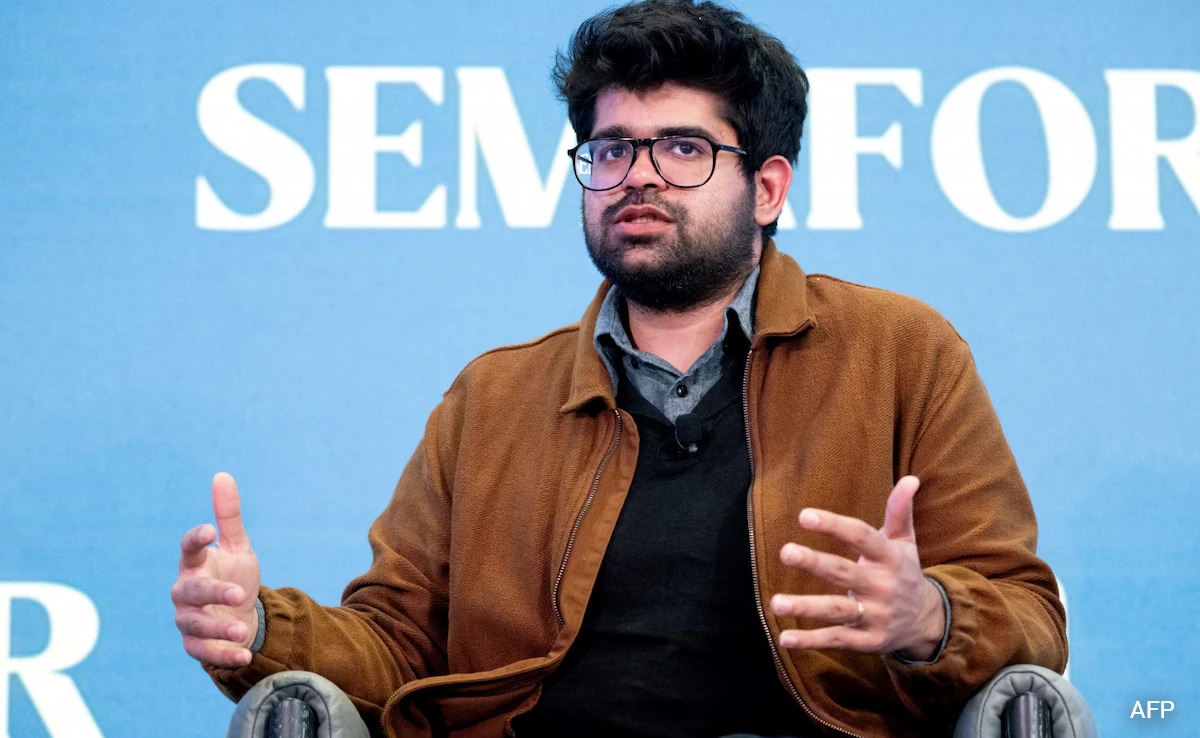
OpenAI closes $122B round at $852B valuation. Oracle fires thousands for AI data centers. Anthropic leaks Claude Code source. OpenAI closed the largest private funding round in history. $122 billion at an $852 billion valuation, with individual investors buying in for the first time through ARK ETFs and bank offerings. Amazon's $35 billion tranche hinges on an IPO that now feels less optional than inevitable. Oracle marked the same day by firing thousands through 6 AM termination emails. No warning. No HR call. The savings fund $50 billion in AI data centers. The stock rose 6%. Anthropic shipped Claude Code's full source to npm for the second time in thirteen months. The money floods in at the top. The people flow out at the bottom. OpenAI closed a $122 billion round at an $852 billion valuation, the largest private funding event in history. Amazon led with $35 billion, contingent on an IPO milestone. For the first time, individual investors bought shares through bank offerings and ARK ETFs. The headline number masks the deal's architecture. Nvidia contributed compute credits rather than cash. Amazon's tranche carries performance conditions tied to a public offering the company has been preparing since January. SoftBank increased its position after its Vision Fund bet earlier this year. The retail angle is the more telling signal. ARK Invest offered allocation through its flagship fund, and at least two major banks created structured products for high-net-worth clients. OpenAI is assembling a shareholder base months before an S-1 filing. At $852 billion, the private valuation exceeds every listed tech firm except Apple, Microsoft, Nvidia, and Alphabet. The gap between the pre-IPO price and public-market reality becomes the central question of 2026. Why This Matters: Anthropic published Claude Code's 512,000-line source code to npm for the second time since January 2025. Days earlier, its content management system left 3,000 internal files publicly accessible. The pattern exposes gaps in operational security at the company building AI for the Pentagon. The npm package exposed the full architecture of Claude Code's "undercover mode," a feature designed to make AI-generated code indistinguishable from human work. Security researchers independently flagged the CMS leak, finding internal documentation, draft posts, and unreleased product specifications among the accessible files. Anthropic patched both exposures within days. The company says no customer data was compromised. But shipping source twice to a public registry, thirteen months apart, creates a specific problem for a company that markets trust and safety as its primary differentiator. Prompt: Catrina tattoo design in black and white line art style, featuring a sugar skull-inspired woman with elaborate details and patterns, her face adorned with floral motifs and curvilinear lines, her eyes and mouth stylized with bold strokes, her skin rendered in varying shades of gray, with flowing hair and ornate clothing, set against a minimalist background that lets the subject take center stage, with delicate lines and subtle shading to create a sense of depth and dimensionality. Oracle terminated thousands of employees on on Tuesday through pre-dawn email notifications with no prior warning from HR or managers. TD Cowen estimates up to 30,000 positions will be cut, freeing $8-10 billion annually for AI data center construction. The termination emails arrived at 6 AM local time. Affected employees discovered they had lost building access before their morning commute. Multiple sources described the process as the most abrupt mass layoff in Oracle's 47-year history. The cuts fund Oracle's $50 billion AI infrastructure commitment alongside the Stargate joint venture. CEO Larry Ellison has positioned Oracle as a cloud rival to AWS and Azure, but the capital requirements demand cost reductions elsewhere. The stock rose 6%. Why This Matters: Salesforce unveiled 30 new AI capabilities for Slackbot at a San Francisco event on Tuesday, transforming the chat assistant into a full enterprise agent. The upgraded bot handles meeting transcription, desktop access, and connects to 6,000+ external apps through the MCP protocol. Every new Salesforce customer gets Slack bundled starting this summer. The move redefines what "enterprise chat" means. Slackbot now transcribes meetings in real time, schedules follow-ups, and pulls data from CRM, ERP, and project management systems without leaving the conversation window. The MCP integration is the strategic play: it turns Slack into a universal connector for third-party AI tools rather than a closed ecosystem. Bundling Slack with every new Salesforce contract eliminates the pricing objection that kept some enterprises on Microsoft Teams. Salesforce is betting that the agent layer, not the chat interface, becomes the product that locks customers in. Why This Matters: How to Generate Studio-Quality Images From Text Prompts With Leonardo AI Leonardo AI generates photorealistic images, illustrations, and concept art from text descriptions using its proprietary Phoenix and Flux models. Upload a reference image and the tool matches its style, or start from scratch with a prompt. The latest update added motion generation for turning still images into short video clips. Free tier includes 150 daily tokens, enough for roughly 30 images. You registered for a 200-session conference next week. The agenda PDF is 14 pages. You need to know who to meet, not just what to attend. Priority speakers: [10 names with session times, titles, and companies] Conflicts: Sessions 4 and 7 overlap Tuesday 2 PM. Pick Session 7 (smaller room, easier to approach speaker after). Networking windows: 15-min gap after Session 3, lunch on Day 2 near Track B. Conference agendas are optimized for browsing, not decision-making. The prompt forces a filter based on your role and goals, then adds the logistics layer most attendees figure out on-site when it is too late. Claude: Better at inferring relevance from speaker bios. ChatGPT: Faster at parsing large PDFs. Jury panels in Los Angeles and New Mexico found that specific design features in Instagram and YouTube qualify as defective products, separate from the content they host. The distinction matters: courts can now regulate how platforms are built without touching Section 230 speech protections. Microsoft will invest $5.5 billion in Singapore through 2029 for cloud and AI infrastructure, following a $1 billion commitment to Thailand. Southeast Asia is becoming the company's fastest-growing infrastructure region outside the US. Grab partnered with WeRide to deploy driverless ride-hailing in Singapore, the first commercial robotaxi operation in Southeast Asia. The launch positions Singapore as the region's testing ground for autonomous transport. Schleswig-Holstein's plan to swap Microsoft for Linux and open-source tools across state government is running into serious friction. The experiment is the EU's most visible test of "digital sovereignty," and the difficulties are giving other governments pause. Austin-based Coder, which builds tools for developers to write and run code across local and cloud environments, closed a $90 million round led by KKR. The raise follows a $35 million round in 2024. Bilal Bin Saqib, chairman of Pakistan's Virtual Assets Regulatory Authority, used engagement with Trump's World Liberty Financial venture to position Pakistan as a US-Iran mediator. Cryptocurrency policy is becoming a tool of international diplomacy. Anthropic requires every leader to maintain a public Slack channel called a "notebook," where they post weekly goals, product thinking, and open questions visible to the entire company. The practice filters for executives comfortable with continuous accountability and gives the organization a real-time map of who is building what and why. A Caltech study participant used his brain-computer interface to produce musical tones by thinking, pushing BCI applications beyond basic communication and movement. The researcher argues that adoption depends on making the technology enjoyable, not just functional. Recent AI listings from Moore Threads and MiniMax now account for half of Asia's ten most volatile equities. Thin institutional ownership and retail hype are creating price swings that make the sector one of the most unstable in Asian markets. Modular built Mojo, a programming language that makes Python run 68,000 times faster for AI workloads. The company's bet: the AI industry does not have a hardware problem, it has a software problem. ⚡ Founders Chris Lattner and Tim Davis co-founded Modular in 2022. Lattner created the Swift programming language at Apple and built the LLVM compiler infrastructure that underpins most modern software. He later ran Google's TensorFlow team before concluding that AI's performance bottleneck was the software stack, not the silicon. Davis previously served as a senior engineering leader at Google. Product Mojo is a superset of Python that compiles to native machine code, achieving performance comparable to C and CUDA while keeping Python's ease of use. MAX is the inference engine that runs AI models across CPUs, GPUs, and custom accelerators without rewriting code for each chip. Developers write once, deploy anywhere, and stop paying the "Nvidia tax" of CUDA lock-in. Modular open-sourced the Mojo standard library and over 450,000 lines of MAX kernel code in 2025. Competition Nvidia's CUDA has 20 years of developer lock-in and runs 90% of AI training. Intel's oneAPI and AMD's ROCm attempt the same portability play but lack developer adoption. Triton (from OpenAI) compiles Python to GPU code. Modular differentiates by replacing the entire stack from language to inference engine. The risk: CUDA's network effects are enormous, and most AI teams would rather optimize on Nvidia than retool their pipeline. Financing 💰 $250M Series C, valuing Modular at $1.6 billion, nearly tripling its worth in two years. Total raised: $380 million from investors including GV, SV Angel, Greylock, and Factory. Future ⭐⭐⭐⭐ Lattner built the compiler that compiles most of the software you use. Now he is building the compiler for AI. The bet is structural: if AI models must run on diverse hardware, someone needs to build the translation layer. Modular wants to be that layer. The open-source move was smart. Mojo will not win by being proprietary when CUDA's moat is its ecosystem. The constraint: CUDA works, developers know it, and switching costs are real. Modular needs hardware diversity to become inevitable. Every non-Nvidia chip that ships makes Mojo more valuable. 🔥 Baidu's Robotaxis Froze on a Highway. The SOS Button Said "Unavailable." More than 100 of Baidu's Apollo Go robotaxis stalled simultaneously across Wuhan on Tuesday, trapping passengers in fast lanes and causing at least two collisions. Baidu's in-car SOS button returned an "unavailable" message. The company had announced 20 million completed rides five weeks earlier. Sources: WIRED, March 31, 2026 | CNBC, April 1, 2026 Our take: Building a car that drives itself on a highway is, apparently, the easy part. The hard part is making the phone ring when the fleet stops moving. One dashcam captured 16 frozen robotaxis in 90 minutes. A passenger pressed the emergency button and received the digital equivalent of a shrug. She tried the app, got the same. Eventually she forced the door open and walked away, which turned out to be the only system that worked as designed. Baidu is currently expanding to Seoul, Abu Dhabi, and Dubai. Those cities might want to test the help desk before the highway permits.
Anthropic Races to Contain Leak of Code Behind Claude AI Agent
Anthropic accidentally exposed the underlying instructions for its Claude Code AI app, prompting over 8,000 takedown requests. Anthropic is racing to contain the fallout after accidentally exposing the underlying instructions it uses to direct Claude Code, the popular artificial-intelligence agent app that has won the company an edge with developers and businesses. By Wednesday morning, Anthropic representatives had used a copyright takedown request to force the removal of more than 8,000 copies and adaptations of the raw Claude Code instructions -- known as source code -- that developers had shared on programming platform GitHub. The leak of "some internal source code" didn't expose any customer information or data, a spokesman for Anthropic said. Nor did it divulge the valuable inner mathematics -- sometimes called weights -- of the company's expensive and powerful AI models. "This was a release packaging issue caused by human error, not a security breach. We're rolling out measures to prevent this from happening again," the spokesman said. But the leak did reveal commercially sensitive information, including Anthropic's proprietary techniques, tools and instructions for cajoling its AI models to work as coding agents. Those techniques and tools are called a harness because they are what allow users to control and direct those models, much like a harness allows a rider to guide a horse. The result is that Anthropic's competitors and legions of startups and developers now have a detailed road map to clone Claude Code's features without needing to reverse engineer them -- something that is already common in the cutthroat AI race. The leak also gives hackers a large amount of new information to probe for bugs they could use to exploit the Claude Code software, or manipulate its Claude AI model into helping with their cyberattacks, creating risks for Anthropic and the developers who use its tools. The leak is a blow for Anthropic because it risks both undermining its reputation for safety and also revealing valuable trade secrets in the pitched battle for enterprise customers. Anthropic has been riding a wave of growing use because of the viral popularity of Claude Code, helping it close a new round of funding that values the company at $380 billion ahead of a possible public offering this year. Much of the excitement about Claude Code is about how it manages to stitch together the company's AI models and coax them into working well in a way that helps developers get work done -- something called "tooling" that in AI is as much an art as a science. The sensitive Claude Code information was inadvertently disclosed on Tuesday when the company updated the AI tool. Like most proprietary software, Claude's source code is usually obfuscated and hard to reverse engineer. Except this time, the company posted to GitHub a type of file that linked back to the source code that outsiders could download and interpret. An X user quickly noticed the leak and spread the word. Within hours, copies were multiplying, leading to a game of cat-and-mouse. Programmers combing through the source code so far have marveled on social media at some of Anthropic's tricks for getting its Claude AI models to operate as Claude Code. One feature asks the models to go back periodically through tasks and consolidate their memories -- a process it calls dreaming. Another appears to instruct Claude Code in some cases to go "undercover" and not reveal that it is an AI when publishing code to platforms like GitHub. Others found tags in the code that appeared pointed at future product releases. The code even included a Tamagotchi-style pet called "Buddy" that users could interact with. After Anthropic requested that GitHub remove copies of its proprietary code, another programmer used other AI tools to rewrite the Claude Code functionality in other programming languages. Writing on GitHub, the programmer said the effort was aimed at keeping the information available without risking a takedown. That new version has itself become popular on the programming platform.

As the dust settles on a night of chaos in Clapham - locals fear the worst is yet to come
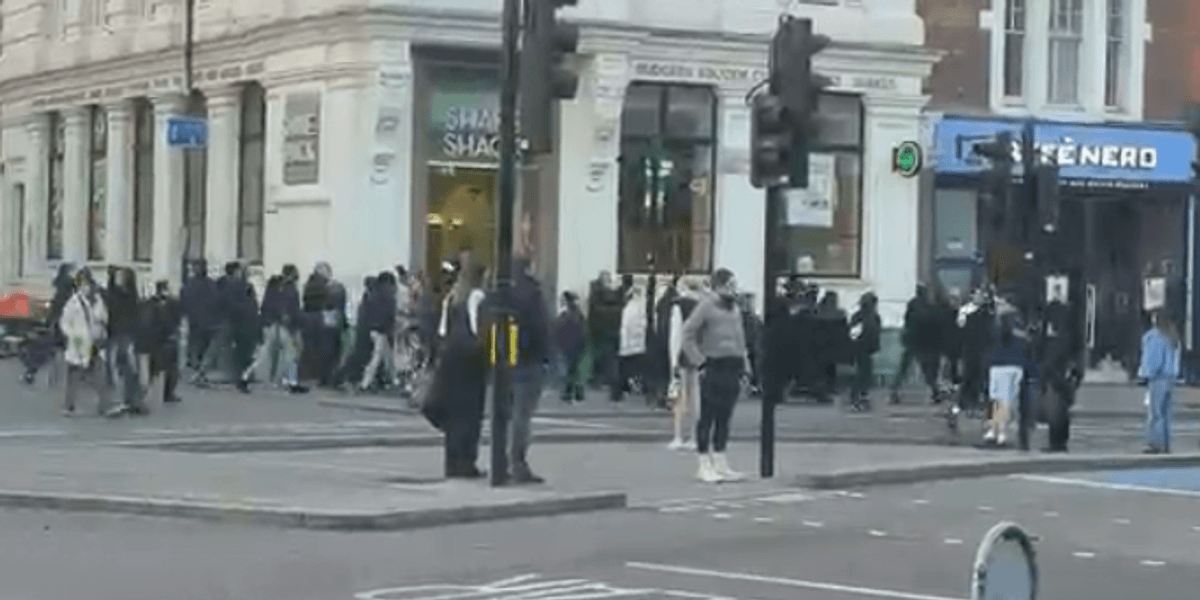
Today there's a stronger than normal police presence on the High Street, aimed at reassuring local residents and businesses. Last night many of them were forced to take shelter. Charles, who works at Tapi Carpets and Floors on Clapham High Street, told me a pregnant woman and her husband were forced to take shelter in his shop when hundreds of teens were rushing towards them. "She was panicking, she was really, really panicked. Her husband was having to calm her down", he said. Charles locked the door of his shop while they took shelter for a quarter of an hour. But Charles tells me he's worried that more of these gatherings could take place. This is the second one this week. The first happened on Saturday, when teens stormed M&S.
'Deport this H-1B,' Perplexity AI CEO Aravind Srinivas slammed online over comments on AI replacing jobs
Perplexity AI CEO Aravind Srinivas faces backlash over AI job comments as layoffs rise, sparking debate on automation, unemployment, and future opportunities in tech. Aravind Srinivas, the CEO of Perplexity AI, is facing strong criticism after suggesting that people should accept being replaced by Artificial Intelligence, claiming that many don't enjoy their jobs anyway. Speaking on the All-In Podcast, Srinivas said the shift in how work is done could lead to a "glorious future." He said, "The reality is most people don't enjoy their jobs. There's suddenly a new possibility, a new opportunity, to use these tools, learn them, and start your own mini business. Even if there is temporary job displacement to deal with, that sort of glorious future is what we should look forward to." Responding to the criticism, a spokesperson for Perplexity told The New York Post that since the company launched in December 2022, Americans have filed 16 million new business applications. The spokesperson added that this shows how new technologies can create opportunities rather than eliminate them. AI-led layoffs The backlash comes at a time when job losses linked to AI are rising sharply. In 2026 alone, around 85,000 tech jobs have been cut globally due to automation and AI adoption, according to data from Trueup. Companies are no longer just cutting costs but are restructuring their operations around AI tools. These tools are now handling routine tasks such as coding, customer support, data annotation, and analysis. Several major companies have already made significant layoffs. Block Inc. cut 4,000 jobs, WiseTech Global reduced 2,000 roles, Pinterest cut 15% of its workforce, and eBay laid off 800 employees. Meanwhile, Amazon, Meta, and Atlassian continue to reduce staff as part of ongoing restructuring. Oracle just laid off more than 20,000 employees Entry-level workers are among the hardest hit. Recent graduates are facing an unemployment rate of 5.7%, while underemployment has reached 42.5% by the end of 2025. Many of the tasks that were once handled by junior employees are now being taken over by AI systems. 'Deport this H-1B right now' Srinivas has also been targeted with personal attacks on social media following his remarks. Some users brought up his immigration status while criticising him. One user wrote, "Deport this H-1B back to India!." Another added, "LMAO!!! Alot of the workers fired are H-1B Visa employees who look like him. If they don't find a new job within 60 days, they are required to leave the United States. This helps Trump's America First policy! Mass firings of H-1B Visa workers!." Others focused on the practical reality of job loss. "People may hate their jobs but it's their source of income," one user wrote. Another questioned leadership roles, saying, "The job of a CEO is pretty easy. Can we replace him with an AI agent instead?"
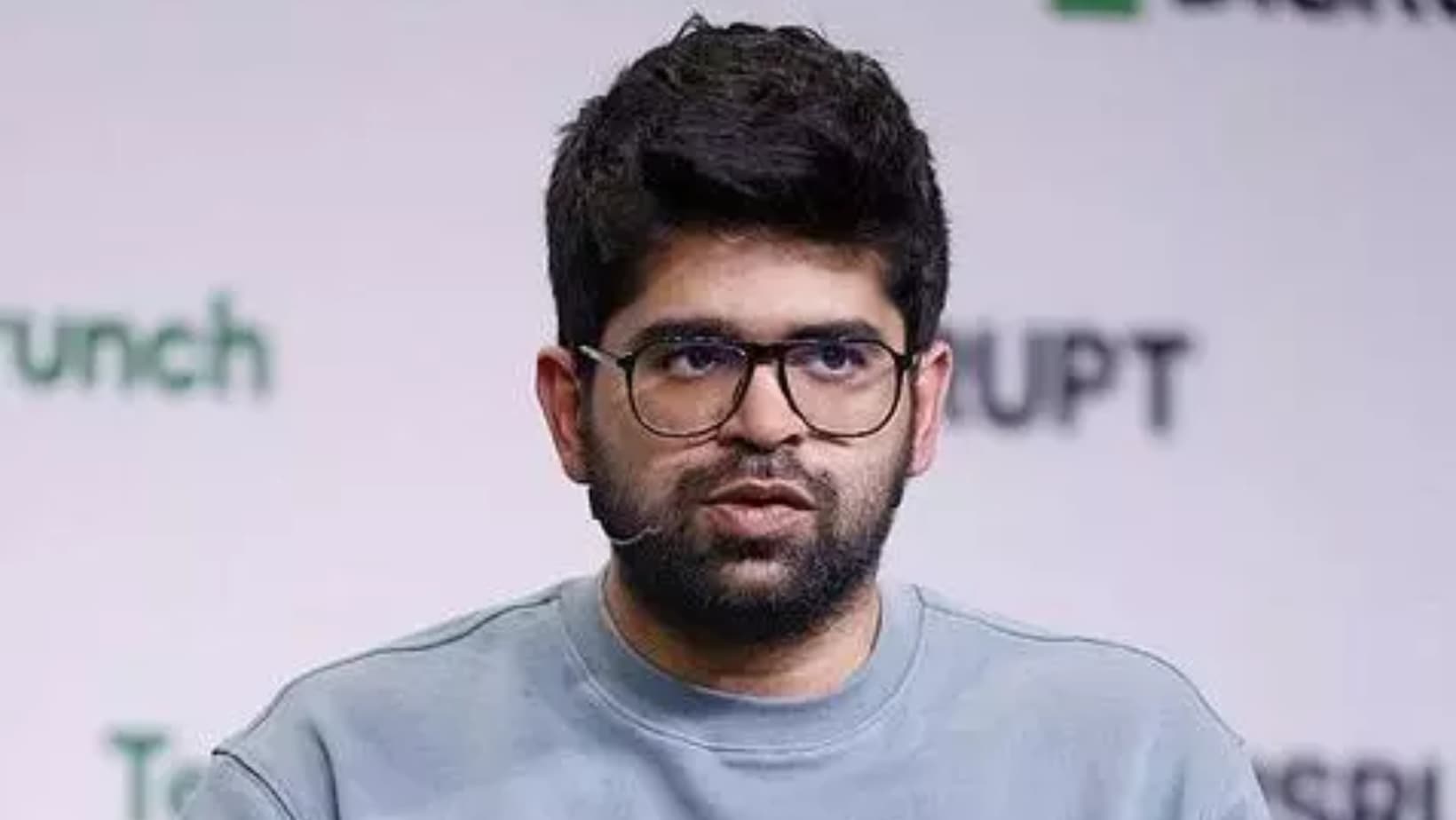
Police warn more arrests will be made after Clapham chaos
Police have warned that more arrests are expected to be made after chaos erupted with large crowds of young people gathering and forcing shops to close in Clapham. Hundreds of masked youths gathered on Clapham High Street as the teenagers wearing balaclavas forced themselves into shops in the area yesterday (March 31) from around 5pm. A few fires were started around the centre of the Clapham Common park, with smoke billowing and fireworks set alight. Around 100 officers responded to the disorder as five people - including four police officers - were assaulted. While three arrests were made at the time, police have urged those involved to consider the consequences of their action. The Metropolitan Police claims that more arrests will be made over the coming days as officers trawl through CCTV and body-worn video. It said: "Just because you have not yet been arrested, does not mean you will not be. "Specialist officers are also working to identify those who played a leading or organising role, so that ring leaders and others encouraging this behaviour can be held to account." What happened? One officer was taken to hospital as a precaution after facing an arm injury while making an arrest. Three girls - one aged 17 and two 13 - were arrested on suspicion of assaulting an emergency worker. The 17-year-old has been charged and bailed to appear at court later this month while the 13-year-old girls have been granted bail. Clips circulating online show mass groups pushing themselves into shops, running around the street and screaming. Police were already at the scene as a Section 35 dispersal order was already in place following similar scenes that took place last Saturday (March 28). Clapham (Image: @CrimeLdn and @DJ_DECKS73) In the last event, three girls - two 16 and one 15 - were arrested for shoplifting and assault. It is understood that both incidents were arranged online through TikTok as part of a social media trend. People were reportedly encouraged to target local shops and demand their goods. Videos began circulating online following the events on Saturday that a part two was planned for yesterday. How is this being prevented? The Met says it has a strong policing plan in place to prevent and deal with any future disorder. This includes increasing policing numbers in the area and using dispersal orders as officers take a zero-tolerance approach. Ahead of the Bank Holiday weekend, the Met has also made clear that anyone involved in similar events or caught promoting them will be dealt with decisively.

Perplexity AI Machine Accused of Sharing Data With Meta, Google
Perplexity AI Inc. was accused in a lawsuit of surreptitiously sharing the personal information of its users with Meta Platforms Inc. and Alphabet Inc.'s Google in violation of California privacy laws. As soon as users log into Perplexity's home page, trackers are downloaded onto their devices, giving Meta and Google full access to the conversations between them and Perplexity's AI Machine search engine, according to the proposed class-action complaint filed Tuesday in federal court in San Francisco. This allows Meta and Google "to exploit this sensitive date for their own benefit, including targeting individuals with advertising and reselling their sensitive data to additional third parties," according to the complaint. Users' personal data is shared even when they sign up for Perplexity's "Incognito" mode, according to the complaint. The suit was filed on behalf of an Utah man, identified only as John Doe, who seeks to represent a class of Perplexity users. According to the suit, the man shared information about his family's finances, his tax obligations, his investment portfolio and strategies with Perplexity's chatbot. Perplexity embedded "undetectable" tracking software into the search engine's code that automatically transmits users' conversations to Meta, Google and other third parties, according to the complaint. The lawsuit also targets Meta and Google, accusing them of violating federal and state computer privacy and fraud laws. A Meta spokesperson pointed to a Facebook help page which says it's against the tech giant's rules for advertisers to send the company sensitive information. "We have not been served any lawsuit that matches this description so we are unable to verify its existence or claims," said Jesse Dwyer, a Perplexity spokesperson. Representatives of Google didn't immediately respond to a request for comment. The case is Doe v. Perplexity AI Inc., 3:26-cv-02803, US District Court, Northern District of California (San Francisco).
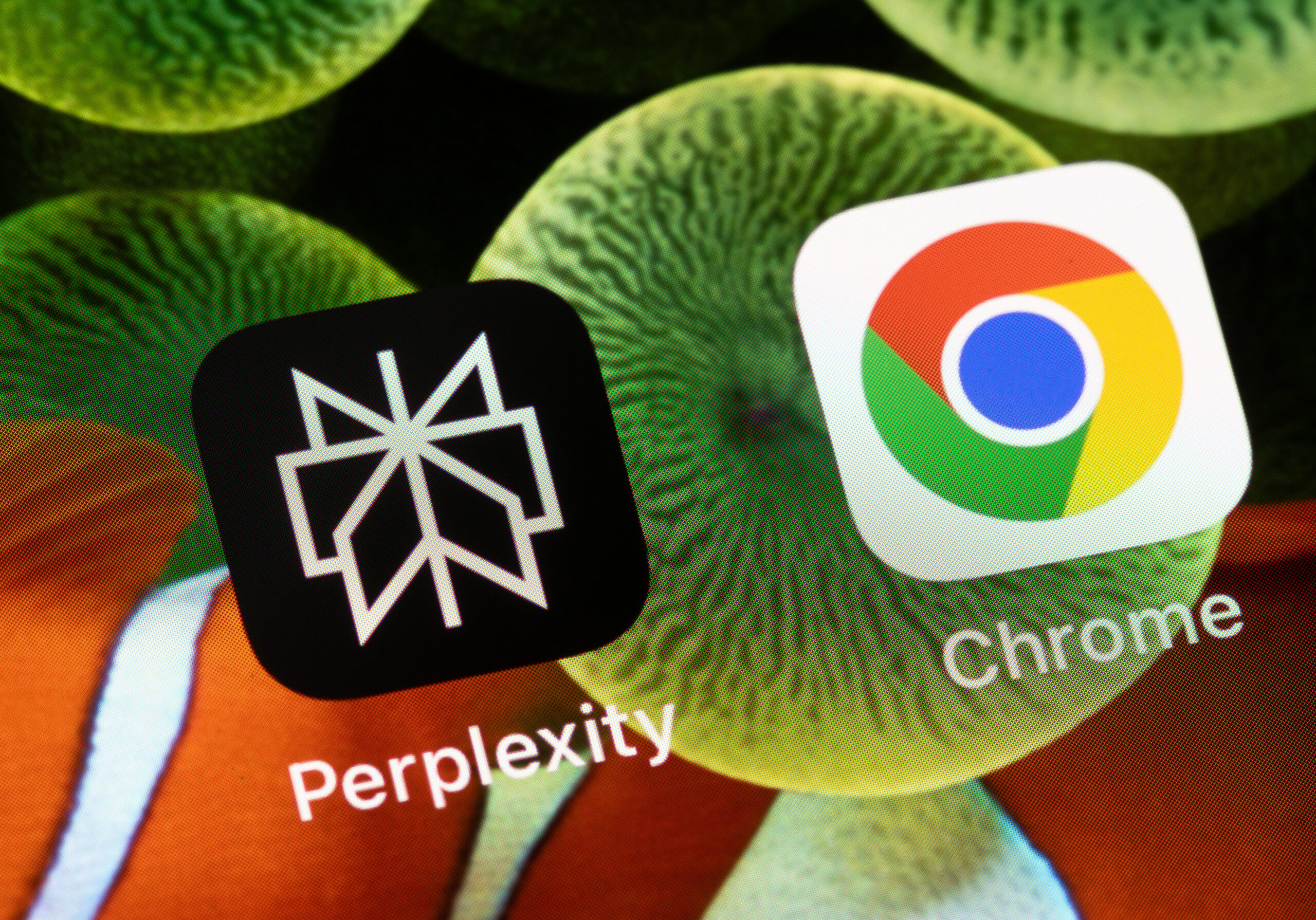
Firefly Aerospace (FLY) Stock Climbs 20% Amid SpaceX Public Offering Speculation - Blockonomi
Analyst consensus leans toward "Moderate Buy" for FLY shares with a mean price objective of $35.13 Shares of Firefly Aerospace (FLY) surged 20.53% on Tuesday, settling at $28.47 per share. The impressive gain reversed a three-consecutive-day slide for the commercial spaceflight company. Firefly Aerospace Inc., FLY The primary driver behind Tuesday's advance was a Reuters article revealing that SpaceX has enlisted 21 financial institutions to manage its forthcoming public offering. The anticipated listing could assign SpaceX a valuation of $1.75 trillion, with plans to secure more than $75 billion in capital. Such a transaction would rank among the most substantial initial public offerings ever recorded. The announcement generated positive momentum throughout the commercial space industry. During Tuesday's trading session, FLY recorded approximately 1.23 million shares exchanged -- representing a 69% decrease from its typical daily volume of around 3.97 million shares. The substantial price movement occurred despite this below-average trading activity. The stock reached an intraday peak of $26.07 before ultimately settling at the closing price of $28.47, up from the previous session's close of $23.62. Firefly unveiled its quarterly financial results on March 19th. The aerospace firm recorded an earnings per share loss of ($0.38), outperforming the analyst consensus projection of ($0.48) by $0.10. Quarterly revenues totaled $57.67 million -- representing a remarkable 541.1% increase compared to the same period last year. This represents substantial expansion, even when considering the comparatively small prior-year baseline. For the complete fiscal year, revenue expanded 163% to reach $159.8 million, up from $60.79 million in 2024. However, net losses expanded by 25.6% to $333.96 million. The organization continues operating with a negative net margin of 186.63% and a negative return on equity measuring 234.80%. While profitability remains elusive, the revenue expansion pattern is noteworthy. Firefly maintains a debt-to-equity ratio of 0.24, complemented by a quick ratio of 4.51. The stock's 50-day moving average stands at $23.26, while the 200-day moving average registers at $25.31. Cantor Fitzgerald revised its price objective on FLY downward from $65.00 to $35.00 on March 26th, though the firm retained its "overweight" recommendation. Goldman Sachs elevated its target from $29.00 to $32.00 in January, maintaining a "neutral" stance. UBS established a $33.00 price objective in March, while Morgan Stanley upheld a "positive" rating during the same timeframe. KeyCorp launched coverage in December with a "sector weight" designation. Overall, the analyst community maintains a "Moderate Buy" consensus with a mean price target of $35.13. The ratings distribution includes 1 Strong Buy, 5 Buy, 3 Hold, and 1 Sell recommendation. FLY currently commands a market capitalization of $4.48 billion. The stock's price-to-earnings ratio registers at -3.05, a reflection of its current unprofitable operations. Institutional investor participation has been expanding as well -- BNP Paribas, CIBC Private Wealth, California State Teachers Retirement System, and Russell Investments have all established new positions in recent reporting periods.
How the SpaceX IPO Could Affect These Popular Nasdaq ETFs
SpaceX is rumored to be leveraging a Nasdaq listing in exchange for fast inclusion in that index. Elon Musk's SpaceX is expected to imminently file for an initial public offering (IPO) valued at as much as $1.75 trillion, indicating it will be the largest IPO on record. The space company is rumored to be targeting a June listing date on the Nasdaq. Due in large part to Musk's Tesla returning a jaw-dropping 2,280% over the past decade, retail investors are excited about SpaceX going public. They're getting a crack at up to 30% of the shares. That's triple the usual IPO allocation for retail investors, confirming SpaceX is likely to be one of the hottest IPO stocks in recent memory for the non-professional crowd. Will AI create the world's first trillionaire? Our team just released a report on the one little-known company, called an "Indispensable Monopoly" providing the critical technology Nvidia and Intel both need. Continue " The IPO also has wide-ranging implications for some well-known exchange-traded funds (ETFs), including the Invesco QQQ ETF (NASDAQ: QQQ) and the Invesco NASDAQ 100 ETF (NASDAQ: QQQM). Here's why. The SpaceX IPO could mean a new look for these ETFs. Image source: Getty Images. A quick housekeeping item. The two Invesco funds, which are among the best options for accessing the 100 largest non-financial services stocks trading on the Nasdaq, both track the Nasdaq-100 index. The primary difference between the two is that the Invesco QQQ ETF charges 0.18% annually, or $18 on a $10,000 stake, while its cousin charges 0.15%. So the SpaceX IPO will affect the two ETFs in essentially the same fashion. Addressing those impacts is the fun. Here's the lowdown. For "whale" IPOs such as SpaceX, there's fierce competition between Nasdaq and the New York Stock Exchange (NYSE). Bragging rights and prestige are part of it, but ultimately it's about boosting long-term trading revenue. None of that is lost on Musk. The rumor mill indicates that SpaceX is considering a Nasdaq stock exchange listing, leveraging its lucrative IPO to compel the exchange operator to rapidly include the stock in the Nasdaq-100. But wait, how's that possible? The index rebalances just once a year, in December. It's possible that SpaceX will quickly join the Nasdaq-100, and thus the two Invesco ETFs, as Nasdaq is mulling a "fast entry" rule change. The long and short of it is that if a company's market capitalization puts it within the top 40 of Nasdaq-100 members after 15 trading days, it's eligible for inclusion. SpaceX will fit that bill. For Musk and SpaceX investors, that's relevant because if the stock is included in that gauge, all active managers and passive index funds that benchmark to it have to include it. Determining SpaceX's profile in the aforementioned Nasdaq ETFs is a speculative, albeit fun exercise, and it bears remembering that market values shift every second markets are open. With that said, let's give it a whirl in terms of how this hot IPO could shake out in the Invesco ETFs. Oddly enough, had SpaceX entered the Nasdaq-100 with a market capitalization of $1.75 trillion on Friday, March 27, it would have supplanted Tesla as the fifth-largest holding in the benchmark. The electric vehicle stock accounts for 3.8% of the Invesco ETFs. So, assuming SpaceX proceeds with a Nasdaq listing and swiftly enters the Nasdaq-100, it's apt to be a prominent, though not dominant, fixture in these ETFs initially. Before you buy stock in Invesco QQQ Trust, consider this: The Motley Fool Stock Advisor analyst team just identified what they believe are the 10 best stocks for investors to buy now... and Invesco QQQ Trust wasn't one of them. The 10 stocks that made the cut could produce monster returns in the coming years. Consider when Netflix made this list on December 17, 2004... if you invested $1,000 at the time of our recommendation, you'd have $518,530!* Or when Nvidia made this list on April 15, 2005... if you invested $1,000 at the time of our recommendation, you'd have $1,069,165!* Now, it's worth noting Stock Advisor's total average return is 915% -- a market-crushing outperformance compared to 183% for the S&P 500. Don't miss the latest top 10 list, available with Stock Advisor, and join an investing community built by individual investors for individual investors. Todd Shriber has no position in any of the stocks mentioned. The Motley Fool has positions in and recommends Tesla. The Motley Fool has a disclosure policy.

$1.75 trillion SpaceX IPO may reshape markets | News.az
SpaceX is being viewed as a potential make-or-break moment for the global initial public offering (IPO) market, as investors watch whether the company's long-anticipated listing can revive large-scale public offerings. The rocket company, founded by Elon Musk, has reportedly filed confidentially for a blockbuster IPO that could raise more than $50 billion and value the firm at up to $1.75 trillion. That would make it the largest IPO in history, surpassing Saudi Aramco's 2019 record listing, News.Az reports, citing Reuters. Market analysts say a successful SpaceX debut could signal a turning point for a global IPO market that has struggled for years amid higher interest rates, inflation pressures, and geopolitical uncertainty. Experts note that SpaceX's scale, brand recognition, and association with Musk give it unusual market appeal, but also make its impact difficult to predict. Some believe the listing could act as a catalyst for other large IPOs, while others warn it may absorb investor attention and limit demand for similar deals. The company is also seen as part of a growing group of private "mega-valuations," alongside firms such as OpenAI and ByteDance, which increasingly rival public market giants. SpaceX reportedly generated around $15-16 billion in revenue and about $8 billion in profit last year, driven by its rocket launch business and satellite internet service Starlink. Elon Musk has also consolidated parts of his broader technology ecosystem, including artificial intelligence ventures, further strengthening the company's long-term growth narrative. Analysts say the upcoming IPO, if it proceeds, will test whether public markets have the capacity and appetite for trillion-dollar listings at a time when global deal-making remains fragile. A strong reception could reopen the door for other mega IPOs, while a weak response may delay hopes of a broader revival in public offerings.
How the SpaceX IPO Could Affect These Popular Nasdaq ETFs | The Motley Fool
SpaceX is rumored to be leveraging a Nasdaq listing in exchange for fast inclusion in that index. Elon Musk's SpaceX is expected to imminently file for an initial public offering (IPO) valued at as much as $1.75 trillion, indicating it will be the largest IPO on record. The space company is rumored to be targeting a June listing date on the Nasdaq. Due in large part to Musk's Tesla returning a jaw-dropping 2,280% over the past decade, retail investors are excited about SpaceX going public. They're getting a crack at up to 30% of the shares. That's triple the usual IPO allocation for retail investors, confirming SpaceX is likely to be one of the hottest IPO stocks in recent memory for the non-professional crowd. The IPO also has wide-ranging implications for some well-known exchange-traded funds (ETFs), including the Invesco QQQ ETF (QQQ +3.38%) and the Invesco NASDAQ 100 ETF (QQQM +3.37%). Here's why. A quick housekeeping item. The two Invesco funds, which are among the best options for accessing the 100 largest non-financial services stocks trading on the Nasdaq, both track the Nasdaq-100 index. The primary difference between the two is that the Invesco QQQ ETF charges 0.18% annually, or $18 on a $10,000 stake, while its cousin charges 0.15%. So the SpaceX IPO will affect the two ETFs in essentially the same fashion. Addressing those impacts is the fun. Here's the lowdown. For "whale" IPOs such as SpaceX, there's fierce competition between Nasdaq and the New York Stock Exchange (NYSE). Bragging rights and prestige are part of it, but ultimately it's about boosting long-term trading revenue. None of that is lost on Musk. The rumor mill indicates that SpaceX is considering a Nasdaq stock exchange listing, leveraging its lucrative IPO to compel the exchange operator to rapidly include the stock in the Nasdaq-100. But wait, how's that possible? The index rebalances just once a year, in December. It's possible that SpaceX will quickly join the Nasdaq-100, and thus the two Invesco ETFs, as Nasdaq is mulling a "fast entry" rule change. The long and short of it is that if a company's market capitalization puts it within the top 40 of Nasdaq-100 members after 15 trading days, it's eligible for inclusion. SpaceX will fit that bill. For Musk and SpaceX investors, that's relevant because if the stock is included in that gauge, all active managers and passive index funds that benchmark to it have to include it. Determining SpaceX's profile in the aforementioned Nasdaq ETFs is a speculative, albeit fun exercise, and it bears remembering that market values shift every second markets are open. With that said, let's give it a whirl in terms of how this hot IPO could shake out in the Invesco ETFs. Oddly enough, had SpaceX entered the Nasdaq-100 with a market capitalization of $1.75 trillion on Friday, March 27, it would have supplanted Tesla as the fifth-largest holding in the benchmark. The electric vehicle stock accounts for 3.8% of the Invesco ETFs. So, assuming SpaceX proceeds with a Nasdaq listing and swiftly enters the Nasdaq-100, it's apt to be a prominent, though not dominant, fixture in these ETFs initially.

Perplexity CEO's 'Glorious' Gaffe: Aravind Srinivas Faces Flak After Telling Workers To Embrace AI-Led Layoffs
Srinivas argued that automation provides a 'new possibility' for individuals to break free from unfulfilling roles and start their own 'mini-businesses' The digital landscape is witnessing a fierce debate over the human cost of innovation, following controversial remarks by Perplexity AI CEO Aravind Srinivas. Speaking on the All-In podcast at the recent Nvidia GTC event, the "Chennai boy" turned tech billionaire purportedly described AI-driven job displacement as a "glorious future", suggesting that workers should embrace layoffs because "the reality is most people don't enjoy their jobs anyway". The comments have triggered a massive backlash on social media, with critics accusing the executive of being profoundly disconnected from the financial anxieties of the global workforce. Why is Aravind Srinivas's 'Glorious Future' comment facing flak? The primary source of the uproar is the perceived insensitivity towards the 101,000 workers who have already lost their jobs to AI in the United States since February 2025. Srinivas argued that automation provides a "new possibility" for individuals to break free from unfulfilling roles and start their own "mini-businesses". However, viral responses on platforms like X have pointed out that a stable paycheque is a necessity, not a choice, for most. One widely shared rebuttal noted that telling a laid-off worker to be "grateful" for the chance to be an entrepreneur is a luxury only afforded to those who have never struggled to "keep the lights on". What is the 'Henry Ford' comparison in the AI job debate? Srinivas framed the current transition as a departure from the "factory-style" work established by industrialist Henry Ford. He argued that traditional manufacturing "put people into a box", whereas generative AI tools now allow a single person to handle operations, marketing, and product development simultaneously. To support this, he cited the example of TurboAI, a flashcard startup run by two students with a budget of just $300. The company reportedly generates $1 million a month with only 13 employees -- tasks that Srinivas claims would have previously required hundreds of staff. Is 'AI Washing' a factor in current corporate layoffs? While tech leaders like Srinivas and OpenAI's Sam Altman paint a picture of a "one-person unicorn" future, economists remain divided. Analysts at Oxford Economics have suggested that many companies are currently engaging in "AI washing" -- the practice of blaming automation for job cuts that are actually driven by poor financial management or a desire to boost short-term stock prices. This scepticism is compounded by recent massive restructuring at firms like Oracle, which is reportedly cutting up to 30,000 roles to pivot its capital towards AI data centre expansion, often without providing employees with prior warning. How does Srinivas's view contrast with other tech leaders? The tech world is currently split between "AI optimists" and "doomers". While Srinivas urges the public to look forward to the disruption, ServiceNow CEO Bill McDermott recently cautioned that AI could push global unemployment beyond 30 per cent within the next few years. Similarly, the impact is being felt in India, where AI is expected to affect the livelihoods of over 1.8 crore people across key sectors by 2030. Despite the controversy, a Perplexity spokesperson defended the CEO's stance, pointing to the 16 million new business applications filed in the US since late 2022 as proof that breakthrough technology ultimately "creates opportunity" rather than eliminating it.

Tech stocks today: Anthropic does damage control after Claude leak, Iran threaten Big Tech operations
Tech stocks rose on Wednesday morning as markets staged a comeback to end the first quarter on a high note after a brutal March. Shares of Apple (AAPL), Google (GOOG), Nvidia (NVDA), and Microsoft (MSFT) were modestly higher despite a warning from Iran's Revolutionary Guard Corps (IRGC) that it would target the companies' operations. Oh, and happy birthday, Apple, which turned 50 on Wednesday. In other tech news, Anthropic raced to remove copies of leaked source code for its Claude AI agent app after the company accidentally exposed Claude Code's underlying instructions, giving competitors and hackers new information about the model. Anticipation continues to build around an Anthropic (ANTH.PVT) IPO, expected as early as this year, as well as the public debut of Elon Musk's SpaceX (SPAX.PVT). On Thursday, Tesla (TSLA) will release its first quarter delivery numbers, offering a glimpse at the changing electric vehicle landscape.
Chaos Erupts At Kondagattu Temple In Telangana: Pandal Collapses Without Warning, Devotees Injured, Watch Video
Strong Gust of Wind Causes Pandal Collapse at Kondagattu Temple Karimnagar, Telangana - A sudden structural failure at the Kondagattu Anjaneya Swamy Temple left four to five devotees injured on Wednesday, authorities confirmed. The incident occurred when a temporary pandal, set up for temple visitors, collapsed unexpectedly. Police officials attributed the accident to strong winds sweeping through the area. Karimnagar police confirmed, "The collapse was due to a huge gust of air, causing minor scratches." No major injuries reported." Thankfully, no life-threatening injuries were reported, though several devotees sustained minor cuts and bruises while trying to escape the falling structure. Eyewitnesses said the pandal, which had been erected to shelter devotees during temple prayers, gave way in an instant. The suddenness of the collapse left many startled, but temple staff quickly assisted the injured and called emergency services. Temple Authorities Respond to Incident Temple officials rushed to the scene immediately, coordinating with local authorities to ensure safety and assist the injured. The police are currently investigating the exact cause of the pandal's collapse, but initial reports indicate that the strong wind was the primary factor. "The collapse was due to a huge gust of air, causing minor scratches. No major injuries reported," reiterated the police, emphasizing that the situation could have been far worse if more devotees had been present in the pandal at that time. Authorities have also advised visitors to remain cautious during sudden weather changes. Safety measures are being reassessed at the temple premises, particularly for temporary structures used during events or festivals. As of now, further details on the condition of the injured devotees and any corrective measures by the temple management are awaited. The incident serves as a reminder of the importance of safety precautions, especially during unpredictable weather conditions.

Anthropic Unintentionally Exposes Internal Claude Code Source Code in Release Error
Anthropic has confirmed that it accidentally exposed part of the internal source code behind its AI-powered coding assistant, Claude Code. The company clarified that the issue occurred during a routine release and was not the result of a cyberattack or external breach. According to a company spokesperson, the leaked material did not include customer data, credentials, or sensitive user information. Instead, it contained internal code tied directly to Claude Code's functionality. The company described the incident as a "packaging error caused by human mistake" and stated that stronger safeguards are now being implemented to prevent similar issues in the future. The leak quickly gained traction online, with discussions spreading rapidly on X and attracting millions of views. While the exposed code does not reveal core AI models, it still offers competitors a rare look into how Anthropic structures and develops one of its key tools. Industry analysts suggest that even partial access to internal systems can provide valuable insights in a fast-moving sector. This will be crucial, especially since Claude brought bigger usage limits during off-peak hours. According to Business Insider, the company has seen increased attention following tensions involving the U.S. Department of Defense, which reportedly shifted focus to other AI providers after disagreements over usage policies. Despite these challenges, Anthropic's chatbot ecosystem continues to grow. Its Claude app recently climbed to the top of the U.S. App Store rankings. No wonder that it still has strong consumer demand for advanced AI tools and increased competition in the space.

What the Staggering SpaceX IPO Exposes About American Capitalism
There is something almost poetic about the fact that the man who taught rockets to land themselves upright -- an achievement that every aerospace establishment figure once dismissed as fantasy -- is now preparing to take on the greatest cartel in American finance. Elon Musk's SpaceX is reportedly on the cusp of filing its IPO prospectus with the SEC, targeting what would be a roughly $75 billion raise at a $1.75 trillion valuation -- the largest initial public offering in human history. Wall Street is, predictably, salivating. And that is precisely where the story gets interesting. Because the SpaceX IPO is not just a financial event. It is a stress test of whether the American capital markets -- long captured by a priestly class of institutional gatekeepers -- can be reformed from within. And Musk, whether you admire him or tolerate him, appears determined to find out. Let us dispense with the superlatives quickly, because they are genuinely staggering. SpaceX is targeting a raise that dwarfs Saudi Aramco's record-breaking $29.4 billion offering in 2019, which was itself considered a generational event in global finance. The entire U.S. IPO market only raised more money than this figure in two of the past ten years. The company, if listed at its target valuation, would immediately rank among the ten largest enterprises on the planet -- surpassing Walmart, Exxon Mobil, and Meta in market capitalization. SpaceX has assembled at least 21 banks for the offering, internally code-named Project Apex, with Morgan Stanley, Goldman Sachs, JPMorgan Chase, Bank of America, and Citigroup serving as active bookrunners. The syndicate alone tells you something about the gravitational pull of this deal: every major institution on Wall Street wants a seat at the table, because the fees attached to shepherding a $75 billion offering are the kind of numbers that reshape quarterly earnings reports. And yet, for all the institutional enthusiasm, Musk is doing something that the financial establishment finds genuinely discomfiting: he is insisting that ordinary Americans get a real piece of it. Musk is preparing to allocate as much as 30% of the shares in SpaceX's forthcoming IPO to retail investors -- roughly three times the typical 5% to 10% allocation that Wall Street ordinarily permits. The stated rationale is sensible: investors who believe in the mission tend to hold longer, rather than flipping shares for a quick institutional profit on opening day. But the deeper logic is more subversive. Musk is essentially arguing that the traditional IPO process -- in which the bulk of shares in transformative companies are funneled to hedge funds, asset managers, and favored institutional clients -- is a rigged game that excludes the very public that ultimately sustains these enterprises. He is not wrong. The American IPO market has functioned for decades as a kind of insider club. Shares in hot offerings are pre-allocated to institutional players who then benefit from the "pop" on day one -- gains that flow not to the company, not to ordinary shareholders, but to the banks' most valued clients. Fortune analysis noted that one cohort is en route to pocketing a never-before-seen windfall while taking virtually no risk: the Wall Street banks that shepherd the deal. The underwriting fees alone on a $75 billion offering could reach into the billions. For doing what, precisely? Introducing a company that everyone already knows to buyers who were already going to show up. There is a reason the populist right and an increasing number of honest observers across the political spectrum have begun to question whether the financial intermediary class creates value commensurate with its extraction. The SpaceX IPO brings that question into sharp relief. Intellectual honesty, however, requires acknowledging what Musk is actually selling -- and it is not a simple proposition. SpaceX has been around for decades, but the version going public is a newly formed conglomerate. Musk recently merged xAI into SpaceX, after having previously merged X (formerly Twitter) into xAI. The result is an entity that bundles rocket manufacturing, satellite internet, artificial intelligence, and social media under one corporate roof -- a structure that has no real precedent in the history of public markets. Musk's plans for the company include building data centers in space, as well as his long-cherished dream of colonizing Mars. One million orbital data centers is the reported vision. Whether this is the most audacious infrastructure project in human history or the most expensive speculation in the history of capital markets remains, at this writing, genuinely unknown. IPO investors will always get access to a couple years of past financial performance but, in this case, it's relatively irrelevant -- the company's past operations as a rocket launcher bear little resemblance to the conglomerate being listed. After 23 years, SpaceX still generates zero net earnings. To justify a $1.75 trillion market capitalization at any conventional valuation metric, the company would need to generate profits that place it among the most lucrative enterprises in American history. At the IPO price, the stock would carry a price-to-sales ratio of close to 100. That is not an investment thesis; that is a wager on a vision. The distinction matters, particularly for retail investors who may be swept up in the excitement without fully appreciating what they are buying. The irony, of course, is that the same quality that makes SpaceX so extraordinary -- Musk's absolute refusal to be constrained by conventional thinking -- also makes it genuinely difficult to analyze by conventional means. You cannot model a company that is trying to put a million computers in orbit and colonize another planet using a discounted cash flow spreadsheet. That is not a criticism; it is simply a statement of fact about the limits of financial analysis when applied to genuinely unprecedented ambition. Musk hasn't been part of an IPO since Tesla in 2010. At the time, he was fairly quiet on social media -- his first-ever tweet was just a couple of weeks earlier. Today's Musk is a different creature entirely: a man who commands tens of millions of followers, pronounces on every political controversy, and appears constitutionally incapable of the careful, lawyerly silence that securities regulators prefer from company insiders during the IPO quiet period. This is not a trivial concern. Securities law imposes real constraints on what a CEO can say once the IPO process formally begins, and Musk's social media habits are not easily amenable to compliance oversight. Google's IPO was almost derailed by comments its cofounders made in a Playboy interview; Musk has said more controversial things before breakfast. The SEC will be watching. There is also the matter of governance. Musk retains approximately 42% voting control with roughly a 54% economic stake, and has structured the capitalization specifically to maintain that control through the IPO. Retail investors buying SpaceX shares will be buying into a company where the strategic direction is, and will remain, entirely at the discretion of one man. For those who trust Musk's judgment, that is a feature. For those who do not, it is a significant risk that no prospectus language can fully mitigate. Strip away the financial mechanics and the astronomical numbers, and the SpaceX IPO is really a contest between two visions of how American capitalism is supposed to work. The first vision -- the establishment vision -- holds that capital formation is a technical exercise best managed by sophisticated intermediaries who match companies with appropriate institutional investors in a carefully choreographed process. In this vision, the retail investor is an afterthought, a source of secondary market liquidity who gets to participate only after the real money has already been made by those with access. The second vision -- the one Musk is implicitly advancing -- holds that American capitalism works best when it is genuinely democratized; when the ordinary citizen who believes in a company's mission can participate in its growth from the beginning, rather than buying in after Wall Street has already extracted its pound of flesh. Musk is taking pains to ensure that retail investors don't send the stock into a nosedive immediately -- requiring lockup periods and engineering immediate index inclusion to create stable institutional demand. Whether this is genuine populism or sophisticated market engineering, the effect is the same: a structural challenge to the way IPOs have worked for a generation. The Book of Proverbs observes that "where there is no vision, the people perish" (Proverbs 29:18). Whatever one thinks of Elon Musk's politics, his personal conduct, or his specific business decisions, it is difficult to argue that he lacks vision. The question the SpaceX IPO poses to American investors -- and to American institutions -- is whether the existing structures of our capital markets are capable of accommodating genuine, transformative ambition, or whether they exist primarily to enrich the intermediary class while ordinary citizens watch from the sidelines. The answer to that question matters well beyond the price of a share. It speaks to whether this country still has the capacity to channel private capital toward genuinely civilizational projects -- or whether we have become so thoroughly captured by financial bureaucracy that even a rocket to Mars must first pass through Goldman Sachs. Project Apex, indeed. The question is whether the apex in question belongs to Musk's ambitions -- or to the banks.
'Chaos' over San Rafael homeless cabins may have ousted a top city official
"That project is the definition of a fire drill," one city staffer said in the report. In February, the city hired Swinerton Management & Consulting to erect 65 temporary small cabins for up to 70 people as soon as this spring. After three or four years, a city-contracted housing developer will build permanent affordable housing on the site. It was framed as an urgent response to Marin County's housing and homelessness crises, but the effort has rapidly become a flashpoint as San Rafael wrestles with its first effort to build a shelter in a residential neighborhood. San Rafael accounts for 30% of Marin's unhoused population, with 326 individuals counted in 2024 -- the most recent data available. Supporters say the 350 Merrydale project would reduce the number of encampments, such as a persistent site on Andersen Drive. Crime at these encampments, like last month's fatal stabbing (opens in new tab) of a 28-year-old homeless woman, has residents worried. The Merrydale site will follow a "housing-first" model that does not require sobriety or treatment as a condition of entry -- a policy tied to the city's declaration last year of a shelter crisis. "Tackling the homelessness crisis is something that needs a sense of urgency so, in some respects, I can understand the feedback," Alilovich told The Standard. "A lot of people worked really hard under intense deadlines and exceptional circumstances to help move that project forward, so things were definitely hectic at times. I'm grateful to have led that team during the time I was city manager and wish my colleagues and the project nothing but the best." Alilovich declined to provide a reason for her resignation. The performance review, which was heavily redacted, states that "staff repeatedly said that Merrydale was not fully discussed with the director team early, and they lacked a shared understanding of the scope, risks and constraints of the property and project." Another portion says that "many interviewees said key departments were brought in late to discussions of the project, after major decisions (i.e., acquisition of land) or public commitments were already underway." Despite city leaders expressing concerns about the project, elected officials have emphasized the need for speed. "The sooner we can open it, the better," Vice Mayor Rachel Kertz told the Marin Independent Journal last week. San Rafael Mayor Kate Colin and City Council members did not respond to requests for comment.
Anthropic Accidentally Exposes System Behind Claude Code
(Bloomberg) -- Anthropic PBC inadvertently released internal source code behind its popular artificial intelligence-powered Claude coding assistant, raising questions about the security of an AI model developer that has built its brand on prioritizing safety. "Earlier today, a Claude Code release included some internal source code. No sensitive customer data or credentials were involved or exposed," Anthropic said in an emailed statement late Tuesday. "This was a release packaging issue caused by human error, not a security breach." The accidental release marked Anthropic's second security slip-up in a matter of days, compromising approximately 1,900 files and 512,000 lines of code related to Claude Code -- an agentic coding tool that runs directly inside developer environments. Last week, Fortune separately reported that Anthropic had been storing thousands of internal files on a publicly accessible system, including a draft blog post that detailed an upcoming model known internally as both "Mythos" and "Capybara." The exposures couldn't come at a worse time for Anthropic, which was declared by the US government a supply chain risk earlier this year and is fighting the designation in court. The company has warned that the labeling could cost it billions in lost revenue. The latest accidental release involving Claude Code first came to light in a post on the social media platform X that purported to share a link to the code and garnered more than 30 million views. The leak has touched off thousands of posts online by people saying they've scoured the code. Some have claimed they've unearthed yet-to-be-released features, as well as quirks in the existing Claude Code system. Several experts raised concerns about potential security vulnerabilities. "Attackers can now study and fuzz exactly how data flows through Claude Code's four-stage context management pipeline and craft payloads designed to survive compaction, effectively persisting a backdoor across an arbitrarily long session," AI cybersecurity firm Straiker said in a blog post. For its part, Anthropic said it's "rolling out measures to prevent this from happening again." In February, Anthropic raised $30 billion in a massive funding round that valued the company at $380 billion, including the money raised, roughly doubling its prior valuation. The company landed itself in the spotlight that same month for releasing a series of products that sent the shares of everything from legal services companies to software and cybersecurity firms plunging on fears of widespread disruption.

SpaceX seen as make-or-break test for mega IPOs - The Economic Times
The global IPO market has needed a win for years and Elon Musk's SpaceX could be the breakthrough. The last company to make a market debut at over a trillion dollar valuation was Saudi Aramco in 2019.The global IPO market has needed a win for years and Elon Musk's SpaceX could be the breakthrough. The last company to make a market debut at over a trillion dollar valuation was Saudi Aramco in 2019. An over "trillion-dollar" valuation, a CEO with a cult-like retail following and exposure to a high-growth industry - SpaceX has the elements the IPO market has sought to end a years-long drought in mega-deals. But whether investors have the appetite for a listing of this size remains uncertain. Besides, the company is so unique that its success could have limited spillover on broader market sentiment, analysts and experts said. "It's either a bellwether or a harbinger," Brian Jacobsen, chief economic strategist at Annex Wealth Management, told Reuters. He added that there is enough enthusiasm around the business to attract investor interest, but it might be so singular, with its celebrity CEO, that it could actually hurt other space stocks rather than lift them by attracting all the attention. Here are some charts that show the market's current status and SpaceX IPO's potential: World's biggest IPO on the horizon The rocket startup has confidentially filed for a blockbuster listing, looking to raise $50 billion or more, which could value it at $1.75 trillion, potentially dethroning oil giant Saudi Aramco as the world's largest IPO. "SpaceX will be far and away the largest IPO in history at the sizes being discussed now," said Samuel Kerr, global head of equity capital markets at deals data provider Mergermarket. "It will be a real test for public market capacity at a time of real market turmoil. But if any business can list in this market, its probably SpaceX given the tremendous hype." Pivotal test SpaceX's listing could serve as a bellwether for the IPO market. A strong reception would indicate that a long-awaited recovery in big-ticket deals is finally underway. Years of volatile markets, driven by rising interest rates, inflation concerns and geopolitical tensions, kept issuers waiting, even as the pipeline got bigger. The industry is hoping that 2026 will finally see a broad resurgence in market debuts. "A successful SpaceX listing could well act as a catalyst for other large-scale IPOs," Kat Liu, vice president at IPO research firm IPOX. "It would demonstrate that public markets have both the depth and appetite to accommodate sizeable, high-valuation offerings, and could help validate current late-stage private market pricing." Trillion dollar club Several high-profile startups, including SpaceX, ChatGPT-maker OpenAI and TikTok parent ByteDance, have blurred the line between private and public companies, with valuations that rival those of top-tier S&P 500 firms. SpaceX's listing will put it in the league of mega-cap giants such as Microsoft and Apple that draw the lion's share of both retail and institutional investor flows. Elon Musk said in February that SpaceX had acquired his artificial intelligence startup xAI in a record-setting deal. The transaction valued SpaceX at $1 trillion and xAI at $250 billion, Reuters reported, citing a source. "The recent xAI fold-in allows him (Musk) to bundle launch, Starlink, and AI into a single, scarce mega story that can support a richer valuation than the businesses might achieve separately," said Minmo Gahng, assistant professor of finance at Cornell University. SpaceX generated about $8 billion in profit on $15 billion to $16 billion of revenue last year, Reuters reported in January, citing people familiar with the matter. Current state of play An index tracking major listings has underperformed the equities benchmark over the past 12 months. Analysts say a successful SpaceX debut could help reopen the window for large, long-delayed listings, particularly in capital-intensive sectors that have struggled to attract public market investors. Though some have taken a more cautious view of the broader market's prospects. "(SpaceX) could take up so much capacity that other mega issuers might choose to hold off not to test the same window," Mergermarket's Kerr said.