News & Updates
The latest news and updates from companies in the WLTH portfolio.
UK Space Agency: Scottish space companies pioneer next-generation satellite communications with SpaceX launch | WiredGov Newswire (news from other organisations)
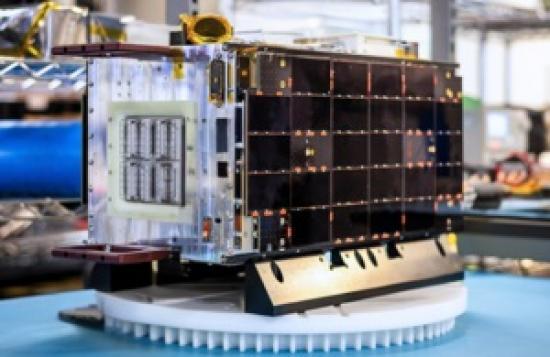
Three new satellites built in Scotland launched aboard SpaceX's Transporter-16 mission, marking a significant step forward for UK leadership in laser communications, spacecraft manufacturing, and the operation of satellite constellations. The satellites, developed by Spire Global and AAC Clyde Space in Glasgow, are backed by UK Space Agency funding delivered through the European Space Agency's Pioneer Programme, which helps emerging UK space companies become new mission providers. The Pioneer Programme falls within the programme of Advanced Research in Telecommunications Systems (ARTES). The government has identified satellite communications as a priority area for further support, due to its increasingly important role in both civil and defence applications, from delivering broadband services to remote areas to providing secure connectivity for military operations. As part of this commitment, the UK Space Agency will invest more than £600 million in satellite communications research & development over the coming years. Optical inter-satellite links tested by Spire Global UK One of the satellites was launched by Spire Global UK to test an innovative optical inter-satellite link (ISL) payload. Designed to demonstrate high-speed laser crosslinks on a compact 6U platform, the mission aims to significantly reduce data latency for aviation, maritime, weather and space-weather services. The technology, once validated, will support near-real-time global data delivery across nanosatellite constellations. AAC Clyde Space demonstrates UK's high-volume production capability As part of the xSPANCION project, two satellites were developed by AAC Clyde Space, in collaboration with several UK partners, including Bright Ascension Ltd., the University of Strathclyde, the Satellite Applications Catapult, Alden Legal and D-Orbit UK. These satellites represent the first in-orbit demonstration of the UK's emerging high-volume, low-cost satellite production and operations capability. The satellites will form part of VIREON™, AAC Clyde Space's new constellation designed to enhance decision-making across agriculture, forestry and environmental management, delivering space-enabled insights to governments, industry and environmental organisations. Supporting growth and innovation in Scotland and across the UK Together, the missions strengthen British capability across optical ISL technologies, volume manufacturing, advanced operations platforms and high-skilled jobs across the UK supply chain. They also demonstrate Glasgow's position as the leading city for small satellite manufacturing in Europe. Henny Sands, Head of Telecommunications at the UK Space Agency, yesterday said: This Transporter-16 launch marks an important step forward for the UK's ambitions in next-generation satellite communications. By supporting both breakthrough optical technologies and high-volume production methods, we are enabling British companies to lead in the markets that will define the future of global connectivity. Companies can also apply to an open funding call from the UK Space Agency's Connectivity in Low Earth Orbit (C-LEO) programme, with £30 million currently available to support the development of new components and technologies for satellite constellations, with a further funding call due to open later this year.

Delta Deal Gives Amazon Big Win in Airline Battle Against SpaceX
Delta Air Lines Inc. will use Amazon.com Inc.'s satellites to deliver in-flight Wi-Fi service, a big win for the e-commerce giant's space business as it vies with Elon Musk's Starlink for aviation customers. Delta agreed to install the Amazon Leo internet service on 500 aircraft starting in 2028, enabling faster and more reliable internet to support streaming video and messaging, according to a Tuesday announcement from the airline. The partnership deepens competition among carriers hoping to offer faster, free onboard connectivity. SpaceX's Starlink network, which has more than 9,000 satellites in low-Earth orbit, has made rapid inroads into the aviation market. British Airways, Air France and Emirates are among the airlines that have agreed to use Starlink. United Airlines Holdings Inc. expects to equip more than 500 mainline aircraft with Starlink Wi-Fi by the end of this year, bringing the total across its fleet to more than 800 planes. Southwest Airlines Co. said it plans to install Starlink on more than 300 jets by the end of 2026. The popularity of Starlink reflects in part SpaceX's big head start over Amazon, which has a few hundred satellites in orbit for a planned network of more than 3,200. Amazon Leo is expected to begin commercial service in 2026. Before the Delta announcement, Amazon's only aviation customer for in-flight Wi-Fi was JetBlue Airways. The faster network "will enable things like the entire plane to be streaming 4K videos, and scenarios where you have people coming from vacation and they wanna upload high-resolution photos, videos, et cetera," Amazon Leo Vice President Chris Weber said in an interview. Delta currently relies on satellite operators Viasat Inc. and EchoStar Corp.'s Hughes Network Systems to provide connectivity across its fleet. The airline said it will continue working with multiple providers to equip different aircraft with the appropriate technology. The move is part of a broader race among US carriers to offer faster, free and more reliable Wi-Fi as a way to attract and retain customers. Airlines are increasingly tying connectivity to loyalty programs and premium offerings, turning onboard internet into a key part of the travel experience. American Airlines Inc. plans to complete the rollout of free Wi-Fi across nearly all of its single-aisle aircraft and regional jets by early spring through a partnership with AT&T Inc. Delta has been expanding free Wi-Fi across its fleet since 2023, offering the service to SkyMiles members through a partnership with T-Mobile US Inc. The airline said more than 163 million members have used its onboard connectivity to date, as it works to extend coverage across its global network. "We have almost 1,200 airplanes today with fast free Wi-Fi for our members -- that's been a reality for years," said Ranjan Goswami, Delta's Chief Marketing and Product Officer, in an interview. "Everyone else is sort of just jumping on the bandwagon now." Delta is open to exploring other opportunities to partner with Amazon in areas such as content, shopping or gaming, he said.
The Real Stakes in the DOW vs. Anthropic AI Battle: Part II - HSToday
White House Launches Official Mobile App for Real-Time Updates and Public Engagement From terrorism to the homeland security business enterprise, for over 20 years Kristina Tanasichuk has devoted her career to educating and informing the homeland community to build avenues for collaboration, information sharing, and resilience. She has worked in homeland security since 2002 and has founded and grown some of the most renowned organizations in the field. Prior to homeland she worked on critical infrastructure for Congress and for municipal governments in the energy sector and public works. She has 25 years of lobbying and advocacy experience on Capitol Hill on behalf of non- profit associations, government clients, and coalitions. In 2011, she founded the Government & Services Technology Coalition, a non-profit member organization devoted to the missions of the U.S. Department of Homeland Security and all the homeland disciplines. GTSC focuses on developing and nurturing innovative small and mid-sized companies (up to $1 billion) working with the Federal government. GTSC's mission is to increase collaboration, information exchange, and constructive problem solving around the most challenging homeland security issues facing the nation. She acquired Homeland Security Today (www.HSToday.us) in 2017 and has since grown readership to over one million hits per month and launched and expanded a webinar program to law enforcement across the US, Canada, and international partners. Tanasichuk is also the president and founder of Women in Homeland Security, a professional development organization for women in the field of homeland security. As a first generation Ukrainian, she was thrilled to join the Advisory Board of LABUkraine in 2017. The non-profit initiative builds computer labs for orphanages in Ukraine and in 2018 built the first computer lab near Lviv, Ukraine. At the start of Russia's invasion of Ukraine, she worked with the organization to pivot and raise money for Ukrainian troop and civilian needs. She made several trips to Krakow, Poland to bring vital supplies like tourniquets and water filters to the front lines, and has since continued fundraising and purchasing drones, communications equipment, and vehicles for the war effort. Most recently she was named as the Lead Advisor to the First US-Ukraine Freedom Summit, a three-day conference and fundraiser to support the rehabilitation and reintegration of Ukrainian war veterans through sports and connection with U.S. veterans. She served as President and Executive Vice President on the Board of Directors for the InfraGard Nations Capital chapter, a public private partnership with the FBI to protect America's critical infrastructure for over 8 years. Additionally, she served on the U.S. Coast Guard Board of Mutual Assistance and as a trustee for the U.S. Coast Guard Enlisted Memorial Foundation. She graduated from the Drug Enforcement Agency's and the Federal Bureau of Investigation's Citizens' Academies, in addition to the Marine Corps Executive Forum. Prior to founding the Government Technology & Services Coalition she was Vice President of the Homeland Security & Defense Business Council (HSDBC), an organization for the largest corporations in the Federal homeland security market. She was responsible for thought leadership and programs, strategic partnerships, internal and external communications, marketing and public affairs. She managed the Council's Executive Brief Series and strategic alliances, as well as the organization's Thought Leadership Committee and Board of Advisors. Prior to this, she also founded and served for two years as executive director of the American Security Challenge, an event that awarded monetary and contractual awards in excess of $3.5 million to emerging security technology firms. She was also the event director for the largest homeland security conference and exposition in the country where she created and managed three Boards of Advisors representing physical and IT security, first responders, Federal, State and local law enforcement, and public health. She crafted the conference curriculum, evolved their government relations strategy, established all of the strategic partnerships, and managed communications and media relations. Tanasichuk began her career in homeland security shortly after September 11, 2001 while at the American Public Works Association. Her responsibilities built on her deep understanding of critical infrastructure issues and included homeland security and emergency management issues before Congress and the Administration on first responder issues, water, transportation, utility and public building security. Prior to that she worked on electric utility deregulation and domestic energy issues representing municipal governments and as professional staff for the Chairman of the U.S. House Committee on Energy & Commerce. Tanasichuk has also worked at the American Enterprise Institute, several Washington, D.C. associations representing both the public and private sectors, and the White House under President George H.W. Bush. Tanasichuk also speaks extensively representing small and mid-sized companies and discussing innovation and work in the Federal market at the IEEE Homeland Security Conference, AFCEA's Homeland Security Conference and Homeland Security Course, ProCM.org, and the Security Industry Association's ISC East and ACT-IAC small business committee. She has also been featured in CEO Magazine and in MorganFranklin's http://www.VoicesonValue.com campaign. She is a graduate of St. Olaf College and earned her Master's in Public Administration from George Mason University. She was honored by the mid-Atlantic INLETS Law Enforcement Training Board with the "Above and Beyond" award in both 2019 - for her support to the homeland security and first responder community for furthering public private partnerships, creating information sharing outlets, and facilitating platforms for strengthening communities - and 2024 - for her work supporting Ukraine in their defense against the Russian invasion. In 2016 she was selected as AFCEA International's Industry Small Business Person of the Year, in 2015 received the U.S. Treasury, Office of Small Disadvantaged Business Utilization Excellence in Partnership award for "Moving Treasury's Small Business Program Forward," as a National Association of Woman Owned Businesses Distinguished Woman of the Year Finalist, nominated for "Friend of the Entrepreneur" by the Northern Virginia Technology Council, Military Spouse of the Year by the U.S. Coast Guard in 2011, and for a Heroines of Washington DC award in 2014. She is fluent in Ukrainian.

Romanian-built EMISAR satellite launched into orbit aboard SpaceX rocket
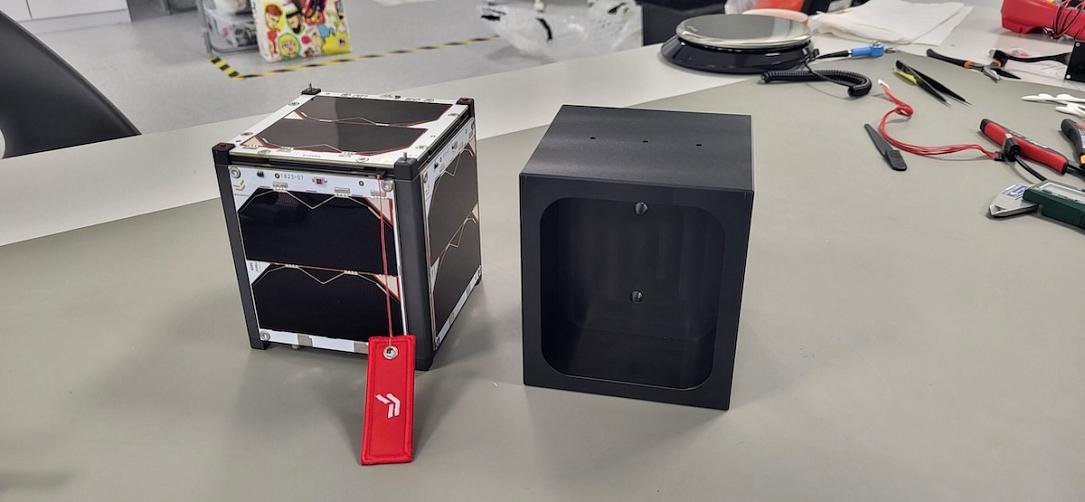
A Romanian-built satellite has been successfully launched into space aboard a SpaceX Falcon 9 rocket, marking a major step forward for the country's space capabilities. The satellite, named EMISAR, is part of the Transporter-16 mission and was launched from California on March 30, Euronews Romania reported. Developed by a national consortium, EMISAR is a communications satellite designed to enable secure transmission of digital messages between geographically dispersed ground stations. The project brings together expertise from the Institute of Space Science, Romanian InSpace Engineering, RARTEL, and Constanța Maritime University. According to Claudiu Cherciu, the project's technical director, the satellite has already begun initial operations. "The EMISAR satellite was placed into orbit [...] and we are pleased to announce that we achieved the first reception from the ground station and successfully heard it. We are continuing the next steps to bring it into full operation," he told Antena 3 CNN. Cherciu added that the satellite is a compact cube, measuring roughly 10 centimeters on each side, and is designed primarily to demonstrate the secure transmission of messages between ground stations. According to the Romanian InSpace Engineering website, the EMISAR satellite, the newest 1U CubeSat developed in Romania, "operates by storing data onboard the satellite and retransmitting it during subsequent orbital passes. This approach enhances data transfer capabilities in scenarios where real-time connectivity is limited, making it particularly relevant for Earth observation, environmental monitoring, and communications in remote areas." Before launch, EMISAR underwent extensive testing in line with European Space Agency requirements, including vibration and thermal vacuum tests to simulate launch and space conditions. The mission represents a strategic milestone for Romania, demonstrating its ability to design, integrate, and operate complete space systems, the same source said. It also highlights the growing role of low Earth orbit satellites, which offer lower costs and faster deployment compared to traditional geostationary systems.
Crash Closes A303 in Wiltshire - Traffic Chaos Hits Hard
The A303 in Wiltshire is shut both ways between the A360 at Winterbourne Stoke and the A345 near Amesbury. The cause? A nasty three-car smash just after 5.45pm tonight. Expect Delays as Emergency Services Tackle Incident The collision has sparked major disruption, grinding traffic to a halt in the area. Commuters and travellers are urged to steer clear or prepare for significant delays.

South Africa's fuel price crisis: Chaos at filling stations ahead of record hikes
As South Africans dread the highest fuel price hike that the nation has ever seen, there has been panic buying and pure pandemonium at filling stations across the country. Motorists have also been capped on how much fuel they can put into their vehicles. An IOL journalist based in the north-western suburbs of Johannesburg said several filling stations, including the BP in Boskruin and the Shell in Randpark Ridge, were closed as they had run out of fuel by 6pm on Monday night. "One filling station that did have fuel was the Total filling station in Northwold, where only regulars were being allowed to refill a maximum of 30 litres of fuel. "Petrol attendants said they were expecting more fuel on Tuesday, while there was uncertainty at the closed filling stations, with petrol attendants only indicating they do not know when fuel stocks would be refilled," the journalist said. Social media users also took to platforms to complain that they were barred from filling up for more than R150 at a time, with some filling stations banning the use of jerry cans. In KwaZulu-Natal (KZN), the 45th Engen Woolworths Food Convenience along King Cetshwayo Highway in Sherwood, Durban, notified motorists on their Facebook page on March 28 that only one (EFT) swipe would be made available. "With the increase in demand for fuel, it has put pressure on our holding supply. Deliveries out of depot are delayed by hours; it is a wait-and-see game for the fuel truck to arrive." To maintain pumping fuel at 45th Engen, we need to have a maximum fill-up amount when our tanks are low. Therefore, at times you could see signs go up to restrict litres per vehicle; once the delivery is in, restrictions will be removed. "If you do fill and return shortly again, unless cash, your swipe could decline for two swipes. To keep business flowing, we need to put these steps in place. Please do not be angry with the attendant, as he is just following instructions. In no way are we keeping volume to have a money gain on price increase, never have and never will. Thank you for understanding with us as this matter is out of our control. [sic]" Another motorist from Cape Town, Shaquile Fortuin, who has a diesel vehicle, said this price hike has set him back tremendously. "This increase has a big financial impact on us. Fuel was already high, and now it's going up even more. It kills a person's pockets. We will now need to cut down on groceries or other things in life to cover these extra costs. It's not like our salaries are being increased. I literally had to buy a jerry can to buy in diesel to have enough money for the month. This increase is going to have a bad result on households," Fortuin said. On Tuesday, March 31, the Tshwane mayoral committee member for roads and transport, Councillor Tlangi Mogale, said commuters making use of the Tshwane Bus Service (TBS) had to be informed of the current fuel supply challenges it is experiencing, which are significantly affecting normal bus operations. Mogale said the bus service operates 155 daily shifts across its three depots, namely: * C De Wet: 102 shifts * Pretoria North: 31 shifts * East Lynne: 22 "At present, all three TBS depot filling stations have run out of fuel. This situation has had a major impact on operations, resulting in a reduced number of buses in service and the disruption of scheduled trips. From yesterday (Monday), only 65 of the planned 155 shifts were able to operate, using the limited fuel that remained," Mogale said. She said there was a strong likelihood that bus services would operate by Tuesday afternoon should fuel supplies be restored in time. Commuters have been urged to make alternative arrangements should the problem persist. Month-end data from the Central Energy Fund is pointing to petrol price increases of between R5.31 for 93 Unleaded and R5.82 for 95 Unleaded. Diesel looks set to increase by between R10.13 in the case of 500ppm and R10.27 for the cleaner 50ppm. However, government announced on Tuesday that it is providing a temporary tax break to the tune of R3. [email protected] IOL Get your news on the go. Download the latest IOL App for Android and IOS now.

Trump threatens to leave allies facing economic chaos by 'ending war without reopening Strait of Hormuz'
Donald Trump has said he is willing to end the US military campaign in Iran even if the Strait of Hormuz remains closed, according to a report, leaving Tehran in control of the vital shipping lane and prolonging economic chaos. The US president told aides that a mission to forcibly reopen the strait would push the war beyond his timeline of four to six weeks, according to administration officials who spoke to The Wall Street Journal. Instead, he has reportedly decided to focus on his goal of dismantling Iran's navy and missile stocks, while using diplomatic pressure on Tehran to try to resume the flow of trade, before concluding the conflict. If this fails, then Mr Trump would get his allies in Europe and the Gulf - countries that rely on the maritime passage for imports and exports - to front the operation to pry it open. It comes as Iran struck a fully loaded Kuwaiti oil tanker in the Persian Gulf, while the US military bombed targets in Isfahan. The city in central Iran is home to one of three sites which were attacked by Washington in June 2025 and some of Iran's highly enriched uranium is likely stored or buried there. The Strait of Hormuz has become Iran's biggest pressure point in the war, with the regime imposing a de facto blockade on the waterway, upending global oil and gas supplies, which have caused energy prices to surge. The Islamic Republic has allowed some ships to pass through in a "tollbooth" system, where vessels pay as much as $2m per voyage or according to particular political and financial conditions. The prolonged closure of the chokepoint threatens to extend disruption to the world's energy supplies, with the prices per barrel of oil continuing to rise above $100 - the first time since 2022. Over the past month, Mr Trump has made conflicting statements on his intentions in Iran. At times, he has threatened to bomb the country's energy infrastructure or seize its main oil terminal on Kharg island, but he has also appeared to downplay the Strait of Hormuz's importance, saying it is up to other countries to reopen. Over the weekend, the USS Tripoli and the 31st Marine Expeditionary Unit entered the region, while thousands of soldiers from the US army's elite 82nd Airborne Division have also arrived in the Middle East. Reuters reported that no decision has been made for American boots on the ground in Iran, but that they are there for any potential future operations. On Monday, White House press secretary Karoline Leavitt told reporters that the US was "working towards" normal operations in the strait, but didn't include it among its main military objectives. Other administration officials have also appeared to show no urgency for immediately reopening the waterway. In an interview on Fox News on Monday, Treasury secretary Scott Bessent suggested that eventually the US or other countries would provide escorts for ships. "The market is well-supplied, and we are seeing more and more ships go through on a daily basis as individual countries cut deals with the Iranian regime for the time being," he said. "But over time, the US is going to retake control of the straits, and there will be freedom of navigation, whether it is through US escorts or a multinational escort." Earlier this month, a group of countries, including the UK, France, and Germany, issued a joint statement expressing their "readiness to contribute to appropriate efforts to ensure safe passage through the [Hormuz] Strait."
SpaceX IPO: How Nasdaq's New Rule Could Fast-Track Index Inclusion in Just 15 Days - Blockonomi
Analysts at Morningstar identify potential 20-30% volatility swings triggered by Elon Musk-related developments Elon Musk's aerospace venture, SpaceX, stands on the brink of executing what would become the largest initial public offering ever witnessed in financial markets. The rocket manufacturer aims to secure up to $75 billion through its public debut, dramatically surpassing Saudi Aramco's existing benchmark of approximately $30 billion established in 2019. The aerospace giant has either submitted or will imminently submit confidential registration paperwork to the Securities and Exchange Commission. This confidential pathway originated from the 2012 Jumpstart Our Business Startups (JOBS) Act, initially crafted to streamline public market access for emerging companies. Subsequent amendments in 2017 broadened eligibility, enabling major corporations such as Uber and Airbnb to utilize this route. The confidential submission mechanism permits SpaceX and regulatory authorities to conduct private evaluations of registration materials before public disclosure. This approach safeguards proprietary financial data and strategic intelligence during preliminary review stages. Financial projections for SpaceX appear remarkably robust. Industry observers anticipate the company's Ebitda profit margins could reach 50%, significantly outpacing the roughly 20% average recorded by aerospace firms within the S&P 500. On March 30, Nasdaq officially announced that beginning May 1, newly public large-capitalization companies can secure Nasdaq-100 index membership within just 15 trading days following their listing. This represents a dramatic departure from previous requirements mandating waits of up to twelve months. This policy revision emerged after representatives for SpaceX reportedly engaged Nasdaq and competing index providers earlier this year to advocate for expedited inclusion mechanisms. Rapid entry into prominent indexes would automatically activate purchasing by passive funds tracking these benchmarks, substantially enhancing liquidity for existing shareholders. Betting platform Kalshi currently assigns 81% probability to a SpaceX IPO occurring before August 1. Musk has additionally committed to reserving up to 30% of IPO shares for individual retail investors. Morgan Stanley's E*Trade platform reportedly leads negotiations to facilitate retail distribution. Competing platforms Robinhood and SoFi appear excluded from current arrangements. Franco Granda, an analyst with Morningstar, highlighted what he terms the "Musk Effect" as a significant consideration for prospective investors. He referenced Tesla's track record, where corporate governance controversies and political activities involving Musk generated average stock fluctuations approaching 12%. For SpaceX, given its extraordinarily limited public float of just 3-4%, comparable events could trigger substantially more pronounced price movements. Both Morningstar and PitchBook analysts project potential swings between 20-30% following similar catalysts. Granda further observed that while SpaceX leadership consistently achieves stated objectives, punctuality remains challenging. Only approximately 20% of initiatives meet original timelines, with remaining projects experiencing delays spanning two to three years. SpaceX is actively promoting space-based artificial intelligence computing infrastructure as a fundamental component of its expansion roadmap. Musk maintains that solar-powered orbital data facilities will achieve cost advantages over terrestrial alternatives within several years. Once the S-1 registration statement becomes publicly accessible, investors will gain comprehensive financial visibility into a company executing more than half of all orbital launches globally.
Palo Alto CEO Nikesh Arora Warns OpenAI, Anthropic Models Could Boost Cyberattacks Within Six Months -- 'Th
25-Minute Window In a blog post published Monday, Arora said these AI models will be easily accessible to anyone possessing a credit card and a computer, thereby enabling even a single malicious actor to carry out campaigns that previously required entire teams. The cybersecurity firm's top boss said that companies' heavy reliance on multiple vendors and aging open-source dependencies creates a large attack surface, with new AI models increasingly adept at uncovering overlooked vulnerabilities. AI-powered attacks could go from breach to data theft in just 25 minutes, while most firms take days to detect intrusions, stressing that no company -- including AI data centers -- is immune, he noted. Fighting AI Threats With Smarter AI However, Arora also sees potential for these models to be part of the defense. "The strategy is clear: we must fight AI with AI," he said. He emphasized the need for AI labs to release these capabilities responsibly and for defenders to swiftly leverage these capabilities. "The stakes are high," he wrote. "The window to act is open, and we need to act swiftly with intent, together. Arora Signals Confidence Amid Wider Sell-Off Disclaimer: This content was partially produced with the help of AI tools and was reviewed and published by a Benzinga editor. Image via Shutterstock Market News and Data brought to you by Benzinga APIs To add Benzinga News as your preferred source on Google, click here.

Chaos at Gilgil Hills as parents clash with police over death of toddler Faiz Faraj
#ktnnews #KTNNewsDigital #ktnkenya #KTNTV #KTNHome #KenyaNews 🔴 LIVE: KTN News Kenya | Breaking News & Entertainment Hub Welcome to the 24/7 KTN Kenya News Channel on YouTube - your trusted source for the latest news and updates in Kenya and beyond. Stay informed with our comprehensive news coverage, breaking stories, in-depth analysis, and exclusive reports. Our live-streaming service brings you real-time updates on current affairs, politics, business, technology, health, entertainment, and much more. Join us and be a part of the conversation, and don't forget to subscribe for the latest news and updates. Stay connected with KTN Kenya News, your reliable news partner. #KTNKenya #NewsChannel #BreakingNews #KenyaNews #ktnprime #livestream #livenews SUBSCRIBE to our YouTube channel for more great videos: https://www.youtube.com/ktnnewskenya Follow us on Twitter: https://twitter.com/KTNNewsKe Like us on Facebook: https://www.facebook.com/KTNNewsKenya KTN News is a leading 24-hour TV channel in Eastern Africa with its headquarters located along Mombasa Road, at Standard Group Centre. This is the most authoritative news channel in Kenya and beyond. Watch KTN Live http://www.ktnnews.com/live Watch KTN News http://www.ktnnews.com Follow us on http://www.twitter.com/ktnnews Like us on http://www.facebook.com/ktnnews

Fortune Tech: Microsoft revamps Copilot -- with Anthropic | Fortune
Good morning. Artificial intelligence is turning into a major front in the ongoing battle between President Donald Trump and California Governor Gavin Newsom. On Monday, Newsom signed an executive order requiring certain guidelines for AI companies doing business with California. The order calls for California to vet AI companies based on their policies ensuring that their models don't display bias, violate civil rights or free speech, or contribute to the distribution of illegal content such as child sexual abuse material. Just over a week ago, the Trump administration floated a framework for a federal AI policy that seeks to supersede state AI laws so as to prevent what it calls a "patchwork of conflicting state laws." And in December, Trump even instructed the Justice Department to sue states which pass their own AI laws. Newsom's order involves only companies that contract with the state of California, so it may not directly contravene Trump's efforts to freeze state AI regulation. But Newsom is clearly thumbing his nose at Trump -- the press release even cites the "Trump administration's recent contracting missteps," referring to the Pentagon's controversial blacklisting of Anthropic. Microsoft has announced upgrades to its Copilot research assistant that allow multiple AI models -- including OpenAI's GPT and Anthropic's Claude -- to be used together within the same workflow. This includes a new Critique feature where GPT drafts a response, then Claude reviews it for completeness and citation integrity before it reaches the user. Microsoft says the workflow will eventually run bidirectionally. The move is a direct attempt to address issues around AI errors (known as hallucinations) and boost the reliability of AI tools -- problems that have slowed enterprise adoption of Copilot amid stiff competition from Google's Gemini and Anthropic's Claude. A separate Model Council feature will allow users to compare outputs from different models side-by-side. Microsoft is also rolling out Copilot Cowork -- its agentic AI tool for long-running, multi-step tasks -- to members of its Frontier early-access program. The product, based on Anthropic's Claude Cowork, was first unveiled earlier this month. -- Beatrice Nolan OpenAI's abrupt decision earlier this month to kill Sora, its AI video creator, is one of the most baffling developments in the AI business -- not least because OpenAI had just struck a high-profile deal with Walt Disney Co. months before. The Wall Street Journal has new details that shed a bit more light on what happened. According to the report, OpenAI's decision to pull the plug on Sora was as big a surprise to execs at Disney as it was to the rest of us, with many Disney folks learning of the plan less than one hour before the announcement. But why did OpenAI kill Sora? The direct cause was Spud, a new large language model that OpenAI is racing to put through its final training process. OpenAI has a finite amount of computing capacity on which to train its models, and Sora was simply hogging up too many resources for a product that wasn't a priority. As for why Sora wasn't a priority, the WSJ reports that usage peaked at around a million users shortly after its launch in September, and has declined to about half that since then. What's more, the hefty computing power necessary to create the videos means that Sora is losing about $1 million a day for OpenAI, an anonymous source told the WSJ. There's clearly still a lot more to learn about the death of Sora (and if you have any insight, please reach out: [email protected]), but at least we now have a chalk outline of the body and some bullet casings to examine. -- AO Mistral, one of France's top AI companies, has raised $830 million in debt to build a data center about 40 miles south of Paris. The AI data center is expected to begin operating in Q2 and will pack 13,800 Nvidia GPUs. Mistral will use the data center to train its latest open source large language models, according to Bloomberg. The company was founded in 2023 by former researchers from Google's DeepMind and Meta, and represents one of Europe's strongest home-grown alternatives to U.S.-based AI giants. As AI tech becomes increasingly important in the global economy and geopolitics, countries across the world are looking at creating sovereign AI and cloud infrastructure. Mistral said it's planning to build 200 megawatts of capacity across Europe by the end of 2027 "to support the demand from governments and enterprises that seek to build and control their own AI." -- AO -- Nvidia's Jensen Huang says 'We've achieved AGI.' But no one can agree on what that means. -- Meta testing a premium subscription on Instagram. Surreptitious Story viewing. -- Uber acquires Berlin-based Chauffeur. Courting the luxury segment. -- What happens when you combine AI and 3,000 Irish bartenders? Lower Guinness prices. -- David Sacks' post-Czar role in the White House. 'More of a change in title than influence.'

What Sam Altman said is the goal of OpenAI, Anthropic CEO Dario Amodei complains we are close to reaching that but there is no...
Sam Altman made a claim in a January 2025 blog post. The OpenAI CEO wrote that his company is "now confident we know how to build AGI as we have traditionally understood it" -- and that OpenAI was already shifting its ambitions beyond that, toward superintelligence. He predicted that 2025 could see the first AI agents materially join the workforce, changing how companies operate at scale. It was a confident, almost matter-of-fact declaration about what has long been considered one of the most consequential technological thresholds in human history.Dario Amodei, CEO of rival AI lab Anthropic, broadly agrees with where things are headed. But speaking to Indian podcaster Nikhil Kamath, Amodei said the reaction -- or lack of one -- from governments and the wider public is deeply troubling. "It is surprising to me that we are, in my view, so close to these models reaching the level of human intelligence," he said. "And yet there doesn't seem to be a wider recognition in society of what's about to happen."Amodei didn't mince words. He said society is effectively dismissing a threat it can already see coming. "It is as if this tsunami is coming at us, and you know it's so close we can see it on the horizon, and yet people are coming up with these explanations for 'oh, it's not actually a tsunami -- that's just a trick of light.'" He said government hasn't done enough to address the risks, and that an ideology pushing for maximum acceleration -- without adequate caution -- has taken hold in parts of the industry.That last part is notable coming from Amodei. He is not a doomer by instinct. He wrote "Machines of Loving Grace" in 2024 -- a lengthy, optimistic essay imagining AI compressing decades of medical progress into years, eliminating diseases and extending lifespans. But he told Kamath that enthusiasm for the technology's benefits hasn't been matched by an "appropriate realization of risk," and certainly not by meaningful action.Altman's framing is largely forward-looking and bullish. In his "Reflections" post, he wrote that "superintelligent tools could massively accelerate scientific discovery and innovation well beyond what we are capable of doing on our own." He has also acknowledged AGI is a "sloppy term," but his direction of travel is clear -- OpenAI wants to build something smarter than humans, and it believes it's close.Amodei shares the timeline. He doesn't share the calm. His concern, as expressed to Kamath, is that the window for society to prepare is shrinking fast -- and that the people best positioned to sound the alarm are the same ones racing to build the thing.

Spain strikes lead to missed flights as Brits warned over Easter travel chaos
Following the first morning of the industrial action on Monday, the local news outlet, Majorca Daily Bulletin, reported that 12 flights were delayed at Palma airport, which also affected Ibiza airport. While further reports are yet to be published, there are no indications of the strikes concluding anytime soon, with lengthier queues anticipated at Spanish airports, alongside delayed luggage drops and slower boarding, reports the Mirror.

Houston's airport chaos shows it's time to rethink TSA
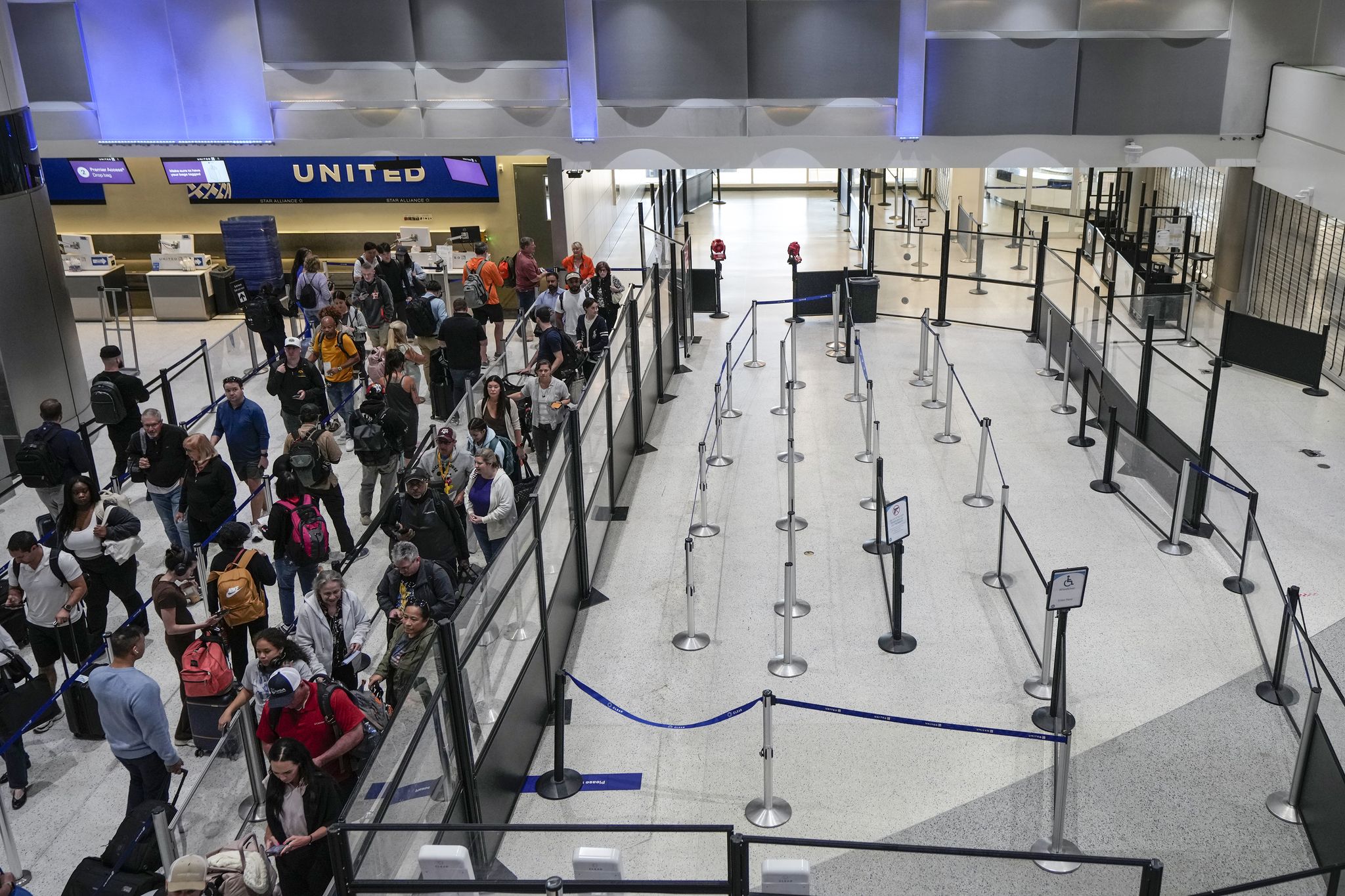
Canada, Europe and 20 U.S. airports have found a way to promote safety without relying on federal workers. While Congress continues to battle over homeland security legislation, Transportation Security Administration workers are finally getting paid through an executive order. That's a relief, but the collateral damage of the partial shutdown cannot be undone. Hundreds of airport screeners quit, and travelers waited in hours-long security lines. George Bush Intercontinental Airport had some of the worst TSA lines in the nation, with some travelers waiting up to four hours.
Trump threatens to leave allies facing economic chaos by 'ending war without reopening Strait of Hormuz'
Add Yahoo as a preferred source to see more of our stories on Google. Donald Trump has said he is willing to end the US military campaign in Iran even if the Strait of Hormuz remains closed, according to a report, leaving Tehran in control of the vital shipping lane and prolonging economic chaos. The US president told aides that a mission to forcibly reopen the strait would push the war beyond his timeline of four to six weeks, according to administration officials who spoke to The Wall Street Journal. Instead, he has reportedly decided to focus on his goal of dismantling Iran's navy and missile stocks, while using diplomatic pressure on Tehran to try to resume the flow of trade, before concluding the conflict. If this fails, then Mr Trump would get his allies in Europe and the Gulf - countries that rely on the maritime passage for imports and exports - to front the operation to pry it open. It comes as Iran struck a fully loaded Kuwaiti oil tanker in the Persian Gulf, while the US military bombed targets in Isfahan. The city in central Iran is home to one of three sites which were attacked by Washington in June 2025 and some of Iran's highly enriched uranium is likely stored or buried there. The Strait of Hormuz has become Iran's biggest pressure point in the war, with the regime imposing a de facto blockade on the waterway, upending global oil and gas supplies, which have caused energy prices to surge. The Islamic Republic has allowed some ships to pass through in a "tollbooth" system, where vessels pay as much as $2m per voyage or according to particular political and financial conditions. The prolonged closure of the chokepoint threatens to extend disruption to the world's energy supplies, with the prices per barrel of oil continuing to rise above $100 - the first time since 2022. Over the past month, Mr Trump has made conflicting statements on his intentions in Iran. At times, he has threatened to bomb the country's energy infrastructure or seize its main oil terminal on Kharg island, but he has also appeared to downplay the Strait of Hormuz's importance, saying it is up to other countries to reopen. Over the weekend, the USS Tripoli and the 31st Marine Expeditionary Unit entered the region, while thousands of soldiers from the US army's elite 82nd Airborne Division have also arrived in the Middle East. Reuters reported that no decision has been made for American boots on the ground in Iran, but that they are there for any potential future operations. On Monday, White House press secretary Karoline Leavitt told reporters that the US was "working towards" normal operations in the strait, but didn't include it among its main military objectives. Other administration officials have also appeared to show no urgency for immediately reopening the waterway. In an interview on Fox News on Monday, Treasury secretary Scott Bessent suggested that eventually the US or other countries would provide escorts for ships. "The market is well-supplied, and we are seeing more and more ships go through on a daily basis as individual countries cut deals with the Iranian regime for the time being," he said. "But over time, the US is going to retake control of the straits, and there will be freedom of navigation, whether it is through US escorts or a multinational escort." Earlier this month, a group of countries, including the UK, France, and Germany, issued a joint statement expressing their "readiness to contribute to appropriate efforts to ensure safe passage through the [Hormuz] Strait."
Scottish space companies pioneer next-generation satellite communications with SpaceX launch
Three new satellites built in Scotland launched aboard SpaceX's Transporter-16 mission, marking a significant step forward for UK leadership in laser communications, spacecraft manufacturing, and the operation of satellite constellations. The satellites, developed by Spire Global and AAC Clyde Space in Glasgow, are backed by UK Space Agency funding delivered through the European Space Agency's Pioneer Programme, which helps emerging UK space companies become new mission providers. The Pioneer Programme falls within the programme of Advanced Research in Telecommunications Systems (ARTES). The government has identified satellite communications as a priority area for further support, due to its increasingly important role in both civil and defence applications, from delivering broadband services to remote areas to providing secure connectivity for military operations. As part of this commitment, the UK Space Agency will invest more than £600 million in satellite communications research & development over the coming years. Optical inter-satellite links tested by Spire Global UK One of the satellites was launched by Spire Global UK to test an innovative optical inter-satellite link (ISL) payload. Designed to demonstrate high-speed laser crosslinks on a compact 6U platform, the mission aims to significantly reduce data latency for aviation, maritime, weather and space-weather services. The technology, once validated, will support near-real-time global data delivery across nanosatellite constellations. AAC Clyde Space demonstrates UK's high-volume production capability As part of the xSPANCION project, two satellites were developed by AAC Clyde Space, in collaboration with several UK partners, including Bright Ascension Ltd., the University of Strathclyde, the Satellite Applications Catapult, Alden Legal and D-Orbit UK. These satellites represent the first in-orbit demonstration of the UK's emerging high-volume, low-cost satellite production and operations capability. The satellites will form part of VIREON™, AAC Clyde Space's new constellation designed to enhance decision-making across agriculture, forestry and environmental management, delivering space-enabled insights to governments, industry and environmental organisations. Supporting growth and innovation in Scotland and across the UK Together, the missions strengthen British capability across optical ISL technologies, volume manufacturing, advanced operations platforms and high-skilled jobs across the UK supply chain. They also demonstrate Glasgow's position as the leading city for small satellite manufacturing in Europe. Henny Sands, Head of Telecommunications at the UK Space Agency, said, "This Transporter-16 launch marks an important step forward for the UK's ambitions in next-generation satellite communications. By supporting both breakthrough optical technologies and high-volume production methods, we are enabling British companies to lead in the markets that will define the future of global connectivity. Companies can also apply to an open funding call from the UK Space Agency's Connectivity in Low Earth Orbit (C-LEO) programme, with £30 million currently available to support the development of new components and technologies for satellite constellations, with a further funding call due to open later this year.
From Chaos To Charm: Inside The World's Most Memorable Markets
Across cities and continents, these markets prove that disorder often has its own rhythm -- and its own kind of beauty. Markets are rarely quiet, rarely orderly, and almost never designed for comfort. That's part of their appeal. They operate on instinct rather than structure, drawing you in with noise, colour, and the constant sense that something is happening just out of view. From food to textiles to objects you didn't know you needed, the best markets are less about shopping and more about immersion. Take Brooklyn Flea, where vintage finds, independent labels, and food stalls coexist without much hierarchy. It feels curated, but never overly controlled. A few aisles down, you might move from antique jewellery to small-batch ceramics, then to a plate of something freshly made. It's a market that understands how to balance nostalgia with newness. In Nuremberg Christkindlesmarkt, the atmosphere shifts entirely. Seasonal and steeped in tradition, it's defined by its wooden stalls, handmade ornaments, and the steady presence of mulled wine and baked goods. It's less about discovery and more about ritual, returning each year with a familiarity that people expect. Then there's Damnoen Saduak Floating Market, where the market doesn't sit on land at all. Vendors move through narrow canals in wooden boats, selling everything from fresh produce to cooked meals. The pace is different here, shaped by water rather than foot traffic, but no less active. In Bazurto Market, the energy is immediate and unfiltered. It's loud, crowded, and intensely local, known as much for its street food as for its raw, unpolished character. Nothing feels staged, and that's precisely why it works. Tsukiji Outer Market offers a more precise kind of chaos. Famous for its seafood and street food stalls, it operates with a rhythm that feels fast but controlled. Vendors move quickly, customers follow suit, and the entire space functions with an efficiency that doesn't compromise on experience. In Queen Victoria Market, scale becomes the defining feature. Sprawling and diverse, it moves easily between fresh produce, clothing, and speciality goods. It's a market that accommodates both routine shopping and casual wandering. Further north, Ver-o-Peso sits along the river, its stalls filled with regional ingredients, herbs, and fish brought in daily. It reflects its surroundings closely, shaped by the geography and culture of the Amazon. Closer home, Chandni Chowk remains one of the most layered markets in the world. Narrow lanes, dense crowds, and an overwhelming range of goods define the experience. It can feel chaotic, but there's a system beneath it all, one that regulars navigate with ease. What ties these markets together is not what they sell, but how they function. Each one carries the imprint of its city, shaped by local habits, histories, and rhythms. They may seem disordered at first, but spend enough time in them, and a pattern begins to emerge.

Spain airport strikes chaos as passengers miss flights and face severe delays
The strikes are impacting various Spanish airports, with a warning issued to Brits heading on holiday (Image: Getty Images) Brits heading to Spain during the Easter holidays could face severe travel disruption amid major airport strikes. More than a million travellers could be hit by industrial action taking place at popular destinations across Spain over the coming week. The strikes are being held by Groundforce staff, which provides ground-handling services for several airlines, including easyJet and Jet2. They could impact ground-handling services at Madrid-Barajas, Barcelona-El Prat, Palma de Mallorca, Alicante, Málaga, Gran Canaria, Valencia, Ibiza, Bilbao, Lanzarote and Fuerteventura. More than 3,000 ground-handling staff are expected to be involved in the walkouts, which have been described as an "indefinite strike". They have been called by unions CC OO, UGT and USO, and experts predict that over 1.34 million travellers will be impacted. The industrial action, following a dispute over pay, was due to start last Friday, but was postponed until Monday, 30 March. They are taking place at set times every Monday, Wednesday and Friday, during some of the busiest travel times, including from 5am to 7am, from 11am to 5pm, and from 10pm to midnight, and will continue indefinitely. Following the first morning of the strikes on Monday, the local news outlet, Majorca Daily Bulletin, reported that 12 flights were delayed at Palma airport, which also impacted Ibiza airport. While other reports are yet to be released, there are no signs of the strikes ending anytime soon, with longer queues expected at Spanish airports, along with delayed luggage drops and slower boarding. Travellers on social media reported queues up to 90 minutes, with some claiming that they missed flights after getting stuck in the "chaos" at Terminal 4. In a warning to holidaymakers, the Traveler website reported that "travellers heading to Spain over Easter face a challenging season, as walkouts by airport ground staff threaten queues, baggage delays and potential timetable disruption at some of the country's busiest hubs". It added that "reports indicate that the stoppages are partial rather than full shutdowns, typically concentrated in several time bands during mornings, midday and late evenings. This pattern mirrors earlier labour disputes at Madrid, where limited ground handling strikes created bottlenecks at baggage reclaim and during boarding, while flights continued to operate under minimum service rules." It continued: "For most holidaymakers, the most visible impact of the strikes is likely to be queues and slower processing rather than mass cancellations." In addition, another baggage handler, Menzies, has called for industrial action to take place from April 2 to April 6. These are expected to involve more than 5,000 members of staff with Menzies operating at Barcelona, Palma de Mallorca, Málaga, Alicante, Gran Canaria, Tenerife South and Tenerife North. Groundforce and Menzies had called off their planned industrial action last weekend, before announcing the plans for this week. Spanish airport operator Aena said in a statement: "Groundforce staff have called an indefinite strike starting 30 March. Partial work stoppages will take place on Mondays, Wednesdays and Fridays during three time slots: 5-7am, 11am-5pm, and 10pm-midnight. Please contact the airline to find out the status of your flight." Groundforce has been contacted for comment.

Chaos on major UK motorway as police incident shuts road both ways
The M60 is seeing traffic queues build as the motorway is closed in both directions near Manchester. The closure is affecting J11 Eccles and J10 Trafford Park. All traffic has been stopped both ways. The closure is due to a police-led incident. There are reports of congestion and delays and motorists are urged to avoid the area. Greater Manchester Police are currently in attendance. The M60 is also closed between J12 Winton to J10 Trafford, National Highways said.

Iran mobilizes its hackers to sow chaos, gather intel, and find targets; ex-CISA Director Chris Krebs says Iran is "throwing everything they have at this"
Varsh Sridharan / @varshinesri: Multi-model is the way forward for AI systems. Different models bring their unique strengths, and the best systems will know how to harness all of them. Now I've never heard anybody in the wild to talk about copilot. My family is in medical and banking. They are constrained to the Microsoft ecosystem because Microsoft has an amazing sales team. So I started asking questions, and their responses were hilarious. "Why is everything purple?" "I have to ask it over and over again to do the simplest thing." Watching normies talk about AI, who are not insane crypto grifters migrating to AI, is one of the most healthiest activities you could do.
