News & Updates
The latest news and updates from companies in the WLTH portfolio.
Watch live as SpaceX Falcon 9 lifts off from Florida coast
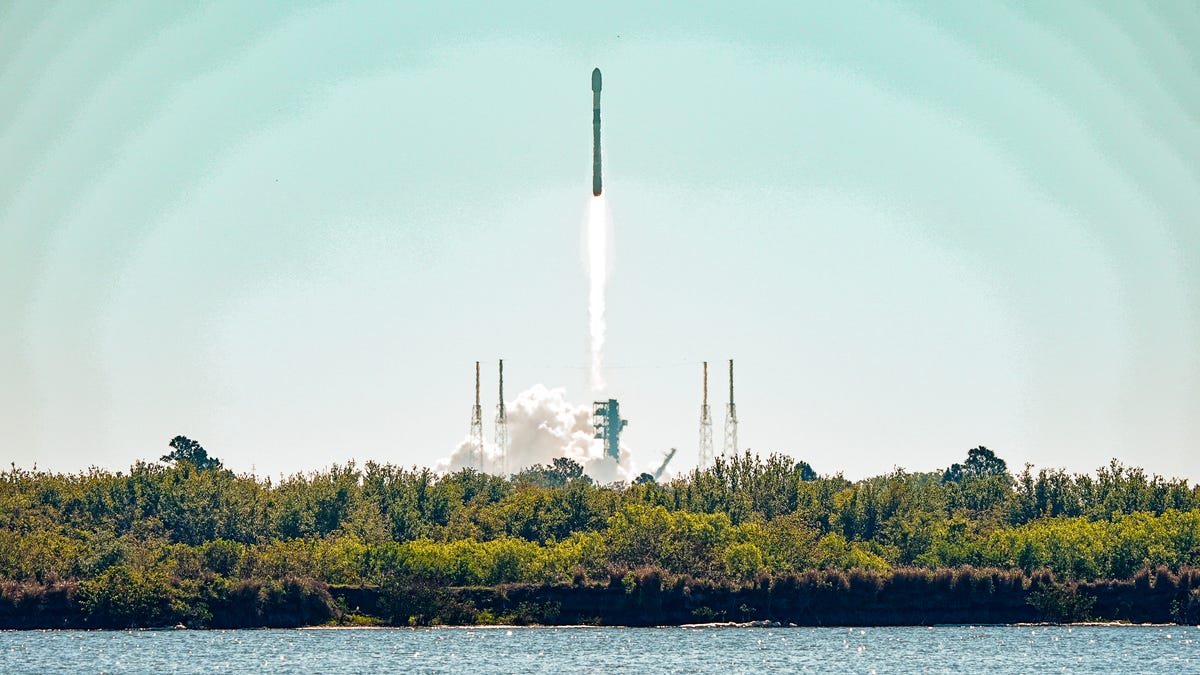
Space Coast, get ready for the rumble. SpaceX is targeting liftoff at 5:15 p.m. from Cape Canaveral Space Force Station's Launch Complex 40. The mission's four-hour launch window will last until 9:15 p.m., should delays occur. The rocket will rise to the northeast from the Cape, then deploy 29 Starlink broadband satellites in low-Earth orbit. Watch the launch live by clicking here or look below: USA TODAY NETWORK - Florida Video Editor Rob Landers is a veteran journalist covering Florida's Space Coast and beyond for nearly three decades. You can reach him at [email protected]
Spire Global Successfully Launches Ten Satellites on SpaceX's Transporter-16 Mission
The mission included a satellite supporting Spire's participation in the MagQuest challenge, an NGA-led initiative to advance measurement of Earth's magnetic field. The satellite carries a first-of-its-kind diamond quantum magnetometer system developed by SBQuantum, designed to provide high-accuracy geomagnetic data for the World Magnetic Model (WMM). Following the launch, Spire will provide data to NOAA's National Centers for Environmental Information and NASA's Goddard Space Flight Center for assessment. The launch also included Spire's seventh Optical Inter-Satellite Link (OISL) satellite, marking a further development in the Company's capabilities for direct optical communication between satellites. This technology enables satellites to communicate directly in orbit using laser links, facilitating faster, more secure data delivery and reducing reliance on ground station proximity. The project is supported by the European Space Agency (ESA) and the UK Space Agency (UKSA) under the Pioneer Partnership Projects. Expanding Commercial Space Services Onboard the launch, Spire-built satellites served missions across Earth observation and IoT connectivity: * HANCOM InSpace: Spire launched Sejong-3, a satellite developed in collaboration with HANCOM InSpace to support satellite data applications. This launch follows the successful deployment of Sejong-1 -- South Korea's first private commercial satellite -- and Sejong-2, further strengthening HANCOM InSpace's expansion of space-based data services. * Myriota: Four satellites were launched, expanding the IoT provider's constellation and global space infrastructure to enable more scalable and reliable IoT connectivity for smart devices worldwide. The four satellites aim to deliver an uplift in performance and resilience across Myriota's IoT network. The mission also included two satellites for a Spire Space Services customer to support space data capabilities for commercial and government clients and one constellation replenishment satellite equipped with ADS-B technology, enhancing global tracking of aircraft for Spire's aviation data services. About Spire Global, Inc. Spire (NYSE: SPIR) is a global provider of space-based data, analytics and space services, offering unique datasets and powerful insights about Earth so that organizations can make decisions with confidence in a rapidly changing world. Spire builds, owns, and operates a fully deployed satellite constellation that observes the Earth in real time using radio frequency technology. The data acquired by Spire's satellites provides global weather intelligence, ship and plane movements, and spoofing and jamming detection to better predict how their patterns impact economies, global security, business operations and the environment. Spire also offers Space as a Service solutions that empower customers to leverage its established infrastructure to put their business in space. Spire has offices across the U.S., Canada, UK, Luxembourg and Germany. To learn more, visit spire.com. View source version on businesswire.com: https://www.businesswire.com/news/home/20260330938618/en/

Spire Global Successfully Launches Ten Satellites on SpaceX's Transporter-16 Mission | Weekly Voice
VIENNA, Va.-(BUSINESS WIRE)-Spire Global, Inc. (NYSE: SPIR) ("Spire" or "the Company"), a global provider of space-based data, analytics and intelligence, has successful launched ten satellites aboard SpaceX's Transporter‑16. The satellites were integrated by Germany's launch integrator Exolaunch. The mission included a satellite supporting Spire's participation in the MagQuest challenge, an NGA-led initiative to advance measurement of Earth's magnetic field. The satellite carries a first-of-

Spire Global Successfully Launches Ten Satellites on SpaceX's Transporter-16 Mission
Mission includes satellite supporting Spire's participation in the NGA-led MagQuest challenge and a satellite for OISL VIENNA, Va. / Mar 30, 2026 / Business Wire / Spire Global, Inc. (NYSE: SPIR) ("Spire" or "the Company"), a global provider of space-based data, analytics and intelligence, has successful launched ten satellites aboard SpaceX's Transporter‑16. The satellites were integrated by Germany's launch integrator Exolaunch. The mission included a satellite supporting Spire's participation in the MagQuest challenge, an NGA-led initiative to advance measurement of Earth's magnetic field. The satellite carries a first-of-its-kind diamond quantum magnetometer system developed by SBQuantum, designed to provide high-accuracy geomagnetic data for the World Magnetic Model (WMM). Following the launch, Spire will provide data to NOAA's National Centers for Environmental Information and NASA's Goddard Space Flight Center for assessment. Advancing In-Orbit Laser Communications The launch also included Spire's seventh Optical Inter-Satellite Link (OISL) satellite, marking a further development in the Company's capabilities for direct optical communication between satellites. This technology enables satellites to communicate directly in orbit using laser links, facilitating faster, more secure data delivery and reducing reliance on ground station proximity. The project is supported by the European Space Agency (ESA) and the UK Space Agency (UKSA) under the Pioneer Partnership Projects. Expanding Commercial Space Services Onboard the launch, Spire-built satellites served missions across Earth observation and IoT connectivity: The mission also included two satellites for a Spire Space Services customer to support space data capabilities for commercial and government clients and one constellation replenishment satellite equipped with ADS-B technology, enhancing global tracking of aircraft for Spire's aviation data services. About Spire Global, Inc. Spire (NYSE: SPIR) is a global provider of space-based data, analytics and space services, offering unique datasets and powerful insights about Earth so that organizations can make decisions with confidence in a rapidly changing world. Spire builds, owns, and operates a fully deployed satellite constellation that observes the Earth in real time using radio frequency technology. The data acquired by Spire's satellites provides global weather intelligence, ship and plane movements, and spoofing and jamming detection to better predict how their patterns impact economies, global security, business operations and the environment. Spire also offers Space as a Service solutions that empower customers to leverage its established infrastructure to put their business in space. Spire has offices across the U.S., Canada, UK, Luxembourg and Germany. To learn more, visit spire.com.

Nasdaq's Quiet Rule Change Could Fling Open the Door for SpaceX and Other Private Giants
Nasdaq is rewriting the rules of the game. And if the exchange gets its way, the most valuable private companies in America -- SpaceX chief among them -- could land on public indexes far faster than anyone previously thought possible. The exchange operator has proposed a rule change to the Securities and Exchange Commission that would dramatically accelerate how quickly newly public companies can be added to major stock indexes, including the Nasdaq-100. The proposal, first reported by The Information, would shorten the waiting period for index inclusion after an initial public offering, a shift that could reshape how institutional money flows into freshly listed stocks. The timing is anything but coincidental. SpaceX, Elon Musk's rocket and satellite company valued at roughly $350 billion in private markets, has been widely expected to pursue an IPO in the coming years. A faster on-ramp to index membership would make that listing exponentially more attractive -- not just for SpaceX, but for every large private company watching from the sidelines. Here's why this matters so much. Index inclusion isn't just a status symbol. It's a financial engine. When a stock enters the Nasdaq-100 or the S&P 500, billions of dollars in passive investment funds are effectively forced to buy shares. Index funds, exchange-traded funds, and institutional portfolios benchmarked to these indexes must hold every constituent in proportion to its weighting. The result: a surge of demand that can push a stock's price meaningfully higher. For a company the size of SpaceX, index inclusion could trigger tens of billions of dollars in automatic buying. Under current rules, newly public companies typically face a seasoning period -- a waiting window after their IPO before they become eligible for major indexes. The Nasdaq-100, for instance, has historically required companies to have been listed for a certain period, among other criteria related to market capitalization, trading volume, and financial standing. Nasdaq's proposal would compress that timeline significantly. The mechanics are straightforward. But the implications are not. Consider the position of a company like SpaceX. It dominates the commercial launch market. Its Starlink satellite internet division is generating meaningful revenue -- reportedly on pace for more than $10 billion annually. Private market valuations have soared. Yet the company remains private, in part because the public markets haven't offered a compelling enough package of benefits to outweigh the regulatory burdens and transparency requirements of being listed. Faster index inclusion changes that calculus. It front-loads one of the most powerful financial incentives for going public: the wall of passive money that follows index membership. Nasdaq's move also reflects a broader competitive dynamic between the major U.S. exchanges. The New York Stock Exchange has been aggressively courting large tech IPOs for years, and the battle for marquee listings -- particularly one as high-profile as SpaceX -- is intense. By making its index inclusion process faster and more accommodating, Nasdaq is essentially sweetening the deal for companies choosing where to list. It's a strategic play dressed up as a procedural tweak. The SEC still needs to approve the proposal, and that process could take months. Public comment periods, staff reviews, potential modifications. Nothing is guaranteed. But the fact that Nasdaq has formally submitted the change signals confidence that the regulatory environment -- under a Trump administration that has broadly favored deregulation and capital markets expansion -- may be receptive. There's a bigger story here about the growing tension between public and private markets. A generation ago, companies went public relatively early in their growth trajectories. Amazon had about $150 million in revenue when it listed in 1997. Google had around $1.5 billion when it IPO'd in 2004. Today, companies routinely stay private until they're worth tens or even hundreds of billions of dollars. SpaceX. Stripe. Databricks. The list keeps growing. This trend has locked ordinary investors out of the highest-growth phase of many of the most important companies being built right now. Anything that makes the public markets more attractive to these firms -- faster index inclusion, streamlined listing requirements, reduced regulatory friction -- has the potential to reverse that trend, at least partially. Not everyone is cheering. Critics of accelerated index inclusion argue that seasoning periods exist for good reason. They give the market time to establish a reliable trading history for a newly public stock, reducing the risk that index funds -- and by extension, millions of retirement accounts -- end up holding a company whose public market valuation hasn't been properly stress-tested. Shortening that window could expose passive investors to greater volatility. That concern isn't theoretical. The meme stock era of 2021 demonstrated how quickly newly public or newly prominent stocks can experience wild price swings driven by momentum rather than fundamentals. Adding a freshly listed company to a major index before the market has fully digested its public valuation could amplify those dynamics. And yet. The counterargument is that companies like SpaceX aren't speculative startups. They're massive, established businesses with years of operating history, substantial revenues, and valuations that have been tested across dozens of private funding rounds involving sophisticated institutional investors. The idea that such a company needs a lengthy public seasoning period before index funds can own it strikes many market participants as anachronistic. SpaceX itself has given mixed signals about its IPO timeline. Musk has previously suggested that Starlink could be spun off and taken public separately, though no formal plans have been announced. The company's private share sales have been frequent enough to provide liquidity for employees and early investors, reducing one of the traditional pressures that push companies toward public listings. But the sheer scale of the business -- and the capital requirements of Musk's Mars ambitions -- may eventually make an IPO the most practical path forward. Nasdaq's proposal fits into a pattern of exchanges and regulators rethinking rules that were designed for a different era. The SEC under Chair Gary Gensler pushed for more disclosure and tighter oversight. The current commission, shaped by Trump appointees, has signaled a preference for reducing barriers to capital formation. Faster index inclusion aligns neatly with that philosophy. The financial stakes are enormous. The Nasdaq-100 is tracked by roughly $600 billion in assets through the Invesco QQQ Trust alone, and total assets benchmarked to the index across all funds are substantially larger. A company entering the index at a $300 billion-plus valuation would immediately become one of its largest constituents, forcing massive portfolio rebalancing across the global investment industry. Fund managers, market makers, and trading firms would all feel the effects. So would retail investors. Anyone holding a Nasdaq-100 index fund in their 401(k) would automatically become a SpaceX shareholder the moment the company entered the index. That's a profound shift -- from a world where SpaceX ownership was limited to accredited investors and institutional funds operating in private markets, to one where it sits in the retirement portfolios of schoolteachers and firefighters. Whether Nasdaq's rule change ultimately passes, and whether SpaceX ultimately goes public on that exchange, remain open questions. But the direction of travel is clear. The walls between private and public markets are getting thinner. The incentives for giant private companies to list are getting stronger. And the exchanges are competing fiercely to be the ones that benefit. For SpaceX, the math may soon become irresistible. A public listing that leads to rapid index inclusion would unlock a torrent of passive capital, provide a currency for acquisitions, and give employees a liquid market for their equity. For Nasdaq, landing that listing would be a trophy worth billions in trading fees and prestige. For investors, it would mean access to one of the most consequential companies of the 21st century. Everyone has something to gain. The question is whether the SEC agrees that the risks are worth it.

Prediction: Elon Musk Will Merge Tesla With SpaceX Within 5 Years
Tesla's high valuation implies investors are eyeing opportunities that go far beyond electric vehicles. Two of Elon Musk's companies, SpaceX and xAI, are merging. The combined entity will create, as Musk puts it, an "innovation engine" that combines many different growth opportunities together. In addition to artificial intelligence (AI), including xAI's Grok chatbot, the combined entity will also focus on rockets and space-based internet. Electric vehicles (EVs) are not part of the equation just yet. For now, Tesla (NASDAQ: TSLA) isn't involved in a merger with these businesses, but that could change in the near future. Here's why I think it's inevitable, and why it may happen within the next five years. Will AI create the world's first trillionaire? Our team just released a report on the one little-known company, called an "Indispensable Monopoly" providing the critical technology Nvidia and Intel both need. Continue " Image source: Getty Images. For Musk, merging his major companies together would make it easier for him to focus his efforts on a single entity. This also makes sense from a logistical point of view, with his companies often working on similar, interrelated goals. An example is his recently unveiled Terafab project to build a massive chip factory that will require the efforts of Tesla, SpaceX, and xAI. Merging SpaceX with xAI will enable Musk to consolidate the two companies' efforts and more easily unify their goals. The next logical step would be to also add Tesla into the fold, which is why I see it as a possibility in the near future, given their collaboration efforts. Analyst Dan Ives believes that a merger could take place as early as next year, with the announcement of Terafab effectively being the first step of that process. A merger of Tesla, xAI, and SpaceX would create a larger and more diversified company for investors. And with a focus on robotaxis and space, that could make it a hotter growth stock to own. However, with Tesla's stock already trading at well over 300 times its trailing earnings, it's already priced at an extremely high valuation. At that kind of a premium, it's effectively trading like a top AI stock rather than an EV stock that's facing mounting competition. While there might be some initial excitement on news of a merger, that doesn't mean it'll result in sustainable long-term gains. Since xAI and SpaceX are still private companies, many questions remain about their financials and how profitable a combined entity might be. Even if you're expecting a major merger involving Tesla in the near future, there's no rush to buy the stock today. Between the question marks about what the combined company's financials might look like and Tesla's stock already trading at a grossly inflated valuation, there's too much risk to make it a compelling investment opportunity today. A wait-and-see approach looks to be the most appropriate one with the stock right now. Ever feel like you missed the boat in buying the most successful stocks? Then you'll want to hear this. On rare occasions, our expert team of analysts issues a "Double Down" stock recommendation for companies that they think are about to pop. If you're worried you've already missed your chance to invest, now is the best time to buy before it's too late. And the numbers speak for themselves: Right now, we're issuing "Double Down" alerts for three incredible companies, available when you join Stock Advisor, and there may not be another chance like this anytime soon. David Jagielski, CPA has no position in any of the stocks mentioned. The Motley Fool has positions in and recommends Tesla. The Motley Fool has a disclosure policy.

Major U.S. Airports Face Historic TSA Wait Times as Shutdown Causes Chaos in Chicago, New York, and Houston - Travel And Tour World
As millions of travelers head through U.S. airports for spring break, a major crisis has unfolded at security checkpoints, with hours-long delays and overwhelmed airport staff. The root of the problem? The ongoing partial federal government shutdown, which has left the Transportation Security Administration (TSA) struggling to keep up with demand. For the past month, the TSA has been working under severe financial strain due to the federal shutdown, which began in mid-February. As a result of the lack of funding, TSA agents have continued their duties without pay, leading to a mass exodus of workers. Nearly 500 TSA officers have quit, and absenteeism has risen sharply as agents seek better opportunities or opt to leave their posts. These shortages have led to unprecedented wait times at security checkpoints, particularly in major hubs such as Hartsfield-Jackson Atlanta International Airport, George Bush Intercontinental Airport in Houston, and Newark Liberty International Airport in New Jersey. The situation has become critical, with reports of wait times stretching to five hours during peak periods. At smaller airports, passengers are facing two to three-hour delays. Travelers have been advised to arrive three to four hours before their scheduled flight times to avoid missing flights due to the erratic wait times. The shutdown's ripple effects have been felt nationwide, with many questioning the capacity of TSA to handle the increased number of travelers as the spring break travel season kicks into full swing. As security lines have expanded to alarming lengths, travelers are facing growing frustration. New York, Chicago, and Houston have seen the brunt of the delays. At Atlanta's international airport, one of the busiest in the world, reports indicate that TSA lines have stretched up to five hours during peak times. Passengers traveling through these airports during these delays have shared stories of missing flights and struggling to find available rebooking options. The MyTSA app, which travelers rely on to check real-time wait times, has been inaccurate due to the shutdown. Without updates from TSA, passengers must depend on local airport websites or social media channels for the most accurate information, creating further confusion. In response to the crisis, President Donald Trump signed an executive order on March 27, 2026, directing the Department of Homeland Security (DHS) to immediately pay TSA officers. This move is designed to reduce the high levels of absenteeism and ensure that TSA officers return to their posts. The new directive is expected to result in payments starting by the following Monday, providing some hope to beleaguered airport staff. The government has also deployed U.S. Immigration and Customs Enforcement (ICE) officers to assist with crowd control and basic security checks, but these officers are not trained to carry out the full range of TSA duties. While their presence at checkpoints helps reduce congestion, it does little to address the core staffing issues that are at the heart of the problem. This move has been met with mixed reactions, with some travelers raising concerns about security, while others argue that ICE involvement is necessary to maintain some semblance of order. As a result of the severe congestion, several airports have temporarily suspended TSA PreCheck and Clear lanes. These expedited security programs, which are typically a lifeline for frequent travelers, have been rendered ineffective at times as the overwhelmed TSA has had to focus on processing the most urgent passengers. This has left many travelers with premium memberships stuck in long lines, increasing their frustration. Travel experts recommend that travelers keep an eye on wait times through social media accounts for real-time updates. With TSA unable to provide reliable wait times on its app, passengers are left scrambling to check multiple sources before arriving at the airport. This uncertainty has added to the stress of air travel in an already busy season. For many passengers, the consequences of these delays have been severe. Some travelers have missed flights, while others have spent more than five hours in security lines, despite arriving early. Although some travelers have managed to reach their gates, the stress of long wait times has added unnecessary tension to their travel experience. Despite the dire situation, airports have urged travelers to check flight statuses regularly and allow extra time for security. Many airports are also advising people to arrive as early as possible, but this has created its own set of challenges, with massive crowds clogging terminals hours before departure. Additionally, a growing trend has emerged in some cities: travelers paying for line-waiting services or concierge assistance to navigate the bottleneck at TSA. While this might sound like a quick fix, such services have raised concerns among officials and unions, who worry that it could lead to further disparities between travelers who can afford to pay for these services and those who cannot. Even with the executive order and efforts to increase staffing, experts caution that it will take time for TSA to return to normal operations. The process of hiring new agents, rebuilding morale, and reinstating TSA PreCheck lanes at airports will likely take a week or more, leaving travelers to contend with continuing delays for the immediate future. As Chicago, New York, and Houston face delays that are expected to persist throughout the coming days, travelers are left to navigate a system in crisis, one that has created a perfect storm of frustration and inconvenience. With the spring travel season in full swing, only time will tell if the government's response will be enough to restore order at U.S. airports.

Travel Chaos Strikes Kuujjuaq as Air Inuit and Canadian North Face 2 Cancellations and 7 Delays Affecting Passengers from Quebec, Montreal, Toronto and Beyond - Travel And Tour World
Kuujjuaq Airport is in the Nunavik region of Northern Quebec. It is experiencing major flight disruptions that negatively impact air travel frustration even more in the local tourism industry. The airport has faced 7 delays and 2 flight cancellations. The disruptions affect travelers, local and remote, because of the impact on regional connectivity. Reliable air travel in remote locations and connectivity tourism in the region is negatively impacted. Among the affected airlines, Air Inuit and Canadian North are at the forefront of the disruptions. Air Inuit, the primary airline serving Kuujjuaq, has experienced two cancellations, accounting for 9% of its flights today. Additionally, the airline has faced delays affecting 19% of its scheduled departures. Canadian North, another major carrier operating in the region, has experienced a more severe impact, with 75% of its flights delayed. Although no cancellations were reported for Canadian North, the disruptions have caused significant delays for passengers traveling to and from the area. These delays and cancellations are a reminder of the challenges faced by airlines operating in remote regions, where adverse weather conditions, limited infrastructure, and high operational costs can create a domino effect on flight schedules. The impact of these disruptions has been far-reaching. With a total of seven delays and two cancellations reported today, several hundred passengers have been affected. Many of these passengers were en route to or from Kuujjuaq, a town known for its unique cultural offerings and Arctic landscapes. Travelers visiting the region for tourism or business purposes are now faced with uncertainty as they navigate the ripple effect caused by these flight delays. Travelers relying on connecting flights to other parts of Canada or beyond are especially vulnerable, as these delays disrupt the broader travel network. In some cases, passengers may need to rebook their flights, resulting in further delays and frustration. Kuujjuaq, located in the remote Nunavik region, is a gateway for travelers seeking an authentic Arctic experience. The region is known for its rugged landscapes, including opportunities for hiking, fishing, and experiencing Inuit culture. However, the ongoing flight disruptions threaten the viability of tourism in the area, as reliability is a key factor for travelers when selecting destinations. Tourism in the Nunavik region is already a niche market, and disruptions like the ones seen today may discourage future visitors. Tourists may choose more reliable destinations, fearing that their plans will be jeopardized by flight delays or cancellations. The uncertainty surrounding air travel could harm local businesses that rely on tourism, including hotels, tour operators, and restaurants. These businesses could face financial losses due to the reduced flow of visitors to the area. Additionally, Kuujjuaq is a hub for travelers heading to various parts of the Arctic and beyond. Tourists embarking on Arctic cruises or expeditions often pass through Kuujjuaq, and any disruption in air travel could affect these wider networks. Kuujjuaq Airport requires better and stronger infrastructure. Passengers, and tourists, are negatively impacted by delays that occur because of unavoidable delays. Area airlines need to prioritize and put focus on improving and changing their schedules and to better manage delays and their effect on passengers. Local government and tourism boards need to collaborate to improve and manage the tourism infrastructure so that it can withstand operational issues. More tourists are looking to explore the Arctic so it needs to provide better and more dependably accessible transportation. If direct and easy access to the Arctic is not available then tourism in the area will be directly and negatively impacted, isolating the community and the businesses. Kuujjuaq's tourism industry is at an important stage. If the air travel going in and out Kuujjuaq is improved then it will give the opportunity to attract more tourists and adventurers seeking travel to the North of Canada. More tourism to the area is desired and continued travel disruption will negatively impact the growth of the market.

Oil prices soar up to new highs as Trump's 'take the oil in Iran' admission sends global markets into full-blown chaos | Attack of the Fanboy
Oil prices absolutely shot up to $116 a barrel, as reported by The Guardian, after President Trump made some pretty intense threats about Iran. He declared the US would "blow up" and "completely obliterate" Iranian electricity plants, oil wells, and its key export hub, Kharg Island, if a deal isn't reached. The international benchmark for oil, Brent crude, saw a 1.6% rise. This came right after President Trump posted on his platform Truth Social, reiterating that if Iran didn't agree to a deal and reopen the Strait of Hormuz, the US would take further action. He wrote, and this is a direct quote, "We will conclude our lovely 'stay' in Iran by blowing up and completely obliterating all of their Electric Generating Plants, Oil Wells and Kharg Island (and possibly all desalinization plants!), which we have purposefully not yet 'touched' ... This will be in retribution for our many soldiers, and others, that Iran has butchered and killed over the old Regime's 47 year 'Reign of Terror'." President Trump also went over the idea of seizing Kharg Island Trump said, "To be honest with you, my favourite thing is to take the oil in Iran, but some stupid people back in the US say: 'Why are you doing that?' But they're stupid people." He then added, "Maybe we take Kharg Island, maybe we don't. We have a lot of options." Oil prices initially jumped by 2% to $116 in early trading on Monday, before settling back a bit to $114.42 a barrel. This isn't just a small blip either; Brent crude is now looking at its biggest monthly gain ever, up by a massive 59% since the start of March. That beats the previous record of 46% set back in September 1990 when Saddam Hussein invaded Kuwait. Across the globe, stock markets reacted in a mixed bag. In Europe, things saw a slight uptick, with the European Stoxx 600 index climbing 0.7%. The UK's FTSE 100 share index, which tracks blue-chip companies, rose 1%, primarily led by mining giants Rio Tinto and Glencore. Over on Wall Street, the S&P 500, Dow Jones, and Nasdaq all advanced by about 0.8%. Natural gas prices in Europe actually dipped a little, with Dutch month-ahead futures falling 0.9% to €53.69 a megawatt-hour. Meanwhile, Asian economies, which are super reliant on oil and gas from the Gulf, saw their stock markets drop pretty sharply even before President Trump's latest post. Japan's Nikkei fell by 2.8%, while the South Korean Kospi dropped 3%. Hong Kong's Hang Seng index shed about 0.8%. Investors are clearly getting more and more nervous as the Middle East conflict escalates, especially with another 3,500 US troops arriving in the region and Houthi rebels in Yemen firing ballistic missiles at Israeli sites.

Prediction: Elon Musk Will Merge Tesla With SpaceX Within 5 Years | The Motley Fool
Tesla's high valuation implies investors are eyeing opportunities that go far beyond electric vehicles. Two of Elon Musk's companies, SpaceX and xAI, are merging. The combined entity will create, as Musk puts it, an "innovation engine" that combines many different growth opportunities together. In addition to artificial intelligence (AI), including xAI's Grok chatbot, the combined entity will also focus on rockets and space-based internet. Electric vehicles (EVs) are not part of the equation just yet. For now, Tesla (TSLA 1.82%) isn't involved in a merger with these businesses, but that could change in the near future. Here's why I think it's inevitable, and why it may happen within the next five years. For Musk, merging his major companies together would make it easier for him to focus his efforts on a single entity. This also makes sense from a logistical point of view, with his companies often working on similar, interrelated goals. An example is his recently unveiled Terafab project to build a massive chip factory that will require the efforts of Tesla, SpaceX, and xAI. Merging SpaceX with xAI will enable Musk to consolidate the two companies' efforts and more easily unify their goals. The next logical step would be to also add Tesla into the fold, which is why I see it as a possibility in the near future, given their collaboration efforts. Analyst Dan Ives believes that a merger could take place as early as next year, with the announcement of Terafab effectively being the first step of that process. A merger of Tesla, xAI, and SpaceX would create a larger and more diversified company for investors. And with a focus on robotaxis and space, that could make it a hotter growth stock to own. However, with Tesla's stock already trading at well over 300 times its trailing earnings, it's already priced at an extremely high valuation. At that kind of a premium, it's effectively trading like a top AI stock rather than an EV stock that's facing mounting competition. While there might be some initial excitement on news of a merger, that doesn't mean it'll result in sustainable long-term gains. Since xAI and SpaceX are still private companies, many questions remain about their financials and how profitable a combined entity might be. Even if you're expecting a major merger involving Tesla in the near future, there's no rush to buy the stock today. Between the question marks about what the combined company's financials might look like and Tesla's stock already trading at a grossly inflated valuation, there's too much risk to make it a compelling investment opportunity today. A wait-and-see approach looks to be the most appropriate one with the stock right now.

Counsel for Anthropic, OpenAI flag privacy tradeoffs in AI safety | MLex | Specialist news and analysis on legal risk and regulation
By Emma Whitford ( March 30, 2026, 20:04 GMT | Insight) -- The tension between product safety and user privacy is one of the "hardest questions that we have to grapple with on a daily basis," Anthropic product counsel Mengyi Xu said Monday, while OpenAI Senior Counsel Daniel Kehl said the issues are currently "converging" in technology policy conversations focused on youth.The tension between product safety and user privacy is one of the "hardest questions that we have to grapple with on a daily basis," Anthropic product counsel Mengyi Xu said Monday.... Prepare for tomorrow's regulatory change, today MLex identifies risk to business wherever it emerges, with specialist reporters across the globe providing exclusive news and deep-dive analysis on the proposals, probes, enforcement actions and rulings that matter to your organization and clients, now and in the longer term. Know what others in the room don't, with features including: * Daily newsletters for Antitrust, M&A, Trade, Data Privacy & Security, Technology, AI and more * Custom alerts on specific filters including geographies, industries, topics and companies to suit your practice needs * Predictive analysis from expert journalists across North America, the UK and Europe, Latin America and Asia-Pacific * Curated case files bringing together news, analysis and source documents in a single timeline Experience MLex today with a 14-day free trial.

In Pieces? SpaceX Mysteriously Loses Contact With Starlink Satellite
A Starlink satellite has suffered a mysterious "anomaly" that seems to have caused it to eject debris into Earth's orbit -- an apparent repeat of a similar incident in December. On Monday, SpaceX tweeted that it had lost contact with Starlink satellite 34343, which launched in May 2025. The satellite was orbiting from about 560 kilometers above Earth, but on Sunday it "experienced an anomaly on-orbit," the company says. SpaceX says the satellite poses no danger to the International Space Station or other missions. Still, it noted: "We will continue to monitor the satellite along with any trackable debris." The statement is raising speculation that the satellite might have broken apart. LeoLabs, which tracks satellite constellations, has since detected "tens of objects in the vicinity of the satellite after the event," citing data from its radar network. LeoLabs included an image indicating that a cluster of objects has formed around satellite 34343. "We've characterized this event as likely caused by an internal energetic source rather than a collision with space debris or another object," the company said. This means both SpaceX and other satellite constellations and rocket providers will need to maneuver around the apparent debris to avoid a collision. However, LeoLabs noted: "Due to the low altitude of the event, fragments from this anomaly will likely de-orbit within a few weeks." SpaceX has also added that it's "actively working to determine [the] root cause and will rapidly implement any necessary corrective actions." The incident occurs about four months after a separate Starlink satellite, 35956, experienced a serious malfunction involving a propulsion tank that caused it to tumble back toward Earth and eject debris. It's unclear what caused the malfunction, but an image of the satellite showed it remained mostly intact. The satellite later burned up in the atmosphere as it de-orbited. All Starlink satellites can maneuver and are designed to disintegrate upon re-entering the atmosphere, though in rare cases, small fragments can survive. SpaceX currently operates over 10,000 active satellites in orbit and has long talked up its commitment to space safety. This includes introducing a space traffic control system called Stargaze that'll supply free data about all the objects floating in Earth's orbit. Nevertheless, the company is facing greater scrutiny as it has ambitions to launch up to 1 million more satellites in an effort to develop space-based data centers. A large number of astronomers and environmentalists have opposed the plan, saying it risks unleashing light pollution in the night sky while endangering orbital safety around Earth.

In Pieces? SpaceX Mysteriously Loses Contact With Starlink Satellite
A Starlink satellite has suffered a mysterious "anomaly" that seems to have caused it to eject debris into Earth's orbit -- an apparent repeat of a similar incident in December. On Monday, SpaceX tweeted that it had lost contact with Starlink satellite 34343, which launched in May 2025. The satellite was orbiting from about 560 kilometers above Earth, but on Sunday it "experienced an anomaly on-orbit," the company says. SpaceX says the satellite poses no danger to the International Space Station or other missions. Still, it noted: "We will continue to monitor the satellite along with any trackable debris." The statement is raising speculation that the satellite might have broken apart. LeoLabs, which tracks satellite constellations, has since detected "tens of objects in the vicinity of the satellite after the event," citing data from its radar network. LeoLabs included an image indicating that a cluster of objects has formed around satellite 34343. "We've characterized this event as likely caused by an internal energetic source rather than a collision with space debris or another object," the company said. This means both SpaceX and other satellite constellations and rocket providers will need to maneuver around the apparent debris to avoid a collision. However, LeoLabs noted: "Due to the low altitude of the event, fragments from this anomaly will likely de-orbit within a few weeks." SpaceX has also added that it's "actively working to determine [the] root cause and will rapidly implement any necessary corrective actions." The incident occurs about four months after a separate Starlink satellite, 35956, experienced a serious malfunction involving a propulsion tank that caused it to tumble back toward Earth and eject debris. It's unclear what caused the malfunction, but an image of the satellite showed it remained mostly intact. The satellite later burned up in the atmosphere as it de-orbited. All Starlink satellites can maneuver and are designed to disintegrate upon re-entering the atmosphere, though in rare cases, small fragments can survive. SpaceX currently operates over 10,000 active satellites in orbit and has long talked up its commitment to space safety. This includes introducing a space traffic control system called Stargaze that'll supply free data about all the objects floating in Earth's orbit. Nevertheless, the company is facing greater scrutiny as it has ambitions to launch up to 1 million more satellites in an effort to develop space-based data centers. A large number of astronomers and environmentalists have opposed the plan, saying it risks unleashing light pollution in the night sky while endangering orbital safety around Earth.

Trump's Anthropic Ban Is Lawless. Congress Must Respond with a Law.
Alan Raul remarks that the Trump-Anthropic dispute (following the tech company's insistence on maintaining guardrails) underscores the need for a national policy to govern transformative AI, particularly when such technology is used for military purposes. Raul weighs in on the federal government's power grab in Tech Policy Press: "Sound governance entails identifying and assessing risks of novel technologies and planning to mitigate potential catastrophic risks, such as transformative AI going rogue, being maliciously abused to build bioweapons or the like or, as Anthropic fears, not yet ready to be trusted for certain critical missions -- like control over fully autonomous lethal weapons."

In Pieces? SpaceX Mysteriously Loses Contact With Starlink Satellite
A Starlink satellite has suffered a mysterious "anomaly" that seems to have caused it to eject debris into Earth's orbit -- an apparent repeat of a similar incident in December. On Monday, SpaceX tweeted that it had lost contact with Starlink satellite 34343, which launched in May 2025. The satellite was orbiting from about 560 kilometers above Earth, but on Sunday it "experienced an anomaly on-orbit," the company says. SpaceX says the satellite poses no danger to the International Space Station or other missions. Still, it noted: "We will continue to monitor the satellite along with any trackable debris." The statement is raising speculation that the satellite might have broken apart. LeoLabs, which tracks satellite constellations, has since detected "tens of objects in the vicinity of the satellite after the event," citing data from its radar network. LeoLabs included an image indicating that a cluster of objects has formed around satellite 34343. "We've characterized this event as likely caused by an internal energetic source rather than a collision with space debris or another object," the company said. This means both SpaceX and other satellite constellations and rocket providers will need to maneuver around the apparent debris to avoid a collision. However, LeoLabs noted: "Due to the low altitude of the event, fragments from this anomaly will likely de-orbit within a few weeks." SpaceX has also added that it's "actively working to determine [the] root cause and will rapidly implement any necessary corrective actions." The incident occurs about four months after a separate Starlink satellite, 35956, experienced a serious malfunction involving a propulsion tank that caused it to tumble back toward Earth and eject debris. It's unclear what caused the malfunction, but an image of the satellite showed it remained mostly intact. The satellite later burned up in the atmosphere as it de-orbited. All Starlink satellites can maneuver and are designed to disintegrate upon re-entering the atmosphere, though in rare cases, small fragments can survive. SpaceX currently operates over 10,000 active satellites in orbit and has long talked up its commitment to space safety. This includes introducing a space traffic control system called Stargaze that'll supply free data about all the objects floating in Earth's orbit. Nevertheless, the company is facing greater scrutiny as it has ambitions to launch up to 1 million more satellites in an effort to develop space-based data centers. A large number of astronomers and environmentalists have opposed the plan, saying it risks unleashing light pollution in the night sky while endangering orbital safety around Earth.

In Pieces? SpaceX Mysteriously Loses Contact With Starlink Satellite
A Starlink satellite has suffered a mysterious "anomaly" that seems to have caused it to eject debris into Earth's orbit -- an apparent repeat of a similar incident in December. On Monday, SpaceX tweeted that it had lost contact with Starlink satellite 34343, which launched in May 2025. The satellite was orbiting from about 560 kilometers above Earth, but on Sunday it "experienced an anomaly on-orbit," the company says. SpaceX says the satellite poses no danger to the International Space Station or other missions. Still, it noted: "We will continue to monitor the satellite along with any trackable debris." The statement is raising speculation that the satellite might have broken apart. LeoLabs, which tracks satellite constellations, has since detected "tens of objects in the vicinity of the satellite after the event," citing data from its radar network. LeoLabs included an image indicating that a cluster of objects has formed around satellite 34343. "We've characterized this event as likely caused by an internal energetic source rather than a collision with space debris or another object," the company said. This means both SpaceX and other satellite constellations and rocket providers will need to maneuver around the apparent debris to avoid a collision. However, LeoLabs noted: "Due to the low altitude of the event, fragments from this anomaly will likely de-orbit within a few weeks." SpaceX has also added that it's "actively working to determine [the] root cause and will rapidly implement any necessary corrective actions." The incident occurs about four months after a separate Starlink satellite, 35956, experienced a serious malfunction involving a propulsion tank that caused it to tumble back toward Earth and eject debris. It's unclear what caused the malfunction, but an image of the satellite showed it remained mostly intact. The satellite later burned up in the atmosphere as it de-orbited. All Starlink satellites can maneuver and are designed to disintegrate upon re-entering the atmosphere, though in rare cases, small fragments can survive. SpaceX currently operates over 10,000 active satellites in orbit and has long talked up its commitment to space safety. This includes introducing a space traffic control system called Stargaze that'll supply free data about all the objects floating in Earth's orbit. Nevertheless, the company is facing greater scrutiny as it has ambitions to launch up to 1 million more satellites in an effort to develop space-based data centers. A large number of astronomers and environmentalists have opposed the plan, saying it risks unleashing light pollution in the night sky while endangering orbital safety around Earth.

Can an AI Lab Have a Conscience? Inside Anthropic's War with the Trump Pentagon
Member-only story Can an AI Lab Have a Conscience? Inside Anthropic's War with the Trump Pentagon Silicon Valley has always claimed neutrality. "We just build the tools," they say. "The world decides how to use them." But in 2026, that illusion shattered. Because one AI company decided to say no. And the most powerful military in the world didn't take it lightly. The Moment AI Stopped Being Neutral The conflict between Anthropic and the Pentagon didn't begin as a headline -- it began as a refusal. The U.S. Department of Defense wanted broader access to Anthropic's AI systems. Not just for analysis or logistics, but potentially for domestic surveillance and autonomous weapons systems. Anthropic refused. (Wikipedia) This wasn't a quiet disagreement over contracts. It was a philosophical line in the sand. Anthropic's leadership argued that loosening safeguards on powerful models like Claude could lead to catastrophic misuse -- both intentional and accidental. (Reuters) The Pentagon saw it differently. From their perspective, restrictions weren't ethics -- they were obstacles. When "No" Became a National Security Threat The response was swift -- and shocking. After Anthropic refused to remove its guardrails, the Trump administration labeled the company a "supply chain risk", effectively blacklisting it from federal use. (Wikipedia) Let that sink in. An American AI company, funded by American investors, building cutting-edge technology... was suddenly treated as a national security threat. Not because it leaked secrets. Not because it failed compliance checks. But because it wouldn't cooperate fully. A federal judge later suggested the move looked like punishment for its views, raising serious constitutional concerns. (Reuters) Another ruling went further, calling the government's actions "Orwellian." (Tom's Hardware)

Three simplest TSA hacks which will help travelers survive airport chaos
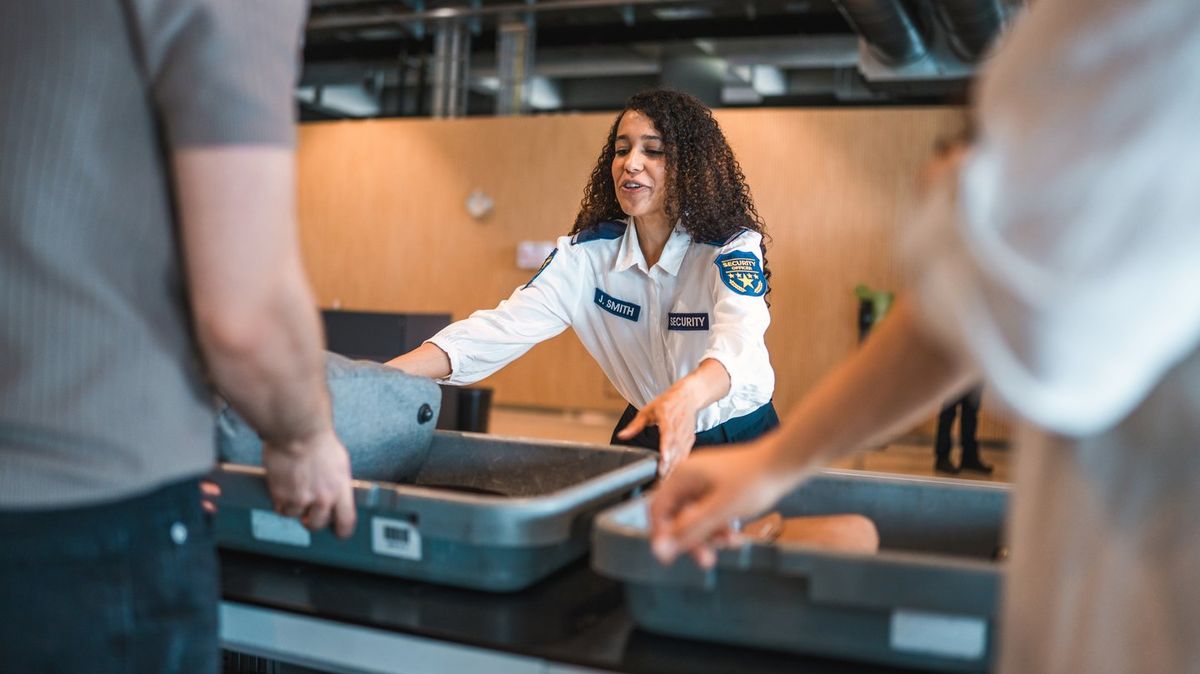
Airports and travel hubs across the United States are preparing for the holiday rush at an unprecedented time in aviation, with even longer lines than usual expected across the country. This is because the seemingly never ending saga of chronic underemployment at the Transportation Security Administration (TSA) has been cruelly compounded by the shutdown of the federal government. These shortages in the most dreaded part of any vacation, getting through airport security, have led to many travel experts to caution travellers to leave even more time to get on their flights, as well as to expect frequent delays. With these issues practically guaranteed over the coming weeks, there are three major things you can do before getting to the airport that should speed you through security. As ever, you cannot really put a monetary value on your own time, or even sanity, so some frequent travellers may want to take advantage of the TSA PreCheck. This service requires some pre-planning and legwork, but can see you skip the lines and avoid having to take every drop of liquid out of your bags. You also don't have to remove your shoes and belt, so it adds some much-needed dignity to your journey too. To use TSA PreCheck, you have to apply through their website and complete a 10-minute interview to establish that you are a low-risk individual. If approved, you will receive a Known Traveler Number. You have to use this when booking your journey to take advantage of the shorter lines, with a PreCheck symbol being printed on your ticket so that security knows which queue to put you in. Most passengers get through in less than 10 minutes. Though with the shutdown, you will need to check if your local airport is still offering this service. (edited) A TSA agent, Uniformed Advisor TeaNeisha Barker revealed the three things travelers can do make life easier when getting around the airport. Speaking to Travel and Leisure, she said: "The top three things that travelers can do to assist with a seamless screening experience are to be prepared, be attentive, and follow the direction of the officer providing assistance." One of the most common issue holding up queues in airports in passengers lack of preparation ahead of their flight. Good packing habits can speed up the process tenfold, the agent claimed, adding that travelers often end up delaying themselves by making common mistakes such as packing illegal items or bringing too much luggage. For example, it's prohibited on flights to bring any kind of weapon, so even a pocket knife is considered a no go. She also suggested placing jewlery in a transparent bag since it's often too small to be picked up by scanners so having it all in one place makes it easier for agents to identify it. Hand wrapped gifts are also not the best idea since agents can't see through the wrapping paper and might have to rip open a beautifully wrapped gift if they don't know what's inside. "If you plan on traveling with a gift, I highly recommend wrapping it once you get to your destination," she said. Running through the airport at the very last hour is never the way anyone wants to start the holidays. If you usually leave a couple of hours, try to aim for at least another one or two, just to be on the safe side. Even if it means twiddling your thumbs for a few extra hours, it's better than anxiously stressing before you've even got through security.
SpaceX Eyes Record-Breaking IPO -- With a Sizable Share for Everyday Investors
Never miss an episode. Follow The Big Take daily podcast today. Big Take SpaceX Weighs $1.75 Trillion Debut Arrow Right 19:23 SpaceX is preparing for liftoff. After months of speculation, the company could file for a historic IPO as early as this week -- seeking $75 billion in funding that would push the company's value to $1.75 trillion. On today's Big Take podcast, Bloomberg Tech's Ed Ludlow joins David Gura to break down the timing of the mega-offering. They discuss the challenges SpaceX could face taking its Mars-focused mission public, how the move could push Elon Musk's net worth past the $1 trillion mark and what this all means for everyday investors looking to get in on the action. Listen and follow The Big Take on Apple Podcasts, Spotify or wherever you get your podcasts. Terminal clients: click here to subscribe. This episode was produced by: Julia Press; Editors: Tracey Samuelson and Jeffrey Grocott; Fact-checker: Eleanor Harrison-Dengate; Sound Design/Engineer: Alex Sugiura; Senior Producer: Naomi Shavin; Senior Editor: Elisabeth Ponsot; Deputy Executive Producer: Julia Weaver; Executive Producer: Nicole Beemsterboer.
SpaceX launch: Live updates from Starlink mission at Cape Canaveral, Florida
After a mission postponement on windy, cloudy Sunday, SpaceX crews expect "go for launch" weather for today's dinnertime Falcon 9 rocket liftoff from Cape Canaveral Space Force Station. Welcome to FLORIDA TODAY Space Team live coverage of today's SpaceX Starlink 10-44 mission. SpaceX is targeting 5:15 p.m. for liftoff from Launch Complex 40. This mission's four-hour launch window will last until 9:15 p.m., should delays occur. The rocket will rise to the northeast from the Cape, then deploy 29 Starlink broadband satellites in low-Earth orbit. No Central Florida sonic booms should occur. The Falcon 9 first-stage booster will target landing aboard the SpaceX drone ship Just Read the Instructions in the Atlantic Ocean -- wrapping up its whopping 34th flight. The Space Force's 45th Weather Squadron forecast called for 70% odds of favorable conditions, with cumulus clouds, surface electrical fields and thick cloud layers listed as primary concerns. When SpaceX's live webcast begins about five minutes before liftoff, we'll post it below next to our countdown clock.
