News & Updates
The latest news and updates from companies in the WLTH portfolio.
US House Blocks Crucial DHS Funding Bill, Leaving TSA Workers Unpaid and Airports in Chaos - What This Means for Your Next Flight! - Travel And Tour World
In Washington D.C., the U.S. House of Representatives refused to approve a crucial Department of Homeland Security (DHS) funding bill designed to ensure pay for the nation's Transportation Security Administration (TSA) frontline workforce, leaving the government in a funding limbo and airport security operations on edge. The impasse comes as the ongoing partial DHS government shutdown -- now extending into its sixth week -- exacerbates travel disruptions across the United States. The rejected legislation had already been approved by the U.S. Senate in a rare late‑night session and would have funded most DHS components, including TSA. Despite this bipartisan Senate passage, the House declined to bring it up for final approval, sparking immediate turmoil in federal operations and travel security management. The House's decision reflects deep internal divisions over immigration and enforcement policy that have stymied a broader funding resolution. While the Senate's version of the DHS funding bill omitted controversial elements such as Immigration and Customs Enforcement (ICE) and Customs and Border Protection (CBP) funding, Republican House leaders demanded a comprehensive package that funds all DHS components together. House Republicans, led by Speaker Mike Johnson, argued that excluding immigration enforcement operations in the Senate bill undermined national security and political priorities. As a result, the House opted against moving forward with the Senate‑approved plan and instead pursued its own stopgap funding measure -- leaving the Senate bill unapproved and the DHS shutdown unresolved. Amid the funding deadlock, President Donald Trump signed an executive directive to ensure Transportation Security Administration employees receive compensation, using executive authority to redirect available DHS funds toward TSA payroll obligations. The executive action instructs the DHS to allocate money with a "reasonable and logical nexus to TSA operations" for back pay and benefits that would have accrued during the shutdown. According to DHS officials, TSA staff could begin seeing paychecks as early as March 30 -- a dramatic shift after weeks of working without compensation. While this move offers immediate salary relief for TSA workers, it does not resolve the broader DHS funding crisis and leaves numerous federal agencies still unfunded and operationally constrained. The shutdown's impact on TSA operations has been pronounced and widespread. With no congressional funding agreement in place, nearly 60,000 TSA personnel have gone without pay, including more than 47,000 transportation security officers tasked with daily screening duties at airports nationwide. The uncertainty over pay and job security has led to hundreds of resignations and rising absenteeism, causing mounting operational strain as airports struggle to maintain normal security throughput. Long security lines, delayed flights and staffing shortages have become a prominent feature of domestic air travel in recent weeks. Unions representing TSA workers have sounded the alarm, warning that the prolonged funding stalemate risks undermining airport security readiness and national safety if unresolved. The American public is watching these developments closely as travel demand remains high after pandemic easing and spring break surges. Beyond TSA, the DHS shutdown has affected multiple key functions: These disruptions have underscored the far‑reaching implications of budget impasses on national security, public safety and daily life across the nation. Even as the House and Senate pursue competing funding strategies, the path to resolving the shutdown remains uncertain. The Senate's unanimously approved funding plan for most of DHS awaits reconsideration by the House, while the House's own short‑term stopgap funding version may face resistance in the Senate. The political standoff largely revolves around immigration enforcement policy priorities, with Democrats pushing for certain reforms and Republicans insisting on full DHS funding in one package. Until a compromise emerges, critical DHS agencies -- and the essential workers who run them -- remain in a precarious standstill. For many TSA workers and travellers alike, the crisis has become deeply personal. Officers have continued performing demanding security duties at major national airports, even as their financial livelihoods were jeopardised by missed paychecks. From long airport queues to staff departures and soaring travel stress, the shutdown has translated into real‑world hardship. Passengers report anxiety and disrupted itineraries, while federal workers have been forced into difficult financial decisions. Public pressure on lawmakers from both sides of the aisle continues to mount as the American people demand a functional government that restores stability to essential services. In what has become one of the longest partial government shutdowns affecting Homeland Security functions, the House's rejection of the Senate‑passed DHS funding bill that would have paid TSA workers has escalated a political stalemate into a national travel and security crisis. While executive action will soften the immediate blow for TSA employees, the broader funding impasse and political gridlock remain unresolved -- with consequences that spread from Capitol Hill to airports nationwide and into the everyday lives of Americans.

Insight Partners leads ScaleOps' $130M Series C to automate cloud chaos -- TFN
As AI adoption accelerates, demand for cloud and AI infrastructure has surged by triple digits year-over-year in 2026. Yet most enterprises rely on static, manual tools that cannot handle dynamic workloads, leading to misallocated resources, higher cloud costs, SLO violations, and wasted engineering time on maintenance rather than innovation. New York-based ScaleOps raised $130 million in a Series C round at a valuation exceeding $800 million, led by Insight Partners with participation from Lightspeed Venture Partners, NFX, Glilot Capital Partners, and Picture Capital. This brings total funding to over $210 million. ScaleOps will use proceeds to advance its product roadmap for autonomous AI and cloud infrastructure management, expand globally, and scale engineering and go-to-market teams. Founded in 2022 by Yodar Shafrir, ScaleOps offers a self-hosted platform for real-time, autonomous management of cloud-native environments, including GPU and compute resources. It monitors workloads, allocates resources through context-based decisions, and applies changes in line with enterprise policies, ensuring AI models and apps receive precise resources without human input. Shafrir shares, "Static allocation and manual tuning simply can't keep up with the speed and complexity of modern production environments. We built ScaleOps to change that, creating a new category of autonomous infrastructure management so that AI and cloud applications can run at full potential." In the competitive landscape of autonomous cloud and AI resource management, ScaleOps differentiates itself from rivals like Run:ai (now part of Nvidia), KubeCost, and StormForge. As of 2026, ScaleOps powers mission-critical environments for Adobe, Wiz, DocuSign, Coupa, and Fortune 500 companies. It reports 350% year-over-year growth, a team that tripled in the past 12 months (with plans to triple again by year-end), and self-hosted support for cloud, on-premises, and air-gapped setups.

Travel Chaos at Toronto Pearson as Air Canada, British Airways, and Others Face 202 Delays and 7 Cancellations Impacting Toronto, New York, London, Dubai and Other US cities - Travel And Tour World
Toronto Pearson International Airport has experienced significant disruptions today, with a total of 202 delays and 7 cancellations, severely impacting passenger travel across various airlines. This surge in disruptions has led to considerable inconvenience for thousands of travelers, as a variety of airlines struggle to manage their operations amidst the challenging conditions. Impact on Airlines The main airline affected is Air Canada, with a significant number of delays and cancellations. Air Canada, operating both domestic and international flights, saw 75 delays and 4 cancellations, accounting for 23% of its flights. Following close behind is Air Canada Rouge, with 34 delays and 2 cancellations, marking a 41% delay rate. Other airlines such as Jazz, Alaska Airlines, and British Airways also reported flight disruptions, affecting travelers across various destinations. Notably, the situation worsened for airlines with international routes. Air Canada Rouge and Jazz, which primarily serve international destinations, experienced high levels of disruption, causing potential long-term impacts on their global reputation. The airport also witnessed delays and cancellations for airlines such as Aer Lingus, Ethiopian Airlines, and China Eastern, which only added to the growing list of challenges for passengers. Affected Cities and Passengers The main cities affected by these delays and cancellations include Toronto, with connections extending to popular international hubs such as New York, London, Dubai, and Mexico City. The delays are particularly concerning for passengers flying to or from these cities, as extended waiting times increase the likelihood of missed connections and further disruptions in their travel plans. As the delays continue to unfold, an estimated 5,000 passengers are experiencing delays and cancellations across the affected airlines. Many travelers are now facing the challenge of rebooking flights, while others are left stranded at the airport, awaiting updates on their new departure times. The inconvenience is further compounded by limited accommodation options and difficulty in reaching customer service representatives. Impact on Tourism This disruption is not just a setback for individual passengers, but also poses a threat to tourism in Toronto and beyond. The ripple effect of flight cancellations and delays can be significant for the local tourism industry, especially in a city like Toronto, which attracts millions of visitors annually. Toronto Pearson International Airport is a major gateway for both leisure and business travelers, with tourists flocking to the city for its vibrant culture, art scene, and tourism attractions. As travelers face delays, tourism-related activities such as city tours, restaurant reservations, and entertainment events are also affected. Moreover, the delays can harm Toronto's reputation as a reliable entry point for international tourists. Business meetings and events, already heavily impacted by the ongoing disruptions, may also suffer, as important attendees might struggle to reach their destinations on time. For tourists who have planned their entire trips around specific dates, delays may reduce their time spent at the city's major attractions, including the CN Tower, Royal Ontario Museum, and other world-class destinations. Furthermore, businesses in the tourism sector are likely to experience a dip in consumer confidence, as many travelers might avoid booking flights through airports with frequent disruptions. Conclusion Toronto Pearson International Airport has delays and cancellations today which shows how the travel industry relies on each portion working perfectly. They've still got to accommodate the passengers affected, so travelers should check their flights, expect to wait, and be prepared to pack snacks. More than 200 delays and 7 cancellations has affected the community as economically as the travel industry. Toronto, as well as the other affected cities, will have to adapt to the travel disruptions in their tourism sector. Passengers should be educated to the situations as their time remaining in the travel industry is limited.

White House blames Democrats as airport chaos grows
Washington, March 31 (SocialNews.XYZ) The White House on Monday blamed Democrats for a deepening crisis in US air travel, saying a funding lapse at the Department of Homeland Security (DHS) has led to staff shortages, long queues, and rising security risks at airports. Press Secretary Karoline Leavitt said "500 TSA officers quit their jobs" in recent weeks, while "thousands more were calling out sick at record rates due to the lack of pay". She said the situation had pushed the aviation system "to its breaking point", with security wait times "exceeding three hours at major airports across the country". "This resulted in security wait times exceeding three hours... creating nightmares for millions of Americans," she said. Leavitt said morale among Transportation Security Administration (TSA) staff had "plummeted", creating what she described as "an unacceptable, heightened security risk". She blamed Democrats in Congress for voting "seven times against funding the Department of Homeland Security", accusing them of playing "reckless political games". "Democrat members of Congress are more than happy to put your safety at risk," she said, linking the funding dispute to broader disagreements over immigration policy. According to the White House, President Donald Trump last week signed a presidential memorandum directing officials to ensure TSA workers receive pay and benefits despite the funding impasse. Leavitt said the President had instructed the Department of Homeland Security and the Office of Management and Budget to use available funds "with a reasonable and logical nexus to TSA operations" to compensate workers. "This bold and necessary action... will ensure our TSA workers receive their hard-earned paychecks," she said. However, she warned that the measure was only temporary. "Nothing will be truly normal again until Democrats do the right thing to fund this agency fully," she said, urging Congress to return to Washington and resolve the issue. Leavitt said the administration viewed the situation as an emergency affecting national security, particularly given TSA officers' roles in screening passengers and safeguarding airports. The disruption has come at a time of heavy travel demand, amplifying the impact of staff shortages and long wait times across major US airports. The White House also linked the funding standoff to its broader immigration enforcement agenda, arguing that opposition to DHS funding reflected disagreement with deportation policies. The Department of Homeland Security oversees border security, immigration enforcement and transportation safety, making it central to domestic security operations. Funding disputes over DHS have periodically disrupted operations, but the current standoff has coincided with workforce attrition and operational strain at US airports.

Rumours of free PNG connections triggers chaos at VGL office' | Vadodara News
Vadodara: Chaotic scenes were witnessed at the Vadodara Gas Ltd (VGL) office in Dandia Bazaar on Monday as a large number of residents thronged the premises following rumours that the city gas distribution company was offering free Piped Natural Gas (PNG) connections.The company later clarified that it had only waived the registration charge and that the connections were not free.Demand for VGL connections in the city has surged amid a tight supply of Liquefied Petroleum Gas (LPG) cylinders and recent directives from the Government of India stating that households located in areas where a PNG network exists will no longer be eligible for LPG cylinders. Such households will be notified about the availability of PNG and will have to switch to it within three months of receiving the notice.Sources said the rush began after word spread that VGL was giving free connections. In reality, the company had only waived the Rs 300 registration fee. Applicants will still need to pay a Rs 6,000 security deposit along with Rs 50 as application charges for a new connection.A VGL official said many people assumed that no payment would be required to obtain the connection. It was also widely believed that Monday was the last day to avail the waiver. "Not all charges were waived. Moreover, the last date to avail the Rs 300 registration fee waiver has been extended till April 30," the official said.VGL has been receiving around 500 applications for new connections every day for the past week. Officials said the surge is linked to the new directives as well as the difficulties consumers have recently faced with booking and delivery of LPG cylinders.

Rumours of free PNG connections triggers chaos at VGL office'
Vadodara: Chaotic scenes were witnessed at the Vadodara Gas Ltd (VGL) office in Dandia Bazaar on Monday as a large number of residents thronged the premises following rumours that the city gas distribution company was offering free Piped Natural Gas (PNG) connections.The company later clarified that it had only waived the registration charge and that the connections were not free.Demand for VGL connections in the city has surged amid a tight supply of Liquefied Petroleum Gas (LPG) cylinders and recent directives from the Government of India stating that households located in areas where a PNG network exists will no longer be eligible for LPG cylinders. Such households will be notified about the availability of PNG and will have to switch to it within three months of receiving the notice.Sources said the rush began after word spread that VGL was giving free connections. In reality, the company had only waived the Rs 300 registration fee. Applicants will still need to pay a Rs 6,000 security deposit along with Rs 50 as application charges for a new connection.A VGL official said many people assumed that no payment would be required to obtain the connection. It was also widely believed that Monday was the last day to avail the waiver. "Not all charges were waived. Moreover, the last date to avail the Rs 300 registration fee waiver has been extended till April 30," the official said.VGL has been receiving around 500 applications for new connections every day for the past week. Officials said the surge is linked to the new directives as well as the difficulties consumers have recently faced with booking and delivery of LPG cylinders.
SpaceX IPO: E*Trade Reportedly Leads Retail Push As Robinhood, SoFi Compete For Role - Robinhood Markets
SpaceX may set aside up to 30% of its shares for retail investors, fueled by the massive following of founder Elon Musk, Reuters reported citing sources. SpaceX did not immediately respond to Benzinga's request for comment. * Morgan Stanley stock is trading in a tight range. What's ahead for MS stock? Valuation and Market Impact SpaceX is reportedly targeting a valuation of $1.75 trillion and aims to raise up to $75 billion. Cathie Wood's ARK Venture Fund currently holds SpaceX as its largest position at 17.96%. EchoStar Corp. (NASDAQ:SATS) has effectively become a public proxy for SpaceX after spectrum-for-equity deals left it holding a stake recently valued at about $11.1 billion. Analyst Warnings and Merger Buzz The buzz around the IPO has sparked concerns from The Future Fund LLC managing director Gary Black. Black warned investors to remain skeptical of "overly positive" sell-side analysts. He noted the IPO represents the "biggest payday for analysts in years." Additionally, speculation regarding a merger with Tesla Inc. (NASDAQ:TSLA) persists. Black cautioned that a merger could trigger a 20% to 25% reduction in Tesla's stock value due to a "conglomerate discount." Price Actions: SoFi shares fell 1.08% to $15.06, while Robinhood dropped 1.97% to $64.72 on Monday, according to Benzinga Pro data. Morgan Stanley is slightly up 0.35% at $158.91 and Tesla is down 1.73% at $355.64. Photo Courtesy: Wirestock Creators on Shutterstock.com This content was partially produced with the help of AI tools and was reviewed and published by Benzinga editors. Market News and Data brought to you by Benzinga APIs To add Benzinga News as your preferred source on Google, click here.

'Blue Origin is not simply reacting to SpaceX': Frost & Sullivan's Pravin Pradeep on Project Sunrise
Blue's push into orbital data centers is about "staking a claim than demonstrating parity with Starlink" As we reported last week, Jeff Bezos' Blue Origin recently made headlines when it unveiled plans to launch a massive fleet of satellites in space -- 51,600, to be precise -- with the aim to build an array of orbital data centers. The announcement at first read like a countermove to Elon Musk's whose company, SpaceX, has requested FCC's permission for a staggering 1 million satellites for a space data center project, but there is more than meets the eye here. In explaining the strategy behind Blue Origin's entry into the space data center space, Pravin Pradeep, senior consultant and program manager at Frost & Sullivan said that this has been coming for some time now. Even though it all sounds like science fiction right now, Bezos has frequently spoken about the prospects of the concept, touting orbital data centers as the most cost-efficient way of meeting AI's growing energy demands. "Blue Origin's filing does not appear to be a sudden pivot, but rather the next step in a broader infrastructure strategy," Pradeep said. Here's how he joined the dots. Blue Origin's New Glenn offers launch capacity needed to put the satellites in orbit; Blue Ring handles in-space logistics and hosting; TeraWave offers high-throughput enterprise-focused connectivity; and Project Sunrise adds the final layer of compute. Together, the initiatives make perfect sense. When you put these pieces, a clear picture emerges: Blue Origin has been building an integrated space infrastructure stack for quite some time now. "This is a shift away from satellites as pure connectivity assets toward satellites as part of a distributed cloud and AI infrastructure," Pradeep pointed out. The architectural choices have been consciously made to support the plan. "Architecturally, the reliance on optical inter-satellite links suggests a move toward fully meshed, space-based data routing, reducing dependence on ground infrastructure and enabling more scalable, persistent networks in orbit," he said. Another thing to note is Project Sunrise's orbital design. The initiative targets sun-synchronous orbits in the 500 to 1,800km range -- a regime that offers near-continuous solar exposure which is critical for sustaining power-hungry compute workloads while keeping latency lower than higher orbits will allow. Here's the harder question though: is Blue Origin's gameplan a competitive one? The company's inevitable point of comparison is its biggest rival, SpaceX, which remains significantly ahead with a mature constellation and demonstrated launch capacity and cadence, not to mention years of deep expertise and a first-mover advantage in the space data center race. Project Sunrise does not close this gap, not in the near future anyway, and Pradeep is candid about it: "It is more about staking a claim than demonstrating parity with Starlink." Having said that, Blue Origin does have more room to maneuver in the market it originally positioned TeraWave for -- enterprise, data center, and government users. "The use of higher-frequency spectrum bands, which enable higher throughput but are more sensitive to atmospheric conditions, further reinforces a focus on fixed, high-value enterprise and data-center connectivity rather than mass-market mobility. This is a more differentiated entry point, allowing Blue Origin to avoid direct competition with Starlink in the consumer broadband market where SpaceX already has scale and deployment advantage," he said. Asked whether the New Glenn launch vehicle offers any meaningful advantage to Blue Origin, Pradeep said it certainly is an important piece of the puzzle, but not yet a decisive one. "Blue Origin says New Glenn can carry more than 45 metric tons to LEO [low Earth Orbit], which gives the company a credible in-house lift option for large constellations. That matters because launch is one of the biggest gating factors for any orbital network at this scale," he noted. But an even bigger factor than capacity is cadence. "New Glenn is still early in its operational life, while SpaceX's competitive strength comes not just from rocket capability, but from demonstrated launch frequency, reusability at scale, and years of constellation deployment experience. So New Glenn improves Blue Origin's credibility, but it does not yet give Blue an outright advantage over SpaceX and in extension, Starlink." And then comes the unsettled business of economics. Speaking at the Cisco AI Summit in San Francisco earlier this year, AWS CEO, Matt Garman said that orbital data centers are still "pretty far" from reality, and not economically viable today. "If you think about the cost of getting a payload in space today, it's massive," he emphasized. "It is just not economical." Despite more companies pursuing the idea now than before, don't expect to see flying data centers just yet. "Even if the strategic direction is coherent, the business case remains long-dated and dependent on sustained reductions in launch costs, improved cadence, and advances in in-space networking and compute," Pradeep said. On the whole, Pradeep views Blue Origin's move as a long-range bet placed by a company that appears to be thinking in decades rather than quarters. "Blue Origin is not simply reacting to SpaceX. It is positioning itself for a future where space evolves from a communications layer into part of the global compute infrastructure," he said.

财联社3月31日电,SpaceX据称正考虑在IPO中剔除Robinhood和Sofi。
"特别声明:以上作品内容(包括在内的视频、图片或音频)为凤凰网旗下自媒体平台"大风号"用户上传并发布,本平台仅提供信息存储空间服务。 Notice: The content above (including the videos, pictures and audios if any) is uploaded and posted by the user of Dafeng Hao, which is a social media platform and merely provides information storage space services."

Scott Jennings Blasts Democrats for DHS Shutdown and Immigration Chaos
Scott Jennings Blasts Democrats for DHS Shutdown and Immigration Chaos Scott Jennings criticized Democrats for prioritizing open borders over public safety, saying Homeland Security has been effectively shut down 50% of the fiscal year. He called the shutdowns "highly irresponsible," accusing Democrats of throwing fits over immigration instead of funding and enforcing the law while Americans face security risks.

Anthropic's Claude Mythos Details Leaked Via a Misconfigured Content Management System - Tekedia
Anthropic's Claude Mythos details leaked via a misconfigured content management system (CMS) data store, exposing draft blog posts and other internal assets. Security researchers discovered that nearly 3,000 unpublished files -- including draft blog posts, PDFs, and memos were publicly accessible due to a configuration error. One key draft described a new model called Claude Mythos, positioned as a major step change above Anthropic's current Opus tier. It claimed the model is by far the most powerful AI model we've ever developed, with dramatically higher performance in coding, academic reasoning, and especially cybersecurity-related tasks. Anthropic confirmed the leak to Fortune and others, acknowledging they have completed training on the model sometimes referred to interchangeably with "Capybara" in drafts and are testing it with select early-access customers. They described it as their most capable model to date but highlighted unprecedented cybersecurity risks: the model is far ahead of any other AI model in cyber capabilities" and could enable attacks that far outpace the efforts of defenders." The company reportedly plans restricted early access for cyber defense organizations to help bolster protections before broader release. Cybersecurity stocks dropped sharply on March 27, 2026, as investors interpreted the leak as signaling a coming wave of more sophisticated AI-powered attacks: CrowdStrike (CRWD): ~7% drop. Palo Alto Networks (PANW): ~6-7.5%. Zscaler (ZS), SentinelOne (S), Okta (OKTA), and others: 4-8% declines. Broader sector ETFs also fell several percent, with reports of ~$14.5 billion in combined market value erased in one day. This isn't the first time AI cyber capabilities have pressured the sector -- similar dips occurred after prior Claude updates with vulnerability-scanning features. Frontier models are advancing rapidly in agentic capabilities (autonomous task execution, chaining exploits, etc.). If Mythos excels at identifying and weaponizing vulnerabilities faster than humans or current tools, it could shift the offense-defense balance in cybersecurity -- making large-scale, automated attacks more feasible for sophisticated actors while defenders scramble to keep up. Anthropic's own warning in the draft; flagging risks and limiting access amplified the fear. That said: No model weights leaked -- only descriptive documents and drafts. The actual system isn't public. AI can also aid defense with better anomaly detection, automated patching, red-teaming. Anthropic's plan to share early access with defenders acknowledges this dual-use nature. Stock reactions to AI news are often short-term and volatile; they reflect sentiment more than proven long-term disruption. This fits a pattern with frontier AI labs: leaks happen (misconfigurations are common in fast-moving companies), capabilities keep scaling, and safety/cyber risks get more explicit discussion. Anthropic has long emphasized safety, so their internal caution here is noteworthy -- but also expected for a model they call a step change. The incident underscores ongoing challenges around secure internal processes at AI companies and the difficulty of keeping cutting-edge work under wraps. It may accelerate conversations about responsible release practices, government coordination on cyber-AI risks, and investment in defensive AI tools. In short, the leak revealed an impressive but risky next-gen model that Anthropic is handling cautiously. Markets overreacted on the offense gets stronger narrative, as they often do with AI hype/fear cycles. Expect more details and probably a formal launch soon, alongside continued debate on how to manage these capabilities responsibly.

SpaceX's Starlink loses contact with satellite, says no threat to space missions
(Reuters): SpaceX's Starlink said one of its satellites had an anomaly on-orbit on Sunday, leading to a loss of communications with the spacecraft at roughly 560 km (347.97 miles) above Earth, though the event does not pose a risk to key missions. The event comes just ahead of the potential April 1 launch of the Artemis II mission, the first crewed test flight in NASA's multibillion-dollar flagship effort to put humans back on the moon this decade. Latest analysis showed that the event poses no new risk to the International Space Station, its crew, or to the launch of NASA's Artemis II mission, Starlink said in a post on X on Monday. The company added it will continue to monitor satellite 34343, along with any trackable debris and will coordinate with the U.S. Space Force and NASA. Starlink is working with SpaceX to actively "determine root cause and will rapidly implement any necessary corrective actions." The anomaly also posed no risk to the Falcon 9 Transporter-16 rideshare mission, which lifted off Monday morning, Starlink said. The mission was designed to deploy payloads above or below the Starlink constellation. SpaceX, owned by billionaire Tesla CEO Elon Musk, is gearing up for a stock market debut that could value it at as much as $1.75 trillion, possibly making it the largest IPO in history.
Chaos in Transit: Airports Regain Control Post-TSA Pay Crisis | Politics
Major U.S. airports are returning to normal operations after weeks of disruptions due to unpaid TSA officers amidst a partial government shutdown. President Trump's emergency directive ensured retroactive pay, but tens of thousands of Homeland Security workers remain unpaid. Congress debates funding amidst political disagreements. After weeks of chaos caused by unpaid TSA officers, major U.S. airports are beginning to see normalcy restored to their operations. The airports in Baltimore, Houston, New York, New Orleans, and Dallas, which previously faced extensive delays, reported much shorter lines on Monday. President Donald Trump signed an emergency directive to pay TSA workers amid a deadlocked 45-day partial government shutdown. Most TSA officers received retroactive pay for at least two pay periods starting Monday. However, tens of thousands of other DHS employees remain unpaid, prompting the President to urge Congress for a resolution. Discussions in Congress are heated, with Democrats pushing for immigration policy changes and proposing separate TSA funding. Meanwhile, a rejected bipartisan Senate compromise has extended the deadlock. Increased airport traffic, due to spring break, is compounded by an ongoing workforce shortage.

Unconventional superconductivity in the presence of long-range interactions in transition metal dichalcogenide moiré heterobilayers - Scientific Reports
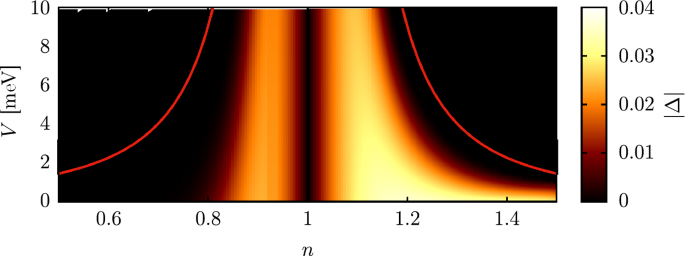
Effective Hamiltonian and comparison with analytical estimates Here we provide explicitly the form of the effective Hamiltonian as obtained in the considered situation. From the minimization condition imposed on the ground state energy (13) one can derive the following form of the effective Hamiltonian where the effective hopping, effective chemical potential, and the effective superconducting gap parameters are defined through the corresponding relations where and is the chemical potential in the correlated state. The effective model parameters have the following form From Eq. 22 one can explicitly see that both and parameters modulate the two contributions to the pairing originating from the and terms, respectively. To analyze in more detail the influence of the term on superconductivity, here, we consider a simplified situation for which , meaning that we have purely real, negative hoppings and an exchange interaction term without the contribution originating from the Dzyaloshinskiiâ€"Moriya interaction. In such a case, the pairing is of spin-singlet character only and the SC gap in the effective Hamiltonian has the following form Hence, the effective interaction works in favor of Cooper pairing when , meaning that . For the case of model when the double occupancies are projected out from the system, one can use Eqs. (12, 15 and 18) to derive the following simple form of the renormalization parameters Substituting the above expressions to Eq. (24) we obtain the dependence of the effective pairing parameter in the form This allows us to analytically determine the area in the (n, V) plane for a given J, for which the necessary condition for the pairing to appear is fulfilled (). In Fig. 11, the solid red line marks the boundary between the attractive interaction that leads to pairing (below the curve) and the repulsive interaction in which the SC state cannot be stable (above the curve). It is clearly shown that the higher the V, the narrower the stability range of the SC state when it comes to band filling. For the sake of completeness, we also show the numerical calculations for the considered case in the figure. The bright region which marks the stability region of the numerically determined SC state does not exceed the analytical requirement for the pairing to exist. The numerical data do not exactly coincide with the analytically determined condition because the latter does not take into account the details of the electronic structure itself. Namely, the stability of the SC state is significantly determined by the value of the density of states around the Fermi energy. For the situation considered here, the van Hove singularity appears at the Fermi energy for . That is why the SC stability region determined numerically is wider at the side of the diagram. Nevertheless, the general feature of narrowing the SC stability region with increasing V is seen both in the necessary analytic condition and the numerical result. For the sake of completeness, we analyze the significance of long-range hoppings and exchange interactions separately, for the case of the t-J-U model. In Fig. 12, we show the influence of the longer-range hoppings without the inclusion of the terms and . Furthermore, in Fig. 13 we present the dependence of the and of the SC gap amplitudes up to the values corresponding to ten times the realistic ones. As one can see, the influence of the long-range hoppings is significant, while exchange terms can be neglected for the case of realistic set of parameters, which are marked by the dashed vertical line. Therefore, the suppression of the SC gap seen in Fig. 5(a) is caused mainly by the second and third nearest-neighbor hoppings. The fact that the additional hoppinngs suppress the SC gap can be understood by looking at the density of states. Namely, as we show in Fig. 6 the density of states acquires smaller values in the band-filling range of the SC phase for the case where the additional hoppings are taken into account.
Vandenberg rocket launch schedule. See upcoming SpaceX missions
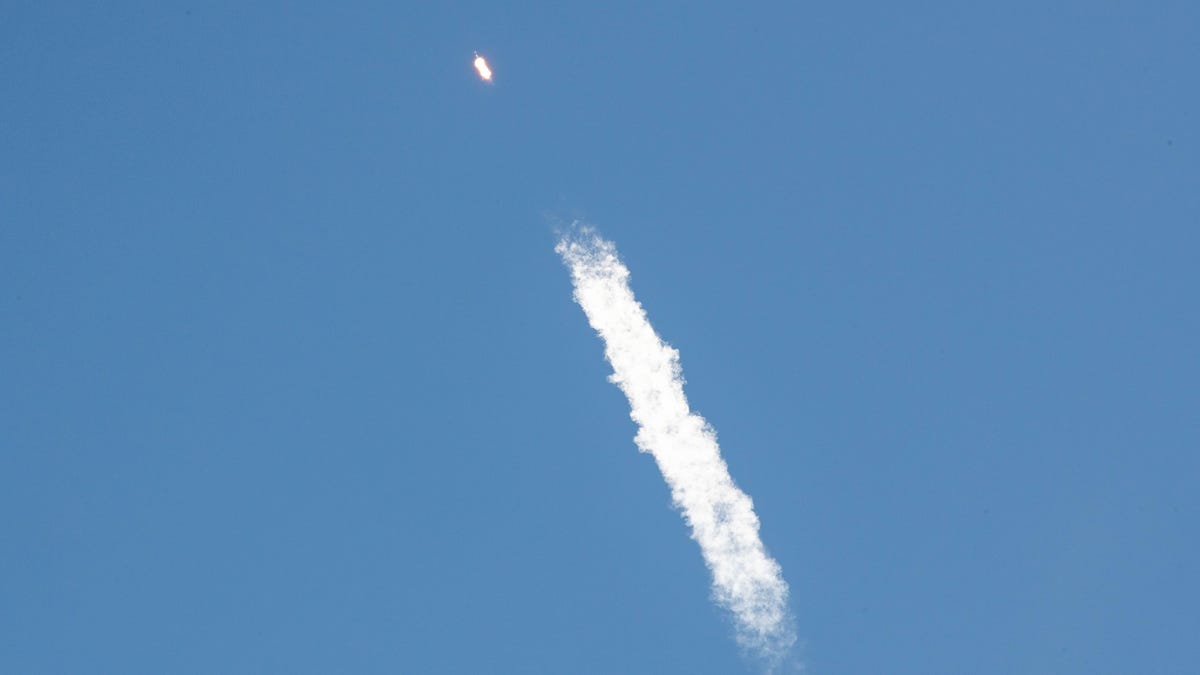
SpaceX has two Falcon 9 rocket launches scheduled for early April from California. Following an early morning rocket launch that marked the final liftoff of March from California, SpaceX has two more missions on the books to kick off April. The commercial spaceflight company is planning to deploy batches of its Starlink broadband internet satellites to low-Earth orbit across two launches in the week ahead. Both missions will use SpaceX's Falcon 9 rocket, which will get off the ground from the Vandenberg Space Force Base. Ready to catch a sight of the 230-foot rocket? Californians - and potentially Arizonans - making their plans to watch any launches should keep in mind that lots can change between now and when each rocket is expected to lift off, as delays in spaceflight are common. Be sure to visit VC Star for the latest mission updates. In the meantime, here's your weekly look at the upcoming launch schedule at the Vandenberg Space Force Base in Santa Barbara County. Thursday, April 2: Starlink 17-35 * Agency: SpaceX * Mission: Deploy 25 Starlink satellites into low-Earth orbit, according to SpaceX * Rocket: Falcon 9, a 230-foot, two-stage reusable rocket capable of carrying more than 50,000 pounds of cargo to low-Earth orbit * Launch window: 4:03 to 8:03 p.m. PT Thursday, April 2, 2026 * Rocket launch location: Space Launch Complex 4E from Vandenberg Space Force Base in California * Booster landing: SpaceX drone ship, nicknamed "Of Course I Still Love You," in the Pacific Ocean Monday, April 6: Starlink 17-21 * Agency: SpaceX * Mission: Deploy 25 Starlink satellites into low-Earth orbit, according to SpaceX * Rocket: Falcon 9, a 230-foot, two-stage reusable rocket capable of carrying more than 50,000 pounds of cargo to low-Earth orbit * Launch window: 7:39 to 11:39 p.m. PT Monday, April 6 * Rocket launch location: Space Launch Complex 4E from Vandenberg Space Force Base in California * Booster landing: SpaceX drone ship, nicknamed "Of Course I Still Love You," in the Pacific Ocean Eric Lagatta is the Space Connect reporter for the USA TODAY Network. Reach him at [email protected]
How the ultra-rich are skipping TSA lines, clogged airports as chaos spirals
Wealthy travelers are shelling out up to $34,000 for private jets to skip hours-long TSA lines as airport chaos spirals, according to a report. Private jet traffic has surged since the shutdown began in mid-February, with departures climbing in hard-hit hubs like New York, Houston and Washington, DC, where TSA callouts have spiked, according to data from aviation analytics firm WingX. Charter companies report bookings jumping as much as 39%, with first-time flyers driving much of the demand as travelers scramble for alternatives to gridlocked airport security lines, Bloomberg News reported. New customers largely account for the spike, with Jettly seeing a 52% increase in first-time private fliers -- particularly out of Houston, Atlanta and New Orleans, three cities hit hard by TSA staffing shortages. Last-minute travel is also driving the boom, with bookings made within 72 hours of departure rising 34% as passengers look for immediate ways to avoid hours-long lines. The pricing cited in the Bloomberg report broadly aligns with standard private jet charter rates under ordinary conditions, with flights typically running a few thousand dollars to many times that depending on aircraft size and distance. Industry data shows small jets often cost around $3,500 to $7,000 per hour, with common routes like Atlanta to New York ranging from roughly $10,000 to $20,000 and longer trips such as Houston to New York reaching into the mid-$30,000 range for larger aircraft. It's increased demand that's poised to bring a lucrative year for private carriers. The surge is most pronounced on key domestic routes, where short-haul flights are commanding steep prices. Trips from Atlanta to New York are starting at $13,000 and climbing to $20,000 on short notice, according to Bloomberg. A short-haul flight from Los Angeles to Las Vegas can run roughly $8,000 to $12,000 on a small private jet, depending on demand and availability. Longer routes are proving even more lucrative, with flights from Houston to New York reportedly reaching as much as $34,000 as demand peaks. Overall costs remain high across the board, with smaller private jets seating about six passengers running roughly $7,000 per hour, according to company executives. Other operators are seeing similar increases. Slate Aviation, which runs private shuttles between New York and South Florida, reported a 36% increase in inquiries over the past month, prompting the company to expand routes and add flights. FlyUSA is also benefiting from the disruption, with bookings up roughly 35% year-to-date as more travelers abandon commercial airlines altogether. "Some of that growth is due to the TSA disruptions, but hard to quantify how much," the company's CEO Barry Shevlin told The Post. "We have had a few first time travelers with us over the last few weeks because they were concerned about significant delays," he added. "The biggest increase has come from the segment of our clients that fly business class for certain trips and private for others. Many of those clients are choosing not to risk the delays on commercial over the last few weeks." The geographic data shows how closely private jet demand is tracking airport disruption. In Houston, where TSA callout rates have reached as high as 39.2% at Bush Intercontinental Airport, private jet departures have climbed about 5% year-over-year. New York has seen similar strain, with TSA absentee rates nearing 29% at JFK and nearly 25% at LaGuardia -- alongside a 2% increase in private jet departures. In the Washington, DC, region, including nearby Baltimore, private jet departures have jumped as much as 10% as staffing shortages ripple through the system. Atlanta, one of the busiest travel hubs in the country, has recorded TSA callout rates above 40%, with private jet departures rising 5%. New Orleans has also been hit, with TSA absenteeism topping 36% and private jet departures inching up about 1% year-over-year. Increasingly, that demand is not just coming from the ultra-wealthy -- but from frustrated travelers willing to pay a premium to avoid missing flights. A partial shutdown of the Department of Homeland Security has left thousands of TSA workers unpaid since mid-February, driving record callout rates, prompting some workers to quit and crippling staffing at major airports, where security wait times have stretched to four hours or more. President Trump moved to ease the crisis by ordering emergency pay for agents, but a broader funding deal remains deadlocked in Congress, raising uncertainty over when normal operations will resume and whether disruptions will persist.

Reddit's data scraping lawsuit against Anthropic sent back to California state court | MLex | Specialist news and analysis on legal risk and regulation
( March 30, 2026, 17:54 GMT | Official Statement) -- MLex Summary: A US federal judge has remanded Reddit's lawsuit against Anthropic over alleged illegal data scraping from its platform to California state court, where it was originally filed. US District Judge Trina L. Thompson concluded that none of Reddit's causes of action assert rights equivalent to those protected by the Copyright Act and are therefore not preempted. See attached file.... Prepare for tomorrow's regulatory change, today MLex identifies risk to business wherever it emerges, with specialist reporters across the globe providing exclusive news and deep-dive analysis on the proposals, probes, enforcement actions and rulings that matter to your organization and clients, now and in the longer term. Know what others in the room don't, with features including: * Daily newsletters for Antitrust, M&A, Trade, Data Privacy & Security, Technology, AI and more * Custom alerts on specific filters including geographies, industries, topics and companies to suit your practice needs * Predictive analysis from expert journalists across North America, the UK and Europe, Latin America and Asia-Pacific * Curated case files bringing together news, analysis and source documents in a single timeline Experience MLex today with a 14-day free trial.

New rule could fast-track SpaceX IPO for Nasdaq index inclusion
Nasdaq (NDAQ) will shorten the window of time required for newly public companies with large market caps to be included in its Nasdaq 100 (^NDX) index under a new "fast entry" rule, the exchange operator said Monday. As of May 1, companies with market caps ranking within the top 40 members of the Nasdaq 100 will be eligible for inclusion in the index within 15 trading days after an initial public offering, drastically shortening the current timeline for inclusion of roughly three months after going public. Nasdaq also noted that so-called fast entry inclusions will not require an already listed security to be dropped from the index, allowing the index to "temporarily increase the constituent count to more than 100." The rule changes come as Elon Musk's SpaceX (SPAX.PVT) and the flagship AI developers OpenAI (OPAI.PVT) and Anthropic (ANTH.PVT) all consider 2026 IPOs, which are expected to be blockbuster offerings. SpaceX is reportedly targeting a $75 billion raise at a valuation of $1.75 trillion, according to Bloomberg. Such a valuation would far exceed the largest IPO on record -- Saudi Aramco's (2222.SR) $29 billion raise -- and immediately place SpaceX within the top 10 most valuable public companies, according to Yahoo Finance data. Index inclusion can be intensely important for major public companies, as index fund and exchange-traded fund (ETF) managers that offer products tracking indexes are required to buy stock in any new companies added to the index. More than $30 trillion in assets are benchmarked to the S&P 500 (^GSPC), Dow Jones Industrial Average (^DJI), Nasdaq Composite (^IXIC), and FTSE Russell (^FTSE) indexes, which are all considering changes to speed inclusion of newly listed companies, according to Bloomberg. The Nasdaq 100 is "tracked by more than 200 investment products with over $600 billion in assets under management globally," the company said Monday. Jake Conley is a breaking news reporter covering US equities for Yahoo Finance. Follow him on X at @byjakeconley or email him at [email protected]. Click here for in-depth analysis of the latest stock market news and events moving stock prices
Anthropic's Mythos leak is about more than cybersecurity stocks | investingLive
Anthropic's accidental reveal of its most powerful AI model has triggered a repricing across software. The bigger question is whether markets are ready for what comes next. The story so far reads like something out of a bad thriller: a misconfigured content management system, 3,000 unsecured documents, and the accidental exposure of what Anthropic now confirms is the most capable AI model it has ever built. Fortune broke the story last Thursday. By Friday's open, cybersecurity stocks were in free-fall. CrowdStrike alone lost roughly $15 billion in market cap in a single session. The catalyst wasn't an earnings miss, a product failure, or a CEO departure, it was a draft blog post sitting on an unsecured URL. Claude Mythos -- internally codenamed "Capybara" -- is a new tier of model that sits above Anthropic's current flagship Opus line. The leaked draft describes it as larger and more intelligent than anything the company has shipped. Anthropic confirmed this much, calling it "a step change" in reasoning, coding, and cybersecurity capabilities. The key detail that spooked the market: the draft warns that Mythos is "far ahead of any other AI model in cyber capabilities" and signals an incoming generation of models that can find and exploit software vulnerabilities faster than human defenders can patch them. Anthropic itself is reportedly warning senior government officials that large-scale AI-assisted cyberattacks become substantially more likely this year. The fear is that the new generation of models will have the capability to break the internet, or at least anything that needs to secure data. Traditional cybersecurity vendors -- CrowdStrike, Palo Alto, Zscaler, Okta -- command premium multiples because they sit on proprietary threat telemetry and years of accumulated detection logic. If a general-purpose frontier model can replicate or exceed that capability at scale, investors are right to question the durability of those margins. Raymond James analyst Adam Tindle outlined several risks worth highlighting: compression of traditional defensive advantages, rising attack complexity that pushes up the cost to defend, and the possibility of wholesale shifts in how security budgets are allocated. "We read this as having the potential to become the ultimate hacking tool, and one that can elevate any ordinary hacker into a nation-state adversary," Stifel analyst Adam Borg in a research note on Friday. The other side of the trade -- and the bull case for spending -- is that this forces enterprises to modernize their defences immediately. The big cybersecurity names have also been given early looks at Mythos to both prepare and evaluate what they find. Ultimately, it could add to their moat and a big reason for the major bounce in security stocks today is that Palo Alto Networks CEO Nikesh Arora bought $10m in shares last week. Here's where it gets more interesting from a cross-asset perspective. Mythos doesn't land in isolation. It lands in a market that is already trying to reprice the velocity of AI disruption across all of software. For macro traders, the AI capex cycle is the other thread to pull. Mythos is described as extremely compute-intensive and expensive to run -- Anthropic says it's working on efficiency before any broad release. That's bullish for the picks-and-shovels trade: NVDA, the hyperscalers, power infrastructure. If the next generation of models requires substantially more compute, the capital spending cycle has further to run even as the downstream beneficiaries face disruption. We also can't ignore the geopolitical overlay. Anthropic has been blacklisted by the Trump administration after setting limits on military use of its models, and is now in litigation with the federal government. Mythos arriving during that standoff is a complication. If the model is genuinely as powerful in offensive cyber capabilities as described, the question of who gets access -- and who doesn't -- becomes a national security issue. OpenAI reportedly finished pre-training its own frontier model, codenamed "Spud," around the same time this leak hit. Both companies are reportedly positioning for IPOs later this year. The timing of the Mythos leak -- whether genuinely accidental or not -- couldn't be more combustible. This is going to be a theme for the rest of 2026: frontier AI labs racing to demonstrate capability while trying to manage the political and regulatory consequences of that capability. The immediate question is how cybersecurity names trade this week as the story matures. Friday's sell-off was indiscriminate but the bounce today has been equally large. Longer term, watch for three things: First, Anthropic's release timeline. They've said they're giving cyber defence organisations early access before any general availability. How long that staged rollout takes matters enormously for how fast the threat landscape actually shifts. Second, the policy response. If Anthropic is genuinely warning officials that Mythos makes large-scale attacks more likely, there is going to be pressure for export controls, access restrictions, or some form of licensing regime for frontier cyber models. That's a new regulatory risk for the entire AI sector. Finally, there has been no shortage of hype around a 'step change' in models and we've seen it so many times before. But if it's true and we are getting a new generation of truly superior models, that further extends the ceiling of what AI can do and how disruptive it is for the economy, and ultimately, how useful it will be.

Kenya Airways Faces Imminent Jet Fuel Crisis Nairobi's Flag Carrier Warns of Limited Supplies, Surging Demand, and Potential Flight Chaos Amid Global Oil Shock! - Travel And Tour World
Heartfelt travel hopes and family reunions are being quietly tested in East Africa as Kenya Airways, the nation's flagship carrier, reveals it is operating with roughly 56 days of jet fuel reserves amid a complex global energy squeeze that has sent shockwaves through fuel markets and aviation networks. The airline's leadership, citing disruptions tied to the ongoing conflict involving Iran and broader Middle East tensions, has confirmed efforts to secure additional clarified fuel supplies -- including sourcing options from India -- to extend its operational window. Officials emphasised that this jet fuel buffer, while not an immediate crisis, is slimmer than typical historical norms and comes as airlines worldwide face rising logistics costs and constricted energy flows. As passengers continue to book and reroute flights through East African hubs, the appetite for travel appears undiminished even amid rising uncertainty. The broader fuel stress pressuring Kenya Airways isn't isolated to the airline alone. Experts tracing markets back to the Strait of Hormuz -- a critical artery for global crude and refined product shipments -- warn that persistent disruptions have tightened availability of Jet A‑1 aviation fuel across Africa, Europe and Asia. Stocks in regional hubs like Nairobi are therefore increasingly strategic rather than abundant. Across the continent, domestic jet fuel supplies have been thinning. South African industry representatives estimate domestic fuel buffers of three to four weeks, while Zambia's jet fuel stockpile is reportedly low enough to alarm regulators. Kenya's roughly 50-56 day reserve stands comparatively stronger, yet is still described by analysts as tighter than usual. In an unusual twist, the same geopolitical turmoil acting as a stressor on fuel supplies has boosted demand for certain air routes through East Africa. With conflict in the Middle East prompting carriers to reroute or cancel services, Kenya Airways has reported near‑99% seat occupancy on several routes, especially those linking Europe, the United States and Asia through Nairobi's Jomo Kenyatta International Airport. Executives say this surge is a double‑edged sword: while rising passenger numbers strengthen revenue potential, it also increases consumption pressure on the airline's existing limited jet fuel stocks, heightening the urgency of securing longer‑term fuel contracts. Kenya's fuel supply narrative also includes mounting stress at ground level. The Energy and Petroleum Regulatory Authority (EPRA) has publicly stated that the country has sufficient overall fuel stocks, and authorities have discouraged panic buying and hoarding after some retailers signalled supply shortages at around 20% of outlets. Retailers argue that price controls and frozen pump prices -- maintained despite rising global oil costs -- have exacerbated shortages, pushing some independent fuel stations to ration or limit supplies. Government officials maintain that national stocks remain adequate and that market disruptions are temporary. This tightening occurrence coincides with a broader financial reality for Kenya Airways. In 2025 the airline reported a significant pre‑tax loss, reversing a rare profitable year in 2024. The downturn was partially linked to aircraft capacity constraints and global supply chain challenges that affected equipment availability and operating costs. In response, leadership is pursuing strategic adjustments, including expanding cargo capacity and adding long‑haul services that could bolster revenue even as fuel costs create headwinds. The airline's approach reflects a blend of cautious operational planning and bold market engagement in turbulent global conditions. Industry analysts are clear: Kenya Airways has not announced flight cancellations or grounded operations due to fuel shortages. Instead, the airline is positioning itself to manage risk responsibly while maintaining service continuity. Fuel portfolio diversification and alternative sourcing strategies -- particularly imports from non‑traditional partners like India -- are central to this plan. Governments and aviation regulators stress that Airlines must adjust to shifting energy dynamics, but also reassure travellers that service interruptions remain unlikely in the near term. Coordinated planning has been highlighted as key to navigating uncertainties linked to fuel supply and price volatility. For travellers booking flights to, from or through Kenya, this period marks a time of market volatility, potential fare adjustments and shifting route patterns. Experts suggest that airlines might introduce fuel surcharges or increased base fares if global price pressures persist. Meanwhile, competition for available jet fuel stocks could further push carriers to innovate around operational efficiencies, including alternative fuels and more direct routing to reduce consumption. Kenya Airways has publicly explored such pathways, and aviation stakeholders are closely monitoring developments. In concluding remarks, airline representatives have maintained a tone of cautious optimism, acknowledging current strains but underscoring their commitment to safety, service and uninterrupted travel. The company urges customers to stay informed through official channels and to trust that contingency planning is actively underway. Travelers are encouraged to check flight updates directly and remain aware of broader global events influencing aviation. As Kenya Airways navigates this challenging period, its operational resilience and adaptability continue to be tested -- with implications that extend across Africa's aviation sector and global travel networks
