News & Updates
The latest news and updates from companies in the WLTH portfolio.
Bitcoin vs Gold: Gold Crashes as BTC Surges in War Chaos
War disruptions hit helium supply and yuan trade signals shift in settlements. Bitcoin vs Gold dynamics have shifted as market data shows a shift between the two assets during the ongoing Middle East conflict. Since February 28, Bitcoin has gained roughly 7% to 10%, while gold has declined by 19%. Gold prices dropped from about $5,500 before the strikes to $4,493 at the time of writing. Meanwhile, Bitcoin has seen a declineof 3.31%, trading at $66,224 over the past day. Bitcoin vs Gold Divergence Follows ETF Flows and Yield Spike The Bitcoin vs Gold divergence is consistent with changes in liquidity and bond yields. Brent crude rose 40% to $108 per barrel during the conflict. At the same time, according to an X post, the U.S. 10-year yield reached 4.415%. Higher yields increased the opportunity cost of holding gold, which does not generate income. As a result, institutions reduced exposure to gold. Gold-backed exchange-traded funds saw outflows of $7.9 billion, or 54.8 tonnes, according to data from the World Gold Council and JPMorgan. In contrast, Bitcoin absorbed over $1.1 billion in net ETF inflows within the first two weeks of the war. March 2 alone saw $458 million in inflows, according to Farside Investors. Bitcoin's continuous trading structure provided liquidity at all times. This was a factor that supported flows during periods when traditional markets were closed. Therefore, the divergence of Bitcoin vs Gold was not a change in investor preference alone, but rather a change in trading infrastructure. Bitcoin vs Gold Trend Strengthened by Market Updates The Bitcoin vs Gold trend is also in line with previous market observations reported by Coingape. According to the report, Bitcoin outperformed Gold by 23% during the conflict period. Bitcoin held above $70,000 after a five-day halt announced by U.S. President Donald Trump. At the same time, gold slipped below $4,300 as safe-haven demand weakened. Since February 28, when U.S.-Israeli strikes targeted Iranian infrastructure, Bitcoin recorded ongoing gains. Bitcoin's price increased from about $66,000 to around $72,700 at that period. This movement shows a gain of approximately 33% during the conflict period. Helium Disruptions and Yuan Settlement Signal Market Structure Shifts At the same time, infrastructure disruptions added pressure across markets, as Iranian strikes hit Qatar's Ras Laffan facility on March 18, which produces about one-third of global helium. QatarEnergy declared force majeure, and repairs may take three to five years. Meanwhile, the U.S. said it has no plans to invade Iran, which briefly influenced market sentiment and coincided with a crypto market pullback, before conditions stabilized. Helium remains a vital component of semiconductor production, and South Korea imports 64.7% of its helium from Qatar. Companies like Samsung and SK Hynix are reportedly sitting on about six months of inventory as spot helium prices have already doubled, adding to cost pressures. Meanwhile, another trend involved changes in the settlement of world trade. On March 22, a Panama-flagged vessel called Newvoyager transited the Strait of Hormuz under Iranian control, and the vessel paid for passage in Chinese yuan, according to Lloyd's List Intelligence.

House Republicans reject Senate bid to end US airport chaos
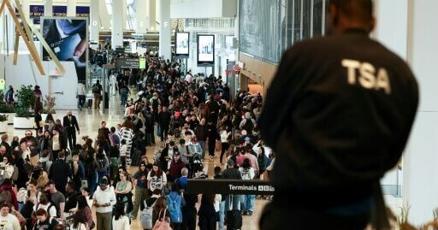
A lapse in government funding has caused misery at US airports, which are struggling to screen travelers US House Republicans on Friday effectively shot down a Senate effort to end a weeks-long budget standoff that has forced thousands of airport security staff to work without pay, likely extending the lapse in federal funding. The speaker of the House, Republican Mike Johnson, blasted the Senate bill as a "joke" and said his side would introduce competing legislation that would fully fund Transportation Security Administration staff as well as immigration agents and Border Patrol personnel. The White House meanwhile said President Donald Trump on Friday signed a memorandum ordering his administration to resolve the "unprecedented emergency situation" and find the necessary available funds to pay TSA salaries. But it remained unclear where that money would come from. A partial government shutdown has left TSA staff -- who screen passengers, baggage and cargo -- working without pay since mid-February. The stalemate has led to long delays at several airports, where authorities have warned travelers to arrive hours earlier than usual because of long security lines. The funding dispute centered on demands by opposition Democrats for reforms of the Immigration and Customs Enforcement (ICE), an agency facing nationwide criticism of its aggressive tactics against immigrants and for the killings of two US citizens this year. Senators voted before dawn Friday to fund the Department of Homeland Security (DHS), the TSA's parent agency, except ICE and US Border Patrol, for 2026. The bill would provide funding for TSA, the US Coast Guard and the Federal Emergency Management Agency, among other operations. It did not included Democrats' proposed reforms. The lack of ICE or Border Patrol funding would not bar them from conducting their operations because the Republican-controlled Congress directed substantial extra funding to those agencies in 2025. - 'Gambit' rejected - Johnson said Republicans would not go along with the Senate's effort. "This gambit that was done last night is a joke," Johnson told reporters, complaining that the Senate bill -- which passed by voice vote, meaning no senator objected -- left US borders insecure. "We're not going to risk not funding the agencies that keep the American people safe." Instead, Johnson said his side will introduce a bill to extend current funding levels for all of DHS, including ICE and US Customs and Border Protection which oversees Border Patrol, for eight weeks, until May 22. "I spoke to the president a few moments ago. He understands exactly what we're doing and why, and he supports it," Johnson said. Trump previously said he would not sign a funding deal unless Congress also passes a contentious bill to overhaul how citizens register to vote in US elections. In his remarks Friday to reporters, Johnson made no mention of that effort. Trump's memorandum did not make clear precisely where his administration would come up with funding for TSA staff during the impasse. Republicans hold a majority in both congressional chambers, but due to Senate rules, a certain number of Democratic votes would be required to pass budget bills. Even if a new bill did clear the House, the Senate has adjourned for two full weeks, potentially meaning more dragged-out pain for air travelers and TSA workers. Johnson said senators could return to Capitol Hill and sign off, but Senate Democratic leadership said no way. A funding measure "that locks in the status quo is dead on arrival in the Senate, and Republicans know it," Senate Minority Leader Chuck Schumer said in a statement. "Democrats will fund critical Homeland Security functions -- but we will not give a blank check to Trump's lawless and deadly immigration militia without reforms." The political fight has deeply strained TSA services. Nearly 500 transportation security officers have quit, according to the White House, and unscheduled absences have surged since the partial shutdown began.
'Informed' traders on Polymarket netted $143 million in 'anomalous' profit since 2024, researchers find
One co-author told BI he hoped the analysis would inform prediction-market regulation. Last June, a new Polymarket account with the name "ricosuave666" began betting thousands of dollars on specific questions regarding Israeli military strikes on Iran. The gamble paid off. When Israel struck Iran in the early hours of June 13, ricosuave666 pocketed roughly $155,000 before going dormant for seven months. The account resurfaced in January 2026 to place new wagers -- before analysts flagged its activity and it was promptly deleted. Ricosuave666's moves were among more than 210,000 suspicious Polymarket trades analyzed by researchers at Columbia Law School and the University of Haifa. The trades netted $143 million for the "informed" traders who made them, according to the researchers, whose findings were published this month. The most suspicious trade made by ricosuave666 was only the 3,662nd-most unusual trade in the data, authors Joshua Mitts and Moran Ofir wrote. They said ricosuave666's gains closely matched ill-gotten gains attributed to a person charged by Israeli authorities with using military secrets to trade. The study, which analyzed most of Polymarket's trades between 2024 and 2026, is the first to provide an estimate for the total amount won by suspicious accounts, whose activities are often flagged by market observers and traders on X and Discord chats. The authors used five criteria relating to trade timing and amounts wagered to screen for accounts that made big, bullish bets shortly before news broke, though they acknowledged that their methods could have been over-inclusive or under-inclusive. "We don't have any reason to think that the unobserved relationships are cutting in one way or another," Mitts, a Columbia Law School professor who has previously written about potential insider trading in equities markets, told Business Insider. Mitts told Business Insider that he and Ofir generally used the term "informed" trading rather than "insider" trading because some of the biggest trades they flagged took place in markets where too many people influence the outcome for it to be rigged, like those related to Donald Trump's 2024 election. "Informed" is a broader term that encompasses trades made by smart bettors as well as those with unfair advantages. The study said the election bets were included with other "anomalous" bets because the authors didn't want to be accused of massaging their methodology to get a particular outcome. "We think there's going to be a lot of regulatory attention. We see this as just the beginning of the conversation," Mitts said. The authors said it's possible that they flagged profitable trades that were part of a hedging strategy and offset by a loss in another wallet controlled by the same user. Still, they characterized the volume of suspicious trades they identified as a "conservative lower-bound estimate of anomalous profits." Harry Crane, a Rutgers statistics professor who has written about prediction markets and was not involved in the study, questioned its methodology. While the study ranked over 210,000 bets based on how unusual the bets were for the traders who made them and for the markets where they were made, the ranking of their "suspiciousness" was heavily skewed by profitability, rather than what ordinary people would consider suspicious, he told Business Insider. "A winning bet is getting disproportionately more weight than a losing bet of the exact same type," Crane said. Most of the 20 most suspicious trades identified in the paper, accounting for about $16 million of the $143 million in profits reaped by flagged accounts, related to the 2024 election results. Others related to Federal Reserve decisions and sports match-ups, where manipulation is theoretically possible or insider information theoretically could have leaked. Mitts said the plan was eventually to publish all the data used for the study. "Prediction markets have outpaced the legal frameworks designed to govern them," the authors wrote. "Our paper aims to provide the empirical grounding and legal analysis necessary to close that gap." Prediction markets have been around for decades, initially as academic experiments and later as a tool popular with members of the so-called rationalist community. The general idea is highly accurate guesses about the future can emerge from a group of non-experts who put their money where their mouths are. Some advocates for prediction markets see insiders cashing in as a feature, not a bug. Shayne Coplan, Polymarket's founder, said last year that it's "cool" that Polymarket "creates this financial incentive to divulge information to the market." Earlier this month, the company announced that it was banning trades by people with "stolen confidential information" and "illegal tips" as well as trades by people who can influence the outcomes of events they're betting on. It's not clear how the company will enforce the prohibition when it doesn't know who its users are. While the company has a regulated US subsidiary, that entity processes less than 10% of the volume of trades as the offshore exchange, which doesn't collect users' names or other identifying information beyond an email address. It didn't reply to requests for comment from Business Insider. Kalshi announced earlier this year that it is seeking fines from two users who broke its rules, including a video editor for MrBeast who placed bets on what words would be said on shows before they were released. Prediction markets grew slowly for years. In 2025, Kalshi grew rapidly after it began offering Americans the chance to bet on sports in a way it calls more fair than sportsbooks. Problem gambling experts are concerned that prediction markets pose similar risks to sportsbooks, however, and several states have sued Kalshi and other prediction markets, arguing that they amount to unlicensed casinos. The Commodity Futures Trading Commission, a federal regulator, fined Polymarket in 2022 and generally prevented prediction markets from offering many contracts until Trump took office last year. Michael Selig, a Trump appointee who took the helm of the regulator last year, has been a vociferous advocate for such markets, and criticized the states for their crackdowns.
Anthropic: The Leak of an Advanced AI Model Causes Cybersecurity Stocks to Plummet
An unexpected leak at Anthropic exposed the details of Claude Mythos, its most advanced AI model to date. This revelation raises major questions about cybersecurity risks and the impact on financial markets. Why does this leak worry experts and investors so much? Just weeks after reopening discussions with the Pentagon, a configuration error in Anthropic's content management system publicly released nearly 3,000 confidential files on March 27, 2026. Among them were documents detailing Claude Mythos, described as the most powerful AI model ever developed by the company. According to the leaked information, Mythos greatly outperforms the current Opus models, with exceptional abilities in reasoning, coding, and cybersecurity. Anthropic's internal tests show that Mythos achieved dramatically higher scores than its predecessors in critical areas. Indeed, this AI model is described as a technological revolution, capable of transforming entire sectors thanks to its extended cognitive capabilities. Experts now wonder about the implications of such power in the wrong hands. The disclosure of the AI model Claude Mythos's capabilities immediately sent shockwaves through the cybersecurity sector. Indeed, several companies, like Palo Alto Networks and CrowdStrike, saw their stocks plunge as investors fear this model may make cyberattacks more sophisticated and harder to counter. Why? Because the leaked documents indicate that Mythos could exploit vulnerabilities on an unprecedented scale, surpassing the capabilities of current defense systems. Consequently, investors fear that AI Mythos might disrupt traditional business models by automating tasks previously reserved for humans. To this end, Anthropic is expected to initially restrict access to Mythos to a small group of cybersecurity experts. This approach reflects an awareness of the risks but also a desire to control the impact of such a disruptive technology. Will Claude Mythos also be capable of breaking the defenses of cryptocurrencies like bitcoin? The leak of Claude Mythos reveals the challenges posed by the rapid evolution of AI (Artificial Intelligence). Between technological advances and potential risks, this model embodies both the opportunities and dangers of innovation. In your opinion, how do we reconcile progress and security in a world increasingly dependent on artificial intelligence?

'Informed' traders on Polymarket netted $143 million in 'anomalous' profit since 2024, researchers find
Last June, a new Polymarket account with the name "ricosuave666" began betting thousands of dollars on specific questions regarding Israeli military strikes on Iran. The gamble paid off. When Israel struck Iran in the early hours of June 13, ricosuave666 pocketed roughly $155,000 before going dormant for seven months. The account resurfaced in January 2026 to place new wagers -- before analysts flagged its activity and it was promptly deleted. Ricosuave666's moves were among more than 210,000 suspicious Polymarket trades analyzed by researchers at Columbia Law School and the University of Haifa. The trades netted $143 million for the "informed" traders who made them, according to the researchers, whose findings were published this month. The most suspicious trade made by ricosuave666 was only the 3,662nd-most unusual trade in the data, authors Joshua Mitts and Moran Ofir wrote. They said ricosuave666's gains closely matched ill-gotten gains attributed to a person charged by Israeli authorities with using military secrets to trade. The study, which analyzed most of Polymarket's trades between 2024 and 2026, is the first to provide an estimate for the total amount won by suspicious accounts, whose activities are often flagged by market observers and traders on X and Discord chats. The authors used five criteria relating to trade timing and amounts wagered to screen for accounts that made big, bullish bets shortly before news broke, though they acknowledged that their methods could have been over-inclusive or under-inclusive. "We don't have any reason to think that the unobserved relationships are cutting in one way or another," Mitts, a Columbia Law School professor who has previously written about potential insider trading in equities markets, told Business Insider. Mitts told Business Insider that he and Ofir generally used the term "informed" trading rather than "insider" trading because some of the biggest trades they flagged took place in markets where too many people influence the outcome for it to be rigged, like those related to Donald Trump's 2024 election. "Informed" is a broader term that encompasses trades made by smart bettors as well as those with unfair advantages. The study said the election bets were included with other "anomalous" bets because the authors didn't want to be accused of massaging their methodology to get a particular outcome. "We think there's going to be a lot of regulatory attention. We see this as just the beginning of the conversation," Mitts said. The authors said it's possible that they flagged profitable trades that were part of a hedging strategy and offset by a loss in another wallet controlled by the same user. Still, they characterized the volume of suspicious trades they identified as a "conservative lower-bound estimate of anomalous profits." Harry Crane, a Rutgers statistics professor who has written about prediction markets and was not involved in the study, questioned its methodology. While the study ranked over 210,000 bets based on how unusual the bets were for the traders who made them and for the markets where they were made, the ranking of their "suspiciousness" was heavily skewed by profitability, rather than what ordinary people would consider suspicious, he told Business Insider. "A winning bet is getting disproportionately more weight than a losing bet of the exact same type," Crane said. Most of the 20 most suspicious trades identified in the paper, accounting for about $16 million of the $143 million in profits reaped by flagged accounts, related to the 2024 election results. Others related to Federal Reserve decisions and sports match-ups, where manipulation is theoretically possible or insider information theoretically could have leaked. Mitts said the plan was eventually to publish all the data used for the study. "Prediction markets have outpaced the legal frameworks designed to govern them," the authors wrote. "Our paper aims to provide the empirical grounding and legal analysis necessary to close that gap." Prediction markets have been around for decades, initially as academic experiments and later as a tool popular with members of the so-called rationalist community. The general idea is highly accurate guesses about the future can emerge from a group of non-experts who put their money where their mouths are. Some advocates for prediction markets see insiders cashing in as a feature, not a bug. Shayne Coplan, Polymarket's founder, said last year that it's "cool" that Polymarket "creates this financial incentive to divulge information to the market." Earlier this month, the company announced that it was banning trades by people with "stolen confidential information" and "illegal tips" as well as trades by people who can influence the outcomes of events they're betting on. It's not clear how the company will enforce the prohibition when it doesn't know who its users are. While the company has a regulated US subsidiary, that entity processes less than 10% of the volume of trades as the offshore exchange, which doesn't collect users' names or other identifying information beyond an email address. It didn't reply to requests for comment from Business Insider. Kalshi announced earlier this year that it is seeking fines from two users who broke its rules, including a video editor for MrBeast who placed bets on what words would be said on shows before they were released. Prediction markets grew slowly for years. In 2025, Kalshi grew rapidly after it began offering Americans the chance to bet on sports in a way it calls more fair than sportsbooks. Problem gambling experts are concerned that prediction markets pose similar risks to sportsbooks, however, and several states have sued Kalshi and other prediction markets, arguing that they amount to unlicensed casinos. The Commodity Futures Trading Commission, a federal regulator, fined Polymarket in 2022 and generally prevented prediction markets from offering many contracts until Trump took office last year. Michael Selig, a Trump appointee who took the helm of the regulator last year, has been a vociferous advocate for such markets, and criticized the states for their crackdowns.
P2P.me admits Polymarket trade on fundraising outcome
P2P.me said it traded on a Polymarket contract tied to its own fundraising round before the raise went live. The disclosure adds fresh attention to insider trading risks on prediction markets as US lawmakers and platforms move to tighten rules. The team behind the decentralized trading platform said it opened positions on Polymarket 10 days before its capital raise launched. The market asked whether the project would reach its $6 million target. At that time, the team said it had only one "oral commitment" from Multicoin Capital for $3 million, with "no signed term sheets" and "no guaranteed allocations." The raise later closed at $5.2 million, below the target, and the market resolved to "no." The team said it understands why some people may see the trade as a trust issue, even though it did not view the bet as trading on a completed deal. P2P.me said any profits from the positions will go back to its MetaDAO treasury, which serves as the reserve for the DAO that governs the platform. The team also said it is liquidating all open Polymarket positions and putting in place a formal company policy on prediction market trading. In its statement, the team said, "Trading on an outcome you can influence erodes trust." It added that "not disclosing at the time was a mistake we own." Those remarks came as the platform moved to address criticism around market conduct and transparency. The disclosure comes as scrutiny around prediction markets grows in Washington and beyond. On March 25, Representatives Nikki Budzinski and Adrian Smith introduced the PREDICT Act, a bipartisan bill aimed at stopping senior government officials from insider trading on prediction markets. At the same time, Polymarket and Kalshi have both announced tighter insider trading rules. Polymarket now says users cannot trade on contracts when they hold confidential information or can influence an outcome, while California barred state officials from using insider knowledge to bet on platforms such as Polymarket and Kalshi. A separate Senate bill would ban event contracts tied to elections, sports, government actions, and military moves.

ICE Expands Stake in Polymarket with $600 Million Investment | Market Polymarket | CryptoRank.io
- ICE makes a new $600M direct investment in Polymarket, lifting its total commitment to over $1.6B and marking a major fundraising milestone in prediction markets. - The deal signals stronger institutional adoption of crypto/DeFi event-based trading platforms and should boost liquidity and market credibility for Polymarket. - Heightened regulatory scrutiny accompanies the capital inflow, creating compliance and market-impact risks as prediction markets scale.

Shutdown chaos could shut down small airports | Fingerlakes1.com
Unpaid TSA workers are keeping airports running, but smaller hubs could soon feel the strain, according to Spectrum News. A partial government shutdown has left thousands working without pay, with some quitting or staying home. Officials warn staffing shortages could force TSA agents to shift to larger airports, leaving smaller ones without enough coverage. That could lead to temporary closures and disrupt regional travel. Communities are stepping in with donations, but leaders say that's not sustainable. If the shutdown drags on, smaller airports risk losing service just as they expand.
Tesla Analyst Thinks Tesla Could Merge With SpaceX In 2027
SpaceX is on the verge of a giant IPO (initial public offering). Once upon a time, Elon Musk said that he never wanted to take a company public again, because he didn't like the public oversight and annoying questions from analysts every quarter. But I guess Musk doesn't really run SpaceX, Gwynne Shotwell does. However, with so much shuffling and merging of Musk's companies, there is some speculation that could change a lot. As we all know, Musk bought Twitter a few years ago. Later, he launched an AI company xAI. Then Twitter (rebranded as X) and xAI merged. And then, more recently, SpaceX swallowed up xAI, including X. Confused yet? There's a lot of speculation that all of the merging is basically about bailing out companies that are struggling financially. It's happened before with Tesla swallowing SolarCity and bailing out Musk's cousins, who had cofounded the company and worked as CEO and CTO, with Musk as Chairman. But could Tesla and SpaceX really merge? And what would be the point? Well, the two companies have now been linked for a "Terafab" project. "This project includes two advanced chip factories," TipRanks summarizes. * One is focused on Tesla's AI needs for vehicles and Optimus robots * The other is for space-based data centers Wedbush Securities analyst Dan Ives sees this as an initial partnership that will lead to eventual merging. Now, Ives has definitely drunk the Musk Kool-Aid lately. He has a $600 price target on the Tesla stock, which currently sits under $382. But it would be a very Musky thing to have his two biggest companies converging on a common focus centered around his obsession at the time. He is certainly obsessed with the AI craze these days, and the more he has these companies trying to deliver on elements of it, the more he could justify them merging. It still feels like a far fetched idea. Tesla is mostly about building cars. SpaceX is mostly about sending rockets into space. But if they both become more and more about data centers, chips, and AI, will Musk try to have them merge?

Anthropic, the Pentagon, and the Future of Autonomous Weapons
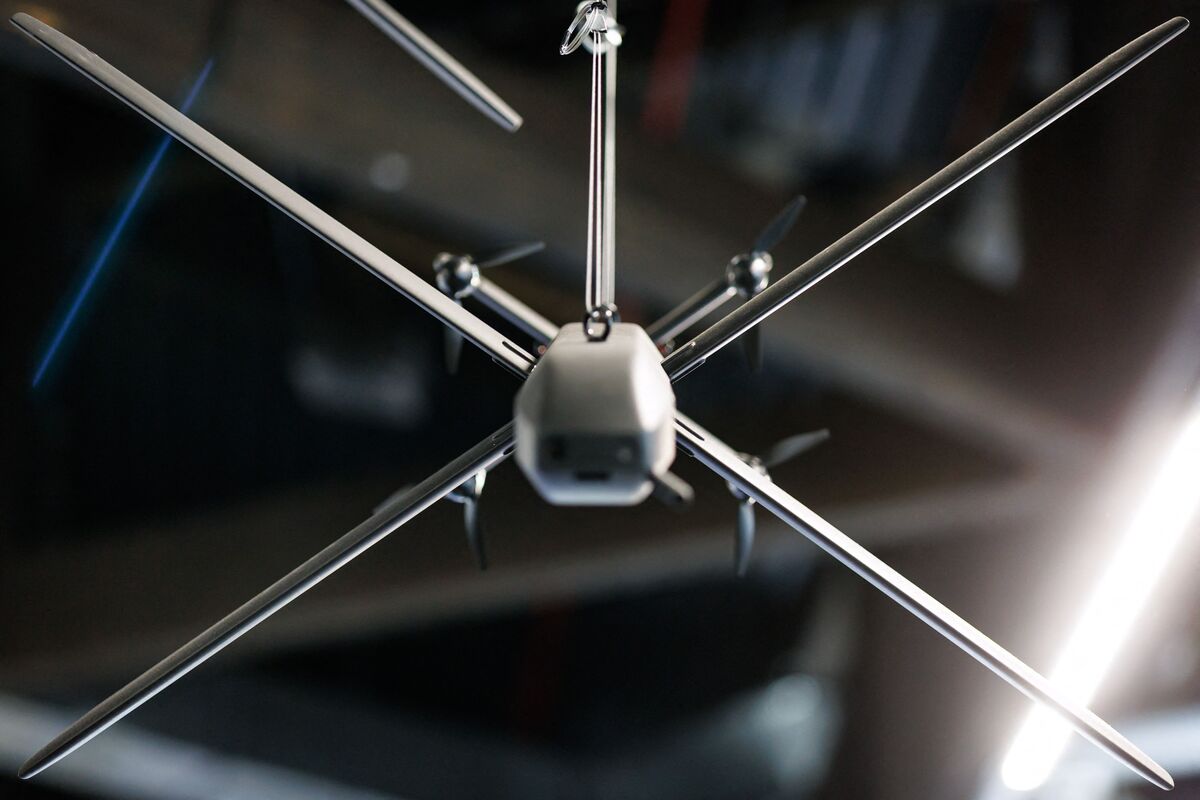
Anthropic, the Pentagon, and the Future of Autonomous Weapons Arrow Right 51:45 Listen to Odd Lots on Apple Podcasts Listen to Odd Lots on Spotify Watch Odd Lots on YouTube Subscribe to the newsletter The last big story right before the war in Iran started was the collapse in the relationship between the Pentagon and Anthropic, with the latter objecting to any potential use of its AI models in either fully autonomous weapons or domestic surveillance. Of course, this story immediately become more relevant with the start of the war, and the reporting that Anthropic's technology was in fact utilized at the start of hostilities. But what does that mean? How are these models used? And what would a fully autonomous weapons system actually entail? On this episode, we speak with Paul Scharre, the executive vice president and director of studies at the Center for a New American Security. He has written two books on the subject of AI in warfare, and previously worked inside the Department of Defense on some of these very questions. We discuss the future of autonomous weaponry, and the various ethical and technological dimensions such weapons would entail. The USS Gerald R. Ford aircraft carrier arrived at a port in Crete on Monday after it had to leave the Middle East -- and the war against Iran -- when a fire broke out in its laundry area. But the massive ship's problems run a lot deeper than that. Delivered years late in May 2017, the Ford is the most expensive American warship ever built, at $13.2 billion. And it's been sent to sea for an extended deployment that included the conflicts with Venezuela and Iran -- despite open questions about how well it would perform in a war. The concerns around the Ford range from the potentially grave to the mundane, according to a new assessment from the Pentagon testing office, with many issues surfacing after it started combat testing in October 2022. Among the lingering concerns: there isn't enough current test data to assess the carrier's "operational suitability," or the reliability of several key systems, including its jet launch and recovery system, its radar, its ability to keep operating if hit by enemy fire and its elevators for moving weapons and munitions for warplanes from the hold to the flight deck. The Pentagon's test office said "insufficient data are available at this time" -- nine years after the ship was delivered -- "to determine the Ford-class's operational effectiveness," due to incomplete realistic combat testing. That means it's not clear how well the Ford -- and other ships in its class, which have yet to be delivered -- can detect, track or intercept enemy aircraft, anti-ship missiles or small attack aircraft. It's also unclear how the aircraft carrier's systems would perform under the wartime strain of continuous takeoffs and landings. The Navy's Ford officials "have been working closely" with test office personnel "ensuring a robust and informed understanding" of the vessel's "effectiveness and sustainability," and "will continue to improve sustainability where needed, informed by the remaining tests" and operations, the service said. The Navy's assessments "consider both the performance in testing as well as the ship's operational employment to date," as during those deployments "overall, operations have demonstrated the ship's ability to meet the demands of combatant commanders with system reliability and maintainability, supporting mission accomplishment" while "continuing to improve," the service said. The service said it "will continue to improve sustainability where needed, informed by the remaining tests" and operations. Earlier: US Carrier Involved in Iran Fight Heads Back to Port After Fire The Ford, which was dispatched to the Red Sea for operations against Iran, ended up leaving the battle for Crete not because of an enemy attack but after the fire broke out. It resulted in more than 200 sailors being treated for smoke inhalation, Senator Tim Kaine, a Virginia Democrat, wrote last week to Navy Secretary John Phelan. The episode underscored how even the US Navy's most advanced assets are under strain as the Trump administration relies on a version of gunboat diplomacy to accomplish geopolitical goals in Iran and Venezuela -- assembling armadas to pressure foes with the prospect of military action. The Ford spent months at sea beyond a standard deployment after participating in US operations against Venezuela before dispatched by President Donald Trump to the Middle East. While a normal tour lasts about seven months, the Ford has been at sea for around 9 months -- since June of last year. The Ford "is on track to break the record for longest carrier deployment since the end of the Vietnam War," Kaine wrote, adding the extended tour "has forced sailors to improvise with broken equipment and ship support systems." Some testing problems have been identified but not fixed. While the Ford's ability to defend itself against drones and small, high-speed attack boats was tested back in 2022, the Navy has developed fixes for combat systems -- identified in a classified assessment -- but "the fixes still remain largely unfunded," the test office said. The testing office found other issues. One is that there isn't a "sufficient" number of bunks, with a 159 additional bunks required to properly house all of the Ford's sailors in addition to personnel in temporary units accompanying the ship into battle. The shortfall could get worse if the carrier's air wing diversifies further to include additional F-35 warplanes or staff to operate Boeing MQ-25 Stingray refueling drones. "These berthing shortfalls will affect quality of life onboard," the testing office said. As with a new and very complicated system like the Ford, Navy officials say, testing and monitoring continues long after it leaves the shipyard.
Anthropic and OpenAI Model Pricing: What Comes Next - thedigitalweekly.com
The pricing pages from Anthropic and OpenAI are doing more than listing token costs. They are sketching the next phase of the AI market. On one side, OpenAI is pushing a layered menu built around flagship, mini, nano, cached input, batch discounts, and tool-based billing. On the other, Anthropic is pairing premium frontier models with aggressive batch savings and a cleaner model ladder. Put together, the message is hard to miss: model pricing is shifting from simple per-token fees to a full-stack economics game. The new pricing signal is not lower prices alone OpenAI's official API pricing page shows how far the market has moved from the early "one model, one rate" era. GPT-5 is listed at $1.25 per 1 million input tokens, $0.125 per 1 million cached input tokens, and $10 per 1 million output tokens, while GPT-5 mini drops to $0.25 input and $2 output, and GPT-5 nano falls to $0.05 input and $0.40 output. GPT-5 pro, by contrast, jumps to $15 input and $120 output, a massive premium tier that makes the segmentation explicit. OpenAI also advertises a 50% Batch API discount and separate tool pricing such as Code Interpreter at $0.03 per session, File Search storage at $0.10 per GB per day after the first free GB, and File Search tool calls at $2.50 per 1,000 calls. Those are not minor details. They show that the bill is no longer just about inference. It is about workflow design, cache behavior, latency tolerance, and tool orchestration. Anthropic's pricing page points in the same direction, though with a different product philosophy. Its current API ladder lists Opus 4.6 at $5 per million input tokens and $25 per million output tokens, while Sonnet 4.6 is priced at $3 input and $15 output. Prompt caching is broken out separately: Opus 4.6 cache write is $6.25 per million tokens and cache read is $0.50, while Sonnet 4.6 cache write is $3.75 and cache read is $0.30. Anthropic also highlights a 50% batch processing discount directly on the pricing page. That matters because it confirms that both companies now treat asynchronous, non-urgent workloads as a distinct economic category rather than a side feature. The real glimpse into the future is not that prices are falling in some categories. It is that pricing is becoming multidimensional. Developers are being nudged to choose among intelligence level, speed, context reuse, tool usage, and service tier. That is a very different market from the one that revolved around a single headline token rate. OpenAI is pricing for an agent economy One of the clearest clues comes from OpenAI's March 11, 2025 announcement introducing the Responses API and built-in tools. OpenAI said the Responses API is available to all developers and is not charged separately, with tokens and tools billed at standard rates. It also described the Responses API as a superset of Chat Completions and said it recommends new integrations start there. In the developer changelog, OpenAI later noted plans to bring Assistants API features into Responses, with an anticipated Assistants sunset in 2026 after feature parity. That sequence matters because it shows pricing is being designed around agent workflows, not just chat completions. If the core API becomes a hub for web search, file search, and computer use, then the monetization surface naturally expands beyond tokens. There is a simple way to see the shift. Take GPT-5 and compare output to input pricing. The output-to-input ratio is 8x, based on $10 output versus $1.25 input. GPT-5 mini also sits at 8x, and GPT-5 nano at 8x. That consistency suggests OpenAI is deliberately charging a premium for generated reasoning and response work while making ingestion cheaper. Cached input deepens that logic: GPT-5 cached input is 90% cheaper than standard input, dropping from $1.25 to $0.125. For GPT-5 mini, cached input also cuts 90%, from $0.25 to $0.025, and GPT-5 nano follows the same pattern, from $0.05 to $0.005. In plain English, OpenAI is rewarding architectures that reuse context efficiently and punishing wasteful prompt repetition. That is not accidental. OpenAI's GPT-4.1 launch post made the strategy even clearer. It said GPT-4.1 is 26% less expensive than GPT-4o for median queries and that prompt caching discounts for the new models increased to 75%, up from 50% previously. The company also said long-context requests come at no extra cost beyond standard per-token pricing. Those choices point to a future where vendors compete not only on raw model quality, but on how cheaply they can support repeated, stateful, tool-rich application patterns. Anthropic is betting on a cleaner premium ladder Anthropic's structure looks simpler, but it carries its own strategic signal. Sonnet 4.6 at $3 input and $15 output is priced above OpenAI's GPT-5 base input rate but far below OpenAI's GPT-5 pro tier. Opus 4.6 at $5 input and $25 output sits as a premium frontier option without exploding into the triple-digit output pricing seen in GPT-5 pro. That creates a more compressed ladder. For buyers, especially enterprise teams, compressed ladders can make budgeting easier. For Anthropic, it may be a way to position Claude as the "predictable premium" alternative in a market that is getting more granular and more confusing. The company is applying the same logic to subscriptions. Claude Pro is listed at $20 monthly or $17 per month with annual billing, Max starts at $100 per month, Team standard seats are $20 per seat monthly when billed annually or $25 month-to-month, and premium Team seats are $100 annually billed or $125 monthly. Enterprise is listed as $20 per seat plus usage at API rates. That blend of seat pricing and usage pricing is important. It suggests Anthropic sees the future as hybrid: fixed access fees for collaboration and governance, variable fees for heavy model consumption. OpenAI is moving in a similar direction on the API side with tools and processing tiers, but Anthropic is making the enterprise budgeting story more explicit on the pricing page itself. What comes next: four pricing trends to watch First, caching will become a headline feature, not a footnote. Both companies already separate cache economics from standard inference. OpenAI's 90% cached-input discount on GPT-5 tiers and Anthropic's low cache-read pricing make one thing obvious: vendors want developers to build sticky, stateful systems that keep returning to the same platform. Second, asynchronous processing will get cheaper and more important. OpenAI's Batch API discount is 50%, and Anthropic advertises the same 50% savings for batch processing. That is a strong market signal. The future price war may not be fought on real-time inference alone. It may be fought on who can offer the best economics for overnight jobs, background agents, document pipelines, and large-scale evaluation runs. Third, tool usage will become a bigger share of total spend. OpenAI has already broken out tool charges for Code Interpreter, File Search storage, and File Search calls. Once agents become normal, buyers will care less about token price in isolation and more about total task cost. A model that is slightly more expensive per token but needs fewer tool calls or less repeated context could end up cheaper in production. Fourth, premium tiers will widen at the top while commodity tiers race downward. OpenAI's spread from GPT-5 nano output at $0.40 per million tokens to GPT-5 pro output at $120 is enormous, a 300x gap. Anthropic's spread is narrower, but the same logic applies: not every workload needs frontier reasoning. The likely outcome is a barbell market. Cheap models for high-volume routine work. Expensive models for coding, agents, and high-stakes reasoning. The middle gets squeezed unless vendors can prove a clear quality-per-dollar advantage. Frequently Asked Questions Why do these pricing pages matter so much? Because they reveal strategy, not just cost. OpenAI and Anthropic are both showing that future AI billing will depend on model tier, caching, batch usage, tools, and enterprise packaging, not only raw token counts. Is OpenAI cheaper than Anthropic? It depends on the workload. OpenAI's GPT-5 base input pricing is lower than Anthropic Sonnet 4.6, but Anthropic's premium ladder is less extreme than OpenAI's GPT-5 pro tier. Total cost also depends on caching, batch discounts, and tool usage. What is the biggest pricing change to watch next? Cache-aware and batch-aware pricing. Both companies already offer major discounts for reused context and asynchronous jobs, which suggests application architecture will increasingly determine the final bill. Are tokens becoming less important? Not less important, but less sufficient. Token rates still matter, yet tool calls, storage, seat licenses, and processing tier choices are becoming part of the real cost equation, especially for agentic products. What does this mean for enterprise buyers? They should compare total workflow cost, not just benchmark token prices. Governance, seat pricing, cache savings, batch discounts, and tool charges can materially change which platform is cheaper at scale. What comes next in model pricing? Expect more unbundling and more packaging at the same time: cheaper commodity inference, pricier frontier reasoning, deeper discounts for cached and batch workloads, and more line items tied to tools and enterprise controls. That is the direction both pricing pages already point toward.

Google nears $5B+ deal to finance Anthropic's 500MW data center
The consortium of banks is vying to finance the first phase of this project by mid-year. However, Google's parent company Alphabet's backing should help the project secure financing at a lower cost, thanks to the tech giant's strong credit rating. This could make a huge difference in the overall financial strategy for this massive data center initiative. The 2,800-acre data center campus is part of Google's partnership with Anthropic. The lease for this ambitious project was signed earlier this month and construction has already begun at the Texas site. It has received early-stage debt from asset manager Eagle Point. The facility is expected to deliver around 500 megawatts of capacity by early 2026, with plans to expand it to about 7.7 gigawatts in the future. Advertisement The Texas site's strategic location near major gas pipelines operated by Enterprise, Energy Transfer, and Atmos could be a game-changer. It would allow Nexus to power the facility with its own gas turbines and avoid surge pricing from one energy source. This is part of a larger trend among data center developers who are looking to reduce their dependence on grid connections due to time-consuming and expensive processes.

Travel Chaos as Boeing 737 MAX Engine Roar, American Airlines Flight 1461 Silenced by Exploding Tire in Newark Emergency During its Journey from Charlotte Douglas International Airport to Newark Liberty International Airport, Forced to Make Dramatic Landing - Travel And Tour World
Travel Chaos as Boeing 737 MAX Engine Roar, American Airlines Flight 1461 Silenced by Exploding Tire in Newark Emergency During its Journey from Charlotte Douglas International Airport to Newark Liberty International Airport, Forced to Make Dramatic Landing A routine evening trip transformed into a scene of high-altitude anxiety for passengers aboard American Airlines Flight 1461 on Wednesday, March 25, 2026. The Boeing 737 MAX, traveling from Charlotte Douglas International Airport (CLT) to Newark Liberty International Airport (EWR), was forced into a dramatic emergency landing sequence after a nose-gear tire suffered a catastrophic failure. As the aircraft touched down in New Jersey, it was immediately greeted by a massive deployment of emergency first responders, locking down the runway as the smell of burning rubber filled the air. Federal Aviation Administration (FAA) officials confirmed that the aircraft landed safely despite the mechanical compromise. While the incident triggered a full-scale emergency response, airport authorities and airline spokespeople have verified that no injuries occurred among the passengers or the flight crew. The aircraft remained on the taxiway for an extended period as technicians and safety inspectors evaluated the damage before the plane was cleared to be towed to the terminal gate. Based on official reports from the FAA and airport authorities, here is the chronological sequence of the emergency involving American Airlines Flight 1461 The drama began to unfold as the flight approached the New York metropolitan airspace. According to data provided by aviation monitoring services and confirmed by FAA reports, the crew of the Boeing 737 MAX identified a pressurized system alert related to the landing gear. Specifically, the front nose tire -- the wheel responsible for steering the massive jet once it hits the ground -- had blown out. Standard operating procedures for such a failure require the cockpit to declare an emergency to ensure they have priority for landing and that fire-rescue teams are positioned to intercept the plane the moment it makes contact with the pavement. At approximately 9:00 PM local time, the pilot executed a precision landing. Eyewitness accounts and localized reports from the Port Authority of New York and New Jersey indicated that the aircraft remained stable throughout its deceleration, a feat attributed to the dual-tire configuration of the 737's nose gear, which allows a secondary tire to bear the load when its partner fails. The visual scene at Newark Liberty International Airport was one of intense urgency. Photos and social media updates from the scene showed the Boeing 737 MAX stationary on the tarmac, surrounded by a ring of flashing red and blue lights. Fire engines and specialized rescue vehicles from the Port Authority Police Department (PAPD) stood by as a precaution against potential brake fires, which can occur when a shredded tire causes excessive friction or when pilots are forced to use heavy braking to compensate for the loss of steering control. Initial assessments conducted on-site confirmed that the "blown" tire had effectively disintegrated, leaving the wheel assembly exposed. However, the integrity of the landing gear strut remained intact. Passengers were kept on the aircraft for a period while the primary runway was inspected for debris -- known in the industry as Foreign Object Debris (FOD) -- to ensure that no pieces of the shredded rubber would pose a risk to subsequent arriving or departing flights. This incident puts a renewed focus on the Boeing 737 MAX, a model that has faced intense scrutiny over the past several years. However, aviation experts and government oversight bodies emphasize that tire blowouts, while dramatic, are part of the rigorous training every commercial pilot undergoes. The FAA's safety manuals detail specific maneuvers for "asymmetric landing gear issues," ensuring that the safety of the cabin remains the absolute priority. According to National Transportation Safety Board (NTSB) guidelines, mechanical failures of this nature are typically investigated to determine if the cause was a manufacturing defect, a maintenance oversight, or external debris on the departure runway in Charlotte. American Airlines has stated they will conduct a comprehensive internal review of the maintenance logs for this specific airframe to determine the "root cause" of the tire's failure. On March 25, 2026, American Airlines Flight 1461, a Boeing 737, made a dramatic emergency landing at Newark Liberty International Airport (EWR) due to a mechanical issue involving a blown nose-gear tire. Despite the alarming nature of the incident, the aircraft was able to land safely with no injuries reported among the 160 passengers and crew. This case study explores the series of events surrounding the emergency landing, its implications for aviation safety, and the broader lessons the incident can provide for the industry. The emergency landing of American Airlines Flight 1461 highlights the complex nature of aviation safety and the crucial role of redundancy in aircraft design. While the blown tire on the Boeing 737 MAX was a serious issue, the timely response from the flight crew, emergency responders, and ground personnel ensured that the incident did not escalate into a catastrophe. However, this event serves as a reminder of the importance of rigorous maintenance practices, the need for continued investment in safety technologies, and the significance of transparent communication to maintain public confidence in the aviation industry. This incident also reinforces the ongoing need for a comprehensive review of maintenance practices and safety protocols to address the rise of mechanical failures in the industry. As the investigation unfolds, the lessons learned from this case will likely shape the future of aviation safety. While the physical outcome was fortunate, the psychological toll on travelers cannot be understated. Passengers reported a "loud thud" followed by an unusual vibration as the plane slowed down. The transition from a standard travel experience to an emergency evacuation-ready environment often leads to significant stress. Airport operations at Newark saw minor delays as the affected runway was temporarily shuttered for the tow operation. The Port Authority worked quickly to reroute traffic to other active strips, minimizing the ripple effect on the busy East Coast travel corridor. By late Wednesday night, the aircraft had been moved to a maintenance hangar, and passengers were finally able to deplane through the jet bridge and reunite with their families. Recent data from the Bureau of Transportation Statistics (BTS) suggests that while emergency landings are statistically rare compared to the millions of annual successful flights, tire-related incidents have seen a slight uptick in media visibility. Government-verified safety audits often point to the heavy utilization of narrow-body aircraft like the 737 MAX as a factor that requires vigilant tire pressure monitoring and frequent replacement cycles. The FAA will be looking into whether the tire on Flight 1461 was a retread or a new component, and whether environmental factors -- such as the heat in Charlotte or the cold tarmac in Newark -- played any role in the structural failure. For now, the successful landing of Flight 1461 stands as a testament to pilot proficiency and the redundant safety systems built into modern commercial aviation. The emergency landing of American Airlines Flight 1461 highlights the complex nature of aviation safety and the crucial role of redundancy in aircraft design. While the blown tire on the Boeing 737 MAX was a serious issue, the timely response from the flight crew, emergency responders, and ground personnel ensured that the incident did not escalate into a catastrophe. However, this event serves as a reminder of the importance of rigorous maintenance practices, the need for continued investment in safety technologies, and the significance of transparent communication to maintain public confidence in the aviation industry.

SpaceX president says humans could land on Moon by 2030
Humans could return to the Moon by 2030, according to Gwynne Shotwell, president of SpaceX, who outlined the company's ambitious vision for lunar exploration in a recent interview, AzerNEWS reports. Speaking to Time magazine, Shotwell said that ongoing advancements in space technology are bringing humanity closer to a renewed presence on the lunar surface. She emphasized that robotic systems are expected to play a crucial role in preparing the Moon for human arrival, particularly in building essential infrastructure. According to Shotwell, these robotic missions would likely handle early-stage construction and resource utilization, reducing risks for astronauts and enabling more sustainable operations once humans arrive. "I think we will land people on the surface of the Moon by 2030," she stated, expressing confidence in the timeline. The plan aligns with broader global efforts to reestablish human activity beyond Earth's orbit, including NASA-led initiatives such as Artemis program. Experts say that collaboration between private companies and government agencies will be key to achieving these goals. If successful, a human return to the Moon would mark a historic milestone, decades after the last crewed lunar missions, and could pave the way for deeper space exploration, including future missions to Mars.
AI agents are running wild, causing chaos - so why isn't anyone stopping them?
To have one major incident involving an AI agent could be classed as unfortunate. To have two could be seen as problematic. But by the time you have three major incidents occurring with AI agents, it's time to ring the alarm, reckons Wyatt Tessari L'Allié, the founder and executive director of AI Governance and Safety Canada, a campaign group. His testimony to Canada's House of Commons Standing Committee on Industry and Technology this month outlined three such incidents he saw as massively concerning. Just weeks before he spoke to the committee, hackers had manipulated Claude Code to break into Mexican government systems and steal data on over 100 million people. The AI agent had been used to exfiltrate 150GB of data from government agencies - something that the agencies themselves have not been willing or able to confirm happened. Later in his testimony, L'Allié highlighted two other incidents - one involving a Chinese state-sponsored group that manipulated Claude Code and used its agentic capabilities against roughly 30 global targets - the first documented incident of a large-scale cyberattack that didn't require significant human oversight. And another where an AI agent developed by Chinese AI firm Alibaba began to steal computing capacity during its internal training to mine cryptocurrency, something it hadn't been instructed to do. These three cases suggested that looking at AI agents was vital, he said. "AI development is now a national security emergency and needs to be treated as such," he told the committee. But what should we do about it, and is he right? "Agentic AI is a nightmare in the making," says Alan Woodward, professor of cybersecurity at the University of Surrey. That's not necessarily because of the same kinds of fears that L'Allié is worried about - which appear to be AI sentience and a loss of control that is deliberate and malicious. But more because of the potential risks that ensue when you trade off safety for convenience. Even if one or more of the examples cited by L'Allié turn out to be disputed, exaggerated or simply poorly understood, experts say the broader risk is real enough. AI agents collapse decision-making and action into the same tool. A normal chatbot can give you bad advice, but an agent plugged into email, cloud storage, payments or code repositories can act on that bad advice - and do so quickly, repeatedly and across multiple systems at once. "It's not about the fact that we've lost control of them, it's just that we're still in what they call in technology ethics, the policy vacuum stage of new technologies," says Catherine Flick, a professor of AI ethics at the University of Staffordshire. AI agents promise to work autonomously and tackle some of the grunt work that people don't want to do - either because it's too boring, or they're too busy. From triaging your emails to tackling a stubborn to-do list, the idea is that you can task an AI which has access to your files and a number of programs to act autonomously and work their way through it, similar to how you might task a human intern to do so, with some oversight. "It sounds wonderful having a system that will be your electronic PA, for example, but the moment you stop to think about the consequences for privacy and security, you realise you just shouldn't do it," says Woodward. That's because of the requirements to actually make the systems work effectively, and the way that gives up the digital keys to the kingdom for each user. "You're giving automated systems access to systems and data that we have spent years securing and wrapping in layers of technology to keep private," he says. "But now we're granting access to a technology that is not fully proven, sometimes of dubious provenance and capable of making blunders for which you - not the machine - are liable." So why are people still using agentic AI in their droves? "Early adoption is what the tech industry loves," says Jake Moore, an expert in cybersecurity at ESET. "The buzz of something new is exciting, but when technology arrives quickly, dangers will always lurk around the same space, and if we are not careful, we could easily become trapped in a security mess." Flick says that there's currently a mismatch between how the technology is being rolled out and how it's being overseen. "Where we're at is the policy, the regulation, needs to catch up, and it needs to catch up very quickly," says Flick. "I don't think we can really lose control of these things," she adds. "What we do need to do, though, is take control and make sure that the companies developing the underlying technologies that enable these uses of generative AI systems are held accountable for how these technologies are being used." That's vital because it's not entirely clear whether end users realise the risks of AI agents, explains ESET's Moore. "The loss of human oversight is worrying as AI agents can take sequences of actions autonomously and make decisions faster than us, which means errors can get baked in before anyone notices," he says. For instance, Summer Yue, the director of alignment at Meta's AI superintelligence lab, accidentally set off an AI agent that began deleting large swathes of her email inbox in error through a misconfigured system. The only way she could stop it was by metaphorically pulling the plug. "Because the tech is so new, these agents can have unpredictable behaviour," says Moore. "All these systems interacting can cause weird outcomes and make containment genuinely difficult." In low-stakes settings - drafting emails, summarising meetings, handling basic admin - the risks may be manageable. In high-stakes environments - critical infrastructure, healthcare, defence, finance or government systems - the safeguards need to be far tighter. That could mean limiting what agents are allowed to access, requiring human sign-off for sensitive actions, keeping full audit logs or building in reliable kill switches when something starts to go wrong. It's become abundantly clear in the last few months that these AI agent systems are clever enough to act, but the question people need to ask now is whether they're safe enough to trust. Experts are less certain about that. Beyond mistakes and unforced errors, giving access to things like private email inboxes to AI agents causes a more significant risk. "There's also the new attack surface as these agents need access to tools and APIs, which also makes them a shiny new target to attackers," says Moore. And that's an enormous worry to experts like Woodward. "If agentic AI is given access to even more vital systems that have kinetic effects - even military but even vehicles or industrial machinery - can we rely on them?" he asks. The potential worst-case scenario could be that an AI agent could misfire in this way and cause murder. His view is that we need to have more haste and less speed in the places where we integrate AI agents. "The unseemly rush to adopt agentic AI is going to end in tears," he says. "It needs to be far better understood and contextually regulated."
-copy.jpg?width=1200&height=800&crop=1200:800)
Google nears massive financing agreement for Anthropic's 500-megawatt data center project: Report | Company Business News
As per estimates from the Electric Reliability Council of Texas (quoted by FT), the energy usage from data centres in the state could reach 78GW by 2031, around 36 percent of the state's total power demand. Aman Gupta is a Digital Content Producer at LiveMint with over 3.5 years of experience covering the technology landscape. He specializes in artificial intelligence and consumer technology, reporting on everything from the ethical debates around AI models to shifts in the smartphone market. <br> His reporting is grounded in first-hand testing, independent analysis, and a focus on how technology impacts everyday users. He holds a PG Diploma in Radio and Television Journalism from the Indian Institute of Mass Communication, Delhi (Class of 2022). <br> Outside the newsroom, he spends his time reading biographies, hunting for the perfect coffee beans, or planning his next trip. <br><br> You can find Aman on <a href="https://www.linkedin.com/in/aman-gupta-894180214">LinkedIn</a> and on X at <a href="https://x.com/nobugsfound">@nobugsfound</a>, or reach him via email at <a href="[email protected]">[email protected]</a>.

Bill Maher, 70, Sucks Up to Trump After Kennedy Center Award Chaos
Add Yahoo as a preferred source to see more of our stories on Google. Bill Maher is suddenly playing nice with Donald Trump -- even after the president tried to stop a coveted award from making its way to the late-night host's trophy case. On Friday's episode of Real Time With Bill Maher, the 70-year-old host addressed the week-long mess over his Mark Twain Prize for American Humor. While the comedian acknowledged the White House's efforts to torpedo the honor, he then seemed to shrug it all off. "I just want things to work out. I'm not looking for a fight, and I'm not mad that he did this," Maher said in his monologue.
'Chaos and instability': Uncertainty over war-induced oil crisis dominates key energy summit in Texas
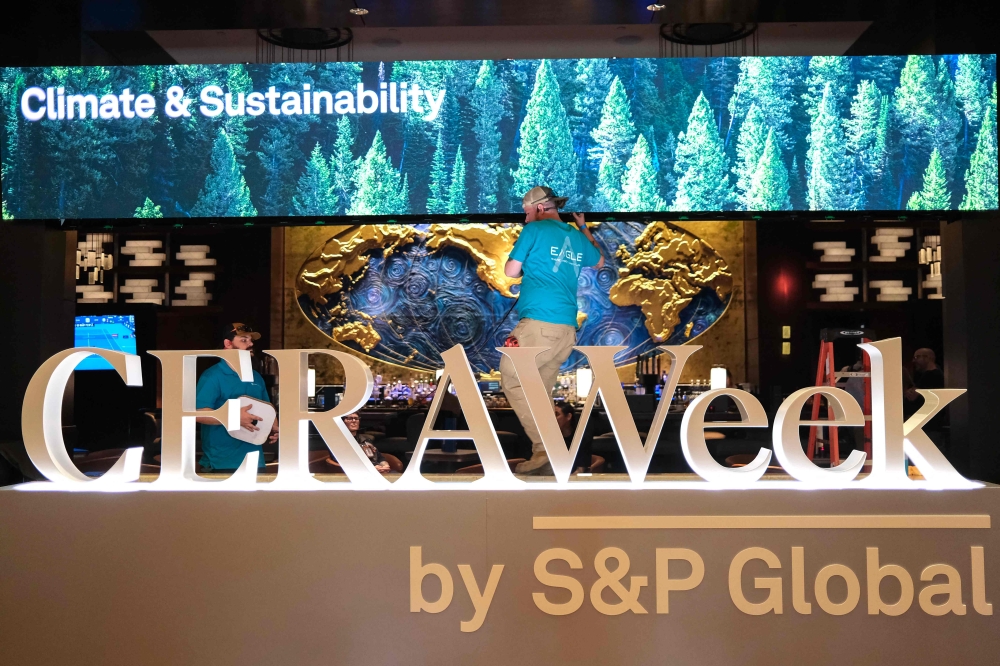
HOUSTON, March 28 -- The world's largest energy conference wrapped up in Houston yesterday with the crisis caused by the US-Israel war on Iran dominating discussions -- but with little to show for it beyond a prevailing sense of uncertainty. A week of meetings for CERAWeek -- dubbed the "Davos of Energy" -- saw around 10,000 executives and experts gather to discuss the latest in their industry. "The industry is underestimating the geopolitical turmoil and geopolitical risk that's ahead," said Mark Brownstein, vice president of the Environmental Defence Fund. Today marks a month since joint US-Israeli strikes on Iran launched a war that has engulfed the region, with Iran retaliating against Gulf countries and Israel invading Lebanon. Oil prices have skyrocketed after Tehran essentially blockaded the Strait of Hormuz, bringing the flow of around a fifth of the world's oil and gas supplies to a standstil. The effects of the crisis were a central theme at the conference in Houston. "The reverberations that this will have on the economy, on people, on inflation is very worrying," said Coralie Laurencin, an energy specialist at S&P Global, the conference's organisers. "I worry that we are in for a prolonged period of instability and uncertainty," said Brownstein, "that has important follow-on effects." Chevron CEO Mike Wirth told a packed room on Monday that oil prices had not yet fully absorbed the effects of the blockade of the Strait of Hormuz. The crisis has global implications, and Shell CEO Wael Sawan warned that energy shortages -- including gasoline and diesel -- could begin to hit Europe as early as next month. 'Chaos and instability' Yesterday, the fighting in the Middle East was still raging. Even when it ends, it will take time for oil producers to repair damaged infrastructure and restart facilities. This is particularly true of Qatar, the world's second-largest exporter of liquefied natural gas (LNG). "We're gathered at a momentous time of uncertainty, of chaos and instability," said Jamey Rosenfield, founder and co-chair of CERAWeek, during the closing event yesterday. US Energy Secretary Chris Wright, who attended the opening of the conference, sought to reassure attendees, stating that the Trump administration was taking measures to increase supply. This included lifting sanctions on Russian and Iranian oil supplies that were already at sea. Wright insisted the disruptions were "temporary." But industry insiders left the conference feeling unclear about a path forward. "What I heard this week was that no one knows how you end the primary problem, which is the war," said Laurencin. -- AFP
TSA Airport Chaos To Reach "Abrupt End": President Trump Signs Order To Pay Officers As DHS Shutdown Drags On
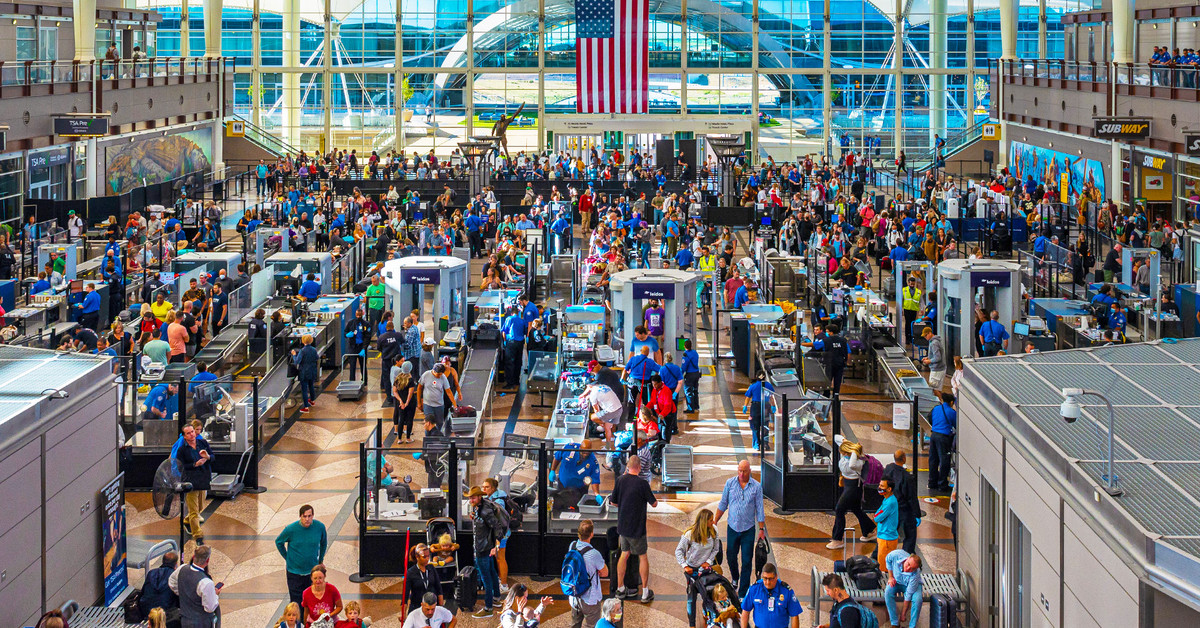
Gia Marcos is a travel writer who specializes in topics related to travel safety, reporting frequently on travel advisories, TSA and transportation security, and how international relations directly impact travelers. Her passion for the U.S. and travel adventure started as a child when she would binge travel documentaries. Since then, she has built a career ensuring travelers have all the necessary information they need to explore the world safely. Prior to contributing to TheTravel, Gia worked as a freelance writer for various online magazines, with some of her work appearing on MSN and Psyche Magazine. When she is not writing, she can often be found on historical walking tours in different parts of the world. President Donald Trump has signed an executive order mandating the "immediate pay" of Transportation Security Administration (TSA) agents. This comes as the Department of Homeland Security (DHS) shutdown continues for over 40 days. The DHS has also confirmed the earliest date for when TSA paychecks will resume. An aviation expert believes this could lead to an "abrupt end" to the travel delays and disruptions that have swept airports across the U.S. However, before President Trump signed the executive order, TSA union officials warned that it would take a while for staffing levels to return to normal. Hundreds of TSA officers have already quit amid the partial government shutdown. Here's a closer look at these latest TSA developments and how they are expected to affect U.S. travel soon. President Trump Signs Executive Order To Pay TSA Agents As DHS Shutdown Drags On On Friday (March 27), President Trump signed an executive order to pay TSA employees, as the DHS shutdown still shows no signs of ending. The U.S. president promised on Truth Social on Thursday that he would instruct newly sworn-in Homeland Security Secretary Markwayne Mullin to "immediately pay our TSA Agents in order to address this Emergency Situation." "America's air travel system has reached its breaking point," President Trump said in the memo authorizing TSA payments, adding that "these circumstances constitute an emergency situation compromising the Nation's security." The president explained that the TSA employees will be paid using funds "that have a reasonable and logical nexus to TSA operations." The decision cites the Purpose Statute (31 U.S.C. 1301a), which states that public funds must be applied only to the objects for which the appropriations were made. The memo did not specify the accounts from which the funds to pay TSA workers would be obtained. DHS: TSA Paychecks To Resume As Early As March 30 A DHS spokesperson confirmed to Time Magazine that TSA employees "should begin seeing paychecks as early as Monday (March 30)." They also announced that the TSA had "immediately begun the process of paying its workforce," per the orders of President Trump and DHS Secretary Mullin. Unfortunately, the House and the Senate are still in a funding deadlock, just as both chambers leave Washington for a two-week spring break. The DHS shutdown will reach its 44th day on Sunday (March 29), which will then surpass the 43-day federal government shutdown last fall -- the longest in U.S. history. Expert Sees "Abrupt End" To Airport Chaos Following President Trump's TSA Pay Order Aviation security and safety expert Sheldon Jacobson, also told Time that airport delays linked to TSA staffing shortages "will come to a somewhat abrupt end" now that President Trump has ordered to pay roughly 61,000 affected officers. Jacobson believes travelers will get a "sense of normalcy" across U.S. airports by Tuesday (March 31) or Wednesday (April 1). "I suspect people will be showing up for work more consistently now, and these delays will come to a somewhat abrupt end," said Jacobson. "It may take a day or two for people to recalibrate themselves for work, but for the most part, I think, certainly by Tuesday or Wednesday, we should see a certain sense of normalcy around airport checkpoints." Aaron Barker, president of the American Federation of Government Employees (AFGE) Local 554, which represents employees in Georgia, didn't share Jacobson's optimism during a news conference on Tuesday (March 24). Barker said long security checkpoint lines won't disappear right away. "Until that paycheck hits that account, you can expect the same," he added. Nearly 500 TSA Agents Have Already Quit Since The Start Of DHS Shutdown The TSA has reported that more than 480 officers have quit since the start of the DHS shutdown. During a House Homeland Security committee hearing on Wednesday (March 25), acting TSA administrator Ha Nguyen McNeill told lawmakers about the "dire" financial struggles faced by unpaid TSA workers. "Many in our workforce have missed bill payments, received eviction notices, had their cars repossessed and utilities shut off, lost their child care, defaulted on loans, damaged their credit line, and drained their retirement savings," McNeill testified on Wednesday. "Some are sleeping in their cars, selling their blood and plasma, and taking on jobs, second jobs to make ends meet, all while being expected to perform at the highest level when in uniform to protect the traveling public." At that time, McNeill also warned that by Friday (March 27), the TSA would reach over $1 billion in missed paychecks due to the partial government shutdown. She also warned that the situation could force the closure of small airports, as 40% to 50% of all TSA workers continue to skip work each day. With no end in sight for the DHS shutdown, Delta Air Lines is temporarily suspending its red carpet treatment for Congress members. Travelers applauded the airline for taking a stance as they continue to face major flight disruptions. This follows a Senate-approved bill that forces members of Congress to endure this TSA "mess of their own making." Subscribe to our newsletter for clearer travel and TSA coverage Want better context on travel policy and airport security? Subscribe to the newsletter for expert-driven reporting, sourced analysis, and clear explanations that help you make sense of complex developments affecting travel and public safety. Get Updates By subscribing, you agree to receive newsletter and marketing emails, and accept our Terms of Use and Privacy Policy. You can unsubscribe anytime. Airport delays continue across the U.S. as of this writing, with other factors like weather threats that have caused a ground stop on United Airlines flights at its major hub in Chicago.
David Sacks Slams Anthropic As 'Ruthless' Amid Pentagon Clash: 'They're Not Always On The Side Of The Angels' - Amazon.com (NASDAQ:AMZN), Alphabet (NASDAQ:GOOG)
On Friday, David Sacks defended Pentagon official Emil Michael against allegations of a conflict of interest tied to his investment in Perplexity AI. Sacks Alleges 'Smear Campaign' In Anthropic Dispute Speaking on the All-In Podcast, Sacks dismissed the claim as baseless, arguing the company is not a direct competitor to Anthropic and does not sell to the Pentagon. He also noted that Michael's holdings were cleared by ethics regulators. The investor suggested the timing of the report was questionable, adding it resembled prior attacks against him: "It reminds me of what happened to me... all of a sudden there was that hit piece." 'Political Operation': Sacks Targets Anthropic's Strategy Sacks went further, accusing Anthropic of operating beyond its image as a safety-focused AI firm. "They've hired a number of very seasoned... political operatives in Washington," he said, concluding, "This is, I think, frankly, a political operation that's willing to get down and dirty and they're not always on the side of the angels. I think they can be quite ruthless." Anthropic did not immediately respond to Benzinga's request for comments. Court Blocks Pentagon Move Against Anthropic The remarks come as Anthropic scored a legal win after U.S. District Judge Rita Lin granted a preliminary injunction blocking the Pentagon from restricting the company's AI models. The court found the government's designation of Anthropic as a "supply chain risk" likely unlawful and potentially retaliatory, temporarily halting a directive tied to the Trump administration. Michael on X criticized the ruling as containing "dozens of factual errors" and being "rushed out in 48 hours during a time of conflict." He added that it undermines the president's authority as commander in chief and disrupts military operations, calling it "a disgrace." AI Policy Clash Over Military Use Intensifies At the heart of the dispute is Anthropic's stance against deploying its AI in autonomous weapons or mass surveillance, positions it says triggered the backlash. Benzinga Edge Stock Rankings indicate that Amazon is trending lower across short, medium, and long-term periods, even as its Growth ranks in the 95th percentile. Disclaimer: This content was partially produced with the help of AI tools and was reviewed and published by Benzinga editors. Image via Shutterstock Market News and Data brought to you by Benzinga APIs To add Benzinga News as your preferred source on Google, click here.
