News & Updates
The latest news and updates from companies in the WLTH portfolio.
Dutch Court Orders Musk's xAI and Grok to Stop Generating AI-Produced Nonconsensual Nude Images | Law.com
Dutch firm Houthoff represented the social media platform X and its AI chatbot in the loss, which could have broad implications for jurisdictions outside the Netherlands. A Subscription is Required to Access this Content. Subscribe to Law.com today for: * Exclusive Reporting - Fast, authoritative coverage and sharp analysis. * Integrated Insights - Compass and Radar context built right into articles. * Personalized Experience - Tailored homepage content and curated newsletters. * Smart Search & Alerts - Powerful search and real‑time updates. Already a Subscriber? Log In. Questions? Contact an Account Specialist at [email protected] | 1-855-808-4530 (Americas) | 44(0) 800 098 386009 (UK & Europe)

Cybersecurity Stocks Fall After Anthropic AI Security Report
The recent report from Anthropic has exerted downward pressure on cybersecurity stocks, stemming from revelations that the company is testing a highly advanced AI model known as Mythos, which possesses sophisticated cyber capabilities and associated security concerns. The report indicates that the Mythos model represents Anthropic's most powerful system to date, prompting the company to implement a phased release due to apprehensions regarding its potential misuse in cybersecurity scenarios. The resulting selloff adversely impacted major cybersecurity firms; both CrowdStrike and Palo Alto Networks experienced significant declines, while Zscaler, SentinelOne, Tenable, and Okta also reported considerable losses. Moreover, the broader cybersecurity sector was affected, with the iShares Cybersecurity and Tech ETF declining by approximately 3 percent. Investors have become increasingly concerned that the rapid advancements in AI technology may enable more sophisticated cyberattacks and diminish the demand for conventional security tools, particularly as AI systems enhance automated coding and the execution of threats.

Space Stocks Jump On Report Of Possible SpaceX IPO Filing
SpaceX has positively impacted U.S. space-related stocks following reports indicating that the company may file for an initial public offering within a matter of days, which could potentially value the enterprise at approximately $1.75 trillion. The anticipated listing could generate over $75 billion, positioning it as one of the largest stock market debuts in history, should it materialize. Shares of Rocket Lab and Firefly Aerospace experienced an increase exceeding 10 percent, while Intuitive Machines, Planet Labs, Sidus Space, and AST SpaceMobile also recorded significant gains. Founded in 2002 by Elon Musk, SpaceX has evolved into a prominent aerospace contractor, facilitating rocket launches, satellite services, and engaging in government space contracts. Additionally, the company oversees Starlink, whose global broadband network has emerged as a significant growth engine for the organization.

SpaceX Starlink Satellite and Launch Plans from Shotwell
Humans on lunar surface before 2030. HLS (Human Landing System) planned ready by 2028, though much must go right. Starlink Constellation Size has ~10,000 Starlink satellites launched and [high speed internet] likely cap 15,000-20,000. There has been a separate FCC filing for 15000 Direct to cellphone V3 Starlink and 1 million AI mini satellites. AI satellites in multiple shells, possibly around Sun. Safety first. emphasizes communication of maneuvers for space traffic control. Compares 30,000 satellites to 30,000 cars on Earth -- sparse if positions are shared. Requested FCC licensing for up to 1 million AI satellites for distributed space-based data center network (surprised it got little news). Over 600 Falcon 9 successful launches (608 noted). 165 launches last year. There will only be ~140-145 falcon 9 launches expected this year, then tapering as Starship ramps up. Over 85% of US launches in 2025 were Falcon 9. SpaceX Starship will carry heavy payloads like AI satellites and eventually humans (up to 300 passengers depending on destination). Internal demand from Starlink/AI satellites drives production consistency, safety, and human transport capability.

SpaceX hits 10,000-satellite milestone as Starlink continues to rewrite the rules of the internet
Starlink Hits 10,000 Satellites In Orbit - Elon Musk Milestone | Image by AstroStar/Shuttertsock Ten thousand. That's the number of Starlink satellites now circling the Earth - a number Elon Musk celebrated with a characteristically dramatic touch on X today, quoting the ancient Greek military formation with the post "Orbital March of the Ten Thousand." The milestone, confirmed through Federal Communications Commission filings and SpaceX launch records, was reached earlier this month when SpaceX launched two Falcon 9 rockets, deploying 54 new satellites into low Earth orbit. Those 10,000-plus active satellites now account for roughly 70% of all functioning satellites currently orbiting the planet, per BGR.com. The speed at which SpaceX reached the 10,000 mark is arguably as impressive as the number itself. As recently as October 2025, the Starlink constellation had around 8,400 satellites. Meaning, the company has launched an average of 320 satellites each month to get to this point... and SpaceX appears to have no intention of slowing down. The company currently operates under FCC authorizations that include its first-generation Starlink constellation (originally capped at around 12,000 satellites) plus an approved second-generation constellation of 15,000 satellites. SpaceX has also filed paperwork seeking approval for nearly 30,000 additional Gen2 satellites, though the FCC has authorized only the first 15,000 so far. SpaceX has made clear that its long-term goal is to place up to one million additional satellites in orbit, though these would not be traditional "communication relays." Instead, they would serve as "orbital AI data centers" - a concept that has drawn criticism from space experts. Robert Massey, deputy executive director of the British Royal Astronomical Society (RAS), has warned that one million active satellites would effectively destroy the night sky as we know it. "These proposals would not only have a disastrous impact on the science of astronomy, they would also hinder the right of everybody on Earth to enjoy the night sky. That is unacceptable. The stars above us are a valued part of human heritage - deploying more than one million exceptionally bright satellites would utterly destroy this and permanently scar the natural landscape. We hope the FCC wholeheartedly rejects the plans," Massey wrote in a past RAS press release. For now, the practical implications of 10,000 Starlink satellites are already playing out across the globe. Notably, not all of Musk's satellites in the constellation remain functional - at least 10 are currently non-operational - and more than 1,500 have deorbited since Starlink began launching in earnest. Regardless, the active satellite fleet from Starlink's team dwarfs that of every competitor. What We've Been Watching at The Dallas Express The growth of Starlink's network continues as SpaceX has seemingly pushed nonstop to build its commercial momentum. Earlier this year, major airlines including Emirates, Lufthansa, and Korean Air announced plans to install Starlink as their in-flight Wi-Fi system. The satellite boom also carries a strong Texas connection. Last October, SpaceX launched its eleventh Starship test flight from the Starbase facility in Boca Chica, progressing reusable rocket technology while producing those iconic sonic booms heard across South Texas. Once Starship enters full operational service, its ability to deploy dozens of satellites per launch is expected to dramatically accelerate Starlink's overall growth. The current milestone of 10,000 satellites may soon seem modest. Texans across the state, who have already witnessed the bright "Starlink trains" moving across the night sky, could see even more significant changes in the coming years.

One of America's Favorite Unconventional Muscle Cars Gets Its Groove Back
If you were hoping to score one of Dodge's newest Durangos with the HEMI V8, but don't want to make the giant leap to a Hellcat, now you can. The Auburn Hills automaker recently revealed the Durango R/T 392. Which means for the first time, you can get the more powerful V8 with the mid-upper R/T trim. Previously, the 392 HEMI, a.k.a. the 6.4-liter variant, was only available on the Durango SRT 392. But now, you can get more power for less money. And Dodge is celebrating the occasion with a 6.4-liter HEMI-powered R/T 392 Launch Edition. Continuing the HEMI's comeback It was only a short time ago when the HEMI V8 got axed, which ruffled the feathers of both car enthusiasts and Mopar fans. But after a major change in corporate leadership, Stellantis revived the HEMI V8 for various new applications. While the current Durango always had the option for a HEMI V8, base models only got the 360-horsepower 5.7-liter version with 391 pound-feet. If you wanted the 6.4-liter with 475 horses and 470 torques, you had to jump for the SRT 392.

Opinion | Anthropic and Hegseth Need a Truce
Memo to Defense Secretary Pete Hegseth: Iran is the enemy, not Anthropic, which is helping you defeat Iran. Memo to Anthropic CEO Dario Amodei: Iran is the enemy, not the U.S. government. Now that Anthropic has won a preliminary injunction blocking the Pentagon's claim that it is a "supply-chain risk," maybe the two sides can set aside their enmity and call a truce for the good of the country. President Trump posted on social media late last month that he wanted Anthropic exiled from government contracts because it had gone "woke." The Pentagon followed by declaring the company a "supply-chain risk," as if Anthropic's Claude AI model is a sleeper agent like a Chinese telecom firm. Anthropic fought back in court, and federal Judge Rita Lin on Thursday sided with the company and issued the injunction. The Pentagon has vowed to appeal, but it would be better if it worked things out with the company. Judge Lin ruled that the Pentagon's actions "do not appear to be directed at the government's stated national security interests. If the concern is the integrity of the operational chain of command, the Department of War could just stop using Claude," Anthropic's large language model. "Instead, these measures appear designed to punish Anthropic," she wrote. The Defense Department's memo came down a week after Mr. Trump ordered the ban, which suggests a pretextual decision. The Judge also said the ban appears to be retaliation in violation of the First Amendment for the company's political views. Mr. Amodei supported Kamala Harris in 2024. Giving support to the company's viewpoint claim, White House AI czar David Sacks wrote last year that the "real issue" around Anthropic is its "agenda to backdoor Woke AI and other AI regulations through Blue states like California." This brawl is unfortunate all around -- not least for U.S. security. The "supply-chain risk" label has rippling consequences. A "federal contractor with whom Anthropic has built custom applications has indicated that it may suspend that work or even remove Claude from existing deployments," the company says in its lawsuit. Mr. Amodei has said Anthropic doesn't want its models deployed for so-called domestic "mass surveillance" and in fully autonomous weapons systems. But neither is happening now and isn't likely any time soon. Mr. Amodei protests too much. Yet there was no reason for the Administration to go to DEFCON1. Members of Congress were moving to find a legislative solution to Anthropic's desire not to have Claude contribute to "mass surveillance" of Americans, which isn't happening in any case. A bipartisan letter from Sens. Mitch McConnell, Roger Wicker, Chris Coons and Jack Reed, the leads of the Senate's defense committees, warned against a hasty Pentagon decision and said that the U.S. "cannot afford to take on any preventable risk that would give our adversaries, particularly China, an edge" in tech. One of AI's most promising features is helping American forces fuse a vast array of information and select targets. That is crucial to the campaign in Iran, as the military must eliminate Iranian missiles and launchers before Iran can return fire. The Iran conflict is modest compared to a war over the Taiwan Strait. The U.S. military would be dealing with an order of magnitude more targets -- and a People's Liberation Army exploiting its own AI. After Anthropic's purge, OpenAI moved in and allayed its surveillance concerns to work with the Pentagon. But by most accounts Claude is more advanced now than what either OpenAI or Elon Musk's Grok model can deliver to the Pentagon. Anthropic's legal victory is an opportunity for both Mr. Amodei and the Pentagon to work out a compromise.
Anthropic will be throttling usage of Claude during peak hours
https://gizmodo.com/anthropic-and-openai-just-gave-us-a-glimpse-into-the-future-of-model-pricing-2000739173 The AI companies want to charge much more than they're currently charging. They just need as many people as possible addicted and dumbed down so much that they've become dependent on AI. I posted last month about Perplexity AI slashing how much you could use their AI even with a $200/year subscription: https://www.democraticunderground.com/100221039651

Cybersecurity Stocks Fall After Anthropic AI Security Report
WASHINGTON (dpa-AFX) - The recent report from Anthropic has exerted downward pressure on cybersecurity stocks, stemming from revelations that the company is testing a highly advanced AI model known as Mythos, which possesses sophisticated cyber capabilities and associated security concerns. The report indicates that the Mythos model represents Anthropic's most powerful system to date, prompting the company to implement a phased release due to apprehensions regarding its potential misuse in cybersecurity scenarios. The resulting selloff adversely impacted major cybersecurity firms; both CrowdStrike and Palo Alto Networks experienced significant declines, while Zscaler, SentinelOne, Tenable, and Okta also reported considerable losses. Moreover, the broader cybersecurity sector was affected, with the iShares Cybersecurity and Tech ETF declining by approximately 3 percent. Investors have become increasingly concerned that the rapid advancements in AI technology may enable more sophisticated cyberattacks and diminish the demand for conventional security tools, particularly as AI systems enhance automated coding and the execution of threats. Copyright(c) 2026 RTTNews.com. All Rights Reserved Copyright RTT News/dpa-AFX© 2026 AFX News

Under the Stars... Or Under The Satellites? SpaceX Just Reached 10,000 Starlink Satellites In Orbit
Starlink's growth continues with major airlines planning to install Starlink as their in-flight Wi-Fi system, and SpaceX's Starship test flights from Texas facility expected to accelerate satellite deployment. Ten thousand. That's the number of Starlink satellites now circling the Earth - a number Elon Musk celebrated with a characteristically dramatic touch on X today, quoting the ancient Greek military formation with the post "Orbital March of the Ten Thousand." The milestone, confirmed through Federal Communications Commission filings and SpaceX launch records, was reached earlier this month when SpaceX launched two Falcon 9 rockets, deploying 54 new satellites into low Earth orbit. Those 10,000-plus active satellites now account for roughly 70% of all functioning satellites currently orbiting the planet, per BGR.com. The speed at which SpaceX reached the 10,000 mark is arguably as impressive as the number itself. As recently as October 2025, the Starlink constellation had around 8,400 satellites. Meaning, the company has launched an average of 320 satellites each month to get to this point... and SpaceX appears to have no intention of slowing down. The company currently operates under FCC authorizations that include its first-generation Starlink constellation (originally capped at around 12,000 satellites) plus an approved second-generation constellation of 15,000 satellites. SpaceX has also filed paperwork seeking approval for nearly 30,000 additional Gen2 satellites, though the FCC has authorized only the first 15,000 so far. SpaceX has made clear that its long-term goal is to place up to one million additional satellites in orbit, though these would not be traditional "communication relays." Instead, they would serve as "orbital AI data centers" - a concept that has drawn criticism from space experts. Robert Massey, deputy executive director of the British Royal Astronomical Society (RAS), has warned that one million active satellites would effectively destroy the night sky as we know it. "These proposals would not only have a disastrous impact on the science of astronomy, they would also hinder the right of everybody on Earth to enjoy the night sky. That is unacceptable. The stars above us are a valued part of human heritage - deploying more than one million exceptionally bright satellites would utterly destroy this and permanently scar the natural landscape. We hope the FCC wholeheartedly rejects the plans," Massey wrote in a past RAS press release. For now, the practical implications of 10,000 Starlink satellites are already playing out across the globe. Notably, not all of Musk's satellites in the constellation remain functional - at least 10 are currently non-operational - and more than 1,500 have deorbited since Starlink began launching in earnest. Regardless, the active satellite fleet from Starlink's team dwarfs that of every competitor. What We've Been Watching at The Dallas Express The growth of Starlink's network continues as SpaceX has seemingly pushed nonstop to build its commercial momentum. Earlier this year, major airlines including Emirates, Lufthansa, and Korean Air announced plans to install Starlink as their in-flight Wi-Fi system. The satellite boom also carries a strong Texas connection. Last October, SpaceX launched its eleventh Starship test flight from the Starbase facility in Boca Chica, progressing reusable rocket technology while producing those iconic sonic booms heard across South Texas. Once Starship enters full operational service, its ability to deploy dozens of satellites per launch is expected to dramatically accelerate Starlink's overall growth. The current milestone of 10,000 satellites may soon seem modest. Texans across the state, who have already witnessed the bright "Starlink trains" moving across the night sky, could see even more significant changes in the coming years. The question remains: Will 10,000 Starlink satellites -- and the millions more planned -- connect the world like never before, or will they destroy the night sky and humanity's last shared view of the stars?
SpaceX Might Acquire More Spectrum for Starlink Mobile Via FCC Auction
SpaceX might try to acquire even more cellular spectrum as it moves to bulk up Starlink Mobile. The Federal Communications Commission is preparing to sell licenses for the Advanced Wireless Services (AWS-3) bands in a June auction, opening up more airways to mobile carriers and commercial companies. On Thursday, the FCC announced the application status for potential bidders, and Ookla analyst Mike Dano noticed that SpaceX is one of the 19 applicants. However, SpaceX is also among the 14 parties that submitted an incomplete application, meaning it "must resubmit its application, having corrected any deficiencies," the FCC says. Other applicants include AT&T, T-Mobile, and Verizon, which applied through a subsidiary called Cellco Partnership. SpaceX's application suggests the company is eyeing the spectrum to incorporate into its satellite-to-phone service, Starlink Mobile, which is already available through T-Mobile. Last year, SpaceX reached a nearly $20 billion deal with Boost Mobile's parent, EchoStar, to acquire a slice of radio spectrum that promises to give Starlink Mobile a drastic performance increase, offering 5G speeds to users on the ground. At Mobile World Congress earlier this month, SpaceX emphasized partnering with mobile carriers to offer Starlink Mobile, rather than pushing it as a standalone, and potential rival cellular service. Still, SpaceX might be moving to dominate the satellite-to-phone market amid rumors that it's still looking to buy Globalstar, the satellite services provider for Apple's iPhone. The FCC's AWS-3 auction covers the 1695 to 1710MHz, 1755 to 1780MHz, and 2155 to 2180MHz bands meant for "low-power mobile transmit" and fixed services, according to the commission. "The AWS-3 frequencies will be licensed in five and ten megahertz blocks, with each license having a total bandwidth of five, ten, or twenty megahertz," the regulator added. Despite SpaceX's application, Dano also tweeted: "Registering for an auction doesn't mean they will bid. And even if they do bid, it doesn't mean they'll win anything."

Anthropic's Mythos leak is a wake-up call: Phishing 3.0 is already here
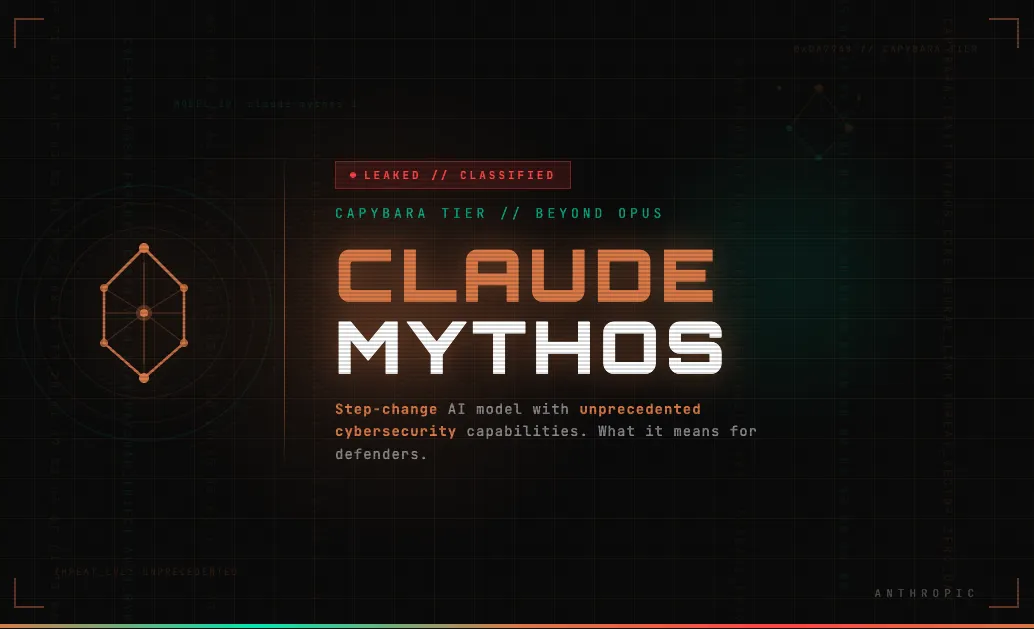
Anthropic's leaked model made headlines this week. But the real story is what current AI models can already do to your inbox. On March 27, Fortune reported that Anthropic accidentally exposed internal documents about an unreleased AI model called Claude Mythos. Their own draft blog post described it as posing "unprecedented cybersecurity risks" and being "far ahead of any other AI model in cyber capabilities." Cybersecurity stocks sold off immediately (CNBC). CrowdStrike and Palo Alto both dropped 7%. Tenable fell 11%. Anthropic has since confirmed the model exists and is in early testing with a small group of customers, with initial access restricted to cyber defense organizations (Techzine). Here's what I keep coming back to: the conversation about Mythos is speculative. It's based on a leaked draft. The model might ship next month or it might not ship for a year. But the debate about whether Mythos is real is missing the bigger point. What the leak actually did is compress how close the threat feels. It made something that security teams could comfortably file under "future problem" feel like a present one. Today's publicly available models can research a target organization by pulling context from LinkedIn, public filings, and company websites. They can generate phishing emails that match the tone and style of real internal communications. They can do this at scale, producing unique content for every recipient so there's no repeating pattern for signature-based tools to catch. They can coordinate attacks across email, messaging, and voice channels simultaneously. We know this isn't hypothetical because it's already happening. In November 2025, Anthropic disclosed that a Chinese state-sponsored group used Claude's agentic capabilities to infiltrate roughly 30 organizations, including tech companies, financial institutions, and government agencies. That wasn't Mythos. That was a model you can use today. Now imagine what the next generation will allow. At IRONSCALES, we've been tracking this shift for two years. We call it Phishing 3.0: the move from static, payload-based attacks (Phishing 1.0) and social engineering with no malicious payload (Phishing 2.0) to AI-powered, multi-channel attacks that adapt in real time and are unique to each recipient. Legacy secure email gateways were built for Phishing 1.0. They apply static rules to known threat signatures. That approach was already struggling against Phishing 2.0. Against AI-generated attacks, these tools simply weren't designed for what they're now facing. Across 1,921 IRONSCALES customers, we catch an average of 67.5 phishing emails per 100 mailboxes per month that bypass existing defenses, including Microsoft 365 and legacy SEGs. Those are today's numbers, against today's attacks. Our agentic AI capabilities, launching this month, were built for the class of threat the Mythos leak brings into focus. Not for one specific model, but for the broader reality that AI-powered attacks are here and getting more capable. Our Red Teaming Agent researches your organization the way an attacker would. It identifies your most vulnerable employees, maps communication patterns, and generates realistic attack simulations that harden your detection before a real attack lands. If attackers are going to use Mythos-class models for reconnaissance, your defenses need to be tested against the same level of intelligence. When AI-powered attacks hit inboxes, your SOC team won't have 30 minutes per incident to investigate manually. Themis, our agentic AI virtual SOC, classifies, clusters, and remediates threats autonomously. We've taken incident response from 30 minutes to 30 seconds. Over 99% of threats are handled without a human touching them. Generic phishing simulations were already inadequate before Mythos. When attackers use AI reconnaissance to personalize every attack, training based on off-the-shelf templates doesn't prepare your employees for what's coming. Our Simulation Agent generates training scenarios based on real reconnaissance of your organization, so employees practice against the specific tactics they'll actually face. The Mythos leak got everyone's attention this week. Good. It crystallized something defenders can no longer afford to dismiss. The attacks a model like Mythos would enable are already being tested with the tools available today. The question isn't whether this class of threat is real. It's how much time you have left to prepare. Take an IRONSCALES Assessment to see how many phishing threats are bypassing your current defenses right now. Three clicks to deploy. The results will tell you whether your stack is ready for what's already here, let alone what's coming. Claude Mythos is an unreleased AI model from Anthropic that was accidentally revealed through a data leak on March 27, 2026. Anthropic confirmed it is in testing and described it as "a step change" in AI capability and "the most capable we've built to date." The model sits in a new tier above Anthropic's existing Opus line. Models with advanced reasoning and cybersecurity capabilities can generate personalized phishing emails at scale, coordinate attacks across email, messaging, and voice channels simultaneously, and identify zero-day vulnerabilities to embed in payloads. This increases both the volume and sophistication of email-based threats beyond what legacy detection tools can handle. Phishing 3.0 is a term developed by IRONSCALES to describe the current era of AI-powered, multi-channel phishing attacks. Unlike Phishing 1.0 (malicious links and attachments) or Phishing 2.0 (BEC and social engineering), Phishing 3.0 involves generative AI creating unique, personalized attacks for each recipient, often spanning email, collaboration tools, and deepfake voice or video. With agentic AI that red-teams your organization proactively, automates SOC-level incident response in seconds instead of minutes, and trains employees using reconnaissance-based simulations rather than generic templates. IRONSCALES' platform combines adaptive AI, agentic automation, and crowdsourced human intelligence from 35,000+ security professionals to detect and remediate threats that bypass legacy tools.
/Misc%20Icons/icon-nav-red-teaming-agent.svg)
Lake Tahoe Estate Sells for Record $125 Million to SpaceX Backer
The sale sets a new precedent for the area, which has long been a hub for ultra-wealthy Californians due to its lake front estates and lower taxes. A Lake Tahoe estate sold for $125 million to an entity linked to SpaceX board member and early investor Steve Jurvetson, setting a record for the wealthy Nevada hamlet of Incline Village. A limited-liability company linked to Jurvetson bought the lakefront estate -- and its adjoining $7 million parcel -- in a off-market deal that closed earlier this week, from a company with ties to investor Gene Pretti, property records and LLC filings show. Jurvetson and Pretti didn't reply to requests for comment. In February, the same entity tied to Jurvetson purchased a $46 million mansion in Incline Village, according to another filing. Incline Village has long been a hub for ultra-wealthy Californians for its lake front estates, panoramic Tahoe vistas and lower taxes. Nevada has zero state income taxes, a stark contrast to California's personal income tax, the highest in the US at 13.3% on income over $1 million. "It definitely sets a new precedent," said Christine Perry of Christie's International Real Estate, who represented the sellers of a $62 million mansion that held the previous Lake Tahoe record. "It's very understated wealth, we're not like Aspen. There is just a huge desire to be in this community, where there are great activities and great schools." Google co-founder Sergey Brin, the world's third richest person, bought a $42 million mansion in the region in December and moved to Nevada, after a health care union proposed a one-time 5% tax on California's billionaires. Jurvetson is a long-time friend of Musk's who has invested early in his companies, including Tesla and SpaceX. Formerly a venture capitalist at DFJ, he resigned from the firm in November 2017 amid allegations of misconduct that he has denied. He has since created a new firm, Future Ventures, and has remained on SpaceX's board. SpaceX is considering raising $75 billion in a public offering that would value the company at $1.75 trillion, Bloomberg reported. If successful, the listing would be the largest IPO ever, potentially propelling Musk to becoming the world's first trillionaire. Jurvetson, a self-styled "rocket hobbyist," has often trekked to Nevada's Black Rock Desert to launch his own spacecrafts. Earlier this month, he talked about using his Tesla's self-driving feature during an hours-long commute from California to Lake Tahoe. "I let the car drive me from Silicon Valley to Lake Tahoe, and it was joyful and stress free," Jurvetson said, in a since deleted post. "I enjoyed the beauty of the voyage for the first time, and with a podcast playing, I arrived refreshed."

State Street CMO John Brockelman's Unconventional Playbook for Financial Marketing Success
Social Media Week: SMW returns to NYC April 14 to 16, bringing together the people behind the feed to define what works now in social and content. Secure your spot today. Financial services marketing is one of the hardest kinds of marketing to crack. But John Brockelman and his team at State Street Investment Management have proven, campaign after campaign, that it can be done well and done right. Tune in for his playbook on how financial services marketers can drive growth, connection and culture. What you'll learn: John Brockelman is the chief marketing officer at State Street Investment Management. He is known for his expertise in brand transformation and audience-centered marketing strategy. With a unique background spanning nine years in Massachusetts politics and campaign management, followed by leadership roles at Fidelity Investments, John brings unconventional thinking to financial services marketing. In his time with State Street, he has spearheaded the iconic "Fearless Girl" campaign and recently led State Street's strategic rebrand and expansion into the retail investment market, including landmark partnerships with the WNBA and innovative campaigns across global markets like Japan. His award-winning work, recognized at Cannes Lions, Clios, and Effies, demonstrates how purpose-driven, out-of-category thinking can drive meaningful business results while maintaining brand authenticity. [07:59] Start by Aligning Marketing with Sales and Business Objectives -- John explains that when he became CMO, his immediate priority was tightly integrating marketing with the sales organization and business objectives, rather than focusing solely on brand awareness. This alignment is critical for CMOs working in regulated industries like financial services, where marketing must directly influence pipeline opportunities, new sales and client retention. For example, in his case, by establishing this connection early, he transformed State Street's marketing from a cost center into a growth engine that drives measurable results. For CMOs in large companies, this framework ensures marketing investments deliver ROI and become indispensable to executive leadership. [11:29] Simplify Brand Architecture When Expanding into New Markets -- When State Street needed to reach retail investors, advisors, and institutions simultaneously, Brockelman recognized that their brand name "Global Advisors" no longer communicated their value proposition clearly. He discovered that clients simply called them "State Street," revealing that the old brand architecture created confusion rather than clarity. The solution was rebranding to a simplified, unified name that immediately conveyed what the company does across all customer segments. This insight is vital for CMOs managing brands across B2B and B2C channels, where different audiences may interpret the same name entirely differently. [14:49] How Data-Driven Partnerships Help Reach New Audiences Authentically -- Rather than pursuing partnerships based on brand prestige alone, John analyzed the WNBA fan base data and discovered they had a significantly higher percentage of active retail investors -- making it the perfect strategic fit for State Street's retail expansion goals. This data-driven approach transformed what could have been a vanity sponsorship into a high-ROI partnership that naturally aligns brand values with target customer behavior. Opting for partnerships like these transforms partnerships from marketing tactics into strategic growth levers. [22:32] The Three Core Areas You Should Deploy AI -- John outlines a three-pronged AI strategy: marketing optimization (efficiency in ad buying and content acceleration), customer experience (personalization at scale) and analytics (attribution and ROI insights), rather than attempting a company-wide AI transformation all at once. This dimensional approach prevents the common pitfall of CMOs who pursue AI broadly without clarity on where it delivers the highest ROI. For CMOs in large organizations, this dimensional framework provides a roadmap to build AI capability progressively, allocate resources strategically and communicate progress to the C-suite in business-outcome terms.

Pension fund alert in gilt market chaos
Pension funds are being asked to put up more cash to cover hedging positions amid a sell-off in bonds - in an uncomfortable echo of the meltdown under Liz Truss. The cash calls come as UK bonds, known as gilts, take a pounding amid the market mayhem caused by the war in Iran. Yields on ten-year gilts, which rise as their price falls, spiked to more than 5.1 per cent at the start of this week. They eased after US President Donald Trump's claim the US was in peace talks was Iran. But with the conflict continuing to choke off energy supplies from the Middle East, the sell-off has since resumed and gilt yields yesterday soared back above 5.1 per cent. The sell-off causes problems for pension funds which invest in gilts and may use them as collateral for financial instruments employed as part of 'liability driven investment' (LDI) strategies. Meltdown: Pension funds are being asked to put up more cash to cover hedging positions amid a sell-off in bonds When bonds sell off, the value of that collateral falls. That can mean the funds are asked to post cash to make up the shortfall. Pensions consultancy XPS said a small number of its clients needed to meet cash calls on LDI positions this month, but that the market was operating normally. Rival consultancy Mercer said it had knowledge of a fund that met a cash call this month, but that its own clients were unaffected. James Lewis, UK chief investment officer at Mercer, said: 'If yields do keep going up, I suspect we will see multiple managers making capital calls. But I would expect that to be dealt with in an orderly fashion.' At the time of the 2022 crisis after former prime minister Truss's disastrous mini-Budget, bonds sold off so quickly that the market was flooded with cash calls. Funds had to sell up to raise the cash, prompting their values to fall even further. The meltdown forced the Bank of England to step in and ultimately costed Truss her job. Britain's latest bond sell-off has not been as rapid, but yields are higher now than they were back then and the rise in them this month is on course to be the steepest in four years. The impact has also been unlike 2022 due to reforms that have made LDI less exposed to market swings. Yet it will be politically embarrassing for Rachel Reeves's handling of the economy to be compared to that of Truss and her Chancellor Kwasi Kwarteng. DIY INVESTING PLATFORMS AJ Bell AJ Bell Easy investing and ready-made portfolios Learn More Learn More Hargreaves Lansdown Hargreaves Lansdown Free fund dealing and investment ideas Learn More Learn More interactive investor interactive investor Flat-fee investing from £4.99 per month Learn More Learn More Freetrade Freetrade Investing Isa now free on basic plan Learn More Learn More Trading 212 Trading 212 Free share dealing and no account fee Learn More Learn More Affiliate links: If you take out a product This is Money may earn a commission. These deals are chosen by our editorial team, as we think they are worth highlighting. This does not affect our editorial independence. Compare the best investing account for you

SpaceX Might Acquire More Spectrum for Starlink Mobile Via FCC Auction
SpaceX might try to acquire even more cellular spectrum as it moves to bulk up Starlink Mobile. The Federal Communications Commission is preparing to sell licenses for the Advanced Wireless Services (AWS-3) bands in a June auction, opening up more airways to mobile carriers and commercial companies. On Thursday, the FCC announced the application status for potential bidders, and Ookla analyst Mike Dano noticed that SpaceX is one of the 19 applicants. However, SpaceX is also among the 14 parties that submitted an incomplete application, meaning it "must resubmit its application, having corrected any deficiencies," the FCC says. Other applicants include AT&T, T-Mobile, and Verizon, which applied through a subsidiary called Cellco Partnership. SpaceX's application suggests the company is eyeing the spectrum to incorporate into its satellite-to-phone service, Starlink Mobile, which is already available through T-Mobile. Last year, SpaceX reached a nearly $20 billion deal with Boost Mobile's parent, EchoStar, to acquire a slice of radio spectrum that promises to give Starlink Mobile a drastic performance increase, offering 5G speeds to users on the ground. At Mobile World Congress earlier this month, SpaceX emphasized partnering with mobile carriers to offer Starlink Mobile, rather than pushing it as a standalone, and potential rival cellular service. Still, SpaceX might be moving to dominate the satellite-to-phone market amid rumors that it's still looking to buy Globalstar, the satellite services provider for Apple's iPhone. The FCC's AWS-3 auction covers the 1695 to 1710MHz, 1755 to 1780MHz, and 2155 to 2180MHz bands meant for "low-power mobile transmit" and fixed services, according to the commission. "The AWS-3 frequencies will be licensed in five and ten megahertz blocks, with each license having a total bandwidth of five, ten, or twenty megahertz," the regulator added. Despite SpaceX's application, Dano also tweeted: "Registering for an auction doesn't mean they will bid. And even if they do bid, it doesn't mean they'll win anything."

SpaceX Might Acquire More Spectrum for Starlink Mobile Via FCC Auction
SpaceX might try to acquire even more cellular spectrum as it moves to bulk up Starlink Mobile. The Federal Communications Commission is preparing to sell licenses for the Advanced Wireless Services (AWS-3) bands in a June auction, opening up more airways to mobile carriers and commercial companies. On Thursday, the FCC announced the application status for potential bidders, and Ookla analyst Mike Dano noticed that SpaceX is one of the 19 applicants. However, SpaceX is also among the 14 parties that submitted an incomplete application, meaning it "must resubmit its application, having corrected any deficiencies," the FCC says. Other applicants include AT&T, T-Mobile, and Verizon, which applied through a subsidiary called Cellco Partnership. SpaceX's application suggests the company is eyeing the spectrum to incorporate into its satellite-to-phone service, Starlink Mobile, which is already available through T-Mobile. Last year, SpaceX reached a nearly $20 billion deal with Boost Mobile's parent, EchoStar, to acquire a slice of radio spectrum that promises to give Starlink Mobile a drastic performance increase, offering 5G speeds to users on the ground. At Mobile World Congress earlier this month, SpaceX emphasized partnering with mobile carriers to offer Starlink Mobile, rather than pushing it as a standalone, and potential rival cellular service. Still, SpaceX might be moving to dominate the satellite-to-phone market amid rumors that it's still looking to buy Globalstar, the satellite services provider for Apple's iPhone. The FCC's AWS-3 auction covers the 1695 to 1710MHz, 1755 to 1780MHz, and 2155 to 2180MHz bands meant for "low-power mobile transmit" and fixed services, according to the commission. "The AWS-3 frequencies will be licensed in five and ten megahertz blocks, with each license having a total bandwidth of five, ten, or twenty megahertz," the regulator added. Despite SpaceX's application, Dano also tweeted: "Registering for an auction doesn't mean they will bid. And even if they do bid, it doesn't mean they'll win anything."

House Rules Committee Vote Descends Into Chaos
Emine Yücel has those details, and others, as the Senate attempt to pay TSA falls apart in the House, and Trump (seemingly extralegally) orders that the officers be paid. John Light is TPM's executive editor, based in New York. He previously worked as a producer for Bill Moyers and WNYC and has written for The Atlantic, Slate, Reuters and Grist.

Federal judge temporarily blocks the Pentagon from branding AI firm Anthropic a supply chain risk
SAN FRANCISCO -- A federal judge has ruled in favor of artificial intelligence company Anthropic in temporarily blocking the Pentagon from labeling the company as a supply chain risk. U.S. District Judge Rita Lin on Thursday said she was also blocking enforcement of President Donald Trump's social media directive ordering all federal agencies to stop using Anthropic and its chatbot Claude. Lin said the "broad punitive measures" taken against the AI company by the Trump administration and Defense Secretary Pete Hegseth appeared arbitrary, capricious and could "cripple Anthropic," particularly Hegseth's use of a rare military authority that's previously been directed at foreign adversaries. "Nothing in the governing statute supports the Orwellian notion that an American company may be branded a potential adversary and saboteur of the U.S. for expressing disagreement with the government," Lin wrote.

Anthropic's Mythos leak is a wake-up call: Phishing 3.0 is already here - IT Security News
The technical storage or access is necessary for the legitimate purpose of storing preferences that are not requested by the subscriber or user. The technical storage or access that is used exclusively for statistical purposes. The technical storage or access that is used exclusively for anonymous statistical purposes. Without a subpoena, voluntary compliance on the part of your Internet Service Provider, or additional records from a third party, information stored or retrieved for this purpose alone cannot usually be used to identify you.