News & Updates
The latest news and updates from companies in the WLTH portfolio.
Watch: Judge snaps, courtroom chaos erupts as trans lawyer dragged out after fiery clash
Tense hearing spirals into arrest after warning ignored and deputies step in A routine court hearing erupted into chaos February 5 when a defendant was arrested after repeatedly interrupting a judge, prompting a sharp warning and eventual removal from the courtroom. Rob Hopkins became the focus of the confrontation after clashing with the judge during proceedings. As interruptions continued, the judge issued a stern warning from the bench: "Stop, you interrupt me one more time and you are being held in direct contempt of court and you can wipe that smirk off your face." Moments later, the situation escalated. The judge abruptly halted the hearing, stating, "We're stopping," before law enforcement officers moved in to take Hopkins into custody. Key Points * Judge warned defendant about contempt after repeated interruptions * Hearing abruptly stopped as deputies moved in to make an arrest * Defendant resisted while being taken into custody and shouted for help Arrest turns physical inside courtroom As officers approached, Hopkins physically resisted being detained, according to reports of the incident. During the arrest, Hopkins repeatedly shouted, "I can't breathe!" and called out for someone to contact emergency services. The confrontation unfolded in full view inside the courtroom, turning what began as a verbal dispute into a physical removal by deputies. Bond set following courtroom incident Following the arrest, Hopkins was reportedly held on a $25,000 bond, according to The Oklahoma Post. No additional details about the underlying case or potential additional charges tied to the courtroom incident were immediately available.

NYSE owner doubles down on Polymarket with fresh $600 million investment
The surge in funding comes as regulators and lawmakers scrutinize whether prediction markets are vulnerable to manipulation. Intercontinental Exchange (ICE), the parent company of the New York Stock Exchange (NYSE), said it added another $600 million to its investment in prediction market platform Polymarket, closing out a previously announced funding agreement between the two firms. The new capital comes on top of a $1 billion investment ICE made in October. ICE also plans to buy up to $40 million in additional shares from existing holders, bringing its total commitment close to $2 billion. The company said the investment will not materially affect its financial results. Polymarket runs a marketplace where users trade on the outcome of real-world events, from elections to economic data releases. A trader, for example, might buy shares that pay out if inflation rises above a specified level. Prices shift in real time, reflecting crowd expectations. The backing from ICE gives Polymarket more than capital. It ties the platform to one of the upcoming names in global markets. Rival platform Kalshi recently raised more than $1 billion at a $22 billion valuation, roughly double its previous mark. The company is already generating an estimated $1.5 billion in annual revenue, highlighting strong demand for event-based trading. Investor interest has grown even as lawmakers question whether prediction markets are vulnerable to manipulation or insider activity. These concerns could shape how regulators treat both Polymarket and its peers in the coming years. Polymarket has taken steps to position itself for that scrutiny. It acquired a licensed exchange and clearinghouse earlier this year while expanding its political and financial ties. It also recently announced a partnership with Palantir and TWG AI to build a surveillance system aimed at detecting suspicious trading and manipulation in its sports prediction markets. ICE's investment signals that large, traditional market operators see potential in the sector. If prediction markets gain broader approval, they could sit alongside stocks and futures as another way for traders to express views on the forthcoming events.
NYSE-parent Intercontinental Exchange invests $600 million in Polymarket By Reuters
March 27 (Reuters) - Intercontinental Exchange said on Friday it had invested $600 million in prediction markets platform Polymarket, as the New York Stock Exchange parent expands into the fast-growing event-based trading segment. The funding is part of the exchange operator's previously announced plan to invest up to $2 billion in Polymarket, the company said. Prediction markets have shifted from a niche corner of crypto and academic finance into a rapidly growing trading segment in under two years, with volumes and user activity surging. ICE said the investments in Polymarket are not expected to have a material impact on the exchange operator's financial results or capital return plans. The $600 million investment is part of the prediction markets platform's latest funding round, and the valuation will be disclosed once completes its fundraising, ICE said. Prediction markets represent a potential new frontier for exchanges in derivatives trading. Analysts say the products can draw a wider pool of retail traders and boost trading volumes, offering exchanges a chance to diversify revenue as competition intensifies in traditional futures and options markets.

Intercontinental Exchange Announces $600 Million Investment in Polymarket - Lookonchain - Looking for smartmoney onchain
Wang Yi Set to Lead China's Mediation in Iran-US Talks, His "Anti-War" Stance May Help Facilitate Diplomatic Breakthrough 5 minutes ago Aster Code Emerges: Building Modular Web3 Derivative Infrastructure, Partnering with Binance Wallet, Trust Wallet, Genius Terminal, and More to Co-build the Ecosystem 5 minutes ago Cambodia Prince Group Affiliate Hu Xiaowei Sanctioned by UK 5 minutes ago The White Whale Officially Announces Exit, Meme Coin WhiteWhale Crashes About 50% Today 5 minutes ago HODLer of 13 Years Ancient Whale Sells 500 BTC Again, Worth $33.28 Million 5 minutes ago Pretexting a False Flag Operation Against Iran 5 minutes ago

NYSE-parent Intercontinental Exchange invests $600 million in Polymarket
March 27 : Intercontinental Exchange said on Friday it had invested $600 million in prediction markets platform Polymarket, as the New York Stock Exchange parent expands into the fast-growing event-based trading segment. The funding is part of the exchange operator's previously announced plan to invest up to $2 billion in Polymarket, the company said. Prediction markets have shifted from a niche corner of crypto and academic finance into a rapidly growing trading segment in under two years, with volumes and user activity surging. ICE said the investments in Polymarket are not expected to have a material impact on the exchange operator's financial results or capital return plans. The $600 million investment is part of the prediction markets platform's latest funding round, and the valuation will be disclosed once completes its fundraising, ICE said. Prediction markets represent a potential new frontier for exchanges in derivatives trading. Analysts say the products can draw a wider pool of retail traders and boost trading volumes, offering exchanges a chance to diversify revenue as competition intensifies in traditional futures and options markets.
SpaceX's listing stirs up social media frenzy, ticker bets
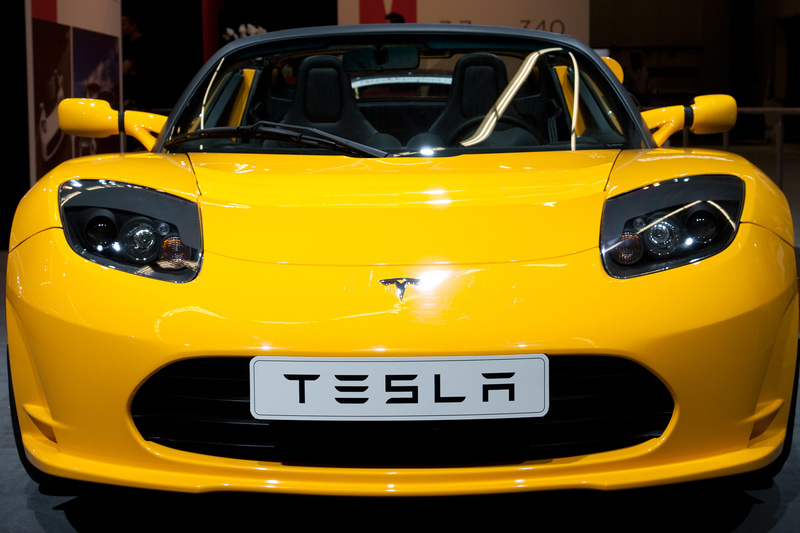
From rocket launches drawing millions of YouTube views to social media frenzy over its potential listing, SpaceX's debut is shaping up to be a landmark moment for Wall Street. Traders are betting thousands of dollars on the company's ticker and speculating over its entry into the most elite club of U.S. companies, giving the world's most valuable startup a level of social media buzz that only a few companies enjoy, especially when they are yet to file their IPO paperwork. On Polymarket, users were betting on topics including the company's targeted valuation, the exchange it will list on and the ticker its shares would trade under. The combined trading volume of such bets exceeded more than US$15.2 million, as of Friday. Odds on the prediction markets platform put a 25 per cent chance on SpaceX choosing the letter "X" as its ticker, a sharp drop from 60 per cent a month ago. The single-letter ticker is up for grabs after U.S. Steel, which reportedly held it for over a century, delisted from the New York Stock Exchange after being bought by Japan's Nippon Steel last year. Musk's social media platform is also called X after a rebrand from Twitter in 2023. Tuttle Capital Management CEO Matthew Tuttle said a better alternative would be "SPCX" - also the ticker of an exchange traded fund his company manages. Tuttle has indicated openness to selling the SPCX symbol to SpaceX. "I've not heard from Elon, but my phone line is still open and I'm holding out hope that I get a call," he said. Apart from X, other potential options floated on Polymarket include "SPAX" and the risqué, "SEX". However, users see a roughly 70 per cent probability that the company chooses a different ticker altogether. SpaceX is targeting a valuation of $1.75 trillion in its listing, which would make it the sixth biggest U.S. company by market capitalization. Tesla and Meta Platforms could fall behind, with market valuations of $1.4 trillion and $1.39 trillion, respectively. That has fueled speculation over whether the company's market debut will force a rethink of the so-called "Magnificent Seven", a group of some of the most valuable U.S. companies. "When the company does finally go public, the Magnificent Seven will clearly expand. They'll probably call it the Magnificent Eight, the Super Eight or some new acronym," said Todd Schoenberger, chief investment officer at CrossCheck Management. To capitalize on his popularity among retail investors, CEO Elon Musk is also discussing allocating as much as 30 per cent of the IPO to individual investors, at least three times the usual retail slice, Reuters reported. "The retail investor plays a very significant role when you have a company like SpaceX that's coming public. Most people would say yes to the opportunity of investing in Elon Musk's space company," said Jonathan Corpina, senior managing partner for Meridian Equity Partners.

SpaceX's listing stirs up social media frenzy, ticker bets By Reuters
By Niket Nishant and Shashwat Chauhan March 27 (Reuters) - From rocket launches drawing millions of YouTube views to social media frenzy over its potential listing, SpaceX's debut is shaping up to be a landmark moment for Wall Street. Traders are betting thousands of dollars on the company's ticker and speculating over its entry into the most elite club of U.S. companies, giving the world's most valuable startup a level of social media buzz that only a few companies enjoy, especially when they are yet to file their IPO paperwork. On Polymarket, users were betting on topics including the company's targeted valuation, the exchange it will list on and the ticker its shares would trade under. The combined trading volume of such bets exceeded more than $15.2 million, as of Friday. Odds on the prediction markets platform put a 25% chance on SpaceX choosing the letter "X" as its ticker, a sharp drop from 60% a month ago. The single-letter ticker is up for grabs after U.S. Steel, which reportedly held it for over a century, delisted from the New York Stock Exchange after being bought by Japan's Nippon Steel last year. Musk's social media platform is also called X after a rebrand from Twitter in 2023. Tuttle Capital Management CEO Matthew Tuttle said a better alternative would be "SPCX" - also the ticker of an exchange traded fund his company manages. Tuttle has indicated openness to selling the SPCX symbol to SpaceX. "I've not heard from Elon, but my phone line is still open and I'm holding out hope that I get a call," he said. Apart from X, other potential options floated on Polymarket include "SPAX" and the risqué, "SEX". However, users see a roughly 70% probability that the company chooses a different ticker altogether. FROM MAGNIFICENT SEVEN TO SUPER EIGHT? SpaceX is targeting a valuation of $1.75 trillion in its listing, which would make it the sixth biggest U.S. company by market capitalization. Tesla and Meta Platforms could fall behind, with market valuations of $1.4 trillion and $1.39 trillion, respectively. That has fueled speculation over whether the company's market debut will force a rethink of the so-called "Magnificent Seven", a group of some of the most valuable U.S. companies. "When the company does finally go public, the Magnificent Seven will clearly expand. They'll probably call it the Magnificent Eight, the Super Eight or some new acronym," said Todd Schoenberger, chief investment officer at CrossCheck Management. To capitalize on his popularity among retail investors, CEO Elon Musk is also discussing allocating as much as 30% of the IPO to individual investors, at least three times the usual retail slice, Reuters reported. On social media platform Reddit's r/WallStreetBets thread, SpaceX was mentioned 130 times over the past week and was the 19th most popular mention, according to data from Germany-based data group Breakout Point. "The retail investor plays a very significant role when you have a company like SpaceX that's coming public. Most people would say yes to the opportunity of investing in Elon Musk's space company," said Jonathan Corpina, senior managing partner for Meridian Equity Partners.

SpaceX Just Hit An Important Milestone After Launching More Starlink Satellites - BGR
Starlink is a communication system and wholly owned subsidiary of SpaceX that can provide fast internet connectivity to some of the most remote locations on Earth. While Starlink is not flawless, it serves both commercial and government uses. The system provides as much coverage as it does because Starlink owns more satellites than there are visible stars in the night sky. Earlier this month, SpaceX launched two Falcon 9 rockets that delivered 54 new satellites into space, bringing the total of orbiting Starlink satellites to over 10,000. This constitutes around 70% of all active satellites hovering above the Earth, minus the 10 nonfunctioning Starlink satellites. Oh, and over 1,500 satellites that Starlink has launched have lost orbit and fallen back to Earth. While maintaining over 10,000 orbiting satellites is a feat in and of itself, the speed at which Starlink/SpaceX achieved this milestone is also noteworthy. In October of 2025, only 8,400 Starlink satellites orbited the Earth, which means SpaceX transported an average of 320 satellites per month.

Judge blocks Pentagon's move to blacklist Anthropic
A federal judge in Northern California has granted a preliminary injunction blocking the Pentagon from labeling Anthropic a national security supply chain risk. The ruling temporarily prevents the Defense Department from restricting the AI company's access to federal contracts amid a dispute over its refusal to allow certain military and surveillance uses of its technology. The designation could also have shifted lucrative government work toward competitors, including OpenAI. Earlier this month, Anthropic, the company behind Claude, sued 17 federal agencies and their heads, alleging the government exceeded its statutory authority.

SpaceX's listing stirs up social media hype, ticker bets By Reuters
By Niket Nishant and Shashwat Chauhan March 27 (Reuters) - From rocket launches drawing millions of YouTube views to social media frenzy over its potential listing, SpaceX's debut is shaping up to be a landmark moment for Wall Street. Traders are betting thousands of dollars on the company's ticker and speculating over its entry into the most elite club of U.S. companies, giving the world's most valuable startup a level of social media buzz that only a few companies enjoy, especially when they are yet to file their IPO paperwork. On Polymarket, users were betting on topics including the company's targeted valuation, the exchange it will list on and the ticker its shares would trade under. The combined trading volume of such bets exceeded more than $15.2 million, as of Friday. Odds on the prediction markets platform put a 25% chance on SpaceX choosing the letter "X" as its ticker, a sharp drop from 60% a month ago. The single-letter ticker is up for grabs after U.S. Steel, which reportedly held it for over a century, delisted from the New York Stock Exchange after being bought by Japan's Nippon Steel last year. Musk's social media platform is also called X after a rebrand from Twitter in 2023. Tuttle Capital Management CEO Matthew Tuttle said a better alternative would be "SPCX" - also the ticker of an exchange traded fund his company manages. Tuttle has indicated openness to selling the SPCX symbol to SpaceX. "I've not heard from Elon, but my phone line is still open and I'm holding out hope that I get a call," he said. Apart from X, other potential options floated on Polymarket include "SPAX" and the risqué, "SEX". However, users see a roughly 70% probability that the company chooses a different ticker altogether. FROM MAGNIFICENT SEVEN TO SUPER EIGHT? SpaceX is targeting a valuation of $1.75 trillion in its listing, which would make it the sixth biggest U.S. company by market capitalization. Tesla and Meta Platforms could fall behind, with market valuations of $1.4 trillion and $1.39 trillion, respectively. That has fueled speculation over whether the company's market debut will force a rethink of the so-called "Magnificent Seven", a group of some of the most valuable U.S. companies. "When the company does finally go public, the Magnificent Seven will clearly expand. They'll probably call it the Magnificent Eight, the Super Eight or some new acronym," said Todd Schoenberger, chief investment officer at CrossCheck Management. To capitalize on his popularity among retail investors, CEO Elon Musk is also discussing allocating as much as 30% of the IPO to individual investors, at least three times the usual retail slice, Reuters reported. "The retail investor plays a very significant role when you have a company like SpaceX that's coming public. Most people would say yes to the opportunity of investing in Elon Musk's space company," said Jonathan Corpina, senior managing partner for Meridian Equity Partners.
NYSE-parent Intercontinental Exchange invests $600 million in Polymarket
Follow us on our official WhatsApp channel for breaking news alerts and key updates! This field is mandatory.
NYSE owner Intercontinental Exchange invests $600 million in Polymarket
Significant infusion highlights Polymarket's rapid ascent and regulatory progress in the prediction market landscape. Intercontinental Exchange, the global exchange operator that owns the New York Stock Exchange (NYSE), has completed a $600 million direct cash investment in Polymarket, a leading prediction market platform, supplementing its prior $1 billion investment in October 2025, the company said Friday. Along with its earlier $1 billion investment, ICE will have fulfilled its funding obligations. This is a developing story. Please check back for further updates.
Kraken Approval Exposes Tensions in U.S. Crypto Banking Policy
Congressional oversight may shape future Fed policies for non-bank entities seeking payment system access. Kraken has achieved a major milestone by becoming the first cryptocurrency exchange approved for direct access to the Federal Reserve payment system. This limited-purpose master account allows Kraken to settle transactions without relying on intermediary banks. Consequently, the move represents a significant step toward mainstream crypto adoption. However, it has also raised questions among lawmakers about the fairness and consistency of regulatory standards. On March 26, 2026, Rep. Maxine Waters, the ranking Democrat on the House Financial Services Committee, sent a letter to Kansas City Fed President Jeff Schmid. In it, she asked why Kraken received approval far more quickly than Custodia Bank, which spent five years pursuing the same access. Notably, Custodia's attempt was rejected and upheld by a 7-3 10th Circuit Court ruling on March 13, 2026. Waters demanded a written response by April 10, emphasizing that the Fed must clarify the criteria used to approve non-bank entities. Moreover, she stressed that transparency is crucial to maintaining trust in the financial system. Her inquiry highlights growing congressional oversight as crypto exchanges increasingly integrate with traditional banking infrastructure. Kraken's master account allows the exchange to settle high-value transactions directly with the Fed. Therefore, it reduces reliance on intermediary banks and speeds up processing. Additionally, supporters argue that this approval validates cryptocurrencies as legitimate financial tools, bridging the gap between digital assets and traditional finance. However, critics warn that such rapid approval could create perceptions of unfair advantage. Specifically, they question why a non-bank entity like Kraken gained access faster than a chartered bank with years of regulatory compliance experience. Consequently, congressional scrutiny is intensifying to ensure fairness and accountability. Custodia Bank's repeated attempts to secure a limited-purpose Fed account contrast sharply with Kraken's swift approval. After five years of pursuit, Custodia lost in court, leaving lawmakers to ask why the Fed's criteria differ for crypto firms. Furthermore, this discrepancy underscores the challenges regulators face in balancing innovation with consistent oversight. Observers note that if non-bank entities continue to receive expedited approvals, chartered banks may face competitive disadvantages. Therefore, lawmakers like Rep. Waters are pressing the Fed for clear guidelines to maintain equitable treatment across the financial system. Kraken's approval could encourage other exchanges and fintech firms to seek similar Fed access. Nevertheless, it also prompts questions about regulatory consistency and transparency. As a result, the Fed must carefully justify its decisions while managing potential risks. In conclusion, Kraken's milestone demonstrates both the promise of crypto integration and the scrutiny that comes with it. As the April 10 deadline approaches, Congress and the crypto industry alike will monitor the Fed's response closely. Ultimately, how regulators handle this case could set a precedent for future crypto-banking relationships.
Ongoing escalation could plunge Middle East into 'total chaos': Egypt FM to Iraqi counterpart
Egypt's Foreign Minister Badr Abdelatty and his Iraqi counterpart Fuad Hussein The talks take place amid intensifying tensions across the Middle East, with Cairo stepping up calls for diplomatic solutions to contain the crisis and avert broader security and humanitarian consequences. During the call, FM Abdelatty stressed the urgent need to halt the expansion of military operations and prioritize a political track, cautioning that continued escalation risks widening the conflict beyond control. The call also addressed the direct impact of the escalation on Iraq, with both sides underscoring the importance of preserving Iraq's stability, unity, and territorial integrity. Egypt reaffirmed its support for the Iraqi government's efforts to assert sovereignty and safeguard national resources. The two ministers also discussed coordination ahead of the upcoming Arab League foreign ministers' meeting, scheduled to be held virtually on 29 March to discuss the developing regional situation. Abdelatty's call comes as part of an intensified Egyptian diplomatic effort led by President Abdel-Fattah El-Sisi, who has increased high-level regional engagement to contain escalating tensions. President El-Sisi has reaffirmed Egypt's "unwavering" support for Gulf security during a brief tour of Bahrain and Saudi Arabia on Saturday, the third and fourth stops of a regional tour that began with visits to the United Arab Emirates and Qatar, as tensions escalate amid the ongoing US-Israeli war on Iran and Tehran's retaliatory attacks on Arab neighbours. During the tour, El-Sisi met with Bahrain's King Hamad bin Isa Al Khalifa in Manama before holding talks in Saudi Arabia with Crown Prince Mohammed bin Salman, focusing on containing regional escalation and strengthening collective Arab security. The visits followed a series of presidential phone calls with Gulf and Arab leaders, including Kuwait, Bahrain, Saudi Arabia, Qatar, the UAE, Jordan, and Iraq, in which El-Sisi stressed that Gulf security is inseparable from Egypt's national security and called for closer Arab coordination. Egypt has consistently framed its recent diplomatic efforts within the concept of collective Arab security, a longstanding principle based on political, military, and strategic cooperation among Arab states to protect regional stability and sovereignty. Cairo has repeatedly called for unified Arab positions, stronger coordination through institutions such as the Arab League, and more effective joint mechanisms to deter external attacks, contain escalation, and prevent further instability across the region.

SpaceX's listing stirs up social media frenzy, ticker bets
By Niket Nishant and Shashwat Chauhan March 27 (Reuters) - From rocket launches drawing millions of YouTube views to social media frenzy over its potential listing, SpaceX's debut is shaping up to be a landmark moment for Wall Street. Traders are betting thousands of dollars on the company's ticker and speculating over its entry into the most elite club of U.S. companies, giving the world's most valuable startup a level of social media buzz that only a few companies enjoy, especially when they are yet to file their IPO paperwork. On Polymarket, users were betting on topics including the company's targeted valuation, the exchange it will list on and the ticker its shares would trade under. The combined trading volume of such bets exceeded more than $15.2 million, as of Friday. Odds on the prediction markets platform put a 25% chance on SpaceX choosing the letter "X" as its ticker, a sharp drop from 60% a month ago. The single-letter ticker is up for grabs after U.S. Steel, which reportedly held it for over a century, delisted from the New York Stock Exchange after being bought by Japan's Nippon Steel last year. Musk's social media platform is also called X after a rebrand from Twitter in 2023. Tuttle Capital Management CEO Matthew Tuttle said a better alternative would be "SPCX" - also the ticker of an exchange traded fund his company manages. Tuttle has indicated openness to selling the SPCX symbol to SpaceX. "I've not heard from Elon, but my phone line is still open and I'm holding out hope that I get a call," he said. Apart from X, other potential options floated on Polymarket include "SPAX" and the risqué, "SEX". However, users see a roughly 70% probability that the company chooses a different ticker altogether. FROM MAGNIFICENT SEVEN TO SUPER EIGHT? SpaceX is targeting a valuation of $1.75 trillion in its listing, which would make it the sixth biggest U.S. company by market capitalization. Tesla and Meta Platforms could fall behind, with market valuations of $1.4 trillion and $1.39 trillion, respectively. That has fueled speculation over whether the company's market debut will force a rethink of the so-called "Magnificent Seven", a group of some of the most valuable U.S. companies. "When the company does finally go public, the Magnificent Seven will clearly expand. They'll probably call it the Magnificent Eight, the Super Eight or some new acronym," said Todd Schoenberger, chief investment officer at CrossCheck Management.
NYSE-parent Intercontinental Exchange invests $600 million in Polymarket
This super composite rating is the result of a weighted average of the rankings based on the following ratings: Fundamentals (Composite), Global Valuation (Composite), EPS Revisions (1 year), and Visibility (Composite). We recommend that you carefully review the associated descriptions. This composite rating is the result of an average of the rankings based on the following ratings: Fundamentals (Composite), Valuation (Composite), Financial Estimates Revisions (Composite), Consensus (Composite), and Visibility (Composite). The company must be covered by at least 4 of these 5 ratings for the calculation to be performed. We recommend that you carefully review the associated descriptions.

Intercontinental Exchange announces new $600 million investment in Polymarket
This super composite rating is the result of a weighted average of the rankings based on the following ratings: Fundamentals (Composite), Global Valuation (Composite), EPS Revisions (1 year), and Visibility (Composite). We recommend that you carefully review the associated descriptions. This composite rating is the result of an average of the rankings based on the following ratings: Fundamentals (Composite), Valuation (Composite), Financial Estimates Revisions (Composite), Consensus (Composite), and Visibility (Composite). The company must be covered by at least 4 of these 5 ratings for the calculation to be performed. We recommend that you carefully review the associated descriptions.
Poloniex Vs. Kraken: Side-by-side Look at Two Crypto Exchanges
Choosing a better crypto exchange starts with a direct comparison. This Poloniex vs Kraken overview sets two established cryptocurrency platforms against each other using first-hand research, and I will expand the matchup series in future notes. Read on to see which factors often lead traders to pick one for their transactions. With so many people buying and selling cryptocurrencies, the aim here is to explain why one exchange can feel like a better fit than another, before offering a brief background on both brands. Introduction Poloniex launched in January 2014 under Tristan D'Agosta in the United States, was acquired by Circle in 2018, and in 2019 Polo Digital Assets aligned with Tron's founder Justin Sun. Due to tighter United States rules around digital asset trading, Polo Digital Assets registered in Seychelles, a jurisdiction friendlier to crypto. If you have heard talk of Poloniex "shutting down," that is usually tied to market-by-market access changes, product retirements, or account restrictions rather than a single, platform-wide closure announcement. In practice, Poloniex has generally not positioned itself as a full-service exchange for United States residents, and access for United States users may be limited to withdrawals depending on the account and region. Kraken, founded in July 2011 by Jesse Powell and based in the United States, is often seen as a security-first exchange with a conservative, compliance-heavy approach. From what I have come across, I am not aware of a major, exchange-wide breach where Kraken's core platform was publicly reported as being drained of customer funds; the bigger risks tend to come from user-side issues like weak passwords, phishing, and poor account security settings. On paper, Poloniex shows a broader set of verified listings, while Kraken ranks higher with stronger liquidity signals. On security and trust, both exchanges rely on basic protections like password hygiene and two-factor authentication, but Kraken's overall posture feels more "locked down," while Poloniex has a more mixed reputation and is best approached with the mindset of managing your own risk and custody.When comparing exchanges, strong account security and predictable withdrawal controls matter more than tiny fee differences, because custody risk can wipe out trading gains in a single incident. Account Creation Poloniex sign-up is quick for a Level 1 account. You provide an email, choose a password, and confirm via email -- no long forms. Kraken registration asks for an email plus a username and a password up to 12 characters before the account is set up. For beginners, Poloniex is the less demanding starting point because you can get an account opened and explore the platform faster, while Kraken's process fits a more compliance-forward style of onboarding. User Interface On desktop, Poloniex presents a straightforward layout that a beginner can navigate easily; accessing the wallet worked smoothly on first use. Kraken's landing page makes a strong first impression, but reaching the wallet view was confusing; I repeatedly saw dense trade history panels with red highlights and mixed details. Deposit and Withdrawal Poloniex enables deposits and withdrawals immediately after creating an account. Withdrawals are capped at $50,000, deposits are unlimited, and you can start spot trading right away. In my experience, Poloniex is primarily geared toward crypto transfers and crypto-to-crypto trading, and direct fiat deposits or withdrawals are limited (and may not be available depending on your region). Kraken requires additional personal data such as a residential address before you can deposit, withdraw, or trade. Starter accounts are limited to $5,000 in daily withdrawals, so activity is constrained until more information is provided. Trading The trading screen on Poloniex is simple to grasp, allowing newcomers to place orders with little or no guidance. Kraken's trading interface is geared toward experienced users and can be challenging for first-time traders to interpret. Deposit Fees on Cryptocurrency Poloniex does not charge fees when you deposit supported cryptocurrencies into your account. Kraken applies a deposit fee to certain assets, so it's worth checking the specific coin before you send funds. Trading Fees My Thoughts I approached both platforms carefully and, for my needs, Poloniex comes out ahead. The direct reasons are ease of use and the fee feel: Poloniex is simpler to navigate and generally cheaper on spot trading in the examples above. Kraken's drawbacks, from my experience here, are the busier interface, the extra identity verification steps before you can fully use the platform, and the fact that some coins come with deposit fees. That said, if your top priority is a security-first, compliance-heavy exchange experience, Kraken is the one that tends to match that preference, while Poloniex is the one I would point beginners toward because it is quicker to start and easier to understand.

SpaceX's listing stirs up social media hype, ticker bets
March 27 (Reuters) - From rocket launches drawing millions of YouTube views to social media frenzy over its potential listing, SpaceX's debut is shaping up to be a landmark moment for Wall Street. Traders are betting thousands of dollars on the company's ticker and speculating over its entry into the most elite club of U.S. companies, giving the world's most valuable startup a level of social media buzz that only a few companies enjoy, especially when they are yet to file their IPO paperwork. On Polymarket, users were betting on topics including the company's targeted valuation, the exchange it will list on and the ticker its shares would trade under. The combined trading volume of such bets exceeded more than $15.2 million, as of Friday. Odds on the prediction markets platform put a 25% chance on SpaceX choosing the letter "X" as its ticker, a sharp drop from 60% a month ago. The single-letter ticker is up for grabs after U.S. Steel, which reportedly held it for over a century, delisted from the New York Stock Exchange after being bought by Japan's Nippon Steel last year. Musk's social media platform is also called X after a rebrand from Twitter in 2023. Tuttle Capital Management CEO Matthew Tuttle said a better alternative would be "SPCX" - also the ticker of an exchange traded fund his company manages. Tuttle has indicated openness to selling the SPCX symbol to SpaceX. "I've not heard from Elon, but my phone line is still open and I'm holding out hope that I get a call," he said. Apart from X, other potential options floated on Polymarket include "SPAX" and the risqué, "SEX". However, users see a roughly 70% probability that the company chooses a different ticker altogether. FROM MAGNIFICENT SEVEN TO SUPER EIGHT? SpaceX is targeting a valuation of $1.75 trillion in its listing, which would make it the sixth biggest U.S. company by market capitalization. Tesla and Meta Platforms could fall behind, with market valuations of $1.4 trillion and $1.39 trillion, respectively. That has fueled speculation over whether the company's market debut will force a rethink of the so-called "Magnificent Seven", a group of some of the most valuable U.S. companies. "When the company does finally go public, the Magnificent Seven will clearly expand. They'll probably call it the Magnificent Eight, the Super Eight or some new acronym," said Todd Schoenberger, chief investment officer at CrossCheck Management. To capitalize on his popularity among retail investors, CEO Elon Musk is also discussing allocating as much as 30% of the IPO to individual investors, at least three times the usual retail slice, Reuters reported. "The retail investor plays a very significant role when you have a company like SpaceX that's coming public. Most people would say yes to the opportunity of investing in Elon Musk's space company," said Jonathan Corpina, senior managing partner for Meridian Equity Partners. (Reporting by Niket Nishant and Shashwat Chauhan in Bengaluru; Editing by Devika Syamnath)
Oil market chaos will supercharge the electric car shift
Visit our Moral Money hub for all the latest ESG news, opinion and analysis from around the FT Donald Trump says talks with Iran to end the war are "going very well". Oil traders are not convinced, sending the Brent crude price to $110 a barrel this morning, the highest level since the start of the conflict. The energy market shock has created a new focus on renewable power investment, as I wrote last week. It will also give a push to a global electric car transition that has already been picking up speed, despite the cold feet of some big western carmakers . . . A rocky road ahead for the combustion engine Volkswagen, we learned this week, is in talks to convert a car factory in Lower Saxony to make parts for a missile defence system. The story is an elegant mash-up of two structural shifts with big implications. One of them -- the rush to strengthen military investment in Europe and beyond -- is obvious to anyone who's been paying even faint attention to the news in recent months. The second might seem less apparent from recent headlines: the inexorable decline of the combustion engine car. Big established carmakers have been lining up in the past few months to reveal major cutbacks to their electrification strategies. Stellantis last month announced a €25.4bn writedown as it drastically reduced its planned EV production. Ford and General Motors made similar moves as they wrote down $19.5bn and $6bn, respectively. A host of luxury brands from Lamborghini to Bentley have also taken an axe to their EV plans. I could go on. The main thing behind these writedowns is a harsher medium-term outlook for EV sales in the US -- which accounts for nearly a fifth of the global car market -- resulting from the elimination of government tax credits, and the Trump administration's broader pro-fossil fuel stance. EVs made up just 5.8 per cent of US car sales last month, down from 7.7 per cent a year before. Follow the trend Outside the US, however, the electric transition keeps rolling on. True, it has been moving more slowly in many markets than the breakneck pace big carmakers had anticipated a few years ago -- another factor behind their revised plans. The EU has watered down an all-out 2035 ban on new sales of fossil fuel-powered cars: instead, 90 per cent of each carmaker's vehicles will need to be zero-emission from that date. But if EV growth simply continues at the rate of recent years, sales of new combustion-engine cars will be virtually eliminated from some major markets in about a decade. In the EU electric car sales reached 17.4 per cent of all passenger car sales last year, up from 13.6 per cent in 2024. That might not sound very impressive. But the logic of compound growth tells us that, if electric cars' market share keeps expanding at the average annual rate of the past three years, they'll reach 100 per cent of the EU's new car sales in 2039. The UK would reach that landmark a year sooner. Do the same exercise for China -- where electric cars were 28 per cent of new car sales last year -- and you get to 100 per cent some time in 2035. These numbers understate the scale of the disruption, because I'm only counting pure electric cars. Include plug-in hybrids -- which can rely on a battery for everyday driving and use a combustion engine only for longer journeys -- and you're already at well over a quarter of Europe's market today, and more than half of China's. Moreover, the pace of change can reasonably be expected to accelerate, as technological advances in batteries and charging keep improving EV performance and ownership costs. That already seems to be happening, with last year's EV growth rate much stronger than the two previous years' in both China and Europe. Big developing-nation car markets such as India and Brazil are at a much earlier stage of the electric shift -- but it's catching on fast. Analysts at Bernstein estimate that electric and plug-in hybrid car sales outside China, the US and EU rose by 95 per cent in January from a year earlier. Ripple effects At this point I should probably mention the war. The rise in oil prices resulting from blocked Gulf energy shipments -- and the likelihood of elevated prices for months or years to come -- has further shifted the economics of the car market away from combustion engines. Auto dealers and online platforms are already pointing to signs of spiking consumer interest in EVs as fuel prices surge. Stock market investors are betting that the beneficiaries will be Chinese electric car and battery makers, which have maintained aggressive investment in these technologies while their western and Japanese peers hesitated. These Chinese companies' share prices have surged since the war began on February 28, while big incumbent carmakers have sold off hard. This chart shows the scale of the divergence (for context, the FTSE Developed index is down 6.5 per cent over the same period, while China's CSI 300 index is down 4.4 per cent). The ongoing energy shock seems almost certain to give fresh momentum to the EV shift. But even before the first bombs dropped on Tehran, the long-term prospects for combustion engine cars were already darkening.
