News & Updates
The latest news and updates from companies in the WLTH portfolio.
Analysis-NASA's moon mission tests aerospace old guard as SpaceX, Blue Origin hover
By Akash Sriram and Joey Roulette April 1 (Reuters) - NASA's Artemis II mission is shaping up to be more than just the next step in returning humans to the moon -- it is a key test of whether the agency's traditional contractor-built systems can remain viable in a rapidly shifting space industry. The mission, set to launch on Wednesday evening from the Kennedy Space Center in Florida, will send astronauts around the moon for the first time in over 50 years. It will be the first crewed flight of Boeing and Northrop Grumman's Space Launch System (SLS) rocket and Lockheed Martin's Orion capsule. While both systems have undergone years of development and uncrewed testing, with the rocket's more than $24 billion development beginning in 2010, Artemis II marks the moment when their reliability will be judged under the highest possible stakes: human flight. The outcome of Artemis II could reshape the political narrative around Orion as well as SLS, the world's most powerful active rocket, which has faced persistent criticism over delays, ballooning costs and a relatively slow launch rate. "The stakes are extremely high whenever there are astronauts on board," said Michael Leshock, equity research analyst at KeyBanc Capital Markets, adding that Artemis II represents "a critical validation moment" as NASA evaluates proven commercial options. COMMERCIAL RIVALS CHALLENGE SLS DOMINANCE A new wave of private rockets inspired by SpaceX's reusable Falcon 9 has challenged NASA's thinking with the expendable SLS, a reincarnation of decades-old, Shuttle-era tech as the industry has focused on reusability in more recent years. Commercial players like Elon Musk's SpaceX and Jeff Bezos' Blue Origin are already waiting in the wings. NASA chief Jared Isaacman announced last week that the agency intends to open the SLS mission - launching Artemis astronauts and cargo off Earth - to competitive bids from other companies for missions after Artemis V. That was one of many changes Isaacman has made to the Artemis program in recent weeks. He also cancelled plans to upgrade SLS with a more powerful upper stage meant for later Artemis missions, instead tapping United Launch Alliance - the joint rocket venture of Boeing and Lockheed - to use its less powerful Centaur upper stage. "If they (NASA) do include SpaceX or Blue Origin, it would give the U.S. more flexibility in who they partner with in the future, as SpaceX and Blue Origin are already part of Artemis; it's just how much larger a part they can play," said Andrew Chanin, CEO of ProcureAM, the issuer of the Procure Space exchange-traded fund. HIGH COSTS THREATEN SLS FUTURE Analysts say the SLS program is costly and is unlikely to be a viable long-term option for NASA to return to the moon on a regular, cost-effective cadence. That makes the high-profile Artemis II mission a critical validation point for the contractors behind the program, as newer, lower-cost rockets try to prove their own reliability. Each SLS launch is estimated to cost between $2 billion and $4 billion. By contrast, SpaceX's Starship and Blue Origin's New Glenn are far cheaper, though pricing could fluctuate by tens of millions of dollars depending on the mission complexity. NASA paid $18 million for an initial New Glenn flight in 2025, according to contracting data. Space station company Voyager paid $90 million for its planned Starship launch, according to a recent earnings report. NASA tried to impose SLS cost-reduction strategies in 2023, to little avail. Boeing and Northrop set up a joint venture at the time through which NASA would hand its ownership of the rocket to the companies, encouraging them to sell the rocket commercially. NASA has already begun incorporating commercial systems into its Artemis architecture, awarding SpaceX and Blue Origin central roles for each to develop lunar landers. Future missions could expand that reliance, raising questions about how long SLS will remain a cornerstone of the program. LEGACY PLAYERS HAVE POLITICAL BACKING Still, not everyone is ready to write off the legacy systems, with some analysts pointing to political staying power and a track record that commercial rivals have yet to match. "SLS still has a lot of congressional support, which makes it difficult to kill the program," said Austin Moeller, director of equity research at Canaccord Genuity. Starship has test-launched 11 times since 2023, but has not yet deployed payloads into orbit. SLS and Orion achieved a successful uncrewed test flight in 2022 around the moon and back. Supporters of SpaceX and the commercial-focused contracting culture it prefers have argued for SLS cancellation for years, with some attempts to do so failing. The Trump administration's budget proposal last year sought to end SLS after Artemis III, but Senate Appropriations Committee Chairman Ted Cruz, whose home state of Texas includes Boeing employees and SLS suppliers, swiftly countered with a bill that cemented the rocket's role in the program through Artemis V. "It could not have been a faster repudiation," said Casey Dreier, chief of space policy at the Planetary Society, a space policy nonprofit co-founded by famed astronomer Carl Sagan. While privately owned rockets have shown lower costs and greater innovation, he said, "the need to stick with SLS is political." (Reporting by Akash Sriram in Bengaluru and Joey Roulette in Washington; Editing by Joe Brock and Matthew Lewis)

SpaceX IPO: Elon Musk Confidentially Files For IPO -- Know How The Largest Listing Ever Could Impact Wall Street
Elon Musk founded SpaceX in 2002 with the goal of sending people to Mars, and the company turned into the world's leading space companies. Since 2002 Musk said that the ultimate mission of the company is to make humans a multiplanetary species, ensuring that life would thrive if something happened to Earth. According to Georgetown University's center for Security and Emerging Technology, the company launches 5 out of every 6 rockets in space in the US. In February 2026, Elon Musk merged the SpaceX with AI company, xAI after with SpaceX consists of Starship, which is a self-landing rocket meant for Mars, Grok, xAI's chatbot, and popular microbloging platform X (formerly known as Twitter). The media reports and experts suggest that the company will use the money raised from the IPO into long-term goals of launching AI data centers into orbit, creating a colony on the moon, and sending humans into Mars. As per a source, the company may also use the money to fund xAI and its working capital as well as to buy up and expunge billions of dollars in debt that Twitter (now X) borrowed when Musk bought the social media platform back in 2022.
Anthropic Claude Code Leak Exposed - What They Can't Hide - thedigitalweekly.com
Anthropic is scrambling after a source-code exposure involving Claude Code turned into a full-blown credibility problem on March 31, 2026. What makes this story bigger than a routine packaging mistake is not just the leak itself. It is the gap between Anthropic's security posture and what the incident appears to reveal about internal controls, release discipline, and the limits of trying to contain code once it escapes into the open. For developers, enterprise buyers, and rivals, the leak matters because it offers a rare look at how one of the most closely watched AI coding products is actually built. What happened in the Claude Code leak Public reporting on March 31, 2026, showed that source material tied to Anthropic's Claude Code was exposed through a packaging error rather than a classic external breach. Axios reported on March 31, 2026 that Anthropic leaked roughly 500,000 lines of its own source code, describing the incident as the second such exposure involving the product in a little over a year. Bloomberg Law also reported on April 1, 2026 that Anthropic was moving quickly to limit the spread of the leaked Claude Code source. Those two reports align on the core point: this was serious enough that the company shifted into containment mode almost immediately. Several independently surfaced technical descriptions point to the same mechanism. A detailed write-up published March 31, 2026 said version 2.1.88 of the package included a large JavaScript source map file generated during the build process. Another report described that file as roughly 59.8 MB and said it exposed the underlying TypeScript codebase. Community summaries on Reddit, while not primary evidence on their own, echoed the same structure: a source map in the npm package pointed back to a much larger internal code archive hosted on Anthropic-controlled infrastructure. The consistency across these accounts makes the packaging-error explanation more credible than theories about a direct intrusion. The scale is what turned embarrassment into a strategic issue. Reports described about 1,900 files and more than 512,000 lines of code becoming visible. Axios framed the leak as exposing Claude Code's architecture, unreleased features, and internal model performance data. That matters because a leak of this size does not just reveal implementation details. It can expose product direction, hidden priorities, guardrail logic, and the practical trade-offs Anthropic made while building an AI coding agent for real users. Why this is more damaging than Anthropic would like Companies can survive code leaks. That is not the real issue. The harder problem is what this one signals. Anthropic has publicly documented techniques for reducing prompt leaks and strengthening guardrails in its own developer documentation. That makes the Claude Code incident especially awkward, because the company has been explicit about the importance of preventing sensitive material from slipping into outputs or deployments. When a vendor that teaches leak resistance then ships a package that appears to expose its own internals, the reputational damage extends beyond one bad release. It raises questions about whether internal release controls match external messaging. There is another layer competitors will not miss. Axios noted that the leak effectively gives rivals a free engineering education on how to build a production-grade AI coding agent. That is the part many headlines underplay. The commercial value is not limited to copying code line by line. Competitors can study workflow design, tool orchestration, permission models, memory handling, and feature priorities. Even if no one reuses proprietary code directly, the exposed architecture can compress months of product research into days of reverse engineering. That is why the preferred framing here is not simply "Anthropic leaked code." The more important point is that Anthropic cannot fully hide what the leak already taught the market. Once developers, researchers, and competitors have mapped the product's structure, takedowns do not erase the insight. They only slow redistribution. The details Anthropic cannot easily contain Reports and community discussions suggest the leak exposed more than a command-line wrapper. Coverage referenced internal features, autonomous agent tooling, and unreleased model-related details. One article said the exposed material revealed autonomous agent tools and unreleased models. Reddit discussions, which should be treated cautiously but are useful for understanding developer reaction, mentioned features such as "undercover mode" and "self healing memory." Even where those labels remain unverified in official documentation, their circulation shows how quickly a leak becomes a narrative engine of its own. Once feature names and architectural hints spread, the company loses control over how the product is interpreted. That loss of control is compounded by timing. The leak lands after a period in which Claude Code has already faced scrutiny over reliability and security. A GitHub advisory published September 9, 2025 documented a high-severity issue involving arbitrary code execution in Claude Code caused by a maliciously configured git email. Separately, TechRadar reported on March 27, 2026 that a Claude-related Chrome extension vulnerability could have enabled zero-click browser compromise before Anthropic patched it. These are not the same incident, and they should not be conflated. Still, taken together, they create a pattern that enterprise customers will notice: fast-moving product expansion paired with recurring security and stability questions. Why the "cover-up" angle resonates The phrase "cover up" is loaded, and there is no verified evidence in the available reporting that Anthropic engaged in a deceptive cover-up in the legal sense. What the evidence does support is a rapid effort to limit distribution and contain fallout after the exposure became public. Bloomberg Law explicitly reported that Anthropic was rushing to limit the leak. That kind of response is normal. It is also exactly why critics use harsher language. From the outside, urgent containment can look less like incident response and more like an attempt to put the toothpaste back in the tube. In practical terms, though, containment has obvious limits. Public mirrors, forks, reposts, and derivative analysis can spread faster than any takedown process. One widely circulated summary claimed the mirrored repository accumulated massive public attention within hours. Even if those counts fluctuate and should be treated carefully unless independently confirmed, the underlying point stands: once code is copied into multiple public and semi-public channels, the original publisher no longer controls the blast radius. What this means for developers and enterprise buyers For developers, the immediate lesson is brutally simple: build pipelines leak secrets more often than hackers steal them. Source maps, package manifests, ignored files, postinstall behavior, and cloud buckets all deserve the same paranoia teams usually reserve for production credentials. The Claude Code incident is a reminder that modern software supply chains fail in boring ways first. For enterprise buyers, the bigger question is governance. Anthropic remains a major AI player, and one leak does not erase the utility of Claude Code. But procurement teams will want clearer answers on release review, artifact scanning, package publishing controls, and incident disclosure timelines. Buyers are not just evaluating model quality anymore. They are evaluating whether the vendor can ship safely at speed. Conclusion Anthropic's Claude Code leak is not just a bad headline. It is a stress test of trust. The exposed code may reveal product architecture, internal priorities, and feature direction that competitors and customers can now study whether Anthropic likes it or not. The company can remove files, issue statements, and tighten packaging controls. What it cannot easily hide is the broader signal this incident sends: in the AI tools race, operational discipline is becoming as important as model performance. Frequently Asked Questions What exactly leaked in the Claude Code incident? Public reporting indicates that source material for Claude Code was exposed through a packaging mistake tied to the npm release of version 2.1.88. Multiple reports describe a source map file that revealed or pointed to a much larger TypeScript codebase, with estimates of about 500,000 to 512,000 lines across roughly 1,900 files. Was Anthropic hacked? Based on the available reporting, the incident appears to have resulted from a human or packaging error rather than a traditional outside hack. Community and media accounts consistently describe an accidental exposure through a published package and related hosted assets. Why is this leak such a big deal? Because it reportedly exposed architecture, internal features, and performance-related details tied to a commercially important AI coding product. That gives competitors, researchers, and security analysts unusual visibility into how Claude Code works under the hood. Did Anthropic try to hide the leak? There is verified reporting that Anthropic moved quickly to limit the spread of the leaked source code. That supports the idea of aggressive containment, but it does not by itself prove wrongdoing beyond incident response. Should Claude Code users be worried? Users should pay attention, especially organizations with strict security requirements. The leak does not automatically mean customer systems were compromised, but it does raise legitimate questions about release controls, supply-chain hygiene, and how quickly Anthropic can identify and fix publishing mistakes. Related past advisories and vulnerability reports add to that scrutiny.

SpaceX files confidential IPO paperwork, eyes record $1.5T+ valuation | investingLive
This is a major signal for equity capital markets. A successful SpaceX IPO would likely reopen the global issuance pipeline and draw significant liquidity into mega-cap growth themes, particularly across AI, satellite communications, and defence-linked tech. It could crowd out flows in the near term while boosting sentiment for high-beta tech and space-related names. SpaceX takes first formal step toward record-breaking IPO, but execution still fluid. With eyes on the war mongers and what their utterances and planned utterances mean for markets, this almost slipped under the radar. Summary: Elon Musk's SpaceX has confidentially filed for an initial public offering with the U.S. Securities and Exchange Commission, according to reports from Bloomberg and other major outlets, marking a pivotal step toward what could become the largest IPO in history. The confidential filing allows SpaceX to begin regulatory discussions with the SEC without immediately disclosing detailed financials, a common route for high-profile listings. While no official prospectus has been made public, early indications suggest a potential valuation in the range of $1.5 trillion to $1.75 trillion, which would place the company among the most valuable publicly traded firms globally. Timing remains fluid, though some reports point to a possible listing window as early as mid-2026, depending on market conditions and regulatory progress. The final size of the offering and share structure have not yet been disclosed, and the company retains flexibility to delay or withdraw the IPO if conditions deteriorate. SpaceX's business spans rocket launch services, satellite broadband via Starlink, and emerging artificial intelligence integration, positioning it at the intersection of multiple high-growth sectors. The inclusion of Starlink, in particular, is expected to be a key driver of investor interest, given its recurring revenue profile and global scale. The move comes at a time when global IPO activity has been subdued, suggesting that a successful listing could act as a catalyst for broader capital markets issuance. However, uncertainties around geopolitics, interest rates, and equity market volatility remain key variables in determining execution timing. As with other Musk-led ventures, governance structure will be closely watched, with expectations that he will retain significant control through a dual-class share arrangement. --- I know I am committing narrative violation here, but ... the two-day equites rally may be somewhat reflective of positioning ahead of the news of this 'confidential' blockbuster IPO, The late fade into the close sure does fit a mild "sell-the-news" dynamic as the IPO headlines hit the wires. Perhaps the easing geopolitical risk and positioning-driven flows were the meat and potatoes of the rally, this the dessert?
XAI Madison Equity Premium Income Fund Declares its Monthly Distribution of $0.060 per Share
All information and data in this article is solely for informational purposes. For more information please view the Barchart Disclosure Policy here CHICAGO, April 01, 2026 (GLOBE NEWSWIRE) -- XAI Madison Equity Premium Income Fund (the "Fund") has declared its regular monthly distribution of $0.060 per share on the Fund's common shares (NYSE: MCN), payable on May 1, 2026, to common shareholders of record as of April 15, 2026, as noted below. The amount of the distribution represents no change from the previous month's distribution amount of $0.060 per share. The following dates apply to the declaration: Common share distributions may be paid from net investment income (regular interest and dividends), capital gains and/or a return of capital. The specific tax characteristics of the distributions will be reported to the Fund's common shareholders on Form 1099 after the end of the 2026 calendar year. Shareholders should not assume that the source of a distribution from the Fund is net income or profit. For further information regarding the Fund's distributions, please visit www.xainvestments.com. The Fund's net investment income and capital gain can vary significantly over time; however, the Fund seeks to maintain more stable common share quarterly distributions over time. The Fund's final taxable income for the current fiscal year will not be known until the Fund's tax returns are filed. As a registered investment company, the Fund is subject to a 4% excise tax that is imposed if the Fund does not distribute to common shareholders by the end of any calendar year at least the sum of (i) 98% of its ordinary income (not taking into account any capital gain or loss) for the calendar year and (ii) 98.2% of its capital gain in excess of its capital loss (adjusted for certain ordinary losses) for a one-year period generally ending on December 31 of the calendar year (unless an election is made to use the Fund's fiscal year). In certain circumstances, the Fund may elect to retain income or capital gain to the extent that the Board of Trustees, in consultation with Fund management, determines it to be in the interest of shareholders to do so. The common share distributions paid by the Fund for any particular period may be more than the amount of net investment income from that period. As a result, all or a portion of a distribution may be a return of capital, which is in effect a partial return of the amount a common shareholder invested in the Fund, up to the amount of the common shareholder's tax basis in their common shares, which would reduce such tax basis. Although a return of capital may not be taxable, it will generally increase the common shareholder's potential gain, or reduce the common shareholder's potential loss, on any subsequent sale or other disposition of common shares. Future common share distributions will be made if and when declared by the Fund's Board of Trustees, after the evaluation of several factors, including the Fund's net investment income, financial performance and available cash. There can be no assurance that the amount or timing of common share distributions in the future will be equal or similar to that described herein or that the Board of Trustees will not decide to suspend or discontinue the payment of common share distributions in the future. The Fund's objective is to achieve a high level of current income and current capital gains, with long-term capital appreciation as a secondary objective. The Fund intends to pursue its objective by investing in a portfolio of common stocks and utilizing an option strategy, primarily by writing (selling) covered call options on a substantial portion of the common stocks in the portfolio in order to generate current income and gains from option writing premiums and, to a lesser extent, from dividends. Market action can impact dividend issuance as the Fund's total assets affect the Fund's future dividend prospects. The Fund provides additional information on its website at www.xainvestments.com. About XA Investments XA Investments LLC ("XAI") serves as the Fund's investment adviser. XAI is a Chicago-based firm founded by XMS Capital Partners in 2016. XAI serves as the investment adviser for two listed closed-end funds and an interval closed-end fund. The listed closed-end funds, the XAI Octagon Floating Rate & Alternative Income Trust and XAI Madison Equity Premium Income Fund both trade on the New York Stock Exchange and the interval fund, Octagon XAI CLO Income Fund is available via direct subscription and through select broker/dealers and wealth management platforms. In addition to investment advisory services, the firm also provides investment fund structuring and consulting services focused on registered closed-end funds to meet institutional client needs. XAI offers custom product build and consulting services, including development and market research, sales, marketing, and fund management. XAI believes that the investing public can benefit from new vehicles to access a broad range of alternative investment strategies and managers. XAI provides individual investors with access to institutional-caliber alternative managers. For more information, please visit www.xainvestments.com. About XMS Capital Partners XMS Capital Partners, LLC, established in 2006, is a global, independent, financial services firm providing M&A, corporate advisory and asset management services to clients. It has offices in Chicago, Boston and London. For more information, please visit www.xmscapital.com. About Madison Investments Madison Investments is an independent investment management firm based in Madison, WI. The firm was founded in 1974, has approximately $29.3 billion in assets under management as of December 31, 2025, and is recognized as one of the nation's top investment firms. Madison offers domestic fixed income, U.S. and international equity, covered call, multi-asset, insurance and credit union investment management strategies. For more information, please visit www.madisoninvestments.com. Madison and/or Madison Investments is the unifying tradename of Madison Investment Holdings, Inc., Madison Asset Management, LLC, and Madison Investment Advisors, LLC. Madison Funds are distributed by MFD Distributor, LLC. Madison is registered as an investment adviser with the U.S. Securities and Exchange Commission. MFD Distributor, LLC is registered with the U.S. Securities and Exchange Commission as a broker-dealer and is a member firm of the Financial Industry Regulatory Authority www.finra.org. XAI does not provide tax advice; please consult a professional tax advisor regarding your specific tax situation. Income may be subject to state and local taxes, as well as the federal alternative minimum tax. Investors should consider the investment objectives and policies, risk considerations, charges and expenses of the Fund carefully before investing. For more information on the Fund, please visit the Fund's webpage at www.xainvestments.com. This press release shall not constitute an offer to sell or a solicitation to buy, nor shall there be any sale of these securities in any state or jurisdiction in which such offer or solicitation or sale would be unlawful prior to registration or qualification under the laws of such state or jurisdiction. Media Contact: Kimberly Flynn, President XA Investments LLC Phone: 888-903-3358 Email: [email protected] www.xainvestments.com

SpaceX Found a Legal Loophole to File for an IPO in Secret -- And Wall Street Is Paying Attention
SpaceX, the most valuable private company in the world, has quietly filed paperwork with the Securities and Exchange Commission that could set the stage for one of the most anticipated public offerings in a generation. But the filing itself -- and the obscure regulatory mechanism that enabled it -- may be just as significant as the IPO it foreshadows. The company, founded by Elon Musk in 2002, submitted a confidential registration statement with the SEC, a move first reported by Barron's. The filing does not guarantee that SpaceX will go public. It does, however, confirm that the company is actively exploring the possibility -- and that it's using a provision in securities law that lets it do so almost entirely out of public view. That provision is worth understanding. Under the JOBS Act of 2012, companies classified as "emerging growth companies" -- those with less than $1.235 billion in annual revenue -- can file draft registration statements confidentially with the SEC. The public doesn't see the paperwork until at least 15 days before a roadshow begins. This gives companies time to work through regulatory comments, test investor appetite, and refine their disclosures without the glare of public scrutiny. It was designed to encourage smaller companies to access public markets. SpaceX, valued at roughly $350 billion in recent secondary-market transactions, is not a small company by any conventional measure. But if its revenue falls under the statutory threshold -- and there's reason to believe it might, given that its Starlink satellite internet business is still scaling -- it qualifies. As Barron's noted, the irony is thick. A company worth more than all but a handful of publicly traded firms in America is availing itself of a rule meant to protect fledgling enterprises. The law doesn't care about valuation. It cares about revenue. And SpaceX, despite its staggering private-market worth, appears to thread that needle. The confidential filing mechanism has become increasingly popular in recent years. According to SEC data, the majority of IPO registrations are now filed confidentially. Tech companies in particular favor the approach, which lets them avoid tipping off competitors and the press while they're still in the early stages of preparation. But when a company of SpaceX's profile uses it, the stakes are different. The information asymmetry between insiders and the broader market becomes more pronounced. Institutional investors with access to secondary-market data and private placement memoranda know far more about SpaceX's financials than the average retail investor -- and that gap won't close until the company decides to make its S-1 public. So what do we actually know about SpaceX's business? Quite a bit, actually, thanks to leaks, secondary-market disclosures, and Musk's own public statements. SpaceX operates two primary business lines: its launch services division, which sends satellites and crew to orbit aboard Falcon 9 and Falcon Heavy rockets, and Starlink, its constellation of low-Earth-orbit internet satellites. The launch business is mature and profitable. SpaceX dominates the global commercial launch market, and its reusable rocket technology has driven costs down to levels that competitors -- including United Launch Alliance, Arianespace, and upstarts like Rocket Lab -- struggle to match. Starlink is the growth story. The service now has more than 4 million subscribers across dozens of countries, and revenue has been climbing rapidly. Morgan Stanley analysts have estimated that Starlink alone could eventually be worth more than $100 billion. That estimate, however, depends on continued subscriber growth, regulatory approvals in new markets, and the successful deployment of second-generation satellites -- a process that hinges on the development of Starship, SpaceX's next-generation super-heavy launch vehicle. Starship is both SpaceX's greatest asset and its greatest risk. The vehicle, the largest and most powerful rocket ever built, is still in its testing phase. It has completed several flight tests from SpaceX's Starbase facility in Boca Chica, Texas, with mixed but improving results. A fully operational Starship would dramatically reduce the cost of deploying Starlink satellites, enable deep-space missions including NASA's Artemis lunar program, and open up entirely new markets in point-to-point Earth transport and space tourism. But it's not there yet. And the R&D costs are enormous. The Valuation Question That Will Define the Offering SpaceX's private-market valuation has soared in recent years, driven by a combination of genuine business momentum and the peculiar dynamics of late-stage private investing. In tender offers conducted in late 2024 and early 2025, shares traded at prices implying a company valuation of approximately $350 billion. That would make SpaceX, upon listing, one of the 20 most valuable companies on the S&P 500 -- ahead of firms like Walmart, Johnson & Johnson, and Procter & Gamble. Whether public-market investors will ratify that valuation is an open question. Private-market pricing often reflects illiquidity premiums, concentrated investor bases, and forward-looking assumptions that public markets may not endorse with the same enthusiasm. SpaceX bulls argue that the company's monopoly-like position in commercial launch, combined with Starlink's explosive growth trajectory, justifies the price. Bears -- and there are some, though they tend to be quieter -- point to the capital intensity of the business, the regulatory risks associated with Musk's other ventures and political activities, and the fact that SpaceX has never disclosed audited financial statements to the public. That last point matters. When SpaceX does eventually release its S-1, it will be the first time investors get a full, audited look at the company's income statement, balance sheet, and cash flow statement. The numbers could be validating. They could also reveal cost structures and margin profiles that complicate the bull case. Nobody outside the company and its bankers knows for certain. The timing of the filing is also notable. Musk has historically resisted taking SpaceX public, arguing that the short-term pressures of quarterly earnings reports would be incompatible with the company's long-term mission -- particularly its aspirations to colonize Mars. He has said repeatedly that SpaceX would go public only when its revenue streams were predictable enough to satisfy Wall Street's appetite for consistency. Starlink, with its recurring subscription revenue, appears to be the vehicle that makes that possible. But there's another dimension to the timing. Musk's role as head of the Department of Government Efficiency under the Trump administration has created a web of potential conflicts of interest. SpaceX is a major government contractor, with billions of dollars in contracts from NASA, the Department of Defense, and the intelligence community. An IPO would subject those relationships to a new level of disclosure and scrutiny. Some analysts believe the confidential filing is, in part, a way to begin the regulatory process while minimizing the political noise that would inevitably accompany a public filing. And the political noise would be considerable. Musk's involvement in government has already drawn lawsuits, congressional inquiries, and intense media coverage. A SpaceX IPO filing would become a lightning rod -- not just for questions about the company's financials, but for broader debates about the concentration of power in Musk's hands and the propriety of a government official's company seeking public investment while simultaneously receiving government contracts. Wall Street, for its part, appears eager. Goldman Sachs and Morgan Stanley are widely expected to lead the offering, though SpaceX has not publicly confirmed its choice of underwriters. Both firms have been involved in previous SpaceX capital raises and have deep relationships with the company. The IPO, if it proceeds, would likely be the largest technology listing since Arm Holdings' $54.5 billion debut in September 2023 -- and could surpass it by a wide margin. The secondary market for SpaceX shares has been one of the most active in private-company trading. Platforms like Forge Global and EquityZen have facilitated billions of dollars in transactions, giving early employees and investors periodic liquidity while also establishing a real-time pricing signal for the company's equity. That secondary-market activity has served as a kind of shadow IPO -- providing many of the price-discovery benefits of a public listing without the regulatory obligations. A formal IPO would change the equation entirely. SpaceX would become subject to SEC reporting requirements, Sarbanes-Oxley compliance, and the relentless scrutiny of public-market analysts. It would also provide a currency for acquisitions, a benchmark for employee compensation, and a mechanism for Musk to potentially monetize a portion of his stake -- which is estimated to represent roughly 42% of the company's equity. There's a school of thought that the IPO is primarily about Starlink. Musk has previously floated the idea of spinning off Starlink as a separately traded entity, which would allow the satellite business to access public capital while keeping SpaceX's riskier exploration and launch operations private. That plan appears to have evolved. The current filing suggests SpaceX itself -- not a subsidiary -- is the entity being registered, though the structure of the offering could still involve creative arrangements that effectively ring-fence different business lines. For the broader market, a SpaceX IPO would be a landmark event. It would give retail and institutional investors alike their first opportunity to own a direct stake in what many consider the most important aerospace company since Boeing. It would also test whether the public markets can properly value a company whose ambitions extend beyond Earth orbit -- literally. The confidential filing buys SpaceX time. Months, potentially. The company can engage with the SEC, revise its disclosures, and gauge market conditions before committing to a public offering. If conditions deteriorate -- whether due to macroeconomic headwinds, political complications, or internal delays -- SpaceX can simply walk away. The public would never even know the filing existed. That's the beauty of the loophole. And that's exactly why SpaceX is using it.

SpaceX quietly files paperwork to go public
WASHINGTON -- SpaceX took a major step towards going public on Wednesday. According to CNN, the company confidentially filed paperwork with the US Securities and Exchange Commission for an initial public offering. Exactly how much SpaceX plans to raise has not been disclosed but the figure is reportedly as much as $75 billion. At that level, the offering would easily eclipse the $29 billion that Saudi Aramco raised in its 2019 IPO. The move for the IPO comes after SpaceX merged with Elon Musk's artificial intelligence company, xAI. The combined business value between the two companies is more than $1 trillion. The AP reported that Musk owns 42% of SpaceX now, according to Pitchbook, though that figure will change with the IPO when new owners are issued shares. In any case, he is likely to pierce the trillion dollar mark because he is already close, with a net worth estimated by Forbes magazine at $823 million. SpaceX did not respond immediately to a request for comment. SpaceX has been busy of late. In late 2025, they rescued two astronauts who were stranded on the International Space Station after their Boeing Starliner had trouble. In the past five years, SpaceX won $6 billion in contracts from NASA, the Defense Department and other U.S. government agencies, according to USAspending.gov. Among current SpaceX owners is Donald Trump Jr, the president's oldest son. He owns shares through 1789 Capital. That venture capital firm made him a partner shortly after his father won the presidency for a second time and has been buying up federal contractors seeking to win taxpayer money ever since.
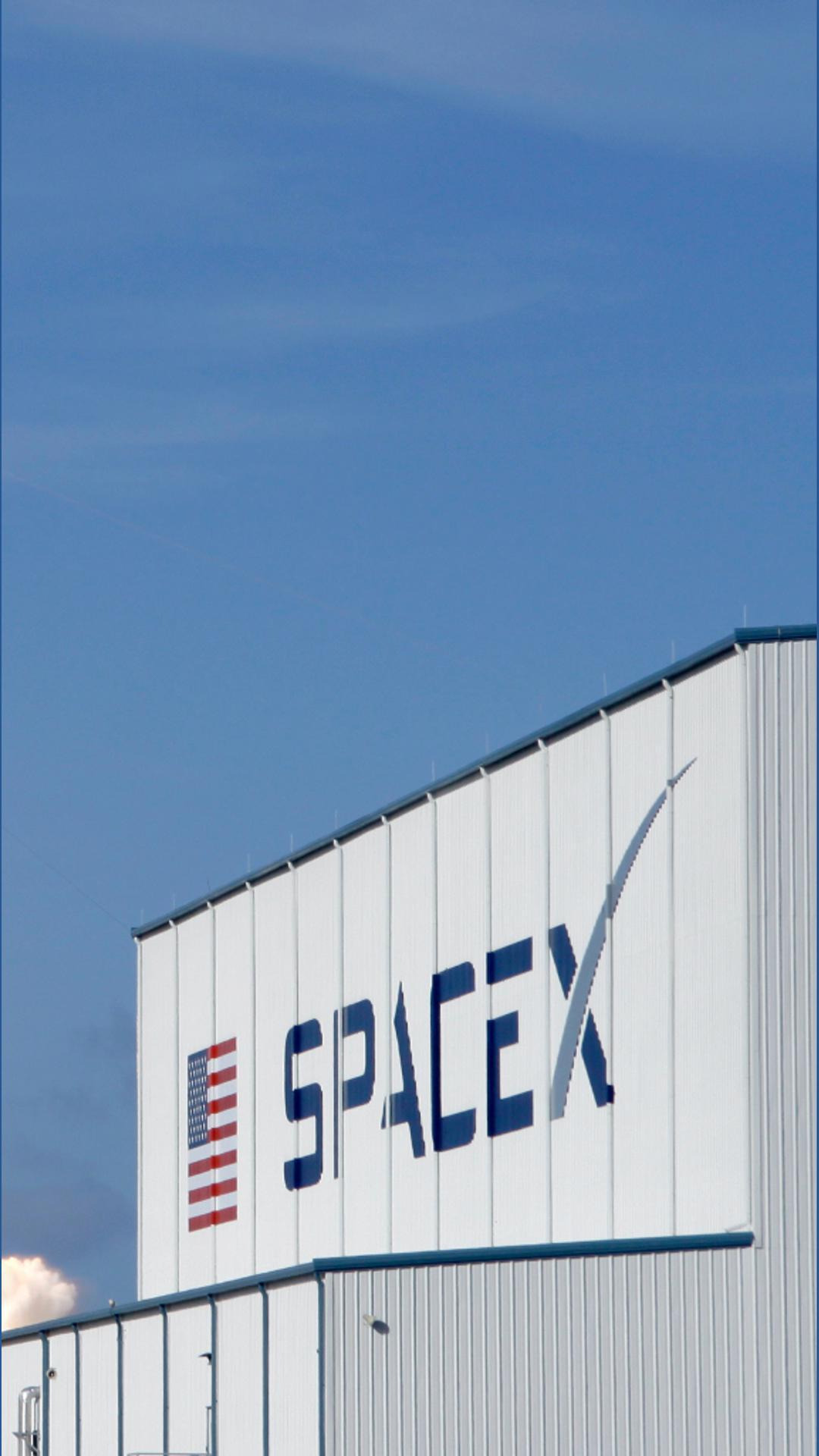
SpaceX quietly files paperwork to go public
WASHINGTON -- SpaceX took a major step towards going public on Wednesday. According to CNN, the company confidentially filed paperwork with the US Securities and Exchange Commission for an initial public offering. Exactly how much SpaceX plans to raise has not been disclosed but the figure is reportedly as much as $75 billion. At that level, the offering would easily eclipse the $29 billion that Saudi Aramco raised in its 2019 IPO. The move for the IPO comes after SpaceX merged with Elon Musk's artificial intelligence company, xAI. The combined business value between the two companies is more than $1 trillion. The AP reported that Musk owns 42% of SpaceX now, according to Pitchbook, though that figure will change with the IPO when new owners are issued shares. In any case, he is likely to pierce the trillion dollar mark because he is already close, with a net worth estimated by Forbes magazine at $823 million. SpaceX did not respond immediately to a request for comment. SpaceX has been busy of late. In late 2025, they rescued two astronauts who were stranded on the International Space Station after their Boeing Starliner had trouble. In the past five years, SpaceX won $6 billion in contracts from NASA, the Defense Department and other U.S. government agencies, according to USAspending.gov. Among current SpaceX owners is Donald Trump Jr, the president's oldest son. He owns shares through 1789 Capital. That venture capital firm made him a partner shortly after his father won the presidency for a second time and has been buying up federal contractors seeking to win taxpayer money ever since.
SpaceX quietly files paperwork to go public
WASHINGTON -- SpaceX took a major step towards going public on Wednesday. According to CNN, the company confidentially filed paperwork with the US Securities and Exchange Commission for an initial public offering. Exactly how much SpaceX plans to raise has not been disclosed but the figure is reportedly as much as $75 billion. At that level, the offering would easily eclipse the $29 billion that Saudi Aramco raised in its 2019 IPO. The move for the IPO comes after SpaceX merged with Elon Musk's artificial intelligence company, xAI. The combined business value between the two companies is more than $1 trillion. The AP reported that Musk owns 42% of SpaceX now, according to Pitchbook, though that figure will change with the IPO when new owners are issued shares. In any case, he is likely to pierce the trillion dollar mark because he is already close, with a net worth estimated by Forbes magazine at $823 million. SpaceX did not respond immediately to a request for comment. SpaceX has been busy of late. In late 2025, they rescued two astronauts who were stranded on the International Space Station after their Boeing Starliner had trouble. In the past five years, SpaceX won $6 billion in contracts from NASA, the Defense Department and other U.S. government agencies, according to USAspending.gov. Among current SpaceX owners is Donald Trump Jr, the president's oldest son. He owns shares through 1789 Capital. That venture capital firm made him a partner shortly after his father won the presidency for a second time and has been buying up federal contractors seeking to win taxpayer money ever since.
SpaceX quietly files paperwork to go public
WASHINGTON -- SpaceX took a major step towards going public on Wednesday. According to CNN, the company confidentially filed paperwork with the US Securities and Exchange Commission for an initial public offering. Exactly how much SpaceX plans to raise has not been disclosed but the figure is reportedly as much as $75 billion. At that level, the offering would easily eclipse the $29 billion that Saudi Aramco raised in its 2019 IPO. The move for the IPO comes after SpaceX merged with Elon Musk's artificial intelligence company, xAI. The combined business value between the two companies is more than $1 trillion. The AP reported that Musk owns 42% of SpaceX now, according to Pitchbook, though that figure will change with the IPO when new owners are issued shares. In any case, he is likely to pierce the trillion dollar mark because he is already close, with a net worth estimated by Forbes magazine at $823 million. SpaceX did not respond immediately to a request for comment. SpaceX has been busy of late. In late 2025, they rescued two astronauts who were stranded on the International Space Station after their Boeing Starliner had trouble. In the past five years, SpaceX won $6 billion in contracts from NASA, the Defense Department and other U.S. government agencies, according to USAspending.gov. Among current SpaceX owners is Donald Trump Jr, the president's oldest son. He owns shares through 1789 Capital. That venture capital firm made him a partner shortly after his father won the presidency for a second time and has been buying up federal contractors seeking to win taxpayer money ever since.
SpaceX quietly files paperwork to go public
WASHINGTON -- SpaceX took a major step towards going public on Wednesday. According to CNN, the company confidentially filed paperwork with the US Securities and Exchange Commission for an initial public offering. Exactly how much SpaceX plans to raise has not been disclosed but the figure is reportedly as much as $75 billion. At that level, the offering would easily eclipse the $29 billion that Saudi Aramco raised in its 2019 IPO. The move for the IPO comes after SpaceX merged with Elon Musk's artificial intelligence company, xAI. The combined business value between the two companies is more than $1 trillion. The AP reported that Musk owns 42% of SpaceX now, according to Pitchbook, though that figure will change with the IPO when new owners are issued shares. In any case, he is likely to pierce the trillion dollar mark because he is already close, with a net worth estimated by Forbes magazine at $823 million. SpaceX did not respond immediately to a request for comment. SpaceX has been busy of late. In late 2025, they rescued two astronauts who were stranded on the International Space Station after their Boeing Starliner had trouble. In the past five years, SpaceX won $6 billion in contracts from NASA, the Defense Department and other U.S. government agencies, according to USAspending.gov. Among current SpaceX owners is Donald Trump Jr, the president's oldest son. He owns shares through 1789 Capital. That venture capital firm made him a partner shortly after his father won the presidency for a second time and has been buying up federal contractors seeking to win taxpayer money ever since.
SpaceX has filed confidentially for IPO ahead of AI rivals | Fortune
The company submitted its draft IPO registration to the U.S. Securities and Exchange Commission, the people said, asking not to be identified as the information isn't public. The filing puts it on track for a June listing, which would make SpaceX the first of what could be a trio of mega-IPOs, ahead of OpenAI and Anthropic PBC. A representative for SpaceX didn't immediately respond to a request for comment. SpaceX could seek a valuation in the IPO of more than $1.75 trillion, people familiar with the matter have said. The company acquired Musk's artificial intelligence startup xAI in a deal that valued the enlarged entity at $1.25 trillion. In a confidential filing, companies can receive feedback from the regulator and make changes before the information becomes public. Details of the offering including the number of shares to be sold and the price range are expected to be disclosed in a later filing. A listing for SpaceX would raise as much as $75 billion, Bloomberg News has reported. At that size, it would dwarf the current record holder, Saudi Aramco's $29 billion debut in 2019. SpaceX is telling prospective IPO investors to expect briefings from company executives this month, people familiar with the matter have said. The so-called testing-the-waters investor meetings would potentially include more detail that would support its valuation target. The company has lined up Bank of America Corp., Citigroup Inc., Goldman Sachs Group Inc., JPMorgan Chase & Co. and Morgan Stanley for senior roles on the IPO, people familiar with the matter have said, and has added more banks to the lineup. SpaceX is also working with international banks, who are looking after taking IPO orders in specific regions, with Citigroup coordinating their roles, people familiar with the matter have said. Barclays Plc is in charge of the UK and Deutsche Bank AG and UBS Group AG are working on European orders, they said. Royal Bank of Canada is managing share orders from Canada, Mizuho Financial Group Inc. is working on Asia orders and Macquarie Group Ltd. is focused on Australia, Bloomberg News has reported. The company is considering a dual-class share structure in the listing that would potentially give insiders such as Musk extra voting power to dominate decision making. The IPO is expected to have a large retail component, with SpaceX potentially allocating as much as 30% of the offering to small investors, a person familiar with the matter has said. The world's most prolific rocket launcher, SpaceX dominates the space industry with its Falcon 9 rocket that lifts satellites and people to orbit. The company is focused on building out a base on the moon before pursuing its long-held mission of sending humans to Mars, Musk has said. SpaceX is also the industry leader in providing internet services from low-Earth orbit through Starlink, a system of thousands of satellites that serves millions of customers. The company's rocket launch program and Starlink satellites generate the majority of revenue, approaching $20 billion in 2026, with xAI likely to generate less than $1 billion, according to Bloomberg Intelligence.

SpaceX quietly files paperwork to go public
WASHINGTON -- SpaceX took a major step towards going public on Wednesday. According to CNN, the company confidentially filed paperwork with the US Securities and Exchange Commission for an initial public offering. Exactly how much SpaceX plans to raise has not been disclosed but the figure is reportedly as much as $75 billion. At that level, the offering would easily eclipse the $29 billion that Saudi Aramco raised in its 2019 IPO. The move for the IPO comes after SpaceX merged with Elon Musk's artificial intelligence company, xAI. The combined business value between the two companies is more than $1 trillion. The AP reported that Musk owns 42% of SpaceX now, according to Pitchbook, though that figure will change with the IPO when new owners are issued shares. In any case, he is likely to pierce the trillion dollar mark because he is already close, with a net worth estimated by Forbes magazine at $823 million. SpaceX did not respond immediately to a request for comment. SpaceX has been busy of late. In late 2025, they rescued two astronauts who were stranded on the International Space Station after their Boeing Starliner had trouble. In the past five years, SpaceX won $6 billion in contracts from NASA, the Defense Department and other U.S. government agencies, according to USAspending.gov. Among current SpaceX owners is Donald Trump Jr, the president's oldest son. He owns shares through 1789 Capital. That venture capital firm made him a partner shortly after his father won the presidency for a second time and has been buying up federal contractors seeking to win taxpayer money ever since.
SpaceX files to go public, paving way for record stock offering | THE DAILY TRIBUNE | KINGDOM OF BAHRAIN
TDT | Manama Email: [email protected] Elon Musk's aerospace company SpaceX has reportedly taken a major step toward going public, filing confidential paperwork with US regulators that could pave the way for one of the largest stock market debuts in history. According to sources cited by Agence France-Presse and The Wall Street Journal, the filing positions the rocket and satellite manufacturer for a potential listing as early as July. If completed, the initial public offering (IPO) could value the company at around $75 billion or more. Such a listing would surpass the record set in 2019 by Saudi Aramco, which raised $25.6 billion in what remains the largest IPO to date. Neither SpaceX nor the Securities and Exchange Commission has commented on the reported filing. If market expectations hold, SpaceX could debut with a valuation exceeding $1.75 trillion, placing it among the world's largest publicly traded companies. The firm was last valued at approximately $1.25 trillion following its acquisition of AI startup xAI earlier this year. Analysts note that a public listing would require SpaceX to significantly increase transparency around its financial performance, including revenue disclosures. It may also subject the company to investor pressure to prioritize profitability over long-term projects, such as Musk's ambitious plans for human missions to Mars. Once disclosed, the IPO documents are expected to provide deeper insights into SpaceX's operations, including its rocket manufacturing, satellite business, and integration with xAI. The company currently leads the global launch market with its reusable rocket technology and operates the Starlink network. Market experts believe strong investor interest could support the massive fundraising effort. Steve Sosnick of Interactive Brokers noted that investors remain highly enthusiastic about Musk's ventures in both space and artificial intelligence, potentially allowing SpaceX to succeed even in less favorable market conditions. Matthew Kennedy of Renaissance Capital echoed this sentiment, highlighting the strength of US capital markets and the unique appeal of SpaceX's business model. He added that growing opportunities in telecommunications, space exploration, and AI are likely to further boost investor demand. Meanwhile, other major technology firms -- including OpenAI and Anthropic -- are also reportedly exploring IPO plans this year, signaling a potentially significant period for tech listings. Founded and led by Musk, SpaceX is backed by a range of investors, including Alphabet Inc.. The company has revolutionized the space industry by dramatically lowering the cost of launching satellites and continues to expand its ambitions at the intersection of space technology and artificial intelligence.
XAI Madison Equity Premium Income Fund Declares its Monthly Distribution of $0.060 per Share | Taiwan News | Apr. 2, 2026 04:15
CHICAGO, April 01, 2026 (GLOBE NEWSWIRE) -- XAI Madison Equity Premium Income Fund (the "Fund") has declared its regular monthly distribution of $0.060 per share on the Fund's common shares (NYSE: MCN), payable on May 1, 2026, to common shareholders of record as of April 15, 2026, as noted below. The amount of the distribution represents no change from the previous month's distribution amount of $0.060 per share. The following dates apply to the declaration: Ex-Dividend Date April 15, 2026 Record Date April 15, 2026 Payable Date May 1, 2026 Amount $0.060 per share Change from Previous Month No Change Common share distributions may be paid from net investment income (regular interest and dividends), capital gains and/or a return of capital. The specific tax characteristics of the distributions will be reported to the Fund's common shareholders on Form 1099 after the end of the 2026 calendar year. Shareholders should not assume that the source of a distribution from the Fund is net income or profit. For further information regarding the Fund's distributions, please visit www.xainvestments.com. The Fund's net investment income and capital gain can vary significantly over time; however, the Fund seeks to maintain more stable common share quarterly distributions over time. The Fund's final taxable income for the current fiscal year will not be known until the Fund's tax returns are filed. As a registered investment company, the Fund is subject to a 4% excise tax that is imposed if the Fund does not distribute to common shareholders by the end of any calendar year at least the sum of (i) 98% of its ordinary income (not taking into account any capital gain or loss) for the calendar year and (ii) 98.2% of its capital gain in excess of its capital loss (adjusted for certain ordinary losses) for a one-year period generally ending on December 31 of the calendar year (unless an election is made to use the Fund's fiscal year). In certain circumstances, the Fund may elect to retain income or capital gain to the extent that the Board of Trustees, in consultation with Fund management, determines it to be in the interest of shareholders to do so. The common share distributions paid by the Fund for any particular period may be more than the amount of net investment income from that period. As a result, all or a portion of a distribution may be a return of capital, which is in effect a partial return of the amount a common shareholder invested in the Fund, up to the amount of the common shareholder's tax basis in their common shares, which would reduce such tax basis. Although a return of capital may not be taxable, it will generally increase the common shareholder's potential gain, or reduce the common shareholder's potential loss, on any subsequent sale or other disposition of common shares. Future common share distributions will be made if and when declared by the Fund's Board of Trustees, after the evaluation of several factors, including the Fund's net investment income, financial performance and available cash. There can be no assurance that the amount or timing of common share distributions in the future will be equal or similar to that described herein or that the Board of Trustees will not decide to suspend or discontinue the payment of common share distributions in the future. The Fund's objective is to achieve a high level of current income and current capital gains, with long-term capital appreciation as a secondary objective. The Fund intends to pursue its objective by investing in a portfolio of common stocks and utilizing an option strategy, primarily by writing (selling) covered call options on a substantial portion of the common stocks in the portfolio in order to generate current income and gains from option writing premiums and, to a lesser extent, from dividends. Market action can impact dividend issuance as the Fund's total assets affect the Fund's future dividend prospects. The Fund provides additional information on its website at www.xainvestments.com. About XA Investments XA Investments LLC ("XAI") serves as the Fund's investment adviser. XAI is a Chicago-based firm founded by XMS Capital Partners in 2016. XAI serves as the investment adviser for two listed closed-end funds and an interval closed-end fund. The listed closed-end funds, the XAI Octagon Floating Rate & Alternative Income Trust and XAI Madison Equity Premium Income Fund both trade on the New York Stock Exchange and the interval fund, Octagon XAI CLO Income Fund is available via direct subscription and through select broker/dealers and wealth management platforms. In addition to investment advisory services, the firm also provides investment fund structuring and consulting services focused on registered closed-end funds to meet institutional client needs. XAI offers custom product build and consulting services, including development and market research, sales, marketing, and fund management. XAI believes that the investing public can benefit from new vehicles to access a broad range of alternative investment strategies and managers. XAI provides individual investors with access to institutional-caliber alternative managers. For more information, please visit www.xainvestments.com. About XMS Capital Partners XMS Capital Partners, LLC, established in 2006, is a global, independent, financial services firm providing M&A, corporate advisory and asset management services to clients. It has offices in Chicago, Boston and London. For more information, please visit www.xmscapital.com. About Madison Investments Madison Investments is an independent investment management firm based in Madison, WI. The firm was founded in 1974, has approximately $29.3 billion in assets under management as of December 31, 2025, and is recognized as one of the nation's top investment firms. Madison offers domestic fixed income, U.S. and international equity, covered call, multi-asset, insurance and credit union investment management strategies. For more information, please visit www.madisoninvestments.com. Madison and/or Madison Investments is the unifying tradename of Madison Investment Holdings, Inc., Madison Asset Management, LLC, and Madison Investment Advisors, LLC. Madison Funds are distributed by MFD Distributor, LLC. Madison is registered as an investment adviser with the U.S. Securities and Exchange Commission. MFD Distributor, LLC is registered with the U.S. Securities and Exchange Commission as a broker-dealer and is a member firm of the Financial Industry Regulatory Authority www.finra.org. XAI does not provide tax advice; please consult a professional tax advisor regarding your specific tax situation. Income may be subject to state and local taxes, as well as the federal alternative minimum tax. Investors should consider the investment objectives and policies, risk considerations, charges and expenses of the Fund carefully before investing. For more information on the Fund, please visit the Fund's webpage at www.xainvestments.com. This press release shall not constitute an offer to sell or a solicitation to buy, nor shall there be any sale of these securities in any state or jurisdiction in which such offer or solicitation or sale would be unlawful prior to registration or qualification under the laws of such state or jurisdiction. NOT FDIC INSURED NO BANK GUARANTEE MAY LOSE VALUE Media Contact: Kimberly Flynn, President XA Investments LLC Phone: 888-903-3358 Email: [email protected] www.xainvestments.com

XAI Octagon Floating Rate & Alternative Income Trust Declares its Monthly Common Shares Distribution of $0.225 per Share | Taiwan News | Apr. 2, 2026 04:15
CHICAGO, April 01, 2026 (GLOBE NEWSWIRE) -- XAI Octagon Floating Rate & Alternative Income Trust (the "Trust") has declared its regular monthly distribution of $0.225 per common share on the Trust's common shares (NYSE: XFLT), payable on May 1, 2026, to common shareholders of record as of April 15, 2026, as noted below. With the new distribution amount of $0.225 per share, the Trust's annualized distribution rate on market price is 15.72%, and the annualized distribution rate on NAV is 12.11% as of market close on March 31, 2026, respectively. "In light of a more challenging market environment for CLO equity investing, we have decreased our monthly distribution to align with the Trust's near-term earnings potential. The change allows the Trust to retain capital to deploy in future investment opportunities that help drive value for shareholders," said Kimberly Flynn, President of XA Investments. The following dates apply to the declaration: Ex-Dividend Date April 15, 2026 Record Date April 15, 2026 Payable Date May 1, 2026 Amount $0.225 per common share Change from Previous Month 25.00% decrease The Trust will host a market update webinar at 10:00am central on Tuesday, April 14, 2026, to discuss these recent Trust developments and current market conditions in the loan and CLO marketplace. The webinar replay will be available on the Trust's website soon after the webinar completion. Please register for the webinar here. Over the first quarter of 2026, the Trust has successfully: Conducted a 1-for-5 reverse stock split, which was effective 5:00pm Eastern Time on March 20, 2026. As a result of the reverse stock split, every five (5) common shares issued and outstanding were automatically combined into one (1) issued and outstanding common share, without any change in the par value per share. Declared three regular monthly distributions on January 2, February 2 and March 2, which, adjusted for the reverse stock split, totaled $0.90 per share. Hosted its regular quarterly webinar with Octagon Credit Investors on March 4, 2026 to discuss fourth quarter 2025 Trust performance. Completed a preferred leverage refinancing program that began in Q4 2025 and reduced the Trust's weighted average preferred coupon expense by 0.80%, from 6.72% to 5.92%, which included: Issuance of $50.0 million of 5.92% Series A Mandatory Redeemable Preferred Shares on October 21, 2025. Redemption of all $29.9 million of the Trust's 6.50% Series 2026 Term Preferred Shares on October 31, 2025.Issuance of an additional $23.0 million of 5.92% Series A Mandatory Redeemable Preferred Shares on December 18, 2025.Redemption of all $27.5 million of the Trust's 6.95% Series 2029 Convertible Preferred Shares on January 30, 2026. Common share distributions may be paid from net investment income (regular interest and dividends), capital gains and/or a return of capital. The specific tax characteristics of the distributions will be reported to the Trust's common shareholders on Form 1099 after the end of the 2026 calendar year. Shareholders should not assume that the source of a distribution from the Trust is net income or profit. For further information regarding the Trust's distributions, please visit www.xainvestments.com. The Trust's net investment income and capital gain can vary significantly over time; however, the Trust seeks to maintain more stable common share monthly distributions over time. The Trust's investments in CLOs are subject to complex tax rules and the calculation of taxable income attributed to an investment in CLO subordinated notes can be dramatically different from the calculation of income for financial reporting purposes under accounting principles generally accepted in the United States ("U.S. GAAP"), and, as a result, there may be significant differences between the Trust's GAAP income and its taxable income. The Trust's final taxable income for the current fiscal year will not be known until the Trust's tax returns are filed. As a registered investment company, the Trust is subject to a 4% excise tax that is imposed if the Trust does not distribute to common shareholders by the end of any calendar year at least the sum of (i) 98% of its ordinary income (not taking into account any capital gain or loss) for the calendar year and (ii) 98.2% of its capital gain in excess of its capital loss (adjusted for certain ordinary losses) for a one-year period generally ending on October 31 of the calendar year (unless an election is made to use the Trust's fiscal year). In certain circumstances, the Trust may elect to retain income or capital gain to the extent that the Board of Trustees, in consultation with Trust management, determines it to be in the interest of shareholders to do so. The common share distributions paid by the Trust for any particular period may be more than the amount of net investment income from that period. As a result, all or a portion of a distribution may be a return of capital, which is in effect a partial return of the amount a common shareholder invested in the Trust, up to the amount of the common shareholder's tax basis in their common shares, which would reduce such tax basis. Although a return of capital may not be taxable, it will generally increase the common shareholder's potential gain, or reduce the common shareholder's potential loss, on any subsequent sale or other disposition of common shares. The distribution shall be paid on the Payment Date unless the payment of such distribution is deferred by the Board of Trustees upon a determination that such deferral is required in order to comply with applicable law to ensure that the Trust remains solvent and able to pay its debts as they become due and continue as a going concern, or to comply with the applicable terms or financial covenants of the Trust's senior securities. Future common share distributions will be made if and when declared by the Trust's Board of Trustees, based on a consideration of number of factors, including the Trust's continued compliance with terms and financial covenants of its senior securities, the Trust's net investment income, financial performance and available cash. There can be no assurance that the amount or timing of common share distributions in the future will be equal or similar to that described herein or that the Board of Trustees will not decide to suspend or discontinue the payment of common share distributions in the future. The investment objective of the Trust is to seek attractive total return with an emphasis on income generation across multiple stages of the credit cycle. The Trust seeks to achieve its investment objective by investing in a dynamically managed portfolio of opportunities primarily within the private credit markets. Under normal market conditions, the Trust will invest at least 80% of its Managed Assets in floating rate credit instruments and other structured credit investments. There can be no assurance that the Trust will achieve its investment objective. The Trust's common shares are traded on the New York Stock Exchange under the symbol "XFLT". About XA Investments XA Investments LLC ("XAI") serves as the Trust's investment adviser. XAI is a Chicago-based firm founded by XMS Capital Partners in 2016. XAI serves as the investment adviser for two listed closed-end funds and an interval closed-end fund. The listed closed-end funds, the XAI Octagon Floating Rate & Alternative Income Trust and XAI Madison Equity Premium Income Fund both trade on the New York Stock Exchange and the interval fund, Octagon XAI CLO Income Fund is available via direct subscription and through select broker/dealers and wealth management platforms. In addition to investment advisory services, the firm also provides investment fund structuring and consulting services focused on registered closed-end funds to meet institutional client needs. XAI offers custom product build and consulting services, including development and market research, sales, marketing, and fund management. XAI believes that the investing public can benefit from new vehicles to access a broad range of alternative investment strategies and managers. XAI provides individual investors with access to institutional-caliber alternative managers. For more information, please visit www.xainvestments.com. About XMS Capital Partners XMS Capital Partners, LLC, established in 2006, is a global, independent, financial services firm providing M&A, corporate advisory and asset management services to clients. It has offices in Chicago, Boston and London. For more information, please visit www.xmscapital.com. About Octagon Credit Investors Octagon Credit Investors, LLC ("Octagon") serves as the Trust's investment sub-adviser. Octagon is a 30+ year old, $32.4B below-investment grade corporate credit investment adviser focused on leveraged loan, high yield bond and structured credit (CLO debt and equity) investments. Through fundamental credit analysis and active portfolio management, Octagon's investment team identifies attractive relative value opportunities across below-investment grade asset classes, sectors and issuers. Octagon's investment philosophy and methodology encourage and rely upon dynamic internal communication to manage portfolio risk. Over its history, the firm has applied a disciplined, repeatable and scalable approach in its effort to generate attractive risk-adjusted returns for its investors. For more information, please visit www.octagoncredit.com. XAI does not provide tax advice; please consult a professional tax advisor regarding your specific tax situation. Income may be subject to state and local taxes, as well as the federal alternative minimum tax. Investors should consider the investment objectives and policies, risk considerations, charges and expenses of the Trust carefully before investing. For more information on the Trust, please visit the Trust's webpage at www.xainvestments.com. This press release shall not constitute an offer to sell or a solicitation to buy, nor shall there be any sale of these securities in any state or jurisdiction in which such offer or solicitation or sale would be unlawful prior to registration or qualification under the laws of such state or jurisdiction. NOT FDIC INSURED NO BANK GUARANTEE MAY LOSE VALUE Paralel Distributors, LLC - Distributor Media Contact: Kimberly Flynn, President XA Investments LLC Phone: 888-903-3358 Email: [email protected] www.xainvestments.com
Bloomberg, CNBC Report SpaceX Submitted Confidential Filing For IPO - Defense Daily
Bloomberg and CNBC reported Wednesday that SpaceX has confidentially filed for its initial public offering (IPO). A confidential filing allows a company to submit draft IPO registration to the Securities and Exchange Commission (SEC) without public review. It's intended to protect sensitive information during the SEC review process. According to the SEC, companies still must publicly file a registration statement at least 15 days before a road show. SpaceX did not respond to a request to comment. The SEC said it declines to comment...
SpaceX Could Join the Nasdaq in Record Time After Its IPO. Here's Why That Matters. | The Motley Fool
It could also set a precedent for other ballyhooed IPOs in the future. SpaceX hasn't yet officially filed plans for an initial public offering (IPO). Still, the word on the street is that Elon Musk's company could soon do just that, setting the stage for one of the most anticipated IPOs ever. Underscoring SpaceX's likely status as one of the most eagerly awaited IPO stocks in years is that, in terms of sheer size, Musk is swinging for the fences. The space company is reportedly looking to raise $75 billion at a $1.75 valuation. If it's successful in its quest to raise that $75 billion, SpaceX will be the largest IPO ever, more than doubling the $29.4 billion raised by Saudi Aramco in its 2019 IPO. Those factoids make SpaceX's initial share sale compelling, but there are other reasons to be interested as well. For fans of exchange-traded funds (ETFs) and investors just learning how to invest in index funds, the SpaceX IPO may have profound implications. Here's the skinny on that situation. Alone, the fact that the rocket and satellite company is looking to raise $75 billion at a valuation of $1.75 trillion is jaw-dropping. Simply put, that's rarefied IPO air. But that $75 billion isn't the only record SpaceX stands to break. The other one hinges on the company listing on the Nasdaq stock exchange, which positions the stock for inclusion in the Nasdaq-100 Index. That gauge usually rebalances once a year, in December, but due to the gravity (space pun) of the SpaceX IPO, Nasdaq approved updates to that index's rebalancing schedule. In plain English, as of May 1, Nasdaq-listed companies ranking in the top 40 by market capitalization will be eligible for Nasdaq-100 entry after just 15 trading days, provided they're not financial services firms, which are excluded by that benchmark. SpaceX will almost certainly clear all those hurdles. As a result, the stock could quickly appear in ETFs tracking the Nasdaq-100, including the Invesco QQQ ETF (QQQ +1.24%) and the Invesco NASDAQ 100 ETF (QQQM +1.24%), and as a top-10 holding in those ETFs. So at some points, those ETFs will be credible avenues for exposure to SpaceX stock. But wait. There's more. Those two ETFs aren't the only games in town when it comes to Nasdaq-100 trackers. As of last December, there were more than 200 globally listed instruments with combined assets under management north of $600 billion benchmarked to the Nasdaq index. Any ETF, index fund, or other products tracking the Nasdaq-100 will have to add shares of SpaceX, assuming the stock lists on the Nasdaq, implying a lot of capital could swiftly flow into the stock. The possibility of SpaceX gaining "preferred" inclusion in the Nasdaq-100 isn't free of criticism. At least one expert has expressed concerns about an index provider altering its methodology to ensure its parent index earns a prestigious listing. In the indexing world, those are valid points, but SpaceX could proceed undaunted. Not only that, but the fast-track entry precedent set by Nasdaq could pave the way for winning listings for the Anthropic and OpenAI IPOs, which are expected later this year. Like SpaceX, those companies would qualify for swift inclusion in the Nasdaq-100.

SpaceX files for record $75 billion IPO as conflicts of interest mount
SpaceX has confidentially filed paperwork with the Securities and Exchange Commission to sell shares to the public, according to multiple sources familiar with the registration, setting the stage for what would be the largest initial public offering in history and almost certainly making Elon Musk the world's first trillionaire. The offering, internally code-named Project Apex, could come as early as June and reportedly aims to raise as much as $75 billion at a valuation of up to $1.75 trillion. That would more than double Saudi Aramco's $29 billion listing in 2019, the current record holder, and would value SpaceX at roughly 94 times its 2025 revenue. Twenty-one banks have lined up to manage the deal, with Goldman Sachs, JPMorgan Chase, Morgan Stanley, Bank of America, and Citigroup in senior roles, according to CNBC. Musk, who owns approximately 42 per cent of SpaceX according to PitchBook, has a current net worth estimated by Forbes at $823 billion. At a $1.75 trillion valuation, his stake alone would be worth more than $730 billion, pushing his total wealth past the trillion-dollar mark and placing him further ahead of every other person alive than any individual in modern economic history. The company filing for this listing, however, is no longer just a rocket business. In February, SpaceX absorbed Musk's artificial intelligence company xAI in an all-stock transaction that valued the combined entity at $1.25 trillion. That deal, a merger that raised immediate questions about optics, governance, and valuation, folded a company reportedly burning roughly $1 billion a month into one generating substantial cash flow. SpaceX also brought Musk's social media platform X, formerly Twitter, under the same corporate roof. The result is a conglomerate spanning orbital launches, satellite internet, defence contracts, artificial intelligence, and social media, all controlled by a single individual who is simultaneously the largest financial backer of the sitting president of the United States. The financial engine behind the valuation is Starlink, the satellite internet service that has become the most commercially successful space venture in history. In 2025, Starlink generated $10.6 billion in revenue on 54 per cent EBITDA margins, accounting for roughly two-thirds of SpaceX's total revenue of $16 billion. The subscriber base has grown from 10,000 beta users in 2021 to more than 10 million paying customers across 150 countries as of February 2026. The Federal Aviation Administration's January 2026 approval for up to 44 annual Starship launches has provided the operational headroom investors needed to underwrite a public valuation at this scale. The xAI component of the entity going public is, by contrast, a work in progress. Musk himself said in March that xAI was "not built right the first time around" and needed to be rebuilt from its foundations. Since the merger, all 11 of xAI's original co-founders have departed the company, including researchers who had previously worked at Google DeepMind, Google Brain, and Microsoft Research. Jimmy Ba, who co-authored the Adam optimisation paper, one of the most cited in all of artificial intelligence, left in February. Critics have characterised the merger as a financial bailout that allows xAI's mounting losses to be absorbed by Starlink's cash flow ahead of the IPO, a framing Musk has rejected. The conflicts of interest embedded in this offering are without precedent in American capital markets. In the past five years alone, SpaceX has won $6 billion in contracts from NASA, the Department of Defense, and other federal agencies, according to USAspending.gov. The company is NASA's primary launch provider for crewed missions to the International Space Station and holds more than $4 billion in contracts for the Artemis lunar-landing programme. The Pentagon is reportedly preparing to award SpaceX a $2 billion contract to build a 600-satellite constellation for missile tracking as part of the Golden Dome missile-defence initiative, a programme Trump announced would cost $175 billion and begin initial operations within three years. Musk was the largest individual donor to Trump's 2024 presidential campaign and led the Department of Government Efficiency, or DOGE, a temporary body that unilaterally cancelled more than 10,000 federal contracts it deemed wasteful. Ethics observers noted that none of the cancellations affected Musk's own companies. Among SpaceX's current investors is Donald Trump Jr, the president's eldest son, who holds shares through 1789 Capital, a venture firm that made him a partner shortly after his father won the presidency for a second time. That fund, which has crossed $1 billion in assets, has invested approximately $50 million in SpaceX and xAI and has backed at least four companies that subsequently received government contracts during the current administration. The White House has repeatedly denied any conflicts of interest between the presidency and the Trump family's business activities. The governance risks do not end at the political boundary. SpaceX under Musk has operated as a private company with minimal public disclosure for more than two decades. Going public will force it to file quarterly earnings, disclose executive compensation, open its books to auditors, and face shareholder lawsuits of the kind Tesla already contends with regularly. Tesla shareholders are currently suing Musk over the company's $2 billion investment in xAI, arguing he directed shareholder capital into his own private venture. The SpaceX-xAI merger, in which both the buyer and seller were controlled by Musk, presents a similar structure of self-dealing that public-market investors and regulators already struggling with the pace of AI-era consolidation will scrutinise closely. One unusual feature of the planned offering is the reported intention to allocate up to 30 per cent of shares to retail investors, roughly triple the typical 5 to 10 per cent. The move echoes Google's unconventional 2004 IPO, which used a Dutch auction to broaden access, and appears designed to build a base of loyal individual shareholders who may be less inclined to challenge management. For a company whose founder has cultivated a large and vocal online following, the retail allocation could serve as both a democratisation of access and a governance insulation mechanism. SpaceX's listing would be the first of what could be a trio of mega-IPOs from the companies that defined the current era of AI and deep tech. OpenAI and Anthropic are both reportedly considering public offerings, though neither has filed. Together, the three listings would represent a concentration of market value in a handful of companies whose products, from orbital internet to frontier AI models, now intersect with national security, global communications, and the basic infrastructure of economic life. The scale of what SpaceX is attempting is difficult to overstate. A $75 billion raise would exceed the gross domestic product of more than half the world's countries. A $1.75 trillion valuation would make SpaceX more valuable at listing than every company in the S&P 500 except Apple, Microsoft, Nvidia, Amazon, and Alphabet. And at the centre of it all is a single individual who builds the rockets that carry American astronauts, runs the satellites that provide internet to war zones, leads an AI company he admits needs rebuilding, owns a social media platform that shapes political discourse, and has the mobile-phone number of the president. Whether that concentration of power, capital, and government dependency can survive the scrutiny of public markets is the question Project Apex will ultimately answer. The defence-tech sector is already drawing record investment on the thesis that the next generation of military capability will be built by private companies rather than government labs. SpaceX is the largest and most consequential test of that thesis. If the IPO succeeds on the terms being discussed, it will not merely be the biggest stock offering in history. It will be a statement about the degree to which twenty-first-century governments have outsourced their most critical capabilities to the private sector, and about the price of getting them back.
Perplexity, Meta And Google Hit With Privacy Suit
* by Wendy Davis , 8 minutes ago A Utah man alleges in a new lawsuit that artificial intelligence company Perplexity shares "complete transcripts" of users' chats with Google and Meta, via analytics tools embedded in Perplexity's online site. "No reasonable person would have expected that Perplexity would share complete transcripts of their conversations ... with companies like Meta and Google. But that is what Perplexity did," the plaintiff, proceeding anonymously as John Doe, alleges in a 140-page class-action complaint filed Tuesday in federal court in San Francisco. "The intimate health and financial information that users regularly share with Perplexity is some of the most private information about a user," the complaint alleges. "Meta and Google knew that the data collected and received from Perplexity's AI machine included intimate personal health and financial data -- but they did nothing to stop Perplexity from sharing this data because it is vital to their business models," the plaintiff adds. (The complaint refers to Perplexity's search engine an "AI machine.") The complaint includes claims that the companies violated various privacy laws, including California's wiretapping statute. The Utah resident specifically alleges that he engaged in multiple chats with Perplexity's search engine about "tax advice, legal advice, and investing." Those dialogues allegedly "included personal information about his family's finances, his tax obligations, his investment portfolio, and his investment strategies." The plaintiff adds that he believed those chats were private, and "was dismayed to discover that complete and partial transcripts of his communications with Perplexity were shared with Meta and Google every time that he interacted with Perplexity's AI Machine." Among allegations, the Utah resident says Perplexity shares entire users' entire prompts with Google and Facebook, along with users' email addresses, if they subscribed to Perplexity by creating a free account with the company. "For example, a subscribed user who entered a prompt such as 'What is the best treatment for liver cancer?' would have had their entire prompt shared with Meta and Google via a full-string URL which was intercepted inside the user's browser, then transmitted to Meta and Google," the complaint alleges. Perplexity, Meta and Google have not yet responded to MediaPost's request for comment.