News & Updates
The latest news and updates from companies in the WLTH portfolio.
Here's what that Claude Code source leak reveals about Anthropic's plans
Yesterday's surprise leak of the source code for Anthropic's Claude Code revealed a lot about the vibe-coding scaffolding the company has built around its proprietary Claude model. But observers digging through over 512,000 lines of code across more than 2,000 files have also discovered references to disabled, hidden, or inactive features that provide a peek into the potential roadmap for future features. Chief among these features is Kairos, a persistent daemon that can operate in the background even when the Claude Code terminal window is closed. The system would use periodic "<tick>" prompts to regularly review whether new actions are needed and a "PROACTIVE" flag for "surfacing something the user hasn't asked for and needs to see now." Kairos makes use of a file-based "memory system" designed to allow for persistent operation across user sessions. A prompt hidden behind a disabled "KAIROS" flag in the code explains that the system is designed to "have a complete picture of who the user is, how they'd like to collaborate with you, what behaviors to avoid or repeat, and the context behind the work the user gives you." To organize and consolidate this memory system across sessions, the Claude Code source code includes references to an evocatively named AutoDream system. When a user goes idle or manually tells Anthropic to sleep at the end of a session, the AutoDream system would tell Claude Code that "you are performing a dream -- a reflective pass over your memory files." This prompt describing this AI "dream" process asks Claude Code to scan the day's transcripts for "new information worth persisting," consolidate that new information in a way that avoids "near-duplicates" and "contradictions," and prune existing memories that are overly verbose or newly outdated. Claude Code would also be instructed to watch out for "existing memories that drifted," an issue we've seen previously when Claude users have tried to graft memory systems onto their harnesses. The overall goal would be to "synthesize what you've learned recently into durable, well-organized memories so that future sessions can orient quickly," according to the prompt. Undercover Buddy While the Kairos daemon doesn't seem to have been fully implemented in code yet, a separate "Undercover mode" appears to be inactive, letting Anthropic employees contribute to public open source repositories without revealing themselves as AI agents. The reference prompts for this mode focus primarily on protecting "internal model codenames, project names, or other Anthropic-internal information" from becoming accidentally public through open source commits. But the prompt also explicitly tells the system that its commits should "never include... the phrase 'Claude Code' or any mention that you are an AI," and to omit any "co-Authored-By lines or any other attribution." That kind of obfuscation seems especially relevant given recent controversies surrounding AI coding tools being used on popular repositories. On the lighter side, the Claude Code source code also describes Buddy, a Clippy-like "separate watcher" that "sits beside the user's input box and occasionally comments in a speech bubble." These virtual creatures would come in 18 randomized "species" forms ranging from blob to axolotl and appear as five-line by 12-column ASCII art animations complete with tiny hats. A comment suggests that Buddy was planned for a "teaser window" launch between April 1 through 7 before a full launch in May. It's unclear how the source code leak has impacted those plans. Other potential planned Claude Code features referenced in the source code leak include: * An UltraPlan feature allowing Opus-level Claude models to "draft an advanced plan you can edit and approve," which can run for 10 to 30 minutes at a time. * A Voice Mode letting users chat directly to Claude Code, much like similar AI systems. * A Bridge mode that expands on the existing Anthropic Dispatch tool to allow for remote Claude Code sessions that are fully controllable from an outside browser or mobile device.

SpaceX Could Join the Nasdaq in Record Time After Its IPO. Here's Why That Matters.
It could also set a precedent for other ballyhooed IPOs in the future. SpaceX hasn't yet officially filed plans for an initial public offering (IPO). Still, the word on the street is that Elon Musk's company could soon do just that, setting the stage for one of the most anticipated IPOs ever. Underscoring SpaceX's likely status as one of the most eagerly awaited IPO stocks in years is that, in terms of sheer size, Musk is swinging for the fences. The space company is reportedly looking to raise $75 billion at a $1.75 valuation. If it's successful in its quest to raise that $75 billion, SpaceX will be the largest IPO ever, more than doubling the $29.4 billion raised by Saudi Aramco in its 2019 IPO. Will AI create the world's first trillionaire? Our team just released a report on the one little-known company, called an "Indispensable Monopoly" providing the critical technology Nvidia and Intel both need. Continue " Image source: Getty Images. Those factoids make SpaceX's initial share sale compelling, but there are other reasons to be interested as well. For fans of exchange-traded funds (ETFs) and investors just learning how to invest in index funds, the SpaceX IPO may have profound implications. Here's the skinny on that situation. Alone, the fact that the rocket and satellite company is looking to raise $75 billion at a valuation of $1.75 trillion is jaw-dropping. Simply put, that's rarefied IPO air. But that $75 billion isn't the only record SpaceX stands to break. The other one hinges on the company listing on the Nasdaq stock exchange, which positions the stock for inclusion in the Nasdaq-100 Index. That gauge usually rebalances once a year, in December, but due to the gravity (space pun) of the SpaceX IPO, Nasdaq approved updates to that index's rebalancing schedule. In plain English, as of May 1, Nasdaq-listed companies ranking in the top 40 by market capitalization will be eligible for Nasdaq-100 entry after just 15 trading days, provided they're not financial services firms, which are excluded by that benchmark. SpaceX will almost certainly clear all those hurdles. As a result, the stock could quickly appear in ETFs tracking the Nasdaq-100, including the Invesco QQQ ETF (NASDAQ: QQQ) and the Invesco NASDAQ 100 ETF (NASDAQ: QQQM), and as a top-10 holding in those ETFs. So at some points, those ETFs will be credible avenues for exposure to SpaceX stock. But wait. There's more. Those two ETFs aren't the only games in town when it comes to Nasdaq-100 trackers. As of last December, there were more than 200 globally listed instruments with combined assets under management north of $600 billion benchmarked to the Nasdaq index. Any ETF, index fund, or other products tracking the Nasdaq-100 will have to add shares of SpaceX, assuming the stock lists on the Nasdaq, implying a lot of capital could swiftly flow into the stock. The possibility of SpaceX gaining "preferred" inclusion in the Nasdaq-100 isn't free of criticism. At least one expert has expressed concerns about an index provider altering its methodology to ensure its parent index earns a prestigious listing. In the indexing world, those are valid points, but SpaceX could proceed undaunted. Not only that, but the fast-track entry precedent set by Nasdaq could pave the way for winning listings for the Anthropic and OpenAI IPOs, which are expected later this year. Like SpaceX, those companies would qualify for swift inclusion in the Nasdaq-100. Before you buy stock in Invesco QQQ Trust, consider this: The Motley Fool Stock Advisor analyst team just identified what they believe are the 10 best stocks for investors to buy now... and Invesco QQQ Trust wasn't one of them. The 10 stocks that made the cut could produce monster returns in the coming years. Consider when Netflix made this list on December 17, 2004... if you invested $1,000 at the time of our recommendation, you'd have $518,530!* Or when Nvidia made this list on April 15, 2005... if you invested $1,000 at the time of our recommendation, you'd have $1,069,165!* Now, it's worth noting Stock Advisor's total average return is 915% -- a market-crushing outperformance compared to 183% for the S&P 500. Don't miss the latest top 10 list, available with Stock Advisor, and join an investing community built by individual investors for individual investors. Todd Shriber has no position in any of the stocks mentioned. The Motley Fool has no position in any of the stocks mentioned. The Motley Fool has a disclosure policy.

XAI Octagon Floating Rate & Alternative Income Trust Declares its Monthly Common Shares Distribution of $
"In light of a more challenging market environment for CLO equity investing, we have decreased our monthly distribution to align with the Trust's near-term earnings potential. The change allows the Trust to retain capital to deploy in future investment opportunities that help drive value for shareholders," said Kimberly Flynn, President of XA Investments. The following dates apply to the declaration: Over the first quarter of 2026, the Trust has successfully: The distribution shall be paid on the Payment Date unless the payment of such distribution is deferred by the Board of Trustees upon a determination that such deferral is required in order to comply with applicable law to ensure that the Trust remains solvent and able to pay its debts as they become due and continue as a going concern, or to comply with the applicable terms or financial covenants of the Trust's senior securities. The Trust's common shares are traded on the New York Stock Exchange under the symbol "XFLT". About XA Investments In addition to investment advisory services, the firm also provides investment fund structuring and consulting services focused on registered closed-end funds to meet institutional client needs. XAI offers custom product build and consulting services, including development and market research, sales, marketing, and fund management. XAI believes that the investing public can benefit from new vehicles to access a broad range of alternative investment strategies and managers. XAI provides individual investors with access to institutional-caliber alternative managers. For more information, please visit www.xainvestments.com. About XMS Capital Partners XMS Capital Partners, LLC, established in 2006, is a global, independent, financial services firm providing M&A, corporate advisory and asset management services to clients. It has offices in Chicago, Boston and London. For more information, please visit www.xmscapital.com. XAI does not provide tax advice; please consult a professional tax advisor regarding your specific tax situation. Income may be subject to state and local taxes, as well as the federal alternative minimum tax. Investors should consider the investment objectives and policies, risk considerations, charges and expenses of the Trust carefully before investing. For more information on the Trust, please visit the Trust's webpage at www.xainvestments.com. This press release shall not constitute an offer to sell or a solicitation to buy, nor shall there be any sale of these securities in any state or jurisdiction in which such offer or solicitation or sale would be unlawful prior to registration or qualification under the laws of such state or jurisdiction. Market News and Data brought to you by Benzinga APIs To add Benzinga News as your preferred source on Google, click here.

XAI Madison Equity Premium Income Fund Declares its Monthly Distribution of $0.060 per Share - XAI Madiso
The following dates apply to the declaration: The Fund's net investment income and capital gain can vary significantly over time; however, the Fund seeks to maintain more stable common share quarterly distributions over time. The Fund's final taxable income for the current fiscal year will not be known until the Fund's tax returns are filed. About XA Investments In addition to investment advisory services, the firm also provides investment fund structuring and consulting services focused on registered closed-end funds to meet institutional client needs. XAI offers custom product build and consulting services, including development and market research, sales, marketing, and fund management. XAI believes that the investing public can benefit from new vehicles to access a broad range of alternative investment strategies and managers. XAI provides individual investors with access to institutional-caliber alternative managers. For more information, please visit www.xainvestments.com. About XMS Capital Partners XMS Capital Partners, LLC, established in 2006, is a global, independent, financial services firm providing M&A, corporate advisory and asset management services to clients. It has offices in Chicago, Boston and London. For more information, please visit www.xmscapital.com. About Madison Investments XAI does not provide tax advice; please consult a professional tax advisor regarding your specific tax situation. Income may be subject to state and local taxes, as well as the federal alternative minimum tax. Investors should consider the investment objectives and policies, risk considerations, charges and expenses of the Fund carefully before investing. For more information on the Fund, please visit the Fund's webpage at www.xainvestments.com. This press release shall not constitute an offer to sell or a solicitation to buy, nor shall there be any sale of these securities in any state or jurisdiction in which such offer or solicitation or sale would be unlawful prior to registration or qualification under the laws of such state or jurisdiction. Market News and Data brought to you by Benzinga APIs To add Benzinga News as your preferred source on Google, click here.
Elon Musk's SpaceX files to go public, seeking massive market debut
Rocket maker SpaceX has filed to make an initial public offering, according to a person familiar with the matter, becoming the second company run by Elon Musk to eye a stock market listing after the first one, Tesla, vaulted the billionaire to become the world's richest person more than a decade after its 2010 debut. SpaceX's debut marks the most anticipated IPO in years, one that could set a record by making shares of the trillion-dollar firm publicly available. Since its founding in 2002, SpaceX has established a foothold in satellite delivery, taken on numerous missions for NASA, put thousands of satellites into orbit and pioneered reusable rockets. Bloomberg News, which first reported on SpaceX's confidential filing to go public, said the company could seek a $1.75 trillion valuation and debut on the stock market in June. SpaceX did not immediately reply to request for comment. The person spoke on the condition of anonymity to describe private dealmaking. SpaceX, which acquired Musk's artificial intelligence start-up xAI earlier this year, is dedicated to Musk's bets on placing humans on the moon and eventually taking them to Mars, establishing a colony there. Musk has also pushed the company to corner the market on satellite-based internet and has announced plans to put data centers, a key to artificial intelligence, in space. Through its xAI acquisition, it also now encompasses X, the social media site Musk bought for $44 billion in 2022 when it was called Twitter. Gene Munster, managing partner at SpaceX investor Deepwater Asset Management, said the IPO is expected to "easily" set the record for market debuts, raising more than $80 billion in his estimate. "The narrative around space is that it's early and they've got the pole position," he said of SpaceX. "I could see it go vertical right out of the gate." Munster said SpaceX's diverse array of businesses would prove attractive to investors -- from internet access to data centers to space exploration. The company is expected to make an unusually large amount of its shares available to retail investors, capitalizing on hype from individuals who want a stake in a flashy, Musk-run venture. "Retail likes sizzle," Munster said. "This is like the ultimate sizzle story." The regulatory environment that has fueled SpaceX's growth is poised to expand with the appointment of Jared Isaacman, an executive handpicked by Musk to lead NASA. Isaacman's nomination was withdrawn last year during a standoff between Musk and President Donald Trump, and was restored as part of an effort to repair relations with Musk, The Washington Post previously reported. At the Hill and Valley conference in Washington last week, Isaacman described a future vision that mirrored Musk's ambitions for SpaceX: a child looking up at the night sky and seeing "a lunar economy" with many people living and working on the moon, "a few million AI satellites," and "lots of commercial space stations." Christian Garrett, a partner at 137 Ventures, a major SpaceX shareholder, said at the conference that the IPO would be a "major unlock" for the entire private space economy. SpaceX's flagship vehicle, Starship, stands around 400 feet and is intended "to carry both crew and cargo to Earth orbit, the Moon, Mars and beyond." It is, SpaceX says, "the world's most powerful launch vehicle ever developed." Recently, however, SpaceX has struggled to prove it is capable of carrying out a crewed moon mission, a priority of Trump's second term. After a public feud with Transportation Secretary and then-acting NASA administrator Sean P. Duffy over doubts about SpaceX's progress, Musk narrowed the company's ambitions earlier this year. After years of aiming to place humans on Mars, SpaceX, he said, would now prioritize the moon. "For those unaware, SpaceX has already shifted focus to building a self-growing city on the Moon, as we can potentially achieve that in less than 10 years, whereas Mars would take 20+ years," Musk said in an X post in February. "SpaceX will also strive to build a Mars city and begin doing so in about 5 to 7 years, but the overriding priority is securing the future of civilization and the Moon is faster." The stock market debut is expected to further drive up the net worth of Musk, already the world's richest person, months after he was offered an unprecedented $1 trillion pay package by Tesla last year -- contingent on hitting certain valuations and other milestones.
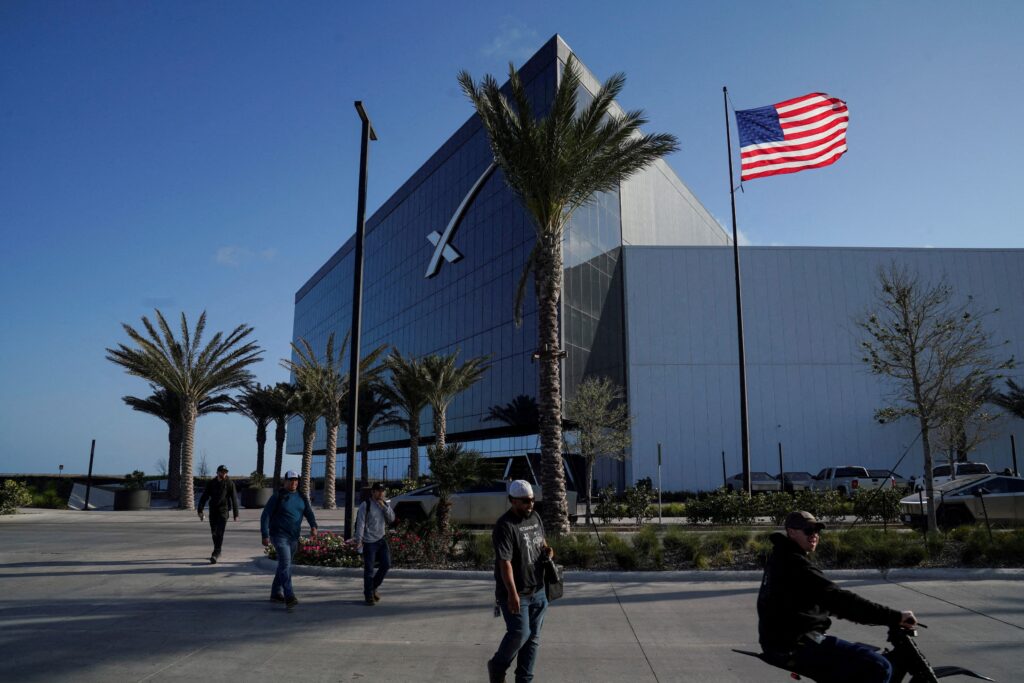
XAI Octagon Floating Rate & Alternative Income Trust Declares its Monthly Common Shares Distribution of $0.225 per Share | Weekly Voice
CHICAGO, April 01, 2026 (GLOBE NEWSWIRE) -- XAI Octagon Floating Rate & Alternative Income Trust (the "Trust") has declared its regular monthly distribution of $0.225 per common share on the Trust's common shares (NYSE: XFLT), payable on May 1, 2026, to common shareholders of record as of April 15, 2026, as noted below. With the new distribution amount of $0.225 per share, the Trust's annualized distribution rate on market price is 15.72%, and the annualized distribution rate on NAV is 12.11% as of market close on March 31, 2026, respectively.

Anthropic Executive Blames Claude Code Leak on 'Process Errors'
Anthropic PBC's accidental release of source code for its popular AI coding agent was the result of "process errors" related to the startup's fast product release cycle, according to a senior executive at the company. Paul Smith, Anthropic's chief commercial officer, said the leak was "absolutely not breaches or hacks," and the mistakes have been addressed. "They're part of the incredibly rapid release cycle that we've had around Claude Code," Smith said in an interview Wednesday. Anthropic takes the issue "incredibly seriously," he added, noting that the firm has "all the right people focused on addressing it." The unintended release marked Anthropic's second security slip-up in a matter of days, compromising approximately 1,900 files and 512,000 lines of code related to Claude Code. Last week, Fortune separately reported that Anthropic had been storing thousands of internal files on a publicly accessible system, including a draft blog post that detailed an upcoming model known internally as both "Mythos" and "Capybara." In a series of posts overnight on X, Claude Code creator Boris Cherny said Anthropic's "deploy process has a few manual steps, and we didn't do one of the steps correctly." He said the company has already "made a few improvements to the automation for next time," with plans for "a couple more on the way."

Latest Anthropic Miscue Puts AI and Cyber Firms at Odds
The tension between artificial intelligence developers and cybersecurity vendors is becoming increasingly apparent as new models show sudden leaps in capability - and Anthropic, for better or for worse, finds itself at the center of the drama. See Also: AI Impersonation Is the New Arms Race -- Is Your Workforce Ready? On Tuesday, the company accidentally leaked the source code for its agentic harness, which tells its Claude Code agents how to - and how not to - interact with other software. This was an embarrassing episode in which Anthropic erroneously included a source map file in a new version of the Claude Code npm package and, according to Claude Code creator Boris Cherny, "It was human error." "Our deploy process has a few manual steps, and we didn't do one of the steps correctly. We have landed a few improvements and are digging in to add more sanity checks," Cherny said in a late-Tuesday X post, adding that "more automation and Claude checking the results" should improve the process in future. But this data leak probably wasn't the most significant security-related incident in Anthropic's rather messy March, as it came just days after the firm's unwitting revelation of an upcoming model that supposedly has unprecedented bug-finding powers. Last Thursday, Fortune found an unpublished blog post in a data cache that Anthropic had left publicly exposed. The post detailed a new model that's codenamed either Mythos or Capybara - multiple archived versions of the text diverge on this detail - and that is apparently "far ahead of any other AI model in cyber capabilities," presaging "an upcoming wave of models that can exploit vulnerabilities in ways that far outpace the efforts of defenders." For that reason, Anthropic said, it would provide the first access to the model to "cyber defenders" within organizations, "giving them a head start in improving the robustness of their codebases against the impending wave of AI-driven exploits." The Mythos miscue prompted a quick and now-familiar reaction in the markets, briefly pummeling cybersecurity stocks including Palo Alto Networks and CrowdStrike on Friday. Much the same scenario played out at the end of February after Anthropic unveiled the vulnerability-scanning, patch-proposing Claude Code Security. Just as in that incident, the markets soon realized that their reaction was overblown. This is just a piece of what the big cybersecurity players provide, and the losses were largely reversed (see: After the Panic, the Reality of Claude Code Security). But the meat of Anthropic's message - that the newest AI models could be a boon for both defenders and attackers - could scarcely be more timely. As repeatedly demonstrated at last week's RSA Conference, cybersecurity professionals are deeply concerned about the risks being introduced by the technology, such as companies deploying AI agents that potentially undermine their security, and hackers using AI to enhance their capabilities. Alessandro Pignati, a security researcher at agentic governance company NeuralTrust, praised Anthropic's apparent decision to release Mythos/Capybara to the security community before regular users. "[They] have to think about it and not just release everything," he told ISMG on Tuesday. "It's not just a matter of safeguards because we know that safeguards can be bypassed sometimes." Anthropic research scientist Nicholas Carlini delved deeply into that subject in an early March talk at the [un]prompted security conference in San Francisco. In his address, Carlini revealed that he had used Claude to find multiple heap buffer overflow vulnerabilities in the venerable Linux kernel - with one dating all the way back to 2003. "Language models can autonomously and without fancy scaffolding find and exploit zero-day vulnerabilities in very important pieces of software," Carlini said at the conference. "This is not something that was true even, let's say, three or four months ago." AI models, he said, are "getting really, really good, really fast. And this means that the nice balance we had between attackers and defenders over the last 20 years or so seems like it's coming to an end. It really seems to me like the language models that we have now are probably the most significant thing to happen to security since we got the internet." The Anthropic security researcher said it's currently impossible to use his company's model to perform this kind of vulnerability scanning at large scale: "If I take a piece of software and I ask Claude to find a bunch of vulnerabilities and run it multiple times, it will probably find the same bug each time. Also it's not very thorough. It will review some of the code but not all of the code." However, he pointed out, this ability only became apparent in Claude Opus 4.5 and 4.6, released in the last couple months, and there's every reason to believe upcoming models will keep getting much better at finding vulnerabilities. "The rate of progress is very large, so you should expect that the best models can do this today [and] the average model you have on your laptop probably can do this in a year," Carlini said. "If we continue on this trend for even just another year, they'll probably be better vulnerability researchers than all of you and I don't know what that world looks like. It's quite scary to live in a world where you can automatically find bugs that previously only the top one or two people in the world could have found." In the long run, he added, defenders will probably win out as AI helps them to harden security. But until then, "things probably are very bad," and AI companies like Anthropic will need the security industry's ideas for how to better manage risky releases. "I do want to make sure people can't use these things for harm, and indeed Anthropic's models and OpenAI's models and DeepMind's models will generally refuse if you're very explicitly doing nasty things," Carlini said. "Clearly, they're going to need to get better if they're going to be able to refuse everything." It's hard to find the right balance for locking down models, he said, as overly weak safeguards will allow bad actors to jailbreak the model, while excessive safeguards will stop "good people" from getting the most out of it. "I think we're doing an OK job, but I think this is one of the areas where we need a lot more help to figure out how to do this better," Carlini said, appealing to his audience for ideas. But it's not enouh to trust the AI vendors to contain the cybersecurity spillover of their releases, warned NeuralTrust's Pignati, who favors more AI regulation - something that's unlikely in the U.S. anytime soon, certainly at the federal level. "Of course we cannot rely on the companies, because every time it's a matter of personal interests," he said.
SpaceX Files For Largest IPO In History: Here's What Prediction Markets Say About $1.75 Trillion Valuatio
* EchoStar shares are climbing with conviction. What's behind SATS gains? Prediction Markets Are Already Moving Polymarket's closing market cap contract prices a 51% chance SpaceX finishes its first trading day valued between $1.5 trillion and $2 trillion. Polymarket traders give a 28% chance that the IPO is complete by June 15, a 62% chance by June 30, and a 94% chance by the end of the year. Even straightforward IPOs take months to clear the SEC, and packaging rockets, satellites, defense contracts and a cash-burning AI lab into a single S-1 is anything but straightforward. What Traders Are Watching SpaceX would be the first of three potential mega-IPOs in 2026. OpenAI and Anthropic are both reportedly weighing offerings before year-end. Nasdaq recently announced rule changes that could allow SpaceX to join the Nasdaq 100 within 15 days of listing, triggering billions in forced buying from index-tracking funds. Tesla Inc (NASDAQ:TSLA) remains the most liquid Musk-adjacent trade. Photo: Thrive Studios ID via Shutterstock Market News and Data brought to you by Benzinga APIs To add Benzinga News as your preferred source on Google, click here.

SpaceX quietly files for big bang IPO
TAMPA, Fla. -- SpaceX has taken a key step toward going public after confidentially filing for a potentially record-breaking initial public offering, according to multiple reports citing people familiar with the matter, in what space leaders hope is a watershed moment for the industry. The move puts the company on track to raise as much as $75 billion in a June IPO that could target a valuation of more than $1.75 trillion, reported Bloomberg, which first covered the filing earlier today. SpaceX CEO Elon Musk has floated the idea of taking SpaceX public for more than a decade, often saying the company would wait until its Starship rocket and broader Mars colonization plans were more firmly underway. In the meantime, investors have gained limited access through private secondary share sales. The company has not commented on whether it submitted an IPO filing to the U.S. Securities and Exchange Commission via a confidential route, which would enable it to receive feedback from the regulator and revise disclosures before they are made public. Key details, including the number of shares to be sold and the expected price range, are typically revealed in subsequent filings. SpaceX is also reportedly exploring a dual-class share structure that would give Musk and other insiders outsized voting control. The company could allocate up to 30% of shares to retail investors, Bloomberg reported, citing a person familiar with the matter. Investor spotlight The filing marks a pivotal moment for a space sector that is increasingly attracting mainstream market investors, even as SpaceX's valuation raises questions about how much weight to place on future ambitions. SpaceX's core launch and Starlink broadband businesses generated $15 billion to $16 billion in annual revenue last year, Reuters reported in January, with profits reaching about $8 billion. Much of the company's projected value, however, is expected to be tied to bets that extend beyond established operations, such as plans to deploy up to a million orbital data centers to support surging artificial intelligence workloads. Despite significant technical and economic hurdles, orbital data centers are gaining traction across the industry, with two-year-old startup Starcloud recently raising $170 million from investors seeking exposure to this emerging market. "SpaceX is the most anticipated IPO in history," said satellite industry analyst Armand Musey. "However, there are lots of questions about valuation and how the current company can justify the price talk. It can't. At the end of the day, the IPO pricing is a bet on Elon Musk's and his team's ability to deliver new products and services that either don't exist or that we might not even foresee." Future opportunities While markets often price in future innovation, Musey said the extent to which SpaceX's valuation depends on unproven opportunities is unusual, even given its strong track record. "Data centers in space face many challenges, including the cost of space-hardened equipment, launch costs, the massive size of required solar arrays, and heat dissipation -- just to name a few," he added. "When you put these together, it's hard to see how space is a better place for data centers than on Earth. On the other hand, Musk has accomplished a lot of things people thought were impossible." For others, that track record supports a far more expansive view of SpaceX's long-term potential. "SpaceX's valuation is not based on its current business model, but rather what is possible in the future of space, including becoming an interplanetary species through Elon's vision of going to Mars," said Ross Carmel, partner at law firm Sichenzia Ross Ference Carmel. "When you take the most technologically advanced space company in SpaceX, coupled with the greatest visionary and entrepreneur of our generation in Elon, you cannot determine valuation based on today's metrics, but rather the potential of what SpaceX can be and accomplish in the near future in space, artificial intelligence, energy and critical minerals and resources."

SpaceX Files to Go Public, Setting Stage for Huge I.P.O.
SpaceX, Elon Musk's rocket and satellite maker, filed confidentially on Wednesday for an initial public offering, according to two people familiar with the company, setting the stage for what could be one of the largest offerings ever. The company had previously discussed moving forward with an offering around June, with Mr. Musk hoping to raise $50 billion or more from going public. SpaceX values itself at more than $1 trillion and would be one of the most valuable companies to reach the stock market, after Saudi Aramco's 2019 debut valued the energy giant at $1.7 trillion. Aramco ultimately raised more than $29 billion from its offering. A SpaceX offering could signal a wave of enormous I.P.O.s, with the artificial intelligence companies OpenAI and Anthropic also exploring the possibility of going public. SpaceX's offering would be a generational moneymaking event for Wall Street, the company's employees and, of course, Mr. Musk, who is already one of the world's richest men and could become the first trillionaire. Mr. Musk, 54, who also runs the electric carmaker Tesla and other companies, did not respond to a request for comment. A SpaceX spokesman did not respond to a request for comment. Bloomberg earlier reported the filing. SpaceX, which Mr. Musk founded in 2002 with the goal of sending people to Mars, has grown into one of the world's leading space companies. From the beginning, Mr. Musk has said SpaceX's ultimate mission is to make humans a multiplanetary species, ensuring that life would thrive if something happened to Earth. Since then, SpaceX has launched rockets into space and established a popular satellite internet service, Starlink. The company's customers include the federal government, the Ukrainian military and many others. In the United States, SpaceX accounts for five of every six launches into space, according to Georgetown University's Center for Security and Emerging Technology. In February, Mr. Musk merged SpaceX with xAI, his A.I. company. The SpaceX umbrella now encompasses Starship, a self-landing rocket meant for Mars; Starlink; Grok, xAI's chatbot; and X, the social network formerly known as Twitter. Money raised from a public offering would most likely help SpaceX finance its long-term goals of launching artificial intelligence data centers into orbit, creating a colony on the moon and getting humans to Mars. These are expensive and unproven endeavors that may take years and billions of dollars to achieve. A confidential filing means that the financials of the company are not disclosed until later. In June, Mr. Musk posted on social media that he expected SpaceX's revenue to reach $15.5 billion in 2025, with about $1.1 billion of that coming from NASA. Total revenue would be up from $7.4 billion in 2023, according to documents obtained by The New York Times. Starlink alone generated $8 billion in sales in 2024, according to the documents. A public offering would be a major boon for SpaceX's executives, employees and investors, some of whom took a risk in supporting Mr. Musk's goals and have waited for more than two decades to cash in on their shares. Mr. Musk also stands to benefit. Much of his $823 billion net worth, according to Forbes, is from his stake in the rocket company, which stood at around 44 percent in 2022. If SpaceX's valuation increases in public trading, he could become the world's first person with a 13-figure net worth. Mr. Musk has shown a distrust of public markets in the past. In 2018, he posted on social media that he had arranged the funding to take Tesla private, even when he hadn't. In 2022, he bought Twitter and took it private. An I.P.O. would require Mr. Musk to disclose more information about SpaceX to investors and push him to fulfill his promises about the company. Over the years, he has been overly optimistic on how long it would take to get his rockets to Mars. He has set a similarly hopeful timeline of getting data centers into space, which currently is an unproven concept. In a recent memo to employees, Mr. Musk said orbital data centers would be the cheapest way to satisfy A.I. computational needs "within two to three years." He has also talked up a theory of "sustainable abundance," in which his companies, working with one another, will create A.I. and robot products that help end poverty and strife, while making human work obsolete. Ryan Mac covers corporate accountability across the global technology industry.
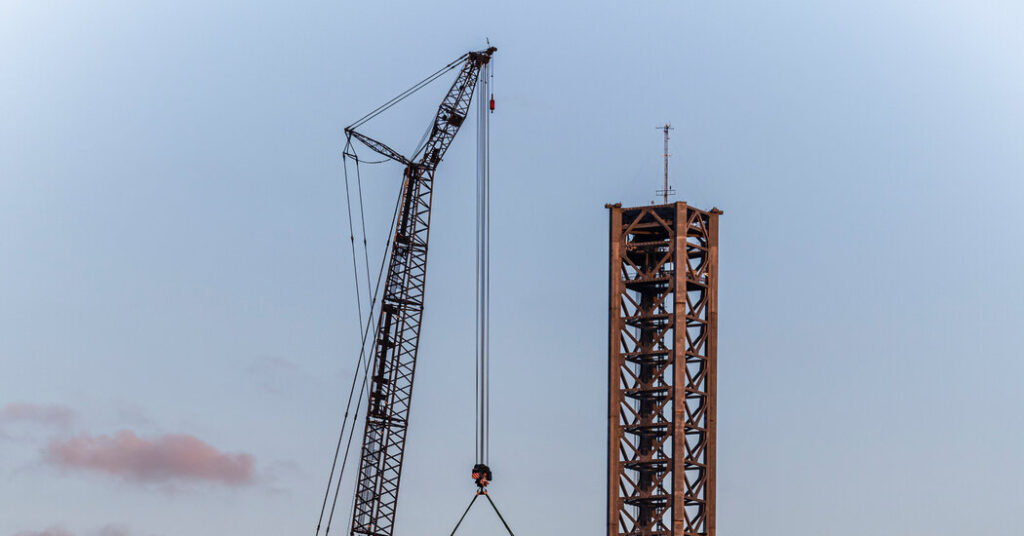
SpaceX IPO buzz lifts aerospace shares on spillover bets | News.az
Shares of several companies linked to the space economy rose sharply, reflecting optimism that SpaceX's long-expected IPO could unlock new growth and attract fresh capital into the industry , News.Az reports, citing Reuters. Companies such as Rocket Lab, Planet Labs and Intuitive Machines recorded notable gains, alongside suppliers like Howmet Aerospace and communications firms including EchoStar. The surge highlights a typical "halo effect," where excitement around a major IPO lifts valuations across the broader ecosystem. Investors often interpret such landmark listings as a signal of long-term sector viability and expansion. Retail investor enthusiasm builds Part of the optimism is tied to expectations that SpaceX could allocate a significant portion of its IPO shares to retail investors. Reports suggest that up to 30% of shares may be made available to individual investors, far above the usual allocation levels. Analysts say this could fuel strong early demand and potentially lead to a sharp rise in the stock price when trading begins. Favorable timing for the space sector The rally also coincides with renewed momentum in the space industry. Falling launch costs, expanding satellite networks and increased government demand for space capabilities have strengthened investor confidence. Major developments such as NASA's Artemis II mission and new contracts awarded to private space firms are reinforcing the perception that the sector is entering a new phase of growth. Caution over long-term returns Despite the enthusiasm, some analysts urge caution. Because SpaceX has remained private for an extended period, much of its value growth may already have been captured by early investors. This raises questions about how much upside remains for public market participants once the company goes public. A pivotal moment for the IPO market SpaceX's planned listing is widely seen as a potential turning point for global equity markets, particularly for large-scale technology and infrastructure IPOs. If successful, the offering could revive investor appetite for high-growth, capital-intensive sectors such as aerospace, defense and artificial intelligence, which have faced mixed sentiment in recent years. Outlook The buzz around SpaceX's IPO underscores the growing strategic importance of the space industry. While the immediate market reaction has been positive, the long-term impact will depend on how the company performs post-listing and whether broader sector optimism translates into sustained growth.
SpaceX Sets Stage for Groundbreaking IPO: Could Propel Elon Musk to Trillionaire Status - Internewscast Journal
NEW YORK -- In a move that could set the stage for the largest initial public offering in history, Elon Musk's SpaceX has reportedly taken the first steps toward going public. Sources with knowledge of the situation revealed that preliminary documents have been filed, a development that might propel Musk to become the world's first trillionaire. The anticipated SpaceX IPO is poised to be a major event on Wall Street, attracting a lineup of investment banks eager to assist in raising potentially tens of billions of dollars. These funds would support Musk's lofty ambitions, including establishing a lunar base, launching massive orbital data centers, and possibly venturing to Mars in the future. These insights were shared by sources who requested anonymity due to the confidential nature of the registration with the Securities and Exchange Commission (SEC). SpaceX has yet to provide a comment regarding these developments. While the exact amount SpaceX intends to raise remains under wraps, reports suggest it could reach as high as $75 billion. If realized, this would far surpass the $29 billion raised by Saudi Aramco during its 2019 IPO. Projected to occur possibly by June, the IPO could value SpaceX at $1.5 trillion. This valuation would be nearly double what the company was estimated to be worth in December, following an acquisition that expanded its scope, according to data from the research firm Pitchbook. Musk owns 42% of SpaceX now, according to Pitchbook, though that figure will change with the IPO when new owners are issued shares. In any case, he is likely to pierce the trillion-dollar mark because he is already close, with a net worth estimated by Forbes magazine at $823 million. In addition to making reusable rockets to hurl astronauts and hardware into orbit, SpaceX owns Starlink, the world's largest satellite communications company. The company also recently brought under its roof two other Musk businesses, social media platform X, formerly Twitter, and artificial intelligence business, xAI, in a controversial transaction because both the seller and the buyer were controlled by him. SpaceX has become the biggest commercial launch company in its industry, responsible for sending payloads into orbit for customers across the globe, but has also benefited from big taxpayer spending. That has raised conflicts of interest issues given that Musk was the biggest donor to President Donald Trump's campaign and is still a big backer. In the past five years, SpaceX won $6 billion in contracts from NASA, the Defense Department and other U.S. government agencies, according to USAspending.gov. Among current SpaceX owners is Donald Trump Jr, the president's oldest son. He owns shares through 1789 Capital. That venture capital firm made him a partner shortly after his father won the presidency for a second time and has been buying up federal contractors seeking to win taxpayer money ever since. The White House and Trump himself have repeatedly denied there are any conflicts of interest between his role as president and his family's businesses.
Anthropic Can't Cover Up Its Claude Code Leak Fast Enough
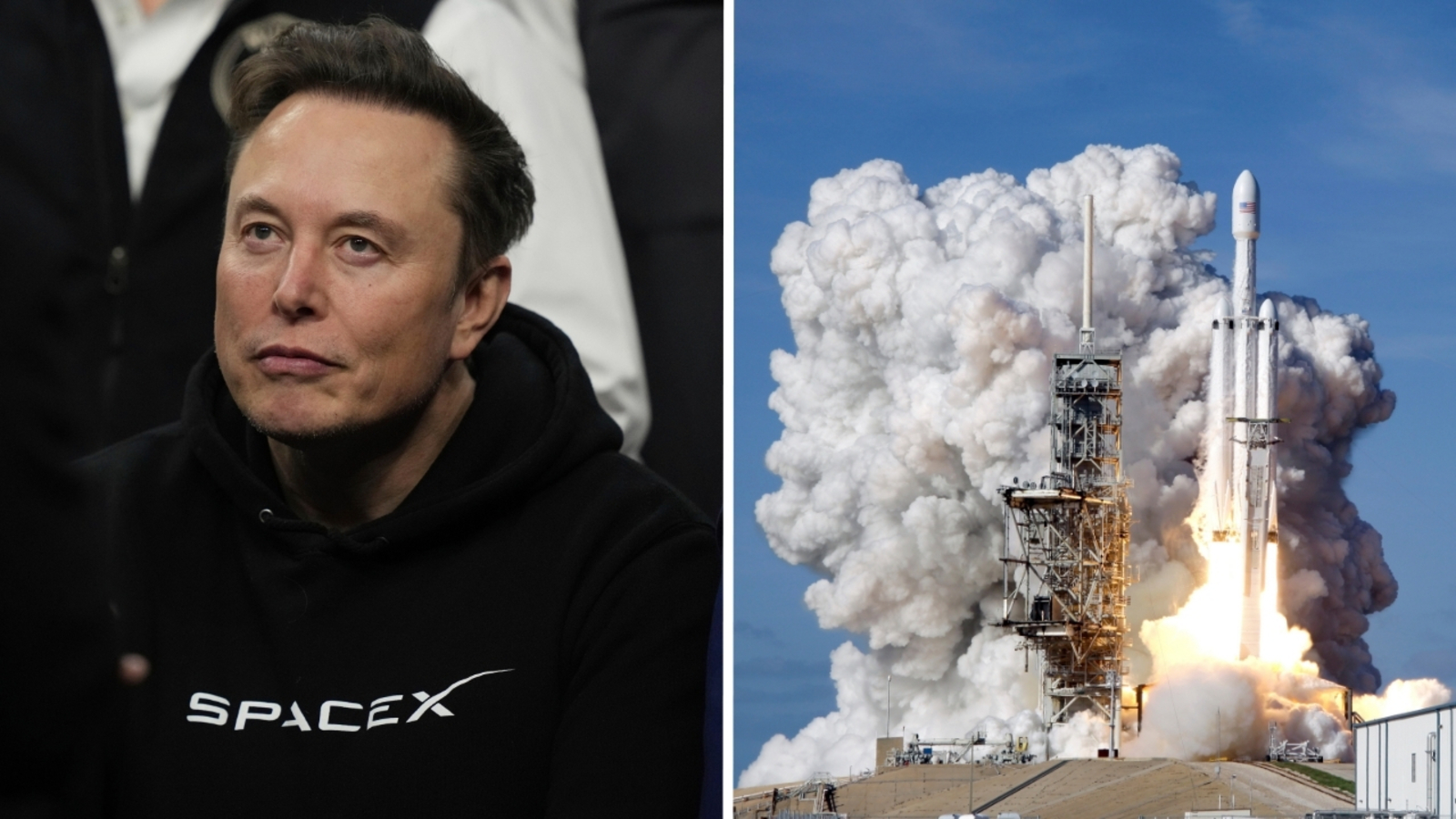
Most companies are extremely protective of their planned product releases, using internal code names and requiring journalists to agree to embargoes before revealing details. Anthropic has inadvertently chosen a new strategy: have all of your plans leak due to basic security missteps with zero control over when and how they're made public. On Tuesday, source code from Claude Code, Anthropic's popular AI coding assistant, was discovered in a publicly accessible database. In it, in addition to details on how Claude Code handles API requests and tokens, were details for features that have yet to be announced by Anthropic. That included a “Tamagotchi†style virtual pet, as Gizmodo reported. It also contained details on an always-on version of the AI agent, according to a report from The Information. Named Kairos, the apparent planned persistent agent would operate in the background 24/7, autonomously operating on behalf of the userâ€"basically making Claude into something closer to the ever-popular, open-source OpenClaw AI agent. In addition to acting proactively on behalf of a user, Kairos apparently has a feature called "autoDream" that consolidates and updates its internal memories overnight. The reveal has the AI-obsessed online crowd pretty excited, but Anthropic seems significantly less thrilled about the whole situation despite the fanfare. According to a report from the Wall Street Journal, the offices at the AI firm are in a total uproar as they scramble to cover up what was revealed by the leak. The company has reportedly used copyright takedown requests to remove more than 8,000 copies of the Claude Code source code, which had been published and forked ad infinitum on GitHub. Anthropic is also apparently trying to work quickly to plug security holes. While the company insisted that the recent leak was the result of human error and not a breach of any kind, the Journal pointed out that the source code gives hackers and malicious actors the ability to probe and prod for potential exploits with a new level of access. There's also the fact that the AI space is a copycat business right now, and the leak gives Anthropic's competitors a much clearer look at Claude Code's operation, making it easier to potentially copy some of its functionality without the need to try to reverse engineer the underlying code. Anthropic's training models and weights remain their own, so its secret sauce is still under lock and key, but its blueprints being made public does present the possibility that its competitors try to beat it to the punch. It's been suggested that the slew of leaks out of Anthropic latelyâ€"last month, the company's plans for a new model called Mythos were discovered in a publicly accessible databaseâ€"could be in some way strategic. Anthropic is reportedly eyeing an initial public offering later this year, and revealing what it has in the pipeline might generate more interest from prospective investors. But the sense of panic that seems to be coming from Anthropic in the wake of this latest leak suggests the company would really rather this information not be public. At least, not yet.

SpaceX Quietly Files for IPO. Here's What It Could Do to Elon Musk's Fortune
SpaceX has taken its first formal step toward going public. A recent report revealed that the Elon Musk rocket company, SpaceX, has confidentially filed for an initial public offering. If completed, this would become the largest IPO in U.S. history. Under rules from the US Securities and Exchange Commission, SpaceX would have to release a public filing at least 15 days before an IPO road show. According to a report from Bloomberg, SpaceX has already submitted a draft registration statement to the SEC, a step that would put the company on track for a potential June listing. The company is reportedly seeking a valuation north of $1.75 trillion, a figure that would top every IPO on record and would make founder Elon Musk, already the world's richest man, into a trillionaire, as noted by The Associated Press

SpaceX files initial paperwork to sell shares to the public and likely make Musk a trillionaire - The Boston Globe
The sources spoke on condition of anonymity because they were not authorized to talk publicly about the confidential registration with the Securities and Exchange Commission. SpaceX did not respond immediately to a request for comment. Exactly how much SpaceX plans to raise has not been disclosed but the figure is reportedly as much as $75 billion. At that level, the offering would easily eclipse the $29 billion that Saudi Aramco raised in its 2019 IPO. The offering, coming possibly in June, could value all the shares of SpaceX at $1.5 trillion, nearly double what the company was valued in December when some minority owners sold their stakes, according to research firm Pitchbook, before an acquisition that increased its size. Musk owns 42 percent of the SpaceX now, according to Pitchbook, though that figure will change with the IPO when new owners are issued shares. In any case, he is likely to pierce the trillion dollar mark because he is already close, with a net worth estimated by Forbes magazine at $823 million. In addition to making reusable rockets to hurl astronauts and hardware into orbit, SpaceX owns Starlink, the world's largest satellite communications company. The company also recently brought under its roof two other Musk businesses, social media platform X, formerly Twitter, and artificial intelligence business, xAI, in a controversial transaction because both the seller and the buyer were controlled by him. SpaceX has become the biggest commercial launch company in its industry, responsible for sending payloads into orbit for customers across the globe, but has also benefited from big taxpayer spending. That has raised conflicts of interest issues given that Musk was the biggest donor to President Donald Trump's campaign and is still a big backer. In the past five years, SpaceX won $6 billion in contracts from NASA, the Defense Department and other US government agencies, according to USAspending.gov. Among current SpaceX owners is Donald Trump Jr, the president's oldest son. He owns a shares through 1789 Capital. That venture capital firm made him a partner shortly after his father won the presidency for a second time and has been buying up federal contractors seeking to win taxpayer money ever since.

California rocket launch today. When, where to see SpaceX Falcon 9
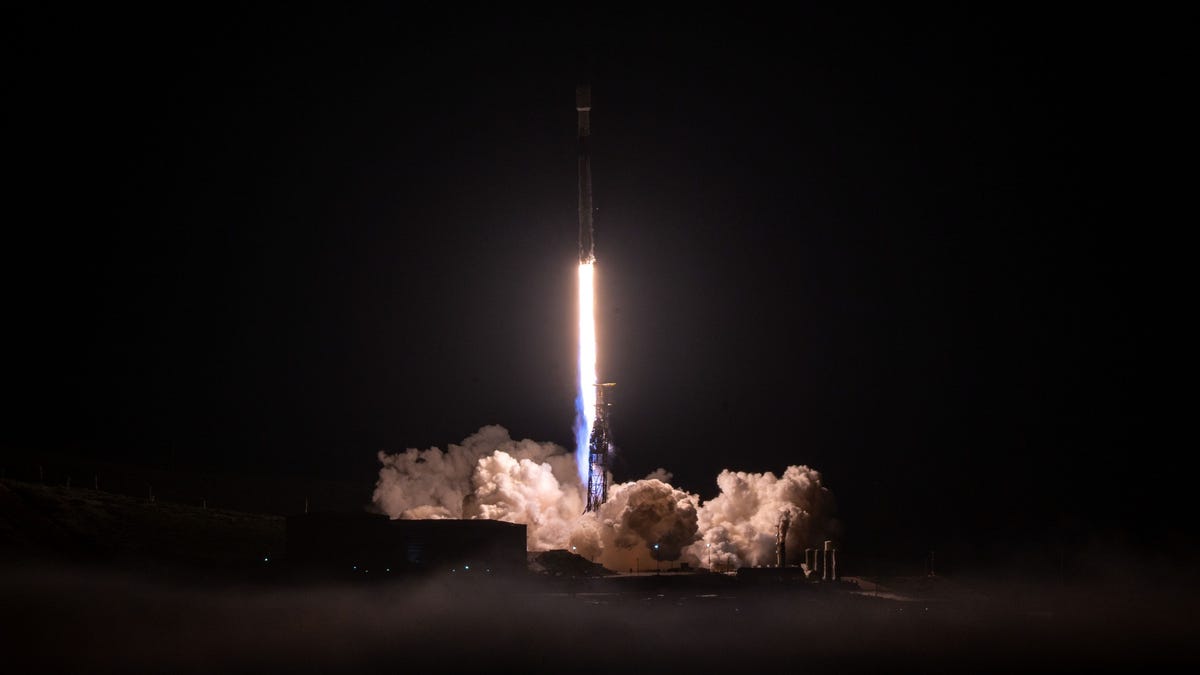
SpaceX is planning its first rocket launch of April from California's Vandenberg Space Force Base. A whopping eight rocket launches took place in March from California, all but one of which was conducted by SpaceX. Now, the commercial spaceflight company is planning its first mission of April from the Vandenberg Space Force Base in Santa Barbara County. And you may be unsurprised to learn that once again, SpaceX's Falcon 9 will be lifting off to deploy the company's Starlink broadband internet satellites. If you're hoping to catch a sight of the 230-foot rocket as it thunders into the sky, plenty of places near and far from the launch site are popular among spectators. Just keep in mind that postponements due to weather or issues with rockets are common with spaceflight. Check back with the VC Star for any updates on the impending launch. In the meantime, here's what to know about the upcoming SpaceX rocket launch from Vandenberg in Santa Barbara County, as well as where to watch it. Is there a rocket launch today? Next mission from Vandenberg in California SpaceX is working toward a Thursday, April 2 launch from Southern California, with a four-hour launch window opening at 4:03 p.m. PT. A Federal Aviation Administration operations plan advisory suggests a backup opportunity is available the next day if the launch were to be postponed. Where is the next launch from California? What to know about trajectory The launch will take place from Space Launch Complex 4-East (SLC-4E) at the Vandenberg Space Force Base in Santa Barbara County. As has become typical in 2026, the rocket will fly at a southern trajectory. What is launching from Vandenberg? SpaceX to deploy Starlink satellites SpaceX will launch its famous two-stage 230-foot Falcon 9 rocket, one of the world's most active, to deliver 25 Starlink satellites into low-Earth orbit, an altitude nearer Earth's atmosphere where they're able to circle the planet quickly. Where to watch California rocket launches in Santa Barbara County Because Vandenberg is an active military base, the launch complex does not host public viewings of launches. But if conditions are clear, rocket launches from the Vandenberg Space Force Base can be viewed from several locations as far as Santa Barbara and Los Angeles. Space Launch Schedule, a website dedicated to tracking upcoming rocket launches, provided a list of places in Santa Barbara County in California to catch the launch in person: * 13th Street and Arguello Boulevard, a public site with the closest views of SpaceX launches * Floradale Avenue and West Ocean Avenue, officially designated as the "viewing site for SLC-6" (space launch complex-6) * Renwick Avenue and West Ocean Avenue, another intersection close to the base where spectators can park * Santa Lucia Canyon Road and Victory Road, provides a partial view of Complex 4. The city of Lompoc in Santa Barbara County is filled with places to catch a rocket launch. The city's tourism bureau, Explore Lompoc, maintains this list with additional viewing locations: * Ocean Park, 6851 Ocean Park Road, Lompoc, which, while it doesn't have a view of the launch pad itself, is located only four miles from the launch site and provides a good vantage to see rockets get off the ground. Parking is limited, and law enforcement will close the road to the beach once parking is full. * Allan Hancock College, 1 Hancock Drive, Lompoc, a community college located nine miles from the launch site where the launch pad and rocket's tip can be seen before liftoff. * Riverbend Park, N A Street and McLaughlin Road, Lompoc, located within 10 miles of the launch site, is filled with large fields for activities or for spectators to set up chairs. * Surf Beach on Ocean Avenue, one of the closest and most popular places to watch rocket launches near Lompoc, as long as it's open and accessible. But a word of caution: There is an active train track, the Amtrak Surf Station, that visitors must cross. While trains don't run during launch windows, the vehicles could start up again with little warning if a liftoff is scrubbed. Where to watch California rocket launches in Ventura County Visit Ventura, the tourism bureau in Ventura County, provided a list to the USA TODAY Network of suggested locations to see a rocket launch from the county: * Ventura Pier, 750 E. Harbor Blvd, is known as the oldest pier in all of California. * Emma Wood State Beach, located on the Santa Barbara Channel south of U.S. 101. * Serra Cross Park at Grant Park, located just above San Buenaventura City Hall, 501 Poli St., Ventura, offers a panoramic seascape view. * San Buenaventura State Beach, 901 San Pedro St., Ventura, located adjacent to the Ventura Pier. * Cemetery Memorial Park, Main Street and South Crimea Street, Ventura Where to watch California rocket launches in San Luis Obispo County SLO CAL, a countywide destination marketing and management organization, maintains a list of its recommended best locations to watch a rocket launch in San Luis Obispo County to the north of the launch site: * Avila Beach, located off U.S. 101, has a variety of restaurants and shops for those looking to make a day of their rocket-viewing plans. * Pismo Beach, a city with a vibrant downtown stretch located just 38 miles away from Vandenberg * Shell Beach, a neighborhood in Pismo Beach that is home to several parks, including Eldwayen Ocean Park and Margo Dodd Park, both on Ocean Boulevard; and Dinosaur Caves Park (2701 Price St.) that are mostly dog-friendly and open to the public * Oceano Dunes, the closest place to view launches from the county with open spaces along the ocean allowing full visibility of the sky * Morro Strand State Beach, a three-mile stretch between the coastal city Morro Bay and the town of Cayucos. Cayucos' south-facing beaches should have great views of Vandenberg. Other cities in California where rockets may be visible Other cities in California where you might glimpse the Falcon 9 rocket soaring overhead - particularly after sunset and before sunrise - as it climbs into the sky on a southern trajectory include: * Long Beach, a city popular with tourists known for its waterfront attractions, located about 180 south of the launch site along the southern coast of California * Lake Forest, located about 200 miles south of the launch site along the southern coast of California * San Diego, located about 280 miles south of the launch site along the southern coast of California * Merced, located more than 200 miles north of Vandenberg in the San Joaquin Valley Will there be sonic booms? Residents of Santa Barbara County, San Luis Obispo County and Ventura County often stand to be the most likely to hear sonic booms, SpaceX said. The sonic booms - brief, thunder-like noises that are often heard from the ground when a spacecraft or aircraft travels faster than the speed of sound - could last for up to 10 minutes after liftoff, Vandenberg has added. "Areas local to Vandenberg Space Force Base will hear the initial low rumble of take-off," Vandenberg has also said. What to know about booster re-entry Following the launch, the Falcon 9 rocket's booster will aim to land on a SpaceX drone ship, nicknamed "Of Course I Still Love You," in the Pacific Ocean. This allows for SpaceX personnel to recover the booster so it can be reused in future spaceflights. Does Elon Musk own SpaceX? What to know about rocket company SpaceX is the commercial spaceflight company that billionaire Elon Musk, the world's richest man, founded in 2002 and leads as the CEO. SpaceX is headquartered at Starbase in South Texas near the U.S.-Mexico border. The site, which is where SpaceX has been conducting routine flight tests of its 400-foot megarocket known as Starship, was recently voted by residents to become its own city. As a major government contractor, SpaceX serves as the launch service provider for a variety of government missions both civil and military. For the Department of Defense, SpaceX's Falcon 9 helps launch classified satellites and other payloads into space. And for NASA, Falcon 9 most often helps propel astronauts to the International Space Station on SpaceX's Dragon crew capsule - the only U.S vehicle capable of carrying NASA astronauts to orbit. What is Starlink? Starlink is SpaceX's internet satellite business. With more than 10,000 satellites in its growing orbital constellation, Starlink has become a lucrative part of Musk's business empire, serving millions of customers around the world. SpaceX, which bills itself as the only satellite internet provider with its own reusable rocket capable of deploying the technology, has spent years delivering the satellites to orbit with a regular cadence of rocket launches from Florida and California. Starlink satellites operate from low-Earth orbit, about 341 miles up, which is much closer to Earth's atmosphere than other satellites. That not only allows Starlink satellites to offer high connection speeds than satellites further out in space, but to reach rural areas and regions where internet service is not readily accessible. What is the Vandenberg Space Force Base in California? The Vandenberg Space Force Base is a rocket launch site in Santa Barbara County in Southern California. Established in 1941, the site was previously known as the Vandenberg Air Force Base. Though it's a military base, the site also hosts both civil and commercial space launches for entities like NASA and SpaceX. Space Launch Delta 30, a unit of Space Force, is responsible for managing the launch operations at Vandenberg, as well as the missile tests that take place at the base. Eric Lagatta is the Space Connect reporter for the USA TODAY Network. Reach him at [email protected]
California rocket launch today. When, where to see SpaceX Falcon 9
SpaceX is planning its first rocket launch of April from California's Vandenberg Space Force Base. A whopping eight rocket launches took place in March from California, all but one of which was conducted by SpaceX. Now, the commercial spaceflight company is planning its first mission of April from the Vandenberg Space Force Base in Santa Barbara County. And you may be unsurprised to learn that once again, SpaceX's Falcon 9 will be lifting off to deploy the company's Starlink broadband internet satellites. If you're hoping to catch a sight of the 230-foot rocket as it thunders into the sky, plenty of places near and far from the launch site are popular among spectators. Just keep in mind that postponements due to weather or issues with rockets are common with spaceflight. Check back with the VC Star for any updates on the impending launch. In the meantime, here's what to know about the upcoming SpaceX rocket launch from Vandenberg in Santa Barbara County, as well as where to watch it. Is there a rocket launch today? Next mission from Vandenberg in California SpaceX is working toward a Thursday, April 2 launch from Southern California, with a four-hour launch window opening at 4:03 p.m. PT. A Federal Aviation Administration operations plan advisory suggests a backup opportunity is available the next day if the launch were to be postponed. Where is the next launch from California? What to know about trajectory The launch will take place from Space Launch Complex 4-East (SLC-4E) at the Vandenberg Space Force Base in Santa Barbara County. As has become typical in 2026, the rocket will fly at a southern trajectory. What is launching from Vandenberg? SpaceX to deploy Starlink satellites SpaceX will launch its famous two-stage 230-foot Falcon 9 rocket, one of the world's most active, to deliver 25 Starlink satellites into low-Earth orbit, an altitude nearer Earth's atmosphere where they're able to circle the planet quickly. Where to watch California rocket launches in Santa Barbara County Because Vandenberg is an active military base, the launch complex does not host public viewings of launches. But if conditions are clear, rocket launches from the Vandenberg Space Force Base can be viewed from several locations as far as Santa Barbara and Los Angeles. Space Launch Schedule, a website dedicated to tracking upcoming rocket launches, provided a list of places in Santa Barbara County in California to catch the launch in person: * 13th Street and Arguello Boulevard, a public site with the closest views of SpaceX launches * Floradale Avenue and West Ocean Avenue, officially designated as the "viewing site for SLC-6" (space launch complex-6) * Renwick Avenue and West Ocean Avenue, another intersection close to the base where spectators can park * Santa Lucia Canyon Road and Victory Road, provides a partial view of Complex 4. The city of Lompoc in Santa Barbara County is filled with places to catch a rocket launch. The city's tourism bureau, Explore Lompoc, maintains this list with additional viewing locations: * Ocean Park, 6851 Ocean Park Road, Lompoc, which, while it doesn't have a view of the launch pad itself, is located only four miles from the launch site and provides a good vantage to see rockets get off the ground. Parking is limited, and law enforcement will close the road to the beach once parking is full. * Allan Hancock College, 1 Hancock Drive, Lompoc, a community college located nine miles from the launch site where the launch pad and rocket's tip can be seen before liftoff. * Riverbend Park, N A Street and McLaughlin Road, Lompoc, located within 10 miles of the launch site, is filled with large fields for activities or for spectators to set up chairs. * Surf Beach on Ocean Avenue, one of the closest and most popular places to watch rocket launches near Lompoc, as long as it's open and accessible. But a word of caution: There is an active train track, the Amtrak Surf Station, that visitors must cross. While trains don't run during launch windows, the vehicles could start up again with little warning if a liftoff is scrubbed. Where to watch California rocket launches in Ventura County Visit Ventura, the tourism bureau in Ventura County, provided a list to the USA TODAY Network of suggested locations to see a rocket launch from the county: * Ventura Pier, 750 E. Harbor Blvd, is known as the oldest pier in all of California. * Emma Wood State Beach, located on the Santa Barbara Channel south of U.S. 101. * Serra Cross Park at Grant Park, located just above San Buenaventura City Hall, 501 Poli St., Ventura, offers a panoramic seascape view. * San Buenaventura State Beach, 901 San Pedro St., Ventura, located adjacent to the Ventura Pier. * Cemetery Memorial Park, Main Street and South Crimea Street, Ventura Where to watch California rocket launches in San Luis Obispo County SLO CAL, a countywide destination marketing and management organization, maintains a list of its recommended best locations to watch a rocket launch in San Luis Obispo County to the north of the launch site: * Avila Beach, located off U.S. 101, has a variety of restaurants and shops for those looking to make a day of their rocket-viewing plans. * Pismo Beach, a city with a vibrant downtown stretch located just 38 miles away from Vandenberg * Shell Beach, a neighborhood in Pismo Beach that is home to several parks, including Eldwayen Ocean Park and Margo Dodd Park, both on Ocean Boulevard; and Dinosaur Caves Park (2701 Price St.) that are mostly dog-friendly and open to the public * Oceano Dunes, the closest place to view launches from the county with open spaces along the ocean allowing full visibility of the sky * Morro Strand State Beach, a three-mile stretch between the coastal city Morro Bay and the town of Cayucos. Cayucos' south-facing beaches should have great views of Vandenberg. Other cities in California where rockets may be visible Other cities in California where you might glimpse the Falcon 9 rocket soaring overhead - particularly after sunset and before sunrise - as it climbs into the sky on a southern trajectory include: * Long Beach, a city popular with tourists known for its waterfront attractions, located about 180 south of the launch site along the southern coast of California * Lake Forest, located about 200 miles south of the launch site along the southern coast of California * San Diego, located about 280 miles south of the launch site along the southern coast of California * Merced, located more than 200 miles north of Vandenberg in the San Joaquin Valley Will there be sonic booms? Residents of Santa Barbara County, San Luis Obispo County and Ventura County often stand to be the most likely to hear sonic booms, SpaceX said. The sonic booms - brief, thunder-like noises that are often heard from the ground when a spacecraft or aircraft travels faster than the speed of sound - could last for up to 10 minutes after liftoff, Vandenberg has added. "Areas local to Vandenberg Space Force Base will hear the initial low rumble of take-off," Vandenberg has also said. What to know about booster re-entry Following the launch, the Falcon 9 rocket's booster will aim to land on a SpaceX drone ship, nicknamed "Of Course I Still Love You," in the Pacific Ocean. This allows for SpaceX personnel to recover the booster so it can be reused in future spaceflights. Does Elon Musk own SpaceX? What to know about rocket company SpaceX is the commercial spaceflight company that billionaire Elon Musk, the world's richest man, founded in 2002 and leads as the CEO. SpaceX is headquartered at Starbase in South Texas near the U.S.-Mexico border. The site, which is where SpaceX has been conducting routine flight tests of its 400-foot megarocket known as Starship, was recently voted by residents to become its own city. As a major government contractor, SpaceX serves as the launch service provider for a variety of government missions both civil and military. For the Department of Defense, SpaceX's Falcon 9 helps launch classified satellites and other payloads into space. And for NASA, Falcon 9 most often helps propel astronauts to the International Space Station on SpaceX's Dragon crew capsule - the only U.S vehicle capable of carrying NASA astronauts to orbit. What is Starlink? Starlink is SpaceX's internet satellite business. With more than 10,000 satellites in its growing orbital constellation, Starlink has become a lucrative part of Musk's business empire, serving millions of customers around the world. SpaceX, which bills itself as the only satellite internet provider with its own reusable rocket capable of deploying the technology, has spent years delivering the satellites to orbit with a regular cadence of rocket launches from Florida and California. Starlink satellites operate from low-Earth orbit, about 341 miles up, which is much closer to Earth's atmosphere than other satellites. That not only allows Starlink satellites to offer high connection speeds than satellites further out in space, but to reach rural areas and regions where internet service is not readily accessible. What is the Vandenberg Space Force Base in California? The Vandenberg Space Force Base is a rocket launch site in Santa Barbara County in Southern California. Established in 1941, the site was previously known as the Vandenberg Air Force Base. Though it's a military base, the site also hosts both civil and commercial space launches for entities like NASA and SpaceX. Space Launch Delta 30, a unit of Space Force, is responsible for managing the launch operations at Vandenberg, as well as the missile tests that take place at the base. Eric Lagatta is the Space Connect reporter for the USA TODAY Network. Reach him at [email protected]
Analysis:NASA's moon mission tests aerospace old guard as SpaceX, Blue Origin hover
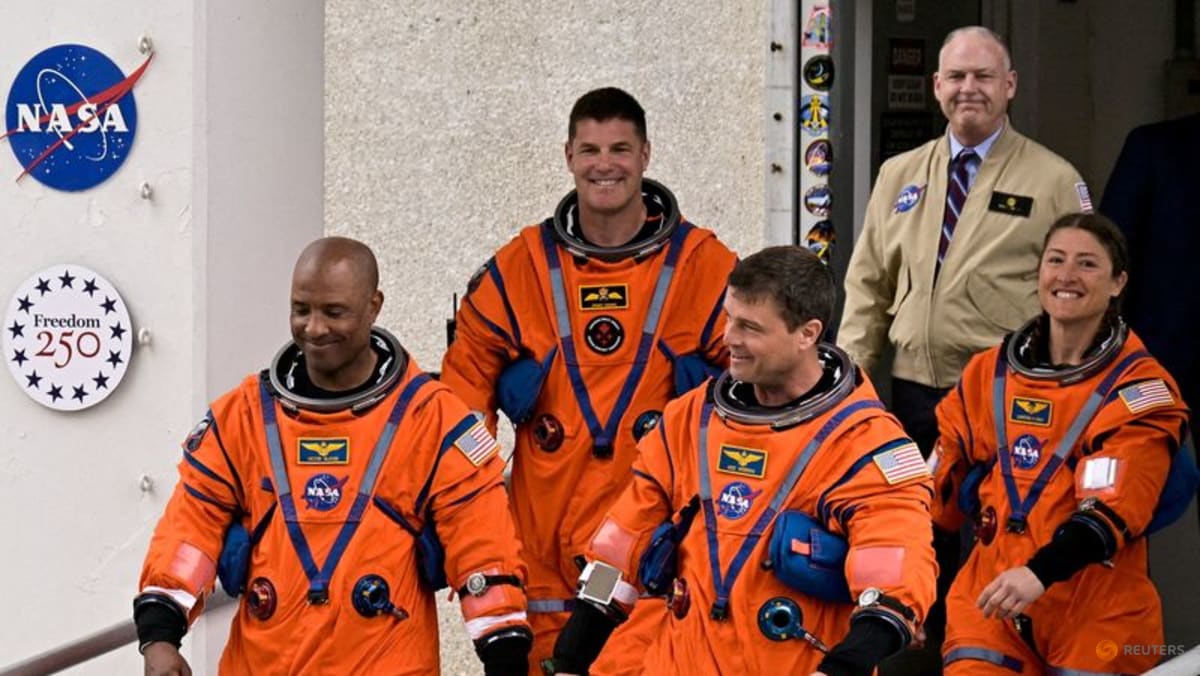
April 1 : NASA's Artemis II mission is shaping up to be more than just the next step in returning humans to the moon -- it is a key test of whether the agency's traditional contractor-built systems can remain viable in a rapidly shifting space industry. The mission, set to launch on Wednesday evening from the Kennedy Space Center in Florida, will send astronauts around the moon for the first time in over 50 years. It will be the first crewed flight of Boeing and Northrop Grumman's Space Launch System (SLS) rocket and Lockheed Martin's Orion capsule. While both systems have undergone years of development and uncrewed testing, with the rocket's more than $24 billion development beginning in 2010, Artemis II marks the moment when their reliability will be judged under the highest possible stakes: human flight. The outcome of Artemis II could reshape the political narrative around Orion as well as SLS, the world's most powerful active rocket, which has faced persistent criticism over delays, ballooning costs and a relatively slow launch rate. "The stakes are extremely high whenever there are astronauts on board," said Michael Leshock, equity research analyst at KeyBanc Capital Markets, adding that Artemis II represents "a critical validation moment" as NASA evaluates proven commercial options. COMMERCIAL RIVALS CHALLENGE SLS DOMINANCE A new wave of private rockets inspired by SpaceX's reusable Falcon 9 has challenged NASA's thinking with the expendable SLS, a reincarnation of decades-old, Shuttle-era tech as the industry has focused on reusability in more recent years. Commercial players like Elon Musk's SpaceX and Jeff Bezos' Blue Origin are already waiting in the wings. NASA chief Jared Isaacman announced last week that the agency intends to open the SLS mission - launching Artemis astronauts and cargo off Earth - to competitive bids from other companies for missions after Artemis V. That was one of many changes Isaacman has made to the Artemis program in recent weeks. He also cancelled plans to upgrade SLS with a more powerful upper stage meant for later Artemis missions, instead tapping United Launch Alliance - the joint rocket venture of Boeing and Lockheed - to use its less powerful Centaur upper stage. "If they (NASA) do include SpaceX or Blue Origin, it would give the U.S. more flexibility in who they partner with in the future, as SpaceX and Blue Origin are already part of Artemis; it's just how much larger a part they can play," said Andrew Chanin, CEO of ProcureAM, the issuer of the Procure Space exchange-traded fund. HIGH COSTS THREATEN SLS FUTURE Analysts say the SLS program is costly and is unlikely to be a viable long-term option for NASA to return to the moon on a regular, cost-effective cadence. That makes the high-profile Artemis II mission a critical validation point for the contractors behind the program, as newer, lower-cost rockets try to prove their own reliability. Each SLS launch is estimated to cost between $2 billion and $4 billion. By contrast, SpaceX's Starship and Blue Origin's New Glenn are far cheaper, though pricing could fluctuate by tens of millions of dollars depending on the mission complexity. NASA paid $18 million for an initial New Glenn flight in 2025, according to contracting data. Space station company Voyager paid $90 million for its planned Starship launch, according to a recent earnings report. NASA tried to impose SLS cost-reduction strategies in 2023, to little avail. Boeing and Northrop set up a joint venture at the time through which NASA would hand its ownership of the rocket to the companies, encouraging them to sell the rocket commercially. NASA has already begun incorporating commercial systems into its Artemis architecture, awarding SpaceX and Blue Origin central roles for each to develop lunar landers. Future missions could expand that reliance, raising questions about how long SLS will remain a cornerstone of the program. LEGACY PLAYERS HAVE POLITICAL BACKING Still, not everyone is ready to write off the legacy systems, with some analysts pointing to political staying power and a track record that commercial rivals have yet to match. "SLS still has a lot of congressional support, which makes it difficult to kill the program," said Austin Moeller, director of equity research at Canaccord Genuity. Starship has test-launched 11 times since 2023, but has not yet deployed payloads into orbit. SLS and Orion achieved a successful uncrewed test flight in 2022 around the moon and back. Supporters of SpaceX and the commercial-focused contracting culture it prefers have argued for SLS cancellation for years, with some attempts to do so failing. The Trump administration's budget proposal last year sought to end SLS after Artemis III, but Senate Appropriations Committee Chairman Ted Cruz, whose home state of Texas includes Boeing employees and SLS suppliers, swiftly countered with a bill that cemented the rocket's role in the program through Artemis V. "It could not have been a faster repudiation," said Casey Dreier, chief of space policy at the Planetary Society, a space policy nonprofit co-founded by famed astronomer Carl Sagan. While privately owned rockets have shown lower costs and greater innovation, he said, "the need to stick with SLS is political."
NASA's moon mission tests aerospace old guard as SpaceX, Blue Origin hover
This super composite rating is the result of a weighted average of the rankings based on the following ratings: Fundamentals (Composite), Global Valuation (Composite), EPS Revisions (1 year), and Visibility (Composite). We recommend that you carefully review the associated descriptions. This composite rating is the result of an average of the rankings based on the following ratings: Fundamentals (Composite), Valuation (Composite), Financial Estimates Revisions (Composite), Consensus (Composite), and Visibility (Composite). The company must be covered by at least 4 of these 5 ratings for the calculation to be performed. We recommend that you carefully review the associated descriptions.