News & Updates
The latest news and updates from companies in the WLTH portfolio.
Exclusive-SpaceX president Shotwell earned $85 million last year, document shows
NEW YORK, April 21 : SpaceX President Gwynne Shotwell earned $85.8 million in total compensation last year, a company prospectus showed, placing her among the highest‑paid U.S. executives. Shotwell, who is also chief operating officer, earned a salary of $1 million, with most of her compensation coming from stock options and awards, according to an excerpt of SpaceX's S‑1 filing. Companies use the registration document to disclose their finances and risks before going public. Elon Musk's SpaceX has filed confidentially for a U.S. IPO, Reuters reported this month, paving the way for a potential record‑breaking listing valued at around $1.75 trillion. Chief Financial Officer Bret Johnson earned total compensation of $9.8 million, while billionaire CEO Musk, the majority shareholder in SpaceX, paid himself a salary of $54,080, the excerpt from the prospectus showed. SpaceX did not immediately respond to a request for comment. The compensation figures, which have not been previously reported, place Shotwell's pay above many other high-profile tech executives. Microsoft CEO Satya Nadella earned $79 million in 2024, while Apple's Tim Cook took home $75 million, according to compensation data compiled by Equilar. Shotwell has a net worth of $3.4 billion, according to Forbes. Although Musk is the public face of SpaceX, 62‑year‑old Shotwell manages much of the company's day‑to‑day grind. That involves converting Musk's futuristic vision into the practical realities of manufacturing rockets, deploying satellites and lining up commercial, government and military customers. Shotwell joined SpaceX in 2002 as vice president of business development, becoming employee No. 7 at the then‑fledgling company. She has been a central behind‑the‑scenes figure in building demand for SpaceX's reusable Falcon 9 rocket, as well as its Starlink satellite broadband constellation, which now generates the bulk of the company's revenue and profit. A mechanical engineer by training, Shotwell began her career at Chrysler Motors before moving into the space industry.
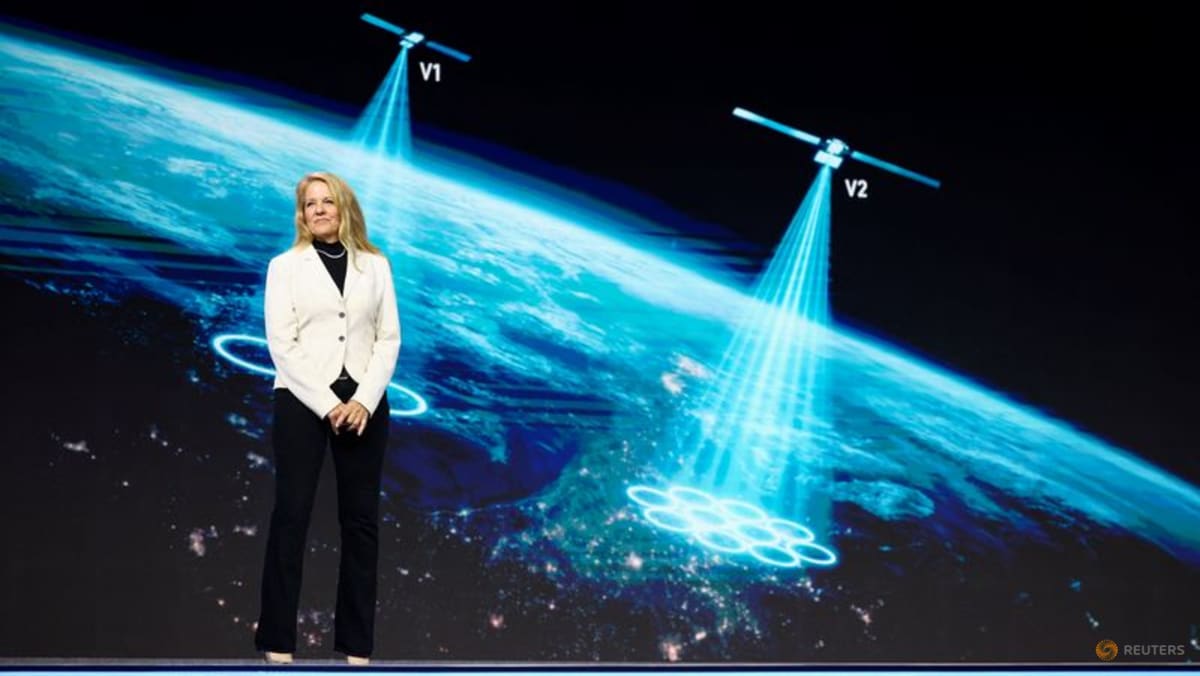
Musk took home $54,080 pay in 2025 while President Gwynne Shotwell earned $85.8 million at SpaceX
SpaceX President Gwynne Shotwell's total compensation reached $85.8 million last year, primarily from stock options, positioning her as one of the highest-paid U.S. executives. This figure surpasses that of other prominent tech leaders like Microsoft's Satya Nadella and Apple's Tim Cook. Shotwell, the company's COO, plays a crucial role in translating Elon Musk's vision into operational success for SpaceX. NEW YORK, - SpaceX President Gwynne Shotwell earned $85.8 million in total compensation last year, a company prospectus showed, placing her among the highest-paid U.S. executives. Shotwell, who is also chief operating officer, earned a salary of $1 million, with most of her compensation coming from stock options and awards, according to an excerpt of SpaceX's S-1 filing. Companies use the registration document to disclose their finances and risks before going public. Elon Musk's SpaceX has filed confidentially for a U.S. IPO, Reuters reported this month, paving the way for a potential record-breaking listing valued at around $1.75 trillion. Chief Financial Officer Bret Johnson earned total compensation of $9.8 million, while billionaire CEO Musk, the majority shareholder in SpaceX, paid himself a salary of $54,080, the excerpt from the prospectus showed. SpaceX did not immediately respond to a request for comment. The compensation figures, which have not been previously reported, place Shotwell's pay above many other high-profile tech executives. Microsoft CEO Satya Nadella earned $79 million in 2024, while Apple's Tim Cook took home $75 million, according to compensation data compiled by Equilar. Shotwell has a net worth of $3.4 billion, according to Forbes. Although Musk is the public face of SpaceX, 62-year-old Shotwell manages much of the company's day-to-day grind. That involves converting Musk's futuristic vision into the practical realities of manufacturing rockets, deploying satellites and lining up commercial, government and military customers. Shotwell joined SpaceX in 2002 as vice president of business development, becoming employee No. 7 at the then-fledgling company. She has been a central behind-the-scenes figure in building demand for SpaceX's reusable Falcon 9 rocket, as well as its Starlink satellite broadband constellation, which now generates the bulk of the company's revenue and profit. A mechanical engineer by training, Shotwell began her career at Chrysler Motors before moving into the space industry. (You can now subscribe to our Economic Times WhatsApp channel)
Exclusive-SpaceX president Shotwell earned $85 million last year, document shows
NEW YORK, April 21 (Reuters) - SpaceX President Gwynne Shotwell earned $85.8 million in total compensation last year, a company prospectus showed, placing her among the highest‑paid U.S. executives. Shotwell, who is also chief operating officer, earned a salary of $1 million, with most of her compensation coming from stock options and awards, according to an excerpt of SpaceX's S‑1 filing. Companies use the registration document to disclose their finances and risks before going public. Elon Musk's SpaceX has filed confidentially for a U.S. IPO, Reuters reported this month, paving the way for a potential record‑breaking listing valued at around $1.75 trillion. Chief Financial Officer Bret Johnson earned total compensation of $9.8 million, while billionaire CEO Musk, the majority shareholder in SpaceX, paid himself a salary of $54,080, the excerpt from the prospectus showed. SpaceX did not immediately respond to a request for comment. The compensation figures, which have not been previously reported, place Shotwell's pay above many other high-profile tech executives. Microsoft CEO Satya Nadella earned $79 million in 2024, while Apple's Tim Cook took home $75 million, according to compensation data compiled by Equilar. Shotwell has a net worth of $3.4 billion, according to Forbes. Although Musk is the public face of SpaceX, 62‑year‑old Shotwell manages much of the company's day‑to‑day grind. That involves converting Musk's futuristic vision into the practical realities of manufacturing rockets, deploying satellites and lining up commercial, government and military customers. Shotwell joined SpaceX in 2002 as vice president of business development, becoming employee No. 7 at the then‑fledgling company. She has been a central behind‑the‑scenes figure in building demand for SpaceX's reusable Falcon 9 rocket, as well as its Starlink satellite broadband constellation, which now generates the bulk of the company's revenue and profit. A mechanical engineer by training, Shotwell began her career at Chrysler Motors before moving into the space industry. (Reporting by Echo Wang; additional reporting by Chris Sanders; Writing by Joe Brock; Editing by Clarence Fernandez)
EasyJet issues dire three-week jet fuel shortage countdown as tourists brace for travel chaos
EasyJet has issued a dire three-week jet fuel shortage countdown - putting tourists on notice for travel chaos. One of the airline's regional chiefs has suggested it could be rocked by operational difficulties within just three weeks as the fallout from the Iran war threatens to spark mayhem for British travellers. Javier Gandara - EasyJet's country director for southern Europe - admitted to the Majorca Daily Bulletin that it is "difficult" to forecast the severity of the jet fuel crisis beyond "three or four weeks". The senior executive issued the warning on Monday, effetively starting a countdown to May for travel planning chaos. Mr Gandara added: "Everything [will be] affected because, ultimately, we are talking about a global market. "No one will be immune to potential supply problems. "All consumers will experience a significant impact on their income due to the increase in mortgage and rental prices, food, gasoline, and so on. "What will be the net effect of both? It's difficult to predict." Despite the uncertainty, easyJet CEO Kenton Jarvis urged tourists to book flights "as early as possible" to get ahead of future price hikes if the cost of jet fuel continues to skyrocket. The issue of jet fuel availability for the summer season is believed to be causing mounting concerns within the aviation industry. European airlines such as KLM and Lufthansa have already axed hundreds of flights amid fuel shortage fears. Early this month, International Energy Agency (IEA) executive director Fatih Birol sounded the alarm, warning that airports across Europe only had "maybe six weeks or so (of) jet fuel left". GETTY He branded the current global repercussions of the Iran conflict "the largest energy crisis we have ever faced". Speaking about the impact on European travel, he warned: "I can tell you soon we will hear the news that some of the flights from city A to city B might be cancelled as a result of lack of jet fuel." But one travel expert offered a more optimistic prediction for future travel plans, insisting that holidaymakers should not panic. Rob Brooks, an insider for travel firm On The Beach, posted a video on social media where he said that airlines' "fuel hedging" - where they already locked in fuel prices months or years in advance - means that they are "protected" for the summer season. GETTY He said: "Airlines like Ryanair and EasyJet are well-known for hedging a big chunk of their fuel early, so they're not suddenly scrambling or cancelling loads of flights overnight. "The airlines that are most affected are the ones that chose not to hedge their fuel." Mr Brooks noted that despite the widespread concern, only one per cent of flights have actually been cancelled - numbers usually seen for reasons not tied to shortages of fuel. He added: "Even if you are in that small percentage of people affected, and your flight does get cancelled, that doesn't automatically mean that your holiday is just gone. "Holiday companies will always try to find you an alternative flight first. Same destination, same hotel, just a different flight." Our Standards: The GB News Editorial Charter

Exclusive-SpaceX tries to woo Wall Street with three-day analyst meeting this week, sources say
NEW YORK, April 21 (Reuters) - SpaceX is moving ahead with plans for one of the most anticipated IPOs in history as it hosts analysts this week for three days of closed-door meetings at its launch facility in Texas and mega-sized data center in Tennessee, according to three people familiar with the matter. Elon Musk's company is holding the briefings for Wall Street's top aerospace and technology analysts as it looks to raise $75 billion, in what would be the world's biggest-ever IPO, with executives targeting a late June trading debut. The presentations kick off with an all-day meeting and analyst tour on Tuesday at the satellite and rocket maker's Starbase launch facilities in Boca Chica, Texas, the people said. Another group of analysts representing institutional investors, including big mutual funds and pension plans, will be briefed in a separate session at Starbase on Wednesday, the people said. On Thursday, the analysts have been invited to review the company's "Macrohard" project at its Colossus data center in Memphis, Tennessee, they added. Attendees are expected to surrender electronic devices to participate in the meetings, one of the people said. All three spoke on condition of anonymity because the information was not public. SpaceX did not respond to a request for comment. Reuters was the first to report on the plans to host analysts earlier this month. The inclusion of Starbase on the tour and the three days of briefings have not been reported previously. IPO PROCESS Analyst days are a standard part of the IPO process, in which companies brief analysts on their business, financial outlook and long-term strategy ahead of a public listing. Some of the analysts scheduled to attend have also received copies of SpaceX's confidential registration filing, though the document contained limited information, two of the people said. Generally, IPO registration statements include a company's business description, financial statements, risk factors, how it plans to use the money it raises as well as details on major existing shareholders. About two weeks after the analyst days, SpaceX is expected to hold a separate "modeling" day for a select group of Wall Street analysts, some of whose banks are working on the deal, two of the people said. At such sessions, companies typically walk analysts through their financial projections, business thesis and the other key data that will help analysts calculate their earnings estimates before the listing. SpaceX Chief Financial Officer Bret Johnsen has about two months to convince some of Wall Street's top analysts - and ultimately investors - that the company is worth an almost unfathomable $1.75 trillion. Musk merged xAI with SpaceX in February, bringing together the billionaire's rockets, Starlink satellites, the X social media platform and Grok AI chatbot under one roof. The combination created a tech and aerospace conglomerate like no other, but it also makes valuing SpaceX tricky. To justify the $75 billion Musk hopes to raise as well as the lofty valuation, at least one large institutional investor has been using unusual benchmarks to explain the math, Reuters previously reported. Rather than comparing SpaceX to legacy aerospace and telecom giants like Boeing and AT&T, that investor has been benchmarking it against Palantir Technologies and artificial intelligence infrastructure companies like GE Vernova and Vertiv -- a framework described to Reuters by a person familiar with the valuation discussions. RETAIL INVESTORS Musk also plans to reward the retail investors who have sent shares of electric vehicle company Tesla to illogical heights, trading at a valuation closer to a tech company than an automaker. He is planning to set aside some 30% of SpaceX shares for retail investors, hosting 1,500 of them to tour Starbase after the roadshow kicks off during the week of June 8, people familiar with the matter previously told Reuters. Musk is also opening up initial share sales to international retail investors from the UK, EU, Australia, Canada, Japan and Korea, Reuters previously reported. The structure of the deal and precise amount of the retail allocation are expected to be finalized closer to the IPO launch. Morgan Stanley, Bank of America, Citigroup, JPMorgan and Goldman Sachs are leading the deal as active bookrunners, with 16 other banks in smaller roles spanning institutional, retail and international channels, Reuters previously reported. (Reporting by Echo Wang in New York; Writing by Dawn Kopecki; Editing by Jamie Freed)

Apple names John Ternus as CEO, ending speculation on Polymarket
Apple has officially named John Ternus as its next CEO, succeeding Tim Cook, and the "Next CEO of Apple" market on Polymarket now sits at 100% YES, resolving the question. The confirmation ends what traders had speculated for some time. The market saw no prior trading volume, and Ternus' naming resolves it outright. With 255 days left until the formal transition, all sub-markets under this question have been effectively closed. The CEO transition market is resolved, but it adds context to ongoing markets about Apple's direction on AI and global supply chain changes. The immediate question is how Ternus will handle Apple's AI strategy, an area facing regulatory pressures and supply chain diversification efforts. For traders, the resolution frees attention for Apple's broader strategy under Ternus and how it might affect other markets. Apple's AI strategy and supply chain adjustments could move future markets around AI development and geopolitical tensions. Watch for Apple's forthcoming earnings calls and any strategic announcements from Ternus. His approach to AI partnerships and supply chain decisions will be the clearest signals of how Apple's position shifts under new leadership. Get prediction market intelligence as a structured API feed. Early access waitlist.

SpaceX president Shotwell earned $85 million last year, document shows
NEW YORK, April 21 (Reuters) - SpaceX President Gwynne Shotwell earned $85.8 million in total compensation last year, a company prospectus showed, placing her among the highest-paid U.S. executives. Shotwell, who is also chief operating officer, earned a salary of $1 million, with most of her compensation coming from stock options and awards, according to an excerpt of SpaceX's S-1 filing. Companies use the registration document to disclose their finances and risks before going public. Elon Musk's SpaceX has filed confidentially for a U.S. IPO, Reuters reported this month, paving the way for a potential record-breaking listing valued at around $1.75 trillion. Chief Financial Officer Bret Johnson earned total compensation of $9.8 million, while billionaire CEO Musk, the majority shareholder in SpaceX, paid himself a salary of $54,080, the excerpt from the prospectus showed. SpaceX did not immediately respond to a request for comment. The compensation figures, which have not been previously reported, place Shotwell's pay above many other high-profile tech executives. Microsoft CEO Satya Nadella earned $79 million in 2024, while Apple's Tim Cook took home $75 million, according to compensation data compiled by Equilar. Shotwell has a net worth of $3.4 billion, according to Forbes. Although Musk is the public face of SpaceX, 62-year-old Shotwell manages much of the company's day-to-day grind. That involves converting Musk's futuristic vision into the practical realities of manufacturing rockets, deploying satellites and lining up commercial, government and military customers. Shotwell joined SpaceX in 2002 as vice president of business development, becoming employee No. 7 at the then-fledgling company. She has been a central behind-the-scenes figure in building demand for SpaceX's reusable Falcon 9 rocket, as well as its Starlink satellite broadband constellation, which now generates the bulk of the company's revenue and profit. A mechanical engineer by training, Shotwell began her career at Chrysler Motors before moving into the space industry. (Reporting by Echo Wang; additional reporting by Chris Sanders; Writing by Joe Brock; Editing by Clarence Fernandez)

Cathie Wood's ARK Invest Backs SpaceX's $1.75 Trillion Valuation Ahead Of IPO: 'Grounded In Plausible...' C
Investor Cathie Wood-led ARK Invest on Monday backed the $1.75 trillion valuation for commercial space flight company SpaceX as it gears up for its upcoming IPO. $1.75 Trillion Valuation Is Plausible "Musk's goals are ambitious by any historical standard, and SpaceX has repeatedly demonstrated the ability to compress the timelines that skeptics once assumed," the investment firm shared. SpaceX IPO Delay? The comments come as bettors on prediction market platforms Kalshi and Polymarket had earlier bet on a 90% chance that the awaited IPO would get delayed beyond its original June timeline, with more than a 90% chance that the IPO would take place sometime beyond September this year. Interestingly, some analysts have expressed concerns about SpaceX's valuation, with some suggesting that investors participating in the IPO would likely not see strong returns on their investment because much of the value for SpaceX was already priced in. Meanwhile, SpaceX has reportedly accelerated its vesting date, informing employees that the date when the stock option shares would become eligible for sale would be this month instead of in May. Check out more of Benzinga's Future Of Mobility coverage by following this link. Photo courtesy: Shutterstock Market News and Data brought to you by Benzinga APIs To add Benzinga News as your preferred source on Google, click here.

Dow Jones Top Company Headlines at 1 AM ET: Tim Cook to Step Down as Apple Names New CEO | Anthropic, ...
Tim Cook to Step Down as Apple Names New CEO John Ternus, head of the company's hardware division, will succeed Cook, who will become executive chairman. ---- Anthropic, Amazon Tighten Bond in $5 Billion Investment and Computing Deal Amazon will invest as much as $25 billion in the AI company, which will secure up to 5 gigawatts in badly needed computing power in the pact. ---- Victory Giant Shares Surge in Hong Kong's Largest Listing This Year The Nvidia supplier raised $2.6 billion in the city's largest listing this year. ---- Rio Tinto's Iron Ore, Copper Production Rose in First Quarter Rio Tinto said it produced more iron ore, copper and aluminum in the first quarter of the year, while reassuring investors of limited impacts to date from the conflict in the Middle East. ---- Spirit Airlines in Talks With Trump Administration on Government Investment Florida-based Spirit has been working to sell some planes and refocus operations on core cities. ---- Alaska Air Group Suspends Guidance, Citing Fuel Cost Uncertainty "Until conditions stabilize and we have better sight to earnings beyond the current quarter, we have suspended full-year guidance," the company said. ---- Zions Bancorp Reports Higher First-Quarter Profit The Salt Lake City-based regional bank posted a quarterly profit of $232 million, up from $169 million a year earlier. ---- Red Lobster's Endless Shrimp Is Back-With a Few Strings Attached The seafood chain is bringing back the promotion for the first time since bankruptcy, with some limits. ---- Home Builder Margins Haven't Hit Bottom Yet. D.R. Horton's Earnings Will Offer Clues. D.R. Horton will likely see a 'relatively soft quarter,' one analyst says. ---- AST SpaceMobile's stock falls after failure of Jeff Bezos-backed satellite launch Blue Origin successfully launched AST SpaceMobile's satellite to orbit, but it was at the wrong altitude. ---- Cleveland-Cliffs Earnings Boosted by Trump Trade Enforcement. The Stock Is Still Down. The steel maker reported first-quarter Ebitda of $95 million, including an $80 million oneâ'time energy cost impact. Wall Street was looking for Ebitda of about $92 million. ---- Steel Dynamics Posts Higher First-Quarter Profit, Sales Amid Growth in Steel Shipments The steel producer posted a profit of $403.4 million amid increased steel prices and a rise in demand for steel. (END) Dow Jones Newswires April 21, 2026 01:15 ET (05:15 GMT) Copyright (c) 2026 Dow Jones & Company, Inc.

Google taps Sergey Brin to lead a specialized AI strike team to take on Anthropic's Claude: Report | Mint
Google is assembling a 'Coding Strike Team' led by co-founder Sergey Brin to enhance its AI coding capabilities and compete with Anthropic's Claude AI. The initiative aims for self-improving AI models, with plans for major announcements at the upcoming I/O conference. Goolge is looking to up the ante against Anthropic by assembling a elite "Coding Strike Team" to close the gap with its AI rival in coding performance, according to a report by The Information. Reportedly, Google co-founder Segey Brin is involved in the initiative with teh aim to push the tech giant towards the path of 'AI takeoff'. The company is eventually planning to have self improving AI models that can code their own uprages. Apart from Brin, Google DeepMind CTO Koray Kavukcuoglu has also been involved with the strik team, signalling its importance to the Google leadership. Brin reportedly told DeepMind staffers ina recent memo that they must aggresively pivot to catch up on agents. "To win the final sprint, we must urgently bridge the gap in agentic execution and turn our models into primary developers" Brin was quoted as saying by The Information Google has made remarkable progress with its AI models in the last year or so,with Gemini 3 series considered among the best overall model. However, Anthropic has slowly found a niche among coding focused users who have latched on to its Claude AI to build new softwares by just using natural language prompts. Meanwhile, Gemini models have historically lagged behind Anthropic's Claude linup in SWE-bench Verified scores, a benchmark that measures an AI's ability to resolve real world GitHub issues. An earlier report by Business Insider had revealed that Google was working on an internal AI tool called Agent Smith, named after the popular antagonist from The Matrix. The AI tool can reportedly automate tasks like coding and documentation. The report noted that Google's AI tool works asynchronously in the background, allowing employees to check in and give it instructions directly from their phones without needing an active laptop. Meanwhile, Google is also preparing to hold its I/O conference from 19-20th May where the company is expected to unveil some major announcements on the AI front including latest Gemini models and perhaps a new text to video model. With the latest report indicating that coding is becoming a big priority for Google, we could well see a new initiative on that front. Notably, the company could even announce an upgrade for its Google Antigravity project which takes on the likes of Claude Code and OpenAI's Codex. Google is not the only company troubled by Anthropic's rise in the coding arena. Earlier this year, OpenAI also decided to focus its resources on winning the coding AI tool battle with Anthropic as it shut down its Sora video service and created a Codex superapp by combining ChatGPT, Codex and Atlas browser.

Why Yann LeCun says Anthropic's Dario Amodei knows nothing about the impact of AI on jobs
AI pioneer Yann LeCun criticises AI leaders like Dario Amodei and Geoffrey Hinton for their views on AI's impact on jobs, arguing they lack expertise in labour economics. LeCun urges the public to consult economists instead, highlighting a growing divide on AI's disruptive potential for the workforce. Yann LeCun, Meta's former chief AI scientist, often described as one of AI's 'godfathers', has criticised AI CEOs and researchers for lacking expertise on how technological revolutions shape labour markets. In a series of posts, he argued that the public should instead rely on economists who have studied these dynamics for years. It all started when Anthropic CEO Dario Amodei warned, in a recent TV interview, that rapid advances in AI could eliminate several entry-level white-collar jobs across tech, law, consulting, finance and other sectors within the next one to five years. Amodei argued that increasingly capable AI systems are not just tools for specific tasks but could function as general substitutes for human labour. He also suggested that AI progress may soon reach a level where it can perform most types of work, raising the risk of a broader employment shock. "Entry-level jobs in areas like finance, consulting, tech, many other areas, I worry that those things are going to be first augmented, but before long replaced by AI systems and we may indeed have a serious employment crisis on our hands as the pipeline for these early-stage white-collar work starts to contract and dry up," Amodei said during the interview. "I would not be surprised if somewhere between one and five years, we started to see big effects here." LeCun's reaction To this, LeCun argued that AI leaders are not best placed to assess labour market outcomes, and that such questions should be left to economists such as Daron Acemoglu and David Autor. LeCun extended this criticism to himself, and other AI figures such as OpenAI's Sam Altman, as well as fellow 'AI godfathers' Yoshua Bengio and Nobel laureate Geoffrey Hinton. "Dario is wrong. He knows absolutely nothing about the effects of technological revolutions on the labor market. Don't listen to him, Sam, Yoshua, Geoff, or me on this topic. Listen to economists who have spent their career studying this, like @Ph_Aghion, @erikbryn, @DAcemogluMIT, @amcafee, @davidautor," LeCun wrote in a post on X on Sunday. What did Hinton say? Hinton argued that while past technological revolutions created new jobs, AI could break this pattern by replacing both physical and intellectual labour. LeCun again responded, reiterating that AI scientists and AI companies' CEOs lack expertise in labour economics and therefore should not be treated as more authoritative than economists. "I love Geoff. But he understands even less than Dario about the effects of technological revolutions on the labor market. Again, don't listen to AI scientists, as brilliant as they might be, and even less to AI CEOs, as successful as they might be, for questions of labor economics. Listen to reputable economists who have studied these things...," LeCun said. The posts have sparked a broader debate across the tech and research community. While many remain cautious, echoing the concerns raised by Amodei and Hinton, others argue that past technological revolutions have reshaped rather than eliminated jobs and that predictions of rapid, large-scale unemployment may overlook economic adaptation. The disagreement sheds light on how there is a growing divide between AI scientists and economists on the pace and scale of labour market disruption, as advances in AI continue to outstrip consensus on their broader societal impact.

SpaceX targets late June IPO at $1.7T valuation amid analyst briefings
SpaceX is hosting Wall Street analyst briefings ahead of a planned late June IPO at a $1.75 trillion valuation. The "Will SpaceX IPO by June 30, 2026?" market sits at 72% YES, down from 76% yesterday. The March 31 market, already low, has effectively confirmed a NO outcome. The June 30 market is where the action is, up from 44% a week ago. The 72-point gap between the April 30 and June 30 contracts suggests traders expect a strong catalyst in that window. The September 30 market holds at 92%, meaning traders see the IPO landing somewhere between June and September. Daily trading volume for the June 30 market is $5,559 in USDC, with $1,571 needed to shift odds by five points. That's moderate liquidity: the market is active, but individual trades can still move prices meaningfully. The largest movement yesterday was a 2-point drop at 4:27 PM. The specificity of the reporting (analyst briefings, a $1.75 trillion target, a late June timeline) points to a genuine shift toward a June IPO rather than speculation. A YES share at 72¢ pays $1 if SpaceX IPOs by June 30, a 1.39x return. For this bet to pay off, SpaceX needs to stick to its timeline without regulatory or market-driven delays. Watch for SEC filings, particularly a public S-1 announcement, and any official confirmation from Elon Musk. Those are the clearest signals of whether the June timeline holds. Get prediction market intelligence as a structured API feed. Early access waitlist.
Amazon bolsters alliance with Anthropic with investment of up to $25bn
Alongside this, Anthropic has committed to spending over $100bn over ten years on Amazon Web Services technologies, specifically focusing on in-house developed Trainium chips. The company has also secured up to 5 gigawatts of capacity for training and deploying its Claude models, with nearly an additional gigawatt expected by the end of the year. This agreement aims to meet surging demand, as the firm claims over 100,000 customers and annualized revenue of more than $30bn. This announcement comes amid intensifying competition amongst cloud giants, who are ramping up investments in artificial intelligence. Amazon forecasts approximately $200bn in capital expenditure this year, largely directed towards such infrastructure. The deal also echoes another commitment of up to $50bn in OpenAI, highlighting the fierce rivalry between the sector's major players as Anthropic considers an IPO.

Banks rush for access to Anthropic's Mythos as regulators flag rising cybersecurity risks
Global banks are moving quickly to secure access to Anthropic's latest artificial intelligence model, Mythos, even as regulators intensify scrutiny over the cybersecurity risks associated with the technology, as per a Reuters report. The model has emerged as a key concern among policymakers and financial institutions, with discussions taking place on the sidelines of the IMF Spring Meetings last week. Cybersecurity experts have flagged the system's advanced coding capabilities as a potential challenge for banks, particularly those reliant on legacy infrastructure. Access to Mythos has so far been restricted to a limited group of organisations under Anthropic's Project Glasswing initiative and a small number of additional partners involved in critical software development. Among banks, JPMorgan Chase has publicly confirmed access, while others including Bank of America, Morgan Stanley, Goldman Sachs and Citigroup are also testing the model internally, according to people familiar with the matter. Also read: OpenAI sees triple executive exit as science division shuts down Executives have indicated that the technology is being closely monitored as part of ongoing risk management processes. Christian Sewing said the bank was in regular contact with European regulators and was factoring Mythos into its daily risk assessments, adding that restricted access to the model was appropriate at this stage. Similarly, Ted Pick confirmed that his bank had access to a preview version and was evaluating cyber risks in coordination with industry groups. David Solomon also said the firm was working with Anthropic and security partners to assess the system's capabilities. The limited rollout has raised concerns among some institutions that do not yet have access, with questions emerging over whether early participants could gain a competitive advantage. The issue is expected to be taken up with U.S. authorities. Also read: Google rolls out side-by-side AI and web results in Search AI Mode Regulators across regions are stepping up oversight. The UK government, in a letter dated April 15, said testing had shown Mythos to be "substantially more capable at cyber offence" than previous models. In Asia, South Korea's Financial Supervisory Service has already held discussions with financial firms to evaluate related risks. European supervisors are also engaging with banks to assess their readiness, focusing on awareness of potential threats and response capabilities. While there is no immediate alarm, officials said existing cyber resilience frameworks are being used to evaluate the model's implications. Industry executives have warned that Mythos could signal a broader shift in the cyber threat landscape. C. S. Venkatakrishnan described it as a serious risk to the global banking system, noting that more advanced tools could follow.
Exclusive-SpaceX tries to woo Wall Street with three-day analyst meeting this week, sources say
NEW YORK, April 21 (Reuters) - SpaceX is moving ahead with plans for one of the most anticipated IPOs in history as it hosts analysts this week for three days of closed-door meetings at its launch facility in Texas and mega-sized data center in Tennessee, according to three people familiar with the matter. Elon Musk's company is holding the briefings for Wall Street's top aerospace and technology analysts as it looks to raise $75 billion, in what would be the world's biggest-ever IPO, with executives targeting a late June trading debut. The presentations kick off with an all-day meeting and analyst tour on Tuesday at the satellite and rocket maker's Starbase launch facilities in Boca Chica, Texas, the people said. Another group of analysts representing institutional investors, including big mutual funds and pension plans, will be briefed in a separate session at Starbase on Wednesday, the people said. On Thursday, the analysts have been invited to review the company's "Macrohard" project at its Colossus data center in Memphis, Tennessee, they added. Attendees are expected to surrender electronic devices to participate in the meetings, one of the people said. All three spoke on condition of anonymity because the information was not public. SpaceX did not respond to a request for comment. Reuters was the first to report on the plans to host analysts earlier this month. The inclusion of Starbase on the tour and the three days of briefings have not been reported previously. IPO PROCESS Analyst days are a standard part of the IPO process, in which companies brief analysts on their business, financial outlook and long-term strategy ahead of a public listing. Some of the analysts scheduled to attend have also received copies of SpaceX's confidential registration filing, though the document contained limited information, two of the people said. Generally, IPO registration statements include a company's business description, financial statements, risk factors, how it plans to use the money it raises as well as details on major existing shareholders. About two weeks after the analyst days, SpaceX is expected to hold a separate "modeling" day for a select group of Wall Street analysts, some of whose banks are working on the deal, two of the people said. At such sessions, companies typically walk analysts through their financial projections, business thesis and the other key data that will help analysts calculate their earnings estimates before the listing. SpaceX Chief Financial Officer Bret Johnsen has about two months to convince some of Wall Street's top analysts - and ultimately investors - that the company is worth an almost unfathomable $1.75 trillion.
Exclusive-SpaceX tries to woo Wall Street with three-day analyst meeting this week, sources say
NEW YORK, April 21 (Reuters) - SpaceX is moving ahead with plans for one of the most anticipated IPOs in history as it hosts analysts this week for three days of closed-door meetings at its launch facility in Texas and mega-sized data center in Tennessee, according to three people familiar with the matter. Elon Musk's company is holding the briefings for Wall Street's top aerospace and technology analysts as it looks to raise $75 billion, in what would be the world's biggest-ever IPO, with executives targeting a late June trading debut. The presentations kick off with an all-day meeting and analyst tour on Tuesday at the satellite and rocket maker's Starbase launch facilities in Boca Chica, Texas, the people said. Another group of analysts representing institutional investors, including big mutual funds and pension plans, will be briefed in a separate session at Starbase on Wednesday, the people said. On Thursday, the analysts have been invited to review the company's "Macrohard" project at its Colossus data center in Memphis, Tennessee, they added. Attendees are expected to surrender electronic devices to participate in the meetings, one of the people said. All three spoke on condition of anonymity because the information was not public. SpaceX did not respond to a request for comment. Reuters was the first to report on the plans to host analysts earlier this month. The inclusion of Starbase on the tour and the three days of briefings have not been reported previously. IPO PROCESS Analyst days are a standard part of the IPO process, in which companies brief analysts on their business, financial outlook and long-term strategy ahead of a public listing. Some of the analysts scheduled to attend have also received copies of SpaceX's confidential registration filing, though the document contained limited information, two of the people said. Generally, IPO registration statements include a company's business description, financial statements, risk factors, how it plans to use the money it raises as well as details on major existing shareholders. About two weeks after the analyst days, SpaceX is expected to hold a separate "modeling" day for a select group of Wall Street analysts, some of whose banks are working on the deal, two of the people said. At such sessions, companies typically walk analysts through their financial projections, business thesis and the other key data that will help analysts calculate their earnings estimates before the listing. SpaceX Chief Financial Officer Bret Johnsen has about two months to convince some of Wall Street's top analysts - and ultimately investors - that the company is worth an almost unfathomable $1.75 trillion.
SpaceX Hosts Analyst Meetings Ahead of Historic $75 Billion IPO
SpaceX is hosting three days of closed-door analyst meetings at its Texas Starbase launch site and Tennessee data centre ahead of a late‑June IPO, aiming to raise $75 billion at a valuation up to $1.75 trillion. SpaceX Courts Wall Street with Analyst Meetings Ahead of $75 Billion IPO SpaceX's IPO Roadshow and Analyst Engagements By Echo Wang Exclusive Analyst Briefings at Key SpaceX Facilities NEW YORK, April 21 (Reuters) - SpaceX is moving ahead with plans for one of the most anticipated IPOs in history as it hosts analysts this week for three days of closed-door meetings at its launch facility in Texas and mega-sized data center in Tennessee, according to three people familiar with the matter. Elon Musk's company is holding the briefings for Wall Street's top aerospace and technology analysts as it looks to raise $75 billion, in what would be the world's biggest-ever IPO, with executives targeting a late June trading debut. Touring Starbase and Colossus Data Center The presentations kick off with an all-day meeting and analyst tour on Tuesday at the satellite and rocket maker's Starbase launch facilities in Boca Chica, Texas, the people said. Another group of analysts representing institutional investors, including big mutual funds and pension plans, will be briefed in a separate session at Starbase on Wednesday, the people said. On Thursday, the analysts have been invited to review the company's "Macrohard" project at its Colossus data center in Memphis, Tennessee, they added. Security and Confidentiality Measures Attendees are expected to surrender electronic devices to participate in the meetings, one of the people said. All three spoke on condition of anonymity because the information was not public. SpaceX did not respond to a request for comment. Reuters was the first to report on the plans to host analysts earlier this month. The inclusion of Starbase on the tour and the three days of briefings have not been reported previously. The IPO Process and Analyst Involvement Standard IPO Procedures IPO PROCESS Analyst days are a standard part of the IPO process, in which companies brief analysts on their business, financial outlook and long-term strategy ahead of a public listing. Some of the analysts scheduled to attend have also received copies of SpaceX's confidential registration filing, though the document contained limited information, two of the people said. IPO Registration Statement Details Generally, IPO registration statements include a company's business description, financial statements, risk factors, how it plans to use the money it raises as well as details on major existing shareholders. Financial Modeling and Analyst Projections About two weeks after the analyst days, SpaceX is expected to hold a separate "modeling" day for a select group of Wall Street analysts, some of whose banks are working on the deal, two of the people said. At such sessions, companies typically walk analysts through their financial projections, business thesis and the other key data that will help analysts calculate their earnings estimates before the listing. Valuation Challenges and Strategic Positioning Convincing Wall Street of SpaceX's Value SpaceX Chief Financial Officer Bret Johnsen has about two months to convince some of Wall Street's top analysts - and ultimately investors - that the company is worth an almost unfathomable $1.75 trillion. Musk merged xAI with SpaceX in February, bringing together the billionaire's rockets, Starlink satellites, the X social media platform and Grok AI chatbot under one roof. Benchmarking Against Tech and AI Companies The combination created a tech and aerospace conglomerate like no other, but it also makes valuing SpaceX tricky. To justify the $75 billion Musk hopes to raise as well as the lofty valuation, at least one large institutional investor has been using unusual benchmarks to explain the math, Reuters previously reported. Rather than comparing SpaceX to legacy aerospace and telecom giants like Boeing and AT&T, that investor has been benchmarking it against Palantir Technologies and artificial intelligence infrastructure companies like GE Vernova and Vertiv -- a framework described to Reuters by a person familiar with the valuation discussions. Retail Investor Participation and Deal Structure Allocating Shares to Retail Investors RETAIL INVESTORS Musk also plans to reward the retail investors who have sent shares of electric vehicle company Tesla to illogical heights, trading at a valuation closer to a tech company than an automaker. He is planning to set aside some 30% of SpaceX shares for retail investors, hosting 1,500 of them to tour Starbase after the roadshow kicks off during the week of June 8, people familiar with the matter previously told Reuters. Musk is also opening up initial share sales to international retail investors from the UK, EU, Australia, Canada, Japan and Korea, Reuters previously reported. Finalizing Deal Structure and Bank Involvement The structure of the deal and precise amount of the retail allocation are expected to be finalized closer to the IPO launch. Morgan Stanley, Bank of America, Citigroup, JPMorgan and Goldman Sachs are leading the deal as active bookrunners, with 16 other banks in smaller roles spanning institutional, retail and international channels, Reuters previously reported. (Reporting by Echo Wang in New York; Writing by Dawn Kopecki; Editing by Jamie Freed)
Global shipping in chaos as Iran shuts Strait of Hormuz, vows to target approaching vessels
* Iran has completely closed the Strait of Hormuz, halting a major portion of global oil shipments. * The closure is a direct retaliation for a U.S. naval blockade of Iranian ports. * Stranded crews face direct military threats, including gunfire, missiles, and sea mines. * Shipping companies describe a logistical nightmare with vessels trapped and insurance unavailable. * The standoff risks a broader conflict as global energy markets are destabilized. The world's most important oil chokepoint is now a maritime prison. On April 18, Iran's Revolutionary Guard Corps sealed the Strait of Hormuz, stranding hundreds of commercial tankers and trapping thousands of sailors in a tense standoff with the United States. This decisive action, a direct response to a U.S. naval blockade of Iranian ports, has halted roughly one-fifth of the globe's seaborne oil supply and raised the specter of a broader conflict. The closure underscores a brutal reality of modern geopolitics: control over a narrow waterway can be leveraged to hold the global economy hostage. Audio evidence reveals the immediate danger. A recording released by maritime monitors captures a frantic distress call from the motor tanker Sanmar Herald as it came under fire from Iranian forces. "Sepah Navy! Motor tanker Sanmar Herald! You gave me clearance to go... you are firing now. Let me turn back!" a crew member pleads. Iranian state media confirmed gunboats fired near vessels to force them to turn back, a dramatic enforcement of the closure. A logistical and human crisis For the global shipping industry, the closure has triggered a logistical nightmare and a human crisis. Hapag-Lloyd, the world's fifth-largest container line, has six ships anchored near Dubai with crews stuck for weeks. Nils Haupt, the company's senior director of communications, outlined the grim situation. "We have been working from Friday afternoon until today with the entire crisis team to bring the vessels out -- in vain, unfortunately," he told Fox News Digital. The dangers are not merely theoretical. Haupt reported crews are facing direct threats. "One crew experienced a fire on board from bomb fragments. Others have seen missiles or drones near their vessels," he said. He also cited a "significant risk from sea mines," which has made insuring vessels for passage nearly impossible. The psychological toll is mounting among the stranded sailors. "The crews are well, but they are becoming increasingly impatient and frustrated," Haupt added. "They are resilient, but each additional day makes the situation more difficult, more monotonous, and more stressful." The Iranian ultimatum Iran's position is unequivocal. The Islamic Revolutionary Guard Corps stated the strait would remain closed "until the U.S. lifts its blockade on Iranian ports." In a statement carried by Iranian media, the IRGC warned, "Approaching the Strait of Hormuz will be considered cooperation with the enemy, and any violating vessel will be targeted." Iran frames the U.S. blockade as "acts of piracy and maritime theft," presenting its own actions as a defensive response. This is not the first time Iran has threatened or disrupted traffic in the strait, but the current total closure represents a significant escalation. The Strait of Hormuz, only 21 miles wide at its narrowest point, is the only sea passage from the Persian Gulf to the open ocean. Its strategic importance has been a cornerstone of Middle Eastern power dynamics for decades, with Iran long recognizing the leverage its geography provides. The United States has maintained its pressure. U.S. Central Command confirmed that Navy guided-missile destroyers are among assets "executing a blockade mission impacting Iranian ports," asserting the measures are enforced impartially against all vessels. President Donald Trump dismissed Iran's tactics, stating the country "can't blackmail' the U.S. with threats regarding the waterway. He warned that U.S. attacks would resume if no deal is reached, saying, "So you'll have a blockade, and unfortunately we'll have to start dropping bombs again." The international community is feeling the ripple effects. India, a nation Iran had labeled "friendly," summoned the Iranian ambassador to protest a shooting incident involving Indian-flagged vessels, urging Tehran to resume facilitating passage. The confusion is paralyzing shipping globally. Maritime specialist John-Paul Rodrigue noted, "Ships have been attempting transit since the announcement, but it looks like many of them are heading back because the situation is unclear. There is contradictory information being issued by all parties." This standoff is a volatile test of wills with the global economy caught in the middle. Historical attempts to secure this passage have always been temporary, as the fundamental imbalance of power - where a regional actor controls a global artery - remains unresolved. The trapped sailors and their echoing distress calls are the immediate human cost, but the real price is being calculated in destabilized energy markets and the looming threat of a conflict that could spill far beyond these strategic waters. Sources for this article include:

Banks race to access Anthropic's Mythos amid cyber risk concerns - EuropeTimes
The launch of Anthropic's advanced AI model Mythos has triggered a rush among global banks to secure access, while regulators intensify scrutiny over potential cybersecurity risks. Officials at the International Monetary Fund meetings recently flagged concerns that the model's capabilities could challenge banks' legacy systems and expose vulnerabilities. Major financial institutions including JPMorgan Chase, Goldman Sachs, Morgan Stanley, and Citigroup have either confirmed or are reported to have access to Mythos, using it to test internal systems and cyber defenses. Meanwhile, Deutsche Bank CEO Christian Sewing said lenders are coordinating with regulators and trying to gain entry, though access remains tightly controlled. Regulators across Europe, the U.S., and Asia are evaluating how prepared banks are to handle emerging threats, with some warning that Mythos is significantly more capable in cyber offense than previous AI models. Authorities are assessing risks through existing resilience frameworks, as industry leaders caution that such technologies could reshape the cybersecurity landscape and introduce more advanced threats in the near future.

Polymarket Seeks $400M in Funding, Eyes $15B Valuation Target
The prediction market platform's zeal for fresh investment has been unperturbed by what it regards as short-term regulatory challenges in the United States Polymarket, one of the largest prediction market platforms worldwide, and a recent returnee to the US market, is now reportedly looking to raise $400 million, allowing the company to pursue a $15 billion valuation. The new investment drive comes on the heels of similar news, after the Intercontinental Exchange, the owner of the New York Stock Exchange, announced an additional investment of $600 million in the company, part of what was reported to be a $1-billion funding round, involving, among others, Donald Trump Jr., Vitalik Buterin, and Peter Thiel's Founders Fund. Polymarket Misses Initial $20B Target, Settles for Less Previous reports pegged Polymarket's potential valuation at $20 billion, but the newest investment rumors suggest that this target has been recalibrated to accommodate a more realistic target. This means that Polymarket will continue to trail Kalshi in terms of pure valuation, as the latter is currently valued at $22 billion, following an eleven-fold increase over the past year. Kalshi has been able to drive forays into the prediction market at a rapid pace, especially in the United States, starting with offering event contracts on the most recent US Presidential race and quickly moving on to expanding into event contracts. Polymarket was able to return to the United States after it was previously chased away by regulators, with the administration of President Donald Trump proving far more welcoming than its predecessors. As both Kalshi and Polymarket have pushed into sports event contracts and raised regulatory heckles from state gaming watchdogs, prompting a swift response from the Commodity Futures Trading Commission (CFTC), which has launched a lawsuit against several governors and attorneys general in the country. Regulatory Challenges Persist, as Do Concerns about Integrity The CFTC has claimed that specific states are trying to preempt its regulatory authority and replace federal statutes with state ones. For their part, gaming regulators have been fighting an uphill battle against Kalshi and Polymarket, arguing that their event contracts constitute nothing short of gambling. Polymarket has also updated some of its safeguards, anticipating pushback against what many critics have described as insider trading, with a pattern emerging around President Trump's administration specifically, as per a recent BBC report. Polymarket has adopted a tougher stance against this practice and has refused to pay out certain markets, citing concerns over their integrity, but similarly specifying that the phrasing of the market did not qualify it for a payout.