News & Updates
The latest news and updates from companies in the WLTH portfolio.
Deutsche Börse Group: $200 Million Investment In Kraken To Expand Digital Asset Infrastructure
Deutsche Börse Group announced a $200 million strategic investment in Payward, the infrastructure provider behind the global cryptocurrency platform Kraken. The transaction, executed through a secondary share purchase, gives Deutsche Börse Group a 1.5 percent fully diluted stake in the company. The investment builds on an existing partnership between the two firms, initially announced in December 2025, and reflects a shared strategy to bridge traditional financial markets with the digital asset ecosystem. The collaboration spans trading, custody, settlement, collateral management, and tokenized assets, with a focus on delivering integrated solutions for institutional clients across global markets. Through the expanded partnership, Deutsche Börse Group and Kraken aim to enhance liquidity and create a more seamless experience for institutions seeking access to both traditional securities and blockchain-based assets. The initiative aligns with Deutsche Börse's broader strategy to develop a hybrid market infrastructure capable of supporting assets in multiple technical formats within a unified liquidity environment. The company emphasized that this approach is designed to enable frictionless interaction between legacy financial systems and emerging digital asset markets, positioning it to serve evolving institutional demand. The transaction remains subject to customary closing conditions, including regulatory approvals, and is expected to close in the second quarter.

Amazon to invest an additional $5 billion in Anthropic
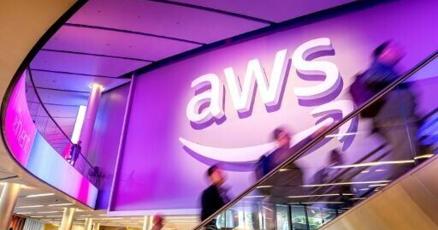
Amazon.com Inc. is investing an additional $5 billion in Anthropic PBC, and may inject $20 billion more over time, a deal that deepens the companies' ties in an increasingly competitive artificial intelligence industry. Anthropic, which makes the Claude chatbot and coding tool, plans to spend more than $100 billion over the next 10 years on Amazon's cloud technologies and chips, the companies said in a statement on Monday. Amazon shares gained more than 3% on the news in after-hours trading.

EchoStar Stock (SATS) Up 543% in 12 Months -- SpaceX Backdoor 2026
EchoStar Corporation (NASDAQ: SATS) closed Monday, April 20, 2026 at $135.11, up roughly 543% from its $21.00 close on April 21, 2025 and a fraction below the $137.44 session high that marked a new 52-week peak. The move is not rooted in a product cycle, a margin turn, or a streaming pivot. It is rooted in a balance sheet. Over two months in late 2025, Charlie Ergen's satellite-and-pay-TV conglomerate agreed to sell roughly $19.6 billion of its federal spectrum holdings to SpaceX in two separate transactions, receiving $8.5 billion in cash and more than $11 billion of SpaceX stock in return. With Elon Musk's rocket company now preparing what is shaping up to be the largest IPO in US history at a targeted $1.75 trillion valuation, SATS has become the most liquid US-listed way for retail investors to hold meaningful SpaceX equity exposure before the bell rings. Whether that is a durable investment or a re-rating that has already done its work is the question at $135. Last updated: April 21, 2026 at 10:15 AM ET. Prices sourced live from Massive Market Data. US markets are open Tuesday at 9:30 AM ET for the regular session. SATS closed the prior session at $135.11 on volume of 3.71 million shares. EchoStar Corporation · NASDAQ: SATS $135.11 +$1.90 · +1.43% (Apr 20, 2026 close) 12-month return+543% 52-week range$14.90 - $137.44 Day range (Apr 20)$133.02 - $137.44 Volume (Apr 20)3.71M Market cap~$38.9B SpaceX stock held~$11.1B at strike Key Takeaways The rally is a rerating, not a fundamentals story. SATS is up roughly 543% over the trailing 12 months because EchoStar sold $19.6 billion of spectrum to SpaceX across two transactions, receiving $8.5 billion cash and more than $11 billion of SpaceX stock. Operating performance has not driven the move; balance sheet re-composition has. EchoStar now holds approximately 52 million SpaceX shares. At the deal strike of roughly $212 per share, the position is marked at $11.1 billion. At a $1.5 trillion SpaceX IPO, the same position would be worth approximately $29 billion gross of lockup and tax friction; at $1.75 trillion, closer to $34 billion. The IPO catalyst is proximate. SpaceX confidentially filed its draft S-1 with the SEC on April 1, 2026, targeting a mid-2026 listing at a $1.5 trillion to $1.75 trillion valuation. SATS is the most direct liquid US-listed vehicle for public-market investors to own pre-IPO SpaceX exposure. You also inherit $25 billion of debt and three declining businesses. Dish pay-TV, Boost Mobile, and Hughes satellite broadband are all in secular decline. Approximately $15 billion of non-spectrum-secured long-term debt remains after the SpaceX deals close. A sum-of-parts analysis has to assign zero to negative value to the operating company. At $135, the stock sits mid-range on intrinsic value. A conservative liquidation-adjusted sum-of-parts (post-tax, post-lockup, post-dilution) points to $125 to $170 per share. SATS is neither obviously cheap nor obviously rich; an investor buying here is essentially underwriting SpaceX listing at or above $1.5 trillion and FCC spectrum transfers clearing on schedule. Track all markets on TradingView In This ArticleFrom Pay-TV Zombie to SpaceX Proxy: How SATS ReratedThe $17 Billion Spectrum Deal, DecomposedCharlie Ergen's Return and Why It MattersThe Math on Holding SpaceX via SATSWhat You're Actually Underwriting at $135How SATS Stacks Up Against Other SpaceX ProxiesWhat Could Break the ThesisValuation: Is $135 Cheap, Fair, or Rich?Why has EchoStar (SATS) stock gone up 543% in 12 months?Is SATS actually the best way to buy SpaceX before the IPO?How many SpaceX shares does EchoStar actually hold?What happens to SATS if SpaceX's IPO is delayed or priced lower?When does the spectrum deal actually close?What is Charlie Ergen doing back as CEO? From Pay-TV Zombie to SpaceX Proxy: How SATS Rerated Eighteen months ago, EchoStar was a consensus short. The company had just absorbed Dish Network in a January 2024 merger, inheriting a shrinking satellite TV subscriber base, a Boost Mobile prepaid wireless business burning cash, and a 5G buildout tied to spectrum licenses the company could neither deploy at scale nor profitably monetize. The stock traded in the low twenties through much of 2024 and into the spring of 2025, with the April 21, 2025 close at exactly $21.00 on our Massive Market Data pull. Credit markets priced EchoStar debt like the company was in slow-motion run-off. The AWS-4 band, 40 MHz of premium 2 GHz satellite spectrum acquired from the DBSD and TerreStar bankruptcies a decade earlier, sat on the balance sheet as what analysts politely called a "strategic asset" and less politely called a non-cash carrying cost. Then Ergen did what Ergen has historically done best: he found a buyer who needed the asset more than he did. On September 7, 2025, EchoStar and SpaceX executed a definitive License Purchase Agreement for the AWS-4 and H-block spectrum portfolios, announced publicly on September 8. The headline number was $17 billion. The structure was $8.5 billion in cash plus $8.5 billion in SpaceX stock, with SpaceX additionally agreeing to fund approximately $2 billion of EchoStar's interest payments on specific secured notes through at least November 30, 2027. Two months later, on November 6, 2025, EchoStar agreed to sell its full unpaired AWS-3 spectrum portfolio (15 MHz of nationwide uplink licenses in 3GPP Band 70n) to SpaceX for roughly $2.6 billion, paid entirely in SpaceX stock valued as of September 2025. That second tranche pushed EchoStar's total SpaceX equity consideration past $11 billion at the deal marks. The market's reaction was immediate and vertical. SATS opened the week of September 8, 2025 at roughly $27 and closed the following session above $50. By early December 2025 the stock had pierced $100. By the first week of April 2026 it was trading above $125. The rerating was not driven by operating performance. Q3 2025 revenue came in flat to down year over year across every legacy segment. It was driven by the market marking EchoStar as a holding company with a minority stake in the most-watched private technology company on the planet. SpaceX's own private market valuation helped. A December 2025 tender closed SpaceX at roughly $800 billion, with employee shares priced at $421, nearly double the $212 per share set at the July 2025 tender. The company's February 2026 absorption of xAI at a combined $1.25 trillion valuation (SpaceX $1 trillion plus xAI $250 billion) reset the private mark again. On April 1, 2026, SpaceX confidentially filed its draft S-1 with the SEC, targeting a June Nasdaq listing at a $1.75 trillion valuation, with subsequent Bloomberg reporting pushing the upper range above $2 trillion. Every leg up on SpaceX's private mark, and every new headline about the listing, has translated into a mechanical revaluation of EchoStar's stake, because EchoStar is the cleanest public proxy available. The $17 Billion Spectrum Deal, Decomposed The September 2025 transaction is the linchpin, and understanding how it was structured matters more than the $17 billion headline. EchoStar's September 7 8-K filing with the SEC and the associated license purchase agreement break the consideration into three pieces: $8.5 billion in cash, payable to EchoStar at closing. This is the leg that directly addresses EchoStar's near-term maturity wall and why the deal was a liquidity event, not just a paper transaction. $8.5 billion in SpaceX common stock, struck at roughly $212 per share against an implied $400 billion SpaceX valuation (the same strike as the July 2025 tender). That works out to approximately 40 million SpaceX shares on EchoStar's balance sheet. Approximately $2 billion of interest-payment funding from SpaceX on specific EchoStar secured notes through at least November 30, 2027. This is not consideration in the traditional sense; it is a cash-flow bridge that de-risks EchoStar's scheduled debt service through the expected Spectrum Acquisition Closing. The November 6, 2025 follow-on transaction added the AWS-3 unpaired spectrum portfolio, a portfolio EchoStar originally acquired at FCC auction for roughly $3.3 billion in 2015. SpaceX paid approximately $2.6 billion, entirely in SpaceX stock, lifting EchoStar's SpaceX equity consideration past $11 billion at the deal strike. The motivation on the SpaceX side is specific: the AWS-4, AWS-3, and H-block bands sit adjacent to frequencies SpaceX already uses for Direct to Cell, and consolidating them allows Starlink satellites to operate as a true terrestrial-class wireless network rather than a roaming overlay. Industry coverage has framed this as the spectrum foundation for the next generation of Starlink Direct to Cell service. One detail that matters for the debt side of the story: as of September 30, 2025, EchoStar disclosed approximately $9.83 billion of outstanding Seller Notes secured specifically by the AWS-4 spectrum (the AWS-3 licenses are not encumbered by these notes, per the Q3 2025 10-Q). Those notes remain obligations of EchoStar until extinguished at closing. The Spectrum Acquisition Closing is expected on or about November 30, 2027, after the expiration of the make-whole period on EchoStar's topco notes and the date the company's convertible notes become eligible for redemption. SpaceX retains the option to accelerate closing, but the November 2027 default date materially back-ends the cash timing versus what many traders initially modeled. Consideration summary: Roughly $19.6 billion in gross transaction value across two deals. Breakdown: $8.5B cash + $8.5B SpaceX stock (AWS-4/H-block, Sept 2025) + $2.6B SpaceX stock (AWS-3, Nov 2025) + $2B interest-coverage funding through at least November 30, 2027. EchoStar's SpaceX equity position is marked at $11.1B at the deal strike price of $212 per share. Charlie Ergen's Return and Why It Matters The spectrum deal was negotiated by Hamid Akhavan, who had served as EchoStar's president and CEO since 2023. But on November 6, 2025, the same day the AWS-3 follow-on transaction was announced, the board reshuffled. Akhavan was moved to lead a new entity called EchoStar Capital, with a mandate to manage the SpaceX equity stake and invest the incoming cash proceeds. Charlie Ergen, the company's co-founder and largest shareholder, returned to the chairman, president, and CEO seat with operating responsibility for what remains of the legacy business: Dish Network pay-TV, Boost Mobile wireless, and Hughes satellite broadband. That org chart tells you exactly how EchoStar's own leadership thinks about the post-deal company. There is a holding company with an investment portfolio, run by a former telecom CEO turned de facto asset manager, and a separate operating company running declining telecom assets, run by the founder who built them in the first place. The two sides of the business are no longer pretending to be one coherent strategic story. They are explicitly being managed as a financial stake and a cash-flowing operating unit. This matters for valuation. Conglomerates that explicitly manage themselves as a sum-of-the-parts structure tend to trade closer to net asset value than conglomerates that try to narrate themselves as strategic wholes. It also matters for capital allocation. Ergen has a documented three-decade history of monetizing spectrum at the top of cycles: the 2005 sale of EchoStar V and EchoStar IX orbital slots to Loral, the 2013 acquisition of DBSD and TerreStar out of bankruptcy for spectrum now being sold to SpaceX, and the 2008 separation of EchoStar from Dish Network that allowed each entity to be optimized for its own cash-flow profile. A Yahoo Finance profile estimated Ergen's personal potential upside from the SpaceX stake at multiple billions of dollars, which sharpens the alignment question in a specific way: the largest individual shareholder of SATS also holds the largest individual economic interest in the SpaceX outcome through his SATS position. The Math on Holding SpaceX via SATS Here is where the actual investment case lives, and where the numbers get uncomfortable quickly if you do not triangulate them carefully. EchoStar holds approximately 52 million SpaceX shares (roughly 40 million from the September deal plus approximately 12 million from the November deal, both struck at the $212/$400 billion valuation). Post the February 2026 xAI merger, which issued SpaceX shares to xAI holders at a 0.1433 conversion ratio, EchoStar's stake represents an estimated 2.0 to 2.2 percent of SpaceX's fully-diluted share count, before any additional IPO primary issuance. Two developments since the strike have changed the mark: SpaceX's private secondary market, traded on platforms like Forge Global and Hiive, has marked shares in the $420 to $600+ range during Q1 2026, consistent with implied valuations of $800 billion to above $1.1 trillion depending on timing. SpaceX's April 1, 2026 confidential IPO filing targets a $1.75 trillion public valuation, with Bloomberg subsequently reporting the upper range has pushed above $2 trillion. That is roughly 4.4x to 5x the $400 billion mark at which EchoStar's stake was originally priced. Using the 2.0 to 2.2 percent ownership bracket, EchoStar's gross stake would mark at approximately $33 billion at a $1.5 trillion SpaceX listing, approximately $38 billion at $1.75 trillion (the reported target), and approximately $44 billion at the $2 trillion upper case. Those numbers are gross of tax leakage, lockup restrictions, secondary-sale limitations, and any IPO primary-issuance dilution, all of which matter materially and are addressed below. The first-order arithmetic: EchoStar's SpaceX stake alone, even at the midpoint IPO target, is in the same ballpark as the company's current ~$38.9 billion market capitalization. Stake math at SpaceX IPO (gross, before haircuts): EchoStar's approximately 52 million shares represent roughly 2.0-2.2% of SpaceX fully-diluted post the xAI merger. At a $1.5T listing, stake ≈ $33B. At $1.75T (current IPO target), stake ≈ $38B. At $2T (Bloomberg upper range), stake ≈ $44B. EchoStar's own fully-diluted market cap sits near $38.9 billion at $135.11, which means the stake and the market cap are roughly in line at the reported IPO target before any liquidation haircuts. The gross mark is not what equity holders realize. It is payment for four specific frictions. The first is lockup. SpaceX will almost certainly impose a 180-day post-IPO lockup on pre-IPO shareholders, which means EchoStar cannot sell into the open market during the period when the IPO price is most likely to be volatile. The second is tax. EchoStar will recognize a taxable gain on any sale of SpaceX stock above its cost basis, and any distribution of SpaceX shares to EchoStar shareholders would also trigger tax. The third is governance. SpaceX has historically been aggressive in restricting secondary sales; EchoStar's ability to monetize the stake through anything other than a listed-market sale is not guaranteed. The fourth is dilution risk. SpaceX is likely to raise $50 billion to $75 billion in its primary offering, which further dilutes EchoStar's percentage on a pro-forma basis. Apply a 20 to 30 percent haircut to the gross mark for those combined frictions, and the liquidation-adjusted stake value at a $1.75 trillion SpaceX listing lands in the $26 billion to $30 billion range. Scaling to the $1.5 trillion low end: $23 billion to $26 billion. Scaling to the $2 trillion upper case: $31 billion to $35 billion. That is still a material number, but it is roughly equal to EchoStar's own market cap once you net out the company's residual debt load, which is a very different conclusion than "the stake alone is worth more than the stock." What You're Actually Underwriting at $135 Strip out the SpaceX story and look at the operating company. EchoStar's Pay-TV segment ended Q3 2025 with approximately 7.17 million subscribers, comprising roughly 5.17 million DISH TV and a growing Sling TV base of around 2 million. The satellite TV piece throws off positive EBITDA but is in secular decline as cord-cutting continues to pull subscribers toward streaming alternatives; Sling added roughly 159,000 subscribers in Q3 while DISH TV lost approximately 152,000 in the same quarter. Boost Mobile closed Q3 2025 with approximately 7.52 million subscribers after the company completed the technical work of shifting its base onto its own 5G network rather than roaming on T-Mobile and AT&T. Hughes Broadband & Satellite Services ended Q3 2025 with approximately 783,000 subscribers in a market increasingly dominated by Starlink, which is now competing for the same rural broadband dollar. The balance sheet carries roughly $25.4 billion of long-term debt as of the most recent quarterly disclosure. Of that, approximately $9.83 billion sits in the Seller Notes secured specifically by the AWS-4 spectrum, per the Q3 2025 10-Q. That piece self-extinguishes at deal closing on or about November 30, 2027. The remaining roughly $15 billion is a more conventional set of obligations: senior notes at Dish DBS, convertible notes at the parent company, and working-capital facilities. The interest coverage on the operating business is thin. Without the SpaceX cash infusion and the interest-payment bridge through November 2027, the company would be navigating a refinancing window in an increasingly tight credit market. That context matters because it recasts the operating company from "neutral asset worth zero in a sum-of-parts calculation" to "asset with meaningful negative carry that the SpaceX stake has to subsidize." A conservative investor should probably assign a modestly negative enterprise value to the operating business at current cash-flow trajectories, with the understanding that the cash leg of the SpaceX deal funds operations while Ergen figures out what to do with Dish, Boost, and Hughes over the next two to three years. What a SATS share actually represents at $135: A pro-rata claim on (1) roughly 52 million SpaceX shares marked at $11.1 billion at deal strike and likely materially higher at current private marks but not freely salable for at least six months post any SpaceX IPO, (2) $8.5 billion of incoming cash scheduled for on or about November 30, 2027, (3) roughly $25.4 billion of long-term debt, approximately $9.83 billion of which extinguishes at the AWS-4 closing, and (4) a set of pay-TV, prepaid wireless, and satellite broadband businesses in secular decline with thin operating margins. How SATS Stacks Up Against Other SpaceX Proxies For public-market investors who want pre-IPO SpaceX exposure, the menu is narrow and the vehicles are not equivalent. Each trade carries its own dilution, discount, and distance-from-source profile. Alphabet (NASDAQ: GOOG). Google led SpaceX's 2015 funding round and has maintained a direct equity stake, though Alphabet does not publicly disclose current holdings. The stake is too small relative to Alphabet's overall market capitalization to move the stock on SpaceX headlines. Effectively zero incremental exposure on a per-share basis. Destiny Tech100 (NYSE: DXYZ). A closed-end fund holding 32 private companies. SpaceX is the fund's largest economic exposure at roughly 16 percent of portfolio (earlier reports indicated up to 26 percent before recent rebalancing). DXYZ trades at a persistent premium to net asset value; as of April 2026, the stock trades in the $29 to $30 range against a December 2025 reported NAV of $19.97 per share, a roughly 45 to 50 percent premium that compresses the realized upside investors capture from SpaceX gains. ARK Venture Fund. A fund holding approximately 10 percent in SpaceX and accessible through a specialty broker. Minimum subscriptions and redemption limits make it unattractive for retail investors who want to size a position and exit on IPO day. EchoStar (NASDAQ: SATS). Direct SpaceX equity marked at $11.1 billion at deal strike, likely materially higher at current SpaceX private marks, sitting on a balance sheet with roughly $38.9 billion market cap. Exposure per dollar invested is meaningfully higher than any other listed vehicle on a gross basis, but investors also inherit the operating company's $25 billion of long-term debt and declining legacy businesses. This is the trade-off that defines the backdoor bet. On a pure exposure-per-dollar basis, SATS is the cleanest public vehicle. On a discount-to-NAV basis, SATS is also more attractive than DXYZ, which has traded at meaningful premiums during prior SpaceX news cycles. The tradeoffs are the operating company's debt load, the legacy businesses' secular decline, and the November 2027 closing timeline that back-ends the $8.5 billion cash leg. For investors willing to accept those, SATS remains what the market is currently pricing it as: a liquid large-cap way to own the IPO without waiting for the IPO. For investors who specifically want a clean SpaceX exposure and nothing else, the honest answer is to wait for the listing. For broader context on the SpaceX listing itself, timeline, and how public investors can participate on IPO day, our full SpaceX IPO analysis walks through the confidential S-1 filing, the targeted listing window, and the valuation framework the underwriters are likely to use. What Could Break the Thesis Three specific scenarios would meaningfully damage the current setup, and any serious analysis of SATS at $135 has to account for them. The first is FCC license-transfer delay or rejection. The AWS-4, AWS-3, and H-block spectrum transfers require regulatory approval, and while the FCC has been broadly supportive of the transaction (the commission closed its separate EchoStar investigation in September 2025 specifically citing the SpaceX sale), commission composition can shift and interveners can file objections. A delay past the November 30, 2027 target closing would extend the period during which the $2 billion SpaceX-funded interest bridge carries the income statement, and could force EchoStar into a bridge financing for its topco notes at unfavorable terms. The second is a SpaceX IPO delay or valuation reset. If macro conditions force SpaceX to push the listing from mid-2026 into 2027, the SATS narrative loses its near-term catalyst and the stock is likely to compress back toward a more conventional holding-company discount. A listing at $1.2 trillion instead of the reported $1.75 trillion target would clip roughly $12 billion off the implied gross stake value, which is not a small number relative to the current market cap. The third is operating-company deterioration faster than modeled. Dish Network, Boost Mobile, and Hughes are all in structural decline, and if subscriber losses accelerate in 2026 the cash-flow drag on the holding company widens. The SpaceX stake is large enough to cushion a lot of operating underperformance, but a meaningful negative surprise at the operating level would widen the discount the market assigns to the whole structure, particularly given how back-ended the cash leg of the spectrum deal has now become. Valuation: Is $135 Cheap, Fair, or Rich? At $135.11, EchoStar's fully diluted market capitalization sits near $38.9 billion on roughly 288 million shares outstanding. A conservative sum-of-the-parts analysis at the reported $1.75 trillion SpaceX IPO target looks approximately like this: credit the SpaceX stake at a liquidation-adjusted $26 billion to $30 billion (post 20-30% haircut on the $38 billion gross), add the present value of the $8.5 billion incoming cash scheduled for November 2027 (roughly $7 billion to $7.5 billion discounted), subtract $15 billion of non-spectrum-secured long-term debt, and assign zero to slightly negative value to the operating businesses. That arithmetic points to an intrinsic equity value in the $18 billion to $23 billion range, or $63 to $80 per share on the current fully diluted count. The honest read: at $135, SATS is already pricing a more aggressive scenario than the base case. To justify the current price on sum-of-parts math, investors need to assume the SpaceX listing lands at or above $2 trillion, that the FCC closes the spectrum transfers on or before the November 2027 target, that the lockup haircut is closer to 10 percent than 30 percent, and that the operating businesses do not deteriorate materially over the next 18 months. None of those are unreasonable assumptions, but they are stacked assumptions rather than base-case ones. The 543 percent rerating has already done the mechanical work of marking the stake closer to its IPO-implied value. From here, upside is a function of SpaceX surprising to the high end of the reported range rather than the simple arithmetic of a re-rating still to come. Readers who want a contextual benchmark on satellite and telecom spectrum valuations more broadly can reference our prior analysis of the $23 billion AT&T-EchoStar spectrum deal from August 2025, which set the earlier comparable for what large spectrum blocks are worth in 2026 dollars. Why has EchoStar (SATS) stock gone up 543% in 12 months? The move is entirely driven by two spectrum sales to SpaceX. On September 7, 2025, EchoStar signed a definitive license purchase agreement to sell its AWS-4 and H-block spectrum to SpaceX for approximately $17 billion, split roughly 50/50 between cash and SpaceX stock. A follow-on AWS-3 transaction in November 2025 added $2.6 billion in SpaceX equity. The market has re-rated SATS as a pre-IPO SpaceX proxy because the company now holds more than $11 billion of SpaceX stock at strike on its balance sheet, a position that has appreciated materially as SpaceX's implied valuation has climbed from $400 billion at the deal strike to $1.75 trillion or more in the IPO lead-up. Is SATS actually the best way to buy SpaceX before the IPO? It is the most direct liquid public vehicle on a gross-exposure basis, but it is not a pure SpaceX play. Investors who buy SATS also inherit roughly $25 billion of long-term debt and a set of pay-TV, prepaid wireless, and satellite broadband businesses in secular decline. Compared with alternatives like Destiny Tech100 (DXYZ), which trades at a 45-50 percent premium to net asset value and holds SpaceX at roughly 16 percent of portfolio, SATS offers higher exposure per dollar. Compared with waiting for the IPO itself, SATS offers time-in-the-trade at the cost of operating-company friction and a November 2027 cash-closing timeline. How many SpaceX shares does EchoStar actually hold? Approximately 52 million shares, based on the strike price of roughly $212 per share at the $400 billion SpaceX deal valuation. The first tranche delivered $8.5 billion of SpaceX stock for the AWS-4 and H-block spectrum in September 2025 (roughly 40 million shares), and the second tranche delivered approximately $2.6 billion of SpaceX stock for the AWS-3 spectrum in November 2025 (roughly 12 million shares). The combined book value of the stake is $11.1 billion at strike. Post the February 2026 xAI merger, the stake represents an estimated 2.0 to 2.2 percent of SpaceX's fully-diluted share count before any IPO primary issuance. What happens to SATS if SpaceX's IPO is delayed or priced lower? Both would compress the stock. A six-month delay would push out EchoStar's ability to monetize the stake and keep carrying costs on the income statement longer, which tends to widen the sum-of-parts discount the market assigns. A meaningfully lower listing valuation, say $1.2 trillion instead of $1.75 trillion, would clip approximately $12 billion off the implied gross stake value (using a 2 percent ownership assumption), roughly 30 percent of EchoStar's current equity market capitalization. The stock is sensitive to both catalysts because the entire re-rating of the past twelve months has been priced to a specific SpaceX outcome path. When does the spectrum deal actually close? The Spectrum Acquisition Closing is scheduled on or about November 30, 2027, after the expiration of the make-whole period on EchoStar's topco notes and the date the company's convertible notes become eligible for redemption. SpaceX retains the option to accelerate the closing but has no obligation to do so. Until closing, the $8.5 billion cash leg remains contingent, and EchoStar's $9.83 billion of Seller Notes secured by the AWS-4 spectrum remain on the balance sheet. SpaceX has agreed to fund approximately $2 billion of interest payments on those notes through at least November 30, 2027. What is Charlie Ergen doing back as CEO? Ergen returned to the chairman, president, and CEO seat on November 6, 2025, taking operating responsibility for the legacy Dish Network, Boost Mobile, and Hughes businesses. Hamid Akhavan, the prior CEO, moved to lead a new entity called EchoStar Capital that manages the SpaceX equity stake and the incoming cash proceeds. The reshuffle formalized what the market was already pricing: EchoStar is now an operating company and a financial holding company run as two distinct units, with Ergen managing the telecom side and Akhavan managing the asset side. Investment disclaimer: This article is for informational and educational purposes only and does not constitute investment, financial, tax, or legal advice, a solicitation to buy or sell any security, or a recommendation of any trading strategy. Forward-looking statements about SpaceX's valuation, IPO timing, and SATS sum-of-parts math reflect current reporting and are subject to material change. SpaceX is a private company; its equity is not publicly traded, and private-market marks referenced in this article are estimates derived from secondary-transaction platforms and news coverage, not audited values. EchoStar's SpaceX stake is illiquid, subject to lockup provisions, and subject to tax on realization. The Spectrum Acquisition Closing remains subject to FCC and HSR approval and is scheduled on or about November 30, 2027. Trading SATS, or any stock, carries risk of loss. Always conduct your own due diligence, read the company's SEC filings directly, and consult a licensed financial advisor regulated in your jurisdiction before making investment decisions. TECHi and its authors may hold positions in the securities mentioned. Sources and primary filings referenced in this article: EchoStar Corporation Form 8-K filed September 7, 2025 (License Purchase Agreement with Space Exploration Technologies Corp.); EchoStar Corporation Form 8-K filed November 6, 2025 (AWS-3 agreement and executive changes); EchoStar Corporation Form 10-Q for the period ended September 30, 2025 (Seller Notes disclosure, subscriber counts, long-term debt); EchoStar Corporation Form 10-K filed March 2, 2026. SpaceX S-1 filing reporting via CNBC, Bloomberg, and Reuters (April 1-2, 2026). Live SATS market data sourced from Massive Market Data on April 21, 2026.
SpaceX Warns Australia Could Miss Out On Satellite Mobile Rollout
Elon Musk's space venture has signaled it may bypass Australia when expanding its satellite-powered mobile network if it is required to compete in a spectrum auction for essential frequencies. SpaceX, the company behind the Starlink system, has urged the government to directly assign the wireless bands it needs to expand its satellite services instead of offering them through a bidding process. The dispute centres on access to spectrum critical for enabling mobile coverage via satellites. Canberra has pledged that by late 2027, voice calls and SMS will be available across almost all of Australia's land area. This initiative, referred to as the Universal Outdoor Mobile Obligation, places responsibility on telecommunications providers to ensure widespread connectivity. Achieving this goal depends on Low Earth Orbit satellites and emerging direct-to-device technology, which enables standard mobile handsets to connect to signals transmitted from space. During a Senate inquiry this week, a senior SpaceX representative criticised the possibility of having to compete with domestic telecom companies for access to the 2GHz mobile satellite services band. The Australian Communications and Media Authority has indicated it is weighing up whether to allocate the spectrum through an auction. David Goldman, SpaceX vice president for satellite policy, argued that such a move would run counter to the intent of lawmakers seeking to eliminate connectivity gaps. He said auctioning the spectrum would be inconsistent with how similar frequencies are handled globally and could place Australia at odds with international practice. According to Goldman, this could result in higher costs for consumers or even prevent the service from being introduced at all. He added that uncertainty around spectrum access means the company has not yet determined pricing for its proposed mobile offering, noting that deployment itself remains uncertain. The comments come as SpaceX reportedly aims for a valuation of around A$4.3 trillion in a potential public listing, with Musk holding between 40 and 45 per cent of the business. Such a move could make him the first individual to reach trillionaire status. While SpaceX is currently a leading player in this segment, Goldman acknowledged that competition is on the horizon. Amazon's satellite initiative, now known as Project Kuiper, plans to deploy more than 3,200 satellites by 2028. Goldman questioned the logic of allowing traditional carriers such as Telstra or Optus to acquire the spectrum through an auction, suggesting it could limit collaboration. He emphasised that SpaceX's preference is to partner broadly with industry participants rather than restrict access. He also cautioned that any high cost incurred through bidding would ultimately be passed on to customers. This concern mirrors arguments made by Australian telecom providers, which have warned that the government's A$7.3 billion valuation for terrestrial spectrum licenses will lead to increased prices for users. The debate over mobile coverage is distinct from Starlink's existing broadband service, which already serves roughly 200,000 Australian customers. Goldman described Australia as one of the company's most significant markets, citing strong demand and favourable geographic conditions for satellite connectivity. He confirmed that discussions had taken place with the office of Communications Minister Anika Wells, though SpaceX did not receive the outcome it had hoped for. A spokesperson for Wells stated that the government views spectrum as a limited public asset and that the regulator is continuing to consult with industry to address the issue. Robert Crofts, an executive at the communications authority, said the regulator is still determining the most effective approach to allocating spectrum for these emerging technologies. He noted that decisions would be guided by what delivers the greatest long-term benefit to the public.

SpaceX Falcon 9 launch scheduled for Wednesday from Vandenberg Space Force Base
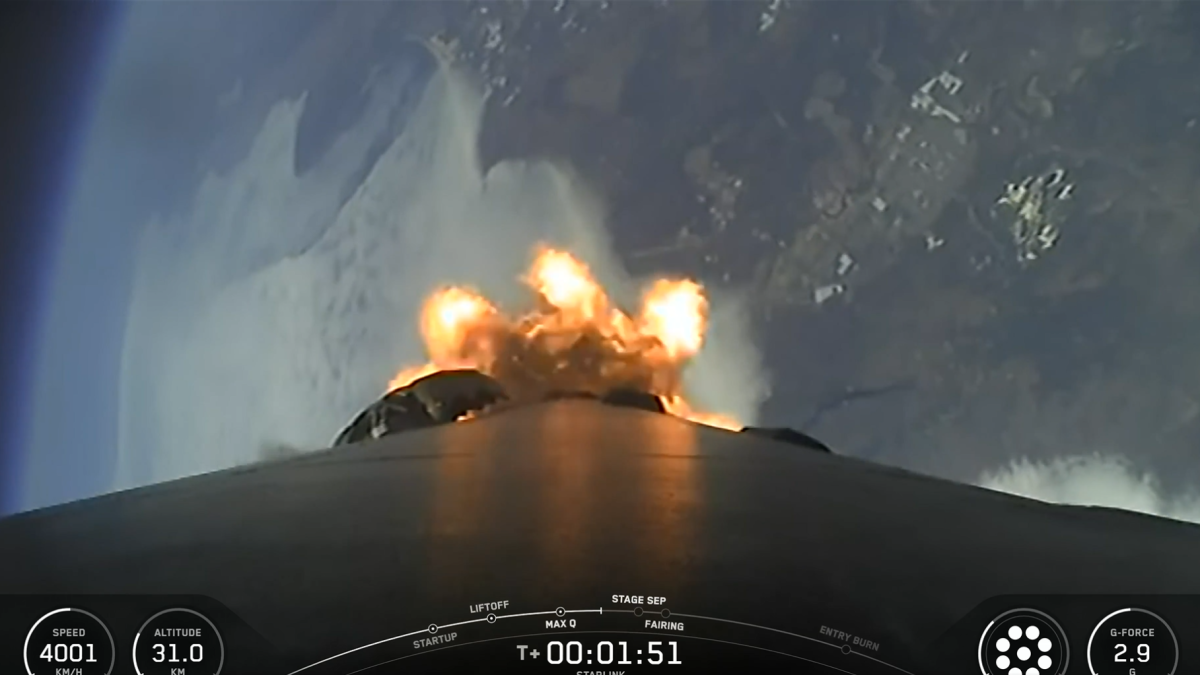
SpaceX is preparing for another Falcon 9 launch set to deliver 25 Starlink satellites into low-Earth orbit. The mission will lift off from Vandenberg Space Force Base on Wednesday, April 22 between 7 p.m. and 11 p.m. A live webcast will begin minutes before liftoff and will be available via SpaceX's official channels, including its account on X and the X TV app. This mission marks the fifth flight for the Falcon 9's first-stage booster, which has previously supported the NROL-105 mission along with three earlier Starlink launches. After stage separation, the booster is expected to make a controlled landing on the droneship Of Course I Still Love You, in the Pacific Ocean. As part of SpaceX's ongoing effort to expand its Starlink satellite constellation, this launch continues the company's rapid cadence of missions aimed at improving global internet coverage.
Amazon and Anthropic expand AI partnership with major financial and infrastructure commitments
Since 2023, Amazon and Anthropic have partnered to facilitate the adoption of generative artificial intelligence across various industries. Currently, over 100,000 customers utilize Anthropic's Claude models on Amazon Web Services (AWS), positioning Claude as a leading model family on Amazon Bedrock. To build on this existing framework, the two companies have announced a significant deepening of their collaboration, marked by substantial financial commitments, new infrastructure deployments, and expanded platform integrations. The expanded partnership involves large-scale, long-term financial agreements from both organizations aimed at scaling AI research, development, and deployment. To simplify enterprise adoption, the partnership introduces the Claude Platform on AWS. This integration allows AWS customers to access the full Anthropic-native Claude console directly through their existing AWS accounts. By eliminating the need to manage separate credentials, contracts, or billing relationships, users can utilize their pre-existing AWS access controls and monitoring systems. This offers customers the flexibility to choose between the native Claude Platform on AWS or utilizing Claude through Amazon Bedrock based on their specific operational needs. The expanded relationship continues to center on infrastructure development, custom silicon engineering, and broad enterprise deployment. Moving forward, Anthropic will maintain AWS as its primary cloud and training provider for mission-critical workloads. In turn, Amazon's internal developers and engineers will continue utilizing Claude models to enhance customer experiences across Amazon's broad portfolio of businesses.

Anthropic's Mythos release shows the world needs to regulate AI
Save this article for later Add articles to your saved list and come back to them anytime. Got it Anthropic's release of its Claude Mythos Preview tool earlier this month shows that the development of artificial intelligence has reached a critical point - one that illustrates that those who highlighted the potential dangers of AI weren't crying wolf. Mythos, Anthropic has said, is able to identify and exploit flaws in every operating system and web browser at a scale and speed beyond almost all human capabilities. It is capable, autonomously, of executing attacks on systems that would bring down critical national infrastructure like power, water, health or banking systems. So dangerous does its creator consider the model that it hasn't yet released it generally, instead offering access (it calls it Project Glasswing) to about 40 organisations, including competitors, to enable them to test it on their systems and expose and patch flaws before anyone with malicious intention can discover and exploit them. Last Friday, Anthropic's chief executive Dario Amodei met with the Trump administration, which is seeking access to the model.

Anthropic's Mythos release shows the world needs to regulate AI
Save this article for later Add articles to your saved list and come back to them anytime. Got it Anthropic's release of its Claude Mythos Preview tool earlier this month shows that the development of artificial intelligence has reached a critical point - one that illustrates that those who highlighted the potential dangers of AI weren't crying wolf. Mythos, Anthropic has said, is able to identify and exploit flaws in every operating system and web browser at a scale and speed beyond almost all human capabilities. It is capable, autonomously, of executing attacks on systems that would bring down critical national infrastructure like power, water, health or banking systems. So dangerous does its creator consider the model that it hasn't yet released it generally, instead offering access (it calls it Project Glasswing) to about 40 organisations, including competitors, to enable them to test it on their systems and expose and patch flaws before anyone with malicious intention can discover and exploit them. Last Friday, Anthropic's chief executive Dario Amodei met with the Trump administration, which is seeking access to the model.
Anthropic's Mythos release shows the world needs to regulate AI
Save this article for later Add articles to your saved list and come back to them anytime. Got it Anthropic's release of its Claude Mythos Preview tool earlier this month shows that the development of artificial intelligence has reached a critical point - one that illustrates that those who highlighted the potential dangers of AI weren't crying wolf. Mythos, Anthropic has said, is able to identify and exploit flaws in every operating system and web browser at a scale and speed beyond almost all human capabilities. It is capable, autonomously, of executing attacks on systems that would bring down critical national infrastructure like power, water, health or banking systems. So dangerous does its creator consider the model that it hasn't yet released it generally, instead offering access (it calls it Project Glasswing) to about 40 organisations, including competitors, to enable them to test it on their systems and expose and patch flaws before anyone with malicious intention can discover and exploit them. Last Friday, Anthropic's chief executive Dario Amodei met with the Trump administration, which is seeking access to the model.

Cathie Wood Bets On Amazon As $100 Billion Anthropic Deal Reshapes AI Race, Here's What Else Ark Traded -
The Amazon TradeThe DoorDash Trade Ark Invest also acquired 4,625 shares of DoorDash Inc. via the ARKX, amounting to a transaction value of approximately $877,825. Other Key Trades Twist Bioscience Corp (TWST): Sold 30,677 shares from ARKG. Iridium Communications Inc (IRDM): Sold 81,422 shares from ARKX. Kratos Defense and Security Solutions Inc (KTOS): Bought 24,614 shares for ARKX. Benzinga Edge Stock Rankings indicate Amazon stock has a Momentum in the 73rd percentile and Value in the 52nd percentile. This story was generated using Benzinga Neuro and edited by Shivdeep Dhaliwal Photo: ChrisStock82 / Shutterstock Market News and Data brought to you by Benzinga APIs To add Benzinga News as your preferred source on Google, click here.

Nvidia Rival Cerebras Files for an IPO: What Investors Should Know | The Motley Fool
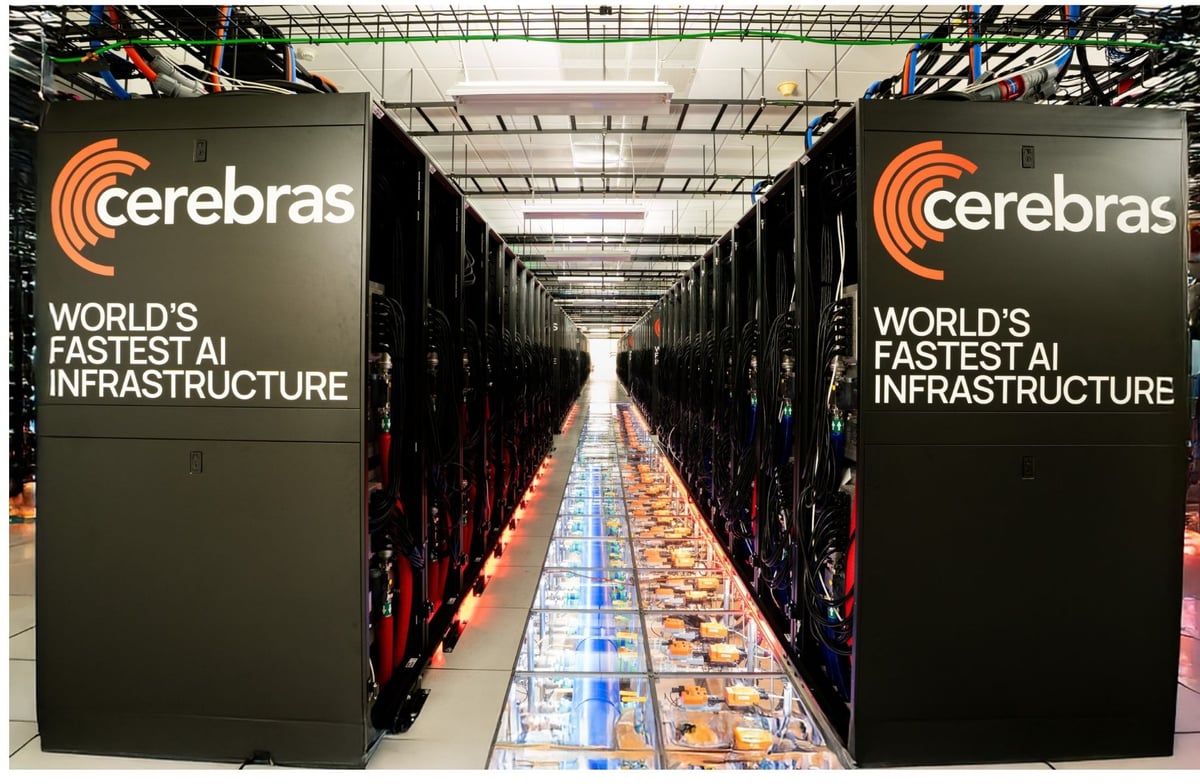
Cerebras could prove a formidable competitor to AI chip leader Nvidia, in my opinion. Investors seem poised to soon have another investment choice in the hot artificial intelligence (AI) chip space: Cerebras Systems. The venture capital-backed, Silicon Valley-based company announced on Friday, April 17, that it filed a registration statement with the Securities and Exchange Commission (SEC) indicating its intent to hold an initial public offering (IPO) of its common stock. Given publicly available data, Cerebras could prove a formidable competitor to Nvidia (NVDA +0.19%), which currently dominates the AI chip market. That said, the AI chip market is growing at such a blistering pace that there is room for several companies in this business to perform very well over the long run. Cerebras did not indicate when it plans to hold its IPO, other than to say the timing will depend on market conditions. It said the number of shares of stock to be offered and the price range for the proposed offering have not yet been determined. Cerebras expects its stock to be listed in the United States on the Nasdaq stock exchange under the ticker "CBRS." Cerebras was founded in 2015 to bring wafer-scale AI computing to market. Wafer-scale refers to using a full silicon wafer to create one massive chip, rather than cutting it into smaller dies. Several of its co-founders held technology leadership roles - such as Chief Technology Officer (CTO) -- at chipmaker Advanced Micro Devices (AMD) before starting the company. AMD is Nvidia's main competitor in the graphics processing unit (GPU) market. Currently, GPUs are the gold standard for AI training and inference (deployment) -- a fact that Cerebras aims to change. On its website, Cerebras touts that it "stands alone as the world's fastest AI inference and training platform." It adds that "Organizations across [diverse fields] use our CS-2 and CS-3 systems to build on-premise supercomputers, while developers and enterprises everywhere can access the power of Cerebras through our pay-as-you-go cloud offerings." CS-2 and CS-3 stand for Cerebras System 2 and 3, respectively, the company's second- and third-generation wafer-scale AI supercomputers. These systems are powered by the company's AI processors, the current of which is the WSE-3 (Wafer-Scale Engine 3). Cerebras touts that this giant chip is the "world's largest and fastest AI processor." Recently, Cerebras gained some big-name customers, including ChatGPT maker OpenAI, Amazon (AMZN 0.91%), and Facebook parent Meta Platforms. Customers also include pharmaceutical giant GSK (formerly GlaxoSmithKline), Mayo Clinic, the U.S. Department of Energy, and the U.S. Department of Defense. In January 2026, Cerebras and OpenAI signed a major multiyear partnership agreement in which OpenAI will deploy 750 megawatts of Cerebras wafer-scale systems to serve its customers. The "deployment will roll out in multiple stages beginning in 2026, making it the largest high-speed AI inference deployment in the world," according to the press release. Last week, it was reported that OpenAI would invest $20 billion in Cerebras chips and tech over three years. In March 2026, Cerebras signed a deal with Amazon AWS, under which AWS will become the first hyperscaler (operator of massive-scale data centers) to deploy Cerebras chips in its own data centers. Significant new investors in Cerebras' Series G round in September included Tiger Global Management, founded and run by billionaire Chase Coleman, and 1789 Capital, of which Donald Trump Jr. is a partner. Some existing investors also participated in the round. Other notable investors include Sam Altman, co-founder and CEO of OpenAI. Group 42 Holding, based in the United Arab Emirates (UAE), was an early and major investor. It -- along with affiliated companies -- has also been Cerebras' largest customer, by far, through 2025. In 2026, this heavy customer revenue concentration should begin to significantly lessen due to the recent big deals Cerebras has inked. In 2025, Cerebras' revenue surged 76% year over year to $510 million, according to its SEC filing. This growth was driven by 69% in hardware and 99% in cloud and other services. The company's financials are solid for a start-up. While it reported a loss from operations of $145.9 million in 2025, this was due to significant research and development spending. Its 2025 R&D expenditure was 48% of its annual sales. 2025 net income was positive, but only because of a significant positive "net, other income" stemming primarily from "a change in fair value and extinguishment of forward contract liability." Operating cash flow was negative $10.1 million, so Cerebras was not far from break-even on a cash from operations basis. In short, all signs point to Cerebras Systems stock as worth considering for investment -- at the very least, worth watching.
Nvidia Rival Cerebras Files for an IPO: What Investors Should Know
Cerebras could prove a formidable competitor to AI chip leader Nvidia, in my opinion. Investors seem poised to soon have another investment choice in the hot artificial intelligence (AI) chip space: Cerebras Systems. The venture capital-backed, Silicon Valley-based company announced on Friday, April 17, that it filed a registration statement with the Securities and Exchange Commission (SEC) indicating its intent to hold an initial public offering (IPO) of its common stock. Given publicly available data, Cerebras could prove a formidable competitor to Nvidia (NASDAQ: NVDA), which currently dominates the AI chip market. That said, the AI chip market is growing at such a blistering pace that there is room for several companies in this business to perform very well over the long run. Will AI create the world's first trillionaire? Our team just released a report on the one little-known company, called an "Indispensable Monopoly" providing the critical technology Nvidia and Intel both need. Continue " Image source: Cerebras Systems. Cerebras did not indicate when it plans to hold its IPO, other than to say the timing will depend on market conditions. It said the number of shares of stock to be offered and the price range for the proposed offering have not yet been determined. Cerebras expects its stock to be listed in the United States on the Nasdaq stock exchange under the ticker "CBRS." Cerebras was founded in 2015 to bring wafer-scale AI computing to market. Wafer-scale refers to using a full silicon wafer to create one massive chip, rather than cutting it into smaller dies. Several of its co-founders held technology leadership roles - such as Chief Technology Officer (CTO) -- at chipmaker Advanced Micro Devices (AMD) before starting the company. AMD is Nvidia's main competitor in the graphics processing unit (GPU) market. Currently, GPUs are the gold standard for AI training and inference (deployment) -- a fact that Cerebras aims to change. On its website, Cerebras touts that it "stands alone as the world's fastest AI inference and training platform." It adds that "Organizations across [diverse fields] use our CS-2 and CS-3 systems to build on-premise supercomputers, while developers and enterprises everywhere can access the power of Cerebras through our pay-as-you-go cloud offerings." CS-2 and CS-3 stand for Cerebras System 2 and 3, respectively, the company's second- and third-generation wafer-scale AI supercomputers. These systems are powered by the company's AI processors, the current of which is the WSE-3 (Wafer-Scale Engine 3). Cerebras touts that this giant chip is the "world's largest and fastest AI processor." Recently, Cerebras gained some big-name customers, including ChatGPT maker OpenAI, Amazon (NASDAQ: AMZN), and Facebook parent Meta Platforms. Customers also include pharmaceutical giant GSK (formerly GlaxoSmithKline), Mayo Clinic, the U.S. Department of Energy, and the U.S. Department of Defense. In January 2026, Cerebras and OpenAI signed a major multiyear partnership agreement in which OpenAI will deploy 750 megawatts of Cerebras wafer-scale systems to serve its customers. The "deployment will roll out in multiple stages beginning in 2026, making it the largest high-speed AI inference deployment in the world," according to the press release. Last week, it was reported that OpenAI would invest $20 billion in Cerebras chips and tech over three years. In March 2026, Cerebras signed a deal with Amazon AWS, under which AWS will become the first hyperscaler (operator of massive-scale data centers) to deploy Cerebras chips in its own data centers. Significant new investors in Cerebras' Series G round in September included Tiger Global Management, founded and run by billionaire Chase Coleman, and 1789 Capital, of which Donald Trump Jr. is a partner. Some existing investors also participated in the round. Other notable investors include Sam Altman, co-founder and CEO of OpenAI. Group 42 Holding, based in the United Arab Emirates (UAE), was an early and major investor. It -- along with affiliated companies -- has also been Cerebras' largest customer, by far, through 2025. In 2026, this heavy customer revenue concentration should begin to significantly lessen due to the recent big deals Cerebras has inked. In 2025, Cerebras' revenue surged 76% year over year to $510 million, according to its SEC filing. This growth was driven by 69% in hardware and 99% in cloud and other services. The company's financials are solid for a start-up. While it reported a loss from operations of $145.9 million in 2025, this was due to significant research and development spending. Its 2025 R&D expenditure was 48% of its annual sales. 2025 net income was positive, but only because of a significant positive "net, other income" stemming primarily from "a change in fair value and extinguishment of forward contract liability." Operating cash flow was negative $10.1 million, so Cerebras was not far from break-even on a cash from operations basis. In short, all signs point to Cerebras Systems stock as worth considering for investment -- at the very least, worth watching. Before you buy stock in Nvidia, consider this: The Motley Fool Stock Advisor analyst team just identified what they believe are the 10 best stocks for investors to buy now... and Nvidia wasn't one of them. The 10 stocks that made the cut could produce monster returns in the coming years. Consider when Netflix made this list on December 17, 2004... if you invested $1,000 at the time of our recommendation, you'd have $524,786!* Or when Nvidia made this list on April 15, 2005... if you invested $1,000 at the time of our recommendation, you'd have $1,236,406!* Now, it's worth noting Stock Advisor's total average return is 994% -- a market-crushing outperformance compared to 199% for the S&P 500. Don't miss the latest top 10 list, available with Stock Advisor, and join an investing community built by individual investors for individual investors. Beth McKenna has positions in Nvidia. The Motley Fool has positions in and recommends Advanced Micro Devices, Amazon, Meta Platforms, and Nvidia. The Motley Fool recommends GSK. The Motley Fool has a disclosure policy.

Amazon Expands AI Bet with Up to $25 Billion Investment in Anthropic - EconoTimes
Amazon is significantly deepening its artificial intelligence strategy by announcing a new investment of $5 billion in AI firm Anthropic, with the potential to reach up to $25 billion based on performance milestones. This move builds on Amazon's earlier $8 billion commitment, reinforcing a long-term partnership focused on advancing generative AI and cloud computing through Amazon Web Services (AWS). As part of the expanded agreement, Anthropic plans to spend over $100 billion خلال the next decade on AWS infrastructure. A key component of this collaboration is Anthropic's use of Amazon's custom-built Trainium chips, securing up to 5 gigawatts of computing capacity to train and deploy its Claude AI models. The partnership also includes access to next-generation chips such as Trainium2, Trainium3, Trainium4, and future iterations, positioning AWS as a major player in AI hardware. Anthropic will also leverage tens of millions of Amazon's Graviton CPU cores, further integrating its AI workloads into AWS's ecosystem. Trainium3 capacity is expected to come online within the year, alongside expanded AI inference capabilities across Asia and Europe, enhancing global reach and performance. Amazon CEO Andy Jassy previously highlighted in a shareholder letter that the company's custom chip business is rapidly growing, doubling its annual revenue run rate to more than $20 billion. This growth reflects a broader industry shift, as major tech companies increasingly develop in-house chips to reduce reliance on suppliers like Nvidia. Jassy also hinted at future opportunities to sell Amazon's AI chips to third-party customers due to rising demand. The partnership simplifies access for AWS customers, allowing them to use Anthropic's Claude AI platform directly through their existing AWS accounts without additional billing or credentials. Integration with AWS security and monitoring tools ensures seamless adoption. With over 100,000 customers already using Claude through Amazon Bedrock, this collaboration, including projects like the massive Rainier compute cluster, underscores Amazon's commitment to leading the AI infrastructure market while enabling scalable, enterprise-grade AI solutions.
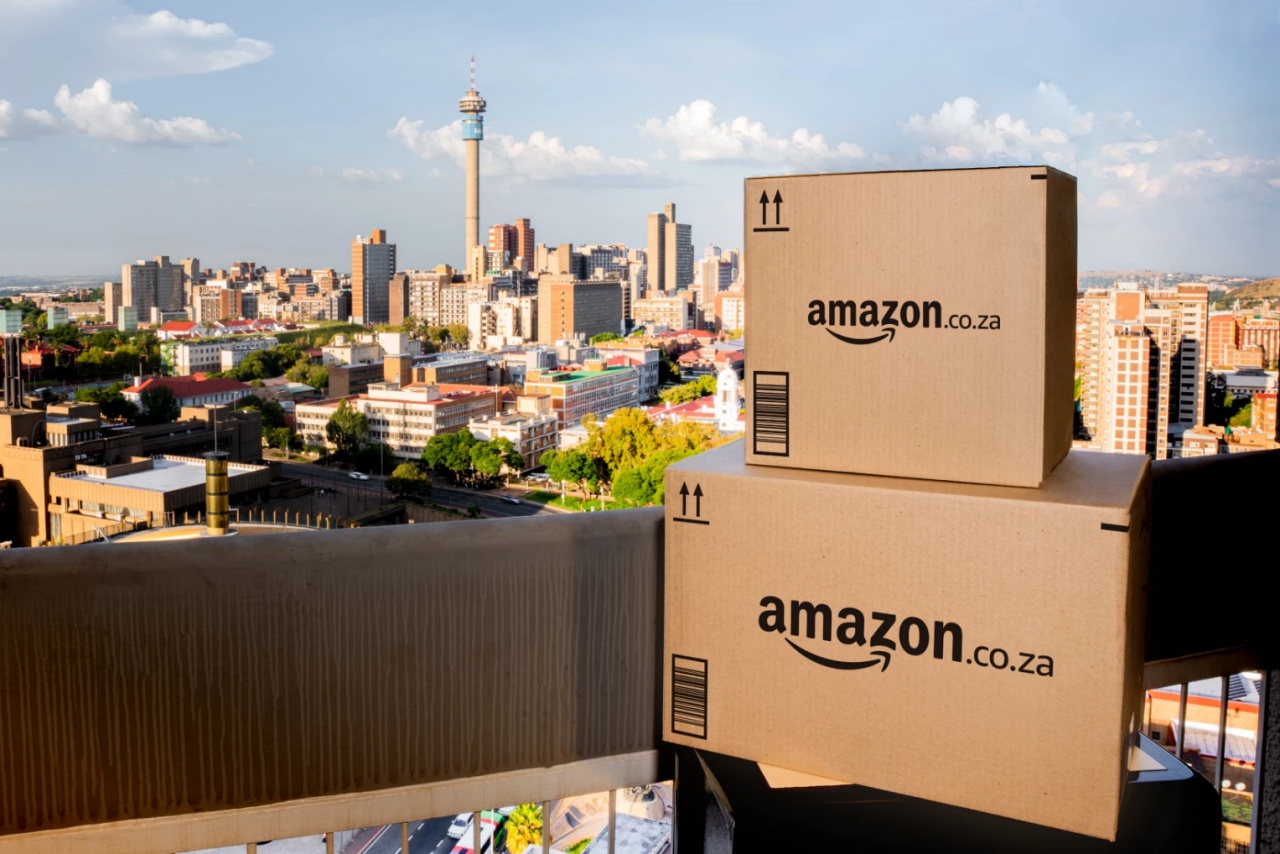
Anthropic releases Claude Design with Opus 4.7 amid US government pressure
Anthropic released Claude Design, powered by Claude Opus 4.7, on April 17, showing no slowdown in commercial deployment despite U.S. government pressure. The Claude 4.7 release date market has resolved at 100% YES. Market reaction The release date market is fully resolved, so there's no remaining trading opportunity there. The AI Model Rankings by April market could see movement depending on how Claude Opus 4.7 performs against competitors. The source tier on this news is too low to trigger significant shifts immediately. Why it matters Anthropic's decision to deploy Claude Opus 4.7 commercially signals a push forward even as the Pentagon remains wary of its AI's safety guardrails. This doesn't ease those tensions, but it does indicate Anthropic's confidence in the product's market position. The AI Model Rankings market would move if credible benchmarks confirm Claude Opus 4.7's strength relative to Google and OpenAI offerings. What to watch Substantive changes in rankings require validation from reputable benchmarking organizations. Buying YES in the AI rankings market at this stage is speculative without concrete data on Claude Opus 4.7's comparative performance. The end-of-April rankings, just 10 days away, will determine whether this release translates into a measurable competitive gain. Traders should monitor upcoming results from AI benchmarking organizations and any shifts in Anthropic's strategic partnerships. API access

Dow Jones Top Company Headlines at 9 PM ET: Anthropic, Amazon Tighten Bond in $5 Billion Investment and Computing Deal | Tim ...
Anthropic, Amazon Tighten Bond in $5 Billion Investment and Computing Deal Amazon will invest as much as $25 billion in the AI company, which will secure up to 5 gigawatts in badly needed computing power in the pact. John Ternus, head of the company's hardware division, will succeed Cook, who will become executive chairman. ---- Spirit Airlines in Talks With Trump Administration on Government Investment Florida-based Spirit has been working to sell some planes and refocus operations on core cities. ---- Rio Tinto's Iron Ore, Copper Production Rose in First Quarter Rio Tinto said it produced more iron ore, copper and aluminum in the first quarter of the year, while reassuring investors of limited impacts to date from the conflict in the Middle East. ---- Alaska Air Group Suspends Guidance, Citing Fuel Cost Uncertainty "Until conditions stabilize and we have better sight to earnings beyond the current quarter, we have suspended full-year guidance," the company said. ---- Zions Bancorp Reports Higher First-Quarter Profit The Salt Lake City-based regional bank posted a quarterly profit of $232 million, up from $169 million a year earlier. ---- Steel Dynamics Posts Higher First-Quarter Profit, Sales Amid Growth in Steel Shipments The steel producer posted a profit of $403.4 million amid increased steel prices and a rise in demand for steel. ---- Red Lobster's Endless Shrimp Is Back-With a Few Strings Attached The seafood chain is bringing back the promotion for the first time since bankruptcy, with some limits. ---- Home Builder Margins Haven't Hit Bottom Yet. D.R. Horton's Earnings Will Offer Clues. D.R. Horton will likely see a 'relatively soft quarter,' one analyst says. ---- AST SpaceMobile's stock falls after failure of Jeff Bezos-backed satellite launch Blue Origin successfully launched AST SpaceMobile's satellite to orbit, but it was at the wrong altitude. ---- Cleveland-Cliffs Earnings Boosted by Trump Trade Enforcement. The Stock Is Still Down. The steel maker reported first-quarter Ebitda of $95 million, including an $80 million oneâ'time energy cost impact. Wall Street was looking for Ebitda of about $92 million. ---- Blackstone-Backed Jersey Mike's Subs Files Confidentially for IPO Jersey Mike's said the number of shares it plans to offer and the price range for the proposed offering haven't yet been determined. ---- Bipartisan Senators Warn United and American Airlines on Potential Merger Though American has rejected a deal, lawmakers asked both carriers to share how it could affect routes and fares. Under terms of the deal, certain affiliates of Blue Owl Real Estate Capital will buy all outstanding shares of Sila's common stock for $30.38 apiece, the company said. ---- McKesson to Sell Stake of Medical-Surgical Unit to Apollo McKesson said Apollo affiliates agreed to buy a minority ownership interest in its medical-surgical solutions business ahead of the unit's planned spinoff. ---- Honeywell to Sell Productivity Unit for $1.4 Billion Brady Corp. agreed to acquire Honeywell International's productivity solutions and services business for $1.4 billion. ---- USA Rare Earth to Acquire Serra Verde in $2.8 Billion Deal USA Rare Earth has agreed to acquire the owner of a rare-earth mine and processing plant in Brazil, a move that would strengthen its mine-to-magnets supply chain amid geopolitical tensions between the U.S. and China.

Amazon invests another $5 bn in Anthropic
As Amazon invests billions of dollars in Anthropic, the AI startup commits to spending heavily on the tech titan's AWS cloud computing technology Amazon on Monday said it pumped another $5 billion into Anthropic as it ramps up its collaboration with the startup behind Claude artificial intelligence. The e-commerce and cloud computing colossus noted that the investment builds on $8 billion it had already invested in Anthropic, according to the companies. Amazon added that it could invest $20 billion more in Anthropic, provided the startup meets certain performance goals. For its part, San Francisco-based Anthropic said it has committed to spending more than $100 billion on Amazon Web Services (AWS) technology to power AI in the coming decade. "We need to build the infrastructure to keep pace with rapidly growing demand," Anthropic chief executive Dario Amodei said in a release. "Our collaboration with Amazon will allow us to continue advancing AI research while delivering Claude to our customers." Anthropic said in early April that it had tripled its annualized revenues quarter-on-quarter to over $30 billion -- outpacing OpenAI for the first time. Amodei visited US officials last week at the White House, where they struck a different tone from the dispute that erupted in February, when the AI startup infuriated Pentagon chief Pete Hegseth by insisting its technology should not be used for mass surveillance or fully autonomous weapons systems. "We discussed opportunities for collaboration, as well as shared approaches and protocols to address the challenges associated with scaling this technology," a White House spokesperson told AFP. The rhetoric marks a departure from months earlier, when President Donald Trump instructed the US government to "immediately cease" using Anthropic's technology after the company refused to allow the Pentagon unconditional use of its Claude AI models. Anthropic has challenged the Trump administration in court, as well as Hegseth's move to add the company to a list of firms that pose a "supply chain risk." Earlier this month, Anthropic announced its newest AI model Mythos, withholding it from public release due to its potential cybersecurity risks.
Amazon invests another $5 bn in Anthropic
Amazon on Monday said it pumped another $5 billion into Anthropic as it ramps up its collaboration with the startup behind Claude artificial intelligence. The e-commerce and cloud computing colossus noted that the investment builds on $8 billion it had already invested in Anthropic, according to the companies. Amazon added that it could invest $20 billion more in Anthropic, provided the startup meets certain performance goals. For its part, San Francisco-based Anthropic said it has committed to spending more than $100 billion on Amazon Web Services (AWS) technology to power AI in the coming decade. "We need to build the infrastructure to keep pace with rapidly growing demand," Anthropic chief executive Dario Amodei said in a release. "Our collaboration with Amazon will allow us to continue advancing AI research while delivering Claude to our customers." Anthropic said in early April that it had tripled its annualized revenues quarter-on-quarter to over $30 billion -- outpacing OpenAI for the first time. Amodei visited US officials last week at the White House, where they struck a different tone from the dispute that erupted in February, when the AI startup infuriated Pentagon chief Pete Hegseth by insisting its technology should not be used for mass surveillance or fully autonomous weapons systems. "We discussed opportunities for collaboration, as well as shared approaches and protocols to address the challenges associated with scaling this technology," a White House spokesperson told AFP. The rhetoric marks a departure from months earlier, when President Donald Trump instructed the US government to "immediately cease" using Anthropic's technology after the company refused to allow the Pentagon unconditional use of its Claude AI models. Anthropic has challenged the Trump administration in court, as well as Hegseth's move to add the company to a list of firms that pose a "supply chain risk." Earlier this month, Anthropic announced its newest AI model Mythos, withholding it from public release due to its potential cybersecurity risks. gc/sla
Amazon invests another $5 bn in Anthropic
As Amazon invests billions of dollars in Anthropic, the AI startup commits to spending heavily on the tech titan's AWS cloud computing technology Amazon on Monday said it pumped another $5 billion into Anthropic as it ramps up its collaboration with the startup behind Claude artificial intelligence. The e-commerce and cloud computing colossus noted that the investment builds on $8 billion it had already invested in Anthropic, according to the companies. Amazon added that it could invest $20 billion more in Anthropic, provided the startup meets certain performance goals. For its part, San Francisco-based Anthropic said it has committed to spending more than $100 billion on Amazon Web Services (AWS) technology to power AI in the coming decade. "We need to build the infrastructure to keep pace with rapidly growing demand," Anthropic chief executive Dario Amodei said in a release. "Our collaboration with Amazon will allow us to continue advancing AI research while delivering Claude to our customers." Anthropic said in early April that it had tripled its annualized revenues quarter-on-quarter to over $30 billion -- outpacing OpenAI for the first time. Amodei visited US officials last week at the White House, where they struck a different tone from the dispute that erupted in February, when the AI startup infuriated Pentagon chief Pete Hegseth by insisting its technology should not be used for mass surveillance or fully autonomous weapons systems. "We discussed opportunities for collaboration, as well as shared approaches and protocols to address the challenges associated with scaling this technology," a White House spokesperson told AFP. The rhetoric marks a departure from months earlier, when President Donald Trump instructed the US government to "immediately cease" using Anthropic's technology after the company refused to allow the Pentagon unconditional use of its Claude AI models. Anthropic has challenged the Trump administration in court, as well as Hegseth's move to add the company to a list of firms that pose a "supply chain risk." Earlier this month, Anthropic announced its newest AI model Mythos, withholding it from public release due to its potential cybersecurity risks.
Amazon invests another $5 bn in Anthropic
As Amazon invests billions of dollars in Anthropic, the AI startup commits to spending heavily on the tech titan's AWS cloud computing technology Amazon on Monday said it pumped another $5 billion into Anthropic as it ramps up its collaboration with the startup behind Claude artificial intelligence. The e-commerce and cloud computing colossus noted that the investment builds on $8 billion it had already invested in Anthropic, according to the companies. Amazon added that it could invest $20 billion more in Anthropic, provided the startup meets certain performance goals. For its part, San Francisco-based Anthropic said it has committed to spending more than $100 billion on Amazon Web Services (AWS) technology to power AI in the coming decade. "We need to build the infrastructure to keep pace with rapidly growing demand," Anthropic chief executive Dario Amodei said in a release. "Our collaboration with Amazon will allow us to continue advancing AI research while delivering Claude to our customers." Anthropic said in early April that it had tripled its annualized revenues quarter-on-quarter to over $30 billion -- outpacing OpenAI for the first time. Amodei visited US officials last week at the White House, where they struck a different tone from the dispute that erupted in February, when the AI startup infuriated Pentagon chief Pete Hegseth by insisting its technology should not be used for mass surveillance or fully autonomous weapons systems. "We discussed opportunities for collaboration, as well as shared approaches and protocols to address the challenges associated with scaling this technology," a White House spokesperson told AFP. The rhetoric marks a departure from months earlier, when President Donald Trump instructed the US government to "immediately cease" using Anthropic's technology after the company refused to allow the Pentagon unconditional use of its Claude AI models. Anthropic has challenged the Trump administration in court, as well as Hegseth's move to add the company to a list of firms that pose a "supply chain risk." Earlier this month, Anthropic announced its newest AI model Mythos, withholding it from public release due to its potential cybersecurity risks.
Amazon invests another $5 bn in Anthropic
As Amazon invests billions of dollars in Anthropic, the AI startup commits to spending heavily on the tech titan's AWS cloud computing technology Amazon on Monday said it pumped another $5 billion into Anthropic as it ramps up its collaboration with the startup behind Claude artificial intelligence. The e-commerce and cloud computing colossus noted that the investment builds on $8 billion it had already invested in Anthropic, according to the companies. Amazon added that it could invest $20 billion more in Anthropic, provided the startup meets certain performance goals. For its part, San Francisco-based Anthropic said it has committed to spending more than $100 billion on Amazon Web Services (AWS) technology to power AI in the coming decade. "We need to build the infrastructure to keep pace with rapidly growing demand," Anthropic chief executive Dario Amodei said in a release. "Our collaboration with Amazon will allow us to continue advancing AI research while delivering Claude to our customers." Anthropic said in early April that it had tripled its annualized revenues quarter-on-quarter to over $30 billion -- outpacing OpenAI for the first time. Amodei visited US officials last week at the White House, where they struck a different tone from the dispute that erupted in February, when the AI startup infuriated Pentagon chief Pete Hegseth by insisting its technology should not be used for mass surveillance or fully autonomous weapons systems. "We discussed opportunities for collaboration, as well as shared approaches and protocols to address the challenges associated with scaling this technology," a White House spokesperson told AFP. The rhetoric marks a departure from months earlier, when President Donald Trump instructed the US government to "immediately cease" using Anthropic's technology after the company refused to allow the Pentagon unconditional use of its Claude AI models. Anthropic has challenged the Trump administration in court, as well as Hegseth's move to add the company to a list of firms that pose a "supply chain risk." Earlier this month, Anthropic announced its newest AI model Mythos, withholding it from public release due to its potential cybersecurity risks.