News & Updates
The latest news and updates from companies in the WLTH portfolio.
Amazon and Anthropic Strengthen Strategic Partnership
Amazon and Anthropic have expanded their strategic partnership, aiming to enhance artificial intelligence capabilities. This collaboration focuses on advancing technology infrastructure and delivering robust AI solutions. Details of the Partnership The enhanced collaboration will involve significant investments from both companies. This partnership emphasizes the development of new features and models to strengthen their offerings in the AI sector. Goals and Expectations * Investment in evolving AI frameworks * Optimization of AI safety and security measures * Increasing the reliability and effectiveness of AI applications As part of the initiative, Amazon plans to leverage its Trainium chips, designed for AI workloads. This technology aims to improve compute capacities and performance metrics. Broader Economic Context The partnership's success will depend on various external factors. Key considerations include fluctuations in global economic conditions, customer demand, and international trade dynamics. Additionally, changes in energy prices and supply chain constraints may influence outcomes. Both companies acknowledge potential risks associated with their collaborative efforts. These include market competition, data security challenges, and regulatory concerns that could impact deployment timelines. Future Outlook Amazon and Anthropic are committed to navigating these challenges. They intend to effectively manage growth and explore new business opportunities in the evolving AI landscape. For more updates on this partnership and advancements in AI technologies, stay connected with El-Balad.

Banking Titans Scramble for Anthropic's Mythos Amid Cybersecurity Concerns | Technology
Anthropic's new AI model, Mythos, is prompting a rush among banks to gain access as regulators examine its cybersecurity risks. While some banks, like JPMorgan and Citigroup, are testing the technology, others highlight concerns over limited access. European and Asian regulators are also monitoring developments cautiously. The latest AI model from Anthropic, known as Mythos, is causing a frenzy within the banking sector as they seek to secure access and assess its potential cybersecurity implications. During the spring meeting of the International Monetary Fund in Washington, regulators voiced concerns about the significant challenges Mythos presents to existing banking systems. Access to Mythos has been restricted, yet major banks like JPMorgan and Citigroup are currently testing its applications internally, while other financial institutions are playing catch-up. Deutsche Bank CEO Christian Sewing emphasized the need for caution but acknowledged that financial institutions must integrate such advancements into their cybersecurity strategies. Global regulators, including those from Europe and Asia, are keeping a close eye on the developments, with some UK officials labeling Mythos as extraordinarily adept at cyber offense. The unfolding situation underscores the duality of AI innovation: while opportunities abound, so do new and elevated risks that affect industries at large.

Banking industry scrambles for Anthropic's Mythos as global regulators review risks
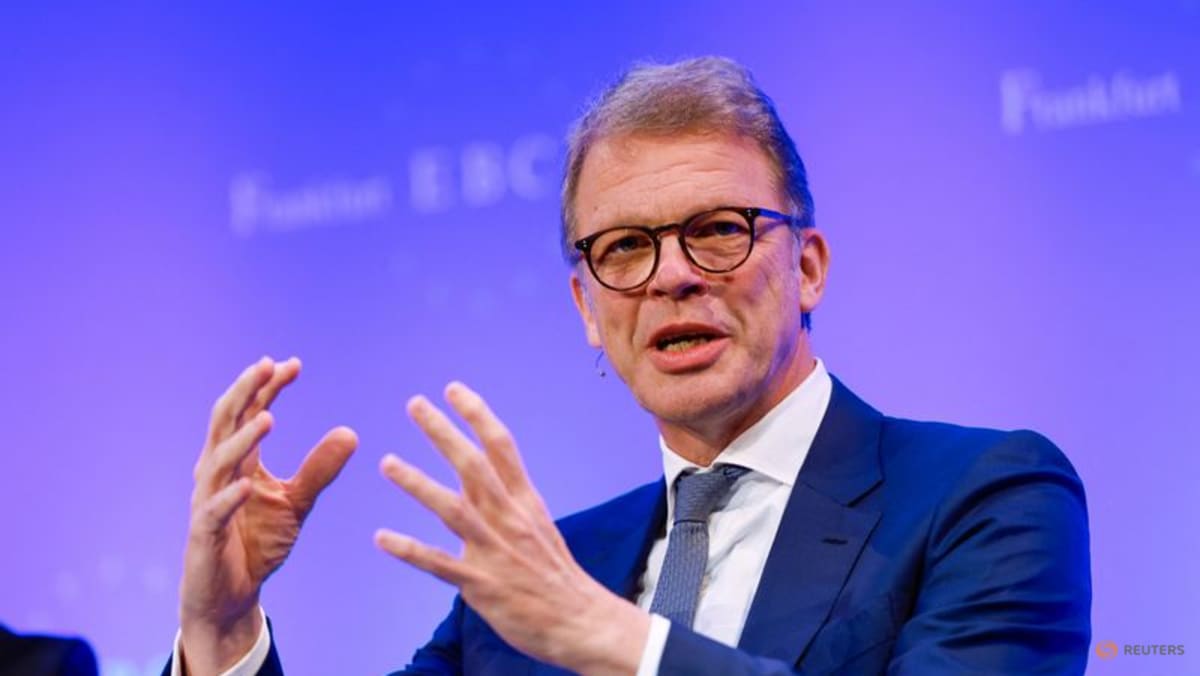
FRANKFURT/NEW YORK, April 20 : The emergence of Anthropic's Mythos is setting up a scramble from the banking industry to gain access and test the technology as regulators rush to examine the cybersecurity risks the new artificial intelligence model raises and how prepared financial firms are to tackle them. Mythos is viewed by cybersecurity experts as posing significant challenges to the banking industry and its legacy technology systems, prompting a series of warnings from regulators and policymakers gathered at last week's International Monetary Fund spring meeting in Washington. A string of U.S. banks have so far been given access to Mythos - while the rest of the industry tries to catch up. "It's certainly not something that's causing panic or setting off any alarm bells on our end right now, but it's definitely something we need to keep in mind in our day-to-day risk management - and that's exactly what we're doing," Deutsche Bank CEO Christian Sewing, who leads Germany's biggest bank, told journalists. Sewing said banks were in close contact with European watchdogs about Mythos. "The banks are prepared for this and have their own responses. So this is something we have to live with, and of course everyone is trying to gain access, but I also think it's right that access is limited for now," he said, adding that a German banking association would discuss the issue on Monday. Anthropic has so far restricted access to the model to partners in its Project Glasswing initiative and about 40 additional organisations that build or maintain critical software infrastructure. JPMorgan, which is part of Glasswing, was the only bank Anthropic has publicly said has access, although Bank of America has been part of Glasswing since the start and has been testing the Mythos technology internally, according to a source familiar with the matter. Other U.S. banks have more recently said they have been given access to Mythos. Morgan Stanley CEO Ted Pick told analysts during the bank's earnings call last week that the bank has been discussing cyber risks within the Financial Services Forum. "And yes, we are permissioned on Claude Mythos Preview," he said, adding that cyber risk is an increasing threat. "So we will, I imagine, collectively get better via that, and then there will be other competitive products." Goldman Sachs CEO David Solomon also confirmed during the bank's earnings last week that it had access. "We're aware of Mythos and its capabilities," Solomon said on the call. "We have the model. We're working closely with Anthropic and all of our security vendors to kind of harness frontier capabilities wherever it's possible." Citigroup also has access to Mythos and is using it for internal tests, one person with knowledge of the matter said. Some banks without access have questioned whether there should be broader access to Mythos and whether JPM received an advantage, a topic that is likely to be raised with the U.S. Treasury, a source familiar with the matter said. JPM declined comment. The Treasury and Anthropic did not immediately respond to requests for comment. Multiple senior banking and regulatory sources in Europe told Reuters they were not aware of any European financial institution with access to Mythos yet. 'SUBSTANTIALLY MORE CAPABLE AT CYBER OFFENCE' The British government wrote an open letter to Anthropic leaders on April 15 saying that testing by its AI Security Institute had shown Mythos to be "substantially more capable at cyber offence than any model we have previously assessed." Some Asian regulators said on Monday they were also monitoring the development. South Korea's Financial Supervisory Service said it met with information security officials from financial firms last week to review Mythos-related risks. Mythos was a key topic on the sidelines of the IMF meetings last week. European supervisors are not yet overly concerned and for now are assessing it through their existing cyber resilience processes, three European supervisory sources told Reuters. One banking source said the ECB and other regulators have been in contact with European banks to assess their preparedness for new cybersecurity risks. Supervisors have asked about banks' awareness of the threat and their ability to respond, the source said. The capabilities of Mythos to code at a high level have given it a potentially unprecedented ability to identify cybersecurity vulnerabilities, experts say, prompting greater scrutiny from regulators globally. Barclays CEO C. S. Venkatakrishnan said on Friday in Washington that Mythos was a serious threat to the global banking system and likely to be followed by similar, more powerful cyberthreats.
France cuts €4B spending as Polymarket eyes no Fed rate cuts in 2026
France's decision to cut €4 billion in spending has coincided with movement in the Polymarket contract on no Fed rate cuts in 2026, now at YES, down from 41% a week ago. Market reaction The market for no Fed rate cuts in 2026 sits at YES. France's budget cuts paired with increased defense spending feed into broader inflationary pressures that could keep the Fed from cutting rates. Sub-markets for one through four Fed rate cuts each hold at roughly 35% YES, which means traders have no strong consensus on the number of cuts. Why it matters Daily face value is $22,374 with $7,932 in actual USDC traded. It costs $3,205 to move the odds 5 points, enough liquidity for small positions but vulnerable to swings from larger trades. The biggest recent price movement was a 1-point drop. France trying to cut spending while simultaneously raising military budgets points to fiscal strain and competing priorities. If these dynamics push inflation expectations higher globally, the case for the Fed holding rates steady strengthens. What to watch A YES share at pays $1 if the Fed makes no cuts, a return. That bet depends on inflation pressures persisting without a major shift in economic forecasts. Traders should watch for upcoming statements from Jerome Powell and Austan Goolsbee. Any comments on inflation expectations or economic conditions could move this market quickly. API access
Anthropic to spend over $100 billion on Amazon's cloud technology By Reuters
Risk Disclosure: Trading in financial instruments and/or cryptocurrencies involves high risks including the risk of losing some, or all, of your investment amount, and may not be suitable for all investors. Prices of cryptocurrencies are extremely volatile and may be affected by external factors such as financial, regulatory or political events. Trading on margin increases the financial risks. Before deciding to trade in financial instrument or cryptocurrencies you should be fully informed of the risks and costs associated with trading the financial markets, carefully consider your investment objectives, level of experience, and risk appetite, and seek professional advice where needed. Fusion Media would like to remind you that the data contained in this website is not necessarily real-time nor accurate. The data and prices on the website are not necessarily provided by any market or exchange, but may be provided by market makers, and so prices may not be accurate and may differ from the actual price at any given market, meaning prices are indicative and not appropriate for trading purposes. Fusion Media and any provider of the data contained in this website will not accept liability for any loss or damage as a result of your trading, or your reliance on the information contained within this website. It is prohibited to use, store, reproduce, display, modify, transmit or distribute the data contained in this website without the explicit prior written permission of Fusion Media and/or the data provider. All intellectual property rights are reserved by the providers and/or the exchange providing the data contained in this website. Fusion Media may be compensated by the advertisers that appear on the website, based on your interaction with the advertisements or advertisers.

Amazon invests $100B to boost Anthropic partnership | News.az
On April 20, 2026, Amazon.com Inc announced an enhanced partnership with Anthropic, committing over $100 billion to Amazon Web Services (AWS) over the next decade. This investment will focus on developing and deploying Amazon's proprietary silicon, Trainium, alongside millions of Graviton CPU cores to optimize performance and cost-efficiency, News.Az reports, citing foreign media. The partnership between Amazon and Anthropic marks a significant step in the tech giant's strategy to enhance its cloud computing capabilities. The collaboration includes a substantial financial commitment, with Anthropic set to receive up to 5 gigawatts of power for training its AI models. This move is expected to bolster Amazon's AWS offerings, especially with the anticipated operational capacity of Trainium3 within the year. The agreement also aims to expand Anthropic's Claude platform, enhancing its international inference capabilities across Asia and Europe, thereby catering to a growing global customer base. Amazon.com Inc is a leading online retailer and marketplace for third-party sellers, with a market capitalization of approximately $2.67 trillion. The company operates primarily in the Consumer Cyclical sector, generating around 74% of its revenue from retail-related activities, 17% from AWS, and 9% from advertising services. The international segments contribute 22% of total revenue, with significant operations in Germany, the United Kingdom, and Japan. How is AMZN valued? Currently, GF Value™ data is not available for Amazon. However, the company's P/E ratio of 34.63 indicates that investors are willing to pay a premium for its earnings, reflecting confidence in its growth prospects. This P/E ratio is close to its one-year high of 36.37, suggesting that the stock may be approaching a peak valuation. For more detailed insights, visit the AMZN stock page.
Anthropic to spend over $100 billion over a decade on Amazon's cloud tech
April 20 (Reuters) - Amazon said on Monday that Anthropic will spend more than $100 billion over the next 10 years on its cloud technologies, deepening their relationship as the AI startup rushes to secure capacity to bolster its models. Amazon will also invest $5 billion in Anthropic now, and an additional $20 billion in the future, subject to certain commercial milestones. This is in addition to the $8 billion Amazon has previously invested in the company. Anthropic is aiming to pull ahead in the AI race with a slew of model releases focusing on coding and design, while Amazon seeks customers for its custom silicon chips built for artificial intelligence training and inference. Amazon shares rose around 2.5% in extended trading. (Reporting by Zaheer Kachwala in Bengaluru; Editing by Pooja Desai)

Polymarket Eyes $400M Raise at $15B Valuation Amid Surging Prediction Market Demand: Report
Polymarket's latest funding talks could push its valuation to $15 billion. Prediction markets platform Polymarket is in discussions with investors to raise $400 million in fresh funding, which could place its valuation at around $15 billion, according to a report by The Information. The move comes shortly after competitor Kalshi completed a $1 billion funding round that put the company at about $22 billion. The new financing round is expected to bring the total capital raised to around $1 billion if additional strategic investors are included. Polymarket recently announced a $600 million investment from Intercontinental Exchange, the parent company of the New York Stock Exchange (NYSE), as part of its plan to allocate up to $2 billion toward expanding into event-based trading. The fundraising efforts come amid growing interest in prediction markets, which allow users to trade on the outcomes of real-world events. The sector has seen a surge in trading volumes and user participation, and has attracted the attention of institutional investors aiming to capitalize on the expanding market. According to estimates from brokerage firm Bernstein, volumes from prediction markets are expected to reach $1 trillion annually by 2030. Major platforms such as Kalshi and Polymarket registered trading volumes of around $60 billion so far this year, surpassing the $51 billion recorded in all of 2025. Bernstein projects total volumes will climb to $240 billion in 2026, which will be a 370% increase year-on-year, and expects the market to grow at a compound annual rate of about 80% through the end of the decade. Growth has been driven by rising participation and expanding contract categories, including sports, crypto assets, and macroeconomic events. Weekly volumes on Kalshi have also reached over $3 billion compared to roughly $100 million a year earlier. Despite rapid growth in prediction market activity, concerns around misuse and oversight continue to surface. Earlier this month, Lookonchain identified a group of newly created wallets that earned about $663,000 on Polymarket by correctly betting on a US-Iran ceasefire shortly before it occurred. The accounts had no prior activity and placed trades at low implied probabilities, which raised questions of insider knowledge. Meanwhile, Israeli authorities charged an IDF reservist and a civilian for allegedly using classified military information to place bets on Polymarket, following an investigation involving multiple security agencies. Prosecutors said such actions posed risks to national security. Additionally, regulatory pressure has intensified across the globe. For instance, in March, a court in Buenos Aires ordered a nationwide block on Polymarket, citing its operation as an unlicensed betting platform and flagging gaps in identity checks and payment controls, including the use of cryptocurrencies and credit cards without standard compliance measures.

Vercel Breach Linked to Context.ai, ShinyHunters Says It's Not Involved - IT Security News
The technical storage or access is necessary for the legitimate purpose of storing preferences that are not requested by the subscriber or user. The technical storage or access that is used exclusively for statistical purposes. The technical storage or access that is used exclusively for anonymous statistical purposes. Without a subpoena, voluntary compliance on the part of your Internet Service Provider, or additional records from a third party, information stored or retrieved for this purpose alone cannot usually be used to identify you.

Anthropic to spend over $100 billion over a decade on Amazon's cloud tech
April 20 (Reuters) - Amazon said on Monday that Anthropic will spend more than $100 billion over the next 10 years on its cloud technologies, deepening their relationship as the AI startup rushes to secure capacity to bolster its models. Amazon will also invest $5 billion in Anthropic now, and an additional $20 billion in the future, subject to certain commercial milestones. This is in addition to the $8 billion Amazon has previously invested in the company. Anthropic is aiming to pull ahead in the AI race with a slew of model releases focusing on coding and design, while Amazon seeks customers for its custom silicon chips built for artificial intelligence training and inference. Amazon shares rose around 2.5% in extended trading. (Reporting by Zaheer Kachwala in Bengaluru; Editing by Pooja Desai)
Anthropic says it will put AI risks 'on the table' with Mythos model
American AI developer Anthropic plans to "lay the risks out on the table" even as it restricts deployment of a new model dubbed Mythos, whose powerful cybersecurity capabilities raise stark questions for companies and governments. "We have a model that's beginning to outstrip human capabilities in the cyber world," Anthropic's Paris-based chief of relations with startups and tech firms Guillaume Princen told AFP in an interview. Mythos is "capable of spotting security holes that have existed for decades, in systems tested by both human experts and automated tools, that have never been discovered before," he added. Anthropic has delayed a general release of Mythos, sharing it first with a few dozen key American tech and financial services players -- such as Nvidia, Amazon, Apple and JP Morgan Chase -- to allow them to test and improve their security infrastructure. But the company has also been accused of overhyping the powers of a technology which is its stock in trade -- and the subject of fierce competition with rival OpenAI. The Mythos news broke as rumors grow that Anthropic will list on the stock market this year. "We prefer to be transparent and lay these risks out on the table," Princen said, adding that AI safety concerns are "central to Anthropic's DNA". "We don't have all the answers, this has to be a conversation between tech actors like us who have the data, the academic world, the political world and the world of economists," he added. Mythos' reported capabilities have unsettled the American financial sector and the European Union, which requested more information from Anthropic. In an open letter to businesses, the British government said that Mythos "highlights the speed at which AI capabilities are increasing and the threats they potentially pose". No European company is part of Anthropic's "Project Glasswing" consortium for shoring up cyber defenses using Mythos' findings. That has raised questions about how prepared the rest of the world will be for the offensive capabilities of US-owned AI. Mythos is "certainly not a model that will soon be opened to the public at large, for obvious reasons," Princen said. Anthropic is nevertheless "thinking about the next waves of opening up," he added. Europe is the region where Anthropic sees the fastest growth. Its Claude Code software development tool generates around $2.5 billion in annualized revenue -- a figure based on extrapolating from a few recent weeks of sales. Much of that expansion comes from "European firms riding the wave" of AI, Princen said. The company has opened offices in Dublin, London, Paris and Munich, and wants to keep investing across the continent. "We go where the demand is," Princen said, pointing to partnerships with European firms like Swedish coding startup Lovable or Danish pharma company Novo Nordisk. Relatively unknown to the wider public until recently, Anthropic was founded in 2021 by former OpenAI staff and makes around 80 percent of its revenue from business-to-business sales. The company and its Claude chatbot surged in prominence in late February, when bosses refused to allow its AI tools to be used by the Pentagon for mass surveillance of American citizens or fully autonomous weapons. The Trump administration responded by designating Anthropic a so-called "supply chain risk" to national security -- a decision being contested in multiple legal cases. In legal documents seen by AFP, Anthropic finance chief Krishna Rao warned that Washington's move could cost the firm multiple billions in revenue this year. On the other hand, "there are a lot of people who started using Claude precisely because of the position we took on that question," Princen said. Anthropic said in early April that it had tripled its annualised revenues quarter-on-quarter to over $30 billion -- outpacing OpenAI for the first time. © 2026 AFP

Morningstar considers revamping index construction ahead of SpaceX IPO
PROVIDENCE, Rhode Island, April 20 (Reuters) - Investment research and analysis provider Morningstar Inc. is the latest index provider to consider revising its approach to designing its market indexes in light of SpaceX's outsize pending initial public offering. Elon Musk's space transportation and exploration business is on track to issue as much as $75 billion of stock in an initial public offering that could value the company at $1.75 trillion, making it by far the largest IPO ever recorded and raising unprecedented challenges for investors about how and whether to add it to their portfolios. Morningstar, eyeing not only the pending SpaceX launch but also other similarly mammoth deals from companies like Anthropic and OpenAI later this year, said it will introduce what it refers to as an alternative way to gauge liquidity of these "unicorns" immediately following their debuts. This would address what is known as the free float requirement, or the requirement that a new public company have a minimum number of shares publicly available for trading. Morningstar said its CRSP Market Indexes will "undergo enhancements to introduce an alternative liquidity screen", making it possible to add SpaceX and other giant IPOs to these benchmarks more rapidly. The funds that use the CRSP indexes as a portfolio benchmark include Vanguard's $607 billion Total Stock Market ETF. "Index providers must evolve eligibility rules to keep their benchmarks relevant to new market realities," a company spokesman said in an e-mail to Reuters. Morningstar is the latest firm to wrestle with how to deal with this year's crop of pending IPOs from market giants like SpaceX. Current guidelines were established when U.S. IPOs tended to be of smaller companies, often still unprofitable, with limited track records and revenue. Companies like SpaceX, however, are waiting until they are older or much larger to go public, and index and exchange executives say that requires a new approach on their part. Nasdaq plans to alter the rules governing the makeup of its Nasdaq-100 Index to allow companies meeting certain criteria to be added to the mix in a fast-track process. That would cut any delay in adding newly listed companies from several months to only 15 days, Nasdaq told Reuters. Separately, S&P Dow Jones Global Indices is contemplating adjusting its own rules regarding the Standard & Poor's 500-stock index and other products, according to a report from Bloomberg in mid-March. The current S&P rules require 10% of a company's stock to trade freely. A spokesperson for S&P Dow Jones Global Indices declined further comment. Not all investors welcome these moves, however. "The fact that some of these indexes may be lowering their standards in order to include exposure to the explosion of big growth IPOs that nobody wants to miss out on owning, is concerning," said Mark Malek, chief investment officer at Siebert Financial. "Size isn't everything. I look to these index providers to make sure that the stocks they include meet some kind of standard, and I'm not sure that some of the proposed changes will allow for that." (Reporting by Suzanne McGee in Providence, Rhode Island; Editing by Daniel Wallis)

Amazon to invest $5 billion in Anthropic with up to $20 billion more planned
The Claude maker is widening its infrastructure moat as demand surges, valuation climbs, and new alliances with Google, Broadcom, and enterprise partners expand its reach. Anthropic is deepening its relationship with Amazon through a deal that commits the AI startup to spend more than $100 billion on AWS technologies over the next decade, while Amazon plans to invest $5 billion immediately and up to another $20 billion tied to commercial milestones. The agreement gives Anthropic access to as much as 5 gigawatts of current and future Trainium chip capacity to train and run advanced Claude models. The move builds on a relationship that has expanded quickly since 2023. More than 100,000 customers already run Claude on AWS, and the two companies have also been working together on Project Rainier, a massive AI compute cluster built around Amazon's custom Trainium chips. AWS customers will also be able to access the Claude Platform directly inside AWS, expanding distribution beyond Amazon Bedrock. The Amazon deal is part of a much broader partnership push by Anthropic. Earlier this month, the company said it had signed a new agreement with Google and Broadcom for multiple gigawatts of next generation TPU capacity expected to start coming online in 2027. Anthropic said that partnership marks its biggest compute commitment to date and comes as annualized revenue run rate surpassed $30 billion, up from about $9 billion at the end of 2025. Anthropic has also been widening its enterprise channel. In March, it launched the Claude Partner Network with a $100 million commitment for training, technical support, certifications, and joint go to market work with consulting and services firms. The company said Claude is now the only frontier AI model available across AWS, Google Cloud, and Microsoft, underscoring its effort to distribute through every major enterprise cloud rather than lock itself into a single ecosystem. That enterprise push has extended into industry specific and security focused partnerships as well. Anthropic's financial services offering, launched last year, was built to connect Claude with market and enterprise data platforms such as Databricks and Snowflake. More recently, Anthropic launched its Mythos cybersecurity initiative with major partners and expanded access to dozens of organizations responsible for critical software infrastructure, alongside a commitment of up to $100 million in usage credits and $4 million in donations to open source security groups. The company has received venture capital interest at valuations as high as $800 billion, more than double its current level, after a February funding round valued Anthropic at $380 billion.

Anthropic to spend over $100 billion over a decade on Amazon's cloud tech
April 20 : Amazon said on Monday that Anthropic will spend more than $100 billion over the next 10 years on its cloud technologies, deepening their relationship as the AI startup rushes to secure capacity to bolster its models. Amazon will also invest $5 billion in Anthropic now, and an additional $20 billion in the future, subject to certain commercial milestones. This is in addition to the $8 billion Amazon has previously invested in the company. Anthropic is aiming to pull ahead in the AI race with a slew of model releases focusing on coding and design, while Amazon seeks customers for its custom silicon chips built for artificial intelligence training and inference. Amazon shares rose around 2.5 per cent in extended trading.
Vercel Employee's AI Tool Access Led to Data Breach
In a cascading illustration of unintended consequences, threat actors compromised an AI tool vendor, then used that access this past weekend to compromise software security vendor Vercel, and possibly other organizations, downstream. Vercel yesterday disclosed it was breached via a third-party AI tool, Context.ai. While Vercel is not a Context customer, the attacker appears to have used a compromised OAuth token belonging to a Vercel employee who signed up for Context's AI Office Suite using their Vercel Google Workspace account, granting "Allow All" permissions in the process. In a security bulletin on its website, Vercel said that this "enabled [the attacker] to gain access to some Vercel environments and environment variables that were not marked as 'sensitive,'" the company said in its online statement. As Hudson Rock pointed out in a blog post, the Context attack was apparently caused by an employee downloading cheats for the popular online game Roblox, and one of these scripts apparently contained an infostealer. "No exploit. No zero-day," David Lindner, chief information security officer (CISO) of Contrast Security, tells Dark Reading. "Just an unsanctioned AI tool, an overpermissioned OAuth grant, and a gaming cheat download. Vercel is now working with Mandiant on a breach that a threat actor [allegedly ShinyHunters] is selling for $2 million. Your employees are doing the same things on their machines right now. The question is whether you know about it." "Operational Velocity, Detailed Understanding" Vercel noted that variables marked "sensitive" are stored in a way that prevents them from being read, and that the company has no evidence such variables were accessed. Vercel is working with Mandiant for its incident response alongside other security firms, peers, Context.ai itself, and law enforcement. "We assess the attacker as highly sophisticated based on their operational velocity and detailed understanding of Vercel's systems," the company said. Once Context learned of the OAuth theft, the company said it informed impacted customers along with next steps. "While we are continuing to assess this incident, the theft of the OAuth tokens occurred prior to the AWS environment being shut down," Context's notification read. Further expanding the downstream impact, Vercel identified a limited subset of customers whose Vercel credentials were compromised; the company contacted them and recommended immediate credential rotation. Only those contacted are believed to have been compromised at this time. Dark Reading asked Vercel whether accessed variables, even if they weren't marked "sensitive," may have contained sensitive data given customers were compromised. The company declined to respond directly but emphasized that it has "contacted customers that we believe could be at risk of being compromised." "We continue to investigate whether and what data was exfiltrated and we will contact customers if we discover further evidence of compromise," the spokesperson says. We've deployed extensive protection measures and monitoring. Our services remain operational. We will continue to keep the Security Bulletin updated as well." Context, meanwhile, shared its own security advisory yesterday concerning an attack against a deprecated legacy consumer product, the Context AI Office Suite. Context said that last month, it "identified and stopped" a breach involving unauthorized access to its AWS environment. While the company engaged CrowdStrike, conducted an investigation, closed the AWS environment, and took steps to fully deprecate the associated Office Suite product, Context learned through Vercel's breach and additional investigation that the unidentified actor "also likely compromised OAuth tokens for some of our consumer users." Context Bedrock, the company's current platform product, is unaffected. Dark Reading has contacted Context for additional information. Attacks Emphasize Importance of AI Data Security Although some key details remain unknown (a given since both incidents remain under investigation), the supply-chain incident calls attention to the risks posed by AI products when data security isn't appropriately locked down. AI tools require a wide range of permissions and privileges to work, meaning that without prioritizing segmentation, zero trust, and least privilege principles, organizations remain at increased risk. It is unclear if the Vercel employee's Context AI Office Suite instance was sanctioned or an example of "shadow AI," what happens when employees use AI tools without IT oversight. Either way, it acts as a reminder to create an AI governance framework and emphasize expectations for how AI can and cannot be deployed using company resources. Vercel's blog contains indicators of compromise and recommendations. Customers should review their activity log, review and rotate environmental variables, use the sensitive environment variables going forward, investigate recent deployments for unexpected or suspicious activity, ensure that "Deployment Protection" is set to at least Standard, and to rotate Deployment Protection tokens if set. Jaime Blasco, chief technology officer (CTO) at Nudge Security, tells Dark Reading that organizations who don't want something like this to happen to them should start with OAuth consent. "Most Google Workspace and Microsoft 365 environments are still configured to let any employee grant third-party apps access to their enterprise account. Move to admin-managed consent. New apps get reviewed before they can touch corporate data. That one change would have blocked a Vercel employee from granting Context.ai enterprise-wide scopes in the first place," Blasco says. "That being said, there are hundreds of SaaS platforms that allow Oauth grants to be created and most of them allow to block these grants or gate this functionality behind an enterprise license." OAuth: The New Attack Surface Blasco says OAuth tokens are "the new attack surface," as played out in the Salesloft Drift attack, Gainsight attack, and others. Attackers compromise a small AI or SaaS vendor, steal the OAuth tokens held on behalf of customers, and conduct additional attacks downstream. "None of this required a novel AI attack technique," he says. "Agentic AI makes it worse because these platforms sit at the center of a hub of OAuth grants with expansive scopes, usually at young companies without mature security programs behind them. OAuth is the new lateral movement. Until the industry treats OAuth tokens as high-value credentials, we're going to keep reading the same breach writeup with the vendor names swapped out." Guillaume Valadon, cybersecurity researcher at GitGuardian, says the mechanics of these attacks reflect "the same identity and credential problems we've been writing about for 15 years." "What AI has really changed is the distribution of trust: teams are wiring dozens of new SaaS integrations into their core identity providers and code hosts faster than they can vet them, and each one becomes a pre-authorized path that an attacker inherits the moment the vendor is popped," Valadon says. "APIs, tokens, and OAuth scopes are still the softest part of the stack -- AI didn't create that problem, it just massively expanded the surface that depends on it."

Airline Stocks Whipsaw as Hormuz Chaos Shows Oil Trend Matters More Than Price | Investing.com India
Last Friday, Iran declared the Strait of Hormuz open to commercial shipping, prompting a sharp decline in oil prices and a surge in airline stocks. Alas, the relief lasted less than 24 hours. By Saturday, Iran's military had retaken strict control of the strait after its Revolutionary Guard Corps attacked two commercial vessels. The next day, the U.S. seized an Iranian-flagged cargo ship. Oil prices jumped 5% overnight into Monday as the ceasefire, set to expire on Wednesday, hangs by a thread. For a sector that's been whipsawed by geopolitics and fuel costs, the volatility is a reminder that the path forward won't be a straight line. But I believe the underlying investment case for airlines remains strong. This past week also brought news that United Airlines CEO Scott Kirby pitched the White House on a potential merger with American Airlines, only for American to publicly reject the idea last Friday, while Spirit Airlines is seeking emergency government aid to continue operating. How Shocks Reshape the Airline Industry First, let's talk about airline industry M&A, a topic I've discussed many times before. The history of the U.S. airline industry is really a history of consolidation driven by crisis. The pattern has been remarkably consistent. Historically, when an external shock has hit -- a recession, a war, an energy spike -- the weakest carriers have folded or been acquired, while the strongest have emerged leaner and more profitable. After deregulation in 1978, fare wars and overcapacity crushed margins and triggered the first wave of mergers through the 1980s. Later, the September 11 attacks killed TWA outright and forced US Airways into a merger with America West. The 2008 financial crisis gave us Delta-Northwest, United-Continental and Southwest-AirTran. By 2013, when American merged with US Airways, the modern "Big Three" structure was firmly in place. Today's five largest carriers -- Delta, American, United, Southwest and Alaska -- have absorbed more than 40 smaller since 1960. Now we may be starting to see it again as the war in Iran and closure of the Strait of Hormuz has sent jet fuel prices through the roof. Spirit Airlines, already in Chapter 11 for the second time in under a year, is reportedly on the verge of liquidation. Its previous merger attempts -- first with JetBlue, then with Frontier -- both fell apart. The low-cost carrier, already on shaky ground, simply couldn't absorb fuel at these prices. A United-American Merger Would Create the World's Largest Carrier Meanwhile, United's Scott Kirby reportedly pitched the most ambitious airline deal in a generation during a February 25 meeting with President Trump. A combined United-American merger would create the world's largest carrier, commanding roughly 40% of domestic capacity and generating over $100 billion in annual revenue. No question, the deal would face enormous antitrust scrutiny. Analysts have already identified nearly 300 overlapping routes that would likely require divestitures. So far, the White House has declined to take a position, which I take as neither encouragement nor discouragement. However, American Airlines shot the idea down late Friday, stating it's "not engaged with or interested in any discussions regarding a merger with United Airlines." I don't think that necessarily means the conversation is over, but for now, the deal appears to be on ice. Delta Shows How Pricing Power Beats Fuel Inflation What's changed since the last wave of consolidations is the business model itself. Many carriers have transformed themselves from transportation providers into sophisticated platforms built on premium products, loyalty programs, co-branded financial services and more. Just look at Delta's most recent earnings report. The carrier posted record first-quarter revenue of $14.2 billion, up more than 9% year-over-year, even as fuel costs surged dramatically. The Atlanta-based company projected fuel costs of $4.30 per gallon this quarter, up from $2.62 in the prior year's quarter, an increase that will add more than $2 billion in costs. And yet earnings grew more than 40% over the prior year. How did Delta manage this? Well, premium revenue climbed 14%. Loyalty revenue rose 13%. Its deal with American Express alone has exceeded $2 billion. Diversified, high-margin revenue streams now represent 62% of Delta's total revenue and are growing in the mid-teens. CEO Ed Bastian noted the company is also reducing capacity growth and moving to recapture higher fuel costs through pricing, which is exactly the kind of disciplined behavior I want to see. This is the "premiumization" model that industry analysts have been talking about, and it's working. Today's airlines are doing more than just selling seats. They're closer to consumer and financial services firms that also happen to fly airplanes. The Direction of Oil Matters More Than the Price Last week, considering higher fuel prices, I analyzed historical data going back to 2001, looking at the relationship between Brent crude oil prices and the NYSE Arca Global Airlines Index. What I found is that oil prices alone don't tell you much about where airline stocks are headed. Instead, what matters is the trend. When oil had been rising over the past four weeks, airline stocks returned an average of nearly 6% over the following year. Conversely, when oil had been falling for four weeks, they returned an average of almost 14%. The direction of oil, then, mattered about twice as much as its price. The most powerful setup was when oil was elevated (in the top 20% of its historical range) but had started to decline over the prior 13 weeks. In those instances, airline stocks returned an average of nearly 31% over the following 12 months, with positive outcomes roughly 84% of the time. Think about what happened on Friday. Iran's foreign minister announced the Strait of Hormuz is open to commercial vessels for the duration of the ceasefire. Crude dropped 11%, and airline stocks popped across the board. By Monday, though, after Iran reversed course and the U.S. seized a vessel, oil was back up 5%. A sustained decline in oil prices from elevated levels hasn't materialized yet, but the historical pattern remains intact. When it does arrive, and eventually it will, history suggests we could be entering one of the most favorable entry points for airline stocks in years. The key is to watch for the rollover in the oil trend, not reacting to any single headline. Global Travel Growth Is Still Outpacing the Economy It's worth pointing out that travel demand remains robust. The World Travel & Tourism Council (WTTC) reported this week that the global sector hit a record $11.6 trillion GDP contribution in 2025, growing nearly 50% faster than the overall global economy. Here at home, the U.S. Travel Association estimates that larger tax refunds this year could pump an additional $5.1 billion into domestic leisure travel spending, with middle-income households driving the bulk of it. Granted, airfares were up about 15% year-over-year in March, but as Southwest CEO Bob Jordan told ABC News this week, fares haven't outpaced broader inflation since the pandemic. Consumers are still traveling. The risk has always been on the cost side, specifically fuel. The Hormuz reopening didn't hold, and the ceasefire's fate remains uncertain. But that's precisely the point I'm making: the airlines that have built premium, diversified revenue models are proving they can weather this kind of turbulence. When the fuel headwind eases, those carriers will be in the strongest position. *** Holdings may change daily. Holdings are reported as of the most recent quarter-end. The following securities mentioned in the article were held by one or more accounts managed by U.S. Global Investors as of (03/31/2026): United Airlines, American Airlines, JetBlue Airways, Frontier Group Holdings, Delta Air Lines, Southwest Airlines, Alaska Air Group, JetBlue Airways, Frontier Group Holdings, Air France-KLM, Deutsche Lufthansa. The NYSE Arca Global Airline Index is a modified equal-dollar weighted index designed to track the performance of highly capitalized and liquid international passenger airline companies. All opinions expressed and data provided are subject to change without notice. Some of these opinions may not be appropriate to every investor. By clicking the link(s) above, you will be directed to a third-party website(s). U.S. Global Investors does not endorse all information supplied by this/these website(s) and is not responsible for its/their content.

Amazon and Anthropic Forge Billion-Dollar AI Partnership | Technology
Amazon has announced a deal with AI startup Anthropic, which will spend over $100 billion on Amazon's cloud technologies over the next decade. Amazon will invest $5 billion now and an additional $20 billion later in the company, aiming to succeed in the competitive AI industry. Amazon announced a significant partnership with AI startup Anthropic, revealing that Anthropic will invest more than $100 billion in Amazon's cloud technologies over the next decade. This move strengthens their ties as Anthropic rapidly strives for AI model enhancements. In addition to this monumental investment, Amazon itself plans to invest $5 billion immediately in Anthropic, with a further $20 billion contingent upon meeting certain commercial milestones, adding to an earlier $8 billion investment. Anthropic aims to lead in the AI race through multiple model releases with a focus on coding and design, while Amazon seeks to attract customers for its AI-specific custom silicon chips. The news of the expanded partnership resulted in a 2.5% rise in Amazon's shares during extended trading sessions.

600 rocket landings! SpaceX notches another milestone during Sunday Starlink launch (video)
The first stage booster (Booster B1097) returned to Earth and landed on the droneship "Of Course I Still Love You" in the Pacific Ocean, marking the 600th safe recovery of a Falcon 9 or Falcon Heavy rocket since 2015. When you buy through links on our articles, Future and its syndication partners may earn a commission. At SpaceX, what has gone up has now successfully come down 600 times. The company, which was founded by Elon Musk, marked its 600th successful landing of one of its orbital-class rockets with the recovery of the first-stage booster that put a new batch of Starlink satellites into low Earth orbit on Sunday (April 19). "Falcon lands for the 600th time!" SpaceX wrote on social media on Sunday. "Falcon 9 launches 25 Starlink satellites from California ahead of completing the 600th overall landing of an orbital-class rocket." Lifting off at 12:03 p.m. EDT (1603 GMT or 9:03 a.m. PDT local time) from Space Launch Complex 4 East at Vandenberg Space Force Base, the latest Falcon 9 rocket to fly deployed the Starlink broadband internet relay satellites (Group 17-22) an hour and two minutes after leaving Southern California. The 25 spacecraft added to SpaceX's megaconstellation, which numbers more than 10,275 satellites circling the planet. At about eight minutes into Sunday's launch, the Falcon 9's first stage (Booster B1097) returned to Earth, touching down on its four landing legs on the "Of Course I Still Love You" droneship, which was stationed in the Pacific Ocean. In addition to being the 600th safe recovery of a Falcon 9 or Falcon Heavy rocket since 2015, it was the eighth landing for this particular booster. The company reached 500 Falcon rocket landings in September 2025. Sunday's launch was SpaceX's 47th Falcon 9 launch of the year and 630th overall.

Anthropic to spend over $100 billion on Amazon's cloud technology
April 20 (Reuters) - Amazon (AMZN.O), opens new tab said on Monday that Anthropic will spend more than $100 billion over the next 10 years on its cloud technologies. Reporting by Zaheer Kachwala in Bengaluru; Editing by Pooja Desai Our Standards: The Thomson Reuters Trust Principles., opens new tab

Amazon To Invest Up To $25 Billion In Anthropic. Why The Stock Is Rising.
Amazon.com (AMZN) announced late Monday that it would invest up to $25 billion in artificial intelligence startup Anthropic, which in turn will spend more than $100 billion on the tech giant's services and products over 10 years. In after-hours action, Amazon stock rose modestly, along with custom AI chip partner Marvell Technology (MRVL). Amazon will invest $5 billion in Anthropic...
