News & Updates
The latest news and updates from companies in the WLTH portfolio.
Regulators monitor Anthropic's Mythos for banking risks
SYDNEY, April 20 (Reuters) - Regulators said on Monday they are monitoring the development of Anthropic's frontier AI model Mythos, which experts say could have the capability to be used to destabilise banking systems. The vast capabilities of Mythos to code at a high level have given it a potentially unprecedented ability to identify cybersecurity vulnerabilities, experts say, prompting greater scrutiny from some regulators globally. "ASIC is closely monitoring these developments along with peer regulators to assess possible implications for the Australian market," a spokesperson for the Australian Securities and Investments Commission (ASIC) said on Monday. "ASIC engages closely with other regulators, government agencies and the financial sector to understand and respond to changing technologies." ASIC said it expected financial services licencees to "be on the front foot" to safeguard their customers and clients. The country's banking regulator, the Australian Prudential Regulation Authority (APRA) said it would "continue to assess the implications of these technological advancements to ensure the ongoing safety and resilience of the financial system." South Korea's Financial Supervisory Service (FSS) said on Monday it held a meeting with information security officials from financial firms last Monday to review Mythos-related risks. South Korea's Yonhap news agency reported that the country's Financial Services Commission (FSC) held an emergency meeting last Wednesday with chief information security officers from the FSS, banks and insurers to review the risks, citing unnamed industry sources. The FSC was not immediately available for comment when contacted by Reuters. (Reporting by Scott Murdoch in Sydney and Heekyong Yang in Seoul; Editing by Jacqueline Wong)

Korean retail investors could be shut out of SpaceX IPO
Regulatory mismatch with US IPO rules, lack of precedent and policy push to redirect capital home complicate access South Korean retail investors are unlikely to gain access to SpaceX's planned $1.75 trillion US initial public offering, as regulatory and structural hurdles are making the proposed framework difficult to implement, market sources said Monday. At the center of the issue is an unprecedented attempt by Mirae Asset Securities to secure an allocation in a US IPO and distribute it to domestic retail investors -- a structure that does not neatly fit within Korea's existing rules. The brokerage has internally concluded that meeting Korea's regulatory requirements within the expected June listing timeline is "practically impossible," according to sources familiar with the matter. As a result, it is reviewing a fallback plan to channel any secured shares through private funds aimed at institutional investors, effectively sidelining retail participation. "The firm remains in talks with SpaceX to secure shares, though previously cited figures -- including around $5 billion -- have yet to be finalized," a source said. "Even if an allocation is secured, the structure is the bigger hurdle." Regulators are now assessing whether such a structure can be allowed at all. The Financial Supervisory Service is reviewing Mirae Asset's proposal but is said to be skeptical, citing the lack of precedent for allocating overseas IPO shares to Korean retail investors through a public subscription system. The core challenge lies in the mismatch between IPO frameworks in Korea and the United States. In the US, pricing and share allocation are largely determined by lead underwriters within the disclosure regime overseen by the US Securities and Exchange Commission. There is no fixed quota system for retail investors. Korea, by contrast, operates an IPO structure that mandates pre-set allocations among institutional investors, retail investors and employee stock ownership plans, alongside detailed formulas governing retail subscriptions. Applying that framework to a foreign IPO raises technical and legal complications. "Whether subscriptions will be allowed has not been decided," a financial authority official said. "Structural differences between the US and Korean IPO systems must be considered, including procedures such as the effective period of registration statements." Beyond allocation mechanics, the issue has triggered broader regulatory questions. Authorities are reviewing how foreign IPOs marketed to Korean investors should be treated under domestic securities laws, including whether overseas issuers would need to meet Korean disclosure and registration standards. Other major financial hubs tend to take a more flexible approach. While US IPO access is generally limited to accredited investors, markets such as Singapore and Hong Kong allow brokerages to redistribute secured allocations to individuals under certain conditions. The timing also reflects a broader policy backdrop. The Lee Jae Myung administration is seeking to redirect retail capital into domestic equities, even as Korean investors continue to favor overseas markets. As part of that effort, the government introduced the "reshoring investment account" (RIA) last month, offering tax incentives for repatriation. Investors who transfer overseas stocks into an RIA, sell them and reinvest in Korean equities are exempt from the 22 percent capital gains tax on those holdings. Even so, demand for foreign equities remains robust. Korean investors were net buyers of about $11.5 billion worth of US stocks in January, according to Treasury data, the second-largest among major economies after France, excluding Ireland. Popular picks include Tesla and Nvidia. Regulators are also weighing potential market impact. Given the expected scale of the SpaceX IPO, large volumes of funds flowing overseas over a short period could add pressure on the foreign exchange market. Authorities have already warned Mirae Asset to refrain from "excessive marketing," citing concerns that promoting an unprecedented structure could confuse investors. For now, Korean investors can access overseas stocks through direct trading or exchange-traded funds. Allowing participation in IPO-style subscriptions would effectively bring foreign listings within Korea's regulatory perimeter -- a shift that could significantly increase the compliance burden for both regulators and brokerages. "This is the first attempt at a simultaneous offering in the US and Korea, so there are challenges," a Mirae Asset official said. "We will begin full discussions once the allocation size becomes clearer." By Choi Yeon-jae ([email protected])
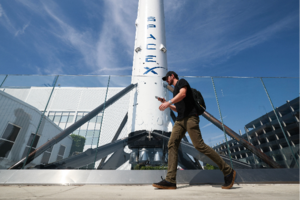
Musk's SpaceX threatens to withhold mobile service from Australia
The satellite and space exploration company founded by Elon Musk has warned it could avoid Australia when deploying its satellite-based mobile network coverage if it is forced to bid in an auction to buy crucial spectrum. SpaceX, which operates the Starlink satellite network, has asked the government to allocate it vital wireless frequencies to build out its satellite network, rather than put it up for tender.
Polymarket Targets $400M Raise at $15B Valuation as Prediction Markets Surge - Blockonomi
Regulatory pressure mounts as U.S. senators push the Prediction Markets Are Gambling Act to restrict certain contracts. Polymarket is seeking to raise $400 million at a $15 billion valuation, The Information reported Sunday. The decentralized prediction markets platform is in active talks with investors to secure the capital. Reports from October 2025 had placed funding discussions at a $12 to $15 billion range. The new raise could push total new financing to roughly $1 billion, alongside existing commitments from Intercontinental Exchange. Intercontinental Exchange (ICE), the NYSE parent company, agreed to invest up to $2 billion in Polymarket in October 2025. That deal gave Polymarket a $9 billion post-money valuation at the time. The new round would add to the $600 million ICE has already committed to the platform. This marks a 67% jump from its October 2025 valuation. Beyond ICE, Polymarket is also looking to bring in additional strategic investors. Total funding could reach around $1 billion once all commitments are included. The company has expanded its offerings beyond political markets into commodities and individual equities. Oracle providers like Pyth and Chainlink now supply real-time pricing data for these contracts. Prediction markets have evolved from niche crypto platforms into a multi-billion-dollar financial sector. Monthly trading volume grew from about $1.2 billion in early 2025 to over $20 billion by January 2026, per TRM Labs. Leading platforms now reach roughly 840,000 unique active wallets each month. Activity is increasingly driven by geopolitics, macroeconomics, and political events. The Block's data shows Polymarket recorded $10.57 billion in monthly trading volume in March 2026. That trails rival Kalshi, which posted about $13 billion in monthly volume the same month. Both platforms remain dominant in liquidity and user participation across the sector. Their combined presence has drawn considerable investor interest through early 2026. Kalshi reportedly raised over $1 billion at a $22 billion valuation in March 2026. That roughly doubled its value since November 2025, reflecting strong sector momentum. Both Kalshi and Polymarket continue attracting rising investor attention heading into mid-2026. Their positions shape the competitive landscape of the prediction markets industry. However, both platforms face increased scrutiny from U.S. lawmakers. In March, Senators Adam Schiff and John Curtis introduced the "Prediction Markets Are Gambling Act." The bill seeks to bar prediction contracts tied to sports or casino-style games on registered platforms. This legislative push prompted action from both companies. In response, Kalshi introduced new screening tools to address insider trading risks. Polymarket, for its part, expanded restrictions on market abuse across its platform. Both moves came as lawmakers called for tighter regulation across the sector. The evolving regulatory environment remains a key factor shaping the industry.
SpaceX Could Soon Run Into a $2.7 Trillion Roadblock Named Amazon
SpaceX needs a stellar IPO to raise the cash needed to compete against Amazon Leo. What's the most exciting investing story of 2026? While there are several contenders, I'd say the impending initial public offering of SpaceX ranks near the top of the list. The space technology company founded by Elon Musk is preparing for a valuation in the ballpark of $2 trillion, which would make it by far the highest-valued IPO stock ever. The biggest reason for SpaceX's expected astronomical market cap is its Starlink satellite internet service. Starlink generated revenue of $15 billion to $16 billion with profits of around $8 billion last year, according to Reuters. Will AI create the world's first trillionaire? Our team just released a report on the one little-known company, called an "Indispensable Monopoly" providing the critical technology Nvidia and Intel both need. Continue " But the seemingly easy money for Starlink may be only temporary. SpaceX could soon run into a $2.7 trillion roadblock named Amazon (NASDAQ: AMZN). Image source: Getty Images. Amazon announced in 2019 plans to deploy a large constellation of satellites to offer broadband internet service worldwide. The company launched its first satellites last year and now has 180 satellites in orbit. Its initial design calls for more than 3,000 satellites. This satellite internet service business was originally named Project Kuiper (after the region of icy objects in the outer solar system called the Kuiper belt. However, Amazon rebranded the unit as Amazon Leo (a nod to the acronym for low earth orbit) in November 2025. Although Amazon Leo won't begin providing widely available service until later this year, it has already lined up dozens of commercial customers. Amazon CEO Andy Jassy said in his company's fourth-quarterearnings callthat AT&T (NYSE: T), DirecTV Latin America, JetBlue (NASDAQ: JBLU), and Australia's national broadband network are among the early customers. He added that Leo has "many more on the way." Last week, Amazon announced plans to acquire Globalstar (NASDAQ: GSAT) for around $11.6 billion. The deal will enable Amazon Leo to offer direct-to-device services (satellite connectivity for mobile phones and other cellular devices). Amazon simultaneously announced an agreement with Apple (NASDAQ: AAPL) to provide satellite services for iPhone and Apple Watch devices. SpaceX's Starlink has a significant head start in the satellite internet services market. It already has more than 7,800 satellites in low Earth orbit. Musk's company has ironed out some of the early stage wrinkles that Amazon Leo will likely face over the next couple of years. Starlink has also already built a substantial customer base. However, make no mistake: Amazon Leo will be a formidable rival to SpaceX. The Globalstar acquisition and Apple agreement were clearly shots across Starlink's bow. The space race between these two companies could turn into a capital race. If so, Amazon could chip away at SpaceX's lead. While SpaceX hopes to raise a boatload of cash with its IPO, Amazon already has $123 billion in cash and can easily add to that. SpaceX also won't be able to match Amazon's ability to offer bundling deals to attract customers. Amazon Leo already offers businesses the option to connect to the AWS cloud. Amazon could choose to subsidize hardware costs by bundling Leo with AWS for corporate customers. What about retail customers? It's not hard to envision Amazon bundling Leo with Prime. SpaceX could still emerge as the winner of the coming collision with Amazon. A record IPO for the space stock this summer should help improve its chances of success. However, Amazon's entry into the satellite internet market will tighten this part of the space race significantly. Investors considering buying shares of SpaceX at or immediately after its IPO should keep the intensifying competitive landscape in mind. Maybe Amazon won't be a full-blown roadblock for SpaceX. But it will almost certainly be a big speed bump. Ever feel like you missed the boat in buying the most successful stocks? Then you'll want to hear this. On rare occasions, our expert team of analysts issues a "Double Down" stock recommendation for companies that they think are about to pop. If you're worried you've already missed your chance to invest, now is the best time to buy before it's too late. And the numbers speak for themselves: Right now, we're issuing "Double Down" alerts for three incredible companies, available when you join Stock Advisor, and there may not be another chance like this anytime soon. Keith Speights has positions in Amazon and Apple. The Motley Fool has positions in and recommends Amazon and Apple and is short shares of Apple. The Motley Fool has a disclosure policy.

Anthropic talks AI models with European Commission
Anthropic reportedly discussed its various AI models with officials from the European Commission (EC), including cybersecurity-focused ones which are not yet available in the European Union (EU). Reuters reported last week (17 April) the AI player has already committed to follow the EU's general-purpose AI code of practice, citing EC spokesperson Thomas Regnier. "In this framework, there is an obligation to assess and mitigate risks that could come from a service that may or may not be offered in Europe," Regnier apparently told reporters. Meeting with Trump officials Also on 17 April, a representative from Anthropic told Mobile World Live its CEO Dario Amodei met with senior officials from President Donald Trump's administration "for a productive discussion on how Anthropic and the US government can work together on key shared priorities such as cybersecurity, America's lead in the AI race, and AI safety". "The meeting reflected Anthropic's ongoing commitment to engaging with the US government on the development of responsible AI. We are grateful for their time and are looking forward to continuing these discussions." The US Treasury Department and other US agencies are reportedly seeking access to Anthropic's restricted Mythos model amid growing concern over advanced AI dramatically reshaping the cybersecurity threat landscape. Bloomberg reported US Treasury Secretary Scott Bessent and Federal Reserve chair Jerome Powell briefed Wall Street executives earlier this month on the potential negative impact Mythos could have across the cybersecurity sector. The AI startup introduced its Claude Mythos model on 7 April to a limited number of technology companies including Amazon Web Services, Apple, Nvidia and Google instead of making it publicly available In March, the Department of War (DoW) designated Anthropic as a supply-chain risk after the AI company refused to grant the Pentagon unfettered rights to deploy its models over concerns about domestic surveillance and use in lethal autonomous weapons. On 9 March, Anthropic filed a lawsuit against the Trump administration after it was blacklisted and labelled a threat to US national security, which the US Department of Justice appealed earlier this month.

SpaceX Could Soon Run Into a $2.7 Trillion Roadblock Named Amazon | The Motley Fool
SpaceX needs a stellar IPO to raise the cash needed to compete against Amazon Leo. What's the most exciting investing story of 2026? While there are several contenders, I'd say the impending initial public offering of SpaceX ranks near the top of the list. The space technology company founded by Elon Musk is preparing for a valuation in the ballpark of $2 trillion, which would make it by far the highest-valued IPO stock ever. The biggest reason for SpaceX's expected astronomical market cap is its Starlink satellite internet service. Starlink generated revenue of $15 billion to $16 billion with profits of around $8 billion last year, according to Reuters. But the seemingly easy money for Starlink may be only temporary. SpaceX could soon run into a $2.7 trillion roadblock named Amazon (AMZN +0.26%). Amazon announced in 2019 plans to deploy a large constellation of satellites to offer broadband internet service worldwide. The company launched its first satellites last year and now has 180 satellites in orbit. Its initial design calls for more than 3,000 satellites. This satellite internet service business was originally named Project Kuiper (after the region of icy objects in the outer solar system called the Kuiper belt. However, Amazon rebranded the unit as Amazon Leo (a nod to the acronym for low earth orbit) in November 2025. Although Amazon Leo won't begin providing widely available service until later this year, it has already lined up dozens of commercial customers. Amazon CEO Andy Jassy said in his company's fourth-quarter earnings call that AT&T (T +0.42%), DirecTV Latin America, JetBlue (JBLU +6.53%), and Australia's national broadband network are among the early customers. He added that Leo has "many more on the way." Last week, Amazon announced plans to acquire Globalstar (NASDAQ: GSAT) for around $11.6 billion. The deal will enable Amazon Leo to offer direct-to-device services (satellite connectivity for mobile phones and other cellular devices). Amazon simultaneously announced an agreement with Apple (NASDAQ: AAPL) to provide satellite services for iPhone and Apple Watch devices. SpaceX's Starlink has a significant head start in the satellite internet services market. It already has more than 7,800 satellites in low Earth orbit. Musk's company has ironed out some of the early stage wrinkles that Amazon Leo will likely face over the next couple of years. Starlink has also already built a substantial customer base. However, make no mistake: Amazon Leo will be a formidable rival to SpaceX. The Globalstar acquisition and Apple agreement were clearly shots across Starlink's bow. The space race between these two companies could turn into a capital race. If so, Amazon could chip away at SpaceX's lead. While SpaceX hopes to raise a boatload of cash with its IPO, Amazon already has $123 billion in cash and can easily add to that. SpaceX also won't be able to match Amazon's ability to offer bundling deals to attract customers. Amazon Leo already offers businesses the option to connect to the AWS cloud. Amazon could choose to subsidize hardware costs by bundling Leo with AWS for corporate customers. What about retail customers? It's not hard to envision Amazon bundling Leo with Prime. SpaceX could still emerge as the winner of the coming collision with Amazon. A record IPO for the space stock this summer should help improve its chances of success. However, Amazon's entry into the satellite internet market will tighten this part of the space race significantly. Investors considering buying shares of SpaceX at or immediately after its IPO should keep the intensifying competitive landscape in mind. Maybe Amazon won't be a full-blown roadblock for SpaceX. But it will almost certainly be a big speed bump.

Next.js Creator Vercel Hacked - IT Security News
The technical storage or access is necessary for the legitimate purpose of storing preferences that are not requested by the subscriber or user. The technical storage or access that is used exclusively for statistical purposes. The technical storage or access that is used exclusively for anonymous statistical purposes. Without a subpoena, voluntary compliance on the part of your Internet Service Provider, or additional records from a third party, information stored or retrieved for this purpose alone cannot usually be used to identify you.

Vercel Hack Sparks Global Concern Across Developer Ecosystem
This breach will reshape how developers approach platform security The tech world woke up to alarming news as reports of a major Vercel hack surfaced online. Developers depend on Vercel for seamless deployment and scaling of modern applications. This breach shakes that trust and raises urgent concerns about platform security. Many now question how deep the intrusion goes and what systems attackers accessed. The incident reportedly exposed sensitive internal systems, including databases and developer tokens. Such access creates a dangerous situation for thousands of projects running on the platform. Attackers may exploit this data to infiltrate applications or inject harmful code. The scale of this event places it among the most serious platform security incidents in recent years. What makes this situation even more critical is Vercel's close connection with Next.js. This framework powers countless modern web applications worldwide. A compromise here could turn into a large scale supply chain attack. Developers now scramble to secure their environments and prevent further damage. Reports indicate that attackers gained unauthorized access to internal Vercel systems. These systems included databases that store sensitive operational data. The breach also exposed developer tokens, which developers use to authenticate and deploy projects. This developer tokens breach creates a direct risk for account takeovers. Attackers can use stolen tokens to access projects without passwords. That access may allow them to modify code, deploy malicious updates, or steal further data. Some sources claim that the stolen data appeared for sale online for millions of dollars. This detail suggests a highly organized attack rather than a random intrusion. The attackers likely targeted Vercel due to its central role in modern web development. The Vercel hack does not only affect one company. It threatens the entire ecosystem connected to it. Vercel manages deployments for applications used by businesses worldwide. That control makes it a prime target for a supply chain attack. A successful supply chain attack could spread malicious code through trusted updates. Developers might unknowingly deploy compromised builds to production. This chain reaction could affect users across multiple platforms and industries. Next.js plays a critical role here because developers widely adopt it for frontend applications. If attackers manipulate build processes or dependencies, they can impact thousands of apps instantly. That risk explains why experts treat this breach with extreme seriousness. Developers must act fast to reduce the impact of this incident. Start by rotating all API keys and tokens linked to Vercel. Replace old credentials immediately and avoid reusing them across services. Enable multi factor authentication on all developer accounts. This step adds an extra layer of protection against unauthorized access. Even if attackers possess tokens, they will face additional barriers. Audit your recent deployments and logs carefully. Look for unusual activity or unexpected changes in your projects. Early detection can prevent further damage and protect your users. Teams should also review their security policies. A strong response now can prevent future supply chain attack scenarios. The Vercel hack highlights the importance of proactive security practices. The Vercel hack stands as a serious warning for the entire tech community. It reveals how interconnected systems can amplify the impact of a single breach. Developers must respond quickly and strengthen their defenses. This incident also highlights the growing threat of supply chain attack strategies. Attackers no longer target individuals alone, they target platforms that power entire ecosystems. That shift demands stronger safeguards and constant vigilance. By taking immediate action and improving security habits, developers can reduce risks and protect their applications. The lessons from this breach will likely shape the future of secure development.
Filing for Love First Look: Gong Myoung Gets Demoted, Shin Hae Sun Causes Chaos -- And We're Already Hooked!
The next big K-drama romantic comedy is almost here, and the first teaser for tvN's "Filing for Love" has us absolutely sold. Starring Gong Myoung and Shin Hae Sun, this workplace rom-com looks like a perfect blend of corporate chaos, reluctant chemistry, and the kind of humour that makes you snort-laugh in public. The premiere is just days away -- here's everything you need to know. What Is Filing for Love About? "Filing for Love" centres on Noh Ki Joon (Gong Myoung), the star performer of a major corporation's prestigious Audit Team 1 -- the kind of guy who walks into a room expecting a promotion, not a demotion. But that's exactly what happens when the eccentric and sharp-tongued Joo In Ah (Shin Hae Sun), a team leader with a mysterious secret, orchestrates a shift that sends him tumbling down to Audit Team 3, the department that handles internal misconduct. It's essentially a story about a man who had his whole life mapped out -- until one woman tore up the map. The Teaser: Pure Comedic Gold The Episode 1 preview is a masterclass in physical and situational comedy. We see Noh Ki Joon's confident strut quickly disintegrate into screaming "WHY?" alone in his apartment, dry heaving outside the office, and nearly combusting at the absurdity of tip-off phone calls coming his way. The contrast between his pompous sense of self-worth and the indignity of his new desk is hilarious -- and Gong Myoung plays it with exactly the right mix of wounded pride and bewildered despair. Shin Hae Sun, meanwhile, looks like she's having the time of her life watching him unravel. Filing for Love: Overview Why This Drama Could Be Your Next Obsession Gong Myoung has proven his rom-com credentials in Second Shot at Love, and Shin Hae Sun is beloved by fans globally for her breakout performance in Mr. Queen. Together, their on-screen energy looks electric -- the classic enemies-to-lovers trope set in a corporate audit department is fresh, funny, and full of potential for both comedy and genuine heart. For more K-drama news and updates, check out Technosports. If you enjoy workplace K-dramas where professional dignity takes a beating and romance blooms in the most unexpected filing cabinets, this one belongs on your watchlist immediately.

Regulators monitor Anthropic's Mythos for banking risks
Regulators said on Monday they are monitoring the development of Anthropic's frontier AI model Mythos, which experts say could have the capability to be used to destabilise banking systems. The vast capabilities of Mythos to code at a high level have given it a potentially unprecedented ability to identify cybersecurity vulnerabilities, experts say, prompting greater scrutiny from some regulators globally.

xAI vs ElevenLabs: Are the new Grok speech APIs really better?
Elon Musk rarely ever does anything quiet, and his companies are no different. xAI has just launched standalone Speech-to-Text and Text-to-Speech APIs for developers, and it comes with benchmark scores that make it the king of the hill. But is Grok's voice actually that good, or is this just Elon waving numbers around again? Also read: OpenAI study says India is a Top-5 AI nation, but only in big cities The two brand-new APIs Grok STT and Grok TTS were developed with the same technology that is there for Grok Voice on mobile devices, within Tesla vehicles, and Starlink customer support - so they are not introducing anything new that wasn't already being used previously at scale. The STT (Speech-to-Text) API provides real-time/batch transcriptions in 25 languages with speaker diarisation, word-level time stamps, and supports 12 different audio file types, and the TTS (Text-to-Speech) API has five expressively voiced options (Ara, Eve, Leo, Rex, and Sal) across 20 languages, and can output realistic-sounding speech with tags such as [laugh] or [sigh]. The price point for both APIs from xAI is absolutely amazing. The cost of using STT for batch transcription is $0.10 per hour (streaming $0.20/hour), while TTS is priced at only $4.20 per 1M characters - both below what you'd find from other competitors currently in this space. Also read: How to detect bias in ChatGPT output in 3 easy ways When it comes to phone call entity recognition (names, account numbers, dates), Grok's STT offers just 5.0% error rates, whereas ElevenLabs has 12.0%, Deepgram has 13.5%, and AssemblyAI has 21.3%. This difference in performance is large enough for Grok to become the go-to for speech recognition. And according to xAI, this is especially true for healthcare, law, and financial use cases. However, self-reported benchmark numbers are, at the end of the day, self-reported. Every AI company shows benchmark scores that make them the best. ElevenLabs has decades worth of experience optimizing their models for nuance, expressiveness, and edge cases. But these things may or may not appear in a phone call recognition test. When it comes to TTS, which requires not just accuracy but sound quality to boot, there is no telling about the performance of the tool until you listen to how it sounds. But the thing xAI does have on their side is scale. Millions of transactions made with both Tesla and Starlink have already tested that stack. As to whether Grok's speech APIs are "better" than others, they are definitely better at something and probably cheaper. Whether this alone is enough for developers to switch, that's a whole different question.
Polymarket Targets $15B Valuation in New Funding Talks
The deal has not been finalized yet, and the valuation and size of the round could change as negotiations continue. If the round ends up getting valued at what has been estimated, then this will be a huge boost for Polymarket, making it one of the world's highest-valued fintech startups. There is also a possibility that the valuation might go even higher, depending on whether other come on board. It's clear that the company is attracting interest from institutions as well. This level of valuation is indicative of the fast evolution of prediction markets from just another crypto experiment to a real financial tool.
Vercel Breach Tied to Context AI Hack Exposes Data
Extortion attempt: Threat actors are actively attempting to monetize the supposedly exfiltrated data through a $2 million sale proposition. A Vercel infrastructure breach occurred via a third-party tool. Threat actors successfully exploited a Context AI security compromise to execute an administrative takeover of Vercel's Google Workspace environment, exposing critical vulnerabilities. The organization maintains that the scope of compromised data remains operationally contained. Breach Analysis and Data Compromise Assessment The incident originated with a compromise of a third-party AI tool used by a Vercel employee, Context.ai. "The attacker used that access to take over the employee's Vercel Google Workspace account, which enabled them to gain access to some Vercel environments and environment variables that were not marked as sensitive," Vercel has confirmed in a statement. Following unauthorized administrative access, attackers allegedly exfiltrated sensitive organizational data from the compromised infrastructure. A threat actor claiming to be part of ShinyHunters announced a $2 million data sale proposition through underground marketplace channels. The alleged data breach resulted in limited customer credential exposure. Yet a ShinyHunters representative denied responsibility for this incident. Security operations teams are working with Mandiant, other cybersecurity firms, industry peers, and law enforcement to conduct forensic analysis to determine the precise scope of unauthorized access and establish how the initial Context AI compromise facilitated lateral movement across the network. Cloud Infrastructure Security Risk Assessment This high-profile Vercel security incident underscores the risks of shadow AI, as employees increasingly leverage AI solutions to help with their work. Here are the best practices you should follow: * Review the activity log for your account and environments for suspicious activity (in the dashboard or via the CLI). * Review and rotate environment variables. * Investigate and delete recent unexpected or suspicious-looking deployments. * Rotate and ensure that Deployment Protection is set to Standard at a minimum. Last week, a Rockstar Games breach reportedly leaked analytics data via a prior Anodot security incident, and a Hallmark breach exposed 1.7 M million customers via a Salesforce compromise, including Hallmark+ records.
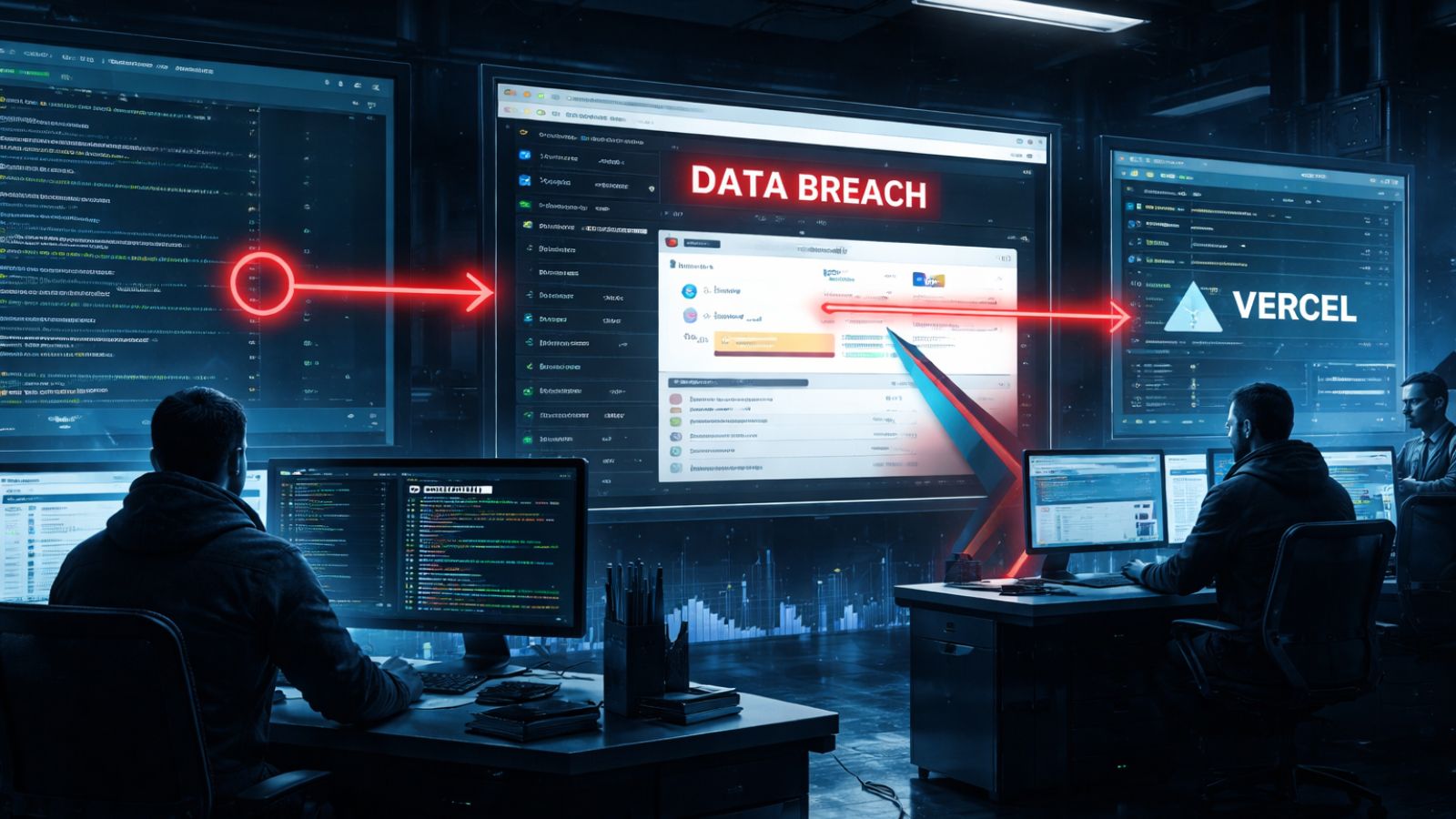
Vercel Security Breach Traced to Compromised AI Tool, Crypto Projects Scramble to Rotate Credentials
Web infrastructure provider Vercel disclosed a security breach on April 19 that exposed internal systems and non-sensitive environment variables, prompting web3 teams relying on the platform to audit their deployments and rotate API keys. Vercel said the incident originated with a compromise of Context.ai, a third-party AI tool used by one of its employees. The attacker used that access to take over the employee's Vercel Google Workspace account, which enabled access to certain Vercel environments and environment variables that were not marked as sensitive. Context.ai is an enterprise AI platform that builds agents trained on company-specific institutional knowledge, workflows, and standards. The platform had been integrated with Vercel's environment and granted deployment-level Google Workspace OAuth scopes, giving the attacker a privileged foothold once the platform itself was breached. Environment variables marked as sensitive in Vercel are stored in a manner that prevents them from being read, and the company said it does not currently have evidence that those values were accessed. Vercel described the attacker as "highly sophisticated based on their operational velocity and detailed understanding of the platform's systems." A threat actor claiming to be ShinyHunters posted on a hacking forum that they had breached Vercel and were selling access to company data, including access keys, source code, database data, internal deployments, and API keys. The actor also shared a text file containing information on 580 Vercel employees, including names, email addresses, account status, and activity timestamps. It should be noted that actors linked to previous ShinyHunters-attributed attacks have separately denied involvement to security media. The claimed asking price for the stolen data is $2 million. Vercel CEO Guillermo Rauch said in a post on X that the company had deployed extensive protection measures and monitoring, and had analysed its supply chain to ensure Next.js, Turbopack, and its open source projects remain safe. He said the company had already rolled out new capabilities to its dashboard, including an overview page of environment variables and a better interface for sensitive environment variable creation and management. Vercel said the compromise potentially affected hundreds of users across many organisations, and has published an indicator of compromise to support the wider community in vetting potential malicious activity in their environments. It recommended that Google Workspace administrators and account owners check for usage of the implicated OAuth app. The breach is drawing particular attention from the crypto industry, given how widely web3 teams use Vercel to host wallet interfaces and front-end dashboards. Solana-based decentralised exchange Orca said its frontend is hosted on Vercel and that it had rotated all deployment credentials as a precaution, adding that its on-chain protocol and user funds were not affected. Vercel said only a limited subset of customers were affected, though the full scope remains unclear as the attacker claims to be actively selling additional stolen data. The company said it has engaged Mandiant and additional cybersecurity firms, and has notified law enforcement.

Regulators monitor Anthropic's Mythos for banking risks By Reuters
SYDNEY, April 20 (Reuters) - Regulators said on Monday they are monitoring the development of Anthropic's frontier AI model Mythos, which experts say could have the capability to be used to destabilise banking systems. The vast capabilities of Mythos to code at a high level have given it a potentially unprecedented ability to identify cybersecurity vulnerabilities, experts say, prompting greater scrutiny from some regulators globally. "ASIC is closely monitoring these developments along with peer regulators to assess possible implications for the Australian market," a spokesperson for the Australian Securities and Investments Commission (ASIC) said on Monday. "ASIC engages closely with other regulators, government agencies and the financial sector to understand and respond to changing technologies." ASIC said it expected financial services licencees to "be on the front foot" to safeguard their customers and clients. The country's banking regulator, the Australian Prudential Regulation Authority (APRA) said it would "continue to assess the implications of these technological advancements to ensure the ongoing safety and resilience of the financial system." South Korea's Financial Supervisory Service (FSS) said on Monday it held a meeting with information security officials from financial firms last Monday to review Mythos-related risks. South Korea's Yonhap news agency reported that the country's Financial Services Commission (FSC) held an emergency meeting last Wednesday with chief information security officers from the FSS, banks and insurers to review the risks, citing unnamed industry sources. The FSC was not immediately available for comment when contacted by Reuters.

Next.js developer Vercel warns of customer credential compromise - IT Security News
The technical storage or access is necessary for the legitimate purpose of storing preferences that are not requested by the subscriber or user. The technical storage or access that is used exclusively for statistical purposes. The technical storage or access that is used exclusively for anonymous statistical purposes. Without a subpoena, voluntary compliance on the part of your Internet Service Provider, or additional records from a third party, information stored or retrieved for this purpose alone cannot usually be used to identify you.
Regulators monitor Anthropic's Mythos for banking risks
SYDNEY, April 20 : Regulators said on Monday they are monitoring the development of Anthropic's frontier AI model Mythos, which experts say could have the capability to be used to destabilise banking systems. The vast capabilities of Mythos to code at a high level have given it a potentially unprecedented ability to identify cybersecurity vulnerabilities, experts say, prompting greater scrutiny from some regulators globally. "ASIC is closely monitoring these developments along with peer regulators to assess possible implications for the Australian market," a spokesperson for the Australian Securities and Investments Commission (ASIC) said on Monday. "ASIC engages closely with other regulators, government agencies and the financial sector to understand and respond to changing technologies." ASIC said it expected financial services licencees to "be on the front foot" to safeguard their customers and clients. The country's banking regulator, the Australian Prudential Regulation Authority (APRA) said it would "continue to assess the implications of these technological advancements to ensure the ongoing safety and resilience of the financial system." South Korea's Financial Supervisory Service (FSS) said on Monday it held a meeting with information security officials from financial firms last Monday to review Mythos-related risks. South Korea's Yonhap news agency reported that the country's Financial Services Commission (FSC) held an emergency meeting last Wednesday with chief information security officers from the FSS, banks and insurers to review the risks, citing unnamed industry sources. The FSC was not immediately available for comment when contacted by Reuters.

US flight delays, cancellations and chaos: Which airports are worst hit?
Weather issues, congestion and airline operational strain have caused flight delays and cancellation in US Air travel across the United States is witnessing the fresh wave of disruption marked by flight indefinite delays, cancellations and aviation chaos at the major key hubs. The recent disruptions were followed by the severe weather conditions and thunderstorms, crippling operations at six major US Airports on Sunday and leaving thousands of people stranded amid peak travel season. According to recent updates, hundreds of flights have been delayed at Atlanta, Chicago, Dallas, New York, Los Angeles and Miami Airports. The tracking data also showed the decline in arrival rates and surge in departure queues, exhibiting the severity of the issue. The simultaneous collapse of these six interconnected hubs triggered a ripple effect far beyond the storm's initial path. According to thetraveler.org, Denver and Dallas/Fort Worth function as the primary gateways linking the East and West coasts, while the New York tri-state airports are important for the nation's most concentrated metropolitan travel. At the heart of US flight delays and cancellation lies the harsh weather conditions, strong winds, thunderstorms and low visibility, as reported by the Federal Aviation Administration (FAA) advisories. Congestion at other airports is also causing this aviation chaos. For instance, airports like Chicago's O'Hare are under strain due to limited infrastructure and excessive scheduling. To control the disruption, the authorities are also restricting flight booking for the upcoming season. Other challenges such staff availability issues, overbooked schedules, rising operational costs, and high passenger volumes are further exacerbating the travel issues.

Anthropic walks into the White House and Mythos is the reason Washington let it in
When we covered Project Glasswing earlier this month, the story was about a model too dangerous to release publicly and what Anthropic decided to do with it instead. That story has moved. On Friday, Anthropic CEO Dario Amodei walked into the West Wing for a meeting with White House Chief of Staff Susie Wiles. Treasury Secretary Scott Bessent was also in the room. The White House called the talks "productive and constructive." Anthropic said the same. When a reporter asked President Trump about the visit on a runway in Phoenix, he responded "Who?" and said he had "no idea" Amodei was there. That detail aside, the meeting itself is one of the more striking political reversals in recent AI history. Just weeks ago, the Trump administration had declared Anthropic a supply chain risk - a designation ordinarily reserved for foreign adversaries - and Trump himself said the administration would "not do business with them again." A federal judge in San Francisco has since blocked the enforcement of that directive, keeping Anthropic eligible to work with non-military agencies while the litigation plays out. The Pentagon dispute remains very much alive. What changed the calculus - at least at the White House level - was Anthropic Mythos AI cybersecurity ability. Specifically, the fact that agencies are purportedly watching Mythos do things no other tool can, and are not willing to sit that out. The model and the politics As we reported when Anthropic unveiled Project Glasswing, Mythos Preview was not trained specifically for security work. Its ability to autonomously identify and exploit software vulnerabilities emerged from general improvements in reasoning and code, and what it has found since deployment has been striking. During internal testing, Mythos located thousands of previously unknown, high-severity vulnerabilities in every major operating system and web browser, including a 27-year-old bug in OpenBSD and a 16-year-old flaw in FFmpeg that had passed automated testing five million times without detection. Rather than ship it publicly, Anthropic released it only to a select group of organisations through Project Glasswing - a coalition that includes AWS, Apple, Cisco, Google, Microsoft, Nvidia, CrowdStrike, and JPMorganChase, among others - backed by up to US$100 million in use credits. The model is being used offensively, in a controlled sense: finding the vulnerabilities before someone else does. The US government has been watching that coalition operate and wanting in. Intelligence agencies and the Cybersecurity and Infrastructure Security Agency are already testing Mythos, and the Treasury Department has also expressed interest, according to Axios. Treasury and other government agencies have expressed interest in joining the Glasswing list, and before Friday's White House meeting, two sources told Axios a deal along those lines could be struck soon. In a separate Axios report, a concern brought up is that Mythos and other cutting-edge AI tools could allow hackers to breach the US financial system. Alternatively, the report reckoned companies and government agencies could use Mythos to harden their cyber defences before bad actors get access. That dual-use tension is now squarely a political problem. National Cyber Director Sean Cairncross is set to lead a group of federal officials to identify security vulnerabilities in critical infrastructure and strengthen government systems against AI exploitation. Where the standoff stands The Friday meeting was engineered to separate two conversations that had become entangled. Going into the session, both sides sought to wall off the Pentagon fight from how the rest of the government engages with Anthropic and next steps are expected to be about how other departments access Mythos Preview, per sources familiar with the negotiations. One Trump adviser told Axios: "This is a big problem. Everyone's complaining. There's all this drama. So this got elevated to Susie to hear Dario out, determine what is bull and start to plot a way forward." An administration official summarised the current dynamic succinctly: "There's progress with the White House. There's no progress with [the Department of] War." That split is telling. Civilian agencies like the Departments of Energy and Treasury are responsible for safeguarding critical sectors, like the electric grid and the financial system. Their concerns are not about autonomous weapons or surveillance. They want the ability Mythos offers, and they are not willing to be collateral damage in a fight between the Pentagon and an AI company. The DOD has not commented on Mythos but has continued using Anthropic's Claude models in the war with Iran. That footnote is worth sitting with. Publicly, Anthropic has also been making moves that signal it understands how Washington works. Public filings show Anthropic recently hired lobbying firm Ballard Partners - where Wiles worked for years - specifically for advocacy regarding Department of War procurement. What comes next The litigation has not ended. A federal appeals court denied Anthropic's request to temporarily block the Pentagon's blacklisting; a San Francisco judge granted a preliminary injunction in a separate case. Anthropic remains barred from DoD contracts but can continue working with the rest of the government while both cases run their course. The White House said it plans to continue dialogue with Anthropic and other AI companies, and the Office of Management and Budget is already preparing to give agencies access to Mythos to assess their defences, according to Bloomberg. That is meaningful progress, even if the Pentagon remains the unresolved piece. One source close to the negotiations put it plainly: "It would be grossly irresponsible for the US government to deprive itself of the technological leaps that the new model presents. It would be a gift to China." That framing - less about Anthropic's legal standing, more about what the US cannot afford to give up - is what brought Amodei into the West Wing. Whether the Pentagon ever follows is a different question. See also: Anthropic's refusal to arm AI is exactly why the UK wants it Want to learn more about AI and big data from industry leaders? Check out AI & Big Data Expo taking place in Amsterdam, California, and London. This comprehensive event is part of TechEx and is co-located with other leading technology events including the Cyber Security & Cloud Expo. Click here for more information. AI News is powered by TechForge Media. Explore other upcoming enterprise technology events and webinars here.
