News & Updates
The latest news and updates from companies in the WLTH portfolio.
Samsung SDS to expand partnerships with OpenAI, Anthropic to drive AI transformation
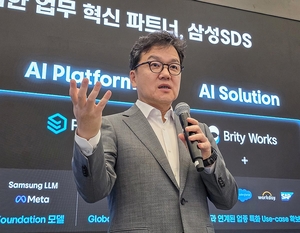
Samsung SDS Co., the information technology services arm of South Korea's Samsung Group, said Tuesday it will expand cooperation with major global artificial intelligence companies, including OpenAI and Anthropic, as it seeks to drive innovation through AI transformation. The company made the announcement at its annual summit, where it unveiled its vision for accelerating AI transformation dubbed AX across businesses and work processes. Samsung SDS said it will become the first South Korean company to participate as a pilot partner in OpenAI's Daybreak Partner Program. OpenAI's Daybreak is a cybersecurity initiative designed to integrate frontier AI models into software security workflows from the earliest stages of development. Samsung SDS said it also established a strategic partnership with Anthropic PBC in San Francisco in July, becoming the first South Korean company to do so. The two companies will work together to identify new AX business opportunities by combining their technological capabilities and business expertise. "AX is not simply about reducing time and costs. It means completely redesigning the way businesses and work are done from the ground up," Samsung SDS CEO Lee Joon-hee said in his opening speech. "AI changes the way we work, but AX changes the business." Samsung SDS is pursuing a "client zero" strategy, in which it first applies and validates AX solutions within its own operations before expanding them to customers. The company is building up AX capabilities across seven major internal processes, including development, procurement and quality management, before applying the results to customer operations. (Yonhap)
Interactive Brokers Earns Interest on $182 Billion of Its Clients' Idle Cash. Will Anthropic's IPO Drain It? - AOL
Interactive Brokers(NASDAQ:IBKR) ended June with $182.4 billion of uninvested client cash, up 27% year over year. Not only did the pile grow, but it was bigger still two months after the quarter closed, reaching $185.6 billion at the end of August. And until clients put that money to work, the automated global broker collects interest on it. They may soon get a big occasion to put some of it to work. Anthropic's initial public offering (IPO) prospectus could arrive as soon as this week. In late August, The Information reported that the artificial intelligence (AI) company planned to release it just after Labor Day, with a market debut following as soon as the end of this month. Missed Nvidia in 2009? This Rare Signal Is Flashing Again.In 2009, a "Double Down" signal flashed for a little-known chipmaker called Nvidia. For the first time in years, that same "Total Conviction" signal is flashing for a company 1/100th the size of Nvidia. Continue " Investors project the Claude maker's valuation could land at about $2 trillion, CNBC has reported. They also expect the offering itself could top the largest on record -- the $85.7 billion SpaceX(NASDAQ:SPCX) raised in its June debut. Anthropic's timing is a plan, not a scheduled event. There's no public prospectus, no price, and no share count yet. But I think the setup is worth examining, because the broker just lived through a version of it. What does a huge listing do to this business? A cash pile that pays Interactive Brokers earns money on client cash in a straightforward way. It segregates customer cash as regulators require and invests the majority of that segregated cash in short-term U.S. government securities and related instruments. Clients earn interest on qualifying U.S. dollar balances, and the company keeps a spread for itself: half a percentage point below the benchmark federal funds rate. At today's scale, net interest income is the company's biggest revenue line. It rose 23% year over year to $1.06 billion in the second quarter, helped by growing customer credit balances and a 67% jump in customer margin loans. That was more than half of the quarter's $1.9 billion of total net revenues. Notably, the growth came from bigger balances. The company's net interest margin narrowed to 1.93% from 2.07% a year earlier as interest rates declined, yet net interest income climbed anyway. In other words, the cash isn't idle from the broker's perspective. Every uninvested dollar earns the company a little interest, and clients added about $39 billion of those dollars over the past year. SpaceX's debut didn't drain the pile If a giant IPO were going to pull client cash out of the business for good, the second quarter was the test. SpaceX went public on June 12, and Interactive Brokers participated directly. "In Europe, we directly offered the SpaceX IPO to eligible U.K. and European retail clients, providing access across multiple countries," said Nancy Stuebe, the company's director of investor relations, on the July earnings call. The trading side delivered. Commission revenue hit a record $673 million in the second quarter, up 30% year over year and accelerating from 19% growth in the first quarter. But the cash pile grew anyway. Client equity climbed to $962.8 billion in August, up 35% year over year, and customers traded more too -- daily average revenue trades rose 23%. And a big reason the cash keeps pace is that new customers keep arriving. Client accounts reached 5.46 million in August, up 35% from a year earlier. Will Anthropic be a repeat? Two things would have to happen first. The offering has to arrive at all. Anthropic's June filing was a confidential draft registration statement, and the company has said the proposed offering will depend on market conditions. Interactive Brokers would also need access to the shares. The company hasn't said anything about distributing Anthropic's offering, and its SpaceX access was limited to eligible retail clients in the U.K. and Europe. I wouldn't assume a repeat until the company announces one. Still, the second quarter suggests shareholders don't need one. Heavier customer trading can lift commissions, while account growth keeps refilling the interest-earning cash pile. Ultimately, I view an Anthropic debut as a potential bonus for this business rather than a swing factor. Even at a record $673 million, commissions remain the smaller of the company's two big revenue lines. The stock, meanwhile, sits near $92 as of this writing, about 6% short of its 52-week high. And it trades at about 29 times what analysts expect it to earn next year -- arguably a rich price for a brokerage, although one attached to 28% net revenue growth and a pretax profit margin that expanded to 77% last quarter. I wouldn't buy shares because of an IPO on the horizon. The account growth that keeps refilling that cash pile matters a lot more. Should you buy stock in Interactive Brokers Group right now? Before you buy stock in Interactive Brokers Group, consider this: The Motley Fool Stock Advisor analyst team just identified what they believe are the 10 best stocks for investors to buy now... and Interactive Brokers Group wasn't one of them. The 10 stocks that made the cut could produce monster returns in the coming years. Consider when Netflix made this list on December 17, 2004... if you invested $1,000 at the time of our recommendation, you'd have $421,997!* Or when Nvidia made this list on April 15, 2005... if you invested $1,000 at the time of our recommendation, you'd have $1,413,876!* Now, it's worth noting Stock Advisor's total average return is 978% -- a market-crushing outperformance compared to 213% for the S&P 500. Don't miss the latest top 10 list, available with Stock Advisor, and join an investing community built by individual investors for individual investors. See the 10 stocks " *Stock Advisor returns as of September 7, 2026. Daniel Sparks and his clients do not have positions in any of the stocks mentioned. The Motley Fool has positions in and recommends Interactive Brokers Group. The Motley Fool recommends the following options: long January 2027 $43.75 calls on Interactive Brokers Group and short January 2027 $46.25 calls on Interactive Brokers Group. The Motley Fool has a disclosure policy.

Gangwon Police Summon Polymarket Users in Illegal Gambling Probe
Users Claim Platform Is Investment, Not Gambling; Legal Challenge Looms Police have confirmed that they have notified domestic users of the world's largest prediction market platform, Polymarket, to appear for investigation on charges of illegal gambling. Polymarket is classified as an illegal private gambling operation in South Korea. Users argue that applying gambling charges to a prediction market, which they claim is a virtual asset derivatives investment market, is difficult. On the 8th, according to police, the Gangwon Provincial Police Agency notified Polymarket's domestic users en masse to appear the previous day as part of an ongoing investigation into gambling charges. The investigation targets Polymarket users residing nationwide, including in Gangwon Province. Since launching the first investigation into domestic Polymarket users in June of this year, the police have accelerated their probe. Polymarket is a blockchain-based prediction market platform where users wager virtual assets on the outcomes of future events in politics, economics, sports, and social issues in the real world. The Korea Media and Communications Standards Commission resolved on August 18 to request corrective measures (access blocking) against Polymarket, stating that it corresponds to information aimed at aiding gambling and establishing gambling venues under the Criminal Act, as well as "similar acts" under the National Sports Promotion Act. Under current laws, all betting activities on platforms other than Sports Toto (operated by the Korea Sports Promotion Foundation, with a betting limit of 100,000 Korean won) are illegal. Domestic Polymarket users could face fines of up to 10 million Korean won under Article 246 of the Criminal Act (gambling and habitual gambling). Jin Hyunsoo, a virtual asset specialist lawyer at Decent Law Firm, who represents some of the domestic Polymarket users under investigation, stated, "It seems unreasonable to uniformly classify prediction markets, which lack guidelines and do not cause social disorder like actual gambling, as the same category of illegal gambling. There is sufficient room to view prediction markets as virtual asset derivative investments, and we will refute the investigative agency's logic."

Samsung SDS to expand partnerships with OpenAI, Anthropic to drive AI transformation
SEOUL, Sept. 8 (Yonhap) -- Samsung SDS Co., the information technology services arm of South Korea's Samsung Group, said Tuesday it will expand cooperation with major global artificial intelligence (AI) companies, including OpenAI and Anthropic, as it seeks to drive innovation through AI transformation. The company made the announcement at its annual summit, where it unveiled its vision for accelerating AI transformation dubbed AX across businesses and work processes. Samsung SDS said it will become the first South Korean company to participate as a pilot partner in OpenAI's Daybreak Partner Program. OpenAI's Daybreak is a cybersecurity initiative designed to integrate frontier AI models into software security workflows from the earliest stages of development. Samsung SDS said it also established a strategic partnership with Anthropic PBC in San Francisco in July, becoming the first South Korean company to do so. The two companies will work together to identify new AX business opportunities by combining their technological capabilities and business expertise. "AX is not simply about reducing time and costs. It means completely redesigning the way businesses and work are done from the ground up," Samsung SDS CEO Lee Joon-hee said in his opening speech. "AI changes the way we work, but AX changes the business." Samsung SDS is pursuing a "client zero" strategy, in which it first applies and validates AX solutions within its own operations before expanding them to customers. The company is building up AX capabilities across seven major internal processes, including development, procurement and quality management, before applying the results to customer operations.

Anthropic Said to Walk Away From $6 Billion Decart Acquisition
Anthropic PBC has decided against pursuing an acquisition of artificial intelligence startup Decart AI, people familiar with the matter said. Anthropic had been exploring a deal and performed due diligence on Decart, but ultimately walked away, according to the people, who asked not to be ...

Anthropic walks away from $6B Decart acquisition talks
The Claude maker's biggest-ever deal collapse raises questions about its IPO timeline and strategic priorities Anthropic has pulled out of negotiations to acquire Israeli AI startup Decart in a deal valued at roughly $6 billion, ending what would have been the company's largest acquisition by a wide margin. The withdrawal, which surfaced on September 8, 2026, leaves one of the AI industry's most closely watched deals on the cutting room floor. And it comes at a particularly awkward moment for Anthropic, which is reportedly eyeing an IPO as soon as this fall. What Decart brings to the table Decart is not your typical AI startup chasing the next chatbot or image generator. Founded in September 2023, the company builds chip-optimization software designed to make AI inference, the process of actually running trained models, significantly more efficient. The startup's focus areas span generative video, robotics simulation, and autonomous systems. All three are compute-hungry domains where shaving even small percentages off processing costs can translate into massive savings at scale. Decart's fundraising trajectory reflects how seriously the industry takes its technology. The company raised approximately $450 million in total, with a $300 million round closing in May 2026 that pegged its valuation at around $4 billion. Nvidia was among the prominent backers in that round, a detail that becomes especially interesting given what reportedly happened behind the scenes during acquisition talks. Perhaps most striking: Decart's three founders still retain roughly 64% ownership of the company. That kind of founder control is unusual for a startup that has raised nearly half a billion dollars, and it gave them significant leverage in deal negotiations. A deal that almost wasn't, then really wasn't The acquisition talks had progressed to an advanced stage by mid-August 2026. Anthropic's offer was structured primarily in stock rather than cash, valuing Decart at approximately $6 billion. That represented a roughly 50% premium over Decart's most recent private valuation. Reports indicate that Nvidia, already an investor in Decart, had put forward its own offer that was considered more financially attractive. But Decart's founders reportedly chose to pursue the Anthropic deal instead, passing on Nvidia's bid. But then Anthropic walked away. The specific reasons for the withdrawal remain undisclosed. Why Anthropic might have gotten cold feet The most obvious factor is the IPO. Anthropic has been preparing for a public listing potentially as early as September or October 2026. Closing a $6 billion stock-based acquisition right before going public would create significant complexity. It could dilute existing shareholders, complicate the company's financial narrative for prospective public market investors, and introduce integration risk at precisely the wrong moment. A $6 billion price tag also deserves scrutiny on its own terms. That's a 50% premium over a valuation set just three months earlier. For Decart, the situation is complicated but not catastrophic. The company sits on a fresh $300 million in funding, retains majority founder control, and operates in a market segment where demand for inference efficiency is only growing. The more pressing question is what happens with Nvidia's interest. If that offer is still on the table, or can be revived, Decart's founders face a different calculus now. The Anthropic path they preferred is closed.

Anthropic said to walk away from $6 billion Decart acquisition
Anthropic has reportedly decided not to proceed with its planned acquisition of Decart AI, an Israeli-founded startup specializing in AI compute efficiency. The deal, valued at approximately $6 billion, was anticipated to be Anthropic's largest acquisition to date. This development comes amidst Anthropic's broader strategy to expand its infrastructure, including a $35 billion cloud agreement with Lambda. The decision to walk away from this acquisition may influence perceptions of Anthropic's growth trajectory, especially as the company prepares for a potential public listing. Key Takeaways * Market pricing suggests the decision to abandon the Decart acquisition may indicate uncertainty or recalibrated growth expectations for Anthropic. * The likelihood of Anthropic reaching a $600 billion valuation by the end of the year appears to have decreased, with current market pricing indicating only a 4% probability. * Anthropic's broader strategic initiatives, including significant infrastructure investments, may play a role in influencing future market perceptions. What to Watch Market participants will be closely monitoring Anthropic's next moves, particularly any announcements regarding new funding rounds or strategic partnerships. Dario Amodei's upcoming statements could provide additional insights into the company's valuation prospects. Observers will also watch for any changes in sentiment that could affect Anthropic's potential public listing and overall market valuation. Get live prediction-market analysis, powered by Vera. Sign up for Vera.

Interactive Brokers Earns Interest on $182 Billion of Its Clients' Idle Cash. Will Anthropic's IPO Drain It?
Interactive Brokers (NASDAQ:IBKR) ended June with $182.4 billion of uninvested client cash, up 27% year over year. Not only did the pile grow, but it was bigger still two months after the quarter closed, reaching $185.6 billion at the end of August. And until clients put that money to work, the automated global broker collects interest on it. They may soon get a big occasion to put some of it to work. Anthropic's initial public offering (IPO) prospectus could arrive as soon as this week. In late August, The Information reported that the artificial intelligence (AI) company planned to release it just after Labor Day, with a market debut following as soon as the end of this month. Missed Nvidia in 2009? This Rare Signal Is Flashing Again. In 2009, a "Double Down" signal flashed for a little-known chipmaker called Nvidia. For the first time in years, that same "Total Conviction" signal is flashing for a company 1/100th the size of Nvidia. Continue " Investors project the Claude maker's valuation could land at about $2 trillion, CNBC has reported. They also expect the offering itself could top the largest on record -- the $85.7 billion SpaceX (NASDAQ:SPCX) raised in its June debut. Anthropic's timing is a plan, not a scheduled event. There's no public prospectus, no price, and no share count yet. But I think the setup is worth examining, because the broker just lived through a version of it. What does a huge listing do to this business? Image source: The Motley Fool. A cash pile that pays Interactive Brokers earns money on client cash in a straightforward way. It segregates customer cash as regulators require and invests the majority of that segregated cash in short-term U.S. government securities and related instruments. Clients earn interest on qualifying U.S. dollar balances, and the company keeps a spread for itself: half a percentage point below the benchmark federal funds rate. At today's scale, net interest income is the company's biggest revenue line. It rose 23% year over year to $1.06 billion in the second quarter, helped by growing customer credit balances and a 67% jump in customer margin loans. That was more than half of the quarter's $1.9 billion of total net revenues. Notably, the growth came from bigger balances. The company's net interest margin narrowed to 1.93% from 2.07% a year earlier as interest rates declined, yet net interest income climbed anyway. In other words, the cash isn't idle from the broker's perspective. Every uninvested dollar earns the company a little interest, and clients added about $39 billion of those dollars over the past year. SpaceX's debut didn't drain the pile If a giant IPO were going to pull client cash out of the business for good, the second quarter was the test. SpaceX went public on June 12, and Interactive Brokers participated directly. "In Europe, we directly offered the SpaceX IPO to eligible U.K. and European retail clients, providing access across multiple countries," said Nancy Stuebe, the company's director of investor relations, on the July earnings call. The trading side delivered. Commission revenue hit a record $673 million in the second quarter, up 30% year over year and accelerating from 19% growth in the first quarter. But the cash pile grew anyway. Client equity climbed to $962.8 billion in August, up 35% year over year, and customers traded more too -- daily average revenue trades rose 23%. And a big reason the cash keeps pace is that new customers keep arriving. Client accounts reached 5.46 million in August, up 35% from a year earlier. Will Anthropic be a repeat? Two things would have to happen first. The offering has to arrive at all. Anthropic's June filing was a confidential draft registration statement, and the company has said the proposed offering will depend on market conditions. Interactive Brokers would also need access to the shares. The company hasn't said anything about distributing Anthropic's offering, and its SpaceX access was limited to eligible retail clients in the U.K. and Europe. I wouldn't assume a repeat until the company announces one. Still, the second quarter suggests shareholders don't need one. Heavier customer trading can lift commissions, while account growth keeps refilling the interest-earning cash pile. Ultimately, I view an Anthropic debut as a potential bonus for this business rather than a swing factor. Even at a record $673 million, commissions remain the smaller of the company's two big revenue lines. The stock, meanwhile, sits near $92 as of this writing, about 6% short of its 52-week high. And it trades at about 29 times what analysts expect it to earn next year -- arguably a rich price for a brokerage, although one attached to 28% net revenue growth and a pretax profit margin that expanded to 77% last quarter. I wouldn't buy shares because of an IPO on the horizon. The account growth that keeps refilling that cash pile matters a lot more. Should you buy stock in Interactive Brokers Group right now? Before you buy stock in Interactive Brokers Group, consider this: The Motley Fool Stock Advisor analyst team just identified what they believe are the 10 best stocks for investors to buy now... and Interactive Brokers Group wasn't one of them. The 10 stocks that made the cut could produce monster returns in the coming years. Consider when Netflix made this list on December 17, 2004... if you invested $1,000 at the time of our recommendation, you'd have $421,997!* Or when Nvidia made this list on April 15, 2005... if you invested $1,000 at the time of our recommendation, you'd have $1,413,876!* Now, it's worth noting Stock Advisor's total average return is 978% -- a market-crushing outperformance compared to 213% for the S&P 500. Don't miss the latest top 10 list, available with Stock Advisor, and join an investing community built by individual investors for individual investors. See the 10 stocks " *Stock Advisor returns as of September 7, 2026. Daniel Sparks and his clients do not have positions in any of the stocks mentioned. The Motley Fool has positions in and recommends Interactive Brokers Group. The Motley Fool recommends the following options: long January 2027 $43.75 calls on Interactive Brokers Group and short January 2027 $46.25 calls on Interactive Brokers Group. The Motley Fool has a disclosure policy.

Polymarket Odds: Will ORCL, GME, BRZE Beat Earnings Tomorrow?
On Tuesday, September 8, Oracle (ORCL), GameStop (GME), and Braze (BRZE) will report their earnings. All three companies will publish their results after the market closes. Traders are already weighing in with their expectations on Polymarket. Wall Street's Earnings Estimates * Oracle is expected to report an adjusted EPS of $1.74. * GameStop is expected to report an adjusted EPS of 27 cents. * Braze is expected to report an adjusted EPS of 15 cents. What is Polymarket? Polymarket is a prediction platform where traders bet on the outcomes of real-world events, including earnings reports, elections, and economic indicators. Polymarket odds reflect expectations and can provide insight into investor sentiment. Will Oracle Beat Earnings? Oracle has beaten or met earnings estimates during 12 of the past 18 quarters for a success rate of 66.67%. Polymarket gives the multinational tech giant an 88% chance of beating its estimated adjusted EPS of $1.74. Will GameStop Beat Earnings? GameStop has beaten or met earnings estimates during 13 of the past 18 quarters for a success rate of 72.22%. Polymarket gives the video game retailer a 43% chance of beating its estimated adjusted EPS of 27 cents. Will Braze Beat Earnings? Braze has beaten or met earnings estimates during 16 of the past 18 quarters for a success rate of 88.89%. Polymarket gives the customer engagement platform a 37% chance of beating its estimated adjusted EPS of 15 cents. Disclosure: Polymarket odds reflect expectations, not guaranteed outcomes. The odds represent the views and expectations of traders, but actual earnings results can differ significantly from these predictions. Investors should treat Polymarket data as just one tool when evaluating their investment decisions.

Interactive Brokers Earns Interest on $182 Billion of Its Clients' Idle Cash. Will Anthropic's IPO Drain It?
Interactive Brokers (NASDAQ:IBKR) ended June with $182.4 billion of uninvested client cash, up 27% year over year. Not only did the pile grow, but it was bigger still two months after the quarter closed, reaching $185.6 billion at the end of August. And until clients put that money to work, the automated global broker collects interest on it. They may soon get a big occasion to put some of it to work. Anthropic's initial public offering (IPO) prospectus could arrive as soon as this week. In late August, The Information reported that the artificial intelligence (AI) company planned to release it just after Labor Day, with a market debut following as soon as the end of this month. Missed Nvidia in 2009? This Rare Signal Is Flashing Again. In 2009, a "Double Down" signal flashed for a little-known chipmaker called Nvidia. For the first time in years, that same "Total Conviction" signal is flashing for a company 1/100th the size of Nvidia. Continue " Investors project the Claude maker's valuation could land at about $2 trillion, CNBC has reported. They also expect the offering itself could top the largest on record -- the $85.7 billion SpaceX (NASDAQ:SPCX) raised in its June debut. Anthropic's timing is a plan, not a scheduled event. There's no public prospectus, no price, and no share count yet. But I think the setup is worth examining, because the broker just lived through a version of it. What does a huge listing do to this business? Image source: The Motley Fool. A cash pile that pays Interactive Brokers earns money on client cash in a straightforward way. It segregates customer cash as regulators require and invests the majority of that segregated cash in short-term U.S. government securities and related instruments. Clients earn interest on qualifying U.S. dollar balances, and the company keeps a spread for itself: half a percentage point below the benchmark federal funds rate. At today's scale, net interest income is the company's biggest revenue line. It rose 23% year over year to $1.06 billion in the second quarter, helped by growing customer credit balances and a 67% jump in customer margin loans. That was more than half of the quarter's $1.9 billion of total net revenues. Notably, the growth came from bigger balances. The company's net interest margin narrowed to 1.93% from 2.07% a year earlier as interest rates declined, yet net interest income climbed anyway. In other words, the cash isn't idle from the broker's perspective. Every uninvested dollar earns the company a little interest, and clients added about $39 billion of those dollars over the past year.

Interactive Brokers Earns Interest on $182 Billion of Its Clients' Idle Cash. Will Anthropic's IPO Drain It?
Interactive Brokers (IBKR -0.35%) ended June with $182.4 billion of uninvested client cash, up 27% year over year. Not only did the pile grow, but it was bigger still two months after the quarter closed, reaching $185.6 billion at the end of August. And until clients put that money to work, the automated global broker collects interest on it. They may soon get a big occasion to put some of it to work. Anthropic's initial public offering (IPO) prospectus could arrive as soon as this week. In late August, The Information reported that the artificial intelligence (AI) company planned to release it just after Labor Day, with a market debut following as soon as the end of this month. Investors project the Claude maker's valuation could land at about $2 trillion, CNBC has reported. They also expect the offering itself could top the largest on record -- the $85.7 billion SpaceX (SPCX -1.20%) raised in its June debut. Anthropic's timing is a plan, not a scheduled event. There's no public prospectus, no price, and no share count yet. But I think the setup is worth examining, because the broker just lived through a version of it. What does a huge listing do to this business? A cash pile that pays Interactive Brokers earns money on client cash in a straightforward way. It segregates customer cash as regulators require and invests the majority of that segregated cash in short-term U.S. government securities and related instruments. Clients earn interest on qualifying U.S. dollar balances, and the company keeps a spread for itself: half a percentage point below the benchmark federal funds rate. At today's scale, net interest income is the company's biggest revenue line. It rose 23% year over year to $1.06 billion in the second quarter, helped by growing customer credit balances and a 67% jump in customer margin loans. That was more than half of the quarter's $1.9 billion of total net revenues. Notably, the growth came from bigger balances. The company's net interest margin narrowed to 1.93% from 2.07% a year earlier as interest rates declined, yet net interest income climbed anyway. In other words, the cash isn't idle from the broker's perspective. Every uninvested dollar earns the company a little interest, and clients added about $39 billion of those dollars over the past year. SpaceX's debut didn't drain the pile If a giant IPO were going to pull client cash out of the business for good, the second quarter was the test. SpaceX went public on June 12, and Interactive Brokers participated directly. "In Europe, we directly offered the SpaceX IPO to eligible U.K. and European retail clients, providing access across multiple countries," said Nancy Stuebe, the company's director of investor relations, on the July earnings call. The trading side delivered. Commission revenue hit a record $673 million in the second quarter, up 30% year over year and accelerating from 19% growth in the first quarter. But the cash pile grew anyway. Client equity climbed to $962.8 billion in August, up 35% year over year, and customers traded more too -- daily average revenue trades rose 23%. And a big reason the cash keeps pace is that new customers keep arriving. Client accounts reached 5.46 million in August, up 35% from a year earlier. Will Anthropic be a repeat? Two things would have to happen first. The offering has to arrive at all. Anthropic's June filing was a confidential draft registration statement, and the company has said the proposed offering will depend on market conditions. Interactive Brokers would also need access to the shares. The company hasn't said anything about distributing Anthropic's offering, and its SpaceX access was limited to eligible retail clients in the U.K. and Europe. I wouldn't assume a repeat until the company announces one. Still, the second quarter suggests shareholders don't need one. Heavier customer trading can lift commissions, while account growth keeps refilling the interest-earning cash pile. Ultimately, I view an Anthropic debut as a potential bonus for this business rather than a swing factor. Even at a record $673 million, commissions remain the smaller of the company's two big revenue lines. The stock, meanwhile, sits near $92 as of this writing, about 6% short of its 52-week high. And it trades at about 29 times what analysts expect it to earn next year -- arguably a rich price for a brokerage, although one attached to 28% net revenue growth and a pretax profit margin that expanded to 77% last quarter. I wouldn't buy shares because of an IPO on the horizon. The account growth that keeps refilling that cash pile matters a lot more.

Interactive Brokers faces potential cash shift with Anthropic IPO in October
Interactive Brokers has reported that it earns interest on a record $182 billion of its clients' idle cash, according to its Q2 2026 results. This substantial idle cash balance is now in focus as Anthropic, an AI company known for its Claude technology, prepares for a high-profile IPO. The forthcoming public offering, which has attracted significant attention in financial markets, could potentially draw funds away from Interactive Brokers if clients decide to invest in Anthropic's IPO. The company confidentially filed its draft S-1 in June 2026, with expectations for a mid-October launch. The implications of such a move could impact Interactive Brokers' interest earnings if client cash is diverted to this large-scale IPO. Key Takeaways * Interactive Brokers' record idle cash balance of $182 billion appears to be a significant revenue source through interest earnings. * Anthropic's IPO, expected in mid-October, suggests potential shifts in client cash allocation towards the offering. * Market pricing implies a cautious stance on Anthropic's market cap post-IPO, reflecting possible cash flow impacts on Interactive Brokers. What to Watch Observers should monitor the exact timing and pricing of Anthropic's IPO as key indicators. Any delay or lower-than-expected pricing could affect market perceptions and client investment decisions. Additionally, regulatory filings and guidance from underwriters may offer further insight into the IPO's potential impact on Interactive Brokers' idle cash earnings. Analysts will be keenly observing any shifts in cash allocations as the IPO date approaches. Get live prediction-market analysis, powered by Vera. Sign up for Vera.

Microsoft and xAI data centers face growing complaints from nearby residents
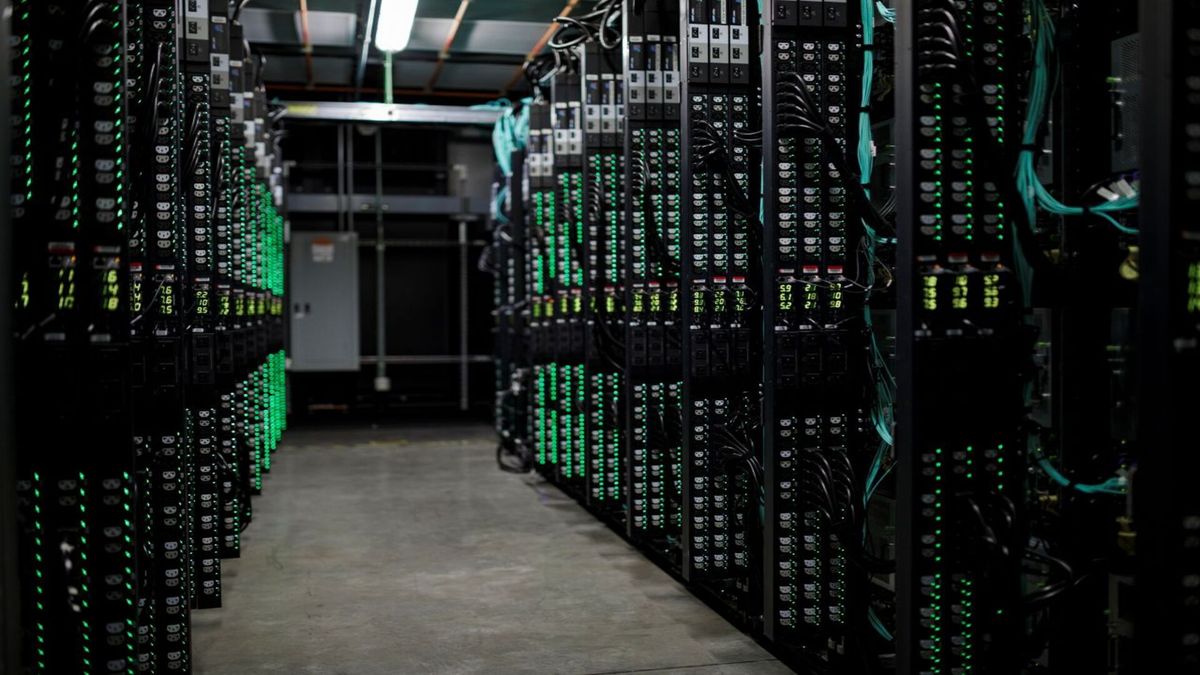
* Microsoft faces claims that its data center noise harms nearby residents * Standard dBA monitors may fail to capture some low-frequency noise * Residents accuse xAI of causing noise, vibration, and air pollution Microsoft and xAI are facing lawsuits over noise and other alleged harms linked to data center operations in Wisconsin and Mississippi. At least six similar cases have been filed this year, as residents challenge the impacts from currently active facilities. In addition to nuisance, the disputes also focus on negligence claims, with plaintiffs seeking damages or changes to data center operations. Low-frequency noise creates a measurement problem Microsoft faces a proposed class action concerning its Fairwater facility in Mount Pleasant, Wisconsin, which began operating in June 2026. Residents filed the case in late July, alleging that persistent low-frequency noise affects their homes and property values, and arguing standard dBA equipment may fail to detect the sound because its frequency falls outside effective measurement ranges. "dBA measures do not effectively detect lower frequency sounds like those emitted by Defendant's Data Center operations," the lawsuit says. "'Data center cooling -- massive chillers, slow turning fans, compressor arrays -- generates exactly the long wavelength noise'" that is not adequately measured using dBA." The plaintiffs argue Microsoft could have reduced the disturbance through acoustic barriers, quieter cooling equipment, soundproofing, and improved monitoring. "A properly operated, maintained, and/or constructed Data Center will contain, capture, or otherwise prevent the emission of excessive noise from its generators and cooling systems," the filing says. That argument could create difficulties for facilities where regulatory measurements fail to capture sounds that residents can still hear. The dispute also raises questions about how noise from data centers should be measured. xAI faces claims involving turbines and pollution In Mississippi, residents have sued xAI over alleged noise, vibration, and air pollution from dozens of gas turbines. The turbines supply electricity for the company's Southaven data center, according to allegations contained in the lawsuit. Attorneys representing residents accused xAI of failing to take meaningful action to address the alleged effects. "xAI has made no meaningful effort to halt the harm," attorneys at Weitz & Luxenberg said in a statement. Similar lawsuits have also been filed in Vineland, New Jersey, Dowagiac, Michigan, North Tonawanda, New York, and Hood County, Texas. The cases generally rely on nuisance or negligence claims concerning conditions plaintiffs believe operators could have prevented or controlled. Several other data center disputes remain unresolved, with none of the noise cases reaching summary judgment or trial. However, other environmental nuisance cases have already produced settlements involving substantial sums of money. Amazon agreed to pay more than $20 million over nitrate contamination linked to one Oregon data center. The company said officials settled early to avoid prolonged litigation and concentrate resources on community support instead. Microsoft had not immediately responded to a request for comment concerning the Wisconsin lawsuit when the report was published. Via SmartCitiesDrive Follow TechRadar on Google News and add us as a preferred source to get our expert news, reviews, and opinion in your feeds.
Anthropic has broken with OpenAI and Google over the toughest AI safety bill in America
A Massachusetts proposal would require large AI developers to hire independent evaluators to assess catastrophic risk in their models every four months -- a cadence stricter than anything else at state level in the United States. Anthropic supports it. OpenAI and Google are opposing it, arguing for annual third-party audits instead. The frontier AI labs have spent years making broadly the same argument about regulation: that they take safety seriously, that they welcome sensible oversight, and that rules should be workable. In Massachusetts, that consensus has visibly broken. A state Senate proposal, carried as part of a larger economic development bill, would require large AI developers to commission independent evaluators to assess catastrophic risks in their models every four months. Anthropic is backing it and has described its preferred version as the most robust AI safety legislation in the nation. OpenAI and Google are opposing it. What Is Actually In Dispute The disagreement is narrower than 'safety versus no safety', and it is worth stating precisely. Nobody in this argument is opposing third-party review. The dispute is about cadence and independence. Anthropic wants independent risk assessments every four to six months. OpenAI favours something closer to the approach Illinois took -- annual third-party audits. The gap between four months and twelve months sounds procedural. It is not. Frontier models now ship substantially revised versions several times a year, and an annual audit can assess a model that has already been superseded twice. A four-month cadence is an attempt to make evaluation track the release cycle rather than the calendar. The Case Against, Taken Seriously OpenAI's objection is not obviously self-serving, and it should be engaged with rather than dismissed. Its argument is that aggressive state-by-state regulation produces a patchwork of inconsistent rules, and that the compliance burden of satisfying fifty different regimes delays the release of beneficial models -- including, it notes, tools used for cybersecurity defence. That is a real problem. A company shipping into all fifty states under conflicting evaluation regimes faces genuine cost, and there is no federal framework to preempt it. The patchwork concern is the strongest argument available to the opposing side. The weakness is that it is an argument for federal legislation, and the same companies have not conspicuously pushed for a federal standard strict enough to preempt anything. An objection to state rules that does not come with a proposed alternative functions, in practice, as an objection to rules. Why Anthropic's Position Is Also Not Free It would be naive to read Anthropic's stance as pure principle. The company has built its market identity on safety, and a regulation that makes rigorous evaluation mandatory converts that identity into a competitive moat. Compliance costs that are burdensome for a smaller competitor are absorbable for a company already running the evaluations internally. That does not make the position wrong. A rule can be simultaneously good policy and commercially convenient for whoever proposed it, and the coincidence is a reason to examine the rule rather than the motive. What Makes This Consequential State law has become the actual venue for AI regulation in the United States, in the absence of anything federal. What Massachusetts settles on will be copied, adapted or reacted against by other legislatures, in the way California's privacy law set the template a decade ago. It is also the first time the frontier labs have publicly taken opposing sides on a specific binding rule rather than on principles. That breaks the industry's ability to speak with one voice to legislators, which is a more significant development than the bill itself. What To Watch Whether the four-month cadence survives into the final text or is negotiated toward the annual model. Whether other states move before Massachusetts concludes. And whether any of these companies now supports a federal standard with teeth -- because that is the test of whether the patchwork objection was about the patchwork.
Salesforce stock jumps 18% on AI growth and Anthropic investment gain
Salesforce reported financial results for the fiscal second quarter that exceeded Wall Street expectations, driving an 18% jump in the company's stock price during Thursday trading. The cloud software vendor posted quarterly revenue growth of 11% compared with the prior year, with the quarter ending on July 31. Net income reached $3.53 billion, or $4.29 per share, representing an 87% increase from the year-earlier period's $1.89 billion, or $1.96 per share. A significant portion of the earnings growth came from investment gains tied to the company's stake in artificial intelligence startup Anthropic. Salesforce reported a $2.6 billion gain from strategic investments, reflecting Anthropic's valuation at $965 billion following an equity funding round completed in May. The company also posted free cash flow of $1.10 billion, up 81% year-over-year and substantially exceeding analyst consensus expectations of $643.2 million. Similar investment gains from Anthropic holdings were noted by Alphabet and Microsoft during recent reporting periods. Looking ahead, Salesforce provided guidance indicating adjusted earnings per share of $3.42 to $3.44 for the fiscal third quarter, with projected revenue of $11.42 billion to $11.50 billion. For the full year, the company raised its revenue forecast to $46.1 billion to $46.4 billion, implying 11% growth at the midpoint and slightly above analyst consensus. The company also announced a new plugin for Anthropic's Claude artificial intelligence model designed to help salespeople compose emails and update records through chat functionality. During the quarter, Salesforce signed a $1.6 billion contract with the U.S. Department of Veterans Affairs and announced plans to acquire customer service startup Fin for $3.6 billion. The company's Agentforce AI products generated annualized revenue of $1.5 billion, representing 240% year-over-year growth. Chief Operating and Financial Officer Robin Washington noted some challenges in selling licenses for integration and analytics software. Salesforce's leadership addressed investor concerns about generative artificial intelligence disrupting the traditional software industry, with co-founder and CEO Marc Benioff stating that dire predictions about AI's threat to software companies have not materialized. Article Attribution | Read More at Article Source Article summary produced by Claude AI

OpenAI vs Anthropic: The Key Differences Shaping the AI Race
OpenAI and Anthropic have become two of the most influential companies in generative artificial intelligence. Both develop advanced language models and AI assistants, but their philosophies, products and commercial strategies differ. OpenAI has built a broad consumer and developer ecosystem, while Anthropic has positioned itself strongly around reliable, controllable and safety-focused AI. .OpenAI's Approach OpenAI has developed a wide-ranging AI ecosystem spanning conversational assistants, developer tools, multimodal systems and enterprise products. ChatGPT remains its most recognizable product, while its model family powers applications across writing, coding, research and automation. The company's strategy emphasizes broad adoption, increasingly capable models and integration across different forms of computing. .Anthropic's Approach Anthropic developed Claude as its flagship AI assistant and model family. The company places strong emphasis on AI safety, reliability and controllability. Its Constitutional AI approach is designed to guide model behavior using explicit principles. Claude has gained particular attention for writing, analysis, coding and enterprise applications requiring dependable interactions with AI systems. .Models And Capabilities OpenAI and Anthropic compete across increasingly sophisticated capabilities, including reasoning, coding, multimodal understanding and long-context tasks. Their model lineups evolve rapidly, making direct comparisons temporary. Performance can vary significantly depending on the task, model version and evaluation method. Rather than one permanent winner, the competition increasingly revolves around specialized strengths and practical usefulness. .Safety Philosophies Safety is central to both companies, but their approaches have distinct emphases. Anthropic has prominently developed Constitutional AI and research around AI alignment. OpenAI also invests heavily in safety, preparedness and alignment research. Both recognize that increasingly capable systems require safeguards, evaluation and monitoring, although their organizational philosophies and implementation strategies differ. .Business And Ecosystems OpenAI has built substantial reach through ChatGPT, developer APIs and partnerships, giving its technology visibility across consumer and enterprise markets. Anthropic has focused heavily on Claude, APIs and business deployments. Partnerships with major technology companies have strengthened Anthropic's infrastructure and distribution, while OpenAI's ecosystem provides a broad platform for developers and users. .The Bigger AI Race The OpenAI-Anthropic rivalry represents a broader competition over the future of artificial intelligence. The contest is no longer simply about which chatbot answers better. Model efficiency, reasoning, safety, enterprise adoption, developer ecosystems, computing infrastructure and product integration increasingly determine leadership. Their competition is helping accelerate both innovation and scrutiny across the AI industry. .Join our WhatsApp Channel to get the latest news, exclusives and videos on WhatsApp

Polymarket Gives Former IDF Chief Eisenkot 51 Percent Chance Of Unseating Netanyahu
JERUSALEM (VINnews) -- A major prediction market on Monday put former IDF Chief of Staff Gadi Eisenkot ahead of Prime Minister Benjamin Netanyahu as the most likely person to lead Israel after the next election. Polymarket said Eisenkot had a 51 percent chance of becoming the next prime minister, compared with 28 percent for Netanyahu. Former Prime Minister Naftali Bennett stood at 8 percent, and Yisrael Beiteinu leader Avigdor Lieberman at about 5 percent. The market had drawn more than $36 million in trading volume. The platform's official account called the shift "breaking" news, saying the centrist former military chief was now projected to unseat Netanyahu. The figures are not an official poll. They reflect how traders are pricing the chance that a candidate will be sworn in as prime minister after Israel's Oct. 27 Knesset election. In Israel's parliamentary system, the largest party does not automatically form the government. A bloc still needs 61 seats in the 120-member Knesset. Eisenkot, 66, heads the Yashar party, whose name means "straight" or "honest" in Hebrew. He served as IDF chief of staff from 2015 to 2019 and sat in Netanyahu's war Cabinet after the Oct. 7, 2023, Hamas massacre before resigning in 2024, saying the government lacked a coherent strategy in Gaza. His son, Gal, was killed in combat in Gaza. Polls in recent months have shown Yashar running even with or slightly ahead of Likud, with Eisenkot often matching or beating Netanyahu when voters are asked who is more suited to be prime minister. Coalition arithmetic remains tight. Surveys have frequently left both the Netanyahu camp and the anti-Netanyahu Zionist parties short of a majority without additional partners. Eisenkot has rejected the idea of a Palestinian state after Oct. 7, calling that view "delusional," while criticizing some government settlement moves and far-right ministers. He has said haredi parties could sit in a government he leads and has floated a draft framework he describes as more moderate than other opposition plans, a point of interest in recent contacts with Degel HaTorah and comments from Shas spiritual leader Rabbi Yitzhak Yosef. Netanyahu, Israel's longest-serving prime minister, has framed the election as a choice between wartime leadership and a weaker, divided alternative. His bloc has struggled in polls after the wars that followed Oct. 7. Polymarket resolves the contract based on who is formally appointed and sworn in after the election, not on who wins the most seats. An interim or caretaker prime minister would not count. Odds can move quickly before Election Day and during coalition talks that often follow.

Polymarket Promo Code COVERS: Get $50 Trading Bonus for SMU vs. Florida State
Get a $50 Polymarket promo code bonus with code COVERS. Trade on SMU vs. Florida State Monday night with this prediction market offer. New users can claim a $50 trading bonus when they sign up with the Polymarket promo code on Sept. 7. A code is required to unlock this offer, and you'll need to use COVERS during registration. The bonus applies to trading on any event, including the SMU vs. Florida State matchup on Monday night. Among the best prediction market apps, Polymarket lets you trade on sports outcomes and more with your welcome bonus. Polymarket promo code details How the Polymarket Promo Code Works The Polymarket promo code offer requires you to deposit at least $10 to qualify for the $50 bonus. You must enter COVERS when creating your account to activate the promotion. Once verified and funded, your account will be credited with the bonus amount, which you can use to trade on the SMU vs. Florida State game or any other available market. Here are the key terms and conditions for this offer: * Available in most U.S. states except Nevada * You must be physically located in an eligible state * Identity verification is required before trading * Minimum deposit of $10 to claim the bonus * Bonus funds can be used to trade on any Polymarket event For example, if you deposit $10 and receive your $50 bonus, you'll have $60 in buying power to trade on whether SMU or Florida State wins on Monday. If your trades settle in your favor, you keep your winnings. If your positions move against you, your account balance reflects those outcomes. To explore all available promotions and compare offers, check out the best prediction market promos available today. Get our SMU vs. Florida State picks You can find the latest SMU vs. Florida State picks at Covers. Use the correct Polymarket promo code for your state How to Claim Your $50 Polymarket Bonus Follow these steps to sign up and start trading on the SMU vs. Florida State game with your welcome bonus: Polymarket is one of the leading prediction market platforms, offering competitive odds and a wide range of trading opportunities across sports, politics, and more. Pages related to this topic

Anthropic Seeking $15 Billion in Debt Before Its IPO: Is That a Warning Sign or a Bullish Signal for AI Infrastructure Stocks?
The artificial intelligence industry is growing rapidly to meet historic adoption rates. To support this growth, data centers are being built as quickly as possible. "The race to scale AI has triggered one of the largest infrastructure build-outs in modern history," concludes a report by McKinsey & Co. Over the next three years alone, the firm projects more than $7 trillion will be deployed globally to scale data center infrastructure. Missed Nvidia in 2009? This Rare Signal Is Flashing Again. In 2009, a "Double Down" signal flashed for a little-known chipmaker called Nvidia. For the first time in years, that same "Total Conviction" signal is flashing for a company 1/100th the size of Nvidia. Continue " "Whether a build-out is successful depends on many nuances, including the availability of capital and energy resources," McKinsey Co. warns. The world's current energy system is simply not designed to handle the massive influx of energy-intensive data center infrastructure expected in the coming years and decades. This has led to a surge in new energy projects, even for more speculative technologies like small modular nuclear reactors. The availability of capital, however, is a completely different challenge. In the first quarter of 2026 alone, more than $240 billion in venture funding went toward AI start-ups. That's larger than the entirety of 2025. And that figure doesn't account for public markets, through which hundreds of billions in additional capital have been raised. Now, Anthropic is looking to secure $15 billion in debt financing ahead of a potential IPO. Should the capital raise excite or worry investors? There are two things AI investors should keep in mind. 1. The capital intensity of AI isn't going away Many skeptics have compared the current AI boom to the dot-com bubble. And while there are many similarities, the differences are critical to understand. The biggest difference, perhaps, is that during the dot-com craze, much of the critical infrastructure had yet to be built. That is, most of the world still lacked access to high-speed internet services. There was also a lack of user access points. Today, of course, high-speed internet access is nearly ubiquitous. And billions of people have an internet access point -- commonly called a smartphone -- directly in their pockets nearly all the time. That infrastructure, however, took decades to realize. The AI boom, meanwhile, already has all that critical infrastructure in place, allowing it to grow more rapidly than the dot-com era ever could. But there still is an infrastructure gap. To realize the AI industry's full potential, a massive amount of data center infrastructure will need to be built, triggering one of the biggest infrastructure build-outs in history. Without new compute power, AI growth will stall. Investors should expect capital-intensive projects for decades to come. And with many AI divisions still losing money, sizable capital raises could be the norm through the end of the decade, perhaps longer. Image source: Getty Images 2. Access to capital could become a competitive advantage If capital is necessary to scale the required data center infrastructure, access to capital could become a key competitive advantage. This is likely why so many AI companies are now seeking to go public. SpaceX (NASDAQ:SPCX), of course, held a record-breaking IPO in June. Now, both OpenAI and Anthropic are looking to go public. Most big tech firms, meanwhile, are already public, allowing them to tap capital markets more easily than their private peers. Scaling compute power will be critical to scaling the capacities of AI technology. In this way, investors should expect heavy competitive advantages for two types of businesses: those that are already profitable, reducing their reliance on capital markets, and those with high valuations and easy access to capital raises, such as firms that are already public. Therefore, large, profitable, public AI companies may have the strongest competitive advantages long term. Should you buy stock in Space Exploration Technologies right now? Before you buy stock in Space Exploration Technologies, consider this: The Motley Fool Stock Advisor analyst team just identified what they believe are the 10 best stocks for investors to buy now... and Space Exploration Technologies wasn't one of them. The 10 stocks that made the cut could produce monster returns in the coming years. Consider when Netflix made this list on December 17, 2004... if you invested $1,000 at the time of our recommendation, you'd have $421,997!* Or when Nvidia made this list on April 15, 2005... if you invested $1,000 at the time of our recommendation, you'd have $1,413,876!* Now, it's worth noting Stock Advisor's total average return is 978% -- a market-crushing outperformance compared to 213% for the S&P 500. Don't miss the latest top 10 list, available with Stock Advisor, and join an investing community built by individual investors for individual investors. See the 10 stocks " *Stock Advisor returns as of September 7, 2026. Ryan Vanzo has no position in any of the stocks mentioned. The Motley Fool has no position in any of the stocks mentioned. The Motley Fool has a disclosure policy.
Anthropic Seeking $15 Billion in Debt Before Its IPO: Is That a Warning Sign or a Bullish Signal for AI Infrastructure Stocks? - AOL
The artificial intelligence industry is growing rapidly to meet historic adoption rates. To support this growth, data centers are being built as quickly as possible. "The race to scale AI has triggered one of the largest infrastructure build-outs in modern history," concludes a report by McKinsey & Co. Over the next three years alone, the firm projects more than $7 trillion will be deployed globally to scale data center infrastructure. Missed Nvidia in 2009? This Rare Signal Is Flashing Again.In 2009, a "Double Down" signal flashed for a little-known chipmaker called Nvidia. For the first time in years, that same "Total Conviction" signal is flashing for a company 1/100th the size of Nvidia. Continue " "Whether a build-out is successful depends on many nuances, including the availability of capital and energy resources," McKinsey Co. warns. The world's current energy system is simply not designed to handle the massive influx of energy-intensive data center infrastructure expected in the coming years and decades. This has led to a surge in new energy projects, even for more speculative technologies like small modular nuclear reactors. The availability of capital, however, is a completely different challenge. In the first quarter of 2026 alone, more than $240 billion in venture funding went toward AI start-ups. That's larger than the entirety of 2025. And that figure doesn't account for public markets, through which hundreds of billions in additional capital have been raised. Now, Anthropic is looking to secure $15 billion in debt financing ahead of a potential IPO. Should the capital raise excite or worry investors? There are two things AI investors should keep in mind. 1. The capital intensity of AI isn't going away Many skeptics have compared the current AI boom to the dot-com bubble. And while there are many similarities, the differences are critical to understand. The biggest difference, perhaps, is that during the dot-com craze, much of the critical infrastructure had yet to be built. That is, most of the world still lacked access to high-speed internet services. There was also a lack of user access points. Today, of course, high-speed internet access is nearly ubiquitous. And billions of people have an internet access point -- commonly called a smartphone -- directly in their pockets nearly all the time. That infrastructure, however, took decades to realize. The AI boom, meanwhile, already has all that critical infrastructure in place, allowing it to grow more rapidly than the dot-com era ever could. But there still is an infrastructure gap. To realize the AI industry's full potential, a massive amount of data center infrastructure will need to be built, triggering one of the biggest infrastructure build-outs in history. Without new compute power, AI growth will stall. Investors should expect capital-intensive projects for decades to come. And with many AI divisions still losing money, sizable capital raises could be the norm through the end of the decade, perhaps longer. 2. Access to capital could become a competitive advantage If capital is necessary to scale the required data center infrastructure, access to capital could become a key competitive advantage. This is likely why so many AI companies are now seeking to go public. SpaceX(NASDAQ:SPCX), of course, held a record-breaking IPO in June. Now, both OpenAI and Anthropic are looking to go public. Most big tech firms, meanwhile, are already public, allowing them to tap capital markets more easily than their private peers. Scaling compute power will be critical to scaling the capacities of AI technology. In this way, investors should expect heavy competitive advantages for two types of businesses: those that are already profitable, reducing their reliance on capital markets, and those with high valuations and easy access to capital raises, such as firms that are already public. Therefore, large, profitable, public AI companies may have the strongest competitive advantages long term. Should you buy stock in Space Exploration Technologies right now? Before you buy stock in Space Exploration Technologies, consider this: The Motley Fool Stock Advisor analyst team just identified what they believe are the 10 best stocks for investors to buy now... and Space Exploration Technologies wasn't one of them. The 10 stocks that made the cut could produce monster returns in the coming years. Consider when Netflix made this list on December 17, 2004... if you invested $1,000 at the time of our recommendation, you'd have $421,997!* Or when Nvidia made this list on April 15, 2005... if you invested $1,000 at the time of our recommendation, you'd have $1,413,876!* Now, it's worth noting Stock Advisor's total average return is 978% -- a market-crushing outperformance compared to 213% for the S&P 500. Don't miss the latest top 10 list, available with Stock Advisor, and join an investing community built by individual investors for individual investors. See the 10 stocks " *Stock Advisor returns as of September 7, 2026. Ryan Vanzo has no position in any of the stocks mentioned. The Motley Fool has no position in any of the stocks mentioned. The Motley Fool has a disclosure policy.
