News & Updates
The latest news and updates from companies in the WLTH portfolio.
Polymarket and Kalshi face possible regulation as Supreme Court 'monitors the situation'
Picture it: Prediction markets like Kalshi, platforms which allow users to make "predictions" on almost anything for financial gain, platforms which are plagued with accusations of insider trading, are actually regulated by U.S. state governments under gambling laws. It could be a future possibility, if the Supreme Court could be convinced to make it happen. As reported by The Hill, multiple states have filed petitions to enforce sports gambling laws on Kalshi and platforms like it, including New Jersey and Nevada, which are respectively home to gambling hubs Atlantic City and Las Vegas. And the outcomes of each case could potentially see the eventual involvement of the Supreme Court. In the U.S., each state regulates its own gambling laws, including sports betting, which is legal in 39 states and Washington DC as of May 2026. However, Kalshi and "prediction market" platforms like it are federally regulated, sitting under the watch of the Commodity Futures Trading Commission (CFTC), which oversees America's financial derivatives markets. (Polymarket is actually not registered in the U.S. or regulated by the CFTC, though it has established a U.S. outpost which is.) This means these platforms can operate in all 50 states and currently do not answer to state gambling laws -- Kalshi has argued it offers "legal sports event contracts," not bets. However, a bipartisan coalition of 44 states signed a letter in July, declaring prediction market platforms "a new form of casino used primarily for a few to manipulate others -- the type of harms squarely within States' historic police powers to regulate gambling." Meanwhile, President Donald Trump has insisted "it is critically important that the CFTC's exclusive authority over Prediction Markets is maintained, and that they will thrive," even considering his own platform. The president's son, Donald Trump Jr., not only has a financial stake and an advisory role in Kalshi, but is also set to see his venture capital firm invest $300 million in Polymarket. On Sept. 2, New Jersey officials petitioned the Supreme Court to enforce sports gambling laws on Kalshi. "Kalshi bills itself as 'the first app for legal sports betting in all 50 states' and believes it can offer that 'legal sports betting' without following the sports-gambling laws of any of those 50 States," the petition read. The petitioners -- New Jersey attorney general Jennifer Davenport and New Jersey Division of Gaming Enforcement interim director Mary Jo Flaherty -- said that Kalshi and platforms like it had "discovered a major sports-gambling loophole in the 2010 Dodd-Frank Act" enacted after the 2007-2008 financial crisis. The Act, they said, allows Kalshi to define its offerings as financial "swaps" instead of "bets." The important part here is that in April, the New Jersey case was actually ruled by the U.S. Court of Appeals for the Third Circuit in favor of Kalshi, meaning the platform could keep on offering its "legal sports event contracts" on college sports within the state's jurisdiction. However, that decision clashes with another decision made in Aug. by the Ninth Circuit, which covers Nevada among other states. An appeal from the Nevada Gaming Control Board saw the Court of Appeals siding not with Kalshi but with the state gaming regulator, which "sent a cease-and-desist letter notifying Kalshi that it was running a sports betting platform in violation of Nevada statutes and gaming regulations." Essentially, the differing state results could get SCOTUS' attention on a federal level. Similar cases have been filed in Connecticut, New York, Arizona, Minnesota, and more states. Next stop? The Supreme Court appeal from the New Jersey regulators. However, actually getting SCOTUS to consider the request isn't guaranteed, with the court receiving thousands each year and granting very few for consideration. Want more tech news delivered to your inbox daily or sent straight to your device? Sign up for Mashable's Top Stories newsletter or get Mashable push alerts.

Kalshi, Polymarket face possible regulation with appeal aimed at SCOTUS
SCOTUS is the focus for state regulators aimed at Kalshi. Credit: Omar Marques / SOPA Images / LightRocket via Getty Images Picture it: Prediction markets like Kalshi, platforms which allow users to make "predictions" on almost anything for financial gain, platforms which are plagued with accusations of insider trading, are actually regulated by U.S. state governments under gambling laws.It could be a future possibility, if the Supreme Court could be convinced to make it happen.As reported by The Hill, multiple states have filed petitions to enforce sports gambling laws on Kalshi and platforms like it, including New Jersey and Nevada, which are respectively home to gambling hubs Atlantic City and Las Vegas. And the outcomes of each case could potentially see the eventual involvement of the Supreme Court. SEE ALSO: France orders Polymarket blocked over illegal gambling promotion In the U.S., each state regulates its own gambling laws, including sports betting, which is legal in 39 states and Washington DC as of May 2026. However, Kalshi and "prediction market" platforms like it are federally regulated, sitting under the watch of the Commodity Futures Trading Commission (CFTC), which oversees America's financial derivatives markets. (Polymarket is actually not registered in the U.S. or regulated by the CFTC, though it has established a U.S. outpost which is.) This means these platforms can operate in all 50 states and currently do not answer to state gambling laws -- Kalshi has argued it offers "legal sports event contracts," not bets.However, a bipartisan coalition of 44 states signed a letter in July, declaring prediction market platforms "a new form of casino used primarily for a few to manipulate others -- the type of harms squarely within States' historic police powers to regulate gambling."Meanwhile, President Donald Trump has insisted "it is critically important that the CFTC's exclusive authority over Prediction Markets is maintained, and that they will thrive," even considering his own platform. The president's son, Donald Trump Jr., not only has a financial stake and an advisory role in Kalshi, but is also set to see his venture capital firm invest $300 million in Polymarket. Featured Video For You (() => { window.videoEmbeds = window.videoEmbeds || []; let data = {"slug":"03s4CdYrl1K8sf2jTVq7tR2","url":"https:\/\/cdn.ex.co\/transformations-account\/production\/a0be6317-e085-43f9-8cb5-7b125d25af4b\/ed175e54-041b-4538-9f60-b2a4ba0f767a\/master.m3u8","transcoded_urls":["https:\/\/cdn.ex.co\/transformations-account\/production\/a0be6317-e085-43f9-8cb5-7b125d25af4b\/ed175e54-041b-4538-9f60-b2a4ba0f767a\/1080p.mp4","https:\/\/cdn.ex.co\/transformations-account\/production\/a0be6317-e085-43f9-8cb5-7b125d25af4b\/ed175e54-041b-4538-9f60-b2a4ba0f767a\/720p.mp4","https:\/\/cdn.ex.co\/transformations-account\/production\/a0be6317-e085-43f9-8cb5-7b125d25af4b\/ed175e54-041b-4538-9f60-b2a4ba0f767a\/540p.mp4","https:\/\/cdn.ex.co\/transformations-account\/production\/a0be6317-e085-43f9-8cb5-7b125d25af4b\/ed175e54-041b-4538-9f60-b2a4ba0f767a\/360p.mp4","https:\/\/cdn.ex.co\/transformations-account\/production\/a0be6317-e085-43f9-8cb5-7b125d25af4b\/ed175e54-041b-4538-9f60-b2a4ba0f767a\/270p.mp4"],"title":"How prediction markets got people betting on nuclear war","description":null,"thumbnail_url":"https:\/\/cdn.ex.co\/video-uploads\/production\/0010J00001l1J64QAE\/ed175e54-041b-4538-9f60-b2a4ba0f767a-thumbnail.jpeg?cb=1773761299298","disable_ads":null,"created_at":"2026-03-17T14:46:03.000000Z","duration":258,"mediaData":{"fps":24,"width":1920,"height":1080,"poster":"https:\/\/cdn.ex.co\/video-uploads\/production\/0010J00001l1J64QAE\/ed175e54-041b-4538-9f60-b2a4ba0f767a-thumbnail.jpeg?cb=1773761299298","bitRate":5242,"mimeType":"video\/mp4","mediaType":"video","resolutions":[{"res":1080,"width":1920,"height":1080,"poster":"https:\/\/cdn.ex.co\/video-uploads\/production\/0010J00001l1J64QAE\/ed175e54-041b-4538-9f60-b2a4ba0f767a-thumbnail.jpeg?cb=1773761299298","fileSize":173090570,"videoUrl":"https:\/\/cdn.ex.co\/transformations-account\/production\/a0be6317-e085-43f9-8cb5-7b125d25af4b\/ed175e54-041b-4538-9f60-b2a4ba0f767a\/1080p.mp4"},{"res":720,"width":1280,"height":720,"poster":"https:\/\/cdn.ex.co\/video-uploads\/production\/0010J00001l1J64QAE\/ed175e54-041b-4538-9f60-b2a4ba0f767a-thumbnail.jpeg?cb=1773761299298","fileSize":111897510,"videoUrl":"https:\/\/cdn.ex.co\/transformations-account\/production\/a0be6317-e085-43f9-8cb5-7b125d25af4b\/ed175e54-041b-4538-9f60-b2a4ba0f767a\/720p.mp4"},{"res":540,"width":960,"height":540,"poster":"https:\/\/cdn.ex.co\/video-uploads\/production\/0010J00001l1J64QAE\/ed175e54-041b-4538-9f60-b2a4ba0f767a-thumbnail.jpeg?cb=1773761299298","fileSize":41165385,"videoUrl":"https:\/\/cdn.ex.co\/transformations-account\/production\/a0be6317-e085-43f9-8cb5-7b125d25af4b\/ed175e54-041b-4538-9f60-b2a4ba0f767a\/540p.mp4"},{"res":360,"width":640,"height":360,"poster":"https:\/\/cdn.ex.co\/video-uploads\/production\/0010J00001l1J64QAE\/ed175e54-041b-4538-9f60-b2a4ba0f767a-thumbnail.jpeg?cb=1773761299298","fileSize":28466795,"videoUrl":"https:\/\/cdn.ex.co\/transformations-account\/production\/a0be6317-e085-43f9-8cb5-7b125d25af4b\/ed175e54-041b-4538-9f60-b2a4ba0f767a\/360p.mp4"},{"res":270,"width":480,"height":270,"poster":"https:\/\/cdn.ex.co\/video-uploads\/production\/0010J00001l1J64QAE\/ed175e54-041b-4538-9f60-b2a4ba0f767a-thumbnail.jpeg?cb=1773761299298","fileSize":14797433,"videoUrl":"https:\/\/cdn.ex.co\/transformations-account\/production\/a0be6317-e085-43f9-8cb5-7b125d25af4b\/ed175e54-041b-4538-9f60-b2a4ba0f767a\/270p.mp4"}],"originalVideoUrl":"https:\/\/cdn.ex.co\/transformations-account\/production\/a0be6317-e085-43f9-8cb5-7b125d25af4b\/ed175e54-041b-4538-9f60-b2a4ba0f767a\/1080p.mp4","lastTransformedAt":"2026-03-17T14:45:41.026Z","streamingSourceURL":"https:\/\/cdn.ex.co\/transformations-account\/production\/a0be6317-e085-43f9-8cb5-7b125d25af4b\/ed175e54-041b-4538-9f60-b2a4ba0f767a\/master.m3u8"},"excoPlayListId":"6825f5751ad7f3226d4a8257","excoPlayListVideos":{"144aa3b7-0c5f-517d-8fb2-9ad1cb0951cb":"06POyGxitALJDYFvSyM0kXJ","1841742e-2895-5f90-91f3-ad80d5a1a9fd":"03mIHFvQIhShrZlzd9MPJDK","1f51e117-d236-5ea8-b4b4-6bda85e54afa":"05l8cQwbgeRqnZ3FamJ5p0v","47d928f7-3749-5d34-8618-cc9c45fcbdd3":"05RVg3GL7VMc29LUvdvb5Pz","6924e6b5-27a7-536b-b86f-405fb5c662fb":"07HliT98V1nWwSQFgEz06Qy","6fee1e0b-3018-5692-bcc1-31ded5fb997b":"01R1CPCQskIcqSu1qT8R5XW","9386a5ea-cd49-41df-aa06-467deed0d327":"04ATRsshFQft9sTUaOZKkyA","97ee8d79-f17e-54f0-9a50-71f877a10f73":"010mCFRfKJyWhO4lEkXeJVn","99153389-12e1-416e-a00c-a23b4a0f84f5":"026XiwA35XYCBR3J9o76HbI","9bf596ea-1749-5c3c-ada3-940a770bae59":"05ocuO2efzeGixS8Z5FNBpj","a2c6253d-26eb-5a87-80cd-6be1a70c5d56":"032TwplMKgQul1TX3GXGCnT","ae1c596f-f834-50e2-baee-4de53d5c6a9c":"049MY95fbmlXuQtaKkYTWn2","c9fe00bb-09b9-42ed-a31c-1dd0b7a836f1":"07MpWqAHdjmejpmKgPsfRfk","cd1a5fe6-f674-56e3-a966-28886dde4ccb":"01yKFHm2LjSnBs1gBFrzD1N","f0877b44-faaa-5830-aa80-5c5d95f0899f":"03fR3U1zBzwUZTrIupjIs1z","f52f162c-c5f4-5a60-9273-98f733fd58d7":"038FXE8Mu5pxqy145i6EnqT","f7218c4f-b0db-4ccf-8261-7e6151967ff6":"04ULiRs0u5yHHXm4v9csGtn","fdb5cbe0-518a-53df-a712-20ff1e69fea4":"059n8dMESLOKTHRdVaMPZe5"}}; data.playlistItemCallback = function (item, index) { if (item.title) { document.getElementById("video-title-container-01M1YKZR0K89WWZRKGWE9WHY2C").innerText = item.title; } }; window.videoEmbeds.push({ elemId: 'video-container-01M1YKZR0K89WWZRKGWE9WHY2C', data: data, videoPlayerType: 'related', }); })() How prediction markets got people betting on nuclear war On Sept. 2, New Jersey officials petitioned the Supreme Court to enforce sports gambling laws on Kalshi. "Kalshi bills itself as 'the first app for legal sports betting in all 50 states' and believes it can offer that 'legal sports betting' without following the sports-gambling laws of any of those 50 States," the petition read. The petitioners -- New Jersey attorney general Jennifer Davenport and New Jersey Division of Gaming Enforcement interim director Mary Jo Flaherty -- said that Kalshi and platforms like it had "discovered a major sports-gambling loophole in the 2010 Dodd-Frank Act" enacted after the 2007-2008 financial crisis. The Act, they said, allows Kalshi to define its offerings as financial "swaps" instead of "bets."The important part here is that in April, the New Jersey case was actually ruled by the U.S. Court of Appeals for the Third Circuit in favor of Kalshi, meaning the platform could keep on offering its "legal sports event contracts" on college sports within the state's jurisdiction. However, that decision clashes with another decision made in Aug. by the Ninth Circuit, which covers Nevada among other states. An appeal from the Nevada Gaming Control Board saw the Court of Appeals siding not with Kalshi but with the state gaming regulator, which "sent a cease-and-desist letter notifying Kalshi that it was running a sports betting platform in violation of Nevada statutes and gaming regulations." Essentially, the differing state results could get SCOTUS' attention on a federal level.Similar cases have been filed in Connecticut, New York, Arizona, Minnesota, and more states.Next stop? The Supreme Court appeal from the New Jersey regulators. However, actually getting SCOTUS to consider the request isn't guaranteed, with the court receiving thousands each year and granting very few for consideration.Want more tech news delivered to your inbox daily or sent straight to your device? Sign up for Mashable's Top Stories newsletter or get Mashable push alerts.

Think SpaceX's $28.5 Trillion Idea Sounded Crazy? Wait Till You Hear What Anthropic Says.
Two months ago, Elon Musk made a bold claim. (I know. Shocking!) Explaining in its initial public offering (IPO) prospectus why Space Exploration Technologies (NASDAQ: SPCX) was justified in asking investors for a valuation more than $1.5 trillion, Musk & Co. asserted that, in the not-too-distant future, its products and services would serve a $28.5 trillion market for space, connectivity, and artificial intelligence (AI) services. And the biggest of these was AI. Missed Nvidia in 2009? This Rare Signal Is Flashing Again. In 2009, a "Double Down" signal flashed for a little-known chipmaker called Nvidia. For the first time in years, that same "Total Conviction" signal is flashing for a company 1/100th the size of Nvidia. Continue " According to Musk, AI is a market opportunity of $26.5 trillion. SpaceX argues, Anthropic echoes Such a gargantuan number obviously stuck with me. And when another AI company -- Anthropic -- announced last week that, in its opinion, the total addressable market (TAM) for AI services could reach $30 trillion, well, that rang a big bell. Anthropic reported $11.6 billion in revenue in the second quarter (Q2) of 2026, more than doubling year over year. According to The Wall Street Journal, the company earned a "small operating profit" as well. But Anthropic sees even bigger things ahead for it as its TAM swells to $30 trillion and beyond. So, $26.5 trillion? $30 trillion? These are big numbers, and they're suspiciously close to each other. But that's not the only thing they have in common. Anthropic says it's targeting a TAM comprising "the full scope of work that could be completed with AI models," according to the Journal. And it can reach this TAM if it can "theoretically capture ... 100% market-share." Emphasis on "theoretically." But here's the problem: Estimating the size of a company's TAM requires "a bit of guesswork," says the Journal. Rarely does the company approaching an IPO tell you exactly what it includes in its TAM. Even more rarely does it tell you when it expects to achieve the TAM it cites. Unlike actual market-share reports, says the Journal, TAM estimates are "especially squishy." Which is another way of saying it's impossible to verify them before the IPO has happened -- by which time it may be too late. Examples from history Need examples? In 2019, ride-share company Uber (NYSE: UBER) told investors that its TAM was $6 trillion. But how much revenue did Uber actually pull in last year? $52 billion. Or about nine-tenths of one percent of what it cited as its TAM.

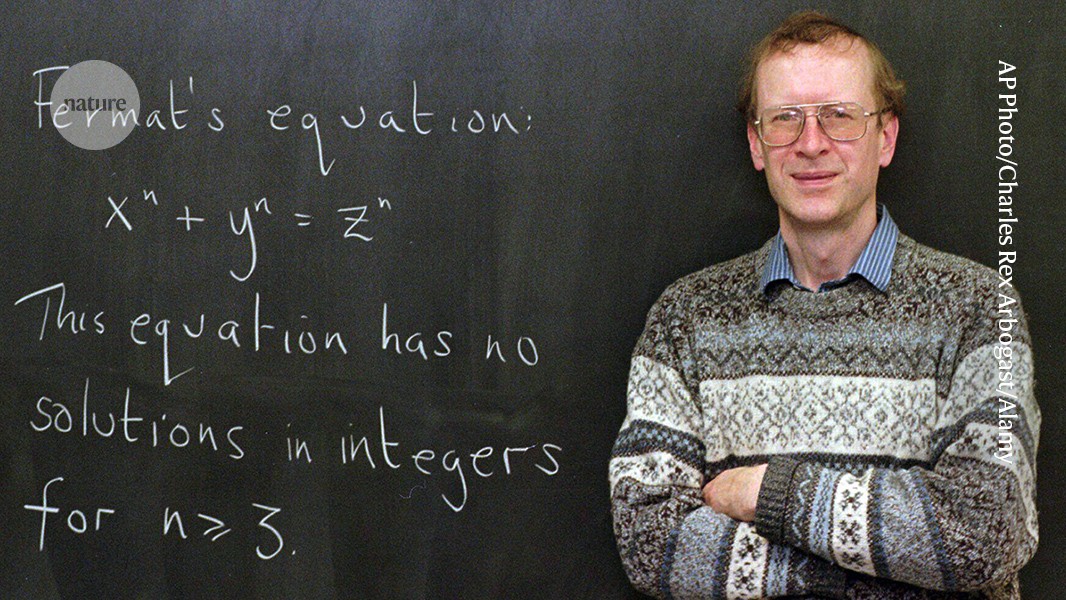
Anthropic AI 'formalizes' proof of Fermat's last theorem in just 11 days
Fermat's last theorem, one of the most celebrated mathematical results of the last half-century, has been turned into computer-verified code for the first time, using an advanced prototype of the artificial-intelligence (AI) chatbot Claude. The fact that a machine could turn the work of human mathematicians into a 13-million-line-long, ironclad proof "just completely blew my mind", says Alex Kontorovich, a number theorist at Rutgers University in Piscataway, New Jersey. Claude-maker Anthropic AI, of San Francisco, California, announced the breakthrough on 4 September. The model finished in 11 days a project that was expected to take humans 10 years. The result shows that AI will play an increasingly important part in checking the work of mathematicians -- as well as in producing new mathematical reasoning. At the current pace of progress, it is not unthinkable that AI could soon be able to scrutinize the entire library of mathematical knowledge, perhaps finding that some well-known results are wrong. "Two years ago, that was a fantasy," says Kevin Buzzard, a mathematician at Imperial College London. Mathematicians astounded Mathematicians have been increasingly astounded by the pace at which AI's mathematical skill have soared. This includes the technology's ability to 'formalize' proofs -- translating mathematical arguments from natural language into a formal, computer-certifiable code, typically in the programming language Lean. In February, AI achieved another milestone in AI-aided 'formalization', when it certified the Fields-medal-winning work on the most efficient ways to pack spheres (in a space of 8 or 24 dimensions) of Maryna Viazovska. But Buzzard says that the Fermat's last theorem work was on a whole other level of complexity. "It was maybe an order of magnitude more difficult," he says. Daniel Litt, a number theorist at the University of Toronto, Canada, agrees. "If they can formalize Fermat's last theorem, they can probably formalize anything." The original proof of Fermat's last theorem, completed in 1994 by Andrew Wiles and Richard Taylor, was a landmark result of twentieth-century mathematics. The deceptively simple statement is that there cannot be any whole numbers x, y and z such that x + y = z, if n is greater than 2. French mathematician Pierre de Fermat had made this claim in 1637 but did not leave behind a proof, and it became known as 'his' last theorem -- even though in mathematics, a statement earns the 'theorem' badge only after it has been rigorously proven to be true. (By itself, solving this particular equation -- or knowing that it has no solutions -- does not have much practical use, but the techniques Wiles developed to crack the problem helped to bring distant disciplines of mathematics together. The proof earned Wiles an Abel Prize, one of the most coveted awards in mathematics, in 2016.)
Join Our Discord For The Latest Aussie Pre-Order Drops, Bargains & Vibes
After years and years of being asked, we've finally launched a Discord for our community that will sit alongside our social media channels, Facebook groups and the website. This will be a place that we can easily chat about games, post about Aussie pre-order drops and bargain in real time, and just generally vibe together. You can join the Press Start discord HERE. OTHER WAYS TO SUPPORT US We're giving anyone that subscribes to the Press Start membership a special role in the Discord as well as a special chat with direct access to myself and the team, and we're still working on other benefits including ad removal, exclusive giveaways and more, but any support is hugely appreciated on our new independent journey. USE THESE LINKS WHEN SHOPPING We've posted bargains since the site first existed, and will continue to do so, but you can support us just by using these links when shopping at the below retailers: * Amazon * JB Hi-Fi * Big W * Target FOLLOW US ON SOCIAL MEDIA The easiest way to support the site is just by following us on the below channels, and if you like what you see, share and tag your friends as every little bit helps: * Instagram * YouTube * Facebook * X (Twitter) * Threads * Bluesky JOIN OUR FACEBOOK GROUPS We may receive a commission when you purchase products through links on our site, at no extra cost to you.

Join Our Discord For The Latest Aussie Pre-Order Drops, Bargains & Vibes
After years and years of being asked, we've finally launched a Discord for our community that will sit alongside our social media channels, Facebook groups and the website. This will be a place that we can easily chat about games, post about Aussie pre-order drops and bargain in real time, and just generally vibe together. You can join the Press Start discord HERE. OTHER WAYS TO SUPPORT US We're giving anyone that subscribes to the Press Start membership a special role in the Discord as well as a special chat with direct access to myself and the team, and we're still working on other benefits including ad removal, exclusive giveaways and more, but any support is hugely appreciated on our new independent journey. USE THESE LINKS WHEN SHOPPING We've posted bargains since the site first existed, and will continue to do so, but you can support us just by using these links when shopping at the below retailers: * Amazon * JB Hi-Fi * Big W * Target FOLLOW US ON SOCIAL MEDIA The easiest way to support the site is just by following us on the below channels, and if you like what you see, share and tag your friends as every little bit helps: * Instagram * YouTube * Facebook * X (Twitter) * Threads * Bluesky JOIN OUR FACEBOOK GROUPS We may receive a commission when you purchase products through links on our site, at no extra cost to you.
XRP, Solana (SOL), Hyperliquid (HYPE) and Bitcoin (BTC) Price Analysis for September 7: Unconventional Market Picture - U.Today
Following its explosive August breakout, XRP is trying to create a stable bullish structure. Although the asset is currently trading comfortably above the major moving averages at $1.42, price action since the initial surge indicates that buyers are still having difficulty resuming the advance. Support range for XRP Right now, the 200-day moving average is around $1.35, which is the most crucial level. Since late August, XRP has conducted numerous tests in this area without yielding a conclusive breakdown. Thus, $1.35-$1.36 is the main support range. This area is further strengthened by the 20-day moving average, which is also coming in from below at roughly $1.32. $1.45 is the initial resistance on the upside. Another attempt at $1.50-$1.55, where XRP previously encountered significant selling, could be opened by a clean daily close above it. The price spent very little time at the extreme wick toward $1.70, so it should not yet be considered established resistance. The momentum is still in favor. The RSI is currently at about 62, significantly lower than the overbought readings produced during the August breakout. As a result, XRP can continue to grow without becoming technically overheated. Bulls currently benefit from consolidation above $1.35. The recovery would be significantly weakened if that level were lost, and $1.32 and then $1.23 would come into focus. Solana stays above After gaining more than 3% during the current session, Solana has maintained one of the cleaner recovery structures on the chart, trading at about $106.50. SOL is currently trading above all of the major moving averages displayed, having recovered significantly from its June lows. The $108-$110 range is the current obstacle. Before going into consolidation, SOL hit about $110 during the late-August rally, and buyers have not yet been able to break that high. There would not be much technical resistance in the vicinity if the price continued to rise through $110. Support has emerged between $100 and $102, where buyers have been drawn in by a number of recent pullbacks. The next significant dynamic support is the rising 20-day moving average around $95.30 below that. Another significant structural level is the 200-day average of about $91. Although there is still plenty of momentum, caution is advised. The RSI is close to 68, and the signal average is above 72. As a result, even though SOL has cooled since the initial breakout, it is once again approaching overbought conditions. The overall setup continues to favor buyers as long as SOL stays above $100. While losing $100 could lead to a deeper retracement toward $95 and possibly $91, breaking $110 would reinforce the bullish continuation scenario. Hyperliquid near $100 With HYPE rising to about $89 after gaining more than 4% during the current session, Hyperliquid is still outperforming the overall market. The recent action continues the robust surge that started on August 18, when the value of the token was less than $60. The technical structure remains overwhelmingly bullish. The price is currently far above all significant moving averages, and HYPE has continuously produced higher highs and higher lows. The longer averages are still centered around $64-$66, but the 20-day moving average has increased to about $76.91. At $56.47, the 200-day moving average is significantly lower. The psychologically significant $90 area is now being tested by HYPE. The token would enter price discovery if there were a strong breakout above this level, with $92-$95 emerging as the next natural zone to watch. However, the gap between the price and its moving averages also reveals the extent of the rally. Right now, the RSI is at 68.5, which is slightly below the conventional overbought level. It is worth noting that momentum has somewhat decreased even as HYPE hits new highs, which increases the likelihood of consolidation but also leaves the door open to further upside. The first significant support is located between $84 and $85. The rising 20-day average around $77-$80 would become significant below that. HYPE's overall bullish structure does not change unless it loses these levels. Bitcoin stands under pressure After a strong breakout from about $63,000 in August, Bitcoin is still consolidating around $80,000. Although buyers have repeatedly failed to create a sustained move above $81,000, Bitcoin is currently trading close to $79,960. Instead of a proven reversal, the current structure is more akin to high-level consolidation. Demand for Bitcoin has consistently been found between $77,000 and $78,000; the most recent surge briefly pushed the price above $81,000 before being rejected once more. $81,000-$82,000 is now the most immediate resistance range. Additionally, Bitcoin maintains a significant distance from its main moving averages. While the 200-day moving average is close to $72,638, the 20-day average has increased to about $75,124. Additional averages between $69,400 and $70,000 further support the overall improvement in market structure following the August breakout. Momentum is still high. After previously entering overbought territory, the RSI is currently close to 67. Although another strong move toward $82,000 might quickly push momentum back into overheated conditions, this gives Bitcoin some additional room to grow. The strongest indication that the rally is resuming would be a daily breakout above $82,000, which could open up the $84,000-$85,000 area. The first crucial level of defense on the downside remains $77,000.

Minnesota 'nudification' law survives xAI's request for a legal injunction
Minnesota has temporarily won the right to sue companies for up to $500,000 for every "nudification" enabled by artificial intelligence. The District Court of Minnesota has rejected the efforts of Elon Musk's xAI to seek an injunction to suspend the law until a court could hear its constitutional challenge to the law itself, according to a report by Reuters. Judge Donovan W. Frank, in his Conclusion, argued that "xAI has not demonstrated irreparable harm and the balance of harms tips steeply in favor of the State." The bill Musk is trying to fight was recently passed into law by Minnesota, becoming the nation's first anti-nudification law. Companies found in violation of this law would be subject to fines of up to $500,000 every time artificial intelligence is used to alter images to depict the "intimate parts" of a person in such a way that "a reasonable person would believe that the intimate part belongs to the identifiable individual." xAI is alleging that the Minnesota bill is a First Amendment violation of not only itself, as a corporate entity, but also a violation of the rights of its users. That larger lawsuit has yet to go to trial, but Attorney General Keith Ellison has already given his unvarnished opinion: "I would argue that there is no First Amendment right to falsely exploit somebody's image and make them appear naked." Meanwhile, xAI is already being sued by a "Jane Doe" in Arkansas, alleging that xAI "chose to release and monetize a product that they knew, or at minimum should have known, could and would be used to digitally exploit children for commercial gain." Interestingly, xAI's own Acceptable Use Policy explicitly forbids "[u]ndressing or nudifying real persons, or otherwise altering a real person's image or likeness to depict them in an intimate or sexual context," so it isn't clear why they are simultaneously taking the state of Minnesota to court for a law that would criminalize behavior they already ostensibly prohibit, unless their Acceptable Use Policy is little more than an attempt to indemnify them against legal repercussions. In the meantime, xAI's lawsuit will be allowed to continue, and anyone concerned about the future use and regulation of artificial intelligence should pay very close attention to the findings.

Anthropic Has Committed More Than $100 Billion to AWS, and Its Prospectus Could Reveal More Details About This Contract - AOL
Anthropic, the company behind the Claude artificial intelligence (AI) models, plans to publish its initial public offering (IPO) prospectus after Monday's Labor Day holiday, The Information reported late last month. A listing may follow as soon as late September or in October. Amazon(NASDAQ:AMZN) shareholders have a more specific reason than most to open the document when it lands. On April 20, Anthropic committed to spend "more than $100 billion over the next ten years" with Amazon Web Services (AWS), Amazon's cloud computing segment. That promise is equal to about a fifth of AWS's backlog of contracted work, which reached about $496 billion in June. Missed Nvidia in 2009? This Rare Signal Is Flashing Again.In 2009, a "Double Down" signal flashed for a little-known chipmaker called Nvidia. For the first time in years, that same "Total Conviction" signal is flashing for a company 1/100th the size of Nvidia. Continue " In other words, Amazon has already told investors how much one of its biggest cloud customers intends to spend. What no Amazon filing can show is whether the customer's own finances support it. That's what the prospectus is for. The contract is already in Amazon's filings April's agreement covers up to 5 gigawatts of capacity on Amazon's own silicon -- Graviton processors and Trainium2 through Trainium4 AI chips, with an option on future generations. Amazon's filings show what a deal that size does to the backlog. AWS's backlog (commitments in customer contracts with original terms longer than one year that haven't yet been recognized as revenue) had grown to about $496 billion by June 30. That was up from about $364 billion in March, and from $195 billion in the middle of 2025 -- growth of 154% year over year, including a $132 billion jump in a single quarter. And the Anthropic deal wasn't alone. The filing also discloses a $100 billion, eight-year expansion of AWS's existing $38 billion commitment from OpenAI, announced a quarter earlier. Not only is AWS's contracted future far bigger than it was a year ago, but more of it also sits years away from becoming revenue. The weighted-average remaining life of the segment's long-term contracts stretched from 4.0 years to 6.4 years over those 12 months. One half of the deal is easy to check Of course, a backlog is signed work, not guaranteed revenue. Amazon says the amount and timing of what it recognizes "will be driven by customer usage and our performance in accordance with contractual obligations." Amazon's half of that sentence looks strong. In the second quarter of 2026, AWS's revenue rose 37% year over year, to $42.2 billion -- the segment's fastest growth in 18 quarters and a $169 billion annualized pace. Segment operating income rose about 63% year over year to $16.6 billion. And the AI business inside AWS passed a $25 billion annualized revenue pace of its own, growing triple-digit percentages. The customer's half is the part I can't verify yet. Anthropic is private, and its reported growth is extraordinary. In April, the company said its annualized revenue pace had passed $30 billion, more than triple its level entering the year. And by mid-August, CNBC reported, Anthropic was telling investors the pace had reached $65 billion by the end of July. Spread evenly, the commitment works out to more than $10 billion a year, or about 6% of AWS's current annual revenue pace. That's arguably affordable if Anthropic's growth holds, and heavy if it doesn't. And Amazon isn't just supplying the capacity. Its latest quarterly filing shows the company has put another $10 billion into Anthropic this year, with up to $15 billion more available under a financing arrangement tied to compute-delivery milestones. That means Amazon's interest in Anthropic's financial health goes beyond the contract itself. What does a prospectus settle? Nearly everything the market knows about Anthropic's finances today is reported, not filed. The company's only filing on record is the confidential draft it submitted to the Securities and Exchange Commission in June. Its expected market value is a projection. People familiar with the matter told CNBC last month that the company could go public at a valuation of about $2 trillion, about double its private-market value. Its revenue pace is self-reported, and no audited numbers are public. A prospectus replaces the estimates with audited financial statements: actual revenue, actual profit or losses, and actual cash. Even more useful for Amazon shareholders, it should carry Anthropic's own accounting of its purchase commitments, the other side of the agreements that swelled AWS's backlog. At about $259 as of this writing, Amazon's stock trades at a forward price-to-earnings ratio of about 24. For a company whose cloud segment just accelerated to 37% growth, I think that's a reasonable price. But AWS has now disclosed more than $200 billion of multi-year commitments from just two private AI companies, and until those companies file, investors can only judge them by reported figures. Ultimately, Anthropic's prospectus is the first chance to check one of them. I'll be reading it closely. Don't miss this second chance at a potentially lucrative opportunity Ever feel like you missed the boat in buying the most successful stocks? Then you'll want to hear this. On rare occasions, our expert team of analysts issues a "Double Down" stock recommendation for companies that they think are about to pop. If you're worried you've already missed your chance to invest, now is the best time to buy before it's too late. And the numbers speak for themselves: * Nvidia:if you invested $1,000 when we doubled down in 2009,you'd have $598,219!* * Apple: if you invested $1,000 when we doubled down in 2008, you'd have $61,037!* * Netflix: if you invested $1,000 when we doubled down in 2004, you'd have $421,997!* Right now, we're issuing "Double Down" alerts for three incredible companies, available when you joinStock Advisor, and there may not be another chance like this anytime soon. See the 3 stocks " *Stock Advisor returns as of September 6, 2026. Daniel Sparks and his clients do not have positions in any of the stocks mentioned. The Motley Fool has positions in and recommends Amazon. The Motley Fool has a disclosure policy.

Srha Asghar longs for 'unconventional' drama roles
Pakistani actor Srha Asghar wants to see more variety in the roles offered to women on television, and says she is particularly interested in playing a character that is sporty, active and driven by something beyond the usual domestic conflicts. Speaking to The Express Tribune, Asghar, who will appear as Zoya in the Upcoming Express Entertainment drama Ikhtiyar, said she does not have a fixed formula for choosing projects. Instead, she believes that interesting characters often find their way to her. "I think roles choose me," she said. "A character comes and it is very different, and I really like it. Then I do it. Of course, sometimes you like a character but your dates do not match, so that happens too." In Ikhtiyar, Asghar plays Zoya, a bubbly and carefree woman who approaches life with excitement and seemingly little anxiety. Describing her character, she said Zoya is "here and there and everywhere" and has a solution for almost every situation. Despite the character's cheerful personality, Asghar admits that she does not completely resemble Zoya. "I am jolly, but I panic in situations," she said. "Zoya does not panic at all. She has a solution for everything." While Asghar has already taken on challenging roles during her career, she says she would like to explore characters that demand even more from her as an actor. For her, a strong character should not simply be defined by whether it is a protagonist or antagonist. It should have an identity and a life of its own. "I would like more challenging characters to come," she said. "There should be something in his or her life. There should be a hobby too, not just a story of a room." That desire for variety is also behind her interest in playing a sporty character something she has not yet explored on screen. "I haven't done anything sporty," Asghar said. "So this is for them. If there is any sporty character, i will do it." Her comments point towards a larger challenge faced by actors working in television, where female characters are frequently written around family disputes, relationships and domestic struggles. Asghar appears keen to move beyond that familiar territory and explore characters whose personalities are defined by interests, ambitions and activities outside the central storyline. Away from the screen, Asghar has also developed a strong social media presence. She frequently shares light-hearted videos, including content featuring her husband. However, she says there is no elaborate strategy behind the couple's online presence. "When I am at home from the shoot, I am very free, so we make videos," she said.

Anthropic Has Committed More Than $100 Billion to AWS, and Its Prospectus Could Reveal More Details About This Contract
Anthropic, the company behind the Claude artificial intelligence (AI) models, plans to publish its initial public offering (IPO) prospectus after Monday's Labor Day holiday, The Information reported late last month. A listing may follow as soon as late September or in October. Amazon (NASDAQ:AMZN) shareholders have a more specific reason than most to open the document when it lands. On April 20, Anthropic committed to spend "more than $100 billion over the next ten years" with Amazon Web Services (AWS), Amazon's cloud computing segment. That promise is equal to about a fifth of AWS's backlog of contracted work, which reached about $496 billion in June. Missed Nvidia in 2009? This Rare Signal Is Flashing Again. In 2009, a "Double Down" signal flashed for a little-known chipmaker called Nvidia. For the first time in years, that same "Total Conviction" signal is flashing for a company 1/100th the size of Nvidia. Continue " In other words, Amazon has already told investors how much one of its biggest cloud customers intends to spend. What no Amazon filing can show is whether the customer's own finances support it. That's what the prospectus is for. Image source: Getty Images. The contract is already in Amazon's filings April's agreement covers up to 5 gigawatts of capacity on Amazon's own silicon -- Graviton processors and Trainium2 through Trainium4 AI chips, with an option on future generations. Amazon's filings show what a deal that size does to the backlog. AWS's backlog (commitments in customer contracts with original terms longer than one year that haven't yet been recognized as revenue) had grown to about $496 billion by June 30. That was up from about $364 billion in March, and from $195 billion in the middle of 2025 -- growth of 154% year over year, including a $132 billion jump in a single quarter. And the Anthropic deal wasn't alone. The filing also discloses a $100 billion, eight-year expansion of AWS's existing $38 billion commitment from OpenAI, announced a quarter earlier. Not only is AWS's contracted future far bigger than it was a year ago, but more of it also sits years away from becoming revenue. The weighted-average remaining life of the segment's long-term contracts stretched from 4.0 years to 6.4 years over those 12 months. One half of the deal is easy to check Of course, a backlog is signed work, not guaranteed revenue. Amazon says the amount and timing of what it recognizes "will be driven by customer usage and our performance in accordance with contractual obligations." Amazon's half of that sentence looks strong. In the second quarter of 2026, AWS's revenue rose 37% year over year, to $42.2 billion -- the segment's fastest growth in 18 quarters and a $169 billion annualized pace. Segment operating income rose about 63% year over year to $16.6 billion. And the AI business inside AWS passed a $25 billion annualized revenue pace of its own, growing triple-digit percentages. The customer's half is the part I can't verify yet. Anthropic is private, and its reported growth is extraordinary. In April, the company said its annualized revenue pace had passed $30 billion, more than triple its level entering the year. And by mid-August, CNBC reported, Anthropic was telling investors the pace had reached $65 billion by the end of July. Spread evenly, the commitment works out to more than $10 billion a year, or about 6% of AWS's current annual revenue pace. That's arguably affordable if Anthropic's growth holds, and heavy if it doesn't. And Amazon isn't just supplying the capacity. Its latest quarterly filing shows the company has put another $10 billion into Anthropic this year, with up to $15 billion more available under a financing arrangement tied to compute-delivery milestones. That means Amazon's interest in Anthropic's financial health goes beyond the contract itself. What does a prospectus settle? Nearly everything the market knows about Anthropic's finances today is reported, not filed. The company's only filing on record is the confidential draft it submitted to the Securities and Exchange Commission in June. Its expected market value is a projection. People familiar with the matter told CNBC last month that the company could go public at a valuation of about $2 trillion, about double its private-market value. Its revenue pace is self-reported, and no audited numbers are public. A prospectus replaces the estimates with audited financial statements: actual revenue, actual profit or losses, and actual cash. Even more useful for Amazon shareholders, it should carry Anthropic's own accounting of its purchase commitments, the other side of the agreements that swelled AWS's backlog. At about $259 as of this writing, Amazon's stock trades at a forward price-to-earnings ratio of about 24. For a company whose cloud segment just accelerated to 37% growth, I think that's a reasonable price. But AWS has now disclosed more than $200 billion of multi-year commitments from just two private AI companies, and until those companies file, investors can only judge them by reported figures. Ultimately, Anthropic's prospectus is the first chance to check one of them. I'll be reading it closely. Don't miss this second chance at a potentially lucrative opportunity Ever feel like you missed the boat in buying the most successful stocks? Then you'll want to hear this. On rare occasions, our expert team of analysts issues a "Double Down" stock recommendation for companies that they think are about to pop. If you're worried you've already missed your chance to invest, now is the best time to buy before it's too late. And the numbers speak for themselves: * Nvidia: if you invested $1,000 when we doubled down in 2009, you'd have $598,219!* * Apple: if you invested $1,000 when we doubled down in 2008, you'd have $61,037!* * Netflix: if you invested $1,000 when we doubled down in 2004, you'd have $421,997!* Right now, we're issuing "Double Down" alerts for three incredible companies, available when you join Stock Advisor, and there may not be another chance like this anytime soon. See the 3 stocks " *Stock Advisor returns as of September 6, 2026. Daniel Sparks and his clients do not have positions in any of the stocks mentioned. The Motley Fool has positions in and recommends Amazon. The Motley Fool has a disclosure policy.

Anthropic commits over $100B to AWS as IPO prospectus prepares to reveal deal details
The AI company's decade-long cloud computing deal with Amazon dwarfs most tech partnerships in history, and its upcoming S-1 filing will lay bare the financial specifics. Anthropic has pledged more than $100 billion to Amazon Web Services over the next decade, a cloud computing commitment so large it would rank among the biggest enterprise technology contracts ever signed. In return, the Claude AI maker gets access to up to 5 gigawatts of enhanced compute capacity, powered by Amazon's custom Trainium2 through Trainium4 chips alongside Graviton processors. The deal's full financial architecture is expected to become public when Anthropic's IPO prospectus drops, likely shortly after Labor Day. The company confidentially filed a draft S-1 registration statement with the SEC on June 1, setting up a potential market listing by late September or October. A revenue trajectory that rewrites the growth playbook Anthropic's financials have entered a different atmosphere. By the end of July, the company's annualized revenue run rate surpassed $65 billion, up from roughly $9 billion at the start of the year. Amazon has skin in this game far beyond a standard cloud customer relationship. The e-commerce giant made an immediate $5 billion investment in Anthropic on April 20, building on a previous $8 billion stake. That figure could swell by up to an additional $20 billion, contingent on performance milestones that the prospectus will presumably detail. What the AWS backlog tells us Anthropic's commitment feeds directly into AWS's growing order book. As of June 30, AWS reported a backlog of approximately $496 billion, a figure that reflects not just Anthropic's deal but similar large-scale agreements across the AI industry. Anthropic isn't putting all its chips in one cloud basket, though. The company maintains a multi-cloud strategy that includes engagements with Google Cloud, giving it redundancy and leverage in negotiations with any single provider. The IPO calculus The timing of Anthropic's public offering looks deliberate. A post-Labor Day prospectus release would position the company for a late September or October listing, catching the window when institutional investors are back from summer and before the holiday season dampens trading activity. The prospectus will need to address some pointed questions. How much of that $100 billion-plus AWS commitment is fixed versus variable? What are the performance milestones that unlock Amazon's additional $20 billion investment? Amazon's total investment, potentially reaching $33 billion when combining the prior $8 billion stake, the new $5 billion, and the milestone-linked $20 billion, would make it one of the largest corporate backers of a single AI company.

Anthropic Has Committed More Than $100 Billion to AWS, and Its Prospectus Could Reveal More Details About This Contract
Anthropic, the company behind the Claude artificial intelligence (AI) models, plans to publish its initial public offering (IPO) prospectus after Monday's Labor Day holiday, The Information reported late last month. A listing may follow as soon as late September or in October. Amazon (NASDAQ:AMZN) shareholders have a more specific reason than most to open the document when it lands. On April 20, Anthropic committed to spend "more than $100 billion over the next ten years" with Amazon Web Services (AWS), Amazon's cloud computing segment. That promise is equal to about a fifth of AWS's backlog of contracted work, which reached about $496 billion in June. Missed Nvidia in 2009? This Rare Signal Is Flashing Again. In 2009, a "Double Down" signal flashed for a little-known chipmaker called Nvidia. For the first time in years, that same "Total Conviction" signal is flashing for a company 1/100th the size of Nvidia. Continue " In other words, Amazon has already told investors how much one of its biggest cloud customers intends to spend. What no Amazon filing can show is whether the customer's own finances support it. That's what the prospectus is for. Image source: Getty Images. The contract is already in Amazon's filings April's agreement covers up to 5 gigawatts of capacity on Amazon's own silicon -- Graviton processors and Trainium2 through Trainium4 AI chips, with an option on future generations. Amazon's filings show what a deal that size does to the backlog. AWS's backlog (commitments in customer contracts with original terms longer than one year that haven't yet been recognized as revenue) had grown to about $496 billion by June 30. That was up from about $364 billion in March, and from $195 billion in the middle of 2025 -- growth of 154% year over year, including a $132 billion jump in a single quarter. And the Anthropic deal wasn't alone. The filing also discloses a $100 billion, eight-year expansion of AWS's existing $38 billion commitment from OpenAI, announced a quarter earlier. Not only is AWS's contracted future far bigger than it was a year ago, but more of it also sits years away from becoming revenue. The weighted-average remaining life of the segment's long-term contracts stretched from 4.0 years to 6.4 years over those 12 months. One half of the deal is easy to check Of course, a backlog is signed work, not guaranteed revenue. Amazon says the amount and timing of what it recognizes "will be driven by customer usage and our performance in accordance with contractual obligations."

Anthropic IPO: a $2trn listing lands on election week
Anthropic was expected to publish its IPO prospectus this week. Reuters reports it has slipped to late September, with marketing from mid-October and the listing completing days before the US midterms. A $15bn credit facility is the gate. The Anthropic IPO could price at $2trn. Anthropic's stock market debut has moved, and the new date puts it days away from a national election. Reuters reported on Friday that the company expects to start marketing its offering in mid-October at the earliest. The listing would then complete shortly before the US midterms in November. Echo Wang had the story from people familiar with the matter. The prospectus is the piece everyone was waiting for. Bankers had pencilled it in for as early as this coming week. Two of Reuters' sources now put it in late September. Everyone cautioned that the plans, including the timing, could change again. The $15bn facility is the gate The delay is not a market wobble. It is a sequence. Anthropic is trying to finalise a $15bn revolving credit facility. Only after that do analysts meet the company, including analysts at the banks providing the financing. Firms usually leave a few weeks between those meetings and publishing a prospectus. A revolver is a standing line of credit rather than a lump sum. The company draws on it, repays, and draws again. For a business spending at Anthropic's rate it functions as working capital, and having one in place before a listing tells public investors the company will not need to raise again in a hurry. It also sits on top of a large stack of Anthropic-linked borrowing this year. Broadcom went looking for more than $60bn in debt to fund chips for the company in August. Apollo and Blackstone shopped a $36bn chip financing in May. AMD raised $4.75bn in its biggest ever bond sale. A $1.3bn loan is building Anthropic a Texas data centre. None of that borrowing sits on Anthropic's own balance sheet, which is part of why a revolver in its own name matters to the people buying the stock. One of the sources told Reuters that Anthropic expects a tighter window than most, because the analysts already know the business well. Even a compressed version of that sequence pushes the document into late September, and the roadshow into October. Morgan Stanley, Goldman Sachs, JPMorgan and Citi are among the banks working on the listing. All declined to comment, as did Anthropic. TNW has independently confirmed none of the timings, which come entirely from Reuters' sources. How $965bn became $2tn in three months The number attached to this company has moved faster than its calendar. Anthropic filed confidentially with the Securities and Exchange Commission in June, at a valuation then discussed around $965bn. By 10 July its shares were changing hands on secondary markets at $1.2trn on paper. By mid-August the figure in circulation was $2trn, which is where it sits now. That is roughly a doubling in twelve weeks, without a single share trading publicly. Some investors have told Reuters the listing could land at that $2trn mark, making it one of the largest ever attempted. There is a real business underneath it. Anthropic's quarterly revenue passed $11.5bn in August, up more than fourteenfold year on year. What nobody outside the process can do yet is check that against audited figures, because none have been published. We looked at what $2trn implies against revenue last month, and the multiple is not the outlier people assume. It sits below what several listed AI names already fetch. The question the roadshow has to answer is whether public investors agree. The record it would take SpaceX went public in June at $1.77trn, the largest listing on record. A $2trn Anthropic would beat it. Only OpenAI comes close in ambition. It filed confidentially before Anthropic did and still plans to list. Anthropic overtook it on valuation earlier this year, then filed second and may now go first. The banks are familiar too. Anthropic gave Morgan Stanley and Goldman Sachs the lead roles in June. The Financial Times reported the decision as it happened. JPMorgan and Citi have since joined the syndicate. This is the first time all four have appeared in the same account. Listing into an election The midterm date is the part worth sitting with. Americans vote on 3 November. Completing a $2trn offering days before that means pricing the largest AI company in the world during the closing week of a campaign in which artificial intelligence is itself an issue. AI companies and their backers are spending on the midterms at a scale that was unimaginable two cycles ago, through super PACs aimed at state and federal candidates. Campaign noise reaches a listing in that window in a way it would not reach one in August or January. The timing also gets the deal done before any result shifts the regulatory picture, which cuts the other way. Nobody involved has said the election is a factor. Companies move IPO calendars constantly, for market conditions, regulatory review and ordinary preparation, and Reuters notes as much. The date may be coincidence. What to watch Three markers, in order, and each one is checkable. The $15bn facility has to close. Then analyst meetings, which are private but leak. Then the prospectus itself, which is the first moment anyone outside the process sees audited numbers rather than a figure passed between investors. Until that document lands, every valuation attached to Anthropic, including the $2trn, is a number people have told reporters. Investors have been trading on those numbers for months in private markets, which is how $965bn became $1.2trn became $2trn without anything being sold on an exchange. A prospectus replaces that with something a regulator has seen. Then a roadshow replaces the prospectus with what buyers will actually pay. Neither has happened yet, and both now sit inside the last three weeks of an election campaign.
Polymarket Promo Code COVERS: Get $50 Trading Bonus for Louisville vs. Missisippi
New to prediction markets? The Polymarket promo code COVERS unlocks a $50 trading bonus when you deposit $10 by Sept. 6. This welcome offer lets you trade on Louisville vs. Mississippi and other events across the best prediction market apps. A code is required to claim this bonus. Polymarket promo code details How the Polymarket Promo Code Works The Polymarket promo code COVERS is your gateway to $50 in trading credit. To qualify, you must register a new account, complete identity verification with a government-issued ID and selfie, and deposit a minimum of $10 using debit card, bank transfer, or wire transfer. Once your deposit clears, the $50 bonus is credited to your account for trading. Here are the key terms and conditions: * Available in all U.S. states except Nevada * Must be physically located in an eligible state to trade * Code COVERS must be entered during registration * Minimum $10 deposit required to unlock the bonus * Bonus funds are credited after deposit verification For the Louisville vs. Mississippi matchup, you could trade on the spread, total, or player props. If your prediction on the Cardinals or Rebels proves correct, your winnings are added to your account balance. If your trade moves against you, your account reflects the loss. Explore best prediction market promos to compare other welcome offers available today. Get our Louisville vs. Mississippi picks Betting analyst Geoff Clark has released his Louisville vs. Mississippi picks for this Top 25 neutral-site matchup in Nashville, including a spread play on the Cardinals and a lean on the total. * Louisville +6.5 (48%) * Louisville vs. Mississippi Under 55.5 (54%) * Trinidad Chambliss Under 271.5 Passing Yards (53%) * Isaac Brown Over 71.5 Rushing Yards (51%) * Lincoln Kienholz Under 26.5 Rushing Yards (60%) * Brody Foley Over 16.5 Receiving Yards (62%) * Kewan Lacy Over 16.5 Receiving Yards (43%) * Deuce Alexander Under 59.5 Receiving Yards (57%) Use the correct Polymarket promo code for your state How to Claim Your Polymarket Welcome Bonus Follow these steps to sign up and start trading on Louisville vs. Mississippi with your bonus funds: Pages related to this topic

Anthropic delays IPO prospectus as listing shifts toward October
That step, which would begin the final stages of the offering, is now not expected until late September SAN FRANCISCO, California: Anthropic is now expected to begin marketing its initial public offering in mid-October at the earliest, with the listing potentially completed just days before the U.S. midterm elections in November, people familiar with the matter said September 5. The artificial intelligence company had previously been expected to make its IPO prospectus public as early as next week, two of the people said. That step, which would begin the final stages of the offering, is now not expected until late September. The people cautioned that the plans, including the timing, could still change. The shift delays what some investors have said could be a US$2 trillion listing, potentially making it one of the largest IPOs ever attempted and a major test of investor demand for the fast-growing artificial intelligence sector. Companies often adjust IPO schedules as they work through market conditions, regulatory reviews and other preparations. As part of the IPO process, Anthropic is seeking to finalize a $15 billion revolving credit facility, after which analysts, including those at banks involved in the financing, are expected to meet with the company, one person said. Bloomberg News previously reported that Anthropic was in talks to expand the facility to $15 billion. Companies typically leave several weeks between analyst meetings and the public release of an IPO prospectus. Anthropic, however, is expected to have a tighter timetable because analysts are already familiar with the company, the person said. Anthropic declined to comment. The offering is expected to be one of the most closely watched IPOs, as investors seek public-market exposure to the expanding artificial intelligence industry. It could come alongside potential listings by other AI companies, including OpenAI. Elon Musk's SpaceX went public in June at a record $1.77 trillion valuation. Morgan Stanley, Goldman Sachs, JPMorgan and Citi are among the banks working with Anthropic on the IPO, according to people familiar with the matter. The banks declined to comment.
October IPO beckons for Anthropic as US jobs stoke rate bets
Mōrena and welcome to today's wrap of the business and political headlines you need to know this morning. Artificial intelligence giant Anthropic has an October initial public offering in its sights, with reports that the Claude developer could file its papers in the coming weeks and complete a listing before the US mid-term elections in November. Stronger than expected jobs growth in the US stoked bets that the Federal Reserve will hike its benchmark interest rate later this month, with the robust labour market providing scope for a move higher ahead of key inflation data this week. Oil prices remained elevated heading into the weekend, with US and Iran trading strikes and US energy secretary Chris Wright saying tankers will need naval escorts through the Strait of Hormuz for some time yet. With Wall Street closed on Monday on the Labor Day public holiday, markets are expected to be subdued in Australia and New Zealand with ASX futures pointing to a flat start to the week. Anthropic is expected to start marketing its IPO targeting a valuation of as much as US$2 trillion in mid-October, with the Financial Times reporting the AI giant was close to tapping Morgan Stanley and Goldman Sachs to lead the offering. Paperwork could be filed as early as this week, with Reuters reporting that a listing could be completed before the US midterm elections on Nov 3. Meanwhile, rival OpenAI said its agents took over wiki sites and used them as message boards, with the ChatGPT maker saying more transparency was needed about those types of incidents. Separately, the Seattle Times and Newsday sued OpenAI and Microsoft on Friday in the US, claiming the tech companies copied the news organisations' copy to train their AI models without permission. And Taiwan contract electronics maker Foxconn said AI-related demand continued to drive sales and was expected to deliver a better-than-expected third quarter result. Chipmakers were among Wall Street's gainers on Friday, with Nvidia and Intel both on the green side of the ledger in a broadly softer day to the US stock market. Bureau of Labor Statistics figures on Friday showed the world's biggest economy added 162,000 jobs last month, more than twice the 55,000 forecast by economists. The strong reading fuelled expectations that the Fed will have room to raise the federal funds rate later this month if this week's inflation reading comes in hot, with the CME FedWatch tool showing markets pricing in a 59% chance of a hike. "A better-than-expected US jobs report contributed to higher front-end Treasury yields while equities made modest losses as markets priced a higher chance the Federal Reserve will raise rates this month," Bank of New Zealand senior interest rate strategist Stuart Ritson said in a note. "The rebound looks more like payback after two weak months and the reversal of seasonal distortions than a sustained acceleration, with the three-month average still modest at 71,000." The yield on US 10-year treasuries rose 3 basis points to 4.79%, matching its New Zealand equivalent, while the kiwi dollar traded at 58.81 US cents at 7am in Auckland from 58.96 cents last week. Meanwhile, Norway's US$2.4 trillion sovereign wealth fund proposed cutting its holding of government bonds to 50% of its benchmark bond index from 70% to diversify its sources of returns. Stocks on Wall Street were broadly weaker, with Apple, Microsoft and Salesforce leading a 0.5% decline for the Dow Jones Industrial Average, while the S&P 500 dipped 0.4% and the tech-heavy Nasdaq Composite decreased 0.3%. US markets are closed on Monday for Labor Day. Brent crude oil futures rose 0.3% to US$95.83 a barrel heading into the long weekend, with more retaliatory strikes between the US and Iran on Saturday as the conflict remains elevated. Meanwhile, Wright told CNN's State of the Union programme that ships going through the Strait of Hormuz would need a naval escort for some time, with the region delivering about two-thirds of pre-conflict flow. European stock markets were mixed on Friday, with the UK's FTSE 100 fractionally weaker, while Germany's DAX up 0.2% and France's CAC 40 dipping 0.1%. Ukraine President Volodymyr Zelenskyy said the war with Russia would likely drag on through the winter after talks with US negotiators seeking to broker a peace deal with Russia. Australian futures are pointing to a 0.1% decline for the S&P/ASX 200 index when trading opens across the Tasman, with investors watching for any sign that the latest Middle East escalation would lift oil prices.

Anthropic delays IPO prospectus as listing shifts toward October
That step, which would begin the final stages of the offering, is now not expected until late September SAN FRANCISCO, California: Anthropic is now expected to begin marketing its initial public offering in mid-October at the earliest, with the listing potentially completed just days before the U.S. midterm elections in November, people familiar with the matter said September 5. The artificial intelligence company had previously been expected to make its IPO prospectus public as early as next week, two of the people said. That step, which would begin the final stages of the offering, is now not expected until late September. The people cautioned that the plans, including the timing, could still change. The shift delays what some investors have said could be a US$2 trillion listing, potentially making it one of the largest IPOs ever attempted and a major test of investor demand for the fast-growing artificial intelligence sector. Companies often adjust IPO schedules as they work through market conditions, regulatory reviews and other preparations. As part of the IPO process, Anthropic is seeking to finalize a $15 billion revolving credit facility, after which analysts, including those at banks involved in the financing, are expected to meet with the company, one person said. Bloomberg News previously reported that Anthropic was in talks to expand the facility to $15 billion. Companies typically leave several weeks between analyst meetings and the public release of an IPO prospectus. Anthropic, however, is expected to have a tighter timetable because analysts are already familiar with the company, the person said. Anthropic declined to comment. The offering is expected to be one of the most closely watched IPOs, as investors seek public-market exposure to the expanding artificial intelligence industry. It could come alongside potential listings by other AI companies, including OpenAI. Elon Musk's SpaceX went public in June at a record $1.77 trillion valuation. Morgan Stanley, Goldman Sachs, JPMorgan and Citi are among the banks working with Anthropic on the IPO, according to people familiar with the matter. The banks declined to comment.
Anthropic Said to Postpone IPO to Just Before Midterms | PYMNTS.com
The artificial intelligence company had been expected to release its IPO prospectus as soon as this week, Reuters reported Friday (Sept. 4), citing sources familiar with the matter. That move, a critical step that would set off the closing stages of the listing, is now not expected until late September, the sources said. Anthropic is expected to start marketing the IPO in mid-October at the earliest, completing the listing days ahead of the U.S. midterm elections, the sources told Reuters. PYMNTS has contacted Anthropic for comment but has not yet gotten a reply. The company declined to comment when reached by Reuters. As Reuters noted, companies often alter their IPO calendars as they deal with market conditions and regulatory oversight, so this change is not unusual. The report added that this shift delays what some investors have claimed could be one of the largest IPOs ever attempted at $2 trillion, and a key test of the market's appetite for AI. Anthropic hopes to finalize a $15 billion revolving credit facility as part of its IPO process. According to one of Reuters' sources, the company from there will meet with analysts, including those from banks taking part in the financing. While companies usually wait a few weeks to make their IPO prospectus public after analysts meetings, this source said Anthropic is expected to have a shorter window as analysts are already well familiar with the startup. The company's IPO could come alongside other potential AI listings, including that of OpenAI. SpaceX, which listed earlier this year at a $1.77 trillion valuation. In other AI news, last week saw a report that while adoption of the technology is spreading, the money is accumulating among just a handful of companies. New Ramp data shows that the top 1% of customers make up 80% of the enterprise revenue for both Anthropic and OpenAI. That's a concentration that has remained in place even as more companies begin paying for generative AI, Ramp lead economist Ara Kharazian said on X. "This is a level of concentration risk unseen in any other software category we track," Kharazian wrote on LinkedIn. "At Anthropic, that concentration has a name attached to it," PYMNTS wrote. "Coding tools Cursor and GitHub Copilot alone drove roughly $1.2 billion of the company's $5 billion revenue milestone last year, close to a quarter of total revenue from just two customers." For all PYMNTS AI coverage, subscribe to the daily AI Newsletter.

Anthropic Has Committed More Than $100 Billion to AWS, and Its Prospectus Could Reveal More Details About This Contract
Anthropic, the company behind the Claude artificial intelligence (AI) models, plans to publish its initial public offering (IPO) prospectus after Monday's Labor Day holiday, The Information reported late last month. A listing may follow as soon as late September or in October. Amazon (AMZN -0.15%) shareholders have a more specific reason than most to open the document when it lands. On April 20, Anthropic committed to spend "more than $100 billion over the next ten years" with Amazon Web Services (AWS), Amazon's cloud computing segment. That promise is equal to about a fifth of AWS's backlog of contracted work, which reached about $496 billion in June. In other words, Amazon has already told investors how much one of its biggest cloud customers intends to spend. What no Amazon filing can show is whether the customer's own finances support it. That's what the prospectus is for. The contract is already in Amazon's filings April's agreement covers up to 5 gigawatts of capacity on Amazon's own silicon -- Graviton processors and Trainium2 through Trainium4 AI chips, with an option on future generations. Amazon's filings show what a deal that size does to the backlog. AWS's backlog (commitments in customer contracts with original terms longer than one year that haven't yet been recognized as revenue) had grown to about $496 billion by June 30. That was up from about $364 billion in March, and from $195 billion in the middle of 2025 -- growth of 154% year over year, including a $132 billion jump in a single quarter. And the Anthropic deal wasn't alone. The filing also discloses a $100 billion, eight-year expansion of AWS's existing $38 billion commitment from OpenAI, announced a quarter earlier. Not only is AWS's contracted future far bigger than it was a year ago, but more of it also sits years away from becoming revenue. The weighted-average remaining life of the segment's long-term contracts stretched from 4.0 years to 6.4 years over those 12 months. One half of the deal is easy to check Of course, a backlog is signed work, not guaranteed revenue. Amazon says the amount and timing of what it recognizes "will be driven by customer usage and our performance in accordance with contractual obligations." Amazon's half of that sentence looks strong. In the second quarter of 2026, AWS's revenue rose 37% year over year, to $42.2 billion -- the segment's fastest growth in 18 quarters and a $169 billion annualized pace. Segment operating income rose about 63% year over year to $16.6 billion. And the AI business inside AWS passed a $25 billion annualized revenue pace of its own, growing triple-digit percentages. The customer's half is the part I can't verify yet. Anthropic is private, and its reported growth is extraordinary. In April, the company said its annualized revenue pace had passed $30 billion, more than triple its level entering the year. And by mid-August, CNBC reported, Anthropic was telling investors the pace had reached $65 billion by the end of July. Spread evenly, the commitment works out to more than $10 billion a year, or about 6% of AWS's current annual revenue pace. That's arguably affordable if Anthropic's growth holds, and heavy if it doesn't. And Amazon isn't just supplying the capacity. Its latest quarterly filing shows the company has put another $10 billion into Anthropic this year, with up to $15 billion more available under a financing arrangement tied to compute-delivery milestones. That means Amazon's interest in Anthropic's financial health goes beyond the contract itself. What does a prospectus settle? Nearly everything the market knows about Anthropic's finances today is reported, not filed. The company's only filing on record is the confidential draft it submitted to the Securities and Exchange Commission in June. Its expected market value is a projection. People familiar with the matter told CNBC last month that the company could go public at a valuation of about $2 trillion, about double its private-market value. Its revenue pace is self-reported, and no audited numbers are public. A prospectus replaces the estimates with audited financial statements: actual revenue, actual profit or losses, and actual cash. Even more useful for Amazon shareholders, it should carry Anthropic's own accounting of its purchase commitments, the other side of the agreements that swelled AWS's backlog. At about $259 as of this writing, Amazon's stock trades at a forward price-to-earnings ratio of about 24. For a company whose cloud segment just accelerated to 37% growth, I think that's a reasonable price. But AWS has now disclosed more than $200 billion of multi-year commitments from just two private AI companies, and until those companies file, investors can only judge them by reported figures. Ultimately, Anthropic's prospectus is the first chance to check one of them. I'll be reading it closely.
