News & Updates
The latest news and updates from companies in the WLTH portfolio.
Anthropic expands in London as it looks beyond Pentagon dispute | The National
Anthropic's expansion in London could be a "political signal" to the US after a dispute between President Donald Trump's administration and the AI company. San Francisco-based Anthropic announced it is to expand its presence in the UK capital with new office space for 800 people, amid speculation over its future at the forefront of the technology. Anthropic has been embroiled in a dispute with Mr Trump after it refused to allow the US military to use its technology for domestic surveillance and autonomous weapons. US Defence Secretary Peter Hegseth designated Anthropic a "supply chain risk" in March, the first time the label had been applied to a company. The move restricts how other military suppliers can work with the company. London Mayor Sadiq Khan is said to have written to Anthropic chief executive Dario Amodei at the time of the fallout, encouraging the company to expand to the UK. Rowan Wilkinson, associate researcher at the Chatham House think tank, said the dispute could have accelerated the pace of Anthropic's expansion. "It leads to natural questions about whether it is political signalling to the Trump administration that they're unhappy about this erosion and that they don't take the threats lightly," she told The National. But she stressed that the decision would also be based on the UK being a desirable destination for tech companies seeking to enter the European market, owing to its lower corporation tax rates. Another factor is the appeal of the Knowledge Quarter in King's Cross, which also has Google, OpenAI and Meta Offices. "The economic and talent reasons mean it could likely have happened in the next few years," she said. Anthropic currently has more than 200 people based in London, which it described as one of its "most important research and commercial hubs outside the US", in a statement on Thursday. "Our expansion in the Knowledge Quarter gives us the room to grow into," said Pip White, head of EMEA North at Anthropic. "The UK combines ambitious enterprises and institutions that understand what's at stake with AI safety with an exceptional pool of AI talent - we want to be where all of that comes together." The company has gained momentum for two of its products, the coding agent Claude Code and Mythos, which finds security flaws in software. The UK government's AI Security Institute has been testing Mythos, which is on a limited, supervised rollout to some US banks, and warned of cyber security threats that similar models could present in the future. "Our testing shows that Mythos Preview can exploit systems with weak security posture, and it is likely that more models with these capabilities will be developed," the institute said this week. "Future frontier models will be more capable still, so investment now in cyber defence is vital. AI cyber capabilities are dual use, while they pose security challenges, they can also help deliver game-changing improvements in defence." Rival tech company OpenAI also signalled it would more than double its UK workforce this week, days after it withdrew from a major data centre project in north-eastern England. Plans for the Stargate data centre were abandoned because of high energy costs and concerns over future British copyright laws, after the UK government said it would not allow AI companies to use copyrighted works. This was seen as a major blow to Prime Minister Keir Starmer's ambitions to make the UK a centre for AI. Despite Britain's advantages, tech companies were likely to be "weighing up" the costs of setting up in the country instead of the EU, which has a larger market and uniform regulation, Ms Wilkinson said. Another challenge is the Online Safety Act, as social media companies increasingly use AI to power their networks. "Some UK tech firms find it's difficult to navigate and in some cases have highlighted it as more of a burden on their global policies on content moderation," she added.
Anthropic releases Claude Design to help create visuals: Here is how it works
The designs you create using Claude Design can be exported to Canva. Anthropic has introduced Claude Design, a new AI tool aimed at helping people create visual content more easily. This product is designed for both professionals and beginners who want to turn ideas into polished designs without needing high design skills. With this launch, users can create things like presentations, prototypes, and marketing materials simply by describing what they want. As Anthropic explained in a blogpost, Claude Design aims to remove the usual limits people face when working on visuals. Designers often don't have enough time to explore multiple ideas, while non-designers may struggle to even get started. The new tool tries to solve both problems by letting users quickly generate a first version and then improve it step by step through simple interactions. Claude Design allows users to 'collaborate with Claude to create polished visual work like designs, prototypes, slides, one-pagers, and more,' according to Anthropic. Users can start with a text prompt, upload files or even pull content from their website. Claude then creates an initial design. From there, users can refine the output by giving feedback, editing text directly or adjusting settings like layout, colours and spacing. One of the key features is its ability to build a design system for teams. During setup, it reads existing design files or code to understand a company's style, including colours and fonts. This makes sure that all designs stay consistent with the brand. Collaboration is also built in. Teams can share designs within their organisation and allow others to view or edit them. Once a design is ready, it can be exported in different formats such as PDF, PPTX, or HTML, or shared through a link. Also read: Apple iPhone 18 Pro Max tipped: Specs, price and all the key details leaked so far Claude Design is currently available in a research preview. It is being rolled out gradually to users who are subscribed to Claude Pro, Max, Team and Enterprise plans. The feature is included within existing subscription limits, with the option to extend usage if needed. For enterprise users, the tool is turned off by default and can be enabled by admins through organisation settings. Also read: Samsung Galaxy Z Flip 8 leaks: From India price to specs and launch date, here is what we know The designs you create using Claude Design can be exported to Canva. Announcing the collaboration, Canva wrote on X, 'Introducing our new collaboration with Anthropic: Canva is now in Claude Design! Generate ideas in Claude. Edit in Canva. No friction. No starting from scratch.'
SpaceX eyes record $75 bn IPO, tests market norms
Elon Musk's space exploration company SpaceX has filed confidential papers ahead of a planned public company listing on the US NASDAQ stock exchange. The initial public offering (IPO) for the company controlled by the world's richest man is targeting a total valuation of USD 2 trillion. Musk plans to list only a small fraction of the company to raise USD 75 billion from public investors, which would still make it the largest IPO in history. So, why is SpaceX planning to go public? And what does the IPO mean for investors who might want a tiny slice of the action? The backstory SpaceX says it aims to "make humanity multiplanetary". You would expect no less from Musk, who founded SpaceX in 2002. His company's breakthrough was to reuse as much of the rocket and launcher vehicle as possible. This slashed launch costs to as little as 5 per cent of the costs in the early 2000s, and turned commercial space flight from science fiction into reality. The company says it has now completed about 600 successful rocket landings. Yet, for all its space ambitions, SpaceX still derives 50-80 per cent of its revenue from Starlink, a communications business, which provides satellite internet to over 10 million users around the world. In February 2026, SpaceX merged with xAI, the loss-making AI company behind the Grok chatbot, in what was the largest private merger transaction on record. The deal valued xAI at $250 billion and SpaceX at $1 trillion, creating a combined entity worth $1.25 trillion. The merger has helped to set the stage for the SpaceX IPO. Musk suggested the IPO proceeds will be used for launching up to one million data centre satellites into space. The idea is that space-based data centres would be powered by abundant solar energy and therefore bypass the constraints of electricity and water usage on Earth. Bending the rules for the IPO SpaceX may be the first of three mega-IPOs this year, ahead of potential listings of AI companies Anthropic and OpenAI. If it goes ahead with plans to raise $75 billion, that would represent just 3.75 per cent of the company's total value. It means the vast majority of SpaceX would remain in private hands, owned by Musk himself and a handful of early private investors. In stock market terms, this is called a low "free float". Normally, companies that only list such a small percentage of their total value would not qualify for inclusion in major stock market indices like the S&P 500 or the NASDAQ 100. The NASDAQ normally requires at least a 10 per cent free float of shares in a given company. But to allow a potential listing of SpaceX to be included in the index, the exchange has introduced a special adjustment to the weighting of shares and removed the 10 per cent minimum. NASDAQ also reduced the normal "seasoning period" before a newly listed company can join the index from three months to just 15 trading days. Again, this is to accommodate the SpaceX listing. For investors in passive funds, including exchange-traded funds (ETFs), this matters a lot. Currently, more than $600 billion of investors' money is with passive funds that track the NASDAQ 100 index. As soon as SpaceX joins the index, these investors will automatically be buying in. The concern is that allowing giant companies such as SpaceX to enter the index too quickly could lead to big price swings, which would expose millions of investors to high volatility. SpaceX wants investors to value it at $2 trillion, but it only earned $15 billion in revenue last year. At that rate, it would take 133 years of revenue just to match its current asking price. Tesla, one of the most expensive stocks in the world, would take just 13 years, making SpaceX's price tag ten times higher. Other leading market indices, such as the S&P 500 and FTSE Russell, are also bending their rules to fast-track the inclusion of very large, newly listed companies. Many more investors have their money in funds that track S&P indices compared to Nasdaq 100, more than $16 trillion in passive funds track the S&P. If the S&P 500 follows NASDAQ's lead and changes its own rules to accommodate SpaceX, the wave of automatic buying would be even larger. What does this mean for investors? Musk's companies have long been the darlings of non-professional, retail investors, and SpaceX would be no exception. In fact, the company said it aims to sell up to 30 per cent of its shares to non-institutional, individual investors. With SpaceX's sky-high valuation, investors need to stop and think before buying in. But when powerful companies can rewrite the rules in their own favour, thinking carefully becomes a luxury. Markets only work when everyone plays by the same rules, and right now, not everyone is. (The writer is a Senior Lecturer at Adelaide University, Australia)

White House Hosts 'Productive' Visit With Anthropic CEO
Anthropic CEO Dario Amodei visited US officials at the White House on Friday, where they struck a different tone from the recent dispute between the US government and the AI startup. Anthropic CEO Dario Amodei visited US officials at the White House on Friday, where they struck a different tone from the recent dispute between the US government and the AI startup. Add Asianet Newsable as a Preferred Source US media reported Amodei met with Susie Wiles, President Donald Trump's chief of staff, as well as US Treasury Secretary Scott Bessent. "Today, the White House hosted an introductory meeting with Anthropic that was both productive and constructive," a White House spokesperson told AFP. "We discussed opportunities for collaboration, as well as shared approaches and protocols to address the challenges associated with scaling this technology." The rhetoric marks a departure from months earlier, when President Donald Trump instructed the US government to "immediately cease" using Anthropic's technology after the company refused to allow the Pentagon have unconditional use of its Claude AI models for military purposes. "We look forward to continuing this dialogue and will host similar discussions with other leading AI companies," the White House spokesperson added. Anthropic has since challenged the Trump administration in court, as well as a move by US Defense Secretary Pete Hegseth to add the company to a list of firms that pose a "supply chain risk." It is the first time a US company has ever been publicly given such a designation, a label typically reserved for organizations from foreign adversary countries, like Chinese tech company Huawei. Both cases remain ongoing in US courts. An Anthropic spokesperson told AFP that Amodei's meeting at the White House was "a productive discussion on how Anthropic and the US government can work together on key shared priorities such as cybersecurity, America's lead in the AI race, and AI safety." "The meeting reflected Anthropic's ongoing commitment to engaging with the US government on the development of responsible AI," the spokesperson added. Earlier this month, Anthropic announced its newest AI model Mythos, withholding it from public release due to its potential cybersecurity risks. As a precaution, Anthropic has shared a version of Mythos with cybersecurity companies CrowdStrike and Palo Alto Networks, as well as with Amazon, Apple and Microsoft in a project it dubbed "Glasswing." Anthropic at the time said it has had discussions with the US government regarding Mythos despite a decree by the White House in February to terminate all contracts with the startup. (Except for the headline, this story has not been edited by Asianet Newsable English staff and is published from a syndicated feed) Read Full Article
Anthropic CEO Dario Amodei's North Korea comment on Nvidia chips that made CEO Jensen Huang very angry
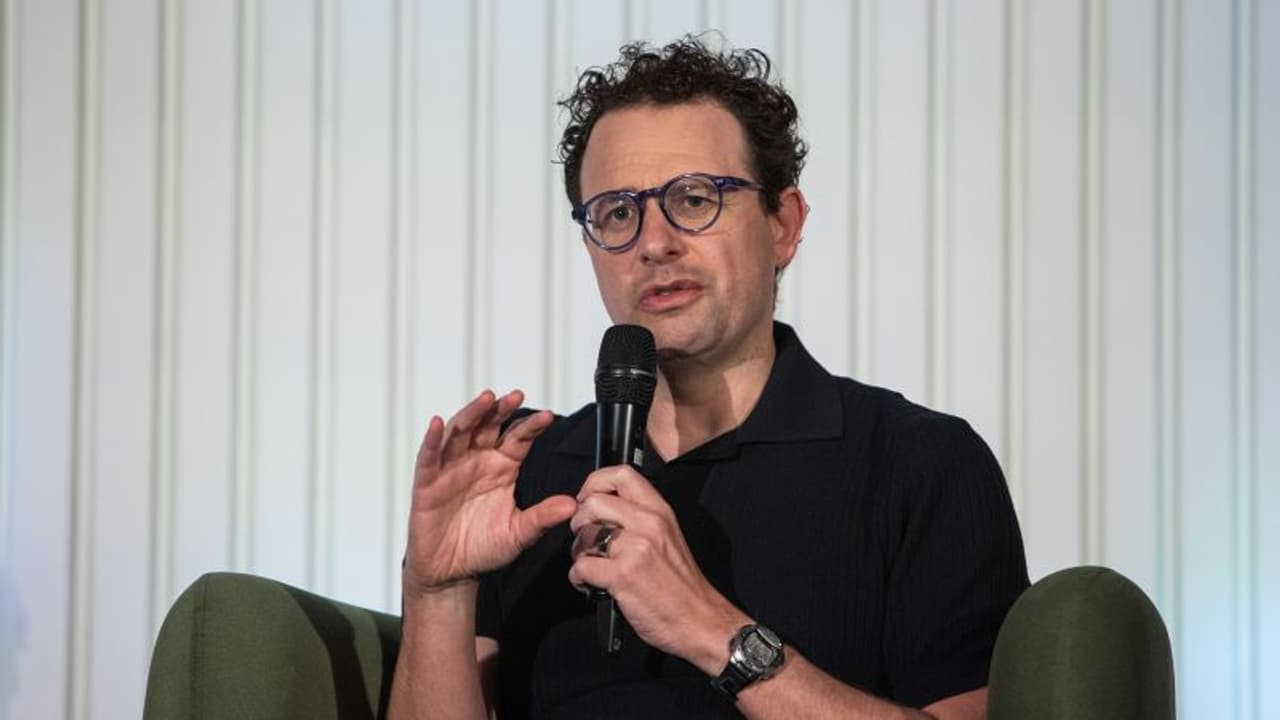
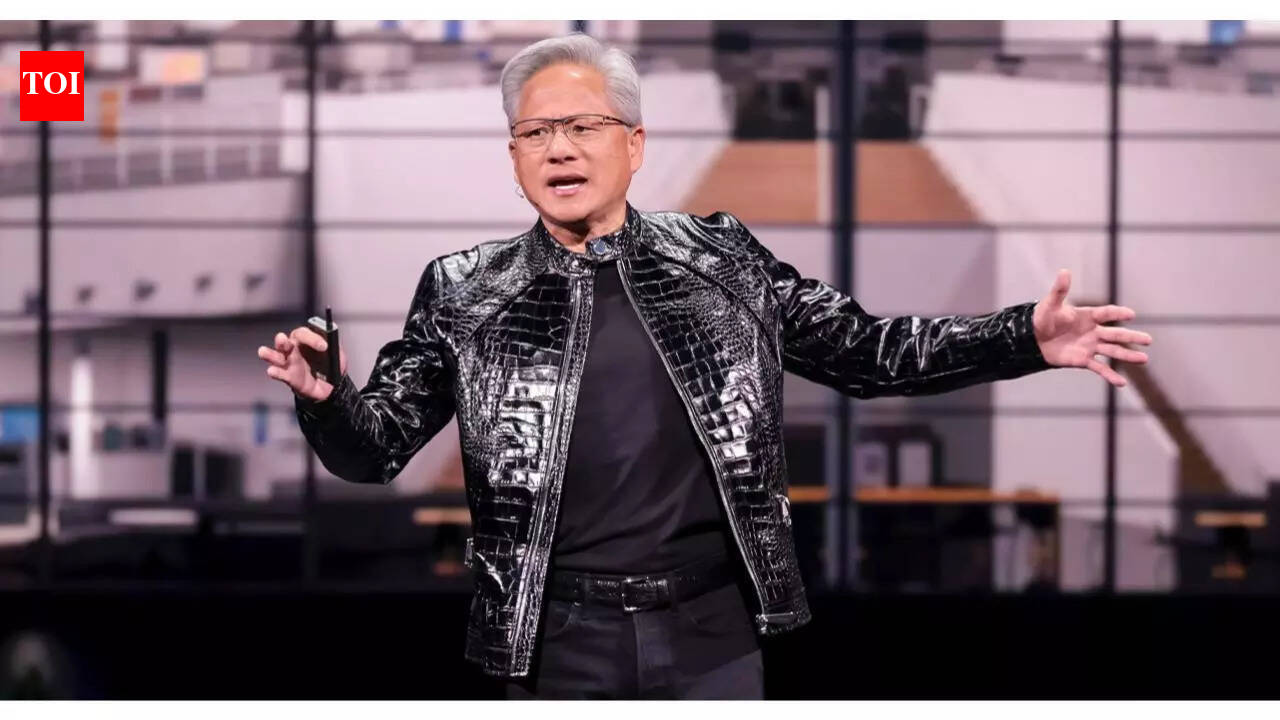
A sharp disagreement recently erupted between two of the AI industry's most influential leaders after Anthropic CEO Dario Amodei compared US chip sales to China with 'selling nuclear weapons to North Korea'. The remark made by Amodei in a January essay recently resurfaced on a podcast which drew an angry response from Nvidia CEO Jensen Huang, who called the analogy 'lunacy'. In his essay "The Adolescence of Technology", Amodei argued that selling advanced chips to China during a critical period of AI development would give the country "a giant boost" it doesn't need. He wrote: "It's like selling nuclear weapons to North Korea and then bragging that the missile casings are made by Boeing."Amodei did not name Nvidia directly, but the criticism was widely interpreted as aimed at Huang, who has lobbied for continued U.S. chip sales to China.According to a report by Business Insider, appearing recently on the Dwarkesh Podcast, Huang outrightly dismissed the comparison made by Amodei. He said, "Comparing AI to anything that you just mentioned is lunacy." He insisted that Nvidia's chips are not "enriched uranium" but commercial products that China could eventually manufacture itself.Along with this, Huang also repeatedly defended chip sales to China, estimating that they could generate $50 billion annually for Nvidia. He also warned that cutting off access could lead to a split in the global AI ecosystem. It will divide the AI ecosystem into two camps, one will be the open-source models thriving in China and closed-source models dominating in the US. "That would be a horrible outcome for the United States," Huang said.Amodei is one of the most outspoken voices against U.S. chip exports to China, arguing that the country is several years behind in producing frontier chips and that restricting access is vital to maintaining America's technological edge. Huang, by contrast, believes engagement is necessary to avoid ceding the world's second-largest market.The clash highlights a growing divide in Silicon Valley over how to balance national security concerns with commercial opportunity.Nvidia CEO Jensen Huang has a simple answer for everyone treating Google's TPU push, Meta's homegrown MTIA chips, Anthropic's multi-gigawatt compute deal, Amazon's near-sold-out Trainium4, and OpenAI's Broadcom silicon project as a five-alarm fire for the world's most valuable chipmaker: you're all misreading the situation. One by one, the biggest names in AI are quietly building around Nvidia -- and Huang spent a significant stretch of a nearly two-hour podcast making the case that none of it is quite what it looks like.Huang argued that what looks like customer defection is actually something far more specific. Anthropic's massive pivot to Google TPUs -- a deal with Broadcom locking in roughly 3.5 gigawatts of computing capacity through 2031 -- isn't a market signal, he said. It's one company's unusual history. "Anthropic is a unique instance, not a trend," Huang told host Dwarkesh Patel. "Without Anthropic, why would there be any TPU growth at all? It's 100% Anthropic."
Quantum AI just got shockingly good at predicting chaos
A new study led by researchers at UCL (University College London) shows that combining quantum computing with artificial intelligence can significantly improve predictions of complex physical systems over long periods. The hybrid approach outperforms leading models that rely only on conventional computers. The results, published in Science Advances, could enhance simulations of how liquids and gases behave, known as fluid dynamics. These types of models are essential in fields such as climate science, transportation, medicine, and energy production. Why Quantum Computing Makes a Difference The improved accuracy appears to come from how quantum computers process information. Unlike traditional computers that use bits set to either 1 or 0, quantum computers use qubits, which can exist as 1, 0, or anything in between. In addition, each qubit can influence others, allowing a relatively small number of qubits to represent an enormous number of possible states. Professor Peter Coveney, senior author from UCL Chemistry and the Advanced Research Computing Centre, explained the challenge: "To make predictions about complex systems, we can either run a full simulation, which might take weeks -- often too long to be useful -- or we can use an AI model which is quicker but more unreliable over longer time scales. "Our quantum-informed AI model means we could provide more accurate predictions quickly. Making predictions about fluid flow and turbulence is a fundamental science challenge but it also has many applications. Our method can be used in climate forecasting, in modeling blood flow and the interaction of molecules, or to better design wind farms so they generate more energy." How the Hybrid Quantum-AI Method Works Although quantum computers are widely expected to surpass classical machines in power, their real-world use has so far been limited. This new approach integrates quantum computing into a specific stage of the AI training process. Typically, AI models learn from large datasets generated by simulations or observations. In this case, the data is first processed by a quantum computer, which identifies key statistical patterns that remain stable over time. These patterns, known as invariant statistical properties, are then used to guide the training of an AI model running on a conventional supercomputer. Higher Accuracy With Less Memory The quantum-informed AI system delivered about 20 percent greater accuracy compared to standard AI models that did not use quantum-derived patterns. It also maintained stable predictions over longer periods, even when modeling chaotic systems. Another major advantage was efficiency. The method required hundreds of times less memory, making it far more practical for large-scale simulations. Quantum Effects Behind the Efficiency This performance boost comes from two defining features of quantum computing. Entanglement allows qubits to influence each other regardless of distance, while superposition enables a qubit to exist in multiple states at once until measured. Together, these properties allow quantum systems to process vast amounts of information in a compact form. Demonstrating Practical Quantum Advantage First author Maida Wang of the UCL Centre for Computational Science said: "Our new method appears to demonstrate 'quantum advantage' in a practical way -- that is, the quantum computer outperforms what is possible through classical computing alone. These findings could inspire the development of novel classical approaches that achieve even higher accuracy, though they would likely lack the remarkable data compression and parameter efficiency offered by our method. The next steps are to scale up the method using larger datasets and to apply it to real-world situations which typically involve even more complexity. In addition, a provable theoretical framework will be proposed." Co-first author Xiao Xue, from Advanced Research Computing at UCL, added: "In this work, we demonstrate for the first time that quantum computing can be meaningfully integrated with classical machine learning methods to tackle complex dynamical systems, including fluid mechanics. It is exciting to see this kind of 'quantum-informed' approach moving towards practical use." Capturing the Physics of Complex Systems The researchers suggest that quantum computers are particularly well suited to modeling these systems because they can compactly represent their underlying physics. Many complex systems behave in ways that resemble quantum effects, where changes in one region can influence distant parts of the system, similar to entanglement. Overcoming Limits of Current Quantum Hardware Current quantum computers face challenges such as noise, errors, and interference, which often require large numbers of measurements. The new method avoids these issues by using the quantum computer only once during the workflow, rather than repeatedly exchanging data between quantum and classical systems. Experiment Details and Future Potential The study used a 20-qubit IQM quantum computer connected to powerful classical computing resources at the Leibniz Supercomputing Centre in Germany. To function, quantum computers must operate at extremely low temperatures, around minus 273C (close to absolute zero, colder than anything in space). The research was funded by UCL and the UK's Engineering and Physical Sciences Research Council (EPSRC), with additional support from IQM Quantum Computers and the Leibniz Supercomputing Centre in Munich. As researchers continue to scale up this approach, it could open the door to more accurate and efficient predictions across a wide range of scientific and engineering applications.

White House chief of staff meets with Anthropic CEO over its new AI technology
White House chief of staff Susie Wiles on Friday sounded out Anthropic CEO Dario Amodei about the artificial intelligence company's new Mythos model, which has attracted attention from the federal government for how it could transform national security and the economy. A White House official, who requested anonymity to discuss the meeting ahead of time, said the administration is engaging with advanced AI labs about their models and the security of software. The official stressed that any new technology that might be used by the federal government would require a technical period for evaluation.

Eric Swalwell resigns amid allegations, Polymarket contract YES
Eric Swalwell has resigned as a U.S. Representative following sexual assault and harassment allegations, and the Polymarket contract on his departure by May 31 now sits at YES. Market reaction The May 31 market is locked at 100% YES with 45 days until resolution. Volume since the resignation broke: $0. No trades in the last 24 hours. The contract is functionally dead, with no room for price movement in either direction. Why it matters Swalwell's resignation removes any ambiguity about the outcome. Unless he somehow reverses the resignation or a legal proceeding changes his status, there is nothing left to trade here. The House Ethics Committee and California Governor Gavin Newsom still have procedural roles, but neither is positioned to alter the binary outcome at this point. What to watch The only scenarios that could reopen this market: an official reversal from Swalwell himself, or a court ruling that somehow reinstates him. Both are extremely unlikely given the current trajectory. Any meaningful trading opportunities are more likely to appear in related political markets rather than this one. API CTA

As the world's largest bank JP Morgan tests Anthropic's AI tool Mythos, CEO Jamie Dimon admits 'threat'; says: AI has made it worse, it has ...
JPMorgan Chase CEO Jamie Dimon has now admitted that artificial intelligence, while promising to strengthen defences in the long run, is currently making cybersecurity threats more severe. According to a report by CNBC, speaking recently on bank's earnings call, Dimon revealed that JPMorgan is testing Anthropic's new AI model, Mythos, which has already demonstrated its ability to uncover thousands of vulnerabilities in corporate software. Dimon told analysts, "AI's made it worse, it's made it harder. It does create additional vulnerabilities, and maybe down the road, better ways to strengthen yourself too."When asked about Mythos, Dimon pointed to Anthropic's own warnings about the tool's capabilities. "It shows a lot more vulnerabilities need to be fixed," he said, acknowledging both the risks and potential benefits of deploying advanced AI in cybersecurity.The comments made by Dimon comes days after the Treasure secretary Scott Bessent met the bank CEOs in Washington in order to discuss the risks related to Mythos. The model, which Anthropic has only release to some select companies, has already raised concerns across Wall Street and government agencies about its potential to be weaponised by hackers.As the world's largest bank by market capitalization, JPMorgan has long invested heavily in cybersecurity. Dimon said the bank employs top experts and maintains constant coordination with government agencies. "We spend a lot of money. We've got top experts. We're in constant contact with the government. It's a full-time job, and we're doing it all the time," he noted.Still, Dimon warned that risks extend beyond any single institution due to the interconnected nature of the financial system. "Banks are attached to exchanges and all these other things that create other layers of risk," he said.JPMorgan CFO Jeremy Barnum echoed Dimon's concerns, saying the industry has long recognised that AI can both expose vulnerabilities and be exploited in "attack mode" by bad actors. "These tools can make it easier to find vulnerabilities, but then also potentially be deployed by bad actors," Barnum said.Dimon stressed that while advanced AI tools are important, traditional cybersecurity practices remain essential. "A lot of it is hygiene... how do you protect your data? How do you protect your networks, your routers, your hardware, changing your passcode? Doing all those things right dramatically reduces the risk," he said.

White House hosts 'productive' visit with Anthropic CEO
WASHINGTON: Anthropic CEO Dario Amodei visited US officials at the White House on Friday, where they struck a different tone from the recent dispute between the US government and the AI startup. US media reported Amodei met with Susie Wiles, President Donald Trump's chief of staff, as well as US treasury secretary Scott Bessent. "Today, the White House hosted an introductory meeting with Anthropic that was both productive and constructive," a White House spokesperson told AFP. "We discussed opportunities for collaboration, as well as shared approaches and protocols to address the challenges associated with scaling this technology." The rhetoric marks a departure from months earlier, when President Donald Trump instructed the US government to "immediately cease" using Anthropic's technology after the company refused to allow the Pentagon to have unconditional use of its Claude AI models for military purposes. "We look forward to continuing this dialogue and will host similar discussions with other leading AI companies," the White House spokesperson added. Anthropic has since challenged the Trump administration in court, as well as a move by US defense secretary Pete Hegseth to add the company to a list of firms that pose a "supply chain risk". It is the first time a US company has ever been publicly given such a designation, a label typically reserved for organisations from foreign adversary countries, like Chinese tech company Huawei. Both cases remain ongoing in US courts. An Anthropic spokesperson told AFP that Amodei's meeting at the White House was "a productive discussion on how Anthropic and the US government can work together on key shared priorities such as cybersecurity, America's lead in the AI race, and AI safety." "The meeting reflected Anthropic's ongoing commitment to engaging with the US government on the development of responsible AI," the spokesperson added. Earlier this month, Anthropic announced its newest AI model Mythos, withholding it from public release due to its potential cybersecurity risks. As a precaution, Anthropic has shared a version of Mythos with cybersecurity companies CrowdStrike and Palo Alto Networks, as well as with Amazon, Apple and Microsoft in a project it dubbed "Glasswing". Anthropic at the time said it has had discussions with the US government regarding Mythos despite a decree by the White House in February to terminate all contracts with the startup.
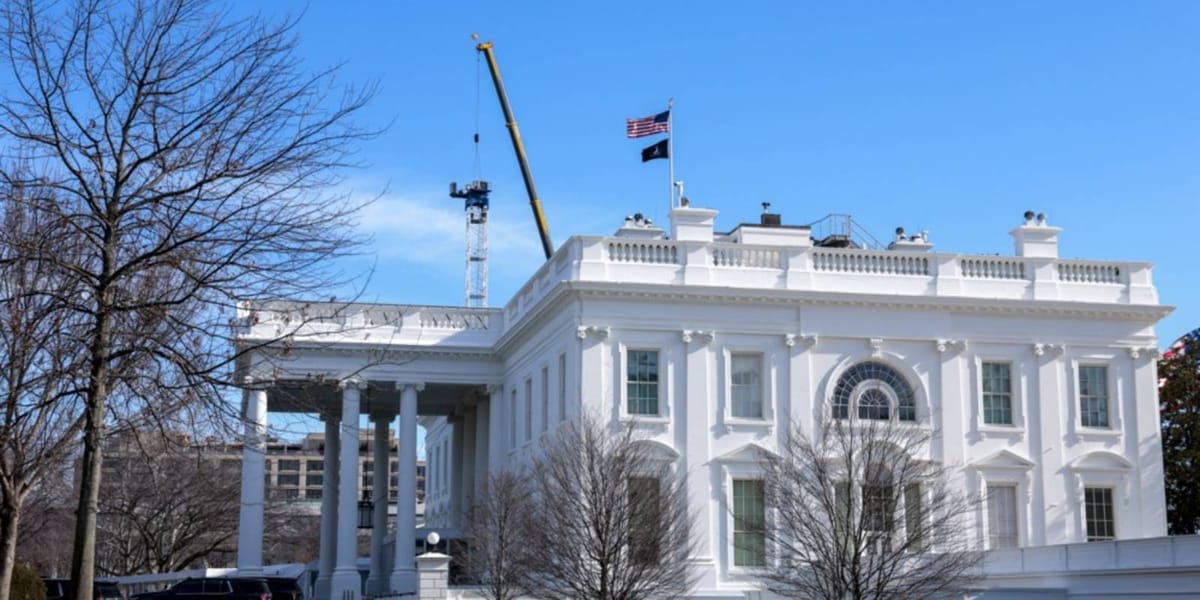
Anthropic CEO Meets White House to Negotiate Access to Mythos AI - News Directory 3
Anthropic confirmed in a statement that the meeting included senior administration officials and focused on how the company and the U.S. White House chief of staff Susie Wiles met with Anthropic CEO Dario Amodei on Friday to discuss the company's new AI model, Mythos, according to multiple news reports. The meeting marked a significant development in the relationship between the Trump administration and the AI safety-focused company, which had previously been blacklisted by federal agencies over national security concerns. The discussion centered on Mythos, Anthropic's recently unveiled artificial intelligence model that has attracted attention from U.S. Officials for its potential applications in national security and economic competitiveness. A White House official who spoke on condition of anonymity described the meeting as productive and constructive, noting that opportunities for collaboration were explored alongside the administration's goal of balancing innovation with safety considerations. Anthropic confirmed in a statement that the meeting included senior administration officials and focused on how the company and the U.S. Government could work together on shared priorities including cybersecurity, maintaining America's leadership in the AI race, and advancing AI safety measures. The company expressed its intention to continue these discussions following the Friday meeting. Treasury Secretary Scott Bessent was also present at the meeting, according to a source familiar with the matter who spoke to CNBC on condition of anonymity. The source indicated that Bessent participated in discussions about scaling the technology and addressing associated challenges through shared approaches and protocols. The White House characterized the talks as addressing both the advancement of innovation and the assurance of safety, reflecting the administration's stated approach to engaging with advanced AI laboratories. Officials emphasized that any technology considered for federal use would undergo a technical evaluation period before implementation. President Donald Trump told reporters he was unaware of the meeting when asked about it during a public appearance in Phoenix, Arizona, stating he had "no idea" that Amodei was at the White House. This comment highlighted the ongoing distance between the president and certain aspects of his administration's engagement with AI companies, particularly following previous public statements in which Trump had criticized Anthropic and declared his administration would not do business with the company. The meeting came less than two months after the Trump administration had taken a confrontational stance toward Anthropic, including public declarations that the company posed a national security risk. Friday's discussion represented a potential shift in tone, with both sides indicating a willingness to explore areas of common interest despite earlier tensions over AI safety protocols and concerns about uncontrolled AI development. Anthropic has positioned itself as an advocate for responsible AI development, consistently arguing for the implementation of safety guardrails to mitigate risks while maximizing the technology's benefits for economic and national security purposes. The company's engagement with the White House on Mythos suggests an effort to align its safety-focused approach with federal interests in AI advancement. As of the date of the meeting, neither the White House nor Anthropic had released specific details about potential follow-up actions or formal agreements resulting from the discussion. Both parties indicated that the conversation was part of an ongoing process of engagement rather than a conclusion to negotiations.

White House and Anthropic hold 'productive' meeting amid fears over Mythos model
Friday's meeting is a sign that Anthropic's technology may be too critical for even the US government to do without - despite the Trump administration's tough stance against the firm. WASHINGTON DC, Apr 18 - The White House has said it had a "productive and constructive" meeting with the head of artificial intelligence firm Anthropic, which is suing the US Department of Defense. The meeting comes a week after the firm released its Claude Mythos preview, an AI tool that the company claims can outperform humans at some hacking and cyber-security tasks. Anthropic CEO Dario Amodei spoke on Friday with Treasury Secretary Scott Bessent and White House Chief of Staff Susie Wiles, Axios reports. A representative of Anthropic did not comment on the meeting, which comes two months after the White House derided the firm as a "radical left, woke company". So far, only a few dozen companies have been given access to Mythos, which researchers have said is "strikingly capable at computer security tasks". The tool can find bugs lurking in decades-old code, according to Anthropic, and autonomously find ways to exploit them. Last week, Amodei said the company had "spoken to officials across the US government" and offered to work with them. Friday's meeting is a sign that Anthropic's technology may be too critical for even the US government to do without - despite the Trump administration's tough stance against the firm. "We discussed opportunities for collaboration, as well as shared approaches and protocols to address the challenges associated with scaling this technology," the White House said. The statement added that the meeting had "explored the balance between advancing innovation and ensuring safety". In March, Anthropic took legal action against the defence department and other federal agencies, after the firm was labelled a "supply chain risk".

Ex-SpaceX team's cooler-sized filtration system promises clean drinking water on demand
This reverse osmosis machine is said to be able to handle both freshwater and saltwater sources California-based startup Vital Lyfe says its first product, a portable battery-powered filtration system, can provide safe drinking water from any source on demand - including seawater. The cooler-sized Access can process 12 gallons (45.5 liters) of fresh water per hour, or up to 6 gallons (22.7 liters) of ocean water per hour. The idea is to make potable water available for off-grid living, water-scarce regions, disaster relief situations, and defense forces operating in challenging conditions. The contraption measures 20 x 9 x 8 inches (508 x 230 x 205 mm), weighs 25 lb (11.3 kg), and can run off its built-in 210-Wh battery for up to three hours on a full charge. It can also do its job continuously with a 200-W AC/DC power source. Developed by former SpaceX engineers, the system automatically regulates pressure and filtration, and manages energy performance on its own - so all you need to do is push a couple of buttons to use it. The system includes a pump for piping water in and out, a reverse osmosis membrane to remove impurities and salts from pressurized water, and a UV-C exposure chamber to neutralize bacteria and microorganisms in the filtered water. There's also an output sensor that monitors water contamination levels before dispensing it. The system is designed to be easy to set up and use without training. Vital Lyfe claims the device should last you about 6,000 hours if you're filtering saltwater, and even longer if used in freshwater environments. Naturally, you'll need to replace the membranes from time to time; there's an app for that, as well as monitoring the Access' functions and ordering additional membranes directly from the company. While it's portable, the Access isn't much more compact than the 5-gallon (20-liter) Lifestraw Escape, which comes in at US$330. But it is powered and doesn't require manual pumping, and it's a whole lot lighter to boot. This makes sense if you can pipe water through it, and if you need as much water as it can deliver. I've hedged the company's claims here because I haven't seen the Access in action - but Vital Lyfe has raised $24 million to bring the device to life, and recently completed a field demo of its desalination tech in Colombia. The Access is currently available to pre-order at $749, with shipments expected to go out later in 2026. The company is targeting a 6-month to 1-year membrane life, depending on source water quality and usage patterns. High particulate or biologically active water may impact its life. These are expected to cost $30 each, and should be easy to swap out. At this price, it could be worth considering for people who camp and hike in remote areas for several days at a time, as well as for first responders in disaster-prone regions. It might be out of reach for communities in developing countries, but hopefully Vital Lyfe will be able to optimize its product to make it more widely accessible over time.

White House chief of staff meets with Anthropic CEO over its new AI technology - WWAYTV3
WASHINGTON (AP) -- White House chief of staff Susie Wiles on Friday sounded out Anthropic CEO Dario Amodei about the artificial intelligence company's new Mythos model, which has attracted attention from the federal government for how it could transform national security and the economy. A White House official, who requested anonymity to discuss the meeting ahead of time, said the administration is engaging with advanced AI labs about their models and the security of software. The official stressed that any new technology that might be used by the federal government would require a technical period for evaluation. The White House said afterward that the meeting was productive and constructive, as opportunities for collaboration were discussed as well as the goal of balancing innovation and safety. Anthropic said in a statement that Amodei's meeting included senior administration officials and explored how the San Francisco-based company and the "U.S. government can work together on key shared priorities such as cybersecurity, America's lead in the AI race, and AI safety." The company said it was "looking forward to continuing these discussions." The meeting came after tensions had run hot between the Trump administration and the safety-conscious Anthropic, which has sought to put guardrails on the development of AI to minimize any potential risks and maximize its economic and national security benefits for the U.S. President Donald Trump tried to stop all federal agencies from using Anthropic's chatbot Claude over the company's contract dispute with the Pentagon, with Trump saying in a February social media post that the administration "will not do business with them again!" When Trump was asked Friday while in Arizona if Anthropic had a meeting at the White House, the president said he had "no idea." Defense Secretary Pete Hegseth also sought to declare Anthropic a supply chain risk, an unprecedented move against a U.S. company that Anthropic has challenged in two federal courts. The company said it wanted assurance the Pentagon would not use its technology in fully autonomous weapons and the surveillance of Americans. Hegseth said the company must allow for any uses the Pentagon deemed lawful. U.S. District Judge Rita Lin issued a ruling in March that blocked the enforcement of Trump's social media directive ordering all federal agencies to stop using Anthropic products. Anthropic has said the new Mythos model it announced on April 7 is so "strikingly capable" that it is limiting its use to select customers because of its ability to surpass human cybersecurity experts in finding and exploiting computer vulnerabilities. And while some industry experts have questioned whether Anthropic's claims of too-powerful AI technology were a marketing ploy, even some of the company's sharpest critics have suggested that Mythos might represent a further advancement in AI. One influential Anthropic critic, David Sacks, who was the White House's AI and crypto czar, said people should "take this seriously." "Anytime Anthropic is scaring people, you have to ask, 'Is this a tactic? Is this part of their Chicken Little routine? Or is it real?'" Sacks said on the "All-In" podcast he co-hosts with other tech investors. "With cyber, I actually would give them credit in this case and say this is more on the real side." Sacks said: "It just makes sense that as the coding models become more and more capable, they are more capable at finding bugs. That means they're more capable at finding vulnerabilities. That means they're more capable at stringing together multiple vulnerabilities and creating an exploit." The model's potential benefits, as well as its risks, have also attracted attention outside the U.S. The United Kingdom's AI Security Institute said it evaluated the new model and found it a "step up" over previous models, which were already rapidly improving. "Mythos Preview can exploit systems with weak security posture, and it is likely that more models with these capabilities will be developed," the institute said in a report. Anthropic has also been in talks with the European Union about its AI models, including advanced models that haven't yet been released in Europe, European Commission spokesman Thomas Regnier said Friday. Axios first reported the scheduled meeting between Wiles and Amodei. When it announced Mythos, Anthropic said it was also forming an initiative called Project Glasswing, bringing together tech giants such as Amazon, Apple, Google and Microsoft, along with other companies like JPMorgan Chase, in hopes of securing the world's critical software from "severe" fallout that the new model could pose to public safety, national security and the economy. "We're releasing it to a subset of some of the world's most important companies and organizations so they can use this to find vulnerabilities," said the Anthropic co-founder and policy chief, Jack Clark, at this week's Semafor World Economy conference. Clark added that Mythos, while ahead of the curve, is not a "special model." "There will be other systems just like this in a few months from other companies, and in a year to a year-and-a-half later, there will be open-weight models from China that have these capabilities," he said. So the world is going to have to get ready for more powerful systems that are going to exist within it." ___

Nvidia rival Cerebras discloses US IPO filing as AI boom drives listings
Cerebras aims to challenge Nvidia with a different kind of artificial intelligence chip that avoids dependence on high-bandwidth memory, one of the industry's biggest bottlenecks. AI chipmaker Cerebras Systems revealed its filing for a U.S. initial public offering on Friday, bringing the Nvidia rival closer to the public markets as it seeks to tap into growing optimism around a broad revival in the listings market. This is the company's second attempt to list after it withdrew a previous IPO filing in October, days after a more than $1 billion fundraise that valued it at about $8 billion. Cerebras aims to challenge Nvidia with a different kind of artificial intelligence chip that avoids dependence on high-bandwidth memory, one of the industry's biggest bottlenecks. It is focused on inference, the process by which AI systems respond to user queries, and has tied much of its growth to OpenAI, including a $20 billion multi-year deal under which the ChatGPT creator will deploy 750 megawatts of Cerebras chips. The listing adds to signs the IPO market is regaining momentum after a brief slowdown in March, when volatility driven by geopolitical tensions and a tech stocks selloff curbed investor appetite. A recent pickup in listings suggests companies are returning to the market as sentiment stabilizes, with issuers and bankers betting that the recovery seen earlier this year can extend into the coming months. Analysts expect artificial intelligence-linked companies to spearhead tech sector listings on expectations of significant growth from wider generative AI adoption. DELAY IN INITIAL OFFERING Cerebras' revenue rose to $510 million in the year to December 31, from $290.3 million a year earlier. It posted a profit of $1.38 per share, compared with a $9.90-per-share loss a year ago. The company first filed paperwork with the U.S. Securities and Exchange Commission in 2024, before postponing and ultimately withdrawing its IPO last year. Reuters earlier reported that the previous delay followed a U.S. national security review of UAE-based tech conglomerate G42's minority investment in the AI chipmaker. G42, which had been both an investor and one of Cerebras' largest customers, drew increased scrutiny from U.S. authorities amid concerns that Middle Eastern companies could provide China access to advanced American AI technology, Reuters previously reported. The company announced in 2025 that it had obtained clearance from the Committee on Foreign Investment in the United States. Sunnyvale, California-based Cerebras is known for its wafer-scale engine chips, designed to speed up the training and inference of large AI models and compete with products from Nvidia and other AI chipmakers. Cerebras is aiming to list on the Nasdaq under the ticker symbol "CBRS". Morgan Stanley, Citigroup, Barclays and UBS are the lead underwriters for the offering.

Federal Agencies Seek Access to Anthropic's Claude Mythos Preview - News Directory 3
Anthropic announced Claude Mythos Preview on April 7 under Project Glasswing, a controlled-access program for select technology and financial organizations, as confirmed by multiple sources including the company's... Federal agencies have requested access to Claude Mythos Preview, a powerful new AI model from Anthropic that can rapidly identify -- and potentially create -- new cyberthreats, according to reporting by The New York Times. The request comes as the White House works to authorize a modified version of the model for use by major US federal agencies under safeguards designed to limit misuse, amid ongoing concerns about the model's dual-use capabilities in cybersecurity. Anthropic announced Claude Mythos Preview on April 7 under Project Glasswing, a controlled-access program for select technology and financial organizations, as confirmed by multiple sources including the company's own disclosures and federal oversight memos. Federal Chief Information Officer Gregory Barbaccia at the White House Office of Management and Budget (OMB) informed Cabinet department officials that the OMB is establishing protections to allow federal agencies to begin using the model, according to an internal memo reported by Bloomberg. The memo did not commit specific agencies to deployment or provide a timeline, but emphasized collaboration with model providers, industry partners and the intelligence community to ensure appropriate guardrails are in place before any release. The move occurs while the Department of Defense's supply-chain risk designation against Anthropic, issued on March 3, remains in force. The D.C. Circuit refused to stay the designation on April 8, keeping the company barred from defense contracts even as civilian agencies are being positioned for access.
Lawsuit aside, White House holds talks with Anthropic over powerful AI tool Mythos
Nearly a month after declaring the company a 'supply chain risk,' the White House on Saturday held talks with the top executives of artificial intelligence firm Anthropic, describing the meeting as 'productive and constructive.' The talks come at a time of growing concern over the company's powerful new AI system, Claude Mythos. Anthropic CEO Dario Amodei, US Treasury Secretary Scott Bessent, and White House Chief of Staff Susie Wiles participated in the meeting. According to a BBC report, discussions focused on possible cooperation as well as ways to manage the risks linked to advanced AI systems. The talks are notable because they come just weeks after strong criticism from US President Donald Trump, who had previously ordered government agencies to stop using Anthropic's technology. Concerns over powerful AI system The meeting follows the recent release of Claude Mythos, an advanced AI tool that has raised both excitement and concern in the tech world. The system is currently available only to a limited number of companies but has already shown impressive abilities in cyber-security tasks. According to Anthropic, Mythos can detect hidden bugs in old software and even identify ways to exploit them. Researchers have described the system as "strikingly capable," especially in areas that were once considered highly complex and human-driven. These capabilities have caught the attention of US officials, who are increasingly aware of both the benefits and risks of such technology. The White House said that the meeting explored how to balance innovation with safety, including setting rules and safeguards for future use. Legal dispute still unresolved Despite the positive tone of the meeting, a legal battle between Anthropic and the US government is still ongoing. In March, the company sued the Department of Defence after being labelled a "supply chain risk," a designation that suggests its technology may not be secure enough for government use. Anthropic argued that the label was unfair and politically motivated. It claimed that Defence Secretary Pete Hegseth imposed the restriction after the company refused to give the Pentagon unrestricted access to its AI systems. The firm said it was concerned about potential misuse, including mass surveillance and fully autonomous weapons. A federal court in California largely supported Anthropic's position, but an appeals court later refused to temporarily lift the restriction. Shift in tone from Washington Even with the dispute, Anthropic's technology continues to be used by several government agencies. This suggests that officials see the tools as too important to ignore. The recent meeting also signals a possible shift in tone from Washington. While the Trump administration had earlier criticised Anthropic sharply, the new discussions point to a more practical approach, where the US government finds it a compulsion to work with leading AI companies.
)
Chaos at Triangle Town Center: Gunfire erupts, shoppers take cover in Raleigh
RALEIGH, N.C. (WNCN) -- A shooting at Triangle Town Center led multiple law enforcement agencies to the scene on Friday afternoon. "And then we saw a whole bunch more [police] as they kept coming, we counted like 12 or 20," said Keziah Fedrick. As Keziah was riding the bus to the mall, other people inside the mall said they were running for their lives. "I heard like a big bang, and I wasn't sure what it was, but I kind of froze, and I was like, 'What was that?', and all of a sudden it was like bang bang bang," said Victoria Holmes. "She just stood there, and I said we can't be standing here, we've got to go," said Danielle Bennett. Mikaela Everett and her sister said they were shopping when they heard gunfire. They took cover and immediately notified their parents. "She texted and said call 911, we're at the Triangle Town Center, there's an active shooter," said Mikaela's mom, Anne Everett. "We were at the front of the store shopping, and we heard this massive bang. The store manager, bless her, caught on really quickly, and she said, 'Get down, get down, everybody,'" said Mikaela Everett. As everyone inside the mall took cover, several shoppers said they were relieved to see law enforcement. "All of a sudden, the police came with the big guns; they were going to each store looking for the person," said Sierra Locklear. Raleigh Police confirm a confrontation and fight led to the gunfire between two groups near the food court. They said three people were shot and are recovering from non-life-threatening injuries. As the investigation continues, innocent shoppers said they will never forget the gruesome scene. "When you walk through the mall, they got it taped up, and you see blood scattered long trail," said Locklear. Raleigh police said if you have any information that could lead to an arrest, give them a call.

Anthropic Claude Design assistant delivers powerful creative boost
Anthropic Claude Design assistant is the company's latest step into visual creation, and it is aimed squarely at people who need to design but do not live inside design tools all day. It arrives as a research preview, but the intent is serious: turn Claude into a place where ideas become working visuals with much less friction. At the heart of Anthropic Claude Design assistant sits Opus 4.7, described by Anthropic as its most capable vision model so far, tuned for complex, multi-step work rather than party tricks. The system is built to understand layouts, charts and interface elements at higher resolution than earlier Claude models, which helps when you are shaping detailed product mockups or information‑heavy slides. Unlike image toys that churn out surreal scenes, this tool is pitched for structured assets: presentations, product flows, prototypes and diagrams that need to be edited, reused and explained to colleagues. Every project in Anthropic Claude Design assistant begins with a written prompt, but the real work happens in the back‑and‑forth. Users can steer designs through conversation, inline comments and direct edits, while the interface exposes custom sliders for specific elements such as colour, glow or density so changes stay under control. Claude can also read a company's existing design documents and codebase to build an internal visual language, then apply the right colours and typography automatically across new projects. Files, images and even web captures can be pulled in, and completed layouts can be exported directly to Claude Code or tools like Canva. Anthropic Claude Design assistant lands in the same week Adobe and Canva pushed their own upgraded visual helpers, underlining how quickly this corner of the market is moving. Anthropic's twist is to lean into collaboration rather than replacement, even allowing exports to Canva while still competing for the same creative workflows. The assistant is available today to Claude Pro, Max, Team and Enterprise subscribers, with usage consuming their existing limits. Anthropic Claude Design assistant looks less like a gimmick and more like a testbed for how serious design teams might work alongside a model such as Opus 4.7, nudging it toward layouts that feel on‑brand, legible and ready to show a client.

Revolutionary Perplexity Personal Computer Mac Boosts AI Productivity
Perplexity Personal Computer Mac marks a bold step in AI integration for everyday computing. This new tool hit the scene on 17 April 2026, bringing advanced capabilities right to your desktop. Perplexity first unveiled its Computer feature late February 2026, a web-based system that juggles multiple AI models, up to 19 in parallel, for tackling intricate projects like research or coding. Personal Computer takes that further by linking directly to your Mac's files, apps such as Notes and Messages, and even web browsers. Picture this: you tell it to sort a chaotic downloads folder. It renames files logically, builds tidy subfolders, and cross-checks against online data, all hands-free. Voice prompts make interaction smooth; start tasks from your iPhone and let it hum along on a Mac mini 24/7. Need to-do list help? It scans your notes, fires off Messages if needed, and deploys agent teams without missing a beat. Security shines too, actions run in a sandbox, fully auditable, reversible, with a kill switch handy. Over 70,000 joined the waitlist since March's Ask conference, showing huge buzz. Right now, Perplexity Personal Computer Mac rolls out to Max subscribers at $200 monthly, with broader access coming soon for waitlisters. This hybrid setup blends cloud smarts with local control, promising safer, sharper workflows. In essence, Perplexity Personal Computer Mac transforms Macs into tireless AI sidekicks, set to reshape how we handle digital chaos, productivity gains await early adopters.
