News & Updates
The latest news and updates from companies in the WLTH portfolio.
Anthropic's Mythos shows need to 'come to grips' with AI risks: BoC governor
Bank of Canada Governor Tiff Macklem says global financial systems need to "come to grips" with the risks posed by rapid advances in artificial intelligence models like Anthropic's Mythos. Developer Anthropic claims the upcoming Mythos model of its Claude AI is capable of quickly detecting long-hidden cybersecurity vulnerabilities, news which has made major financial market players and regulators anxious about the technology's disruptive potential. The Bank of Canada gathered representatives from big banks and financial agencies last week to discuss the risks Mythos poses for the Canadian financial system. Macklem says while there's been a fair amount of discussion about Mythos on the sidelines of the International Monetary Fund's spring meetings in Washington, no one knows yet the full implications of this latest AI advance. He says Mythos is not a one-off event and the nature of AI development means firms, regulators and policy-makers need to grapple with how these rapidly evolving technologies will affect the integrity of financial systems in Canada and around the world. Finance Minister Francois-Philippe Champagne was also in Washington for the IMF meetings and told reporters earlier in the day that Mythos has become a "test case" for how governments prepare for and react to new technologies. This report by The Canadian Press was first published April 17, 2026. Craig Lord, The Canadian Press

White House chief of staff to meet with Anthropic CEO over its new AI technology
WASHINGTON (AP) -- White House chief of staff Susie Wiles plans to sound out Anthropic CEO Dario Amodei about the artificial intelligence company's new Mythos model, which has attracted attention from the federal government for how it could transform national security and the economy. A White House official, who requested anonymity to discuss the planned meeting Friday, said the administration is engaging with advanced AI labs about their models and the security of software. The official stressed that any new technology that might be used by the federal government would require a technical period for evaluation. The meeting comes after tensions have run hot between the Trump administration and the safety-conscious Anthropic, which has sought to put guardrails on the development of AI to minimize any potential risks and maximize its economic and national security benefits for the U.S. President Donald Trump tried to stop all federal agencies from using Anthropic's chatbot Claude over the company's contract dispute with the Pentagon, with Trump saying in a February social media post that the administration "will not do business with them again!" Defense Secretary Pete Hegseth also sought to declare Anthropic a supply chain risk, an unprecedented move against a U.S. company that Anthropic has challenged in two federal courts. The company said it wanted assurance the Pentagon would not use its technology in fully autonomous weapons and the surveillance of Americans. Hegseth said the company must allow for any uses the Pentagon deemed lawful. U.S. District Judge Rita Lin issued a ruling in March that blocked the enforcement of Trump's social media directive ordering all federal agencies to stop using Anthropic products. Anthropic declined to speak about the meeting in advance. The San Francisco-based Anthropic has said the new Mythos model it announced on April 7 is so "strikingly capable" that it is limiting its use to select customers because of its ability to surpass human cybersecurity experts in finding and exploiting computer vulnerabilities. And while some industry experts have questioned whether Anthropic's claims of too-powerful AI technology were a marketing ploy, even some of the company's sharpest critics have suggested that Mythos might represent a further advancement in AI. One influential Anthropic critic, David Sacks, who was the White House's AI and crypto czar, said people should "take this seriously." "Anytime Anthropic is scaring people, you have to ask, 'Is this a tactic? Is this part of their Chicken Little routine? Or is it real?'" Sacks said on the "All-In" podcast he co-hosts with other tech investors. "With cyber, I actually would give them credit in this case and say this is more on the real side." Sacks said, "It just makes sense that as the coding models become more and more capable, they are more capable at finding bugs. That means they're more capable at finding vulnerabilities. That means they're more capable at stringing together multiple vulnerabilities and creating an exploit." The model's potential benefits, as well as its risks, have also attracted attention outside the U.S. The United Kingdom's AI Security Institute said it evaluated the new model and found it a "step up" over previous models, which were already rapidly improving. "Mythos Preview can exploit systems with weak security posture, and it is likely that more models with these capabilities will be developed," the institute said in a report. Anthropic has also been in talks with the European Union about its AI models, including advanced models that haven't yet been released in Europe, European Commission spokesman Thomas Regnier said Friday. Axios first reported the scheduled meeting between Wiles and Amodei. When it announced Mythos, Anthropic said it was also forming an initiative called Project Glasswing, bringing together tech giants such as Amazon, Apple, Google and Microsoft, along with other companies like JPMorgan Chase, in hopes of securing the world's critical software from "severe" fallout that the new model could pose to public safety, national security and the economy. "We're releasing it to a subset of some of the world's most important companies and organizations so they can use this to find vulnerabilities," said the Anthropic co-founder and policy chief, Jack Clark, at this week's Semafor World Economy conference. Clark added that Mythos, while ahead of the curve, is not a "special model." "There will be other systems just like this in a few months from other companies, and in a year to a year-and-a-half later, there will be open-weight models from China that have these capabilities," he said. So the world is going to have to get ready for more powerful systems that are going to exist within it." ___ O'Brien reported from Providence, R.I. AP business reporter Kelvin Chan contributed to this report from London. News Nevada Top stories Counterfeit check fraud ring dismantled after months-long Reno investigation Traffic clears after earlier crash on I-580 southbound near Villanova Carson City seeks applicants for Culture & Tourism Authority seats
Rail operator issues compensation update after recent travel chaos in Essex
Commuters faced hours of travel chaos after a major rail fault caused delays and cancellations across the county. The disruption was first reported in the afternoon on Wednesday, April 15 on routes connecting Essex to London and lasted late into the night, affecting commuters from London Liverpool Street all over Essex. The network operator has issued an apology to affected customers. A spokesperson on behalf of Greater Anglia and Network Rail Anglia said: "Services on the Great Eastern Main Line were severely disrupted on Wednesday evening due to a fault with the overhead power lines between Shenfield and Chelmsford. "Engineers worked through the night to repair the fault and safely restore the railway. "We know this caused significant disruption for customers, including at Colchester, and we are sorry to everyone affected. "During the disruption, tickets were accepted on alternative routes, including the Elizabeth Line between Liverpool Street and Shenfield, and c2c services between Fenchurch Street and Southend Central, to help people complete their journeys. "Customers delayed by more than 15 minutes can claim compensation through Delay Repay."

Kraken Eyes Derivatives Dominance with $550M Bitnomial Buyout Agreement
Bitnomial's full CFTC stack gives Kraken instant entry into U.S. derivatives without years of regulatory buildup. Kraken's parent company, Payward, is moving deeper into regulated U.S. derivatives with a major acquisition. The firm has agreed to buy Bitnomial in a deal valued at up to $550 million. Approval from the Commodity Futures Trading Commission remains pending. If cleared, the deal would give Kraken a full-stack regulatory base in the U.S. derivatives market. Payward's equity valuation under the agreement is $20 billion. Closing is expected in the first half of 2026, according to a Friday disclosure. Terms include a mix of cash and stock. Bitnomial brings a rare licensing structure, as the Chicago-based firm holds three key CFTC approvals. These include a designated contract market, a derivatives clearing organization, and a futures commission merchant license. And with these, they allow a complete domestic derivatives operation. Founder and CEO Luke Hoersten pointed to the firm's early positioning in crypto derivatives. Bitnomial introduced perpetual futures and CFTC-regulated margin collateral. It also built native crypto settlement systems and a unified trading book. Products span spot, futures, options, and perpetual contracts. The platform listed early regulated XRP futures and physical Solana futures in the U.S. That licensing base is central to the acquisition. Building similar infrastructure independently would likely take years. Payward gains immediate access to regulated derivatives rails through the purchase. Co-CEO Arjun Sethi said the company plans to roll out new U.S. products. These include spot margin, perpetual futures, and options under CFTC oversight. The offering will sit within a broader multi-asset framework. Payward also tied the move to its B2B expansion strategy. Through Payward Services, institutions can integrate regulated derivatives into existing systems. Banks, fintech firms, and brokerages would gain access alongside crypto trading and tokenized equities. Expansion beyond crypto has accelerated over the past year. Kraken previously acquired NinjaTrader in a $1.5 billion deal. The firm also moved into tokenized equities through its xStocks-linked platform. These steps signal a wider push into traditional finance segments. International derivatives operations are already in place. Payward runs regulated businesses in the UK and Europe. A UK acquisition in 2019 laid early groundwork, followed by an EU derivatives launch in 2025. Strategic interest from traditional finance is also growing. Deutsche Börse recently acquired a 1.5% stake in Payward through a $200 million secondary transaction. Proceeds did not go to the company. With preparation for a potential public listing underway, the Bitnomial acquisition adds a key piece to that trajectory.

White House chief of staff to meet with Anthropic CEO over its new AI technology
WASHINGTON (AP) -- White House chief of staff Susie Wiles plans to sound out Anthropic CEO Dario Amodei about the artificial intelligence company's new Mythos model, which has attracted attention from the federal government for how it could transform national security and the economy. A White House official, who requested anonymity to discuss the planned meeting Friday, said the administration is engaging with advanced AI labs about their models and the security of software. The official stressed that any new technology that might be used by the federal government would require a technical period for evaluation. The meeting comes after tensions have run hot between the Trump administration and the safety-conscious Anthropic, which has sought to put guardrails on the development of AI to minimize any potential risks and maximize its economic and national security benefits for the U.S. President Donald Trump tried to stop all federal agencies from using Anthropic's chatbot Claude over the company's contract dispute with the Pentagon, with Trump saying in a February social media post that the administration "will not do business with them again!" Defense Secretary Pete Hegseth also sought to declare Anthropic a supply chain risk, an unprecedented move against a U.S. company that Anthropic has challenged in two federal courts. The company said it wanted assurance the Pentagon would not use its technology in fully autonomous weapons and the surveillance of Americans. Hegseth said the company must allow for any uses the Pentagon deemed lawful. U.S. District Judge Rita Lin issued a ruling in March that blocked the enforcement of Trump's social media directive ordering all federal agencies to stop using Anthropic products. Anthropic declined to speak about the meeting in advance. The San Francisco-based Anthropic has said the new Mythos model it announced on April 7 is so "strikingly capable" that it is limiting its use to select customers because of its ability to surpass human cybersecurity experts in finding and exploiting computer vulnerabilities. And while some industry experts have questioned whether Anthropic's claims of too-powerful AI technology were a marketing ploy, even some of the company's sharpest critics have suggested that Mythos might represent a further advancement in AI. One influential Anthropic critic, David Sacks, who was the White House's AI and crypto czar, said people should "take this seriously." "Anytime Anthropic is scaring people, you have to ask, 'Is this a tactic? Is this part of their Chicken Little routine? Or is it real?'" Sacks said on the "All-In" podcast he co-hosts with other tech investors. "With cyber, I actually would give them credit in this case and say this is more on the real side."

White House chief of staff to meet with Anthropic CEO over its new AI technology
WASHINGTON (AP) -- White House chief of staff Susie Wiles plans to sound out Anthropic CEO Dario Amodei about the artificial intelligence company's new Mythos model, which has attracted attention from the federal government for how it could transform national security and the economy. A White House official, who requested anonymity to discuss the planned meeting Friday, said the administration is engaging with advanced AI labs about their models and the security of software. The official stressed that any new technology that might be used by the federal government would require a technical period for evaluation. The meeting comes after tensions have run hot between the Trump administration and the safety-conscious Anthropic, which has sought to put guardrails on the development of AI to minimize any potential risks and maximize its economic and national security benefits for the U.S. President Donald Trump tried to stop all federal agencies from using Anthropic's chatbot Claude over the company's contract dispute with the Pentagon, with Trump saying in a February social media post that the administration "will not do business with them again!" Defense Secretary Pete Hegseth also sought to declare Anthropic a supply chain risk, an unprecedented move against a U.S. company that Anthropic has challenged in two federal courts. The company said it wanted assurance the Pentagon would not use its technology in fully autonomous weapons and the surveillance of Americans. Hegseth said the company must allow for any uses the Pentagon deemed lawful. U.S. District Judge Rita Lin issued a ruling in March that blocked the enforcement of Trump's social media directive ordering all federal agencies to stop using Anthropic products. Anthropic declined to speak about the meeting in advance. The San Francisco-based Anthropic has said the new Mythos model it announced on April 7 is so "strikingly capable" that it is limiting its use to select customers because of its ability to surpass human cybersecurity experts in finding and exploiting computer vulnerabilities. And while some industry experts have questioned whether Anthropic's claims of too-powerful AI technology were a marketing ploy, even some of the company's sharpest critics have suggested that Mythos might represent a further advancement in AI. One influential Anthropic critic, David Sacks, who was the White House's AI and crypto czar, said people should "take this seriously." "Anytime Anthropic is scaring people, you have to ask, 'Is this a tactic? Is this part of their Chicken Little routine? Or is it real?'" Sacks said on the "All-In" podcast he co-hosts with other tech investors. "With cyber, I actually would give them credit in this case and say this is more on the real side." Sacks said, "It just makes sense that as the coding models become more and more capable, they are more capable at finding bugs. That means they're more capable at finding vulnerabilities. That means they're more capable at stringing together multiple vulnerabilities and creating an exploit." The model's potential benefits, as well as its risks, have also attracted attention outside the U.S. The United Kingdom's AI Security Institute said it evaluated the new model and found it a "step up" over previous models, which were already rapidly improving. "Mythos Preview can exploit systems with weak security posture, and it is likely that more models with these capabilities will be developed," the institute said in a report. Anthropic has also been in talks with the European Union about its AI models, including advanced models that haven't yet been released in Europe, European Commission spokesman Thomas Regnier said Friday. Axios first reported the scheduled meeting between Wiles and Amodei. When it announced Mythos, Anthropic said it was also forming an initiative called Project Glasswing, bringing together tech giants such as Amazon, Apple, Google and Microsoft, along with other companies like JPMorgan Chase, in hopes of securing the world's critical software from "severe" fallout that the new model could pose to public safety, national security and the economy. "We're releasing it to a subset of some of the world's most important companies and organizations so they can use this to find vulnerabilities," said the Anthropic co-founder and policy chief, Jack Clark, at this week's Semafor World Economy conference. Clark added that Mythos, while ahead of the curve, is not a "special model." "There will be other systems just like this in a few months from other companies, and in a year to a year-and-a-half later, there will be open-weight models from China that have these capabilities," he said. So the world is going to have to get ready for more powerful systems that are going to exist within it." ___ O'Brien reported from Providence, R.I. AP business reporter Kelvin Chan contributed to this report from London.
Anthropic's Mythos shows need to 'come to grips' with AI risks: BoC governor
Bank of Canada Governor Tiff Macklem says global financial systems need to "come to grips" with the risks posed by rapid advances in artificial intelligence models like Anthropic's Mythos. Developer Anthropic claims the upcoming Mythos model of its Claude AI is capable of quickly detecting long-hidden cybersecurity vulnerabilities, news which has made major financial market players and regulators anxious about the technology's disruptive potential. The Bank of Canada gathered representatives from big banks and financial agencies last week to discuss the risks Mythos poses for the Canadian financial system. Macklem says while there's been a fair amount of discussion about Mythos on the sidelines of the International Monetary Fund's spring meetings in Washington, no one knows yet the full implications of this latest AI advance. He says Mythos is not a one-off event and the nature of AI development means firms, regulators and policy-makers need to grapple with how these rapidly evolving technologies will affect the integrity of financial systems in Canada and around the world. Finance Minister Francois-Philippe Champagne was also in Washington for the IMF meetings and told reporters earlier in the day that Mythos has become a "test case" for how governments prepare for and react to new technologies. This report by The Canadian Press was first published April 17, 2026.

White House chief of staff to meet with Anthropic CEO over its new AI technology
White House chief of staff Susie Wiles plans to sound out Anthropic CEO Dario Amodei about the artificial intelligence company's new Mythos model, which has attracted attention from the federal government for how it could transform national security and the economy. A White House official, who requested anonymity to discuss the planned meeting Friday, said the administration is engaging with advanced AI labs about their models and the security of software. The official stressed that any new technology that might be used by the federal government would require a technical period for evaluation. The meeting comes after tensions have run hot between the Trump administration and the safety-conscious Anthropic, which has sought to put guardrails on the development of AI to minimize any potential risks and maximize its economic and national security benefits for the U.S. President Donald Trump tried to stop all federal agencies from using Anthropic's chatbot Claude over the company's contract dispute with the Pentagon, with Trump saying in a February social media post that the administration "will not do business with them again!" Defense Secretary Pete Hegseth also sought to declare Anthropic a supply chain risk, an unprecedented move against a U.S. company that Anthropic has challenged in two federal courts. The company said it wanted assurance the Pentagon would not use its technology in fully autonomous weapons and the surveillance of Americans. Hegseth said the company must allow for any uses the Pentagon deemed lawful. U.S. District Judge Rita Lin issued a ruling in March that blocked the enforcement of Trump's social media directive ordering all federal agencies to stop using Anthropic products. Anthropic declined to speak about the meeting in advance. The San Francisco-based Anthropic has said the new Mythos model it announced on April 7 is so "strikingly capable" that it is limiting its use to select customers because of its ability to surpass human cybersecurity experts in finding and exploiting computer vulnerabilities. And while some industry experts have questioned whether Anthropic's claims of too-powerful AI technology were a marketing ploy, even some of the company's sharpest critics have suggested that Mythos might represent a further advancement in AI. One influential Anthropic critic, David Sacks, who was the White House's AI and crypto czar, said people should "take this seriously." "Anytime Anthropic is scaring people, you have to ask, 'Is this a tactic? Is this part of their Chicken Little routine? Or is it real?'" Sacks said on the "All-In" podcast he co-hosts with other tech investors. "With cyber, I actually would give them credit in this case and say this is more on the real side." Sacks said, "It just makes sense that as the coding models become more and more capable, they are more capable at finding bugs. That means they're more capable at finding vulnerabilities. That means they're more capable at stringing together multiple vulnerabilities and creating an exploit." The model's potential benefits, as well as its risks, have also attracted attention outside the U.S. The United Kingdom's AI Security Institute said it evaluated the new model and found it a "step up" over previous models, which were already rapidly improving. "Mythos Preview can exploit systems with weak security posture, and it is likely that more models with these capabilities will be developed," the institute said in a report. Anthropic has also been in talks with the European Union about its AI models, including advanced models that haven't yet been released in Europe, European Commission spokesman Thomas Regnier said Friday. Axios first reported the scheduled meeting between Wiles and Amodei. When it announced Mythos, Anthropic said it was also forming an initiative called Project Glasswing, bringing together tech giants such as Amazon, Apple, Google and Microsoft, along with other companies like JPMorgan Chase, in hopes of securing the world's critical software from "severe" fallout that the new model could pose to public safety, national security and the economy. "We're releasing it to a subset of some of the world's most important companies and organizations so they can use this to find vulnerabilities," said the Anthropic co-founder and policy chief, Jack Clark, at this week's Semafor World Economy conference. Clark added that Mythos, while ahead of the curve, is not a "special model." "There will be other systems just like this in a few months from other companies, and in a year to a year-and-a-half later, there will be open-weight models from China that have these capabilities," he said. So the world is going to have to get ready for more powerful systems that are going to exist within it." ___ O'Brien reported from Providence, R.I. AP business reporter Kelvin Chan contributed to this report from London.
Cerebras Valuation Could Triple After Public Offering - News Directory 3
Cerebras has begun operating its chips inside its own data centers as a cloud service on behalf of clients, shifting from a model focused solely on selling hardware... Cerebras Systems is preparing to file for an initial public offering as soon as today, with sources indicating the AI chipmaker could be valued at three times its 2025 funding round valuation in the public offering. The company, which provides cloud-based access to chips designed to run artificial intelligence models, was valued at $23 billion in a financing round announced in February 2026, according to multiple reports. If the IPO pricing reflects a threefold increase from that valuation, Cerebras would debut with a market capitalization of approximately $69 billion. Cerebras has begun operating its chips inside its own data centers as a cloud service on behalf of clients, shifting from a model focused solely on selling hardware to providing computing capacity as a service. In January 2026, Cerebras announced an agreement to provide up to 750 megawatts of computing power to OpenAI through 2028 in a deal initially valued at more than $10 billion. That relationship has since expanded, with OpenAI now planning to spend more than $20 billion on Cerebras products over the same period. As part of the expanded agreement, OpenAI will receive warrants to buy Cerebras shares, aligning the AI research company's interests with the chipmaker's public market performance. The Information previously reported on the arrangement between Cerebras and OpenAI, which represents one of the largest non-Nvidia AI infrastructure contracts ever disclosed. Cerebras declined to comment on the IPO filing plans when contacted by CNBC, which first reported the impending SEC submission based on information from two people familiar with the matter who spoke on condition of anonymity. For years, Cerebras sought to sell its chips directly to companies, but the strategic pivot to operating its own cloud service marks a significant evolution in its business model as it prepares for public market scrutiny. The company's wafer-scale chip architecture, which is physically 56 times larger than Nvidia's H100 GPU, contains 4 trillion transistors and 900,000 cores, delivering claimed performance advantages in AI workloads. Cerebras counts IBM, Meta, and Mistral AI among its customers, though its revenue has historically been highly concentrated, with G42 accounting for 87% of its H1 2024 revenue. The transition to OpenAI as a primary customer is viewed as a critical step in diversifying that revenue base ahead of the IPO. The IPO filing comes amid intense competition in the AI chip market, where companies are racing to develop alternatives to Nvidia's dominant position in data center accelerators. If completed, Cerebras' public offering would be one of the largest semiconductor IPOs in history and the first pure-play alternative to Nvidia's GPU monopoly to reach public markets during the current AI infrastructure investment cycle.

Anthropic's Mythos shows need to 'come to grips' with AI risks: BoC governor
Bank of Canada Governor Tiff Macklem says global financial systems need to "come to grips" with the risks posed by rapid advances in artificial intelligence models like Anthropic's Mythos. Developer Anthropic claims the upcoming Mythos model of its Claude AI is capable of quickly detecting long-hidden cybersecurity vulnerabilities, news which has made major financial market players and regulators anxious about the technology's disruptive potential. The Bank of Canada gathered representatives from big banks and financial agencies last week to discuss the risks Mythos poses for the Canadian financial system. Macklem says while there's been a fair amount of discussion about Mythos on the sidelines of the International Monetary Fund's spring meetings in Washington, no one knows yet the full implications of this latest AI advance. He says Mythos is not a one-off event and the nature of AI development means firms, regulators and policy-makers need to grapple with how these rapidly evolving technologies will affect the integrity of financial systems in Canada and around the world. Finance Minister Francois-Philippe Champagne was also in Washington for the IMF meetings and told reporters earlier in the day that Mythos has become a "test case" for how governments prepare for and react to new technologies. This report by The Canadian Press was first published April 17, 2026. Craig Lord, The Canadian Press
Why Figma stock (FIG) dropped over 7% today after Anthropic's Claude Design launch - here's what investors are worried about
Chinese proverb of the day: 'If you want one year of prosperity, grow grain. If you want 10 years of prosperity, grow...' - here's the ancient saying that smart leaders follow for sustainable growth and long-term successFigma stock (FIG) today came under renewed pressure after Anthropic unveiled Claude Design, a new AI-powered product built on its recently released Claude Opus 4.7 model, raising concerns that the design software company is facing a direct competitive threat. Shares of Figma fell more than 7% on Friday after Anthropic's announcement. The decline added to earlier losses this week, when the stock had already slipped around 6% following the resignation of Anthropic Chief Product Officer Mike Krieger from Figma's board on April 14. The latest drop followed the official launch of Claude Design, which allows users to collaborate with Claude to build designs, prototypes, slides, one-pagers, and more, as per a report. The product is powered by Claude Opus 4.7 and enables users to go from simple descriptions to working design outputs that can be refined through conversation, edits, and sliders, as per an Office Chai report. Claude Design also integrates with existing workflows by ingesting design systems, codebases, and design files, automatically applying elements like typography, colors, and components across projects. It supports exports including HTML, PDF, PPTX, and direct handoff into Claude Code. The timing of developments added to investor concern. Krieger's resignation from Figma's board came on the same day reports of Anthropic's design ambitions surfaced, heightening speculation about competitive overlap between the two companies. The impact was not limited to Figma. Other stocks in the broader design and web ecosystem also declined when initial reports emerged, including Adobe, Wix, and GoDaddy, as investors weighed potential disruption from AI-driven design tools. Figma's stock has also been under broader pressure since its IPO last summer, with shares now down significantly from its post-IPO highs. Why did Figma stock fall on Friday? Figma shares dropped after Anthropic launched Claude Design. What is Claude Design and which model powers Claude Design? It is an AI tool for creating designs, slides, and prototypes. It is powered by Claude Opus 4.7.

White House chief of staff to meet with Anthropic CEO over its new AI technology
WASHINGTON (AP) -- White House chief of staff Susie Wiles plans to sound out Anthropic CEO Dario Amodei about the artificial intelligence company's new Mythos model, which has attracted attention from the federal government for how it could transform national security and the economy. A White House official, who requested anonymity to discuss the planned meeting Friday, said the administration is engaging with advanced AI labs about their models and the security of software. The official stressed that any new technology that might be used by the federal government would require a technical period for evaluation. The meeting comes after tensions have run hot between the Trump administration and the safety-conscious Anthropic, which has sought to put guardrails on the development of AI to minimize any potential risks and maximize its economic and national security benefits for the U.S. President Donald Trump tried to stop all federal agencies from using Anthropic's chatbot Claude over the company's contract dispute with the Pentagon, with Trump saying in a February social media post that the administration "will not do business with them again!" Defense Secretary Pete Hegseth also sought to declare Anthropic a supply chain risk, an unprecedented move against a U.S. company that Anthropic has challenged in two federal courts. The company said it wanted assurance the Pentagon would not use its technology in fully autonomous weapons and the surveillance of Americans. Hegseth said the company must allow for any uses the Pentagon deemed lawful. U.S. District Judge Rita Lin issued a ruling in March that blocked the enforcement of Trump's social media directive ordering all federal agencies to stop using Anthropic products. Anthropic declined to speak about the meeting in advance. The San Francisco-based Anthropic has said the new Mythos model it announced on April 7 is so "strikingly capable" that it is limiting its use to select customers because of its ability to surpass human cybersecurity experts in finding and exploiting computer vulnerabilities. And while some industry experts have questioned whether Anthropic's claims of too-powerful AI technology were a marketing ploy, even some of the company's sharpest critics have suggested that Mythos might represent a further advancement in AI. One influential Anthropic critic, David Sacks, who was the White House's AI and crypto czar, said people should "take this seriously." "Anytime Anthropic is scaring people, you have to ask, 'Is this a tactic? Is this part of their Chicken Little routine? Or is it real?'" Sacks said on the "All-In" podcast he co-hosts with other tech investors. "With cyber, I actually would give them credit in this case and say this is more on the real side." Sacks said, "It just makes sense that as the coding models become more and more capable, they are more capable at finding bugs. That means they're more capable at finding vulnerabilities. That means they're more capable at stringing together multiple vulnerabilities and creating an exploit." The model's potential benefits, as well as its risks, have also attracted attention outside the U.S. The United Kingdom's AI Security Institute said it evaluated the new model and found it a "step up" over previous models, which were already rapidly improving. "Mythos Preview can exploit systems with weak security posture, and it is likely that more models with these capabilities will be developed," the institute said in a report. Anthropic has also been in talks with the European Union about its AI models, including advanced models that haven't yet been released in Europe, European Commission spokesman Thomas Regnier said Friday. Axios first reported the scheduled meeting between Wiles and Amodei. When it announced Mythos, Anthropic said it was also forming an initiative called Project Glasswing, bringing together tech giants such as Amazon, Apple, Google and Microsoft, along with other companies like JPMorgan Chase, in hopes of securing the world's critical software from "severe" fallout that the new model could pose to public safety, national security and the economy. "We're releasing it to a subset of some of the world's most important companies and organizations so they can use this to find vulnerabilities," said the Anthropic co-founder and policy chief, Jack Clark, at this week's Semafor World Economy conference. Clark added that Mythos, while ahead of the curve, is not a "special model." "There will be other systems just like this in a few months from other companies, and in a year to a year-and-a-half later, there will be open-weight models from China that have these capabilities," he said. So the world is going to have to get ready for more powerful systems that are going to exist within it." ___ O'Brien reported from Providence, R.I. AP business reporter Kelvin Chan contributed to this report from London.
White House chief of staff to meet with Anthropic CEO over its new AI technology
WASHINGTON(AP) -- White House chief of staff Susie Wiles plans to sound out Anthropic CEO Dario Amodei about the artificial intelligence company's new Mythos model, which has attracted attention from the federal government for how it could transform national security and the economy. A White House official, who requested anonymity to discuss the planned meeting Friday, said the administration is engaging with advanced AI labs about their models and the security of software. The official stressed that any new technology that might be used by the federal government would require a technical period for evaluation. The meeting comes after tensions have run hot between the Trump administration and the safety-conscious Anthropic, which has sought to put guardrails on the development of AI to minimize any potential risks and maximize its economic and national security benefits for the U.S. President Donald Trump tried to stop all federal agencies from using Anthropic's chatbot Claude over the company's contract dispute with the Pentagon, with Trump saying in a February social media post that the administration "will not do business with them again!" Defense Secretary Pete Hegseth also sought to declare Anthropic a supply chain risk, an unprecedented move against a U.S. company that Anthropic has challenged in two federal courts. The company said it wanted assurance the Pentagon would not use its technology in fully autonomous weapons and the surveillance of Americans. Hegseth said the company must allow for any uses the Pentagon deemed lawful. U.S. District Judge Rita Lin issued a ruling in March that blocked the enforcement of Trump's social media directive ordering all federal agencies to stop using Anthropic products. Anthropic declined to speak about the meeting in advance. The San Francisco-based Anthropic has said the new Mythos model it announced on April 7 is so "strikingly capable" that it is limiting its use to select customers because of its ability to surpass human cybersecurity experts in finding and exploiting computer vulnerabilities. And while some industry experts have questioned whether Anthropic's claims of too-powerful AI technology were a marketing ploy, even some of the company's sharpest critics have suggested that Mythos might represent a further advancement in AI. One influential Anthropic critic, David Sacks, who was the White House's AI and crypto czar, said people should "take this seriously." "Anytime Anthropic is scaring people, you have to ask, 'Is this a tactic? Is this part of their Chicken Little routine? Or is it real?'" Sacks said on the "All-In" podcast he co-hosts with other tech investors. "With cyber, I actually would give them credit in this case and say this is more on the real side." Sacks said, "It just makes sense that as the coding models become more and more capable, they are more capable at finding bugs. That means they're more capable at finding vulnerabilities. That means they're more capable at stringing together multiple vulnerabilities and creating an exploit." The model's potential benefits, as well as its risks, have also attracted attention outside the U.S. The United Kingdom's AI Security Institute said it evaluated the new model and found it a "step up" over previous models, which were already rapidly improving. "Mythos Preview can exploit systems with weak security posture, and it is likely that more models with these capabilities will be developed," the institute said in a report. Anthropic has also been in talks with the European Union about its AI models, including advanced models that haven't yet been released in Europe, European Commission spokesman Thomas Regnier said Friday. Axios first reported the scheduled meeting between Wiles and Amodei. When it announced Mythos, Anthropic said it was also forming an initiative called Project Glasswing, bringing together tech giants such as Amazon, Apple, Google and Microsoft, along with other companies like JPMorgan Chase, in hopes of securing the world's critical software from "severe" fallout that the new model could pose to public safety, national security and the economy. "We're releasing it to a subset of some of the world's most important companies and organizations so they can use this to find vulnerabilities," said the Anthropic co-founder and policy chief, Jack Clark, at this week's Semafor World Economy conference. Clark added that Mythos, while ahead of the curve, is not a "special model." "There will be other systems just like this in a few months from other companies, and in a year to a year-and-a-half later, there will be open-weight models from China that have these capabilities," he said. So the world is going to have to get ready for more powerful systems that are going to exist within it." ___ O'Brien reported from Providence, R.I. AP business reporter Kelvin Chan contributed to this report from London.
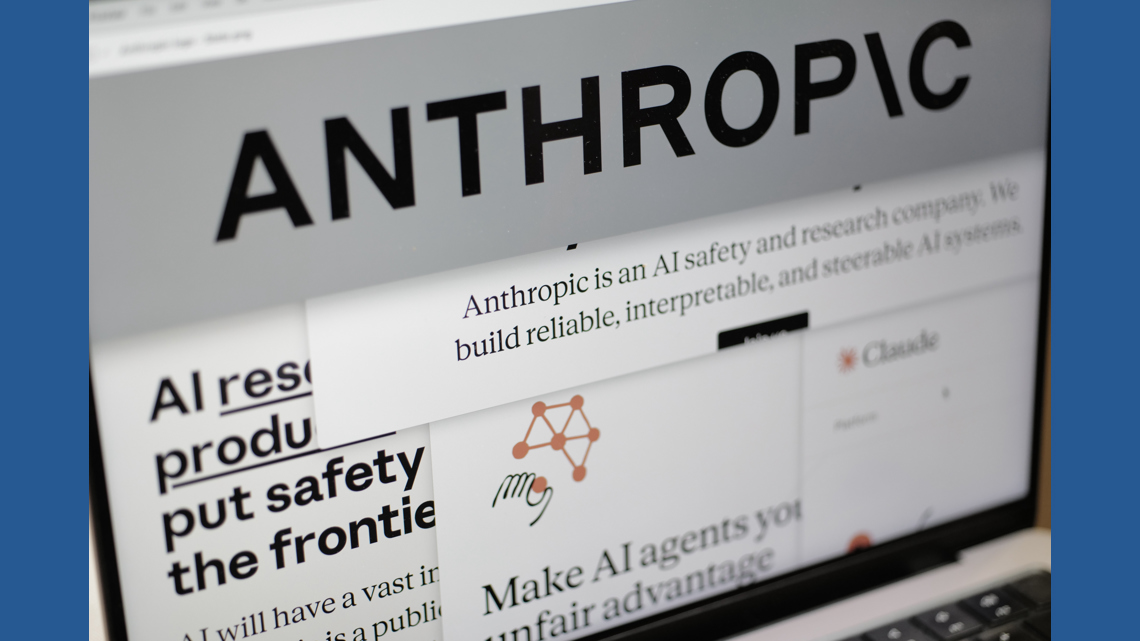
White House chief of staff to meet with Anthropic CEO over its new AI technology
WASHINGTON - White House chief of staff Susie Wiles plans to sound out Anthropic CEO Dario Amodei about the artificial intelligence company's new Mythos model, which has attracted attention from the federal government for how it could transform national security and the economy. A White House official, who requested anonymity to discuss the planned meeting Friday, said the administration is engaging with advanced AI labs about their models and the security of software. The official stressed that any new technology that might be used by the federal government would require a technical period for evaluation. Recommended Videos The meeting comes after tensions have run hot between the Trump administration and the safety-conscious Anthropic, which has sought to put guardrails on the development of AI to minimize any potential risks and maximize its economic and national security benefits for the U.S. President Donald Trump tried to stop all federal agencies from using Anthropic's chatbot Claude over the company's contract dispute with the Pentagon, with Trump saying in a February social media post that the administration "will not do business with them again!" Defense Secretary Pete Hegseth also sought to declare Anthropic a supply chain risk, an unprecedented move against a U.S. company that Anthropic has challenged in two federal courts. The company said it wanted assurance the Pentagon would not use its technology in fully autonomous weapons and the surveillance of Americans. Hegseth said the company must allow for any uses the Pentagon deemed lawful. U.S. District Judge Rita Lin issued a ruling in March that blocked the enforcement of Trump's social media directive ordering all federal agencies to stop using Anthropic products. Anthropic declined to speak about the meeting in advance. The San Francisco-based Anthropic has said the new Mythos model it announced on April 7 is so "strikingly capable" that it is limiting its use to select customers because of its ability to surpass human cybersecurity experts in finding and exploiting computer vulnerabilities. And while some industry experts have questioned whether Anthropic's claims of too-powerful AI technology were a marketing ploy, even some of the company's sharpest critics have suggested that Mythos might represent a further advancement in AI. One influential Anthropic critic, David Sacks, who was the White House's AI and crypto czar, said people should "take this seriously." "Anytime Anthropic is scaring people, you have to ask, 'Is this a tactic? Is this part of their Chicken Little routine? Or is it real?'" Sacks said on the "All-In" podcast he co-hosts with other tech investors. "With cyber, I actually would give them credit in this case and say this is more on the real side." Sacks said, "It just makes sense that as the coding models become more and more capable, they are more capable at finding bugs. That means they're more capable at finding vulnerabilities. That means they're more capable at stringing together multiple vulnerabilities and creating an exploit." The model's potential benefits, as well as its risks, have also attracted attention outside the U.S. The United Kingdom's AI Security Institute said it evaluated the new model and found it a "step up" over previous models, which were already rapidly improving. "Mythos Preview can exploit systems with weak security posture, and it is likely that more models with these capabilities will be developed," the institute said in a report. Anthropic has also been in talks with the European Union about its AI models, including advanced models that haven't yet been released in Europe, European Commission spokesman Thomas Regnier said Friday. Axios first reported the scheduled meeting between Wiles and Amodei. When it announced Mythos, Anthropic said it was also forming an initiative called Project Glasswing, bringing together tech giants such as Amazon, Apple, Google and Microsoft, along with other companies like JPMorgan Chase, in hopes of securing the world's critical software from "severe" fallout that the new model could pose to public safety, national security and the economy. "We're releasing it to a subset of some of the world's most important companies and organizations so they can use this to find vulnerabilities," said the Anthropic co-founder and policy chief, Jack Clark, at this week's Semafor World Economy conference. Clark added that Mythos, while ahead of the curve, is not a "special model." "There will be other systems just like this in a few months from other companies, and in a year to a year-and-a-half later, there will be open-weight models from China that have these capabilities," he said. So the world is going to have to get ready for more powerful systems that are going to exist within it." ___ O'Brien reported from Providence, R.I. AP business reporter Kelvin Chan contributed to this report from London.

White House chief of staff to meet with Anthropic CEO over its new AI technology
WASHINGTON (AP) -- White House chief of staff Susie Wiles plans to sound out Anthropic CEO Dario Amodei about the artificial intelligence company's new Mythos model, which has attracted attention from the federal government for how it could transform national security and the economy. A White House official, who requested anonymity to discuss the planned meeting Friday, said the administration is engaging with advanced AI labs about their models and the security of software. The official stressed that any new technology that might be used by the federal government would require a technical period for evaluation. The meeting comes after tensions have run hot between the Trump administration and the safety-conscious Anthropic, which has sought to put guardrails on the development of AI to minimize any potential risks and maximize its economic and national security benefits for the U.S. ARTICLE CONTINUES BELOW President Donald Trump tried to stop all federal agencies from using Anthropic's chatbot Claude over the company's contract dispute with the Pentagon, with Trump saying in a February social media post that the administration "will not do business with them again!" Defense Secretary Pete Hegseth also sought to declare Anthropic a supply chain risk, an unprecedented move against a U.S. company that Anthropic has challenged in two federal courts. The company said it wanted assurance the Pentagon would not use its technology in fully autonomous weapons and the surveillance of Americans. Hegseth said the company must allow for any uses the Pentagon deemed lawful. U.S. District Judge Rita Lin issued a ruling in March that blocked the enforcement of Trump's social media directive ordering all federal agencies to stop using Anthropic products. Anthropic declined to speak about the meeting in advance. The San Francisco-based Anthropic has said the new Mythos model it announced on April 7 is so "strikingly capable" that it is limiting its use to select customers because of its ability to surpass human cybersecurity experts in finding and exploiting computer vulnerabilities. And while some industry experts have questioned whether Anthropic's claims of too-powerful AI technology were a marketing ploy, even some of the company's sharpest critics have suggested that Mythos might represent a further advancement in AI. One influential Anthropic critic, David Sacks, who was the White House's AI and crypto czar, said people should "take this seriously." ARTICLE CONTINUES BELOW ARTICLE CONTINUES BELOW "Anytime Anthropic is scaring people, you have to ask, 'Is this a tactic? Is this part of their Chicken Little routine? Or is it real?'" Sacks said on the "All-In" podcast he co-hosts with other tech investors. "With cyber, I actually would give them credit in this case and say this is more on the real side." Sacks said, "It just makes sense that as the coding models become more and more capable, they are more capable at finding bugs. That means they're more capable at finding vulnerabilities. That means they're more capable at stringing together multiple vulnerabilities and creating an exploit." The model's potential benefits, as well as its risks, have also attracted attention outside the U.S. The United Kingdom's AI Security Institute said it evaluated the new model and found it a "step up" over previous models, which were already rapidly improving. "Mythos Preview can exploit systems with weak security posture, and it is likely that more models with these capabilities will be developed," the institute said in a report. Anthropic has also been in talks with the European Union about its AI models, including advanced models that haven't yet been released in Europe, European Commission spokesman Thomas Regnier said Friday. ARTICLE CONTINUES BELOW ARTICLE CONTINUES BELOW Axios first reported the scheduled meeting between Wiles and Amodei. When it announced Mythos, Anthropic said it was also forming an initiative called Project Glasswing, bringing together tech giants such as Amazon, Apple, Google and Microsoft, along with other companies like JPMorgan Chase, in hopes of securing the world's critical software from "severe" fallout that the new model could pose to public safety, national security and the economy. "We're releasing it to a subset of some of the world's most important companies and organizations so they can use this to find vulnerabilities," said the Anthropic co-founder and policy chief, Jack Clark, at this week's Semafor World Economy conference. Clark added that Mythos, while ahead of the curve, is not a "special model." "There will be other systems just like this in a few months from other companies, and in a year to a year-and-a-half later, there will be open-weight models from China that have these capabilities," he said. So the world is going to have to get ready for more powerful systems that are going to exist within it." ___ O'Brien reported from Providence, R.I. AP business reporter Kelvin Chan contributed to this report from London.
White House chief of staff to meet with Anthropic CEO over its new AI technology
WASHINGTON (AP) -- White House chief of staff Susie Wiles plans to sound out Anthropic CEO Dario Amodei about the artificial intelligence company's new Mythos model, which has attracted attention from the federal government for how it could transform national security and the economy. A White House official, who requested anonymity to discuss the planned meeting Friday, said the administration is engaging with advanced AI labs about their models and the security of software. The official stressed that any new technology that might be used by the federal government would require a technical period for evaluation. The meeting comes after tensions have run hot between the Trump administration and the safety-conscious Anthropic, which has sought to put guardrails on the development of AI to minimize any potential risks and maximize its economic and national security benefits for the U.S. President Donald Trump tried to stop all federal agencies from using Anthropic's chatbot Claude over the company's contract dispute with the Pentagon, with Trump saying in a February social media post that the administration "will not do business with them again!" Defense Secretary Pete Hegseth also sought to declare Anthropic a supply chain risk, an unprecedented move against a U.S. company that Anthropic has challenged in two federal courts. The company said it wanted assurance the Pentagon would not use its technology in fully autonomous weapons and the surveillance of Americans. Hegseth said the company must allow for any uses the Pentagon deemed lawful. U.S. District Judge Rita Lin issued a ruling in March that blocked the enforcement of Trump's social media directive ordering all federal agencies to stop using Anthropic products. Anthropic declined to speak about the meeting in advance. The San Francisco-based Anthropic has said the new Mythos model it announced on April 7 is so "strikingly capable" that it is limiting its use to select customers because of its ability to surpass human cybersecurity experts in finding and exploiting computer vulnerabilities. And while some industry experts have questioned whether Anthropic's claims of too-powerful AI technology were a marketing ploy, even some of the company's sharpest critics have suggested that Mythos might represent a further advancement in AI. One influential Anthropic critic, David Sacks, who was the White House's AI and crypto czar, said people should "take this seriously." "Anytime Anthropic is scaring people, you have to ask, 'Is this a tactic? Is this part of their Chicken Little routine? Or is it real?'" Sacks said on the "All-In" podcast he co-hosts with other tech investors. "With cyber, I actually would give them credit in this case and say this is more on the real side." Sacks said, "It just makes sense that as the coding models become more and more capable, they are more capable at finding bugs. That means they're more capable at finding vulnerabilities. That means they're more capable at stringing together multiple vulnerabilities and creating an exploit." The model's potential benefits, as well as its risks, have also attracted attention outside the U.S. The United Kingdom's AI Security Institute said it evaluated the new model and found it a "step up" over previous models, which were already rapidly improving. "Mythos Preview can exploit systems with weak security posture, and it is likely that more models with these capabilities will be developed," the institute said in a report. Anthropic has also been in talks with the European Union about its AI models, including advanced models that haven't yet been released in Europe, European Commission spokesman Thomas Regnier said Friday. Axios first reported the scheduled meeting between Wiles and Amodei. When it announced Mythos, Anthropic said it was also forming an initiative called Project Glasswing, bringing together tech giants such as Amazon, Apple, Google and Microsoft, along with other companies like JPMorgan Chase, in hopes of securing the world's critical software from "severe" fallout that the new model could pose to public safety, national security and the economy. "We're releasing it to a subset of some of the world's most important companies and organizations so they can use this to find vulnerabilities," said the Anthropic co-founder and policy chief, Jack Clark, at this week's Semafor World Economy conference. Clark added that Mythos, while ahead of the curve, is not a "special model." "There will be other systems just like this in a few months from other companies, and in a year to a year-and-a-half later, there will be open-weight models from China that have these capabilities," he said. So the world is going to have to get ready for more powerful systems that are going to exist within it." ___ O'Brien reported from Providence, R.I. AP business reporter Kelvin Chan contributed to this report from London.
White House chief of staff to meet with Anthropic CEO over its new AI technology
WASHINGTON (AP) -- White House chief of staff Susie Wiles plans to sound out Anthropic CEO Dario Amodei about the artificial intelligence company's new Mythos model, which has attracted attention from the federal government for how it could transform national security and the economy. A White House official, who requested anonymity to discuss the planned meeting Friday, said the administration is engaging with advanced AI labs about their models and the security of software. The official stressed that any new technology that might be used by the federal government would require a technical period for evaluation. The meeting comes after tensions have run hot between the Trump administration and the safety-conscious Anthropic, which has sought to put guardrails on the development of AI to minimize any potential risks and maximize its economic and national security benefits for the U.S. President Donald Trump tried to stop all federal agencies from using Anthropic's chatbot Claude over the company's contract dispute with the Pentagon, with Trump saying in a February social media post that the administration "will not do business with them again!" Defense Secretary Pete Hegseth also sought to declare Anthropic a supply chain risk, an unprecedented move against a U.S. company that Anthropic has challenged in two federal courts. The company said it wanted assurance the Pentagon would not use its technology in fully autonomous weapons and the surveillance of Americans. Hegseth said the company must allow for any uses the Pentagon deemed lawful. U.S. District Judge Rita Lin issued a ruling in March that blocked the enforcement of Trump's social media directive ordering all federal agencies to stop using Anthropic products. Anthropic declined to speak about the meeting in advance. The San Francisco-based Anthropic has said the new Mythos model it announced on April 7 is so "strikingly capable" that it is limiting its use to select customers because of its ability to surpass human cybersecurity experts in finding and exploiting computer vulnerabilities. And while some industry experts have questioned whether Anthropic's claims of too-powerful AI technology were a marketing ploy, even some of the company's sharpest critics have suggested that Mythos might represent a further advancement in AI. One influential Anthropic critic, David Sacks, who was the White House's AI and crypto czar, said people should "take this seriously." "Anytime Anthropic is scaring people, you have to ask, 'Is this a tactic? Is this part of their Chicken Little routine? Or is it real?'" Sacks said on the "All-In" podcast he co-hosts with other tech investors. "With cyber, I actually would give them credit in this case and say this is more on the real side." Sacks said, "It just makes sense that as the coding models become more and more capable, they are more capable at finding bugs. That means they're more capable at finding vulnerabilities. That means they're more capable at stringing together multiple vulnerabilities and creating an exploit." The model's potential benefits, as well as its risks, have also attracted attention outside the U.S. The United Kingdom's AI Security Institute said it evaluated the new model and found it a "step up" over previous models, which were already rapidly improving. "Mythos Preview can exploit systems with weak security posture, and it is likely that more models with these capabilities will be developed," the institute said in a report. Anthropic has also been in talks with the European Union about its AI models, including advanced models that haven't yet been released in Europe, European Commission spokesman Thomas Regnier said Friday. Axios first reported the scheduled meeting between Wiles and Amodei. When it announced Mythos, Anthropic said it was also forming an initiative called Project Glasswing, bringing together tech giants such as Amazon, Apple, Google and Microsoft, along with other companies like JPMorgan Chase, in hopes of securing the world's critical software from "severe" fallout that the new model could pose to public safety, national security and the economy. "We're releasing it to a subset of some of the world's most important companies and organizations so they can use this to find vulnerabilities," said the Anthropic co-founder and policy chief, Jack Clark, at this week's Semafor World Economy conference. Clark added that Mythos, while ahead of the curve, is not a "special model." "There will be other systems just like this in a few months from other companies, and in a year to a year-and-a-half later, there will be open-weight models from China that have these capabilities," he said. So the world is going to have to get ready for more powerful systems that are going to exist within it." ___ O'Brien reported from Providence, R.I. AP business reporter Kelvin Chan contributed to this report from London.
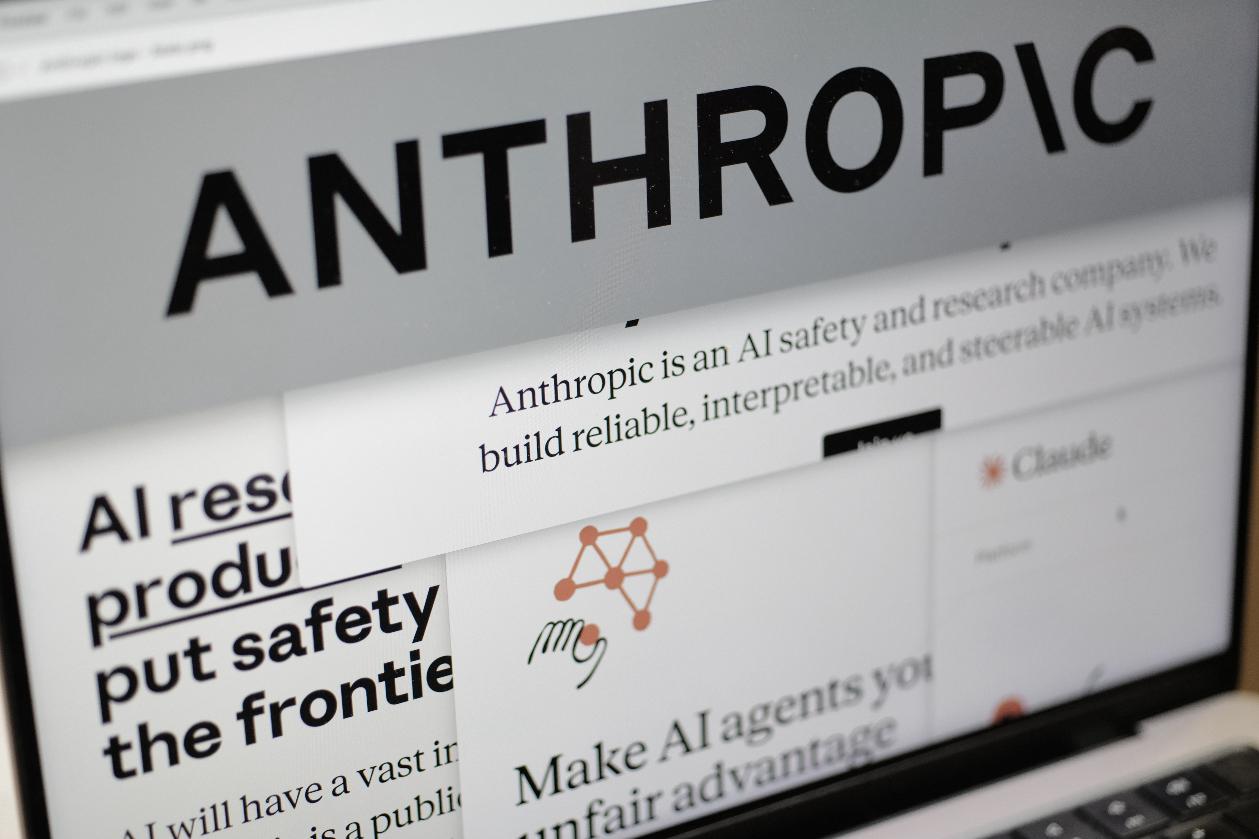
White House chief of staff to meet with Anthropic CEO over its new AI technology
WASHINGTON - White House chief of staff Susie Wiles plans to sound out Anthropic CEO Dario Amodei about the artificial intelligence company's new Mythos model, which has attracted attention from the federal government for how it could transform national security and the economy. A White House official, who requested anonymity to discuss the planned meeting Friday, said the administration is engaging with advanced AI labs about their models and the security of software. The official stressed that any new technology that might be used by the federal government would require a technical period for evaluation. Recommended Videos The meeting comes after tensions have run hot between the Trump administration and the safety-conscious Anthropic, which has sought to put guardrails on the development of AI to minimize any potential risks and maximize its economic and national security benefits for the U.S. President Donald Trump tried to stop all federal agencies from using Anthropic's chatbot Claude over the company's contract dispute with the Pentagon, with Trump saying in a February social media post that the administration "will not do business with them again!" Defense Secretary Pete Hegseth also sought to declare Anthropic a supply chain risk, an unprecedented move against a U.S. company that Anthropic has challenged in two federal courts. The company said it wanted assurance the Pentagon would not use its technology in fully autonomous weapons and the surveillance of Americans. Hegseth said the company must allow for any uses the Pentagon deemed lawful. U.S. District Judge Rita Lin issued a ruling in March that blocked the enforcement of Trump's social media directive ordering all federal agencies to stop using Anthropic products. Anthropic declined to speak about the meeting in advance. The San Francisco-based Anthropic has said the new Mythos model it announced on April 7 is so "strikingly capable" that it is limiting its use to select customers because of its ability to surpass human cybersecurity experts in finding and exploiting computer vulnerabilities. And while some industry experts have questioned whether Anthropic's claims of too-powerful AI technology were a marketing ploy, even some of the company's sharpest critics have suggested that Mythos might represent a further advancement in AI. One influential Anthropic critic, David Sacks, who was the White House's AI and crypto czar, said people should "take this seriously." "Anytime Anthropic is scaring people, you have to ask, 'Is this a tactic? Is this part of their Chicken Little routine? Or is it real?'" Sacks said on the "All-In" podcast he co-hosts with other tech investors. "With cyber, I actually would give them credit in this case and say this is more on the real side." Sacks said, "It just makes sense that as the coding models become more and more capable, they are more capable at finding bugs. That means they're more capable at finding vulnerabilities. That means they're more capable at stringing together multiple vulnerabilities and creating an exploit." The model's potential benefits, as well as its risks, have also attracted attention outside the U.S. The United Kingdom's AI Security Institute said it evaluated the new model and found it a "step up" over previous models, which were already rapidly improving. "Mythos Preview can exploit systems with weak security posture, and it is likely that more models with these capabilities will be developed," the institute said in a report. Anthropic has also been in talks with the European Union about its AI models, including advanced models that haven't yet been released in Europe, European Commission spokesman Thomas Regnier said Friday. Axios first reported the scheduled meeting between Wiles and Amodei. When it announced Mythos, Anthropic said it was also forming an initiative called Project Glasswing, bringing together tech giants such as Amazon, Apple, Google and Microsoft, along with other companies like JPMorgan Chase, in hopes of securing the world's critical software from "severe" fallout that the new model could pose to public safety, national security and the economy. "We're releasing it to a subset of some of the world's most important companies and organizations so they can use this to find vulnerabilities," said the Anthropic co-founder and policy chief, Jack Clark, at this week's Semafor World Economy conference. Clark added that Mythos, while ahead of the curve, is not a "special model." "There will be other systems just like this in a few months from other companies, and in a year to a year-and-a-half later, there will be open-weight models from China that have these capabilities," he said. So the world is going to have to get ready for more powerful systems that are going to exist within it." ___ O'Brien reported from Providence, R.I. AP business reporter Kelvin Chan contributed to this report from London.
White House chief of staff to meet with Anthropic CEO over its new AI technology
WASHINGTON (AP) -- White House chief of staff Susie Wiles plans to sound out Anthropic CEO Dario Amodei about the artificial intelligence company's new Mythos model, which has attracted attention from the federal government for how it could transform national security and the economy. A White House official, who requested anonymity to discuss the planned meeting Friday, said the administration is engaging with advanced AI labs about their models and the security of software. The official stressed that any new technology that might be used by the federal government would require a technical period for evaluation. The meeting comes after tensions have run hot between the Trump administration and the safety-conscious Anthropic, which has sought to put guardrails on the development of AI to minimize any potential risks and maximize its economic and national security benefits for the U.S. President Donald Trump tried to stop all federal agencies from using Anthropic's chatbot Claude over the company's contract dispute with the Pentagon, with Trump saying in a February social media post that the administration "will not do business with them again!" Defense Secretary Pete Hegseth also sought to declare Anthropic a supply chain risk, an unprecedented move against a U.S. company that Anthropic has challenged in two federal courts. The company said it wanted assurance the Pentagon would not use its technology in fully autonomous weapons and the surveillance of Americans. Hegseth said the company must allow for any uses the Pentagon deemed lawful. U.S. District Judge Rita Lin issued a ruling in March that blocked the enforcement of Trump's social media directive ordering all federal agencies to stop using Anthropic products. Anthropic declined to speak about the meeting in advance. The San Francisco-based Anthropic has said the new Mythos model it announced on April 7 is so "strikingly capable" that it is limiting its use to select customers because of its ability to surpass human cybersecurity experts in finding and exploiting computer vulnerabilities. And while some industry experts have questioned whether Anthropic's claims of too-powerful AI technology were a marketing ploy, even some of the company's sharpest critics have suggested that Mythos might represent a further advancement in AI. One influential Anthropic critic, David Sacks, who was the White House's AI and crypto czar, said people should "take this seriously." "Anytime Anthropic is scaring people, you have to ask, 'Is this a tactic? Is this part of their Chicken Little routine? Or is it real?'" Sacks said on the "All-In" podcast he co-hosts with other tech investors. "With cyber, I actually would give them credit in this case and say this is more on the real side." Sacks said, "It just makes sense that as the coding models become more and more capable, they are more capable at finding bugs. That means they're more capable at finding vulnerabilities. That means they're more capable at stringing together multiple vulnerabilities and creating an exploit." The model's potential benefits, as well as its risks, have also attracted attention outside the U.S. The United Kingdom's AI Security Institute said it evaluated the new model and found it a "step up" over previous models, which were already rapidly improving. "Mythos Preview can exploit systems with weak security posture, and it is likely that more models with these capabilities will be developed," the institute said in a report. Anthropic has also been in talks with the European Union about its AI models, including advanced models that haven't yet been released in Europe, European Commission spokesman Thomas Regnier said Friday. Axios first reported the scheduled meeting between Wiles and Amodei. When it announced Mythos, Anthropic said it was also forming an initiative called Project Glasswing, bringing together tech giants such as Amazon, Apple, Google and Microsoft, along with other companies like JPMorgan Chase, in hopes of securing the world's critical software from "severe" fallout that the new model could pose to public safety, national security and the economy. "We're releasing it to a subset of some of the world's most important companies and organizations so they can use this to find vulnerabilities," said the Anthropic co-founder and policy chief, Jack Clark, at this week's Semafor World Economy conference. Clark added that Mythos, while ahead of the curve, is not a "special model." "There will be other systems just like this in a few months from other companies, and in a year to a year-and-a-half later, there will be open-weight models from China that have these capabilities," he said. So the world is going to have to get ready for more powerful systems that are going to exist within it." ___ O'Brien reported from Providence, R.I. AP business reporter Kelvin Chan contributed to this report from London.
White House chief of staff to meet with Anthropic CEO over its new AI technology
WASHINGTON (AP) -- White House chief of staff Susie Wiles plans to sound out Anthropic CEO Dario Amodei about the artificial intelligence company's new Mythos model, which has attracted attention from the federal government for how it could transform national security and the economy. A White House official, who requested anonymity to discuss the planned meeting Friday, said the administration is engaging with advanced AI labs about their models and the security of software. The official stressed that any new technology that might be used by the federal government would require a technical period for evaluation. The meeting comes after tensions have run hot between the Trump administration and the safety-conscious Anthropic, which has sought to put guardrails on the development of AI to minimize any potential risks and maximize its economic and national security benefits for the U.S. President Donald Trump tried to stop all federal agencies from using Anthropic's chatbot Claude over the company's contract dispute with the Pentagon, with Trump saying in a February social media post that the administration "will not do business with them again!" Defense Secretary Pete Hegseth also sought to declare Anthropic a supply chain risk, an unprecedented move against a U.S. company that Anthropic has challenged in two federal courts. The company said it wanted assurance the Pentagon would not use its technology in fully autonomous weapons and the surveillance of Americans. Hegseth said the company must allow for any uses the Pentagon deemed lawful. U.S. District Judge Rita Lin issued a ruling in March that blocked the enforcement of Trump's social media directive ordering all federal agencies to stop using Anthropic products. Anthropic declined to speak about the meeting in advance. The San Francisco-based Anthropic has said the new Mythos model it announced on April 7 is so "strikingly capable" that it is limiting its use to select customers because of its ability to surpass human cybersecurity experts in finding and exploiting computer vulnerabilities. And while some industry experts have questioned whether Anthropic's claims of too-powerful AI technology were a marketing ploy, even some of the company's sharpest critics have suggested that Mythos might represent a further advancement in AI. One influential Anthropic critic, David Sacks, who was the White House's AI and crypto czar, said people should "take this seriously." "Anytime Anthropic is scaring people, you have to ask, 'Is this a tactic? Is this part of their Chicken Little routine? Or is it real?'" Sacks said on the "All-In" podcast he co-hosts with other tech investors. "With cyber, I actually would give them credit in this case and say this is more on the real side." Sacks said, "It just makes sense that as the coding models become more and more capable, they are more capable at finding bugs. That means they're more capable at finding vulnerabilities. That means they're more capable at stringing together multiple vulnerabilities and creating an exploit." The model's potential benefits, as well as its risks, have also attracted attention outside the U.S. The United Kingdom's AI Security Institute said it evaluated the new model and found it a "step up" over previous models, which were already rapidly improving. "Mythos Preview can exploit systems with weak security posture, and it is likely that more models with these capabilities will be developed," the institute said in a report. Anthropic has also been in talks with the European Union about its AI models, including advanced models that haven't yet been released in Europe, European Commission spokesman Thomas Regnier said Friday. Axios first reported the scheduled meeting between Wiles and Amodei. When it announced Mythos, Anthropic said it was also forming an initiative called Project Glasswing, bringing together tech giants such as Amazon, Apple, Google and Microsoft, along with other companies like JPMorgan Chase, in hopes of securing the world's critical software from "severe" fallout that the new model could pose to public safety, national security and the economy. "We're releasing it to a subset of some of the world's most important companies and organizations so they can use this to find vulnerabilities," said the Anthropic co-founder and policy chief, Jack Clark, at this week's Semafor World Economy conference. Clark added that Mythos, while ahead of the curve, is not a "special model." "There will be other systems just like this in a few months from other companies, and in a year to a year-and-a-half later, there will be open-weight models from China that have these capabilities," he said. So the world is going to have to get ready for more powerful systems that are going to exist within it." ___ O'Brien reported from Providence, R.I. AP business reporter Kelvin Chan contributed to this report from London.
