News & Updates
The latest news and updates from companies in the WLTH portfolio.
Anthropic CEO meeting White House chief of staff
Add Yahoo as a preferred source to see more of our stories on Google. April 17 (UPI) -- Dario Amodei, the CEO of AI company Anthropic, is meeting with White House Chief of Staff Susie Wiles Friday as his company remains in a legal battle with the Trump administration. The meeting will take place at the White House with Amodei expected to discuss a resolution after the Pentagon banned any use of Anthropic, Axios first reported and CNN and The Washington Post report, citing unnamed sources. Anthropic's AI model Claude was the only AI tool used by the Pentagon's classified network until President Donald Trump announced the government would stop using it. This was in response to Anthropic refusing to allow the military to use Claude for drones and mass surveillance, including domestic surveillance. The Pentagon then listed Anthropic as a supply chain risk. Anthropic sued the Trump administration in February, calling the decision to ban the company from all government contracts and label it a supply chain risk "retaliation." Last month, a federal judge ruled that the Trump administration's ban and labeling of Anthropic is likely illegal. Anthropic has announced a new AI model, Mythos, which the White House Office of Management and Budget said it is preparing to allow agencies access to, Bloomberg reports. Anthropic says its new AI model is capable of finding security weaknesses in computer code which could fix weaknesses. The cybersecurity benefits and risks are being reviewed by the White House and the National Institute of Standards and Technology.
Anthropic launches "Claude Design," sending shares of Figma and Adobe down
Last quarter, Anthropic attracted the lion's share of trackable business spending on generative-AI software, according to new data from Ramp, a fintech company that provides corporate cards and expense management software for small firms and Fortune 500 companies alike. The data showed that in the first quarter, Anthropic saw 37% of spending, its biggest share yet, versus 33% for OpenAI. Notably, the dataset doesn't capture spending by Google or Microsoft. OpenAI, which makes ChatGPT, still leads in overall adoption at 81% of AI buyers, but Anthropic is catching up, at nearly 63% in March. Overall, more than half of Ramp's customers currently pay for AI, up from just 18% two years ago. "Anthropic has definitely been on a tear," Ara Kharazian, Ramp's economist, told Sherwood News. "Its increase in adoption rates has been driven by its ability to sell to less technical users and smaller contracts than it typically has." It's notable that midway through the first quarter, Anthropic had a falling-out with one of its biggest customers, the US government, which near the end of February decided to shun Anthropic's products and lean into working with OpenAI.
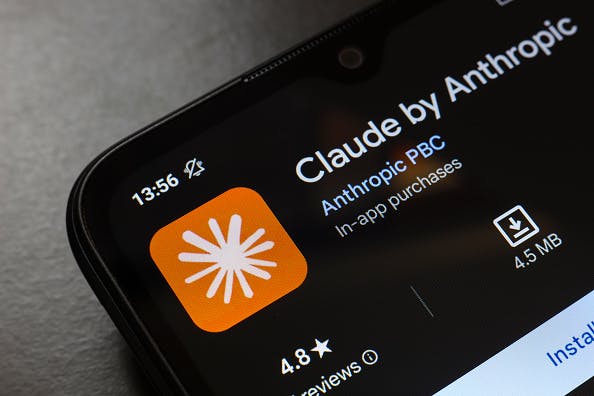
Anthropic CEO meeting White House chief of staff - UPI.com
April 17 (UPI) -- Dario Amodei, the CEO of AI company Anthropic, is meeting with White House Chief of Staff Susie Wiles Friday as his company remains in a legal battle with the Trump administration. The meeting will take place at the White House with Amodei expected to discuss a resolution after the Pentagon banned any use of Anthropic, Axios first reported and CNN and The Washington Post report, citing unnamed sources. Anthropic's AI model Claude was the only AI tool used by the Pentagon's classified network until President Donald Trump announced the government would stop using it. This was in response to Anthropic refusing to allow the military to use Claude for drones and mass surveillance, including domestic surveillance. The Pentagon then listed Anthropic as a supply chain risk. Anthropic sued the Trump administration in February, calling the decision to ban the company from all government contracts and label it a supply chain risk "retaliation." Last month, a federal judge ruled that the Trump administration's ban and labeling of Anthropic is likely illegal. Anthropic has announced a new AI model, Mythos, which the White House Office of Management and Budget said it is preparing to allow agencies access to, Bloomberg reports. Anthropic says its new AI model is capable of finding security weaknesses in computer code which could fix weaknesses. The cybersecurity benefits and risks are being reviewed by the White House and the National Institute of Standards and Technology. This week in Washington Secretary of Health and Human Services Robert F. Kennedy, Jr. speaks during a House Appropriations Subcommittee on Labor, Health and Human Services, Education, and Related Agencies hearing on the budget for the Department of Health and Human Services in the Rayburn House Office Building near the U.S. Capitol on Thursday. Photo by Bonnie Cash/UPI | License Photo Read More Snapchat parent company slashes workforce, turns to AI Stocks take flight after Allbirds makes surprise move to AI Anthropic IPO lifts outlook for SK Telecom stake

Anthropic Expands London Office, Signals Major UK Hiring Push
eWeek content and product recommendations are editorially independent. We may make money when you click on links to our partners. Learn More Anthropic is making a bold bet on London... and the talent that comes with it. The tech giant is expanding its presence in "The Big Smoke," unveiling plans for a new office that can accommodate up to 800 employees -- roughly four times its current UK workforce. The company currently employs just over 200 people in the city. The new site, spanning about 158,000 square feet, marks one of its most significant international investments to date and signals a long-term commitment to the UK market. The expanded footprint is also expected to support significant hiring across engineering, research, and policy roles. A growing AI hub in London Anthropic's new office will sit within London's "Knowledge Quarter," a fast-growing cluster of AI and research activity near King's Cross and Euston. The area already hosts major players, including OpenAI, Google DeepMind, Meta, and several emerging startups. The concentration of companies in one district reflects a wider industry push to bring research, talent, and commercial development closer together. Anthropic's expansion comes amid intensifying competition among AI companies to recruit top talent from UK universities and across Europe. By scaling up its London team, the company is positioning itself to compete more directly with rivals that are already expanding their footprint in the region. "Europe's largest businesses and fastest-growing startups are choosing Claude, and we're scaling to match," said Pip White, head of EMEA North at Anthropic, in a statement. "The UK combines ambitious enterprises and institutions that understand what's at stake with AI safety with an exceptional pool of AI talent -- we want to be where all of that comes together." The move also comes at a sensitive time for Anthropic. Tensions between the company and US authorities have been building, particularly around the use of AI in military and surveillance contexts. Anthropic has resisted allowing its models to be used in such applications, leading to an ongoing dispute with the Pentagon. At the same time, UK officials have reportedly been actively encouraging the company to deepen its presence in Britain, offering a more stable and collaborative regulatory environment for AI development. Deepening ties with UK AI safety efforts As part of the expansion, Anthropic plans to strengthen its collaboration with the UK's AI Security Institute. The government body recently conducted a risk evaluation of the company's latest model, Claude Mythos Preview, which has drawn attention for its ability to identify software vulnerabilities. Access to this model has been tightly controlled, reflecting concerns about potential misuse, particularly in cybersecurity contexts. Anthropic's announcement comes just days after OpenAI revealed plans for its first permanent London office, highlighting a growing battle for talent and influence in the UK capital. With both companies scaling rapidly in the same district, London is increasingly emerging as a global AI hub, second only to Silicon Valley in strategic importance. For more on Anthropic's enterprise push, check out its new Claude for Word integration, which brings AI-powered editing and document workflows directly into Microsoft Word.

Perplexity AI Cheat Sheet: How an 'Answer Engine' Is Challenging Gemini, ChatGPT
eWeek content and product recommendations are editorially independent. We may make money when you click on links to our partners. Learn More Perplexity bills itself as an "AI-powered answer engine," not a chatbot. The distinction matters: every query triggers a real-time web search, source compilation, and a cited answer, more like a turbocharged research assistant than a conversational AI friend. Founded in 2022 and valued at roughly $20+ billion, Perplexity has grown well beyond search. It now offers an AI-native browser (Comet), a Mac-based personal AI agent, enterprise tools, finance integrations, health data connectors, and a developer API platform. Search is the core, sourced, cited, and fast. Everything else (writing, images, coding, agents) layers on top of that search-first foundation. How does Perplexity work? When you submit a query, Perplexity searches the web in real time, gathers information from authoritative sources, and uses large language models to synthesize a clear, cited answer. In-text citations let you hover to preview sources and click through to read further. Model options Perplexity has its own in-house model -- Sonar -- but also offers access to third-party models. On Pro and Max plans, you can choose between: Sonar (default), GPT-5, Claude Sonnet/Opus, Gemini 3.1 Pro, and Grok 4. Perplexity post-trains third-party models, which means responses via Perplexity may differ from those of the models used directly, generally leaning more toward precise answers and less toward open-ended conversation. Three main modes * Search (fast answers): Real-time web results, cited sources, related questions. Best for everyday lookups. * Deep research (comprehensive reports): Autonomously reads hundreds of sources, reasons through material, and delivers structured reports in 2-4 minutes. * Labs (create and build): Build web apps, documents, slides, dashboards, and more using code execution and image generation together. Where is Perplexity available? * Web: perplexity.ai, available globally, no account needed for basic search. * iOS and Android: Full-featured apps including voice chat and assistant functions. * macOS and Windows: Desktop apps available. Personal Computer agent requires Mac. * Comet browser: Mac, Windows, iOS, and Android. AI-native browser with a built-in assistant. * Integrations: Gmail, Outlook, Slack, WhatsApp, and more. Firefox default search option. * Snapchat: $400M deal to power conversational search inside Snapchat chats. How much does Perplexity cost? Perplexity has several pricing tiers: * Free: Unlimited quick searches, five Pro searches per day, standard AI model access * Pro: $20 per month or $200 per year (about $17/month if billed annually). Includes unlimited Pro searches, choice of advanced models (GPT-5, Claude, etc.), file uploading, and daily image generation * Max: $167 per month when billed annually (or $200/month). Includes everything in Pro, plus advanced agentic AI tools and priority support * Education Pro: $10 per month for students and faculty * Enterprise Pro: $34 per seat per month when billed annually * Enterprise Max: $271 per seat per month when billed annually Key features in depth Comet AI-native browser Comet is Perplexity's answer to Chrome, built on Chromium (the same codebase as Google Chrome), so switching is familiar. The AI assistant is baked into the browsing experience -- summarizing pages, comparing tabs, drafting emails, and completing purchases without leaving the browser. It launched as a $200/month premium product before going free globally. Available on Mac, Windows, iOS, and Android. Perplexity Computer and Personal Computer Perplexity Computer is a cluster of AI agents capable of handling complex, multi-step tasks. Personal Computer extends this to a dedicated Mac mini that runs 24/7, connecting to local files, iMessage, Apple Mail, Calendar, and other native apps. Users can start a task on iPhone and have their Mac handle it in the background. Perplexity Health A suite of connectors linking personal health data -- Apple Health, electronic health records from over 1.7 million care providers, Fitbit, Ultrahuman, Withings, and more -- to Perplexity's search and Computer tools. Users can ask questions about their own lab results, medications, and activity data in one place. Available to Pro/Max users in the US. Not a substitute for professional medical advice. Personal finance with Plaid Perplexity integrates with Plaid to connect bank accounts, credit cards, loans, and brokerage accounts from 12,000+ financial institutions. Computer can then build custom budget trackers, net worth dashboards, debt payoff plans, and cash flow forecasts from real account data. Available on desktop in the US and Canada, Plaid provides read-only access, and user data never touches Perplexity's servers. Spaces Topic hubs where you can bundle related searches, uploaded files, and custom AI instructions. Useful for ongoing research projects, for example, a dedicated Space for competitive analysis or trip planning. Available on free and paid tiers. Discover A curated news feed with five interest categories: arts and culture, entertainment, finance, tech & science, and sports. Also surfaces trending stocks and weather. Functional but limited in customization. Pros and cons Legal and controversies Amazon sued Perplexity in Nov. last year, alleging its Comet browser accessed password-protected accounts without Amazon's authorization. A federal judge granted Amazon an injunction last month, restricting Comet from accessing Amazon's protected systems. Reddit also sued over alleged unlicensed data scraping. On the other side, Perplexity struck a licensing deal with Getty Images to ensure properly credited visuals in AI responses. Notably, Amazon is also an investor in Perplexity. In a separate high-profile move, Perplexity made an unsolicited $34.5 billion offer to buy Google's Chrome browser last year -- a figure that exceeds Perplexity's own valuation -- amid ongoing US antitrust proceedings against Google. Most analysts viewed it as a strategic public signal rather than a likely transaction. Privacy and data Perplexity collects queries, device data (including IP and location), and information from third-party sources such as employment databases and consumer marketing lists. By default, your data is used to train AI models. Paid subscribers can opt out of training. Perplexity promises not to sell user data but may share it with service providers. Health and finance data from connectors is encrypted in transit and at rest and is explicitly not used for model training or sold to third parties. Who are Perplexity's main competitors? Perplexity is fighting a war on two fronts: * Search engines: Google and Microsoft Bing are its primary targets. * AI chatbots: ChatGPT (OpenAI), Gemini (Google), and Claude (Anthropic) offer similar conversational tools, though they often lack Perplexity's focus on real-time citations. * E-commerce: Because of its Instant Buy features via PayPal, it is also starting to bump heads with Amazon. * AI search: xAI Grok is integrated into X. Less censored, less source-focused. Research feature more limited. How to get started * Visit perplexity.ai or download the app on iOS, Android, macOS, or Windows. * You can search without an account, but creating one unlocks history, Spaces, voice chat, and file uploads. * Choose a model (or leave it on "Best" for automatic selection) using the toggle below the search bar. * Use the deep research mode for complex topics and Labs to build documents, apps, or slides. * To try Comet, download it separately from perplexity.ai/comet. It imports your Chrome bookmarks and extensions in one click. * Upgrade to Pro ($17/mo billed annually) to unlock advanced models, unlimited Pro searches, and the ability to opt out of data training. The bottom line Perplexity started as a clever alternative to Google Search, but it's quickly becoming something much bigger. Between the audacious Chrome bid, the Comet browser, the 24/7 Personal Computer agent, health tracking, financial tools, and major distribution deals with Firefox and Snapchat, this startup is swinging for the fences. Whether they can pull it off is another question. The Amazon lawsuit highlights the legal risks of allowing AI agents to roam freely on the web. And the Chrome bid, while great for headlines, didn't actually get them the browser. But one thing's clear. Perplexity isn't content to just answer your questions. They want to be the computer you use to get things done. And they're moving fast to make that happen. For more on Perplexity's push into AI agents, read our coverage of its new always-on Personal Computer for Mac.

Dow Jones Top Company Headlines at 1 PM ET: Anthropic CEO Lands White House Meeting as Feud Thaws | Ford ...
Anthropic CEO Lands White House Meeting as Feud Thaws The Friday meeting comes as the White House races to prepare for Anthropic's latest AI model, Mythos, which the firm says could pose cybersecurity risks. Ford is recalling up to 1.39 million F-150 pickups over the risk of unexpected downshifting that can lead to a loss of vehicle control. State Street reported higher first-quarter profit, boosted by fee growth, particularly for its foreign exchange trading services. ---- Ericsson Targets Networks Growth Despite Caution Over Rising Costs Chief Executive Borje Ekholm said it was facing increasing input costs, especially in semiconductors, caused in part by AI demand. ---- Telecom Majors Bid $24 Billion for Patrick Drahi's SFR The French-Israeli billionaire's Altice business is under pressure to reduce its debt burden. The government delayed an overhaul to how it calculates Medicare Advantage payments. For the insurer, that only postpones the pain. ---- Spice Giant McCormick Is Preparing for Battle in the Condiment Aisle The company's deal with Unilever deepens its foothold in flavor as competition mounts from rivals. ---- Kweichow Moutai's Annual Profit, Revenue Fall for First Time The Chinese liquor giant reported a drop in annual profit and revenue for the first time since its 2001 listing amid subdued consumption in China. ---- Sam Altman's Side Hustles Blur the Line Between OpenAI's Interests and His Own Ahead of a planned IPO, Altman's personal investments remain opaque, making it hard to spot any conflicts. ---- QVC Files for Chapter 11 Bankruptcy, Plans to Restructure $6.6 Billion of Debt The TV and video retailer's prepackaged bankruptcy was filed in U.S. Bankruptcy Court for the Southern District of Texas. ---- Autoliv Backs Guidance Despite Caution Over Geopolitical Challenges Shares rose 9% in Stockholm after the company's first quarter turned out better than anticipated, with strong sales in March.

mRNA Vaccines Use Unconventional Immune Pathways to Fight Cancer - News Directory 3
There is a lot of interest in applying the mRNA vaccine approaches used during the COVID-19 pandemic to the problem of inducing anti-tumor immunity. Scientists have discovered that mRNA cancer vaccines activate an unconventional immune pathway, challenging previous assumptions about how these vaccines work and opening new possibilities for improving cancer immunotherapy. Researchers at Washington University School of Medicine in St. Louis found that mRNA vaccines can trigger strong anti-tumor responses even without a specific dendritic cell subtype previously thought to be essential for immune activation. Instead, a related dendritic cell subtype can stimulate the immune response, revealing a more flexible mechanism than expected. There is a lot of interest in applying the mRNA vaccine approaches used during the COVID-19 pandemic to the problem of inducing anti-tumor immunity. By dissecting which immune cells are involved and how they coordinate the response, we're offering vaccine developers some additional mechanistic insights to consider in their goal of optimizing these vaccines against tumor proteins. The study, published in Nature on April 15, involved experiments in mice showing that mRNA vaccines could still produce immune responses and reject tumor growth in animals lacking the conventional dendritic cell subtype (cDC1s). Mice missing both cDC1s and another subtype (cDC2s) also mounted effective immune responses, indicating that multiple dendritic cell types can contribute to anti-tumor immunity following mRNA vaccination. This unexpected flexibility suggests that mRNA vaccines engage the immune system through alternative routes not typically seen with other vaccine types. The findings help explain why mRNA technology may be particularly effective for cancer immunotherapy, where generating strong T-cell responses against tumor-specific proteins is critical. mRNA vaccines work by delivering genetic instructions that prompt cells to produce harmless pieces of target proteins. The immune system then recognizes these proteins as foreign and mounts a defense. In cancer applications, this approach aims to train the body to identify and destroy cells expressing tumor-associated antigens. Clinical trials are currently evaluating mRNA vaccines for several cancer types, including melanoma, small cell lung cancer, and bladder cancer. The new mechanistic insights could help researchers refine vaccine design to improve efficacy and broaden applicability across different cancer types. While the results are promising, researchers caution that findings from mouse models may not directly translate to human responses. Further studies are needed to confirm whether the same unconventional immune pathways operate in people and to determine how best to leverage this knowledge in clinical vaccine development. The discovery underscores the adaptability of mRNA vaccine technology and highlights the importance of basic immunological research in guiding the next generation of cancer therapeutics. As clinical testing continues, a deeper understanding of immune mechanisms will be essential for maximizing the potential of mRNA-based approaches in oncology.

Steve Bannon says Anthropic 'had it right' in rejecting deal with the Pentagon
At least one person in Trump world believes Anthropic was correct to reject a deal with the Pentagon. "I think Anthropic had it right," former White House chief strategist Steve Bannon said during the Semafor World Economy Summit in Washington, D.C., on Thursday. Bannon said allowing the Pentagon to operate Anthropic's frontier model -- Claude -- with little guardrails is "too dangerous." Bannon, who's criticized the development of superintelligent AI, said there needs to be greater transparency about how weapons manufacturers will use AI. "The central thing is what is happening in the weapons lab with AI," Bannon said. "We have no earthly idea." The clash between Anthropic and the Pentagon began in February amid negotiations about the military using Claude. Defense Secretary Pete Hegseth pressed the company to accept its terms of use or risk losing its contract with the military. In a blog post, Anthropic CEO Dario Amodei said the company "cannot in good conscience accede" to the Pentagon's requests. Specifically, Amodei said the company had concerns over two issues: mass domestic surveillance and fully autonomous weapons. Anthropic's refusal drew a swift response from the Pentagon, which effectively blacklisted the company by labeling it a supply chain risk and barring federal agencies from using the tech. Anthropic filed a lawsuit in March against Hegseth, the Pentagon, the Executive Office of the President, and other federal agencies over the blacklist efforts. The Pentagon, meanwhile, quickly made a deal with Sam Altman's OpenAI. Despite the legal and business fallout, Anthropic won big in the court of public opinion. Claude temporarily overtook ChatGPT in the App Store, and the company garnered praise for standing its ground. More recently, Anthropic made headlines with the announcement of its new model, Mythos. The company said it paused the model's release due to cybersecurity concerns. "Claude Mythos Preview's large increase in capabilities has led us to decide not to make it generally available," the company wrote in the preview's system card. "Instead, we are using it as part of a defensive cybersecurity program with a limited set of partners."
White House to Provide Anthropic Mythos Access to US Agencies Despite Pentagon Rift
An official said the White House was working with frontier AI labs to ensure their models help secure critical software against vulnerabilities, adding that any new technology requires a period of technical evaluation for fidelity and security. The US government is planning to make a version of Anthropic's frontier available to major federal agencies amid concerns that the tool could sharply increase cybersecurity risk, Bloomberg News reported on Thursday (April 17, 2026). Gregory Barbaccia, federal chief information officer at the White House Office of Management and Budget, told Cabinet department officials in an email on Tuesday that the OMB was setting up protections to allow their agencies to begin using Mythos, according to . Barbaccia's email does not definitively say that various agencies would get Mythos access, nor does it provide a timeline for when it might come or how they might use it, the Bloomberg report added. Its advanced coding ability allows it to detect and potentially exploit weaknesses, making it a powerful tool for cybersecurity testing. Departments such as energy and finance believe access could help strengthen defenses and prepare for cyber threats to critical infrastructure.
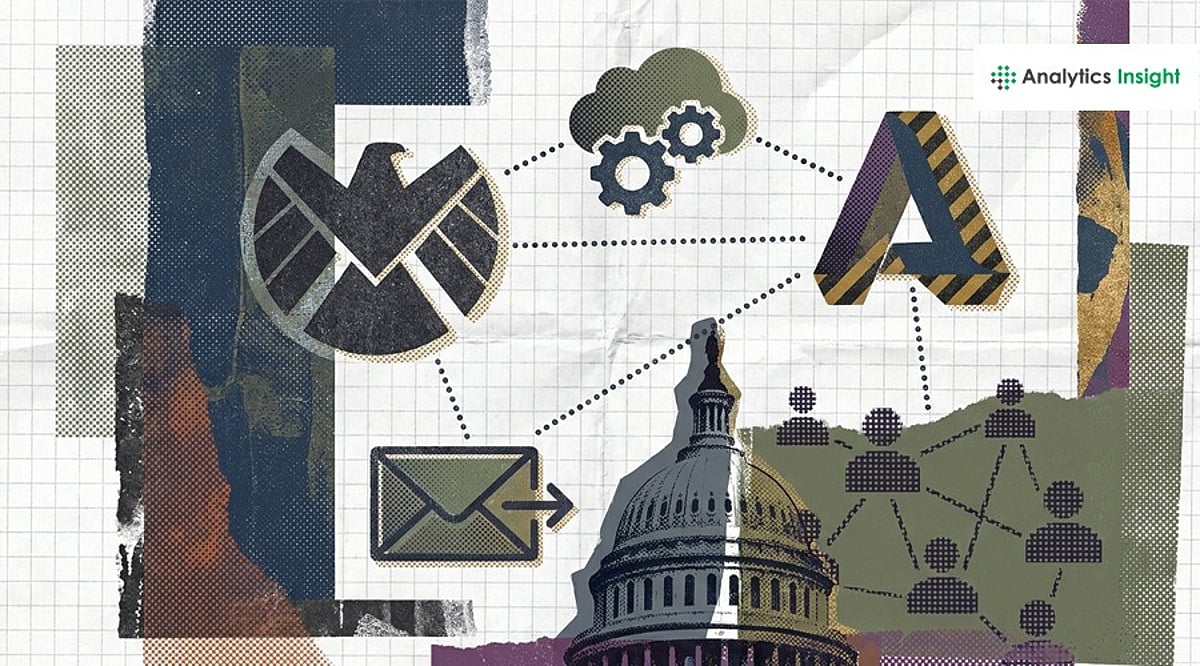
Alphabet's SpaceX Bet Nears $100 Billion as IPO Buzz Grows
Alphabet's early investment in SpaceX is set to deliver massive returns, with its stake nearing $100 billion as IPO expectations rise, highlighting how long-term bets in space and technology sectors can unlock unprecedented value. Alphabet stands on the verge of a major investment gain. Its early stake in SpaceX could now be worth close to $100 billion, as per a Bloomberg report cited by . The company held about 6.11% in SpaceX at the end of 2025. That stake has now dropped to nearly 5% after recent structural changes linked to xAI. Despite the dilution, the value of the holding has surged sharply. A possible IPO could unlock this value. Estimates suggest SpaceX may aim for a $2 trillion valuation, which would turn into one of its most successful bets.
No design skills? Claude design plus Canva could change that as Anthropic partnership expands AI visual creation
Claude Design and Canva are changing how people create visuals using AI. These tools help users make designs quickly without much skill. People can turn ideas into real content and edit them easily. While it helps beginners a lot, designers may see changes in their work. The focus is on faster creation, simple tools, and making design more accessible. Anthropic has launched a new product called Claude Design that helps people create visual content like slides, designs and prototypes using AI, as per the statement by Anthropic. Claude Design is powered by its advanced AI model Claude Opus 4.7, which can generate high-quality visuals from simple instructions. The tool is currently in research preview and is being rolled out slowly to Pro, Max, Team and Enterprise users. The main aim is to make designing easy for everyone, especially people with no design background. The company says even professional designers don't get enough time to explore many ideas, while non-designers find it hard to even start. Users just describe what they want, and Claude creates a first version of the design instantly. People can improve designs by chatting with Claude, adding comments, editing text or using sliders. Claude can also follow a company's brand style like colours, fonts and layouts automatically if given access. Teams are already using it to create prototypes, wireframes, presentations and marketing content. Designers can turn simple mockups into interactive prototypes without writing code. Product managers can design feature flows and easily share them with developers or designers. Founders can quickly turn ideas into full pitch decks and export them or send them to Canva. Marketers can create ads, landing pages and social media content and then refine them. Users can also build advanced prototypes with video, voice, 3D and AI features. During onboarding, Claude reads company files and builds a design system for consistent output. Users can start with text prompts, upload documents or images, or even use website elements. Fine controls allow users to adjust spacing, colours and layouts in real time. Canva has partnered with Anthropic to bring Canva directly into Claude Design, as cited by Businesswire. This announcement came just after Canva introduced its AI 2.0 features at a major event. Canva has launched a new HTML import feature to bring AI-generated content into its editor. The partnership solves a major issue of turning AI-generated drafts into usable designs. Users can now move their AI ideas into Canva and make them editable, shareable and ready to publish. Unlike normal AI outputs, these designs are structured and fully editable. Canva uses its Foundation Design Model to convert AI outputs into proper designs. Users can edit layouts, colours and elements without regenerating code every time. Canva now supports visual, document and interactive content in one platform. Users can even publish designs as websites or collect data using Canva tools. Canva is becoming a major player in the AI design space as demand grows. The platform is used by over 250 million people every month and creates 420 designs every second, as per Businesswire. Canva's AI tools have been used more than 27 billion times so far. Features like Magic Layers have already been used millions of times, showing strong demand. According to McKinsey Digital, AI can automate up to 70% of repetitive work, including design tasks. Many professionals use AI to improve quality, get ideas and speed up work, as noted in an Adobe survey shared by Brinda Gulati via Jotform. Experts say AI will not replace designers but will change their role to focus more on creative direction, as per Mateusz Czajka via Netguru. AI tools are especially useful for non-designers who need to create content quickly, says Ben Resnik, Zinc Labs. Even people with low design skills can improve their work using AI tools. Jotform explained, AI design tools make the process easier and less messy compared to older tools. Overall, Claude Design and Canva together make it possible for founders, marketers and students to create professional designs without needing strong design skills. But here's what real users are saying online about AI design tools -- one Reddit user, Wilzerjeanbaptiste said the biggest lesson is that no single tool can do everything perfectly, and trying to find one often leads to average results. The user explained they use different tools together, including Canva for design and Claude for captions and ideas, instead of depending on one platform. They also said the real "game changer" was not AI tools, but building a simple weekly workflow to manage content easily. According to the same user, creating and scheduling content once a week helped avoid logging into multiple platforms daily. Another Reddit user, Fabulous_Print_600 shared a similar view, saying they no longer look for one tool to do everything. The user said they rely on native scheduling tools and sometimes use platforms like Buffer or Later to stay organised. They added that even with multiple tools, managing everything still feels a bit complicated and requires juggling between platforms. These reactions show that while AI tools like Claude Design and Canva are powerful, users still believe workflows and tool combinations matter just as much. Q1. What is Claude Design and how does it work? Claude Design is an AI tool by Anthropic that creates designs from simple text and lets users edit them easily. Q2. How does the Canva and Claude Design partnership help users? The partnership with Canva helps turn AI designs into fully editable, shareable visuals without needing design skills.
Anthropic Mythos sparks concerns among the finance community over security risks
Finance ministers, bankers, and financiers have expressed concerns about Anthropic's Claude Mythos, over its potential to undermine security of financial systems. Experts say the model potentially has an unprecedented ability to identify and exploit cybersecurity weaknesses, though others caution further testing is needed to properly understand its capabilities. Canadian Finance Minister François-Philippe Champagne told the BBC that Mythos had been discussed extensively at the International Monetary Fund (IMF) meeting in Washington, D.C., this week. "Certainly, it is serious enough to warrant the attention of all the finance ministers," he said. He went on to draw parallels to the Strait of Hormuz, which has become a focal point of tensions following the U.S.-Israeli conflict with Iran. "The difference is that the Strait of Hormuz - we know where it is and we know how large it is... the issue that we're facing with Anthropic is that it's the unknown, unknown." READ: Trump administration may be pushing banks to trial Anthropic Mythos (April 13, 2026) "This is requiring a lot of attention so that we have safeguards, and we have processes in place to make sure that we ensure the resiliency of our financial systems," he added. Mythos is one of Anthropic's latest models, and was developed as part of its broader AI system, Claude. Anthropic had introduced Mythos as a breakthrough in autonomous cybersecurity, warning that the model could be dangerous if it fell into the wrong hands. Rather than allowing broad access, the company is reportedly testing it through a closed initiative called "Project Glasswing," giving access to Mythos only to select researchers and organizations. On Thursday, Anthropic released a new version of an existing model, Claude Opus, saying it would allow Mythos' cyber capabilities to be tested in less powerful systems. READ: US judge gives Anthropic reprieve from Pentagon blacklisting (March 27, 2026) The UK's AI Security Institute has been given access to a preview version of it, and has published the only independent report into the model's cybersecurity skills. Its researchers say it was a powerful tool able to find many security holes in undefended environments, but suggested Mythos was not dramatically better than Claude's predecessor, Opus 4. "Our testing shows that Mythos Preview can exploit systems with weak security posture, and it is likely that more models with these capabilities will be developed," the report authors said. However, some believe Anthropic's claims about the model are a means to create hype. This isn't the first time an AI company has claimed the capabilities of its models means they should not be released. In February 2019, OpenAI made similar claims when it chose to stagger the release of GPT-2, an earlier version of its models which now power ChatGPT.
Anthropic Launches Claude Design on Opus 4.7
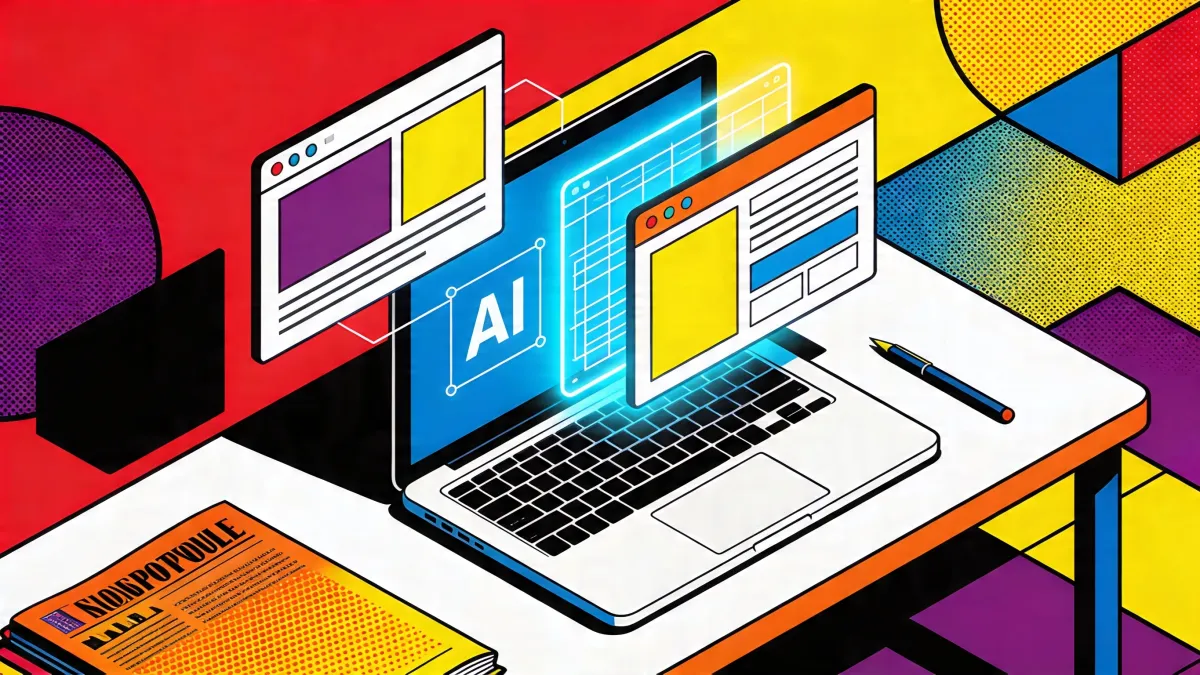
Anthropic on Friday launched Claude Design, a research preview that lets paying subscribers build prototypes, slide decks, and marketing assets from natural-language prompts. The product reads a team's codebase and design files, then applies the company's colors, typography, and components to every project automatically, according to the launch post. Powered by Claude Opus 4.7, the tool is available to Pro, Max, Team, and Enterprise subscribers and puts Anthropic in direct competition with Figma, Adobe, Canva, and Wix. Not a Midjourney-style image generator. No cat eating lasagna in space. Claude Design is a workplace tool: pitch decks, landing pages, product wireframes, campaign visuals, and the interface prototypes that used to need a designer and a developer in the same room. The workflow is conversational. Describe what you want, Claude builds a first version, and you refine through inline comments, direct edits, or custom sliders the model generates for spacing, color, and layout. Anthropic calls the underlying Opus 4.7 its most capable vision model to date. Designers can ration exploration less. Founders and product managers without a design background get a way to turn an idea into something shareable before the meeting ends. The feature that makes this more than a prompt-to-deck toy is the onboarding step. During setup, Claude ingests a company's codebase and design files and builds a design system that governs every subsequent project. Teams can maintain more than one. Import paths run wide too. You can start from text prompts, DOCX, PPTX, XLSX uploads, or use a web capture tool to grab elements straight off a live site. Export paths are equally broad. Designs leave as PDFs, PPTX files, standalone HTML, or a folder for internal sharing. Finished work can also be packaged into a handoff bundle for Claude Code. Anthropic told TechCrunch the Canva export is a partnership, not a feint. The two companies have worked together for a year, and Canva chief executive Melanie Perkins said files arrive "fully editable and collaborative." Datadog product manager Aneesh Kethini told AdWeek his team has "gone from a rough idea to a working prototype before anyone leaves the room." Brilliant, the online learning platform, is in the beta too. The tool's existence moved markets before it shipped. After The Information first reported the plans earlier this week, shares of Adobe, Wix, and Figma each dropped more than two percent, according to The Decoder. The S&P 500 Software and Services Index is down nearly 26 percent this year as investors price in what AI tools might do to incumbent productivity software. Anthropic's growth numbers explain the anxiety. Revenue has ripped. The company puts its annualized figure at roughly $30 billion, up from $9 billion at the close of 2025. Over a thousand enterprise customers now cut annual checks of $1 million or more to Anthropic, and that tally doubled in under two months. Venture capitalists are reportedly offering a valuation of up to $800 billion, more than double the $380 billion Anthropic fetched in February. On the secondary-market platform Caplight, shares already trade at $688 billion. OpenAI, for reference, last marked at $852 billion. The compute bill is steep. Anthropic recently replaced its Enterprise flat rate, which topped out at $200 per user per month, with a $20 base fee plus usage charges. A shift that could double or triple costs for heavy users. Opus 4.7 is not Anthropic's best model. That title belongs to Claude Mythos Preview, the cybersecurity-specialized system the company unveiled on April 7 and restricted to select partners through Project Glasswing. On Humanity's Last Exam without tools, Mashable reports Mythos scored 56.8 percent against Opus 4.7's 46.9 percent. Opus 4.6, the February flagship, managed 40 percent. CEO Dario Amodei is meeting with the White House about Mythos this Friday, as the Trump administration, tech executives, and bank chiefs weigh what a model that can simulate a full corporate network attack should be allowed to do in public. Anthropic shipped Opus 4.7 with what the company calls "safeguards that automatically detect and block requests that indicate prohibited or high-risk cybersecurity uses." Claude Design inherits those guardrails by running on the same model. The design tool is off by default for Enterprise accounts. Admins have to switch it on. For everyone else, access arrives in waves through the day. Figma, Wix, and Adobe spent years teaching customers to think in layers and artboards. Anthropic just handed those customers a sentence.
Anthropic's Mythos heads toward federal use as Hegseth's ban falters
Metacurity is the only daily cybersecurity briefing built for clarity, not agendas -- no vendor spin, no echo chamber, just sharp, original aggregation and analysis of what actually matters to security leaders. If you rely on Metacurity to cut through the noise on policy, industry shifts, and security research, consider supporting us with a paid subscription. Independent coverage like this only exists because readers decide it's worth it. Gregory Barbaccia, federal chief information officer of the White House Office of Management and Budget, told officials at Cabinet departments in an email Tuesday that OMB is setting up protections that would allow their agencies to begin using the closely guarded AI tool, Mythos. The email doesn't say definitively that the various agencies will get access to Mythos, nor does it provide a timeline for when it might come or how they might use it. It tells top technology and cybersecurity chiefs to expect more information "in the coming weeks." US officials have previously urged private sector organizations to use Mythos to improve their cybersecurity. The Treasury Department has been seeking access to Mythos to uncover its own software flaws, Bloomberg has reported. Anthropic has only provided Mythos to a limited group of technology companies, financial firms, and others, urging them to use it to assess their cybersecurity risk. The firm limited the release of Mythos amid concerns that hackers could weaponize its capabilities to steal data or sabotage victim networks. The Pentagon this year declared Anthropic a supply chain threat, under an authority normally reserved for foreign adversaries, over a dispute about artificial intelligence safeguards. The company won a court order last month blocking a ban on government use of the technology, after Anthropic argued the move could cost it billions of dollars in lost revenue. But, Anthropic CEO Dario Amodei is scheduled to walk into the West Wing on Friday for a meeting with White House chief of staff Susie Wiles -- a breakthrough in his effort to resolve the company's bitter AI fight with the Pentagon. (Jake Bleiberg and Margi Murphy / Bloomberg and Jim VandeHei, Mike Allen / Axios) Related: Futurism, Axios, International Business Times, Crypto Briefing, Forbes, Financial Times, Reuters, Crypto Briefing, Washington Examiner Claude Opus 4.7 is better at software engineering, following instructions, completing real-world work, and is its most powerful generally available model, Anthropic said. But the model's cyber capabilities are not as advanced as Claude Mythos Preview, which Anthropic rolled out to a select group of companies as part of a new cybersecurity initiative called Project Glasswing earlier this month. "We are releasing Opus 4.7 with safeguards that automatically detect and block requests that indicate prohibited or high-risk cybersecurity uses," Anthropic said in a release. "What we learn from the real-world deployment of these safeguards will help us work towards our eventual goal of a broad release of Mythos-class models." Separately, Mohan Pedhapati (s1r1us), CTO of Hacktron, the company's Opus 4.6 model, already superseded by the release of Opus 4.7 on Thursday, is capable of developing functional exploit code. In a blog post, Pedhapati described how he used Opus 4.6 to create a full exploit chain targeting the V8 JavaScript engine in Chrome 138, which is bundled into current versions of Discord. "The V8 [out of bounds error] we used was from Chrome 146, the same version Anthropic's own Claude Desktop is running," he said. "A week of back and forth, 2.3 billion tokens, $2,283 in API costs, and about ~20 hours of me unsticking it from dead ends. It popped calc." "Popped calc" is a reference to opening the calculator app - an event commonly used in proof-of-concept exploit code to indicate that an attack compromised the target system. Pedhapati said that while $2,283 is a significant sum for an individual to pay, it's very little if you consider the weeks it would take a person to develop a similar exploit without assistance. (Ashley Capoot / CNBC and Thomas Claburn / The Register) Related: Anthropic, Forbes, Bloomberg, Implicator.ai, Barron's Online, The GitHub Blog, Tom's Guide, iClarified, Wired, Telegraph, Cyber Daily, Hacktron As finance ministers, central bankers, and regulators met this week in Washington for the IMF and World Bank spring meetings, their discussions were dominated by concern over the latest AI model developed by San Francisco-based start-up Anthropic. "It is a very serious challenge for all of us," said Andrew Bailey, governor of the Bank of England, who chairs the Financial Stability Board of global regulators. "It reminds us how fast the AI world moves." Bailey added that global regulators would need to rapidly evaluate the potential cybersecurity threat to the financial system from Anthropic's new Claude Mythos Preview model. Until just over a week ago, most policymakers had expected the IMF and World Bank meetings to focus on the conflict in the Middle East, tensions in the private credit market, and elevated levels of government debt. (Martin Arnold, Sam Fleming, Claire Jones, Joshua Franklin, and Akila Quinio / Financial Times) Related: The Guardian, Bloomberg Grinex, which is based in Kyrgyzstan but linked to Russia, was sanctioned by the US, the UK, and the European Union last year. In a statement posted on its Telegram channel, the exchange accused "foreign intelligence services" of unfriendly states of being involved in the attack. "The digital footprints and nature of the attack indicate an unprecedented level of resources and technologies available exclusively to entities of unfriendly states," the exchange said."According to preliminary data, the attack was coordinated to cause direct harm to Russia's financial sovereignty," it added. The US has stated that Grinex helped customers circumvent sanctions via a Russian rouble-backed stablecoin called A7A5. (Gleb Bryanski / Reuters) Related: Grinex, FinanceFeeds, CoinDesk, The Moscow Times, Elliptic, Crypto Briefing, The Cyber Express, The New Voice of Ukraine, United24Media, Coinfomania, Kyiv Independent According to court documents, the accounts were hijacked by Nathan Austad (aka Snoopy) with the help of Joseph Garrison (a third accomplice charged in May 2023) in a massive November 2022 credential-stuffing attack that compromised nearly 68,000 DraftKings accounts. US prosecutors said Austad and Garrison used a list of credentials stolen in multiple breaches to hack into DraftKings accounts, then sold access to others who stole around $635,000 from roughly 1,600 compromised accounts. While they made over $2.1 million selling some of these hijacked DraftKings accounts (as well as FanDuel and Chick-fil-A accounts) through their own "shops," they also sold many in bulk to Stokes (also known online as TheMFNPlug), who resold them through his own "shop." One month later, the sports betting giant said it had to refund hundreds of thousands of dollars stolen from hacked accounts, after all available funds were withdrawn following the addition of a new payment method and a $5 deposit to verify its validity. (Sergiu Gatlan / Bleeping Computer) Related: Justice Department The company said unauthorized access was detected on the afternoon of 24 March 2026, affecting a system used to manage bunker purchasing. "We have become aware that a marine fuel procurement system used by the NYK Group was accessed without authorization by a third party," the company said in its official notice. It added that "certain data -- including personal information -- was accessed and exfiltrated." NYK moved to isolate the system and suspend its use immediately. An internal task force was set up, and the platform was restored three days later on 27 March. The company reported the incident to Japan's Personal Information Protection Commission the same day, followed by a report to police on 31 March. (Arnel Murga / Digital Ship) Related: NYK, Tradewinds News, Digital Shield The Ox research team says they "repeatedly" asked Anthropic to patch the root issue, and were repeatedly told the protocol works just fine, thank you, despite 10 (so far) high- and critical-severity CVEs issued for individual open source tools and AI agents that use MCP. A root patch, according to Ox, could have reduced risk across software packages totaling more than 150 million downloads and protected millions of downstream users. Anthropic "declined to modify the protocol's architecture, citing the behavior as 'expected,'" Ox researchers Moshe Siman Tov Bustan, Mustafa Naamnih, Nir Zadok, and Roni Bar said in a blog about their research, which began in November 2025 and included more than 30 responsible disclosure processes. A week after their initial report to Anthropic, the AI vendor quietly released an updated security policy - as seems to be the pattern when faced with AI bugs. The updated guidance says MCP adapters, specifically STDIO ones, should be used with caution, the team wrote in a subsequent 30-page paper [PDF]. "This change didn't fix anything," they added. (Jessica Lyons / The Register) Related: Ox Security, Infosecurity Magazine, r/cybersecurity, TechRadar In a post on X, Zerion clarified that the breach did not affect user funds or its core infrastructure. The company said attackers gained access through compromised credentials and active login sessions. The team further stated that it quickly shut down its web app as a precaution. "No user funds were lost," Zerion stated in its update. However, the incident exposed internal security weaknesses tied to phishing methods and human error. (Kenrodgers Fabian / Cryptotimes) Related: NK News, The Cryptonomist, Gadgets 360, Cryptonews.net Europol supports the ongoing operation and involves authorities in 21 countries. Coordinated efforts led to the arrest of four people, taking offline 53 domains, and issuing 25 search warrants. "Leading up to the action week, a series of operational sprints took place, gathering experts from national authorities across the globe to carry out actions against high-value target users of DDoS-for-hire platforms and raise awareness about the illegality of these activities," Europol says. "During these sprints, the participating countries disrupted illegal booter services, dismantling the technical infrastructure that supports illegal DDoS." The operation has a global span and includes multiple European Union countries as well as Australia, Thailand, the United States, the United Kingdom, Japan, and Brazil. (Bill Toulas / Bleeping Computer) Related: Europol, Justice Department, TechRadar, Security Week, CyberScoop, The Cyber Express, TechCrunch This exploit is for a local privilege escalation (LPE) flaw that grants SYSTEM privileges in Windows 10, Windows 11, and Windows Server on the latest April Patch Tuesday patches, when Windows Defender is enabled. "When Windows Defender realizes that a malicious file has a cloud tag, for whatever stupid and hilarious reason, the antivirus that's supposed to protect decides that it is a good idea just to rewrite the file it found again to its original location," explains the researcher. Will Dormann, principal vulnerability analyst at Tharros, confirmed that the exploit for the new Microsoft Defender RedSun zero-day works and grants SYSTEM privileges on fully patched Windows 10, Windows 11, and Windows Server 2019 and later. "This Exploit uses the 'Cloud Files API', writes EICAR to a file using it, uses an oplock to win a volume shadow copy race, and uses a directory junction/reparse point to redirect the file rewrite (with new contents) to C:\Windows\system32\TieringEngineService.exe," Dormann wrote in a thread on Mastodon. "At this point, the Cloud Files Infrastructure runs the attacker-planted TieringEngineService.exe (which is the RedSun.exe exploit itself) as SYSTEM. Game over." Security researcher Kevlar shared a more detailed technical write-up about this vulnerability. (Lawrence Abrams / Bleeping Computer) Related: GitHub, Nefarious Plan, CloudSEK, BornCity, PC World, CyberSecurityNews The company also warned that Windows admins may encounter this issue when setting up new domain controllers, or even on existing ones, if the server processes authentication requests very early in the startup process. "After installing the April 2026 Windows security update (KB5082063) and rebooting, non‑Global Catalog (non‑GC) domain controllers (DCs) in environments that use Privileged Access Management (PAM) might experience LSASS crashes during startup," Microsoft said in a release health dashboard update. "As a result, affected DCs may restart repeatedly, preventing authentication and directory services from functioning, and potentially rendering the domain unavailable." This known issue only impacts organizations using Privileged Access Management (PAM) and is unlikely to affect personal devices that an IT department doesn't manage. The list of affected platforms includes systems running Windows Server 2025, Windows Server 2022, Windows Server 23H2, Windows Server 2019, and Windows Server 2016. (Sergiu Gatlan / Bleeping Computer) Related: GBHackers, Cyber Press, Cyber Security News ZionSiphon has many capabilities typically seen in commodity malware, but it caught analysts' attention due to functionality aimed at operational technology (OT), specifically industrial control systems (ICS). Strings in the analyzed malware sample indicate that ZionSiphon has been developed by anti-Israel hackers, and one encoded string decodes to "Poisoning the population of Tel Aviv and Haifa". There are several other indicators that Israel is the malware's main target, including strings naming water facilities in the country. In addition, once it verifies that it's running with admin privileges and establishes persistence, the malware executes a function to fetch the local IP address and determine whether the compromised host is located in Israel. If the IP is associated with Israel, ZionSiphon checks the system for processes and folders typically found in water treatment plants. Specifically, the malware looks for processes linked to reverse osmosis, desalination, chlorine handling, and plant control. If these conditions are met, the malware looks for local configuration files associated with the aforementioned water treatment processes and attempts to alter them to increase chlorine doses and pressure. (Eduard Kovacs / Security Week) Related: Darktrace, Cyber Press, Cyber Security News, GBHackers, Bleeping Computer Chipsoft supplies software for the storage of patient records to Dutch hospitals and house doctors. Sources in the company initially reported that the hack only affected GP records and that the hospital records were safe, but now say that it cannot be ruled out that the hackers gained access to the data of some hospitals. Sources tell the NOS that it cannot be ruled out that hospital patient data was stolen during the ransomware attack on Chipsoft. Chipsoft supplies software for the storage of patient records. Initially, sources inside and outside the company reported that hospital data was safe. It now appears that it cannot be ruled out that the ransomware attackers gained access to the data of some hospitals. According to an insider, there are no concrete indications that this has happened, but it cannot be ruled out either. This fear is an issue for hospitals that use a special Chipsoft website to give patients access to their records. Traffic to and from the patient records then runs through Chipsoft servers. The fear now is that attackers could potentially intercept that traffic. (Joost Schellevis / NOS) Related: Dutch News, NL Times After he published his initial findings on LinkedIn, Infoblox VP of Threat Intelligence Renée Burton confirmed the campaign was the work of Hazy Hawk -- a threat actor her team has been tracking since they hijacked CDC subdomains using the same technique. A member of the security community also flagged that the Department of Defense Education Activity (DoDEA) -- a DoD field activity operating under the Under Secretary of Defense for Personnel and Readiness -- had a domain vulnerable to the same attack pattern. The technique is straightforward, which is part of what makes it so effective. University IT teams create CNAME records that point subdomains to external services -- GitHub Pages, WordPress via WP Engine, various cloud hosting platforms. A department sets up a project site, a research group launches a microsite, and ,a student builds something for a class. Eventually the project ends, the person graduates or moves on, and the external hosting account gets deleted or abandoned. But the DNS record stays. The subdomain still points to the external service. The attacker scans for these orphaned CNAME records, registers a new account on the external platform that matches the abandoned target, and takes full control of what the university's subdomain serves. (Alex Shakov / SH Consulting) Once inside, Sapphire Sleet establishes persistence, harvests credentials, and steals sensitive personal data and cryptocurrency assets, posing a heightened risk to organizations and individuals in crypto, finance, and other high-value sectors the group is known to target. The techniques rely on convincing prompts rather than technical exploits, putting even security-conscious users and organizations at risk for being exposed. The findings highlight a broader shift in state-backed cyber operations. Attackers are increasingly bypassing security, not by breaking protections, but by convincing users to bypass them themselves. (Microsoft) Related: Dark Reading, Cyber Press, GBHackers FBI agents recently arrested a man accused of attempting to help scam $600,000 worth of gold bullion from a Valley resident using a 'phantom hacking scam." Japan will launch a pilot program for detecting cyberattacks at small and midsize businesses along with a framework for security certification, aiming to minimize business disruptions stemming from inadequate protection. Nick Andersen, director of the Cybersecurity and Infrastructure Security Agency (CISA), said that despite the opening of the Department of Homeland Security after an extended stand-off between the White House and Democrats in Congress, CISA still isn't legally allowed to carry out certain activities, such as outreach, despite mounting risks to the nation's critical infrastructure.

AI chipmaker Cerebras set to file for IPO as soon as today
Cerebras Systems CEO Andrew Feldman attends The Grove by Village Global at Carneros Resort and Spa in Napa, Calif., on Dec. 12, 2025. Cerebras, a producer of chips that run artificial intelligence models, will file to go public on Friday, two people familiar with the matter told CNBC. The people spoke on condition of anonymity, in order to discuss internal matters. Cerebras declined to comment. For years, Cerebras sought to sell chips to companies, but it has begun operating the chips inside its own data centers as a cloud service on behalf of clients. In January, Cerebras touted plans to provide up to 750 megawatts of computing power to OpenAI through 2028 in an agreement valued at over $10 billion. OpenAI has since expanded its relationship with Cerebras in an agreement worth over $20 billion and will get warrants to buy Cerebras shares, one person said. The Information previously reported on the arrangement. Another major expansion could be on the way. On Oracle's March earnings call, CEO Clay Magouyrk mentioned that the database and cloud company offers chips from Cerebras and other suppliers. But at the time, Oracle's price list did not contain references to Cerebras.

Anthropic launches Claude Design for slides and prototypes
Anthropic is launching Claude Design, a new product that lets users create designs, prototypes, slides, one-pagers, and other visual work using Claude. The tool is available in research preview for Claude Pro, Max, Team, and Enterprise subscribers and is rolling out to users throughout the day, the company said. Claude Design is powered by Claude Opus 4.7, which Anthropic describes as its most capable vision model. After submitting a prompt, users receive an initial design from Claude. Refinements are made through conversation, inline comments, direct edits, or purpose-built sliders that Claude creates for adjusting individual design elements like color, spacing, and layout. An onboarding workflow lets Claude read a company's codebase and existing design files to establish a shared visual language, so that colors, typography, and components carry over automatically into new work. Organizations are not limited to a single design system and can update their standards as needed. The tool supports imports from text prompts, image and document uploads in formats including DOCX, PPTX, and XLSX, and a web capture tool that allows users to pull elements from their company's website. Export options include PDF, URL, PPTX, and standalone HTML, with an additional path to send work into Canva, where it opens as a fully editable and collaborative file. Designs can also be handed off to Claude Code for implementation. Despite surface-level similarities to tools like Canva, Anthropic has told TechCrunch that the two are meant to work alongside each other. The target user is someone without a design workflow already in place who needs to turn a concept into something presentable without delay. For Enterprise organizations, Claude Design is off by default and must be enabled by an administrator in organization settings. Access is included with existing subscription plans, with the option to continue beyond usage limits by enabling extra usage. The release fits into a pattern of Anthropic expanding its presence in workplace and professional software. Earlier this year, the company introduced Claude Cowork, an agentic assistant designed to take on tasks like file management and drafting on behalf of users. Claude Code, a developer tool, has also been a significant driver of subscriber growth. TechCrunch notes that Anthropic has since added agentic plug-ins to Cowork, extending its ability to handle specialized, department-level workflows automatically. The timing of the launch is notable: as Engadget points out, Adobe and Canva each unveiled their own AI-powered visual tools during the same week. Anthropic said it plans to make it easier to build integrations with Claude Design in the coming weeks.

Anthropic launches Claude Design for visual works
Anthropic launched a new product named Claude Design on Friday to offer users create visual work like designs, prototypes, and presentations. The AI firm said the tool uses its most capable vision model; subscribers of Claude Pro, Max, Team, and Enterprise plans gained access to the research preview of the product. The company noted that the system automatically applies a team brand colors and typography by reading existing codebases, the firm said on Friday. Anthropic stated that users can start projects from text prompts, uploaded documents, or web captures to create realistic prototypes. The platform allowed users to export their finished works as PDF, PPTX, or HTML files, or send them directly to Canva.
Financial Stability Board to share insights on Anthropic's Mythos
"The FSB is going to share the information that's available so that everybody is working with the right information," Macklem said, adding that the issue was still "developing" The Financial Stability Board is gathering information from members about potential risks posed by Anthropic's Mythos model as it look to share such insights more broadly among its network of regulators and central bankers to help them judge the risks of autonomous cyber attacks. Bank of Canada Governor Tiff Macklem, who heads the FSB's key committee for monitoring risks, said officials have "work to do" as they assess the severity of the risks posed by the artificial intelligence model relative to other budding dangers like private credit and the global energy crisis. The topic has featured heavily in conversations at this week's International Monetary Fund and World Bank meetings. It was discussed at a meeting of FSB representatives on Wednesday amid concerns that financial systems beyond the US are disadvantaged because they have little access to the model created by San Francisco-based Anthropic. "The FSB is going to share the information that's available so that everybody is working with the right information," Macklem said, adding that the issue was still "developing." "New AI capabilities increase the speed at which vulnerabilities could be found and exploited," said Macklem. "That puts a real premium on having a really mature effective cyber program. There is no immediate cyber attack, there is no immediate crisis, but AI is changing the landscape and we got to get on top of that." The FSB is also closely monitoring risks from private credit and leveraged bets on sovereign bond markets. Also Read 'Golden Ticket': VC company funds Indian AI startups' shift to USpremium Why India's AI ambitions demand a reset in virtualisation strategy Cyber resilience is a mindset, says Rubrik co-founder on AI riskspremium ECB to warn banks about risks from Anthropic AI's new model, says report Is college education still worth it in India as AI reshapes jobs market? "Private credit is not suitable for everybody," Macklem added, pointing to the potential need for additional "guardrails" to ensure retail investors properly understand constraints on accessing their cash. Macklem said an upcoming FSB report on private credit vulnerabilities would be an "important step" though it will not be a magic bullet for dealing with a sector that officials judge too small to imperil financial stability, despite rising threats flagged by Bank of England Governor and FSB chair Andrew Bailey this week. Anthropic CEO to meet White House chief of staff amid Pentagon dispute Anthropic CEO Dario Amodei is slated to meet White House chief of staff Susie Wiles on Friday, in a sign of a breakthrough in the artificial intelligence startup's dispute with the Pentagon, Axios reported. The potential meeting comes as US President Donald Trump's administration acknowledges the advanced capabilities of Anthropic's new AI model, Mythos, for its sophisticated cybersecurity defence breaching abilities, according to the report. Reuters could not independently verify the report. More From This Section Netflix Chairman Reed Hastings to step down from board of directors in June France, UK convene allies to plan Hormuz mission after conflict ends Shipping firms seek clarifications before crossing Strait of Hormuz US to delay weapons deliveries to some Euro nations due to Iran war: Report Iran says Strait of Hormuz open to all commercial vessels during ceasefire

Kraken Robotics Gains in S&P TSX on Revenue Growth Trend
Increased demand for advanced underwater mapping and data solutions supports expansion. The content, including but not limited to any articles, news, quotes, information, data, text, reports, ratings, opinions, images, photos, graphics, graphs, charts, animations and video (Content) is a service of Kalkine Media Incorporated (Kalkine Media), Business Number: 720744275BC0001 and is available for personal and non-commercial use only. The advice given by Kalkine Media through its Content is general information only and it does not take into account the user's personal investment objectives, financial situation and specific needs. Users should make their own enquiries about any investment and Kalkine Media strongly suggests the users to seek advice from a financial adviser, stockbroker or other professional (including taxation and legal advice), as necessary. Kalkine Media is not registered as an investment adviser in Canada under either the provincial or territorial Securities Acts. Some of the Content on this website may be sponsored/non-sponsored, as applicable, however, on the date of publication of any such Content, none of the employees and/or associates of Kalkine Media hold positions in any of the stocks covered by Kalkine Media through its Content. Kalkine Media hereby disclaims any and all the liabilities to any user for any direct, indirect, implied, punitive, special, incidental or other consequential damages arising from any use of the Content on this website, which is provided without warranties. The views expressed in the Content by the guests, if any, are their own and do not necessarily represent the views or opinions of Kalkine Media. Some of the images/music that may be used in the Content are copyright to their respective owner(s). Kalkine Media does not claim ownership of any of the pictures displayed/music used in the Content unless stated otherwise. The images/music that may be used in the Content are taken from various sources on the internet, including paid subscriptions or are believed to be in public domain. We have used reasonable efforts to accredit the source wherever it was indicated or was found to be necessary.

Deutsche Börse buys $200M stake in Kraken; UK starts crypto regulation consultation
Deutsche Börse acquired a $200 million stake in Kraken, and the UK launched a crypto regulation consultation. Bitcoin's price prediction for April 19 sits at YES. Deutsche Börse's stake in Kraken builds on their December partnership and is aimed at deepening regulated crypto operations. Separately, the UK's Financial Conduct Authority opened a consultation on crypto regulation, targeting formal oversight by 2027. USDC's circulation grew 72% year-over-year to $75.3 billion, a concrete marker of institutional capital flowing into crypto infrastructure. For traders, the Bitcoin price prediction for April 19 is the relevant contract. Odds at YES reflect near-total confidence that Bitcoin stays above $60,000. The term structure shows no significant shifts, pointing to stable sentiment as the resolution date approaches. Daily trade volume on this market is at $17,788 in actual USDC, with $32,199 needed to move the price 5 percentage points. The largest price move in the last 24 hours was a slight dip from 100% to 99.8%, a minor fluctuation rather than any real volatility signal. Why it matters Institutional capital entering crypto infrastructure through deals like Deutsche Börse-Kraken reduces the probability of Bitcoin falling below $60,000. A YES share at offers a near-certain payout, but the more interesting question is cross-market effects. Continued institutional buying pressure could push Bitcoin's ceiling higher and move related prediction markets. What to watch Public statements from Larry Fink or Cathie Wood could shift market expectations. The UK FCA's consultation feedback, once published, will signal how restrictive or permissive the 2027 framework will be. Both regulatory direction and institutional positioning are the primary inputs for Bitcoin's short-term price path.