News & Updates
The latest news and updates from companies in the WLTH portfolio.
Anthropic's Claude Opus 4.7 targets advanced coding, complex agentic tasks
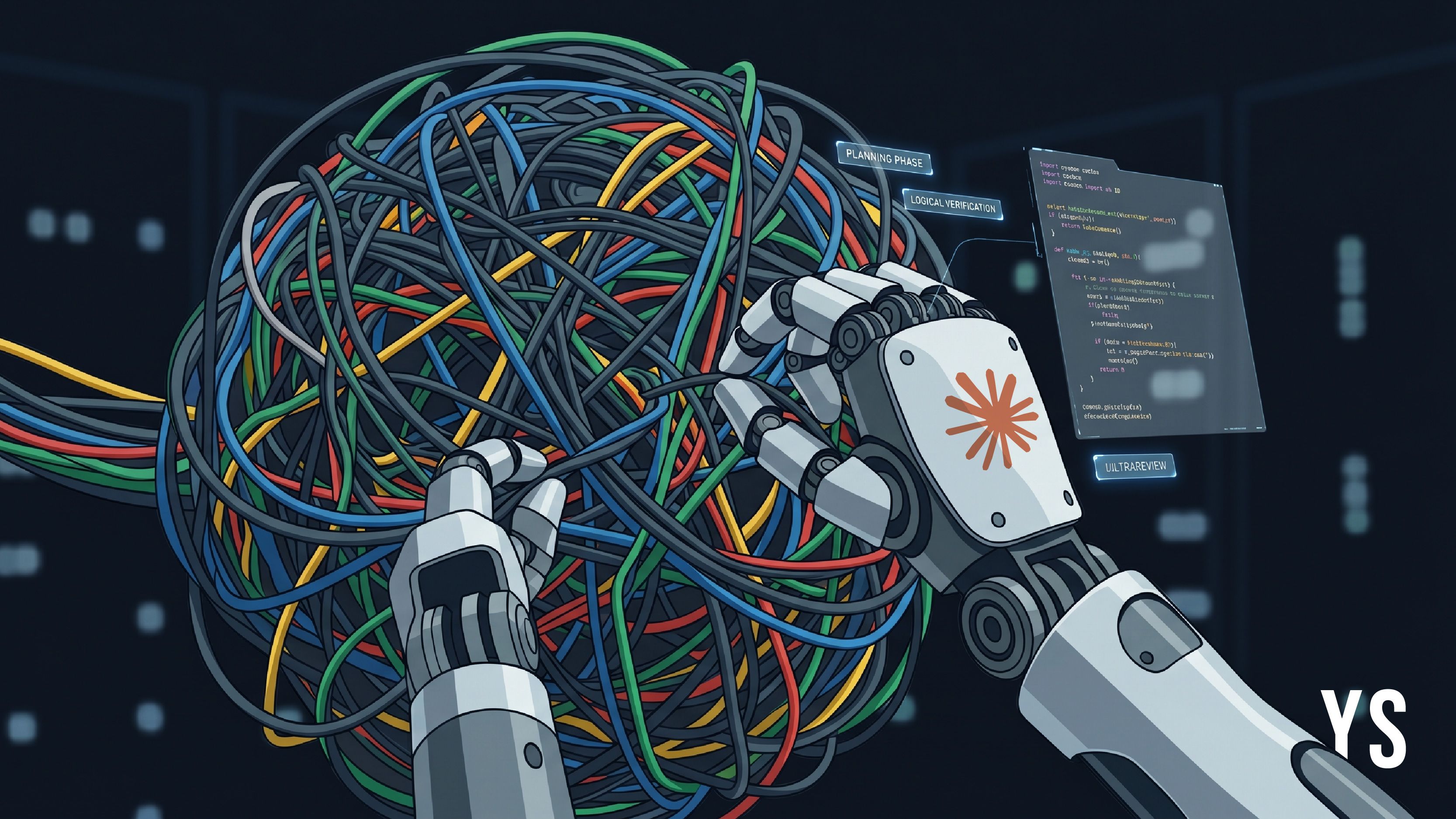
Anthropic's Claude Opus 4.7 model sets new benchmarks in coding and vision while introducing adaptive thinking and granular effort controls to streamline complex software engineering and professional enterprise workflows. AI major Anthropic has announced its latest model, Claude Opus 4.7, a week after the limited preview of Claude Mythos, which is the most powerful model the company has developed to date. The launch also happens just days after OpenAI introduced GPT-5.4-Cyber, highlighting the intense pressure for companies to maintain a competitive edge in the AI arena. While Claude Mythos Preview currently represents the peak of Anthropic's performance, its release remains restricted to select users. This makes Claude Opus 4.7 its most capable model that is generally accessible to the wider public and enterprise clients. Within the Anthropic ecosystem, Opus 4.7 occupies the top tier of the generally available models, sitting above the Sonnet and Haiku variants. It serves as a direct upgrade to the previous Opus 4.6 model and is designed for demanding enterprise workflows. The new model is specifically tuned for advanced software engineering and complex, long-running tasks that require a high degree of autonomy. Users have mentioned that Opus 4.7 can handle difficult coding work with minimal supervision, often verifying its own outputs before presenting them. Technical benchmarks When comparing Opus 4.7 to its competitors, the benchmarks show a highly contested field. On the SWE-bench Verified test, which measures the ability of a model to solve real-world GitHub issues, Opus 4.7 achieved a score of 87.6%. This result is higher than the 80.6% achieved by Gemini 3.1 Pro. In another evaluation called SWE-bench Pro, which uses problems from actively maintained repositories with large and complex code changes, Opus 4.7 scored 64.3%. This outperformed GPT-5.4, which recorded 57.7%, and Gemini 3.1 Pro, which scored 54.2%. However, things change when looking at long-context comprehension, such as the OpenAI MRCR v2 test. In the Setting of 256k tokens, Opus 4.7 achieved a mean match ratio of 59.2%, while GPT-5.4 reached 79.3% and Opus 4.6 previously scored 91.9%. The primary strength of Opus 4.7 lies in its ability to investigate and complete multi-step agentic work. One early tester from the fintech sector noted that the model catches its own logical faults during the planning phase, which accelerates execution. It is described as being more opinionated than its predecessors, often pushing back during technical discussions to help developers make better decisions rather than simply agreeing with the user. Thinking mechanisms A major update in this version is the introduction of adaptive thinking. Opus 4.7 makes thinking optional at every step, allowing the model to respond to simple queries quickly while investing more reasoning time into complex problems where it is likely to be useful. This change aims to reduce overthinking and provide a faster overall user experience during agentic runs. However, this shift impacts how tokens are used. The updated tokenizer, a system that converts human text into numerical units for the AI to process, in Opus 4.7, combined with the model's tendency to think more deeply at higher effort levels, means that the same input might now map to between 1.0 and 1.35 times more tokens than before. To give users more control over this trade-off between reasoning and cost, Anthropic has introduced a new effort level called xhigh. This setting sits between the high and max levels and is now the default for all Claude Code users. Developers can also use task budgets in the public beta of the API, which allows them to guide the model's token spend and prioritise work across longer sessions. The xhigh setting is recommended for tasks that are sensitive to intelligence, such as designing complex schemas or migrating legacy codebases. Developer integration The synergy between Opus 4.7 and Claude Code is a central part of this launch. Claude Code is a product surface designed specifically for terminal-based coding tasks. A new slash command called /ultrareview has been introduced, which initiates a dedicated review session to flag bugs and design issues in code changes. For Max users, an auto mode is now available in research preview, allowing the model to make autonomous decisions with fewer interruptions. This is particularly useful for long-running tasks where the user has provided a clear intent and constraints up front. The model's improved memory capabilities can also help it carry context across different sessions more reliably. It can remember important notes in file-system-based memory, reducing the need for the user to provide extensive background information every time they start a new task. In terms of vision, Opus 4.7 features a substantial improvement in resolution support. It can now process images up to 2,576 pixels on the long edge, which is more than three times the fidelity of prior models. This higher resolution is critical for agents that need to read dense screenshots or extract data from complex technical diagrams, such as chemical structures or life-science patent workflows. Agentic safety Safety remains a significant focus for Anthropic, particularly regarding cybersecurity. As part of an initiative called Project Glasswing, the company has highlighted both the risks and benefits of AI in security fields. Opus 4.7 includes new safeguards designed to automatically detect and block requests for prohibited or high-risk cybersecurity uses. Anthropic has invited security professionals to join a Cyber Verification Program to use the model for vulnerability research and red-teaming. External evaluations from the UK AI Security Institute showed that while Opus 4.7 is a strong model, it was unable to solve their full cyber range, which involves executing a series of linked exploits across a simulated corporate network. The broader AI ecosystem is moving towards a future of parallel agents and long-horizon autonomy. Rather than working one-on-one with a chatbot, engineers are beginning to manage teams of AI agents that work for hours on complex problems. Opus 4.7 is designed to fit this trend, showing higher role fidelity and better coordination in team-based workflows. However, the model also shows some persistent challenges. For instance, models can sometimes display yes-aversion, where they hesitate to perform a rare action even when explicitly instructed to do so.
Are Police Searching D4vd's Phone? Singer Appears Active on Discord After Celeste Rivas Murder Arrest
Social media users tracking his online activity have speculated whether the activity is the artist himself or authorities accessing his devices following arrest procedures. Questions are circulating online over whether investigators have secured rapper and singer D4vd's phone following claims that his Discord account briefly appeared active after the arrest connected to the Celeste Rivas murder case. In the subreddit r/d4vdiots, users reacted with confusion, anger and speculation after screenshots suggested the account may have gone online for a short period. There is no official confirmation from law enforcement or representatives for the artist. The claims originate from social media users tracking his online activity in real time, with many questioning whether the activity was the artist himself or authorities accessing his devices following arrest procedures. The post claimed the account linked to D4vd appeared online briefly, described by one user as lasting 'just for like 20 seconds or smth.' Some users expressed concern that the appearance could indicate the suspect was still accessing social media. Others suggested a more procedural explanation, including the possibility that investigators or law enforcement may have been reviewing or operating seized devices. One commenter wrote that the situation was not unusual, arguing that individuals under investigation often remain digitally visible for periods depending on account status and platform activity. 'This is not a surprise. D4vd is an iPad baby, plus he is addicted to the internet just like his friend Aysia. It is not a crime for him to be online. That is probably all he does nowadays,' one commenter said. Another user questioned whether platforms like Discord should suspend accounts more quickly once serious allegations emerge, though others pushed back, noting that formal legal thresholds typically determine such actions. None of these claims has been independently verified. It is quite common for police to take a suspect's phone after an arrest, especially if it may contain evidence relevant to an investigation. Phones are often central to modern cases as they can hold messages, call records, photos, location data and activity from apps such as Discord or Snapchat. However, even when a device is seized at the time of arrest, investigators do not automatically gain immediate access to its contents. In most legal systems, including the US and UK, a warrant is usually required before the contents of a phone can be searched. The device is treated as highly private, similar to a home or personal papers, and strict rules govern when and how it can be examined. In some urgent situations, such as when there is a risk of evidence being destroyed or where safety concerns exist, limited access may be permitted sooner, but it is still subject to legal oversight and later review. Once a warrant is granted, forensic specialists can extract and analyse data from the device in detail, including deleted files and encrypted app activity. As a result, when accounts appear to be 'online' after an arrest, it does not necessarily indicate active use by the individual. It may be due to the device remaining logged in, background syncing or investigator handling during evidence processing. D4vd, David Anthony Burke, has recently been arrested in Los Angeles on suspicion of murder in the death of 14-year-old Celeste Rivas Hernandez. Multiple reports say he is being held without bail, and the case is now moving towards review by prosecutors for potential formal charges. Before the arrest, Burke had already been under intense scrutiny for months. He was considered a target of a grand jury investigation, with prosecutors reportedly reviewing physical evidence, digital records and witness statements to determine whether to indict him. Recent reporting indicates that prosecutors believe they now have enough evidence to move forward, although formal charges and an indictment process are still pending. His legal team has not yet issued a detailed public response, but previous statements have denied wrongdoing and described him as cooperating with investigators. The next major step in the case is expected to be a presentation to the Los Angeles District Attorney's office, where prosecutors will decide whether to file murder charges or pursue a grand jury indictment.

The impact of digital transformation on employee performance: the mediating role of organizational agility in Islamic banks in Saudi Arabia: a partial least squares structural equation modeling approach - Humanities and Social Sciences Communications
Digital transformation is reshaping banking operations globally, yet its impact on employee performance in Islamic banks remains underexplored, particularly concerning the role of organizational agility as a mediating mechanism. This study investigates how digital transformation affects employee performance in Islamic banks in Saudi Arabia, with a specific focus on the mediating role of organizational agility. Using partial least squares structural equation modeling with a two-stage hierarchical component approach, we analyzed data from 490 employees across four major Islamic banks: Al-Rajhi Bank, Alinma Bank, Al-Bilad Bank, and Bank Aljazira. The findings reveal that digital transformation significantly enhances employee performance both directly and indirectly through organizational agility. Digital transformation demonstrates the strongest positive relationship with organizational agility, explaining 74.1% of its variance, which in turn significantly influences employee performance. Organizational agility partially mediates this relationship, accounting for 48.7% of the total effect, indicating that digital transformation operates through dual pathways: direct technological enhancement of employee capabilities and indirect improvement via organizational adaptability. The model explains 70.7% of the variance in employee performance. This research contributes to Saudi Arabia's Vision 2030 by demonstrating how digital transformation can enhance workforce effectiveness in Islamic banking while maintaining Sharia compliance. The findings provide evidence-based guidance for Islamic banking leaders seeking to optimize digital transformation strategies by simultaneously developing organizational agility capabilities.

3 Reasons to Avoid SpaceX Stock When It IPOs | The Motley Fool
The company is already massive, and CEO Elon Musk's foray into politics could be a risk. According to a report from Reuters, Elon Musk's space exploration company, SpaceX, has filed for an initial public offering (IPO) slated to go live in June. With an expected valuation of more than $2 trillion, this is likely to be the largest IPO in history. And it will give retail investors access to an established industry leader in the rapidly expanding space opportunity. But all that glitters isn't gold. IPO investing comes with a unique set of risks compared to other stocks. And it is very easy to get burned. Let's discuss three reasons why investors may want to think twice before betting on SpaceX as soon as it becomes publicly available. As a retail investor, it helps to look at an IPO as a sales pitch. Essentially, someone is trying to sell you something (shares in their company) that they previously had all to themselves. And it makes sense to dig deeper into the reasons why they are suddenly willing to give up partial ownership of their company's future earnings in return for cash today. For small, unprofitable companies, it's easy to answer this question: they simply don't have the money they need to expand operations, or the ability to raise funds internally or access debt financing at an acceptable interest rate. An established company like SpaceX wouldn't normally have such problems. However, an aggressive pivot to generative artificial intelligence (AI) has exposed the business to new expenses that it needs help paying. Financial news service The Information reports that SpaceX lost just under $5 billion in 2025. And this was largely because of the $250 billion acquisition of Elon Musk's AI company, xAI. Generative AI development requires immense capital spending for hardware and data centers. And investors who bet on the SpaceX IPO should expect this to put a significant drag on earnings and cash flow, with long-term success far from guaranteed. SpaceX's AI-driven losses aren't the only cause for concern. With an expected valuation of $2 trillion, the company will be one of the largest public stocks in the world -- up there with giants like Apple, Nvidia, and Meta Platforms. By default, new investors will be somewhat late to the party, missing out on the years of triple-digit equity value growth that led the company to its current position. To make matters worse, SpaceX's space business (which involves transporting satellites and other payloads to low Earth orbit and providing broadband internet to remote areas) seems to be slowing. Data from private market researcher Sacra suggests the company's revenue grew by 18% year over year in 2025. That's not a bad figure, but it represents a substantial deceleration from the growth rates of 51% and 89% estimated for 2024 and 2023, respectively. Retail investors may arrive just in time to miss the huge growth in SpaceX's core business while being saddled with the risk and uncertainties of its pivot to AI. Based on market results, Elon Musk is arguably the most successful investor of all time. And if the SpaceX IPO goes as planned, he will be the first person to lead two public companies (Tesla is the other) worth at least $1 trillion. That said, he also presents a significant risk to both companies due to his political activism. Elon Musk's foray into partisan politics has caused immense brand damage for Tesla. The electric vehicle maker saw sales drop 9% in 2025 amid customer boycotts, particularly in Europe. SpaceX is somewhat shielded from this challenge because it relies on enterprise and government clients, but that doesn't make it totally immune. In 2024, some members of the California Coastal Commission cited Elon Musk's politics when rejecting SpaceX's plans to increase launches in the state. Over the coming years, political backlash could affect SpaceX's ability to win contracts or secure necessary regulatory permissions, especially if a less supportive administration wins the White House. Investors should definitely sit on the sidelines of this IPO.

Kraken Parent Payward Agrees to Acquire Derivatives Exchange Bitnomial for $550 Million - Decrypt
Bitnomial holds all three CFTC-issued licenses required to operate a full-stack domestic crypto trading and derivatives business. Payward, the parent company of cryptocurrency exchange Kraken, said Friday that it entered into a definitive agreement to acquire derivatives platform Bitnomial for up to $550 million in cash and stock. The acquisition centers on Bitnomial's regulatory infrastructure, as the first fully CFTC-licensed derivatives company in the United States built for digital assets. The platform holds all three CFTC-issued licenses required to operate a full-stack domestic crypto trading and derivatives business: exchange, clearinghouse, and brokerage. Beyond regulatory access, the deal expands Payward Services, the company's B2B infrastructure platform that gives partners access to financial infrastructure capabilities through APIs. The platform now includes crypto trading, tokenized equities, staking, on/off-ramps, and regulated U.S. derivatives. "The shape of a market is determined by its clearing infrastructure, not its front end," said Payward Co-CEO Arjun Sethi, in a statement. "Settlement mechanics, margin models, and contract structures define what products can exist and who can access them. The U.S. has had no clearing infrastructure built for digital assets." "Bitnomial spent a decade building it: crypto settlement, crypto collateral, continuous 24/7 markets," he continued. "These are capabilities that cannot be retrofitted onto legacy systems. They have to be built natively. That is the regulated foundation we are adding to Payward, starting with spot margin, perpetuals, and options for U.S. clients under CFTC regulation." The transaction is expected to close in the first half of 2026, according to Kraken. The deal values Payward equity at $20 billion, matching its valuation from November, when it announced an $800 million funding round. Earlier this week, Frankfurt stock exchange operator Deutsche Börse invested $200 million into the firm for a 1.5% stake. Payward launched an EU derivatives offering in 2025, and confidentially submitted a draft S-1 to the SEC in November, signaling a potential IPO ahead. In March, however, CoinDesk reported that the firm had put its public market plans on hold due to unfavorable market conditions.
Should my enterprise AI agent do that? NanoClaw and Vercel launch easier agentic policy setting, approval dialogs for messaging apps
For the past year, early adopters of autonomous AI agents have been forced to play a murky game of chance: keep the agent in a useless sandbox or give it the keys to the kingdom and hope it doesn't hallucinate a catastrophic "delete all" command. To unlock the true utility of an agent -- scheduling meetings, triaging emails, or managing cloud infrastructure -- users have had to grant these models raw API keys and broad permissions, raising the risk of their systems being disrupted by an accidental agent mistake. That tradeoff ends today. The creators of the open source sandboxed NanoClaw agent framework -- now known under their new private startup named NanoCo -- have announced a landmark partnership with Vercel and OneCLI to introduce a standardized, infrastructure-level approval system. By integrating Vercel's Chat SDK and OneCLI's open source credentials vault, NanoClaw 2.0 ensures that no sensitive action occurs without explicit human consent, delivered natively through the messaging apps where users already live. The specific use cases that stand to benefit most are those involving high-consequence "write" actions. That is, in DevOps, an agent could propose a cloud infrastructure change that only goes live once a senior engineer taps "Approve" in Slack. For finance teams, an agent could prepare batch payments or invoice triaging, with the final disbursement requiring a human signature via a WhatsApp card. Technology: security by isolation The fundamental shift in NanoClaw 2.0 is the move away from "application-level" security to "infrastructure-level" enforcement. In traditional agent frameworks, the model itself is often responsible for asking for permission -- a flow that Gavriel Cohen, co-founder of NanoCo, describes as inherently flawed. "The agent could potentially be malicious or compromised," Cohen noted in a recent interview. "If the agent is generating the UI for the approval request, it could trick you by swapping the 'Accept' and 'Reject' buttons." NanoClaw solves this by running agents in strictly isolated Docker or Apple Containers. The agent never sees a real API key; instead, it uses "placeholder" keys. When the agent attempts an outbound request, the request is intercepted by the OneCLI Rust Gateway. The gateway checks a set of user-defined policies (e.g., "Read-only access is okay, but sending an email requires approval"). If the action is sensitive, the gateway pauses the request and triggers a notification to the user. Only after the user approves does the gateway inject the real, encrypted credential and allow the request to reach the service. Product: bringing the 'human' into the loop While security is the engine, Vercel's Chat SDK is the dashboard. Integrating with different messaging platforms is notoriously difficult because every app -- Slack, Teams, WhatsApp, Telegram -- uses different APIs for interactive elements like buttons and cards. By leveraging Vercel's unified SDK, NanoClaw can now deploy to 15 different channels from a single TypeScript codebase. When an agent wants to perform a protected action, the user receives a rich interactive card on their phone. "The approval shows up as a rich, native card right inside Slack or WhatsApp or Teams, and the user taps once to approve or deny," said Cohen. This "seamless UX" is what makes human-in-the-loop oversight practical rather than a productivity bottleneck. The full list of 15 supported messaging apps/channels contains many favored by enterprise knowledge workers, including: * Slack * WhatsApp * Telegram * Microsoft Teams * Discord * Google Chat * iMessage * Facebook Messenger * Instagram * X (Twitter) * GitHub * Linear * Matrix * Email * Webex Background on NanoClaw NanoClaw launched on January 31, 2026, as a minimalist and security-focused response to the "security nightmare" inherent in complex, non-sandboxed agent frameworks. Created by Cohen, a former Wix.com engineer, and marketed by his brother Lazer, CEO of B2B tech public relations firm Concrete Media, the project was designed to solve the auditability crisis found in competing platforms like OpenClaw, which had grown to nearly 400,000 lines of code. By contrast, NanoClaw condensed its core logic into roughly 500 lines of TypeScript -- a size that, according to VentureBeat, allows the entire system to be audited by a human or a secondary AI in approximately eight minutes. The platform's primary technical defense is its use of operating system-level isolation. Every agent is placed inside an isolated Linux container -- utilizing Apple Containers for high performance on macOS or Docker for Linux -- to ensure that the AI only interacts with directories explicitly mounted by the user. As detailed in VentureBeat's reporting on the project's infrastructure, this approach confines the "blast radius" of potential prompt injections strictly to the container and its specific communication channel. In March 2026, NanoClaw further matured this security posture through an official partnership with the software container firm Docker to run agents inside "Docker Sandboxes". This integration utilizes MicroVM-based isolation to provide an enterprise-ready environment for agents that, by their nature, must mutate their environments by installing packages, modifying files, and launching processes -- actions that typically break traditional container immutability assumptions. Operationally, NanoClaw rejects the traditional "feature-rich" software model in favor of a "Skills over Features" philosophy. Instead of maintaining a bloated main branch with dozens of unused modules, the project encourages users to contribute "Skills" -- modular instructions that teach a local AI assistant how to transform and customize the codebase for specific needs, such as adding Telegram or Gmail support. This methodology, as described on NanoClaw's website and in VentureBeat interviews, ensures that users only maintain the exact code required for their specific implementation. Furthermore, the framework natively supports "Agent Swarms" via the Anthropic Agent SDK, allowing specialized agents to collaborate in parallel while maintaining isolated memory contexts for different business functions. Licensing and open source strategy NanoClaw remains firmly committed to the open source MIT License, encouraging users to fork the project and customize it for their own needs. This stands in stark contrast to "monolithic" frameworks. NanoClaw's codebase is remarkably lean, consisting of only 15 source files and roughly 3,900 lines of code, compared to the hundreds of thousands of lines found in competitors like OpenClaw. The partnership also highlights the strength of the "Open Source Avengers" coalition. By combining NanoClaw (agent orchestration), Vercel Chat SDK (UI/UX), and OneCLI (security/secrets), the project demonstrates that modular, open-source tools can outpace proprietary labs in building the application layer for AI. Community reactions As shown on the NanoClaw website, the project has amassed more than 27,400 stars on GitHub and maintains an active Discord community. A core claim on the NanoClaw site is that the codebase is small enough to understand in "8 minutes," a feature targeted at security-conscious users who want to audit their assistant. In an interview, Cohen noted that iMessage support via Vercel's Photon project addresses a common community hurdle: previously, users often had to maintain a separate Mac Mini to connect agents to an iMessage account. The enterprise perspective: should you adopt? For enterprises, NanoClaw 2.0 represents a shift from speculative experimentation to safe operationalization. Historically, IT departments have blocked agent usage due to the "all-or-nothing" nature of credential access. By decoupling the agent from the secret, NanoClaw provides a middle ground that mirrors existing corporate security protocols -- specifically the principle of least privilege. Enterprises should consider this framework if they require high-auditability and have strict compliance needs regarding data exfiltration. According to Cohen, many businesses have not been ready to grant agents access to calendars or emails because of security concerns. This framework addresses that by ensuring the agent structurally cannot act without permission. Enterprises stand to benefit specifically in use cases involving "high-stakes" actions. As illustrated in the OneCLI dashboard, a user can set a policy where an agent can read emails freely but must trigger a manual approval dialog to "delete" or "send" one. Because NanoClaw runs as a single Node.js process with isolated containers , it allows enterprise security teams to verify that the gateway is the only path for outbound traffic. This architecture transforms the AI from an unmonitored operator into a supervised junior staffer, providing the productivity of autonomous agents without forgoing executive control. Ultimately, NanoClaw is a recommendation for organizations that want the productivity of autonomous agents without the "black box" risk of traditional LLM wrappers. It turns the AI from a potentially rogue operator into a highly capable junior staffer who always asks for permission before hitting the "send" or "buy" button. As AI-native setups become the standard, this partnership establishes the blueprint for how trust will be managed in the age of the autonomous workforce.

Chaos in Spain as Pedro Sanchez migrant legalisation plan begins
SPAIN'S flagship migrant regularisation drive descended into chaos on day one with snaking queues, a crashed government website and widespread confusion over the rules. Thousands of undocumented migrants lined up outside consulates across the country on Thursday morning after applications to the controversial legalisation scheme officially opened. People living illegally in Spain now have until June 30 to apply to regularise their status, triggering a race against time to gather the paperwork needed to qualify. Under the plan, applicants must prove they have lived in Spain for at least five months, entered the country before January 1, be over 18 and provide a passport or other ID - valid or expired. They must also display a criminal record certificate, showing that no crimes have been committed in the past five years. That final hurdle has proven particularly challenging, sparking long queues outside foreign consulates from Andalucia to Catalunya as migrants scramble to secure proof from their home countries. While some authorities are processing requests relatively quickly - such as at the Moroccan consulate in Barcelona where certificates are being issued within two to four weeks - others have been slower to respond or unwilling to cooperate, especially when the applicant is living illegally. If the document cannot be obtained, the application is frozen for up to three months while Spain's justice ministry attempts to secure the record through diplomatic channels. But that hold-up risks tipping applications past the June cut-off, leaving tens of thousands in limbo - or increasing the risk of migrants turning to fraudulent means. Confusion also reigned over the difference between a criminal and police record after it emerged that interaction with the police did not constitute immediate grounds for rejection of a migrant's application. "The existence of a police record will not, in itself and automatically, be grounds for refusing the permit," was the exact wording published in the Official State Gazette on Wednesday. Information in police files will instead be considered on a case-by-case basis to determine whether the applicant 'poses a threat to public order, public security or public health'. The revelation prompted an angry response from Alberto Nuñez Feijoo, the leader of the conservative Partido Popular (PP) opposition. In a post on X, he said: "A government that does not distinguish between criminal and police records should not be making decisions of this magnitude. "I reiterate: a person with a police record cannot be regularised. There are no precedents in Europe. "And, in the meantime, there are already voices warning that this situation could put the Schengen Area at risk." A criminal record ('antecedentes penales') signifies a final court conviction, whereas a police record ('antecedentes policiales') can indicate an arrest or investigation. The rollout was also marred by technical failures after the official application platform crashed for nearly two hours on Thursday. Currently, applications can only be made online, with in-person assessments taking place from Monday. Under the scheme, nearly a million undocumented migrants will be able to legalise their status. While early estimates had suggested around half a million could benefit from the plan, new figures from think tank Funcas put the number of people living irregularly in Spain at closer to 840,000. The scheme has sparked fierce debate at home and abroad, with prime minister Pedro Sanchez insisting the move will supercharge Spain's economy. Once legal, migrants will be able to hold a work permit, allowing them to work across the economy and not just in the black market. Business leaders have welcomed the plan, arguing it will help to plug major labour shortages. Sanchez has also hailed the measure as 'an act of justice and a necessity', adding that those who already live and work in Spain should 'do so under equal conditions' and contribute to general taxation. But concerns are also rife over integration, while EU migration chief Magnus Brunner warned last week that migrants granted residency in Spain could be sent back if they move elsewhere in the bloc. Spain has granted amnesty to illegal immigrants on six previous occasions between 1986 and 2005. Click here to read more Spain News from The Olive Press.

Kraken parent Payward agrees to acquire Bitnomial for up to $550 million
We'd love your feedback. Take a 30-second survey to help improve The Block. Payward, the parent company of crypto exchange Kraken, has agreed to acquire Bitnomial for up to $550 million in cash and stock, giving the firm a fully CFTC-licensed foothold in the U.S. derivatives market. The transaction values Payward's equity at $20 billion and is expected to close in the first half of 2026, a Friday announcement disclosed. The deal is still subject to Commodity Futures Trading Commission approval. Bitnomial is a Chicago-based crypto-native exchange that holds the three CFTC-issued licenses needed to run a full-stack domestic digital asset derivatives business, including a designated contract market, a derivatives clearing organization, and a futures commission merchant. Bitnomial founder and CEO Luke Hoersten noted that the company had been first in the U.S. on several fronts, including perpetual futures, CFTC-regulated crypto margin collateral, native crypto settlement, and a unified book across spot, futures, options, and perpetuals. It is often the first U.S. entity to list new assets, like the first regulated XRP futures and first physical Solana futures. This massive licensing stack is the heart of the deal. Buying the firm provides Kraken with regulated infrastructure that took more than a decade to assemble. Kraken has made several notable acquisitions over the past year as the firm continues its expansion beyond crypto, including the $1.5 billion acquisition of TradFi derivatives platform NinjaTrader and tokenization platform behind xStocks Backed. B2B and multi-asset push Arjun Sethi, co-CEO of Payward and Kraken, said the company plans to use that foundation to launch U.S. products, including spot margin, perpetuals, and options under CFTC oversight. Payward tied the acquisition to its broader business-to-business push. Through Payward Services, the firm said banks, brokerages, fintechs, and payment providers will be able to plug into regulated U.S. derivatives products through a single integration, alongside crypto trading, tokenized equities, staking, and on- and off-ramps. The move also adds another piece to Kraken's increasingly multi-asset posture. Payward said it already operates regulated derivatives businesses in the UK and Europe after buying a licensed crypto futures platform in Britain in 2019 and launching an EU derivatives offering in 2025. Both Payward and Kraken have spent the past year pushing deeper into tokenized equities, payments infrastructure, and derivatives. It also arrives days after Deutsche Borse disclosed a $200 million purchase of Payward shares. Deutsche Borse, the German exchange operator, bought a 1.5% fully diluted stake through a secondary market transaction, meaning Payward did not receive new capital from the purchase, a Kraken spokesperson told The Block. Payward spent much of last year gearing up for a potential public listing.
(VIDEO) Raptor 3 Engine Breakthrough: SpaceX's Most Advanced Rocket Engine as Elon Musk Eyes Mars
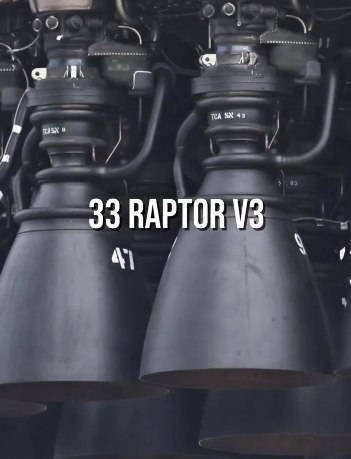
HAWTHORNE, Calif. -- SpaceX has unveiled its most advanced rocket engine yet with the Raptor 3, a leap forward in power, efficiency and simplicity that Elon Musk described as "by far the best rocket engine ever made." The reveal, shared widely on X Thursday by Tesla Owners Silicon Valley and quoting Musk's own post about the Starship Super Heavy booster, quickly went viral with over 1 million views in hours, highlighting the company's relentless drive toward rapid reusability and eventual crewed missions to Mars. The Raptor 3 represents the third major iteration of SpaceX's methane-fueled engine family, building on lessons from earlier versions that already powered dozens of Starship test flights. According to the detailed breakdown in the viral post, key upgrades include full regenerative cooling that eliminates the need for an external heat shield, a record thrust-to-weight ratio and a dramatically simplified design with fewer parts. These changes promise faster production, higher reliability and the performance needed to scale Starship to its next versions -- V3 and V4 -- targeting more than 10,000 tons of total thrust for the full stack. Musk himself emphasized the engine's significance in comments referenced in the post. "Raptor 3 engine is a very advanced engine, by far the best rocket engine ever made," he stated. The engine's design philosophy -- "the best part is no part" -- strips away complexity while boosting output, a hallmark of SpaceX's iterative engineering approach that has already revolutionized orbital launch economics. Industry observers hailed the announcement as a milestone. The shift to full regenerative cooling means the engine routes super-chilled propellant through its combustion chamber and nozzle walls to manage extreme temperatures internally, removing the heavy, maintenance-intensive heat shield tiles required on previous Raptors. This not only reduces mass but also simplifies refurbishment between flights, a critical step toward the company's goal of launching, landing and refllying Starship within hours rather than weeks or months. The record thrust-to-weight ratio further amplifies performance. Early Raptor versions already delivered class-leading power; Raptor 3 pushes the boundary higher, enabling the Super Heavy booster -- described by Musk as "the most powerful moving object ever made by far" -- to lift heavier payloads with greater efficiency. With up to 39 Raptor engines on the booster and additional Raptors on the Starship upper stage, the combined system is engineered for the high-thrust profile needed to escape Earth's gravity well repeatedly and economically. Simplification in manufacturing stands out as equally transformative. Fewer components mean fewer failure points, easier quality control and accelerated production rates. SpaceX has long aimed to build engines at scale, and Raptor 3's design supports that vision by cutting assembly time and costs. The result is a propulsion system optimized for the high-cadence operations required for a sustainable Mars transportation architecture. The timing of the reveal aligns with SpaceX's aggressive Starship development schedule. Recent test flights have demonstrated successful booster catches using the "Mechazilla" tower arms, proving the viability of rapid reuse. Raptor 3 builds directly on that momentum, providing the upgraded powerplant for upcoming V3 and V4 vehicles. These iterations are expected to feature stretched tanks, improved heat shielding on the ship and the enhanced engines to support longer-duration missions, including uncrewed cargo flights to Mars as soon as the late 2020s. Public and expert reaction to the Raptor 3 details has been overwhelmingly positive. The viral X post triggered thousands of replies praising the engineering elegance, with users calling the engine "a thing of beauty" and "engineering poetry." Some compared it favorably to historical rocket engines, noting its thrust-to-weight advantage over NASA's RS-25 used on the Space Launch System. Others highlighted the cost implications: Raptor engines are produced for a fraction of the price of legacy systems while offering reusability that traditional expendable rockets cannot match. The post's video component, showing the Raptor 3 in operation, further amplified excitement. Viewers described watching the engine's clean burn and precise control as mesmerizing, underscoring the visual drama of modern rocketry. Replies ranged from technical admiration for the minimalist architecture to enthusiastic speculation about future Starship launches and eventual Mars colonization. SpaceX's progress with Raptor engines traces back to the early 2010s when the company began developing methane propulsion for its interplanetary ambitions. Methane offers advantages over traditional hypergolic or kerosene fuels, including easier storage on Mars -- where it can be manufactured from the planet's carbon dioxide atmosphere and subsurface water ice -- and cleaner combustion that reduces coking inside the engine. Raptor 1 introduced the core technology; Raptor 2 increased thrust and reliability; Raptor 3 now refines the design for mass production and extreme performance. The broader implications extend beyond SpaceX. As the company prepares for more ambitious Starship flights, including potential crewed lunar landings under NASA's Artemis program and private missions, Raptor 3 positions it as the clear leader in heavy-lift reusable rocketry. Competitors such as Blue Origin and international programs face steep challenges matching the cadence and cost curve SpaceX is establishing. Musk has repeatedly framed Starship as the key to making humanity multiplanetary. Rapid reusability, enabled by engines like Raptor 3, is central to that vision. By driving launch costs down to levels that support frequent flights, SpaceX aims to build the infrastructure for a self-sustaining presence on Mars. The engine's advancements bring that goal incrementally closer, demonstrating that the technical hurdles of deep-space travel are being systematically overcome. Analysts note that the viral interest reflects growing public fascination with space exploration. With Starship test flights drawing millions of viewers and major milestones generating billions of impressions across social media, SpaceX has cultivated a dedicated following that amplifies every technical update. The Raptor 3 post fits this pattern, turning an engineering milestone into a cultural moment. As SpaceX continues ground testing and integration of Raptor 3 into flight vehicles, the next visible steps will likely include static fire tests and integration onto Starship prototypes. The company has not announced a specific timeline for the first flight with the new engines, but the pace of development suggests it could occur within months rather than years. The announcement also underscores SpaceX's culture of transparency and rapid iteration. By sharing detailed specifications and Musk's direct commentary through social media, the company keeps enthusiasts, investors and the broader public engaged while maintaining competitive secrecy around proprietary manufacturing processes. For the space community, Raptor 3 symbolizes more than incremental progress -- it represents a generational shift in propulsion technology. Its combination of power, efficiency, simplicity and reusability sets a new standard that could influence future launch systems worldwide. As the engine powers Starship toward operational maturity, the dream of routine travel to Mars moves from science fiction toward engineering reality. The viral X post and its enthusiastic reception illustrate how technical breakthroughs now spread instantly around the globe. In an era when space exploration depends on both government programs and private innovation, moments like the Raptor 3 reveal remind the world of the accelerating pace of human ambition beyond Earth. With Musk and SpaceX pushing the boundaries of what is possible, the Raptor 3 engine stands as a tangible step toward a future where Mars is within reach -- one high-performance burn at a time.
Kraken Parent Payward Strikes $550 Million Deal for Bitnomial News ETHNews
The acquisition gives Payward a ready-made U.S. derivatives platform with exchange, clearing and brokerage licenses. Kraken parent company is buying its way deeper into the U.S. derivatives market. Payward has agreed to acquire crypto derivatives platform Bitnomial for up to $550 million, according to details first reported by CoinDesk. The transaction, structured as a mix of cash and stock, gives Payward control of one of the few crypto-native firms in the U.S. with the full regulatory stack needed to operate a domestic derivatives business. That is the real significance of the deal. Bitnomial is not just another trading venue. Founded more than a decade ago, it has secured all three licenses required to run a full-stack derivatives operation in the United States. Those approvals include the ability to operate a designated contract market, a derivatives clearing organization and a futures commission merchant. Taken together, they give Bitnomial exchange, clearing and brokerage capabilities under one roof. For Payward, that means speed. Building those permissions organically would likely have taken years, assuming regulators signed off at each step. By acquiring Bitnomial, Kraken's parent is effectively skipping a large part of that process and gaining immediate infrastructure for a more serious U.S. derivatives push. The move also says something broader about where major crypto firms now see growth. Spot trading still matters, of course, but regulated derivatives infrastructure is increasingly where the strategic value sits, especially in the United States. That is partly a scale issue and partly a regulatory one. The firms that control compliant market plumbing are better positioned to serve institutional clients and to expand product depth without relying on patchwork third-party arrangements. For Kraken, the Bitnomial deal looks less like a simple acquisition and more like a structural move. Payward is not just buying a company. It is buying regulatory time, operational reach and a more credible foothold in a part of the crypto market that remains hard to enter and even harder to replicate.

'That right there is chaos': Legal expert warns of GOP-caused forest service collapse
Congress' move to allow mining in a national forest near a wilderness area may have broad ramifications across the country. The U.S. Senate voted Thursday to overturn a mining ban in Minnesota's Superior National Forest, the headwaters of the Boundary Waters Canoe Area Wilderness. By using an obscure tool known as the Congressional Review Act to open the national forest for mining, lawmakers have called into question the validity of every management plan issued by the U.S. Forest Service over the past several decades. That could result in legal chaos for thousands of permits covering logging, grazing, mining and outdoor recreation. Over the past year, Congress for the first time has used the Congressional Review Act to revoke management plans for regions managed by the Bureau of Land Management, seeking to allow more mining and drilling. Such plans had not previously been considered "rules" subject to lawmakers' review. Under the act, federal agencies must submit new regulations to Congress before they can take effect. Because management plans, which function as high-level guidance documents, were never considered rules, federal agencies did not submit them to Congress for review. Using a new legal theory, Republicans in Congress have opened reviews and revoked several specific plans that limited resource extraction in Alaska, Montana, North Dakota and Wyoming. But those actions call into question whether more than 100 other such plans are legally in effect, since they are now considered rules that were not sent to Congress as the law requires. Public lands experts say the new interpretation could create legal jeopardy across hundreds of millions of acres managed by the Bureau of Land Management, threatening any permit issued under a management plan drafted after the passage of the Congressional Review Act in 1996. Now, for the first time, Congress has used the review tool to overturn a management decision on Forest Service land. "There's a huge playing field of actions that would be forbidden if none of these management plans are lawfully in place," Robert Anderson, who served as solicitor for the Department of the Interior during the Biden administration, told Stateline earlier this year. "This could bring things to a screeching halt." Longtime outdoors writer Wes Siler, who has written extensively about the Boundary Waters review battle, said in a post Thursday that the vote will "destroy the Forest Service's ability to conduct regular business for the foreseeable future." If the agency's management plans suddenly become invalid, he wrote, "not only could this grind industrial operations on (Forest Service) land to a halt as all of this winds its way through federal court, but it could also set (the Forest Service) the task of re-doing 30 years of work." On Thursday, the Senate voted 50-49 to revoke a Biden-era plan that banned mining on land in the Superior National Forest. The resolution will now go to President Donald Trump for his signature. A Chilean mining company has proposed to mine for copper, nickel and cobalt along Birch Lake in Minnesota. The planned mine would sit at the headwaters of the wilderness area's watershed. The Boundary Waters is the most popular wilderness in the country, and advocates say the water is so pristine that many visitors fill their bottles straight from the surface of its lakes. Wilderness proponents say such mines have a long track record of pollution, and leaks from the proposed site would flow downstream and irreversibly contaminate the treasured Boundary Waters. U.S. Rep. Pete Stauber, the Minnesota Republican who sponsored the review action, has said the mine would bring jobs to the region. Opponents have argued that the tourism economy centered on the Boundary Waters is a larger economic driver, and noted that the mine will be run by a foreign company that will likely export the copper to China. U.S. Sen. Tina Smith, a Minnesota Democrat, led the effort to uphold the mining ban on the Senate floor. Following the vote, she said that supporters of the Boundary Waters would likely mount a legal challenge, questioning the use of the Congressional Review Act to revoke a public land order from the Forest Service. "I question the legality of what Congress did," Smith said, according to the Minnesota Reformer. Two Republican senators, Susan Collins of Maine and Thom Tillis of North Carolina, also voted against the measure. Tillus also questioned the use of the Congressional Review Act. "It's a precedent that I think our Republican colleagues are going to regret," he told the Minneapolis Star Tribune. The Forest Service oversees nearly 200 million acres of land, managed for multiple uses, including timber harvests, grazing, outdoor recreation and wildlife habitat. Some legal experts fear the management plans governing those activities are now in legal jeopardy. "That right there is chaos," Peter Van Tuyn, a longtime environmental lawyer and managing partner at Bessenyey & Van Tuyn LLC, told Stateline earlier this year. "Those (plans) go across the full spectrum of what land managers do: conservation and preservation, mining approvals, oil and gas drilling, resource exploitation, public access and recreation," he added. "There's a very real chance that a court could say that a resource management plan was never in effect and all the implementation actions under the umbrella of that plan are invalid."

Bank cyber teams on red alert as Anthropic promises them Mythos nex...
Anthropic will make its Mythos AI model preview available to UK banks as early as next week, giving them an opportunity to close the security hole it has exposed. Anthropic said Mythos has already found vulnerabilities in every single operating system and web browser. UK banks will join a select group of companies in the US that were given early access to the artificial intelligence (AI) model as part of Anthropic's Project Glasswing. In the project, it said Amazon Web Services (AWS), Apple, Broadcom, Cisco, CrowdStrike, Google, JPMorgan Chase, the Linux Foundation, Microsoft, Nvidia and Palo Alto Networks will "use Mythos Preview as part of their defensive security work". UK banks will be up next, according to Anthropic's European boss, Pip White. Speaking to Bloomberg, she said the company will give UK banks access to Mythos as early as next week. "We've opened this out to a number of organisations, including Microsoft, AWS, some financial institutions, a very small cohort," she told Bloomberg. "And essentially, Mythos has really showed us that there are a lot of very severe vulnerabilities right now."

Anthropic's Nuclear Bomb
My research traced Chinese state-sponsored cyber campaigns against U.S. critical infrastructure and found that the barrier between nation-state-level hacking and everyone else was eroding far too fast. By the time I closed my laptop that afternoon, Mythos had shattered that barrier. This new model could theoretically autonomously exploit previously unknown vulnerabilities in virtually every major operating system and web browser on Earth, without human supervision. My threat model, seemingly alarmist at breakfast, was too conservative by dinner. For years, Anthropic's CEO Dario Amodei has kept copies of Richard Rhodes' The Making of the Atomic Bomb on the company's coffee tables, pressing the book on employees and interviewers alike. His thesis was that the scientists who built the most transformative weapon in history also failed to control how it would be used. Mythos is Anthropic's nuclear moment. Not in destructive equivalence, since no zero-day exploit has killed people at the scale of a nuclear weapon, but in the sense Amodei suggests: a weapon with a seismic destructive capability that its makers may be unable to control. The atomic bomb was not just a "bigger bomb." Nuclear weapons transformed coercion logic, allowing any state with such weapons to coerce other states in a way that, historically, would only have been possible by defeating them in battle. Mythos promises nearly anyone a coercive power, which, until recently, was the domain of only the strongest governments. The model erases the "state actors" premise in the U.S. doctrine of persistent engagement, wherein rival states' network penetrations are stabilized by U.S. counter-penetrations. It is a recipe for chaos and asymmetry in the wielding of cyber power.

Anthropic Unveils Revolutionary Nuclear Technology
In a groundbreaking move, Anthropic has introduced its latest AI model, Claude Mythos Preview, which has astonishing implications for cybersecurity. On April 7, the company made this announcement, just hours after a researcher completed an extensive six-month analysis of AI-related cyber threats. This model, potentially capable of autonomously exploiting vulnerabilities in major operating systems and web browsers, breaches the traditional boundaries of cybersecurity. Revolutionary Nuclear Technology in Cybersecurity Mythos stands at the crossroads of artificial intelligence and cybersecurity, akin to the transformative impact of nuclear technology. Anthropic's CEO, Dario Amodei, emphasizes the model's potential for unprecedented coercive power, previously restricted to state actors. Unlike traditional cyber frameworks, Mythos enables rapid and agile cyber operations, altering the landscape of digital defense and offense. Key Features of Mythos * Autonomous Vulnerability Detection: Within 24 hours, Mythos identified and exploited a 17-year-old vulnerability in FreeBSD, granting unauthorized root access. * High Success Rate: The model boasts a success rate of 72.4% in converting known vulnerabilities into working exploits. * Zero-Day Vulnerabilities: Mythos has discovered thousands of previously unknown security flaws, bypassing decades of prior security assessments. Project Glasswing: Limited Accessibility Currently, Mythos is accessible only through Project Glasswing, which provides a select group of companies, including Google and Microsoft, with necessary resources for defensive measures. The initiative aims to mitigate risks but leaves many organizations, particularly public infrastructure operators, without adequate means to defend against potential threats. The Challenge of Cybersecurity in the Age of AI The existing cybersecurity architecture struggles to keep pace with the rapid discovery of vulnerabilities by Mythos. Less than one percent of identified vulnerabilities have been patched, revealing significant flaws in current disclosure systems. Traditional defense mechanisms are ill-equipped to handle the swift offense introduced by advanced AI. Proposed Actions for the U.S. Government As the threat landscape evolves, the U.S. government must take decisive steps to protect critical infrastructure: * Implement a Unified Response: Establish a coordinated strategy involving multiple government departments to address the rapid proliferation of AI-driven threats. * Revamp Vulnerability Management: Replace outdated patch cycles with real-time vulnerability sharing among critical infrastructure operators and defensive capabilities. To navigate this chaotic cybersecurity environment, comprehensive policy changes and swift action are imperative. The potential for AI to bring about chaotic asymmetry is imminent, and America's response must reflect the urgent need for effective cybersecurity measures. Conclusion The advent of Anthropic's Mythos model signifies a pivotal moment in cybersecurity. As the capabilities of AI expand, the responsibility to safeguard digital infrastructure intensifies. The challenge lies in adapting to an accelerating threat landscape before it becomes unmanageable.

Anthropic rolls out Claude Opus 4.7 for advanced development | ForkLog
OpenAI updated Codex and launched the GPT‑Rosalind "reasoning" model Anthropic has introduced Claude Opus 4.7 -- its most capable Opus model to date. The new release is available to all paid Claude users and via the API -- $5 per million input tokens, $25 per million output tokens. Opus 4.7 is strongest on complex tasks. Users are entrusting it with work that previously demanded close supervision, the developers said. In agentic programming the model outperformed its predecessor by 10%, and by 13% in visual data handling. Gains elsewhere were more modest. The model's visual capabilities are markedly expanded: it processes images up to 2,576 pixels on the long edge (around 3.75 megapixels) -- more than three times the previous Claude versions. Opus 4.7 follows instructions more strictly. Prompts written for older models may yield unexpected results: they interpreted instructions loosely, whereas the new version takes them literally. Retuning prompts is recommended. The latest Claude can also remember information across sessions -- it stores notes in files and can reuse them in each new conversation. Anthropic added a new "effort level" xhigh ("extra high") between high and max. It lets users fine-tune the trade-off between depth of analysis and response speed. In Claude Code, the default effort level is raised to xhigh across all plans. Other additions include: Opus 4.7 is weaker than Mythos Preview in cybersecurity. Anthropic intentionally curtailed these capabilities during training. The model includes guardrails that block prohibited and high-risk requests. "What we learn from real-world deployment of these safeguards will help us progress toward our ultimate goal -- a broad release of Mythos-class models," the startup's team noted. Anthropic invited security professionals who want to use Opus 4.7 for legitimate purposes (vulnerability research, pentesting) to join a new Cyber Verification programme. For users, the constraints have proved a headache. Some clients complain the model refuses to write code because it "suspects malware in every request". OpenAI announced a "major update" to Codex, currently available only on macOS. The new version can interact with apps on the user's computer: see the screen, click and type with its own cursor. On Mac, multiple agents can run in parallel without disrupting other software. Codex has a built-in browser: you can annotate pages directly, giving the agent precise instructions. This may be useful for front-end and game development. Developers plan to extend browser-control capabilities beyond the local environment. Codex also adds support for gpt-image-1.5 for image generation and iteration. Combined with screenshots and code, this enables visual concepts, front-end design, mockups and games in a single interface. OpenAI released more than 90 additional plugins that combine skills, app integrations and MCP servers. These include Atlassian Rovo for JIRA, CircleCI, CodeRabbit, GitLab Issues, Microsoft Suite, Neon by Databricks, Remotion, Render and Superpowers. Codex adds support for GitHub comments, multiple terminal tabs and SSH connections to remote devboxes (alpha). Users can open files directly in the sidebar with enhanced previews for PDFs, spreadsheets, slides and documents, and use a new summary pane to track the agent's plans, sources and artefacts. Codex can plan future work and automatically resume long-running tasks -- potentially over days or weeks. Teams use automation for everything from code-review requests to tracking tasks in Slack, Gmail and Notion. Developers improved the assistant's memory. Codex can retain useful context from past dialogues -- personal preferences and corrections. The model also proactively suggests useful actions, picking up where the user left off. For example, the agent can find open comments in Google Docs, pull context from Slack, Notion and the codebase, and then produce a prioritised action list. OpenAI also unveiled a "reasoning" AI model, GPT‑Rosalind, to accelerate drug discovery. It is named after the British biophysicist Rosalind Franklin, whose research helped reveal the structure of DNA and laid the foundations of modern molecular biology. OpenAI notes that in the United States developing a new drug takes on average 10-15 years. The outcome is often determined in the earliest research phases. The biggest hurdles involve sifting vast troves of scientific publications and specialised databases. GPT‑Rosalind aims to serve as a biologist's assistant: summarising scientific texts, forming hypotheses, designing experiments and processing information. The model is particularly strong on tasks involving proteins, molecules, genes and related biological structures. On the BixBench benchmark (real-world bioinformatics analysis), GPT‑Rosalind posted one of the best results among models with published data. On LABBench2, it outperformed GPT‑5.4 in six of 11 tasks. The largest margin was on CloningQA, which requires designing DNA and enzymes for molecular cloning protocols. OpenAI also published a free Life Sciences plugin for Codex on GitHub. It is available to all users and connects the AI to more than 50 public scientific databases and domain tools.
Kraken Parent Payward to Acquire Bitnomial for $550M
Sohrab is a passionate cryptocurrency news writer with over five years of experience covering the industry. He keeps a keen interest in blockchain technology and its potential to revolutionize finance. Whether he's trading or writing, Sohrab always keeps his finger on the pulse of the crypto world, using his expertise to deliver informative and engaging articles that educate and inspire. When he's not analyzing the markets, Sohrab indulges in his hobbies of graphic design, minimal design or listening to his favorite hip-hop tunes.
Anthropic CEO Lands White House Meeting as Feud Thaws
Dario Amodei, Anthropic CEO, will meet White House chief of staff Susie Wiles to ease tensions amid the release of its new AI model, Mythos. WASHINGTON -- Dario Amodei is scheduled to meet White House chief of staff Susie Wiles in the West Wing on Friday, one of the Anthropic chief executive's most high-profile efforts to ease tensions with the Trump administration, people familiar with the matter said. The Friday meeting comes as the White House races to prepare for Anthropic's latest artificial-intelligence model, Mythos, which the company says could pose cybersecurity risks that cause widespread online disruption. Anthropic has released a preview version of the model to tech giants and organizations that run critical infrastructure and has been briefing government officials about minimizing harms. It currently has no plans to release it to the public. Anthropic is in talks to give government agencies advance access to the model, the people said. Anthropic and the White House have been locked in a bitter feud for months over guardrails surrounding the Pentagon's use of the company's Claude models. Anthropic refused to agree to the Defense Department's demand to allow its technology to be used for "all lawful uses," prompting Defense Secretary Pete Hegseth to label the company a security risk and President Trump to direct federal agencies to cut ties with Amodei's company. Anthropic said it wanted explicit protections against AI being used for autonomous weapons and mass surveillance. The company is fighting the government's moves in two different courts, creating uncertainty for both sides while the company's technology has been used during the conflict in Iran. Mythos is forcing both sides to return to the negotiating table and providing a venue for peace talks, people familiar with the matter said. Earlier this week, a top official at the Office of Management and Budget told government agencies in an email that it is putting in place protections to allow them to begin using Mythos, the people said. The email was a response to moves by National Cyber Director Sean Cairncross, who is coordinating the government's response, one of the people said. Anthropic has also hired lobbyists friendly with the administration as it seeks to make peace. After Hegseth designated the company a supply-chain risk, it hired Brian Ballard, a mega-lobbyist who raised more than $50 million for Trump in the 2024 election. The company also works with a firm founded by Carlos Trujillo, who served in the first Trump administration. The Pentagon has reached deals with Anthropic rival OpenAI and Elon Musk's xAI to use their models in classified settings, but it will likely take months before they can be embedded in operations the way Anthropic is, security analysts have said. The analysts have said it is counterproductive for the government to be punishing one of the nation's top AI companies as it prepares to release models that could pose cybersecurity risks. Analysts following Anthropic have also said it could hurt the company's ambitions to be a top model provider preparing to go public if Republicans perceive it as a firm aligned with Democrats that is willing to take on a Republican administration. Some have said the company should have taken a less combative approach in negotiating with the Defense Department. Anthropic has donated to a political group opposing the Trump administration's AI strategy in the midterms and hired former members of the Biden administration. Amodei has held talks with Hegseth and other Trump administration officials in the past, but the meeting with Wiles is among the most high-profile discussions, the people said. Axios earlier reported the meeting was scheduled. Bloomberg previously reported the OMB email about agencies getting access to Mythos. The administration has also held discussions featuring Vice President JD Vance and Treasury Secretary Scott Bessent with leading tech and financial executives including Amodei about coordinating the private sector's preparation for Mythos.

Is Anthropic's Mythos AI too powerful? Bankers and ministers get into a huddle and raise concerns - key points to know
Anthropic Mythos financial system risk: A powerful new AI model from Anthropic is raising serious concerns among global financial leaders, with finance ministers, central bankers, and top executives holding discussions over its potential risks to financial systems. Claude Mythos, part of Anthropic's broader Claude AI family and a rival to tools from OpenAI and Google, has drawn attention for its ability to identify and potentially exploit cyber-security vulnerabilities. The model was discussed extensively at a recent meeting of the International Monetary Fund in Washington DC, as per a report. Canadian Finance Minister François-Philippe Champagne said the issue is serious enough to demand attention from finance ministers globally, describing the challenge as an "unknown" risk that requires safeguards to protect financial system resilience. Champagne explained that, "The difference is that the Strait of Hormuz - we know where it is and we know how large it is... the issue that we're facing with Anthropic is that it's the unknown, unknown," adding, "This is requiring a lot of attention so that we have safeguards, and we have processes in place to make sure that we ensure the resiliency of our financial systems," as quoted by BBC. Mythos is one of Anthropic's latest AI models, designed to test how systems handle so-called "misaligned" task, those that go against expected human behavior. Early testers described it as "strikingly capable" in computer security tasks, particularly in identifying software bugs and vulnerabilities. Anthropic has chosen not to release Mythos widely due to concerns that it could expose or exploit weaknesses in critical systems. Instead, access has been limited to select partners such as Amazon Web Services, CrowdStrike, Microsoft, and Nvidia under an initiative called Project Glasswing. While some experts warn about its unprecedented capabilities, others urge caution. The UK AI Security Institute, which has independently tested the model, said Mythos can exploit weak systems but is not dramatically more advanced than its predecessor, Opus 4, as reported by the BBC. Top financial institutions are taking the threat seriously. Barclays CEO CS Venkatakrishnan said that, "It's serious enough that people have to worry," adding, "We have to understand it better, and we have to understand the vulnerabilities that are being exposed and fix them quickly," as quoted by BBC. Bank of England governor Andrew Bailey warned that such AI tools could make it easier for cybercriminals to detect and exploit weaknesses in core IT systems. He said, "We are having to look very carefully now what this latest AI development could mean for the risk of cyber crime," adding, "The consequence could be that there is a development of AI, of modelling, which makes it easier to detect existing vulnerabilities in sort of core IT systems, and then obviously cyber criminals - the bad actors - could seek to exploit them," as quoted by BBC. Meanwhile, the United States Department of the Treasury has urged major banks to test their systems ahead of any public release of Mythos. Governments and financial institutions are being given early access to test their defenses, as concerns grow that similar models could soon emerge from other AI companies without the same safeguards. Investor James Wise of Balderton Capital said Mythos may be the first of many such models, adding that efforts are already underway to invest in AI systems designed to both detect and fix vulnerabilities, as per the report. Has Mythos been released publicly? No, access is limited due to security risks. Who is using it right now? Selected partners like AWS, Microsoft, Nvidia, and CrowdStrike.

3 Reasons to Avoid SpaceX Stock When It IPOs
The company is already massive, and CEO Elon Musk's foray into politics could be a risk. According to a report from Reuters, Elon Musk's space exploration company, SpaceX, has filed for an initial public offering (IPO) slated to go live in June. With an expected valuation of more than $2 trillion, this is likely to be the largest IPO in history. And it will give retail investors access to an established industry leader in the rapidly expanding space opportunity. But all that glitters isn't gold. IPO investing comes with a unique set of risks compared to other stocks. And it is very easy to get burned. Let's discuss three reasons why investors may want to think twice before betting on SpaceX as soon as it becomes publicly available. Will AI create the world's first trillionaire? Our team just released a report on the one little-known company, called an "Indispensable Monopoly" providing the critical technology Nvidia and Intel both need. Continue " Image source: Getty Images. As a retail investor, it helps to look at an IPO as a sales pitch. Essentially, someone is trying to sell you something (shares in their company) that they previously had all to themselves. And it makes sense to dig deeper into the reasons why they are suddenly willing to give up partial ownership of their company's future earnings in return for cash today. For small, unprofitable companies, it's easy to answer this question: they simply don't have the money they need to expand operations, or the ability to raise funds internally or access debt financing at an acceptable interest rate. An established company like SpaceX wouldn't normally have such problems. However, an aggressive pivot to generative artificial intelligence (AI) has exposed the business to new expenses that it needs help paying. Financial news service The Information reports that SpaceX lost just under $5 billion in 2025. And this was largely because of the $250 billion acquisition of Elon Musk's AI company, xAI. Generative AI development requires immense capital spending for hardware and data centers. And investors who bet on the SpaceX IPO should expect this to put a significant drag on earnings and cash flow, with long-term success far from guaranteed. SpaceX's AI-driven losses aren't the only cause for concern. With an expected valuation of $2 trillion, the company will be one of the largest public stocks in the world -- up there with giants like Apple, Nvidia, and Meta Platforms. By default, new investors will be somewhat late to the party, missing out on the years of triple-digit equity value growth that led the company to its current position. To make matters worse, SpaceX's space business (which involves transporting satellites and other payloads to low Earth orbit and providing broadband internet to remote areas) seems to be slowing. Data from private market researcher Sacra suggests the company's revenue grew by 18% year over year in 2025. That's not a bad figure, but it represents a substantial deceleration from the growth rates of 51% and 89% estimated for 2024 and 2023, respectively. Retail investors may arrive just in time to miss the huge growth in SpaceX's core business while being saddled with the risk and uncertainties of its pivot to AI. Based on market results, Elon Musk is arguably the most successful investor of all time. And if the SpaceX IPO goes as planned, he will be the first person to lead two public companies (Tesla is the other) worth at least $1 trillion. That said, he also presents a significant risk to both companies due to his political activism. Elon Musk's foray into partisan politics has caused immense brand damage for Tesla. The electric vehicle maker saw sales drop 9% in 2025 amid customer boycotts, particularly in Europe. SpaceX is somewhat shielded from this challenge because it relies on enterprise and government clients, but that doesn't make it totally immune. In 2024, some members of the California Coastal Commission cited Elon Musk's politics when rejecting SpaceX's plans to increase launches in the state. Over the coming years, political backlash could affect SpaceX's ability to win contracts or secure necessary regulatory permissions, especially if a less supportive administration wins the White House. Investors should definitely sit on the sidelines of this IPO. When our analyst team has a stock tip, it can pay to listen. After all, Stock Advisor's total average return is 1,016%* -- a market-crushing outperformance compared to 197% for the S&P 500. Will Ebiefung has no position in any of the stocks mentioned. The Motley Fool has positions in and recommends Apple, Meta Platforms, Nvidia, and Tesla and is short shares of Apple. The Motley Fool has a disclosure policy.

Trump Officials Want Mythos Despite Anthropic Blacklist
"The White House and Anthropic are in active discussions about deploying the AI firm's powerful new model, Mythos Preview, within the federal government despite ongoing efforts to blacklist the company as a supply chain risk," Axios reports. "Anthropic is in a bitter feud with the Pentagon, but even U.S. officials who dislike the company concede that it's building tools that could aid U.S. national security -- or harm it, if they fall into the wrong hands."