News & Updates
The latest news and updates from companies in the WLTH portfolio.
A38 chaos after fire breaks out
At Reach and across our entities we and our partners use information collected through cookies and other identifiers from your device to improve experience on our site, analyse how it is used and to show personalised advertising. You can opt out of the sale or sharing of your data, at any time clicking the "Do Not Sell or Share my Data" button at the bottom of the webpage. Please note that your preferences are browser specific. Use of our website and any of our services represents your acceptance of the use of cookies and consent to the practices described in our Privacy Notice and Terms and Conditions.

Kraken owner Payward buys Bitnomial for $550M
🚀 But the real point: Kraken's parent is racing to lead the U.S. crypto derivatives market. Payward, the company behind crypto exchange Kraken, has reached an agreement to acquire Bitnomial in a deal valued at up to $550 million in cash and stock. This acquisition positions Payward to operate a fully regulated U.S. crypto derivatives platform and deepens its expansion into strictly supervised segments of the American market. ContentsRegulatory breakthrough with BitnomialExpanding Payward's U.S. strategyRecent developments at KrakenRegulatory breakthrough with Bitnomial The deal gives Payward access to infrastructure developed over more than ten years by Bitnomial, a Chicago-based company known for its comprehensive regulatory stack. Bitnomial stands out as the first crypto-native firm in the U.S. to hold all three key licenses needed to run a full derivatives operation: designated contract market, derivatives clearing organization, and futures commission merchant. With these approvals, Bitnomial is able to provide an integrated platform for trading, clearing, and brokering crypto derivatives within a unified regulatory framework. The acquisition gives Payward technology that includes crypto settlement, crypto collateral, and continuous trading -- systems that would have required years to develop independently. Founded by Luke Hoersten, Bitnomial built its core systems specifically around digital assets. The platform's features include perpetual futures, crypto-settled products, and a unified trading book that spans spot, futures, and options markets. Hoersten underscored that legacy financial infrastructures cannot deliver these capabilities without significant redesign. Payward, headquartered in San Francisco, operates Kraken, one of the world's largest cryptocurrency exchanges with a global user base and tens of billions in daily trading volume. Bitnomial, based in Chicago, focuses on developing regulated trading and clearing technology for the U.S. digital asset market and caters to institutional firms looking for compliant derivatives solutions. Expanding Payward's U.S. strategy This acquisition continues Payward's recent string of deals aimed at strengthening its derivatives market position. In 2025, Payward moved decisively into the U.S. futures segment through its $1.5 billion purchase of NinjaTrader, a trading platform with a strong retail presence. The Bitnomial deal adds another regulatory layer, bolstering Payward's ability to offer compliant, institution-grade products. Payward's Co-CEO Arjun Sethi emphasized the importance of modern clearing infrastructure for the evolution of derivatives markets. He pointed to the lack of native digital asset solutions in the U.S. as a key reason for targeting Bitnomial. Clearing infrastructure defines how risk is managed and how new financial products are built, Sethi highlighted, noting that Bitnomial's platform addressed a gap in the U.S. market for crypto-native solutions. The acquisition also expands the reach of Payward Services, the firm's B2B arm. With Bitnomial's licenses, Payward can provide banks, fintech companies, and brokerages access to regulated U.S. derivatives through a single API, alongside other products like crypto trading and tokenized assets. Payward has characterized the transaction as an investment in market infrastructure, positioning the combined regulatory assets as the foundation for building advanced U.S. crypto derivatives markets in the coming years. Recent developments at Kraken The purchase comes during a busy period for Payward and Kraken. Earlier this week, German financial giant Deutsche Börse acquired a $200 million stake in Kraken to strengthen its foothold in institutional crypto services. That move followed the disclosure that Kraken had experienced limited insider-related security incidents, affecting only a small number of accounts. In addition, Kraken confirmed it had confidentially filed for an initial public offering as its reported valuation adjusted to $13.3 billion. The new Bitnomial deal, valued at $550 million, is expected to close in the first half of 2026, pending regulatory approval by the Commodity Futures Trading Commission. Recent developments underscore Payward's accelerated effort to secure leadership in the U.S. derivatives market while expanding its multi-asset offerings. You can follow our news on Telegram, Facebook & Coinmarketcap & XDisclaimer: The information contained in this article does not constitute investment advice. Investors should be aware that cryptocurrencies carry high volatility and therefore risk, and should conduct their own research.

Anthropic now has a design assistant too
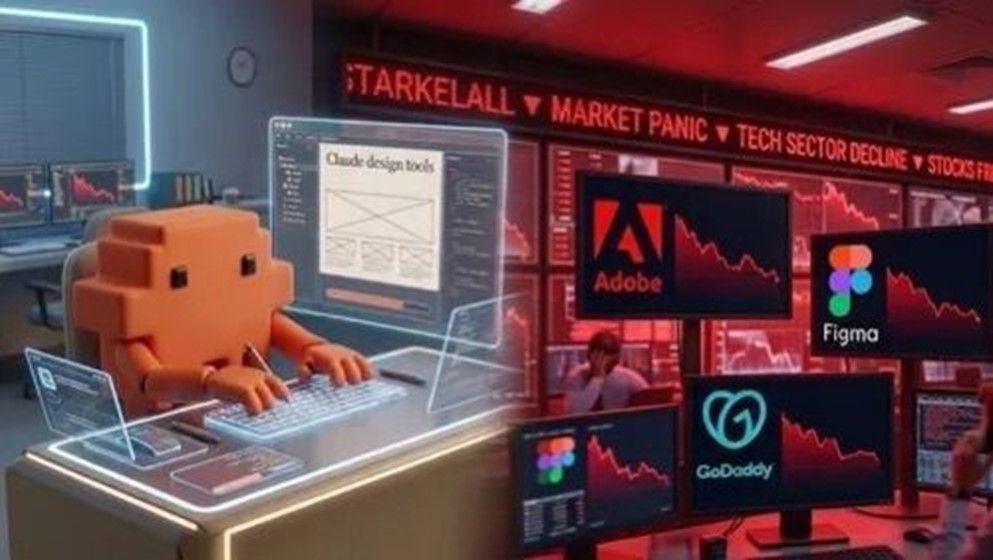
In hindsight, I suppose it was only a matter of time after Anthropic made Claude capable of generating charts and diagrams that the company would then begin offering a more robust image editor. Now, a little more than a month after that release, Anthropic has announced Claude Design, a new research preview that allows subscribers to use Claude to generate designs, prototypes, slides and more. "Claude Design gives designers room to explore widely and everyone else a way to produce visual work," Anthropic says of its newest product. As with its previous forays into image generation, the company isn't calling this, well, an image generator. Instead, Anthropic describes Opus 4.7, the system powering the app, as its most capable vision model to date. In other words, you won't be using Claude Design to whip up a picture of a cat in space eating a lasagna. As you might expect, every project in Claude Design starts with a prompt. From there, Anthropic notes users can refine Claude's outputs through conversation, inline comments and direct edits. Like Adobe's recently announced AI assistant, Claude will also generate custom sliders that correspond to specific elements in a design, which the user can push and pull to modify those elements. For instance, in the screenshot below, you can see how Claude has tweaked the interface to allow the user to adjust the glow and density of arcs it used to illustrate a connected network. Anthropic has also built an onboarding process that allows Claude to build an internal visual language after reading your organization's codebase and existing design documents. "Every project after that uses your colors, typography, and comments automatically," according to the company. Outside of text prompts, there's also support for image and document uploads, and Anthropic has even included a web capture tool so enterprise customers can snapshot elements from their company's website. There's also built-in sharing, and you can export a design directly to Claude Code. In the coming weeks, Anthropic has promised to make it easier to build integrations with its new app. Claude Design arrives in the same week that both Adobe and Canva released their own visual AI assistants. If Anthropic is preparing to eat Canva's lunch, it's doing so in a strange way given that you can export your Claude Design projects to Canva. If you want to try the new app for yourself, it's available as part of Anthropic's Pro, Max, Team and Enterprise subscriptions, with usage running up against your usage limits.

Kraken Owner Payward To Acquire Bitnomial For $550M, Securing Full CFTC-Licensed U.S. Crypto Derivatives Stack
Kraken-owner Payward has agreed to acquire Bitnomial in a deal valued at up to $550 million in cash and stock, giving the firm control of a fully licensed U.S. crypto derivatives stack as it expands deeper into regulated markets. The transaction values Payward at $20 billion and is expected to close in the first half of 2026, subject to customary conditions and regulatory filings with the Commodity Futures Trading Commission. Bitnomial stands out as the first crypto-native platform in the U.S. to secure all three licenses required to operate a full-stack derivatives business: a designated contract market, a derivatives clearing organization, and a futures commission merchant. Those...
India fintechs scramble for access to Anthropic Mythos
Indian fintech players are reportedly lobbying Anthropic for early access to its restricted AI model Mythos, amid mounting global concerns the technology could expose critical cybersecurity vulnerabilities. According to Bloomberg, One97 Communications, Razorpay Software and Pine Labs are among companies seeking entry into the next phase of the AI model's limited rollout. "We had an urgent call with Anthropic to check when they're creating a second list of companies that will get access to Mythos," said One97 Communications CEO Vijay Shekhar Sharma. He added the AI player asked "what One97 would do with Mythos", underscoring the scrutiny around access. "It's a race against time for startups like us," explained Pine labs cofounder and CEO Harshil Mathur, adding "we want to test the weaknesses on our platform and strengthen our defences". Anthropic has kept the model under wraps as part of its Project Glasswing programme, warning Mythos is "too dangerous" for wider release after internal tests showed it can identify and exploit software flaws at a level far beyond most human experts. "Is this the beginning of the end?" Sharma said, cautioning, "a country's technology networks and financial systems could be infiltrated from any node anywhere". The unknown Indeed, the defensive push by Indian fintechs to access Mythos reflects rising global concern that the model could uncover hidden weaknesses across banking infrastructure, potentially destabilising financial systems. Canada's finance minister Francois-Philippe Champagne told the BBC the threat posed by Mythos is "serious enough to warrant the attention of all the finance ministers" and represents "the unknown". Meanwhile, Bank of England governor Andrew Bailey told the publication authorities are assessing "what this latest AI development could mean for the risk of cyber crime". Claude Mythos is currently available to a small group of companies including Amazon Web Services, Apple, Nvidia and Google. The US Treasury Department is reportedly also eyeing access to test government software for vulnerabilities, pivoting away from its earlier critique of Anthropic posing a supply-chain risk.

Anthropic Releases Claude Opus 4.7 with Automated Real-Time Cybersecurity Safeguards - IT Security News
The technical storage or access is necessary for the legitimate purpose of storing preferences that are not requested by the subscriber or user. The technical storage or access that is used exclusively for statistical purposes. The technical storage or access that is used exclusively for anonymous statistical purposes. Without a subpoena, voluntary compliance on the part of your Internet Service Provider, or additional records from a third party, information stored or retrieved for this purpose alone cannot usually be used to identify you.

Jensen Huang on Dwarkesh Patel Podcast: 8 Revelations on Anthropic, China, and Nvidia's Roadmap
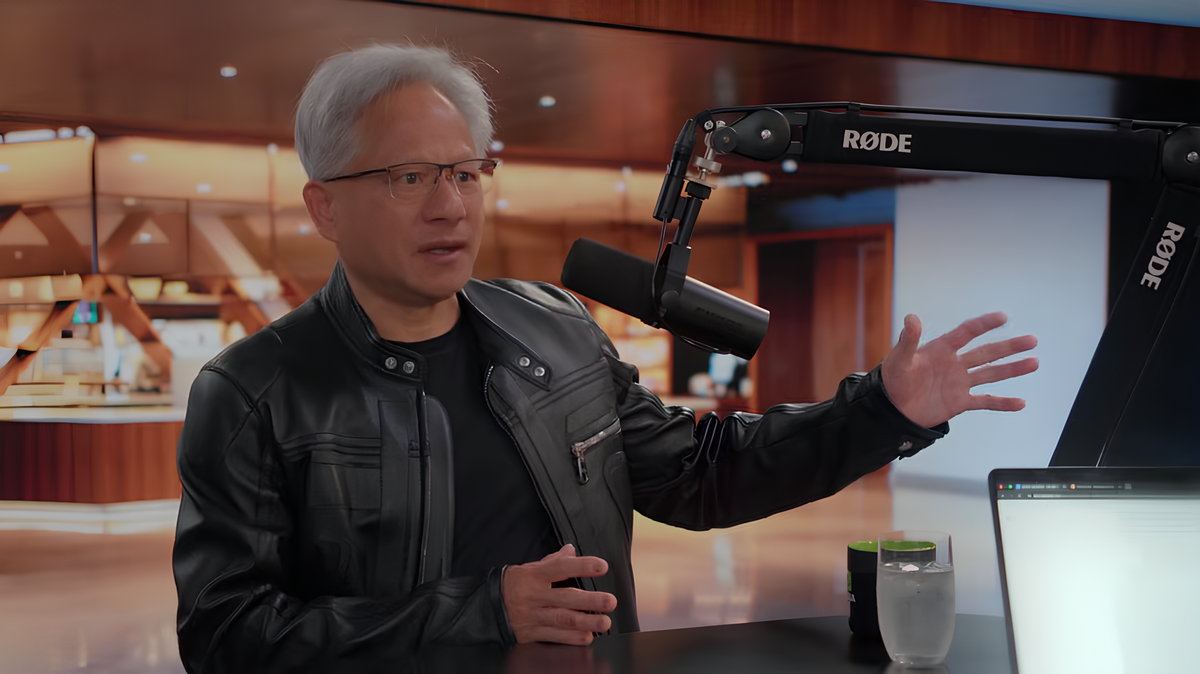
The Nvidia's CEO in a podcast, admitted a billion-dollar miss, challenged Google and Amazon to a public benchmark, and said China already has enough compute to not care about US export controls. On April 15, 2026, podcaster Dwarkesh Patel, known for long-form interviews where he pushes back on his guests, sat with Nvidia CEO Jensen Huang. Huang got challenged on his competitors, his supply chain, China, and the uncomfortable fact that one of the world's most valuable AI labs is running most of its compute on hardware that is not his. Huang pushed back, got pressed, and at one point said something about Anthropic that no earnings call script would ever allow. Here is what actually came out of that conversation. Patel opened by asking whether Nvidia gets commoditised if software keeps getting cheaper. Huang answered with a single line that he then built the rest of his answer around. "The input is electrons, the output is tokens. In the middle is Nvidia." He said the engineering problem of making one token more valuable than another is nowhere near solved. The science behind that transformation, in his words, is "far from deeply understood, and the journey is far from over." His point was not about chips. It was about occupying a position in a process that nobody has fully figured out yet. Huang laid out the Nvidia roadmap in plain sequence. Vera Rubin is next. Then Vera Rubin Ultra the following year. Then Feynman the year after that. A fourth generation was referenced without a name attached. He made a specific promise tied to that sequence. Customers can count on a new architecture from Nvidia every single year, with token costs dropping by an order of magnitude each time. He said no other company in the world can make that same guarantee at that scale and actually deliver on it. When Patel pushed him on why Anthropic runs most of its compute on TPUs and Trainium instead of Nvidia hardware, Huang did not deflect. He said Nvidia was not in a position at the time to write the kind of multi-billion dollar equity check that Google and AWS made into Anthropic at the founding stage. Those early investment commitments shaped where Anthropic's compute went. "That was my miss," Huang said. He added that he failed to fully understand that a VC was never going to put five to ten billion dollars into an AI lab on the chance it became Anthropic. The founding team had no other real path. He said he will not make that same mistake again. Nvidia has since invested in both Anthropic and OpenAI. After the admission about missing the investment, Patel kept pushing. He asked what it means for Nvidia that Anthropic, one of the world's top frontier labs, is running so much of its compute on non-Nvidia hardware. Huang answered directly. "Anthropic is a unique instance, not a trend." He then went further. "Without Anthropic, why would there be any TPU growth at all? It's 100% Anthropic." His case was that Anthropic's compute choices followed the money behind the company, not any technical preference for TPUs or Trainium, and that no broader shift is happening among frontier labs away from Nvidia. Huang named an inference benchmark called InferenceMAX and noted that neither Google's TPU nor Amazon's Trainium has shown up to compete on it publicly. He said no platform anywhere in the world has demonstrated better performance per total cost of ownership than Nvidia and that the claims from competitors are difficult to take at face value when they will not run on the available benchmarks. "I would love to hear them demonstrate the cost advantage of TPUs," he said. He said the same about Trainium and MLPerf. This section ran the longest and got the most heated. Huang pushed back on the underlying logic of US chip export controls, and his argument was specific. Anthropic's Mythos model, described by Anthropic as capable of finding thousands of high-severity zero-day vulnerabilities across major operating systems, "was trained on fairly mundane capacity," Huang said. He argued the compute Mythos required is already available inside China. He made two specific technical claims to support that. First, 7nm chips are functionally equivalent to the Hopper generation, and Hopper is what most of today's major frontier models were trained on. Second, China's energy abundance compensates for chip generation gaps in a way that the flop count comparison misses. When energy is abundant and cheap, you simply run more chips in parallel. He said China has the manufacturing capacity, energy, and AI researcher base to aggregate serious compute regardless of what US export policy does. "The amount of compute they have in China is enormous," he said, calling the idea that China cannot access meaningful AI compute "completely nonsense." Patel asked whether the supply chain, TSMC, memory, and packaging can realistically keep pace with the growth trajectory Nvidia is on. Huang said every bottleneck in logic, CoWoS, or memory gets solved within two to three years once the demand signal is clear. "More chip capacity, that's a 2-3 year problem," he said. The exception he carved out was energy. Permitting timelines for energy infrastructure move far slower than chip manufacturing capacity. He said that without serious attention to energy policy, the US risks constraining the AI buildout at a layer that no amount of chip engineering can fix. Late in the interview, Huang disclosed that Nvidia has brought Groq, the startup known for high-speed inference chips, into the CUDA stack. He explained the reasoning. The value of AI tokens has risen to the point where a premium market now exists for faster response times, even if that means lower throughput. A software engineer who becomes more productive with lower-latency responses will pay more per token for that speed. Huang said that market segment did not exist until recently, and it justified expanding what Nvidia's inference stack covers.
Anthropic CEO to Meet at White House Despite Blacklisting
On Friday, Anthropic's CEO Dario Amodei is set to visit the White House for a crucial meeting with Chief of Staff Susie Wiles. This meeting is particularly significant as it unfolds amidst a legal battle between Anthropic and the Trump administration regarding the blacklisting of its AI model, Claude. Background on the Legal Dispute Anthropic's Claude AI model was recently deemed a "supply chain risk" by the Pentagon, a designation typically reserved for companies linked to foreign adversaries. This decision effectively blacklists Anthropic from government contracts. The administration severed ties with Anthropic after the company resisted demands that would allow military use of Claude for various purposes, including autonomous weapons and surveillance. Government's Position on AI Use The Pentagon insists on unrestricted access to Claude for all lawful activities, especially in wartime scenarios. However, Anthropic has contended that current AI models are not reliable enough for autonomous weaponry. The company also argues that existing U.S. legislation has not adequately addressed the implications of AI in surveillance. Upcoming AI Technology: Mythos Amid these tensions, Anthropic is preparing to unveil a new AI model named Mythos. This advanced model aims to enhance cybersecurity by allowing specialized groups to assess potential vulnerabilities. Reports indicate that the Office of Management and Budget is organizing access to Mythos for various agencies. * Mythos is anticipated to be a significant advancement in cybersecurity. * The White House is reportedly in discussions to gain early access to assess its capabilities. * Experts warn that while Mythos has potential, it also necessitates careful evaluation to mitigate risks. White House Involvement A White House official stated that proactive engagement with AI labs is vital for protecting national security. This involvement aims to ensure that emerging technologies effectively address critical vulnerabilities in software. The legal dispute continues, with Anthropic having sued the Trump administration. A recent ruling from a federal judge in California temporarily blocked the Pentagon's punitive measures against the company, although the government plans to appeal this decision. As the meeting approaches, the outcome remains uncertain, but it underscores the growing complexity of government relations with AI developers amid concerns over national security and technological advancements.
Anthropic CEO meets White House chief of staff over Pentagon feud
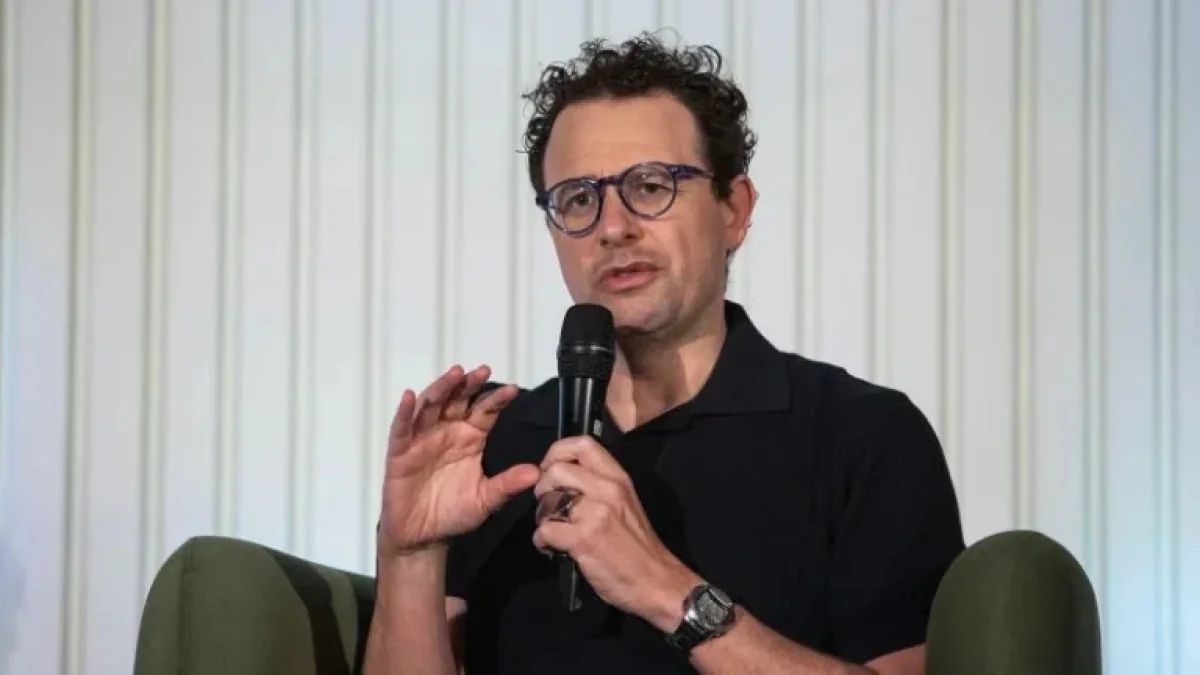
Anthropic CEO Dario Amodei is meeting with White House chief of staff in an effort to resolve the company's ongoing standoff with the Trump administration, according to Axios. The meeting comes months after the Pentagon designated Anthropic a supply-chain risk -- a label typically reserved for adversarial foreign companies -- after Anthropic refused to allow its AI models to be used for autonomous weapons or domestic surveillance. Anthropic called the designation "legally unsound" and sued. The legal fight has so far produced a split outcome. One court blocked the government from enforcing a ban on Anthropic's Claude AI, while a federal appeals court allowed the Pentagon's blacklisting to stand while litigation continues. Despite the dispute, Anthropic has reported significant growth. The company says its annualized revenue climbed from about $9 billion at the end of 2025 to more than $30 billion, and paid consumer subscriptions have more than doubled. The number of clients spending at least $1 million a year has crossed 1,000, according to Anthropic. The Pentagon standoff sharpened the contrast between Anthropic and OpenAI. When OpenAI announced a deal with the Defense Department, app analytics firm Sensor Tower found that ChatGPT uninstalls rose 295% day-over-day, while Claude downloads climbed 51% over the same weekend. Last week, Anthropic unveiled Project Glasswing, a cybersecurity initiative built around a new, unreleased model called Claude Mythos. Partners including AWS, Apple $AAPL, Microsoft $MSFT, Google $GOOGL, and Cisco $CSCO are testing the model, which Anthropic has described in internal materials as "by far the most powerful AI model we've ever developed." The company has committed $100 million to the initiative and said it has no plans to release Mythos to the public. Defense Secretary Pete Hegseth initiated the supply-chain risk designation, and Defense Under Secretary Emil Michael has continued to publicly criticize Amodei since the standoff began. The appeals court ruling means Anthropic remains locked out of Defense Department contracts while the litigation plays out, even as it continues working with other government agencies.

US military may have a 'dependence problem', and it may be linked to Elon Musk's SpaceX
The US military's growing reliance on Elon Musk's SpaceX is reportedly emerging as a potential operational risk. According to a Reuters report, these problems began attracting attention after US military officials faced a series of disruptions affecting their Starlink satellite network. In August 2025, the US Navy conducted a test off the coast of California. This test caused a global Starlink network outage, resulting in a loss of visibility for unmanned ships for almost an hour. This incident is just another in a series of failed tests tied to the rocket company's services that have reportedly raised concerns at the Pentagon about the risk of relying on a single provider for critical services.According to the Reuters story, US Navy officials faced numerous communication problems during testing of unmanned surface vessels designed for possible confrontations with countries like China. Apart from this, the entire Starlink outage left millions of customers without a connection and stranded about 24 ships.The report also cited internal US Navy documents and a source familiar with the situation to claim that the operators temporarily lost contact with the ships due to reliance on Starlink. Testing in April 2025 also identified instability under substantial data loads.SpaceX has become a critical partner of the U.S. government for satellite communications, launch services and emerging military technologies. Its constellation of Starlink satellites, which has nearly 10,000 in low Earth orbit, supports everything from drone operations to missile tracking."If there was no Starlink, the US government wouldn't have access to a global constellation of low earth orbit communications," said Clayton Swope, deputy director of the Aerospace Security Project at the Center for Strategic and International Studies.The company's role extends beyond communications. It has secured multiple launch contracts, including reassigned GPS missions by the US Space Force due to delays in competing systems.US lawmakers have expressed their concerns about using a single contractor run by Elon Musk for military infrastructure. Possible threats include service disruptions, strategic differences, or constraints on availability.Earlier, there had been other instances that led to such worries. According to Reuters, the Ukrainian military had limited access to Starlink during its combat against Russian aggression, hampering communication. There was another instance in Taiwan, where doubts emerged over the availability of services for US soldiers, but SpaceX denied allegations.Meanwhile, the Pentagon has maintained that it uses multiple systems. "Department leverages multiple, robust, resilient systems for its broad network," said Kirsten Davies, the Department of Defense's chief information officer.Despite these hurdles, experts say the military appears heavily dependent on Starlink because of its availability and reach compared with other options. Other initiatives by firms such as Amazon are still developing and have not yet caught up with Starlink. Nevertheless, these instances raise an important problem for the Pentagon: finding the right balance between utilising the benefits of commercial technology and becoming overly dependent on a few companies."You accept those vulnerabilities because of the benefits you get from the ubiquity it provides," said Bryan Clark, an autonomous warfare expert at the Hudson Institute.
Anthropic CEO heads to White House amid hacking fears over new AI model
Anthropic chief executive Dario Amodei is set to meet White House Chief of Staff Susie Wiles on Friday, according to a person briefed on the plan, as the federal government races to understand the national security implications of a powerful new artificial intelligence model the company says it has developed. The meeting reflects the strange embrace Anthropic and the Trump administration are locked in. The White House has sought to blacklist the company and prevent it from doing business with the government after a dispute over use of its AI model by the Pentagon spun out of control this year. At the same time, the government has been forced to engage with the company over the risks posed by its next-generation system, known as Mythos. Anthropic says the new model has powerful new abilities to find security weaknesses in computer code. That could help programmers fix long-dormant vulnerabilities -- but it could also supercharge hackers targeting American businesses and government agencies. The company has said it has briefed government cybersecurity agencies on the new model. Officials at the White House and the National Institute of Standards and Technology have been studying its implications, according to an internal email obtained by The Washington Post and a person briefed on the discussions. Officials are exploring the possibility of giving more agencies access to a version of the model, according to the email. "There are some people who are very freaked out," including Wiles, Vice President JD Vance and Treasury Secretary Scott Bessent, said the person, who spoke on the condition of anonymity to characterize private conversations. "Rightly so." An Anthropic spokesman declined to comment on the planned meeting, which was first reported by Axios. The Trump administration has sought to speed the development of AI, trying to push aside regulations that could hold the industry back and position America to win what it sees as a race with China to dominate the technology. But the increasing power of the new generation of systems means officials are now having to confront some of the downsides that the technology could bring. President Donald Trump remained bullish about the prospects of the technology but was asked this week if some forms of AI should have a "kill switch." "There should be," Trump told Fox Business. A White House official said the administration is working with leading AI labs "to ensure their models help secure critical software vulnerabilities." Anthropic announced the new model last week and said it would not release it publicly. Instead, the company formed a coalition of major tech companies and other big businesses to size up the risks it poses and try to patch any holes. It called the effort Project Glasswing. The AI lab said Mythos had already unearthed thousands of vulnerabilities, affecting every major computer operating system and web browser. OpenAI, one of the other leading labs, is finalizing a potent next-generation system code-named Spud. "Given the rate of AI progress, it will not be long before such capabilities proliferate, potentially beyond actors who are committed to deploying them safely," Anthropic said in its announcement. "The fallout -- for economies, public safety, and national security -- could be severe." Federal agencies have been rushing to respond. In the days after the announcement, Bessent and Federal Reserve Chair Jerome H. Powell hosted the chief executives of major banks in Washington to urge them to take the risks seriously. Bessent said that he sees the power of the AI systems growing quickly and that some financial institutions are better at cybersecurity than others. "I feel confident that everyone is now on board, rowing in the same direction to build up resiliency," Bessent said in an interview with CNBC on Wednesday. Until this spring, Anthropic had had a close relationship with the federal government, having been the first of the major AI companies approved to work on the classified systems where agencies store their secrets. But as the Defense Department pushed for more control over how Anthropic's Claude model could be used -- seeking the freedom to use it for any lawful purpose -- Amodei pushed back, saying he would not agree to the tool being used to power fully autonomous weapons or carry out mass domestic surveillance. Amodei met personally with Defense Secretary Pete Hegseth to try to reach a deal, but the talks collapsed at the end of February. Trump blasted Anthropic's leaders as "Leftwing nut jobs." A court in San Francisco ruled that the blacklisting was probably illegal, but a separate panel of federal judges in Washington issued a preliminary ruling allowing it to remain in place. Claude is deeply enmeshed in the military's systems. The same night that the Trump administration said it would cut ties with Anthropic, its system was put to use to aid the bombing campaign in Iran. And in a sign that the company was trying to repair its relationship with the White House, disclosures filed this week showed that it had spent $130,000 in March to hire lobbyist Brian Ballard, who has close ties with the president's team.
Tourists to endure up to eight weeks of travel chaos as airlines axe flights
British tourists could face up to eight weeks of cancelled flights and airport chaos this summer as major airlines grapple with imminent fuel shortages, experts have warned. European giants KLM and Lufthansa announced yesterday that they would be axing hundreds of flights due to the soaring cost of jet fuel - while Fatih Birol, executive director of the International Energy Agency (IEA), warned that European airports have only "six weeks or so" of supply left due to shortages caused by the Strait of Hormuz crisis. The warnings have new sparked fears of disruption just before the busy summer holiday season, with airlines set to slash more routes and cut back on schedules if the crisis goes on. One aviation expert said that the period between now and mid-June could prove crucial, as airlines could face an "existential crisis" if the global oil shock has not by subsided by then. Sally Gethin told the Daily Mail: "The worst case scenario is if this carries on for six to eight weeks and the shortages start really biting. This could pose an existential crisis to airlines - even if they slap on fuel surcharges they still won't recoup the cost. "You could be looking at tens of thousands, potentially hundreds of thousands, of flights being cancelled globally. It could affect holiday companies as well, although consumers will be protected if their trips are covered by ATOL." The Mirror has approached all of Britain's largest airlines and airport operators to ask whether they are preparing contingency plans for jet fuel shortages. Simon Calder, a travel journalist, reassured holidaymakers today that Mr Birol's warning was "a mile off" but accepted prices of foreign holidays are likely to rocket this summer. He told Channel 5's Matt Allwright Show families should look at holidaying in the UK, such as at Bournemouth, instead. On Thursday, easyJet chief executive Kenton Jarvis said all the airports it serves are "operating as normal". He went on: "We only ever in this industry have three to four weeks visibility (of jet fuel supplies), and that is the same as it was pre-crisis. "We have visibility to the middle of May, and we have no concerns. "What we're seeing is airports and fuel suppliers working well to bring jet fuel to the airports." Chancellor Rachel Reeves told the BBC yesterday that Britain has "no issues with supply at the moment" in jet fuel, diesel or petrol as she left a meeting of the International Monetary Fund (IMF) in Washington DC. The IMF this week urged countries to manage energy demand by adopting measures such as subsidising public transport and promoting remote work to combat a surge in energy costs caused by the conflict.

Perplexity priced me out of its OpenClaw clone
The high pricing makes these powerful personal AI assistants inaccessible to average consumers despite their advanced capabilities. I want a personal AI assistant. There, I said it. I want a team of agents on my computer that take over my system, sort through email, pick through my calendar events, scour the web for news and trends I care about, craft to-do lists and check off the items it can do on its own, and organize my day. Go ahead and sign me up. The problem, of course, is getting a personal AI assistant that can do all that securely and safely. OpenClaw, the open-source sensation that kicked off the whole personal AI craze earlier this year, is both tricky to install and tough to control, prone to nuking inboxes without notice while being an easy target for hackers. Enter Perplexity, which is launching an AI assistant for the Mac that's designed to smooth out the rough edges of OpenClaw. Built with transparency in mind so you can see what it's doing and confined in a sandbox that acts as a safety net, Perplexity's Personal Computer looks to be OpenClaw for everybody. Just one problem: Personal Computer isn't priced for everybody. Widely available as of Thursday after weeks of waitlist-only access, Personal Computer isn't available for free Perplexity users, nor can you use it on Perplexity's $20-per-month Pro plan. No, you can only access Personal Computer via Perplexity's Max tier, which costs an eye-popping $200 monthly. I may cover AI for a living, but I'm not earning AI-tech-bro bucks and I have to pay for my AI subscriptions out of my own pocket. I refuse to pay more than $20/month for any single AI service, and I've allowed myself three of them going at once (right now they're ChatGPT, Claude, and Gemini). As much as I'd like to try Personal Computer, I won't pay $200/month for it. (And just for the record, I'm not begging to be comped. I prefer covering my own expenses, thanks.) Of course, Perplexity could simply be setting a realistic price given what Personal Computer does. AI agents are notorious usage hogs, spending AI tokens like no tomorrow as they perform multi-step tasks. And if one AI agent can spend a small fortune on AI tokens, imagine how much damage a team of agents could do. Perplexity might be trying to dodge the ire that's now being directed at Anthropic, with Claude Pro users instantly blowing through their five-hour usage allotments when using such agentic AI tools as Claude Cowork and Claude Code. Yes, $20-a-month Claude Pro users like me can dabble in Cowork and Claude Code, but you only get a taste (similar to how Jeff Probst allows starving Survivor contestants only a nibble of a reward-challenge feast before they fight for the mouth-watering prize). The hard truth is that agentic AI functionality like coding assistants and personal AI agent teams pretty much require north of $100/month if you want to get anything real done, or at least that's the pricing reality short of a breakthrough in AI token efficiency. For everyday AI users like me and (probably) you -- people who need that money for groceries, electricity, gas, and Netflix -- agentic AI tools like Perplexity's Personal Computer remain frustratingly out of reach.

Amazon beats SpaceX to Globalstar as attention turns to spectrum acquisition
Ever since Globalstar was in the market for a buyer to remain relevant in the increasingly competitive satellite services landscape, Amazon jumped at the opportunity. By buying Globalstar, Amazon is causing jitters at SpaceX's Starlink, which has had a virtually unimpeded free run on the global satellite connectivity market. But connectivity is not what should be the worry for Starlink. For Amazon, Globalstar brings satellite credibility, legitimacy, expertise, D2D credentials, and valuable frequency licences and spectrum, without which it would have had to undergo lengthy processes to gain. Having bypassed the regulatory snarls, Amazon vaults itself into contention for enterprise, government, and IoT customers who demand connectivity where terrestrial networks do not tread. And it is not only Starlink that should be worried. Amazon's move reshapes the satellite game, especially in the enterprise space. Amazon's cloud competitors will be noticing another feather in the cap of Amazon that it can bundle into its ever-expanding ecosystem. Applications in IoT, maritime, logistics, remote agriculture, and virtually all the current use cases that Globalstar brings with itself (from monitoring tank fluid and LatAm energy stations to tracking trailers and Transoxianan free-roaming horses) means Amazon can demonstrate expertise in the real world through existing demand. GlobalData senior analyst Ismail Patel said: "Amazon has offset negative news surrounding delays in launch and its inability to fulfil the FCC mandate of 1,600+ satellites in space by mid-2026 by acquiring Globalstar. It is bulking up to present itself as not only too big to fail, but as the only necessary and credible toe-to-toe competitor to Starlink. The plan is for Amazon to position Amazon Leo as part of its integrated offering within the wider Amazon and AWS ecosystem. Amazon can leverage Globalstar's existing use cases to cast the widest net possible for enterprise customers to whom an integrated Amazon offering - covering satellite IoT, connectivity, D2D, can appeal." Amazon's move is not without risk. It is its second-largest acquisition by value to date, valued at $11.57bn. But closure is only expected in 2027, by which time the satellite competitive landscape will have considerably shifted. Consider that Globalstar's orbital infrastructure is ageing compared to AST SpaceMobile and Starlink, needs integration with the Amazon-branded fleet of antennas, as well as Apple - a 20% stakeholder in Globalstar - retaining 85% D2D capacity for its Apple devices. There are further issues that will need to be answered over the medium term, such as Amazon's plans on launching orbital data centers, which many in the industry consider to be pie in the sky, as well as Jeff Bezos's own TeraWave project, which will launch late next year and is expected to target corporates and governments, potentially reducing the addressable market for Amazon. Patel concludes: "This acquisition hands a win to Amazon, but the trajectory for Amazon is not entirely one of certainty. The next 18 months will reveal whether Amazon Leo can turn its enterprise assets into reliable infrastructure, or whether its star wobbles under its own gravity. The time to win businesses is now, as enterprises are more likely to commit multiyear deals. Amazon has already locked down some customers, such as NASA, Vodafone, AT&T, Delta Air Lines, and others. But for it to be a force to be reckoned with - and not just as another player - will require a lot more effort and investment before it can see success at a scale comparable to its rival Starlink. But if anyone can do it, with its deep pockets, regulatory readiness, cross-sellable customer base, and pre-existing partner alliances, it is Amazon."
Anthropic CEO heads to White House amid hacking fears over new AI model
Anthropic has developed a powerful next-generation AI system known as Mythos. (Dado Ruvic/Reuters) Anthropic chief executive Dario Amodei is set to meet White House Chief of Staff Susie Wiles on Friday, according to a person briefed on the plan, as the federal government races to understand the national security implications of a powerful new artificial intelligence model the company says it has developed. The meeting reflects the strange embrace Anthropic and the Trump administration are locked in. The White House has sought to blacklist the company and prevent it from doing business with the government after a dispute over use of its AI model by the Pentagon spun out of control this year. At the same time, the government has been forced to engage with the company over the risks posed by its next-generation system, known as Mythos. Anthropic says the new model has powerful new abilities to find security weaknesses in computer code. That could help programmers fix long-dormant vulnerabilities -- but it could also supercharge hackers targeting American businesses and government agencies. The company has said it has briefed government cybersecurity agencies on the new model. Officials at the White House and the National Institute of Standards and Technology have been studying its implications, according to an internal email obtained by The Washington Post and a person briefed on the discussions. Officials are exploring the possibility of giving more agencies access to a version of the model, according to the email. There are some people who are especially concerned, including Wiles, Vice President JD Vance and Treasury Secretary Scott Bessent, said the person, who spoke on the condition of anonymity to characterize private conversations. "Rightly so." An Anthropic spokesman declined to comment on the planned meeting, which was first reported by Axios. The Trump administration has sought to speed the development of AI, trying to push aside regulations that could hold the industry back and position America to win what it sees as a race with China to dominate the technology. But the increasing power of the new generation of systems means officials are now having to confront some of the downsides that the technology could bring. President Donald Trump remained bullish about the prospects of the technology but was asked this week if some forms of AI should have a "kill switch." "There should be," Trump told Fox Business. A White House official said the administration is working with leading AI labs "to ensure their models help secure critical software vulnerabilities." Anthropic announced the new model last week and said it would not release it publicly. Instead, the company formed a coalition of major tech companies and other big businesses to size up the risks it poses and try to patch any holes. It called the effort Project Glasswing. The AI lab said Mythos had already unearthed thousands of vulnerabilities, affecting every major computer operating system and web browser. OpenAI, one of the other leading labs, is finalizing a potent next-generation system code-named Spud. "Given the rate of AI progress, it will not be long before such capabilities proliferate, potentially beyond actors who are committed to deploying them safely," Anthropic said in its announcement. "The fallout -- for economies, public safety, and national security -- could be severe." Federal agencies have been rushing to respond. In the days after the announcement, Bessent and Federal Reserve Chair Jerome H. Powell hosted the chief executives of major banks in Washington to urge them to take the risks seriously. Bessent said that he sees the power of the AI systems growing quickly and that some financial institutions are better at cybersecurity than others. "I feel confident that everyone is now on board, rowing in the same direction to build up resiliency," Bessent said in an interview with CNBC on Wednesday. Until this spring, Anthropic had had a close relationship with the federal government, having been the first of the major AI companies approved to work on the classified systems where agencies store their secrets. But as the Defense Department pushed for more control over how Anthropic's Claude model could be used -- seeking the freedom to use it for any lawful purpose -- Amodei pushed back, saying he would not agree to the tool being used to power fully autonomous weapons or carry out mass domestic surveillance. Amodei met personally with Defense Secretary Pete Hegseth to try to reach a deal, but the talks collapsed at the end of February. Trump blasted Anthropic's leaders as "Leftwing nut jobs." A court in San Francisco ruled that the blacklisting was probably illegal, but a separate panel of federal judges in Washington issued a preliminary ruling allowing it to remain in place. Claude is deeply enmeshed in the military's systems. The same night that the Trump administration said it would cut ties with Anthropic, its system was put to use to aid the bombing campaign in Iran. And in a sign that the company was trying to repair its relationship with the White House, disclosures filed this week showed that it had spent $130,000 in March to hire lobbyist Brian Ballard, who has close ties with the president's team.

Adobe Partners with Anthropic to Bring Creative Assistant to Claude - Jordan News | Latest News from Jordan, MENA
Adobe is expanding its use of agentic artificial intelligence through a new partnership with Anthropic, unveiling an interactive creative assistant that forms the technical foundation of this collaboration. اضافة اعلان Adobe Firefly serves as the main platform for all of Adobe's AI tools, with integrations extending across Creative Cloud applications such as Adobe Photoshop, Adobe Acrobat, and Adobe Premiere Pro. The new assistant is described as an "agent," meaning it can perform tasks semi-independently, such as batch-editing images by automatically enhancing lighting and cropping. Adobe has been working for some time on integrating intelligent assistants into its software, having previously introduced similar features in Adobe Express and Photoshop last October. This move comes amid growing global interest in agentic AI tools, alongside solutions like Claude Code and others. Under this partnership, Adobe's creative assistant will be integrated into Claude, marking the platform's first major expansion into creative tools after previously focusing primarily on programming and enterprise use cases. Adobe explained that the goal is to enable users to access its tools directly within the environments they use daily, including through external models like Claude. Meanwhile, Paul Smith, Chief Commercial Officer at Anthropic, noted that the collaboration aims to help users develop ideas within Claude and then execute them directly via Firefly. More details about this integration are expected in the coming weeks, including the launch timeline, with a public beta version anticipated later this month. Adobe also announced additional updates to the Firefly platform, including improvements to the video editor with enhanced audio and advanced color options, as well as broader integrations with the Adobe Stock library. Image editing tools have also received upgrades, with the addition of Kling 3.0 and 3.0 Omni models to a suite of more than 30 AI models available to creators through Firefly.
Anthropic delays Claude Mythos AI model release over security risks
Anthropic has postponed the public release of its AI model Claude Mythos due to security risks, and odds of Claude 4.7 being released by April 17 now sit at YES, down from 32% just 24 hours ago. Face value trading across these markets tops $215K in 24-hour volume, but actual USDC traded is $132K, a gap between headline figures and real cash at stake. The order book is thin: $258 can shift odds by 5 points, meaning even small trades move the market. The largest single move was a 29-point spike. Why it matters Anthropic's delay stems from specific risks Claude Mythos poses, including its ability to autonomously discover and weaponize software vulnerabilities. This likely extends the release timeline well past the dates traders had been pricing in. A YES share for a May 31 release, currently at , offers almost no upside given the risk. What to watch Statements from Anthropic CEO Dario Amodei or Co-Founder Jack Clark on the revised timeline. Updates on @anthropicai or official blog posts will be the first signals for reassessing release odds.

Kraken Owner Payward To Acquire Bitnomial For $550M, Securing Full CFTC-Licensed U.S. Crypto Derivatives Stack
Kraken-owner Payward has agreed to acquire Bitnomial in a deal valued at up to $550 million in cash and stock, giving the firm control of a fully licensed U.S. crypto derivatives stack as it expands deeper into regulated markets. The transaction values Payward at $20 billion and is expected to close in the first half of 2026, subject to customary conditions and regulatory filings with the Commodity Futures Trading Commission. Bitnomial stands out as the first crypto-native platform in the U.S. to secure all three licenses required to operate a full-stack derivatives business: a designated contract market, a derivatives clearing organization, and a futures commission merchant. Those approvals allow it to run an exchange, clear trades, and offer brokerage services within a single regulated framework. By acquiring Bitnomial, Payward gains infrastructure that would take years to build. The exchange spent more than a decade developing a system designed for digital assets, including crypto settlement, crypto collateral, and continuous trading. The deal brings that foundation under Payward's ecosystem, which includes Kraken and its recently acquired futures platform NinjaTrader. Payward Co-CEO Arjun Sethi said clearing infrastructure shapes how markets function, pointing to settlement systems and margin models as the core of derivatives innovation. He said the U.S. lacks clearing infrastructure built for digital assets, which made Bitnomial's platform a strategic target. Bitnomial founder Luke Hoersten said the company built its exchange and clearinghouse from the ground up for crypto markets. He pointed to features such as perpetual futures, crypto-settled products, and a unified trading book across spot, futures, and options as capabilities that legacy systems cannot support without redesign. Kraken's busy week The acquisition expands Payward's push into derivatives, a segment that has become central to crypto trading volumes. While Kraken remains a major exchange, it trails some global competitors in spot trading and has focused on building out derivatives and multi-asset capabilities through acquisitions. The company's largest move came in 2025 with its $1.5 billion purchase of NinjaTrader, which gave it a foothold in U.S. futures markets and access to a large base of retail traders. The Bitnomial deal builds on that strategy by adding a fully regulated derivatives infrastructure layer. The deal also strengthens Payward Services, the company's business-to-business infrastructure arm. Through a single API integration, banks, fintech firms, and brokerages will be able to offer regulated U.S. derivatives alongside services such as crypto trading, staking, and tokenized equities. Payward framed the transaction as an infrastructure play rather than a traditional acquisition, positioning Bitnomial's regulatory stack as the foundation for building the next phase of U.S. crypto derivatives markets. Earlier this week, Deutsche Börse acquired a $200 million stake in Kraken to expand institutional crypto services, even as the exchange disclosed limited insider-related security incidents affecting a small number of accounts. Also this week, Kraken confirmed a confidential IPO filing as its valuation dropped to $13.3 billion.
Perplexity Launches 'Personal Computer' AI Assistant for Mac Users
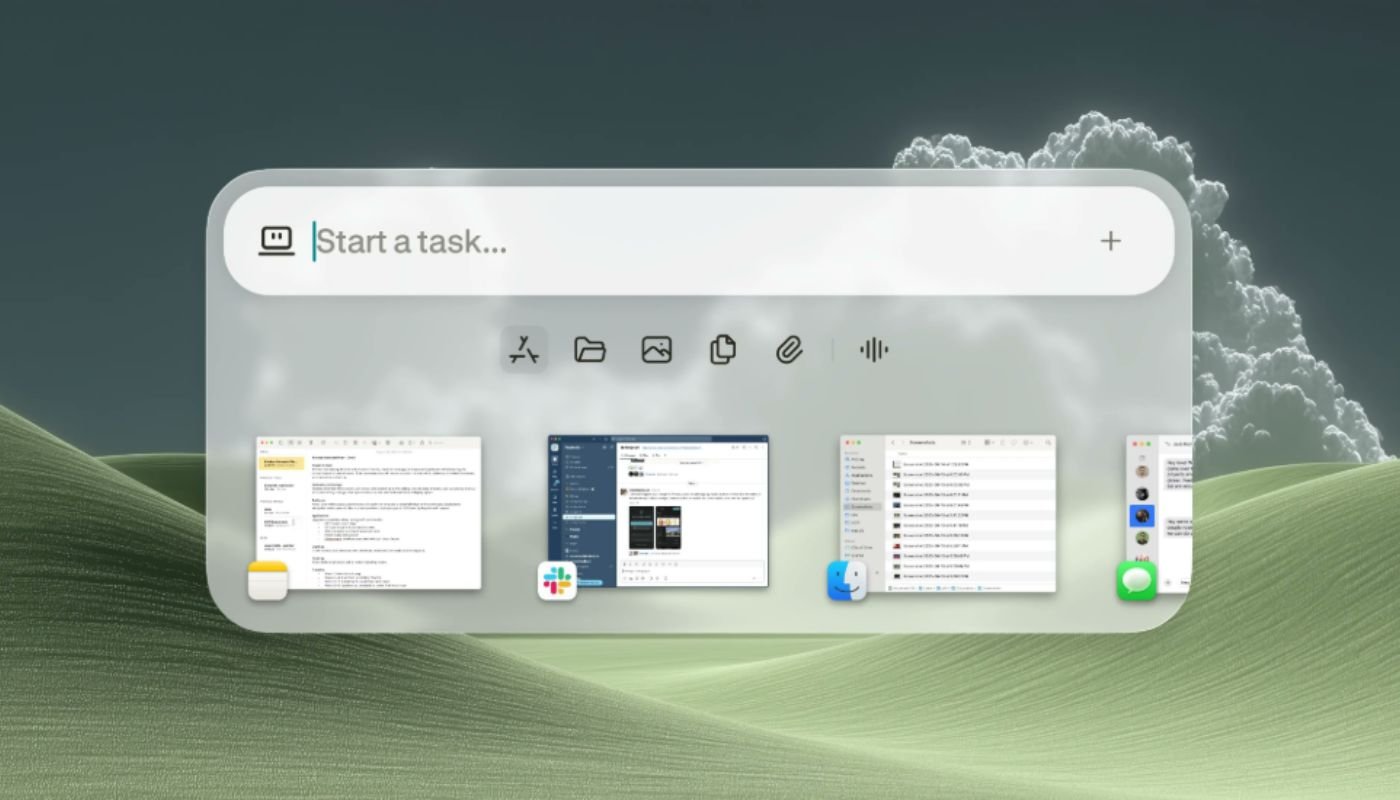
eWeek content and product recommendations are editorially independent. We may make money when you click on links to our partners. Learn More Perplexity is turning your Mac into something closer to an employee than a machine. After weeks of anticipation, Perplexity is moving beyond the search bar and straight into your hard drive. This week, the company began rolling out "Personal Computer," an AI assistant that integrates directly with the Perplexity Mac App to operate across local files, native applications, and browsers. The tool is designed to be a continuous digital worker. Perplexity specifically highlights the Mac mini as the ideal home for this system, allowing the AI to run 24/7 in the background. The system is built to handle the heavy lifting of multi-step tasks. According to Perplexity, the tool "integrates with the Perplexity Mac App for secure orchestration across your local files, native apps, and browser." This isn't just about reading text; it's about taking action. The assistant can navigate iMessage, Apple Mail, and Calendar. It even has its own browser, Comet, to research and automate web tasks without the user needing to switch tabs or copy-paste data. Tasks that move with you across devices One of the most modern features of the rollout is the ability to hand off tasks between devices. You can start a complex research project or a file-sorting task from your iPhone while you're out, and your Mac at home will pick up the slack. In its X post, the company mentioned that you can start a task "from your iPhone, and Personal Computer can operate on your desktop and local files using 2FA." This remote-start capability relies on the latest iOS update and ensures that your machine stays productive even if you're miles away. To keep this process fluid, the system uses a new shortcut (Command + Command) to summon the assistant anywhere on the Mac without breaking your focus. Perplexity describes this interface as "Context aware," stating that "Computer sees your active app and surfaces the right tools automatically." The philosophy behind this update is a departure from how we've used computers for decades. Rather than clicking through menus, you tell the AI what you want to achieve, and it figures out which agents to hire for the job. It uses over 20 AI models to determine the best way to handle a request. How safe is this? Giving an AI the keys to your iMessages and files is a big ask for privacy-conscious users. To address this, Perplexity says the system runs in a "sandbox" environment. The platform includes a safety shutdown feature that allows users to immediately shut down all processes. There is also an audit trail so you can see exactly what the AI was doing while you weren't looking. Unlike Apple's own Apple Intelligence, which focuses mostly on on-device processing, Perplexity uses a mix of local execution and cloud-based processing to handle heavier tasks. Who can get it? This isn't a free-for-all just yet. The feature is rolling out specifically to Perplexity Max subscribers and those who were on the waitlist. Perplexity Max is the company's $200-per-month subscription. Perplexity Pro, the $20-per-month plan, does not include access to Personal Computer, though it does support Perplexity Computer, the less capable web-based version of the assistant. The launch is Mac-only for now. Broader availability and presumably Windows support have not been announced. To run it, you'll need at least macOS 14 Sonoma. For more context on Apple's AI momentum, read how Mac mini and Mac Studio RAM shortages are reflecting surging demand.
Perplexity 'Personal Computer' Goes Live: Here's How it Controls Your Mac to Execute Tasks
Perplexity AI has introduced its 'Personal Computer', an AI agent that lets a Mac perform tasks across applications, files, and browser sessions with minimal user intervention. It runs through the Perplexity Mac app and connects the device to external processing systems, enabling coordinated task execution. The setup typically operates on a continuously active Mac, such as a Mac mini, and remains available in the background, ready to process assigned work without repeated input.