News & Updates
The latest news and updates from companies in the WLTH portfolio.
'Too Dangerous': Anthropic Mythos Sparks Crypto Hack Fears Amid Coinbase Talks
Anthropic has launched a new artificial intelligence model that is causing ripples in the crypto industry. Security experts are concerned that the new Anthropic Mythos model may become the fastest way to launch a cyberattack on exchanges. It could, in turn, lead to rise in crypto hacks. However, Coinbase has indicated interest in adopting this AI Model despite these fears. Why The Anthropic Mythos AI Model Could Trigger Crypto Hacks Anthropic's "Claude Mythos Preview" model has been described by developers as "too dangerous" for public release. The reasons include its ability to autonomously detect and exploit software vulnerabilities. Crypto analyst Ali Martinez said that it boasts an "autonomous capacity to discover and chain thousands of zero-day vulnerabilities." The apprehensions come at the time when the crypto industry is yet to overcome previous losses. According to data from Chainalysis 2026 Crypto Crime Report, over $3.4 billion of the crypto assets were stolen in 2025. For further context, last year, the theft volumes hit historic highs in only 142 days. In addition, exploits of high profile systems such as a $1.5 billion hack on Bybit have brought increased focus on platform security. Also in April 2026, Drift Protocol faced a hack with Circle sued over not freezing $230 million USDC. Moreover, the capabilities of Anthropic Mythos are more than traditional vulnerability scanning. It is able to detect bugs, auto-generate exploit code and run chains of attacks. During a single internal test, the model allegedly found a decades old bug in OpenBSD and used consecutive vulnerabilities to circumvent browser lockouts. Such tasks often demand elite security teams. Further, the magnitude of risk has gained spotlight due to recent incidents. An insidious application that impersonated Ledger Live bypassed the review process of Apple and stole $9.5 million of users. In addition, Rhea Finance lost $7.6 million in a scam of oracle manipulation. In a different incident, the Hyperbridge attack cost the company $2.5 million due to a replay vulnerability. According to market participants, centralized platforms might be the key targets after Anthropic Mythos launch. Crypto exchanges such as Coinbase, Robinhood, and Gemini process massive amounts of money and personal information, which could provide easy access to attackers. "Any other system that deals with money in a real-time basis is going to be a place that we try to look for cyber security holes," according to Cosimo Jiang of Pantera Capital. Analysts also raised concerns on reputation risks. They noted AI tools could even amplify phishing campaigns and synthetic identity fraud. Coinbase & Binance Move To Adopt AI Technology Meanwhile, big exchanges like Coinbase and Binance are considering defensive uses of the AI technology. Coinbase affirmed that it is negotiating with Anthropic and believes that there is a future of applying sophisticated AI to test systems. "Mythos, and future models like it, will enable even deeper testing of software and systems at scale. This will accelerate digital threats as well as digital defense," said Philip Martin, Chief Security Officer at Coinbase, per a CNBC report. On the same note, Binance announced that it is working on AI to detect vulnerabilities more effectively throughout its infrastructure. "Near term, it will become a negative narrative for these kinds of companies," said Jimmu Su, Chief Security Officer at Binance. He added, "But longer term, I would see them as one of the first batches that comes out and can protect against these AI agents."
Nvidia CEO makes surprising admission on OpenAI and Anthropic
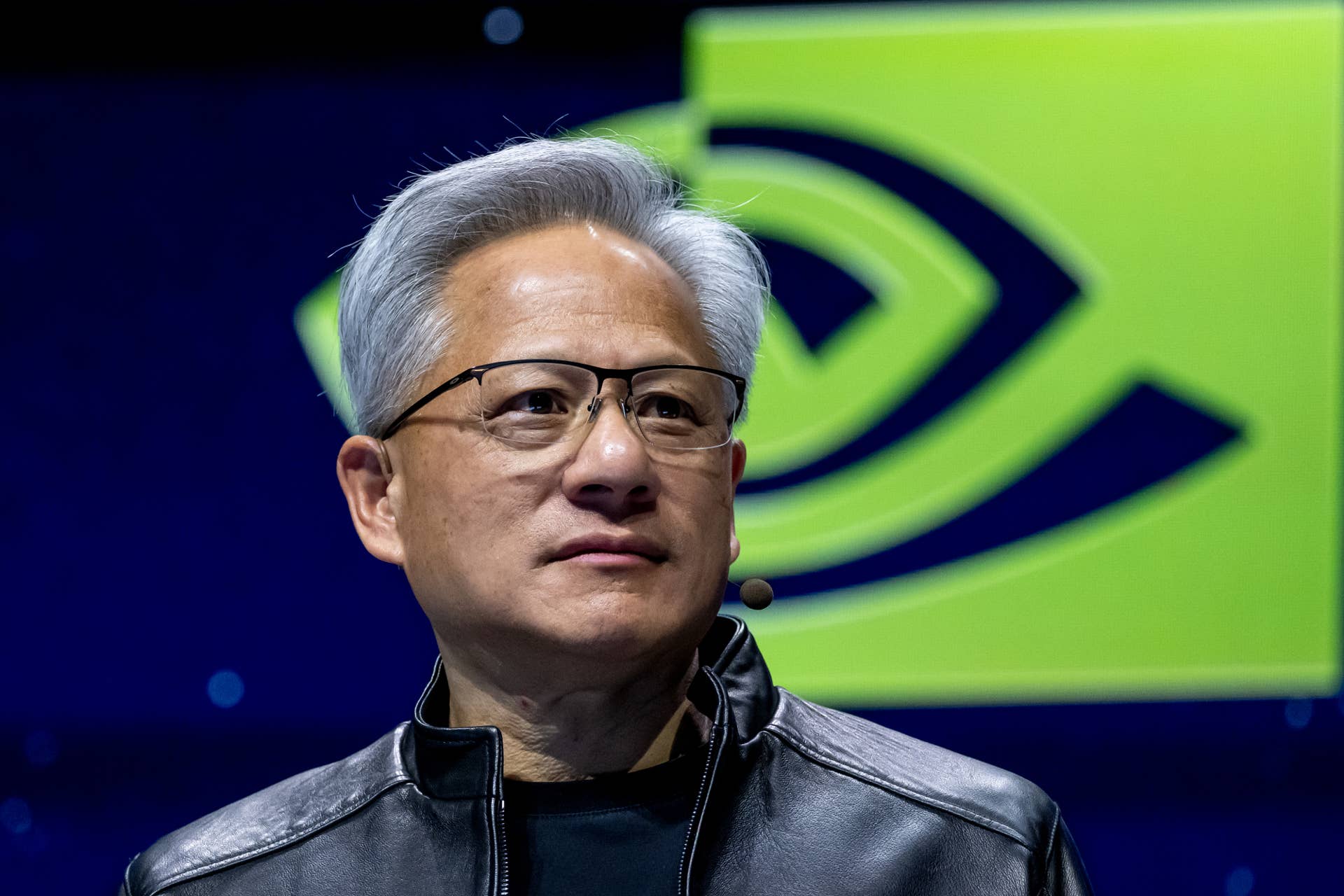
There is a window closing in 2026 that makes this admission more urgent than it sounds. The CEO of the company that supplies the chips powering the AI boom just admitted he should have owned more of it. Nvidia CEO Jensen Huang said on the Dwarkesh Podcast on April 15 that Nvidia missed the chance to invest early in OpenAI and Anthropic, KuCoin reported. Huang called it a strategic error he has no intention of repeating. "I'm not going to make that same mistake again," he said. Why Nvidia missed OpenAI, Anthropic investment opportunities Huang was candid about why Nvidia was not at the table when OpenAI and Anthropic needed their first major backing. "What they were trying to do couldn't have been done through VCs," he said, noting that frontier AI labs required funding at a scale of $5 billion to $10 billion. That is far beyond what traditional startup funding models could provide. At the time, Nvidia lacked both the precedent and what Huang called the "sensibility" to deploy capital at that scale outside its core chip business, Benzinga noted. Because Nvidia could not write those checks, the hyperscalers stepped in instead. Microsoft backed OpenAI. Google and Amazon backed Anthropic. In return, both labs committed to running their compute on those investors' infrastructure, according to WCCFTech. That capital-for-compute arrangement is what Nvidia missed. It was not just an equity opportunity. It was a chance to be woven into the infrastructure commitments of the most important AI labs in the world at the moment those relationships were being formed. Nvidia made later AI investments to correct course Huang said Nvidia is now "delighted to invest" in OpenAI and Anthropic, Benzinga reported. Nvidia's reported current investments stand at approximately $30 billion in OpenAI and approximately $10 billion in Anthropic, according to Futunn. However, those investments may be approaching their end. In March 2026, Huang said Nvidia's stakes in OpenAI and Anthropic are likely to be its last in both companies, as once they go public as anticipated later this year, the opportunity to invest closes, TechCrunch indicated. On the broader investment strategy, Huang was clear. "There are so many great, amazing foundation model companies, and we try to invest in all of them. We don't pick winners. We need to support everyone," he said on the same podcast, according to Benzinga. He cited Nvidia's own history as a guiding lesson, noting the company was once one of 60 3D graphics companies that was not expected to survive. The TPU challenge Huang addressed directly Podcast host Patel pressed Huang on a pointed question: Two of the top three AI models in the world, Claude and Gemini, were trained on TPUs rather than Nvidia chips. What does that mean for Nvidia going forward? Huang's answer was direct. "Without Anthropic, why would there be any TPU growth at all? It's 100% Anthropic," he said. His argument is that the only meaningful defection from Nvidia at scale traces back to a single lab. In addition, the broader thesis that frontier labs will bring silicon in-house collapses when you look at who is actually moving workloads off Nvidia's chips. Key details from Huang's podcast appearance: * Podcast aired: April 15, 2026 * Huang's admission: Nvidia missed early investment in OpenAI and Anthropic * Scale of capital required by frontier labs: $5 billion to $10 billion, Benzinga reported * Who filled the gap: Microsoft (OpenAI), Google, and Amazon (Anthropic) * Nvidia's current reported OpenAI investment: Approximately $30 billion, Futunn confirmed * Nvidia's current reported Anthropic investment: Approximately $10 billion, according to Futunn * OpenAI, Anthropic expected to go public: Later in 2026, TechCrunch noted * Nvidia's investment philosophy: Invest in all foundation model companies rather than picking winners, according to Benzinga Huang's missed chance with OpenAI, Anthropic: implications for Nvidia investors Huang's admission is notable precisely because it comes from the leader of the company that has profited most from the AI boom. Nvidia's chip dominance has made it one of the most valuable companies in the world. But Huang's comment reveals that even from that vantage point, he sees value that was left on the table. The broader signal is that AI is still in a phase where early positioning compounds significantly over time. The companies that secured equity stakes in frontier labs early did not just gain financial upside. They gained influence over infrastructure decisions, model development priorities, and long-term compute commitments. Nvidia's current investments in OpenAI and Anthropic show it has corrected course. But Huang's public acknowledgment that the early window was missed, and his vow not to repeat it, is a candid reminder that even in a boom, timing, and scale of conviction still separate good outcomes from great ones.
CEO of blacklisted Anthropic is going to the White House | CNN Business
Anthropic CEO Dario Amodei is visiting the White House on Friday for a high-stakes meeting with the president's top adviser, while his AI company battles the Trump administration in court for blacklisting its Claude AI model. Amodei will meet with White House Chief of Staff Susie Wiles, two sources familiar with the meeting told CNN. Axios first reported on the meeting. Anthropic declined to comment. Until recently, Anthropic's Claude was the only AI model available in the Pentagon's classified network. But President Donald Trump recently announced the administration would sever ties with the company after Anthropic refused to back down on terms that would allow the military to use Claude for "all lawful purposes," including autonomous weapons and mass surveillance. After a breakdown in talks over Claude's use, the Pentagon went on to declare Anthropic a "supply chain risk," a label only used in the past for companies associated with foreign adversaries. It would effectively blacklist Anthropic from the government. Anthropic sued the Trump administration in response, and a federal judge in California last month blocked the Pentagon's effort to "punish" Anthropic. The government said it will appeal the ruling. The Pentagon has said it wants unfettered access to Claude for "all lawful purposes," because it needs complete freedom to use those tools, especially in wartime. Anthropic has argued that AI models are just not yet reliable enough to be used in autonomous weapons, and that US law has not caught up to be able to protect Americans around AI's use in mass surveillance. Meanwhile, Anthropic announced a forthcoming powerful AI model called Mythos, that it and experts have warned could be a "watershed" moment for cybersecurity, allowing select groups to get early access to assess their cybersecurity risk. The Office of Management and Budget has already told agencies it is preparing to give them access to Mythos to prepare, Bloomberg reported. Axios reported the White House is also in discussion to gain access to Mythos. Anthropic declined to comment on whether the Trump administration was working to test Mythos. "The White House continues to proactively engage across government and industry to protect the United States and Americans. This includes working with frontier AI labs to ensure their models help secure critical software vulnerabilities," a White House official told CNN. "Any new technology that would potentially be used or deployed by the federal government requires a technical period of evaluation for fidelity and security. The collective effort of all involved will ultimately benefit industry, and our country, as a whole."

Nervous Indian fintechs push Anthropic for access to Mythos - The Economic Times
One97 Communications, Razorpay Software and Pine Labs are among the Indian companies that have pushed the San Francisco-based AI developer to let them test Mythos and detect vulnerabilities on their own systems. Their requests came after Anthropic announced a limited roll-out of its latest large-language model, which it considers too dangerous to release more widely.

CEO of blacklisted Anthropic is going to the White House
Anthropic CEO Dario Amodei is visiting the White House on Friday for a high-stakes meeting with the president's top adviser, while his AI company battles the Trump administration in court for blacklisting its Claude AI model. Amodei will meet with White House Chief of Staff Susie Wiles, two sources familiar with the meeting told CNN. Axios first reported on the meeting. Anthropic declined to comment. Until recently, Anthropic's Claude was the only AI model available in the Pentagon's classified network. But President Donald Trump recently announced the administration would sever ties with the company after Anthropic refused to back down on terms that would allow the military to use Claude for "all lawful purposes," including autonomous weapons and mass surveillance. After a breakdown in talks over Claude's use, the Pentagon went on to declare Anthropic a "supply chain risk," a label only used in the past for companies associated with foreign adversaries. It would effectively blacklist Anthropic from the government. Anthropic sued the Trump administration in response, and a federal judge in California last month blocked the Pentagon's effort to "punish" Anthropic. The government said it will appeal the ruling. The Pentagon has said it wants unfettered access to Claude for "all lawful purposes," because it needs complete freedom to use those tools, especially in wartime. Anthropic has argued that AI models are just not yet reliable enough to be used in autonomous weapons, and that US law has not caught up to be able to protect Americans around AI's use in mass surveillance. Meanwhile, Anthropic announced a forthcoming powerful AI model called Mythos, that it and experts have warned could be a "watershed" moment for cybersecurity, allowing select groups to get early access to assess their cybersecurity risk. The Office of Management and Budget has already told agencies it is preparing to give them access to Mythos to prepare, Bloomberg reported. Axios reported the White House is also in discussion to gain access to Mythos. Anthropic declined to comment on whether the Trump administration was working to test Mythos. "The White House continues to proactively engage across government and industry to protect the United States and Americans. This includes working with frontier AI labs to ensure their models help secure critical software vulnerabilities," a White House official told CNN. "Any new technology that would potentially be used or deployed by the federal government requires a technical period of evaluation for fidelity and security. The collective effort of all involved will ultimately benefit industry, and our country, as a whole."
Anthropic's Claude Opus 4.7, Xiaomi's MiMo V2 Pro enter AI model race
Anthropic released Claude Opus 4.7 and Xiaomi launched MiMo V2 Pro, pushing the best AI model by April 2026 market to a 15% expected move as traders reassess which model will top rankings. ## Market reaction Claude Opus 4.7 shows improvements on software engineering metrics and has climbed the LMSYS leaderboard. Xiaomi's MiMo V2 Pro is also posting competitive performance numbers. The best AI model by April 2026 market is drawing more interest as both models enter contention with 14 days left before the deadline. ## Why it matters Anthropic's upgrades target software engineering and security benchmarks, the categories that most directly affect AI model rankings. The question is whether these gains are large enough to overtake competitors by end of April. The market is thin on volume, but a 15% potential odds movement signals that traders expect the leaderboard order to change. Anthropic's emphasis on agentic tasks could move its Arena Score meaningfully if real-world performance matches benchmark results. ## What to watch LMSYS leaderboard updates will be the most direct signal. Any new model releases or benchmark results from OpenAI or Google DeepMind before April ends could shift odds sharply. At current prices, a YES position on Anthropic pays well if it takes the top spot, but the thin volume means entries and exits may be difficult to size. ## API access
Anthropic CEO says engineering jobs will end soon, but company opened 429 roles in same field
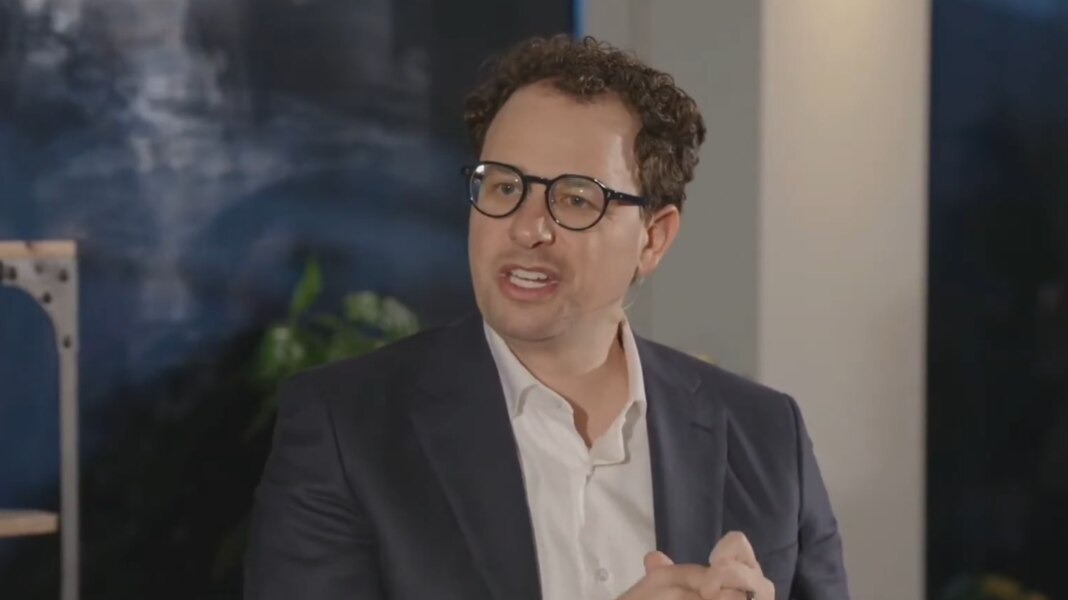
The debate around AI replacing human jobs is no longer just theoretical, it is now playing out in real time, and sometimes in contradictory ways. Over the past few months, Anthropic CEO Dario Amodei has repeatedly warned that engineering roles, especially those focused on coding, could fade much sooner than expected. But even as those warnings grow stronger, his own company is quietly doing something that tells a very different story -- hiring engineers in large numbers. That contrast is hard to ignore. Amodei has not held back when speaking about the impact of AI on technical careers. Across multiple public conversations this year, he has stated that entry-level engineering roles could be among the first to be affected, as AI systems become capable of handling routine coding tasks. He has asserted that such roles will be taken over by AI and that coding roles in general are also likely to go away. "I think coding is going away first, or coding is being done by the AI models first," he said during a recent discussion, drawing a line between writing code and the broader responsibilities of engineering. Inside Anthropic, this change is already visible. Amodei revealed that some engineering leads no longer write code themselves, relying instead on the company's AI models to generate it. Their role, in many cases, has been reduced to reviewing and refining what the AI produces. In one instance, a tool was built in under two weeks, largely using AI-generated code -- something that would typically take much longer with traditional workflows. He has also shared aggressive timelines for how quickly this could scale. According to him, AI could soon be writing the majority of code for many companies, potentially reaching 90 percent in the near future. "And then in 12 months, AI will essentially be writing all the codes," he said. For Amodei, this is not a distant possibility but an ongoing change that is already changing how work gets done. He has even warned that entire job categories built over decades may not survive this transition. "There are whole jobs, whole careers that we've built for decades that may not be present," he said, adding that the scale of disruption is still underestimated. And yet, even as these warnings continue, Anthropic's hiring activity paints a different picture. According to its official Careers site, the company currently has around 429 open roles in engineering, spanning positions such as Research Engineer, Full-Stack Software Engineer, Performance Engineer, Engineering Manager and more. There are several high-value roles, with salaries ranging between $320,000 and $405,000. This is where the story becomes more layered than it first appears. If engineering jobs are heading towards a decline, why is one of the leading AI companies still expanding its engineering workforce? Part of the answer lies in timing. While AI is clearly reducing the need for repetitive coding, it has not yet reached a point where it can fully replace engineers. In fact, building and improving these AI systems still requires deep technical expertise, something companies like Anthropic are actively investing in. Amodei himself has acknowledged this transition phase. He said that even within Anthropic, the need for engineers could reduce over time as AI becomes more capable of handling end-to-end software development. "[In the future] even within Anthropic, we would need less software engineers than we have today," he said. At the same time, he also pointed to new roles that could emerge from this change. One such example is the "forward deployed engineer" -- a professional who combines technical skills with an understanding of customer needs to help implement AI systems in real-world scenarios. "That's one possible example where one thing goes away and another door opens," he explained. For now, the situation suggests a moment of overlap -- where the old and the new are coexisting. AI is already changing how engineering work is done, reducing the need for traditional coding in some areas. But it has not eliminated the need for engineers altogether. As Amodei explained, even though AI is able to coding, "the programmer will still need to specify, what are the conditions of what you are doing, what is the overall app that you are trying to make, what is the overall design decision, how do we collaborate with other codes that has been written, how do we have some common sense that this is a secure design." He added that as long as these gaps exist, human programmers will continue to handle what AI isn't good at yet, even though it remains unclear what happens if AI eventually learns to manage these aspects as well. What makes this moment interesting -- and slightly uneasy -- is the gap between what is being said and what is being done. The warnings are about a future where fewer engineers may be needed. The hiring, however, shows that in the present, they are still very much in demand.
Anthropic's Claude Opus 4.7 is Now Available on Microsoft Foundry
Yesterday, Anthropic announced its latest model Claude Opus 4.7. Right after the announcement, Microsoft confirmed that the new model is now available on its AI platform. Claude Opus 4.7 lands on Microsoft Foundry for enterprise use Anthropic has rolled out Claude Opus 4.7 on Microsoft Foundry. The model is positioned as the company's most capable generally available system so far, with a clear focus on enterprise-grade tasks. Teams building on Azure can now access Opus 4.7 directly through Foundry, without needing to rethink their existing setup. That's important, because most enterprises care less about raw model upgrades and more about how smoothly those upgrades fit into current workflows. In comparison to Claude Opus 4.6, the newer version improves instruction following, reasoning, and memory. It also pushes better performance in areas like coding, visual tasks, and long-running autonomous workflows, which are becoming more common in enterprise use. In fact, Claude Opus 4.7 beats GPT-5.4 on agentic coding benchmarks. To catch you up, Microsoft Foundry acts as a unified platform for building and managing AI applications, keeping together model access, data, and security controls in one place. That means enterprises using Opus 4.7 get the benefits of Azure's existing stack, including identity management, private networking, and audit logging. In other words, governance comes baked in. Developers can call the model using standard APIs, so existing tools and pipelines should continue working with minimal changes. For teams already on Opus 4.6, this is being positioned as a direct upgrade rather than a migration. Talking of AI models, let's not forget that OpenAI also dropped a bunch of new models yesterday, including expansion of Codex with new features.

White House, Anthropic to hold talks amid Pentagon AI dispute | News.az
Anthropic CEO Dario Amodei is scheduled to meet White House chief of staff Susie Wiles on Friday, signaling a potential breakthrough in the artificial intelligence startup's dispute with the Pentagon, News.Az reports, citing Axios. The possible meeting comes as the administration of U.S. President Donald Trump reportedly acknowledges the advanced capabilities of Anthropic's new AI model, Mythos, particularly its sophisticated cybersecurity defense and penetration-testing functions. According to Axios, a source close to the negotiations said it would be "grossly irresponsible" for the U.S. government to deny itself the technological advantages offered by the new model, adding that such a decision could benefit China. Mythos, announced on April 7, is being deployed under Anthropic's "Project Glasswing," a controlled program allowing select organizations to use the unreleased Claude Mythos Preview model for defensive cybersecurity applications. Bloomberg News reported on Thursday that the U.S. government is considering making a version of Mythos available to major federal agencies. Anthropic has continued discussions with the Trump administration regarding Mythos, co-founder Jack Clark said on Monday, even after the Pentagon cut ties with the company following a contract dispute.
Cosmological singularities, quantum chaos and prime numbers
At a singularity the continuum description of spacetime breaks down and one can hope that the microscopic constituents will be revealed. Over 50 years ago, Belinski-Khalatnikov-Lifshitz (BKL) argued that the dynamics of spacetime close to the Big Bang singularity (or inside black holes) is chaotic and inhomogeneous. I will revisit the BKL scenario within a modern understanding of quantum chaos and holographic duality. I will argue that the remarkable modular symmetries that arise in the near-singularity dynamics suggests a dual description of the start of time as a so-called "primon gas", a description that is at once both simple and also connects with deep results from number theory.

The Amazon-SpaceX Space Race is On. Here's What I'd Look to Buy in Response
This post may contain links from our sponsors and affiliates, and Flywheel Publishing may receive compensation for actions taken through them. In a rather surprising move, Amazon (NASDAQ:AMZN | AMZN Price Prediction) acquired satellite connectivity play Globalstar (NASDAQ:GSAT), which investors might know best for its dealings with Apple (NASDAQ:AAPL) and the SOS feature on the iPhone. In the coming years, satellite connectivity could really explode onto the mainstream, as we move from SOS and text messaging to light browsing and maybe even a wireless service that's good enough that we can ditch plans from the big telecoms. Undoubtedly, there's a huge opportunity for Apple as the wireless innovations look towards the stars and the satellite constellations that could forever change the way we all think about mobile connectivity. It's a bit sci-fi, to say the least, but with Elon Musk's Starlink already showing how practical it is to beam mobile data from space, I'd argue that a new space race has kicked off as firms look to economic opportunities to be had in space. Of course, satellite connectivity might just be the start. With Musk talking about space-based data centers and Nvidia (NASDAQ:NVDA) debuting Vera Rubin space modules meant for data centers in orbit, it feels like we could be entering an era where rocket launches, satellites, and all the sort move from speculative moonshots to serious, profitable business models with sky-high barriers to entry. Indeed, given the costs of launching satellites into orbit, perhaps the economic moat possessed by Starlink can only be matched by few, if any, deep-pocketed tech titans. In any case, Amazon's latest deal to acquire Globalstar will transform Amazon Leo (formerly known as Project Kuiper) into a serious number-two rival to the likes of Starlink. Of course, there's still a lot of catching up to do. But, for the most part, it feels like Starlink isn't going to be the one and only king of space. At first, I thought Apple's stake in Globalstar would make things a bit complicated for Amazon. However, given all that Apple stands to gain from having another firm spend big money to compete against Starlink, I think it's clear why Apple gave the green light. SpaceX and Starlink are a force to be reckoned with. And Globalstar is just too small to compete against a behemoth. Either Apple had to up its stake and start spending some serious money (while taking on a colossal amount of risk), or team up with the likes of a behemoth in Amazon, which, in my view, is the best-positioned firm to unlock the most value from Globalstar as satellite connectivity looks to advance well beyond just SOS messages. And, of course, there was also the option of partnering with Starlink, but it'd be Elon Musk's empire that would have all the right cards -- all the leverage in negotiations. In any case, the Amazon-Globalstar deal is a huge win for the e-commerce titan, but perhaps an even bigger win for Apple. In essence, Apple is getting the benefits of having Amazon tackle the hard, expensive parts of building a constellation while enjoying the benefits. Picture the feast without the indigestion and heartburn that follows. Given this, Apple stock stands out as a great buy in response, especially in a market where investors continue to turn away from growing CapEx. Sure, it sounds better on paper if Apple were to own the entire constellation. But the reality of the situation is that there are a lot of uncertainties regarding ROI to get to the endpoint. Sometimes, it's just better to team up with a partner who's just better able to achieve a feat more economically. And while there might be some uncertainty as to what happens after the long-term agreement expires, I'd say that, in terms of risk mitigation, letting Amazon have it with a favorable deal is the absolute best move for Apple users. If it's the best for users, it's probably the best move for Apple as well. As Amazon Leo continues to evolve into a serious alternative to Starlink, I do think things are about to get interesting.

Anthropic Launches Claude Opus 4.7: Improvements, New Features, and Pricing
Liputan6.com, Jakarta - Anthropic, a leading artificial intelligence research company, officially launched its latest AI model, Claude Opus 4.7, on Thursday, April 16, 2026. This model represents a substantial improvement over its predecessor, Claude Opus 4.6, which was released in February 2026 and is now generally available to a variety of platforms and users. The arrival of Claude Opus 4.7 is expected to revolutionize the way professionals interact with AI, especially in tasks requiring high precision and complex problem-solving. This advanced AI model is accessible through Claude AI, the Claude API, Amazon Bedrock, Google Cloud's Vertex AI, and Microsoft Foundry. For business and consumer users, Claude Opus 4.7 is also available in Claude for Pro, Max, Team, and Enterprise users, providing flexibility in leveraging the latest AI technologies.
:strip_icc():format(jpeg)/kly-media-production/medias/5558066/original/060334000_1776405320-anthropic-claude-opus.jpg)
Kraken Parent Payward to Acquire Bitnomial for $550M
Bitnomial runs a crypto-native US exchange, clearinghouse, and brokerage. Payward, the parent company of crypto exchange Kraken, has agreed to acquire Chicago-based Bitnomial for up to $550 million in a mix of cash and stock. The deal is expected to close in the first half of 2026, subject to regulatory approvals. It would give Kraken a complete, CFTC-regulated derivatives stack that Bitnomial built over more than a decade. What Kraken Gains From the Bitnomial Deal Bitnomial operates three core entities under CFTC oversight. These include a designated contract market (DCM), a derivatives clearing organization (DCO), and a futures commission merchant (FCM) brokerage. Together, they form one of the only fully crypto-native, regulated derivatives stacks in the US. The exchange has introduced several firsts to the US market. Its products include CFTC-regulated perpetual futures, physically settled Bitcoin (BTC) options, and leveraged retail spot crypto trading. Bitnomial also allows traders to use crypto as margin collateral and settlement. For Payward, the acquisition extends an aggressive infrastructure buildout. The company previously acquired NinjaTrader and Small Exchange to expand its derivatives capabilities. A recent $200 million investment from Deutsche Börse Group valued Payward at roughly $13.3 billion. Why This Deal Matters The acquisition reflects a broader consolidation trend in crypto. Exchanges are prioritizing regulatory licenses and clearing infrastructure over front-end trading volume as competitive advantages. As institutional demand for compliant US crypto derivatives grows, firms that control settlement and clearing rails may hold a structural edge. How quickly Payward integrates Bitnomial's technology and team with Kraken and NinjaTrader will shape the near-term payoff of this $550 million bet.

Stop using Discord for homelab notifications -- here's what I switched to instead
Faisal Rasool has been a feature writer at How-to Geek since early 2024. He brings five years of professional experience in simplifying technology for his readers on topics like mobile devices, PCs, and online privacy. He tries to help people get the most out of their gadgets and software with the least effort. In his teenage years, he spent hours every day tinkering with Android phones and Linux builds. Faisal started his career at WhatMobile in 2019 (mostly out of his obsession with Android) where he published over 2,000 news stories. Currently, he contributes to the news section over at AndroidHeadlines. He also authored more than 100 feature articles for SlashGear, covering Android, iOS, Web, Chromebooks, online privacy/security, and PC content. Faisal is also pursuing a Bachelor's in English literature to build up his writing chops. He enjoys watercolors, classic video games, animated films, and conversations with strangers. Discord webhooks are how a lot of people get push notifications from their home servers. However, if you find it too laggy or if it's too messy to get all your server notifications on a single channel, there's an even simpler way. This tool allows you to push notifications to your phone with a single curl command. What is Ntfy A clever service that instantly pushes notifications to as many devices as you want Ntfy is a free and open-source simple push notification service that you can self-host on your server. It accepts HTTPS requests and instantly pushes them to any device that's connected to your self-hosted Ntfy server. You could include simple curl commands in scripts or cron jobs to receive push notifications. You can push notifications by "topic." Basically, Ntfy lets you sort and organize notifications into different channels. You could, for example, create a channel for uptime alerts and another for backups. Then you could "subscribe" to either or both of those topics on your phone or tablet to get push notifications. It's a pretty lightweight setup because it barely consumes any resources, so you can run it on anything that can spin up a Docker container. To receive push notifications, you can download the Ntfy app on Android or iOS devices. You can even get desktop notifications via the browser app (accessible via the server address). How to set up the server You just need Docker The simplest and most practical way to set up Ntfy on a server is through the official Ntfy Docker image. If you don't already have Docker installed on your server, you can use the official Bash script to install it. curl -fsSL https://get.docker.com | sudo sh It's always a good idea to double-check scripts downloaded from the internet before running them. You can read the contents of that shell script by visiting the URL or use cat to print its contents. Raspberry Pi 5 Brand Raspberry Pi Storage 8GB CPU Cortex A7 Memory 8GB Operating System Raspbian Ports 4 USB-A It's only recommended for tech-savvy users, but the Raspberry Pi 5 is a tinkerer's dream. Cheap, highly customizable, and with great onboard specs, it's a solid base for your next mini PC. $80 at Spark Fun $93 at Amazon $80 at CanaKit Expand Collapse With Docker installed, we can now use a Docker compose file to spin up a lightweight Ntfy container. Let's create a new directory to keep the Ntfy container and its compose file. mkdir -p ntfy/{config,cache,data} Let's create a compose file. nano docker-compose.yml Paste this in the compose file. After that, press Ctrl+O and Enter to save it. Then Ctrl+X to exit the nano editor. services: ntfy: image: binwiederhier/ntfy container_name: ntfy command: serve environment: - NTFY_BASE_URL=http://192.168.1.50:9000 - NTFY_LISTEN_HTTP=:80 - NTFY_CACHE_FILE=/var/cache/ntfy/cache.db - NTFY_AUTH_FILE=/etc/ntfy/auth.db - NTFY_AUTH_DEFAULT_ACCESS=deny-all volumes: - ./cache:/var/cache/ntfy - ./config:/etc/ntfy ports: - "9000:80" restart: unless-stopped We can now start the container with this command. docker compose up -d Verify that the container is running, and running on the right port. docker ps Technically, you don't need a Docker container to set up Ntfy. It can be installed as a simple APT package that runs as a systemd service (so it'll automatically start as soon as the server boots up). However, it can get messy if you plan to move it between servers, or run into dependency issues. Docker containers are easy to migrate and easy to wipe, and you won't run into dependency issues. How to get Ntfy notifications on your phone Install the app and connect to your server Basically, you just need the Ntfy app and the URL for accessing the Ntfy instance running on your personal server. You can download Ntfy from F-Droid or Google Play Store for Android and the App Store for iOS. Launch the app and tap the three dots at the top to open the settings menu. Scroll down to general settings and tap Default server. The address should look something like this. The port is what you chose when creating the Docker container for the Ntfy server. http://192.168.1.50:9000 Then hit Save. You can now subscribe to as many "topics" or notification channels coming from the server. Tap the plus button at the bottom. You'll see a "Subscribe to topic" window. The topic name is the address you'll push notifications to from your server. Type it and hit Subscribe. Since all this is being done over an HTTP connection, pick a unique topic name that's hard to guess because it'll double as your password. If you pick something common like "alerts," anyone connected to your Wi-Fi network could technically pull notifications from your server by subscribing to the same topic. It should connect to the server right away and show a notification chain on the main menu. If you see any errors, make sure you type the right server IP and port address. Also make sure you're connected to the same Wi-Fi network as the server. You can set up a reverse proxy or a private network like Tailscale if you want to access your notifications outside your home Wi-Fi network. Let's test our new setup. On your server, use a curl command to push a notification to the channel you selected. curl -d "This is a test alert from my server" http://192.168.1.50:9000/jelly_alerts The notification should instantly show up in the notification thread, as well as your phone's notification shade. Some pro tips You can set priority alerts and even send file attachments There's little use in manually pushing these notifications, but you'll probably want to include these curl calls within your scripts. For example, I've set up a script that uses the Asana API to send me alerts. You can set up a channel for as many scripts as you want. You can also set the priority of the push notifications with these flags. curl \ -H "Title: Emergency" \ -H "Priority: high" \ -d "Immediate attention needed" \ http://192.168.1.50:9000/jelly_alerts Then configure the notification priority for Ntfy within the app settings. You can also attach local files or download URLs with the push notifications. Lightweight and easy push notifications If you're looking for a simple and lightweight way to push notifications for your backups, API calls, scripts, or uptime monitoring alerts, it doesn't get simpler than the basic curl syntax that Ntfy uses.

Today in AI | Anthropic launches Claude Opus 4.7 | Alibaba unveils Happy Oyster AI model
The world of Artificial Intelligence has only begun to affect human lives. In times like these, staying up-to-date with the AI world is of utmost importance. Storyboard18 brings you the top AI news of the day. Anthropic launches Claude Opus 4.7 with improved reasoning, coding and vision capabilities Anthropic has launched Claude Opus 4.7, a new version of its large language model designed to bridge the gap between its production-ready systems and the more restricted "Mythos Preview" model. Read More OpenAI introduces GPT-Rosalind for life sciences, early-stage drug discovery OpenAI has introduced GPT-Rosalind, a specialised artificial intelligence (AI) model built to assist researchers working in biology, drug discovery and translational medicine, marking a deeper push into life sciences. Read More Alibaba unveils Happy Oyster AI model that turns text prompts into interactive 3D worlds Alibaba has unveiled Happy Oyster, a new artificial intelligence "world model" capable of generating interactive 3D environments and videos that simulate real-world physics, marking a significant step in the evolution of generative AI, according to reports. Read More ChatGPT, Microsoft Copilot and Google Gemini help American schools cut budget deficits Facing shrinking budgets and rising costs, school districts across the United States are now turning to artificial intelligence tools to keep their finances in check. From scanning expenses to spotting inefficiencies, AI is increasingly being used to plug funding gaps and streamline operations.

Kraken's parent company Payward to acquire derivatives exchange Bitnomial for $550 million in cash and stock.
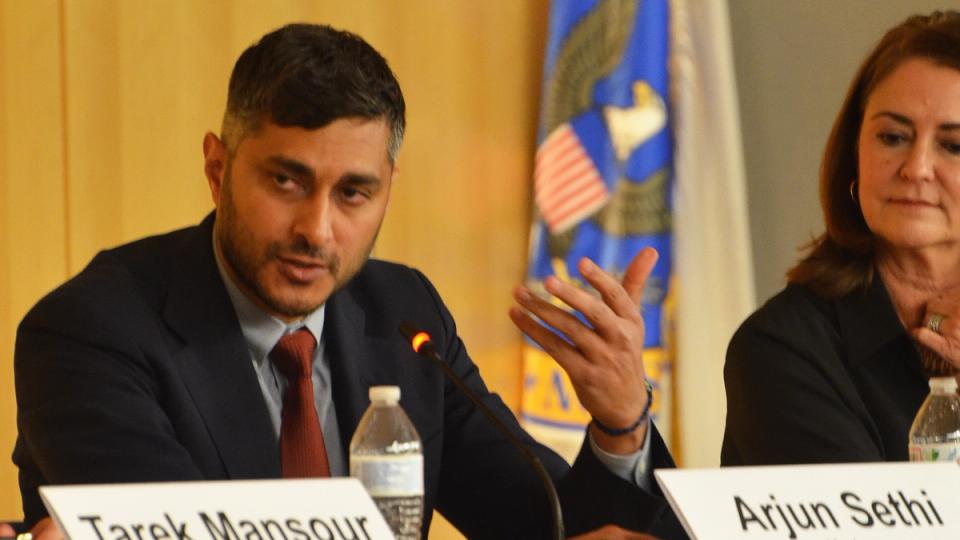
The acquisition will expand Payward's U.S. derivatives push across Kraken, NinjaTrader and B2B infrastructure. Crypto exchange Kraken's parent company has agreed to acquire digital asset derivatives platform Bitnomial for up to $550 million, in a cash-and-stock transaction that values the firm at $20 billion, Payward said in a press release exclusively shared with CoinDesk. Bitnomial, founded over a decade ago, is the first crypto-native platform to secure all three licenses required to operate a full-stack derivatives business domestically. It has approvals to operate a designated contract market, a derivatives clearing organization and a futures commission merchant. The acquisition effectively shortcuts years of regulatory buildout for Payward as it expands its U.S. footprint. "The shape of a market is determined by its clearing infrastructure, not its front end," said Payward Co-CEO Arjun Sethi, pointing to Bitnomial's crypto-native settlement, collateral and 24/7 trading capabilities as core to the strategy. Deal activity in the crypto sector has begun to pick up after a prolonged downturn, as firms look to consolidate capabilities and shore up infrastructure following years of market volatility and regulatory scrutiny. Larger, better-capitalized players are increasingly targeting acquisitions that fill strategic gaps such as custody, derivatives or compliance, rather than pursuing growth at any cost. At the same time, depressed valuations have created opportunities for buyers, while smaller startups facing funding constraints are more open to being acquired, setting the stage for a more pragmatic phase of industry consolidation. Kraken has been scaling up ahead of its planned initial public offering (IPO). Payward said it confidentially submitted a draft S-1 to the U.S. Securities and Exchange Commission on November 19 last year. However, CoinDesk reported last month that the firm had put it's IPO plans on hold due to difficult market conditions. According to sources, the company is still considering an initial public offering, but probably not until market conditions improve. In recent years, Kraken has pursued a relatively targeted but increasingly strategic M&A strategy focused on expanding beyond pure crypto trading into multi-asset and derivatives infrastructure. The most significant transaction was its $1.5 billion acquisition of NinjaTrader in 2025, a U.S.-based retail futures platform and CFTC-registered FCM, marking the largest-ever deal between traditional finance and crypto and giving Kraken a direct foothold in U.S. derivatives markets and a large base of futures traders. Prior to that, Kraken executed smaller tuck-in acquisitions such as BCM in 2023 and other platform or exchange purchases, including the later acquisition of Small Exchange, aimed at building out its derivatives and institutional capabilities. Overall, Kraken's deal activity signals a clear strategy. Using M&A to acquire regulatory licenses, trading infrastructure, and user bases that help it evolve into a broader, institutional-grade, multi-asset trading platform spanning crypto and traditional markets. The combined platform will integrate Bitnomial's regulated infrastructure with Payward's global distribution and liquidity across brands including Kraken and NinjaTrader. Initial offerings are expected to include spot margin, perpetual futures and options for U.S. clients under Commodity Futures Trading Commission oversight. Payward has been building out its derivatives business globally, acquiring a U.K. crypto futures platform in 2019 and launching an EU offering in 2025. With Bitnomial, it now adds a fully regulated U.S. stack. The deal also expands Payward Services, the firm's B2B infrastructure arm, allowing banks, fintechs and brokerages to access regulated U.S. derivatives through a single API integration. The transaction, which covers 100% of Bitnomial's equity, is expected to close in the first half of 2026, pending customary conditions and regulatory filings.
The Pentagon called Anthropic a supply chain risk and banned it, but every other agency still wants its AI and here's why | Attack of the Fanboy
The White House and Anthropic are in active discussions about deploying the AI firm's new model, Mythos Preview, across the federal government. As detailed by Axios, this comes despite the Pentagon having labeled Anthropic a "supply chain risk" and ordered its removal from military workflows. Anthropic is currently in litigation with the Pentagon over the designation, and while the company is barred from new Pentagon contracts, the rest of the federal government remains free to do business with it. Mythos Preview is being rolled out to only a select group of companies and organizations rather than the general public, primarily so they can assess its advanced cyber capabilities and develop defenses against the kinds of threats it can expose. Agencies including the Departments of Energy and Treasury are among those pushing for access, citing the need to identify vulnerabilities in critical infrastructure such as the national electric grid and the financial system. The Office of Management and Budget has sent out an email, first reported by Bloomberg, confirming it is actively reviewing agencies' ability to use Mythos. The divide within the administration is stark. One official summarized it directly: "There's progress with the White House. There's not progress with [the Department of] War." The same official noted that all intelligence agencies use Anthropic and that every agency except the Department of War wants to, with the friction rooted in Anthropic's restrictions on how its technology can be deployed. The Pentagon wants no limits, and Anthropic won't budge Anthropic's position, laid out in a February 26, 2026 statement by CEO Dario Amodei, is that the company will not allow its models to be used for mass domestic surveillance or fully autonomous weapons. Amodei noted that Anthropic has proactively deployed its models to the Department of War and the intelligence community, and was the first frontier AI company to deploy models in the US government's classified networks and at the National Laboratories. Its Claude model is already used across national security agencies for intelligence analysis, operational planning, and cyber operations. On the question of mass domestic surveillance, Anthropic's position is that current laws have not kept pace with AI's ability to automatically assemble scattered data into comprehensive profiles of individuals at scale, posing risks to democratic freedoms. On fully autonomous weapons, Amodei stated that frontier AI systems are not yet reliable enough to power them responsibly, and that Anthropic has offered to collaborate on R&D to improve reliability, an offer that has not been accepted. Amid the broader debate over government use of AI technology, Anthropic has also passed up several hundred million dollars to cut off use of Claude by firms linked to the Chinese Communist Party and shut down CCP-sponsored cyberattacks that attempted to abuse the system. The Pentagon has pushed back, arguing that Anthropic's definitions are "nebulous" and that it needs assurances it can use AI systems for all lawful purposes. The Department of War has threatened to remove Anthropic from its systems if the company maintains its safeguards, and has threatened to invoke the Defense Production Act to force their removal. Amodei called out the contradiction directly, noting that one threat labels Anthropic a security risk while the other treats Claude as essential to national security. A second administration official took a more skeptical view of Anthropic's warnings about Mythos, accusing the company of using "fear tactics" to gain access to friendly ears across government agencies. That skepticism has not slowed the momentum. Despite the Pentagon ban, some Trump administration officials who initially viewed Anthropic's leadership unfavorably have acknowledged the company's tools as best-in-class for national security, with one Defense official stating the only reason talks were continuing was because "these guys are that good." The split over administration policy disputes reflects a wider pattern of internal friction between executive agencies on consequential decisions. Sources indicate agencies could gain access to Mythos within weeks.
Anthropic discussing AI models, including cybersecurity ones, with EU
Anthropic (ANTHRO) is in discussion with the European Commission for its different models, including its cybersecurity ones, which are not yet available in the EU, Reuters reported, citing EC spokesperson Thomas Regnier. The U.S. AI giant has already committed to respecting the Anthropic faces scrutiny from the EU over risk assessment for service launch and ongoing disputes with US agencies, including blacklisting and contract termination related to its AI models. Federal agencies could gain powerful AI tools if granted access, but financial leaders and regulators are concerned about increased cyber risks and possible threats to investors linked to Mythos. Having support from major tech firms like Amazon and Google could provide Anthropic resource advantages, but the partnership faces challenges due to regulatory and security concerns raised by governments.
Anthropic CEO to meet White House chief of staff amid Pentagon AI dispute, Axios reports
April 17 (Reuters) - Anthropic CEO Dario Amodei is slated to meet White House chief of staff Susie Wiles on Friday, in a sign of a breakthrough in the artificial intelligence startup's dispute with the Pentagon, Axios reported. The potential meeting comes as U.S. President Donald Trump's administration acknowledges the advanced capabilities of Anthropic's new AI model, Mythos, for its sophisticated cybersecurity defense breaching abilities, according to the report. White House and Anthropic did not immediately respond to requests for comment. Reuters could not independently verify the report. It would be "grossly irresponsible" for the U.S. government to deprive the country of the technological advantages offered by the new model, suggesting such a move would benefit China, Axios reported, citing a source close to the negotiations. Announced on April 7, Mythos is being deployed as part of Anthropic's "Project Glasswing," a controlled initiative under which select organizations are permitted to use the unreleased Claude Mythos Preview model for defensive cybersecurity purposes. Bloomberg News reported on Thursday that the U.S. government is planning to make a version of Anthropic's Mythos available to major federal agencies. Anthropic was discussing Mythos with the Trump administration, co-founder Jack Clark said on Monday, even after the Pentagon cut off business ties with the U.S. AI lab following a contract dispute. (Reporting by Jaspreet Singh in Bengaluru; Editing by Anil D'Silva)
Anthropic CEO to meet White House chief of staff amid Pentagon AI dispute, Axios reports
April 17 (Reuters) - Anthropic CEO Dario Amodei is slated to meet White House chief of staff Susie Wiles on Friday, in a sign of a breakthrough in the artificial intelligence startup's dispute with the Pentagon, Axios reported. The potential meeting comes as U.S. President Donald Trump's administration acknowledges the advanced capabilities of Anthropic's new AI model, Mythos, for its sophisticated cybersecurity defense breaching abilities, according to the report. White House and Anthropic did not immediately respond to requests for comment. Reuters could not independently verify the report. It would be "grossly irresponsible" for the U.S. government to deprive the country of the technological advantages offered by the new model, suggesting such a move would benefit China, Axios reported, citing a source close to the negotiations. Announced on April 7, Mythos is being deployed as part of Anthropic's "Project Glasswing," a controlled initiative under which select organizations are permitted to use the unreleased Claude Mythos Preview model for defensive cybersecurity purposes. Bloomberg News reported on Thursday that the U.S. government is planning to make a version of Anthropic's Mythos available to major federal agencies. Anthropic was discussing Mythos with the Trump administration, co-founder Jack Clark said on Monday, even after the Pentagon cut off business ties with the U.S. AI lab following a contract dispute. Reporting by Jaspreet Singh in Bengaluru; Editing by Anil D'Silva Our Standards: The Thomson Reuters Trust Principles., opens new tab
