News & Updates
The latest news and updates from companies in the WLTH portfolio.
Chaos hits UK airport as passengers 'in tears' due to monster security queues
The madness left tourists stranded in the UK (Stock)(Image: AFP via Getty Images) Travellers flying from London Stansted faced a night of chaos after they were hit with queues lasting more than two hours to get through security. The airport madness left hundreds of travellers set to miss their flights, one distraught passenger was spotted in tears due to the delays meaning he would most likely miss a wedding he was scheduled to attend. The build up left tourists stuck in London and scrambling to find last minute accommodation due to disrupting their trips back home. The Metro reports only two of the 11 security scanners were used to check passengers on the night, leading to the massive queues. Travellers at the scene were told there wasn't enough staff to deal with the backlog of people. One person, who was due to travel on a 10pm flight to Dublin, told the Metro there was a "total lack of communication." The passenger said: "There's a total lack of staff. There are women with babies in buggies and prams who don't know if they're going to have to sleep in the airport tonight. People are here in the queue having to watch FlightRadar to see if their flight has taken off, it's just a total lack of communication." One man was reportedly in tears and said they were going to miss a wedding in Denmark due to the lengthy security queues. A worker on the ground was heard telling customers: "We are just as furious as you are." The final flight to depart from London Stansted was the 10:30pm flight for Imir, Turkey. However it is unclear how many people actually made it on to plane before it departed. A spokesperson for Stansted Airport has said: "Security queue times were longer than would normally be expected for a period this evening due to high passenger numbers. "Our teams worked hard to support passengers and get them safely through security as soon as possible. We thank passengers for their patience and apologise for any inconvenience." Earlier this week strikes by the ABM union workers at the airport were called off to allow members to vote on an improved pay offer. Alongside this, more than 100 members of the Unite union - who take care of passengers with disabilities at the London airport - were set to walk out from today until Monday 20 April due to a pay dispute. The strike action has been postponed after negotiations between the union, the workers employer and conciliatory service Acas until a new resolution offer has been put forward. Unite regional officer Steve Edwards said: "After a new offer has been put forward to members, we have decided to stop strike action to allow them to have their say."

Anthropic CEO to Meet White House Chief of Staff Amid Pentagon AI Dispute, Axios Reports
April 17 (Reuters) - Anthropic CEO Dario Amodei is slated to meet White House chief of staff Susie Wiles on Friday, in a sign of a breakthrough in the artificial intelligence startup's dispute with the Pentagon, Axios reported. The potential meeting comes as U.S. President Donald Trump's administration acknowledges the advanced capabilities of Anthropic's new AI model, Mythos, for its sophisticated cybersecurity defense breaching abilities, according to the report. White House and Anthropic did not immediately respond to requests for comment. Reuters could not independently verify the report. It would be "grossly irresponsible" for the U.S. government to deprive the country of the technological advantages offered by the new model, suggesting such a move would benefit China, Axios reported, citing a source close to the negotiations. Announced on April 7, Mythos is being deployed as part of Anthropic's "Project Glasswing," a controlled initiative under which select organizations are permitted to use the unreleased Claude Mythos Preview model for defensive cybersecurity purposes. Bloomberg News reported on Thursday that the U.S. government is planning to make a version of Anthropic's Mythos available to major federal agencies. Anthropic was discussing Mythos with the Trump administration, co-founder Jack Clark said on Monday, even after the Pentagon cut off business ties with the U.S. AI lab following a contract dispute. (Reporting by Jaspreet Singh in Bengaluru; Editing by Anil D'Silva)

SpaceX IPO: Is Elon Musk's $1.75T Public Debut Worth the Risk? - Blockonomi
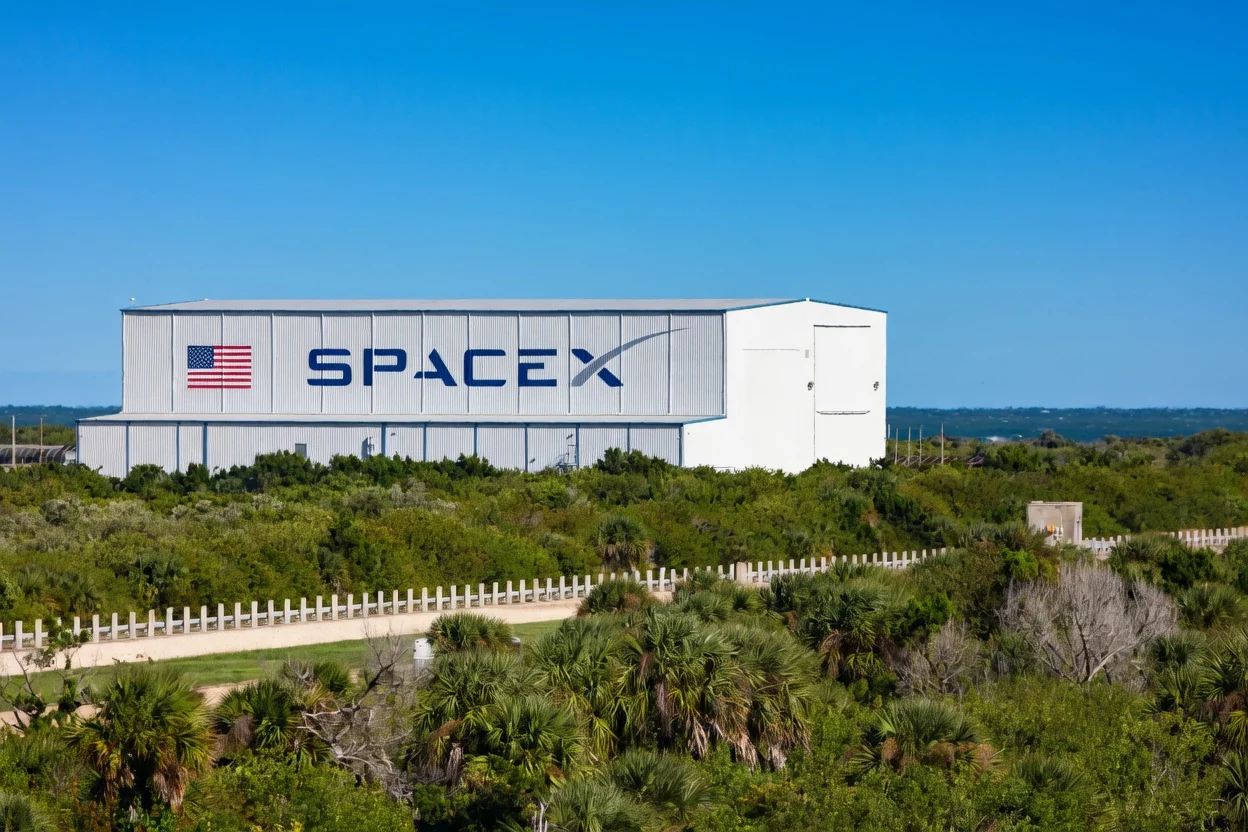
The aerospace company generated approximately $16 billion in revenue and $8 billion in profits during 2025 Elon Musk's SpaceX has submitted confidential documentation for a public stock offering that could shatter all previous IPO records. The aerospace manufacturer is pursuing a staggering $1.75 trillion market capitalization while seeking to secure $75 billion through the public markets. Should this valuation materialize, SpaceX would climb ahead of Tesla to become America's eighth-most-valuable publicly traded corporation. Musk, who simultaneously leads Tesla, has already demonstrated his ability to generate exceptional returns -- Tesla shareholders have enjoyed roughly 23,000% gains since the electric vehicle maker's 2010 market debut. Many are wondering if SpaceX can replicate that extraordinary performance. SpaceX generated approximately $16 billion in annual revenue throughout 2025, alongside $8 billion in net profits. These figures place the company on remarkably solid financial ground compared to typical IPO candidates. The aerospace giant operates Starlink, its satellite-based internet service, and recently completed a merger with Musk's xAI venture, which encompasses both the Grok artificial intelligence system and the X social platform. SpaceX isn't the only tech titan preparing for a public market entrance. Artificial intelligence powerhouses OpenAI and Anthropic are both anticipated to submit IPO filings before 2026 concludes. The trio's combined market value could surpass $3 trillion. David Solomon, Goldman Sachs' chief executive, recently noted during an earnings discussion that equity markets have demonstrated "exceptional strength" and suggested IPO momentum may intensify. Meanwhile, Morgan Stanley's CEO Ted Pick observed that investor standards for new public offerings remain "exceptionally elevated" under current market conditions. The 2026 IPO landscape reflects a clear trend toward quality over quantity. By mid-April, just 38 companies valued above $50 million had completed public debuts -- representing a 41.5% year-over-year decline. Despite fewer listings, total capital raised has climbed 35% to reach $13.3 billion, per Renaissance Capital's tracking. This week witnessed Madison Air, a filtration systems manufacturer, complete 2026's largest IPO to date, securing $2.2 billion at a $13.3 billion valuation. Shares jumped nearly 20% during opening trading. Defense technology company Arxis pulled in $1.1 billion and saw its stock surge 38% on day one. However, not every 2026 IPO has celebrated success. Cryptocurrency platform BitGo, oncology-focused biotech Eikon Therapeutics, and diabetes technology developer MiniMed are all currently trading substantially beneath their initial offering prices. While enthusiasm surrounding SpaceX runs high, historical performance data suggests investors should temper expectations for the immediate post-IPO period. Since 1999, the largest market debuts have consistently struggled during their first six months as public companies. Facebook plummeted 38% within half a year of trading. Alibaba declined 9%, General Motors slipped 8%, and Saudi Aramco shed 15%. Only Visa bucked the trend, climbing 23%. Collectively, these mega-IPOs averaged approximately 10% losses during their first six months. If SpaceX follows this historical pattern with a 10% drop, investors would witness roughly $175 billion in market capitalization evaporate. Retail investors must also consider whether the most significant appreciation has already occurred during private funding stages. While pre-IPO investment vehicles from ARK Invest, Robinhood, and Baron Capital provide some access, these funds have experienced considerable volatility throughout the past year. SpaceX has yet to disclose when it will publicly file its registration statement or establish a definitive timeline for beginning public trading.
Why Anthropic's Custom Chip Plans Could Benefit Broadcom | Investing.com
Large language model developer Anthropic is one of the top names in the artificial intelligence (AI) race and is growing incredibly fast. From the end of 2025 to early April, Anthropic says its annual revenue run rate increased by more than three times, from $9 billion to over $30 billion. To support its growth, the company is partnering with semiconductor giant Broadcom (NASDAQ:AVGO). Anthropic plans to access 3.5 gigawatts of Tensor Processing Unit (TPU)-based AI compute through Broadcom over the coming years. These are the same types of chips that Broadcom has co-developed with Google parent company Alphabet (NASDAQ:GOOGL). However, reports have emerged stating that Anthropic is exploring the development of its "own" AI chips. For investors, it is important to understand what this actually means, and by extension, why Anthropic developing its own chips could ultimately be another big win for Broadcom. As first reported by Reuters, Anthropic is "exploring the possibility of designing its own chip," with the outlet citing three unnamed sources. Notably, the report states that these discussions are early. The company may ultimately decide to simply buy chips from other parties rather than design its own. Importantly, Anthropic has yet to assemble a dedicated team to pursue this project. Nonetheless, should Anthropic commit to the project, it could have significant implications for Broadcom. Initially, it may alarm investors to hear that Anthropic could build its "own" chips, indicating it would do so completely independent of firms like Broadcom. However, evidence suggests that this path is unlikely. Typically, when companies say they want to develop their own chips, it means that they intend to partner with semiconductor experts, such as Broadcom. Many would consider the TPU to be Google's "own" chip, but in reality, they have partnered with Broadcom to develop this technology for around a decade. Meta Platforms NASDAQ: META also partners with Broadcom to develop its Meta Training and Inference Accelerator. Meanwhile, Amazon.com (NASDAQ:AMZN) partners with Marvell Technology (NASDAQ:MRVL) on its Trainium chips. This shows a clear trend; even the world's largest, most well-capitalized companies rely on semiconductor experts to help design their chips. Even with Anthropic's astounding growth, one would be hard-pressed to argue that its resources exceed those of the Magnificent Seven giants. Thus, if these firms are partnering with semiconductor stalwarts, it is more likely than not that Anthropic would do the same. If Anthropic were to partner with Broadcom to develop chips, the benefits to Broadcom could be very considerable. While Anthropic is currently purchasing TPUs, a partnership to develop specific chips alongside Broadcom would be even more attractive for the chip giant. First off, such an agreement would require more customized work on Broadcom's end. In turn, Broadcom would need to receive compensation for this added work, likely leading to a higher-margin revenue stream than the TPU deal. Margins could also improve since Google may not be part of the partnership. To the extent that there is a revenue-sharing agreement within the TPU deal between Broadcom and Google, a direct Broadcom-Anthropic partnership would remove this dynamic. This would allow more value to flow to Broadcom itself. Still, the exact financial details of the TPU deal are unknown, making this potential benefit difficult to quantify. Additionally, when Broadcom co-develops chips with a buyer, the partnership is typically multi-year. While the company already has a multi-year TPU deal in place with Anthropic, a fully custom-built solution is a different animal. Such a deal would likely deepen Broadcom's relationship with Anthropic beyond what the firms have already agreed to. With Anthropic being one of the fastest-growing AI companies in the world, this would be highly advantageous for Broadcom. Despite all of this, it is by no means certain that Broadcom would actually win a deal to develop an Anthropic chip. Anthropic also has a very strong relationship with Amazon. Amazon has invested $8 billion in Anthropic, with the company using Amazon's Trainium chips within its infrastructure. This creates the potential that Marvell, Amazon's custom chip partner, could win a deal to develop Anthropic's chip. It is important to understand that Anthropic's custom chip may never become a reality. Still, it's worth noting the potential benefits that could accrue to Broadcom or Marvell if it does. Furthermore, these companies are not the only custom chip developers in the world. Thus, competition for a potential deal doesn't end with them. However, the links between Broadcom and Marvell to Anthropic are the strongest. This is particularly true of Broadcom, given that Anthropic has announced partnerships directly with the company. Anthropic's looser relationship with Marvell is a product of its relationship with Amazon.

SpaceX IPO: Is Musk's $1.75 Trillion Offering Worth the Risk? - Blockonomi
The rocket company generated approximately $16 billion in revenue with $8 billion in profits during 2025 Elon Musk's SpaceX has submitted confidential documentation for a public stock offering that could become the most significant IPO ever recorded. The aerospace manufacturer is pursuing a staggering $1.75 trillion market capitalization while seeking to secure $75 billion through the offering. Should these figures materialize, SpaceX would surpass Tesla to become America's eighth-most valuable public corporation. Musk, who simultaneously leads Tesla, has delivered extraordinary returns for that company's shareholders -- nearly 23,000% gains since its June 2010 market debut. Market participants are anticipating SpaceX might replicate that impressive trajectory. The rocket manufacturer recorded approximately $16 billion in annual revenue during 2025, alongside $8 billion in net profit. These financials position the company significantly ahead of typical pre-IPO ventures in terms of operational maturity. Beyond its core launch business, the company manages Starlink, its satellite-based internet service. Earlier this year, SpaceX consolidated operations with Musk's xAI venture, which encompasses the Grok artificial intelligence system and the X social platform. The aerospace firm isn't the only major player preparing for public markets. Artificial intelligence leaders OpenAI and Anthropic are both anticipated to submit their own IPO filings before 2026 concludes. The combined valuation of these three entities could exceed $3 trillion. Goldman Sachs CEO David Solomon recently noted during an earnings discussion that equity markets have demonstrated "extremely resilient" behavior, suggesting IPO momentum could strengthen. Meanwhile, Morgan Stanley CEO Ted Pick observed that investor standards for IPOs remain "very high" under present market conditions. The 2026 IPO environment shows a clear trend: reduced volume but increased deal size. Data through mid-April indicates 38 companies valued above $50 million have completed public offerings -- representing a 41.5% decrease compared to last year's corresponding timeframe. However, aggregate capital raised has climbed 35% to reach $13.3 billion, per Renaissance Capital statistics. This week witnessed filtration specialist Madison Air complete a $2.2 billion raise, marking 2026's largest IPO to date with a $13.3 billion valuation. Shares surged nearly 20% during initial trading. Defense technology company Arxis secured $1.1 billion and experienced a 38% first-day pop. Not all 2026 debuts have enjoyed similar success. Cryptocurrency platform BitGo, oncology biotech Eikon Therapeutics, and diabetes device manufacturer MiniMed are all currently trading substantially beneath their initial offering prices. Despite considerable enthusiasm surrounding SpaceX, historical performance data suggests mega-IPOs frequently face challenging initial periods. Since 1999, the majority of large-scale public offerings have underperformed during their first six months of trading. Facebook plummeted 38% within half a year of its listing. Alibaba declined 9%, General Motors dropped 8%, and Saudi Aramco fell 15%. Visa stands as the outlier, gaining 23%. Collectively, the largest IPOs have averaged roughly 10% losses six months post-debut. For SpaceX, a comparable 10% retreat from its proposed valuation would eliminate approximately $175 billion in market capitalization. Retail investors must also consider whether the most substantial returns have already been captured through private funding rounds. Pre-IPO investment vehicles offered by firms such as ARK Invest, Robinhood, and Baron Capital provide early access, though many have experienced significant volatility throughout the year. SpaceX has not disclosed a definitive public filing date or established a confirmed timeline for its market listing.
Deutsche Börse Invests $200 Million in Kraken Parent Payward to Expand Crypto Push
Deutsche Börse invests $200M in Kraken parent Payward for a 1.5% stake, valuing the crypto exchange at $13.3B ahead of its planned US IPO. Germany's Deutsche Börse has acquired a $200 million minority position in Payward Inc., the parent of crypto exchange Kraken, securing a 1.5% fully diluted stake that values the trading platform at roughly $13.3 billion. According to Bloomberg, the secondary share purchase is slated to close in the second quarter of 2026 once regulatory clearance is obtained. The transaction deepens a strategic partnership first struck in December 2025 between the Frankfurt exchange operator and Kraken. Visit: Kraken Exchange Review 2026 : Fees, Features, Security & Pros and Cons It arrives as traditional finance giants race to plant flags in digital asset infrastructure, with NYSE owner Intercontinental Exchange recently backing ICE invests in OKX rival crypto exchange OKX at a $25 billion valuation. Deutsche Börse Builds Hybrid Market Infrastructure With Kraken The expanded alliance covers regulated crypto trading, tokenized financial products, derivatives offerings, and tailored liquidity provisions for institutional clients operating across diverse international markets. Custody, settlement, collateral management, and asset tokenization services are now being unified within a single operational framework for professional market participants. Deutsche Börse's move into Deutsche Börse custody further strengthens its push into a hybrid market infrastructure. Thomas Book, a member of Deutsche Börse's management board, called Kraken "a perfect partner for us to further accelerate on this path of creating a fully hybrid market infrastructure." Book emphasized the aim to build "one integrated value chain" regardless of whether an asset is tokenized or fully digital. The German group has been wiring its businesses toward that hybrid vision for several months now. Its Clearstream unit launched a tokenized securities trading platform in November, while foreign-exchange venue 360T is lined up to integrate directly with Kraken under the terms of the earlier accord. Kraken IPO Nears as Crypto Market Turbulence Deepens The investment lands just ahead of Kraken's planned US public listing, for which the firm filed a confidential draft S-1 in November. An $800 million funding round was completed that same month, which valued the exchange at $20 billion, roughly a third higher than the figure implied by Deutsche Börse's latest purchase. Additionally, Kraken's institutional trajectory has been reinforced by key regulatory wins on both sides of the Atlantic, including a recent Kraken regulatory approval milestone. The company became the first crypto firm to gain access to the Federal Reserve's core payments system in March, though the approval later drew scrutiny from US lawmakers questioning the Fed's transparency. The deal arrives with Bitcoin trading near $74,300, still roughly 40% below its October 2025 record of $126,198, yet institutional appetite for digital asset infrastructure remains undimmed. A Kraken spokesperson said today's tie-up reflects "the trust that has developed on both sides."

Anthropic CEO to meet White House chief of staff amid Pentagon AI dispute, Axios reports By Reuters
April 17 (Reuters) - Anthropic CEO Dario Amodei is slated to meet White House chief of staff Susie Wiles on Friday, in a sign of a breakthrough in the artificial intelligence startup's dispute with the Pentagon, Axios reported. The potential meeting comes as U.S. President Donald Trump's administration acknowledges the advanced capabilities of Anthropic's new AI model, Mythos, for its sophisticated cybersecurity defense breaching abilities, according to the report. White House and Anthropic did not immediately respond to requests for comment. Reuters could not independently verify the report. It would be "grossly irresponsible" for the U.S. government to deprive the country of the technological advantages offered by the new model, suggesting such a move would benefit China, Axios reported, citing a source close to the negotiations. Announced on April 7, Mythos is being deployed as part of Anthropic's "Project Glasswing," a controlled initiative under which select organizations are permitted to use the unreleased Claude Mythos Preview model for defensive cybersecurity purposes. Bloomberg News reported on Thursday that the U.S. government is planning to make a version of Anthropic's Mythos available to major federal agencies. Anthropic was discussing Mythos with the Trump administration, co-founder Jack Clark said on Monday, even after the Pentagon cut off business ties with the U.S. AI lab following a contract dispute.

I tested Anthropic's new Claude Opus 4.7 -- and it's the first AI that actually 'reasons' through tasks
7 stress tests to see if Claude Opus 4.7 can really code, research, and design autonomously Anthropic just released Claude Opus 4.7, and after testing it, I can say that the difference I noticed immediately is how the model listens and responds to my questions. I put the latest update through its paces with a battery of tasks designed to trip it up: autonomous coding, self-verifying research and even some home design advice. What I found was a model that's moving away from being a mere chatbot and toward being a reliable digital architect. If you're used to AI taking 'creative liberties' with your requests, Opus 4.7 is about to be a major wake-up call. Here are seven prompts that highlight what the model can do now. 1. Autonomous engineering Prompt: "Build me a full task-tracking web app with drag-and-drop columns, filters, and local storage. Don't ask me clarifying questions, just ship it." Within a few minutes, Claude Opus 4.7 built a single-file HTML task board with drag-and-drop for both tasks (between and within columns) and column reordering, plus filtering by priority, due date, labels and live search. Everything persists to localStorage, and there's export/import/reset for moving data around. The model did exactly what I asked to create a sandboxed Linux environment where it can write files and then share them with me via the outputs directory, which is how I got a downloadable .html file instead of just a code block in chat. 2. Self-verification Prompt: "Research which electric SUVs have the best real-world range in cold weather, then check your own answer and flag anything you're not sure about before you give it to me." The model took my two-part request seriously and separated what it knows from what it was guessing then built the response around that split. It ran a web search for recent info and then fetched the full Recurrent study directly. After that, it organized the answer around one authoritative ranking (using Recurrent's actual ranked list and their specific findings). Lastly, it ran a self-check and split uncertainties into categories. 3. High-resolution vision Prompt: "Here's an image of my kitchen. Tell me everything you notice about the layout, lighting, and what's on the counters, then suggest three changes." The AI described the layout, lighting and surface contents of my breakfast nook based on what was visible in the photo, then offered three suggested changes. The suggestions focused on adding layered lighting, editing the pillow arrangement and restyling the tabletop centerpiece. Then, it closed by offering to go deeper or recommend specific products. Not sure if I will implement these changes, but it was interesting to see what Claude would do. 4. Creative 'taste' Prompt: "Write me a one-page cover letter for a senior product manager role at a climate-tech startup. I want it to sound like a human wrote it." This was a really interesting test, especially because I am not actually applying for a job. I told Claude to "make something up" about me and it pushed back several times (something ChatGPT rarely does). It wanted real specifics. Once I gave some details it then drafted it using my actual words about climate and tech working together. It left bracketed placeholders for professional wins and included a candid paragraph about the corporate-to-startup trade to make it read as human-written. Seriously impressive! 5. Taste with autonomous engineering Prompt: "Design a an app for my ready-to-eat cold pizza company 'Crusted.' Make it look like something a real design studio would ship, not a generic SaaS template." The model built a single-screen ordering app mockup for Crusted with an editorial/deli aesthetic. The app has a warm paper palette, stylish fonts and CSS-only pizza illustrations that vary by variety. After the model finished it suggested that I do this type of project in Claude Cowork next time. 6. Vision and self-verification Prompt: "Take this messy PDF research paper and extract the key findings, cross-check the numbers in the charts against the text and flag any inconsistencies." The first upload for this prompt, I purposely made a mistake to see if Claude would recognize it. Sure enough, it did immediately and even said, "I can't go any further. This appears to be the wrong document." Once I uploaded a whitepaper on Insomnia and Mental Health it extracted the main statistical claims and flagged problems within the text and even said the images were wrong/didn't match the text well enough. Finally, it noted that the information should be cross-checked, which was a correct suggestion as the PDF is several years old and just happened to be one of the files on my computer. 7. Decision making Prompt: "I'm trying to decide between three job offers. Aks me the questions that actually matter, then give me your real recommendation." This prompt is completely hypothetical, but I could see it being useful for someone with a tough decision. Claude immediately asks questions in a multiple choice fashion. They can be answered or skipped (at which time Claude will ask a new question). Each question I answered led to Claude diving deeper into the decision process. For tricky life scenarios, this seems like it could be a good place to start to help lay all the pros and cons on the table. The takeaway After stress-testing these prompts, the conclusion is that Opus 4.7 is effectively the most sophisticated AI currently available to the public. It has crossed the threshold from a reactive tool to a genuine collaborator. It's obvious that there is a huge degree of 'thought' behind its outputs and a level of discernment evident whether it was pushing back on my fictional job details or identifying errors in a legacy PDF. We're paying a higher 'token tax' for this version, but given the autonomy and self-correction on display, it's an easy trade-off to make. Have you tried it yet? Let me know in the comments what you think of this new model. Follow Tom's Guide on Google News and add us as a preferred source to get our up-to-date news, analysis, and reviews in your feeds.

First SpaceX Mission to Mars Coming in 2028, Falcon Heavy to Launch New Mars Rover
American space agency NASA said it selected the SpaceX Falcon Heavy rocket to launch ESA's Rosalind Franklin rover to Mars in 2028. The last time humanity sent a rover to Mars was in 2020, when the Perseverance lifted off on top of an Atlas V rocket and headed out to the Red Planet to make history. The next rover is not scheduled to leave our world until 2028, but when it does, it will mark the world's largest private space company's first mission to Mars. The rover I'm talking about is the Rosalind Franklin, the fruit of the European Space Agency's (ESA) ExoMars program, and the vehicle that will send it on its way to the neighboring planet has now officially been selected by NASA. It's the SpaceX Falcon Heavy rocket that will do the job, lifting off from Launch Complex 39A at NASA's Kennedy Space Center in Florida no earlier than late 2028. The moment is so important for Elon Musk's company that even the man himself announced the decision on X (see tweet below this text). The announcement that NASA will go for the Falcon Heavy for launch is part of a larger set of decisions made by the American space agency concerning the Franklin. That's because, although the ESA is responsible for designing the spacecraft, the carrier module, and the landing platform, and will be in charge of rover and surface operations, NASA is knee-deep in the project as well. More specifically, the Americans will supply "designated hardware and services" to support the mission, including the launch service, braking engines for the rover's lander platform, and radioisotope heater units for the rover's internal systems. Important as it was, the Perseverance pales in comparison to the Franklin. That's because this new machine, the seventh overall to be sent to Mars, will be the first of its kind to search for signs of life, past or present, deep beneath the surface of the planet. It will also be Europe's first rover to Mars, and its most ambitious space program to date. Named in honor of a British chemist who spent most of her life looking into the inner workings and secrets of DNA, the machine is the result of a continent-wide effort that involved, among others, giants Thales Alenia Space and Airbus. The main thing that sets this rover apart from all the others is the massive drill it is equipped with. The thing is so big that it will have no problem digging deeper into the planet's crust than ever before, reaching up to two meters (6.6 feet) below the surface. The depth is crucial to finding potential traces of life, because, as the previous six rovers (five American and one Chinese) have already shown over years of operation, there are slim chances of us finding something useful on the surface or just below it. That's because depth provides crucial protection against radiation and extreme temperatures. By the time it launches, the Franklin will be some eight years overdue. The rover was supposed to leave our planet in 2020, carried into space by a Russian rocket. But then a series of technical issues pushed the launch to 2022, then that country decided to invade Ukraine, all hell broke loose, and the launch was scrapped. As it stands, the first SpaceX mission to Mars (if simply launching a rover it had nothing to do with can be called that) will get it off the ground, setting it on a course to arrive on Mars' Oxia Planum two years later, in 2030, smack down between the planet's global dust seasons. Once in orbit, the spacecraft carrying the rover will release a new kind of lander being put together by Airbus, which will drop and then glide down attached to parachutes and slowed down by retro rockets. Once on the surface, the lander will extend two ramps, giving the Franklin the ability to choose which way to go, depending on risk assessments and what can be found on the ground. From the get-go, the machine will be able to operate autonomously to some degree. As for the region selected for the rover to do business in, Oxia Planum is believed to have once been water-rich terrain, making it ideal to search for signs of life. Located near the Martian equator, the plain contains sedimentary deposits that are nearly four billion years old, giving us a chance to really look back into the past of the planet. The entire site is 124 miles (200 km) wide, and it meets all the landing criteria for the rover, including latitude, elevation, and surface slopes. My only hope is that the Franklin ends up in just the right place in this rather large area for its mission to succeed. Looking back at how our search for Martian life went with the previous rovers, and the many exciting discoveries made by the Perseverance, chances are we will finally be able to confirm the presence of alien life, past or present.

Yorkshire rail chaos after 'immediate threat to life' on bridge
Disruption is expected across the LNER network after a concern for safety call at Retford Station(Image: Google Maps) Major disruption is impacting LNER services today (Friday, May 17) after trains were stopped overnight due to an immediate threat to life. At 7.30pm on Thursday evening, an LNER driver contacted Network Rail after spotting a person the railway close to Retford Station in Nottinghamshire, with the British Transport Police contacted soon afterwards. The police arrived alongside Network Rail and a vulnerable man was found on top of a railway bridge over a river at 8.20pm. As a result, the railway was closed to allow officers to manage the situation. Thankfully, the incident ended safely at around 3.20am this morning. A British Transport Police spokesperson said: "We were called just before 7:40pm yesterday (16 April) to reports of a trespasser on the line near Retford railway station. "Officers responded alongside Nottinghamshire Police and other emergency services, and a man was located in a precarious position on a bridge. A specialist police negotiator also attended the scene to bring the incident to a safe conclusion due to concerns for the man's welfare. "At 3:20am on 17 April the man was arrested on suspicion of obstructing the railway and taken into police custody where he remains." However, LNER is now expecting significant disruption to its services as crews and trains have been left out of position. LNER trains pass through Yorkshire on the East Coast Main Line to Edinburgh and London, at Doncaster, Leeds, Wakefield, York, and more. David Horne, Managing Director at LNER, said: "I would like to offer my profound apologies to all those whose journeys have been affected. We are aware that people were waiting at stations and onboard our trains for a long time, and we know that our customers will have been travelling for important reasons. "I want to reassure everyone that our teams, both on the ground and behind the scenes, were working hard to get people moving towards their destinations as quickly as possible. However, due to the sensitivity of the incident and with the safety of everyone involved being paramount, we could only run our services through the affected area when British Transport Police determined it was safe to do so. "We thank our customers for their patience and understanding while teams responded to the sensitive situation." Any LNER customers with tickets dated Thursday, April 16, or Friday, April 17, can use their existing tickets on any LNER service to their destination up to and including Monday, April 20. LNER recommends customers make a new seat reservation for free via the LNER App, its website, or at its Travel Centres. Gunnar Lindahl, joint operations director for Network Rail and LNER, said: "Our teams worked closely with the emergency services and train operators during this serious and sensitive incident to keep everyone safe and reopen the railway as soon as it was safe to do so. "We're sorry to anyone whose journey was affected while the situation was brought to a safe conclusion. Once the line was clear, our teams worked quickly to restore services and support operators in getting trains on the move again." Get all the latest and breaking news in Yorkshire by signing up to our newsletter here.

What is Asteroid Shiba Crypto? Elon Musk SpaceX New Mascot?
Disclaimer: Crypto is a high-risk asset class. This article is provided for informational purposes and does not constitute investment advice. You could lose all of your capital. Asteroid Shiba is circulating on crypto social feeds with Elon Musk and SpaceX branding attached. But is it the real deal? Dogecoin, the original Musk-adjacent meme coin, is trading at under 10 cents with 7% gain this week, adding fuel to any Shiba-themed narrative that catches momentum. No confirmed SpaceX or Musk affiliation of any kind, but the meme coin sector is genuinely hot right now, which is precisely why names like this gain search traction. Total crypto market cap sits at $2.63T on the week, with Bitcoin consolidating at 4 months high. The macro backdrop is bullish for memecoins. Discover: The best pre-launch token sales What is Asteroid Shiba Crypto? Asteroid Shiba is a crypto meme coin launched on the Ethereum that draws its entire identity from a real-world space event. The token's mascot is a plush Shiba Inu toy named Asteroid, which flew aboard SpaceX's Polaris Dawn mission in 2024 as the official zero-gravity indicator. Designed in just 30 minutes by 15-year-old Liv Perrotto, a pediatric cancer patient who later passed away, the toy became an instant symbol of childhood wonder, resilience, and space exploration. Asteroid Shiba positions itself as more than a typical dog-themed coin; it merges internet meme culture with a verifiable, heartwarming backstory tied to Elon Musk's SpaceX and his own Shiba Inu, Floki. The coin's narrative gains depth from its charitable roots. Proceeds from related merchandise originally supported St. Jude Children's Research Hospital, and the plush's journey captured global attention when it floated weightless alongside the Polaris Dawn crew. Liv's quick sketch, inspired by Floki, turned a personal act of creativity into a tangible piece of space history. The memecoin is pumping hard today, with its price exploding by over 80,000% in the past 24 hours and market capitalization surging past $10 million amid heavy trading volume. The catalyst is a viral revival of the Polaris Dawn plush story across social media, amplified by Elon Musk's recent response to a request naming Asteroid the official X mascot. But is it safe? According to GoPlus, as stated in Coingecko page; "the contract creator can make changes to the token contract such as disabling sells, changing fees, minting, transferring tokens etc. Exercise caution." Upon checking, the cryptonews team found that there are also some big clusters in its holders list. Is it safe? Discover: The best crypto to diversify your portfolio with Bitcoin Hyper Offers What Meme Token Speculation Cannot: Verifiable Infrastructure Upside When a meme coin search dead-ends, the smarter question becomes: where is a real early-stage opportunity right now? Traders chasing Asteroid Shiba's SpaceX narrative are likely looking for asymmetric upside, and that's a legitimate instinct applied to the wrong target. Bitcoin Hyper ($HYPER) is a Bitcoin Layer 2 project with a concrete technical case: it's the first Bitcoin Layer 2 to integrate the Solana Virtual Machine, delivering low-latency smart contract execution on Bitcoin's security layer, faster performance than Solana itself. The presale has raised $32 million, way more than the current Asteroid's market cap. It's early with the price currently going for just $0.0136, with 36% staking APY available now. It has a decentralized canonical bridge for BTC transfers already in the architecture. Those are verifiable numbers, not social media rumors. The presale momentum has been documented across multiple funding milestones.

'Credit card chaos'? Financial institutions bet big on repeal of first-of-its-kind Illinois law
"Credit cards may not work for sales tax or tips starting July 1." By now, you've heard that claim, but whether it's true depends on who you ask. The ads -- funded by the Electronic Payments Coalition of banks, credit unions and card companies -- argue that Illinois lawmakers must repeal the state's first-in-the-nation Interchange Fee Prohibition Act, slated to take effect July 1. That law prohibits financial institutions from charging "swipe," or interchange, fees on the tax and tip portions of consumer bills and bans them from making up the fees elsewhere. If it's not repealed? "Credit card chaos" may ensue, the ads warn. While the financial institutions are quick to cite a list of things that could hypothetically happen if the law isn't repealed, it's harder to pin down what's being done and by who to comply with the law two years after it was signed. "The global payment system is not set up to where any one party to a transaction can make this happen on their own," Ashley Sharp, of the Illinois Credit Union League said at a Capitol news conference Wednesday. "There are multiple parties to every electronic transaction." The financial institutions are adamant that the global payment system as it exists today can't discern the difference between tax, tips and total, and it would need to be retooled at a heavy cost to banks, card companies, merchants, point-of-sale companies and more. Instead of complying, they say, the card companies could decide to stop serving Illinois or drastically alter the way the consumer interacts with merchants at the point of sale. An alternate reality But as with all matters in Springfield, there's another big-monied and powerful group on the other side of the issue. The Illinois Retail Merchants Association says the credit card companies already track all the information they need, and it's a "complete fabrication" to say that it would take more than a mere coding change to implement the state law. Take your restaurant receipt, for example. "You have the subtotal, the sales tax, the tip, if it's applicable, and then the grand total, right? All they have to do is move their fee from the grand total to the subtotal," Rob Karr, president of IRMA, said. While card networks operate in over 200 countries with as many different laws, they say the only information the card processors ask for in any of them is the grand total. The receipt example, they say, erroneously conflates the point of sale with the actual processing of payments. In short, the two sides present starkly different realities -- a muddying of the water that's not uncommon at the Capitol. But there is one concrete truth: The financial institutions have a lot to lose, and not just in Illinois. The tax and tip prohibition would shave approximately 10% off the revenue that banks and credit unions receive from retailers via interchange fees -- a transfer of wealth likely to number in the hundreds of millions. It would also create massive noncompliance fines. And then there's the issue of precedent. The banks challenged the law but lost in court. Absent a successful appeal, the remaining battlefields would be other state legislatures. If the card companies implement Illinois' law, they'd be providing a blueprint for states across the nation to emulate -- driving potential revenue loss into the billions. Thus far, Ben Jackson of the Illinois Bankers Association said, it hasn't opened the floodgates, although some 30 states are considering similar action. Still, it's no wonder then, that the Electronic Payments Coalition has pulled out all the stops in its seven-figure ad campaign to repeal the law. How we got here To fully understand the ongoing slugfest between banks and retailers, you have to go back to May 2024. But first, an explanation of interchange fees. Each time a shopper swipes their credit or debit card, it sets off a complicated string of payments between banks. The retailer's bank pays an "interchange fee," typically around 1% to 2% of the transaction cost, to the consumer's bank. The fees include both a set amount and a percentage of the transaction, but the credit card companies, namely Visa and Mastercard, control how they're calculated. The financial institutions say interchange fees help fund credit card reward programs and security upgrades and provide compensation for bearing the risk of fraud. The hit to interchange revenue, Jackson said, would inevitably lessen reward program offerings. Sharp said credit unions, as not-for-profit cooperatives, use the revenue to offer lower rates to customers. But the fees have long drawn the ire of retailers and small businesses, which sometimes pass the costs directly to consumers via a surcharge on bills. It comes down to this: The retailers don't think they should have to pay a fee on the tax and tip portion of a transaction that they don't keep. And the financial institutions say if they're handling those funds, they should be compensated for doing so via interchange fees. As for the Illinois law's passage, it was, as the ads claim, tucked into the budget two years ago, giving little time for the bankers et al to mount an opposition campaign. Gov. JB Pritzker and lawmakers agreed to raise about $101 million in revenue to plug a budget hole by putting a $1,000 monthly cap on the "retailer's exemption," a tax break retailers claim for being the state's de facto sales tax collectors. But the retailers weren't going to take that lying down, and IRMA successfully lobbied for the long-sought tax and tip exemption. After the law passed, the financial institutions quickly sued. To avoid uncertainty as the case played out, lawmakers delayed the measure's effective date from July 1 last year to the same date this year. U.S. District Judge Virginia Kendall ultimately determined in February that Illinois is within its right to regulate the fees. She partially rejected a portion of the law that prohibited banks from sharing certain data, which the credit unions say creates different rules for different institutions and further uncertainty. The case is now pending appeal, and the legislative process is starting anew. This time, the financial institutions have mounted a dual front in the court of public opinion. The cost of compliance Karr estimated the prohibition would bring in "north of $200 million" for retailers -- essentially letting them pocket that sum instead of transferring it to the banks. A study by the Electronic Payments Coalition pegged the number at $118 million, estimating that about 40% of the interchange windfall would go to the 40 largest retailers. Even so, Karr said, the largest retailers are subject to the $1,000 monthly retailer exemption cap that accompanied the swipe fee ban, while smaller retailers don't reach that mark. Add in their cut on reimbursed swipe fees, and it amounts to what Karr calls "the largest small business relief that Illinois has ever passed." But Jackson argued the cost of retailers complying could eat up any benefits for smaller retailers. As for compliance, Kendall wrote in her February opinion that "It is an open question whether the transaction process could adapt to the impact of the IFPA in time." "The Interchange Fee Provision is indisputably disruptive, requiring additional investments, hires, and new procedures to replace the current process for authorizing and settling debit and credit card transactions," she wrote. The financial institutions argue it can't all be done by July 1. Kendall said the parties involved know what's required of them. "But those procedural changes are the product of an ecosystem built by Payment Card Networks and financial institutions to facilitate consumer transactions," she wrote. "And these entities understand the onus of IFPA compliance is on them." Per the coalition, compliance "would require coordination across the industry and regulators worldwide," including with the International Organization for Standardization. It would also require more data collection, creating privacy concerns, they say. Those global changes would require testing and certification of new equipment. Depending on their card companies or point-of-sale vendors, retailers may need to invest in new equipment, software and training. Banks and credit unions may also have to add staff to process rebates under the law. It allows retailers or their processing companies to petition their financial institutions for reimbursement on fees charged on tax and tips within 180 days of a transaction. If financial institutions don't comply within 30 days, the law provides for civil penalties of $1,000 per each transaction -- and hundreds of millions of these transactions happen annually. So will that chaos come to fruition? Instead of complying, according to the coalition's literature, the card companies could just stop processing cards altogether in Illinois. They could also stop processing tax and tip portions or require two separate swipes for the subtotal and the tax and tip portion of bills. Such claims aren't uncommon in the legislature's annual adjournment push. Sports betting companies, for example, threatened to leave Illinois when the state raised its gambling taxes in the same budget cycle that yielded the interchange fee prohibition two years ago. Instead, they adapted, because Illinois has a lot of bettors -- and there's even more card users. Karr accused the coalition of ulterior motives in their use of hypothetical language. "There is no need for chaos," he said. "The only chaos is if the credit card companies impose it themselves on their consumers." Ultimately, lawmakers will have to weigh how compelling the arguments are, if the courts don't intervene first. It's possible that the 7 Circuit appellate court -- or even the U.S. Supreme Court -- gives the banks a win. But oral arguments are slated for May 13, meaning the appellate court might not rule by the time the law is slated to take effect. Adding a new wrinkle on Wednesday, the federal office of the Comptroller of the Currency, a subset of the U.S. Treasury Department, appeared poised to issue an order preempting Illinois' law. It hadn't been published as of late Wednesday, making its impact unclear. "While the office has failed to explain their reasoning or allow public review, it's clear the goal is an end-run around the legal process after a judge recently upheld the law," Karr said. As for the legislative prospects, state Rep. Margaret Croke, D-Chicago, says she's seen enough to be concerned. The Democratic nominee for comptroller is sponsoring a bill to fully repeal Illinois' interchange fee prohibition. But as of last week, she said she wasn't planning to move it. Instead, she finds it more likely that lawmakers once again delay the law's implementation. "If this is a policy that the state of Illinois decides they're going to want to have, then we need to make sure we're doing it properly," she said. By Jerry Nowicki, Capitol News Illinois Jerry Nowicki is the editor-in-chief of Capitol News Illinois, a nonprofit, nonpartisan news service that distributes state government coverage to hundreds of news outlets statewide. It is funded primarily by the Illinois Press Foundation and the Robert R. McCormick Foundation. This article first appeared on Capitol News Illinois and is republished here under a Creative Commons Attribution-NoDerivatives 4.0 International License.

Anthropic talks to EU, including on its cyber security models, Commission says
BRUSSELS, April 17 (Reuters) - U.S.-based artificial intelligence company Anthropic is currently in discussion with the European Commission on its different models, including its cyber security ones, which are not yet available in the EU, the Commission said on Friday. Anthropic has already committed to respect the European Union's general purpose artificial intelligence code of practice, spokesman Thomas Regnier told reporters in Brussels. "In this framework, there is an obligation to assess and mitigate risks that could come from a service that may or may not be offered in Europe," he said. (Reporting by Inti Landauro, editing by Bart Meijer)

Nervous Indian fintechs push Anthropic for access to Mythos- Moneycontrol.com
Mythos raises global fears over cybersecurity vulnerabilities India's major financial technology firms are pushing Anthropic PBC to give them early access to Mythos, the artificial intelligence model that has sparked global fears about a new era of cyberattacks. One97 Communications Ltd., Razorpay Software Ltd. and Pine Labs Ltd. are among the Indian companies that have pushed the San Francisco-based AI developer to let them test Mythos and detect vulnerabilities on their own systems. Their requests came after Anthropic announced a limited roll-out of its latest large-language model, which it considers too dangerous to release more widely. "We had an urgent call with Anthropic to check when they're creating a second list of companies that will get access to Mythos," said Vijay Shekhar Sharma, founder and chief executive of One97. Sharma said Anthropic representatives asked him what One97 would do with Mythos, and how it could help the company. The questions, he suggested, reflect just how seriously Anthropic is weighing who gets near this technology -- and why. "Is this the beginning of the end?" said Sharma, adding that the anxiety over such models is existential not just for businesses but for financial systems. "A country's technology networks and financial systems could be infiltrated from any node anywhere. You don't need to fire missiles to go to war anymore." The push among Indian firms to win access to Mythos reflects fears across the world. Regulators, central bankers and executives have been on high alert after it emerged that Mythos can discover cybersecurity vulnerabilities that have gone undetected for years. Anthropic first stress-tested Mythos internally before raising the alarm and extending access to a select group of a dozen companies, including Amazon Web Services Inc., Apple Inc., and JPMorgan Chase & Co. The AI company is looking to cautiously expand that access through a program it calls Project Glasswing. The move sent tremors through global financial circles, with US Treasury Secretary Scott Bessent calling the model "a step function change in abilities" -- meaning a sharp jump. European Central Bank President Christine Lagarde warned this week about the risk if Mythos fell into the wrong hands. The question now haunting boardrooms and government ministries alike is whether Mythos could enable the mass looting of bank accounts, paralyze international payment systems or even trigger a full-blown crisis in the global financial system. The Reserve Bank of India didn't immediately respond to an email on whether the banking regulator or India's banks and insurers were taking any steps to assess the risks from Mythos. Security teams are already working overtime at Razorpay, a company whose platform businesses use to collect payments through credit and debit cards, online banking and electronic wallets. "It's a race against time for startups like us," said Razorpay's cofounder and chief executive officer Harshil Mathur. "We've asked for Mythos access as we want to test the weaknesses on our platform and strengthen our defenses." Mathur said that in the startup groups he's part of, Mythos has been the hot topic of discussion for the past 10 days. Anthropic may expand the roll-out with stringent contracts on limited use to test companies' own infrastructure, disallowing commercial use, he said. India is home to millions of engineers who write code for Wall Street banks, insurers and credit card giants. The country has become the second-largest market for Anthropic's Claude model, with coders mainly using it for building apps, debugging software and modernizing IT systems. "Regulators will push for more stringent security norms owing to the threat of increased attacks," said Pine Labs' Chief Executive Officer Amrish Rau. "Security can't be a compliance checkbox anymore."
Nikita Bier Calls Out Perplexity's Aravind Srinivas Over Undisclosed Ad Campaigns: 'Can You Please Stop?'
X executive publicly challenges Perplexity CEO on integrity over undisclosed promotional posts. ShowQuick Read Summary is AI-generated, newsroom-reviewed * Nikita Bier accused Perplexity CEO of running undisclosed promotional campaigns on X * Perplexity released an AI-integrated PC app turning computers into AI employees * Bier linked allegations to violations of X's terms of service by Perplexity Did our AI summary help? Let us know. Switch To Beeps Mode X's head of product, Nikita Bier, has called out Perplexity CEO Aravind Srinivas for allegedly running "undisclosed promotional campaigns" about his artificial intelligence (AI) company. The X executive said running such campaigns did not reflect well on the integrity of his company. Bier was responding to a Perplexity post about the release of its Personal Computer, which integrates the AI tool with Mac App, essentially turning a computer into an AI employee. "Can you please stop the undisclosed promotion campaigns? It deceives users and it does not reflect well on your company or your integrity," Bier posted and tagged Srinivas. Notably, Bier quote-tweeted a post from Simon Goddek, a PhD biotechnologist and CEO of premium supplement brand Sunfluencer. In his posts, Goddek alleged that Perplexity was violating X's terms of service (TOS) by running undisclosed ad campaigns. Goddek also shared a screenshot claiming it shows an advertisement from Perplexity, which has not been disclosed as a paid promotion. Also Read | Elon Musk Reveals 'Best Way' To Deal With Mass Unemployment Caused By AI Social Media Reactions As Bier's post went viral, social media users were mixed in their response with a section agreeing with Bier's assessment while others said Perplexity and Srinivas were simply promoting their product. "The "No Paid Promo Tags" line tells you everything. If you need to hide the disclosure, you already know it's dishonest," said one user, while another added: "Undisclosed ads are basically soft manipulation. People notice more than you think." A third commented: "I knew something was off, I noticed it yesterday. There were many accounts posting within minutes, getting 10k+ views almost instantly, and several reposts too, but barely 10 likes or comments. It didn't add up at all." A fourth said: "Nikita, they launched their product and did promotion, why are you getting restless? Focus on your own lane. Right now it looks like you joined the launch party without invitation." Show full article Track Latest News Live on NDTV.com and get news updates from India and around the world Nikita Bier, Aravind Srinivas, Perplexity AI
Anthropic CEO to meet White House chief of staff amid Pentagon AI dispute, Axios reports
April 17 (Reuters) - Anthropic CEO Dario Amodei is slated to meet White House chief of staff Susie Wiles on Friday, in a sign of a breakthrough in the artificial intelligence startup's dispute with the Pentagon, Axios reported. The potential meeting comes as U.S. President Donald Trump's administration acknowledges the advanced capabilities of Anthropic's new AI model, Mythos, for its sophisticated cybersecurity defense breaching abilities, according to the report. White House and Anthropic did not immediately respond to requests for comment. Reuters could not independently verify the report. It would be "grossly irresponsible" for the U.S. government to deprive the country of the technological advantages offered by the new model, suggesting such a move would benefit China, Axios reported, citing a source close to the negotiations. Announced on April 7, Mythos is being deployed as part of Anthropic's "Project Glasswing," a controlled initiative under which select organizations are permitted to use the unreleased Claude Mythos Preview model for defensive cybersecurity purposes. Bloomberg News reported on Thursday that the U.S. government is planning to make a version of Anthropic's Mythos available to major federal agencies. Anthropic was discussing Mythos with the Trump administration, co-founder Jack Clark said on Monday, even after the Pentagon cut off business ties with the U.S. AI lab following a contract dispute. (Reporting by Jaspreet Singh in Bengaluru; Editing by Anil D'Silva)
Data shows the colossal scale of Compass the megabrokerage
New data released last week gives a clearer picture of the effect of consolidation on the real estate industry. A trove of data that serves as a benchmark for the real estate industry was released last week, providing a clear picture of the ongoing brokerage consolidation trend. On its own, Compass was already the largest real estate brokerage by sales volume before it acquired Anywhere Real Estate, the largest enterprise by volume (Anywhere included many franchise brands), earlier this year. Combined, the megabrokerage Compass International Holdings is far larger than its closest competitors according to nearly every metric tracked by the industry, the data show. The data, collected and compiled by T3 Sixty, provides a look back at the performance of brokerages and franchisors in 2025. Inman used the publicly available data to create a tool that highlights recent changes among the biggest companies in the industry, which remains in a consolidation phase in 2026. The tool, which can be viewed with or without the combined Compass-Anywhere brokerage, shows which companies are growing fastest, which are retracting, and provides other insights that set the stage for how titans of the industry are competing with each other. Sales volume The sales volume data provides a look at the companies before the merger between Compass and Anywhere closed in January 2026. The visualization shows that the combination creates a megabrokerage that is far larger than its competitors, including franchisors. Keller Williams' standing as No. 2 enterprise by volume didn't change, as the franchisor was second in sales volume behind Anywhere before the merger and now trails Compass World Holdings. "To represent more than one-third of the top 500 brokerages is a clear signal of the strength and scale of our model," Keller Williams CEO Chris Czarnecki said in a statement. "We're defining how top-performing real estate businesses are built." Compass and Anywhere generated more combined sales volume than the next three leading enterprises -- Keller Williams, REMAX and HomeServices of America -- combined, the data show. HomeServices of America lost the largest percentage of sales volume year over year, the data show, dropping nearly a quarter of its volume in 2025. Agent gains, losses The data further shows which enterprises are gaining versus losing agents. LPT was the fastest-growing brokerage last year, adding 43 percent more agents than the year before. Deloitte named LPT the second-fastest-growing company in the country last year. LPT also outpaced the Real Brokerage, whose agent count grew 20 percent last year, Compass, which added 16 percent, and Redfin, which added 14 percent. "We are very proud of the accolades and the unprecedented growth LPT has seen of late," CEO Michael Valdes told Inman. "In the last 18 months, we have grown from 10,000 agents and 20 states to over 22,000 agents and all 50 states plus five Canadian provinces on the LPT brand and opened 20 states and four international destinations under the Aperture brand." EXIT Realty and Realty Executives each lost about 17 percent of their agents in 2025, while HomeServices of America lost about 10 percent.
Anthropic chief Dario Amodei: 'I don't want AI turned on our own people'
Views vary about Dario Amodei. US President Donald Trump has denounced the chief executive of Anthropic and his AI company's fellow founders as radical "leftwing nut jobs". Amodei's offence? Daring to argue that Anthropic's services should not be used by the Pentagon for domestic mass surveillance or fully autonomous weapons. The influential tech analyst Ben Thompson has also criticised Amodei for crying wolf about the risks of AI, which he describes as a "disaster-porn-as-marketing tool". Even so, Thompson has just crowned Anthropic as the current frontrunner in the AI race for developing wildly popular coding tools and releasing the powerful Claude Mythos model, of which more later. But the veteran Silicon Valley investor Sir Michael Moritz is far more enthusiastic. "I think he's an extraordinary man, the real genuine article," he tells me. "He is a very deep technologist. He has made great strategic choices." With such a mixed billing, I am all the more intrigued to meet the one-time computational biology researcher who is running one of the fastest-growing companies in history. Anthropic has just raised $30bn at a $380bn valuation and is reportedly heading for a giant stock market flotation later this year. Such is his enthusiasm for AI's potential that Amodei envisions the day when Anthropic will soon be running "a country of geniuses in a data centre" with enormous consequences for all our lives. In spite of chatter that the AI bubble is about to burst and that the technology is now hitting an insanely expensive ceiling, Amodei is convinced that scaling the "Big Blob of Compute", as he calls it, still has a long way to go. "There's no end to the rainbow. There's just the rainbow," he says. "We don't see anything slowing down. "I'm the first to say that it's going to completely transform the world and we're underestimating its significance." Amodei has chosen to meet at the Cotogna restaurant in the historic Jackson Square district in his hometown of San Francisco. Some of the neighbourhood's red-brick buildings date back to the Californian Gold Rush of the early 1850s. Cotogna, I learn, means quince in Italian. Our eatery is described as the more "casual and convivial" sister of the three-star Michelin restaurant Quince next door, perhaps the more natural venue for Silicon Valley's multibillionaires. After arriving early, I am enthusiastically greeted by the hospitality manager, who steers me to an outdoor table, locked down in advance by Anthropic's security team. The only trouble is there is a persistent patter of rain throughout our lunch. But the transparent plastic walls and roof keep us dry. While I wait, I watch driverless white Waymo cars purr along Pacific Avenue, a glimpse of the AI-enabled future hurtling our way. I'm so excited about what we can do for biology. AlphaFold was inspiring to me. I think Demis has shown us all the way Amodei soon arrives dressed in a white T-shirt and blue cardigan. With frizzy hair, blue-framed glasses and intense demeanour, the 43-year-old tech entrepreneur still gives every impression of being the nerdy academic researcher he was at the beginning of his career. We start talking about what it was like for Amodei to grow up in the city's Mission District during the first internet boom. Surprisingly, he says he did not pay it much attention. "Despite growing up here and seeing, you know, Google and Yahoo I was never actually that interested in it," he says. His love at that time was physics, which he studied at Stanford University, before going on to complete a PhD in biophysics and computational neuroscience at Princeton. "I wanted to work on really hard problems. I wanted to understand the world and the universe," he says. "I imagined being a professor." As the son of an Italian immigrant leather craftsman, Amodei says he loves Italian food (explaining his choice of Cotogna) although he regrets he has never learnt the language. "I've always been terrible with languages, absolutely terrible," he laughs. In his youth, Amodei says that he and his sister Daniela, four years his junior, used to dream of doing something good for the world together, like many children do. But even he admits to being surprised that it has worked out that way in real life: Daniela joined her brother in launching Anthropic as a public benefit corporation with the other founders in 2021. They have all pledged to give away 80 per cent of their wealth one day, but are still working on the mechanism for doing so. He credits Daniela with helping to instil incredible trust and loyalty in the Anthropic team. Whereas most start-ups are characterised by high churn, Anthropic's core team has remained remarkably stable, with the longest-serving 17 employees still with the company. Their rapport shines through a video discussion between the seven founders, which I watched before our lunch. One of the founders somewhat sheepishly admits he never wanted to found a company but felt it was his "duty" to ensure AI was developed safely. "That is my attitude as well," Amodei tells me. We have both ordered crab chowder as a starter. Two waiters arrive and with a dramatic flourish pour the soup over the shredded crab and deposit a shared plate of four mini rolls between us. The chowder is spectacularly good, both smooth and zingy. Both of us stick monastically to sparkling water. Amodei says his interest in AI was sparked by reading The Singularity Is Near by the futurist Ray Kurzweil. He says he would not endorse the whole book because it contains some "crazy" and "sci-fi" things, but he credits Kurzweil for his central insight that exponential increases in computing power would eventually lead to human-level AI. "That was my inspiration back in 2005," he says, snaffling his third roll. Working as a postdoc researcher at Stanford University School of Medicine struggling to find biomarkers for cancer, Amodei increasingly realised how AI could be used as a powerful tool to accelerate scientific discovery. He talks admiringly about the achievements of Sir Demis Hassabis, co-founder of rival AI research lab Google DeepMind, who in 2024 won a Nobel Prize for helping develop the AlphaFold2 model that has predicted the structure of 200mn proteins. "I'm so excited about what we can do for biology," Amodei says. "AlphaFold was inspiring to me. I think Demis has shown us all the way. And, you know, I want to do something similar." To that end, Anthropic this month acquired the biotech start-up Coefficient Bio for $400mn. Anthropic has also appointed Vas Narasimhan, chief executive of Novartis, to its board. The aim is not to develop drugs themselves but to deploy AI-enabled tools along every stage of the pharmaceuticals pipeline. AI can help develop hypotheses for how diseases can be treated, identify drug candidates and run more efficient clinical trials, he suggests. Amodei acknowledges that there are currently two confusing public narratives about AI, which he has himself partly fuelled. In 2024, Amodei published a long essay called "Machines of Loving Grace" describing the radical upsides of AI. He later tells me that he believes AI could help raise the annual GDP growth rate in the US to 10 per cent a year, or more. But he fears that, for the moment, the negative narrative around the risks of AI is in the ascendant. He himself has spelt out many of AI's dangers in an essay he published this year entitled "The Adolescence of Technology". He has also stoked fears about economic disruption by warning that AI could eliminate about 50 per cent of all entry-level white-collar jobs within five years, causing unemployment to surge. Amodei insists that AI companies have to face up to the economic disruption the technology will cause. Part of the reason why the negative story is dominant, he suggests, is because the AI industry hasn't yet fully delivered the benefits. Until that happens, people will understandably question the positive story. "Is that just propaganda? Is that just vapourware that's not going to happen? We actually have to make it happen," he says. "We should not deny that the disruption is going to happen. We just have to make the positive effect so large that we have a tool to address the disruption," he says. His mantra is that AI can only "diffuse at the speed of trust"; and trust is currently in short supply. I think we should be thinking about regulating AI the way you regulate cars and aeroplanes This month, Anthropic has galvanised the cyber security world through the carefully controlled release of its Claude Mythos Preview model. The company says Mythos has revealed thousands of so-called zero-day -- previously undiscovered -- cyber vulnerabilities in every operating system and web browser, some of them up to 27 years old. US officials, among others, have since held urgent talks with the country's biggest banks to ensure the security of their cyber networks. Amodei describes how Anthropic has launched Project Glasswing, a collaboration with more than 40 organisations, including Amazon, Apple and Microsoft, to help find and patch cyber vulnerabilities. But Anthropic is itself facing scrutiny over its data security practices following the leaks of some of its code. Amodei says he suspects open-source models and Chinese developers will be able to replicate Mythos's capabilities within six to 12 months. Belying his reputation as some kind of peacenik, Amodei is keen for democratic governments to exploit the advantages of these powerful AI models to counter authoritarian governments, such as Russia and China, and support allies, including Ukraine and Taiwan. "We're excited for the US government to use this technology," he says, suggesting it could help "dissolve" authoritarian regimes. "But I don't want it turned on our own people or used for undemocratic ends, whether by autocracies or our own governments." Amodei says he cannot discuss the legal case Anthropic is currently pursuing against the Pentagon, contesting its damaging classification as a "supply chain risk". Anthropic had previously objected to some of the military's proposed uses of AI, saying they could "undermine, rather than defend, democratic values" in a narrow set of cases. The Pentagon has insisted that all AI companies should accept "all lawful uses" of their technology. "It's a shame that Dario Amodei is a liar and has a God-complex," tweeted Emil Michael, a top Pentagon official. I suggest it must have been unnerving to have been so publicly attacked by the president of his country. Amodei says he did not take the criticism personally. "All kinds of people say all kinds of things for all kinds of reasons. I actually think it's very freeing to have a set of principles and stick to those principles," he says. At this point, our main courses arrive: an asparagus pizza for Amodei and raviolo di ricotta for me. Amodei eats the pizza with his fingers while I dissect my one large envelope of pasta that oozes with tangy cheese. Some commentators have suggested that by developing Mythos, Anthropic has acquired the powers of a nation state. Should the company not therefore be nationalised, they suggest, on security grounds? Amodei counters that he firmly believes in the US principle of checks and balances. It would be dangerous, he argues, for any one company -- or any one government -- to control this technology on its own, which is why Anthropic is collaborating so closely with others. We have an obligation to give back selflessly. And society does not have to venerate us for doing it He says he is a steadfast believer that companies, civil society and the government must work together to address our technological challenges. "I'm a patriot. I'm a believer in this country," he says. "We think we're an important part of helping everyone to figure that out and being a responsible actor that people can trust." Following the release of Mythos, Amodei is all the more convinced of the need for robust regulation of AI. He speculates that similar dangers might arise in biosecurity within the next six to 12 months. "I think we should be thinking about regulating AI the way you regulate cars and aeroplanes," he says. "Everyone realises they have enormous economic value, but they need to be built carefully. If they aren't built right, they can kill you." Amodei has skirmished before with others in the tech industry -- he describes them as "chaotically oriented actors" -- who have sunk money into opposing those candidates for political office favouring state legislation of AI. Anthropic has responded by donating $20mn to the Public First Action Super PAC that is lobbying for stricter safety regulations. He hopes that Project Glasswing could serve as a prototype for how powerful frontier models are released in future. "It's a good first step, but it would be great if we could do something that's more complete," he says. The big model developers should all work together to help create a framework for the mandatory assessment of the technology. He suggests that some third-party organisation, such as the industry-backed non-profit Frontier Model Forum, could set the standards. "Like, does your car have brakes, does it have airbags, does it have seatbelts?" Wouldn't that mean he would have to hold hands with Sam Altman, his great rival who runs OpenAI, I ask. Amodei laughs. At an AI summit in New Delhi earlier this year, Amodei and Altman famously refrained from joining hands onstage, unlike all the other leading participants. Many of Anthropic's team, including Amodei, previously worked at OpenAI but walked out, fearing that Altman was not taking safety issues seriously enough. Amodei is careful not to stir the pot any further with Altman but is hopeful that if sufficient momentum can be built among a core of AI companies, then everyone will feel compelled to come on board. He adds that US administration officials, who have previously resisted overly intrusive regulation, also "understand the moment". "Like, I'm optimistic. These are sophisticated actors that have the incentive to fix things," he says. Amodei does not have time for dessert or coffee. But he becomes the most animated he has been throughout our lunch when concluding with the responsibilities of the rich. He argues that we are living through a new Gilded Age in which a few "incredibly fortunate" billionaires (including himself) have amassed prodigious wealth and have an obligation to be more philanthropic. Some of Anthropic's founders are close to the effective altruism movement that tries to calculate the best way of giving away money. Amodei is particularly critical of those tech barons who bristle at "unfair" criticism in the press and then "buy up the umpire" by acquiring their own media outlets. He refuses to name them but suggests FT readers might guess who they are. "We have an obligation to give back selflessly. And society does not have to venerate us for doing it," he says. "The press could say I torture little puppies and I would still have those obligations." His parting words make clear that Amodei wants to position himself as one of the good guys in the AI debate. But Amodei's tone grates with many Silicon Valley critics, who note how his principles align with Anthropic's commercial interests. The fiercely competitive pressures of shareholder capitalism will also impose a remorseless logic of their own. Still, it may matter hugely to the world whether it is the scientists-turned-entrepreneurs, such as Amodei and Hassabis, who attain human-level AI or the "chaotically oriented actors" who get there first. As the current frontrunner of the AI pack, Amodei is certain to come under increasingly fierce scrutiny. John Thornhill is the FT's innovation editor Find out about our latest stories first -- follow FT Weekend on Instagram, Bluesky and X, and sign up to receive the FT Weekend newsletter every Saturday morning

SpaceX to the rescue: why Elon Musk is buying his own Tesla Cybertrucks
Imagine walking into a store and seeing a line of people waiting to buy a new toy. Now, imagine finding out that the person who owns the store is actually the one paying those people to stand in line. That is essentially what seems to be happening with the Tesla Cybertruck. We have seen truckloads of these stainless steel EVs arrive at rocket launch sites. New data now shows that Elon Musk's other companies are the ones keeping the sales numbers high. According to registration data from S&P Global Mobility, SpaceX bought 1,279 Cybertrucks during the final three months of 2025. This is a massive portion of the total sales - nearly one out of every five Cybertrucks registered in the United States during that time went to SpaceX. When you add in Musk's other businesses - like xAI, The Boring Company, and Neuralink - the total reaches 1,339 trucks. That means about 19% of all sales for that quarter were just Musk moving money from one pocket to another. The impact on Tesla's reputation is significant. Without these internal purchases, the number of new Cybertruck registrations would have plummeted by 51% compared to the previous year. Instead of showing the world that these electric trucks are a hit, the data would have shown a huge collapse in interest. It appears the company used SpaceX's bank account to mask a lack of demand from the general public. These are not cheap vehicles. Based on the prices in late 2025, SpaceX likely spent over €85 million to acquire these trucks. While it is common for a company to use its own products for work, buying over a thousand of them at full price is very rare. Tesla's lead engineer, Wes Morrill, claimed the companies were just updating their old fleets, but the timing is very convenient. Tesla needed to show high sales numbers for its EVs, and SpaceX provided the necessary cash. The buying spree did not end when the new year started. In January 2026, Musk's companies picked up another 158 units. In February, they took 67 more. Tesla originally told its investors that it would sell 250,000 Cybertrucks every single year. Right now, if we remove the sales to Musk's own companies, they are only on track to sell about 20,000 units annually - less than 10% of what the boss promised. Experts who follow the automotive industry are starting to voice their concerns. Sam Fiorani, a researcher at AutoForecast Solutions, noted that Tesla is simply running out of people who want the truck. The Cybertruck has been struggling for more than a year. Even the Ford F-150 Lightning, which many considered a slow seller, managed to outsell the Cybertruck in 2025. Ford eventually stopped making the Lightning because they felt demand was too low. If the Cybertruck is performing even worse than a "canceled" truck, Tesla has a major problem on its hands. Tesla tried several tricks to boost interest before it started selling to itself. They shipped the trucks to the Middle East to see if buyers there would like the shiny design. They even suggested that unsold trucks could be used as simple delivery vans for cargo. None of these plans seemed to move the needle. The inventory grew so large that the owner of the company had to become the customer. This creates a strange situation for a public company like Tesla, as its success is being propped up by a private company like SpaceX. We will have to wait for the sales data from the second quarter of 2026 to see if regular people actually want the truck at a lower price. If the new €51,000 price tag works, we should see the number of SpaceX purchases go down. If SpaceX is still the main buyer, it will prove that regular drivers are just not interested. There is nothing illegal about SpaceX buying trucks from Tesla. But trying to tell the world that the Cybertruck is a success while your own companies are the only ones buying them is a bit like a chef eating all the food in his own restaurant and claiming it's a "sell-out." The Cybertruck is a very bold design, but it needs more than just Elon Musk's approval to survive.

Trading opportunity in chaos: How geopolitical uncertainty created a window for strategic positioning
Markets are pushing toward record highs at a moment when global fundamentals remain fragile, inflation pressures persist, and economic data shows more weakness than strength. Yet the rally continues, fueled not by earnings or productivity, but by a wave of liquidity, passive flows, and a geopolitical backdrop that has become increasingly unpredictable. The ceasefire announcement -- abrupt, loosely defined, and open to interpretation -- added another layer of uncertainty rather than clarity. Instead of calming markets in a traditional sense, it created a burst of volatility that rewarded traders who were prepared for sudden shifts in sentiment. For many, the timing of the ceasefire raised questions. Analysts debated whether the announcement was intended to stabilize markets temporarily or simply to shift attention away from deeper structural issues. Regardless of the intention, the effect was unmistakable: volatility spiked, risk assets whipsawed, and liquidity surged into equities even though the underlying economic picture had not improved. This disconnect between fundamentals and price action created a rare window of opportunity for traders who understand how to operate in uncertainty. Over the past several weeks, I traded oil, Bitcoin, ES, MNQ, YM, and RTY with a strategy built specifically for this environment. Oil provided directional clarity as geopolitical risk premiums expanded and contracted. Bitcoin offered intraday volatility that rewarded disciplined scalping. Equity futures delivered strong two‑way action, allowing for tactical entries and exits as markets oscillated between fear and relief. These trades were not based on hope or prediction -- they were grounded in structure, confirmation, and an understanding that markets were reacting to headlines and liquidity rather than economic strength. The key was recognizing that uncertainty itself creates opportunity. When markets are confused, they move sharply. When they move sharply, disciplined traders can extract value. This is where my broader strategy emerged: build June long positions during periods of panic, hedge them with September shorts during periods of strength, and use oil as a macro hedge to balance exposure. This approach allowed me to participate in the upside while protecting against the inevitable downside that follows sentiment‑driven rallies. As the rally extended, it became clear that fundamentals were not improving. Earnings remained uneven, consumer credit weakened, and inflation stayed stubborn. Yet markets continued to climb, driven by passive flows, systematic buying, and concentrated strength in mega‑cap technology stocks. This is not the foundation of a durable bull market -- it is the architecture of a fragile one. That fragility is precisely why hedging became essential. By pairing June longs with September shorts, I created a structure that allowed me to benefit from short‑term rallies while preparing for the correction that often follows periods of geopolitical relief. Oil hedges added another layer of protection, especially as energy markets remained sensitive to conflict headlines. And as volatility began to settle, I rotated part of my capital into dividend‑paying, recession‑resistant ETFs such as SCHD, VYM, DVY, XLU, XLP, and JEPI. These positions provide stability, income, and long‑term resilience -- a counterweight to the uncertainty in equity futures. The current market environment rewards traders who understand that price action can diverge from fundamentals for long periods, but not forever. The ceasefire may have reduced immediate geopolitical risk, but it did not resolve the underlying tensions or strengthen the economic foundation. Markets can rise on sentiment, positioning, and liquidity, but they cannot defy economic gravity indefinitely. For now, the rally continues. But traders who recognize the fragility beneath the surface are using this moment not to chase, but to position. Uncertainty created opportunity -- and the strategy of combining June longs, September shorts, oil hedges, and dividend ETFs turned that opportunity into a structured, disciplined approach to navigating one of the most unpredictable market environments in years. (Mohammad Akhlaq Siddiqi is a long-time resident of the Washington, D.C., area. His interests include politics, films, and the stock market.) Read more from Mohammad Akhlaq Siddiqi: From ceasefire collapse to blockade: How Pakistan rose and India stood still in the US-Iran crisis (April 13, 2026)