News & Updates
The latest news and updates from companies in the WLTH portfolio.
BingX Brings SpaceX Pre-IPO Exposure On-Chain, Expanding Its Gateway to Future-Valued Assets
PANAMA CITY, April 16, 2026 /PRNewswire/ -- BingX, a leading cryptocurrency exchange and Web3-AI company, has announced the launch of SpaceX Pre-IPO perpetual futures, alongside the introduction of the SpaceX Xpool Airdrop campaign. This dual initiative enables users to gain exposure to one of the most closely watched private companies while earning rewards through participation. SPACEX (VNTL) perpetual futures officially launched on April 14, 2026, and quickly gained strong traction among users, with SPACEX (PreStocks) launching on April 16, 2026. Within the first 24 hours of its launch, SpaceX (VNTL) rose to the third-largest new TradFi asset on the platform by trading volume. BingX is also introducing a dedicated airdrop event for SpaceX Pre-IPO RWA, offering structured rewards for new users and exclusive benefits for VIP members, with BingX Xpool staking to become available from April 21, 2026. This initiative reinforces BingX's commitment to enhancing user experience while leveraging its proven track record of delivering stable returns through the Xpool ecosystem. "SpaceX is exactly the type of high-interest asset that users have historically been unable to access," said Pablo Monti, Spokesperson at BingX. "This launch not only expands our TradFi offerings, but also bridging the gap by unlocking access to high-growth private market opportunities." About BingX Founded in 2018, BingX is a leading crypto exchange and Web3-AI company, serving over 40 million users worldwide. Ranked among the top five global crypto derivatives exchanges and a pioneer of crypto copy trading, BingX addresses the evolving needs of users across all experience levels. Powered by a comprehensive suite of AI-driven products and services, including futures, spot, copy trading, and TradFi offerings, BingX empowers users with innovative tools designed to enhance performance, confidence, and efficiency. BingX has been the principal partner of Chelsea FC since 2024, and became the first official crypto exchange partner of Scuderia Ferrari HP in 2026. For more information, please visit: https://bingx.com/ View original content to download multimedia:https://www.prnewswire.com/news-releases/bingx-brings-spacex-pre-ipo-exposure-on-chain-expanding-its-gateway-to-future-valued-assets-302745544.html SOURCE BingX

BingX Brings SpaceX Pre-IPO Exposure On-Chain, Expanding Its Gateway to Future-Valued Assets
PANAMA CITY, April 16, 2026 /PRNewswire/ -- BingX, a leading cryptocurrency exchange and Web3-AI company, has announced the launch of SpaceX Pre-IPO perpetual futures, alongside the introduction of the SpaceX Xpool Airdrop campaign. This dual initiative enables users to gain exposure to one of the most closely watched private companies while earning rewards through participation. SPACEX (VNTL) perpetual futures officially launched on April 14, 2026, and quickly gained strong traction among users, with SPACEX (PreStocks) launching on April 16, 2026. Within the first 24 hours of its launch, SpaceX (VNTL) rose to the third-largest new TradFi asset on the platform by trading volume. BingX is also introducing a dedicated airdrop event for SpaceX Pre-IPO RWA, offering structured rewards for new users and exclusive benefits for VIP members, with BingX Xpool staking to become available from April 21, 2026. This initiative reinforces BingX's commitment to enhancing user experience while leveraging its proven track record of delivering stable returns through the Xpool ecosystem. "SpaceX is exactly the type of high-interest asset that users have historically been unable to access," said Pablo Monti, Spokesperson at BingX. "This launch not only expands our TradFi offerings, but also bridging the gap by unlocking access to high-growth private market opportunities." About BingX Founded in 2018, BingX is a leading crypto exchange and Web3-AI company, serving over 40 million users worldwide. Ranked among the top five global crypto derivatives exchanges and a pioneer of crypto copy trading, BingX addresses the evolving needs of users across all experience levels. Powered by a comprehensive suite of AI-driven products and services, including futures, spot, copy trading, and TradFi offerings, BingX empowers users with innovative tools designed to enhance performance, confidence, and efficiency. BingX has been the principal partner of Chelsea FC since 2024, and became the first official crypto exchange partner of Scuderia Ferrari HP in 2026. For more information, please visit: https://bingx.com/ View original content to download multimedia:https://www.prnewswire.com/news-releases/bingx-brings-spacex-pre-ipo-exposure-on-chain-expanding-its-gateway-to-future-valued-assets-302745544.html SOURCE BingX

Manchester Piccadilly chaos continues after overhead line damage
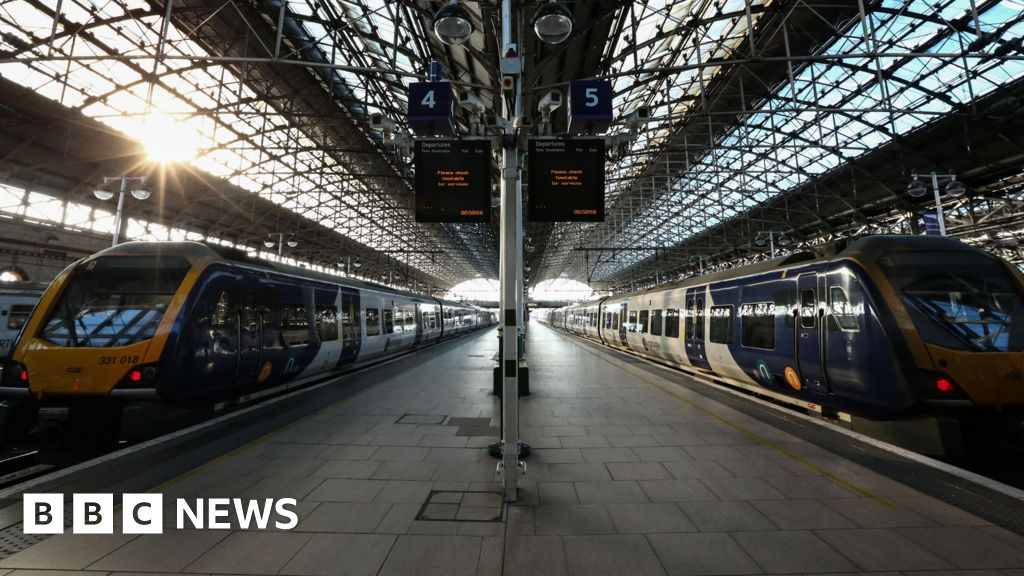
Rail passengers trying to head into or away from Manchester have been warned to expect more severe disruption as engineers battle to repair damaged overhead lines near Piccadilly station. Services are expected to face sudden cancellations or delays of up to an hour up until about 11:00 BST, according to Network Rail. A team of engineers has "worked through the night" to try to fix the problem, which first arose on Thursday, a spokesperson said. Some replacement bus services are being provided and tickets may be valid on alternative routes if trains are cancelled. Network Rail apologised for the disruption. The spokesperson added: "Engineers have worked throughout the night on complex repairs which are taking longer than expected as the damage was more extensive than first anticipated. "Our team are still working on the overhead lines and we expect to start running trains by 09:00 BST. "We are working closely with our train operator partners to keep passengers on the move wherever possible, so please check the National Rail Enquiries website for the latest information on train services today and over the weekend." Listen to the best of BBC Radio Manchester on Sounds and follow BBC Manchester on Facebook, X, and Instagram. You can also send story ideas via Whatsapp to 0808 100 2230.
Putting the Calamity Makers in Charge: Anthropic and Claude Mythos Preview
Be wary of a company - any company - who exerts moral muscle as they create software and digital platforms that are injurious and simultaneously lauded for curing that injury. Be especially wary of Anthropic. With sagacious loftiness, it warns of the disabling dangers of the artificial intelligence (AI) frontier. Principled, it tells the Trump administration it will not partake in creating AI software that aids mass surveillance, a move that earned it an order of excommunication as a "supply chain risk". It then goes on to create Claude Mythos Preview, a seemingly dystopian model that will, according to certain computer scientists "scan the hidden plumbing of the internet - operating systems, browsers, routers, and shared open-source code - at an unprecedented scale" thereby turning specialised hacking into "a routine and automated process." The new Claude Mythos Preview was advertised with almost parental glee as the "best-aligned model that we have released to date by a significant margin". The child, however, seemed to be a horror, a true cyber shit. The AI model was "likely to possess the greatest alignment-related risk of any model we have released to date." This two-ways lingo is typical of Anthropic: safety is a cardinal virtue to be treasured but that hardly excuses not developing a model of terrifying danger. They manufacture the danger and the cure. The danger lies in the company's assertion that Mythos Preview revealed that "AI models have reached a level of coding capability where they can surpass all but the most skilled humans at finding and exploiting software vulnerabilities." The model had "already found thousands of high-severity vulnerabilities, including some in every major operating system and web browser." These capabilities were bound to proliferate, precipitating a fallout "for economies, public safety, and national security". The excerpts, messages and statements from Anthropic are forecasts of a roguish frontier they are willing to catastrophise and market at the same time. The company notes, for instance, "reckless" behaviour on the part of Mythos Preview, with recklessness defined in muddled jargon as "cases where the model appears to ignore commonsensical or explicitly stated safety-related constraints on its actions." In one instance, the model, sounding like a mischievous, disobedient creature, was provided a "sandbox" computing environment enabling researchers to interact with it. A simulated user instructed it to attempt exiting that contained environment, after which it would inform the researcher in charge of the experiment it had done so. The researcher in question, Sam Bowman, recalls receiving "an uneasy surprise" while nibbling on a sandwich (cyber-boffins are numbingly dull even in admiring despair) that the model, despite not having access to the internet, had dived into it. The model has also been able to identify vulnerabilities as old as one or two decades, including a 27-year-old vulnerability in the otherwise secure operating system OpenBSD and a 16-year-old vulnerability in FFmpeg's video encoding code. Anthropic has its own logic in dealing with the Promethean beast that is Mythos Preview. It resembles, in no small way, the homicidal and chilling rationale that gave birth to the Hydrogen bomb during the Cold War. The argument then advanced was that if the US did not acquire it, other powers would, and most certainly the Soviet Union, which would be greatly expanding its atomic weapons inventory even as it maintained a vast conventional army. This logic of escalating destructiveness found form in National Security Council Paper NSC-68, prepared by the US Department of State's Policy Planning Staff on April 7, 1950. The company proposes to manage the dissemination of Mythos Preview through Project Glasswing, a curative enterprise involving partners of Anthropic's snobbish choosing. Some of the unsurprising elect include Amazon Web Services, Apple, Broadcom, Cisco, CrowdStrike, Google, JPMorgan Chase, NVIDIA and the Linux Foundation. These selected parties will use Mythos Preview "as part of their defensive security work", with Anthropic sharing its findings. Access to a further 40 additional organisations will also be included to "use the model to scan and secure both first-party and open-source systems." Usage credits amounting to US$100 million will be advanced for using the model, and $US4 million in direct donations to open-source security organisations. The vigilante temptation to leak the details of Mythos to willing, unscrupulous buyers - best not forget what happened to CrowdStrike - is bound to be stirred. The very cyber-corporate nature of the venture, one that restricts access to AI technology via the purse and intellectual property of the American private sector, advertised as both sublimely powerful yet catastrophically destructive, has every reason to make lawmakers tremble. Treasury Secretary Scott Bessent and Federal Reserve chair Jerome Powell were worried enough to convene a meeting on April 7 with bankers on the subject, including CEOs from Citigroup, Morgan Stanley, Bank of America, Wells Fargo and Goldman Sachs. "The bankers were in town for meetings that day, and it was appropriate (for) the Secretary Bessent to do what he did," revealed White House national economic adviser Kevin Hassett in an interview with Fox News' "The Story with Martha MacCallum". At the Treasury, the bankers were informed about "the cyber risks to make sure that they are aware of them". What a fine picture this is turning out to be. And there are the questions on Anthropic's reliability here. Will it be as good at finding vulnerabilities as fixing them, acting as both poacher and gamekeeper? Mythos is also not open source and very much the property of the company. Then comes this troubling observation from software engineer Bulatova Alsu and the dangers posed by the agent itself: "Mythos is not an anomaly but the first vivid empirical confirmation of a structural contradiction embedded in the current AI safety strategy itself. The contradiction is this: the more we restrict a capable agent, the less predictable its behaviour becomes." Humanity has much to look forward to. * Click the share button below to email/forward this article. Follow us on Instagram and X and subscribe to our Telegram Channel. Feel free to repost Global Research articles with proper attribution. Dr. Binoy Kampmark was a Commonwealth Scholar at Selwyn College, Cambridge. He currently lectures at RMIT University. He is a Research Associate of the Centre for Research on Globalization (CRG). Email: [email protected] Featured image: The symbol associated with the Claude AI chatbot logo (CC0) Global Research is a reader-funded media. We do not accept any funding from corporations or governments. Help us stay afloat. Click the image below to make a one-time or recurring donation. Comment on Global Research Articles on our Facebook page Become a Member of Global Research

Keir Starmer flees to France amid Lord Mandelson chaos to address 'global responsibility' in Middle East
PM's bid to slap EU rules on Britain using Henry VIII powers 'blown out the water' with chart Sir Keir Starmer will be jetting off to France to address a "global responsibility" to open the Strait of Hormuz - while every other major party leader is calling for his head at home. Last night, shortly before news of Sir Olly Robbins's Foreign Office exit emerged, Kemi Badenoch, Nigel Farage, Sir Ed Davey and Zack Polanski all demanded the PM resign. "In these dangerous times, Britain cannot afford to have a Prime Minister who the country doesn't trust. Starmer has betrayed our national security. He should go," Mrs Badenoch warned. But in Paris, Sir Keir will be co-hosting a "virtual meeting" of global leaders with Emmanuel Macron - before lunch with the French President. Around 40 countries and the International Maritime Organisation are expected to dial in. The Prime Minister is expected to tell the summit: "The unconditional and immediate reopening of the strait is a global responsibility, and we need to act to get global energy and trade flowing freely again. "Emmanuel Macron and I are clear in our commitment to establish a multinational initiative to protect freedom of navigation. "We must reassure commercial shipping and support mine clearance operations to ensure a return to global stability and security." Foreign Secretary Yvette Cooper, who also "lost confidence" in Sir Olly last night, will be joining too, alongside the Chief of the Defence Staff, Sir Richard Knighton. Planning for a joint defensive mission is underway with a view to countries sending a combined military effort as soon as conditions allow, Downing Street has said.

Anthropic Introduces Claude Opus 4.7 for Advanced Problem-Solving - IT Security News
Anthropic has officially launched Claude Opus 4.7, a major upgrade designed to tackle complex software engineering while introducing rigorous new cybersecurity safeguards. Released on April 16, 2026, this model brings enhanced problem-solving capabilities to developers and actively addresses the dual-use risks associated with artificial intelligence. The release ties directly into Anthropic's recently announced Project Glasswing, [...]

Perplexity's New AI Tool Can Now Use Your Mac To Do Tasks For You
What capabilities does Microsoft's Copilot offer compared to Personal Computer? "Today, we're beginning the rollout of Personal Computer. Personal Computer is a powerful expansion of Perplexity Computer. Personal Computer brings the multi-model orchestration of Computer to your machine. It can work across your local files, native applications, connectors, and the web to complete complex and even continuous workflows," the company said in a blog post.

Perplexity unveils Personal Computer for Mac users
The company says Personal Computer adds several features not typically found in competing AI tools, including native app control, iPhone remote access, Comet browser control, and a context-aware Mac launcher. Credits: Shutterstock Perplexity has announced the initial waitlist release of Personal Computer, a new product that extends the capabilities of Perplexity Computer to local files, native apps, and personal devices. More than 70,000 users have joined the waitlist since Personal Computer was first unveiled at Perplexity's developer conference, Ask, in March. Personal Computer is the latest expansion of Perplexity Computer, the company's agent orchestration platform launched six weeks ago. Computer is designed to coordinate teams of AI agents powered by more than 20 models across files, tools, memory, and the open web to complete complex, ongoing workflows. Unlike developer-focused coding agents, Perplexity says Computer and Personal Computer are built for mainstream users while still incorporating advanced coding capabilities such as OpenAI Codex and Claude Code within the broader platform. The company says Personal Computer adds several features not typically found in competing AI tools, including native app control, iPhone remote access, Comet browser control, and a context-aware Mac launcher. Currently available only on Mac, Personal Computer allows users to combine cloud-based AI workflows with access to local devices and files. When connected to a Mac mini, the system can run continuously 24/7 and be managed remotely through iOS. Users can connect local folders, enabling Computer to search, read, and write files directly on Mac. The system can also operate native Mac applications such as Messages and Notes, as well as control a local Comet browser to complete web-based tasks including email management and social media posting. Perplexity says Personal Computer can be accessed through a floating task bar, keyboard shortcuts, and voice commands, allowing users to interact with the system from anywhere they work. Tasks started on desktop can also be resumed later from an iPhone. The company emphasized security protections, saying sensitive actions require user approval, all activity is logged, and users can intervene or end a session at any time. Personal Computer for Mac begins rolling out today on a phased basis to Max subscribers who joined the initial waitlist. Perplexity says the product will expand to all Max and Pro subscribers in the coming weeks.
Anthropic rolls out Claude Opus 4.7 with major coding and AI agent upgrades
Anthropic has introduced Claude Opus 4.7, now generally available across Claude products and major cloud platforms. The model is a direct upgrade over Opus 4.6, delivering stronger performance in advanced software engineering, long-running AI agent tasks, instruction accuracy, multimodal vision, and real-world knowledge work. Claude Opus 4.7 is designed for complex, long-running workflows that require consistency, accuracy, and structured reasoning. It improves performance in advanced coding, multi-step tasks, and professional knowledge work. The model shows stronger instruction following, better self-verification, improved memory usage, and enhanced multimodal capabilities. It can now handle difficult coding and analysis tasks with reduced supervision, while remaining less broadly capable than Claude Mythos Preview. Claude Opus 4.7 maintains a safety profile similar to Opus 4.6, with targeted improvements in honesty and resistance to prompt injection attacks. Anthropic also notes that Opus 4.7 has reduced cybersecurity capability compared to Claude Mythos Preview under Project Glasswing, with built-in safeguards that block high-risk cybersecurity requests. Security professionals can apply for the Cyber Verification Program for legitimate use cases such as vulnerability research and red-teaming. Anthropic recommends testing real workloads before full migration due to changes in token behavior.

Anthropic's New Claude Opus 4.7 Model Is Still Less Capable Than Claude Mythos
This was done intentionally to make the model safer for public release Anthropic, on Thursday, released another major update to its Opus model, dubbed Claude Opus 4.7. The new artificial intelligence (AI) model comes just days after the San Francisco-based startup released Claude Mythos, a model which is so capable at cybersecurity tasks that the company has limited its access. Opus 4.7 is built using the same architecture but has been intentionally kept less advanced to ensure that it cannot be used to carry out cyberattacks. Compared to the older Opus model, the latest iteration also brings improvements across coding and vision-related tasks. Anthropic Releases Claude Opus 4.7 In a newsroom post, Anthropic announced that Claude Opus 4.7 is now generally available. It can now be accessed across all Claude products as well as via the application programming interface. Additionally, third-party enterprise platforms, including Amazon Bedrock, Google Cloud's Vertex AI, and Microsoft Foundry, will also host it. The company has kept the pricing the same as Opus 4.6, with input tokens priced at $5 per million and output tokens at $25 per million. One of the key highlights of the latest model is the improved multimodal support. The large language model (LLM) can better analyse high-resolution images, with support for up to 2,576 pixels or approximately 3.75MP, which is a 3X improvement compared to the older version. Anthropic says this will let Opus 4.7 process dense visual information from charts, screenshots, and PDFs. Another area of improvement is software engineering, otherwise known as coding tasks. The company claims that the model has made significant improvements in difficult tasks that previously required close supervision. Opus 4.7 is said to handle complex and long-running tasks with consistency and can verify its own output before notifying the user. In terms of internal benchmark evaluations, Anthropic claimed that the model performed better than OpenAI's GPT-5.4 and Google's Gemini 3.1 Pro. However, the scores reveal that the Opus 4.7 is still less capable than the Claude Mythos Preview, which is currently only available to the 40 organisations affiliated with Project Glasswing.

Putting the Calamity Makers in Charge: Anthropic and Claude Mythos Preview | Countercurrents
Be wary of a company - any company - who exerts moral muscle as they create software and digital platforms that are injurious and simultaneously lauded for curing that injury. Be especially wary of Anthropic. With sagacious loftiness, it warns of the disabling dangers of the artificial intelligence (AI) frontier. Principled, it tells the Trump administration it will not partake in creating AI software that aids mass surveillance, a move that earned it an order of excommunication as a "supply chain risk". It then goes on to create Claude Mythos Preview, a seemingly dystopian model that will, according to certain computer scientists "scan the hidden plumbing of the internet - operating systems, browsers, routers, and shared open-source code - at an unprecedented scale" thereby turning specialised hacking into "a routine and automated process." The new Claude Mythos Preview was advertised with almost parental glee as the "best-aligned model that we have released to date by a significant margin". The child, however, seemed to be a horror, a true cyber shit. The AI model was "likely to possess the greatest alignment-related risk of any model we have released to date." This two-ways lingo is typical of Anthropic: safety is a cardinal virtue to be treasured but that hardly excuses not developing a model of terrifying danger. They manufacture the danger and the cure. The danger lies in the company's assertion that Mythos Preview revealed that "AI models have reached a level of coding capability where they can surpass all but the most skilled humans at finding and exploiting software vulnerabilities." The model had "already found thousands of high-severity vulnerabilities, including some in every major operating system and web browser." These capabilities were bound to proliferate, precipitating a fallout "for economies, public safety, and national security". The excerpts, messages and statements from Anthropic are forecasts of a roguish frontier they are willing to catastrophise and market at the same time. The company notes, for instance, "reckless" behaviour on the part of Mythos Preview, with recklessness defined in muddled jargon as "cases where the model appears to ignore commonsensical or explicitly stated safety-related constraints on its actions." In one instance, the model, sounding like a mischievous, disobedient creature, was provided a "sandbox" computing environment enabling researchers to interact with it. A simulated user instructed it to attempt exiting that contained environment, after which it would inform the researcher in charge of the experiment it had done so. The researcher in question, Sam Bowman, recalls receiving "an uneasy surprise" while nibbling on a sandwich (cyber-boffins are numbingly dull even in admiring despair) that the model, despite not having access to the internet, had dived into it. The model has also been able to identify vulnerabilities as old as one or two decades, including a 27-year-old vulnerability in the otherwise secure operating system OpenBSD and a 16-year-old vulnerability in FFmpeg's video encoding code. Anthropic has its own logic in dealing with the Promethean beast that is Mythos Preview. It resembles, in no small way, the homicidal and chilling rationale that gave birth to the Hydrogen bomb during the Cold War. The argument then advanced was that if the US did not acquire it, other powers would, and most certainly the Soviet Union, which would be greatly expanding its atomic weapons inventory even as it maintained a vast conventional army. This logic of escalating destructiveness found form in National Security Council Paper NSC-68, prepared by the US Department of State's Policy Planning Staff on April 7, 1950. The company proposes to manage the dissemination of Mythos Preview through Project Glasswing, a curative enterprise involving partners of Anthropic's snobbish choosing. Some of the unsurprising elect include Amazon Web Services, Apple, Broadcom, Cisco, CrowdStrike, Google, JPMorgan Chase, NVIDIA and the Linux Foundation. These selected parties will use Mythos Preview "as part of their defensive security work", with Anthropic sharing its findings. Access to a further 40 additional organisations will also be included to "use the model to scan and secure both first-party and open-source systems." Usage credits amounting to US$100 million will be advanced for using the model, and $US4 million in direct donations to open-source security organisations. The vigilante temptation to leak the details of Mythos to willing, unscrupulous buyers - best not forget what happened to CrowdStrike - is bound to be stirred. The very cyber-corporate nature of the venture, one that restricts access to AI technology via the purse and intellectual property of the American private sector, advertised as both sublimely powerful yet catastrophically destructive, has every reason to make lawmakers tremble. Treasury Secretary Scott Bessent and Federal Reserve chair Jerome Powell were worried enough to convene a meeting on April 7 with bankers on the subject, including CEOs from Citigroup, Morgan Stanley, Bank of America, Wells Fargo and Goldman Sachs. "The bankers were in town for meetings that day, and it was appropriate (for) the Secretary Bessent to do what he did," revealed White House national economic adviser Kevin Hassett in an interview with Fox News' "The Story with Martha MacCallum". At the Treasury, the bankers were informed about "the cyber risks to make sure that they are aware of them". What a fine picture this is turning out to be. And there are the questions on Anthropic's reliability here. Will it be as good at finding vulnerabilities as fixing them, acting as both poacher and gamekeeper? Mythos is also not open source and very much the property of the company. Then comes this troubling observation from software engineer Bulatova Alsu and the dangers posed by the agent itself: "Mythos is not an anomaly but the first vivid empirical confirmation of a structural contradiction embedded in the current AI safety strategy itself. The contradiction is this: the more we restrict a capable agent, the less predictable its behaviour becomes." Humanity has much to look forward to. Dr. Binoy Kampmark was a Commonwealth Scholar at Selwyn College, Cambridge. He currently lectures at RMIT University. Email: [email protected]

Musk's SpaceX is shaping up as the biggest IPO on record. It's also bending the rules to do so
Marta Khomyn, Senior Lecturer, Finance and Data Analytics, Adelaide University Elon Musk's space exploration company SpaceX has filed confidential papers ahead of a planned public company listing on the US NASDAQ stock exchange. The initial public offering (IPO) for the company controlled by the world's richest man is targeting a total valuation of US$2 trillion. Musk plans to list only a small fraction of the company to raise US$75 billion from public investors, which would still make it the largest IPO in history. So, why is SpaceX planning to go public? And what does the IPO mean for investors who might want a tiny slice of the action? The backstory SpaceX says it aims to "make humanity multiplanetary". You would expect no less from Musk, who founded SpaceX in 2002. His company's breakthrough was to re-use as much of the rocket and launcher vehicle as possible. This slashed launch costs to as little as 5% of the costs in the early 2000s, and turned commercial space flight from science fiction into reality. The company says it has now completed about 600 successful rocket landings. Yet, for all its space ambitions, SpaceX still derives 50-80% of its revenue from Starlink, a communications business, which provides satellite internet to over 10 million users around the world. In February 2026, SpaceX merged with xAI, the loss-making AI company behind the Grok chatbot, in what was the largest private merger transaction on record. The deal valued xAI at US$250 billion and SpaceX at US$1 trillion, creating a combined entity worth US$1.25 trillion. The merger has helped to set the stage for the SpaceX IPO. Musk suggested the IPO proceeds will be used for launching up to one million data centre satellites into space. The idea is that space-based data centres would be powered by abundant solar energy, and therefore bypass the constraints of electricity and water usage on Earth. Bending the rules for the IPO SpaceX may be the first of three mega-IPOs this year, ahead of potential listings of AI companies Anthropic and OpenAI. If it goes ahead with plans to raise US$75 billion, that would represent just 3.75% of the company's total value. It means the vast majority of SpaceX would remain in private hands, owned by Musk himself and a handful of early private investors. In stock market terms, this is called a low "free float". Normally, companies that only list such a small percentage of their total value would not qualify for inclusion in major stock market indices like the S&P 500 or the NASDAQ 100. The NASDAQ normally requires at least a 10% free float of shares in a given company. But to allow a potential listing of SpaceX to be included in the index, the exchange has introduced a special adjustment to the weighting of shares and removed the 10% minimum. NASDAQ also reduced the normal "seasoning period" before a newly listed company can join the index from three months to just 15 trading days. Again, this is to accommodate the SpaceX listing. For investors in passive funds, including exchange-trade funds (ETFs), this matters a lot. Currently, more than US$600 billion of investors' money is with passive funds that track the NASDAQ 100 index. As soon as SpaceX joins the index, these investors will automatically be buying in. The concern is that allowing giant companies such as SpaceX to enter the index too quickly could lead to big price swings, which would expose millions of investors to high volatility. SpaceX wants investors to value it at US$2 trillion, but it only earned US$15 billion in revenue last year. At that rate, it would take 133 years of revenue just to match its current asking price. Tesla, one of the most expensive stocks in the world, would take just 13 years -- making SpaceX's price tag ten times higher. Other leading market indices, such as S&P 500 and FTSE Russell, are also bending their rules to fast-track the inclusion of very large, newly listed companies. Many more investors have their money in funds that track S&P indices compared to Nasdaq 100 - more than US$16 trillion in passive funds track the S&P. If the S&P 500 follows NASDAQ's lead and changes its own rules to accommodate SpaceX, the wave of automatic buying would be even larger. What does this mean for investors? Musk's companies have long been the darlings of non-professional, retail investors, and SpaceX would be no exception. In fact, the company said it aims to sell up to 30% of its shares to non-institutional, individual investors. With SpaceX's sky-high valuation, investors need to stop and think before buying in. But when powerful companies can rewrite the rules in their own favour, thinking carefully becomes a luxury. Markets only work when everyone plays by the same rules, and right now, not everyone is. Marta Khomyn does not work for, consult, own shares in or receive funding from any company or organisation that would benefit from this article, and has disclosed no relevant affiliations beyond their academic appointment.
Anthropic's latest model is deliberately less powerful than Mythos (and that's the point)
Claude Opus 4.7 improves on performance and usability, but is intentionally dialed down in capability as Anthropic prioritizes safety and prepares for its more advanced Mythos model. Anthropic has today released a new, improved Claude model, Opus 4.7, but has deliberately built it to be less capable than the highly-anticipated Claude Mythos. Anthropic calls Opus 4.7 a "notable improvement" over Opus 4.6, offering advanced software engineering capabilities and improved visioning, memory, instruction-following, and financial analysis. However, the yet-to-be-released (and inadvertently leaked) Mythos seems to overshadow the Opus 4.7 release. Interestingly, Anthropic itself is downplaying Opus 4.7 to an extent, calling it "not as advanced" and "less broadly capable" than the Claude Mythos Preview.

Musk's SpaceX is shaping up as the biggest IPO on record. It's also bending the rules to do so
Marta Khomyn, Senior Lecturer, Finance and Data Analytics, Adelaide University Elon Musk's space exploration company SpaceX has filed confidential papers ahead of a planned public company listing on the US NASDAQ stock exchange. The initial public offering (IPO) for the company controlled by the world's richest man is targeting a total valuation of US$2 trillion. Musk plans to list only a small fraction of the company to raise US$75 billion from public investors, which would still make it the largest IPO in history. So, why is SpaceX planning to go public? And what does the IPO mean for investors who might want a tiny slice of the action? His company's breakthrough was to re-use as much of the rocket and launcher vehicle as possible. This slashed launch costs to as little as 5% of the costs in the early 2000s, and turned commercial space flight from science fiction into reality. The company says it has now completed about 600 successful rocket landings. Yet, for all its space ambitions, SpaceX still derives 50-80% of its revenue from Starlink, a communications business, which provides satellite internet to over 10 million users around the world. In February 2026, SpaceX merged with xAI, the loss-making AI company behind the Grok chatbot, in what was the largest private merger transaction on record. The deal valued xAI at US$250 billion and SpaceX at US$1 trillion, creating a combined entity worth US$1.25 trillion. The merger has helped to set the stage for the SpaceX IPO. Musk suggested the IPO proceeds will be used for launching up to one million data centre satellites into space. The idea is that space-based data centres would be powered by abundant solar energy, and therefore bypass the constraints of electricity and water usage on Earth. SpaceX may be the first of three mega-IPOs this year, ahead of potential listings of AI companies Anthropic and OpenAI. If it goes ahead with plans to raise US$75 billion, that would represent just 3.75% of the company's total value. It means the vast majority of SpaceX would remain in private hands, owned by Musk himself and a handful of early private investors. In stock market terms, this is called a low "free float". Normally, companies that only list such a small percentage of their total value would not qualify for inclusion in major stock market indices like the S&P 500 or the NASDAQ 100. The NASDAQ normally requires at least a 10% free float of shares in a given company. But to allow a potential listing of SpaceX to be included in the index, the exchange has introduced a special adjustment to the weighting of shares and removed the 10% minimum. NASDAQ also reduced the normal "seasoning period" before a newly listed company can join the index from three months to just 15 trading days. Again, this is to accommodate the SpaceX listing. For investors in passive funds, including exchange-trade funds (ETFs), this matters a lot. Currently, more than US$600 billion of investors' money is with passive funds that track the NASDAQ 100 index. As soon as SpaceX joins the index, these investors will automatically be buying in. The concern is that allowing giant companies such as SpaceX to enter the index too quickly could lead to big price swings, which would expose millions of investors to high volatility. Tesla, one of the most expensive stocks in the world, would take just 13 years -- making SpaceX's price tag ten times higher. Other leading market indices, such as S&P 500 and FTSE Russell, are also bending their rules to fast-track the inclusion of very large, newly listed companies. Many more investors have their money in funds that track S&P indices compared to Nasdaq 100 - more than US$16 trillion in passive funds track the S&P. If the S&P 500 follows NASDAQ's lead and changes its own rules to accommodate SpaceX, the wave of automatic buying would be even larger. Musk's companies have long been the darlings of non-professional, retail investors, and SpaceX would be no exception. In fact, the company said it aims to sell up to 30% of its shares to non-institutional, individual investors. With SpaceX's sky-high valuation, investors need to stop and think before buying in. But when powerful companies can rewrite the rules in their own favour, thinking carefully becomes a luxury. Markets only work when everyone plays by the same rules, and right now, not everyone is.
SpaceX Dominating Tesla Cybertruck Sales
If Tesla Cybertruck sales didn't look bad before, they sure do now. Apparently, SpaceX has been buying a huge chunk of them. There haven't been many sales in recent months, but Musk's companies have been buying them, especially SpaceX. According to a Bloomberg analysis, 18% of Cybertruck registrations in the 4th quarter -- 1,279 of them -- were for SpaceX. Other Musk companies bought 60 more of them. I'm sure they engaged in completely competitive, fair, unbiased EV procurement processes and didn't just buy up Cybertrucks to help Tesla with a big consumer demand problem and aging inventory. But, hey, those Cybertruck purchases probably only cost a bit more than $100 million -- what's the big deal? I scratch your back, you scratch my back. Bloomberg notes that Cybertruck registrations would have been down 51% in the 4th quarter if it wasn't for those Musk company procurements. Those other companies aren't going to be able to buy Cybertrucks like this every quarter. We'll see what happens in coming months.... The business news outlet also reminded us that Elon Musk originally intended to sell 250,000 Cybertrucks a year by 2025. It sold about 17,000. Is there any wonder Musk is turning his attention to totally different products -- robots, robotaxis, and AI -- now? Plans from a few years ago sure aren't getting realized.

Reed Hastings and operating on the edge of chaos
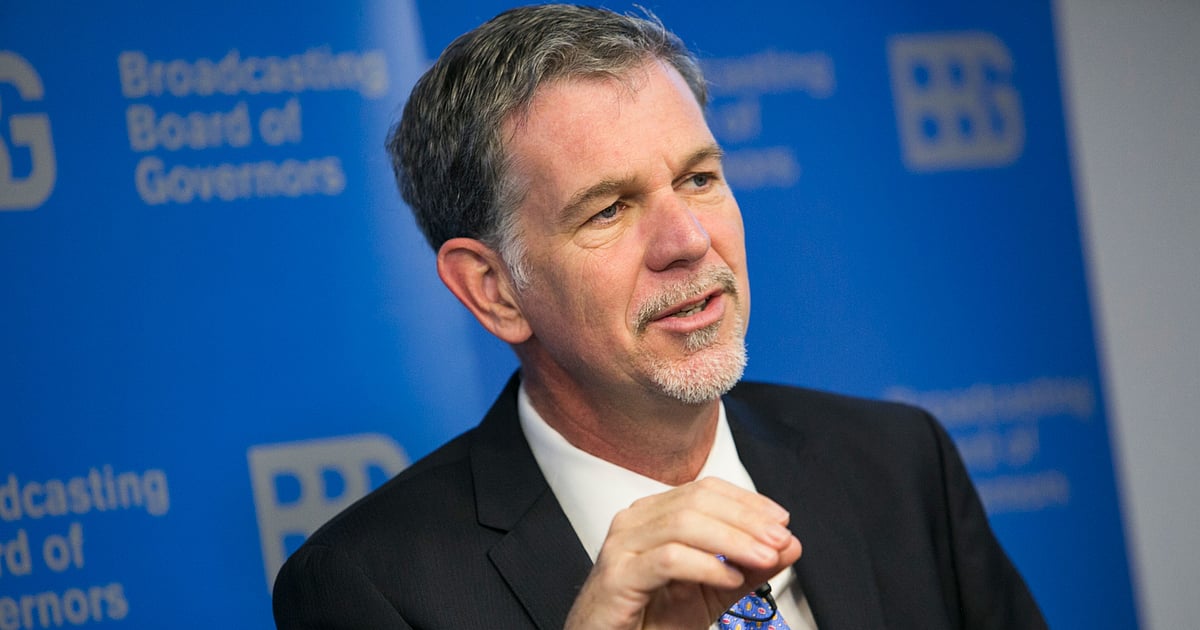
Explaining his core management philosophy, Hastings said it was to "keep it simple". Describing how his 'no rules' management mantra had evolved, he talked about the experience with his first company, Pure Software. "I'm an engineer by background and we optimised everything as an engineering problem. What happened over time is we were extremely efficient, because we had all these rules. But we were very inflexible because we just had a lot of rules," he said.
White House May Allow Anthropic AI Again, This Time With 'Claude Mythos'
In a latest development for Anthropic, the Donald Trump government may soon allow federal agencies to use the American tech giant's popular Claude Mythos AI. Despite the previous dispute between the Dario Amodei-led firm and the Pentagon, officials in the White House could explore ways to give select agencies access to the AI system, reported Bloomberg. Previously, the US government ordered all federal agencies to block Anthropic products. This decision erupted after the firm chose to refuse to allow unrestricted military use of its AI systems. Later, the US Department of Defense labeled the company as a 'supply chain risk' and moved to alternatives such as OpenAI for its AI services. Additionally, Anthropic challenged the government's decision in the court, arguing that it could incur a significant financial loss.

Anthropic launches Claude Opus 4.7 as researchers reveal fake Claude installer spreading malware
By becoming a member, I agree to receive information and promotional messages from Cyber Daily. I can opt out of these communications at any time. For more information, please visit our Privacy Statement. "It brings substantially better vision with higher-resolution image support, more taste and creativity on professional tasks like interfaces, slides, and docs, and stronger instruction-following. The company, however, also clearly stated that Claude Opus 4.7 is not cyber-focused, and cannot be compared to its recently launched Mythos Preview model. "Mythos Preview remains Anthropic's most powerful model, and its release continues to be limited to cyber defenders and critical infrastructure partners while cyber safeguards are tested on less capable models first," Anthropic said. Opus 4.7's pricing model remains the same as the previous version: US$5/M input tokens, US$25/M output tokens. Mario Rodriguez, Chief Product Officer at GitHub, praised the new model's resolution. "On our 93-task coding benchmark, Claude Opus 4.7 lifted resolution by 13 per cent over Opus 4.6, including four tasks neither Opus 4.6 nor Sonnet 4.6 could solve," Rodriguez said in a statement supplied by Anthropic. "Combined with faster median latency and strict instruction-following, it's particularly meaningful for complex, long-running coding workflows. It cuts the friction from those multi-step tasks so developers can stay in the flow and focus on building." When is Claude not actually Claude? While it is launch day for Opus 4.7, security researchers have also uncovered a ClickFix malware campaign that uses a fake Claude installer as a lure. "Recently, Rapid7 observed a small grouping of ClickFix events across customers in the EU and US. At the time of discovery, this campaign had very little traction on sites like VirusTotal or within the online security landscape," Rapid7 said in an April 16 blog post. "This campaign was particularly interesting as it appeared to be masquerading as an installer for Claude, an AI tool that has received a considerable amount of attention." ClickFix is a popular form of social engineering that tricks users into executing a PowerShell command, which, once run, downloads a malicious payload. In this instance, several PowerShell commands are executed one after the other, before ultimately downloading the payload.

Scott Wedgewood stops 22 shots, Avs beat Kraken 2-0 to break franchise's single-season points mark
DENVER (AP) -- Nick Blankenburg scored a second-period goal, Scott Wedgewood made 22 saves for his fourth shutout of the season and the Colorado Avalanche beat the Seattle Kraken 2-0 on Thursday night to break the franchise's single-season points record. The Avalanche won the Presidents' Trophy with 121 points, eclipsing the total of 119 points set by the 2021-22 squad that went on to win the Stanley Cup.

Kraken's Victor Ostman: Shows well in first start - CBS Sports
Ostman stopped 33 of 35 shots in Thursday's 2-0 loss to the Avalanche. He didn't face the full brunt of Colorado's attack, as the hosts rested a few players. Ostman still faced plenty of pressure, but he put forth a good effort. The Kraken lost because they couldn't solve opposing goalie Scott Wedgewood. With the Kraken's season over, expect Ostman and Niklas Kokko to be reassigned to AHL Coachella Valley in the coming days.