News & Updates
The latest news and updates from companies in the WLTH portfolio.
Wall Street Quants See an Edge in Polymarket Earnings Forecasts
The researchers propose that prediction markets may be especially accurate because users are putting their own money on the line, and they uncovered signs that those who wager on earnings markets are unusually sophisticated. Every quarter, Wall Street's hordes of analysts engineer financial models, parse alternative data and jostle for access to executives as they attempt to predict company earnings. New research suggests the anonymous bettors on Polymarket might give them a run for their money. A report from brokerage Wolfe Research finds that when Polymarket users bet that companies are likely to miss earnings estimates, the firms do so at a rate of 44%, more than double the historic benchmark of 18%. When bettors are very confident that a company will exceed estimates, that comes to pass 90% of the time, above the 81% norm. "The accuracy is possibly due to crowdsourcing," Yin Luo, who runs quant research at Wolfe, wrote in an email. "In this case, investors betting on Polymarket earnings releases are likely to be much more diverse than consensus earnings (which are based on only sell-side analysts)." It's the latest indication that prediction markets may be a useful source of information for investors, and one day emerge as a rival to sell-side analysts, whose job it is to forecast earnings. A working paper from London Business School and Yale University researchers updated in early April concludes that the nascent platforms are highly accurate, incorporate new information more quickly than analysts and avoid some of the biases built into Wall Street estimates. The researchers propose that prediction markets may be especially accurate because users are putting their own money on the line, and they uncovered signs that those who wager on earnings markets are unusually sophisticated. They also suggest that insider trading may be a factor. Get the Markets Daily newsletter. Get the Markets Daily newsletter. Get the Markets Daily newsletter. What's happening in stocks, bonds, currencies and commodities right now. What's happening in stocks, bonds, currencies and commodities right now. What's happening in stocks, bonds, currencies and commodities right now. Plus Signed UpPlus Sign UpPlus Sign Up By continuing, I agree to the Privacy Policy and Terms of Service. Whatever the driving force behind the performance, the two studies underscore the promise of earnings-linked event contracts, which so far account for only a small fraction of activity on platforms like Polymarket and its chief rival, Kalshi. The research bolsters the companies' argument that while sports betting constitutes a majority of their volume, these novel derivatives will eventually play a major role on Wall Street. Predicting whether or not a company will beat earnings forecast can be complicated. For one, the vast majority of stocks routinely beat estimates, in part because corporate executives are incentivized to guide expectations lower in hopes of generating a surprise positive performance. Since September, Polymarket has allowed users to wager on earnings via yes-or-no contracts on whether certain large stocks will beat the consensus estimate. In order to compare the accuracy of those bets to Wall Street estimates, Wolfe looked at about 430 earnings releases covered by Polymarket, or roughly a quarter of such events for Russell 1000 names over the time period. "The signal they generate will offer an increasingly rich and high-frequency lens through which to study information aggregation, belief formation, and the pricing of uncertainty across virtually every domain of event space that moves the market," the Wolfe researchers wrote of prediction markets. While exchange operators and other financial players are investing heavily in prediction market platforms, it's still early days. Earnings markets had just $795,315 in volumes on Polymarket in the most recent week, or 0.03% of the total, according to user-compiled data on Dune Analytics. Vinesh Jha, who runs an alternative data platform that also crowdsources earnings estimates, said he can see Polymarket being used as a complementary source of information. But it's likely too early for wide adoption as an input into quantitative fund managers' trading systems. "The beat/miss dichotomy is less interesting than knowing what earnings will be (and, further, what the market reaction will be)," the founder of ExtractAlpha wrote in an email. "It's far too soon to tell, and this data is much too thin." The study revised earlier this month by LBS and Yale academics sheds light on why earnings markets might be accurate despite having muted volumes. Users who bet on earnings tend to make money on prediction markets, while most traders lose, suggesting the former might be particularly sophisticated. "Informed traders need uninformed traders to make money," wrote Roberto Gomez-Cram, Yunhan Guo, Howard Kung and Theis Ingerslev Jensen. "Earnings market traders are a relatively skilled subset." The study also found that earnings markets for companies audited by one particular accounting firm are more accurate than markets for companies with other auditors. The researchers declined to name the firm, citing inconclusive evidence, but the finding raises questions about whether some participants in Polymarket's earnings markets may be trading on material non-public information. Polymarket did not respond to a request for comment on these findings.
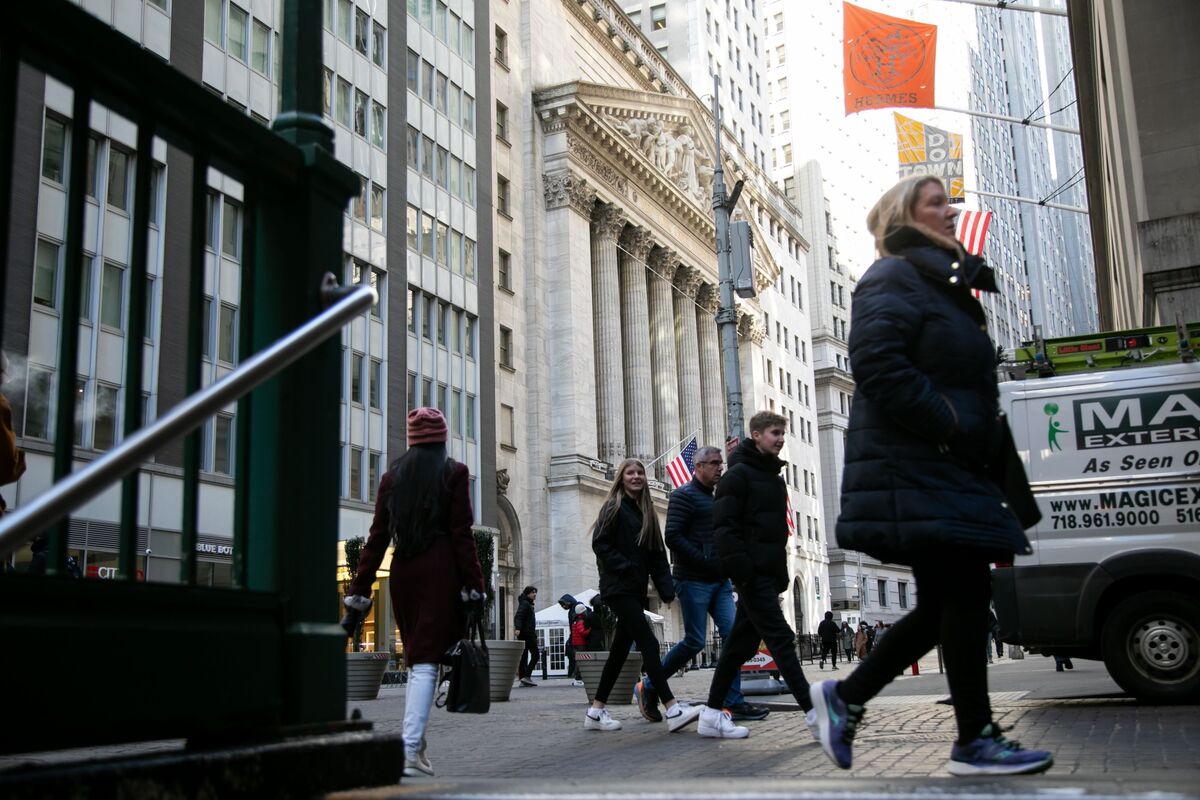
A Polymarket trader made $300,000 betting on Biden's pardons, a new analysis shows
In the final hours of President Biden's term, a Polymarket trader made around $300,000 correctly betting on Biden's last-minute pardons, according to new data provided to NPR by an analytics firm that examines cryptocurrency transactions. As Biden issued a wave of pardons just hours before leaving the White House, the Polymarket trader bet big on four names, with the odds of those pardons occurring rapidly dropping to near zero on the prediction market site. The trader, whose identity is not publicly known, placed around $64,000 worth of bets that Biden would issue pre-emptive pardons for Jim Biden, the former president's brother, former Rep Liz Cheney, Sen. Adam Schiff, former Rep. Adam Kinzinger -- all prominent critics of President Trump. While none were ever charged with crimes, all four were given pardons to shield them against possible prosecution in Trump's second term. A month earlier, the same bettor placed a well-timed wager on Polymarket that Biden's son, Hunter, would receive a pardon over gun and tax charges. Together, those five bets netted the trader $316,346 in profits, according to an analysis by the Paris-based analytics company Bubblemaps, which shared its findings exclusively with NPR. "The odds of this happening by random chance are virtually zero," said Columbia Law School's Joshua Mitts, who advises the Department of Justice on insider trading cases. "The trader could've been a White House insider," he said. "But the trader could have possessed the information without being an insider," said Mitts, who published a paper last month estimating that $143 million in profits have been earned on Polymarket by bettors with insider information. The trades linked to Biden's pardons show that individuals could have been profiting from confidential government information before President Trump returned to office, when prescient bets related federal policy and military strikes on sites like Polymarket started to draw intense scrutiny. To piece together the suspicious trades related to Biden's pardons, Bubblemaps' forensic investigators looked at Polymarket trades using pattern-matching artificial intelligence software. They discovered two accounts had a perfect track record of betting on Biden pardons. "We looked at all the accounts trading on this one market and looked at their mutual transactions," Nick Vaiman, Bubblemap's founder, told NPR in an interview. "And we found a connection between two accounts, which was a shared deposit wallet." That means the analysts determined that both accounts were sending profits from Polymarket bets to the same cryptocurrency wallet on the site Kraken, a U.S.-based crypto exchange. "Exchanges like Kraken don't offer information on individual accounts," Vaiman said. "We've tried desperately, but they don't give up this information easily." Kraken has "know-your-customer" rules similar to a bank, requiring its customers to verify their identities before using the exchange. Yet it remains difficult to publicly identify a customer based on a crypto wallet alone. Federal prosecutors often find that crypto wallet-holders engaging in insider trading do so through other people or shell companies, said Mitts. "If the government subpoenas, and gets data back showing some entity did the trading that has no connections to the White House, that's where the trail runs cold." And even when a wallet on a cryptocurrency blockchain is connected to a person, a legal case of insider trading is far from open-shut, Mitts added. "If it was misappropriation of information, the problems for prosecutors begin there," he said. "Who was misappropriating? Could you prove it? Could you prove the conditions under which they got the information?" Prediction markets, like Polymarket and its main rival, Kalshi, have flourished in Trump's second term. The administration has embraced an industry once considered a pariah in Washington over fears that the markets could be ripe for abuse and manipulation. The investment firm Bernstein projects that in the next four years, prediction markets could become a $1 trillion industry, and the Trump family is getting in on the action. Donald Trump Jr., the president's son, is an adviser to both Kalshi and Polymarket. As millions of people turn White House announcements and geopolitical episodes into opportunities to make money, there have been a series of controversies over suspected insider trading. Hours before Venezuelan leader Nicolás Maduro was toppled by U.S. forces in January, a Polymarket trader placed a bet that netted $400,000. Likewise, an account trading under the username "Magamyman" made more than $500,000 after wagering on Polymarket that Iran's Ayatollah Ali Khamenei would soon no longer lead Iran. Not long after the bet was placed, an Israeli strike killed him. Most recently, a group of new accounts on Polymarket raked in hundreds of thousands of dollars in profits by betting that the U.S. and Iran would reach a ceasefire before the agreement had been unveiled. U.S. prosecutors have not announced any investigations or charges over potential insider trading. In Israel, authorities arrested several people in connection to a case alleging that military reservists traded on Polymarket using classified military intelligence. The largest U.S. prediction market, Kalshi, is regulated by the Commodity Futures Trading Commission, a status that is being contested in court by dozens of states. The CFTC prohibits betting on markets related to war, assassinations and terrorism, but otherwise has overseen the industry with a light touch, in contrast to the Biden administration, which prohibited most types of "event contracts" except those related to things that had clear public value, like the weather, oil futures and grain prices. Polymarket, too, has been welcomed by the Trump administration. Under Biden, the Federal Bureau of Investigation raided the home of Polymarket's CEO and forced the site to wind down in the U.S. It continues to operate mostly as an overseas exchange, with its largest site accessible by Americans only via virtual private network. Unlike Kalshi, Polymarket uses cryptocurrency, making it easier for traders to remain anonymous. But Trump's law enforcement agencies have taken a more hands-off approach to Polymarket's most controversial markets on everything from conditions in Gaza, war to the next nuclear detonation. "These markets are problematic," said Nizan Packin, a law professor at Baruch College. "If we want to offer this type of gambling about geopolitics and elections, we need to do this in a proper way, which means guardrails that we have created after we studied the consequences and the problems. This is not something that was done," said Packin, who co-authored a new paper in the the journal Science examining the risks of online prediction markets. "Without clear regulation, and clearer and stricter enforcement, the gray zone becomes larger and more questions should and will be asked," she said.

Anthropic's Mythos Is a Wake-up Call For Everyone, Not Just Banks
Membership is now required to use this feature. To learn more: View Membership Benefits Mythos, a new artificial intelligence model that Anthropic PBC has teased as too dangerous to release, looked at first like a problem for banks. Days after the company announced the new technology, US Treasury Secretary Scott Bessent summoned Wall Street leaders to make sure they were taking precautions to defend their systems, creating invaluable publicity for Anthropic and raising questions about who gets an exclusive peek at its threatening progeny. The Treasury is now pushing for access to Mythos. One organization that already has it is the UK's AI Security Institute, which has become the world's top neutral arbiter of what counts as safe and secure AI. It found that some of the hype around Mythos is warranted. It is indeed more capable of being used for complex cyberattacks than other AI tools such as OpenAI's ChatGPT or Google's Gemini. But it is most perilous for "weakly defended" or simplified systems. Large banks have some of the most secure IT in the world, and while Mythos and other powerful AI poses a threat in the wrong hands, it's the much broader array of small and medium-sized companies that look most vulnerable to hackers and bad actors using the tools. Cyber specialists have long complained that companies treat security as an afterthought, and the result is online services and software that are riddled with bugs, handing hackers a possible way to infiltrate a computer system. Tech companies have an approach for dealing with this, called "responsible disclosure." Once a flaw is found in their software, they'll announce it to the world with a suggested fix, giving their customers time to make the patch and move on with their lives. Microsoft Corp.'s version of this is Patch Tuesday, which despite its name refers to a monthly disclosure of flaws the company has found in Office 365, Windows and other products. IT staff at banks like Barclays Plc and Wells Fargo & Co. will take those suggested patches, test them to make sure they don't break any of their existing systems, get sign off from management, and then deploy them. That takes weeks or months.

Black market workarounds scale up for Claude as Anthropic tightens ID checks
Chinese developers are bypassing new ID checks as demand for Claude remains strong despite official restrictions US artificial intelligence start-up Anthropic's move to introduce real-name identity verification has triggered alarm in China, raising the prospect that access to its tools could be cut off entirely and prompting black-market vendors to scramble for workarounds. The shift highlights the strong demand for Anthropic's Claude models in China, despite an official ban that also covers Hong Kong and Macau. The company said the restrictions were necessary for national security reasons amid intensifying US-China competition in AI. Anthropic quietly updated its user policy on Wednesday, requiring users to submit government-issued identification alongside a live selfie to "prevent abuse, enforce our usage policies, and comply with legal obligations". The change quickly reverberated across China's developer community, where many programmers rely on Claude and its flagship coding product, Claude Code, due to their advanced capabilities. While there are no official figures for Anthropic's user base in China, access has typically been maintained through virtual private servers that mask location, or via relay platforms such as AICodeMirror, which says it has more than 10,000 registered users and over 200 institutional clients. The new requirements - akin to "know your customer" checks more commonly seen in the financial services industry - are expected to make such access far more difficult.
Anthropic will ask Claude users to verify their identities 'for a few use cases'
Anthropic has started rolling out identity verification on Claude "for a few use cases." The company didn't list out those use cases in its announcement, but we've asked it for details and will update this post when we hear back. Anthropic says you might see a verification prompt upon "accessing certain capabilities," asking you to verify your identity. You would have to show a valid and physical government-issued photo ID. You'd also have take a selfie with your phone or computer camera that the system will compare against the ID you present. The news, as you'd expect, wasn't well-received. Many users are questioning the necessity of identity verification to be able to use an AI chatbot, especially if Anthropic already has their credit cards on file as paying subscribers. People are also criticizing Anthropic's decision to use Persona Identities, which also provides age verification services for OpenAI and Roblox. One of Persona's major investors is venture firm Founders Fund, which was co-founded by Peter Thiel, who's also the co-founder and chairman of surveillance company Palantir. Palantir's customers are mostly federal agencies and government offices, including the FBI, the CIA and US Immigration and Customs Enforcement. Most criticisms against the company center around the services it provides those customers, as they're mainly used to expand government surveillance using its facial recognition and AI technologies. In its announcement, Anthropic said that Persona will be the one handling your IDs and selfies. It will not copy and store those images. It also said that Persona is "contractually limited" in how it can use your data and that all data passing through its process is "encrypted in transit and at rest." Anthropic emphasized that it will not use your identity data to train its models and that it will not share your data with anyone else.
A Polymarket trader made $300,000 betting on Biden's pardons, a new analysis shows
In the final hours of President Biden's term, a Polymarket trader made around $300,000 correctly betting on Biden's last-minute pardons, according to new data provided to NPR by an analytics firm that examines cryptocurrency transactions. As Biden issued a wave of pardons just hours before leaving the White House, the Polymarket trader bet big on four names, with the odds of those pardons occurring rapidly dropping to near zero on the prediction market site. The trader, whose identity is not publicly known, placed around $64,000 worth of bets that Biden would issue pre-emptive pardons for Jim Biden, the former president's brother, former Rep Liz Cheney, Sen. Adam Schiff, former Rep. Adam Kinzinger -- all prominent critics of President Trump. While none were ever charged with crimes, all four were given pardons to shield them against possible prosecution in Trump's second term. A month earlier, the same bettor placed a well-timed wager on Polymarket that Biden's son, Hunter, would receive a pardon over gun and tax charges. Together, those five bets netted the trader $316,346 in profits, according to an analysis by the Paris-based analytics company Bubblemaps, which shared its findings exclusively with NPR. "The odds of this happening by random chance are virtually zero," said Columbia Law School's Joshua Mitts, who advises the Department of Justice on insider trading cases. "The trader could've been a White House insider," he said. "But the trader could have possessed the information without being an insider," said Mitts, who published a paper last month estimating that $143 million in profits have been earned on Polymarket by bettors with insider information. The trades linked to Biden's pardons show that individuals could have been profiting from confidential government information before President Trump returned to office, when prescient bets related federal policy and military strikes on sites like Polymarket started to draw intense scrutiny. To piece together the suspicious trades related to Biden's pardons, Bubblemaps' forensic investigators looked at Polymarket trades using pattern-matching artificial intelligence software. They discovered two accounts had a perfect track record of betting on Biden pardons. "We looked at all the accounts trading on this one market and looked at their mutual transactions," Nick Vaiman, Bubblemap's founder, told NPR in an interview. "And we found a connection between two accounts, which was a shared deposit wallet." That means the analysts determined that both accounts were sending profits from Polymarket bets to the same cryptocurrency wallet on the site Kraken, a U.S.-based crypto exchange. "Exchanges like Kraken don't offer information on individual accounts," Vaiman said. "We've tried desperately, but they don't give up this information easily." Kraken has "know-your-customer" rules similar to a bank, requiring its customers to verify their identities before using the exchange. Yet it remains difficult to publicly identify a customer based on a crypto wallet alone. Federal prosecutors often find that crypto wallet-holders engaging in insider trading do so through other people or shell companies, said Mitts. "If the government subpoenas, and gets data back showing some entity did the trading that has no connections to the White House, that's where the trail runs cold." And even when a wallet on a cryptocurrency blockchain is connected to a person, a legal case of insider trading is far from open-shut, Mitts added. "If it was misappropriation of information, the problems for prosecutors begin there," he said. "Who was misappropriating? Could you prove it? Could you prove the conditions under which they got the information?" Prediction markets, like Polymarket and its main rival, Kalshi, have flourished in Trump's second term. The administration has embraced an industry once considered a pariah in Washington over fears that the markets could be ripe for abuse and manipulation. The investment firm Bernstein projects that in the next four years, prediction markets could become a $1 trillion industry, and the Trump family is getting in on the action. Donald Trump Jr., the president's son, is an adviser to both Kalshi and Polymarket. As millions of people turn White House announcements and geopolitical episodes into opportunities to make money, there have been a series of controversies over suspected insider trading. Hours before Venezuelan leader Nicolás Maduro was toppled by U.S. forces in January, a Polymarket trader placed a bet that netted $400,000. Likewise, an account trading under the username "Magamyman" made more than $500,000 after wagering on Polymarket that Iran's Ayatollah Ali Khamenei would soon no longer lead Iran. Not long after the bet was placed, an Israeli strike killed him. Most recently, a group of new accounts on Polymarket raked in hundreds of thousands of dollars in profits by betting that the U.S. and Iran would reach a ceasefire before the agreement had been unveiled. U.S. prosecutors have not announced any investigations or charges over potential insider trading. In Israel, authorities arrested several people in connection to a case alleging that military reservists traded on Polymarket using classified military intelligence. The largest U.S. prediction market, Kalshi, is regulated by the Commodity Futures Trading Commission, a status that is being contested in court by dozens of states. The CFTC prohibits betting on markets related to war, assassinations and terrorism, but otherwise has overseen the industry with a light touch, in contrast to the Biden administration, which prohibited most types of "event contracts" except those related to things that had clear public value, like the weather, oil futures and grain prices. Polymarket, too, has been welcomed by the Trump administration. Under Biden, the Federal Bureau of Investigation raided the home of Polymarket's CEO and forced the site to wind down in the U.S. It continues to operate mostly as an overseas exchange, with its largest site accessible by Americans only via virtual private network. Unlike Kalshi, Polymarket uses cryptocurrency, making it easier for traders to remain anonymous. But Trump's law enforcement agencies have taken a more hands-off approach to Polymarket's most controversial markets on everything from conditions in Gaza, war to the next nuclear detonation. "These markets are problematic," said Nizan Packin, a law professor at Baruch College. "If we want to offer this type of gambling about geopolitics and elections, we need to do this in a proper way, which means guardrails that we have created after we studied the consequences and the problems. This is not something that was done," said Packin, who co-authored a new paper in the the journal Science examining the risks of online prediction markets. "Without clear regulation, and clearer and stricter enforcement, the gray zone becomes larger and more questions should and will be asked," she said.
A Polymarket trader made $300,000 betting on Biden's pardons, a new analysis shows
Some of the bets executed by an anonymous trader who made more than $300,000 wagering on the likelihood of former President Biden's pardons. hide caption In the final hours of President Biden's term, a Polymarket trader made around $300,000 correctly betting on Biden's last-minute pardons, according to new data provided to NPR by an analytics firm that examines cryptocurrency transactions. As Biden issued a wave of pardons just hours before leaving the White House, the Polymarket trader bet big on four names, with the odds of those pardons occurring rapidly dropping to near zero on the prediction market site. The trader, whose identity is not publicly known, placed around $64,000 worth of bets that Biden would issue pre-emptive pardons for Jim Biden, the former president's brother, former Rep Liz Cheney, Sen. Adam Schiff, former Rep. Adam Kinzinger -- all prominent critics of President Trump. While none were ever charged with crimes, all four were given pardons to shield them against possible prosecution in Trump's second term. A month earlier, the same bettor placed a well-timed wager on Polymarket that Biden's son, Hunter, would receive a pardon over gun and tax charges. Together, those five bets netted the trader $316,346 in profits, according to an analysis by the Paris-based analytics company Bubblemaps, which shared its findings exclusively with NPR. "The odds of this happening by random chance are virtually zero," said Columbia Law School's Joshua Mitts, who advises the Department of Justice on insider trading cases. "The trader could've been a White House insider," he said. "But the trader could have possessed the information without being an insider," said Mitts, who published a paper last month estimating that $143 million in profits have been earned on Polymarket by bettors with insider information. The trades linked to Biden's pardons show that individuals could have been profiting from confidential government information before President Trump returned to office, when prescient bets related federal policy and military strikes on sites like Polymarket started to draw intense scrutiny. Polymarket did not return a request for comment. To piece together the suspicious trades related to Biden's pardons, Bubblemaps' forensic investigators looked at Polymarket trades using pattern-matching artificial intelligence software. They discovered two accounts had a perfect track record of betting on Biden pardons. "We looked at all the accounts trading on this one market and looked at their mutual transactions," Nick Vaiman, Bubblemap's founder, told NPR in an interview. "And we found a connection between two accounts, which was a shared deposit wallet." That means the analysts determined that both accounts were sending profits from Polymarket bets to the same cryptocurrency wallet on the site Kraken, a U.S.-based crypto exchange. "Exchanges like Kraken don't offer information on individual accounts," Vaiman said. "We've tried desperately, but they don't give up this information easily." Kraken has "know-your-customer" rules similar to a bank, requiring its customers to verify their identities before using the exchange. Yet it remains difficult to publicly identify a customer based on a crypto wallet alone. Federal prosecutors often find that crypto wallet-holders engaging in insider trading do so through other people or shell companies, said Mitts. "If the government subpoenas, and gets data back showing some entity did the trading that has no connections to the White House, that's where the trail runs cold." And even when a wallet on a cryptocurrency blockchain is connected to a person, a legal case of insider trading is far from open-shut, Mitts added. "If it was misappropriation of information, the problems for prosecutors begin there," he said. "Who was misappropriating? Could you prove it? Could you prove the conditions under which they got the information?" Prediction markets, like Polymarket and its main rival, Kalshi, have flourished in Trump's second term. The administration has embraced an industry once considered a pariah in Washington over fears that the markets could be ripe for abuse and manipulation. The investment firm Bernstein projects that in the next four years, prediction markets could become a $1 trillion industry, and the Trump family is getting in on the action. Donald Trump Jr., the president's son, is an adviser to both Kalshi and Polymarket. As millions of people turn White House announcements and geopolitical episodes into opportunities to make money, there have been a series of controversies over suspected insider trading. Hours before Venezuelan leader Nicolás Maduro was toppled by U.S. forces in January, a Polymarket trader placed a bet that netted $400,000. Likewise, an account trading under the username "Magamyman" made more than $500,000 after wagering on Polymarket that Iran's Ayatollah Ali Khamenei would soon no longer lead Iran. Not long after the bet was placed, an Israeli strike killed him. Most recently, a group of new accounts on Polymarket raked in hundreds of thousands of dollars in profits by betting that the U.S. and Iran would reach a ceasefire before the agreement had been unveiled. U.S. prosecutors have not announced any investigations or charges over potential insider trading. In Israel, authorities arrested several people in connection to a case alleging that military reservists traded on Polymarket using classified military intelligence. The largest U.S. prediction market, Kalshi, is regulated by the Commodity Futures Trading Commission, a status that is being contested in court by dozens of states. The CFTC prohibits betting on markets related to war, assassinations and terrorism, but otherwise has overseen the industry with a light touch, in contrast to the Biden administration, which prohibited most types of "event contracts" except those related to things that had clear public value, like the weather, oil futures and grain prices. Polymarket, too, has been welcomed by the Trump administration. Under Biden, the Federal Bureau of Investigation raided the home of Polymarket's CEO and forced the site to wind down in the U.S. It continues to operate mostly as an overseas exchange, with its largest site accessible by Americans only via virtual private network. Unlike Kalshi, Polymarket uses cryptocurrency, making it easier for traders to remain anonymous. But Trump's law enforcement agencies have taken a more hands-off approach to Polymarket's most controversial markets on everything from conditions in Gaza, war to the next nuclear detonation. "These markets are problematic," said Nizan Packin, a law professor at Baruch College. "If we want to offer this type of gambling about geopolitics and elections, we need to do this in a proper way, which means guardrails that we have created after we studied the consequences and the problems. This is not something that was done," said Packin, who co-authored a new paper in the the journal Science examining the risks of online prediction markets. "Without clear regulation, and clearer and stricter enforcement, the gray zone becomes larger and more questions should and will be asked," she said.
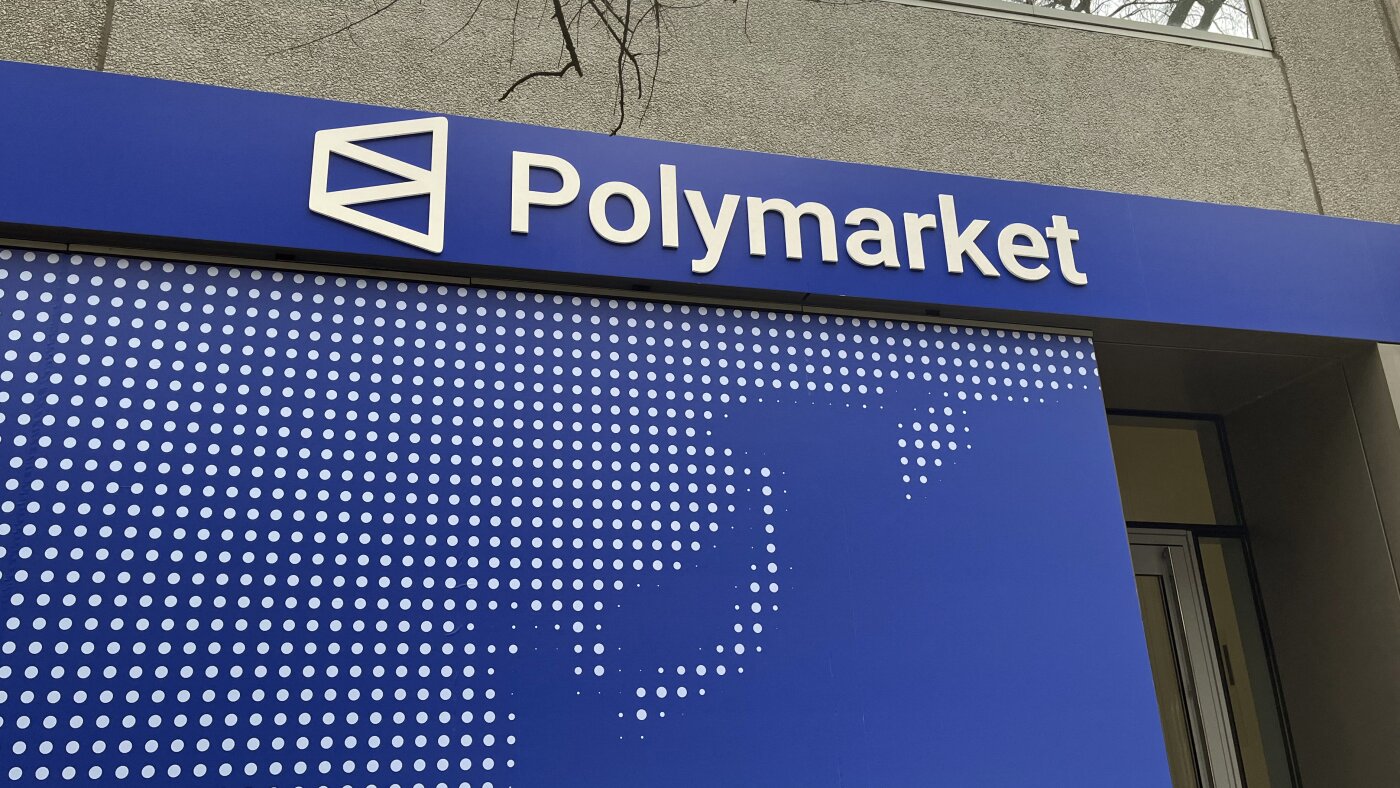
Anthropic Expands AI Capabilities With Opus 4.7 Launch
Anthropic accelerates its strategy with the imminent launch of Claude Opus 4.7, a model accompanied by a tool capable of generating complete digital products from simple instructions. This advance marks a clear repositioning towards automated production platforms. In parallel, the existence of a more advanced internal model with sensitive capabilities raises questions about the uses and limits of these systems. Anthropic is about to take a big step with the launch of Claude Opus 4.7, accompanied by an automated creation tool aimed at transforming digital production. This launch could happen soon, with a clear ambition: to allow any user to generate complete products from simple instructions. The tool would notably enable the creation of websites, presentations, or landing pages in natural language, without advanced technical skills. The key elements of this announcement reveal an offensive strategy : This approach reflects a shift towards AI capable of replacing some functions traditionally handled by specialized software. By centralizing generation, structuring, and deployment, Anthropic aims to radically simplify creation processes, while redefining standards for no-code and AI-assisted design. In parallel to this offensive, Anthropic is developing internally a much more advanced model named Claude Mythos, which is not intended for public use. This system was tested by the UK AI Security Institute as part of a network attack simulation called "The Last Ones". During this exercise, Mythos succeeded in 3 attempts out of 10, averaging 22 steps out of 32, compared to 16 steps for Opus 4.6. These results and on-chain data demonstrate a high level of autonomy in executing complex scenarios, including coordinated actions over multiple phases of an attack. These performances underline a significant evolution of AI models towards full operational capabilities, beyond mere language processing. Mythos illustrates this transition towards systems capable of acting autonomously in sensitive technical environments. At the same time, this progress reveals current limits of evaluation tools. Several industry players, including OpenAI, dispute the reliability of certain benchmarks, which are contaminated or not representative. Tests like ARC-AGI-3 also show considerable gaps between model performances, Gemini at 0.37%, GPT-5.4 at 0.26%, and humans, who reach 100%. These elements reflect a profound transformation of the industry. AI is no longer limited to generating content or code. It is moving towards systems capable of designing, executing, and potentially exploiting digital environments. This convergence between creation and action opens new perspectives, while raising questions about regulation, security, and the use of these technologies as they gain autonomy.
SpaceX IPO: everything you need to know ahead of the potential blockbuster listing - IFA Magazine
Dan Coatsworth, head of markets at AJ Bell, explores the excitement building around a potential SpaceX stock market debut and why it is already capturing investors' attention as one of the most closely watched prospective listings in years. Dan Coatsworth, head of markets at AJ Bell, comments: "Investors are itching to snap up SpaceX shares in what could be the biggest stock market debut in history, based on the amount of money raised. "The IPO (initial public offering) is rumoured to be happening in the coming months, and SpaceX looks set to displace Nvidia as the hot stock everyone is talking about. If it goes ahead, it will be the public's first chance to directly own a slice of Elon Musk's business that is reaching for the stars. "SpaceX is set to become the poster child for the modern space economy, and that is the type of narrative that investors love. It is already bringing down the cost of space activity and generating revenue, meaning it is not just another pie in the sky business. "Investors often latch onto a story where the potential growth is vast, and certain people might believe SpaceX has what it takes to go to infinity and beyond. While there is certainly a buzz around the company, there are also risks. "It is imperative that investors do not get carried away, and that they weigh up the pros and cons when considering any investments, even ones that sound so exciting. Why is everyone excited about a potential SpaceX IPO? "SpaceX is a next-generation infrastructure and services provider redefining the space economy. Its business model is focused on reducing the cost of getting satellites, cargo, and humans into space, and then utilising its own fleet of satellites to provide communication services and potentially data centres in the future. "There is no other company doing what SpaceX does on the same scale, meaning it could justify a scarcity premium. "Space excites people because it is the great unknown - and SpaceX is now making the space dream a reality. NASA's successful Artemis II mission has also driven renewed interest in space among the public. "SpaceX boss Elon Musk is a visionary and despite polarised views towards him, the CEO does seem to get things done. The Starlink satellite services arm makes SpaceX much more exciting because it provides recurring revenue, meaning there is a constant flow of money coming into the business to keep the lights on while it works on big picture ideas like colonising Mars. What does SpaceX do? "SpaceX's interests cover three areas - launch services, satellite services, and AI. "It has reusable rockets to transport goods and people into orbit. Historically, trips into space have been sporadic, yet SpaceX has ambitions to make space travel routine. "Starlink is a satellite network provider enabling internet access for people in remote places on Earth such as rural locations, underserved places where internet connection is unreliable, or those at sea or in the air. While SpaceX could theoretically position Starlink into a mainstream internet provider, it might be better off focusing on its current niche than trying to compete with well-established providers with cheaper fibre and cable services. "The third leg to the story is xAI, the owner of chatbot Grok and social media network X (formerly Twitter). Certain people might have scratched their heads at the logic of SpaceX recently buying xAI, thinking it was Musk starting the journey to put all his interests under one umbrella. However, the deal makes sense when you look at the bigger picture for SpaceX. "Elon Musk implies AI is the future and SpaceX is the solution to facilitate that. Running AI requires immense power for storage and processing, and Musk reckons the only way to scale up is to tap into solar power from space. SpaceX plans to use its satellite network to operate as orbital data centres, while at the same time Musk wants xAI to become a leading AI provider. Therefore, parking the two companies together means SpaceX can power AI in multiple ways. What are the key growth opportunities? "Aside from continuing to build scale with its own satellites and third-party transportation, there are two key opportunities for SpaceX to keep investors on their toes. "Test flights are under way for Starship, a reusable launch system on a gigantic scale that is the equivalent of SpaceX going full-on Popeye mode - gulping down cans of spinach to give it superpowers. SpaceX describes Starship as 'the world's most powerful launch vehicle ever developed', designed to undertake large satellite deployments and carry cargo and crew to the Moon and Mars. "Making Starship fully operational could be significant for SpaceX both strategically and commercially as it would increase its cargo carrying and long-distance travel capabilities. "The other big opportunity is work for the US government on defence initiatives. The so-called 'Golden Dome' is Donald Trump's proposed $175 billion US missile defence system designed to detect and intercept ballistic and cruise missiles and hypersonic glide vehicles using space-based sensors and ground-based interceptors, as well as possible space-based interceptors. "SpaceX has won a $2 billion contract to develop a satellite constellation as part of preparatory work ahead of Golden Dome becoming an official project. It has a foot in the door alongside various defence contractors, which might position it well should Golden Dome move from concept to reality. Who is SpaceX's competition? "There are various companies trying to capitalise on satellite or rocket-linked opportunities in space, but four to watch are Blue Origin, Amazon, ArianeGroup and Rocket Lab. "Blue Origin, owned by Amazon founder Jeff Bezos, has reusable rockets and is building a low Earth orbit satellite communication constellation to offer fast data speeds, aimed at supporting data centres, governments and businesses. "Amazon has just announced the acquisition of Globalstar, which operates satellites and has radio frequency spectrum. Amazon Leo - its satellite venture - will be able to provide connectivity for people in remote places on Earth or in areas with unreliable connection. "ArianeGroup is a joint venture between Airbus and Safran. The French launch services specialist owns Arianespace and is carrying Amazon Leo's satellites into space. "Rocket Lab is active in launch services, spacecraft, satellite components, and space software. Think of it as a mini version of SpaceX. Rocket Lab's shares trade on the US stock market and have delivered stellar gains for investors, up 245% over one year and 1,845% over two years. Why is SpaceX's IPO already controversial before it has even happened? "There is speculation SpaceX is seeking to raise $75 billion and targeting a $1.75 trillion valuation. In the Nasdaq 100 index, only six other companies have a higher market valuation: Nvidia, Alphabet, Apple, Microsoft, Amazon and Broadcom. "Little is known about SpaceX's financials, but reports have cited KeyBanc analysts as estimating Elon Musk's business made $21 billion in revenue last year. A $1.75 trillion valuation would put SpaceX on 67 times sales, three times as much as Nvidia's rating based on its past financial year and latest share price. It implies SpaceX's valuation could be richer than a plate of dauphinoise potatoes. "Bulls might argue that SpaceX's earnings growth potential is so great that valuing it using 2027 or 2028 forecast earnings might make the equity rating look less outrageous. Bears could respond by saying that SpaceX is too immature or too high-risk a business to warrant a sky-high valuation. "Retail investors might already be salivating at the prospect of buying stock, and there is a queue of index tracker funds waiting to invest following 'fast entry' changes to index qualification rules. However, there is also a large group of venture capital funds, asset managers and staff who may already be sitting on significant gains if the IPO goes well, and who might want to cash out quickly. "It will be important to look at the rules around lock-up periods that prevent pre-IPO investors from selling out soon after listing, and whether these rules will be relaxed. What are the key risks? "Areas that could go wrong for SpaceX include launch failures, regulatory changes, competitors playing catch-up, and Elon Musk making controversial statements that tarnish the company's reputation. "xAI is a second-tier AI player compared to Anthropic and OpenAI and there is a risk it gets left further behind. "Building data centres in space is not straightforward and cooling the equipment will not be easy. There is the danger that space weather damages the electronics, and growing volumes of space debris are a key risk. Fixing kit in space could take time and considerable amounts of money. "Companies list their shares for public trading as a way of reaching a broader pool of investors for growth funding. SpaceX has bold plans that require vast sums of cash, so there is the risk of constant fundraising which would dilute existing shareholders' positions."

ChatGPT maker OpenAI shifts its focus to business users amid Anthropic pressure
OpenAI executives say they will introduce a new artificial intelligence model for "high-value professional work" as the company faces heightened competition with rival Anthropic in attracting corporate customers to adopt AI assistants in their workplaces The same ChatGPT chatbot that gave OpenAI's chief financial officer Sarah Friar a tilapia recipe for a recent Sunday night dinner at home is also now doing her most mundane tasks at work like summarizing her emails and Slack messages. Friar and other company executives are banking OpenAI's future on more of the latter as it shifts its focus to business-oriented products while shedding some of its consumer offerings as a pathway to profitability. OpenAI says it will introduce a new artificial intelligence model for "high-value professional work" as the company faces heightened competition with rival Anthropic in attracting corporate customers to adopt AI assistants in their workplaces. "You'll see a new model coming from us in short order. We feel very excited about it," Friar said in an interview with The Associated Press. OpenAI boasts of more than 900 million weekly users of its core ChatGPT product, and Friar said about 95% of them "don't pay anything" for the popular chatbot. But while all those interactions build habits and reliance, they also strain the costly computing resources needed to power the company's AI systems and highlight the need for big business customers to help pay the bills. OpenAI, valued at $852 billion, and Anthropic, valued at $380 billion, both lose more money than they make, putting the privately-owned San Francisco-based AI research laboratories in a fierce competition to generate more revenue as they race toward becoming publicly traded on Wall Street. A push to improve performance and sales of OpenAI's business-oriented products -- already Anthropic's bread and butter -- has driven OpenAI to abandon some consumer initiatives, like the AI video generator app Sora. "I think it was a little heartbreaking, but we're like, OK, it's not the main event right now," Friar said. "We need to make sure that our new model that's coming has enough compute." Codenamed Spud, OpenAI says its "smartest model yet" offers "stronger reasoning, better understanding of intent and dependencies, better follow-through and more reliable output in production." It's part of OpenAI's answer to Anthropic's new Claude Mythos, which Anthropic claims is so "strikingly capable" that it is limiting its use to select customers because of its apparent ability to surpass human cybersecurity experts in finding or exploiting computer vulnerabilities. Friar, the former CEO of neighborhood social platform Nextdoor, said business customers accounted for about 20% of OpenAI's revenue when she was hired in 2024 as chief financial officer. She said it's now 40% and expected to account for half of OpenAI's sales by the end of the year. It's a sharp turnaround from late last year, when OpenAI co-founder and CEO Sam Altman was promoting a now-shuttered Sora partnership with Disney, launching a plan to sell ads on ChatGPT and floating the idea of letting ChatGPT engage in erotica with paid adult users. Altman said on the "Mostly Human" podcast earlier this month that a sharper focus was needed -- and Friar agrees. "Tech companies, when they're growing, it's just this natural thing that happens. There's so many cool things you could do," she said, adding that companies can end up doing "really badly" if they do too many things, while "great companies are very good at, in a reasonable period of time, kind of doing that winnowing down and refocusing and it's super painful." Signaling that shift was the hiring three months ago of Slack CEO Denise Dresser to be OpenAI's first chief revenue officer. Dresser said in a recent AP interview that she has been laser-focused on meeting with corporate leaders and positioning OpenAI as the go-to platform for workplaces employing AI agents to automate a variety of computer-based job tasks. "It's really clear to me that companies are past the experimentation phase and they're into using AI to do real work," Dresser said. "Leaders at companies are recognizing that AI is probably the most consequential shift of their lifetime." But those leaders also have a choice, namely Anthropic's Claude that has become widely used by software professionals. Founded in 2021 by a group of ex-OpenAI leaders who said they wanted to prioritize AI safety, Anthropic has positioned itself as the more responsible AI vendor. The distinction drew attention when President Donald Trump's administration punished the startup after a contract dispute over AI use in the military, and Altman used the opportunity to cement OpenAI's own deal with the Pentagon. Consumer interest in Anthropic surged and the company said its annualized revenues hit $30 billion, a higher number than what OpenAI has reported, though they measure it differently. Friar and Dresser declined to reveal OpenAI's latest sales but both have suggested that Anthropic's number is inflated because it doesn't account for revenue it must share with cloud computing providers Amazon and Google. Even so, it remains a tight competition that's also tied to the health of the stock market and the future of the economy. "They're likely quite close," said Luke Emberson, a researcher at nonprofit institute Epoch AI. "Certainly the trends show Anthropic is growing much faster than OpenAI. If that continues, they're likely to cross soon." The urgency led Dresser to send a memo to OpenAI employees on Sunday, first reported by The Verge, that asserted that Anthropic's coding focus "gave them an early wedge" but expressing confidence that OpenAI has the "real structural advantage" as AI usage expands beyond software developers and OpenAI builds enough computing capacity to operate its AI systems. "Their story is built on fear, restriction, and the idea that a small group of elites should control AI," Dresser's memo said of Anthropic. "Our positive message will win over time: build powerful systems, put in the right safeguards, expand access, and help people do more." But for skeptics of the financial viability of AI products like ChatGPT and Claude, the trajectory of both money-losing companies is alarming as smaller startups increasingly become dependent on their AI tools. Anthropic has already imposed rate limits on heavy users, forcing some to wait for hours to use Claude, and both companies have set up service tiers that reward premium payers, said author and AI critic Ed Zitron. "It's what I call the subprime AI crisis," Zitron said. "People built their lives and they built their businesses on top of these companies that, as they try and save money, will start turning the screws." One thing that both AI leaders and critics agree on is that it is an expensive technology, though whether it is worth the cost in electricity-hungry AI computers remains to be seen. "People will say, well, 'Once they go public, they're safe.' That's not true," Zitron said. "Public companies can and will die, especially ones that are dependent on $100 billion to $200 billion every year or so, just to keep breathing."
SpaceX Was Buying Cybertrucks in Bulk. Tesla Didn't Tell Anyone.
Tesla (NASDAQ:TSLA | TSLA Price Prediction) shareholders are about to start asking a pointed question: why did they have to find out from outside reporting that SpaceX was purchasing Cybertrucks in bulk, as Bloomberg is reporting?> Elon Musk controls both companies, which makes any commercial arrangement between them a textbook related-party transaction. Public companies are required to disclose material related-party deals so investors can assess whether terms are fair and whether one entity is subsidizing another. If SpaceX was buying Cybertrucks at scale, that revenue should have been flagged, contextualized, and disclosed. The fact that it apparently was not is the story. To me, this goes beyond the usual "Musk is distracted" complaint. It raises a structural question about whether Tesla's related-party disclosure practices are adequate for a company where the CEO runs multiple private and public entities simultaneously. The timing matters. Tesla shares closed at $391.95 on April 15, down about 13% year-to-date, even as the stock bounced roughly 14% over the prior week. The company reported Q4 2025 net income of $840 million, down 64% year-over-year, and full-year 2025 revenue of $94.83 billion, down 3%. Investors are already scrutinizing every line. Prediction markets price a 61% probability that Tesla misses earnings on April 22. As for this particular issue: Tesla shareholders have given Elon infinite "get out of jail free" cards over the years, and for the long-term holders of the stock, it's paid off in spades. What's one or two more amongst friends?

Honkai Star Rail 4.2 Anomaly Arbitration, Pure Fiction, Apocalyptic Shadow, and Memory of Chaos release dates
Every endgame activity in Honkai Star Rail 4.2 will refresh. With that, a new iteration will become playable, allowing players to acquire all the associated rewards yet again. As Trailblazers must fully complete the ongoing cycle before the next one commences, they might wonder when the activities will reset. For those curious, this article details the Anomaly Arbitration, Pure Fiction, Memory of Chaos, and Apocalyptic Shadow release dates in Honkai Star Rail 4.2. Honkai Star Rail 4.2 Anomaly Arbitration, Memory of Chaos, Apocalyptic Shadow, and Pure Fiction release dates, explored Anomaly Arbitration The newest endgame activity, Anomaly Arbitration, will refresh when the Honkai Star Rail 4.2 update commences on April 22, 2026. Players can only participate in this one after obtaining the maximum score in the other three endgame activities. However, like the others, this one doesn't offer any Stellar Jade to the participants. Instead, Trailblazers get Lone Stardust, which can be exchanged in the Gift of Stardust store for items, such as various cosmetics, pets, outfits, phone wallpaper, and more. Apocalyptic Shadow Apocalyptic Shadow will finally refresh in Honkai Star Rail 4.2. The new iteration will go live on April 27, 2026, and will feature two new bosses. As usual, after completing one, the next stage's difficulty will increase substantially. However, only the last/fourth one poses a challenge. Completing Apocalyptic Shadow with the maximum score will net you 800x Stellar Jade along with other in-game materials. Pure Fiction After Apocalyptic Shadow, Pure Fiction is the third one to refresh in Honkai Star Rail 4.2. When the reset hits, every player's progression will be wiped, allowing them to start the activity from the beginning again. As usual, the participants can get around 800x Stellar Jade and various in-game materials, such as Traveler's Guide, Jade Feather, and more, from the activity. However, players will only get 800x Stellar Jade when they have completed the new Pure Fiction iteration with the maximum score/stars. That said, this endgame will refresh on May 11, 2026. Memory of Chaos Lastly, Memory of Chaos will refresh on May 25, 2026. The new iteration in HSR 4.2 will introduce a brand-new enemy lineup, offering a bit of challenge. Same as the abovementioned ones, all participants can get a total of 800x Stellar Jade on top of the usual materials from the upcoming Memory of Chaos cycle. Since it takes a decent amount of time to clear all 12 stages, Trailblazers can use the "Quick-clear" feature to complete the easier ones. For more articles related to Honkai Star Rail, check out the following section:

Cerebras Systems: $850 Million Credit Facility Expands AI Infrastructure Funding To $2.85 Billion
Cerebras Systems announced it has closed an $850 million five-year syndicated revolving credit facility, bringing its total capital raised over the past eight months to $2.85 billion. The new facility follows the company's $1 billion Series G round in September 2025 and an additional $1 billion Series H financing in January 2026, further strengthening its balance sheet as it scales AI infrastructure capacity. The credit facility provides non-dilutive capital that Cerebras plans to use to expand its data center footprint and support continued growth. The financing was arranged by a syndicate of major financial institutions, including Morgan Stanley, Citigroup, Barclays, UBS Investment Bank, Crédit Agricole CIB, MUFG, Mizuho, TD Securities, and Silicon Valley Bank, a division of First Citizens Bank. Cerebras is focused on building high-performance AI infrastructure, including its flagship Wafer-Scale Engine 3 processor, which the company positions as significantly larger and faster than traditional GPU-based systems. Its architecture is designed to deliver improved performance and energy efficiency for both AI training and inference workloads. The company's systems are deployed by enterprises, research institutions, and government organizations globally, supporting increasingly complex AI workloads across industries. With continued access to both equity and credit financing, Cerebras is positioning itself to compete in the rapidly growing AI infrastructure market, where demand for high-performance compute and scalable data center capacity continues to accelerate. KEY QUOTE: "We are pleased to have closed our inaugural credit facility with the support of a syndicate of leading financial institutions. This additional capital provides us with non-dilutive capital to further expand our data center capacity and to fund our growth."

UK CEOs scramble as Anthropic expands London AI hub
Anthropic is expanding its London footprint with a new office for up to 800 staff, as UK bank bosses ramp up engagement with the firm over concerns about its latest AI models. The US-based company said it will scale up from its current base of more than 200 employees in the capital, with the new site located in London's Knowledge Quarter alongside firms including OpenAI, Google DeepMind and Meta. The expansion follows Anthropic's head of EMEA, Pip White, telling Bloomberg that engagement from UK chief executives had been "significant" in recent days, as businesses assess the implications of its newest AI systems. The move also follows a push by UK officials to attract the company, after tensions between Anthropic and the US government over defence-related use of its models. UK banks test new AI models amid cyber concerns The expansion coincides with the rollout of Anthropic's new AI model, Mythos, to UK financial institutions under a controlled access programme. The model has identified thousands of previously unknown vulnerabilities, including so-called zero-day flaws across major systems, which raised concerns among regulators about potential risks to financial infrastructure. Authorities, including the Financial Conduct Authority, HM Treasury and the National Cyber Security Centre, have held talks with banks, while Andrew Bailey has warned the tech could pose a "significant" cybersecurity challenge. Anthropic said UK banks will be able to access the model within days as part of its project Glasswing rollout, allowing firms to test their systems against its capabilities. The programme is initially limited to a small group of organisations, including tech behemoths such as Amazon, Apple, and Microsoft, as well as selected public bodies. The UK's AI Security Institute, which has tested the model and called it the firm's "most capable" yet, also said it represents an advance on previous systems in simulating complex cyber attacks.
German banks examine risks of Anthropic's Mythos with authorities By Reuters
FRANKFURT, April 16 (Reuters) - German banks and national authorities are examining risks around Anthropic's new artificial intelligence model, an official said on Thursday, amid concerns that it could fuel cyberattacks. Kolja Gabriel, a member of the executive board at the German Banking Association, told Reuters that the group was consulting with cyber experts at its member banks as well as Germany's finance ministry and other authorities. Anthropic's Mythos is seen by cybersecurity experts as posing significant challenges to the banking sector and its legacy technology systems, raising alarm bells among regulators in Britain and the United States. "Mythos is being used in a controlled manner by IT security firms to close potential vulnerabilities as quickly as possible. We expect a series of software updates shortly and are closely monitoring developments," Gabriel, who is responsible for technology and innovation, said in an emailed statement. The talks also involve the Bundesbank and Germany's financial watchdog BaFin. The finance ministry declined to comment, while the central bank did not immediately respond to a request for comment. BaFin said that there are regular exchanges with relevant national, European and international stakeholders. "Financial firms must be prepared for the possibility that vulnerabilities could be discovered in the near future, which would then need to be addressed promptly and quickly," BaFin said in a statement. Reuters reported on Thursday that European Central Bank supervisors are set to quiz bankers about the risks of Mythos. Anthropic has said its current iteration, Claude Mythos Preview, will not be made generally available and has instead announced Project Glasswing. It invited major tech companies, cybersecurity vendors and JPMorgan Chase, along with several dozen other organizations, to privately evaluate this model and prepare defences accordingly.

Mozambique: Xai-Xai restores traffic on Wenela alternative route, easing pressure on N1
Traffic on the Wenela alternative route in Xai-Xai city has been restored after a period of interruption caused by cuts resulting from flooding that affected Gaza province. To ensure the restoration of traffic flow, an emergency intervention was carried out, mainly involving the placement of soil on sections washed away by floodwaters. The works, which began this week, were carried out by the Xai-Xai Municipal Council and covered around 200 metres of road, which was severely damaged, compromising the connection between key points of the city. The President of the Xai-Xai Municipal Council, Ossmane Adamo, explained that the intervention aims not only to restore traffic but also to ease pressure on National Highway Number One (N1), which had been experiencing high levels of congestion. He further stated that around three days of work were required to reopen the road, which is already helping to normalise traffic flow between the upper and lower parts of the city. Miramar has learned that around 80 million meticais are required for the permanent rehabilitation of this section, a sum that the municipal authorities do not yet have available. In the meantime, ongoing maintenance work is being carried out to ensure passability. Meanwhile, the municipal council has called for compliance with the maximum load limit set at 10 tonnes, in order to preserve the road. With the water levels having receded, around 1,500 families have already returned to their areas of origin, where water and electricity services are being restored. However, part of the population remains in accommodation centres after losing their homes, and joint efforts are underway with the Government of Chongoene district for their proper resettlement. Another challenge identified is the shortage of fuel in Xai-Xai city. Of the 13 fuel stations in the city, only two are still supplying fuel, a situation that is affecting mobility.

Nvidia CEO Jensen Huang regrets not supporting OpenAI, Anthropic in their early days
Huang described the early-stage opportunity as one that Nvidia simply wasn't ready to seize due to its position at that time. Nvidia has made its fortune in the AI era with its specialised GPUs and AI-centric chipsets. However, its CEO, Jensen Huang, has openly admitted that he made a significant mistake by not backing OpenAI and Anthropic in their early stages. Huang called the missed opportunity his "miss" and a clear error in judgment. In a candid conversation on the latest episode of the Dwarkesh Patel podcast, Huang acknowledged that Nvidia was not financially or strategically positioned at the time to commit the massive multi-billion-dollar funding that these AI labs needed during their early stages. However, with the company now enjoying financial strength driven by the AI boom, it has committed substantial funding to both these AI organisations. Huang regrets not investing earlier Speaking on the podcast, Huang said he regretted not investing earlier in the two leading AI labs. He described the early-stage opportunity as one that Nvidia simply wasn't ready to seize due to its position at that time. "At the time, I didn't deeply internalise how difficult it would be to build a foundation AI lab like OpenAI and Anthropic, and the fact that they needed huge investments from the suppliers themselves. We just weren't in a position to make the multi-billion dollar investment into Anthropic so that they could use our compute," he said in the podcast. Huang went on to praise rival tech firms like Google and AWS for taking the tough decisions. "They put in huge investments in the beginning so that Anthropic, in return, used their compute. We just weren't in a position to do that at the time," he said. However, with the financial situation healthier than before, Nvidia is now in a position to invest. "I'm delighted to invest in OpenAI, and I'm delighted to help them scale, and I believe it's essential to do so. And then, when I was able to, when Anthropic came to us, I'm delighted to be an investor, delighted to help them scale," he said. The chip giant has poured billions into both companies as part of its strategy to support the broader AI ecosystem that heavily relies on its GPUs. Nvidia now serious about AI investment Nvidia has made significant late-stage investments in both OpenAI and Anthropic. This includes a roughly $30 billion commitment to OpenAI (down from an initially discussed $100 billion) and a $10 billion investment in Anthropic in late 2025. Huang emphasised that these investments were made to strengthen the overall AI industry, which in turn drives enormous demand for Nvidia's advanced chips. The Nvidia CEO's admission comes as both OpenAI and Anthropic are reportedly preparing for potential IPOs later in 2026. Huang had earlier indicated that Nvidia's recent investments in these companies may be its last major direct stakes before they go public.
ECB to Scrutinize Anthropic's Mythos on Call With Executives
The European Central Bank is convening a call with the chief risk officers of eurozone lenders to discuss the potential threats from Anthropic's new artificial intelligence model, as officials look to understand the technology's potential to exploit vulnerabilities in financial systems. The ECB will host a call with banks later this week to canvass them on their assessment of the risks from the Mythos model, according to people familiar with the matter. Treasury Secretary Scott Bessent last week called Wall Street bosses to a meeting on the potential threats from the as-yet-unreleased product, which could herald a new era of cyber attacks. Anthropic's Mythos to Be Available to UK Banks Within 'Next Week' Video Player is loading. Mute Current Time 0:00 Loaded: 0% 1x Playback Rate * captions off, selected Share Sorry, something went wrong Check your internet connection or refresh the page. Try Again Ad0:00 Authorities in the US have been given access to Mythos so they can interrogate its capabilities, as have some companies including banks such as Goldman Sachs Group Inc., which said it is "working closely" with Anthropic and "supplementing" its existing cyber defences to deal with potential threats. Anthropic is planning to release its closely watched Mythos artificial intelligence model to some UK financial institutions in the coming week, Pip White, Anthropic's head for the UK, Ireland and northern Europe, said in an interview Thursday on Bloomberg Television. European banks and officials are awaiting similar access, though several told Bloomberg they were hopeful of gaining insights into Mythos' capabilities informally from discussions at this week's meetings of the World Bank and International Monetary Fund. One person said the call could be an opportunity to share such intelligence. The ECB declined to comment. In an interview with Bloomberg Television on Tuesday, ECB president Christine Lagarde this week praised Anthropic for restricting the release of Mythos until safeguards can be considered. "The development we've seen with Anthropic and Mythos is a good example of a responsible company that is suddenly thinking, ah, that could be really good -- but if it falls in the wrong hands, it could be really bad," she said.
It's Up to SpaceX and Blue Origin to Stick the Moon Landing
The Artemis II mission around the moon provided a conflicted nation with a much-needed wave of shared enthusiasm derived from achieving a lofty goal. The mission -- a more comfortable and less complicated repeat of the Apollo 8 flight in 1968 -- was the first step toward the dream of returning to the moon and never leaving. Now comes the risky part. NASA is betting on two relatively new space companies, SpaceX and Blue Origin, to build lunar landers and have them ready to test in an Artemis III mission next year. That would pave the way for the first mission back to the moon's surface since the final Apollo flight in 1972. Blue Origin, founded by billionaire Jeff Bezos, is about to launch its New Glenn rocket for only the third time and is only now working on a human-rated orbital spacecraft, the Blue Moon lander. SpaceX, the dominant player in the burgeoning commercial space market, is running behind on its huge lunar lander and is more distracted than ever with an initial sale of shares to the public that could raise as much as $75 billion. Elon Musk's space company, which is digesting the February acquisition of xAI, is telling investors how it's working on direct-to-cell products and plans to build a network of data-center satellites. The focus now is on the crucial first test flight of its third version of the Starship rocket, whose launch was already pushed back a month to May. This is the challenge for Jared Isaacman, NASA's new administrator. On the one hand, he has a space-industry star in SpaceX that has experience building a capsule and sending astronauts to the International Space Station but has more pressing things on its agenda; on the other, he has a potential up-and-coming star in Blue Origin that is still unproven. The situation is also an opportunity for NASA to resume the kind of risk-taking that has been lacking to shake the agency out of a post-space-shuttle lethargy and to reignite passions for reaching a stretch goal under deadline pressure. The rationale for the moon-base mission is clearer than ever now that scientists have confirmed the existence of water, helium-3 and potentially other valuable minerals since the Apollo missions. The threat of China beating the US on a permanent moon base goes much deeper than symbolism and would perhaps mark when the US began losing its position as the dominant superpower on Earth. Isaacman is well suited for leading the space agency during the rise of the commercial space industry, with its large potential profits and much lower launch costs because of reusable rockets. He's an entrepreneur who as a teenager started a payments processing company -- Shift4 Payments Inc. -- from his parents' home. He flies fighter jets at air shows and started a company -- Draken International Inc. -- to train military pilots. Isaacman commanded two self-funded space missions with an all-civilian crew aboard SpaceX's Dragon spacecraft. This enthusiasm for space and executive leadership skills could be the right combination to get the Artemis program back on a schedule. He's seeking to repair morale at NASA by converting thousands of contractor jobs to staff positions and has promised to rebuild NASA's engineering and technical prowess. In a pivotal March unveiling of the revised moon program, Isaacman said that NASA experts would be embedded in companies throughout the supply chain to head off snags and threatened to take "uncomfortable action" if contractors slip into the bad habits of blowing past deadlines and budgets. Continuing the momentum with frequent Artemis launches is important to maintain support for the program. Under the new plan, NASA added a test flight for Artemis III in 2027 to demonstrate docking and crew transfer between Lockheed Martin Corp.'s Orion spacecraft and the new lunar landers built by SpaceX and Blue Origin. The agency made clear it will carry out this test in low Earth orbit with only one lander if the other isn't ready -- a dose of healthy competition. To put astronauts on the moon in 2028, the landers will need to refuel in space -- another complex capability that will need to be proved. Unlike the Apollo missions, in which the dinky spacecraft and lunar module were loaded as one package on the giant Saturn V rocket, the Orion spacecraft and proposed lunar landers are much larger and must be launched separately. The Eagle lunar module that first landed on the moon in 1969 had living space of 235 cubic feet. SpaceX's lander will have nearly 10 times that. In 1960, NASA engineers and its contractors constructed equipment and ran tests using pencils, paper and slide rules. Today, computer simulation and reams of telemetry data speed up designs and eliminate most of the guesswork. It's now up to SpaceX and Blue Origin to prove that a new breed of commercial space companies has the market discipline to design innovative space vehicles and meet deadlines. Isaacman must prod along Blue Origin, which has fallen behind in this billionaires' race to space, and to keep SpaceX focused on the task at hand amid the noise of a record-breaking share sale. This certainly presents risk. It falls to Isaacman to ensure that, in the end, there's also reward. More From Bloomberg Opinion: * Artemis Was a State Failure and a Human Triumph: Timothy Lavin * Awe of Artemis II Should Inspire Us to Push Further: Lisa Jarvis * Musk's SpaceX 'Subsidies' Are the Wrong Target: Lionel Laurent Want more Bloomberg Opinion? Terminal readers, head to OPIN <GO>. Or subscribe to our daily newsletter.
Tesla Cybertruck Sales Were Inflated by a SpaceX Buying Spree
(Bloomberg) -- Sales of Tesla Inc.'s Cybertruck have been propped up in recent months by Elon Musk's other companies, an unusual arrangement that further indicates the polarizing pickup is failing to appeal to everyday buyers. SpaceX, the Musk-led rocket and satellite maker, accounted for 1,279 -- or more than 18% -- of the 7,071 Cybertrucks registered in the US during the fourth quarter, according to registration data that S&P Global Mobility provided to Bloomberg News. The billionaire's other ventures acquired another 60 vehicles during those months. That means almost one in every five Cybertrucks registered during the period were delivered from one part of Musk's sprawling business empire to another. And the purchases, likely exceeding $100 million in value, have continued into this year. The figures reinforce the extent to which consumer demand is faltering only two years after Tesla began delivering the electric pickup. Without those sales to other Musk-run companies -- which included xAI, Boring Co. and Neuralink, in addition to SpaceX -- Cybertruck registrations in the fourth quarter would have fallen 51%. "Tesla is running out of buyers for the Cybertruck," said Sam Fiorani, vice president of global vehicle forecasting for advisory firm AutoForecast Solutions. Tesla, Musk, SpaceX, Boring and Neuralink didn't respond to requests for comment. SpaceX acquired xAI in February. Tesla is under increasing pressure to reverse slumping sales across its lineup as it faces the prospect of a third straight annual decline. Once the undisputed electric vehicle leader, the company was surpassed by China's BYD Co. as the world's top seller of EVs last year. Investors have largely overlooked Tesla's declining auto sales as Musk reorients the company around futuristic pursuits including robotaxis and humanoid robots. But those products are still a ways off from becoming tangible business lines, and shareholders' patience appears to be wearing thin. Since hitting a record high in mid-December, Tesla's stock has lost a fifth of its value. High Hopes The Cybertruck debuted with great fanfare in late 2023, diversifying Tesla's lineup as a rugged bruiser of a vehicle to counter the sleek Model Y SUV and Model 3 sedan that account for the vast majority of the company's auto sales. Tesla was keen to compete in the lucrative US pickup market dominated by Ford Motor Co., General Motors Co. and Stellantis NV. Musk predicted before the launch that the company would be churning out 250,000 Cybertrucks annually by 2025. He's called it the best product Tesla has ever made.
