News & Updates
The latest news and updates from companies in the WLTH portfolio.
Starlink Outage Across Globe Disrupts US Navy Drone Tests, Highlights Pentagon's Mounting Reliance on Elon Musk's SpaceX: Report | LatestLY
A global outage of Elon Musk's Starlink satellite network last August left two dozen US Navy unmanned surface vessels stranded off the California coast, exposing a critical vulnerability in the military's autonomous drone programme. According to internal Navy documents and sources familiar with the matter, the hour-long disruption halted operations intended to bolster maritime options in potential future conflicts. The incident underscores the risks associated with the Pentagon's increasing dependence on a single commercial provider as SpaceX prepares for a projected USD 2 trillion public offering this summer. Washington, April 16: The previously unreported mishaps occurred during crucial testing of autonomous vessels designed for long-range surveillance and strike capabilities. When the Starlink network went offline, impacting millions of commercial users worldwide, it simultaneously severed the primary communication link for the Navy's seatless, high-speed maritime drones. 'Can't Trust WhatsApp': Elon Musk Slams Meta as Class-Action Lawsuit Alleges Secret Interception of Private Messages by Accenture and Third Parties. Internal safety reports indicate that the Navy's reliance on Starlink has "exposed limitations" under the high data loads required to control multiple unmanned systems simultaneously. While the Pentagon maintains that it leverages multiple resilient networks, experts suggest that without Starlink, the US government would currently lack any comparable access to a global, low-earth orbit (LEO) communications constellation. The disruptions were not limited to a single event. In April 2025, during a separate series of California-based tests involving both sea and aerial drones, officials reported that Starlink struggled to maintain stable connections. The Navy safety report noted that the network faltered under "multiple-vehicle load," a technical bottleneck that could prove catastrophic in active combat scenarios. SpaceX currently operates nearly 10,000 satellites in LEO, a scale that provides unparalleled ubiquity and relatively low costs for military applications. However, the August outage demonstrated that even this vast network is susceptible to total failure, leaving autonomous assets "bobbing" and unresponsive in the water. The Navy's experience has amplified concerns among Democratic lawmakers and security analysts regarding the Pentagon's "near-monopoly" relationship with SpaceX. Beyond Starlink, the company dominates space launches and provides the National Security-focused Starshield network, generating billions of EUR and USD in government contracts. The vulnerability was further highlighted by the recent reassignment of a GPS satellite launch to a SpaceX rocket for the fourth time, following technical failures at United Launch Alliance -- a joint venture between Boeing and Lockheed Martin. This consolidation of capabilities under one firm led by Elon Musk has prompted warnings about the lack of redundancy in the national security supply chain. While SpaceX remains the dominant force in LEO communications, competitors are beginning to secure significant backing. Amazon recently announced an USD 11.6 billion agreement to acquire satellite manufacturer Globalstar, aiming to challenge the Starlink infrastructure. Additionally, the Navy tests that faced connectivity issues also utilised network systems from Viasat and radios from Silvus, indicating that the military is attempting to integrate diverse hardware. Despite these efforts, analysts from the Hudson Institute suggest that the benefits of Starlink's widespread availability often outweigh the risks of intermittent outages for the time being. The military continues to accept these vulnerabilities due to the rapid deployment capabilities and cost-efficiency provided by commercial satellite broadband The Navy's technical setbacks coincide with ongoing political friction regarding SpaceX's operational decisions. Previous reports indicated that Musk deactivated Starlink access for Ukrainian forces during a counter-offensive against Russia, and earlier this year, allegations surfaced that the company withheld service from US service members in Taiwan. Elon Musk Seeks Removal of OpenAI CEO Sam Altman, President Greg Brockman Amid Legal Battle. SpaceX has disputed these claims, and the Pentagon has declined to discuss specific operational security measures. However, as SpaceX moves toward its landmark IPO, the balance between commercial interests and the rigid demands of national security remains a subject of intense debate within the Defense Department.
Kraken Robotics Reports 2025 Financial Results
ST. JOHN'S, Newfoundland and Labrador, April 16, 2026 (GLOBE NEWSWIRE) -- Kraken Robotics Inc. ("Kraken" or the "Company") (TSX-V: PNG, OTCQB: KRKNF), announced it has filed its financial results for the fourth quarter and year ended December 31, 2025 ("Q4 2025"). Please refer to the audited consolidated financial statements of the Company for the fiscal... ST. JOHN'S, Newfoundland and Labrador, April 16, 2026 (GLOBE NEWSWIRE) -- Kraken Robotics Inc. ("Kraken" or the "Company") (TSX-V: PNG, OTCQB: KRKNF), announced it has filed its financial results for the fourth quarter and year ended December 31, 2025 ("Q4 2025"). Please refer to the audited consolidated financial statements of the Company for the fiscal years ended December 31, 2025 and 2024, management's discussion and analysis for the three and twelve months ended December 31, 2025 ("MD&A") and the annual information form of the Company for the year ended December 31, 2025, each filed on SEDAR+ at www.sedarplus.ca, for more information. Certain preliminary 2025 year-end results and 2026 guidance were already announced in the news release of the Company dated March 3, 2026 (the "March 3 News Release"), together with the Company's execution of a definitive agreement to acquire Covelya Group Limited ("Covelya Group"), a leading international provider of mission-critical underwater technology solutions, for total consideration of $615 million, subject to adjustment (the "Covelya Acquisition"). The Covelya Acquisition is expected to close during the second quarter of 2026, subject to the satisfaction of customary closing conditions and receipt of required regulatory approvals. For further details on the Covelya Acquisition, please see the March 3 News Release. Unless otherwise specified, all dollar amounts in this release are denominated in Canadian dollars. "We are pleased to report another year of strong financial results, driven by significant demand for our products and services across a growing base of customers," said Greg Reid, President and CEO of Kraken. "This momentum reflects the differentiated capabilities of our subsea sensor and power technologies and the growing adoption of autonomous underwater systems in both defence and commercial applications. We are excited about the expected Q2 closing of our strategic acquisition of Covelya Group, which we believe will significantly strengthen Kraken in terms of its product offering, technological capabilities, competitive position and financial outlook. The current macro environment is characterized by rising global instability that is fueling increased defence spending and a push for national energy security. This is driving significant growth in our (and Covelya's) core growth markets. Recent conflicts in Ukraine and the Middle East have demonstrated that uncrewed systems provide transformative, asymmetric capabilities. Simultaneously, the energy sector is adopting these systems to lower costs and enhance the monitoring of remote assets. This has created a surge in demand for maritime drones, as well as counter-drone technology. As both Kraken and Covelya products enable the essential control and automation for these platforms, both our companies are securing a record number of opportunities and orders and expect this growth trajectory to continue. Looking ahead for the full year 2026, we are excited about the strong new order activity that both Kraken and Covelya have had to start the year and the massive opportunity in front of us." As previously announced in the March 3 News Release, Kraken expects revenue in 2026 to be between $165 million and $175 million and Adjusted EBITDA to be between $40 million to $50 million, excluding any contribution from the Covelya Acquisition. The midpoint of guidance represents over 65% revenue growth and 80% Adjusted EBITDA growth in comparison to the prior year. The Company's strong outlook for 2026 is driven by both existing and expected purchase orders. It is also supported by expected growth in the commercial services business, including a full year contribution from LiDAR services, formerly 3D at Depth. Consistent with prior years, revenue in 2026 is expected to be weighted toward the second half of the year. Capital expenditures in 2026 are expected to range from $15 million to $18 million, down significantly from the prior year, given the completion of the new battery manufacturing facility. A summary table of the Company's 2026 guidance range and a comparison to 2025 results is provided below. Kraken plans to release updated 2026 guidance for the combined company upon closing of the Covelya Acquisition. CONFERENCE CALL DETAILS Kraken management will host a conference call today, April 16, 2026, starting at 8:30 a.m. ET to discuss the financial results. Participants can listen to this event at the webcast details below, or by dialing 1-833-752-3301 (North America) or 1-647-846-2734 (International) for operator assistance. A recording will also be made available following the call. Webcast Details: https://event.choruscall.com/mediaframe/webcast.html?webcastid=sLXYSQ25 NON-IFRS MEASURES The Company has included certain non-IFRS financial measures and non-IFRS ratios in this press release, including adjusted EBITDA, adjusted EBITDA margin, gross profit, gross profit margin, and working capital. Management believes that non-IFRS financial measures and non-IFRS ratios, when supplementing measures determined in accordance with IFRS, provide investors with an improved ability to evaluate the underlying performance of the Company. Non-IFRS financial measures and non-IFRS ratios do not have any standardized meaning prescribed under IFRS, and therefore they may not be comparable to similar measures employed by other companies. This data is intended to provide additional information and should not be considered in isolation or as a substitute for measures of performance prepared in accordance with IFRS. Adjusted EBITDA and Adjusted EBITDA Margin The Company believes that, in addition to conventional measures prepared in accordance with IFRS, Adjusted EBITDA is useful to securities analysts, investors and other interested parties in evaluating operating performance by presenting the results of the Company on a basis which excludes the impact of certain non-operational items which enables the primary readers of the press release to evaluate the results of the Company such that it was operating without certain non-cash and non-recurring items. Adjusted EBITDA is calculated as earnings before interest expense, interest income, income taxes, depreciation and amortization, stock-based compensation expense and non-recurring impact transactions, if any. Gross profit is defined as revenue less cost of total sales. Gross profit margin is defined as gross margin dividend by total sales. Figure 1: Kraken Robotics SeaPower batteries emerging from a pressure test system. ABOUT KRAKEN ROBOTICS INC. Kraken Robotics Inc. is transforming subsea intelligence through 3D imaging sensors, power solutions, and robotic systems. Our products and services enable clients to overcome the challenges in our oceans - safely, efficiently, and sustainably. Kraken's synthetic aperture sonar, sub-bottom imaging, and LiDAR systems offer best-in-class resolution, providing critical insights into ocean safety, infrastructure, and geology. Our revolutionary pressure tolerant batteries deliver high energy density power for UUVs and subsea energy storage. Kraken Robotics is headquartered in Canada with offices in North America, South America, and Europe, supporting clients in more than 30 countries worldwide. On March 3, 2026, Kraken announced the acquisition of Covelya Group, a leading international provider of mission-critical underwater technology solutions operating through its subsidiary companies: Sonardyne International Limited, EIVA A/S, Forcys Limited, Wavefront Systems Limited, Voyis Imaging Inc., and Chelsea Technologies Ltd. The Covelya Acquisition is expected to close during the second quarter of 2026, subject to the satisfaction of customary conditions and regulatory approvals. This news release contains statements that constitute "forward-looking information" as defined under applicable Canadian securities laws (collectively, "forward-looking statements"). When used in this news release, the words "may", "would", "could", "will", "intend", "plan", "anticipate", "believe", "seek", "propose", "estimate", "expect", and similar expressions, as they relate to the Company, are intended to identify forward-looking statements. In particular, this news release contains forward-looking statements with respect to, among other things: the closing of the Covelya Acquisition, and timing thereof; impacts of the Covelya Acquisition on the business and financial outlook of the Company; expected growth of the autonomous underwater systems industry; business objectives; expected growth of the Company; expected orders of products and services; maritime security matters and the expanding role of mine countermeasures; new product offerings; expectations regarding results of operations, performance, business projects and opportunities, and financial results; and 2026 guidance (including consolidated revenue, Adjusted EBITDA, Adjusted EBITDA margin, and capital expenditures/intangible assets) and financial estimates. These statements involve known and unknown risks, uncertainties and other factors that may cause actual results or events to differ materially from those anticipated in such forward-looking statements. Such statements reflect the Company's current views with respect to future events based on certain material factors and assumptions and are subject to certain risks and uncertainties, including without limitation, changes in market, competition, governmental or regulatory developments, general economic conditions, ability to complete the Covelya Acquisition, macroeconomic uncertainties and other factors set out in the Company's continuous disclosure materials filed from time to time with the Canadian Securities Administrators, including the Company's most recent annual information form under the section entitled "Risk Factors", quarterly and annual reports, and supplementary information, which are available under the Company's profile on SEDAR+ at www.sedarplus.ca. Additional risks and uncertainties not presently known to the Company or that Kraken believes to be less significant may also adversely affect the Company. Many factors could cause the Company's actual results, performance or achievements to vary from those described in this news release, including without limitation those listed above. These factors should not be construed as exhaustive. Should one or more of these risks or uncertainties materialize, or should assumptions underlying forward-looking statements prove incorrect, actual results may vary materially from those described in this news release and accordingly, forward-looking statements should not be unduly relied upon. Guidance for 2026 is provided as April 16, 2026 to assist analysts and shareholders in formalizing their respective views on the year ending December 31, 2026. The reader is cautioned that using this information for other purposes may be inappropriate. This information constitutes forward-looking statements, based on multiple estimates and assumptions about future events. Actual results may differ, and such differences may be material. Expectations are also subject to a number of risks and uncertainties as well as material assumptions contained in this press release and in Kraken's management's discussion and analysis ("MD&A") for the three and twelve months ended December 31, 2025 as filed on SEDAR+ at www.sedarplus.ca. Guidance for 2026 is based on management's current views, strategies, expectations, assumptions and forecasts, and has been calculated using accounting policies that are generally consistent with the Company's current accounting policies. The Company cautions that the assumptions used to prepare the 2026 outlook could prove to be incorrect or inaccurate. Accordingly, the Company's actual results could differ materially from the Corporation's expectations as set out in this press release. The Company's revenue for 2026 assumes the following: Product revenue guidance range is driven by growth in Kraken's battery, KATFISH and SAS portfolios, along with organic growth in its service business as well as a full year contribution of its 3D at Depth acquisition. Product revenue is supported by existing orders and expected orders related to identified opportunities. Service revenue growth is based on a stable to growing investment in offshore energy projects, both oil and gas and offshore renewables, and demand for critical underwater infrastructure inspection and repair. Revenue is expected to be weighted towards the second half of the year based on historical customer purchasing patterns. Adjusted EBITDA guidance assumes gross profit margins for its products and services consistent with prior year levels. Forward-looking statements speak only as of the date of this news release. The Company does not intend, and does not assume any obligation, to update these forward-looking statements, whether as a result of new information, future events or otherwise, except as required by securities laws. The forward-looking statements contained in this news release are expressly qualified by this cautionary statement. Neither the TSX Venture Exchange Inc. nor its Regulation Services Provider (as that term is defined in the policies of the TSX Venture Exchange) accepts responsibility for the adequacy or accuracy of this release, and the OTCQB has neither approved nor disapproved the contents of this press release. For further information: Erica Hasenfus, Director of Global Marketing [email protected] Shant Madian, Director of Capital Markets [email protected] Kraken Robotics Inc. +1 709-757-5757 or [email protected] _____________________________________________ Adjusted EBITDA is a non-IFRS financial measure with no standard meaning under IFRS, and may not be comparable to similar financial measures disclosed by other issuers. See "Non-IFRS Measures" in this press release. Gross profit is calculated as total revenue minus cost of sales. Gross profit margin is calculated as gross profit divided by total revenue. Adjusted EBITDA margin is a non-IFRS financial ratio based on Adjusted EBITDA, with no standardized meaning under IFRS and therefore may not be comparable to similar measures presented by other issuers. See "Non-IFRS Measures" in this press release. Adjusted EBITDA guidance is a non-IFRS financial measure, and Adjusted EBITDA margin guidance is a non-IFRS ratio based on Adjusted EBITDA, each of which is forward-looking. See "Non-IFRS Measures" and "Forward-Looking Statements" in this press release. A photo accompanying this announcement is available at https://www.globenewswire.com/NewsRoom/AttachmentNg/8062ec4f-e334-40a9-90bd-cfe1274999d4

SpaceX's insane IPO valuation is based on a sci-fi tale
Experts say it will take decades to make Elon Musk's cosmic vision real. Elon Musk wants to execute the largest initial public offering in history, chasing a staggering $1.75 trillion to $2 trillion valuation for SpaceX. To justify this unprecedented price tag, he is aggressively hyping a cosmic vision: launching 1 million artificial intelligence servers into orbit to create a 100-gigawatt space data center in the next decade. He plans to one day build a factory on the moon to catapult these servers to Earth's orbit.
German banks probe Anthropic Mythos over cyberattack risks By Investing.com
Investing.com -- German banks and national authorities are examining risks surrounding Anthropic's new artificial intelligence model amid concerns it could fuel cyberattacks. Kolja Gabriel, a member of the executive board at the German Banking Association, said Thursday that the group was consulting with cyber experts at its member banks as well as Germany's finance ministry and other authorities. Mythos is being used in a controlled manner by IT security firms to close potential vulnerabilities as quickly as possible, according to Gabriel, who is responsible for technology and innovation. He said the association expects a series of software updates shortly and is closely monitoring developments. The discussions also involve the Bundesbank and Germany's financial watchdog BaFin. BaFin said there are regular exchanges with relevant national, European and international stakeholders. Financial firms must be prepared for the possibility that vulnerabilities could be discovered in the near future, which would then need to be addressed promptly and quickly, BaFin said in a statement. Anthropic's Mythos is seen by cybersecurity experts as posing challenges to the banking sector and its legacy technology systems, raising alarm bells among regulators in Britain and the United States. This article was generated with the support of AI and reviewed by an editor. For more information see our T&C.

Kraken Robotics Announces $28 Million in SeaPower Battery and Kraken SAS Orders
ST. JOHN'S, Newfoundland and Labrador, April 16, 2026 (GLOBE NEWSWIRE) -- Kraken Robotics Inc. ("Kraken" or the "Company") (TSX-V: PNG, OTCQB: KRKNF) announces approximately $28 million in new orders to five clients including two new customers for its SeaPower™ batteries and Synthetic Aperture Sonar (SAS). "These orders include battery contracts from three large international defence... ST. JOHN'S, Newfoundland and Labrador, April 16, 2026 (GLOBE NEWSWIRE) -- Kraken Robotics Inc. ("Kraken" or the "Company") (TSX-V: PNG, OTCQB: KRKNF) announces approximately $28 million in new orders to five clients including two new customers for its SeaPower™ batteries and Synthetic Aperture Sonar (SAS). "These orders include battery contracts from three large international defence companies and a SAS order from a new commercial uncrewed underwater vehicle (UUV) manufacturer," said Greg Reid, President and CEO of Kraken Robotics. "Our products are now integrated or being integrated into more than 30 different UUV platform types worldwide." Figure 1: Kraken Robotics synthetic aperture sonar image of an offshore oil and gas production field. ABOUT KRAKEN ROBOTICS INC. Kraken Robotics Inc. is transforming subsea intelligence through 3D imaging sensors, power solutions, and robotic systems. Our products and services enable clients to overcome the challenges in our oceans - safely, efficiently, and sustainably. Kraken's synthetic aperture sonar, sub-bottom imaging, and LiDAR systems offer best-in-class resolution, providing critical insights into ocean safety, infrastructure, and geology. Our revolutionary pressure tolerant batteries deliver high energy density power for UUVs and subsea energy storage. Kraken Robotics is headquartered in Canada with offices in North America, South America, and Europe, supporting clients in more than 30 countries worldwide. On March 3, 2026, Kraken announced the acquisition of Covelya Group Limited (the "Acquisition"), a leading international provider of mission-critical underwater technology solutions operating through its subsidiary companies: Sonardyne International Ltd., EIVA A/S, Forcys Ltd., Wavefront Systems Ltd., Voyis Imaging Inc., and Chelsea Technologies Ltd. The Acquisition is expected to close during the second quarter of 2026, subject to the satisfaction of customary conditions and regulatory approvals. Certain information in this news release constitutes forward-looking statements. When used in this news release, the words "may", "would", "could", "will", "intend", "plan", "anticipate", "believe", "seek", "propose", "estimate", "expect", and similar expressions, as they relate to the Company, are intended to identify forward-looking statements. In particular, this news release contains forward-looking statements with respect to, among other things, business objectives, expected growth, results of operations, performance, business projects and opportunities and financial results. These statements involve known and unknown risks, uncertainties and other factors that may cause actual results or events to differ materially from those anticipated in such forward-looking statements. Such statements reflect the Company's current views with respect to future events based on certain material factors and assumptions and are subject to certain risks and uncertainties, including without limitation, changes in market, competition, governmental or regulatory developments, general economic conditions and other factors set out in the Company's public disclosure documents. Many factors could cause the Company's actual results, performance or achievements to vary from those described in this news release, including without limitation those listed above. These factors should not be construed as exhaustive. Should one or more of these risks or uncertainties materialize, or should assumptions underlying forward-looking statements prove incorrect, actual results may vary materially from those described in this news release and such forward-looking statements included in, or incorporated by reference in this news release, should not be unduly relied upon. Such statements speak only as of the date of this news release. The Company does not intend, and does not assume any obligation, to update these forward-looking statements. The forward-looking statements contained in this news release are expressly qualified by this cautionary statement. Neither the TSX Venture Exchange Inc. nor its Regulation Services Provide (as that term is defined in the policies of the TSX Venture Exchange) accepts responsibility for the adequacy or accuracy of this release, and the OTCQB has neither approved nor disapproved the contents of this press release. For further information: Erica Hasenfus, Director of Global Marketing [email protected] Shant Madian, Director of Capital Markets [email protected] Kraken Robotics Inc. +1 709-757-5757 [email protected] A photo accompanying this announcement is available at https://www.globenewswire.com/NewsRoom/AttachmentNg/87a1d8ac-4b17-4fc1-b613-a0b14d4d8d4e

Kraken Robotics Announces $28 Million in SeaPower Battery and Kraken SAS Orders
"These orders include battery contracts from three large international defence companies and a SAS order from a new commercial uncrewed underwater vehicle (UUV) manufacturer," said Greg Reid, President and CEO of Kraken Robotics. "Our products are now integrated or being integrated into more than 30 different UUV platform types worldwide." Figure 1: Kraken Robotics synthetic aperture sonar image of an offshore oil and gas production field. ABOUT KRAKEN ROBOTICS INC. Kraken Robotics Inc. is transforming subsea intelligence through 3D imaging sensors, power solutions, and robotic systems. Our products and services enable clients to overcome the challenges in our oceans - safely, efficiently, and sustainably. Kraken's synthetic aperture sonar, sub-bottom imaging, and LiDAR systems offer best-in-class resolution, providing critical insights into ocean safety, infrastructure, and geology. Our revolutionary pressure tolerant batteries deliver high energy density power for UUVs and subsea energy storage. Kraken Robotics is headquartered in Canada with offices in North America, South America, and Europe, supporting clients in more than 30 countries worldwide. On March 3, 2026, Kraken announced the acquisition of Covelya Group Limited (the "Acquisition"), a leading international provider of mission-critical underwater technology solutions operating through its subsidiary companies: Sonardyne International Ltd., EIVA A/S, Forcys Ltd., Wavefront Systems Ltd., Voyis Imaging Inc., and Chelsea Technologies Ltd. The Acquisition is expected to close during the second quarter of 2026, subject to the satisfaction of customary conditions and regulatory approvals. LINKS: www.krakenrobotics.com SOCIAL MEDIA: LinkedIn www.linkedin.com/company/krakenrobotics Twitter www.twitter.com/krakenrobotics Facebook www.facebook.com/krakenroboticsinc YouTube www.youtube.com/channel/UCEMyaMQnneTeIr71HYgrT2A Instagram www.instagram.com/krakenrobotics Certain information in this news release constitutes forward-looking statements. When used in this news release, the words "may", "would", "could", "will", "intend", "plan", "anticipate", "believe", "seek", "propose", "estimate", "expect", and similar expressions, as they relate to the Company, are intended to identify forward-looking statements. In particular, this news release contains forward-looking statements with respect to, among other things, business objectives, expected growth, results of operations, performance, business projects and opportunities and financial results. These statements involve known and unknown risks, uncertainties and other factors that may cause actual results or events to differ materially from those anticipated in such forward-looking statements. Such statements reflect the Company's current views with respect to future events based on certain material factors and assumptions and are subject to certain risks and uncertainties, including without limitation, changes in market, competition, governmental or regulatory developments, general economic conditions and other factors set out in the Company's public disclosure documents. Many factors could cause the Company's actual results, performance or achievements to vary from those described in this news release, including without limitation those listed above. These factors should not be construed as exhaustive. Should one or more of these risks or uncertainties materialize, or should assumptions underlying forward-looking statements prove incorrect, actual results may vary materially from those described in this news release and such forward-looking statements included in, or incorporated by reference in this news release, should not be unduly relied upon. Such statements speak only as of the date of this news release. The Company does not intend, and does not assume any obligation, to update these forward-looking statements. The forward-looking statements contained in this news release are expressly qualified by this cautionary statement.
Kraken Robotics Announces $28 Million in SeaPower Battery and Kraken SAS Orders - Kraken Robotics (OTC:KR
"These orders include battery contracts from three large international defence companies and a SAS order from a new commercial uncrewed underwater vehicle (UUV) manufacturer," said Greg Reid, President and CEO of Kraken Robotics. "Our products are now integrated or being integrated into more than 30 different UUV platform types worldwide." Figure 1: Kraken Robotics synthetic aperture sonar image of an offshore oil and gas production field. ABOUT KRAKEN ROBOTICS INC. Kraken Robotics Inc. is transforming subsea intelligence through 3D imaging sensors, power solutions, and robotic systems. Our products and services enable clients to overcome the challenges in our oceans - safely, efficiently, and sustainably. Kraken's synthetic aperture sonar, sub-bottom imaging, and LiDAR systems offer best-in-class resolution, providing critical insights into ocean safety, infrastructure, and geology. Our revolutionary pressure tolerant batteries deliver high energy density power for UUVs and subsea energy storage. Kraken Robotics is headquartered in Canada with offices in North America, South America, and Europe, supporting clients in more than 30 countries worldwide. LINKS: www.krakenrobotics.com Neither the TSX Venture Exchange Inc. nor its Regulation Services Provide (as that term is defined in the policies of the TSX Venture Exchange) accepts responsibility for the adequacy or accuracy of this release, and the OTCQB has neither approved nor disapproved the contents of this press release. For further information: Erica Hasenfus, Director of Global Marketing [email protected] Shant Madian, Director of Capital Markets [email protected] Kraken Robotics Inc. +1 709-757-5757 [email protected] Market News and Data brought to you by Benzinga APIs To add Benzinga News as your preferred source on Google, click here.

Horror as Russia 'plans nuclear weapon in space' that could cause global chaos
Vladimir Putin's Russia is reportedly plotting to put a nuclear weapon in space(Image: POOL/AFP via Getty Images) Russia is feared to be planning to put a nuclear weapon in space that is capable of sparking global chaos by targeting satellites. A United States military chief has warned Moscow is considering using a nuclear anti-satellite weapon which could destroy thousands of satellites and cause communications disruption across the world, dubbing it a "Space Pearl Harbor". General Stephen Whiting, head of US Space Command, said America was "very concerned" about the Kremlin's plans, which he said form part of a wider pattern of Russian aggression in space since the war in Ukraine began. The four-star general warned Russia has already been carrying out "sustained satellite communication and GPS jamming" on such a scale that it is "putting civilian airliners at risk". Speaking on The Times podcast The General & The Journalist, Gen Whiting said: "Russia remains a sophisticated space power and they continue to invest in counter-space weapons. They are thinking about placing in orbit a nuclear anti-satellite weapon that would hold at risk everyone's satellites in low Earth orbit, and that would be an outcome that we just couldn't tolerate." He said Russia sees the US and NATO as too strong in conventional warfare and believes attacking space systems could "level the battlefield". Gen Whiting said: "From a Russian perspective, they look at the United States, they look at NATO and they see an overmatch there of conventional arms. "And they believe that novel ways of trying to undermine the United States and NATO, such as by neutralising our space capabilities, helps them to level the battlefield. I won't speak about our intelligence sources and methods, but obviously it's a report that we're very concerned about." A nuclear weapon in orbit would be a major breach of the Outer Space Treaty, which Russia has signed. The warning is the strongest public intervention yet from a senior US military officer on the threat posed by Moscow. Russia's alleged ambitions first emerged in February 2024 when Pentagon officials briefed members of Congress behind closed doors. Since then, the US House intelligence committee has been pressing the White House to declassify information about the project so politicians can discuss the scale of the threat. Experts fear a nuclear blast in low Earth orbit could destroy up to 10,000 satellites - around 80% of all those currently in space. Military intelligence, communications, internet, mobile phone services and GPS could all be crippled. Gen Whiting also warned Russia's GPS jamming is already affecting civilian flights across eastern and southern Europe. He said: "When we put at risk civilian airliners full of citizens just trying to go on business or holiday, that's incredibly problematic." He said both Russia and China are rapidly building space weapons, with Beijing developing jammers, directed energy weapons and anti-satellite rockets. The general urged Sir Keir Starmer's government to spend far more on Britain's space defences, with the UK spending less than 1% of its defence budget on space, compared with 4% in Germany and 3% in France. Gen Whiting believes the next major global conflict will "likely be a war that starts in space". He said rival nations have watched how heavily the US and its allies rely on satellites and space technology for modern warfare. Despite the growing space arms race, he insisted a conflict in orbit is "not inevitable". He added: "Our goal each and every day is to wake up and deter that from happening so that mankind can continue to take advantage of all the benefits of space."

German banks examine risks of Anthropic's Mythos with authorities
FRANKFURT, April 16 (Reuters) - German banks and national authorities are examining risks around Anthropic's new artificial intelligence model, an official said on Thursday, amid concerns that it could fuel cyberattacks. Kolja Gabriel, a member of the executive board at the German Banking Association, told Reuters that the group was consulting with cyber experts at its member banks as well as Germany's finance ministry and other authorities. Anthropic's Mythos is seen by cybersecurity experts as posing significant challenges to the banking sector and its legacy technology systems, raising alarm bells among regulators in Britain and the United States. "Mythos is being used in a controlled manner by IT security firms to close potential vulnerabilities as quickly as possible. We expect a series of software updates shortly and are closely monitoring developments," Gabriel, who is responsible for technology and innovation, said in an emailed statement. The talks also involve the Bundesbank and Germany's financial watchdog BaFin. The finance ministry declined to comment, while the central bank did not immediately respond to a request for comment. BaFin said that there are regular exchanges with relevant national, European and international stakeholders. "Financial firms must be prepared for the possibility that vulnerabilities could be discovered in the near future, which would then need to be addressed promptly and quickly," BaFin said in a statement. Reuters reported on Thursday that European Central Bank supervisors are set to quiz bankers about the risks of Mythos. Anthropic has said its current iteration, Claude Mythos Preview, will not be made generally available and has instead announced Project Glasswing. It invited major tech companies, cybersecurity vendors and JPMorgan Chase, along with several dozen other organizations, to privately evaluate this model and prepare defences accordingly. (Reporting by Tom Sims; Editing by Alexander Smith)
Jensen Huang on Google, Meta, Anthropic and other companies making AI chips that analysts say should scare Nvidia: What everyone is not understanding is...
Nvidia CEO Jensen Huang has a simple answer for everyone treating Google's TPU push, Meta's homegrown MTIA chips, Anthropic's multi-gigawatt compute deal, Amazon's near-sold-out Trainium4, and OpenAI's Broadcom silicon project as a five-alarm fire for the world's most valuable chipmaker: you're all misreading the situation. One by one, the biggest names in AI are quietly building around Nvidia -- and Huang spent a significant stretch of a nearly two-hour podcast making the case that none of it is quite what it looks like.In a wide-ranging conversation on the Dwarkesh Podcast published Tuesday, Huang argued that what looks like customer defection is actually something far more specific. Anthropic's massive pivot to Google TPUs -- a deal with Broadcom locking in roughly 3.5 gigawatts of computing capacity through 2031 -- isn't a market signal, he said. It's one company's unusual history. "Anthropic is a unique instance, not a trend," Huang told host Dwarkesh Patel. "Without Anthropic, why would there be any TPU growth at all? It's 100% Anthropic."The pushback comes as pressure on Nvidia mounts from multiple directions at once. Meta has unveiled four new in-house MTIA chips co-developed with Broadcom. Amazon's Trainium4 is reportedly near sold out. OpenAI is co-designing its own silicon with Broadcom. And Nvidia's stock has lurched on every headline, shedding roughly $250 billion in market value after reports that Meta was even exploring a Google TPU deal.Huang's defense of Nvidia's position centers on a familiar argument -- that CUDA's ecosystem, its hundreds of millions of installed GPUs across every major cloud, and Nvidia's annual architectural leaps are not things competitors can replicate quickly or cheaply. He pointed to the graveyard of custom chip projects that never delivered. "Look at the number of ASICs that have been canceled," he said. "Just because you're going to build an ASIC doesn't mean you've built something better than Nvidia."On the margins question -- the idea that Nvidia's roughly 70% gross margins create an obvious opening for cheaper alternatives -- he was equally direct. "ASIC margins are 65%," Huang said, arguing the savings customers actually see are far thinner than the narrative suggests.He did concede one genuine miss. Nvidia wasn't in a position to write the multi-billion dollar early checks that Google and Amazon used to anchor Anthropic in their ecosystems. "I didn't deeply internalize that they really had no other options," he said. He's since invested in both Anthropic and OpenAI, and said he won't make the same mistake again.What the Dwarkesh interview left unresolved is whether Nvidia's strengths matter as much in the next phase of AI as they did in the last one. The training era -- where Nvidia's general-purpose GPUs and CUDA programmability were genuinely hard to beat -- is giving way to an inference-dominated market. Bank of America estimates inference will account for 75% of AI data center spending by 2030, up from around 50% last year.That's where the cost math looks different. Google's Ironwood TPU reportedly delivers total cost of ownership 30-44% lower than Nvidia's GB200 server for inference workloads. Nvidia has responded by licensing Groq's inference-focused architecture -- a move that signals, more than any press release, that the company knows where the competitive threat is actually coming from.Huang's long-run bet is that AI will keep demanding the kind of architectural flexibility only Nvidia offers -- that researchers building new attention mechanisms, hybrid models, or techniques nobody has invented yet will keep reaching for CUDA first. "The ability to invent new algorithms is really what makes AI advance so quickly," he said. It's a compelling argument. Whether it survives contact with an inference market that rewards efficiency over flexibility is what the next few years will decide.
Exclusive-Starlink outage hit drone tests, exposing Pentagon's growing reliance on SpaceX
April 16 (Reuters) - Last August, U.S. Navy officials carrying out a test of unmanned vessels realized they had hit a single point of failure: Starlink. A global outage across Elon Musk's satellite network affecting millions of Starlink users had left two dozen unmanned surface vessels bobbing off the California coast, disrupting communications and halting operations for almost an hour. The incident, which involved drones intended to bolster U.S. military options in a conflict with China, was one of several Navy test disruptions linked to SpaceX's Starlink that left operators unable to connect with autonomous boats, according to internal Navy documents reviewed by Reuters and a person familiar with the matter. As SpaceX rockets toward a $2 trillion public offering this summer - expected to be the largest ever - the company has secured its position as the world's most valuable space company in part by being indispensable to the U.S. government with an array of technologies spanning satellite communications to space launches and military AI. Starlink, in particular, has proved key to crucial programs - from drones to missile tracking - with a low-earth orbit constellation of close to 10,000 satellites, a scale that provides the military with a network resilient against potential adversary attacks. But the Navy's mishaps with Starlink for its autonomous drone program, which have not been previously reported, highlight the challenges of the U.S. military's growing reliance on SpaceX and the risks it brings to the Pentagon. "If there was no Starlink, the U.S. government wouldn't have access to a global constellation of low earth orbit communications," said Clayton Swope, a deputy director of the Aerospace Security Project at the Center for Strategic and International Studies. The Pentagon did not respond to questions about the drone test or SpaceX's work with the Navy. The Pentagon's chief information officer, Kirsten Davies, said the "Department leverages multiple, robust, resilient systems for its broad network." The Navy and SpaceX did not respond to requests for comment. Despite facing growing competition from Amazon.com, which announced an $11.6 billion agreement this week to acquire satellite maker Globalstar, SpaceX remains far ahead in low-earth orbit communications. Beyond drones, SpaceX has cemented a near-monopoly for space launches and provides satellite communications with Starlink and its national security-focused constellation, Starshield, generating billions of dollars for the company. Last month, U.S. Space Force said it had reassigned its upcoming GPS launch to a SpaceX rocket for the fourth time, due to a glitch in the Vulcan rocket made by the Boeing and Lockheed Martin joint venture United Launch Alliance.
OpenAI unveils model with limited rollout days after Anthropic
Chat GPT 5.4 Cyber has fewer restrictions for cybersecurity questions for the verified professionals that will use it. OpenAI has launched a new AI model focused on cyber defence, days after the release of rival Anthropic's Claude Mythos sparked concern about the threat posed by increasingly powerful AI to global cybersecurity. GPT 5.4 Cyber, a variant of OpenAI's flagship GPT 5.4 model, has fewer restrictions on cybersecurity-related queries when used for legitimate, defensive purposes, the company said. It also adds capabilities for advanced security work, including binary reverse engineering, which allows researchers to analyse compiled software for malware and vulnerabilities without needing access to its source code. Because the model is more permissive than standard versions, OpenAI said the rollout will be limited to vetted security vendors, organisations and researchers through its Trusted Access for Cyber programme. The launch comes one week after Anthropic unveiled Claude Mythos Preview, a model it says can identify thousands of previously unknown, high-severity vulnerabilities across major operating systems and web browsers, capabilities it judged too dangerous for a full public release. In late March, a data leak revealed that Anthropic was developing a new AI model that its own engineers warned posed "unprecedented cybersecurity risks". The model, Claude Mythos Preview, has since been released in restricted form as part of Project Glasswing, Anthropic's effort to use the technology to harden critical software before it falls into the wrong hands. Anthropic said the model is too dangerous for a full public release because of the scale and sophistication of the cyberattacks it could enable. In tests, the model was able to find previously unknown flaws in the Linux kernel -- which underpins most of the world's servers -- and chain them together into working exploits capable of giving an attacker full control over affected devices. Access to Mythos Preview has been restricted to 12 founding partners, including Amazon Web Services, Apple, Microsoft, Google and Cisco, as well as more than 40 other organisations responsible for critical software infrastructure.

Alphabet set for $100B boost from SpaceX listing
Alphabet is reportedly in line for more than a $100 billion windfall from SpaceX's planned listing, as filings revealed Google owned a 6.1 per cent stake in the company at the end of 2025. Bloomberg reported the stake was revealed in a new disclosure filed in Alaska this week, with companies required to report if they hold an interest of at least 5 per cent. Only Google and founder Elon Musk, with a 40 per cent share, disclosed their SpaceX holdings. However, Bloomberg reported several other companies and individuals stand to make billions from the listing. SpaceX filed paperwork for an IPO with the US Securities and Exchange Commission (SEC) this month which could value the company at $1.75 trillion, however the news outlet's latest article indicates it is looking to hit a valuation of more than $2 trillion. Following Elon Musk's move to merge SpaceX with xAI in February, Bloomberg calculates Alphabet's stake has been diluted to around 5 per cent, which would be worth $100 billion at a $2 trillion listing value. Google first invested in SpaceX in 2015 in a $1 billion funding round at a $10 billion valuation, along with Fidelity Investments. It has never revealed its ownership size in SpaceX, but has disclosed unrealised gains from private company stakes in financial reports. In Q1 2025, Bloomberg reported Alphabet boosted profits by $8 billion through its stake in SpaceX.

UK banks to to gain access to Anthropic cybersecurity model within the nex week
This content has been selected, created and edited by the Finextra editorial team based upon its relevance and interest to our community. The release by Anthropic of its AI model Mythos has sparked panic among banks and financial regulators after the company claimed to have found severe zero-day vulnerabilities in every in every major operating system and web browser. The firm has already begun to release the code to some of Wall Street's elite firms after interventions by the US Treasury and Federal Reserve. In the UK, the FCA, HM Treasury, and the National Cyber Security Centre have held talks with banks over the potential danger to critical infrastructure exposed by Mythos. In an interview with Bloomberg, Pip White, Anthropic's head of Emea, says: "The engagement that I've had from CEOs in the past week in the UK has been significant," confirming that UK banks will be able to get their hands on the product in a controlled manner within the coming week.

Exclusive-Starlink outage hit drone tests, exposing Pentagon's growing reliance on SpaceX
April 16 (Reuters) - Last August, U.S. Navy officials carrying out a test of unmanned vessels realized they had hit a single point of failure: Starlink. A global outage across Elon Musk's satellite network affecting millions of Starlink users had left two dozen unmanned surface vessels bobbing off the California coast, disrupting communications and halting operations for almost an hour. The incident, which involved drones intended to bolster U.S. military options in a conflict with China, was one of several Navy test disruptions linked to SpaceX's Starlink that left operators unable to connect with autonomous boats, according to internal Navy documents reviewed by Reuters and a person familiar with the matter. As SpaceX rockets toward a $2 trillion public offering this summer - expected to be the largest ever - the company has secured its position as the world's most valuable space company in part by being indispensable to the U.S. government with an array of technologies spanning satellite communications to space launches and military AI. Starlink, in particular, has proved key to crucial programs - from drones to missile tracking - with a low-earth orbit constellation of close to 10,000 satellites, a scale that provides the military with a network resilient against potential adversary attacks. But the Navy's mishaps with Starlink for its autonomous drone program, which have not been previously reported, highlight the challenges of the U.S. military's growing reliance on SpaceX and the risks it brings to the Pentagon. "If there was no Starlink, the U.S. government wouldn't have access to a global constellation of low earth orbit communications," said Clayton Swope, a deputy director of the Aerospace Security Project at the Center for Strategic and International Studies. The Pentagon did not respond to questions about the drone test or SpaceX's work with the Navy. The Pentagon's chief information officer, Kirsten Davies, said the "Department leverages multiple, robust, resilient systems for its broad network." The Navy and SpaceX did not respond to requests for comment. Despite facing growing competition from Amazon.com, which announced an $11.6 billion agreement this week to acquire satellite maker Globalstar, SpaceX remains far ahead in low-earth orbit communications. Beyond drones, SpaceX has cemented a near-monopoly for space launches and provides satellite communications with Starlink and its national security-focused constellation, Starshield, generating billions of dollars for the company. Last month, U.S. Space Force said it had reassigned its upcoming GPS launch to a SpaceX rocket for the fourth time, due to a glitch in the Vulcan rocket made by the Boeing and Lockheed Martin joint venture United Launch Alliance. WARNINGS ABOUT RELYING ON SPACEX Democratic lawmakers have warned the Pentagon about the risks of its reliance on a single company led by the world's richest man to deliver crucial national security capabilities. More recently, the Defense Department's disagreements and blacklisting of AI startup Anthropic quickly revealed how an overreliance on one AI vendor could create problems should that vendor be dropped. Reuters reported last year that Musk unexpectedly switched off Starlink access to Ukrainian troops as they sought to retake territory from Russia, denting allies' trust in the billionaire. In Taiwan, SpaceX faced criticism over concerns it was withholding satellite communications to U.S. service members based there, "possibly in breach of SpaceX's contractual obligations with the U.S. government," according to a 2024 letter sent by then-U.S. Representative Mike Gallagher to Musk, reported by Forbes at the time. SpaceX disputed the claim in a post on X. Reuters could not determine whether SpaceX has since provided Starlink service in Taiwan to U.S. service members. The Pentagon and SpaceX did not respond to questions about Taiwan. "As a matter of operational security, we do not comment on or discuss plans, operations capabilities or effects," an official said in a statement. STARLINK 'EXPOSED LIMITATIONS' SpaceX's Starlink broadband has been crucial to the Pentagon's drone program, providing connection to small unmanned maritime vessels that look like speedboats without seats, and include those made by Maryland-based BlackSea and Austin, Texas-based Saronic. In April 2025, during a series of Navy tests in California involving unmanned boats and flying drones, officials reported that Starlink struggled to provide a solid network connection due to the high data usage needed to control multiple systems, according to a Navy safety report of the tests reviewed by Reuters. "Starlink reliance exposed limitations under multiple-vehicle load," the report stated. The report also faulted issues linked to radios provided by Silvus and a network system provided by Viasat. In the weeks leading up to the global Starlink outage in August, another series of Navy tests was disrupted by intermittent connection issues with the Starlink network, Navy documents reviewed by Reuters show. The causes of the network losses were not immediately clear. Despite the setbacks, the upside of Starlink - a cheap and commercially available service - outweighs the risk of a potential outage disrupting future military operations, said Bryan Clark, an autonomous warfare expert at the Hudson Institute. "You accept those vulnerabilities because of the benefits you get from the ubiquity it provides," he said. (Reporting by David Jeans in New York; Additional reporting by Joey Roulette in Washington; Editing by Chris Sanders and Matthew Lewis)
German banks examine risks of Anthropic's Mythos with authorities
FRANKFURT, April 16 (Reuters) - German banks and national authorities are examining risks around Anthropic's new artificial intelligence model, an official said on Thursday, amid concerns that it could fuel cyberattacks. Kolja Gabriel, a member of the executive board at the German Banking Association, told Reuters that the group was consulting with cyber experts at its member banks as well as Germany's finance ministry and other authorities. Anthropic's Mythos is seen by cybersecurity experts as posing significant challenges to the banking sector and its legacy technology systems, raising alarm bells among regulators in Britain and the United States. "Mythos is being used in a controlled manner by IT security firms to close potential vulnerabilities as quickly as possible. We expect a series of software updates shortly and are closely monitoring developments," Gabriel, who is responsible for technology and innovation, said in an emailed statement. The talks also involve the Bundesbank and Germany's financial watchdog BaFin. The finance ministry declined to comment, while the central bank did not immediately respond to a requestfor comment. BaFin said that there are regular exchanges with relevant national, European and international stakeholders. "Financial firms must be prepared for the possibility that vulnerabilities could be discovered in the near future, which would then need to be addressed promptly and quickly," BaFin said in a statement. Reuters reported on Thursday that European Central Bank supervisors are set to quiz bankers about the risks of Mythos. Anthropic has said its current iteration, Claude Mythos Preview, will not be made generally available and has instead announced Project Glasswing. It invited major tech companies, cybersecurity vendors and JPMorgan Chase, along with several dozen other organizations, to privately evaluate this model and prepare defences accordingly. (Reporting by Tom Sims; Editing by Alexander Smith)

Starlink outage hit drone tests, exposing Pentagon reliance on SpaceX | News.az
A Starlink outage disrupted U.S. Navy drone tests, highlighting the Pentagon's growing dependence on SpaceX for critical military communications, according to internal documents reviewed by Reuters. During a test off the California coast last August, a global outage of the satellite network left around two dozen unmanned surface vessels temporarily unable to communicate, halting operations for nearly an hour, News.Az reports, citing Reuters. The incident was one of several disruptions linked to connectivity issues with Starlink, affecting tests involving autonomous maritime drones designed to strengthen U.S. capabilities in a potential conflict scenario. The documents also revealed that earlier tests faced intermittent connection problems and limitations when handling multiple unmanned systems simultaneously, raising concerns about network reliability under heavy operational loads. Despite these setbacks, experts say Starlink remains a key asset due to its global coverage and relatively low cost. Its vast network of low-Earth orbit satellites has made it an essential tool for military programs, including drone operations and missile tracking. However, the incidents have intensified concerns among policymakers about the risks of relying heavily on a single private company for national security infrastructure. While the Pentagon says it uses multiple systems to ensure resilience, the growing role of SpaceX technologies underscores both the advantages and vulnerabilities of such dependence.

Tesla Cybertruck Sales Were Inflated by a SpaceX Buying Spree
Sales of Tesla Inc.'s Cybertruck have been propped up in recent months by Elon Musk's other companies, an unusual arrangement that further indicates the polarizing pickup is failing to appeal to everyday buyers. SpaceX, the Musk-led rocket and satellite maker, accounted for 1,279 -- or more than 18% -- of the 7,071 Cybertrucks registered in the US during the fourth quarter, according to registration data that S&P Global Mobility provided to Bloomberg News. The billionaire's other ventures acquired another 60 vehicles during those months. That means almost one in every five Cybertrucks registered during the period were delivered from one part of Musk's sprawling business empire to another. And the purchases, likely exceeding $100 million in value, have continued into this year. The figures reinforce the extent to which consumer demand is faltering only two years after Tesla began delivering the electric pickup. Without those sales to other Musk-run companies -- which included xAI, Boring Co. and Neuralink, in addition to SpaceX -- Cybertruck registrations in the fourth quarter would have fallen 51%. "Tesla is running out of buyers for the Cybertruck," said Sam Fiorani, vice president of global vehicle forecasting for advisory firm AutoForecast Solutions. Tesla, Musk, SpaceX, Boring and Neuralink didn't respond to requests for comment. SpaceX acquired xAI in February. Tesla is under increasing pressure to reverse slumping sales across its lineup as it faces the prospect of a third straight annual decline. Once the undisputed electric vehicle leader, the company was surpassed by China's BYD Co. as the world's top seller of EVs last year. Investors have largely overlooked Tesla's declining auto sales as Musk reorients the company around futuristic pursuits including robotaxis and humanoid robots. But those products are still a ways off from becoming tangible business lines, and shareholders' patience appears to be wearing thin. Since hitting a record high in mid-December, Tesla's stock has lost a fifth of its value. High Hopes The Cybertruck debuted with great fanfare in late 2023, diversifying Tesla's lineup as a rugged bruiser of a vehicle to counter the sleek Model Y SUV and Model 3 sedan that account for the vast majority of the company's auto sales. Tesla was keen to compete in the lucrative US pickup market dominated by Ford Motor Co., General Motors Co. and Stellantis NV. Musk predicted before the launch that the company would be churning out 250,000 Cybertrucks annually by 2025. He's called it the best productBloomberg Terminal Tesla has ever made. From the outset, however, there were red flags. The Cybertruck's angular design was divisive, and the attention-grabbing vehicle occasionally became the target of ridicule and vandalism when a backlash against Musk swelled last year. The truck was also more expensive than expected, with initial versions fetching more than $100,000, far more than the under-$40,000 starting price tag first touted in 2019. The first Cybertruck registrations by SpaceX began in October of last year, according to S&P Global Mobility data. The sales to Musk-run companies have continued into 2026, with another 158 in January and 67 in February. While the financial terms of the inter-company sales haven't been disclosed, the Cybertruck's current starting price of around $70,000 suggests that SpaceX, xAI, Boring and Neuralink have paid Tesla more than $100 million combined for the vehicles. It's not entirely clear what Musk's other companies are doing with the Cybertrucks, or why an artificial intelligence and social media company would acquire 50 of them. Photos and videos have circulated online showing long rows of idle Cybertrucks on SpaceX property in Texas. The lead engineer for the pickup posted on social media in October that SpaceX was replacing gas-powered support vehicles with trucks. At least some are being used as security vehicles. EV news outlet Electrek reported in December that SpaceX could ultimately buy about 2,000 Cybertrucks. While Tesla has given no indication that it would discontinue the Cybertruck, it's phasing out the slow-selling Model X SUV and Model S sedan, its two oldest vehicles. Musk has indicated the company may look to boost fleet sales to commercial customers in response to questions about Cybertruck's murky prospects. "There's obviously a market there for cargo delivery," he said in January during a Tesla earnings callBloomberg Terminal. "There's a lot of cargo that needs to move locally within a city, and an autonomous Cybertruck could be very useful for that." Pickup Letdown The sales woes aren't entirely unique to Cybertruck: electric pickups have been a bust within the broadly stalled US EV market. Ford recently decided to convert its electric F-150 Lightning pickup to an extended-range hybrid vehicle. The Cybertruck was still the top-selling battery-powered truck in the US during the first quarter, despite a 45% drop, according to Cox Automotive data. Musk's companies have long been intertwined through financial investments, business agreements and sometimes even shared personnel. XAI uses Tesla Megapack batteries and has integrated its Grok chatbot into Tesla vehicles; Las Vegas conference-goers can ride in Teslas through a Boring-built tunnel; Tesla and SpaceX are collaborating on a planned chip production project. Still, it's unusual for an automaker to unload significant volumes of a single model to an affiliated business with the same CEO. Car manufacturers will sometimes offer new incentives, lower prices or lease vehicles to employees when a model isn't selling well. "It's a way of keeping the plant running when retail demand does not equal production," said Tom Libby, an automotive analyst at S&P Global Mobility.
Starlink outage hit drone tests, exposing Pentagon's growing reliance on SpaceX
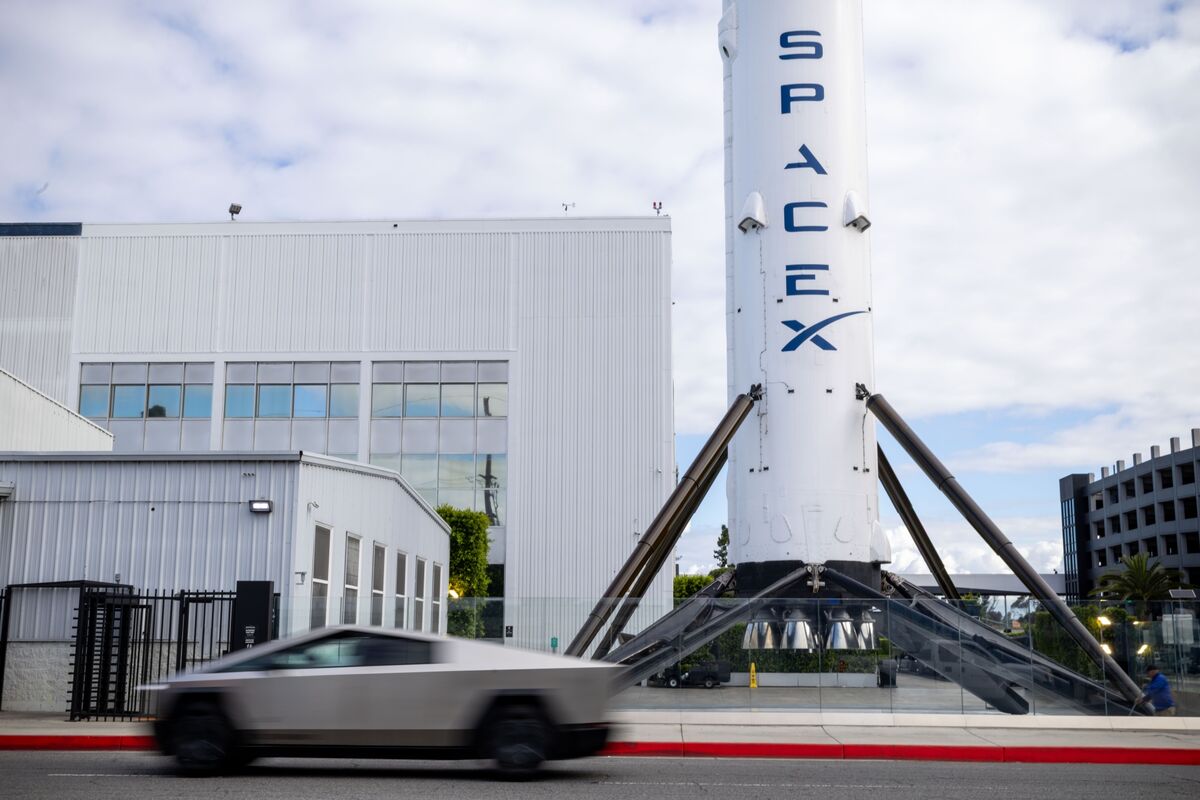
As SpaceX rockets toward a $2 trillion public offering this summer - expected to be the largest ever - the company has secured its position as the world's most valuable space company in part by being indispensable to the U.S. government with an array of technologies spanning satellite communications to space launches and military AI. Last August, U.S. Navy officials carrying out a test of unmanned vessels realized they had hit a single point of failure: Starlink. A global outage across Elon Musk's satellite network affecting millions of Starlink users had left two dozen unmanned surface vessels bobbing off the California coast, disrupting communications and halting operations for almost an hour. The incident, which involved drones intended to bolster U.S. military options in a conflict with China, was one of several Navy test disruptions linked to SpaceX's Starlink that left operators unable to connect with autonomous boats, according to internal Navy documents reviewed by Reuters and a person familiar with the matter. As SpaceX rockets toward a $2 trillion public offering this summer - expected to be the largest ever - the company has secured its position as the world's most valuable space company in part by being indispensable to the U.S. government with an array of technologies spanning satellite communications to space launches and military AI. Starlink, in particular, has proved key to crucial programs - from drones to missile tracking - with a low-earth orbit constellation of close to 10,000 satellites, a scale that provides the military with a network resilient against potential adversary attacks. But the Navy's mishaps with Starlink for its autonomous drone program, which have not been previously reported, highlight the challenges of the U.S. military's growing reliance on SpaceX and the risks it brings to the Pentagon. "If there was no Starlink, the U.S. government wouldn't have access to a global constellation of low earth orbit communications," said Clayton Swope, a deputy director of the Aerospace Security Project at the Center for Strategic and International Studies. The Pentagon did not respond to questions about the drone test or SpaceX's work with the Navy. The Pentagon's chief information officer, Kirsten Davies, said the "Department leverages multiple, robust, resilient systems for its broad network." The Navy and SpaceX did not respond to requests for comment. Despite facing growing competition from Amazon.com, which announced an $11.6 billion agreement this week to acquire satellite maker Globalstar, SpaceX remains far ahead in low-earth orbit communications. Beyond drones, SpaceX has cemented a near-monopoly for space launches and provides satellite communications with Starlink and its national security-focused constellation, Starshield, generating billions of dollars for the company. Last month, U.S. Space Force said it had reassigned its upcoming GPS launch to a SpaceX rocket for the fourth time, due to a glitch in the Vulcan rocket made by the Boeing and Lockheed Martin joint venture United Launch Alliance. WARNINGS ABOUT RELYING ON SPACEX Democratic lawmakers have warned the Pentagon about the risks of its reliance on a single company led by the world's richest man to deliver crucial national security capabilities. More recently, the Defense Department's disagreements and blacklisting of AI startup Anthropic quickly revealed how an overreliance on one AI vendor could create problems should that vendor be dropped. Reuters reported last year that Musk unexpectedly switched off Starlink access to Ukrainian troops as they sought to retake territory from Russia, denting allies' trust in the billionaire. In Taiwan, SpaceX faced criticism over concerns it was withholding satellite communications to U.S. service members based there, "possibly in breach of SpaceX's contractual obligations with the U.S. government," according to a 2024 letter sent by then-U.S. Representative Mike Gallagher to Musk, reported by Forbes at the time. SpaceX disputed the claim in a post on X. Reuters could not determine whether SpaceX has since provided Starlink service in Taiwan to U.S. service members. The Pentagon and SpaceX did not respond to questions about Taiwan. "As a matter of operational security, we do not comment on or discuss plans, operations capabilities or effects," an official said in a statement. STARLINK 'EXPOSED LIMITATIONS' SpaceX's Starlink broadband has been crucial to the Pentagon's drone program, providing connection to small unmanned maritime vessels that look like speedboats without seats, and include those made by Maryland-based BlackSea and Austin, Texas-based Saronic. In April 2025, during a series of Navy tests in California involving unmanned boats and flying drones, officials reported that Starlink struggled to provide a solid network connection due to the high data usage needed to control multiple systems, according to a Navy safety report of the tests reviewed by Reuters. "Starlink reliance exposed limitations under multiple-vehicle load," the report stated. The report also faulted issues linked to radios provided by Silvus and a network system provided by Viasat. In the weeks leading up to the global Starlink outage in August, another series of Navy tests was disrupted by intermittent connection issues with the Starlink network, Navy documents reviewed by Reuters show. The causes of the network losses were not immediately clear. Despite the setbacks, the upside of Starlink - a cheap and commercially available service - outweighs the risk of a potential outage disrupting future military operations, said Bryan Clark, an autonomous warfare expert at the Hudson Institute. "You accept those vulnerabilities because of the benefits you get from the ubiquity it provides," he said.
Scoop: BNY gets access to OpenAI, Anthropic's advanced cyber models
Why it matters: Wall Street is working overtime to win the AI security race. What they're saying: Anthropic and OpenAI recognize the importance of releasing its cyber-capable models to certain institutions early, Vince tells Axios. It's key to protecting critical infrastructure, "and in our case, obviously the financial services world," Vince says. * The AI labs also want feedback and realworld testing, Vince says. * Other firms with access to these previews will be able to share lessons learned with one another as well as the labs themselves, Vince said. Catch up quick: The access comes after Treasury Secretary Scott Bessent and Fed Chair Jerome Powell called a meeting with the biggest names on Wall Street to discuss Mythos, first reported by Bloomberg and confirmed by Axios. * The meeting focused on risks of AI-powered attacks on bank systems as well as preventative measures. Zoom in: OpenAI's new model variant, GPT-5.4-Cyber, will be rolled out to a broader set of organizations than Anthropic's Mythos, which initially reached about 40 enterprises. * While Anthropic signaled that its model was too dangerous to release broadly, OpenAI is making tools more widely available for defensive cyber work while still preventing nefarious actors from accessing them, Axios' Sam Sabin writes. Follow the money: BNY is all-in on AI. * The bank , which plans to announce its earnings later this morning, has over 100 digital employees that have their own tasks, managers and email addresses. * Under Vince's leadership, BNY rose to the best performing stock in an index tracking a group of major banks, up 218%. What we're watching: How banks maintain their long-held status as titans of cybersecurity defense in an AI-powered world.