News & Updates
The latest news and updates from companies in the WLTH portfolio.
Why Anthropic and OpenAI are locking up their latest models
Allowing only a privileged few companies to use them may make commercial sense Epowerful marketing tool. Just ask Anthropic. When on April 7th the artificial-intelligence lab announced that the preview version of its latest model, called "Mythos", would be available only to an exclusive group of companies, the envy quickly spread. Only one bank, JPMorgan Chase, made the initial list of invitees. The board of an Asian peer called in its chief executive a few days later to explain how it, too, could swiftly gain access to "Project Glasswing", as Anthropic's new club is called.

ECB to warn banks about risks from Anthropic AI's new model, says report
Unlike in the US, this will be done via the ECB's regular dialogue with bank staff and no ad-hoc meeting with top management has been scheduled yet European Central Bank supervisors are set to warn bankers about the risks posed by Anthropic's new artificial intelligence model that might supercharge cyberattacks, one source familiar with the situation told Reuters. Anthropic's Mythos is seen by cybersecurity experts as posing significant challenges to the banking industry and its legacy technology systems, raising alarm bells among regulators in Britain and the United States. ECB supervisors are gathering information about the model, with a view to discussing this new possible source of risk with banks on their watch, said the source who spoke on condition of anonymity because they are not authorised to comment publicly on the matter. Unlike in the US, this will be done via the ECB's regular dialogue with bank staff and no ad-hoc meeting with top management has been scheduled yet. An ECB spokesperson declined to comment. More From This Section China 'happy' with 'opening' of Hormuz, won't send arms to Iran: Trump US, Iran agree 'in principle' to extend ceasefire amid tensions: Report EU unveils age verification app as social media bans gain steam Pakistan plans two-hour evening power cuts to tackle energy crisis Europe mulls fallback plan if US pulls back from Nato amid Trump's threats

Anthropic Rewrites the Rules on AI Pricing as Compute Costs Squeeze the Industry
Anthropic has begun restructuring how it charges its biggest enterprise customers, moving away from flat-rate subscription models toward pricing that more directly reflects actual AI usage. The shift, first reported by The Information, signals a broader reckoning across the artificial intelligence industry: the economics of running massive language models are becoming untenable under the old rules. The San Francisco-based company, maker of the Claude family of AI models, has started billing some enterprise clients based on how much compute their AI workloads actually consume. It's a significant departure. Previously, Anthropic offered more predictable pricing tiers that gave companies a set amount of access for a fixed fee. Now, heavier users pay more -- a model that aligns Anthropic's revenue more tightly with its own ballooning infrastructure costs. The timing isn't accidental. Anthropic, like its rivals OpenAI and Google DeepMind, is caught in an escalating compute crunch. Training and running frontier AI models requires staggering amounts of GPU capacity, and the global supply of the most advanced chips -- primarily Nvidia's H100 and forthcoming B200 processors -- remains constrained. Every query a customer sends to Claude burns through expensive compute cycles. When usage spikes unpredictably, the cost can spiral in ways that flat-rate pricing was never designed to absorb. According to The Information, the pricing change has been rolled out to select enterprise accounts, though the full scope of affected customers and the precise mechanics of the new billing structure remain somewhat opaque. Anthropic declined to comment publicly on the specifics. But the strategic logic is clear: as demand for Claude's capabilities surges -- particularly from companies integrating the model into production applications -- Anthropic needs a pricing framework that doesn't leave it subsidizing the heaviest users. This isn't just an Anthropic story. It's an industry-wide inflection point. OpenAI has been grappling with similar dynamics. The company reportedly loses money on many of its ChatGPT Plus subscriptions because power users consume far more compute than their $20-per-month fee covers. OpenAI has responded by introducing usage caps on its most capable models and by launching premium tiers -- the $200-per-month ChatGPT Pro plan being the most visible example. Google, meanwhile, has leaned on its own custom TPU chips to manage inference costs internally but still faces the fundamental tension between offering generous AI access and keeping margins from going negative. The compute crunch is real and worsening. Nvidia's data center revenue hit $26.3 billion in its most recent quarter, a figure that reflects just how much capital the AI industry is pouring into GPU procurement. And still, it's not enough. Major cloud providers -- Amazon Web Services, Microsoft Azure, Google Cloud -- have all reported capacity constraints on GPU instances. Startups and mid-tier companies frequently find themselves on waitlists. Anthropic, which has secured billions in funding from Google and other investors, has been spending aggressively to lock in compute capacity, including a reported deal for Amazon Web Services infrastructure worth billions of dollars over multiple years. But securing chips is only half the problem. The other half is making the economics work once those chips are running. Running inference -- the process of generating responses to user queries -- is expensive in a way that many enterprise customers haven't fully internalized. A single complex query to a frontier model like Claude 3.5 Sonnet or Claude 3 Opus can involve billions of mathematical operations across thousands of GPU cores. Multiply that by millions of queries per day from enterprise clients embedding Claude into customer service platforms, legal research tools, coding assistants, and financial analysis systems, and the compute bill becomes enormous. Under flat-rate pricing, Anthropic was effectively absorbing the variance. Some customers used modestly. Others hammered the system. The margin on each customer varied wildly. Usage-based pricing solves this asymmetry. It also introduces friction. Enterprise buyers generally prefer predictable costs. CFOs want to budget for AI spending the same way they budget for cloud infrastructure or SaaS licenses -- with clear monthly or annual figures that don't fluctuate based on employee behavior. Usage-based models introduce uncertainty. They can also create internal resistance within companies, where teams may throttle their AI usage to stay within budgets, potentially undermining the productivity gains the AI was supposed to deliver in the first place. Anthropic appears to be betting that the value of Claude is high enough -- and differentiated enough -- that enterprise customers will accept the shift. That bet looks reasonable given the company's recent momentum. Claude has gained significant traction among developers and enterprises, with its extended context windows, strong performance on coding benchmarks, and a reputation for more nuanced, safety-conscious outputs compared to some competitors. The company's Claude 3.5 Sonnet model, in particular, has been widely praised for its balance of capability and speed. Still, the move carries competitive risk. If OpenAI or Google maintain more generous fixed-rate pricing for comparable models, some enterprise clients may defect. The AI model market is still fluid. Switching costs exist but aren't prohibitive for many use cases, especially when companies are building on standardized APIs. Anthropic's pricing shift could become a competitive advantage -- signaling premium quality and sustainable economics -- or a vulnerability, depending on how rivals respond. There's a broader lesson here about the AI industry's maturation. The era of artificially cheap AI access, subsidized by venture capital and strategic investment, is beginning to close. Every major AI lab is confronting the same math: frontier models cost hundreds of millions of dollars to train and tens of millions per month to serve at scale. Revenue needs to cover those costs eventually. And the gap between what customers expect to pay and what it actually costs to deliver these capabilities remains wide. Anthropic's move toward usage-based billing is an early, concrete step toward closing that gap. It won't be the last. Expect more AI providers to follow with similar adjustments in the coming quarters, as the industry collectively acknowledges that the most powerful AI systems in the world cannot be given away at flat rates forever. The companies that figure out pricing -- really figure it out, in a way that balances customer value with sustainable unit economics -- will be the ones that survive the inevitable shakeout. For now, Anthropic is placing a bet that transparency about costs will strengthen, not weaken, its relationships with the enterprises that matter most. Whether that bet pays off depends on something no pricing model can fully control: whether Claude remains good enough that customers are willing to pay whatever it actually costs to run.

ECB to quiz bankers about new Anthropic model risks, source says
FRANKFURT, April 15 (Reuters) - European Central Bank supervisors are set to quiz bankers about the risks posed by Anthropic's new artificial intelligence model that might supercharge cyberattacks, one source familiar with the situation told Reuters on Wednesday. Anthropic's Mythos is seen by cybersecurity experts as posing significant challenges to the banking industry and its legacy technology systems, raising alarm bells among regulators in Britain and the United States. ECB supervisors are gathering information about the model, with a view to asking banks on their watch about their preparedness for this new possible source of risk, said the source who spoke on condition of anonymity because they are not authorised to comment publicly on the matter. Unlike in the U.S., this will be done via the ECB's regular dialogue with bank staff and no ad-hoc meeting with top management has been scheduled yet. An ECB spokesperson declined to comment. Mythos' capabilities to code at a high level have given it a potentially unprecedented ability to identify cybersecurity vulnerabilities and devise ways to exploit them, experts told Reuters. This is why Anthropic has said the current iteration, Claude Mythos Preview, will not be made generally available. Instead, the company announced Project Glasswing, in which it invited major tech companies, cybersecurity vendors and JPMorgan Chase, along with several dozen other organizations, to privately evaluate the model and prepare defences accordingly. TRUMP BACKS AI SAFEGUARDS IN BANKING SYSTEM U.S. Treasury Secretary Scott Bessent and Federal Reserve Chair Jerome Powell convened an urgent meeting with bank chief executives last week to warn them about the risks, which President Donald Trump acknowledged on Wednesday and backed government safeguards. Britain's Technology Secretary Liz Kendall and Security Minister Dan Jarvis sounded a similar warning to businesses on Wednesday, saying Mythos was "substantially more capable at cyber offence" than any model previously tested by the government's AI Security Institute. "A new generation of AI models are becoming capable of doing work that previously required rare expertise: finding weaknesses in software, writing the code to exploit them, and doing so at a speed and scale that would have been impossible even a year ago," they said in an open letter to businesses. Bank of England Governor Andrew Bailey said this week central banks and financial regulators must quickly understand the implications of the new model.
ECB to quiz bankers about new Anthropic model risks, source says
FRANKFURT, April 15 (Reuters) - European Central Bank supervisors are set to quiz bankers about the risks posed by Anthropic's new artificial intelligence model that might supercharge cyberattacks, one source familiar with the situation told Reuters on Wednesday. Anthropic's Mythos is seen by cybersecurity experts as posing significant challenges to the banking industry and its legacy technology systems, raising alarm bells among regulators in Britain and the United States. ECB supervisors are gathering information about the model, with a view to asking banks on their watch about their preparedness for this new possible source of risk, said the source who spoke on condition of anonymity because they are not authorised to comment publicly on the matter. Unlike in the U.S., this will be done via the ECB's regular dialogue with bank staff and no ad-hoc meeting with top management has been scheduled yet. An ECB spokesperson declined to comment. Mythos' capabilities to code at a high level have given it a potentially unprecedented ability to identify cybersecurity vulnerabilities and devise ways to exploit them, experts told Reuters. This is why Anthropic has said the current iteration, Claude Mythos Preview, will not be made generally available. Instead, the company announced Project Glasswing, in which it invited major tech companies, cybersecurity vendors and JPMorgan Chase, along with several dozen other organizations, to privately evaluate the model and prepare defences accordingly. TRUMP BACKS AI SAFEGUARDS IN BANKING SYSTEM U.S. Treasury Secretary Scott Bessent and Federal Reserve Chair Jerome Powell convened an urgent meeting with bank chief executives last week to warn them about the risks, which President Donald Trump acknowledged on Wednesday and backed government safeguards. Britain's Technology Secretary Liz Kendall and Security Minister Dan Jarvis sounded a similar warning to businesses on Wednesday, saying Mythos was "substantially more capable at cyber offence" than any model previously tested by the government's AI Security Institute. "A new generation of AI models are becoming capable of doing work that previously required rare expertise: finding weaknesses in software, writing the code to exploit them, and doing so at a speed and scale that would have been impossible even a year ago," they said in an open letter to businesses. Bank of England Governor Andrew Bailey said this week central banks and financial regulators must quickly understand the implications of the new model. The ECB had already listed tech risk as one of its top priorities for 2026-28. (Reporting by Francesco Canepa; Additiional reporting by Paul Sandle in London; Editing by Emelia Sithole-Matarise)

Is Claude Down Now? Claude AI Outage Hits Users Hard: Is Anthropic's Chatbot Down Again on April 15 2026?
NEW YORK -- Anthropic's popular AI assistant Claude faced fresh disruptions Wednesday as users worldwide reported elevated errors across claude.ai, the API and Claude Code, prompting frantic searches for alternatives and highlighting the growing pains of rapid AI adoption. At midday on April 15, 2026, thousands turned to outage trackers and social media after experiencing login failures, chat interruptions, usage limit glitches and partial service degradation. The issues emerged in the early afternoon UTC, with Anthropic's official status page confirming it was investigating increased errors on its core platforms. Claude.ai, the web interface where millions interact daily with models like Claude Opus 4.6 and Sonnet, showed the most visible impact. Some users reported being unable to log in, while others encountered incomplete responses, stream timeouts or sudden messages claiming they had hit usage limits despite recent inactivity. Claude Code, the coding-focused tool, remained partially accessible for already-logged-in users but blocked new sessions. The API recovered fully by early evening PT according to updates, though consumer-facing services lagged behind. Anthropic's status.claude.com page detailed the timeline. At 14:55 UTC the company posted it was "Investigating" elevated errors. By 15:03 UTC it confirmed ongoing work. At 15:20 UTC it marked the issue as "Identified" with a fix in progress. Later updates noted the API had fully recovered as of 8:01 PT / 16:01 UTC, while mitigation continued for Claude.ai and login paths. Claude Code users who stayed logged in could continue working, but new logins remained broken. The disruption arrived amid a pattern of intermittent outages that have plagued Claude since early 2026. Similar elevated-error incidents hit in March and early April, often tied to surging demand following major model releases. On April 13 users complained of login loops and instant usage-limit bugs. Earlier episodes in March involved 500 internal server errors and authentication failures that left developers scrambling. Downdetector and similar sites recorded spikes in reports throughout the day, with complaints centered on chat access, the desktop app and voice mode. Social media buzzed with frustration. Users posted screenshots of error messages and joked about having to "use their brain to code" again. One thread asked what people do when Claude goes down, while another quipped the AI had gone on strike. For many professionals the outage stung. Developers rely on Claude Code for real-time assistance with complex projects. Writers and analysts use the chatbot for drafting, research and data interpretation. Enterprises integrating Claude via API faced workflow interruptions. The timing amplified annoyance -- mid-week when productivity demands peak. Anthropic has not issued a detailed public statement beyond status updates. The company typically attributes such incidents to "unprecedented demand" after popular releases, as seen in prior resolutions where it thanked users for patience while scaling infrastructure. Claude's rapid rise in popularity, especially after the February 2026 launch of Claude Opus 4.6 positioned as a leader in coding and agentic tasks, has strained systems despite heavy investment in compute. The outage underscores broader challenges facing frontier AI companies. As models grow more capable, user bases explode, testing backend resilience. Competitors like OpenAI's ChatGPT and Google's Gemini have faced their own downtime episodes, but Claude's issues often draw extra attention because of its strong reputation among developers and power users who prize its thoughtful, less-censored responses. Wall Street and tech observers watch these events closely. Anthropic, valued at tens of billions after major funding rounds from Amazon and Google, must prove it can match demand without frequent hiccups. Reliability has become a key differentiator as businesses shift mission-critical tasks to AI assistants. Repeated outages risk eroding trust, especially for paid Pro and Team subscribers who expect consistent access. For individual users the disruption served as a reminder of single-point dependency. Many switched to alternatives like Grok, ChatGPT or open-source models during the wait. Some reported success with cached conversations or offline tools, while others simply took a break. Reddit's r/ClaudeAI subreddit lit up with performance megathreads and workaround discussions. Anthropic's transparency via the status page earned some goodwill, but critics noted occasional lags between real-world reports and official acknowledgments. Third-party monitors like IsDown.app and DownDetector often surface problems faster than the company's dashboard in the initial minutes. Looking ahead, the incident may accelerate Anthropic's infrastructure expansion. The company has poured resources into data centers and partnerships to support growing usage. Future reliability could hinge on better load balancing, redundant systems and proactive capacity planning ahead of major model drops. For now, most affected users saw partial or full recovery by late afternoon or evening on April 15. The API returned to normal operations first, allowing developer tools and integrated applications to resume. Consumer web and app access followed more gradually as fixes rolled out. The event highlights AI's double-edged nature in 2026. Tools like Claude deliver extraordinary productivity gains when available, yet downtime can halt workflows across industries. As adoption deepens -- from solo creators to Fortune 500 teams -- service stability becomes as crucial as model intelligence. Investors and analysts will likely view this as a routine scaling bump rather than a red flag, given the company's strong fundamentals and backing. Still, frequent incidents could invite comparisons to early ChatGPT growing pains and fuel calls for greater redundancy. Users checking status.claude.com or Downdetector received the clearest picture. Those still facing issues were advised to clear caches, try different browsers or devices, or wait for the next update. Anthropic typically resolves such matters within hours once identified. As evening approached on the U.S. East Coast, reports of successful logins increased, suggesting the fix was taking hold. The company continued monitoring post-resolution, a standard practice to catch any rebound effects. Claude's appeal lies in its balance of capability and safety focus, setting it apart in a crowded field. Outages test user loyalty but also demonstrate demand. When the service runs smoothly, many consider it indispensable for deep reasoning tasks that other models handle less gracefully. For Anthropic the priority remains clear: restore service quickly and communicate transparently while investing to prevent recurrence. Wednesday's disruption, though inconvenient, fits a familiar pattern in the fast-evolving AI sector where success itself creates technical hurdles. As the dust settles, affected users will resume their sessions, perhaps with renewed appreciation for uptime. The episode serves as another data point in the ongoing story of AI infrastructure meeting explosive real-world usage. Whether Claude emerges stronger or faces renewed scrutiny depends on how swiftly and cleanly Anthropic closes this latest chapter. In the meantime, the internet did what it does best -- turned frustration into memes and shared workarounds. For many the brief outage became a quirky reminder that even the smartest AI still runs on very human-engineered systems prone to occasional hiccups. The golden rule in 2026: always have a backup chatbot ready when your favorite one blinks out.
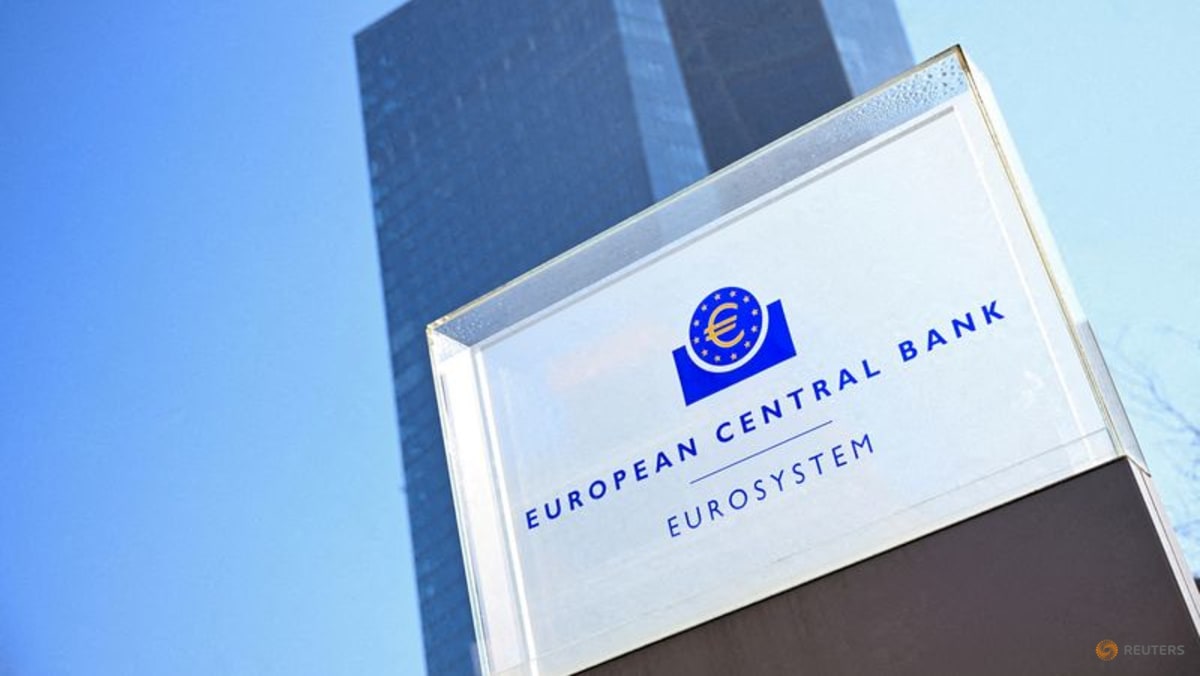
ECB to quiz bankers about new Anthropic model risks, source says
FRANKFURT, April 15 : European Central Bank supervisors are set to quiz bankers about the risks posed by Anthropic's new artificial intelligence model that might supercharge cyberattacks, one source familiar with the situation told Reuters on Wednesday. Anthropic's Mythos is seen by cybersecurity experts as posing significant challenges to the banking industry and its legacy technology systems, raising alarm bells among regulators in Britain and the United States. ECB supervisors are gathering information about the model, with a view to asking banks on their watch about their preparedness for this new possible source of risk, said the source who spoke on condition of anonymity because they are not authorised to comment publicly on the matter. Unlike in the U.S., this will be done via the ECB's regular dialogue with bank staff and no ad-hoc meeting with top management has been scheduled yet. Mythos' capabilities to code at a high level have given it a potentially unprecedented ability to identify cybersecurity vulnerabilities and devise ways to exploit them, experts told Reuters. This is why Anthropic has said the current iteration, Claude Mythos Preview, will not be made generally available. Instead, the company announced Project Glasswing, in which it invited major tech companies, cybersecurity vendors and JPMorgan Chase, along with several dozen other organizations, to privately evaluate the model and prepare defences accordingly. TRUMP BACKS AI SAFEGUARDS IN BANKING SYSTEM U.S. Treasury Secretary Scott Bessent and Federal Reserve Chair Jerome Powell convened an urgent meeting with bank chief executives last week to warn them about the risks, which President Donald Trump acknowledged on Wednesday and backed government safeguards. Britain's Technology Secretary Liz Kendall and Security Minister Dan Jarvis sounded a similar warning to businesses on Wednesday, saying Mythos was "substantially more capable at cyber offence" than any model previously tested by the government's AI Security Institute. "A new generation of AI models are becoming capable of doing work that previously required rare expertise: finding weaknesses in software, writing the code to exploit them, and doing so at a speed and scale that would have been impossible even a year ago," they said in an open letter to businesses. Bank of England Governor Andrew Bailey said this week central banks and financial regulators must quickly understand the implications of the new model. The ECB had already listed tech risk as one of its top priorities for 2026-28.
NAACP sues xAI over data center turbines in Southaven | DeSoto County News
The NAACP is suing data center company xAI, alleging that it is illegally operating natural gas turbines in Southaven without an air permit. The company, owned by billionaire Elon Musk, brought the 27 generators in question to north Mississippi last summer. In a letter, Mississippi officials told xAI it could run the generators without an air permit because they were deemed "temporary" and "mobile" units. But lawyers at the Southern Environmental Law Center, representing the NAACP in the federal lawsuit, have long maintained that such a loophole doesn't exist, and that running such turbines without a permit violates the federal Clean Air Act. "Mobile, temporary, portable, whatever you want to call them, turbines need air permits," Patrick Anderson, a center attorney, told Mississippi Today. READ MORE: Public gives resounding 'no' to proposed xAI Southaven permit The Mississippi Department of Environmental Quality, which regulates air emissions, told Mississippi Today last year that federal requirements for "mobile" turbines don't apply to "temporary" sources, which at the time meant running for less than a year. While the turbines run at a set location in Southaven, MDEQ wrote to xAI last July that because each generator will "remain affixed to a portable unit (i.e., a flatbed trailer)," they can be considered "mobile." Anderson recognized that the Clean Air Act allows for some exceptions for mobile turbines, but added the exception isn't typically applied to generators big enough to power a data center. "They're generally much smaller, like a backup diesel engine or something you might tow behind a car," he said. Language from the federal law appears to back up the center's case. The law defines a stationary turbine as "not self-propelled or intended to be propelled while performing its function." The SELC claims in the lawsuit that together, the 27 turbines are likely the largest industrial source of nitrogen oxides, or NOx, in the greater Memphis area. The federal government regulates NOx emissions because they can be harmful to the human respiratory system. The complaint, filed in the Northern District of Mississippi, requests the court to stop xAI from operating the turbines in violation of the Clean Air Act, offset any public health impacts as a result of those violations and fine the company up to $124,426 each day of its legal breaches. The SELC last week also sent MDEQ an appeal of the state's decision to award xAI air permits for 41 permanent gas turbines, which would also be located in Southaven.

Anthropic shrugs off VC funding offers valuing it at $800B+, for now | TechCrunch
VCs love to chase after the hottest startups, but startups aren't always interested in selling more shares. So it is with Anthropic, sources tell Bloomberg. VCs have been offering the OpenAI competitor a preemptive funding round that would value the company at $800 billion or more -- almost matching, or perhaps even surpassing, its rival. In February, OpenAI closed a record-breaking $110 billion round that gave it an $852 billion post-money valuation. Just a few weeks earlier, Anthropic announced a $30 billion round (which, in another era, would have been record-breaking, too), at a $380 billion valuation. But so far, Anthropic has not been interested in the VCs' latest offers, Bloomberg reports. Of course, this could change. Anthropic has its own enormous capital expenditures to consider, even if it has not been signing agreements with as much fervor as OpenAI. The Claude maker has in recent months, for instance, committed $50 billion to build its own data centers, $30 billion to spend on Microsoft's cloud, and it spends billions a year on AWS. At some point, it may need money, especially if it can raise it on good terms, potentially at more than double its previous valuation. Still, investors are looking at Anthropic's rising revenue -- reportedly $30 billion by the end of March, up from $9 billion at the end of 2025 -- and saying, "Worth it." Investors are so thirsty for Anthropic shares that demand has grown nearly insatiable on the secondary markets. So at the slightest head nod from Anthropic CEO Dario Amodei, his company could secure funding that leapfrogs its rival's valuation. Anthropic declined comment to Bloomberg and did not immediately respond to our request for comment.

Peru's Election Chaos Spooked Markets Across Latin America
Peruvian stocks, the sol, and bonds fell as vote counting dragged on and fraud claims spread, keeping investors cautious across the region. Peru's election count stretched into a fourth day, and the uncertainty knocked local stocks, the sol, and bonds lower - spilling into broader Latin American sentiment. What does this mean? With about 90% of ballots counted, Peru still didn't know who would take second place to face Keiko Fujimori in a runoff, while fraud allegations and calls to annul results grew louder. Investors moved fast: the MSCI Peru index dropped about 5%, the US-listed iShares MSCI Peru ETF fell roughly 3.5%, and miners like Buenaventura and Southern Copper slid too. The sol hit a one-week low, and hard-currency Peru bonds fell around 0.5 cents on the dollar - a quick reminder that p..

Kraken IPO News: Exchange Eyes Public Listing at $13.3B Valuation
Crypto Exchange Kraken is once again making headlines as it pushed ahead with its plans to go public. While its path to going public hasn't been easy, the Kraken IPO plans are still alive, reflecting steady confidence. Speaking at the Senator World Economy Conference in Washington, co-CEO Arjun Sethi confirmed the Kraken IPO plans. He stated that the company has filed for a US IPO. Sethi also stated that the crypto exchange intends to bring advanced trading tools, usually meant for professionals, to everyday investors. According to a CNBC report, Kraken co-CEO Arjun Sethi reiterated the company's plans to go public. At the Semafor World Economy 2026 Conference, Sethi confirmed that Kraken has "confidentially filed" for an IPO. This affirmation comes amid rumors that Kraken IPO plans are on hold due to the current crypto market volatility. The crypto exchange had initially filed for an IPO with the US SEC back in November 2025. While rumors circulated about dropping the Kraken IPO, Sethi asserted that the plans are still going on. Kraken has not officially clarified whether the IPO timeline has changed. However, the latest crypto exchange news suggests the company is keeping its options open as market conditions evolve. The broader crypto market has been volatile in recent months, which likely influenced earlier hesitation around going public. This crypto exchange news comes on the heels of Kraken-backed SPAC, KRAKacquisition, which revealed plans for a $10 billion acquisition. The firm is looking for companies linked to stablecoins, DeFi, tokenization, and digital payments. Despite the current market uncertainty, Kraken continues to garner strong interest from institutional giants. Deutsche Börse Group recently invested $200 million in Kraken's parent company, Payward, taking a 1.5% stake. This deal values the firm at around $13.3 billion. But it is still lower than its previous $20 billion valuation. According to Kraken, this partnership is more than just funding and investment. The primary goal of this crypto exchange news is to bring crypto and traditional finance closer together by building a more connected, efficient system for institutional investors. Instead of operating as separate worlds, both sides are gradually moving toward a single, unified financial infrastructure. This also reflects Kraken's bigger strategy. The exchange is no longer focusing solely on retail traders. Instead, it is actively expanding its presence among institutions. With these goals in mind, Kraken will be able to offer more advanced trading tools, greater liquidity, and greater stability for its ecosystem. All these factors should contribute to the platform's further expansion as the industry matures. It is important to mention that the road to the IPO has been rough for Kraken. Recently, the platform has seen its valuation decline amid negative trends in the crypto market. Indeed, at some point, the exchange delayed the Kraken IPO as the market entered a downswing. At that time, Bitcoin experienced a significant decline from its previous highs. Nevertheless, the situation is getting better. Bitcoin's price began to rise again, eventually approaching the level of $76,000 in April. This recovery could create a better environment for Kraken to move forward with its public listing plans.

Claude is having some problems, as Anthropic confirms an active issue -- here's everything we know
It's not deja vu -- Claude is having some issues again this morning, with Anthropic confirming an active disruption causing 'Elevated errors on Claude.ai, API, Claude Code.' The company first confirmed issues at 10:53 AM ET, and then issued a fix at 11:03 AM ET, but after a recovery, it wrote "Claude.ai and Platform are down" as of 11:40 AM ET. Down Detector reports match the up-and-down issues with trying to use Claude and are currently at 5,100 reports. As of now, my colleague and I can't sign in to Claude on mobile (specifically the iOS app), and on the desktop where I am signed in, I can't get the AI assistant to respond. So to track the ongoing outage with Claude this AM, TechRadar is spinning up a live blog. Let us know in the comments down below if you're having issues.

The Anthropic Mythos, Project Glasswing, and the Illusion of Patch-Based Security
Project Glasswing is a reminder of something many in the federal cybersecurity community already know but don't always say out loud: We are never going to patch fast enough. Not across the scale and complexity of federal environments. Not with the volume of known exploited vulnerabilities (KEVs) continuing to grow. And certainly not in operational technology (OT) environments, where patching can introduce as much risk as it mitigates. This is not a failure of effort, but a structural reality. Federal networks are vast, heterogeneous, and deeply interconnected. Many systems are mission-critical, some are decades old, and patching cycles are routinely measured in weeks or months when they can happen at all. Meanwhile, adversaries operate on entirely different timelines. They weaponize vulnerabilities in hours. They automate exploitation. And increasingly, they aren't just looking to exfiltrate data, they are positioning themselves for operational disruption. We operate on patch cycles measured in weeks against adversaries operating on exploit cycles measured in hours. That asymmetry matters. The attacker, after all, needs only one unpatched vulnerability to gain a foothold. From there the focus shifts to moving laterally, escalating privileges, and expanding control. This is precisely where the traditional model begins to break down. For years, we have treated patching as the primary mechanism for reducing risk. And while patching remains essential, it is no longer sufficient as the foundation of our defensive strategy. Because patching does not prevent initial compromise. And more importantly, it does not stop what happens next. If we accept that compromise is inevitable, and in many environments, then the real question becomes: What happens after the initial breach? This is where we need to fundamentally shift our approach. Success should not be measured solely by how quickly we patch a vulnerability. It should be measured by whether a compromised system can impact anything beyond itself. In other words: Can the adversary move? Granular microsegmentation changes the equation. Instead of relying solely on eliminating vulnerabilities before they are exploited, microsegmentation assumes that some vulnerabilities will persist. The focus shifts to containing their impact rather than racing to close every gap. By creating policy-driven, asset-level micro-perimeters, agencies can: The result is a fundamentally different security outcome. A compromised system is no longer a pathway to broader network access but instead becomes a contained event. Even known exploited vulnerabilities lose their operational leverage because they simply cannot move laterally. Best Microsegmentation Vendors? GigaOm Radar for Microsegmentation 2026 Report Names ColorTokens a Leader and Outperformer. This shift is especially critical in OT environments. Many systems in these settings cannot be patched quickly, cannot be taken offline without significant operational impact, and were never designed with modern security controls in mind. In these environments, waiting on a patch cycle is simply not a viable risk strategy, which is why resilience must serve as the organizing principle instead. Microsegmentation allows agencies to buy time by isolating vulnerable systems, controlling access pathways, and ensuring that critical operations can continue even in the presence of active compromise. In OT environments, the objective extends beyond security in the conventional sense. It is, above all, continuity of operations. Project Glasswing doesn't signal a new problem. It reinforces an existing one: We are not going to outpace our adversaries through patching alone. We may not be able to prevent every intrusion. But we can absolutely prevent it from spreading. And in today's threat environment, that is what resilience looks like. If you're rethinking your agency's approach to resilience, ColorTokens is ready to help. Reach out to our team to explore how microsegmentation can work in your environment. The post The Anthropic Mythos, Project Glasswing, and the Illusion of Patch-Based Security appeared first on ColorTokens. *** This is a Security Bloggers Network syndicated blog from ColorTokens authored by Louis Eichenbaum. Read the original post at: https://colortokens.com/blogs/anthropic-mythos-project-glasswing-patch-management-microsegmentation/

Will the 'God of Chaos' Asteroid Apophis impact Earth in 2029? Here's what report says
A rare and dramatic celestial event is set to unfold in 2029 as asteroid 99942 Apophis makes an exceptionally close pass by Earth. Named after the Egyptian deity associated with chaos and darkness, the space rock is expected to be visible to the naked eye, making it a once-in-a-lifetime sight for many sky-watchers. Astronomers say the flyby will be one of the closest ever recorded for an asteroid of this size, yet there is no danger to Earth. Instead, the event is being seen as a major scientific opportunity. As anticipation builds, observers across the Eastern Hemisphere are being told to look up on April 13, 2029. Asteroid 99942 Apophis is expected to pass within roughly 20,000 miles of Earth on April 13, 2029. According to NASA, that is nearly 12 times closer than the moon's average distance from our planet and even closer than many satellites in geosynchronous orbit, as per ABC News. This makes it one of the closest recorded flybys ever for an object of its size. The asteroid has a mean diameter of about 1,115 feet and a long axis measuring at least 1,480 feet, making it a significant near-Earth object. When it was first discovered in 2004, Apophis quickly drew worldwide attention after being labeled potentially hazardous due to early projections suggesting possible impacts in 2029, 2036 or 2068. However, years of observations using optical telescopes and radar have now confirmed that it poses no threat to Earth for at least the next century, as per ABC News. One of the most exciting aspects of this event is that it will be visible to the naked eye. Astronomers say sky-watchers in the Eastern Hemisphere should be able to see the asteroid without the need for binoculars or a telescope, weather permitting. That alone makes the 2029 flyby especially remarkable. Rarely does an asteroid of this scale come close enough to be seen so easily from the ground. The space rock is named after Apophis, the Greek form of Apep, the Egyptian god linked to chaos, darkness and fire. The dramatic name only adds to the excitement surrounding what many are calling a historic sky event. The flyby is not just a visual spectacle. It also presents a major research opportunity. Scientists believe Apophis is a relic from the early solar system, formed around 4.6 billion years ago from leftover material that never became part of a planet or moon. Its surface has been altered over time by solar wind and cosmic rays, giving researchers a chance to study how space weather affects asteroids, as per ABC News. NASA has already redirected a spacecraft to meet Apophis shortly after the 2029 pass, while the European Space Agency is also planning a mission to study it. Astronomers say Earth's gravitational pull may slightly alter the asteroid's orbit around the sun during the close encounter, but the impact risk will remain unchanged. For sky-watchers and scientists alike, April 13, 2029 promises to be an unforgettable moment. When will Apophis pass Earth? It is expected to make its close approach on April 13, 2029. Will the asteroid hit Earth? No, astronomers say there is no risk of impact for at least 100 years.

Anthropic attracts investor offers at an $800 billion valuation
By Natasha Mascarenhas, Rebecca Torrence, Bailey Lipschultz, Ed Ludlow and Shirin Ghaffary, Bloomberg Anthropic PBC has received several offers from investors for a new round of funding that could value the artificial intelligence startup at about $800 billion or higher -- overtures that the Claude maker has so far resisted, according to people familiar with the matter. The offers would more than double the $350 billion pre-money valuation Anthropic attached to its $30 billion fundraising in February. While Anthropic hasn't ruled out raising new money in the coming months, according to one of the people, it's not clear the company will accept investors' terms or if it will raise at an $800 billion value. Earlier this month, Anthropic completed a tender offer at the same value of the February fundraising, but current and former employees wanted to hold onto more of their shares ahead of ahead of a possible public listing as soon as October. Anthropic declined to comment. The investor interest highlights the increasing buzz around one of Silicon Valley's most high-profile startups. Led by co-founder Dario Amodei, Anthropic has dominated tech news recently, between a dustup with the Pentagon over how its technology is used by the military to the release last week of its latest AI model, Mythos, which is so powerful at finding vulnerabilities in software that the company deemed it too dangerous for wide release. Anthropic has developed a series of AI tools aimed at overhauling the way companies handle tasks from coding to cybersecurity. Those products are resonating with a growing base of business customers, leading to a jump in revenue and raising competition with rival OpenAI. Investors have been impressed by Anthropic's strong revenue growth, particularly with deep-pocketed enterprise customers. Earlier this month, the startup said it had reached $30 billion in annual run-rate revenue, marking a sharp increase from $19 billion just a few months before. OpenAI said about two weeks ago that it's currently generating $2 billion in revenue each month. OpenAI Chief Financial Officer Sarah Friar had earlier said the company's annualized revenue topped $20 billion in 2025, up from roughly $6 billion the year prior. The company recently completed a deal to raise $122 billion from investors at an $852 billion valuation. Talks between Anthropic and investors are early, and a deal could fail to materialize or the details could change, the people familiar with the matter said, asking not to be identified because the information is private. Business Insider previously reported some details of the talks. (Updates with more financial details starting in sixth paragraph)

Anthropic attracts investor offers at an $800 billion valuation
By Natasha Mascarenhas, Rebecca Torrence, Bailey Lipschultz, Ed Ludlow and Shirin Ghaffary, Bloomberg Anthropic PBC has received several offers from investors for a new round of funding that could value the artificial intelligence startup at about $800 billion or higher -- overtures that the Claude maker has so far resisted, according to people familiar with the matter. The offers would more than double the $350 billion pre-money valuation Anthropic attached to its $30 billion fundraising in February. While Anthropic hasn't ruled out raising new money in the coming months, according to one of the people, it's not clear the company will accept investors' terms or if it will raise at an $800 billion value. Earlier this month, Anthropic completed a tender offer at the same value of the February fundraising, but current and former employees wanted to hold onto more of their shares ahead of ahead of a possible public listing as soon as October. Anthropic declined to comment. The investor interest highlights the increasing buzz around one of Silicon Valley's most high-profile startups. Led by co-founder Dario Amodei, Anthropic has dominated tech news recently, between a dustup with the Pentagon over how its technology is used by the military to the release last week of its latest AI model, Mythos, which is so powerful at finding vulnerabilities in software that the company deemed it too dangerous for wide release. Anthropic has developed a series of AI tools aimed at overhauling the way companies handle tasks from coding to cybersecurity. Those products are resonating with a growing base of business customers, leading to a jump in revenue and raising competition with rival OpenAI. Investors have been impressed by Anthropic's strong revenue growth, particularly with deep-pocketed enterprise customers. Earlier this month, the startup said it had reached $30 billion in annual run-rate revenue, marking a sharp increase from $19 billion just a few months before. OpenAI said about two weeks ago that it's currently generating $2 billion in revenue each month. OpenAI Chief Financial Officer Sarah Friar had earlier said the company's annualized revenue topped $20 billion in 2025, up from roughly $6 billion the year prior. The company recently completed a deal to raise $122 billion from investors at an $852 billion valuation. Talks between Anthropic and investors are early, and a deal could fail to materialize or the details could change, the people familiar with the matter said, asking not to be identified because the information is private. Business Insider previously reported some details of the talks. (Updates with more financial details starting in sixth paragraph)

Anthropic attracts investor offers at an $800 billion valuation
By Natasha Mascarenhas, Rebecca Torrence, Bailey Lipschultz, Ed Ludlow and Shirin Ghaffary, Bloomberg Anthropic PBC has received several offers from investors for a new round of funding that could value the artificial intelligence startup at about $800 billion or higher -- overtures that the Claude maker has so far resisted, according to people familiar with the matter. The offers would more than double the $350 billion pre-money valuation Anthropic attached to its $30 billion fundraising in February. While Anthropic hasn't ruled out raising new money in the coming months, according to one of the people, it's not clear the company will accept investors' terms or if it will raise at an $800 billion value. Earlier this month, Anthropic completed a tender offer at the same value of the February fundraising, but current and former employees wanted to hold onto more of their shares ahead of ahead of a possible public listing as soon as October. Anthropic declined to comment. The investor interest highlights the increasing buzz around one of Silicon Valley's most high-profile startups. Led by co-founder Dario Amodei, Anthropic has dominated tech news recently, between a dustup with the Pentagon over how its technology is used by the military to the release last week of its latest AI model, Mythos, which is so powerful at finding vulnerabilities in software that the company deemed it too dangerous for wide release. Anthropic has developed a series of AI tools aimed at overhauling the way companies handle tasks from coding to cybersecurity. Those products are resonating with a growing base of business customers, leading to a jump in revenue and raising competition with rival OpenAI. Investors have been impressed by Anthropic's strong revenue growth, particularly with deep-pocketed enterprise customers. Earlier this month, the startup said it had reached $30 billion in annual run-rate revenue, marking a sharp increase from $19 billion just a few months before. OpenAI said about two weeks ago that it's currently generating $2 billion in revenue each month. OpenAI Chief Financial Officer Sarah Friar had earlier said the company's annualized revenue topped $20 billion in 2025, up from roughly $6 billion the year prior. The company recently completed a deal to raise $122 billion from investors at an $852 billion valuation. Talks between Anthropic and investors are early, and a deal could fail to materialize or the details could change, the people familiar with the matter said, asking not to be identified because the information is private. Business Insider previously reported some details of the talks. (Updates with more financial details starting in sixth paragraph)

Amazon Beats SpaceX In Globalstar Deal, LEO Race Heats Up - Amazon.com (NASDAQ:AMZN), Globalstar (NASDAQ:
Bezos Just Bought What Musk Wanted -- And The $200B Space War Is Escalating And according to Bank of America, the prize isn't small: a $200 billion low-Earth orbit (LEO) market spanning broadband, wireless, and defense. The Deal Musk Didn't Get Officially, SpaceX never confirmed it was bidding. Unofficially, the industry chatter says otherwise. Satellite analyst Tim Farrar reported that Globalstar's chairman shopped Amazon's offer to SpaceX to spark a bidding war -- one where Elon Musk's company was widely seen as the frontrunner just weeks ago. That aligns with what insiders were saying at SatShow 2026, where a potential SpaceX-Globalstar tie-up was the talk of the show, with executives pointing to SpaceX's aggressive push into direct-to-cell (D2C) spectrum as a natural fit. Even market signals hinted at a duel. Globalstar shares jumped on reports that both Amazon and SpaceX were deep in due diligence, while SpaceX's last-minute, incomplete FCC auction filing was widely read as a strategic placeholder during parallel negotiations. In the end, Jeff Bezos didn't just win -- he likely forced the price higher. Why Globalstar Matters Now This isn't about satellites -- it's about spectrum control. Globalstar owns valuable L-band and MSS spectrum, the backbone for satellite-to-phone connectivity. That's the next frontier, where smartphones connect directly to space -- no towers required. Amazon's move neatly complements its Project Kuiper ambitions, while also aligning with Apple Inc. (NASDAQ:AAPL), which already relies on Globalstar for emergency SOS features. The $200 Billion Orbit Grab Zoom out, and this is bigger than Bezos vs. Musk. Musk's Starlink still dominates on scale. But Amazon just closed a critical gap -- locking in spectrum, partnerships, and positioning in one move. Call it what it is: this wasn't just an acquisition. It was a block. And if this deal is any indication, the space race isn't just back -- it's getting crowded, expensive, and a lot more personal. Image created using artificial intelligence via Midjourney. Market News and Data brought to you by Benzinga APIs To add Benzinga News as your preferred source on Google, click here.

Kraken IPO still on table despite valuation cut and market pause, co-CEO says
Crypto exchange Kraken is still pursuing a potential US initial public offering, even as its valuation has fallen sharply and listing plans have been put on hold amid volatile market conditions, its co-chief executive said. The company confidentially filed an S-1 registration statement with the US Securities and Exchange Commission in November but delayed its IPO plans amid difficult market conditions. Co-CEO Arjun Sethi said Tuesday the public offering "is still on the table," underscoring that Kraken continues to evaluate long-term access to public markets despite near-term uncertainty. The exchange is currently valued at about $13.3 billion, down from roughly $20 billion in November, reflecting shifting sentiment across crypto-linked assets and broader capital markets. Despite the IPO delay, Kraken has continued to attract significant institutional backing. Between 2011 and 2024, the company raised about $27 million in early-stage funding, but fundraising has accelerated sharply in recent months. Since mid-2025, Kraken has raised roughly $600 million in a round led by proprietary trading firms Jane Street and DRW followed by a $200 million investment from hedge fund manager Citadel. It also completed a $200 million secondary transaction involving German exchange operator Deutsche Börse, which reportedly acquired a 1.5% stake in the company.

Palantir's Moat Isn't Code: That's Why Anthropic Can't Replicate It (NASDAQ:PLTR)
Palantir remains a 'Buy' with a $250 price target, despite recent SaaSpocalypse fears and a rich forward P/E above 100. Palantir Technologies, Inc. (PLTR) recently fell victim to the "SaaSpocalypse" narrative. Last week, the company's stock saw a sharp decline on fears that the business model could be disrupted by the latest AI models of Anthropic (ANTHRO). Palantir is one I write about Macro and fundamentals, with the (painful) awareness that momentum and sentiment are what really matters. That's why I never try to time the market and I only buy stocks if I am willing to hold them for at least 10 years. When it comes to fundamentals, everybody knows the market is forward looking, but few understand what that means. I don't look at a P/E number and decide to buy if a stock is "cheap". I see markets as literally just the meeting point between demand and supply. Predicting human behavior is key. I always try to understand what the market is seeing in a stock beyond the numbers, which often implies trying to understand sectors, industries and long term growth trends. My approach requires ingenuity, curiosity and a good dose of naivete, as well as being comfortable with (sometimes) going against the current.I am based in Geneva, Switzerland (hence my SA name) and I have a Master's Degree in Business. Friend "Rex Investing" is also a contributor to Seeking Alpha. All opinions and analysis are exclusively my own.You can follow me on Twitter @ x.com/GenevaInvestor. I am also on medium.com/@genevainvestor. Analyst's Disclosure: I/we have a beneficial long position in the shares of PLTR either through stock ownership, options, or other derivatives. I wrote this article myself, and it expresses my own opinions. I am not receiving compensation for it (other than from Seeking Alpha). I have no business relationship with any company whose stock is mentioned in this article. Seeking Alpha's Disclosure: Past performance is no guarantee of future results. No recommendation or advice is being given as to whether any investment is suitable for a particular investor. Any views or opinions expressed above may not reflect those of Seeking Alpha as a whole. Seeking Alpha is not a licensed securities dealer, broker or US investment adviser or investment bank. Our analysts are third party authors that include both professional investors and individual investors who may not be licensed or certified by any institute or regulatory body.