News & Updates
The latest news and updates from companies in the WLTH portfolio.
US government prepares to deploy Anthropic's Mythos AI model to federal agencies By Investing.com
Investing.com -- The US government is preparing to make a version of Anthropic PBC's artificial intelligence model available to major federal agencies amid concerns about cybersecurity risks, according to a memo reviewed by Bloomberg News. Gregory Barbaccia, federal chief information officer of the White House Office of Management and Budget, told officials at Cabinet departments in an email Tuesday that OMB is setting up protections that would allow their agencies to begin using the AI tool, Mythos. The email does not confirm that agencies will receive access to Mythos, nor does it provide a timeline for deployment or specify how they might use it. Top technology and cybersecurity chiefs were told to expect more information in the coming weeks. This article was generated with the support of AI and reviewed by an editor. For more information see our T&C.

White House to give US agencies access to Anthropic AI, report says
After months long Anthropic and pentagon AI rivalry, the U.S. government is planning to make a version of Anthropic's frontier AI model Mythos available to major federal agencies amid concerns that the tool could sharply increase cybersecurity risk. As reported by Bloomberg and announced on April 7, Mythos is being deployed as part of Anthropic's "Project Glasswing," a controlled initiative as part of which select organizations are permitted to use the unreleased Claude Mythos Preview model for defensive cybersecurity purposes. Mythos has found "thousands" of major vulnerabilities in operating systems, web browsers and other software. Its capabilities to code at a high level have given it a potentially unprecedented ability to identify cybersecurity vulnerabilities and devise ways to exploit them, experts said. Gregory Barbaccia, federal chief information officer at the White House Office of Management and Budget, told Cabinet department officials in an email on Tuesday that the OMB was setting up protections to allow their agencies to begin using Mythos, according to Bloomberg News. "We're working closely with model providers, other industry partners, and the intelligence community to ensure the appropriate guardrails and safeguards are in place before potentially releasing a modified version of the model to agencies," Barbaccia said in the email, which had "Mythos Model Access" as the subject, the report said. Barbaccia's email does not definitively say that various agencies would get Mythos access, nor does it provide a timeline for when it might come or how they might use it, Bloomberg said. The White House and Anthropic did not immediately respond to Reuters requests for comment. Anthropic was discussing Mythos with the Trump administration, co-founder Jack Clark said on Monday, even after the Pentagon cut off business with the U.S. AI lab following a contract dispute.

Smer-SD: Current Opposition to Blame for Chaos in Economy
Bratislava, 16 April (TASR) - The largest coalition party Smer-SD rejects criticism from the opposition's Freedom and Solidarity (SaS), which claims that a poor business environment and failed public finance consolidation are driving companies out of Slovakia. The latest case cited is the gradual relocation of production from the Figaro plant in Trnava to Rohatec in the Czech Republic. According to Smer-SD MPs, the blame lies with the current opposition, which handed over government in 2023 with the worst public finances in the EU. "To begin with, I would like to say that today the loudest critics are people like Branislav Groehling or Marian Viskupic (both SaS), who chaired the parliamentary committee for budget and finance in the previous government. They caused this chaos in the first place. Today they are obscuring their own problems and trying to create the impression that this government is responsible for all the chaos," said Smer-SD MP Daniel Karas. According to Karas, the government is currently working to rectify the situation and stabilise the economy. As an example of success, he cited food inflation in 2025, which, excluding sweetened beverages, stood at 1.7 percent, the fourth lowest in the EU. He compared this with food inflation approaching 20 percent in 2022, when the COVID-19 pandemic was subsiding and the war in Ukraine began. Average overall inflation in 2025 was 4 percent. Parliamentary vice-chair Tibor Gaspar (Smer-SD) added that unemployment in Slovakia remains close to historic lows and there is a high number of job vacancies on the market. He attributed company departures to high energy prices, which he said are a result of the Green Deal. Electricity prices for Slovakia stood at 104.81 euros per megawatt hour (MWh) on the Prague exchange on Thursday. In the Czech Republic, the price was nine euros lower, in Poland 102.14 euros/MWh, while in neighbouring Hungary it reached 107.98 euros/MWh. Significantly lower prices, roughly half, are seen in countries such as France and Spain. mf

White House to give US agencies Anthropic Mythos access, Bloomberg News reports
April 16 (Reuters) - The U.S. government is planning to make a version of Anthropic's frontier AI model Mythos available to major federal agencies amid concerns that the tool could sharply increase cybersecurity risk, Bloomberg News reported on Thursday. Announced on April 7, Mythos is being deployed as part of Anthropic's "Project Glasswing," a controlled initiative as part of which select organizations are permitted to use the unreleased Claude Mythos Preview model for defensive cybersecurity purposes. Mythos has found "thousands" of major vulnerabilities in operating systems, web browsers and other software. Its capabilities to code at a high level have given it a potentially unprecedented ability to identify cybersecurity vulnerabilities and devise ways to exploit them, experts said. Gregory Barbaccia, federal chief information officer at the White House Office of Management and Budget, told Cabinet department officials in an email on Tuesday that the OMB was setting up protections to allow their agencies to begin using Mythos, according to Bloomberg News. "We're working closely with model providers, other industry partners, and the intelligence community to ensure the appropriate guardrails and safeguards are in place before potentially releasing a modified version of the model to agencies," Barbaccia said in the email, which had "Mythos Model Access" as the subject, the report said. Barbaccia's email does not definitively say that various agencies would get Mythos access, nor does it provide a timeline for when it might come or how they might use it, Bloomberg said. The White House and Anthropic did not immediately respond to Reuters requests for comment. Anthropic was discussing Mythos with the Trump administration, co-founder Jack Clark said on Monday, even after the Pentagon cut off business with the U.S. AI lab following a contract dispute. (Reporting by Juby Babu in Mexico City; Editing by Pooja Desai)
U.S. Reportedly Preparing Version Of Powerful Anthropic AI Model Mythos To Federal Agencies
Mythos has raised concerns over its potential cybersecurity risk The U.S. government is gearing up to roll out a version of Anthropic's powerful Mythos AI tool to federal agencies amid concerns it can pose significant cyber security risks, according to a new report. Bloomberg detailed that Gregory Barbaccia, federal chief information officer of the White House Office of Management and Budget, told officials that the office is setting up protections so agencies begin using the tool. Mythos has made headlines over the past weeks over its potential impact on several areas, including banking security. In fact, Treasury Secretary Scott Bessent and Federal Reserve Chair Jerome Powell reportedly convened a closed-door session with chief executives of major banks to warn them about the need to strengthen cyber defenses. The meeting, also reported by Bloomberg, focused on concerns that Anthropic's latest advanced model could significantly lower the barrier for sophisticated cyberattacks, particularly by helping attackers identify vulnerabilities in widely used software systems. Bank executives were reportedly urged to reassess their cybersecurity frameworks and prepare for scenarios where AI systems could be used to automate or scale intrusion attempts against financial infrastructure. Discussions were triggered by assessments that Anthropic's newest model demonstrated unusually strong capability in identifying software weaknesses, raising fears that such tools could be misused if they fall into the wrong hands.

Weeks after TSA chaos in the US, Europe is facing its own airport line problem
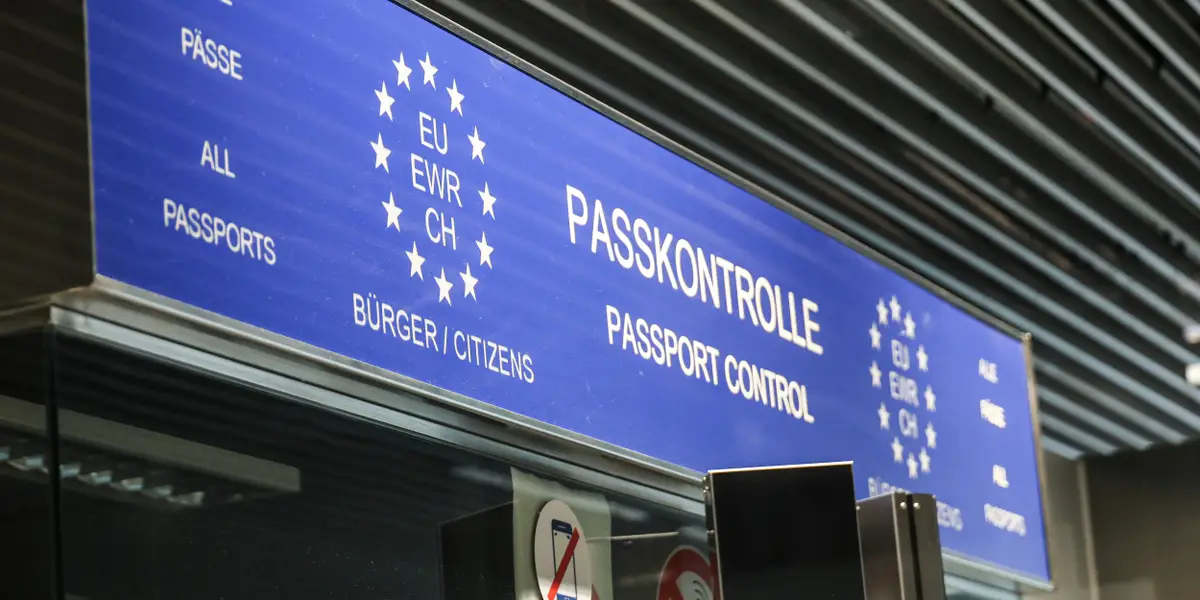
The issues are the latest in a long line of problems for air travelers in 2026. Airport lines in the US may be back to normal -- but you could be in for an hourslong wait if you're flying to Europe. The European Union last Friday rolled out a new electronic border system at all crossing points in the Schengen Area -- the common travel region comprising 29 countries across continental Europe. Instead of manually stamping passports, the Entry/Exit System (EES) requires travelers who are not EU citizens to register their details and biometric data, including a photo and fingerprints. Non-EU citizens without a visa can only stay in the Schengen Area for 90 days in a 180-day period, so entry and exit records need to be verified. The EU said the new automated IT system would improve security and speed up border checks. However, the system is facing significant teething problems. Since the system was implemented, travelers at airports across Europe have reported long waits, with some posting on social media that they have even missed flights due to lengthy lines. This week, a major airport group called for action to address growing lines across the continent. Olivier Jankovec, director general of Airports Council International Europe, said data from airports in 15 countries showed waiting times at border control "have significantly increased." "Queues are now typically averaging 2 to 3 hours or even longer during peak traffic periods," he added in the statement, shared with Business Insider on Thursday. "This is creating extremely difficult and distressing conditions for passengers, while also causing major operational disruptions for both airports and airlines," he said. Jankovec also raised concerns about the situation getting worse as more people travel during the summer. Rob Burgess, editor of the frequent flyer website headforpoints.com, told Business Insider, "The time taken per passenger to process has gone up sharply, but no airport that I've yet visited has added additional desks, or indeed is bothering to fully staff the ones it has." He also said the system didn't always appear to work properly. When Burgess visited Hamburg, Germany, on Monday, he had to repeat the registration process because the biometric data he had provided two weeks earlier in Berlin wasn't available. "My wife is German and my kids have German passports so, luckily, I am covered for family holidays because I am able to use the EU line," said Burgess, who's from the UK. "If there are just two of you traveling and one holds an EU passport, claiming that you are married -- same sex or not -- allows you to both use the EU line, as it is otherwise a breach of the EU citizens' human rights," he added. A spokesperson for the European Commission told Business Insider that the system is working "very well" in most countries, with each registration taking an average of just over a minute. They added that technical issues have been detected in a few countries, "as can be expected in the first days of full operation of any major new system." These are being addressed by individual countries, which are responsible for properly implementing the system, the spokesperson said. The long lines in Europe are the latest in a slew of problems for air travelers in the first few months of 2026. Border issues in the EU come just weeks after a partial government shutdown led to huge waits at US airports in March. At some of the country's biggest airports, such as Houston and Atlanta, lines stretched to as long as 4 hours to get through security. As TSA agents went weeks without paychecks, more of them stopped turning up to work. Global military operations have also led to travel chaos. When the US carried out strikes in Venezuela in January, almost 1,000 flights were canceled to and from the Caribbean. One traveler told Business Insider how that led to her 6-day honeymoon becoming a 14-day trip. And the Iran war led to tens of thousands of canceled flights into and out of the Middle East. When the strikes began on February 28, at least 145 flights had to divert. The conflict also closed the Strait of Hormuz, a key channel for energy shipments, doubling jet fuel prices and leading to a rise in airfares around the world.
Anthropic launches new Claude Opus 4.7 model with stronger coding and vision capabilities
Anthropic rolled out Opus 4.7 broadly one week after unveiling Mythos Preview, as OpenAI and Google also pushed fresh model updates in March and April. Anthropic on Thursday broadly released Claude Opus 4.7, its latest flagship model, framing it as a direct upgrade over Opus 4.6 with stronger performance in advanced software engineering, complex multistep tasks, and professional knowledge work. The company said the model is available across Claude products and its API, as well as through Amazon Bedrock, Google Cloud Vertex AI, and Microsoft Foundry, with pricing unchanged from Opus 4.6 at $5 per million input tokens and $25 per million output tokens. Anthropic said Opus 4.7 improves instruction following, handles long-running tasks with greater rigor, and delivers better high resolution vision support, allowing images up to 2,576 pixels on the long edge. In its own testing, the company said the model posted stronger results than Opus 4.6 across coding, finance, document analysis, and agent style workflows, while also introducing a new xhigh effort setting aimed at balancing reasoning depth and latency. Anthropic also warned that prompt behavior may change because Opus 4.7 follows instructions more literally than earlier Claude models. The launch is especially notable because it comes just nine days after Anthropic introduced Claude Mythos Preview through Project Glasswing on April 7. Anthropic described Mythos Preview as its most capable model yet and said the initiative was built to help secure critical software because the model showed unusually strong cybersecurity capabilities. In the Opus 4.7 release, Anthropic said Mythos Preview remains limited rather than broadly available, and that Opus 4.7 is the first model being deployed with new safeguards designed to detect and block prohibited or high risk cyber requests before any wider Mythos class release. The release also lands amid a broader burst of frontier model launches from rivals. OpenAI introduced GPT 5.4 on March 5 and described it as its most capable and efficient frontier model for professional work, with state of the art performance in coding, computer use, tool search, and a 1 million token context window. Later in March, OpenAI also launched GPT 5.4 mini and nano as smaller, faster models optimized for coding and subagent workloads. Google has been updating Gemini on a similarly rapid schedule. The company rolled out Gemini 3.1 Pro in February as its most advanced model for complex tasks, then followed with Gemini 3.1 Flash Lite and Gemini 3.1 Flash Live in March. On April 15, Google added Gemini 3.1 Flash TTS Preview, extending the recent push into lower latency and multimodal use cases.
Anthropic releases Claude Opus 4.7: How to try it, benchmarks, safety
Anthropic has been shipping products and making news at a blistering pace in 2026, and on Thursday, the AI company announced the launch of Claude Opus 4.7. Claude Opus 4.7 is Anthropic's most intelligent model available to the general public. Notably, Anthropic said in a press release that Opus 4.7 is not as powerful as Claude Mythos, which Anthropic deemed too dangerous for public release. Claude Opus is a family of hybrid reasoning models capable of multi-step reasoning and advanced coding. Until the announcement of Claude Mythos on April 7, Claude Opus was considered Anthropic's most advanced series of AI models. Don't miss out on our latest stories: Add Mashable as a trusted news source in Google. How to try Claude Opus 4.7 Claude Opus 4.7 is available now via Claude AI, the Claude API, and Anthropic partners such as Microsoft Foundry. The new model is priced the same as Claude Opus 4.6. However, Anthropic noted that because "Opus 4.7 thinks more at higher effort levels," it uses more ouput tokens than its predecessor. Users can read more about how to optimize token usage in the Opus 4.7 migration guide. How Claude Opus 4.7 improves over 4.6 As expected, Claude Opus 4.7 offers improved capabilities across the board. In particular, Anthropic says Claude Opus 4.7 is better at advanced coding tasks, visual intelligence, and document analysis. Anthropic also says Opus 4.7 is "more tasteful and creative when completing professional tasks, producing higher-quality interfaces, slides, and docs." "Users report being able to hand off their hardest coding work -- the kind that previously needed close supervision -- to Opus 4.7 with confidence. Opus 4.7 handles complex, long-running tasks with rigor and consistency, pays precise attention to instructions, and devises ways to verify its own outputs before reporting back," reads an Anthropic blog post. Claude Opus 4.7: Benchmark performance Anthropic released a detailed model card outlining how Claude Opus 4.7 compares to other Anthropic models and frontier models from OpenAI, Google, and xAI. Opus 4.7 lags behind the unreleased Claude Mythos, which Anthropic reports scores significantly higher on common benchmarks such as Humanity's Last Exam. "Claude Opus 4.7 is less capable than Claude Mythos Preview on every relevant axis we measured and does not advance our capability frontier," the model card states." That means Claude Opus 4.7 is not evidence that AI development has accelerated beyond existing trend lines. On Humanity's Last Exam (without tools), Anthropic reports that Claude Opus 4.7 outperforms all other frontier models except Claude Mythos. Claude Mythos scored 56.8 percent on HLEClaude Opus 4.7 scored 46.9 percentGemini 3.1 Pro scored 44.4 percentGPT-5-4 Pro scored 42.7 percentClaude Opus 4.6 scored 40.0 percent With tools, GPT-5-4-Pro scored 58.7 percent compared to Opus 4.7's 54.7 percent. Mythos beat them both with 64.7 percent. Mashable has not independently verified these benchmark results. Full results are available in the Opus 4.7 model card. Overall, Anthropic scored Opus 4.7 above other leading models in some benchmarks, though Gemini 3.1 Pro and GPT-5-4 score higher in some areas. Claude Opus 4.7: Safety and hallucinations Anthropic also reports that Opus 4.7 shows a low risk of misaligned behaviors, with a similar risk profile as Opus 4.6. For example, Anthropic says Opus 4.7 is less likely to hallucinate and shows lower rates of reward hacking. "Claude Opus 4.7 is more reliably honest than Opus 4.6 or Sonnet 4.6, with large reductions in the rate of important omissions, and moderate improvements in factuality and rates of hallucinated input," the model card states. Want to learn more about getting the best out of your tech? Sign up for Mashable's Top Stories and Deals newsletters today.

Anthropic Cpo Leaves Figma's Board After Reports He Will Offer A Competing Product
Anthropic CPO leaves Figma's board after reports he will offer a competing product - BERITAJA is one of the most discussed topics today. In this article, you will find a clear explanation, key facts, and the latest updates related to this topic, presented in a concise and easy-to-understand way. Read more news on Beritaja. Mike Krieger, Anthropic's main merchandise officer, resigned from the committee of interface creation institution Figma connected April 14. His departure was disclosed to the U.S. Securities and Exchange Commission by the publically traded $10 cardinal institution the aforesaid time that the Information reported Anthropic's adjacent model, Opus 4.7, will see creation devices that could compete pinch Figma's superior offering. Figma is the developer of a celebrated instrumentality for personification acquisition designers who build interfaces for websites and apps. The institution has collaborated intimately pinch Anthropic to merge the frontier lab's AI models into its products arsenic assistants for its users. Krieger, who antecedently co-founded Instagram and the AI-powered news app Artifact, became the apical merchandise executive astatine Anthropic successful 2024, and joined the committee of Figma little than a twelvemonth ago. Kreiger's departure and immoderate forthcoming creation devices will beryllium different information constituent for investors who fearfulness the SAASpocalypse -- that the largest AI labs will travel to predominate package businesses, a thesis which has rocked nationalist markets astatine times this year. iShares's superior package ETF, IGV, is down about 18% this year. Anthropic, meanwhile, is turning down investors who want to bargain into the institution astatine $800 billion -- more than double the valuation from its about caller information astatine the opening of the year. But companies for illustration Anthropic and OpenAI still person to beryllium their ultra-capable models could genuinely replicate the domain acquisition and relationships of established package brands. Figma's banal value is up 5% since Krieger's departure was disclosed, though we'll spot what happens pinch the adjacent Opus release.

White House chaos as man tries to jump fence and Secret Service swarm scene
At Reach and across our entities we and our partners use information collected through cookies and other identifiers from your device to improve experience on our site, analyse how it is used and to show personalised advertising. You can opt out of the sale or sharing of your data, at any time clicking the "Do Not Sell or Share my Data" button at the bottom of the webpage. Please note that your preferences are browser specific. Use of our website and any of our services represents your acceptance of the use of cookies and consent to the practices described in our Privacy Notice and Terms and Conditions.

OpenAI shifts its focus to business users amid Anthropic pressure
The same ChatGPT chatbot that gave OpenAI's chief financial officer Sarah Friar a tilapia recipe for a recent Sunday night dinner at home is also now doing her most mundane tasks at work like summarizing her emails and Slack messages. Friar and other company executives are banking OpenAI's future on more of the latter as it shifts its focus to business-oriented products while shedding some of its consumer offerings as a pathway to profitability. OpenAI says it will introduce a new artificial intelligence model for "high-value professional work" as the company faces heightened competition with rival Anthropic in attracting corporate customers to adopt AI assistants in their workplaces. "You'll see a new model coming from us in short order. We feel very excited about it," Friar said in an interview with The Associated Press.

White House to give US agencies Anthropic Mythos access, Bloomberg News reports
April 16 (Reuters) - The U.S. government is planning to make a version of Anthropic's frontier AI model Mythos available to major federal agencies amid concerns that the tool could sharply increase cybersecurity risk, Bloomberg News reported on Thursday. Announced on April 7, Mythos is being deployed as part of Anthropic's "Project Glasswing," a controlled initiative as part of which select organizations are permitted to use the unreleased Claude Mythos Preview model for defensive cybersecurity purposes. Mythos has found "thousands" of major vulnerabilities in operating systems, web browsers and other software. Its capabilities to code at a high level have given it a potentially unprecedented ability to identify cybersecurity vulnerabilities and devise ways to exploit them, experts said. Gregory Barbaccia, federal chief information officer at the White House Office of Management and Budget, told Cabinet department officials in an email on Tuesday that the OMB was setting up protections to allow their agencies to begin using Mythos, according to Bloomberg News. "We're working closely with model providers, other industry partners, and the intelligence community to ensure the appropriate guardrails and safeguards are in place before potentially releasing a modified version of the model to agencies," Barbaccia said in the email, which had "Mythos Model Access" as the subject, the report said. Barbaccia's email does not definitively say that various agencies would get Mythos access, nor does it provide a timeline for when it might come or how they might use it, Bloomberg said. The White House and Anthropic did not immediately respond to Reuters requests for comment. Anthropic was discussing Mythos with the Trump administration, co-founder Jack Clark said on Monday, even after the Pentagon cut off business with the U.S. AI lab following a contract dispute. (Reporting by Juby Babu in Mexico City; Editing by Pooja Desai)
White House to give US agencies Anthropic Mythos access, Bloomberg News reports
April 16 (Reuters) - The U.S. government is planning to make a version of Anthropic's frontier AI model Mythos available to major federal agencies amid concerns that the tool could sharply increase cybersecurity risk, Bloomberg News reported on Thursday. Announced on April 7, Mythos is being deployed as part of Anthropic's "Project Glasswing," a controlled initiative as part of which select organizations are permitted to use the unreleased Claude Mythos Preview model for defensive cybersecurity purposes. Mythos has found "thousands" of major vulnerabilities in operating systems, web browsers and other software. Its capabilities to code at a high level have given it a potentially unprecedented ability to identify cybersecurity vulnerabilities and devise ways to exploit them, experts said. Gregory Barbaccia, federal chief information officer at the White House Office of Management and Budget, told Cabinet department officials in an email on Tuesday that the OMB was setting up protections to allow their agencies to begin using Mythos, according to Bloomberg News. "We're working closely with model providers, other industry partners, and the intelligence community to ensure the appropriate guardrails and safeguards are in place before potentially releasing a modified version of the model to agencies," Barbaccia said in the email, which had "Mythos Model Access" as the subject, the report said. Barbaccia's email does not definitively say that various agencies would get Mythos access, nor does it provide a timeline for when it might come or how they might use it, Bloomberg said. The White House and Anthropic did not immediately respond to Reuters requests for comment. Anthropic was discussing Mythos with the Trump administration, co-founder Jack Clark said on Monday, even after the Pentagon cut off business with the U.S. AI lab following a contract dispute. (Reporting by Juby Babu in Mexico City; Editing by Pooja Desai)
White House to give US agencies Anthropic Mythos access, Bloomberg News reports
Add Yahoo as a preferred source to see more of our stories on Google. April 16 (Reuters) - The U.S. government is planning to make a version of Anthropic's frontier AI model Mythos available to major federal agencies amid concerns that the tool could sharply increase cybersecurity risk, Bloomberg News reported on Thursday. Announced on April 7, Mythos is being deployed as part of Anthropic's "Project Glasswing," a controlled initiative as part of which select organizations are permitted to use the unreleased Claude Mythos Preview model for defensive cybersecurity purposes. Mythos has found "thousands" of major vulnerabilities in operating systems, web browsers and other software. Its capabilities to code at a high level have given it a potentially unprecedented ability to identify cybersecurity vulnerabilities and devise ways to exploit them, experts said. Gregory Barbaccia, federal chief information officer at the White House Office of Management and Budget, told Cabinet department officials in an email on Tuesday that the OMB was setting up protections to allow their agencies to begin using Mythos, according to Bloomberg News. "We're working closely with model providers, other industry partners, and the intelligence community to ensure the appropriate guardrails and safeguards are in place before potentially releasing a modified version of the model to agencies," Barbaccia said in the email, which had "Mythos Model Access" as the subject, the report said. Barbaccia's email does not definitively say that various agencies would get Mythos access, nor does it provide a timeline for when it might come or how they might use it, Bloomberg said. The White House and Anthropic did not immediately respond to Reuters requests for comment. Anthropic was discussing Mythos with the Trump administration, co-founder Jack Clark said on Monday, even after the Pentagon cut off business with the U.S. AI lab following a contract dispute. (Reporting by Juby Babu in Mexico City; Editing by Pooja Desai)
White House to give US agencies Anthropic Mythos access, Bloomberg News reports
Add Yahoo as a preferred source to see more of our stories on Google. April 16 (Reuters) - The U.S. government is planning to make a version of Anthropic's frontier AI model Mythos available to major federal agencies amid concerns that the tool could sharply increase cybersecurity risk, Bloomberg News reported on Thursday. Announced on April 7, Mythos is being deployed as part of Anthropic's "Project Glasswing," a controlled initiative as part of which select organizations are permitted to use the unreleased Claude Mythos Preview model for defensive cybersecurity purposes. Mythos has found "thousands" of major vulnerabilities in operating systems, web browsers and other software. Its capabilities to code at a high level have given it a potentially unprecedented ability to identify cybersecurity vulnerabilities and devise ways to exploit them, experts said. Gregory Barbaccia, federal chief information officer at the White House Office of Management and Budget, told Cabinet department officials in an email on Tuesday that the OMB was setting up protections to allow their agencies to begin using Mythos, according to Bloomberg News. "We're working closely with model providers, other industry partners, and the intelligence community to ensure the appropriate guardrails and safeguards are in place before potentially releasing a modified version of the model to agencies," Barbaccia said in the email, which had "Mythos Model Access" as the subject, the report said. Barbaccia's email does not definitively say that various agencies would get Mythos access, nor does it provide a timeline for when it might come or how they might use it, Bloomberg said. The White House and Anthropic did not immediately respond to Reuters requests for comment. Anthropic was discussing Mythos with the Trump administration, co-founder Jack Clark said on Monday, even after the Pentagon cut off business with the U.S. AI lab following a contract dispute. (Reporting by Juby Babu in Mexico City; Editing by Pooja Desai)
Starlink Outage Hitting US Drone Tests Exposes Pentagon Dependence On SpaceX
Last August, US Navy officials carrying out a test of unmanned vessels realized they had hit a single point of failure: Starlink. A global outage across Elon Musk's satellite network affecting millions of Starlink users had left two dozen unmanned surface vessels bobbing off the California coast, disrupting communications and halting operations for almost an hour. The incident, which involved drones intended to bolster US military options in a conflict with China, was one of several Navy test disruptions linked to SpaceX's Starlink that left operators unable to connect with autonomous boats, according to internal Navy documents reviewed by Reuters and a person familiar with the matter. As SpaceX rockets toward a $2 trillion public offering this summer - expected to be the largest ever - the company has secured its position as the world's most valuable space company in part by being indispensable to the US government with an array of technologies spanning satellite communications to space launches and military AI. Starlink, in particular, has proved key to crucial programs - from drones to missile tracking - with a low-earth orbit constellation of close to 10,000 satellites, a scale that provides the military with a network resilient against potential adversary attacks. But the Navy's mishaps with Starlink for its autonomous drone program, which have not been previously reported, highlight the challenges of the U.S. military's growing reliance on SpaceX and the risks it brings to the Pentagon. "If there was no Starlink, the U.S. government wouldn't have access to a global constellation of low earth orbit communications," said Clayton Swope, a deputy director of the Aerospace Security Project at the Center for Strategic and International Studies. The Pentagon did not respond to questions about the drone test or SpaceX's work with the Navy. The Pentagon's chief information officer, Kirsten Davies, said the "Department leverages multiple, robust, resilient systems for its broad network." The Navy and SpaceX did not respond to requests for comment. Despite facing growing competition from Amazon.com, which announced an $11.6 billion agreement this week to acquire satellite maker Globalstar, SpaceX remains far ahead in low-earth orbit communications. Beyond drones, SpaceX has cemented a near-monopoly for space launches and provides satellite communications with Starlink and its national security-focused constellation, Starshield, generating billions of dollars for the company. Last month, U.S. Space Force said it had reassigned its upcoming GPS launch to a SpaceX rocket for the fourth time, due to a glitch in the Vulcan rocket made by the Boeing and Lockheed Martin joint venture United Launch Alliance. Warnings About Relying On SpaceX Democratic lawmakers have warned the Pentagon about the risks of its reliance on a single company led by the world's richest man to deliver crucial national security capabilities. More recently, the Defense Department's disagreements and blacklisting of AI startup Anthropic quickly revealed how an overreliance on one AI vendor could create problems should that vendor be dropped. Reuters reported last year that Musk unexpectedly switched off Starlink access to Ukrainian troops as they sought to retake territory from Russia, denting allies' trust in the billionaire. In Taiwan, SpaceX faced criticism over concerns it was withholding satellite communications to U.S. service members based there, "possibly in breach of SpaceX's contractual obligations with the U.S. government," according to a 2024 letter sent by then-U.S. Representative Mike Gallagher to Musk, reported by Forbes at the time. SpaceX disputed the claim in a post on X. Reuters could not determine whether SpaceX has since provided Starlink service in Taiwan to U.S. service members. The Pentagon and SpaceX did not respond to questions about Taiwan. "As a matter of operational security, we do not comment on or discuss plans, operations capabilities or effects," an official said in a statement. Starlink 'Exposed Limitations' SpaceX's Starlink broadband has been crucial to the Pentagon's drone program, providing connection to small unmanned maritime vessels that look like speedboats without seats, and include those made by Maryland-based BlackSea and Austin, Texas-based Saronic. In April 2025, during a series of Navy tests in California involving unmanned boats and flying drones, officials reported that Starlink struggled to provide a solid network connection due to the high data usage needed to control multiple systems, according to a Navy safety report of the tests reviewed by Reuters. "Starlink reliance exposed limitations under multiple-vehicle load," the report stated. The report also faulted issues linked to radios provided by Silvus and a network system provided by Viasat. In the weeks leading up to the global Starlink outage in August, another series of Navy tests was disrupted by intermittent connection issues with the Starlink network, Navy documents reviewed by Reuters show. The causes of the network losses were not immediately clear. Despite the setbacks, the upside of Starlink - a cheap and commercially available service - outweighs the risk of a potential outage disrupting future military operations, said Bryan Clark, an autonomous warfare expert at the Hudson Institute. "You accept those vulnerabilities because of the benefits you get from the ubiquity it provides," he said. (Except for the headline, this story has not been edited by NDTV staff and is published from a syndicated feed.) Show full article Track Latest News Live on NDTV.com and get news updates from India and around the world

White House to give US agencies Anthropic Mythos access, Bloomberg News reports
April 16 : The U.S. government is planning to make a version of Anthropic's frontier AI model Mythos available to major federal agencies amid concerns that the tool could sharply increase cybersecurity risk, Bloomberg News reported on Thursday. Announced on April 7, Mythos is being deployed as part of Anthropic's "Project Glasswing," a controlled initiative as part of which select organizations are permitted to use the unreleased Claude Mythos Preview model for defensive cybersecurity purposes. Mythos has found "thousands" of major vulnerabilities in operating systems, web browsers and other software. Its capabilities to code at a high level have given it a potentially unprecedented ability to identify cybersecurity vulnerabilities and devise ways to exploit them, experts said. Gregory Barbaccia, federal chief information officer at the White House Office of Management and Budget, told Cabinet department officials in an email on Tuesday that the OMB was setting up protections to allow their agencies to begin using Mythos, according to Bloomberg News. "We're working closely with model providers, other industry partners, and the intelligence community to ensure the appropriate guardrails and safeguards are in place before potentially releasing a modified version of the model to agencies," Barbaccia said in the email, which had "Mythos Model Access" as the subject, the report said. Barbaccia's email does not definitively say that various agencies would get Mythos access, nor does it provide a timeline for when it might come or how they might use it, Bloomberg said. The White House and Anthropic did not immediately respond to Reuters requests for comment. Anthropic was discussing Mythos with the Trump administration, co-founder Jack Clark said on Monday, even after the Pentagon cut off business with the U.S. AI lab following a contract dispute.
Bezos Just Reshaped The Space Market -- Now He's Going Atomic With X‑Energy's IPO - Amazon.com (NASDAQ:AMZ
Amazon Goes Nuclear In 2024, Amazon invested $500 million in a Series C-1 funding round for X-energy, a nuclear startup. X-energy, which is working on developing small modular nuclear reactors (SMRs) is gearing up for an IPO that could see the company raise over $800 million, as reported by TechCrunch. The IPO could put nuclear stocks in the spotlight once again and also highlight Amazon's stake in the company and partnership. According to TechCrunch, Amazon is one of the biggest backers of X-energy thanks to its early investment. X-energy has raised a total of around $1.8 billion and previously tried to go public via SPAC merger, before the deal was called off in 2023. New nuclear reactors have become a big topic as the United States looks for more energy sources to power big data centers and the growing demand for AI. X-energy is one of several companies in the race to try and build new nuclear power plants. Amazon has a deal in place to buy up to 5 gigawatts of nuclear power from X-energy by the year 2039. The ecommerce giant also has deals in place with Energy Northwest and Dominion Energy for future nuclear power. Growing Beyond Ecommerce Along with being an ecommerce powerhouse, Amazon has diversified its offerings to include streaming, consumer products, satellites and cloud services. Amazon has become one of the biggest spenders on data centers in recent years, betting on future energy demand for its AI products and cloud computing needs. That deal is expected to boost Amazon's presence in satellites and be a bigger competitor to Starlink. Amazon is expected to grow its internet and mobile offerings in the future after the acquisition is completed. After being categorized as a cloud and AI growth stock in 2025, Amazon could see investors bet on its exposure to space and nuclear power in 2026. Image via Shutterstock Market News and Data brought to you by Benzinga APIs To add Benzinga News as your preferred source on Google, click here.

Anthropic CPO leaves Figma's board after reports he will offer a competing product | TechCrunch
Mike Krieger, Anthropic's chief product officer, resigned from the board of interface design company Figma on April 14. His departure was disclosed to the U.S. Securities and Exchange Commission by the publicly traded $10 billion company the same day that the Information reported Anthropic's next model, Opus 4.7, will include design tools that could compete with Figma's primary offering. Figma is the developer of a popular tool for user experience designers who build interfaces for websites and apps. The company has collaborated closely with Anthropic to integrate the frontier lab's AI models into its products as assistants for its users. Krieger, who previously co-founded Instagram and the AI-powered news app Artifact, became the top product executive at Anthropic in 2024, and joined the board of Figma less than a year ago. Krieger's departure and any forthcoming design tools will be another data point for investors who fear the SAASpocalypse -- that the largest AI labs will come to dominate software businesses, a thesis which has rocked public markets at times this year. iShares's primary software ETF, IGV, is down nearly 18% this year. Anthropic, meanwhile, is turning down investors who want to buy into the company at $800 billion -- more than double the valuation from its most recent round at the beginning of the year. But companies like Anthropic and OpenAI still have to prove their ultra-capable models can truly replicate the domain experience and relationships of established software brands. Figma's stock price is up 5% since Krieger's departure was disclosed, though we'll see what happens with the next Opus release.
Tesla Cybertruck Sales Propped Up By SpaceX Purchases - Jalopnik
Recent Tesla Cybertruck sales numbers would have you believe Elon Musk's stainless steel monolith to conservative politics and UFC fight nights is selling reasonably well, but a closer look at the data shows that deliveries are actually being propped up by another one of his companies: SpaceX. We first told you about this story back in December, but we've now got a more concrete look at just how many trucks the company bought. Musk's satellite and rocket company accounted for 1,279 of the 7,071 Cybertrucks registered in the U.S. during the fourth quarter of 2025, according to Bloomberg. That works out to be over 18% of all Cybertrucks registered in the last three months of the year, data from S&P Global Mobility show, with the first purchase coming in October 2025. It wasn't just SpaceX, either. Musk's other companies bought a further 60 vehicles in that time period. No matter how you slice it, though, SpaceX's purchases accounted for nearly 1-in-5 Cybertruck registrations between October and December of 2025. It isn't like that practice stopped in the new year, either, as a further 158 and 67 were sold to Musk-owned companies in January and February, respectively, Bloomberg reports. The purchases -- which have a value that likely exceeds $10 million -- have continued right on into 2026 and reinforce just how bad consumer demand has been for Musk's truck. Without sales to his other companies, Cybertruck registrations would have fallen 51% in 2025 Q4.