News & Updates
The latest news and updates from companies in the WLTH portfolio.
Asteroid Apophis God of Chaos to Pass Earth April 13 2029 - News Directory 3
Apophis, discovered in 2004 by astronomers Roy Tucker, David Tholen, and Fabrizio Bernardi at Kitt Peak National Observatory in Arizona, measures approximately 450 meters (1,480 feet) in length... The near-Earth asteroid 99942 Apophis, popularly known as the "God of Chaos," will make a close but safe flyby of Earth on April 13, 2029, passing within approximately 20,000 miles (32,000 kilometers) of the planet's surface -- a distance closer than many satellites in geosynchronous orbit. This proximity offers a rare opportunity for scientific observation, as the asteroid will be visible to the naked eye under clear, dark skies, particularly across parts of Africa, Europe, and Asia during its closest approach.

White House May Give Anthropic Mythos Access To Government Agencies, Report Says
Forbes has reached out to Anthropic and the Office of Management and Budget for comment. What Did Jack Clark Say About Anthropic's Discussions With The Government? Clark said Anthropic's stance is that the "government has to know about this stuff," seemingly referring to developments around AI and cybersecurity. Clark also commented on the dispute between Anthropic and the Department of Defense over the agency's decision to designate the company as a supply-chain risk. The designation was made after Anthropic declined to give the Pentagon unrestricted access to its AI models, resulting in contractors who work with the U.S. military being restricted from conducting any business with Anthropic. Clark said the matter between his company and the Department of Defense was a "narrow contracting dispute." Key Background Mythos has been provided to companies such as Amazon Web Services, Apple, Broadcom, Cisco, CrowdStrike, Google, JPMorganChase, the Linux Foundation, Microsoft, NVIDIA, and Palo Alto Networks. Anthropic has not committed to releasing the AI model to consumers, at least in the short-term, citing abilities bad actors could have by using Mythos' capabilities. Anthropic has claimed test runs of Mythos found some vulnerabilities in "every major operating system and web browser," autonomously identifying gaps in security completely unknown to software developers. The company has also said AI models have become so efficient at coding, they can outperform the most skilled humans at exploiting vulnerabilities in software. Michael O'Rourke, chief market strategist at JonesTrading, told Reuters if Mythos is as powerful as Anthropic says it is, "it just shows one, the weakness of the current software that's out there and two, that AI is still making incredible progress versus legacy software companies."

'Colossal God Of Chaos' Asteroid Expected To Pass So Close To Earth It Will Be Seen Without A Telescope
No need to panic, but Apophis, the "Colossal God of Chaos" asteroid, is expected to pass close enough to Earth that observers will be able to see it without telescopes. The giant space rock, named after the Egyptian god of chaos and eternal darkness, will pass by Earth on April 13, 2029, according to NASA. (That's right. It will pass by Earth on Friday the 13th.) A "potentially hazardous asteroid," Apophis, should be visible from the Eastern Hemisphere without a telescope or binoculars. The 2,132-foot-diameter, 67.24-million-ton asteroid was first discovered by NASA in the early 2000s. It is expected to fly within less than 20,000 miles of Earth's surface. By comparison, most satellites in Earth's orbit are around 22,000 miles away. While NASA has said that it will pass by Earth "close enough that terrestrial tides should alter the asteroid's spin state," there is little chance that it will actually strike the planet. NASA previously pegged the chances of Apophis hitting our planet in 2029 at 1 in 2.3 million. If the "Colossal God of Chaos" asteroid did smash into Earth, it would be a world-killer, and the impact would have the force of 15,000 nuclear weapons detonating simultaneously. NASA has said that it plans to use the Apophis flyby to prepare our planetary defenses. They also plan to conduct scientific research by studying the asteroid's internal structure and physical properties. "Even though Apophis does not pose any immediate risk to Earth, an asteroid of its size passing so close to our planet is a very rare event," NASA stated. "Scientists across the globe are excited to use this opportunity to study Apophis in detail." In 2019, NASA revealed 10 dates when the "Colossal God of Chaos" asteroid could potentially strike Earth. The space agency said there's just a 1-in-10 million chance of impact in April of 2060. In 2065, the odds drop to 1-in-3.8 million. But taken overall for the next 100 years, the chances drop even further, down to 1-in-110,000.

What went wrong at Piccadilly station and why it caused 'severe' travel chaos
Thousands of travellers were impacted amid travel chaos at Piccadilly station on Thursday (April 16). One of the UK's busiest stations, it sees around 75,000 people pass through it to other major destinations every day. But over 100 services were either cancelled of severely delayed throughout the day after overhead wires became damaged. The incident was first reported at around 11.20am after an Avanti West Coast service from London arrived at the major station. It's understood that the overhead line became 'tangled' with the train's pantograph above the first class carriage. This then caused the extensive damage affecting swathes of services coming in and out of the major travel hub. Click here to get the biggest stories straight to your inbox in our Daily Newsletter Damage to overhead lines then affected other services arriving into and departing out of the station throughout the day. Overhead line equipment is the name for the overhead wires and other equipment you can see on electrified railway lines. It carries 25,000 volts of electricity to power electric trains and is a critical part of the railway. Once repaired, investigations will take place to determine how the incident happened. Network Rail said the majority of the works will be carried out overnight on Thursday and into Friday morning, but some further work will be ongoing until Sunday, with more disruption expected until then. Passengers at the station were then greeted with arrival and departure boards filled with rows of cancellations, which also urged those travelling to 'listen out for further announcements' and warned of delays and short-notice cancellations. READ: Day of travel mayhem amid 'major disruption' at Manchester Piccadilly with over 100 services cancelled Services affected by the issue included Avanti West Coast, CrossCountry, East Midlands Railway, Northern, TransPennine Express and Transport for Wales to major stations across the UK. Tickets were accepted on various other alternate services where available, with road bus replacements also offered. During the afternoon Northern Rail also issued a 'do not travel' warning for Manchester Piccadilly. Pictures showed damage to the overhead lines and to the roof of the Avanti service involved. Queues formed on platforms for late services, as lines also grew outside the station for bus replacement services. Passengers were guided by large numbers of staff on hand to assist them to form queues outside while they waited for a seat on the next available rail replacement service. Others were advised to catch local buses and trams where possible. All services from Manchester Piccadilly have been cancelled before 7am on Friday. This included early-morning services to Manchester Airport. It was predicted that the majority of services would then resume, but that some may still face delays or cancellations. Travellers have been told to plan ahead and check before travelling that their train service is still operating as scheduled. Chris Wright, North West route director for Network Rail, said: "We are sorry to passengers for the impact of today's disruption, caused by overhead line damage. The issue is complex but our teams are working hard to repair the railway as soon as possible. We have worked closely with our train operator partners to keep passengers on the move wherever possible, so please check the National Rail Enquiries website for the latest information on train services in the coming days."

White House Works to Give US Agencies Anthropic Mythos AI
(Bloomberg) -- The US government is preparing to make a version of Anthropic PBC's powerful new artificial intelligence model available to major federal agencies amid concerns that the tool could sharply increase cybersecurity risk, according to a memo reviewed by Bloomberg News. Gregory Barbaccia, federal chief information officer of the White House Office of Management and Budget, told officials at Cabinet departments in an email Tuesday that OMB is setting up protections that would allow their agencies to begin using the closely guarded AI tool, Mythos. The email doesn't say definitively that the various agencies will get access to Mythos, nor does it provide a timeline for when it might come or how they might use it. It tells top technology and cybersecurity chiefs to expect more information "in the coming weeks." US officials have previously urged private sector organizations to use Mythos to improve their cybersecurity. The Treasury Department has been seeking access to Mythos in order to uncover its own software flaws, Bloomberg has reported. Anthropic has only provided Mythos to a limited group of technology companies, financial firms and others, urging them to use it to assess their cybersecurity risk. The firm limited the release of Mythos amid concerns that hackers could weaponize its capabilities to steal data or sabotage victim networks. Before its limited release of Mythos, Anthropic briefed senior officials across the US government on the model's full capabilities, including both its offensive and defensive cyber applications, according to a company official who spoke on condition that they not be identified discussing the talks with government. The talks included staff at the Cybersecurity and Infrastructure Security Agency and the Center for AI Standards and Innovation, among others, the company official said, and Anthropic has continued to work with government on security issues arising from the model. Barbaccia's message was sent as leaders from Washington to Wall Street are grappling with the possibility that the model could make it dramatically easier for hackers to find ways to break into sensitive computer systems in industry and government. "We're working closely with model providers, other industry partners, and the intelligence community to ensure the appropriate guardrails and safeguards are in place before potentially releasing a modified version of the model to agencies," Barbaccia wrote in the email, which had the subject, "Mythos Model Access." A White House official said in an email that the government continues to work and engage with AI companies to ensure their models help secure critical software vulnerabilities. They didn't answer specific questions on the matter.

Anthropic releases Claude Opus 4.7, April 16 contract certainty
Anthropic confirmed the release of Claude Opus 4.7, resolving the prediction market for its release date. The April 16 contract sits at YES, up from 46% a day ago. Market reaction The April 16 contract surged to certainty as news broke. Other date contracts, including April 17 and April 19, dropped to 0%. A 15-point spike at 9:38 PM confirmed the market had priced in the April 16 release. The largest single move was a 29-point spike at 5:31 PM, once the news was confirmed. Volume hit $132,619 in USDC traded, with April 16 accounting for $130,166 in daily volume. Why it matters The Opus 4.7 release doesn't directly inform Claude 5 timing, but it gives traders a data point on Anthropic's release cadence. For those watching the Claude 5 Release Dates market, Anthropic hitting this date on schedule is relevant signal. Buying YES on April 16 at paid out a return, but the real value is the signal about Anthropic's ability to ship on schedule. What to watch Claude 5 speculation will likely pick up now. Anthropic's blog and any statements from Dario Amodei are the most direct sources for release timing clues. Partnerships or capability announcements could also move the Claude 5 date contracts.

Two Planes Collide: Chaos at Delhi Airport | Business
An Akasa Air and a SpiceJet plane collided at Delhi airport, grounding both aircraft. The Directorate General of Civil Aviation (DGCA) is investigating. SpiceJet's winglet damaged Akasa Air's tail surface. Pilots and an air traffic controller are under scrutiny. Flights between Delhi, Hyderabad, and Leh were affected. An unexpected collision between two aircraft caused a stir at Delhi Airport on Thursday afternoon. An Akasa Air plane and a SpiceJet flight came into contact, resulting in significant damage to both aircraft. The Directorate General of Civil Aviation (DGCA) has launched an investigation to determine the cause of this ground mishap. The incident took place around 2.15 pm at Terminal 1. The Akasa Air aircraft, positioned to start its engines, was stationary when the SpiceJet plane, arriving from Leh, struck it while being improperly guided to its parking bay. Immediate actions include derostering the involved pilots and an air traffic controller while the probe continues. The collision affected flight schedules, notably Akasa Air's QP 1406 to Hyderabad, and raised questions about ground handling protocols. Safety measures and inspections have been intensified as the DGCA and aviation ministry ensure safety compliance and steps to prevent future occurrences.

SpaceX Starship Flight 12 in a Few Weeks Aka Early-Mid May | NextBigFuture.com
Starship V3 booster & ship will be ready for their first test flight in a few weeks (aka Early to mid May) . Both Starship and the Super Heavy Booster have successfully completed the static fire tests and are ready to take to the skies. Brian Wang is a Futurist Thought Leader and a popular Science blogger with 1 million readers per month. His blog Nextbigfuture.com is ranked #1 Science News Blog. It covers many disruptive technology and trends including Space, Robotics, Artificial Intelligence, Medicine, Anti-aging Biotechnology, and Nanotechnology. Known for identifying cutting edge technologies, he is currently a Co-Founder of a startup and fundraiser for high potential early-stage companies. He is the Head of Research for Allocations for deep technology investments and an Angel Investor at Space Angels. A frequent speaker at corporations, he has been a TEDx speaker, a Singularity University speaker and guest at numerous interviews for radio and podcasts. He is open to public speaking and advising engagements.
No, Anthropic's New Claude Opus 4.7 Model Is Not Mythos Preview
Anthropic on Thursday released a new AI model, and no, it's not Claude Mythos Preview. Claude Opus 4.7 is now generally available, meant to help developers and vibe coders with their hardest coding tasks. Opus 4.7, like a well-trained dog, is supposedly better at following instructions. Anthropic wrote in its blog post that Opus 4.7 takes instructions "literally," where previous models skipped or loosely interpreted prompts. It has improvements to its file-based memory system, so it should be able to recall information from previous sessions and documents. And it can handle larger image files and analyze data from charts more easily. Anthropic also said the model is more "tasteful and creative" when creating interfaces, documents and slide decks. There are no details on exactly what Anthropic considers bad versus good taste. Anthropic made waves earlier this month when it revealed it had created Claude Mythos Preview, its next-generation model, but the model was so good at finding security gaps that the company would be sharing it with tech and internet infrastructure companies -- like Cisco, CrowdStrike and Amazon Web Services -- so they could address the issues Mythos found. The idea is that if tech companies can improve their systems with the help of AI, they will be more resilient to cyberattacks by bad actors who can use publicly available AI models like everyone else. While Opus 4.7 isn't the same as Mythos, Anthropic is testing some of its new cybersecurity protections in Opus 4.7. These safeguards, which "automatically detect and block requests that indicate prohibited or high-risk cybersecurity uses," are the watered-down version of what will be in "Mythos-class" models, the company's blog post said. But they're still important as cybersecurity becomes increasingly saturated with AI, both for defense and for attack.

OpenAI takes aim at Anthropic with beefed-up Codex that gives it more power over your desktop | TechCrunch
There is currently a low-grade war between OpenAI and Anthropic over who can release the most convenient and powerful AI-coding tools and, so far, Anthropic seems to be winning. Claude Code has been dubbed the tool of choice for many businesses, as TechCrunch reported last week, but OpenAI isn't giving up yet. This week, OpenAI announced a revamp of Codex, its own automated tool, with a variety of new updates designed to give it significantly expanded powers. On Thursday, the company announced a plethora of new features and updates, perhaps the most notable of which is that Codex can now operate in the background on your computer -- opening any app on your desktop and carrying out operations with a cursor that clicks and types. Functionally, what this does is allow Codex to deploy multiple agents, all of which work on a user's Mac "in parallel, without interfering with your own work in other apps," the company said in a blog post. In other words, because of the way Codex runs in the background, a user can still be using the machine as the agent goes about its own work. The agent will then function, according to the company, as a kind of coding buddy that does auxiliary tasks while you work on topline projects. OpenAI's lists "iterating on frontend changes, testing apps, or working in apps that don't expose an API" as potential use-cases for this kind of agentic assistance. Overall, this agentic update and other new additions demonstrate OpenAI's desire to not only make Codex a competitive coding assistant but also a more multifaceted tool that can be integrated into a variety of corporate workflows. Watchers of the AI coding space will also note that some of the powers OpenAI is now adding to Codex seem to resemble those previously released by Anthropic for Claude Code. Last month, Anthropic announced that Claude and Cowork could remotely control your Mac and desktop on a user's behalf while they were away from their keyboard. In addition to the agentic tools, OpenAI's Codex now has an in-app browser, which allows a user to issue commands to the agentic tool, which it will then ostensibly carry out on specific web applications. OpenAI says this function will be useful for frontend and game development, and that it plans to eventually expand the capability so that Codex can "fully command the browser beyond web applications on localhost." There are other updates. A new feature in preview called "memory" allows Codex to recall previous work sessions and generate important context about how a particular user works. The agent has also been given a new image-generation ability, which OpenAI says can be used to create product concepts, slide visuals, mockups, placeholder images, and other corporate paraphernalia. Finally, to expand Codex's ability to get things done, the company has announced 111 plugin integrations from apps like CodeRabbit and Gitlab Issues, which allows Codex to carry out tasks involving those tools. The way OpenAI has framed it, these plugins give Codex the ability to carry out minor clerical work to organize your work life. For example, if you want Codex to take a look at your Slack channels and Google calendar and give you a to-do list for a given day, OpenAI says that it can now do that for you. A new pay-as-you-go Codex pricing option for ChatGPT enterprise and business customers has also been announced in an apparent effort to give users more flexibility when it comes to procuring the coding tool's services. Once considered the undisputed leader of its industry, OpenAI has more fiercely competed with Anthropic in recent months, with a focus on enterprise capabilities and a retreat from consumer tools like its social video app Sora 2. The company has also battled various controversies in recent months, including lawsuits over ChatGPT's alleged mental health impact on some users.

Hong Kong Channels Crypto Chaos Into Daily Use
The techno-anarchist dream fueled by the 2008 Bitcoin revolution was for everyone to be their own bank. Hong Kong's contribution to that vision in 2026 is a pragmatic shrug: "Why bother, when your bank is already everywhere?" Last week, the Hong Kong Monetary Authority granted its inaugural stablecoin licenses to HSBC Holdings Plc, and Anchorpoint, a consortium of Standard Chartered Plc, Hong Kong Telecommunications Ltd., and Animoca Brands, which makes games and other consumer products for the blockchain. The digital tokens that will clone the Hong Kong dollar 1:1 on decentralized, public ledgers were selected out of 36 applicants. To the crypto purist, this is the ultimate irony. The blockchain was conceived in the embers of the Global Financial Crisis as a way to bypass too-big-to-fail banks. But now the same large custodial institutions that were the rebellion's targets have been handed the keys to the kingdom. For Hong Kong, though, it's just a practical addition to a long history of innovation. In the 1860s, the Asian port city was the monetary Wild East. While President Abraham Lincoln was busy replacing pre-Civil-War notes of dubious value and restricting the power to issue legal tender to chartered US national banks, Hong Kong was a cacophony of Spanish and Mexican silver dollars and Chinese copper cash. Standard Chartered -- then the Chartered Bank of India, Australia and China -- and HSBC were born into this confusion. They had to convince a public that was deeply suspicious of paper money that their IOUs were as good as metal. Since 1983, the exchange rate has been pegged to the dollar, though even now the actual instruments that change hands are private: HSBC and StanChart are two of the city's three banknote issuers.1 By awarding them the first stablecoin licenses, the HKMA is leaning on 160 years of muscle memory to tame the digital frontier. If the gamble succeeds, stablecoins will move from being mere payment tools for crypto traders to becoming digital currency for everyday use -- by humans and machines -- in the 21st century. For me, their greatest test will be to win over the city's notoriously cash-loving cabdrivers. Since April 1, every taxi in the city has been legally required to accept e-payments, but the transition has been bumpy. In that context, it's interesting that the two first-round license winners already offer popular smartphone wallets: HSBC's PayMe is in the pockets of 3.3 million residents. Tycoon Richard Li's HKT also commands a large subscriber base for its Tap & Go payments. If a passenger can settle her fare with a bank-backed stablecoin that drops instantly into the driver's wallet, it will mimic the immediate liquidity of cash while avoiding the two-to-three-day wait and processing fees that have turned the city's cabbies into e-payment Luddites. Meanwhile, the folks behind Animoca Brands are thinking of using stablecoins for situations where payments are initiated and executed by AI agents. By the time the first Baidu Inc.-powered Uber robotaxis begin navigating the busy streets of Central Hong Kong, they may be able to pay for their own electricity and tunnel tolls using these tokens. From Beijing's perspective, the broader geopolitical significance of Hong Kong stablecoins will lie in their potential to de-dollarize regional Asian trade. About 40% of global demand for US dollars exists because it helps mediate commerce between two countries whose currencies normally don't trade against each other in large volumes. Finally, technology has shown a way to break free of this dependence. Consider a small electronics retailer in Mong Kok, a district where the population density is five times that of Manhattan and the pedestrian thoroughfare rivals Times Square, with shoppers moving to the frantic rhythm of hyper-localized commerce. If the store wants to source merchandise from a distributor in Bangkok, the existing regime requires their Hong Kong dollars to be sold for US currency, and then converted into Thai baht. The banks involved slap a spread to exchange rates, charge hefty fees, and don't always do same-day transfers. Sign up for the Bloomberg Opinion bundle Sign up for the Bloomberg Opinion bundle Sign up for the Bloomberg Opinion bundle Get Matt Levine's Money Stuff, John Authers' Points of Return and Jessica Karl's Opinion Today. Get Matt Levine's Money Stuff, John Authers' Points of Return and Jessica Karl's Opinion Today. Get Matt Levine's Money Stuff, John Authers' Points of Return and Jessica Karl's Opinion Today. Plus Signed UpPlus Sign UpPlus Sign Up By continuing, I agree to the Privacy Policy and Terms of Service. In the new architecture, a lot of the friction and costs are deleted. In theory, it's possible that the Mong Kok merchant pays in Hong Kong Dollars at Par, or HKDAP, Anchorpoint's upcoming coin. Behind the scenes, Chinese fintech behemoth Ant Group Co.'s international unit provides its blockchain-based Whale platform as a translation engine, locking the HKDAP in Hong Kong and triggering an immediate payout in baht from local reserves in Bangkok. The trade is settled directly, with no SWIFT messages between banks and no reliance on the greenback. Beijing will watch with interest how HSBC and StanChart proceed before allowing experimentation involving Chinese issuers. If the coins manage to take off in everyday life and regional trade, they may emerge as a viable model even for yuan-based private money. The important thing right now is to ascertain whether large, regulated, custodial organizations can whip up enough demand for stablecoins outside of crypto trading. There's nothing techno-anarchist about this vision of blockchain payments. More From Bloomberg Opinion: * Nobody Expected the Cypherpunks to Save the Dollar: Aaron Brown * King Dollar May Lose Crown to an Asian Mutiny: Andy Mukherjee * Banks Will Survive the Stablecoin Future: Ferguson & Rincon-Cruz Want more Bloomberg Opinion? OPIN <GO>. Or you can subscribe to our daily newsletter.

US government prepares to deploy Anthropic's Mythos AI model to federal agencies By Investing.com
Investing.com -- The US government is preparing to make a version of Anthropic PBC's artificial intelligence model available to major federal agencies amid concerns about cybersecurity risks, according to a memo reviewed by Bloomberg News. Gregory Barbaccia, federal chief information officer of the White House Office of Management and Budget, told officials at Cabinet departments in an email Tuesday that OMB is setting up protections that would allow their agencies to begin using the AI tool, Mythos. The email does not confirm that agencies will receive access to Mythos, nor does it provide a timeline for deployment or specify how they might use it. Top technology and cybersecurity chiefs were told to expect more information in the coming weeks. This article was generated with the support of AI and reviewed by an editor. For more information see our T&C.

Anthropic ships Claude Opus 4.7 as Mythos looms
Anthropic may be holding back Mythos, but it doesn't want its users to go hungry. On Thursday, the company released Opus 4.7, the latest addition to the highest tier of its Claude model family. Anthropic said the model offers "notable improvement" in software engineering tasks compared to Opus 4.6, allowing users to "hand off their hardest coding work" and long-running tasks with greater confidence. Anthropic also says Opus 4.7 can see images with substantially better resolution, produce more "tasteful and creative" outputs for professional tasks and produce higher-quality documents, slides and designs. The company tested the model in preview with several companies, with several reporting gains in efficiency, reliability and speed. In a statement, Box's Head of AI, Yashodha Bhavnani, told The Deep View that the model was able to do significantly more with less, performing fewer tool calls and offering lower latency for "enhancements that will help enterprises move faster and scale more affordably." Along with quelling the appetite of customers chomping at the bit to try Mythos, Anthropic's Opus 4.7 serves as a testbed for the cyber safeguards it is building as part of Project Glasswing, the company said. This model includes safeguards that automatically detect and block requests that signal prohibited or risky cybersecurity issues. "What we learn from the real-world deployment of these safeguards will help us work towards our eventual goal of a broad release of Mythos-class models," Anthropic said in the announcement. Anthropic has gotten the industry riled up with all of the chatter around Mythos. As the company figures out what to do with this extremely powerful (and compute-hungry) model, its archrival OpenAI has released GPT-5.4-Cyber and made it available to a wider audience than Mythos. While Anthropic says it intends to use Opus 4.7 to work up to Mythos, the company may be feeling the pressure to ship, especially as some users report switching to OpenAI's Codex as they run up against Claude's rapidly depleting quotas and uptime issues. But as users await Mythos, Opus 4.7 might feel like a consolation prize.
Elon Musk's xAI Sued By NAACP Over Memphis Data Centers
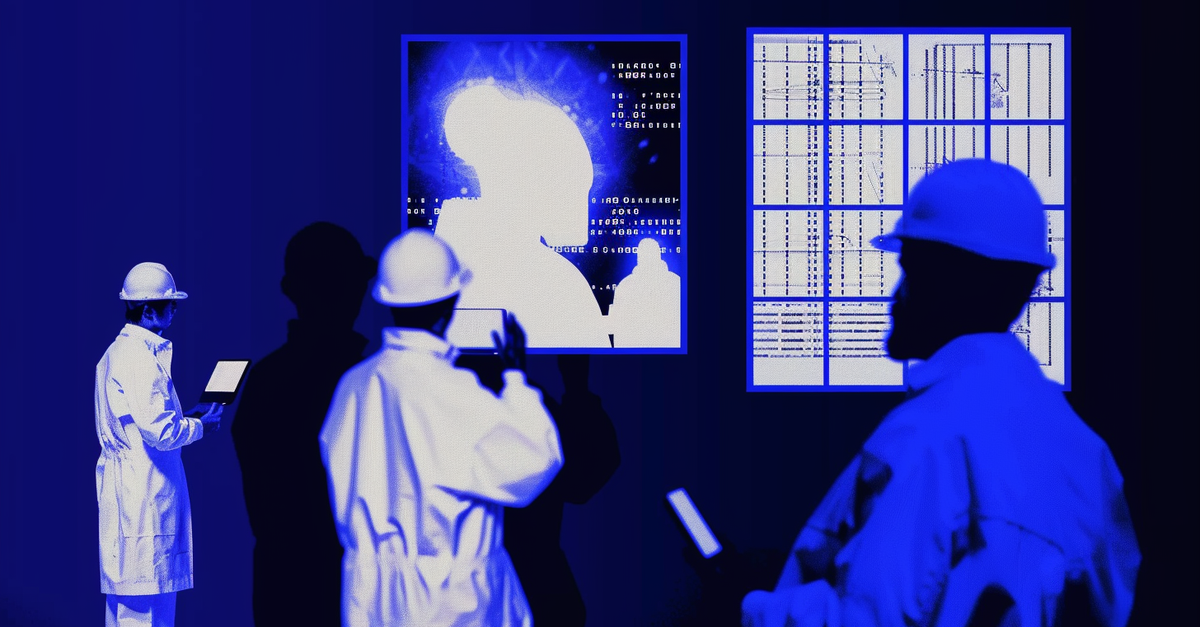
Drop a comment. Keep it going. Easier commenting, sharper moderation, and fresh features to react, and reply. The NAACP alleges that data centers operated by Elon Musk's xAI in Memphis are violating the Clean Air Act in a lawsuit filed against the company on Tuesday. CNBC reports that the suit was filed in the U.S. District Court for the Northern District of Mississippi and claims that xAI installed 27 gas turbines "without an air permit or regard for the health and safety of people living nearby." The NAACP is seeking declaratory and injunctive relief, as well as for the companies to "cease operating the Colossus Gas Plant unless and until they obtain the required permits; to apply the necessary pollution controls; and to pay appropriate civil penalties for each day of violation." "Our right to clean air is not up for negotiation, especially when companies prove expediency, not people, is their priority," Abre' Conner, NAACP Director of Environmental and Climate Justice, said in an emailed statement to CNBC. Love Civil Rights & Social Justice? Get more! Join the The Urban Daily Newsletter In Content Thank you for subscribing! Please be sure to open and click your first newsletter so we can confirm your subscription. Subscribe We care about your data. See our privacy policy. xAI has skirted around obtaining permits for the gas turbines by claiming they're only for temporary use. The company has elected to use the turbines as the city's power grid doesn't provide enough energy to power the data center. The Southern Environmental Law Center (SELC) and EarthJustice are representing the NAACP in its case against xAI. The SELC's website states that xAI has a history of using unpermitted gas turbines to power its data centers, which are often located in low-income, predominantly Black neighborhoods. The data center at the heart of the NAACP's lawsuit is located only a few miles away from Boxtown, a city whose population is 90% Black and has a median income of $36,000, according to Census data. Shelby County already led Tennessee in asthma hospitalizations, and the fumes emitted by the data center have only exacerbated the issue. Politico reported that several Boxtown residents spoke out against the data center at a public hearing last year. "I can't breathe at home, it smells like gas outside," Boxtown resident Alexis Humphreys said through tears, holding up her asthma inhaler during the hearing. "How come I can't breathe at home, and y'all get to breathe at home?" AI data centers have become an increasingly contentious topic in recent years, as it's hard to see them as anything other than a net negative. While they may create jobs during construction, data centers require very few people to maintain them once operational. The technology they power can also displace people from their jobs. Not to mention the aforementioned environmental impact data centers have on the neighborhoods where they're located. As folks have either seen or heard about the impact of data centers, there has been significant pushback from residents whenever a city council or state legislature considers approving a data center. After widespread public outcry, the city council of Chandler, Arizona, unanimously rejected a proposal to build a data center in the city. Just this week, folks in the small town of Festus, Missouri, voted out four city council members who were up for reelection because they approved the building of an AI data center. Be it lawsuits or electoral consequences, it's clear that people aren't willing to sacrifice their health or economic well-being so AI companies can increase shareholder value. SEE ALSO: Phony Stark AKA Elon Musk Downplays Epstein Files After 'Wildest Party' Email Revealed Elon Musk Says Children Should Be Proud That 'Whites In The West Ended Slavery' In Ahistorical X Post Elon Musk's xAI Sued By NAACP Over Memphis Data Centers was originally published on newsone.com
US government prepares to deploy Anthropic's Mythos AI model to federal agencies By Investing.com
Investing.com -- The US government is preparing to make a version of Anthropic PBC's artificial intelligence model available to major federal agencies amid concerns about cybersecurity risks, according to a memo reviewed by Bloomberg News. Gregory Barbaccia, federal chief information officer of the White House Office of Management and Budget, told officials at Cabinet departments in an email Tuesday that OMB is setting up protections that would allow their agencies to begin using the AI tool, Mythos. The email does not confirm that agencies will receive access to Mythos, nor does it provide a timeline for deployment or specify how they might use it. Top technology and cybersecurity chiefs were told to expect more information in the coming weeks. This article was generated with the support of AI and reviewed by an editor. For more information see our T&C.
White House to give US agencies Anthropic Mythos access, Bloomberg News reports
April 16 (Reuters) - The U.S. government is planning to make a version of Anthropic's frontier AI model Mythos available to major federal agencies amid concerns that the tool could sharply increase cybersecurity risk, Bloomberg News reported on Thursday. Announced on April 7, Mythos is being deployed as part of Anthropic's "Project Glasswing," a controlled initiative as part of which select organizations are permitted to use the unreleased Claude Mythos Preview model for defensive cybersecurity purposes. Mythos has found "thousands" of major vulnerabilities in operating systems, web browsers and other software. Its capabilities to code at a high level have given it a potentially unprecedented ability to identify cybersecurity vulnerabilities and devise ways to exploit them, experts said. Gregory Barbaccia, federal chief information officer at the White House Office of Management and Budget, told Cabinet department officials in an email on Tuesday that the OMB was setting up protections to allow their agencies to begin using Mythos, according to Bloomberg News. "We're working closely with model providers, other industry partners, and the intelligence community to ensure the appropriate guardrails and safeguards are in place before potentially releasing a modified version of the model to agencies," Barbaccia said in the email, which had "Mythos Model Access" as the subject, the report said. Barbaccia's email does not definitively say that various agencies would get Mythos access, nor does it provide a timeline for when it might come or how they might use it, Bloomberg said. The White House and Anthropic did not immediately respond to Reuters requests for comment. Anthropic was discussing Mythos with the Trump administration, co-founder Jack Clark said on Monday, even after the Pentagon cut off business with the U.S. AI lab following a contract dispute. Reporting by Juby Babu in Mexico City; Editing by Pooja Desai Our Standards: The Thomson Reuters Trust Principles., opens new tab

mRNA vaccines follow unconventional immune path to destroy tumors
Insight from a study by WashU Medicine researchers in mice could guide next-generation cancer vaccine development. The advent of mRNA vaccines against SARS-CoV-2 in 2020 changed the course of the COVID-19 pandemic. Now, the Nobel-prize-winning technology is being adapted to fight cancer, with mRNA vaccines in clinical trials for melanoma, small cell lung cancer and bladder cancer, among others, opening the door to new ways of preventing and treating the disease. Scientists assumed that one specific immune cell subtype was required for mRNA vaccination to activate the immune system. But researchers at Washington University School of Medicine in St. Louis show in a new study in mice that even without these cells, the mRNA vaccine still triggers strong cancer‑killing responses. That's because, they found, a cousin to this subtype of immune cell can also stimulate anti-tumor immune activity -- an unexpected finding given that this related subtype is not involved in responses to other vaccines. The findings are published April 15 in Nature, offering a deeper understanding of how the immune system responds to mRNA vaccination and guiding the optimal design of a cancer vaccine. "There is a lot of interest in applying the mRNA vaccine approaches used during the COVID-19 pandemic to the problem of inducing anti-tumor immunity," said senior author Kenneth M. Murphy, MD, PhD, the Eugene Opie Centennial Professor of Pathology & Immunology at WashU Medicine. "By dissecting which immune cells are involved and how they coordinate the response, we're offering vaccine developers some additional mechanistic insights to consider in their goal of optimizing these vaccines against tumor proteins." Murphy also is a research member at Siteman Cancer Center, based at Barnes-Jewish Hospital and WashU Medicine. Unconventional immune pathway mRNA vaccines work by delivering instructions, in the form of messenger RNA biomolecules, for immune cells to produce bits of protein that trigger the immune system to destroy cells bearing these proteins. So-called dendritic cells produce the protein bits from the mRNA instructions, and T cells -- another immune cell -- are the ones that seek and destroy. mRNA vaccines can be designed to generate protein bits unique to a tumor so that T cells eliminate those cancerous cells. cDC1, a classical type 1 dendritic cell, has long been known to be an effective teacher, priming T cells to attack cells infected by a virus. But less is known about how T cells become activated after an mRNA vaccine, whether against a virus or a tumor. In collaboration with the study's co-corresponding author William E. Gillanders, MD, the Mary Culver Professor of Surgery at WashU Medicine, Murphy and members of his lab used mouse models that lacked cDC1 or a related cell subtype known as cDC2 to tease out the role that different groups of dendritic cells play in priming T cells after mRNA cancer vaccination. Gillanders, a physician-scientist and surgical oncologist who also has developed an investigational vaccine against triple-negative breast cancer, treats patients at Siteman Cancer Center. As part of the research, the scientists found that mice immunized with an mRNA vaccine generated strong T-cell responses even in the absence of cDC1s. In addition, they found that immunized mice without cDC1s were able to clear sarcoma tumors -- cancers that develop in connective tissues such as fat, muscle, nerves, blood vessels, bone and cartilage. This indicated that some other cell type must be stimulating the T-cell response. Indeed, their study found that cDC2s also participate in generating an immune response from T cells and preventing tumor growth. The study also found that T cells turned on by cDC1s and cDC2s each showed slightly different molecular "fingerprints." These differences could help scientists design better versions of vaccines in the future. Similarly, immunized mice lacking cDC2s and mice that had both cell subtypes produced an immune response and rejected tumor growth, demonstrating that mRNA vaccination uses both dendritic cell subtypes to stop cancer. Further investigation of cDC2s suggested they activate T cells through an outsourcing process that relies on other cells to use the mRNA instructions to make the protein, chop it up and present small fragments on its surface. Once the protein is processed and presented, those cells then transfer the membrane complex that holds the fragment in place on the cell's surface to the cDC2 to engage with the T cells -- through an already-known process referred to as "cross dressing." "This work uncovers a new way mRNA vaccines engage the immune system -- through both cDC1 and cDC2 -- which helps explain their power and gives researchers concrete targets for making future mRNA cancer vaccines more effective," said Gillanders. "It could improve vaccine formulation and dosing, potentially explain why some patients respond better to vaccines than others and guide strategies for making vaccines more effective."

White House to give US agencies Anthropic Mythos access, Bloomberg News reports By Reuters
April 16 (Reuters) - The U.S. government is planning to make a version of Anthropic's frontier AI model Mythos available to major federal agencies amid concerns that the tool could sharply increase cybersecurity risk, Bloomberg News reported on Thursday. Announced on April 7, Mythos is being deployed as part of Anthropic's "Project Glasswing," a controlled initiative as part of which select organizations are permitted to use the unreleased Claude Mythos Preview model for defensive cybersecurity purposes. Mythos has found "thousands" of major vulnerabilities in operating systems, web browsers and other software. Its capabilities to code at a high level have given it a potentially unprecedented ability to identify cybersecurity vulnerabilities and devise ways to exploit them, experts said. Gregory Barbaccia, federal chief information officer at the White House Office of Management and Budget, told Cabinet department officials in an email on Tuesday that the OMB was setting up protections to allow their agencies to begin using Mythos, according to Bloomberg News. "We're working closely with model providers, other industry partners, and the intelligence community to ensure the appropriate guardrails and safeguards are in place before potentially releasing a modified version of the model to agencies," Barbaccia said in the email, which had "Mythos Model Access" as the subject, the report said. Barbaccia's email does not definitively say that various agencies would get Mythos access, nor does it provide a timeline for when it might come or how they might use it, Bloomberg said. The White House and Anthropic did not immediately respond to Reuters requests for comment. Anthropic was discussing Mythos with the Trump administration, co-founder Jack Clark said on Monday, even after the Pentagon cut off business with the U.S. AI lab following a contract dispute.

Tech stocks today: Anthropic releases its newest model, Claude Opus 4.7
Tech stocks edged higher on Thursday after stocks hit record highs the day before. The hostilities in the Middle East have weighed on tech stocks for weeks, clouding the picture of whether investors are pulling back because of the war or because of sentiment toward Big Tech more generally. On Thursday, Tesla (TSLA) stock fell, reversing some of its 8% gain from Wednesday's session after shares were buoyed by CEO Elon Musk teasing the company's AI5 chip. Speaking of AI chips, Taiwan Semiconductor Manufacturing Company (TSM) released its latest quarterly earnings on Thursday. A sizable 58% increase in first quarter profits and comments by the company's CEO sent a strong signal that AI demand remains robust. Meanwhile, Anthropic released its latest AI model -- Claude Opus 4.7 -- which the startup said makes improvements "on the most difficult tasks." Opus 4.7 isn't Anthropic's most powerful model, however. That would be its Mythos model, which is currently undergoing testing by a limited number of users.

White House looks to give agencies access to Anthropic's Mythos model: report (ANTHRO:Private)
Despite its battle with the Pentagon, Anthropic (ANTHRO) may get a boost from the White House as the Trump Administration looks to give federal agencies access to its Mythos model, Bloomberg reported. Gregory Barbaccia, who is the federal Chief Information Officer Potential White House support may facilitate federal agencies' access to Mythos, enhancing Anthropic's government adoption prospects. Mythos is considered strong in cybersecurity due to its ability to understand and modify complex software, but it raises concerns over new cyber risks and national security among financial and regulatory leaders. The American Securities Association warns that Mythos could expose individual investors to significant risks through vulnerabilities in the SEC investor database.